❌

普通视图

发现新文章,点击刷新页面。
昨天以前IT News

Malicious Russian disinformation bot traffic barely flinches after Ukraine strikes Yandex data centers and auto-migration kicks in

2026年10月15日 20:28

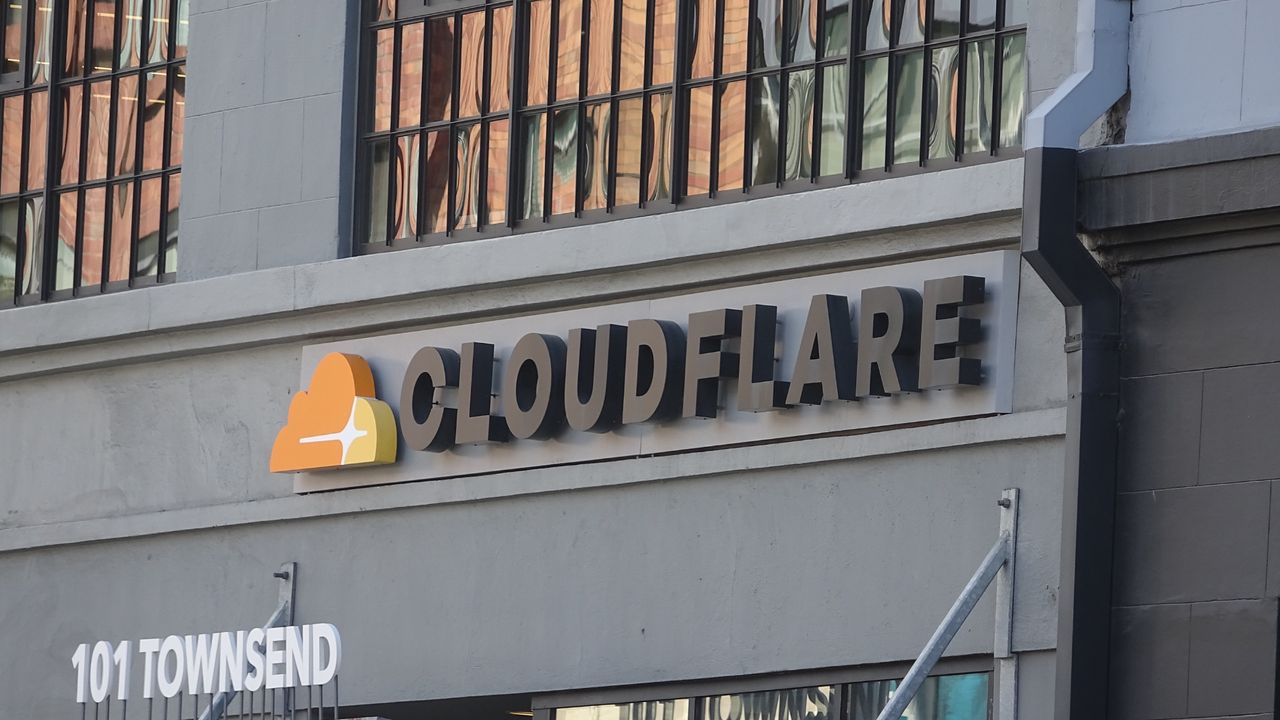
Russian bot traffic showed signs of slowing down after Ukraine bombed some of Yandex’s biggest data centers. Unfortunately, while the attacks have slowed down overall bot traffic from Russia, Cloudflare reports that malicious bots appeared to have simply transferred to other hosting ASNs like Radist and Selectel. Overall traffic on Yandex Search and Yandex.Cloud continues to stay at 10% to 15% of normal traffic levels, meaning the network remains disrupted. Cloudflare noted that traffic from the former is composed mostly of verified search crawlers indexing websites, meaning traffic from this service is mostly legitimate. On the other hand, the latter experienced a drop in malicious activities such as vulnerability scanning and probing after the data center bombings, but Cloudflare says that “high-volume automation did not vanish — it simply migrated to other hosting providers.”

This was evident with one Cloudflare customer in the gambling sector: it saw malicious bot requests from Yandex.Cloud drop to zero but started seeing the same activity being routed through other networks. “Overall, Russian bot traffic targeting gambling accounts remained essentially flat over the week, moving from 167.7 million to 170.1 million requests (+1.4%),” the company wrote in its analysis. “The automation never stopped running; the operators simply migrated their workloads to alternate cloud providers once Yandex.Cloud became unavailable.”

The company also looked at social media traffic and found a similar result — traffic from Russian-origin IPs only dropped by 0.6% in the same period while Russian bot traffic hitting “post,” “reply,” and “like” on one platform only decreased by 5.7%. Because of this, Cloudflare debunked the theory that Ukrainian strikes have caused a drop in social media manipulation, although it also noted that the scope of its analysis is limited to traffic that passed through Cloudflare services.

Since cloud-based workloads can easily be transferred between data centers, taking a few out will not necessarily end the services running out of them. Instead, owners and operators could simply migrate to another data center, which is exactly what Amazon advised its clients who have been affected by Iranian strikes on AWS Bahrain and AWS Abu Dhabi.

Cloudflare pointed out that this is why it’s difficult to defend against automated threats like bot networks — even though an IP prefix gets blocked or the physical infrastructure behind them gets annihilated, their operators could simply move their operations to another provider in a matter of hours and quickly return to normal traffic levels.


American jailed for commanding 10,000 bots to stream his own AI-generated songs

作者 Mark Tyson
2026年10月8日 20:19

The first-ever criminal case involving AI-assisted music streaming fraud has concluded, with an American citizen getting 18 months behind bars and an $8M fine. North Carolina resident Michael Smith, 54, was charged in September 2024, pleaded guilty to conspiracy to commit wire fraud in March 2026, and was sentenced earlier this week. The lengthy case, investigated by the FBI, involves some extraordinary numbers. In one example cited by the DOJ, in April 2023, Smith earned royalties from 80.9 million streams of his AI-generated songs by bots with family accounts. That’s nearly 9x more than Taylor Swift’s entire music catalog earned in the same period.

“By flooding music streaming platforms with automated bots in the place of consumers, and fake songs in the place of creativity, Smith robbed millions in royalty payments from genuine artists and their fans,” said U.S. Attorney Jamie McDonald. “This Office is committed to ensuring the integrity of all markets, and protecting the public from those who use super intelligence for fraud.”

Smith’s operation scaled massively between 2017 and 2024. He created thousands of fake streaming accounts on services like Spotify, YouTube Music, Apple Music, and Amazon Music. At the same time, he used AI to generate music to host on these services. The idea was to get his army of bots to continuously stream his own AI songs, and thus profit from royalty payments.

As mentioned in the intro, the scale of Smith’s fraudulent operation would become huge. As many as 10,000 bots would continuously consume streams of his AI-generated music. He created “hundreds of thousands of AI-generated songs” to make sure it wasn’t just a few tracks on repeat, and make the music appreciation seem legitimate. During the fraud’s lifetime, Smith’s AI-generated music tracks were streamed billions of times, says the court report. Most importantly, in terms of results, prosecutors say Smith managed to net more than $8 million in fraudulent royalty payments.

The Taylor Swift streaming success comparison sheds some light on the audaciousness of Smith’s scheme. According to the U.S. Attorney's Office, Southern District of New York PR, “in April 2023, the entire catalogue of Taylor Swift received 9.3 million streams on YouTube Music from family plan streams, while in the same month, Smith’s Bot Accounts used family plans to fraudulently stream his AI-generated music 80.9 million times.”

Likely emboldened by the rapid flow of royalty cash willingly forwarded by the streaming giants, Smith certainly wasn’t flying under the radar when caught. Now Smith faces 18 months behind bars, then two years of supervised release, and an order to pay $8,091,843.64 in forfeiture.

7-year-old Nvidia Shield TV Pro gets shocking 50% price hike driven by AI memory shortage

Nvidia has increased the price of the Shield TV Pro from its original $199.99 launch price to $299.99. This makes the long-running Android TV streaming device $100 more expensive despite receiving no major hardware refresh. The new price is listed on Nvidia’s website, and the company blames rising component costs driven by AI for the increase.

An Nvidia spokesperson told Ars Technica, “Starting October 2, SHIELD Pro will be priced at $299. The cost of components, including memory, has increased substantially across the industry.” The price increase for the Shield TV Pro also comes alongside the discontinuation of the standard Nvidia Shield TV. Nvidia has reportedly stopped producing the base model, leaving the Shield TV Pro as the only Shield-branded streaming device the company offers.

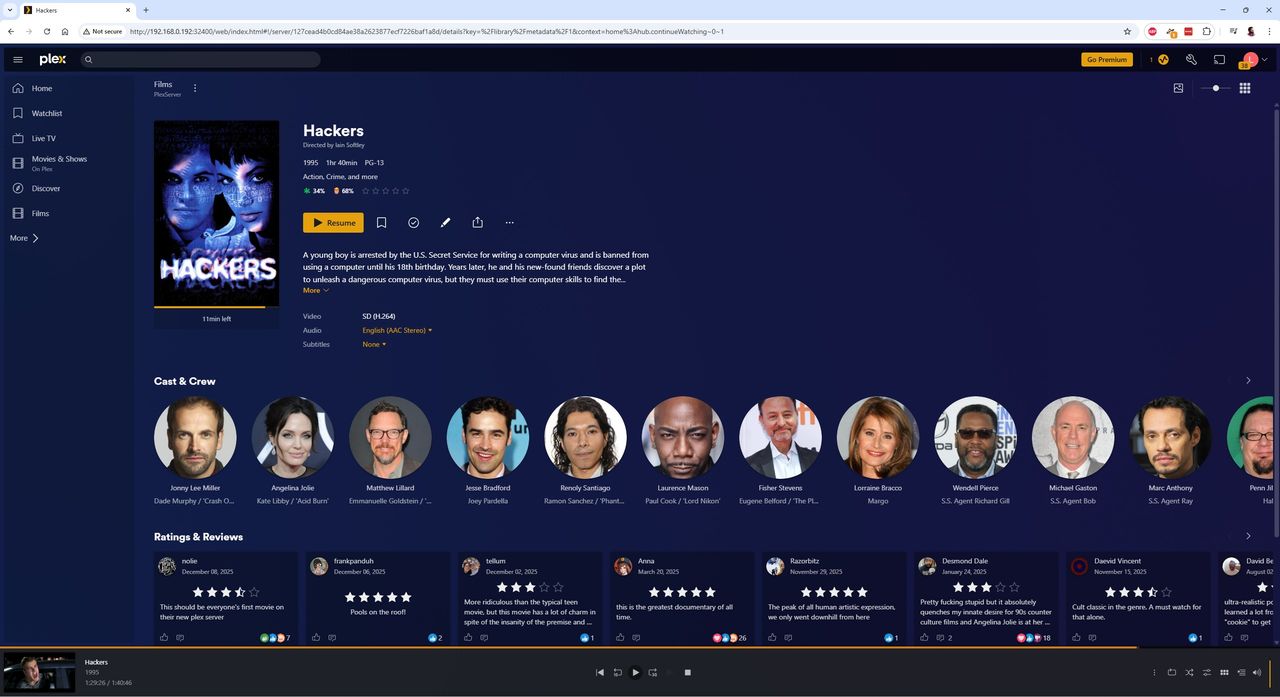
Despite being seven years old, the Shield TV Pro remains somewhat relevant, as it serves as more than a basic TV streaming box. Powered by the company’s Tegra X1+ processor, 3GB of RAM, and 16GB of internal storage, the device includes two USB 3.0 ports, Gigabit Ethernet, and support for external storage drives, making it particularly useful for users with local media libraries and Plex setups.

It also offers support for 4K HDR playback at 60 FPS and a wide range of advanced video technologies including 4K HDR, Dolby Vision HDR/HDR10, and AI-enhanced upscaling. It also supports high-res audio, including Dolby Digital, Dolby Digital Plus, Dolby Atmos, DTS-X surround sound, and a wide range of audio formats.

For gamers, Nvidia’s GeForce Now cloud gaming service and support for Android games give the Shield TV Pro a slight edge over conventional streaming TV boxes. It is also one of the few Android-based TV streaming devices that still receives software updates, despite being on the market for nearly seven years.

With that said, it appears to be increasingly difficult to find, with the device out of stock at most retailers. We spotted a Best Buy listing for the 16GB model at $249.21, about $50 less than Nvidia’s revised pricing. The listing is currently out of stock, so it's unclear whether the lower price is a temporary discount or the retailer’s standard pricing.

Russian missile strikes take out popular piracy websites

The Russo-Ukrainian war has now formally extended to the digital realm. Over the last week, there have been multiple reports that the Russian military has started targeting Ukraine's data centers. Although the Western world didn't feel much of an impact, the situation is now changing, as popular pirate websites that host torrent trackers 1337x (aka Leet X) and NordicQuality experienced periods of explosion-induced downtime.

1337x has been fighting standard-issue DDoS attacks for months on end, and now it's experienced a Direct Destruction of Server attack, as several machines in its network were brought offline by kinetic blasts. Likewise, Norse tracker NordicQuality was also temporarily down for the same reason. Both sites are online again, though don't be surprised if the seas are unsteady for the pirates.

The servers for this type of site are rarely directly visible to the internet, relying instead on content delivery networks like Cloudflare. As such, it's hard to tell which Ukrainian data center firm is hosting them.

Virtual Systems reported strikes on the 23rd of September, which took down both its facilities, at least temporarily. MiroHost Ukraine got completely destroyed; strikes on CosmoNova took down TV channels; DataGroup and CityHost also got hit; telco KyivStar saw its Kyiv headquarters hit, while Russian authorities claim Vodafone Ukraine was also struck. Most of the strikes were clustered around Kyiv, prompting several of these companies to move operations to other regions or countries.

The 1337x tracker has been online for 19 years now, and has survived several shutdown and redirection attempts, including a blacklisting by Google and blacklisting across multiple countries' ISPs. Despite that, it remains the second most-visited pirating tracker, at around 40-50 million monthly visits, clearly displaying how neither laws nor guided missiles seem to be effective in curbing piracy.

Ukraine, Russia, and other countries in Eastern Europe have proven a popular choice for hosting torrent- and piracy-related websites, thanks to the region's general lax approach to copyright law, legal liability (or lack thereof), and difficulty in identifying website operators. Having said that, Ukraine is shifting its legal stance on the matter to more closely align with the European Union, likely as part of its bid for membership in the bloc.

Samsung's disastrous firmware update bricks refrigerators ahead of South Korean holiday

A “routine” update for a Samsung smart fridge model in South Korea has broken the refrigerators for thousands of users, with the incident happening ahead of a major holiday. According to Seoul Shinmun [machine translated], the company pushed an erroneous update to some customers during testing, which resulted in the refrigerators getting stuck while updating.

Unfortunately, several customers only found out about the issue hours after the process had started (and, subsequently, gotten stuck). One customer said in a Samsung Members forum that when she arrived at 7 pm, she noticed that the fridge’s auto-open feature refused to work, the light inside it didn’t turn on, and the temperature inside the unit was starting to warm up. She even tried resetting the power to the fridge, to no avail. Another user lamented the same problem, noting that they'd owned the unit for less than a year, while others complained about food spoiling.

Even worse, this happened just a couple of days before a major South Korean holiday. Chuseok, also known as "Korean Thanksgiving," is a three-day mid-autumn harvest festival set from Sept. 24 - 26. The holiday, which lands partially on a weekend, meant that service was going to be delayed. There were multiple reports that technicians couldn’t visit the affected customers until Oct. 1, with another user saying that they wouldn’t get serviced until Oct. 7.

This is a big problem as many families have stocked up on food for the celebration. One consumer said that this has ruined the holiday for customers who used these fridges, while others said, “All my Chuseok food is going to spoil,” “What am I supposed to do with the eel and premium beef?” and “I stocked up on food for the holiday, but it’s all melting.” One user claimed, “I threw away 20kg of spoiled food today — how am I supposed to spend the holiday now?”

Samsung soon recognized the gravity of the situation and promised that all affected customers would have their refrigerators restored by Sept. 24. The company also said that it would deploy emergency on-site services to attend to urgent issues such as refrigerator and freezer malfunctions. As for the spoiled food, Samsung said it is reviewing whether it will offer compensation.

Samsung said in 2023 that it plans to put AI chips in all its home appliances, which will supposedly make them smarter and run more efficiently. However, this incident raises the question of whether we really need these features. While it may offer marginal quality of life improvements for some users, the fact that a software update could break your AI fridge (or any other home appliance, for that matter) raises red flags for users. Faulty updates aside, there have also been privacy and security concerns — which we’ve previously seen on robot vacuums after one user accidentally gained control of over 6,700 units, and was also noticed on an LG washing machine that was allegedly sending almost 3.7GB of data daily.

Sales of CD and vinyl music sees strong resurgence amid physical media backlash — US sales of ‘retro media’ were up 59% and 18%, respectively, in H1 2026

作者 Mark Tyson
2026年9月6日 20:16

There was good news for the U.S. recorded music industry this week, as the Recording Industry Association of America (RIAA) announced revenues outpaced inflation in H1 2026. “U.S. recorded music revenue reached $6B in the first half of 2026, up 6.9%,” noted the association. Probably more interesting, though, is that consumers have been seriously splashing cash on retro or legacy physical audio formats. A strong resurgence in CD and vinyl music sales saw both up double figures in the latest figures. “Physical revenues jumped 25.9%, powered by 17.7% vinyl growth and a 58.6% increase in CDs,” reported the RIAA.

With the extremely strong headline growth in ‘retro’ formats, one could be excused for thinking consumers are pulling back from digital music distributors like Spotify, Apple Music, YouTube Music, and so on. However, the RIAA underlines that “every major revenue category grew, reflecting a healthy and increasingly diversified marketplace.” While we focus on streaming, this digital segment generated $4.9B in H1 2026, up 4.7% and remaining the largest source of recorded music industry revenue. Other digital stats worth highlighting are the 6.4% growth in paid subscriptions, reaching $3.4B, and the 3.7% growth in free streaming, reaching $900M.

Returning to physical music media, the RIAA characterizes this resurgence as “continued fan excitement with different ways to experience music across an increasingly varied marketplace.” Indeed, I have seen more and more tempting special edition re-releases and remasters on CD and vinyl, for bands I enjoy listening to.

Overall, the numbers do seem to suggest that the boom in physical music distribution isn’t conclusive evidence that consumers are rejecting how the music streaming industry is changing its offerings (pricing, catalogs, etc). However, there may indeed be some backlash here, as we have seen in the TV/movie streaming business. Some consumers are increasingly frustrated with video streaming offerings and are building up home media catalogs by purchasing DVDs, Blu-rays, etc. We’ve started to see a bit of this in video gaming, too, as the high-profile case regarding Sony PlayStation digital game ownership has stirred some gamers into action.

SpaceXAI offers 50% Starlink discount to placate data center's residential neighbors; 2,000 have signed up — goodwill gesture comes amid vociferous community backlash

Amid growing community backlash, SpaceXAI offered a 50% discount to anyone living near its two data centers in Memphis, Tennessee, and claimed that thousands have already taken advantage of the promotion. Aside from the discounts offered to residents of the city and neighboring Southaven, Mississippi, SpaceXAI Memphis said in its X post that it’s also waiving the upfront hardware cost for the recently launched Starlink V5 rental kit across all plans, saving users up to $349 in one-time costs.

Critics say that Elon Musk is simply making this move to buy goodwill with his neighbors, especially as his data centers have been in hot water over the deployment of unpermitted turbines to deliver much-needed power. "Communities in Memphis and North Mississippi aren’t asking for discounted internet service,” SELC Senior Attorney Amanda Garcia told PCMag. “They're asking xAI to shut down its illegal, unpermitted power plant that continues to pump out staggering amounts of harmful (sic) pollution, including smog-forming nitrogen oxides, fine particulate matter, and hazardous chemicals like formaldehyde.” While SpaceXAI has since promised to remove all 69 of its unpermitted generators, it says it will do so only over a span of one year as its 1.2 GW power plant comes online to replace them.

Since late June, ~2,000 members of the greater Memphis and Southaven area have signed up for @Starlink high-speed, reliable internet at half the price.SpaceX is continuing the offer, providing a 50% discount on Starlink Residential service plans to new and existing customers.… pic.twitter.com/du7CZ8mCI8September 2, 2026

Starlink residential plans are available in three tiers: 100 Mbps for $55 a month, 200 Mbps for $85 a month, and Max for $130 a month. Residents who subscribe to any of these plans could get them for just $27.50, $42.50, or $65, respectively, resulting in massive savings. This makes the cheapest Starlink plan more affordable than other internet service providers like AT&T and Xfinity, whose plans often start at $35 to $40 per month.

However, those competitors offer fiber-based connections with speeds up to 300 Mbps, meaning users would be getting a downgrade if they switch over. However, some users in the r/memphis subreddit commented that this is a great option for areas of Memphis and Southaven that still lack fiber access, and it could also be a useful backup for those who need reliable internet service. There were also several complaints about outrageous fees from other options, which drive their internet costs well above $40, making the $27.50 monthly fee for the 100 Mbps Starlink plan a tempting option. Interestingly, the company is also offering the same discount in Vermilion Parish, Louisiana, where SpaceX plans to build its new spaceport.

While the company’s social media post makes it seem like 2,000 is an achievement, it’s still a small number relative to the city's total population. The latest U.S. Census Bureau estimates that Memphis alone has a population of over 600,000 people and more than 250,000 households. That means the new subscribers account for less than 1% of the total homes in the city. Aside from that, SpaceXAI’s latest earnings report says that it has more than 12 million subscribers, so the 2,000 new subscribers from the city are just a drop in the company’s massive bucket of Starlink users.

GeForce NOW exploit lets you access the full Windows desktop through a simple file swap — Modder runs local AI models on Ultimate tier with 48GB of VRAM and no restrictions

2026年8月10日 20:00

Nvidia's GeForce NOW cloud gaming service has been a popular way to access your games on the go without worrying about hardware. It has a free tier with titles like Fortnite, not even requiring a purchase, but the paid subscription enjoys much better specs and rate limits. As such, using the "Ultimate" tier, modder Zortos was able to gain full access to the Windows desktop inside GeForce NOW, allowing him to use it as a normal computer that can (ironically) run local AI models on it.

LM Studio on GeForce NOWGemma 4 31B (41 TPS) on Ultimate Tier pic.twitter.com/kspmKmunFlAugust 7, 2026

For context, GeForce NOW is only meant for gaming; Nvidia does not advertise it as a general, all-purpose cloud streamer like Shadow PC, for instance. Hence, doing all this is certainly against the terms of service, and you run the risk of your account getting banned. With that being said, ethically, you are paying for renting hardware, so trying to gain desktop access is predicated on how far your own moral scruples allow you to go.

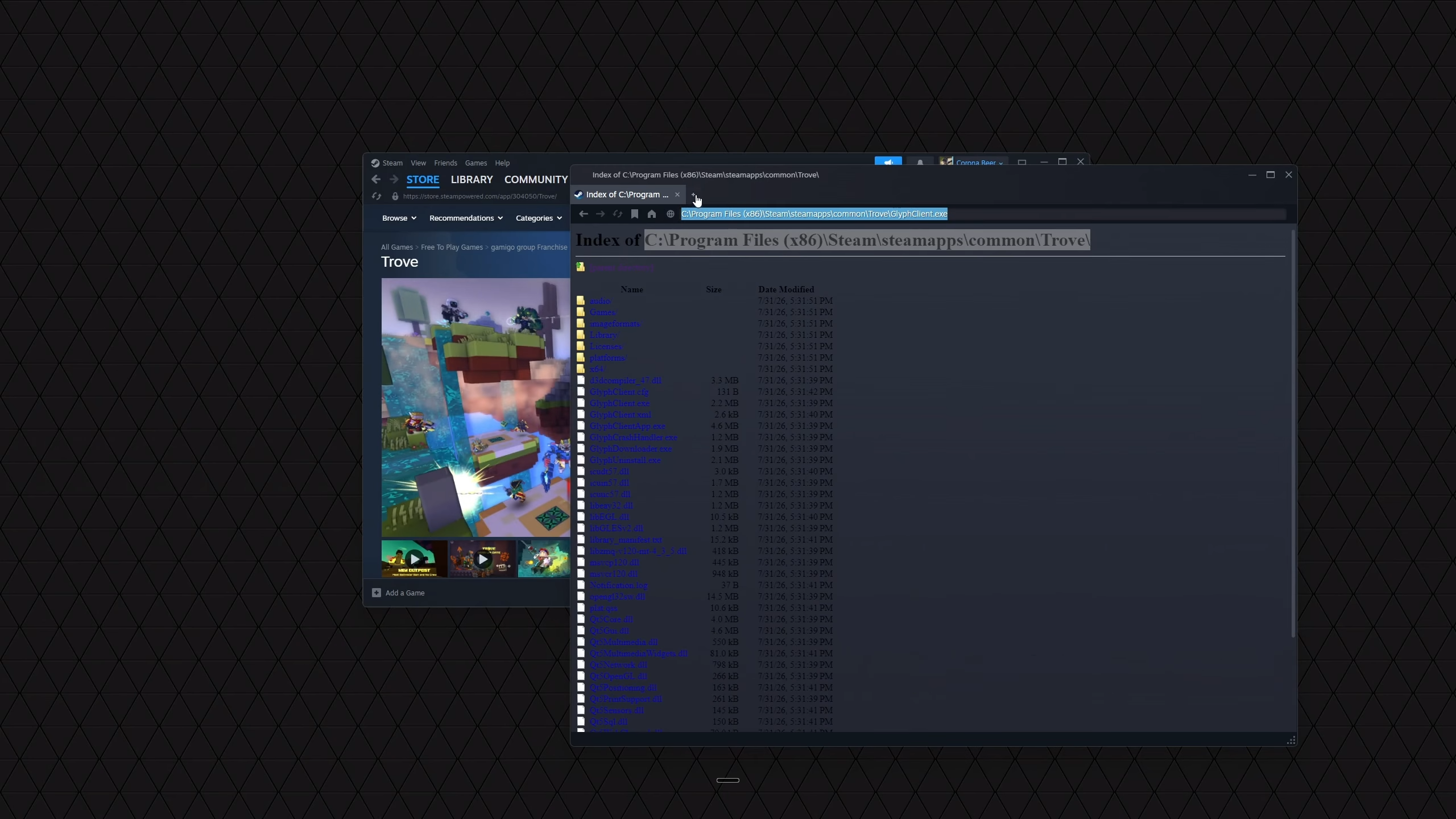
Anyhow, the exploit begins with an I2P (Install-to-Play) game that you download from Steam — Zortos uses Trove. You click on the publisher's name to open the built-in browser, from where you go to your C: drive through the address bar and essentially hijack the index. You open the steamapps folder that was just created for Trove and copy the path of the main executable from the contents.

Gaining desktop access in GeForce NOW

(Image credit: Zortos on YouTube)

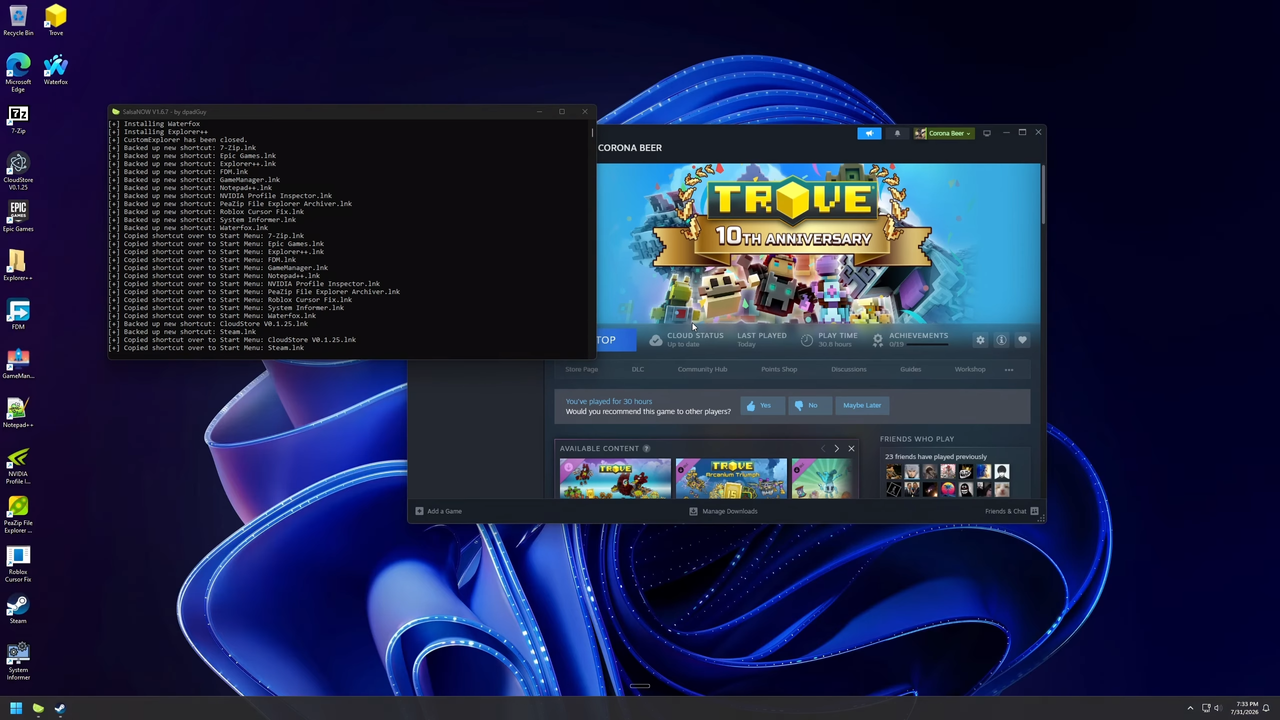
This file is replaced with a decoy that deceives Steam into thinking you're actually starting Trove when you click on the "Play" button. In reality, it's a modified executable developed by another modder, dpadGuy, that just opens the desktop instead. Once inside, it really is the full Windows environment with no apparent restrictions. The video below even shows Zortos installing Wallpaper Engine and customizing the taskbar.

However, users have reported some discrepancies between their experiences, such as GeForce NOW simply closing the session when it sees the File Explorer open, or the service blocking file downloads, which is a necessary step to replace the executable. Zortos insists that the exploit is still working on his X account, and he even says that if you have persistent storage, the exploit will remain active between different sessions.

Keep in mind that you need a paid tier of GeForce NOW to be able to pull this off, and even if you do, it's against Nvidia's ToS as you're not allowed to venture beyond games. Running local AI models on a setup like this doesn't make sense because of the session rate limits, but the Ultimate tier Zortos used does give you access to 48GB of VRAM (thanks to an RTX Pro 6000D) so it might be worthwhile for some.

400 domains used for illegal 2026 World Cup streams seized by US Justice Department — operation is five times the scale of the previous crackdown

2026年6月28日 20:18

The U.S. Department of Justice has announced the seizure of nearly 400 domains that were illegally streaming live matches from the 2026 FIFA World Cup. Running under “Operation Offsides,” the effort is being led by the National Intellectual Property Rights Coordination Center alongside Homeland Security Investigations, with a seizure warrant filed in the Eastern District of Virginia. The total number of domains taken down to date is roughly five times the amount taken down during the 2022 Qatar tournament, and HSI has warned that the streams can expose viewers to malware and connections capable of stealing financial data.

The 2026 tournament is being co-hosted by the U.S., Canada, and Mexico, giving U.S. authorities firmer jurisdiction than they held when the event was held in Qatar. Investigators traced the streaming infrastructure to servers in Peru and Bulgaria, with supporting takedowns in Croatia, Romania, Poland, and Colombia. FIFA identified the offending domains, and beIN Media Group, NBCUniversal, the Motion Picture Association's Alliance for Creativity and Entertainment, UFC, and Warner Bros. all helped supply further information.

Assistant Attorney General A. Tysen Duva of the Justice Department's Criminal Division said the seizures reflected the country's duty “as a host nation to protect the FIFA World Cup from criminals.” Domain seizures are a limited tool against operations that rotate addresses and fall back to redundant copies, hence why enforcement bodies suddenly pounce on hundreds of domains at once rather than one at a time.

Authorities have increasingly gone after the people running the streams and, in some cases, their customers. U.S. courts have separately tested the limits of piracy liability, with the Supreme Court ruling that ISPs aren’t liable for their subscribers’ infringement in March. Meanwhile, a Greek court jailed a torrent-site operator for five years last year, and an Irish court ordered Revolut to unmask more than 300 subscribers of a pirate IPTV service in March.

A 2021 Webroot analysis of illegal sports-streaming sites found that 92% carried some form of malicious content, typically delivered through the ad networks that fund the operations. Following the 2024 World Cup, Microsoft Threat Intelligence traced a December 2024 maladvertising campaign that reached nearly 1 million devices back to illegal streaming sites, where redirectors embedded in video frames funneled users through several hops to information stealers such as Lumma and Doenerium hosted on GitHub. Microsoft found the campaign hit both consumer and enterprise machines.

Infections like these often need nothing more than a simple click on a play or unmute button to start the redirect chain, with no download prompt and no need to enter any credentials. Operation Offsides remains active, and the Justice Department said it will continue to pursue the operators behind the seized sites.

❌
❌