登录

$4,700 audiophile-grade network hub promises a noise-free experience and music with 'emotional impact'
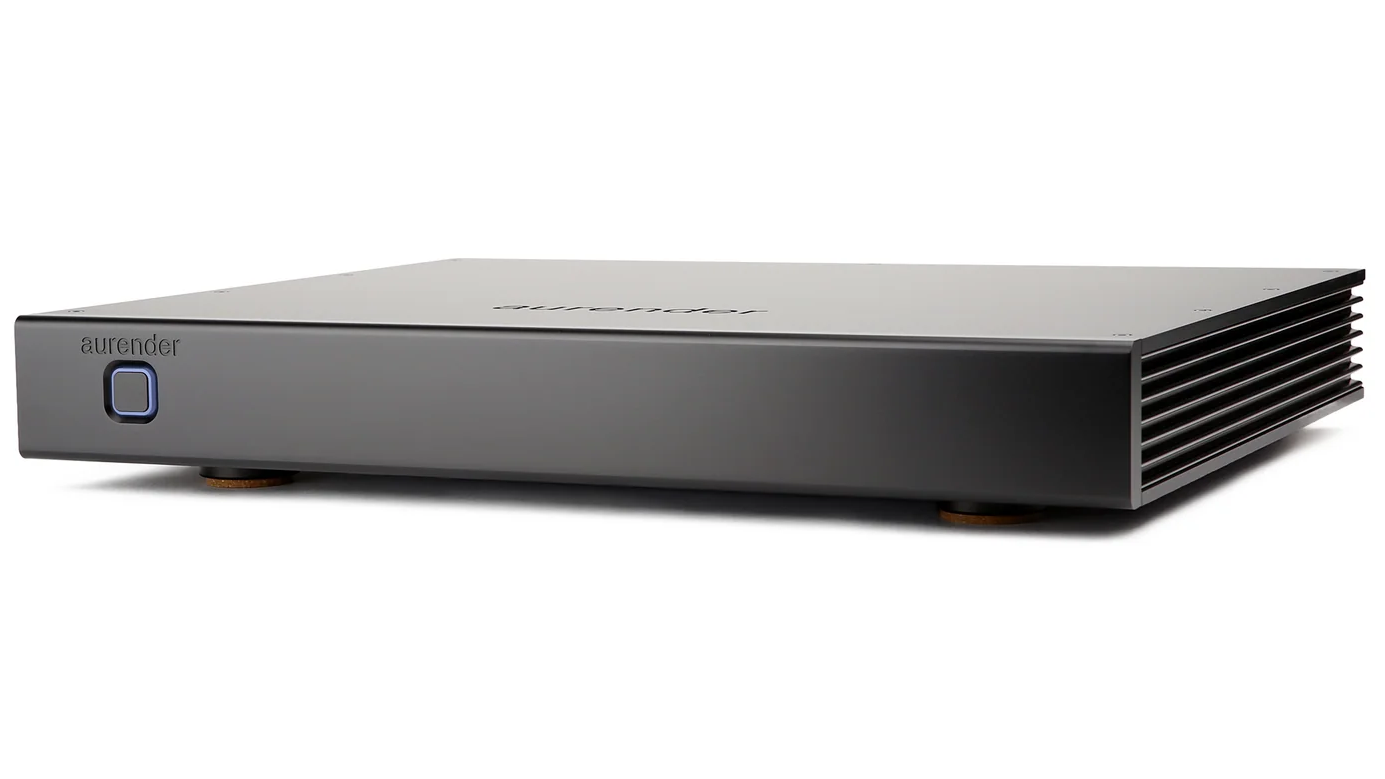
There are a lot of salesman sayings, and, chances are, most were inspired by audiophiles. The eternal sufferers of audiophilia nervosa keep coming up with novel ways to attribute sonic and emotional characteristics to any piece of equipment — even when discussing things purely in the digital realm. One of the current fads is audiophile-grade network switches, like the Aurender NH10 Network Hub, coming in at a mere $4,700.
This piece of gear —which we presume is actually a network switch, rather than a hub — comes fitted with eight gigabit ports. Six of those are standard copper inputs, while the other two are SFP ports where audiophiles can plug in a transceiver for either fiber or copper. The product page remarks that, naturally, a fiber connection is electrically isolated. I was teeing up a joke about the existence of audiophile-grade SFP transceivers when, while proofreading, I found that life does truly imitate art. Oh, and that $4,700 doesn't even get you 10 GbE capabilities.
Four of the six copper ports on the Aurender switch have a total of seven electrical filtering stages behind them, while the remaining pair "only" has two. According to an article at Headphonesty, Aurender's designer said the team experimented with using over 10 stages, but eventually settled on seven "from listening comparisons." That's an interesting feature considering that the Ethernet standard already mandates electrical isolation for standard twisted-pair connections.
Aurender also says that it's using an OXCO (Oven-Controlled Crystal Oscillator) controlled by an FPGA for clock synchronization, and there's a BNC input on the back for an external source. From what we can tell from the board picture, the main chips include: a Realtek RT8370N switch controller ($5.5 at LCSC, an MV85 oscillator ($39 on eBay), and an AMD/Xilinx Spartan 6 FGPA ($8-15 depending on model). There are, no doubt, more manufacturing and materials costs to go from a collection of chips to an assembled switch, but presumably not enough to get anywhere close to the $4,700 asking price of the NH10.
This is all adorable, but the fact of the matter is that the hardware here cannot, by any reasonable definition, make any difference to the sound. TCP connections have built-in error correction. The Ethernet protocol includes Cyclic Redundancy Check (CRC), and there are several similar layers, up to the point where the data turns into an actual analog signal.
It's also up to whichever equipment is handling the playback to electrically isolate the actual DAC output stage, not at the network or switch level. And even affordable audio interfaces have signal-to-noise ratios that 1970s recording engineers would happily give up their LSD for.
Likewise, the whole conversation about jitter is pointless, though much like any audiophile myth, it's grounded in a piece of truth — just one that's completely irrelevant in this scenario. In a recording studio, you occasionally need to sync the clock across multiple pieces of gear, just like matching tape machines back in the day. For just the one piece of playback gear, however, it's pointless, and it's downright nonsensical at the network level.
Yet logic has never stopped some self-described audiophiles. One can but wonder what folks seriously looking at these pieces of gear would feel knowing that the studios where their precious music is being made use, for example, one bog-standard Ethernet cable to carry 4 balanced analog lines. Or how their favorite guitarist's pedals and amplifier in a famous recording session were held together with lamp cord, duct tape, hopes, and dreams.