普通视图

发现新文章,点击刷新页面。
今天 — 2026年9月17日Tomshardware

Developer vibe codes a tool to let Nvidia RTX 50-series laptop owners crank up their power limits — can juice RTX 5090 mobile GPU to 225W

作者 Zak Killian
2026年9月16日 23:19

Folks with Nvidia-based gaming laptops can now use a new tool called NvpwrControl to unlock additional performance from their assuredly power-limited mobile GPU, as long as they're willing to accept the risks of cranking their GPU power limit by as much as 40 watts. The tool, spotted by VideoCardz, is available for download on GitHub, and it is labeled as 'experimental', so you'll want to be very sure you're willing to damage the reliability, if not the lifespan, of your fancy discrete GPU gaming laptop before using it.

If you've ever had a gaming laptop, you will know that the GPU model name can be deeply misleading. Whether it's NVIDIA using wildly different GPU configurations, AMD using confusing suffixes that don't exist in desktop GPUs, or Intel naming integrated graphics like a discrete GPU, all three vendors do things to keep the user guessing why their new gaming laptop isn't as fast as expected based on the name alone.

NVIDIA GeForce RTX 50 Series Laptop GPU Power Limits

GPU Name

GPU Power (varies per laptop)

Dynamic Boost Max

Mod Max (Experimental)

GeForce RTX 5050 Laptop

35 - 100W

15W

140W

GeForce RTX 5060 Laptop

45 - 100W

15W

140W

GeForce RTX 5070 Laptop

50 - 100W

15W

140W

GeForce RTX 5070 Ti Laptop

60 - 115W

25W

180W

GeForce RTX 5080 Laptop

80 - 150W

25W

225W

GeForce RTX 5090 Laptop

95 - 150W

25W

225W

In Nvidia's case, the GPU models (aside from the RTX 30 Series) don't match at all between laptop and desktop, but even with the smaller size of the laptop GPUs, the chips are still sharply limited in performance by their stringent power limits. These limits top out at 150W, with an extra jolt, usually 25W, available from Dynamic Boost if the CPU isn't heavily loaded. This is, frankly put, not enough power for even the mobile GeForce RTX 5070 Ti to stretch its legs, to say nothing of the GeForce RTX 5080 Laptop or GeForce RTX 5090 Laptop. In high-intensity gaming situations, these GPUs can score pretty similarly due to having the same power limit.

That's what makes this tool attractive. By cranking the power limit, you can give these power-limited GPUs a performance boost. The developer doesn't provide any benchmarks, but I can say from experience that testing power limit adjustments on a power-limited GPU can give nearly linear performance gains, meaning that increasing the power limit from a stock 140W all the way up to 180W could potentially give a GPU performance uplift in the neighborhood of 25% or more, although it is impossible to verify this without testing.

There are quite a few caveats to this utility, though. For one thing, even the author describes it as 'experimental ', and for another thing, it's clearly AI-generated in the largest part. The developer is called "LevinAI", after all, and there are the hallmarks of generative AI all over the GitHub repository. Still, there are a few reports on both GitHub and Reddit suggesting that users have been testing it, and the developer claims that it works on his GeForce RTX 5070 Ti laptop, posting the proof below.
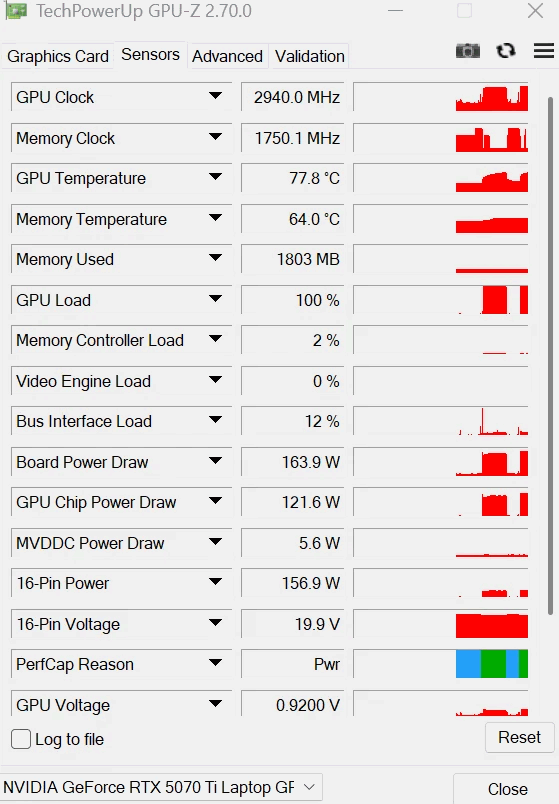
A screenshot of the GPU-Z utility showing a board power draw of 163.9 watts on a GeForce RTX 5070 TI Laptop.

The developer's screenshot of GPU-Z, showing a board power draw of 163.9 watts on a GeForce RTX 5070 TI Laptop, well above the stock 140W cap. (Image credit: /u/Ecstatic_Hamster2208 on Reddit)

Other notable qualifiers include that it only supports Blackwell GPUs for now, and it only enables power controls when it can recognize the power policy layout and OEM baseline. If your GPU already ships with a wacky power configuration, this tool may not work for you. It's also not verified to work on every brand of laptop nor every model of GeForce RTX 50-series GPU, so we absolutely wouldn't try this unless you're willing to replace your Blackwell-based laptop.

The partially AI-generated project description (likely chosen as the author's native language appears to be Russian) explains that the developer investigated numerous layers of the software stack on top of the GPU to see where the power limit could be modified. The controls that NVIDIA exposes generally won't let the user raise the power limit above the value set by the OEM for fear of potentially damaging the hardware, since the power delivery and cooling mechanisms were likely not designed with the higher power draw and thermal output in mind.

The solution he found was apparently to modify a low-level NVIDIA power policy that isn't normally exposed to end-users. He says, "One of the important findings was that the power-management chain contains internal policy values that are not exposed through the normal consumer power-limit controls. This is the path that eventually led to a working experimental implementation." However, due to the method employed, the tool does require the user to disable Windows driver signature verification, which is yet another 'gotcha' of the mod.
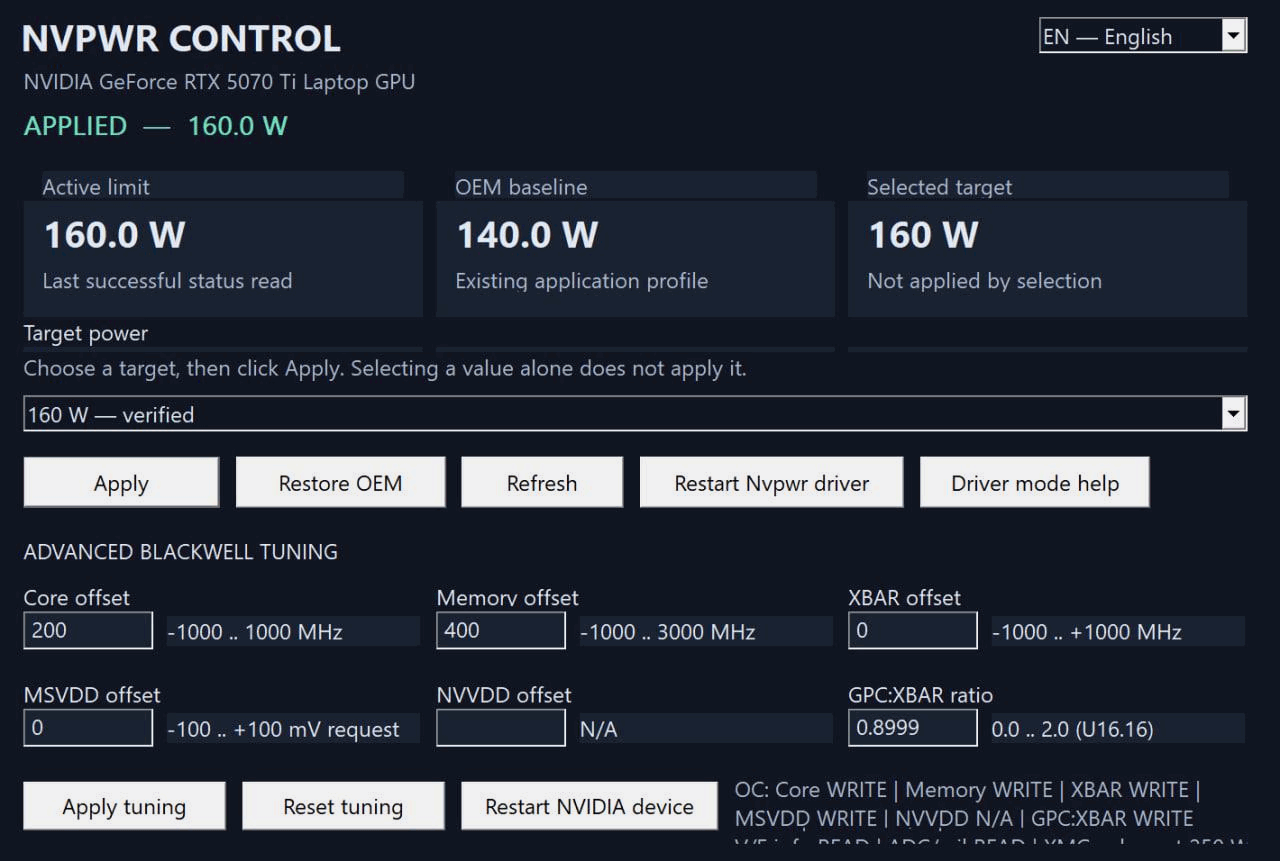
A screenshot of the NvpwrControl utility showing its interface.

(Image credit: /u/Ecstatic_Hamster2208 on Reddit)

As amusing as it is to see that the developer left his AI assistant's instructions for constructing his GitHub repository (which he didn't follow), it's a reminder both of the reliability concerns around "vibe"-coded software in production as well as of the incredible potential of AI software development. Since we spotted the story on this utility, the developer has already bumped the version from 1.5.0 to 1.8.0 with a new release on GitHub, suggesting that the pace of improvements is extremely rapid.

A few users on Reddit, where the author posted the above screenshot, lambasted the developer for taking ownership of what they claim is "100% AI generated work" and also for not structuring his code repository correctly (since all of the source is packed in a ZIP file, not properly viewable on GitHub). However, the majority of other users seem enthusiastic about his work, and several have already posted proof that it seems to work, with huge gains in 3DMark and other benchmarks.

昨天以前Tomshardware

You can now buy a delidded Ryzen 9 9950X3D2 Dual Edition for $1,403 — stripped dual-cache offering is $500 more expensive than regular version

2026年8月19日 21:44

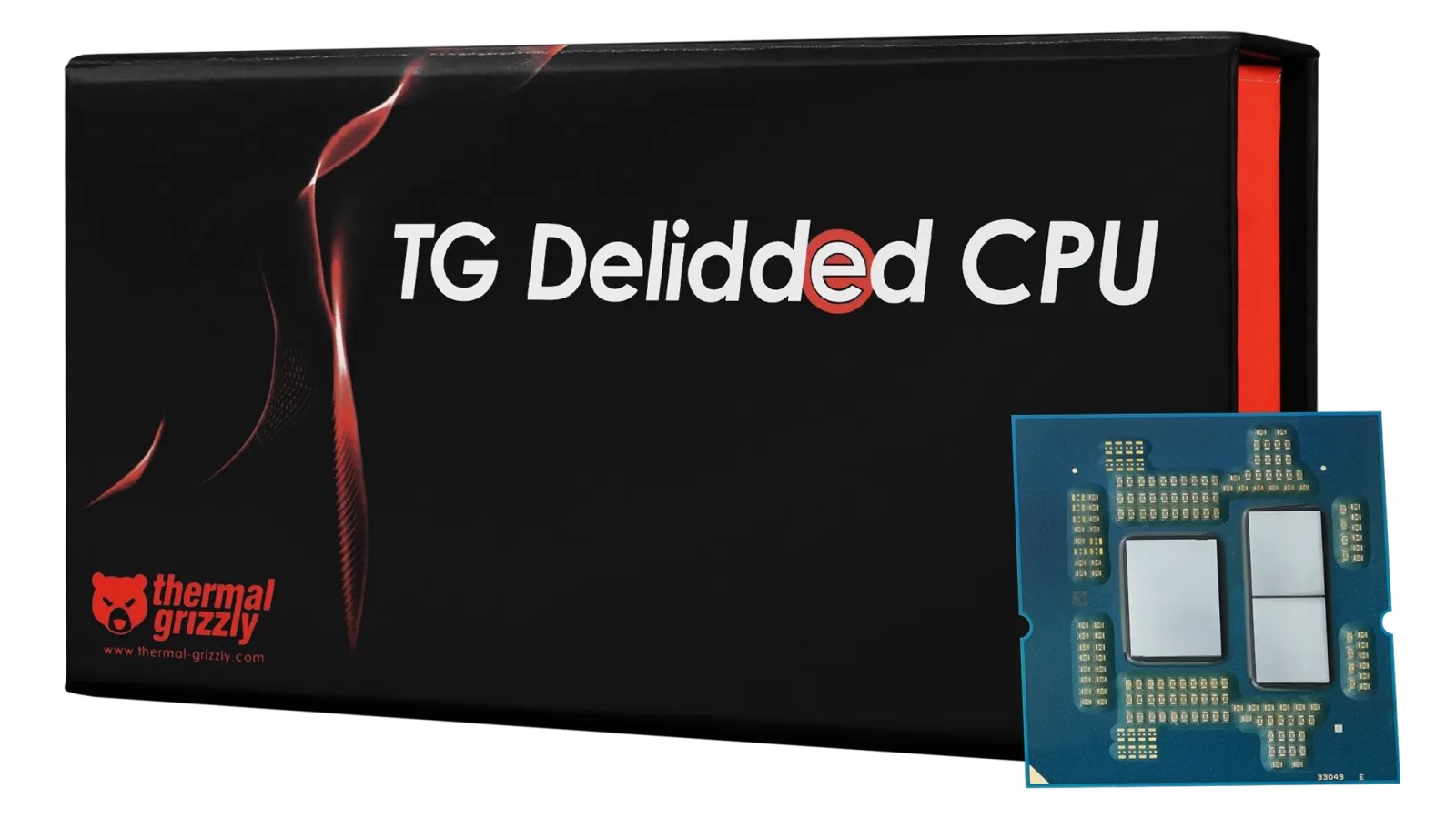
Thermal Grizzly has started selling its delidded version of AMD's already-excessive Ryzen 9 9950X3D2 Dual Edition, and here's the hard part up front: it will set you back a cool $1,402.83. That price is, obviously, rather difficult to justify on the face of it, but Thermal Grizzly does at least provide considerably more than a CPU with the heatspreader yanked off.

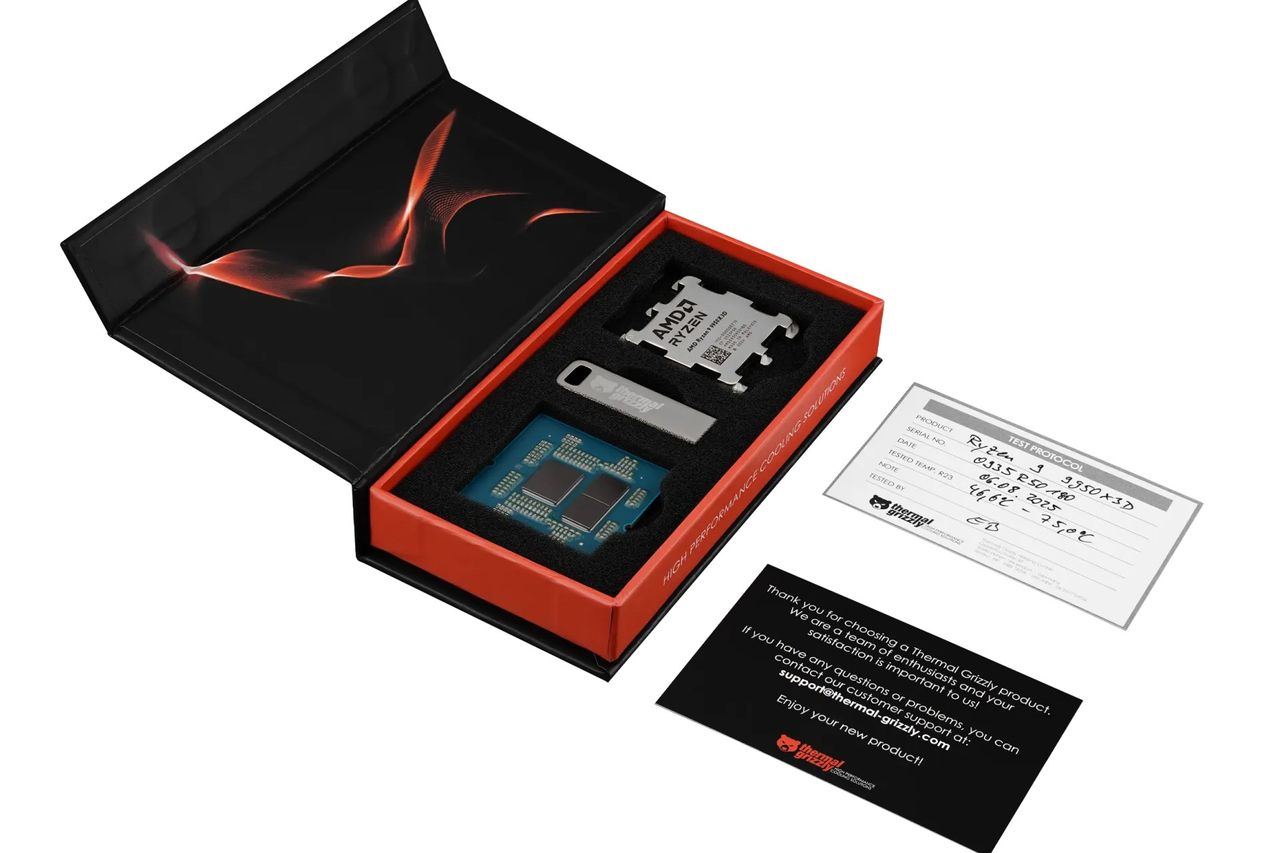
The company thoroughly cleans and tests each processor after delidding, records its measured operating temperature, and includes a USB stick containing the test results and a microscope image of the exposed processor. More importantly, Thermal Grizzly provides a 24-month worldwide warranty; that's welcome in light of the fact that delidding the processor naturally voids AMD's own warranty.

The firm even goes a step further than you might expect on the warranty front. Under German law, the burden of proof normally shifts after the first 12 months of a purchase, but the company's warranty explicitly states that this reversal does not apply to its TG Delid CPUs. In other words, Thermal Grizzly continues to take responsibility for the product throughout the full 24-month warranty period rather than automatically putting the burden on the customer after the first year. That's a meaningful bit of insurance when you've just spent more than $1,400 on a processor that AMD won't touch with a ten-foot pole.

Paying more than $500 over MSRP could never really make any sense on a lower-end processor, and indeed we've reported on the high price of Thermal Grizzly's delidded CPUs before. But the Ryzen 9 9950X3D2 Dual Edition is AMD's halo desktop processor, with 16 Zen 5 cores, 32 threads, and a whopping 192MB of L3 cache thanks to its unusual dual-CCD 3D V-Cache configuration. It also carries a 200W TDP and can consume considerably more power under heavy workloads; AMD itself recommends liquid cooling for optimal performance.

A photograph of a Thermal Grizzly Delidded CPU box with the bare processor leaning alongside.

(Image credit: Thermal Grizzly)

For someone who insists on having the biggest, baddest AM5 processor possible, a factory-tested direct-die version with a warranty is certainly a more attractive proposition than buying a retail chip and breaking out the delidding tools yourself. Delidding a CPU and cooling the silicon directly can reduce the thermal resistance between the processor and cooler, which is all but guaranteed to help the CPU sustain its normal boost behavior with less aggressive fan speeds, making an extremely powerful system somewhat quieter. What it won't help with (at least, not much) is performance.

That's because Thermal Grizzly's warranty is surprisingly restrictive about what you're actually allowed to do with all that newfound thermal headroom. The warranty covers normal operation as well as "overclocking according to manufacturer specifications," but excludes operation outside AMD's specified values. Thermal Grizzly specifically warns that CPU and memory clock speeds beyond those specifications aren't covered. So, in practical terms, you're probably looking at AMD-sanctioned tuning such as PBO and EXPO rather than taking your naked Ryzen 9 9950X3D2 and seeing how far you can push it before the magic blue smoke comes out.

Which is a little ironic given that overclocking is one of the main reasons an enthusiast might be interested in going to the trouble of delidding a processor in the first place. What Thermal Grizzly is essentially selling you is a much better thermal envelope while telling you that the warranty doesn't cover you if you use that envelope to operate the CPU outside AMD's specifications. As we've just explained, it's not completely pointless, but if you're looking to do some serious overclocking, DIY might be a more attractive route (warranty details notwithstanding).

AMD Ryzen 9 9950X3D2

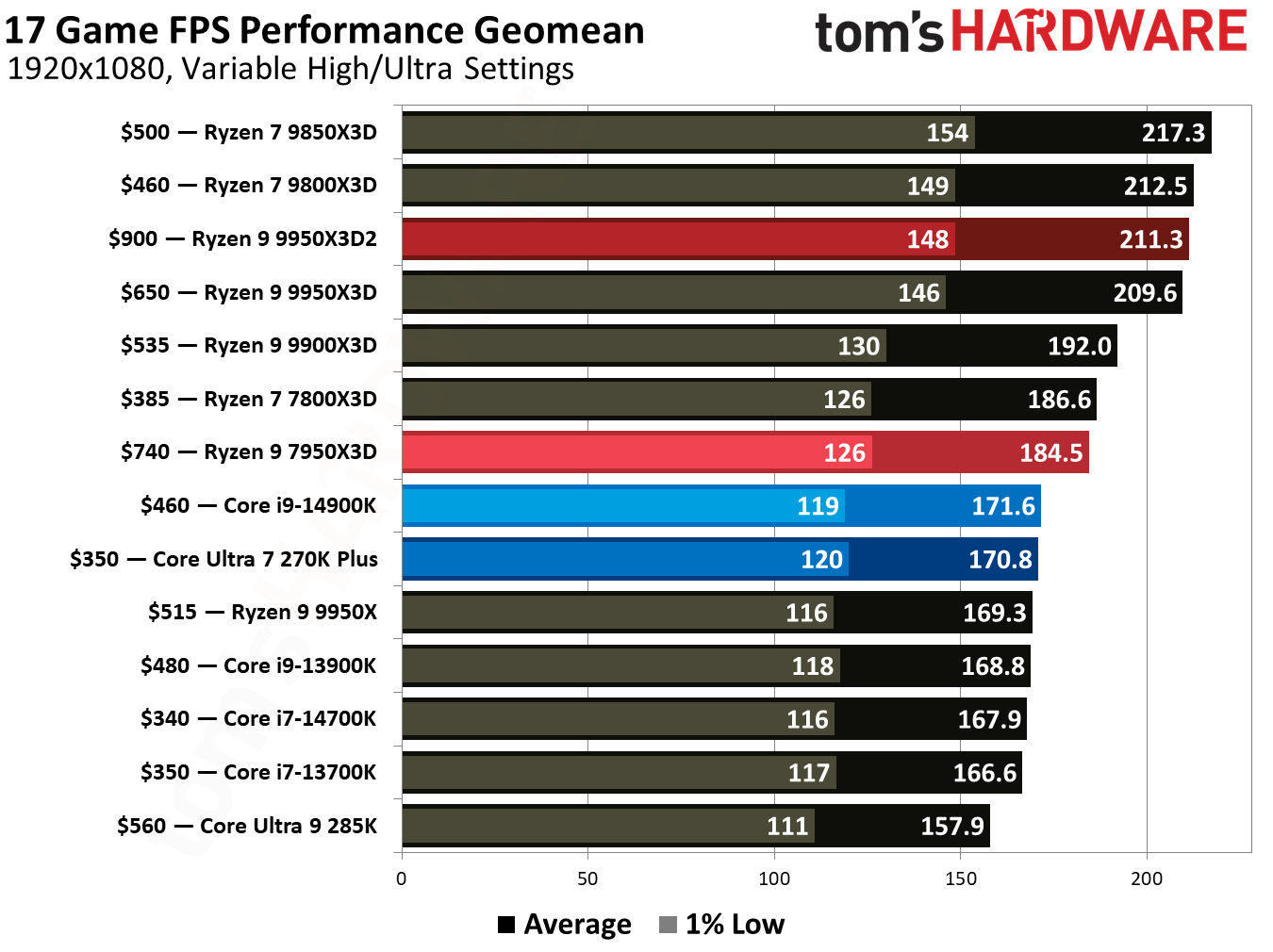
This benchmark chart from our review of the Ryzen 9 9950X3D2 tells the story: don't buy this to play games on it. Or do, I'm not your mom. (Image credit: Tom's Hardware)

Of course, before you decide if the extra $500 over MSRP for a delidded Dual Edition is worth it, you need to figure out why you'd want a Ryzen 9 9950X3D2 in the first place. Our own coverage of AMD's dual-CCD X3D processor found that it is by and large a halo product. The extra 3D V-Cache can provide meaningful benefits in certain workloads that can take advantage of the enormous amount of cache across both CCDs, but the gains aren't remotely proportional to the price premium over a Ryzen 9 9950X3D. Gaming performance, in particular, is generally exactly in line with the cheaper chip, and both typically run behind the Ryzen 9 9850X3D.

That's not to say the 9950X3D2 is a bad processor. Quite the opposite; rather, it's an extremely impressive stack of silicon, and AMD's decision to put 3D V-Cache on both CCDs makes it arguably the most exotic desktop processor the company has ever produced. It's just also very much a "because we can" product for people who want the best and don't particularly care what it costs. If you're one of the relatively small number of people whose workload genuinely benefits from having that much cache across 16 cores, there's a good chance you're doing that work on a workstation or EPYC system rather than spending your days trying to justify a $1,400 delidded AM5 CPU.

Still, if you've got the money to build a machine around the Ryzen 9 9950X3D2 Dual Edition, the extra $500 might not be a deal-breaker. For the price, you get a cooler-running, quieter system, and as long as you don't go ham on the overclocking, Thermal Grizzly has your back for 2 years. Just make sure you also buy your cooling equipment from Thermal Grizzly, because regular Socket AM5 cooling hardware may not mount up correctly to a delidded CPU.

❌
❌