普通视图

发现新文章,点击刷新页面。
昨天以前IT News

LG strongly denies TV spying claims, says tracking and snooping concerns 'not true' — online investigation claims 216,000,000 TVs spy and record audio

In a statement to Tom's Hardware, TV manufacturer LG has strongly denied recent claims that its smart TVs constantly log and upload data, record audio while in standby, while confirming they scan local area networks for other devices, a feature common in smart TVs and media devices. The statement follows an investigation published online by Gamers Nexus, which claims LG is operating "216,000,000" spy TVs.

Earlier this week, Gamers Nexus published a video on YouTube claiming that LG smart TVs have several security and privacy concerns. The two-hour video claims, among other things, that LG's smart TVs constantly log and upload user data, even when offline or in standby mode. The TVs were also purported to be found scanning Wi-Fi networks, recording audio logs, and sampling inputs for audio and video to identify what users were watching.

The testing was done in collaboration with two security researchers, MrBruh and uturn, and includes packet capture and firmware analysis. The TVs were reportedly seen identifying other devices on local networks, including phones, printers, and more. Perhaps the most significant claim regards the capturing of audio through TV microphones, even when the devices were off, with the report claiming the TVs stored data when offline for retrieval later on.

"The claims made in the recently published video are not true," LG told Tom's Hardware in a statement. "LG TVs process voice data only when the voice button on the remote control is pressed and held, or when a wake word such as 'Hi LG' is recognized after the user has activated the Far-Field voice recognition feature."

LG went on to say that beyond the aforementioned instances, "the TVs do not collect or record ambient conversations." The company further stated that if the wake word is not recognized, then no voice data is transmitted from the TV to the server, and said audio processing for the wake word is done on-device.

The company did admit its smart TV functionality includes scanning for devices on the same network. However, as many observers have been quick to point out, LG says this is a standard function of all smart TVs and other smart home devices.

Automatic content recognition (ACR) is an opt-in feature according to LG, which delivers personalized content recommendations, as well as services and advertisements. The company says that, as standard, ACR data isn't used for advertising purposes without consent.

Addressing some of the claims in more detail, LG stated that its smart TVs don't collect, record, or transmit ambient conversations in the home unless voice functionality has been activated by a user. It further stated that its far-field voice recognition tech (Hi LG) must be activated by a user before the TV starts listening, much like Apple's "Hey Siri" mechanism for iPhone.

LG did confirm that its TVs monitor for Hi LG's wake word while in standby mode, but says that unless the wake word is detected, the audio is only processed locally before being deleted. The company didn't address some of the other claims and vulnerabilities pointed out in the video, such as the storing of transcripts in plain text.

Tom's Hardware has not independently verified either the claims made by Gamers Nexus in its documentary or LG's counterclaims regarding the issue. LG's full statement follows:

LG Statement:

This is to provide LG's position regarding the claims recently raised by the Gamers Nexus YouTube channel.

The claims made in the recently published video are not true. LG TVs process voice data only when the voice button on the remote control is pressed and held, or when a wake word such as 'Hi LG' is recognized after the user has activated the Far-Field voice recognition feature. Other than these instances, the TVs do not collect or record ambient conversations. (If the wake word is not recognized, no voice data is transmitted to the server; the audio processing for wake word detection is performed locally on the device and is immediately deleted.)


Additionally, to provide smart TV functionalities, LG TVs feature the ability to scan for and connect to nearby devices on the same network. This is a standard function commonly provided by smart TVs and smart home devices.


The ACR (Automatic Content Recognition) feature is provided on an opt-in basis to deliver personalized content recommendation, services, and advertisements. If a user does not consent to the applicable optional agreement, ACR data is not used for advertising purposes.

Topic by topic breakdown:

At LG Electronics, we are committed to transparency and secure user experience. To clarify recent concerns and reiterate our commitment, we would like to emphasize the following points:

  • Protecting Voice Privacy: We ensure that your LG TV does not collect, record or transmit ambient conversations in your home, unless voice functionality has been intentionally activated by the user.
  • Far-Field Voice Recognition ("Hi LG"): This feature must be manually activated by the user before the TV begins listening for the specific wake word. Audio processing occurs only when voice functionality has been activated by the user and a wake work (such as “Hi LG”) is detected.
  • Standby Mode Operation: When the TV is in standby mode and appears to be turned off, it only monitors for the wake word if you have previously enabled the Far-Field feature. If no wake word is detected, the audio used for wake word detection is processed locally on the TV, promptly deleted, and is not transmitted to LG servers.
  • Transparent and Useful Connectivity: LG TVs can identify compatible devices on the same network to enable features such as device connectivity, content sharing or smart home functionality.
  • Proactive and Continuous Security: Data security is a top priority for LG. We continuously monitor our platform and partner with independent security experts to identify vulnerabilities and deliver timely security updates.
  • Full Control Over Data and Terms: LG Electronics is committed to providing transparency and rejecting deceptive practices (dark patterns), ensuring users can choose their preferred privacy and consent options directly through their TV settings.
  • Consent-Based Activation: To provide a more tailored and convenient experience, LG TVs offer Automatic Content Recognition (ACR) to enhance viewing experiences, Voice Recognition for hands-free control, and Interest-Based Advertising to deliver relevant advertisements. Each feature requires separate explicit user opt-in consent and can be disabled at any time through the TV settings.

Arm faces potential shareholder revolt over CEO's 'excessive' $800 million pay package — huge stock award would only be fully realised if chip designer hits $2 trillion valuation

2026年9月1日 18:00

British semiconductor and software design company Arm is asking shareholders to approve a massive performance-based pay package for CEO Rene Haas worth up to $800 million if the company reaches a $2 trillion valuation, a move that has drawn pushback from proxy advisors ahead of a September 9th vote. According to an August 31 report by the Telegraph, the company is facing a potential shareholder revolt as proxy advisory firms such as Institutional Shareholder Services (ISS) and Glass Lewis urged investors to vote against the compensation plan, calling it excessive.

The compensation is arranged through a one-time Value Creation Plan (VCP) consisting of 425,000 Performance Share Units (PSUs), with the award divided across three market-cap milestones, according to Arm's regulatory filings. Haas earns 25% if Arm reaches $1 trillion by March 31, 2029; 50% cumulatively if Arm reaches $1.5 trillion by March 31, 2030; and the full award if Arm reaches $2 trillion by March 31, 2031. Arm will determine whether each target has been reached by using its rolling-average closing share price over any 60-day period prior to the corresponding deadline.

The shares also carry lengthy vesting periods. Awards associated with the $1 trillion, $1.5 trillion, and $2 trillion milestones vest on April 1 of 2031, 2032, and 2033, respectively, subject to Haas remaining employed by Arm. Meanwhile, missed interim milestones can roll forward. For example, shares attached to an earlier target can remain available if Arm subsequently reaches a higher milestone. The roughly $800 million maximum payout reflects the implied value of all 425,000 shares if Arm reaches the $2 trillion target, which corresponds to a share price of roughly $1,880.

ISS has raised concerns about the potential size of the award and the use of VCP-style compensation in Britain. The advisory firm said such plans remain uncommon in the UK market and can create the prospect of extremely large gains, while their effectiveness at improving corporate performance remains unproven. Glass Lewis has similarly recommended shareholders oppose the proposal, describing Haas's potential award as “excessive.” Arm currently has a market capitalization of around $264 billion, according to The Telegraph, leaving a substantial climb before the first $1 trillion milestone comes into range. The company's servers currently capture over 45% of data center revenue.

Arm argues that its compensation structure needs to be competitive with that of the US technology industry. The Cambridge-based company is listed on Nasdaq, Haas is based in California, and many of the companies competing with Arm for executives and engineers are American technology and semiconductor firms. Arm said its approach is designed around US compensation standards reflecting “the location of our key competitors for executive and other talent,” its Nasdaq listing, and the location of its CEO. The revised remuneration policy also raises the maximum achievement level for Haas's regular PSU awards from 125% to 200%, in addition to the separate VCP.

The shareholder advisers are also calling out Arm's corporate governance. ISS has recommended votes against the re-election of Haas and Arm chairman Masayoshi Son, citing insufficient independence on the company's board. Arm's own filings show that Japan’s SoftBank beneficially owned about 86.4% of Arm as of May 21, giving the Japanese conglomerate control over most matters put to a shareholder vote and substantial rights over board composition. Arm qualifies as a “controlled company” under Nasdaq rules and therefore uses exemptions from some governance requirements that apply to companies without a controlling shareholder.

Haas's expanding relationship with SoftBank adds another layer of governance concern. He has served on SoftBank's board since 2023 and was appointed CEO of SoftBank Group International in April 2026, a part-time role overseeing some of SoftBank's portfolio companies. Arm itself acknowledges in its annual filing that Haas's and Son's overlapping positions across the two companies could create, or appear to create, conflicts of interest. SoftBank's 86.4% holding also gives it enough voting power to determine the outcome of Arm's ordinary shareholder resolutions in most circumstances, making rejection of the pay proposal unlikely without SoftBank's support.

The ambitious $2 trillion target — which would make Arm the UK’s first trillion-dollar company — comes as the company attempts a significant business expansion. The company introduced its Arm AGI CPU in March 2026, pushing beyond its longstanding role of licensing processor IP and compute subsystems into Arm-designed production silicon aimed heavily at AI infrastructure. Arm specifically cited that expansion when introducing the revised remuneration policy, framing the VCP around what its remuneration committee calls “exceptional, market-leading growth” over the next five years.

Huge valuation-linked CEO packages have also become increasingly prominent in the US. Most famously, Tesla shareholders approved a performance package for Elon Musk in November 2025 that could ultimately be worth close to $1 trillion, with awards tied to market cap and operating milestones, including taking Tesla to an $8.5 trillion valuation.

Key Nvidia and Intel supplier raided over alleged China origin fraud — Unimicron faces probe over PCB origin washing, risk of 40% U.S. tariff penalty

2026年8月31日 19:55

Taiwanese prosecutors are investigating Unimicron, one of the world’s largest PCB and chip substrate makers and a key supplier to Nvidia, Intel, Google, and Amazon, over allegations that it shipped China-made PCBs back to Taiwan and relabeled them as Taiwanese products, according to Nikkei Asia. Investigators raided the company’s headquarters in Taoyuan’s Guishan District and a manufacturing plant in Zhongli District on August 28, questioning 14 employees as suspects — including the general and deputy general managers of its PCB business — and four more people as witnesses.

Prosecutors say that the alleged conduct contravened Articles 216, 210, and 255 of Taiwan’s Criminal Code, which cover the use of forged private documents and false labeling of an item’s origin. Wang, the person identified as the PCB department general manager, was released on bail of NT$15 million (roughly $473,000), while a deputy general manager identified as Wu was released on NT$12 million (roughly $378,000).

Three others are said to have posted bail ranging from NT$300,000 to NT$5 million, and the remaining nine were released without bail. "There was strong suspicion that they had violated Taiwan's law covering the use of forged private documents and false labeling of goods," the Taoyuan District Prosecutors Office said in a statement. Unimicron told the Taiwan stock exchange that it’s fully cooperating with the investigation and that it doesn’t expect a material impact on its operations.

Since August last year, U.S. Customs and Border Protection has applied an additional 40% tariff on goods that it determines were transshipped through third countries to evade duties, on top of any other applicable penalties, and the agency has no authority to waive or otherwise mitigate the charge. If any relabeled Unimicron PCBs were to reach the U.S., that penalty would fall on the company’s American customers as importers of record.

The White House has identified 40 countries and territories that it says pose an elevated risk of illegal transshipment, with Taiwan flagged as a key concern. Taipei has been running major crackdowns on “origin washing,” where companies claim goods are made in Taiwan to obtain preferential tariff treatment, a crackdown that’s perhaps perfectly illustrated by the fact that prosecutors published names and bail amounts within 24 hours of raiding one of the country’s most important listed tech companies. After all, the “Made in Taiwan” label is ultimately a trade asset whose value rests on the fact that it’s not “Made in China.” Since its elevated risk designation, Taiwan is understandably keen to show Washington that it polices the difference itself rather than leaving it to U.S. Customs.

The products involved in this crackdown appear to be conventional PCBs, not the high-end ABF substrates used for Intel’s EMIB-T platform or Nvidia’s advanced data center accelerators. Unimicron’s offshore manufacturing remains in China for standard substrates, PCBs, HDI, and flexible boards, while its advanced CoWoS-related substrate capacity is based at its Yangmei factory in Taoyuan.

If the case concerns relabeling on individual products, the fallout will be limited to the Taiwanese prosecution. If, however, it turns out that China-made goods were transshipped through Taiwan to alter their origin before export to the U.S., that’s an entirely different story and could trigger CBP’s 40% transshipment penalty on the affected goods, along with potential retroactive duty reassessments, which would hit Unimicron’s American customers as importers of record.

Nvidia gears up its influence in Washington, forming PAC — tells employees that decisions Congress makes over the coming years could have substantial consequences for the AI industry, according to report

2026年8月28日 23:19

When you serve a barely regulated emerging market worth trillions of dollars, you have to gear up your presence in politics beyond what usual lobbying or government affairs can do. This is exactly what Nvidia is doing by establishing its employees' federal political action committee (PAC), which will fund politicians whose positions are favorable to Nvidia's interests, reports Bloomberg.

The Nvidia employees PAC — which was registered with the Federal Election Commission on Thursday — will receive voluntary contributions from eligible Nvidia employees, who can provide up to $5,000 per year. The PAC will be permitted to contribute to federal candidates from both parties as well as party committees that express positions which align well with Nvidia's own goals, particularly in the fields of AI regulations, export controls, education, infrastructure spending, and workforce policy, just to name a few.

Nvidia reportedly told employees eligible to participate that decisions Congress makes over the coming years could have substantial consequences for the AI industry and everyday use of the technology. The company also noted that policymakers have increasingly focused on its industry and that decisions made in Washington affect both Nvidia's business and its customers' ability to obtain and deploy its technologies.

Nvidia has already substantially expanded its political operation. The company has spent more than $2.5 million on federal lobbying this year, an increase compared with the same period last year, according to lobbying disclosures seen by Bloomberg. In June, Nvidia hired Bruce Andrews, who previously headed government affairs at Intel and served as deputy secretary at the U.S. Commerce Department in Obama's government, as chief external affairs officer. In addition, Nvidia has hired five external Washington lobbying and government-relations firms to advocate for the company on a range of issues, including AI and trade policy, among others. The company also donated $1 million to the Trump Vance Inaugural Committee in January 2025.

Nvidia needs a PAC because lobbying and campaign contributions serve different purposes. The company can spend corporate money to lobby lawmakers, but it generally cannot use corporate treasury funds to contribute directly to federal candidates. Meanwhile, a company-sponsored PAC has a legal mechanism to collect voluntary contributions from eligible employees and direct that money to candidates and party committees from either party.

Meanwhile, unlike individual campaign contributions, donations made by the PAC will be publicly disclosed and subject to spending limits that do not increase with inflation. Furthermore, corporate PACs face growing resistance from lawmakers, according to Bloomberg. More than 270 House and Senate candidates have pledged to reject corporate PAC contributions this election cycle, the highest number since End Citizens United began promoting the commitment in 2018, Bloomberg claims. However, it is unclear whether these 270 are serious major-party nominees or current members of Congress, or some of the thousands of declared congressional candidates.

Nvidia is hardly alone in increasing spending on its influence in Washington, as most high-tech companies, now joined by AI giants, tend to spend millions on government relations and lobbying. The establishment of the PAC just highlights Nvidia's growing dependence on policies set in Washington.

Nvidia revenue tops $96 billion as memory commitments soar to $160 billion — CEO Jensen Huang says AI 'has reached its inflection point'

2026年8月27日 17:13

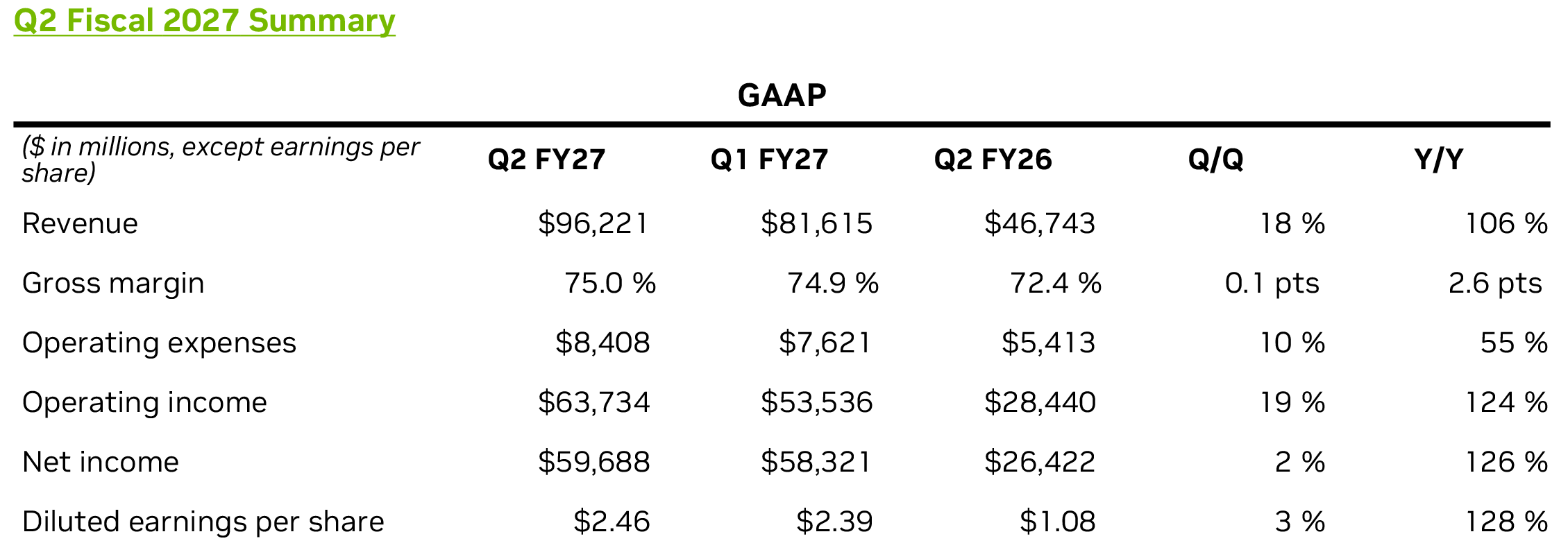
It has become a tradition that every single quarter Nvidia reports record results that outpace all of its quarterly results before that. This Wednesday was no exception as the company posted revenue of $96.2 billion, which was up 106% year-over-year, due to rising demand for its AI hardware. But such results come at a cost, as the company has to invest massively in its future. In the second quarter of its fiscal 2027, Nvidia had to commit to procuring memory worth up to $160 billion, which includes its memory supply pact with SK hynix.

Nearly $100 billion revenue per quarter

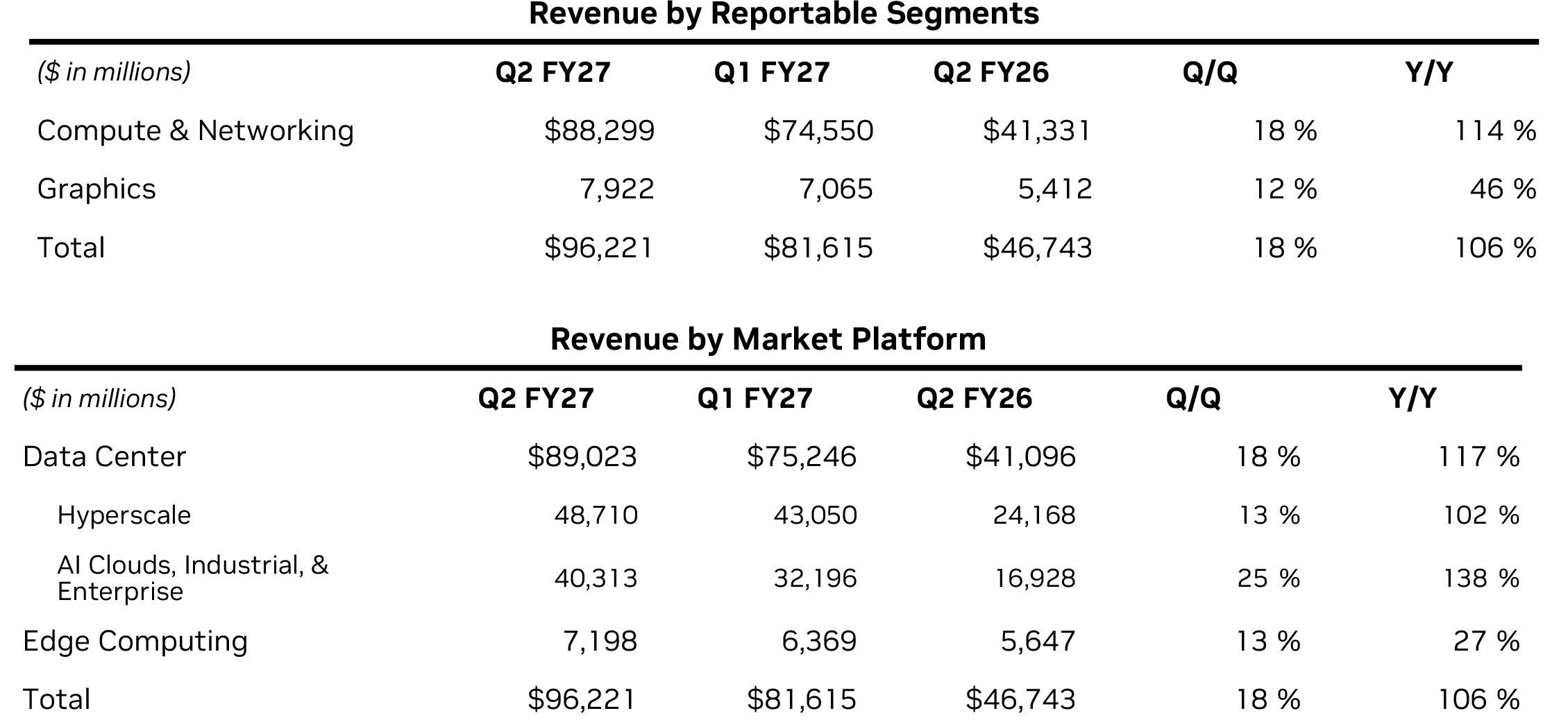
For the second quarter of Nvidia's FY2027, which ended on July 26, 2026, the company's GAAP revenue hit a record $96.221 billion, up 18% quarter-over-quarter (QoQ) and 106% compared to the same quarter a year ago. Nvidia's net income totaled $59.688 billion, up 126% year-over-year (YoY), as its gross margin reached 75.0%. Sales of Nvidia's Compute & Networking hardware reached $88.299 billion, up 18% sequentially and 114% YoY, whereas sales of its graphics hardware hit $7.922 billion, up 12% sequentially and 46% year-over-year.

Nvidia

(Image credit: Nvidia)

"AI has reached its inflection point," said Jensen Huang, founder and CEO of Nvidia. "AI is doing useful work. Its tokens are productive and profitable. Now, compute is revenue. And demand is accelerating. […] We have a golden age of new AI labs and startups, multiple frontier labs scaling in parallel, a thriving open-model ecosystem and physical AI coming online […]. The AI infrastructure buildout is at full steam. Vera Rubin, now in full production, was built to power exactly this moment."

Nvidia

(Image credit: Nvidia)

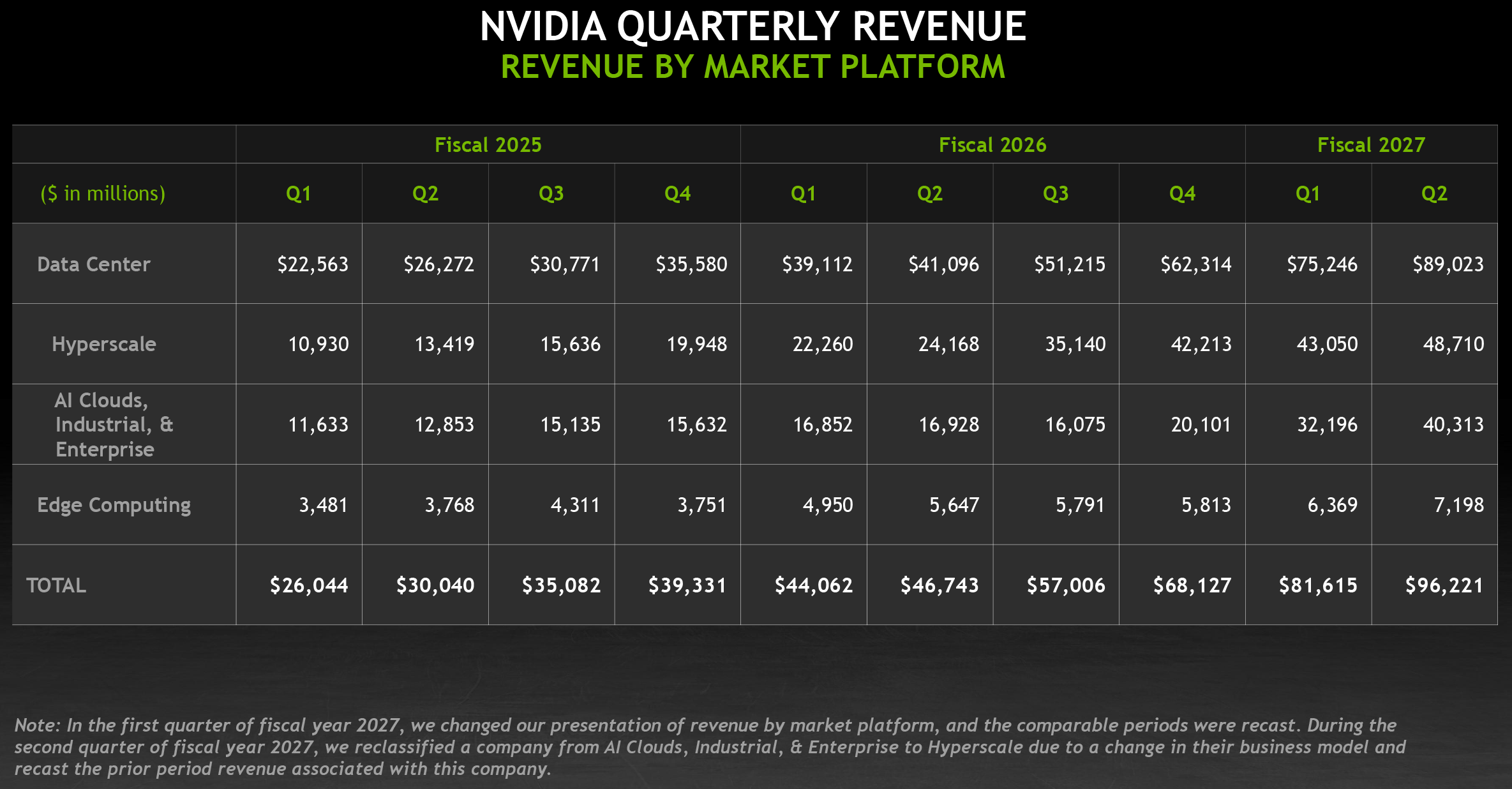
Nvidia's results were driven by sales of its data center-grade AI hardware as various customers bought $89.023 billion worth of equipment, an increase of 18% sequentially and a rise of 117% compared to the same quarter a year ago. Hyperscalers purchased $48.710 billion worth of hardware from Nvidia (up 102% YoY and 13% QoQ), while revenue from AI Clouds, Industrial and Enterprise climbed to $40.313 billion (up 138% YoY and 25% QoQ), an indicator that while hyperscalers still purchase more equipment from Nvidia, the ACIE segment is growing faster. Sales of Nvidia's Edge Computing products were $7.198 billion (up 27% YoY and 13% QoQ), which means that sales of graphics products for PCs were strong despite shortages of GPUs and memory.

Commitments total $279 billion

Nvidia expects demand for its products to remain strong in the coming years. To meet that demand, the company increased its long-term purchase commitments from $119 billion in Q1 FY2027 to $279 billion in the second quarter. Typically, Nvidia's long-term supply commitments included pre-payments and commitments for wafer processing and advanced packaging at TSMC, as well as for HBM memory made by DRAM makers. This time around, Nvidia explicitly says that the bulk of the commitments are 'primarily related to the procurement of memory.'

Nvidia

(Image credit: Nvidia)

Such huge commitments indicate that the company projects massive demand for its data center AI products in the coming years. During the conference call with financial analysts and investors, it indicated that its customer forecasts point to doubling demand next year, but Nvidia currently believes its supply chain can support about 70% growth.

"Even though our demand is much greater than 70%, our supply allows us to confidently deliver 70%," Huang said. "The unconstrained would be a lot, a lot higher. […] We have secured a lot of supply, but we just need a lot more."

To that end, the $279 billion supply commitment should be interpreted as not a precautionary inventory-building, but a strategic move to ensure shipment growth. Nvidia is effectively reserving memory and other capacity because it expects demand to exceed what the supply chain can deliver through at least the end of FY2028, as its management explicitly says supply will remain a bottleneck at least through FY2028.

$108 billion per quarter envisioned in Q3

For the third quarter of FY2027, Nvidia expects revenue of approximately $108 billion, ± 2%, with no data center compute revenue from China included in its outlook due to uncertainties with export and import licenses. The company projects a GAAP gross margin of around 74% and expects GAAP operating expenses of approximately $9.2 billion.

Supermicro fires several employees following investigation into $2.5 billion China AI chip smuggling — claims that senior management had no knowledge of illicit transactions

2026年8月21日 20:20

Five months after the arrest of Supermicro co-founder Yih-Shyan “Wally” Liaw and two other co-conspirators for the alleged smuggling of Nvidia hardware into China, the company announced that it has completed its independent investigation and released its findings to the public, resulting in the termination of several employees. Supermicro said that the investigation, which was handled by an external law firm and conducted by an “independent forensic accounting consultant,” finds that neither the company nor its current senior executives were part of the alleged AI chip smuggling. It also said that it’s adopting all the recommendations to enhance its export compliance programs, although it did not directly admit that it was lacking in that department.

“The investigation team reviewed the customer transactions that were the subject of the federal indictment, as well as transactions with a selection of other customers who bought restricted products, and did not find any evidence that any current member of senior management had knowledge of the alleged diversion scheme or of any actual diversion of restricted products by the Company,” Supermicro said in the statement. It also added, “The Company’s compliance personnel have acted in good faith, with the support of management, to mitigate the risk of the Company’s products subject to export controls being diverted to restricted parties or locations.”

This odyssey began in March when the U.S. charged Liaw alongside Supermicro sales manager Ruei-Tsang “Steven” Chang and third-party broker Ting-Wei “Willy” Sun with conspiracy to unlawfully divert cutting-edge U.S. artificial intelligence technology to China. The accused aren’t operating a small-time smuggling operation, either — reports estimate that the three have smuggled hardware worth $2.5 billion since 2024. That massive amount has got shareholders worried that a huge chunk of the company’s sales come from illicit sales, resulting in some investors suing the company for securities fraud. Because of this, the company’s independent advisors also looked into this issue and said that it “did not find any evidence that the Company’s previously issued financial statements could not be relied upon based on the potential diversion of restricted products.”

Even though the third-party investigation exonerated Supermicro’s senior executives, it also resulted in the termination of several employees. The affected people were from the sales, technical support, and business development departments, although they were fired for breaking the company’s policies and code of conduct — the company said these moves were made "in connection with the investigation." Notably, none of the personnel were from its compliance department, and it’s also unclear how many people were dismissed.

Supermicro also said that it’s enhancing its export compliance program, which Nvidia CEO Jensen Huang said it must fix. Even though the company was never accused of wrongdoing and wasn’t part of the defendants in the case against the alleged smugglers, the fact that some of its employees were able to run a massive diversion scheme right within the organization raises major questions about the effectiveness of its compliance department. It said that it has already made changes that were recommended by its General Counsel and Chief Compliance Officer even before the third-party investigation concluded, and that its independent directors “will oversee implementation of the remaining recommendations.”

The high demand for AI chips in China has meant the smuggling operations are quite lucrative, even as the U.S. is tightening its grip on export controls and Chinese authorities are commanding that its tech companies prioritize locally made Chinese chips instead of American AI GPUs. Nevertheless, the race to build ever more powerful AI models means that there is such a massive demand for the most advanced AI GPUs from Nvidia that some people are looking for ways to circumvent these bans and make “easy” money.

Oracle plans more layoffs weeks after spending most of its $2.1 billion restructuring budget, report claims — some teams face double-digit percentage reductions, 21,000 full-time positions already eliminated

2026年8月13日 01:00

Oracle plans to cut more jobs this month, with reductions on some teams reaching double-digit percentages, Business Insider has reported, citing people familiar with the plans and an internal document. The company wants payroll lowered before its second fiscal quarter opens on September 1, and managers have been told to compile lists of affected employees. A new round would extend a year of deep cuts at the company, which shed 21,000 full-time positions, or 13% of its workforce, in the fiscal year that ended May 31 while borrowing $43 billion to fund AI data center construction.

Oracle's 10-K, filed June 22, capped the total expected cost of its Fiscal 2026 Oracle Restructuring Plan at $2.1 billion. The company recorded $1.8 billion of that in fiscal 2026, a 391% increase over the $374 million booked a year earlier, leaving roughly $300 million of headroom under the existing plan. Cuts at the scale Business Insider describes would either need to fit inside that remainder or push Oracle into its second new restructuring plan in three years; the filing describes the prior 2024 plan as substantially complete since May 2025.

Headcount stood at approximately 141,000 full-time employees as of May 31, with around 49,000 of those in the United States. Oracle attributed part of the fiscal 2026 decline to internal AI adoption and told investors that further reductions would follow as deployment grows, having already eliminated roughly 10,000 positions in a single wave earlier this year.

Company capex hit $55.7 billion in the fiscal year 2026, up from $21.2 billion the year before, leaving Oracle $23.7 billion short of covering its spending from the cash it generated. The company raised $43 billion in debt and $5 billion through stock sales during the year, and it expects to secure approximately $40 billion more through borrowing and equity issuance in fiscal 2027. Interest expense climbed to $4.6 billion from $3.6 billion a year earlier, so the annual growth in Oracle's interest bill alone now exceeds half of what it paid in severance and related restructuring charges all year.

Cloud infrastructure revenue grew 77% in fiscal 2026, and total revenue rose 17%, figures Oracle has previously pointed to when defending the spending. The stock is down more than 20% this year, and shareholders sued the company in January over statements about how much it would need to borrow to meet its $300 billion OpenAI commitment.

Oracle declined to comment and hasn’t confirmed the plans.

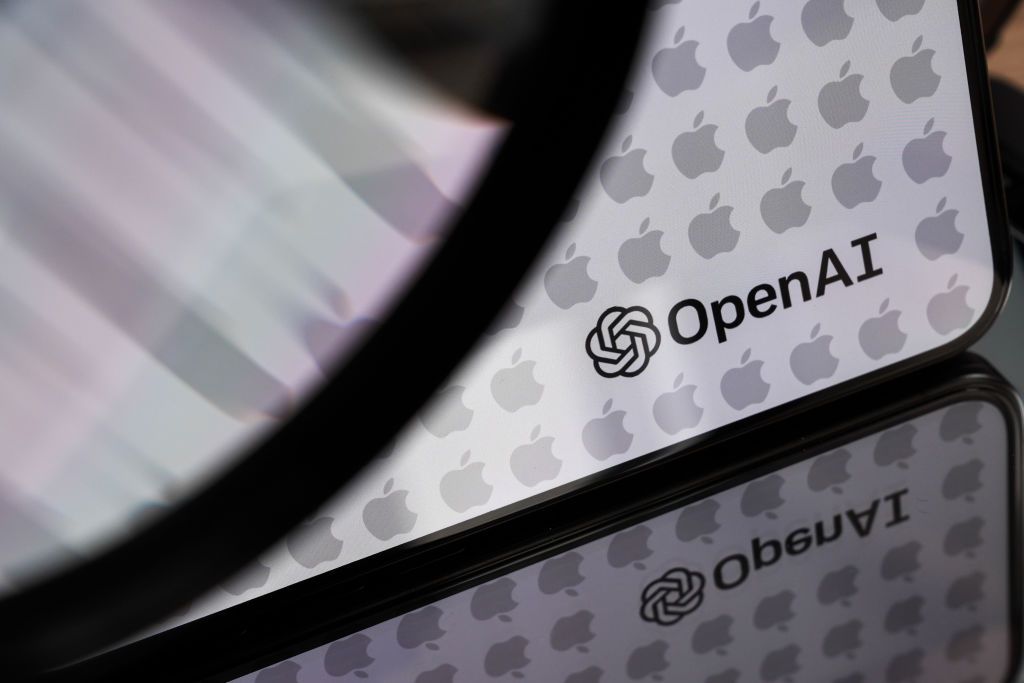
‘Apple is getting this wrong,’ says OpenAI — startup blasts iPhone maker over lawsuit alleging it stole confidential information through ex-Apple employees

2026年8月4日 19:52

Apple filed a lawsuit against OpenAI in July, alleging that the latter stole trade secrets through former Apple employees. The startup has finally publicly responded to the lawsuit today, posting a blog post on its website titled, “Apple is getting this wrong.”

“Apple is one of the greatest companies of all time, and built a reputation for obsessing over the smallest details. This careless, aggressive and oddly personal lawsuit sadly doesn’t live up to that reputation,” the company said in its blog post. It also added, “Apple’s request for a preliminary injunction is both based on false information and completely unnecessary because we do not have, nor want, any of their trade secrets.”

The case names OpenAI technical staff Chang Liu, chief hardware officer Tang Tan, OpenAI, and io Products as defendants. Liu worked as a senior electrical engineer at Apple, while Tan was its former vice president of product design for the iPhone, AirPods, and the Apple Watch. Interestingly, io Products, which was acquired by OpenAI last year, was founded by Tan alongside former Apple Chief Design Officer Jony Ive and other former Apple heavyweights.

The tech giant requested a preliminary injunction to stop the accused from accessing, acquiring, using, or disclosing the alleged stolen trade secrets. Cupertino said in its filing, “Apple will be irreparably harmed absent a preliminary injunction.”

OpenAI publicly responded to this legal request through its blog post, pointing out that many of its allegations were actually based on miscommunications and false information, and that this move is completely unnecessary. But whether what the AI tech giant claims is true or not, its research and operations on consumer hardware would likely be impaired if the judge grants Apple’s request.

Although OpenAI’s primary product is ChatGPT and its other LLM-powered services, it’s been rumored that it’s also working on AI-powered hardware. Its first product is expected to be some sort of portable smart speaker with built-in cameras and sensors. Although this isn’t an iPhone replacement, like the botched Humane AI Pin, some experts say this move threatens Apple’s standing as the biggest consumer electronics company on the planet. This is especially true as it still lags behind other tech giants when it comes to artificial intelligence, even though AI enthusiasts love using Apple silicon with its Unified Memory architecture.

Apple’s preliminary injunction is just the opening stages of what might be an epic showdown between two tech giants. It will likely take months (or even years) before this case reaches a judgment or a settlement, meaning a preliminary injunction will definitely have a massive impact on OpenAI’s hardware dreams.

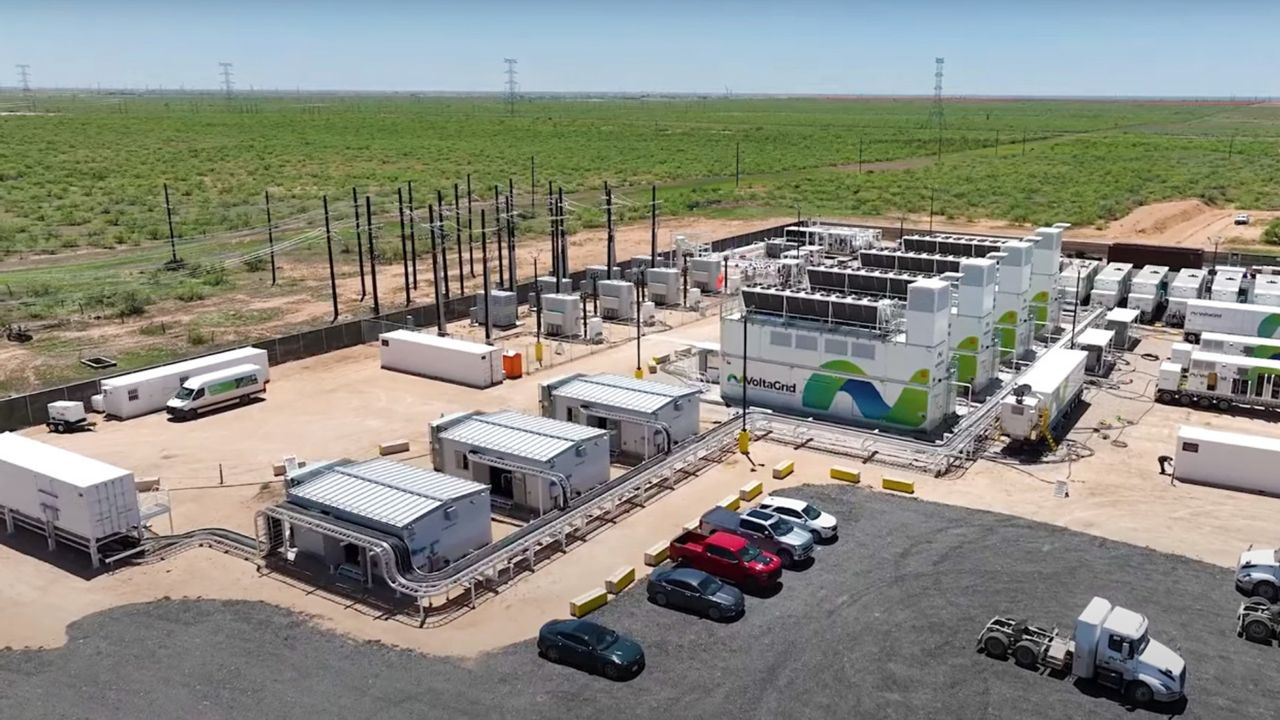
SpaceXAI says it will remove all 69 of its unpermitted turbine power generators, but expects process to take a year — trailer-mounted generators to be replaced by 1.2GW power plant

2026年8月2日 19:50

Elon Musk’s Colossus data centers that sit near the border between Tennessee and Mississippi will finally be removed starting this month. According to the company, the 69 temporary mobile turbines, which have been the subject of a lawsuit that claims they have been causing pollution, are going to be completely removed by July 2027, meaning it will take the company 12 months to withdraw the trailer-mounted generators from its premises. This may sound confusing, as they’re “portable” generators, after all, but it seems that SpaceXAI is removing them in phases as its 1.2GW power plant slowly comes online.

SpaceXAI achieved one of the fastest data center deployments ever after it set up 100,000 Nvidia H200 GPUs in 19 days — something that Nvidia CEO Jensen Huang said usually takes four years or more. Musk achieved this by bringing in his own power instead of waiting to get connected to the grid, which was considered a novel idea at that time. Today, a few data center operators, like OpenAI, are following Musk’s footsteps and deploying their own turbines to power their servers without relying on other providers.

But even though the idea feels innovative, the community surrounding the Colossus 1 and Colossus 2 data centers has been complaining about the pollution that these mobile turbines bring. They say that these turbines didn’t have the required permits to operate, although the company argued that the mobile and temporary nature of these units exempted them. The EPA said earlier this year that these units aren’t exempt from permits, but SpaceXAI continued to operate them anyway. It has even got to the point that the NAACP filed a case over these unpermitted turbines, although the DOJ weighed in, saying that removing them would put national security at risk as Colossus 2 “supports mission-critical operations.”

Despite that, it seems that SpaceXAI has finally settled into an agreement with the Mississippi Department of Environmental Quality. It’s if the 1.2GW power plant replacing these mobile turbines is the same one that Musk is importing from overseas, but the important part is that it’s approved under a Clean Air Act permit. Aside from that, the company also said that it’s equipping all its mobile turbines with “advanced emission control technologies,” which should reduce the environmental impact of its power sources.

Gem Mint signed 1983 Steve Jobs business card opens at $70,000 — second signed card from that era after $180,000 record sale

2026年8月2日 19:00

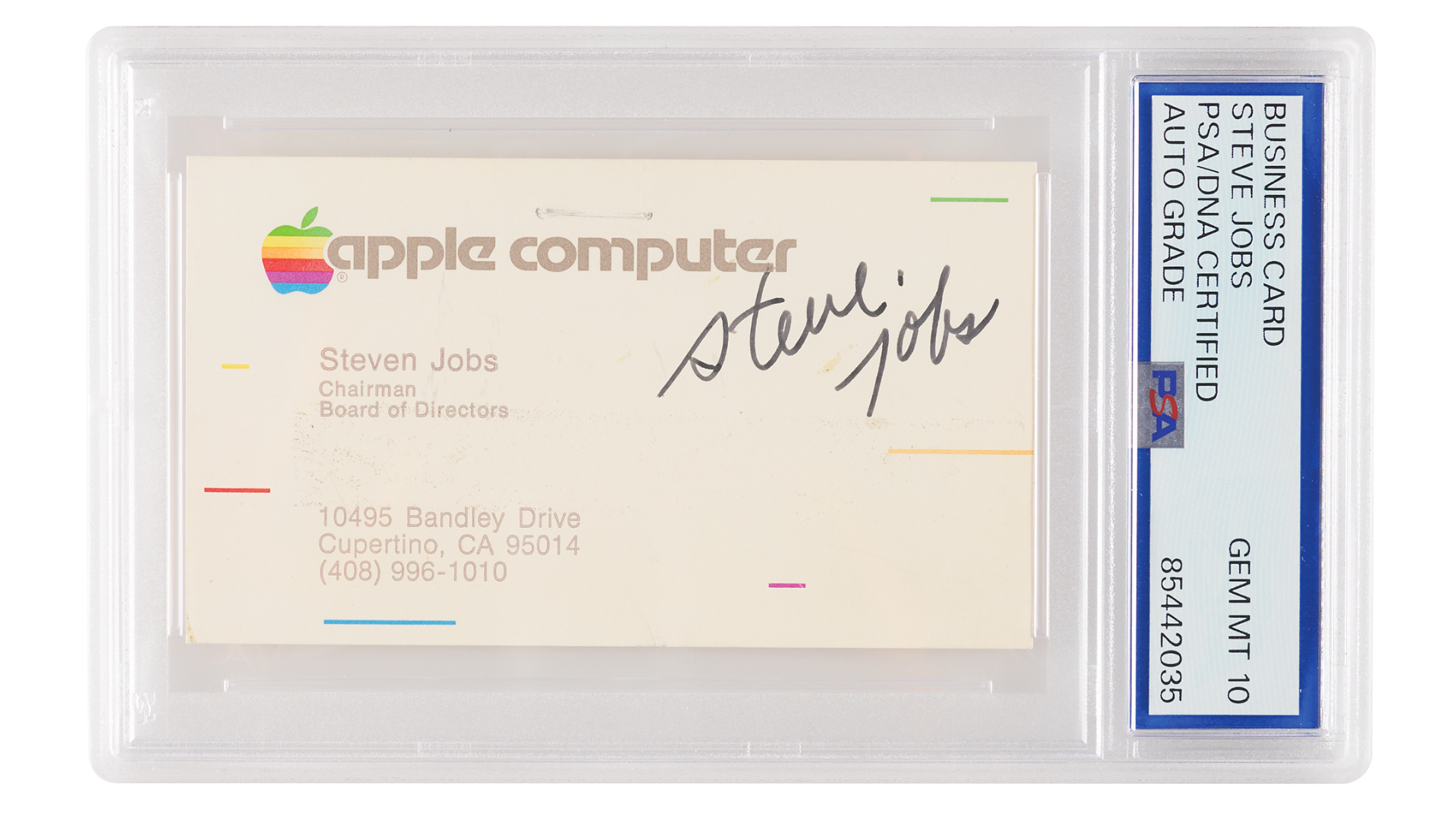
Tech enthusiasts are a passionate bunch, and the rich ones among them are willing to put their money where their mouth is. This is exactly what we see with a signed Steve Jobs business card from 1983, which is posted on RR Auction and is going for $70,741 at the time of writing. What made this relic special is that Job’s business cards from 1983 are a rare commodity and remain in high demand from collectors. It also received a Gem Mint 10 grade — the highest possible rating from PSA/DNA and is certified to be authentic.

the signed Steve Jobs business card from 1983 undergoing auction at RR Auction
RR Auction
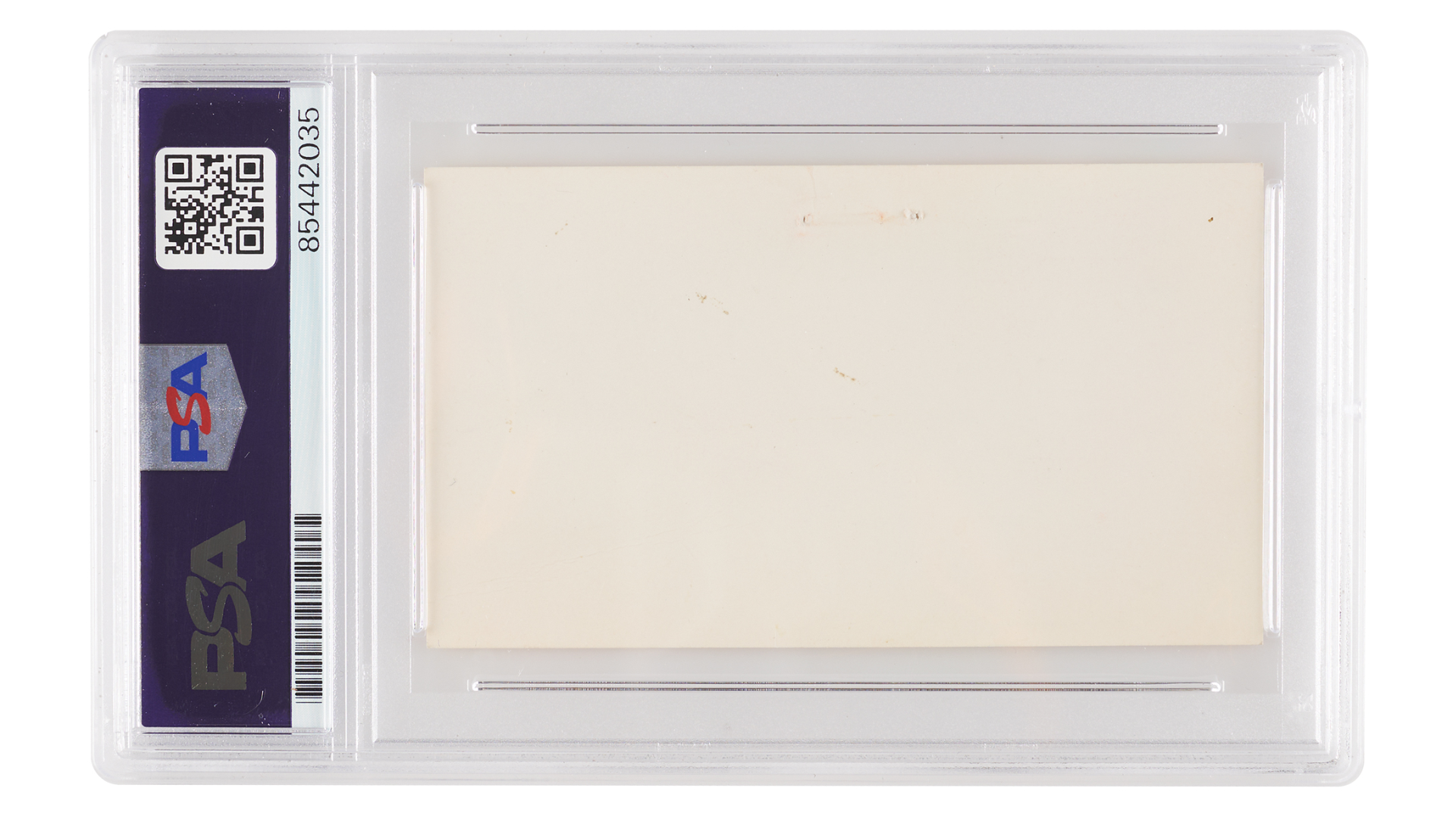
the rear of the signed Steve Jobs business card from 1983 undergoing auction at RR Auction
RR Auction

RR Auction says that it has auctioned off 15 Steve Jobs business cards in its history, but only four of those come from 1983. This is also only the second one to bear the signature of Apple’s founder, which was put on the auction block in 2024 and fetched an eye-watering $180,000. The card on auction right now isn’t exactly perfect, with the website describing it as “In fine condition, with light soiling and staple holes to the upper section, none of which affect the bold signature.” Still, there’s at least 16 bids on the item, and the next bid is currently listed at $77, 816.

This isn’t the first time that an item related to an iconic founder has fetched thousands of dollars on the auction block. Just last month, Sotheby’s estimated that Nvidia CEO Jensen Huang’s iconic Tom Ford leather jacket, which costs $9,000 if you buy it new, would get up to $60,000. However, when the hammer finally closed the auction, the winning bid hit $960,000, which, we believe, is driven by Jensanity.

Unfortunately, if you’re not into the personal effects of CEOs and want something more substantial, you’ll probably have to fork out a lot more money. One example we have is the Apple-1 ‘Prototype Board #0,’ which sold for $2,750,000. Aside from costing a lot of money, these are rare finds, and you’ll have to wait years, if not decades, to get a chance at owning something so exceptional. But if you have a hole burning in your pocket and want to start a tech-related collection, but find the Steve Jobs business card a bit above your budget, an unreleased batch of 97 Duck Hunt and Super Mario Bros. NES cartridges has recently been discovered at a retro shop, most of which are graded 9.6 or higher by PSA. Three examples are about to enter auction on August 12, and they’re estimated to start at four figures, which might make it more “attainable” to fledgling collections.

Big tech spends more than $1 trillion on AI infrastructure — additional $745 billion expected to be added to the figure in 2026 alone

2026年8月1日 00:30

Amazon, Google, Meta, and Microsoft have spent more than a trillion dollars on AI infrastructure, including data centers, the chips inside them, and the power needed to run the facilities, since 2023. The Financial Times said that these four big companies have already hit $1.1 trillion in capital expenditure based on their latest earnings reports, and that an additional $745 billion is expected to be added to this figure just this year.

“There is basically no end in sight for the growth in capex,” RBC Capital analyst Rishi Jaluria told the publication. “Investors need these companies to toe the tight line between investing in AI and not compromising the things that have made them successful.” This massive investment has upended several other industries — namely electricity prices and memory and storage chips. The massive power demand that data centers have put on the power grid has forced many U.S. utility companies to spend billions of dollars to upgrade their respective infrastructure, which they then passed on to all consumers, not just the big ones that forced the upgrade.

This, alongside other environmental issues, has caused many Americans to push back against data center projects near their communities. The White House instituted the “ratepayer protection pledge” and made AI hyperscalers, utility operators, data center companies, and individual states promise that they will protect the average consumer from electricity cost increases. But so far, no state has taken a step to codify this pledge into law. Oregon actually enacted the POWER Act, which resulted in a 30% increase in the power bill of users that consumed more than 20MW while slashing the bills of residents by 1.3%, but the state did this in 2025, way before President Donald Trump called the tech giants into the White House and told them to “pay their own way.”

The mountains of cash that these tech giants are pouring into AI are also affecting the memory and storage chip industry. Since these AI hyperscalers have a lot of liquidity from investors, they are willing to pay top dollar for the HBM they need to run their data centers. Because of this, it made sense for Micron, Samsung, and SK hynix to prioritize them over DRAM, especially as they can charge a premium for these chips and there are customers who are willing to pay at those prices. This resulted in a shortage of consumer memory that started in 2025 — while this initially affected PC builders and enthusiasts, it has started to affect other industries that require memory as well, including cars and smartphones. Even Apple, which historically had huge sway over its suppliers, was forced to increase prices because of the shortages.

Aside from skewing other industries, the massive CAPEX the big four are going into is alarming some experts, warning that the promises and contracts they’re making are leading to “hidden debt” not listed in their balance sheets. The amount, worth around $1.65 trillion, is annotated in their quarterly financial statements as future obligations that will only come into play as the related asset or service comes online. The current value is 122% of the actual debt reflected on their balance sheets, which could give investors the wrong impression that they have fewer obligations than they actually have.

While the amount of money that the big four are spending on AI might seem dizzyingly high, we must note that these companies are raking in massive amounts of cash quarterly themselves. Microsoft’s latest quarterly revenue is $90 billion, while Meta made $60 billion in the same period. Alphabet (Google) announced revenue of nearly $120 billion, while Amazon made $200 billion. That is a total of nearly $470 billion for these companies in just the last quarter.

Still, that does not mean that they can just keep on spending on AI. For example, even though Google’s cloud business had a revenue of $11 billion last year, its price dropped after it announced that it spent more than it made last quarter — the first time this happened in the 20 years since it went public. Meta is also planning to rent out its AI compute, apparently following in the footsteps of Amazon, Google, and Microsoft, which have growing cloud businesses. However, this announcement caused a drop in its stock price. “They are a bit all over the place,” SLC Management managing director Dec Mullarkey told FT. “For investors it’s no longer growth at any cost; they want to see the spending flowing through to results, like at the Big Three.”

Google goes cash flow negative for the first time as AI data center buildout increases capex to a staggering $44.9 billion in a single quarter — CFO warns that capex will increase in 2027 as company banks big on TPUs

2026年7月28日 19:12

Google's parent company Alphabet recently reported negative free cash flow of $5.9 billion for the second quarter of 2026, the company's first cash-negative quarter since its 2004 IPO, after capital expenditures doubled year-over-year to a record $44.9 billion and exceeded the $39.1 billion its operations generated as it continues its rapid buildout of AI data centers, according to its earnings release.

CFO Anat Ashkenazi raised full-year capex guidance to between $195 billion and $205 billion, up from $180 billion to $190 billion, and disclosed that Google delivered TPU systems to customers' data centers for the first time, a shift from renting the chips exclusively through Google Cloud.

The quarterly deficit is small compared to the sums moving through the business, and the firm's trailing 12-month free cash flow remains positive at $53.3 billion. Back in February, Alphabet raised its guidance, but since then, spending has exceeded the cash the business generates due to its AI buildout, and Alphabet is covering the difference with borrowed money and new stock.

Servers first, buildings second

Approximately 60% of the quarter's technical infrastructure investment went into servers, with the remaining 40% split across data centers and networking equipment, Ashkenazi told analysts on the earnings call. That ratio inverts the usual assumption that hyperscaler capex is dominated by construction. Most of Alphabet's marginal dollar now buys compute, primarily its own TPU-based systems, rather than other forms of infrastructure. Depreciation of property and equipment rose to $7.1 billion in the quarter from $5.0 billion a year earlier, and Ashkenazi said infrastructure spending will keep pressuring the P&L through higher depreciation and energy costs.

"We're still in a supply-constrained environment," Ashkenazi said on the call, repeating a characterization the company has used for several consecutive quarters. Demand is running far enough ahead of Alphabet's own build schedule that the company is renting third-party capacity as a bridge while its data centers come online, an arrangement Ashkenazi said will create modest margin pressure for its Cloud segment in Q3. The construction pipeline behind the 40% includes a $40 billion, three-campus program in Texas through 2027 in November, representing the company's largest investment in any state, and a $1.5 billion expansion of its Jackson County, Alabama campus, announced in June.

TPU sales turn capex into inventory

Google began recognizing revenue from TPU system sales in the quarter, with Ashkenazi telling analysts the systems were "delivered to customer data centers for the first time in Q2" and that "the vast majority of the revenues from these agreements will be realized in 2027." According to Google's balance sheet, inventory stood at $10 billion on June 30, roughly four times the $2.4 billion recorded at the end of 2025. A meaningful slice of the quarter's cash outflow bought hardware that sits on the balance sheet today and will be sold to customers next year, bringing cash back in. Money spent on data centers doesn't return in the same manner; instead, it is written down over the years of use.

Anthropic is anchoring a great deal of Alphabet's external demand, with its October 2025 agreement giving the Claude developer access to up to one million TPUs and more than 1 GW of capacity coming online this year, and an April securities filing from Broadcom, Google's TPU co-designer, added roughly 3.5 GW of TPU capacity from 2027 while locking Broadcom into future TPU generations through 2031. Meta entered talks for multi-billion-dollar TPU deployments in its own data centers last November. The current flagship, the seventh-generation Ironwood TPU, carries 192GB of HBM3E per chip and scales to 9,216-chip pods that Google rates at 42.5 FP8 exaflops.

Every TPU Google manufactures serves four functions: training and serving Gemini, running Search and YouTube inference, renting to Cloud customers, and now shipping as sold hardware. No other hyperscaler's capex spend works that many jobs, and none of the others has a chip business generating third-party revenue at this stage.

A $98 billion liability

Alphabet issued Class A, Class C, and mandatory convertible preferred stock in June for net proceeds of $49.6 billion, earmarked in the release for "capital expenditures to scale AI infrastructure and global compute," and sold $20.3 billion of senior unsecured notes during the quarter. Long-term debt reached $98.2 billion on June 30, up from $46.5 billion at the end of 2025 and from roughly $16 billion a year before that, a run-up Ashkenazi acknowledged on the call. The February bond program alone raised more than $30 billion across multiple currencies, including a 100-year sterling tranche, it was reported at the time.

Together, the four largest hyperscalers plan a combined 2026 capex of around $725 billion, up 77% on 2025, and Alphabet's new range now tops the group alongside Amazon's roughly $200 billion. Meta raised its own 2026 forecast to $125 billion to $145 billion in April, citing component pricing and competition for land, power, and labor. Alphabet's headline Q2 net income of $112.1 billion overstates the reality somewhat, however, as $99.0 billion of other income came primarily from unrealized gains on equity securities, contributing $6.26 of the $9.11 in diluted EPS. Operating income, the cleaner measure, rose 30% to $40.8 billion.

Google Cloud grew 82% to $24.8 billion in the quarter with an operating margin of 35.6%, and backlog reached $514 billion, up more than $50 billion sequentially, with just over half expected to convert to revenue within 24 months. Those contracts are the collateral behind the spending, with the buildout chasing demand Alphabet has already booked rather than demand it hopes to find. Ashkenazi said free cash flow "will remain under pressure" and confirmed capex will rise significantly again in 2027, so the question the next few quarters will answer isn't whether Alphabet returns to positive territory in any given period, but whether operating cash flow, up 41% year over year in Q2, can keep growing faster than a spending that shows no sign of slowing down.

AI tech companies have ‘hidden debt’ worth around $1.65 trillion, report claims — amount is 122% of debt reflected on the balance sheets of Alphabet, Amazon, Meta, Microsoft, and Oracle

2026年7月22日 21:23

Five U.S. tech giants heavily invested in AI and its related infrastructure reportedly have an estimated $1.65 trillion in hidden debt, with the figures annotated in their quarterly financial statements instead of being listed in their balance sheets. According to Nikkei Asia, this is higher than the $1.35 trillion officially listed, meaning investors could be caught unaware once the hidden figures come to light.

The publication says that Meta has a high off-balance-sheet-to-recorded-debt ratio, with the company owing $420 billion in unlisted debts compared to the $140 billion written on the balance sheet. Oracle purportedly also has a massive $273.3 billion of hidden debt, which is a 2,900% jump from the hidden debt it had from 2022.

This may sound strange, but it’s actually an accepted accounting practice. The “hidden debt” stems from long-term contracts that have been signed but have not come into force yet, which, Nikkei says, is mostly related to the billions of dollars promised to data center operators. The AI race has got many hyperscalers signing contracts and agreements with data center operators, saying that they will pay for the compute they generate once their project goes online.

While any institution promising to pay any amount of money for services or goods delivered is obliged to list them as a liability, the fact that these data centers haven’t started operations means that these agreements are off-the-books at the moment. But when these projects come online, the contracts that the tech giants have signed will come into force, and they’ll have to pay for the compute that these sites will deliver, no matter if there is demand or not.

Nevertheless, these tech companies aren’t just pouring money into future contracts just for the sake of it. Alphabet, Amazon, and Microsoft reportedly have a cloud service backlog worth $1.45 trillion, meaning these are services yet to be rendered and paid. Amazon Web Services CEO Matt Garman also told the publication that the investments that the company is getting into are “not speculative.”

While this may seem like a good way to secure capacity — sign customer contracts that guarantee demand and then enter into long-term agreements with data centers to get the compute needed to deliver the services- it opens these tech giants to massive amounts of risk. That’s because if the demand fails to materialize, then they’d be left paying for excess compute without having any customers to sell them to. What’s more alarming is that Nikkei says that these investment expenditures are exceeding their earnings, meaning these big tech companies are increasingly relying on corporate bonds and new shares to fund them.

Even though demand for AI compute is increasing, it’s still a relatively new and unproven technology, with many experts saying that it should benefit more people to avoid a bubble. The cost of using AI for nearly everything, called “tokenmaxxing,” has also caught some companies by surprise, with agentic AI eating up annual AI budgets in a matter of weeks. Because of this, some companies are reducing their use of AI or are switching to more affordable models from China. This uncertainty, paired with the way tech companies “hide” these liabilities, is quite concerning, as they would appear to have less long-term obligations than they actually do.

This isn’t the first time that an industry giant has used similar accounting techniques. The publication cited Enron’s 2001 collapse, which was due to the company hiding its troubled assets through special purpose entities and marking unrealized gains from trading contracts into its current income statements. While the tech giants are not hiding underperforming assets off their balance sheets and committing fraud, they’re still using a similar mechanism to list their upcoming obligations. Although these are technically not debt, they still behave like one, and the way they’re reported is what’s concerning some experts.

Scientists synchronize 105,000 nano-oscillators in just 45 nanoseconds — paving the way for a highly efficient and fast alternative to transistors

2026年7月16日 18:30

"Oscillator-based computing" is a term that doesn't make many headlines, but this area of computation is evolving and showing promise. The latest impressive development comes from an experiment in which boffins managed to synchronize 105,000 nano-oscillators in just 45 nanoseconds, reportedly using very little energy.

In layman's terms, the entire grid of tiny magnets, once perturbed, synchronized itself entirely within 45 ns, all just using the magnets' inherent spin — think of ripples on a water surface. Each oscillator measures 10-20 nm across, and the 105,000-count result is nearly a 1000x upgrade over the previous demonstration with 64 oscillators, proving that the technology can be scaled. In this new experiment, synchronization time barely increased with additional oscillators: it was 10 ns with 100 oscillators and rose only to 45 ns at 105,000.

What this means for computing is that grids can solve certain classes of problems that lend themselves to representation via propagating waves, directly or indirectly. Broadly speaking, most anything involving waves, statistics, approximation, and pattern recognition is eligible. The article mentions Ising machines and reservoir computing as being implementable by oscillator grids. At some point, the grids could become programmable by manipulating the oscillators' frequencies, phases, and coupling strengths. The result is then read by measuring how the grid settles into a synchronized state.

Going from there, practical applications include high-speed communication networks, financial and scientific modeling, real-time data analytics, and even AI acceleration. The research paper specifically notes that the grids could operate at tens of GHz and spend comparatively little energy doing so. The 45-nanosecond figure for the oscillator grid to stabilize would be roughly analogous to the time it would take a regular CPU to perform one calculation across an entire matrix.

Unlike quantum computing, which requires extensive and difficult error correction to maintain coherence, the oscillator array produces an exceedingly clear signal once it settles. The quality factor of the oscillator experiment was over one million, meaning the resulting wave frequency was well-defined and easy to read — think of the exact pitch carried by a tuning fork. To get the full details, be sure to read the research paper here.

Nvidia slashes list of authorized customers in Asia in a bid to reduce AI chip smuggling, report claims — company sent field inspectors, called customers to check if business is genuine after pressure from Washington

2026年7月14日 19:08

AI tech giant Nvidia, which builds some of the most coveted AI chips in the world, has reportedly created a new “whitelist” of verified companies to help prevent its products from getting smuggled into China. According to the Financial Times, this roster cuts the number of authorized clients by more than half, with those remaining having passed tougher compliance inspections to ensure that they are genuine businesses, not shell companies designed to forward Nvidia GPUs and servers into China. Some of the steps that Nvidia took to help safeguard its chips reportedly included sending staff to customer data centers, contract verification, and interviewing end users.

Sources told the publication that the company made this move after Washington pressured it into tightening its legal compliance, which comes months after the arrest of Supermicro co-founder Yih-Shyan “Wally” Liaw, alongside two other suspects, for allegedly smuggling $2.5 billion worth of Nvidia hardware into China. This clampdown also extended into Singapore, which saw the seizure of a $42-million mansion tied to alleged AI GPU smugglers, and Taiwan, where authorities raided the offices of Supermicro and two supply-chain partners as part of a chip smuggling probe. Nvidia was not immediately available for comment on the news.

Although the U.S. has banned the latest AI GPUs for export into China since 2022, various investigations showed Chinese companies could still easily get their hands on these coveted chips until recently. Washington’s and its allies’ crackdown on AI GPU smuggling have cut supply in China, which is now making it harder for AI companies to procure the processors they need. President Donald Trump took a 180-degree turn in December 2025 and finally allowed Nvidia to export its H200 GPUs to select customers in the region, which would have alleviated the situation. However, Beijing refused to allow Chinese companies to buy these AI processors — instead, it’s banking on domestic semiconductor manufacturers to make up for the shortfall, but it’s apparently still not enough. One tech executive even told the Financial Times that all domestic suppliers are sold out and that they’re even considering less powerful chips, as long as they could be put to use.

As Nvidia reportedly cleaned up its verified list of clients and made it harder for non-vetted companies to acquire its chips, the company has also told its partners to fix their export control compliance. “We insist our partners are compliant,” Nvidia CEO Jensen Huang told the media last May after Taiwan started its operations against AI chip smuggling into China. “We hope that they will enhance and improve their regulation compliance and prevent that from happening in the future.”

Microsoft struggles to fulfill its 2030 sustainability promise amid carbon-heavy AI expansions — the company's chief sustainability officer claims the target is still feasible

2026年7月11日 20:45

Microsoft’s emissions for fiscal 2025 (FY25) rose by 25% from the previous year, even as the company’s 2030 deadline to become carbon-negative draws closer. According to the company’s 2026 Environmental Sustainability Report, released on Thursday, July 9, the backward step was driven primarily by the rapid expansion of its data center infrastructure and its decision to stop using short-term renewable energy certificates, which reduced its reported footprint without necessarily adding new clean electricity to power grids.

Microsoft reported approximately 20.3 million metric tons of carbon dioxide-equivalent emissions across its operations and supply chain, up from 16.2 million tons in fiscal 2024 and nearly 58% above its 2020 baseline. Electricity consumption increased by 24% during the year as the company built the computing capacity required for its cloud and AI businesses. Regardless, Microsoft says it remains committed to becoming carbon-negative, water-positive, and zero-waste by 2030. It also reported meeting its 2025 renewable-electricity target, replenishing more water than it withdrew globally, and exceeding several waste-recovery targets

The report’s foreword, written by Microsoft Vice Chair and President Brad Smith and Chief Sustainability Officer Melanie Nakagawa, focused heavily on the collision between the company’s headline sustainability goals and the realities of AI. Microsoft established the goals in 2020, a few years before the current scale of AI’s capabilities and the corresponding high environmental demands began to manifest.

While AI is inarguably a world-changing technological revolution, it is raising serious environmental concerns that begin right at the raw material sourcing and the complex semiconductor fabrication stages. The impact continues even after the processors have been compiled into supercomputers in massive data centers, with issues related to land use, energy consumption, noise pollution, and water consumption. Residents are increasingly opposing the building of these data centers in their communities due to these issues.

Microsoft is exposed at nearly every point of the AI chain. It procures servers and custom AI chips; owns and operates a massive, global network of over 300 data centers across 34 countries that powers the Azure cloud platform; and supplies the computing infrastructure behind products such as Copilot and its partnership with OpenAI. Scope 3 emissions from construction, purchased hardware, suppliers, and other value-chain activities remain the largest part of its footprint. Meanwhile, electricity-related Scope 2 emissions grew from nearly 2% of the total in 2024 to 13% in 2025.

Microsoft acknowledges that environmental solutions are not expanding as quickly as AI infrastructure. “This tension is real,” the foreword states. “It is forcing sharper questions: Where do we need to move faster, invest differently, or rethink our approach?” The company argues that the answer is not to retreat from AI, but to combine carbon-free electricity, carbon removal, sustainable fuels, lower-carbon construction materials, hardware reuse, and efficiency improvements into a single portfolio rather than treating each environmental target separately.

Its decision to stop buying non-additional, unbundled renewable energy certificates forms part of that change. These certificates can allow a company to claim renewable electricity already being generated elsewhere. Microsoft says it will instead prioritize longer-term agreements that help add additional carbon-free generating capacity to the grid, even though doing so will increase its reported emissions in the near term. Its renewable-energy agreements now cover up to 40 GW across 26 countries, with approximately 19 GW operational.

The company is also modifying the data centers themselves. It introduced a closed-loop liquid-cooling design that CEO Satya Nadella says enables AI data centers to use about as much water annually as a restaurant. Microsoft is experimenting with microfluidic channels etched into silicon, zonal cooling that reserves colder liquid for the hottest equipment, and lower-carbon concrete, steel, and mass timber for its construction. These efforts have not exactly quelled anti-data-center sentiment around its data centers. The company faced protests over a planned facility near Granger, Indiana, while residents living near its $7.3 billion Fairwater AI complex in Wisconsin have filed a lawsuit alleging persistent noise, dust, traffic, and light pollution.

Away from carbon, the report records clearer progress. Microsoft replenished 14.2 million cubic meters of water, exceeding its global withdrawals for the first time, and reduced average data center water-use effectiveness by 25% from its 2022 baseline. It achieved a 92% reuse and recycling rate for retired cloud hardware, diverted 90.5% of construction and demolition waste from disposal, and reduced single-use plastics in primary product packaging to 0.07%. It also legally protected 16,266 acres of land, approximately 36% more than the land estimated to be occupied by its operations.

The report is equally candid about where Microsoft is falling behind. The company's most important commitment—becoming carbon-negative by 2030 — is moving further away rather than closer. Total greenhouse-gas emissions climbed 25% year over year and now sit roughly 58% above the company's 2020 baseline, largely because AI infrastructure is expanding faster than its decarbonization efforts can offset. Scope 2 emissions also jumped sharply, rising from nearly 2% of Microsoft's footprint in FY24 to 13% in FY25 as electricity demand from new data centers surged. While Scope 3 emissions remain the company's largest source of carbon pollution, the report says the growing contribution from purchased electricity underscores how increasingly difficult it is to power AI infrastructure with clean energy alone.

Flock cameras mistakenly track car reviewer over 'stolen' tags — police ambush tester in store parking lot and detain him for an hour

2026年7月11日 18:30

A data entry error in Flock’s system has resulted in a car reviewer getting boxed in by police cars in a parking lot on suspicion that he was driving a vehicle with stolen tags. The Drive reviewer and Director of Content and Product, Joel Feder, was driving a $155,000 loaner Range Rover when police surrounded his vehicle.

When he asked why he was stopped (and by four police cars, nonetheless), the officers said the car’s plate had been reported stolen and that they’d been tracking him for days using the Flock app. After about an hour of trying to figure out why he was stopped, it turned out that a different plate with similar characters had been misplaced and had to be reported stolen in California, which triggered a nationwide alert on Flock.

The core of the issue is that the New Jersey plates on the Range Rover read 34 10 DTM, with the number 10 written in smaller font. This is a non-standard design used by New Jersey for manufacturers, with VEHICLE MFR written on the bottom of the tags. The missing plate was 34 03 DTM, but unfortunately, the LAPD police report only listed 34 DTM.

Another issue with the Flock system compounded this reporting error. Since the New Jersey manufacturer tags weren’t standard, it only read the larger numbers and letters and disregarded the smaller “10” on Feder’s plate. Because of this, it flagged all vehicles with the 34 ## DTM plate as stolen and alerted partner police forces whenever it detected a similar plate on the road. Feder even said that four other vehicles with a similar plate were being tracked throughout Minnesota, and it just so happens that he was the first to be intercepted.

The police said they had been tracking the vehicle for days using Flock’s AI cameras, but kept losing it because Feder parked it in his covered garage. So, when he stopped at a retail store, the authorities jumped on the chance and boxed him in to ensure that he did not escape. Thankfully, the issue was resolved on the spot with the officers, although it took an hour to verify with Jaguar Land Rover that the car or the plates Feder had were not stolen. Still, the journalist was advised to go straight home, as other police agencies using Flock might not be aware of the situation, which could lead to him getting stopped again on suspicion of driving a stolen luxury car.

These two errors compounded together to create a rather harrowing experience with the police. Thankfully, the incident did not turn into something serious, especially as the Plymouth Police told Feder that the cops would have stopped him with guns drawn if he were in Minneapolis.

This event adds to the numerous controversies that Flock AI has been facing, with one of the biggest issues the company faced recently being when several police officers were arrested for misusing the service to stalk romantic partners. This has led citizens to push back against the service, especially as news like this makes them lose trust in the authorities. It has even gotten to the point where a Texas town council member broke into a tantrum, proposing a total ban on cellular and GPS devices, after community pressure led to the cancellation of the service.

Apple sues OpenAI over alleged theft of trade secrets — claims company mentored incoming employees on bringing confidential information

2026年7月11日 05:59

Apple filed a federal lawsuit against OpenAI on Friday, accusing the AI company and its chief hardware officer of stealing its trade secrets.

"OpenAI and its cohorts, led at least in part by former Apple employees, have recruited candidates from Apple, extracted their knowledge of Apple’s sensitive and confidential information, and then continued to exploit that knowledge once they arrived," the complaint reads. "As a result, OpenAI has misappropriated Apple’s trade secrets and confidential information in a variety of ways."

The suit, filed in the Northern District of California, names OpenAI technical staff member Chang Liu, chief hardware officer Tang Tan, OpenAI, and io Products as defendants. The last of that group is notable because it was founded by Tan in collaboration with former Apple design head Jony Ive, Evans Hankey (Ive's successor at Apple), and former Apple designer Scott Cannon. Notably, the complaint seems to attempt to avoid naming the founders, though Ive's name is cited in a URL.

Tan previously served as a vice president of product design at Apple, working on the iPhone, AirPods, and Apple Watch. Liu served at Apple as a senior electrical engineer.

In the complaint, Apple alleges that it reached out to OpenAI in February with concerns, but that OpenAI did not respond. Apple claims that Tan attempted to gain secrets from Apple employees, including asking prospective job candidates to bring components for "show and tell" sessions and used his knowledge of the company to squeeze more information out of candidates. The suit claims that Liu never returned a company laptop, and used an authentication bug to access Apple files.

Apple also claims that OpenAI told incoming employees how to leave their former job, suggesting they stay as long as possible and not disclose their former employer in order to continue to access confidential information.

"At every level, from members of its Technical Staff to its Chief Hardware Officer, and in coordination with business partners, OpenAI has been stealing Apple’s trade secrets and confidential information," the suit reads. "As a natural result, OpenAI’s nascent hardware business now rests on the shakiest of foundations, rotten to its core by its illegal reliance on misappropriated trade secrets."

OpenAI did not immediately respond to a request for comment from Tom's Hardware. Apple's lawsuit claims that over 400 former Apple employees currently work at OpenAI.

Apple is rumored to be working on a number of AI-powered hardware projects, including AirPods with cameras, a pendant, and home robots. It's less clear what hardware OpenAI may be working on, though The Information suggested the company has a HomePod-style smart speaker in the works.

Apple is requesting a jury trial, damages, attorney fees, and orders that the OpenAI may not use Apple's trade secrets, among other injunctions.

In May, Bloomberg reported that OpenAI was considering legal action against Apple because it expected deeper integration and more users from ChatGPT features built into iOS.

If the trial does go to court, it's sure to be a dramatic one, potentially dragging several former high-level Apple employees into testimony through discovery and testimony.The trial, Apple Inc. v. Liu et al, is case 5:26-cv-07078 in the United States District Court in Southern California.

Elon Musk receives FTC greenlight to buy Mesh Optical as interconnects emerge as AI's tightest bottleneck — the move will expand Musk's growing stack of critical AI infrastructure

2026年7月9日 20:42

Elon Musk has received the go-ahead from the Federal Trade Commission (FTC) to acquire Mesh Optical Technologies, an AI infrastructure startup that develops light-based networking hardware for data centers. Records published by the FTC on June 25 show that the regulatory body granted early termination of its antitrust review of the transaction, permitting Musk to procure Mesh. While the deal is yet to be finalized, with no official statement from either party, the government's green light indicates it’s all but done, as this was the last hurdle.

Interestingly, Mesh was founded by three former SpaceX employees who helped develop the Starlink optical communication links that keep thousands of satellites interconnected. So, why is Musk — who is simultaneously building the world's largest multibillion-dollar semiconductor manufacturing facility and an 11-million-square-foot orbital data center factory — seeking to own a company founded by his former employees? The answer appears to be optical interconnects, a critical technology that connects all three.

The connection problem: AI's latest bottleneck

As AI continues to grow in capability and user base, so do the enabling AI clusters, many of which now comprise tens to hundreds of thousands of processors. The hardest problem in scaling an AI cluster has evolved beyond making the chips faster to moving data between them. Training and inference tasks on frontier AI models are split across thousands of GPUs using parallel-computing techniques, requiring the processors to exchange enormous volumes of data every fraction of a second.

While per-chip compute capacity has raced ahead, the bandwidth linking those chips has not kept pace, a mismatch the industry refers to as the "I/O wall." The processors mostly communicate via copper interconnects, which currently dominate AI clusters. However, copper presents inherent limitations. As per-lane signaling climbs toward 200 gigabits per second (Gbps), attenuation, crosstalk, and the skin effect all worsen at higher frequencies, driving up power and corrupting the signal until passive copper becomes impractical beyond a meter or two.

To overcome these constraints, the industry is increasingly turning to optical networking, bringing the technology closer to the processor. Optical links use transceivers to convert a chip's electrical signals into light for transmission over fiber, then convert them back into electrical signals at the receiving end. They can carry far more data over much longer distances while consuming less power than equivalent high-speed copper connections, making them increasingly essential as AI clusters grow larger. Chipmakers and networking vendors are racing to deliver faster 800G and 1.6T optical transceivers while shortening electrical paths with co-packaged optics, which place the optical engine alongside the switch ASIC (application-specific integrated circuit).

This shift has transformed optical interconnects from a supporting technology into one of the industry's most strategically important AI infrastructure markets, attracting billions of dollars in investments and resulting in major partnerships for new and existing industry players. One such player is Mesh, the optical hardware startup that has drawn the interest of the world’s richest man.

A mesh solution to Musk’s ambition?

Elon Musk has been one of the most aggressive players in the AI industry. After co-founding OpenAI, he went on to launch a proprietary company, xAI, before turning his focus to building data centers. In less than two years, xAI deployed the Colossus supercomputer with over 200,000 Nvidia Hopper- and Blackwell-generation accelerators. Colossus 2, with a long-term target of 1 million GPUs, is already operational. For Musk, however, buying the chips was not enough. Why not build them, too?

Characteristic of the world's richest man’s preference for complete vertical integration, SpaceX — in collaboration with Tesla and xAI — is now building Terafab, a vertically integrated, multi-billion-dollar semiconductor manufacturing facility aimed at producing chips capable of delivering an unprecedented over 1 terawatt of AI compute capacity annually. Located in Austin, Texas, the colossal facility aims to consolidate every stage of chip production under one roof, handling everything from logic and memory fabrication to advanced packaging and testing. An ambitious project that we've also analyzed for its feasibility.

The facility's output will serve to meet the chip needs of the broader AI industry, as well as those of Musk’s xAI, self-driving vehicles, Optimus humanoid robots, and SpaceX's orbital AI data center plans. Musk says 80% of Terafab's total compute output is ultimately destined for Earth orbit to support SpaceX's orbital data centers.

“But there aren't any data centers floating around in space,” observers may point out. Introducing Gigasat, Musk's 11-million-square-foot fix for that reality. Gigasat is yet another massive facility under construction, this time for manufacturing everything needed for SpaceX’s AI1 satellite, the company's most likely world-first orbital data center with 150 kW of compute.

At first glance, everything seems in place for the next generation of Ultra-capable AI infrastructure. However, there is one critical missing piece in this stack, one that we've established earlier. Hundreds of gigawatts of extremely powerful silicon are not particularly useful if the data can't move between the dies fast enough in AI clusters, whether on the ground or in space. The industry-prevalent copper hits a wall long before you reach the scale Musk is chasing. Hence, the need for the missing piece: optical interconnects.

This brings us to Mesh, a manufacturer of precisely that missing piece. Mesh Optical Technologies is a US optical communications startup that develops high-speed optical interconnect hardware — optical transceivers that convert a chip's electrical signals into light for high-speed transmission over fiber — for AI data centers and space communications.

Its flagship product, the Alpha C1, supports 800G and 1.6T data rates and reportedly draws about a third of the power of competing modules, using a flip-chip die-bonding process the company says makes the optical engine repeatable at the volume — potentially millions of links — that AI clusters demand.

These are the characteristics needed to seamlessly interconnect the next-generation terrestrial AI supercomputers and, potentially, future space-based computing platforms, which Terafab aims to deliver. An added benefit is the space-related experience of the three Mesh founders, who happen to be ex-SpaceX employees who helped build the laser-based inter-satellite links that connect Starlink's constellation.

Again, in typical Musk fashion, rather than simply buying the hardware, he is moving to acquire the entire company, gaining full control of its R&D and supply chain. Should the deal — which is all but done — go through, Musk will own the full stack of critical infrastructure needed to power the future of the AI industry.

Smart money is flowing to optical interconnects

The SpaceX ecosystem is just one of many entities that recognize the immense technical and economic importance of optical networking in AI. AI chipmakers are actively investing in the optical supply chain to secure manufacturing capacity and prevent hardware bottlenecks.

Nvidia alone has committed a reported $4 billion across component makers Coherent and Lumentum to lock up supply. Elsewhere, several hyperscalers, including Microsoft, Meta, and OpenAI, have teamed up with hardware giants Broadcom, AMD, and Nvidia to establish an Optical Compute Interconnect (OCI) Multi-Source Agreement (MSA) group, with the goal of developing protocol-agnostic scale-up interconnection technology for AI clusters.

To counter chipmakers' dominance, entities such as Japan's NTT established the $500 million IOWN (Innovative Optical and Wireless Network) Fund. This fund explicitly targets the creation of an open photonic ecosystem to accelerate the global transition from copper to light-based AI clusters.

Then there are the smart-money moves by investors, as well as the rising balance sheets of companies. Lumentum stock reportedly soared 339% in 2025 and delivered an additional 135.4% return in the first five months of 2026 alone, while Fabrinet, Cisco, and Coherent all recorded significant revenue surges attributable to optical hardware sales, meaning that Musk's move to acquire Mesh is extremely prescient, given Terafab's ambition.

Chinese courts allow heirs to inherit accounts of deceased gamers — multiple cases spanning years establish precedent for digital ownership of games, in-game items, and microtransactions

2026年7月9日 18:00

While most of the Western world has been grappling with publishers and big tech companies about digital ownership, a Redditor who claims to be married to a Chinese lawyer and certified Chinese-English translator said that multiple Chinese families have successfully sued “for the right to inherit their deceased relatives’ game accounts.” u/Slawrfp shared summaries of three rulings favoring a gamer’s estate with regards to digital ownership on a subreddit. These cases go beyond game ownership, too, as they also tackled digital assets, in-game purchases, Bitcoin, and even social media accounts.

Chinese gamers have successfully managed to sue for the right to inherit their deceased relatives’ game accounts from r/pcmasterrace

“Chinese courts view game accounts and microtransaction purchases as something of monetary value, and therefore gamers have rights related to those assets,” u/Slawrfp wrote. “Chinese courts reject the idea that standard non-transferability clauses can stop you from inheriting or bequeathing a game or even individual microtransactions (of the same nature as CS:GO knives or skins in other games) and have made this ruling in multiple cases.”

u/Slawrfp cited several cases — the first one is called “the Golden Blade case," which arose out of a dispute between two parties in 2009. The issue started when the wife (Li Lan) of a deceased gamer (Lu) wanted to sell the “Golden Blade” he acquired in the game Zhengtu, a now-defunct MMORPG. However, Lu required the cooperation of his “in-game wife,” Yang Yuan, to get the item, and therefore argued that she should get ownership.

In the end, the court ruled that since Lu put in the effort, paid for internet access, loaded up with in-game credits, and that buyers were willing to acquire the item for around RMB 50,000 (around $7,350 at the current exchange rate), then it had the attributes of property and could be inherited by his legal wife. Aside from that, DeHeng Law Offices [machine translated] said that the “in-game marriage” between Lu and Yang had no legal bearing, so Li Lan stands as the inheritor of Lu’s properties. But because Yang spent a similar effort in helping Lu to acquire the artifact, its ownership belongs to both, so both Li Lan and Yang Yuan are entitled to 50% each of the asset’s price.

Another case in 2024 tackled a deceased user’s Bitcoin holdings, a gaming account worth nearly $30,000 (RMB 200,000), and a social media account. According to Chinese lawyer Wang Lianghua on the Chinese social media platform Toutiao [machine translated], the inheritor’s lawyer argued that virtual property has attributes of legal property because it could be traded, has value, and could even generate profits, which meets the “scarcity, disposal, and value” definitions of property. On the other hand, the platforms holding these digital assets argued that ownership belongs to them based on the agreements that the user accepted when signing up for the account.

The court judged that virtual assets, including Bitcoin, game equipment, social media commercial rights, and domain names, among others, are included in the deceased’s estate and are inheritable, and that operation of social media accounts can also be passed on to the heirs. However, private content, such as chat records and other “purely personal interests,” cannot be passed on and are instead archived by their respective platforms. Lastly, the “inheritance prohibition” included in most license agreements is invalid as they violate statutory rights — platforms are required to assist with inheritance requests and could ask for supporting documentation as well as charge reasonable costs.

Aside from these cases, there was another one where a mother lost her son and asked a gaming platform to give her access to his accounts. The court ruled similarly as the previous case, saying that the gamer’s accounts, character data, virtual items, and other assets are virtual property, and thus, inheritable. The company was then obligated to cooperate with the mother and transfer all inheritable rights to her.

These court cases offer a stark contrast in most of the rest of the world, where publishers could cut you off from your media library the moment their licensing contracts expire. The Steam subscriber agreement also prohibits the transfer of a Steam account — and with U.S. courts counting games as digital licenses, then Valve cannot be compelled to pass them on to the user’s heirs. Digital rights are a hot topic among gamers and consumers, especially as many big tech companies transition from selling physical copies of games to going all digital, and preservationists fight to keep game archives alive.

❌
❌