普通视图

发现新文章,点击刷新页面。
今天 — 2026年8月1日Tomshardware

Big tech spends more than $1 trillion on AI infrastructure — additional $745 billion expected to be added to the figure in 2026 alone

2026年8月1日 00:30

Amazon, Google, Meta, and Microsoft have spent more than a trillion dollars on AI infrastructure, including data centers, the chips inside them, and the power needed to run the facilities, since 2023. The Financial Times said that these four big companies have already hit $1.1 trillion in capital expenditure based on their latest earnings reports, and that an additional $745 billion is expected to be added to this figure just this year.

“There is basically no end in sight for the growth in capex,” RBC Capital analyst Rishi Jaluria told the publication. “Investors need these companies to toe the tight line between investing in AI and not compromising the things that have made them successful.” This massive investment has upended several other industries — namely electricity prices and memory and storage chips. The massive power demand that data centers have put on the power grid has forced many U.S. utility companies to spend billions of dollars to upgrade their respective infrastructure, which they then passed on to all consumers, not just the big ones that forced the upgrade.

This, alongside other environmental issues, has caused many Americans to push back against data center projects near their communities. The White House instituted the “ratepayer protection pledge” and made AI hyperscalers, utility operators, data center companies, and individual states promise that they will protect the average consumer from electricity cost increases. But so far, no state has taken a step to codify this pledge into law. Oregon actually enacted the POWER Act, which resulted in a 30% increase in the power bill of users that consumed more than 20MW while slashing the bills of residents by 1.3%, but the state did this in 2025, way before President Donald Trump called the tech giants into the White House and told them to “pay their own way.”

The mountains of cash that these tech giants are pouring into AI are also affecting the memory and storage chip industry. Since these AI hyperscalers have a lot of liquidity from investors, they are willing to pay top dollar for the HBM they need to run their data centers. Because of this, it made sense for Micron, Samsung, and SK hynix to prioritize them over DRAM, especially as they can charge a premium for these chips and there are customers who are willing to pay at those prices. This resulted in a shortage of consumer memory that started in 2025 — while this initially affected PC builders and enthusiasts, it has started to affect other industries that require memory as well, including cars and smartphones. Even Apple, which historically had huge sway over its suppliers, was forced to increase prices because of the shortages.

Aside from skewing other industries, the massive CAPEX the big four are going into is alarming some experts, warning that the promises and contracts they’re making are leading to “hidden debt” not listed in their balance sheets. The amount, worth around $1.65 trillion, is annotated in their quarterly financial statements as future obligations that will only come into play as the related asset or service comes online. The current value is 122% of the actual debt reflected on their balance sheets, which could give investors the wrong impression that they have fewer obligations than they actually have.

While the amount of money that the big four are spending on AI might seem dizzyingly high, we must note that these companies are raking in massive amounts of cash quarterly themselves. Microsoft’s latest quarterly revenue is $90 billion, while Meta made $60 billion in the same period. Alphabet (Google) announced revenue of nearly $120 billion, while Amazon made $200 billion. That is a total of nearly $470 billion for these companies in just the last quarter.

Still, that does not mean that they can just keep on spending on AI. For example, even though Google’s cloud business had a revenue of $11 billion last year, its price dropped after it announced that it spent more than it made last quarter — the first time this happened in the 20 years since it went public. Meta is also planning to rent out its AI compute, apparently following in the footsteps of Amazon, Google, and Microsoft, which have growing cloud businesses. However, this announcement caused a drop in its stock price. “They are a bit all over the place,” SLC Management managing director Dec Mullarkey told FT. “For investors it’s no longer growth at any cost; they want to see the spending flowing through to results, like at the Big Three.”

昨天以前Tomshardware

Google goes cash flow negative for the first time as AI data center buildout increases capex to a staggering $44.9 billion in a single quarter — CFO warns that capex will increase in 2027 as company banks big on TPUs

2026年7月28日 19:12

Google's parent company Alphabet recently reported negative free cash flow of $5.9 billion for the second quarter of 2026, the company's first cash-negative quarter since its 2004 IPO, after capital expenditures doubled year-over-year to a record $44.9 billion and exceeded the $39.1 billion its operations generated as it continues its rapid buildout of AI data centers, according to its earnings release.

CFO Anat Ashkenazi raised full-year capex guidance to between $195 billion and $205 billion, up from $180 billion to $190 billion, and disclosed that Google delivered TPU systems to customers' data centers for the first time, a shift from renting the chips exclusively through Google Cloud.

The quarterly deficit is small compared to the sums moving through the business, and the firm's trailing 12-month free cash flow remains positive at $53.3 billion. Back in February, Alphabet raised its guidance, but since then, spending has exceeded the cash the business generates due to its AI buildout, and Alphabet is covering the difference with borrowed money and new stock.

Servers first, buildings second

Approximately 60% of the quarter's technical infrastructure investment went into servers, with the remaining 40% split across data centers and networking equipment, Ashkenazi told analysts on the earnings call. That ratio inverts the usual assumption that hyperscaler capex is dominated by construction. Most of Alphabet's marginal dollar now buys compute, primarily its own TPU-based systems, rather than other forms of infrastructure. Depreciation of property and equipment rose to $7.1 billion in the quarter from $5.0 billion a year earlier, and Ashkenazi said infrastructure spending will keep pressuring the P&L through higher depreciation and energy costs.

"We're still in a supply-constrained environment," Ashkenazi said on the call, repeating a characterization the company has used for several consecutive quarters. Demand is running far enough ahead of Alphabet's own build schedule that the company is renting third-party capacity as a bridge while its data centers come online, an arrangement Ashkenazi said will create modest margin pressure for its Cloud segment in Q3. The construction pipeline behind the 40% includes a $40 billion, three-campus program in Texas through 2027 in November, representing the company's largest investment in any state, and a $1.5 billion expansion of its Jackson County, Alabama campus, announced in June.

TPU sales turn capex into inventory

Google began recognizing revenue from TPU system sales in the quarter, with Ashkenazi telling analysts the systems were "delivered to customer data centers for the first time in Q2" and that "the vast majority of the revenues from these agreements will be realized in 2027." According to Google's balance sheet, inventory stood at $10 billion on June 30, roughly four times the $2.4 billion recorded at the end of 2025. A meaningful slice of the quarter's cash outflow bought hardware that sits on the balance sheet today and will be sold to customers next year, bringing cash back in. Money spent on data centers doesn't return in the same manner; instead, it is written down over the years of use.

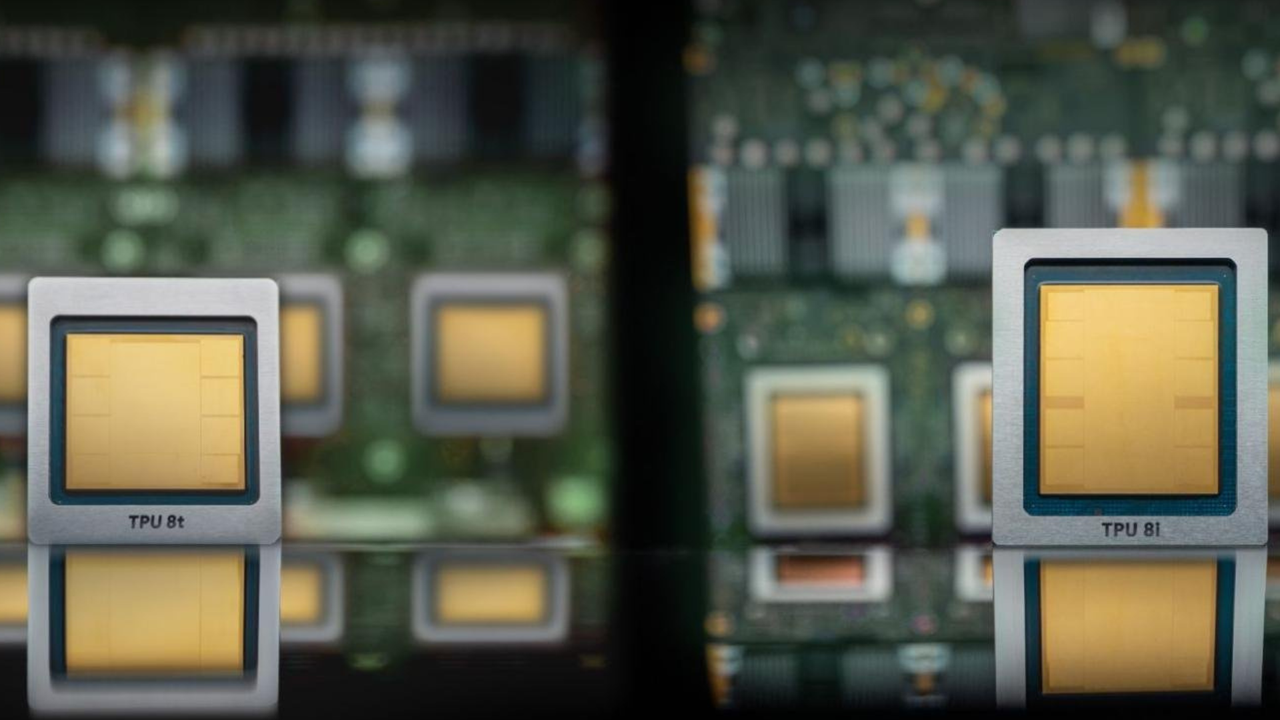
Anthropic is anchoring a great deal of Alphabet's external demand, with its October 2025 agreement giving the Claude developer access to up to one million TPUs and more than 1 GW of capacity coming online this year, and an April securities filing from Broadcom, Google's TPU co-designer, added roughly 3.5 GW of TPU capacity from 2027 while locking Broadcom into future TPU generations through 2031. Meta entered talks for multi-billion-dollar TPU deployments in its own data centers last November. The current flagship, the seventh-generation Ironwood TPU, carries 192GB of HBM3E per chip and scales to 9,216-chip pods that Google rates at 42.5 FP8 exaflops.

Every TPU Google manufactures serves four functions: training and serving Gemini, running Search and YouTube inference, renting to Cloud customers, and now shipping as sold hardware. No other hyperscaler's capex spend works that many jobs, and none of the others has a chip business generating third-party revenue at this stage.

A $98 billion liability

Alphabet issued Class A, Class C, and mandatory convertible preferred stock in June for net proceeds of $49.6 billion, earmarked in the release for "capital expenditures to scale AI infrastructure and global compute," and sold $20.3 billion of senior unsecured notes during the quarter. Long-term debt reached $98.2 billion on June 30, up from $46.5 billion at the end of 2025 and from roughly $16 billion a year before that, a run-up Ashkenazi acknowledged on the call. The February bond program alone raised more than $30 billion across multiple currencies, including a 100-year sterling tranche, it was reported at the time.

Together, the four largest hyperscalers plan a combined 2026 capex of around $725 billion, up 77% on 2025, and Alphabet's new range now tops the group alongside Amazon's roughly $200 billion. Meta raised its own 2026 forecast to $125 billion to $145 billion in April, citing component pricing and competition for land, power, and labor. Alphabet's headline Q2 net income of $112.1 billion overstates the reality somewhat, however, as $99.0 billion of other income came primarily from unrealized gains on equity securities, contributing $6.26 of the $9.11 in diluted EPS. Operating income, the cleaner measure, rose 30% to $40.8 billion.

Google Cloud grew 82% to $24.8 billion in the quarter with an operating margin of 35.6%, and backlog reached $514 billion, up more than $50 billion sequentially, with just over half expected to convert to revenue within 24 months. Those contracts are the collateral behind the spending, with the buildout chasing demand Alphabet has already booked rather than demand it hopes to find. Ashkenazi said free cash flow "will remain under pressure" and confirmed capex will rise significantly again in 2027, so the question the next few quarters will answer isn't whether Alphabet returns to positive territory in any given period, but whether operating cash flow, up 41% year over year in Q2, can keep growing faster than a spending that shows no sign of slowing down.

AI tech companies have ‘hidden debt’ worth around $1.65 trillion, report claims — amount is 122% of debt reflected on the balance sheets of Alphabet, Amazon, Meta, Microsoft, and Oracle

2026年7月22日 21:23

Five U.S. tech giants heavily invested in AI and its related infrastructure reportedly have an estimated $1.65 trillion in hidden debt, with the figures annotated in their quarterly financial statements instead of being listed in their balance sheets. According to Nikkei Asia, this is higher than the $1.35 trillion officially listed, meaning investors could be caught unaware once the hidden figures come to light.

The publication says that Meta has a high off-balance-sheet-to-recorded-debt ratio, with the company owing $420 billion in unlisted debts compared to the $140 billion written on the balance sheet. Oracle purportedly also has a massive $273.3 billion of hidden debt, which is a 2,900% jump from the hidden debt it had from 2022.

This may sound strange, but it’s actually an accepted accounting practice. The “hidden debt” stems from long-term contracts that have been signed but have not come into force yet, which, Nikkei says, is mostly related to the billions of dollars promised to data center operators. The AI race has got many hyperscalers signing contracts and agreements with data center operators, saying that they will pay for the compute they generate once their project goes online.

While any institution promising to pay any amount of money for services or goods delivered is obliged to list them as a liability, the fact that these data centers haven’t started operations means that these agreements are off-the-books at the moment. But when these projects come online, the contracts that the tech giants have signed will come into force, and they’ll have to pay for the compute that these sites will deliver, no matter if there is demand or not.

Nevertheless, these tech companies aren’t just pouring money into future contracts just for the sake of it. Alphabet, Amazon, and Microsoft reportedly have a cloud service backlog worth $1.45 trillion, meaning these are services yet to be rendered and paid. Amazon Web Services CEO Matt Garman also told the publication that the investments that the company is getting into are “not speculative.”

While this may seem like a good way to secure capacity — sign customer contracts that guarantee demand and then enter into long-term agreements with data centers to get the compute needed to deliver the services- it opens these tech giants to massive amounts of risk. That’s because if the demand fails to materialize, then they’d be left paying for excess compute without having any customers to sell them to. What’s more alarming is that Nikkei says that these investment expenditures are exceeding their earnings, meaning these big tech companies are increasingly relying on corporate bonds and new shares to fund them.

Even though demand for AI compute is increasing, it’s still a relatively new and unproven technology, with many experts saying that it should benefit more people to avoid a bubble. The cost of using AI for nearly everything, called “tokenmaxxing,” has also caught some companies by surprise, with agentic AI eating up annual AI budgets in a matter of weeks. Because of this, some companies are reducing their use of AI or are switching to more affordable models from China. This uncertainty, paired with the way tech companies “hide” these liabilities, is quite concerning, as they would appear to have less long-term obligations than they actually do.

This isn’t the first time that an industry giant has used similar accounting techniques. The publication cited Enron’s 2001 collapse, which was due to the company hiding its troubled assets through special purpose entities and marking unrealized gains from trading contracts into its current income statements. While the tech giants are not hiding underperforming assets off their balance sheets and committing fraud, they’re still using a similar mechanism to list their upcoming obligations. Although these are technically not debt, they still behave like one, and the way they’re reported is what’s concerning some experts.

Scientists synchronize 105,000 nano-oscillators in just 45 nanoseconds — paving the way for a highly efficient and fast alternative to transistors

2026年7月16日 18:30

"Oscillator-based computing" is a term that doesn't make many headlines, but this area of computation is evolving and showing promise. The latest impressive development comes from an experiment in which boffins managed to synchronize 105,000 nano-oscillators in just 45 nanoseconds, reportedly using very little energy.

In layman's terms, the entire grid of tiny magnets, once perturbed, synchronized itself entirely within 45 ns, all just using the magnets' inherent spin — think of ripples on a water surface. Each oscillator measures 10-20 nm across, and the 105,000-count result is nearly a 1000x upgrade over the previous demonstration with 64 oscillators, proving that the technology can be scaled. In this new experiment, synchronization time barely increased with additional oscillators: it was 10 ns with 100 oscillators and rose only to 45 ns at 105,000.

What this means for computing is that grids can solve certain classes of problems that lend themselves to representation via propagating waves, directly or indirectly. Broadly speaking, most anything involving waves, statistics, approximation, and pattern recognition is eligible. The article mentions Ising machines and reservoir computing as being implementable by oscillator grids. At some point, the grids could become programmable by manipulating the oscillators' frequencies, phases, and coupling strengths. The result is then read by measuring how the grid settles into a synchronized state.

Going from there, practical applications include high-speed communication networks, financial and scientific modeling, real-time data analytics, and even AI acceleration. The research paper specifically notes that the grids could operate at tens of GHz and spend comparatively little energy doing so. The 45-nanosecond figure for the oscillator grid to stabilize would be roughly analogous to the time it would take a regular CPU to perform one calculation across an entire matrix.

Unlike quantum computing, which requires extensive and difficult error correction to maintain coherence, the oscillator array produces an exceedingly clear signal once it settles. The quality factor of the oscillator experiment was over one million, meaning the resulting wave frequency was well-defined and easy to read — think of the exact pitch carried by a tuning fork. To get the full details, be sure to read the research paper here.

Nvidia slashes list of authorized customers in Asia in a bid to reduce AI chip smuggling, report claims — company sent field inspectors, called customers to check if business is genuine after pressure from Washington

2026年7月14日 19:08

AI tech giant Nvidia, which builds some of the most coveted AI chips in the world, has reportedly created a new “whitelist” of verified companies to help prevent its products from getting smuggled into China. According to the Financial Times, this roster cuts the number of authorized clients by more than half, with those remaining having passed tougher compliance inspections to ensure that they are genuine businesses, not shell companies designed to forward Nvidia GPUs and servers into China. Some of the steps that Nvidia took to help safeguard its chips reportedly included sending staff to customer data centers, contract verification, and interviewing end users.

Sources told the publication that the company made this move after Washington pressured it into tightening its legal compliance, which comes months after the arrest of Supermicro co-founder Yih-Shyan “Wally” Liaw, alongside two other suspects, for allegedly smuggling $2.5 billion worth of Nvidia hardware into China. This clampdown also extended into Singapore, which saw the seizure of a $42-million mansion tied to alleged AI GPU smugglers, and Taiwan, where authorities raided the offices of Supermicro and two supply-chain partners as part of a chip smuggling probe. Nvidia was not immediately available for comment on the news.

Although the U.S. has banned the latest AI GPUs for export into China since 2022, various investigations showed Chinese companies could still easily get their hands on these coveted chips until recently. Washington’s and its allies’ crackdown on AI GPU smuggling have cut supply in China, which is now making it harder for AI companies to procure the processors they need. President Donald Trump took a 180-degree turn in December 2025 and finally allowed Nvidia to export its H200 GPUs to select customers in the region, which would have alleviated the situation. However, Beijing refused to allow Chinese companies to buy these AI processors — instead, it’s banking on domestic semiconductor manufacturers to make up for the shortfall, but it’s apparently still not enough. One tech executive even told the Financial Times that all domestic suppliers are sold out and that they’re even considering less powerful chips, as long as they could be put to use.

As Nvidia reportedly cleaned up its verified list of clients and made it harder for non-vetted companies to acquire its chips, the company has also told its partners to fix their export control compliance. “We insist our partners are compliant,” Nvidia CEO Jensen Huang told the media last May after Taiwan started its operations against AI chip smuggling into China. “We hope that they will enhance and improve their regulation compliance and prevent that from happening in the future.”

Microsoft struggles to fulfill its 2030 sustainability promise amid carbon-heavy AI expansions — the company's chief sustainability officer claims the target is still feasible

2026年7月11日 20:45

Microsoft’s emissions for fiscal 2025 (FY25) rose by 25% from the previous year, even as the company’s 2030 deadline to become carbon-negative draws closer. According to the company’s 2026 Environmental Sustainability Report, released on Thursday, July 9, the backward step was driven primarily by the rapid expansion of its data center infrastructure and its decision to stop using short-term renewable energy certificates, which reduced its reported footprint without necessarily adding new clean electricity to power grids.

Microsoft reported approximately 20.3 million metric tons of carbon dioxide-equivalent emissions across its operations and supply chain, up from 16.2 million tons in fiscal 2024 and nearly 58% above its 2020 baseline. Electricity consumption increased by 24% during the year as the company built the computing capacity required for its cloud and AI businesses. Regardless, Microsoft says it remains committed to becoming carbon-negative, water-positive, and zero-waste by 2030. It also reported meeting its 2025 renewable-electricity target, replenishing more water than it withdrew globally, and exceeding several waste-recovery targets

The report’s foreword, written by Microsoft Vice Chair and President Brad Smith and Chief Sustainability Officer Melanie Nakagawa, focused heavily on the collision between the company’s headline sustainability goals and the realities of AI. Microsoft established the goals in 2020, a few years before the current scale of AI’s capabilities and the corresponding high environmental demands began to manifest.

While AI is inarguably a world-changing technological revolution, it is raising serious environmental concerns that begin right at the raw material sourcing and the complex semiconductor fabrication stages. The impact continues even after the processors have been compiled into supercomputers in massive data centers, with issues related to land use, energy consumption, noise pollution, and water consumption. Residents are increasingly opposing the building of these data centers in their communities due to these issues.

Microsoft is exposed at nearly every point of the AI chain. It procures servers and custom AI chips; owns and operates a massive, global network of over 300 data centers across 34 countries that powers the Azure cloud platform; and supplies the computing infrastructure behind products such as Copilot and its partnership with OpenAI. Scope 3 emissions from construction, purchased hardware, suppliers, and other value-chain activities remain the largest part of its footprint. Meanwhile, electricity-related Scope 2 emissions grew from nearly 2% of the total in 2024 to 13% in 2025.

Microsoft acknowledges that environmental solutions are not expanding as quickly as AI infrastructure. “This tension is real,” the foreword states. “It is forcing sharper questions: Where do we need to move faster, invest differently, or rethink our approach?” The company argues that the answer is not to retreat from AI, but to combine carbon-free electricity, carbon removal, sustainable fuels, lower-carbon construction materials, hardware reuse, and efficiency improvements into a single portfolio rather than treating each environmental target separately.

Its decision to stop buying non-additional, unbundled renewable energy certificates forms part of that change. These certificates can allow a company to claim renewable electricity already being generated elsewhere. Microsoft says it will instead prioritize longer-term agreements that help add additional carbon-free generating capacity to the grid, even though doing so will increase its reported emissions in the near term. Its renewable-energy agreements now cover up to 40 GW across 26 countries, with approximately 19 GW operational.

The company is also modifying the data centers themselves. It introduced a closed-loop liquid-cooling design that CEO Satya Nadella says enables AI data centers to use about as much water annually as a restaurant. Microsoft is experimenting with microfluidic channels etched into silicon, zonal cooling that reserves colder liquid for the hottest equipment, and lower-carbon concrete, steel, and mass timber for its construction. These efforts have not exactly quelled anti-data-center sentiment around its data centers. The company faced protests over a planned facility near Granger, Indiana, while residents living near its $7.3 billion Fairwater AI complex in Wisconsin have filed a lawsuit alleging persistent noise, dust, traffic, and light pollution.

Away from carbon, the report records clearer progress. Microsoft replenished 14.2 million cubic meters of water, exceeding its global withdrawals for the first time, and reduced average data center water-use effectiveness by 25% from its 2022 baseline. It achieved a 92% reuse and recycling rate for retired cloud hardware, diverted 90.5% of construction and demolition waste from disposal, and reduced single-use plastics in primary product packaging to 0.07%. It also legally protected 16,266 acres of land, approximately 36% more than the land estimated to be occupied by its operations.

The report is equally candid about where Microsoft is falling behind. The company's most important commitment—becoming carbon-negative by 2030 — is moving further away rather than closer. Total greenhouse-gas emissions climbed 25% year over year and now sit roughly 58% above the company's 2020 baseline, largely because AI infrastructure is expanding faster than its decarbonization efforts can offset. Scope 2 emissions also jumped sharply, rising from nearly 2% of Microsoft's footprint in FY24 to 13% in FY25 as electricity demand from new data centers surged. While Scope 3 emissions remain the company's largest source of carbon pollution, the report says the growing contribution from purchased electricity underscores how increasingly difficult it is to power AI infrastructure with clean energy alone.

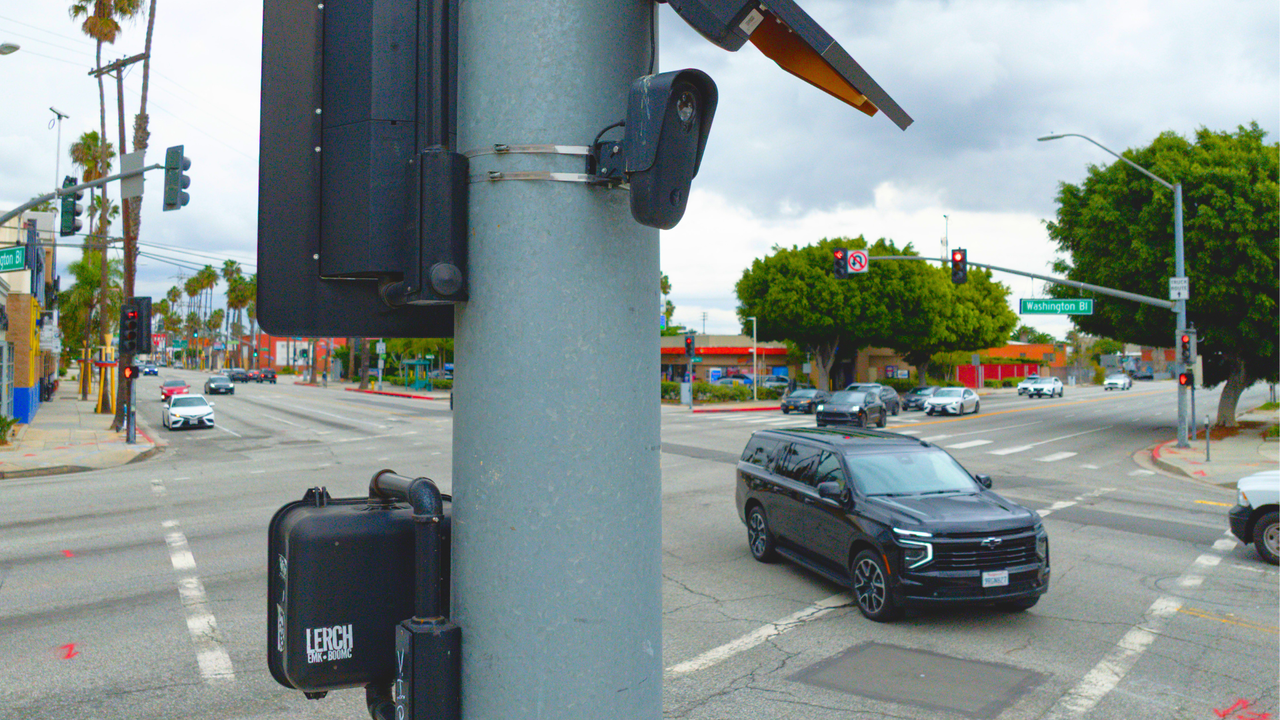
Flock cameras mistakenly track car reviewer over 'stolen' tags — police ambush tester in store parking lot and detain him for an hour

2026年7月11日 18:30

A data entry error in Flock’s system has resulted in a car reviewer getting boxed in by police cars in a parking lot on suspicion that he was driving a vehicle with stolen tags. The Drive reviewer and Director of Content and Product, Joel Feder, was driving a $155,000 loaner Range Rover when police surrounded his vehicle.

When he asked why he was stopped (and by four police cars, nonetheless), the officers said the car’s plate had been reported stolen and that they’d been tracking him for days using the Flock app. After about an hour of trying to figure out why he was stopped, it turned out that a different plate with similar characters had been misplaced and had to be reported stolen in California, which triggered a nationwide alert on Flock.

The core of the issue is that the New Jersey plates on the Range Rover read 34 10 DTM, with the number 10 written in smaller font. This is a non-standard design used by New Jersey for manufacturers, with VEHICLE MFR written on the bottom of the tags. The missing plate was 34 03 DTM, but unfortunately, the LAPD police report only listed 34 DTM.

Another issue with the Flock system compounded this reporting error. Since the New Jersey manufacturer tags weren’t standard, it only read the larger numbers and letters and disregarded the smaller “10” on Feder’s plate. Because of this, it flagged all vehicles with the 34 ## DTM plate as stolen and alerted partner police forces whenever it detected a similar plate on the road. Feder even said that four other vehicles with a similar plate were being tracked throughout Minnesota, and it just so happens that he was the first to be intercepted.

The police said they had been tracking the vehicle for days using Flock’s AI cameras, but kept losing it because Feder parked it in his covered garage. So, when he stopped at a retail store, the authorities jumped on the chance and boxed him in to ensure that he did not escape. Thankfully, the issue was resolved on the spot with the officers, although it took an hour to verify with Jaguar Land Rover that the car or the plates Feder had were not stolen. Still, the journalist was advised to go straight home, as other police agencies using Flock might not be aware of the situation, which could lead to him getting stopped again on suspicion of driving a stolen luxury car.

These two errors compounded together to create a rather harrowing experience with the police. Thankfully, the incident did not turn into something serious, especially as the Plymouth Police told Feder that the cops would have stopped him with guns drawn if he were in Minneapolis.

This event adds to the numerous controversies that Flock AI has been facing, with one of the biggest issues the company faced recently being when several police officers were arrested for misusing the service to stalk romantic partners. This has led citizens to push back against the service, especially as news like this makes them lose trust in the authorities. It has even gotten to the point where a Texas town council member broke into a tantrum, proposing a total ban on cellular and GPS devices, after community pressure led to the cancellation of the service.

Apple sues OpenAI over alleged theft of trade secrets — claims company mentored incoming employees on bringing confidential information

2026年7月11日 05:59

Apple filed a federal lawsuit against OpenAI on Friday, accusing the AI company and its chief hardware officer of stealing its trade secrets.

"OpenAI and its cohorts, led at least in part by former Apple employees, have recruited candidates from Apple, extracted their knowledge of Apple’s sensitive and confidential information, and then continued to exploit that knowledge once they arrived," the complaint reads. "As a result, OpenAI has misappropriated Apple’s trade secrets and confidential information in a variety of ways."

The suit, filed in the Northern District of California, names OpenAI technical staff member Chang Liu, chief hardware officer Tang Tan, OpenAI, and io Products as defendants. The last of that group is notable because it was founded by Tan in collaboration with former Apple design head Jony Ive, Evans Hankey (Ive's successor at Apple), and former Apple designer Scott Cannon. Notably, the complaint seems to attempt to avoid naming the founders, though Ive's name is cited in a URL.

Tan previously served as a vice president of product design at Apple, working on the iPhone, AirPods, and Apple Watch. Liu served at Apple as a senior electrical engineer.

In the complaint, Apple alleges that it reached out to OpenAI in February with concerns, but that OpenAI did not respond. Apple claims that Tan attempted to gain secrets from Apple employees, including asking prospective job candidates to bring components for "show and tell" sessions and used his knowledge of the company to squeeze more information out of candidates. The suit claims that Liu never returned a company laptop, and used an authentication bug to access Apple files.

Apple also claims that OpenAI told incoming employees how to leave their former job, suggesting they stay as long as possible and not disclose their former employer in order to continue to access confidential information.

"At every level, from members of its Technical Staff to its Chief Hardware Officer, and in coordination with business partners, OpenAI has been stealing Apple’s trade secrets and confidential information," the suit reads. "As a natural result, OpenAI’s nascent hardware business now rests on the shakiest of foundations, rotten to its core by its illegal reliance on misappropriated trade secrets."

OpenAI did not immediately respond to a request for comment from Tom's Hardware. Apple's lawsuit claims that over 400 former Apple employees currently work at OpenAI.

Apple is rumored to be working on a number of AI-powered hardware projects, including AirPods with cameras, a pendant, and home robots. It's less clear what hardware OpenAI may be working on, though The Information suggested the company has a HomePod-style smart speaker in the works.

Apple is requesting a jury trial, damages, attorney fees, and orders that the OpenAI may not use Apple's trade secrets, among other injunctions.

In May, Bloomberg reported that OpenAI was considering legal action against Apple because it expected deeper integration and more users from ChatGPT features built into iOS.

If the trial does go to court, it's sure to be a dramatic one, potentially dragging several former high-level Apple employees into testimony through discovery and testimony.The trial, Apple Inc. v. Liu et al, is case 5:26-cv-07078 in the United States District Court in Southern California.

Elon Musk receives FTC greenlight to buy Mesh Optical as interconnects emerge as AI's tightest bottleneck — the move will expand Musk's growing stack of critical AI infrastructure

2026年7月9日 20:42

Elon Musk has received the go-ahead from the Federal Trade Commission (FTC) to acquire Mesh Optical Technologies, an AI infrastructure startup that develops light-based networking hardware for data centers. Records published by the FTC on June 25 show that the regulatory body granted early termination of its antitrust review of the transaction, permitting Musk to procure Mesh. While the deal is yet to be finalized, with no official statement from either party, the government's green light indicates it’s all but done, as this was the last hurdle.

Interestingly, Mesh was founded by three former SpaceX employees who helped develop the Starlink optical communication links that keep thousands of satellites interconnected. So, why is Musk — who is simultaneously building the world's largest multibillion-dollar semiconductor manufacturing facility and an 11-million-square-foot orbital data center factory — seeking to own a company founded by his former employees? The answer appears to be optical interconnects, a critical technology that connects all three.

The connection problem: AI's latest bottleneck

As AI continues to grow in capability and user base, so do the enabling AI clusters, many of which now comprise tens to hundreds of thousands of processors. The hardest problem in scaling an AI cluster has evolved beyond making the chips faster to moving data between them. Training and inference tasks on frontier AI models are split across thousands of GPUs using parallel-computing techniques, requiring the processors to exchange enormous volumes of data every fraction of a second.

While per-chip compute capacity has raced ahead, the bandwidth linking those chips has not kept pace, a mismatch the industry refers to as the "I/O wall." The processors mostly communicate via copper interconnects, which currently dominate AI clusters. However, copper presents inherent limitations. As per-lane signaling climbs toward 200 gigabits per second (Gbps), attenuation, crosstalk, and the skin effect all worsen at higher frequencies, driving up power and corrupting the signal until passive copper becomes impractical beyond a meter or two.

To overcome these constraints, the industry is increasingly turning to optical networking, bringing the technology closer to the processor. Optical links use transceivers to convert a chip's electrical signals into light for transmission over fiber, then convert them back into electrical signals at the receiving end. They can carry far more data over much longer distances while consuming less power than equivalent high-speed copper connections, making them increasingly essential as AI clusters grow larger. Chipmakers and networking vendors are racing to deliver faster 800G and 1.6T optical transceivers while shortening electrical paths with co-packaged optics, which place the optical engine alongside the switch ASIC (application-specific integrated circuit).

This shift has transformed optical interconnects from a supporting technology into one of the industry's most strategically important AI infrastructure markets, attracting billions of dollars in investments and resulting in major partnerships for new and existing industry players. One such player is Mesh, the optical hardware startup that has drawn the interest of the world’s richest man.

A mesh solution to Musk’s ambition?

Elon Musk has been one of the most aggressive players in the AI industry. After co-founding OpenAI, he went on to launch a proprietary company, xAI, before turning his focus to building data centers. In less than two years, xAI deployed the Colossus supercomputer with over 200,000 Nvidia Hopper- and Blackwell-generation accelerators. Colossus 2, with a long-term target of 1 million GPUs, is already operational. For Musk, however, buying the chips was not enough. Why not build them, too?

Characteristic of the world's richest man’s preference for complete vertical integration, SpaceX — in collaboration with Tesla and xAI — is now building Terafab, a vertically integrated, multi-billion-dollar semiconductor manufacturing facility aimed at producing chips capable of delivering an unprecedented over 1 terawatt of AI compute capacity annually. Located in Austin, Texas, the colossal facility aims to consolidate every stage of chip production under one roof, handling everything from logic and memory fabrication to advanced packaging and testing. An ambitious project that we've also analyzed for its feasibility.

The facility's output will serve to meet the chip needs of the broader AI industry, as well as those of Musk’s xAI, self-driving vehicles, Optimus humanoid robots, and SpaceX's orbital AI data center plans. Musk says 80% of Terafab's total compute output is ultimately destined for Earth orbit to support SpaceX's orbital data centers.

“But there aren't any data centers floating around in space,” observers may point out. Introducing Gigasat, Musk's 11-million-square-foot fix for that reality. Gigasat is yet another massive facility under construction, this time for manufacturing everything needed for SpaceX’s AI1 satellite, the company's most likely world-first orbital data center with 150 kW of compute.

At first glance, everything seems in place for the next generation of Ultra-capable AI infrastructure. However, there is one critical missing piece in this stack, one that we've established earlier. Hundreds of gigawatts of extremely powerful silicon are not particularly useful if the data can't move between the dies fast enough in AI clusters, whether on the ground or in space. The industry-prevalent copper hits a wall long before you reach the scale Musk is chasing. Hence, the need for the missing piece: optical interconnects.

This brings us to Mesh, a manufacturer of precisely that missing piece. Mesh Optical Technologies is a US optical communications startup that develops high-speed optical interconnect hardware — optical transceivers that convert a chip's electrical signals into light for high-speed transmission over fiber — for AI data centers and space communications.

Its flagship product, the Alpha C1, supports 800G and 1.6T data rates and reportedly draws about a third of the power of competing modules, using a flip-chip die-bonding process the company says makes the optical engine repeatable at the volume — potentially millions of links — that AI clusters demand.

These are the characteristics needed to seamlessly interconnect the next-generation terrestrial AI supercomputers and, potentially, future space-based computing platforms, which Terafab aims to deliver. An added benefit is the space-related experience of the three Mesh founders, who happen to be ex-SpaceX employees who helped build the laser-based inter-satellite links that connect Starlink's constellation.

Again, in typical Musk fashion, rather than simply buying the hardware, he is moving to acquire the entire company, gaining full control of its R&D and supply chain. Should the deal — which is all but done — go through, Musk will own the full stack of critical infrastructure needed to power the future of the AI industry.

Smart money is flowing to optical interconnects

The SpaceX ecosystem is just one of many entities that recognize the immense technical and economic importance of optical networking in AI. AI chipmakers are actively investing in the optical supply chain to secure manufacturing capacity and prevent hardware bottlenecks.

Nvidia alone has committed a reported $4 billion across component makers Coherent and Lumentum to lock up supply. Elsewhere, several hyperscalers, including Microsoft, Meta, and OpenAI, have teamed up with hardware giants Broadcom, AMD, and Nvidia to establish an Optical Compute Interconnect (OCI) Multi-Source Agreement (MSA) group, with the goal of developing protocol-agnostic scale-up interconnection technology for AI clusters.

To counter chipmakers' dominance, entities such as Japan's NTT established the $500 million IOWN (Innovative Optical and Wireless Network) Fund. This fund explicitly targets the creation of an open photonic ecosystem to accelerate the global transition from copper to light-based AI clusters.

Then there are the smart-money moves by investors, as well as the rising balance sheets of companies. Lumentum stock reportedly soared 339% in 2025 and delivered an additional 135.4% return in the first five months of 2026 alone, while Fabrinet, Cisco, and Coherent all recorded significant revenue surges attributable to optical hardware sales, meaning that Musk's move to acquire Mesh is extremely prescient, given Terafab's ambition.

Chinese courts allow heirs to inherit accounts of deceased gamers — multiple cases spanning years establish precedent for digital ownership of games, in-game items, and microtransactions

2026年7月9日 18:00

While most of the Western world has been grappling with publishers and big tech companies about digital ownership, a Redditor who claims to be married to a Chinese lawyer and certified Chinese-English translator said that multiple Chinese families have successfully sued “for the right to inherit their deceased relatives’ game accounts.” u/Slawrfp shared summaries of three rulings favoring a gamer’s estate with regards to digital ownership on a subreddit. These cases go beyond game ownership, too, as they also tackled digital assets, in-game purchases, Bitcoin, and even social media accounts.

Chinese gamers have successfully managed to sue for the right to inherit their deceased relatives’ game accounts from r/pcmasterrace

“Chinese courts view game accounts and microtransaction purchases as something of monetary value, and therefore gamers have rights related to those assets,” u/Slawrfp wrote. “Chinese courts reject the idea that standard non-transferability clauses can stop you from inheriting or bequeathing a game or even individual microtransactions (of the same nature as CS:GO knives or skins in other games) and have made this ruling in multiple cases.”

u/Slawrfp cited several cases — the first one is called “the Golden Blade case," which arose out of a dispute between two parties in 2009. The issue started when the wife (Li Lan) of a deceased gamer (Lu) wanted to sell the “Golden Blade” he acquired in the game Zhengtu, a now-defunct MMORPG. However, Lu required the cooperation of his “in-game wife,” Yang Yuan, to get the item, and therefore argued that she should get ownership.

In the end, the court ruled that since Lu put in the effort, paid for internet access, loaded up with in-game credits, and that buyers were willing to acquire the item for around RMB 50,000 (around $7,350 at the current exchange rate), then it had the attributes of property and could be inherited by his legal wife. Aside from that, DeHeng Law Offices [machine translated] said that the “in-game marriage” between Lu and Yang had no legal bearing, so Li Lan stands as the inheritor of Lu’s properties. But because Yang spent a similar effort in helping Lu to acquire the artifact, its ownership belongs to both, so both Li Lan and Yang Yuan are entitled to 50% each of the asset’s price.

Another case in 2024 tackled a deceased user’s Bitcoin holdings, a gaming account worth nearly $30,000 (RMB 200,000), and a social media account. According to Chinese lawyer Wang Lianghua on the Chinese social media platform Toutiao [machine translated], the inheritor’s lawyer argued that virtual property has attributes of legal property because it could be traded, has value, and could even generate profits, which meets the “scarcity, disposal, and value” definitions of property. On the other hand, the platforms holding these digital assets argued that ownership belongs to them based on the agreements that the user accepted when signing up for the account.

The court judged that virtual assets, including Bitcoin, game equipment, social media commercial rights, and domain names, among others, are included in the deceased’s estate and are inheritable, and that operation of social media accounts can also be passed on to the heirs. However, private content, such as chat records and other “purely personal interests,” cannot be passed on and are instead archived by their respective platforms. Lastly, the “inheritance prohibition” included in most license agreements is invalid as they violate statutory rights — platforms are required to assist with inheritance requests and could ask for supporting documentation as well as charge reasonable costs.

Aside from these cases, there was another one where a mother lost her son and asked a gaming platform to give her access to his accounts. The court ruled similarly as the previous case, saying that the gamer’s accounts, character data, virtual items, and other assets are virtual property, and thus, inheritable. The company was then obligated to cooperate with the mother and transfer all inheritable rights to her.

These court cases offer a stark contrast in most of the rest of the world, where publishers could cut you off from your media library the moment their licensing contracts expire. The Steam subscriber agreement also prohibits the transfer of a Steam account — and with U.S. courts counting games as digital licenses, then Valve cannot be compelled to pass them on to the user’s heirs. Digital rights are a hot topic among gamers and consumers, especially as many big tech companies transition from selling physical copies of games to going all digital, and preservationists fight to keep game archives alive.

Meta pauses mandatory AI training program that tracked employee keystrokes after internal data leak exposed sensitive staff information company-wide — employees express frustration over poor handling of data

2026年6月24日 17:30

Meta has suspended an internal AI training program after an internal data leak exposed sensitive employee information company-wide, according to a Business Insider report on June 22. The program, introduced in April, was designed to help Meta train AI systems on real employee workflows by gathering data, but has now triggered internal backlash over privacy and data security.

Screenshots obtained by Business Insider showed that data collected through the program was more broadly accessible within Meta than intended. The exposed information reportedly included private employee conversations, performance-related data, transcriptions, and activity records. Meta classified the incident as a SEV 2, on an internal scale of 0 to 5, where SEV 0 is the most severe.

A Meta spokesperson confirmed that the company has paused the program while it investigates the incident. "We have carefully designed this program with privacy safeguards, and while we have no indication at this time that any data was improperly accessed by Meta employees, we're pausing it while we investigate," the spokesperson told Business Insider. The incident does not appear to be an external hack but rather an internal data mismanagement.

Meta introduced the program, called the Model Capability Initiative, to monitor employee behavior for use in improving its AI models. The program, which the company reportedly made mandatory for most staff, collected data on employees’ work activities, including keystrokes, mouse movements, conversations, transcripts, and performance-related information.

Employees were reportedly uncomfortable with the idea of their keystrokes and mouse movements being recorded for AI training. Now they're finding out the data may not have been properly protected, and was widely accessible across the company rather than restricted to intended viewers.

Screenshots reviewed by Business Insider reportedly showed employees criticizing the failure to lock down the data from the start. “I am incensed,” one employee wrote in an internal group, according to the report. Another said there was no evidence of malicious access, but called the lack of promised restrictions “super frustrating.”

The episode is the latest in a frustrating stretch for Meta's workforce. The company has cut thousands of jobs in part to fund AI infrastructure behind more powerful AI systems; the same class of systems that Meta and other companies are deploying to replace workers. Building these models also requires vast amounts of training data, and Meta turned to its own employees to supply it, a move most employees were reportedly against. Now these employees have learned that the data they were compelled to hand over was not adequately secured, leaving it exposed to much of the company.

Elon Musk's SpaceX secures 100% property tax exemption for planned $55 billion Terafab semiconductor factory in Texas — county approves 35-year deal worth hundreds of millions despite resident backlash

2026年6月4日 22:46
SpaceX has secured a 35-year, 100% property tax abatement for its proposed $55 billion TeraFAB semiconductor facility in Texas. Elon Musk argues the exemption is essential to compete with global chipmakers, while residents raise concerns over transparency, infrastructure, and environmental impacts.

Bernie Sanders pushes for 50% public ownership of American AI companies — proposes AI sovereign wealth fund that would hold direct ownership stakes in largest AI firms

2026年6月2日 20:15
The U.S. Senator is arguing that since AI companies use public data to generate a lot of revenue, the public should benefit from it as well. He also said that the people should have a say in the direction of AI by giving them a 50% direct stake in the biggest companies that develop this technology.

Amazon unveils 'Resilient Network Graphs' data center network that cuts hardware by 69% and boosts throughput by 33% — now the default for most AWS workloads

2026年5月29日 21:51
AWS has revealed RNG, a new random-graph-based data center network that delivers 33% higher throughput, cuts network power consumption by 40%, uses 69% fewer devices, and is already the default architecture for most AWS workloads.

Samsung reportedly set to distribute up to $26.6 billion to staff in AI-driven semiconductor bonuses after last-minute union deal — average payouts could approach $400,000 per chip employee

2026年5月21日 22:25
Samsung Electronics is reportedly preparing to distribute up to 40 trillion won ($26.6 billion) in semiconductor employee bonuses after reaching a last-minute labor agreement. The proposed deal ties payouts to AI-driven chip profits and could see average employee bonuses approach $400,000.

❌
❌