普通视图

发现新文章,点击刷新页面。
昨天以前首页

CPU-Z gets biggest update since 2001 with V3 — 100+ health checks, built-in stress testing, and XOC effective clock tracking

2026年8月21日 20:20

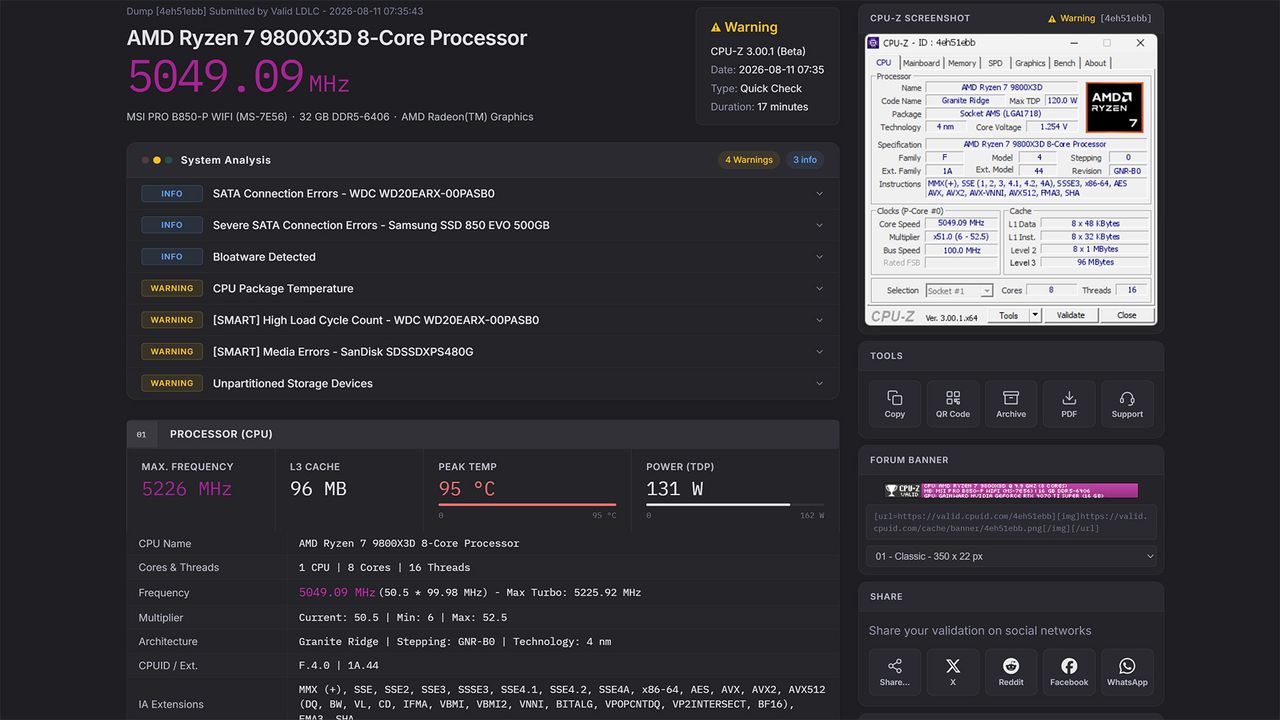
CPU-Z has rolled into its version 3 release, representing one of, if not the largest, updates the app has seen since its release in 2001. V3 introduces a host of updates, focusing primarily on an overhauled validation system with a new advanced mode.

CPU-Z's validation system now consists of three modes: standard, advanced, and XOC. The standard validation system can now display the current health of a PC in less than 10 seconds, and will check over 100 detection points including drivers, CPU temperature, bloatware, and more.

The team behind CPU-Z also worked with major support services to add "meaningful" labels detailing how healthy parts of the system are. These labels include "Critical," "Warning," and "Informational".

Standard Validation is available now. In less than 10 sec., get a snapshot of your PC’s health with 100+ detection points covering drivers, temperatures, bloatware, hardware issues, misconfiguratoins and more, ordered with clear ❌Critical, ⚠️ Warning and ℹ️ Info messages. pic.twitter.com/YzCnLPn8ekAugust 20, 2026

The advanced validation portion is entirely new for CPU-Z and features a far more in-depth validation process, including checking for potential hardware issues under heavy load. Using the advanced validation tool can take anywhere between several minutes and several hours to complete due to the stress testing and error detection functionality targeted at the CPU, RAM, and GPU. Additionally, the advanced validator also features a "significantly extended benchmarking" tool that measures CPU, GPU, RAM, and storage performance. Advanced sensors based on HWMonitor have also been incorporated to monitor temperatures, frequencies, fan speeds, and more.

The XOC validator, aimed at extreme overlockers as its name suggests, has been updated to better measure the CPU frequency of modern processors as well as properly handle memory overclocking to prevent accidental validation rejections. V3's XOC validator better handles the complex, always-changing clock speeds of modern CPUs by calculating the effective CPU clock and the "input" frequency. "If the effective frequency is lower than the input frequency, the dump will still be validated, but the real, effective frequency will be used as the final validated frequency."

By contrast, the XOC validator in CPU-Z V2 validated CPU frequencies with a five-second load, with a "one-shot measurement." Additionally, V2 also removed all load and most internal checks, which increased the risk of a validation not validating properly.

The new V3 update is designed to improve CPU-Z's usefulness for mainstream users, enthusiasts, and overclockers with its new health checks and diagnostics. CPU-Z V3 is available to download now from cpuid.com; however, many of the app's features will be disabled until enough validations arrive on the V3 database to process statistics efficiently. The V2 database will still accept validations until October 20th, when the database will be switched to read-only mode.

Judge clears Nine PBS to retrieve 70 years of archival TV data — court rules station owns 50TB of data in Iron Mountain servers after host went under

2026年8月17日 22:31

There’s light at the end of the tunnel for Nine PBS. We reported last week that the station lost access to 50TB of data representing 70 years of TV history. The issue was that its cloud storage provider went out of business and access to this important set of backups was abruptly cut off. In the meantime, a judge has cleared the way for Nine PBS to retrieve its archival data and programming from Iron Mountain Data Centers.

Let us refresh your memories of this case by sketching out a timeline of how we got here, before discussing the latest ruling.

  • 2019: Nine PBS began using Open Source Storage (OSS) as its cloud storage provider.
  • 2019-2025: Annual cloud storage contract renewals occur without incident.
  • February 2026: Nine PBS wanted to meet with OSS about contract renewal but couldn’t get in touch.
  • March 6, 2026: Without any new agreement inked, the existing contract expired on March 6, with the terms allowing 30 days for the customer to retrieve their data. However, OSS seemed to cut off access to Nine PBS cloud data without any warning or any grace period.
  • March 13, 2026: Nine PBS learned that OSS saved its cloud data at physical servers housed in Iron Mountain, Colorado. So it wrote to request that Iron Mountain preserve and return the data. However, Iron Mountain doesn’t confirm or deny that it holds this data.
  • April 16, 2026: Nine PBS filed suit against OSS, and new OSS owner James Tramel confirms the data is secured at Iron Mountain.
  • May 2026: Tramel stops responding, later claiming he was defrauded into buying OSS.
  • June 2026: Nine PBS obtains a default judgment stating it owns the data in question and has the right to possess it. Later the same month, Iron Mountain admits it possesses the data. However, Iron Mountain decides to block any access as it says OSS owns the physical servers.
  • July 28, 2026: Nine PBS files a lawsuit against Iron Mountain, the data center provider for OSS, seeking protection against data deletion or modification.

Nine PBS - "70 years of our organization’s history" in danger

The latest development in this twisting and turning case of Nine PBS’s lost data seems like good news for the station. On August 12, 2026, a Denver judge established a process that would allow Nine PBS to retrieve its 50TB of archival data from Iron Mountain’s Denver data center.

The outlined framework includes appointing a third-party vendor, such as a former OSS employee, to assist in the retrieval of the data from the hardware in Iron Mountain. This must be done within 30 days. Moreover, Nine PBS must pay the current and overdue storage fees that OSS missed, and any physical devices the third party takes off the premises must be returned to Iron Mountain after data retrieval. Lastly, Nine PBS must verify no other ex-OSS client data is accessed, and indemnify Iron Mountain against any corruption of data owned by others.

Both Nine PBS and Iron Mountain are requested to provide progress updates on the data retrieval process by September 14. Hopefully this will be a lesson learned by Nine PBS, and it will swiftly implement a proper 3-2-1 backup of its irreplaceable data, so any cloud provider error doesn’t cause such a calamity in the future.

Rogue iOS developer creates app that simulates messages sent by carrier pigeon; messages only travel at 100mph — LA to NYC correspondence takes 22 hours to deliver; virtual birds can get distracted or even lost

2026年8月16日 17:30

Are you perturbed by the hectic pace of modern life and the attention-seeking immediacy of instant messaging (IM) platforms? Do you even find email a bit too high-octane? Developer Noah Larrobino may have the solution you seek with the new Carrier Pidge app for iOS, an app that sends messages at the speed a carrier pigeon would travel.

Spent 3 weeks building a texting app slower than email. Messages fly at pigeon speed — LA to NYC takes 22 hrs. Sometimes the bird dies & the message isn’t delivered. pic.twitter.com/MwHcldFr0YAugust 12, 2026

As outlined by the dev, the key feature of Carrier Pidge is that it slows down electronic communications to a more natural speed. Specifically, any messages you send to other app users will arrive at pigeon speed, based on your respective GPS locations. According to the app store page for Carrier Pidge, that means your messages travel at 110 mph. Not slow, but if one is messaging a contact on the other side of the continent, from LA to NYC, for example, the recipient won’t see the message until 22 hours after it was dispatched.

The carrier pigeon analog is stretched further by some other features of the app’s messaging engine. As your message flies through the ether attached to your virtual bird’s virtual ankle, some birds will get distracted, slowing their progress by as much as 25%.

There’s a real-time flight tracker in the app. In Noah’s tweet, you can see they are tracking a message sent from NYC to somewhere in the UK. The on-screen text suggests the pigeon is still 1 day and 2 hours away from its destination.

Your virtual bird can get lost or die

More hazardous to your messaging hopes is the fact that anytime you send a communication via Carrier Pidge, there’s a 0.2% chance the virtual bird will get lost. So you can’t guarantee your chosen recipient will get the message.

On the other side of the flight path, there are no read receipts generated. This might give Carrier Pidge app users some graceful leeway to ignore messages they’d rather not deal with, while shielded by a little plausible deniability – a much better outcome than seemingly, rudely, ignoring a friend. However, if the dev is serious about extending such comfort to users, they should make sure the real-time flight tracker also has some built-in inaccuracies or foggy areas.

Lastly, Noah says that the virtual pigeon will sometimes just die en route to its destination. That’s another level of realism that elevates this app against its peers, as long as the dev has properly researched and implemented pigeon fatality chances across the routes, environments, and weather systems they would encounter.

While Carrier Pidge has debuted on Apple’s App Store for iOS, Noah says it will “come to Android eventually.” This new messaging app is monetized by allowing users to expand their aviary with as many as 10 extra pigeons.

PBS broadcaster loses access to 50TB of data comprising 70 years of TV history after contracted cloud storage vendor goes defunct — public TV channel sues Iron Mountain data center, which hosts archival materials, to ensure preservation

2026年8月13日 18:40

Nine PBS is afraid that it will lose over 70 years of archival materials and programming after its contracted cloud storage vendor has apparently gone out of business. According to Current, the channel used Open Source Storage, or OSS, for storing over 50TB of data — but it suddenly lost access to its data earlier this year. Nine PBS has been working with OSS and its predecessor since 2019 and intended to renew its contract on March 6 of this year. The company never responded and abruptly cut off the station’s data access even though it still had 30 days to retrieve its data after the contract ended.

The station dug a little bit deeper when it discovered that the OSS website no longer existed and was listed as delinquent under the Colorado Secretary of State. It also discovered that OSS utilized Iron Mountain’s services, so it sent a demand letter to the latter to preserve its data and to "pay any reasonable costs associated with its demand." At the time, Iron Mountain did not confirm or deny that it possessed Nine PBS’ data.

At the same time, the channel also sued OSS and its leadership, which it paused after someone who claimed to be a "managing partner of the group that officially acquired" the company reached out. The person, named James Tramel, initially communicated with Nine PBS for about a month. However, this also ended abruptly, with the channel eventually receiving an automated reply from Tramel stating he is no longer connected with OSS. The channel was able to get in touch with him, and he said that he had "been defrauded" into acquiring the cloud storage company and that ownership and operations have now reverted to the previous owners.

This left the channel at a loss, so it continued its case against OSS, and the court ruled that Nine PBS had all the rights to access its data stored with OSS and that the latter should "facilitate its transfer to a new vendor." The channel’s attorney also reached out to Iron Mountain to inform the company of the pending case in Colorado; Iron Mountain finally admitted to holding the data. Iron Mountain initially agreed to turn over Nine PBS’ data, but it eventually backtracked and claimed that OSS owned the data it stored. Because of this, Nine PBS now has no choice but to sue Iron Mountain, too, to ensure the data is not deleted.

The entire thing is a nightmare scenario for Nine PBS, especially as it’s still unclear what will happen to its data. The channel can only assume that its former cloud storage provider is no longer paying data center bills, so it’s rightfully concerned that its data might end up lost forever. And even if Iron Mountain is willing to give Nine PBS its data, it risks getting sued by OSS — it is simply protecting itself by refusing to turn over the said stored data.

It seems that the safest legal way to resolve this issue is for Nine PBS to get a court order requiring Iron Mountain to turn over its data. But the channel must act quickly to ensure that its data, which Nine PBS VP and CCO Leah Freeman said to Current represented "70 years of our organization’s history," stays safe.

It's not clear if the channel has backups of its data, but based on its determination, we suspect not. This is strange, though, especially for a major organization, as one can easily purchase a six-bay NAS on Amazon and populate it with the best HDDs. This also goes against the 3-2-1 backup rule, which says you should keep three copies of your files stored in two different mediums, with one of them running offsite. Hopefully Nine PBS will implement a better backup system once it regains access to its data. And at least there's still a chance — it's not like the fire that the South Korean government experienced last year, which saw 858TB of data go up in smoke.

Vibe-coded app adds a 3D video rental storefront to your Jellyfin HTPC — self-hosted, open-source project brings back memories of browsing for VHS tapes on Saturday afternoons

2026年8月13日 17:00

A Redditor shared their vibe-coded project, which added a 3D frontend to your Jellyfin HTPC. The app, called Halcyon Video and available on GitHub, is designed to bring back childhood memories when you spend weekend afternoons browsing video rental stores so the family has something to watch before going to bed. It’s open-source and self-hosted, so you can easily install it on your HTPC, and it also works with RomM if you have your own collection of retro video games.

“Wander the aisles, flip boxes over, rent at the counter, and the movie plays in your room (if you choose hardcore rental mode). TV series come shrink-wrapped as season box-sets,” u/halcyon-video said on Reddit. “‘Recently Added’ becomes ‘New Releases’ on the back wall. Everything has a purpose. There is too much to explain and you have to download and run it to find it all.” They also added, “Go use it, star it if you like it. This project has only just begun, and I will not rest until my childhood has been fully resurrected.” Aside from the GitHub repo, they also created a 45-second tour of the project on YouTube, as well as a demo so you can see how it works.

To complete the nostalgia, the box cover and plastic case pop up when you select a movie or TV series. You can even read warnings and tips at the back of the plastic case like “Please rewind after viewing,” and “If the picture rolls or has a lot of ‘interference,’ adjust the tracking device on your VCR.” Once you’ve chosen what you want to watch, you’ll have to walk out to the front counter to check it out, where the cashier will place it in a plastic bag so you can head back “home” to start watching. There are also several customizations that you can do, like picking a period from 1990, 1993, 2000, and 2010, setting different times like day, sunset, and night, and even choosing between VHS or DVD. We also can’t forget about the tape/disc return box that sits right by the entrance if you’re picking out another movie for tonight.

This isn’t just a random store where you pick out the movie or game that you like, and you’re instantly teleported back to your 4K TV. Instead, it’s a whole experience that you need to see for yourself to understand just how deep and immersive it is. To navigate inside the store, you can use the classic WASD and arrow keys on your keyboard, although Halcyon Video also supports controllers and HTPC remote controls, too. But, most importantly, this front end is all locally supported — it only uses the metadata from your library and does not make any outside calls to some external server.

So, if you’re tired of not owning your video library and are looking to build your own media server from leftover PC parts, consider adding this front end to make movie selection a little bit more exciting. That way, instead of spending hours scrolling through Netflix, you’ll spend a lot of time walking around this store from your childhood.

x64 port of Microsoft Word for Windows 1.1a arrives — you can now run this seminal 1990 word processor natively in Windows 11

2026年8月9日 21:40

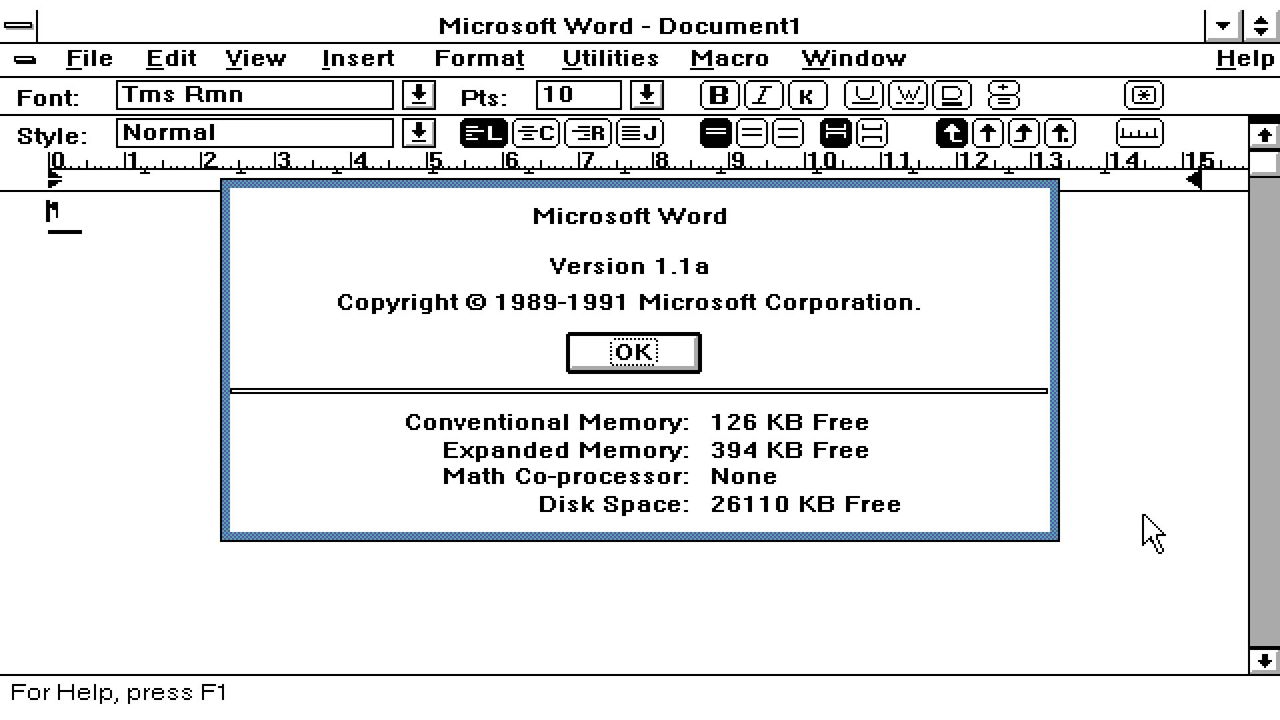
A developer has ported Microsoft Word for Windows 1.1a to x64 so it can now run natively on Windows 11 PC systems. JMarshall23 on GitHub stresses that this is a fully working native Windows x64 port using “original Word source and resources together with modern replacements for the 16-bit assembly, segmented-memory, and Win16 platform boundaries.” It also includes some extra features for “research purposes.” Microsoft Word for Windows 1.1a was originally released over a quarter of a century ago.

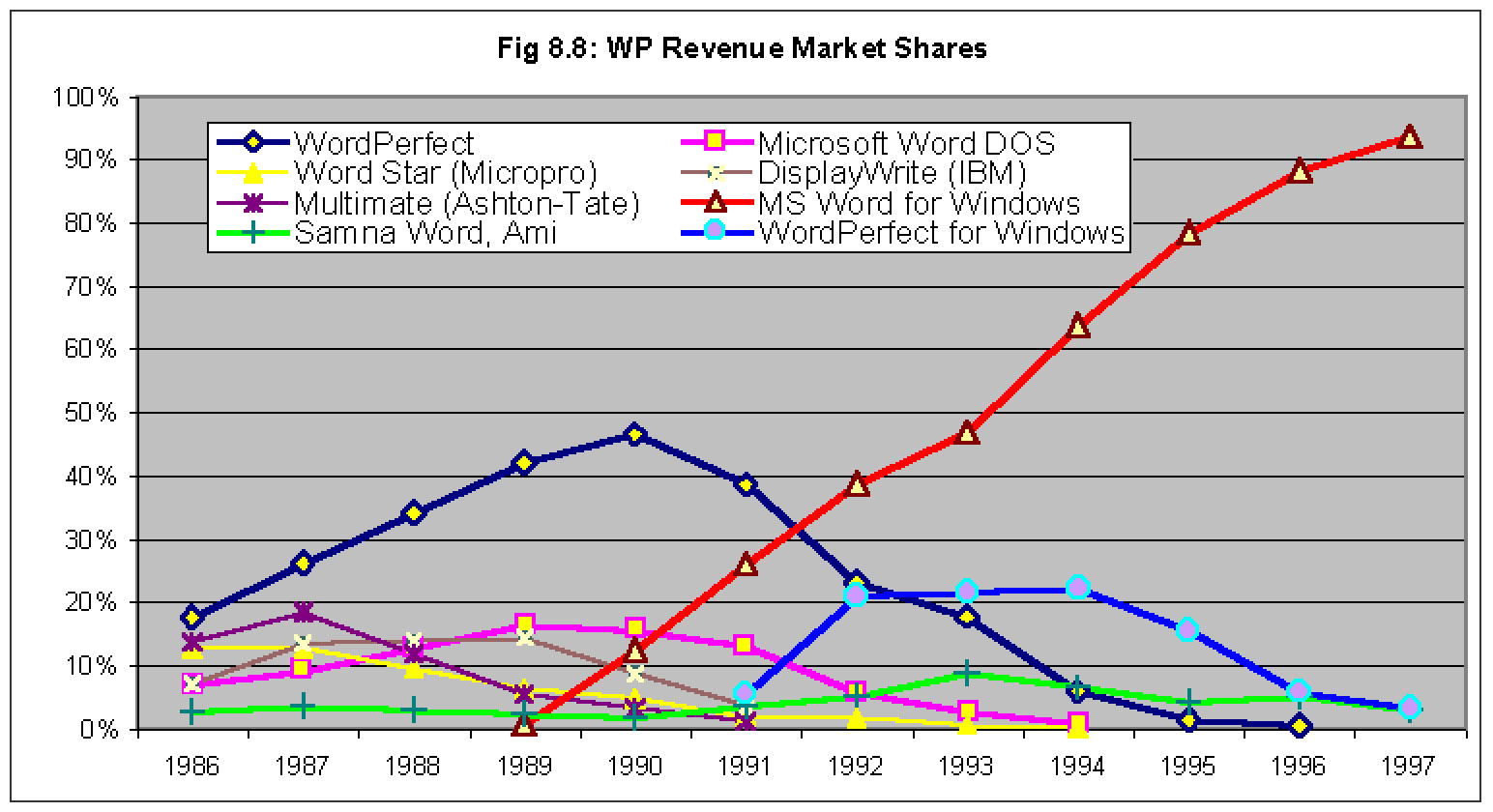
This release of Word marked a milestone in the word processing market, as it pioneered genuinely useful feature additions like WYSIWYG editing, graphics, and table insertion on Windows. It would spearhead the momentum in shifting users from DOS productivity monsters like WordPerfect to complete dominance in Windows-land. Word for Windows 1.1a added all its frills while remaining very efficient, running on systems with CPUs that ran in single-figure MHz speeds, and with as little as 1MB of RAM.

Microsoft Word for Windows 1.1a

WinWord won (Image credit: The Computer History Museum (CHM). )

Another notable feature of this version of Word for Windows is that Microsoft permitted its source code to be released in full. You can still grab that code via the Computer History Museum (CHM). There you will find a 7MB bundle of C source, x86 assembly, build tools, and documentation. These 1,021 files in 33 folders are what JMarshall23 started with.

GitHub doesn’t have Windows x64 binaries ready for the casually curious on the lookout for a free, lightweight word processor to download and use. Instead, you’ll need access to Visual Studio 2022 with Desktop development with C++, a Windows 10 or Windows 11 SDK installed through Visual Studio, CMake 3.25 or newer, and PowerShell, notes Marshall. Then simply follow the GitHub instructions to build and run Word1.

It will be interesting to see if more comes from this x64 port, but Microsoft’s Word for Windows 1.1a code release carries a license that “permits only non-commercial use and does not give you the right to license it to third parties by posting copies elsewhere on the web,” says the CHM.

❌
❌