❌

阅读视图

发现新文章,点击刷新页面。
✇Tomshardware

French lawmakers add $11.2 billion internet tax based on traffic usage to budget, costs $0.06 per gigabyte of content accessed

Edit 11/1/2026 4:25am PT: Clarified title to state the bill still has to pass the Senate after being added to the budget.

France has approved a proposed tax that aims to tax the amount of internet data per gigabyte sent to French users in the country, with major companies like Google, Netflix, TikTok, and Meta now in the crosshairs. According to minutes released by the National Assembly, members voted 11-10 in support of the motion on October 30 — which now means the new law has been added to the country’s next budget, despite major opposition from the government side and the finance committee rapporteur. The law still has to pass through the Senate for final approval. The latest amendment, introduced by socialist lawmaker Laurent Lhardit, could see content providers pay €0.055 (roughly $0.06) to the government for every gigabyte of content distributed to French users.

With approximately 154 million users and counting in France, the proposal’s authors say such a tax could generate around €10 billion ($11.2 billion) in annual revenue for the government. “This amendment proposes a tax on digital data flows emitted by content providers, to be borne by the providers themselves. Its revenue is estimated at €10 billion.” Said Laurent Lhardit. The said proposal, though yet to be passed as it must survive further parliamentary scrutiny, aims at companies that generate substantial internet traffic as opposed to taxing their advertising revenue, profits and subscriptions. Its explanatory notes particularly mention Google, Meta, Netflix, Amazon, and content delivery network Akamai as major potential contributors. Notably, TikTok and other similar platforms could fall under this broader scope depending on how these rules are applied.

Internet service providers, including Orange Free and Liad, would be required to measure the volume of data and identify the companies responsible for sending it to French users. The Data will then be collected and submitted quarterly to France’s tax administration under the supervision of telecommunications watchdog Arcep. Aside from the €0.055 per gigabyte levy, the proposal also includes a cap of 15% of a company’s French revenue or 2% of its worldwide revenue. It also accounts for content delivery networks (CDNs), which store copies of online content closer to users to reduce loading times and network congestion.

Approximately 200 billion GB of data pass through French internet providers annually, with about five major companies identified in the amendment accounting for about half of that traffic. Lhardit argued that tax would primarily affect global technology companies because they generate most of the data traffic reaching French subscribers. He also disputed that those platforms would merely push additional costs to users, using Facebook, Instagram, and TikTok, which provide free access, as examples. “The rapporteur keeps arguing that the taxes will be passed on to consumers. However, I fail to see how a tax can be passed on to users of Facebook, Instagram, or TikTok since these services are free,” He stated.

How much money are you willing to spend during the Black Friday sales?

Lawmakers opposed to the proposal, however, argue that it is likely to endanger user privacy. Government Minister David Amiel questioned whether the internet traffic could be measured and attributed to content providers without introducing complicated monitoring requirements. Those concerns extend to potential consequences for French business. Lhardit, however, noted that businesses would pay relatively modest costs, citing TF1 as an example, which requires broadcasters to contribute between €200,000 and €300,000.

Several European countries already impose digital service taxes, generally based on revenue from Ads, marketplaces and other digital activities. In March, Meta announced it would introduce location-based fees of between 2% and 55 for advertisers to offset digital services taxes and other government levies in several countries, including France, Italy, and Spain, from July 1, 2026 . Previously, the European Commission has rolled out major enforcement actions against major technology companies, including a €5 billion fine against Google over Android antitrust violations, Facebook’s €100 million fine for misleading European regulators, and the EU’s investigation into Facebook’s ability to link WhatsApp accounts.

Last year, Apple and Meta were also fined €500 million and €200 million, respectively, a move that strained the relationship between Brussels and Washington, with the U.S. calling the penalties ‘a novel form of economic extortion’ that it will not tolerate. That said, the amendments' adoption in parliament is only the first step. If it can clear the remaining stages of France’s 2027 budget process, it can become law, with parliament scheduled to vote on the budget’s first section in early November.

✇Tomshardware

Denmark’s bid to ditch Microsoft Office for open-source alternative Collabora collapses in under six months

Denmark’s Ministry of Digitization, which has since been merged with other ministries and is now called the Ministry for Research, Education, and Digitization, has reportedly ended its experiment to replace Microsoft Office with an open-source alternative. According to Danish publication Computerworld [machine translated], the pilot project was launched in 2025 and involved 38 employees, all of whom would start using the British open-source Collabora office suite instead of Word, PowerPoint, and Excel.

The experiment was initiated by the then Digitization Minister Caroline Stage, who wanted to reduce the country’s dependence on American technology. Denmark isn’t alone in moving away from U.S. software, with France and the Netherlands both taking steps to replace Microsoft Windows. However, it seemed that the experiment fizzled out less than six months after it started. It had reportedly ended by the time the Danish government called for an early election in February 2026, with some employees complaining about issues with style, paragraph formatting, blank pages, and challenges with tracking changes.

But even though it’s been months since the experiment reportedly ended, Prof. Mikkel Flyberbom of the Copenhagen Business School complains that the project hasn’t been properly evaluated. “It’s a good idea to test alternatives in a pilot project,” the professor said in an email. “However, I wish that the ministry would take the opportunity to learn from the pilot project and share those experiences with other parts of the public sector.”

The Microsoft Office alternative had to work with the then Ministry of Digitization’s central case management system called F2, but it’s unclear why it only chose Collabora for the project. While Collabora is based on LibreOffice, which is one of the most popular and mature open-source alternatives to Microsoft’s office suite, there are also several other alternatives it could have tested, like OnlyOffice, OpenOffice, and Calligra. There have also been recent attempts to use AI to create open-source versions of subscription-based software like Microsoft 365 and the Adobe Creative Suite, but governments would likely want to choose a reliable and stable build instead of these experimental AI-built apps.

It’s still a mystery why the Danish government chose to work with only open-source Microsoft Office alternatives in its testing. It probably would’ve been better if different teams used three alternatives and then the project proponents conducted a review after the testing period to determine the best solution. Nevertheless, the question is moot with the apparent failure of the open-source experiment.

✇Tomshardware

Proton hosts Flock map revealing over 300,000 cameras, defying cease-and-desist threats against creator

Proton AG, which provides privacy-focused services like Proton Mail and Proton VPN, has decided to host the Flock camera map that security researcher Joshua Michael built from leaked Flock data. While the original Flock Surveillance Map is still available online, its creator is facing legal threats from the company, especially after Flock sent the researcher a cease-and-desist letter. In addition, Michael’s website is accessible only from within the U.S., requiring users outside the country to use a VPN to access it.

By contrast, Proton’s Flock camera map is easily accessible worldwide. Its location in Switzerland also makes it a little more complicated for the surveillance company to take legal action. Its move to preserve Michael’s work also follows the company’s privacy ethos.

Proton Flock camera map

(Image credit: Proton)

“You have a right to know who’s recording you when you leave home, especially when a private company controls the data and it’s unclear how law enforcement uses that information,” the company said. “This map lets you search by ZIP code to see where Flock’s license plate readers are located. Use it [to] make informed decisions about how you move through your own area and whether you need to reach out to your municipal leaders.”

Flock and other automatic license plate recognition (ALPR) cameras are at the center of the privacy debate between law enforcement and citizens. While the former argues these machines help make communities safer, many of the latter worry about the technology's potential misuse. Their fears aren’t unfounded, either — there have already been multiple cases of police officers misusing Flock cameras to stalk romantic partners and even one case of mistaken identity due to a lapse in police procedure.

However, Proton’s map is based on data from November 2025. This makes it more of a snapshot of the company’s network at that time, rather than a live map of Flock’s ALPR cameras. For a more up-to-date map, consider downloading MapQuest, which recently released an update showing the locations of ALPR cameras from Flock and other companies. This could help you plan your trip if you have privacy concerns and want to avoid getting picked up by an ALPR camera.

✇Tomshardware

Flock camera locations revealed on MapQuest’s new Surveillance Layer

MapQuest, a long-time online mapping and navigation service that predates Google Maps, just released an app update that added a new Surveillance Layer. The company said on Bluesky that it plots the locations of known license plate readers on the map and that it covers devices from Flock, as well as other companies like Motorola Solutions (Vigilant), Genetec, Axis Communications, Axon, Leonardo (ELSAG), Neology, Rekor, PlateSmart, Ubicquia, Verkada, and other brands.

The Roads Have Eyes! 👁️Turn on the Surveillance Layer in Map Options to see known license plate readers from Flock Safety, Motorola Solutions (Vigilant), Genetec, Axis Communications, Axon, Leonardo (ELSAG), Neology, Rekor, PlateSmart, Ubicquia, Verkada, and other outdoor surveillance cameras.

— @mapquest.com (@mapquest.com.bsky.social) 2026-10-18T02:31:11.890Z

It’s unclear how the app developers found all this data, but it is similar to the Flock Surveillance Map that one security researcher built using Flock’s own data. Beyond showing each camera's location, it also indicates the direction it faces, allowing anyone who doesn't want to be captured by an automatic license plate recognition (ALPR) system to avoid known cameras, if possible.

While cities and police forces argue that systems like these help keep people safe by making it easier to track potential criminals, many people say that they’re a massive invasion of privacy, citing multiple incidents of police officers abusing the system and administrative mistakes, like one resulting in the detention of an innocent car reviewer. This is why some cities whose constituents have complained have started removing them.

A Canadian YouTuber built a “Flock-like” camera that tracked police vehicles and was visited by officers who, in an ironic twist, raised privacy concerns. These are the exact concerns critics have about ALPRs, especially when they connect to a wider federal or national system that lets police officers from another city or state track vehicles without a warrant. It’s unclear how police would react to this functionality, but many police departments have previously complained when Waze released a 2015 update that let users report officers' locations.

This new MapQuest feature can help you get around known ALPR camera locations. But if your destination has heavy camera coverage, you’ll have no choice but to pass through one and be detected, unless someone in the neighborhood has put a “Flock Sock” on one of them.

✇Tomshardware

The official Tom’s Hardware app is here — 30 years of tech coverage and benchmarks in your pocket

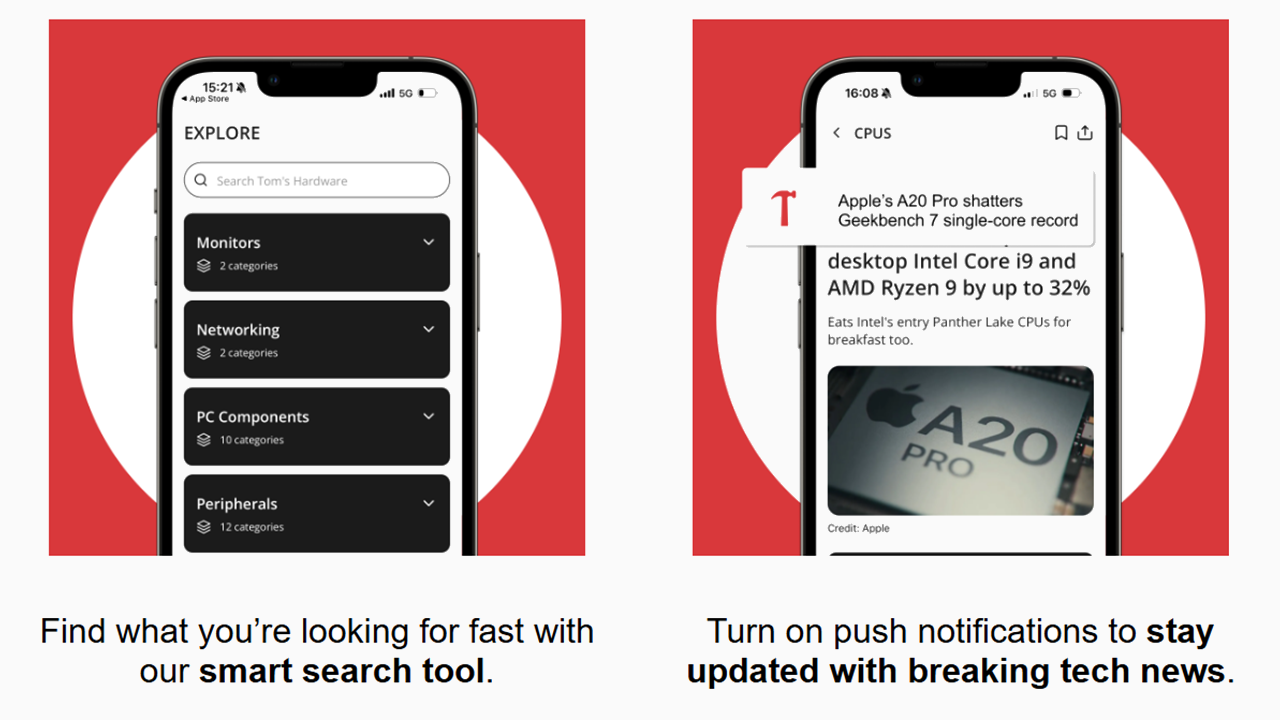
We’ve been sharing our passion for technology with you for 30 years, and today we’re introducing a faster, easier way to access all of our content while on the go. The official Tom’s Hardware app is live now, available for free on Android and iOS devices, bringing all of our content to your pocket in a clean, responsive application that is optimized for smartphones and tablets. Whether you’re hunting for parts for your latest PC build, evaluating prebuilt PCs, tuning your system, or just want to know the latest breaking industry news, the Tom’s Hardware app has the features you need.

Tom's Hardware App

(Image credit: Tom's Hardware)

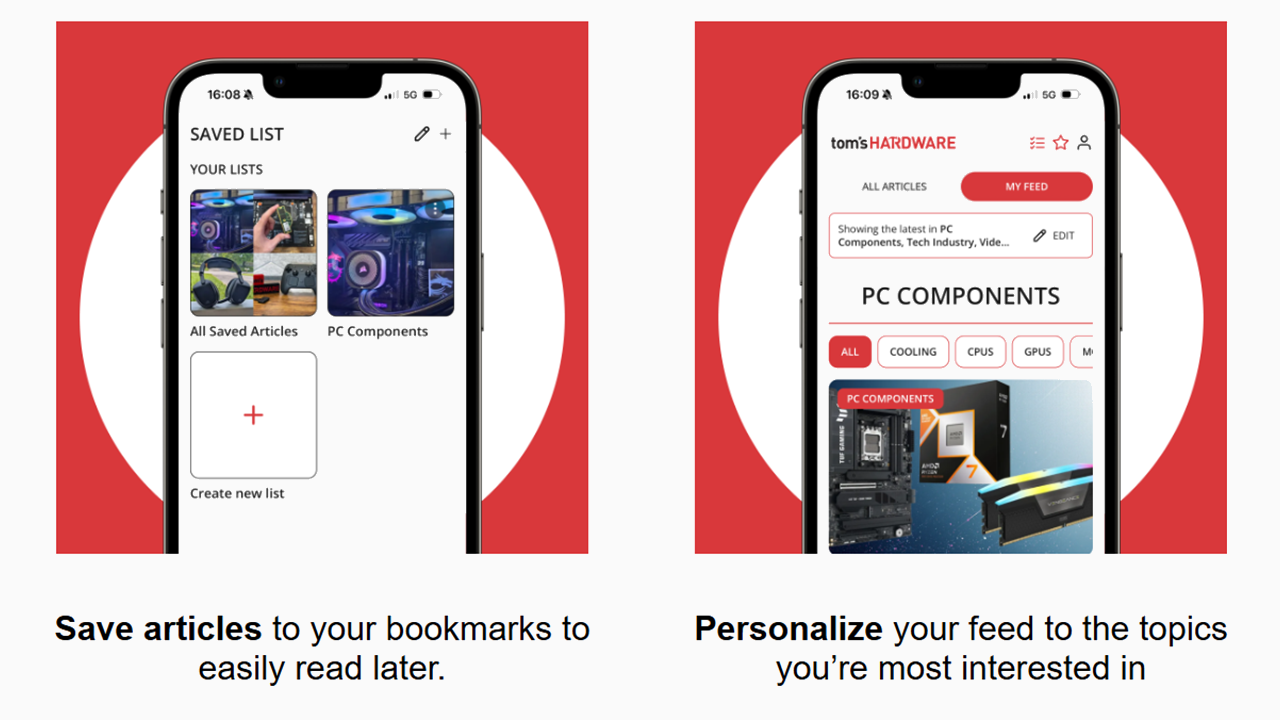
The smart search feature allows you to quickly search through the thousands of deep-dive articles in our library to easily find what you are looking for, while push notifications allow you to keep your finger on the pulse of the latest breaking tech news. You can also personalize your feed based on your interests, honing in on the topics that matter to you most, as well as bookmark articles for later reading.

Tom's Hardware App

(Image credit: Tom's Hardware)

We’ve also brought the functionality of Bench, our benchmark analyzer tool that allows you to quickly compare our internal lab-tested benchmarks of CPUs, GPUs, SSDs, and laptops to refine your purchasing decision. This database not only holds tens of thousands of benchmark data points, but it also has detailed product pages with specs and pricing information. The app offers limited free access to Bench, but you can unlock unlimited use with a subscription to our Tom’s Hardware Premium service.

You can also access our Tom’s Hardware Premium service on the app. This subscription-based service provides our readers with longer-form news, analysis, testing, and features for those who want to dig even deeper into our core coverage areas.

The Tom’s Hardware app is now available, free of charge, at the Google Play Store and Apple App Store.

✇Tomshardware

Creator of free Adobe clones unveils open-source Microsoft Office Excel, PowerPoint, and Word replications

Brandon Thomas, developer of ArtCraft, a suite of open-source creative tools meant to replicate Adobe applications for free, has now announced apps to replace Microsoft Office tools such as Excel, PowerPoint, and Word, respectively, named GridCraft, DeckCraft, and WordCraft, that are created with Claude. Thomas has shared his new clones to ArtCraft GitHub, making them free for all to download.

After our previous story covering ArtCraft, we have since discovered that u/ai_art_is_art is Brandon Thomas, a highly talented software engineer with 15 years of experience under his belt. After his ArtCraft project became popular, many criticisms followed about vibecoded software and AI slop, to which Brandon responded on his X account, saying that he does know how to code.

One of the biggest pain points for these software programs is OS compatibility, while Adobe runs on MacOS and Windows, Linux requires additional compatibility layers and Windows emulation to work. One of ArtCraft’s biggest selling points is being able to run all the software across all three platforms while still giving an identical user experience regardless of OS — this is also part of the parity that ArtCraft wants to achieve. While Google provides these tools for free with Google Sheets, Docs, and Slides available on all platforms through a browser, the online-only model takes away the ownership aspect of the software, fearing that one day the tools would suddenly require a subscription and users would not have any say in it.

My guy, I can codeIn college I was building laser games on skyscrapers and cloning the luciferase-luciferin system into plants via agrobacterium-mediated transfectionAI models enable me to work as an entire company. I'm doing 4x better than Google's revenue per employee https://t.co/sGCkdy92QMOctober 9, 2026

Microsoft sits among the most criticized companies for its business practices, similar to Adobe. What was once a one-time purchase now comes as a subscription package with various tools that many don’t need; many even have overlapping features and uses, essentially wasting some of the subscription value. It seems that Brandon Thomas is not only creating open-source alternatives, but is also creating a targeted protest against these practices.

ArtCraft’s Discord community is also growing very quickly, with constant recommendations of other software they would like to see, with CADcraft being commonly discussed among 3D printing and engineering enthusiasts who don’t like Autodesk, similar to Microsoft and Adobe. As many free alternatives as there were before the rampant vibecoding, it seems that this growing collection of tools is not only functional, but a message to the large companies as well. Most of these apps are still far from what they intend to replace, however, so we'll have to see how deep this message cuts.

✇Tomshardware

Microsoft 365 slashes storage capacity for shared accounts amid industry-wide shortages

Microsoft just made a major change to its storage policy affecting Microsoft 365 subscribers with shared accounts. According to the company, the Microsoft 365 Family, Premium, and Pro plans will move from an assigned 1TB of cloud storage for each user to a shared 2TB for all users. This means that a subscription shared across six users will have its total cloud storage capacity slashed by 66.6%. This change will take effect on subscription renewals after May 2, 2027, unless the subscribers change their plan earlier. Some affected subscribers might also receive bonus storage when their account switches to the share limit model, although the company did not mention its eligibility requirements.

The company said it made this change so that the cloud storage allocation for Microsoft 365 subscribers will automatically go where it’s needed, and that individual users are less likely to hit individual storage limits. Aside from that, it also said that unused storage can benefit the entire family, and that any additional storage that the main subscriber purchases will benefit everyone.

This new setup is indeed advantageous for subscribers who only have one power user that uses up the majority of the cloud storage capacity, while all the rest take up a fraction. It would also be cheaper for an individual who intends to use more than 1TB of cloud storage to just switch to the Microsoft 365 Family plan (which costs $129.99 annually) instead of getting the Microsoft 365 Personal plan ($99.99 annually) and paying an extra $9.99 per month or $119.88 per year to bring their total cloud storage capacity to 2TB. However, if you have four users under one account using 500GB each, you will be forced to purchase additional capacity, starting at $1.99 per month for 200GB.

While Microsoft hasn’t increased the prices of its subscription, this move simultaneously reduces the burden on its storage servers while forcing accounts with multiple large users to purchase storage separately. This seems like a reaction to the storage shortage hitting the industry, with hard drive prices surging by 46% from September 2025 to January 2026. Enterprise SSDs have been hit hard, too, with 30TB drives now costing $22,600 while supply remains sold out until 2027.

Affected users could change their cloud storage providers, but even Google has been affected, with the company cutting the free cloud storage limit from 15GB to 5GB pending extra security measures. Even Backblaze, which offers “unlimited” backups, updated its terms of service to potentially throttle or terminate accounts that exceed “typical usage patterns” or “places an undue burden.” Users who have grown tired of paying monthly to secure their data could alternatively set up a NAS and populate it with the best hard drives — although this might be pricey in the short term and requires some setup, it could potentially save you hundreds, if not thousands, of dollars in the long run.

✇Tomshardware

Spotifast lets you enjoy Spotify tracks while lowering RAM usage by 5x or more

It's a reasonable assessment that everyone and their dog is tired of Electron-based desktop apps that pack a full web browser and waste gobs of RAM. Spotify lovers now have a reprieve from the memory blues in the form of the Spotifast client.

Spotifast is an OS-native application written in Rust, with an emphasis on lowering memory consumption and CPU utilization. The author claims that the app ought to use 150-200 MB of RAM, compared to the usual 600 MB to 1 GB that the official application chews through.

By default, Spotifast offers a reasonable facsimile of the standard Spotify UI, though with additional features including an EQ-like visualizer on the play bar, and dozens of keyboard shortcuts and playlist management features.

The alternative client also packs a bevy of add-ons, including dark, light, and custom themes, Milkdrop visualization support, and a Winamp mode that turns Spotifast's UI into the much-beloved player.

There's even support for Winamp skins in the .wsz format, too. Those features may be tugging at nostalgia, but they're also a breath of fresh air in this age of excessive minimalism.

To use Spotifast, you'll need to have a Spotify Premium account, as presumably the ad delivery of the free version is tied to the official client. Once installed, you'll configure Spotifast as a connected device and grant it permissions to your account.

For now, there's no support for lossless audio, but that's subject to change — the librespot library underpinning Spotifast's playback doesn't yet support DRM'd lossless files, but might add the feature at some point, as popular demand seems quite high.

You can download Spotifast for Windows, macOS, and Linux and let your machine enjoy some additional free RAM. Since the client is quite new, you might run into some turbulence — but development is active and going at a fast clip. Predictably, Spotify even extended a job offer to the author, who said they'd prefer to remain independent.

✇Tomshardware

Solo developer rebuilds Adobe Creative Suite in Rust using Claude, releases it free to all

Controversially named Reddit user u/ai_art_is_art posted on r/creativecloud about their suite of alternatives for the most-used Adobe products recreated using Claude. Their post has since been removed, but their comment with links to their GitHub page remains. PhotoCraft, LightCraft, ImageCraft, FilmCraft, and more are equivalents to multiple Adobe products and are available for download, but commenters warn of safety concerns and actual functionality.

Adobe’s dominance in creative tools is nothing new; it has been the industry standard for decades, with entire workflows depending on it. The Redditor wanted to create an open-source version with all the familiar layouts and functions for each product, planning to reach 100% parity within a month. The projects were all built in Rust, as the creator emphasizes multiple times in their GitHub repositories.

There is no shortage of free alternatives to Adobe products; however, the alternatives often have largely different layouts and workflows. Affinity does its best to compete with Photoshop, and it doesn’t fall short; however, Affinity still has a learning curve, and it doesn’t offer an integrated suite of products like Adobe. It seems that the developer’s goal with this is to unify the experience, unlike having multiple free creative products all built by different developers. The developer is also focused on AI integration and has also made it so that the creative software is agent-native, allowing AI to easily use the tools and menus over a JSON control channel and an MCP server, essentially intending for users to let the AI create art directly using the software.

This project has had mixed reactions, with some saying it is stealing from Adobe and warning the developer of a lawsuit; responses to those warnings state that it is a clean-room reimplementation and no Adobe source code was used or copied in the creation of the software. One commenter sarcastically responded to a post on X sharing the developer’s Reddit comment: ‘“Something really cool is happening:” Piracy,’ while others are in support, saying Adobe deserves this due to its shady buisness practices.

Skeptics also warn of safety concerns with vibecoded software; a single person has generated potentially hundreds of thousands of lines of code for multiple pieces of software very quickly, and verification of the code becomes a mountain of a task for a developer without a team; a 2026 State of Code Developer Survey of 1,100 professionals by Sonar indicates that 96% of developers do not fully trust AI-generated code. Privacy problems, malicious code, unsafe file handling, and more are among the list of concerns.

Excited testers say this could be a legitimate Adobe alternative, but others claim it may just be more vibecoded AI slop. It remains to be seen how many will collaborate to improve upon this project and fill in the missing features that it plans to replicate.

✇Tomshardware

CPU-Z gets biggest update since 2001 with V3 — 100+ health checks, built-in stress testing, and XOC effective clock tracking

CPU-Z has rolled into its version 3 release, representing one of, if not the largest, updates the app has seen since its release in 2001. V3 introduces a host of updates, focusing primarily on an overhauled validation system with a new advanced mode.

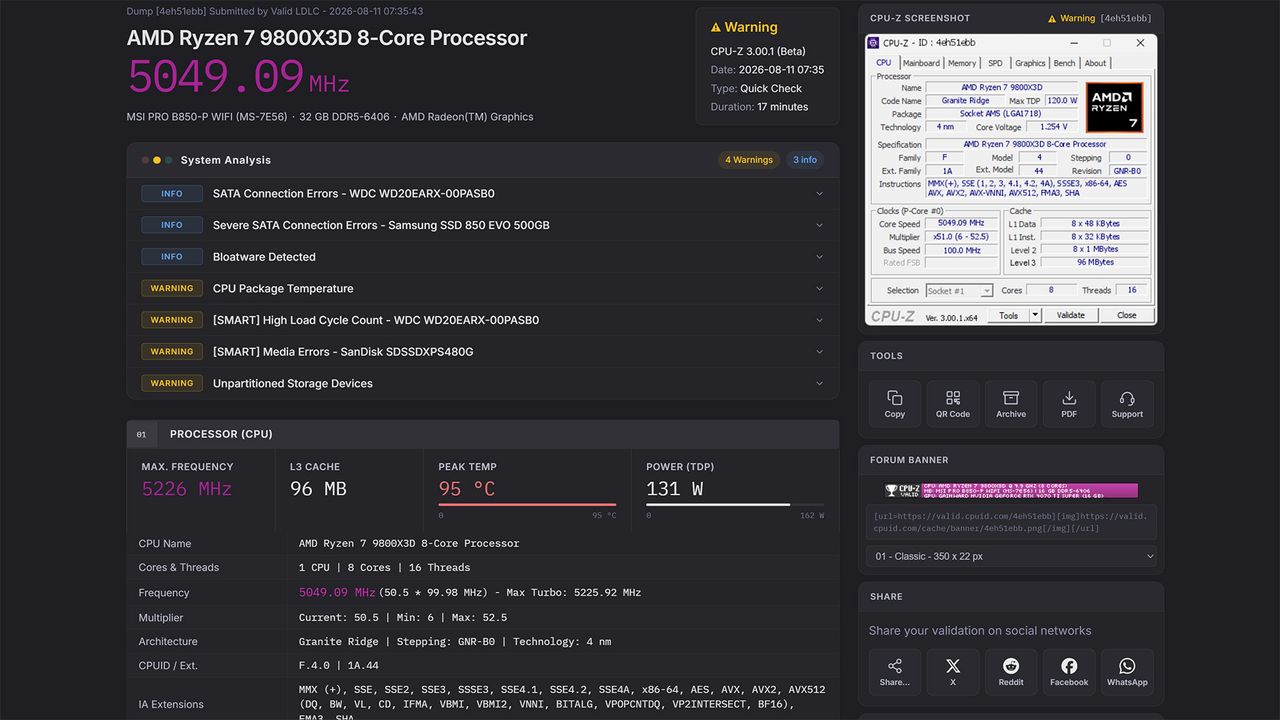
CPU-Z's validation system now consists of three modes: standard, advanced, and XOC. The standard validation system can now display the current health of a PC in less than 10 seconds, and will check over 100 detection points including drivers, CPU temperature, bloatware, and more.

The team behind CPU-Z also worked with major support services to add "meaningful" labels detailing how healthy parts of the system are. These labels include "Critical," "Warning," and "Informational".

Standard Validation is available now. In less than 10 sec., get a snapshot of your PC’s health with 100+ detection points covering drivers, temperatures, bloatware, hardware issues, misconfiguratoins and more, ordered with clear ❌Critical, ⚠️ Warning and ℹ️ Info messages. pic.twitter.com/YzCnLPn8ekAugust 20, 2026

The advanced validation portion is entirely new for CPU-Z and features a far more in-depth validation process, including checking for potential hardware issues under heavy load. Using the advanced validation tool can take anywhere between several minutes and several hours to complete due to the stress testing and error detection functionality targeted at the CPU, RAM, and GPU. Additionally, the advanced validator also features a "significantly extended benchmarking" tool that measures CPU, GPU, RAM, and storage performance. Advanced sensors based on HWMonitor have also been incorporated to monitor temperatures, frequencies, fan speeds, and more.

The XOC validator, aimed at extreme overlockers as its name suggests, has been updated to better measure the CPU frequency of modern processors as well as properly handle memory overclocking to prevent accidental validation rejections. V3's XOC validator better handles the complex, always-changing clock speeds of modern CPUs by calculating the effective CPU clock and the "input" frequency. "If the effective frequency is lower than the input frequency, the dump will still be validated, but the real, effective frequency will be used as the final validated frequency."

By contrast, the XOC validator in CPU-Z V2 validated CPU frequencies with a five-second load, with a "one-shot measurement." Additionally, V2 also removed all load and most internal checks, which increased the risk of a validation not validating properly.

The new V3 update is designed to improve CPU-Z's usefulness for mainstream users, enthusiasts, and overclockers with its new health checks and diagnostics. CPU-Z V3 is available to download now from cpuid.com; however, many of the app's features will be disabled until enough validations arrive on the V3 database to process statistics efficiently. The V2 database will still accept validations until October 20th, when the database will be switched to read-only mode.

✇Tomshardware

Judge clears Nine PBS to retrieve 70 years of archival TV data — court rules station owns 50TB of data in Iron Mountain servers after host went under

There’s light at the end of the tunnel for Nine PBS. We reported last week that the station lost access to 50TB of data representing 70 years of TV history. The issue was that its cloud storage provider went out of business and access to this important set of backups was abruptly cut off. In the meantime, a judge has cleared the way for Nine PBS to retrieve its archival data and programming from Iron Mountain Data Centers.

Let us refresh your memories of this case by sketching out a timeline of how we got here, before discussing the latest ruling.

  • 2019: Nine PBS began using Open Source Storage (OSS) as its cloud storage provider.
  • 2019-2025: Annual cloud storage contract renewals occur without incident.
  • February 2026: Nine PBS wanted to meet with OSS about contract renewal but couldn’t get in touch.
  • March 6, 2026: Without any new agreement inked, the existing contract expired on March 6, with the terms allowing 30 days for the customer to retrieve their data. However, OSS seemed to cut off access to Nine PBS cloud data without any warning or any grace period.
  • March 13, 2026: Nine PBS learned that OSS saved its cloud data at physical servers housed in Iron Mountain, Colorado. So it wrote to request that Iron Mountain preserve and return the data. However, Iron Mountain doesn’t confirm or deny that it holds this data.
  • April 16, 2026: Nine PBS filed suit against OSS, and new OSS owner James Tramel confirms the data is secured at Iron Mountain.
  • May 2026: Tramel stops responding, later claiming he was defrauded into buying OSS.
  • June 2026: Nine PBS obtains a default judgment stating it owns the data in question and has the right to possess it. Later the same month, Iron Mountain admits it possesses the data. However, Iron Mountain decides to block any access as it says OSS owns the physical servers.
  • July 28, 2026: Nine PBS files a lawsuit against Iron Mountain, the data center provider for OSS, seeking protection against data deletion or modification.

Nine PBS - "70 years of our organization’s history" in danger

The latest development in this twisting and turning case of Nine PBS’s lost data seems like good news for the station. On August 12, 2026, a Denver judge established a process that would allow Nine PBS to retrieve its 50TB of archival data from Iron Mountain’s Denver data center.

The outlined framework includes appointing a third-party vendor, such as a former OSS employee, to assist in the retrieval of the data from the hardware in Iron Mountain. This must be done within 30 days. Moreover, Nine PBS must pay the current and overdue storage fees that OSS missed, and any physical devices the third party takes off the premises must be returned to Iron Mountain after data retrieval. Lastly, Nine PBS must verify no other ex-OSS client data is accessed, and indemnify Iron Mountain against any corruption of data owned by others.

Both Nine PBS and Iron Mountain are requested to provide progress updates on the data retrieval process by September 14. Hopefully this will be a lesson learned by Nine PBS, and it will swiftly implement a proper 3-2-1 backup of its irreplaceable data, so any cloud provider error doesn’t cause such a calamity in the future.

✇Tomshardware

Rogue iOS developer creates app that simulates messages sent by carrier pigeon; messages only travel at 100mph — LA to NYC correspondence takes 22 hours to deliver; virtual birds can get distracted or even lost

Are you perturbed by the hectic pace of modern life and the attention-seeking immediacy of instant messaging (IM) platforms? Do you even find email a bit too high-octane? Developer Noah Larrobino may have the solution you seek with the new Carrier Pidge app for iOS, an app that sends messages at the speed a carrier pigeon would travel.

Spent 3 weeks building a texting app slower than email. Messages fly at pigeon speed — LA to NYC takes 22 hrs. Sometimes the bird dies & the message isn’t delivered. pic.twitter.com/MwHcldFr0YAugust 12, 2026

As outlined by the dev, the key feature of Carrier Pidge is that it slows down electronic communications to a more natural speed. Specifically, any messages you send to other app users will arrive at pigeon speed, based on your respective GPS locations. According to the app store page for Carrier Pidge, that means your messages travel at 110 mph. Not slow, but if one is messaging a contact on the other side of the continent, from LA to NYC, for example, the recipient won’t see the message until 22 hours after it was dispatched.

The carrier pigeon analog is stretched further by some other features of the app’s messaging engine. As your message flies through the ether attached to your virtual bird’s virtual ankle, some birds will get distracted, slowing their progress by as much as 25%.

There’s a real-time flight tracker in the app. In Noah’s tweet, you can see they are tracking a message sent from NYC to somewhere in the UK. The on-screen text suggests the pigeon is still 1 day and 2 hours away from its destination.

Your virtual bird can get lost or die

More hazardous to your messaging hopes is the fact that anytime you send a communication via Carrier Pidge, there’s a 0.2% chance the virtual bird will get lost. So you can’t guarantee your chosen recipient will get the message.

On the other side of the flight path, there are no read receipts generated. This might give Carrier Pidge app users some graceful leeway to ignore messages they’d rather not deal with, while shielded by a little plausible deniability – a much better outcome than seemingly, rudely, ignoring a friend. However, if the dev is serious about extending such comfort to users, they should make sure the real-time flight tracker also has some built-in inaccuracies or foggy areas.

Lastly, Noah says that the virtual pigeon will sometimes just die en route to its destination. That’s another level of realism that elevates this app against its peers, as long as the dev has properly researched and implemented pigeon fatality chances across the routes, environments, and weather systems they would encounter.

While Carrier Pidge has debuted on Apple’s App Store for iOS, Noah says it will “come to Android eventually.” This new messaging app is monetized by allowing users to expand their aviary with as many as 10 extra pigeons.

✇Tomshardware

PBS broadcaster loses access to 50TB of data comprising 70 years of TV history after contracted cloud storage vendor goes defunct — public TV channel sues Iron Mountain data center, which hosts archival materials, to ensure preservation

Nine PBS is afraid that it will lose over 70 years of archival materials and programming after its contracted cloud storage vendor has apparently gone out of business. According to Current, the channel used Open Source Storage, or OSS, for storing over 50TB of data — but it suddenly lost access to its data earlier this year. Nine PBS has been working with OSS and its predecessor since 2019 and intended to renew its contract on March 6 of this year. The company never responded and abruptly cut off the station’s data access even though it still had 30 days to retrieve its data after the contract ended.

The station dug a little bit deeper when it discovered that the OSS website no longer existed and was listed as delinquent under the Colorado Secretary of State. It also discovered that OSS utilized Iron Mountain’s services, so it sent a demand letter to the latter to preserve its data and to "pay any reasonable costs associated with its demand." At the time, Iron Mountain did not confirm or deny that it possessed Nine PBS’ data.

At the same time, the channel also sued OSS and its leadership, which it paused after someone who claimed to be a "managing partner of the group that officially acquired" the company reached out. The person, named James Tramel, initially communicated with Nine PBS for about a month. However, this also ended abruptly, with the channel eventually receiving an automated reply from Tramel stating he is no longer connected with OSS. The channel was able to get in touch with him, and he said that he had "been defrauded" into acquiring the cloud storage company and that ownership and operations have now reverted to the previous owners.

This left the channel at a loss, so it continued its case against OSS, and the court ruled that Nine PBS had all the rights to access its data stored with OSS and that the latter should "facilitate its transfer to a new vendor." The channel’s attorney also reached out to Iron Mountain to inform the company of the pending case in Colorado; Iron Mountain finally admitted to holding the data. Iron Mountain initially agreed to turn over Nine PBS’ data, but it eventually backtracked and claimed that OSS owned the data it stored. Because of this, Nine PBS now has no choice but to sue Iron Mountain, too, to ensure the data is not deleted.

The entire thing is a nightmare scenario for Nine PBS, especially as it’s still unclear what will happen to its data. The channel can only assume that its former cloud storage provider is no longer paying data center bills, so it’s rightfully concerned that its data might end up lost forever. And even if Iron Mountain is willing to give Nine PBS its data, it risks getting sued by OSS — it is simply protecting itself by refusing to turn over the said stored data.

It seems that the safest legal way to resolve this issue is for Nine PBS to get a court order requiring Iron Mountain to turn over its data. But the channel must act quickly to ensure that its data, which Nine PBS VP and CCO Leah Freeman said to Current represented "70 years of our organization’s history," stays safe.

It's not clear if the channel has backups of its data, but based on its determination, we suspect not. This is strange, though, especially for a major organization, as one can easily purchase a six-bay NAS on Amazon and populate it with the best HDDs. This also goes against the 3-2-1 backup rule, which says you should keep three copies of your files stored in two different mediums, with one of them running offsite. Hopefully Nine PBS will implement a better backup system once it regains access to its data. And at least there's still a chance — it's not like the fire that the South Korean government experienced last year, which saw 858TB of data go up in smoke.

✇Tomshardware

Vibe-coded app adds a 3D video rental storefront to your Jellyfin HTPC — self-hosted, open-source project brings back memories of browsing for VHS tapes on Saturday afternoons

A Redditor shared their vibe-coded project, which added a 3D frontend to your Jellyfin HTPC. The app, called Halcyon Video and available on GitHub, is designed to bring back childhood memories when you spend weekend afternoons browsing video rental stores so the family has something to watch before going to bed. It’s open-source and self-hosted, so you can easily install it on your HTPC, and it also works with RomM if you have your own collection of retro video games.

“Wander the aisles, flip boxes over, rent at the counter, and the movie plays in your room (if you choose hardcore rental mode). TV series come shrink-wrapped as season box-sets,” u/halcyon-video said on Reddit. “‘Recently Added’ becomes ‘New Releases’ on the back wall. Everything has a purpose. There is too much to explain and you have to download and run it to find it all.” They also added, “Go use it, star it if you like it. This project has only just begun, and I will not rest until my childhood has been fully resurrected.” Aside from the GitHub repo, they also created a 45-second tour of the project on YouTube, as well as a demo so you can see how it works.

To complete the nostalgia, the box cover and plastic case pop up when you select a movie or TV series. You can even read warnings and tips at the back of the plastic case like “Please rewind after viewing,” and “If the picture rolls or has a lot of ‘interference,’ adjust the tracking device on your VCR.” Once you’ve chosen what you want to watch, you’ll have to walk out to the front counter to check it out, where the cashier will place it in a plastic bag so you can head back “home” to start watching. There are also several customizations that you can do, like picking a period from 1990, 1993, 2000, and 2010, setting different times like day, sunset, and night, and even choosing between VHS or DVD. We also can’t forget about the tape/disc return box that sits right by the entrance if you’re picking out another movie for tonight.

This isn’t just a random store where you pick out the movie or game that you like, and you’re instantly teleported back to your 4K TV. Instead, it’s a whole experience that you need to see for yourself to understand just how deep and immersive it is. To navigate inside the store, you can use the classic WASD and arrow keys on your keyboard, although Halcyon Video also supports controllers and HTPC remote controls, too. But, most importantly, this front end is all locally supported — it only uses the metadata from your library and does not make any outside calls to some external server.

So, if you’re tired of not owning your video library and are looking to build your own media server from leftover PC parts, consider adding this front end to make movie selection a little bit more exciting. That way, instead of spending hours scrolling through Netflix, you’ll spend a lot of time walking around this store from your childhood.

✇Tomshardware

x64 port of Microsoft Word for Windows 1.1a arrives — you can now run this seminal 1990 word processor natively in Windows 11

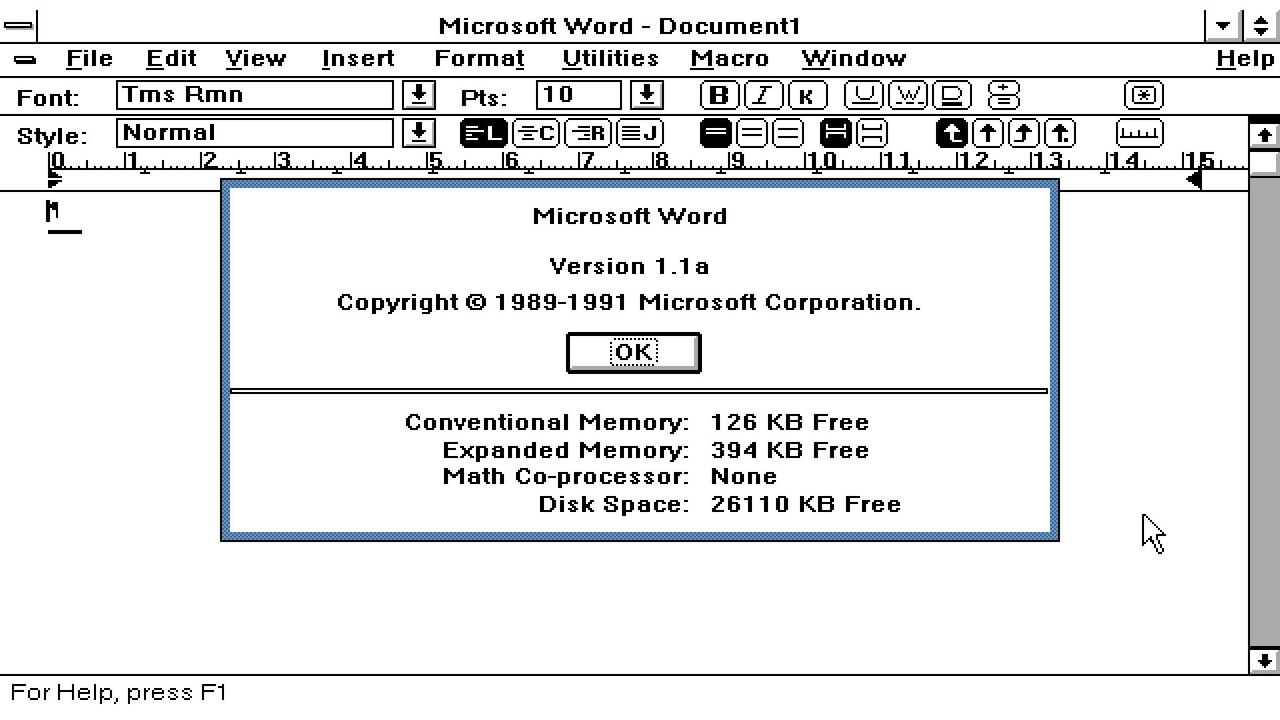
A developer has ported Microsoft Word for Windows 1.1a to x64 so it can now run natively on Windows 11 PC systems. JMarshall23 on GitHub stresses that this is a fully working native Windows x64 port using “original Word source and resources together with modern replacements for the 16-bit assembly, segmented-memory, and Win16 platform boundaries.” It also includes some extra features for “research purposes.” Microsoft Word for Windows 1.1a was originally released over a quarter of a century ago.

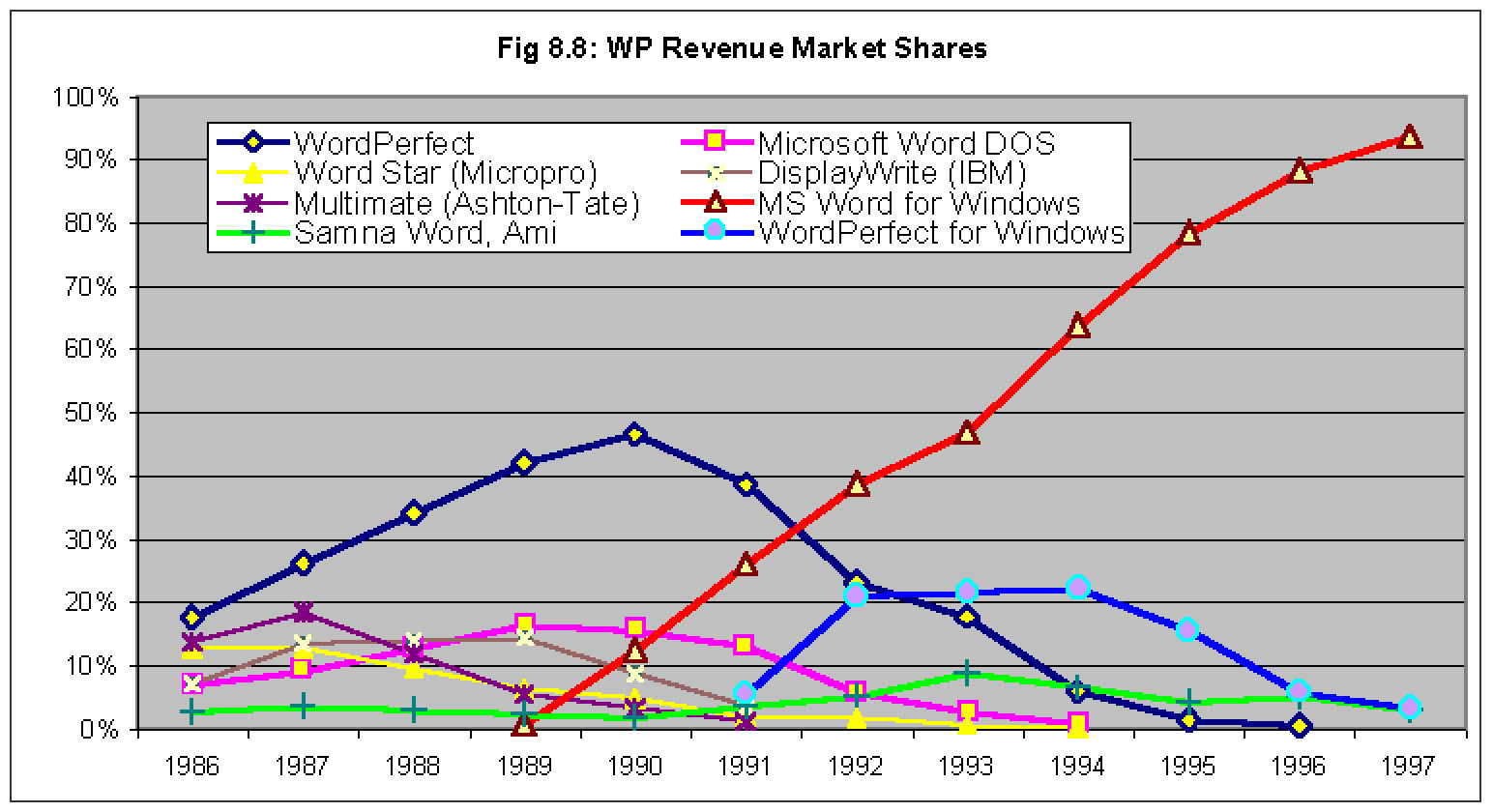
This release of Word marked a milestone in the word processing market, as it pioneered genuinely useful feature additions like WYSIWYG editing, graphics, and table insertion on Windows. It would spearhead the momentum in shifting users from DOS productivity monsters like WordPerfect to complete dominance in Windows-land. Word for Windows 1.1a added all its frills while remaining very efficient, running on systems with CPUs that ran in single-figure MHz speeds, and with as little as 1MB of RAM.

Microsoft Word for Windows 1.1a

WinWord won (Image credit: The Computer History Museum (CHM). )

Another notable feature of this version of Word for Windows is that Microsoft permitted its source code to be released in full. You can still grab that code via the Computer History Museum (CHM). There you will find a 7MB bundle of C source, x86 assembly, build tools, and documentation. These 1,021 files in 33 folders are what JMarshall23 started with.

GitHub doesn’t have Windows x64 binaries ready for the casually curious on the lookout for a free, lightweight word processor to download and use. Instead, you’ll need access to Visual Studio 2022 with Desktop development with C++, a Windows 10 or Windows 11 SDK installed through Visual Studio, CMake 3.25 or newer, and PowerShell, notes Marshall. Then simply follow the GitHub instructions to build and run Word1.

It will be interesting to see if more comes from this x64 port, but Microsoft’s Word for Windows 1.1a code release carries a license that “permits only non-commercial use and does not give you the right to license it to third parties by posting copies elsewhere on the web,” says the CHM.

❌