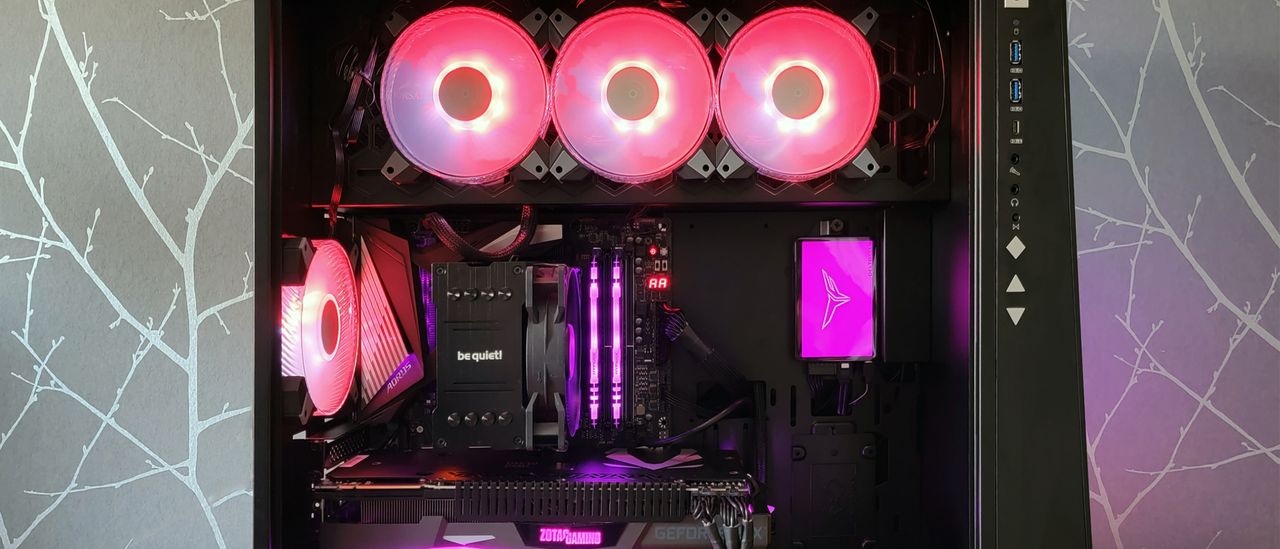
Like clockwork, it's a new month and a new OS-breaking bug has been discovered in Windows 11's latest monthly update, KB5121003. Users reported random system instability, with games freezing or outright crashing, and even BSODs in worst-case scenarios. Microsoft investigated the issue and reached a vindicating conclusion — RGB software installed on affected PCs was interfering with core system components, causing Windows 11 to become unstable.
Online multiplayer titles such as Arc Raiders, Marvel Tokon: Fighting Souls, and The Finals were most affected by this issue. Reports mentioned these games exhibiting a pretty classic crash pattern. They'd suddenly hang and become unresponsive, show an "EXCEPTION_ACCESS_VIOLATION" blue screen, and force your computer to restart automatically.
An official update posted on Microsoft's Windows 11 25H2 health status page says, "this issue is related to peripherals or internal device components which have RGB lighting features." The software governing these devices would install drivers or code components with file names similar to "inpoutx64" to control the RGB. When you'd launch a certain game, inpoutx64 would trigger the issue and cause a crash.
Microsoft didn't explain the underlying cause, but it's likely tied to anti-cheat not appreciating a kernel-mode driver in user space. RGB software, like other apps, should be limited to user space, but the driver it uses to interface with peripheral controllers runs in kernel space. For anti-cheat software, this is essentially an exploit waiting to happen, so it tries to block the driver to make sure it doesn't inject malicious code.
If the driver is blocked upon startup and the RGB software unknowingly tries to push a lighting change or monitor a temp sensor, for instance, it hits a wall, and Windows throws up the EXCEPTION_ACCESS_VIOLATION error. If the driver is terminated mid-use while executing assembly instructions at the Ring 0 level, it causes a critical kernel fault. Kernel space typically can't recover from unhandled errors like these, so Windows triggers a blue screen as a precaution to protect your hardware.
Microsoft says it's "presently working to understand the relationship between these RGB components and the games which trigger this issue." The company will provide more info later, but for now, you can use the Registry Editor to manually disable the driver as a temporary solution. Embark Studios, developers of Arc Raiders and The Finals, also shared this method to fix crashes for now.
This could break some RGB software functionality, but you can use universal programs like SignalRGB or OpenRGB to control your devices as long as they're supported. Their specialized drivers have strictly defined whitelists that don't scare anti-cheat software. Still, if you're facing this issue, Microsoft suggests reporting it via Feedback Hub—that's how issues like this get prioritized in the first place.
Linux kernel 7.3 is set to bring an oddly nostalgic update for 3dfx's Voodoo 3, one of the most recognizable graphics cards of the late 1990s. Don't get too excited; the venerable PCI-and-AGP accelerator isn't suddenly getting a modern Linux graphics stack, but the kernel's existing tdfxfb framebuffer driver is being updated so that it can initialize a Voodoo 3 itself rather than relying on the system firmware to have already run the card's video BIOS. It's a small change with a surprisingly specific purpose, and one that illustrates why ancient hardware occasionally gets attention in contemporary Linux.
The problem is that the tdfxfb driver historically assumed that the Voodoo card had already been initialized by the PC's firmware. That's because, at the time it was written, that was a reasonable assumption on a conventional x86 PC. The system firmware would execute the card's video BIOS during boot, configure the hardware, and then hand Linux something that is already capable of displaying an image. That assumption breaks down on newer and unusual platforms where the firmware cannot or does not execute the VGABIOS. The creator's patch description specifically calls out non-x86 computers, systems where another graphics card is primary, and newer BIOSes that can't run the old video BIOS.
The developer behind the patches, Daniel Palmer, was using a Voodoo 3 in an Amiga 4000 equipped with a PCI bridge when the problem cropped up. Linux could detect the card, but the Voodoo was still completely uninitialized, leaving him staring at "no signal detected." The new code uses configuration information from the card's own video BIOS to perform the initialization from Linux instead, allowing the driver to bring the VGA core up and establish a working display without depending on the system firmware. For now, the new manual initialization code is specifically aimed at the Voodoo 3; he had initially noted support for the VSA-100-based Voodoo 4 and 5 cards, but their BIOS layouts are different, so that support was removed from the current patch series. The code has been tested on both a modern x86-64 system and an Amiga 4000 with a Mediator PCI bridge.
On a conventional modern-ish x86-64 PC with a Voodoo 3 installed, the practical result is fairly modest. Load tdfxfb and you can get a working Linux framebuffer device, typically exposed as /dev/fb0, with the Voodoo driving a display that can host the Linux virtual console. In other words, this is enough to turn the Voodoo from "a PCI device that Linux can identify" into an actual display adapter capable of putting pixels on the screen even when firmware didn't initialize it first. Applications that know how to use the Linux framebuffer interface can also draw to it, just as they could with other old framebuffer devices.
The thing is, that's also where the limits of this work become apparent. Linux fbdev is a legacy graphics interface and has long been superseded by Linux's DRM/KMS graphics infrastructure, so this ain't a resurrection of the Voodoo 3 as a contemporary Linux GPU. Loading tdfxfb does not give you a Mesa stack, modern OpenGL, Wayland acceleration, or the sort of 3D functionality you would expect. It is essentially a very old-fashioned "squirt pixels at the display" arrangement, but that's useful enough for a Linux console, embedded-style framebuffer applications, and, apparently, people putting exotic PCI graphics cards into even more exotic old computers, but it's not exactly a compelling reason to install a Voodoo 3 in a modern desktop.
The more interesting part is that Palmer is working on a separate 3D path for the Voodoo 3, and that effort is already much further along than the framebuffer work alone might suggest. The experimental interface exposes the Voodoo's register space to userspace through a new /dev/tdfx3d misc device, whose mmap() interface allows software to program the card's 3D hardware directly. On top of that sits smoltdfx, a tiny userspace library for driving the Voodoo 3, and smolminigl, a small OpenGL 1.x implementation built on top of it. Palmer says he has tested the project on real Voodoo 3 hardware and that it can render directly through the card's registers without X, Mesa, or Glide.
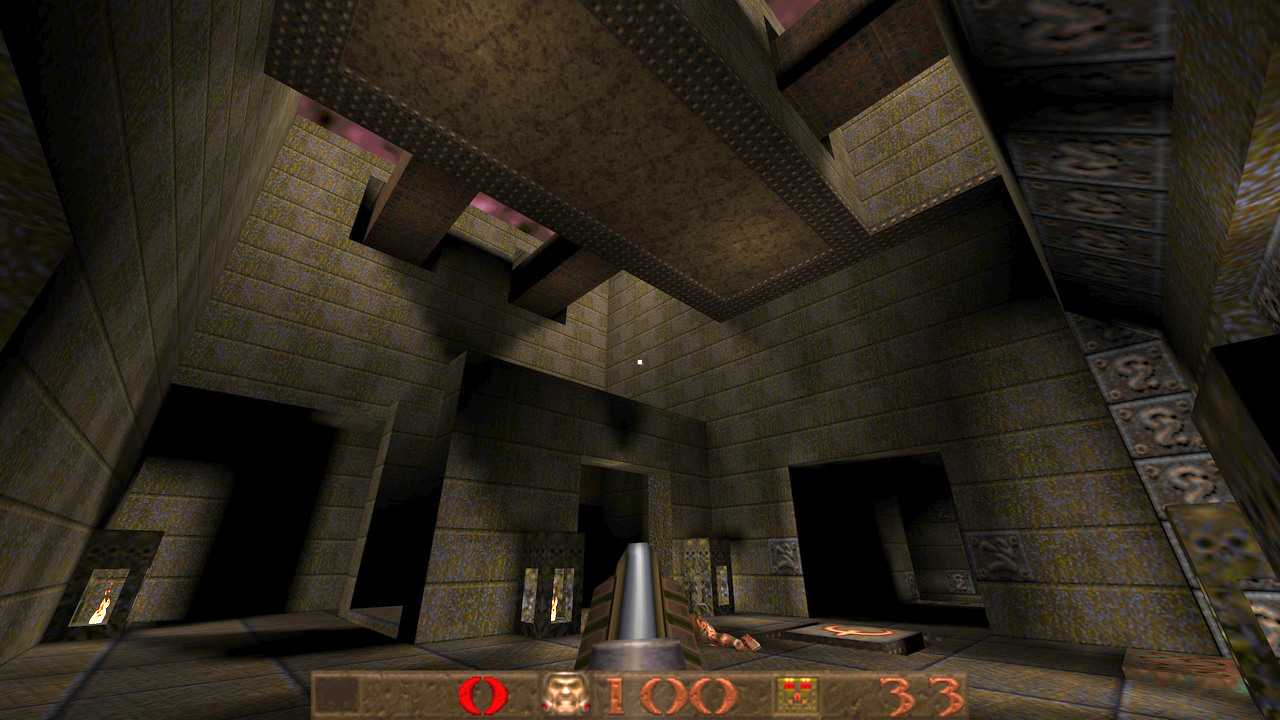
GLQuake was the killer app for the original 3dfx Voodoo Graphics cards in 1996. (Image credit: Zak Killian/Future)
Palmer is developing that work alongside a QEMU emulation of the Voodoo 3. The developer says Claude helped build the emulator in the first place to debug the issue of getting the card working on his Amiga. Now, test programs can be run against both the emulated card and the real hardware, with differences fed back into the emulator until the behavior matches. The smoltdfx project now uses the same rendering tests against QEMU and physical Voodoo 3 hardware, comparing frame digests to catch differences. According to Palmer, the resulting MiniGL implementation can already run Quake on the real card, although performance isn't great, and some issues with the Voodoo 3's multitexturing capabilities remain to be worked out.
Obviously, that's a lot more interesting than simply putting a Linux console on a Voodoo 3. The sum total is a highly experimental 3dfx graphics stack built from the bottom up: Linux provides the framebuffer and low-level device access, userspace programs the Voodoo directly, and a lightweight OpenGL implementation sits above that to provide enough functionality for classic 3D software to command the card.
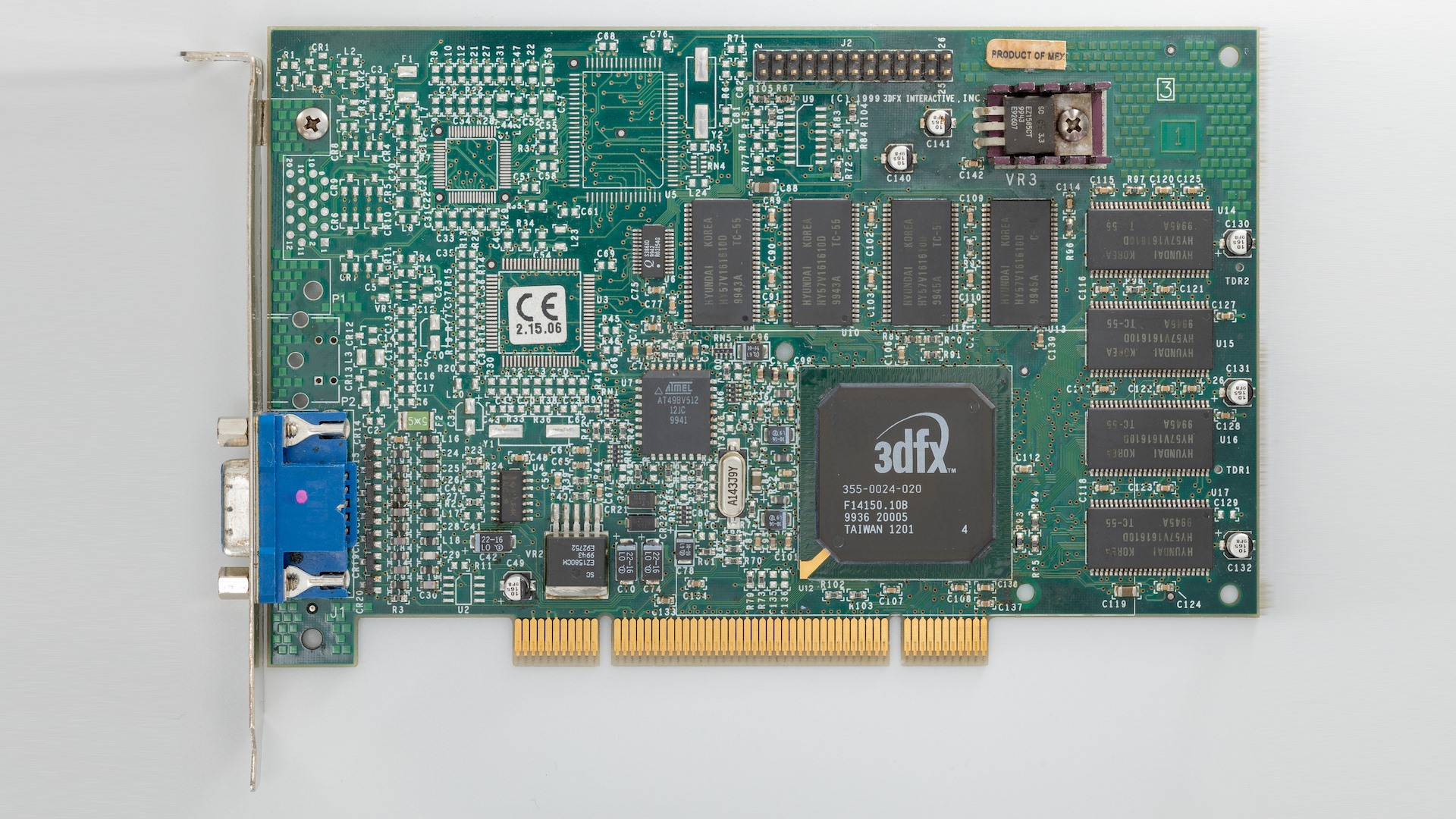
3dfx's Voodoo 3 3000 was surprisingly competitive upon its release in 1999 considering that it was essentially a third-generation die shrink of the same Voodoo technology. (Image credit: Photo: Circuit Rewind / The Retro Web (CC BY-SA 4.0))
Indeed, things could get particularly fun for retro-computing and virtualization. A PCI Voodoo 3 is the sort of device that, at least conceptually, could be assigned to a virtual machine using PCI passthrough, letting a guest operating system talk directly to the real accelerator with its period-accurate 3dfx driver. In the fantasy version of that setup, you could have a modern Linux host hand an actual Voodoo 3 to a Windows 98 or DOS-era guest and then let the guest use the very same hardware that the old software expected. The engineering details are much nastier than the concept suggests (particularly around resetting and exposing such old hardware cleanly), but the new ability to initialize an otherwise-dormant Voodoo from Linux is at least a useful piece of that puzzle.
For now, though, the headline is more significant than the immediate feature set. Linux 7.3 isn't suddenly turning a 25-year-old Voodoo 3 into a usable GPU; it's making an existing framebuffer driver capable of bringing the card to life on systems where firmware cannot do the job, which is a very small but very real hole in hardware support. More remarkably, the same effort has already spilled into experimental 3D acceleration on real hardware, with a userspace Voodoo 3 library and an OpenGL implementation capable of running Quake. Voodoo 3 may be over 25 years old by now, but somebody is still teaching Linux new tricks with it in 2026.
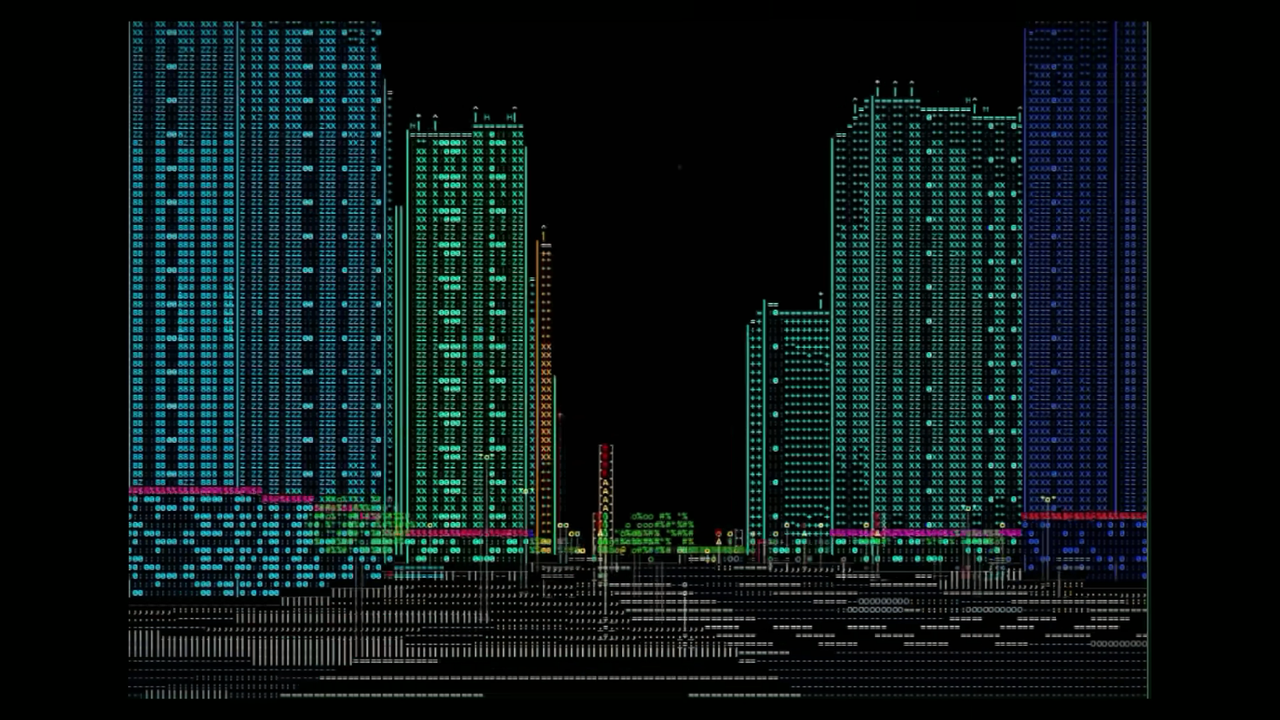
Solo developer Grow Now! Games has put a playable browser build of its walkable ASCII cyberpunk city online, running on a 283KB Rust WebAssembly engine feeding a WebGL renderer. The build went live this week alongside a second YouTube video, ASCII City Update: Interiors, Elevation & Skyscrapers, following the original video, which has passed a million views and 9,000 comments.
The page fetches ascii-city-engine_bg-DqjAhqbp.wasm, a 283KB module that reserves 1,152KB of linear memory at startup and reports an engine version of 0.1.0 when instantiated outside the browser. Its exports include initialise_native_game, step_native_game, and generate_native_local_map. Debug paths left in the binary name the Rust source modules behind those calls: city.rs, world.rs, population.rs, interiors.rs, and rendering.rs. World generation runs in Rust, which hands JavaScript base64-packed byte arrays covering building heights, tile kinds, surfaces, hues, saturations, window styles, lit flags, and floor plan IDs.
The renderer requests a WebGL context and compiles a vertex and fragment shader pair, the fragment stage consisting of a single texture2D lookup. Characters are drawn once each into an atlas canvas with fillText, cached per character-and-color combination, uploaded to the GPU with one texImage2D call, and then drawn as textured quads with six vertices apiece.
Atlas cells measure 11 pixels tall by the monospace advance width plus two. Every visible cell goes into one buffer upload, and one drawArrays call per frame. Two fallbacks sit beneath this, a Canvas 2D drawImage path when WebGL is unavailable, and a per-cell fillText path reachable through a ?direct URL parameter.
Desktop sessions render 180 columns by 80 rows, or 14,400 character cells, in 10px Consolas at nine pixels per row. Touch devices drop to 48 rows and between 96 and 168 columns, and the Rust engine uses a separate 160 by 112 profile. The vertex buffer preallocates 2.76MB and doubles when a frame overruns it.
Grow Now! Games described the original demo to PC Gamer as having "no Unity, there's no Unreal, there's no 3D models, textures, or shaders." A first-person Backrooms game for the 1994 Sega 32X runs on a raycasting engine written from scratch in C and SH-2 assembly. A multiplayer Doom tribute implements raycasting and sprite projection as a stack of SQL views, reaching roughly 30 FPS at 128 x 64. Thunder Lizard, an ASCII roguelike, has had its character grid redrawn by image models into full-motion visuals at around 10 FPS.
CPU-Z has rolled into its version 3 release, representing one of, if not the largest, updates the app has seen since its release in 2001. V3 introduces a host of updates, focusing primarily on an overhauled validation system with a new advanced mode.
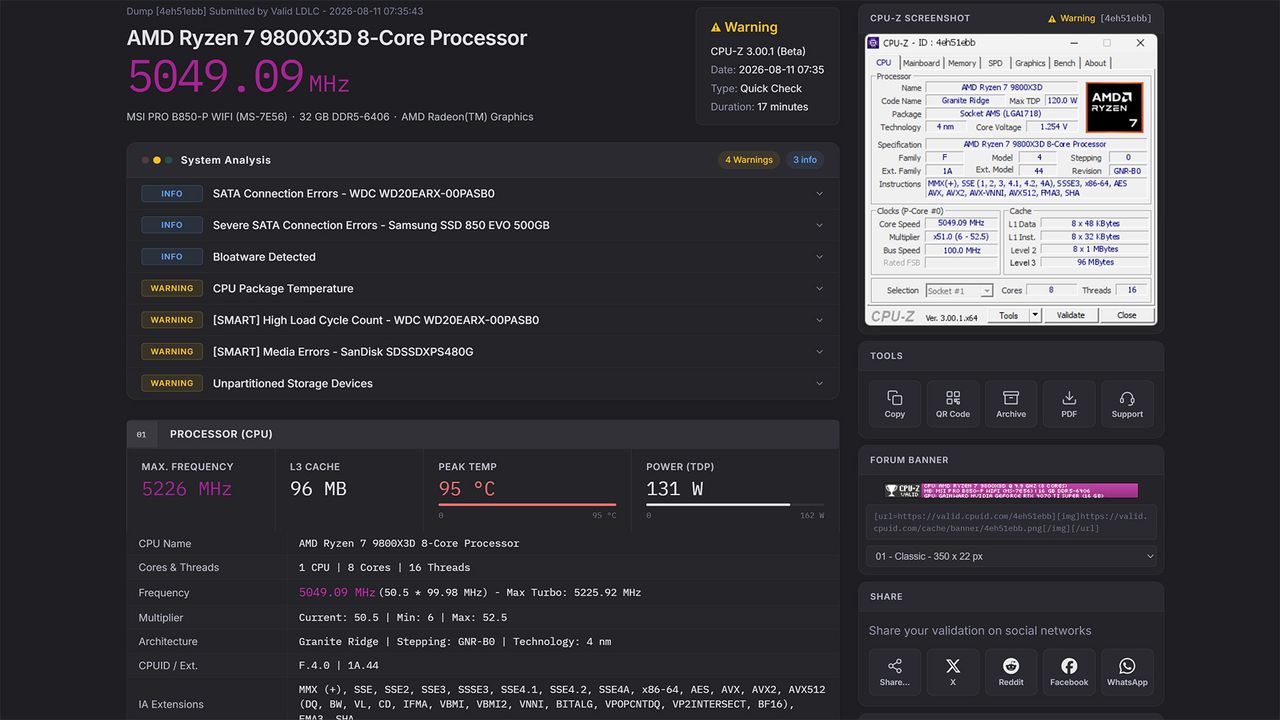
CPU-Z's validation system now consists of three modes: standard, advanced, and XOC. The standard validation system can now display the current health of a PC in less than 10 seconds, and will check over 100 detection points including drivers, CPU temperature, bloatware, and more.
The team behind CPU-Z also worked with major support services to add "meaningful" labels detailing how healthy parts of the system are. These labels include "Critical," "Warning," and "Informational".
Standard Validation is available now. In less than 10 sec., get a snapshot of your PC’s health with 100+ detection points covering drivers, temperatures, bloatware, hardware issues, misconfiguratoins and more, ordered with clear ❌Critical, ⚠️ Warning and ℹ️ Info messages. pic.twitter.com/YzCnLPn8ekAugust 20, 2026
The advanced validation portion is entirely new for CPU-Z and features a far more in-depth validation process, including checking for potential hardware issues under heavy load. Using the advanced validation tool can take anywhere between several minutes and several hours to complete due to the stress testing and error detection functionality targeted at the CPU, RAM, and GPU. Additionally, the advanced validator also features a "significantly extended benchmarking" tool that measures CPU, GPU, RAM, and storage performance. Advanced sensors based on HWMonitor have also been incorporated to monitor temperatures, frequencies, fan speeds, and more.
The XOC validator, aimed at extreme overlockers as its name suggests, has been updated to better measure the CPU frequency of modern processors as well as properly handle memory overclocking to prevent accidental validation rejections. V3's XOC validator better handles the complex, always-changing clock speeds of modern CPUs by calculating the effective CPU clock and the "input" frequency. "If the effective frequency is lower than the input frequency, the dump will still be validated, but the real, effective frequency will be used as the final validated frequency."
By contrast, the XOC validator in CPU-Z V2 validated CPU frequencies with a five-second load, with a "one-shot measurement." Additionally, V2 also removed all load and most internal checks, which increased the risk of a validation not validating properly.
The new V3 update is designed to improve CPU-Z's usefulness for mainstream users, enthusiasts, and overclockers with its new health checks and diagnostics. CPU-Z V3 is available to download now from cpuid.com; however, many of the app's features will be disabled until enough validations arrive on the V3 database to process statistics efficiently. The V2 database will still accept validations until October 20th, when the database will be switched to read-only mode.
China's Ministry of State Security has told some state-linked organizations to remove a customized version of Windows 10 from their machines,Bloombergreports, citing people familiar with the matter. The order reportedly accelerates a planned retirement that the software's developer had scheduled for February 2027, and it sent Chinese OS vendors' shares surging, with Hunan Kylinsec and Archermind both hitting Shanghai's 20% daily limit and China National Software climbing 10%. Bloomberg's sources attributed the directive to data security concerns but didn't specify what vulnerabilities Beijing is worried about.
The affected software is the government edition developed by C&M Information Technologies (CMIT), a joint venture set up in 2016 between Microsoft and state-owned China Electronics Technology Group, with the Chinese side holding the majority stake. The build is based on Windows 10 Enterprise but strips out OneDrive and other consumer-facing components, disables certain native functions, keeps updates and activation inside China, and lets government users substitute Chinese encryption algorithms for Microsoft's standard cryptography. China Customs and Shanghai's Commission of Economy and Informatization were among the first pilot customers when the edition launched in 2017.
Microsoft ended mainstream Windows 10 support globally in October 2025, which left CMIT's edition as the only Windows still officially sanctioned for Chinese government use. "Microsoft is not aware of a security incident affecting this product," a company spokesperson told Bloomberg, adding that it continues to receive regular security updates.
StatCounter's traffic data shows how little of that campaign has reached the consumer market. Windows accounted for 87.64% of Chinese desktop web traffic in July 2026, and Windows 10 alone still made up 43.56% of Chinese Windows usage, compared with 50.01% for Windows 11, ten months after mainstream support ended. Roughly two in five Chinese desktops are currently running an unsupported Microsoft OS, the gap that CMIT's edition was meant to close for government users.
It's not clear what the scope of the new directive is, with Bloomberg's reporting covering “some” state-linked entities. CMIT didn't respond to the outlet's request for comment.
There’s light at the end of the tunnel for Nine PBS. We reported last week that the station lost access to 50TB of data representing 70 years of TV history. The issue was that its cloud storage provider went out of business and access to this important set of backups was abruptly cut off. In the meantime, a judge has cleared the way for Nine PBS to retrieve its archival data and programming from Iron Mountain Data Centers.
Let us refresh your memories of this case by sketching out a timeline of how we got here, before discussing the latest ruling.
2019: Nine PBS began using Open Source Storage (OSS) as its cloud storage provider.
2019-2025: Annual cloud storage contract renewals occur without incident.
February 2026: Nine PBS wanted to meet with OSS about contract renewal but couldn’t get in touch.
March 6, 2026: Without any new agreement inked, the existing contract expired on March 6, with the terms allowing 30 days for the customer to retrieve their data. However, OSS seemed to cut off access to Nine PBS cloud data without any warning or any grace period.
March 13, 2026: Nine PBS learned that OSS saved its cloud data at physical servers housed in Iron Mountain, Colorado. So it wrote to request that Iron Mountain preserve and return the data. However, Iron Mountain doesn’t confirm or deny that it holds this data.
April 16, 2026: Nine PBS filed suit against OSS, and new OSS owner James Tramel confirms the data is secured at Iron Mountain.
May 2026: Tramel stops responding, later claiming he was defrauded into buying OSS.
June 2026: Nine PBS obtains a default judgment stating it owns the data in question and has the right to possess it. Later the same month, Iron Mountain admits it possesses the data. However, Iron Mountain decides to block any access as it says OSS owns the physical servers.
July 28, 2026: Nine PBS files a lawsuit against Iron Mountain, the data center provider for OSS, seeking protection against data deletion or modification.
Nine PBS - "70 years of our organization’s history" in danger
The latest development in this twisting and turning case of Nine PBS’s lost data seems like good news for the station. On August 12, 2026, a Denver judge established a process that would allow Nine PBS to retrieve its 50TB of archival data from Iron Mountain’s Denver data center.
The outlined framework includes appointing a third-party vendor, such as a former OSS employee, to assist in the retrieval of the data from the hardware in Iron Mountain. This must be done within 30 days. Moreover, Nine PBS must pay the current and overdue storage fees that OSS missed, and any physical devices the third party takes off the premises must be returned to Iron Mountain after data retrieval. Lastly, Nine PBS must verify no other ex-OSS client data is accessed, and indemnify Iron Mountain against any corruption of data owned by others.
Both Nine PBS and Iron Mountain are requested to provide progress updates on the data retrieval process by September 14. Hopefully this will be a lesson learned by Nine PBS, and it will swiftly implement a proper 3-2-1 backup of its irreplaceable data, so any cloud provider error doesn’t cause such a calamity in the future.
Are you perturbed by the hectic pace of modern life and the attention-seeking immediacy of instant messaging (IM) platforms? Do you even find email a bit too high-octane? Developer Noah Larrobino may have the solution you seek with the new Carrier Pidge app for iOS, an app that sends messages at the speed a carrier pigeon would travel.
Spent 3 weeks building a texting app slower than email. Messages fly at pigeon speed — LA to NYC takes 22 hrs. Sometimes the bird dies & the message isn’t delivered. pic.twitter.com/MwHcldFr0YAugust 12, 2026
As outlined by the dev, the key feature of Carrier Pidge is that it slows down electronic communications to a more natural speed. Specifically, any messages you send to other app users will arrive at pigeon speed, based on your respective GPS locations. According to the app store page for Carrier Pidge, that means your messages travel at 110 mph. Not slow, but if one is messaging a contact on the other side of the continent, from LA to NYC, for example, the recipient won’t see the message until 22 hours after it was dispatched.
The carrier pigeon analog is stretched further by some other features of the app’s messaging engine. As your message flies through the ether attached to your virtual bird’s virtual ankle, some birds will get distracted, slowing their progress by as much as 25%.
There’s a real-time flight tracker in the app. In Noah’s tweet, you can see they are tracking a message sent from NYC to somewhere in the UK. The on-screen text suggests the pigeon is still 1 day and 2 hours away from its destination.
Your virtual bird can get lost or die
More hazardous to your messaging hopes is the fact that anytime you send a communication via Carrier Pidge, there’s a 0.2% chance the virtual bird will get lost. So you can’t guarantee your chosen recipient will get the message.
On the other side of the flight path, there are no read receipts generated. This might give Carrier Pidge app users some graceful leeway to ignore messages they’d rather not deal with, while shielded by a little plausible deniability – a much better outcome than seemingly, rudely, ignoring a friend. However, if the dev is serious about extending such comfort to users, they should make sure the real-time flight tracker also has some built-in inaccuracies or foggy areas.
Lastly, Noah says that the virtual pigeon will sometimes just die en route to its destination. That’s another level of realism that elevates this app against its peers, as long as the dev has properly researched and implemented pigeon fatality chances across the routes, environments, and weather systems they would encounter.
While Carrier Pidge has debuted on Apple’s App Store for iOS, Noah says it will “come to Android eventually.” This new messaging app is monetized by allowing users to expand their aviary with as many as 10 extra pigeons.
Popular open-source media player VLC has run into an unusual issue on Windows 11 that causes it to take as long as 33 seconds to start playing a simple MP3 file, the side effect of a recent unexplained change to Windows. The issue was publicized after game developer Jonathan Blow said he had stopped using VLC in favor of Microsoft's Media Player because of the delay. He also used the incident to criticize the state of open-source software running on Windows.
Responding to Blow's complaint, the developers behind VLC player fired back and claimed that the media player itself was not responsible. According to the VLC team, the bug is primarily due to a Microsoft Defender issue introduced through a Windows 11 update that conflicts with VLC's plugin cache.
This is because of a « bug » from Microsoft Defender in one update of Windows 11, who magically made VLC plugins cache quarantined by Windows.Reinstalling VLC or regeneration of the plugin cache will fix this.Calling open source software embarrassing when it is a Windows… https://t.co/IFLrXFZFsvAugust 12, 2026
"This is because of a « bug » from Microsoft Defender in one update of Windows 11, who magically made VLC plugins cache quarantined by Windows. Reinstalling VLC or regeneration of the plugin cache will fix this. Calling open source software embarrassing when it is a Windows update that broke it is quite disrespectful," the account responded.
The cache is an important part of how the media player works, as it relies on plugins for codecs, demuxers, and input/output modules. Instead of putting everything into a single executable, VLC loads these components as and when required and uses a cache to avoid having to scan the entire plugin directory every time it loads. The issue seems to occur when Microsoft Defender quarantines or blocks VLC's plugins.dat cache file. As a result, VLC can take a noticeable amount of time to process its plugin system before finally beginning playback. We also tried to replicate the issue on a Windows 11 machine; however, VLC launched normally, and we did not experience any noticeable delay when playing an MP3 file.
The easiest way to fix this is to reinstall VLC or regenerate the plugin cache. The VLC Windows installer includes a dedicated executable file to reset the cache files. This can be accessed by either heading to the VLC installation folder and running vlc-cache-gen.exe or its shortcut within the Start menu called "VLC media player - reset preferences and cache files." Do note that this also removes any customized preferences, such as audio settings like equalizers, keyboard shortcuts, subtitles, etc.
A more reliable solution is to add an exception for the VLC installation folder in Microsoft Defender itself. This should prevent Microsoft Defender from interfering with VLC's cache files and avoid the same issue from recurring. While the workaround seems relatively simple, it is still far from being ideal. One should not have to jump through hoops just to play an MP3 file. While Microsoft is yet to comment on the issue, it remains to be seen whether a future Windows Defender update will address the underlying cause.
Nine PBS is afraid that it will lose over 70 years of archival materials and programming after its contracted cloud storage vendor has apparently gone out of business. According to Current, the channel used Open Source Storage, or OSS, for storing over 50TB of data — but it suddenly lost access to its data earlier this year. Nine PBS has been working with OSS and its predecessor since 2019 and intended to renew its contract on March 6 of this year. The company never responded and abruptly cut off the station’s data access even though it still had 30 days to retrieve its data after the contract ended.
The station dug a little bit deeper when it discovered that the OSS website no longer existed and was listed as delinquent under the Colorado Secretary of State. It also discovered that OSS utilized Iron Mountain’s services, so it sent a demand letter to the latter to preserve its data and to "pay any reasonable costs associated with its demand." At the time, Iron Mountain did not confirm or deny that it possessed Nine PBS’ data.
At the same time, the channel also sued OSS and its leadership, which it paused after someone who claimed to be a "managing partner of the group that officially acquired" the company reached out. The person, named James Tramel, initially communicated with Nine PBS for about a month. However, this also ended abruptly, with the channel eventually receiving an automated reply from Tramel stating he is no longer connected with OSS. The channel was able to get in touch with him, and he said that he had "been defrauded" into acquiring the cloud storage company and that ownership and operations have now reverted to the previous owners.
This left the channel at a loss, so it continued its case against OSS, and the court ruled that Nine PBS had all the rights to access its data stored with OSS and that the latter should "facilitate its transfer to a new vendor." The channel’s attorney also reached out to Iron Mountain to inform the company of the pending case in Colorado; Iron Mountain finally admitted to holding the data. Iron Mountain initially agreed to turn over Nine PBS’ data, but it eventually backtracked and claimed that OSS owned the data it stored. Because of this, Nine PBS now has no choice but to sue Iron Mountain, too, to ensure the data is not deleted.
The entire thing is a nightmare scenario for Nine PBS, especially as it’s still unclear what will happen to its data. The channel can only assume that its former cloud storage provider is no longer paying data center bills, so it’s rightfully concerned that its data might end up lost forever. And even if Iron Mountain is willing to give Nine PBS its data, it risks getting sued by OSS — it is simply protecting itself by refusing to turn over the said stored data.
It seems that the safest legal way to resolve this issue is for Nine PBS to get a court order requiring Iron Mountain to turn over its data. But the channel must act quickly to ensure that its data, which Nine PBS VP and CCO Leah Freeman said to Current represented "70 years of our organization’s history," stays safe.
It's not clear if the channel has backups of its data, but based on its determination, we suspect not. This is strange, though, especially for a major organization, as one can easily purchase a six-bay NAS on Amazon and populate it with the best HDDs. This also goes against the 3-2-1 backup rule, which says you should keep three copies of your files stored in two different mediums, with one of them running offsite. Hopefully Nine PBS will implement a better backup system once it regains access to its data. And at least there's still a chance — it's not like the fire that the South Korean government experienced last year, which saw 858TB of data go up in smoke.
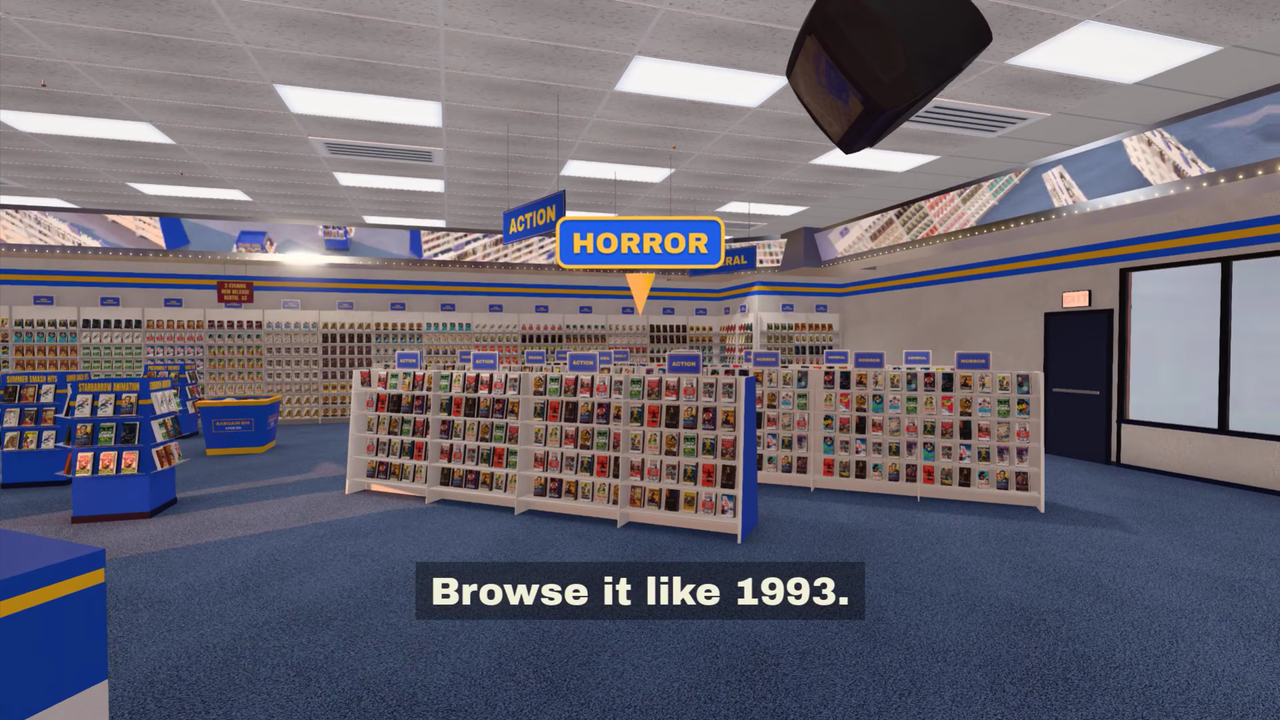
A Redditor shared their vibe-coded project, which added a 3D frontend to your Jellyfin HTPC. The app, called Halcyon Video and available on GitHub, is designed to bring back childhood memories when you spend weekend afternoons browsing video rental stores so the family has something to watch before going to bed. It’s open-source and self-hosted, so you can easily install it on your HTPC, and it also works with RomM if you have your own collection of retro video games.
“Wander the aisles, flip boxes over, rent at the counter, and the movie plays in your room (if you choose hardcore rental mode). TV series come shrink-wrapped as season box-sets,” u/halcyon-video said on Reddit. “‘Recently Added’ becomes ‘New Releases’ on the back wall. Everything has a purpose. There is too much to explain and you have to download and run it to find it all.” They also added, “Go use it, star it if you like it. This project has only just begun, and I will not rest until my childhood has been fully resurrected.” Aside from the GitHub repo, they also created a 45-second tour of the project on YouTube, as well as a demo so you can see how it works.
To complete the nostalgia, the box cover and plastic case pop up when you select a movie or TV series. You can even read warnings and tips at the back of the plastic case like “Please rewind after viewing,” and “If the picture rolls or has a lot of ‘interference,’ adjust the tracking device on your VCR.” Once you’ve chosen what you want to watch, you’ll have to walk out to the front counter to check it out, where the cashier will place it in a plastic bag so you can head back “home” to start watching. There are also several customizations that you can do, like picking a period from 1990, 1993, 2000, and 2010, setting different times like day, sunset, and night, and even choosing between VHS or DVD. We also can’t forget about the tape/disc return box that sits right by the entrance if you’re picking out another movie for tonight.
This isn’t just a random store where you pick out the movie or game that you like, and you’re instantly teleported back to your 4K TV. Instead, it’s a whole experience that you need to see for yourself to understand just how deep and immersive it is. To navigate inside the store, you can use the classic WASD and arrow keys on your keyboard, although Halcyon Video also supports controllers and HTPC remote controls, too. But, most importantly, this front end is all locally supported — it only uses the metadata from your library and does not make any outside calls to some external server.
So, if you’re tired of not owning your video library and are looking to build your own media server from leftover PC parts, consider adding this front end to make movie selection a little bit more exciting. That way, instead of spending hours scrolling through Netflix, you’ll spend a lot of time walking around this store from your childhood.
Xbox PC games, distributed through the Xbox app, fail to run on Linux because of Microsoft's proprietary GDK runtime environment. This also breaks Game Pass even though the company supports cloud streaming Game Pass titles. A new open-source project from the developers of Heroic Launcher, called "Xodus," is aiming to fix this by reverse engineering and emulating the necessary components required for Xbox PC games on Linux.
(Image credit: Tom's Hardware)
Xodus primarily targets modern, GDK-based Xbox PC titles and their MSIXVC packages; not older, UWP-based releases like Gears of War 4 and early Forza Horizon games. The problem with those isn't the DirectX API or x86 instructions; Proton and DXVK/VKD3D can already translate those. That's also the reason why you can still run Xbox PC games on Linux if you somehow get your hands on the DRM-free executables.
The real issue is the trifecta of Microsoft's proprietary GDK (Game Development Kit), Xbox identify services, and encrypted MSIXVC packages. This framework is responsible for verifying licenses for the games you own through the Xbox app. Without it running in the background, the games will simply crash right as you try to open them, or not launch at all. This is where Xodus comes into play.
The Xodus team says the project can already log into Xbox services, download game packages and obtain game licenses. It includes its own open-source implementation of the xgameruntime.dll and custom forks of both Wine and Proton, along with xal-rs, which is an Xbox authentication library for Rust. Xodus uses proxy libraries to interface with GDK games and intercepts API calls to transmit valid Xbox Live tokens.
For now, efforts are focused on emulating the Xbox Gaming Runtime from the Xbox GDK through Wine, then the project will move on to actually launching and playing Xbox PC titles locally. Considering they've already solved the Xbox/Microsoft authentication, license check, and package decryption hurdles, it shouldn't be long before we see PC Game Pass running natively on Linux.
BedrockonLinux 2.0, another open-source project that brings Minecraft Bedrock to the platform, already relies on similar reverse-engineering tech to handle these components since Microsoft migrated the game to GDK. This allows the game to talk to Xbox Live in real-time through a secure doorway to authenticate tokens despite the game running in a sandboxed environment like SteamOS (Linux).
Microsoft itself brought four original Xbox titles to PC last month and it says more are coming, along with leaked documents suggesting Xbox 360 titles also releasing on PC next year. These games come with a baked-in Xbox 360 emulator. It's not clear if these games use the same GDK stack as native Xbox PC titles, however.
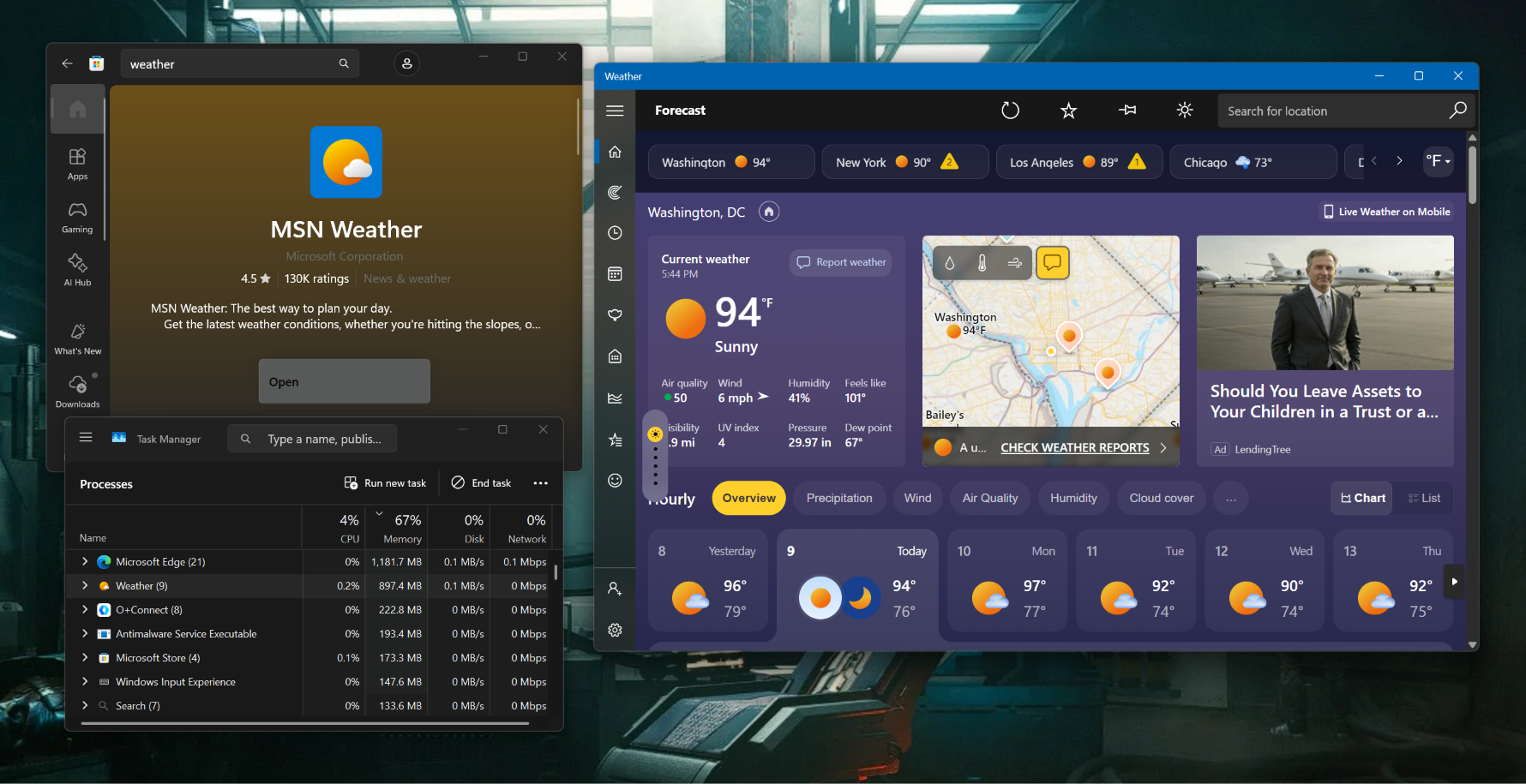
Windows is in a tough spot right now, with years of neglect and stagnation reaching a boiling point with customers. Lack of optimization, bloat, ads, forced AI slop, and persistent tracking have forced Microsoft to admit its missteps and commit to fixing the OS at large. Windows Latest's new testing shows that the built-in weather app is a perfect representation of the state of Windows. The "app" consumes up to 1.2GB of RAM while idling, and it serves up a bunch of ads while you check the temperature.
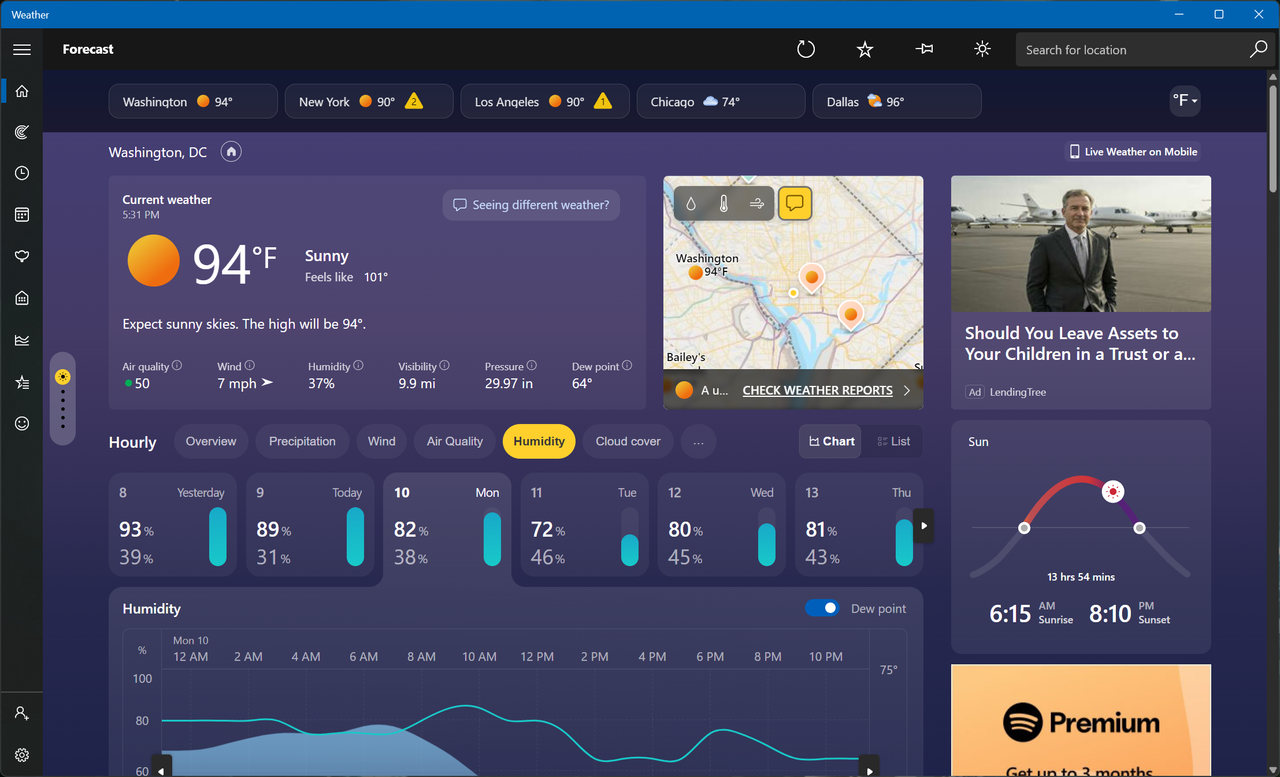
MSN Weather is the default weather app that ships with Windows, which explains why it's filled with promotions throughout, despite being part of a paid OS. To be clear, the app looks very modern and has all the data you could ask for, such as live radar overlays, hourly wind and precipitation breakdowns, air quality index, and moon phases. It's also accurate because the data is sourced from a bunch of different providers across the world, but mostly Foreca.
(Image credit: Future)
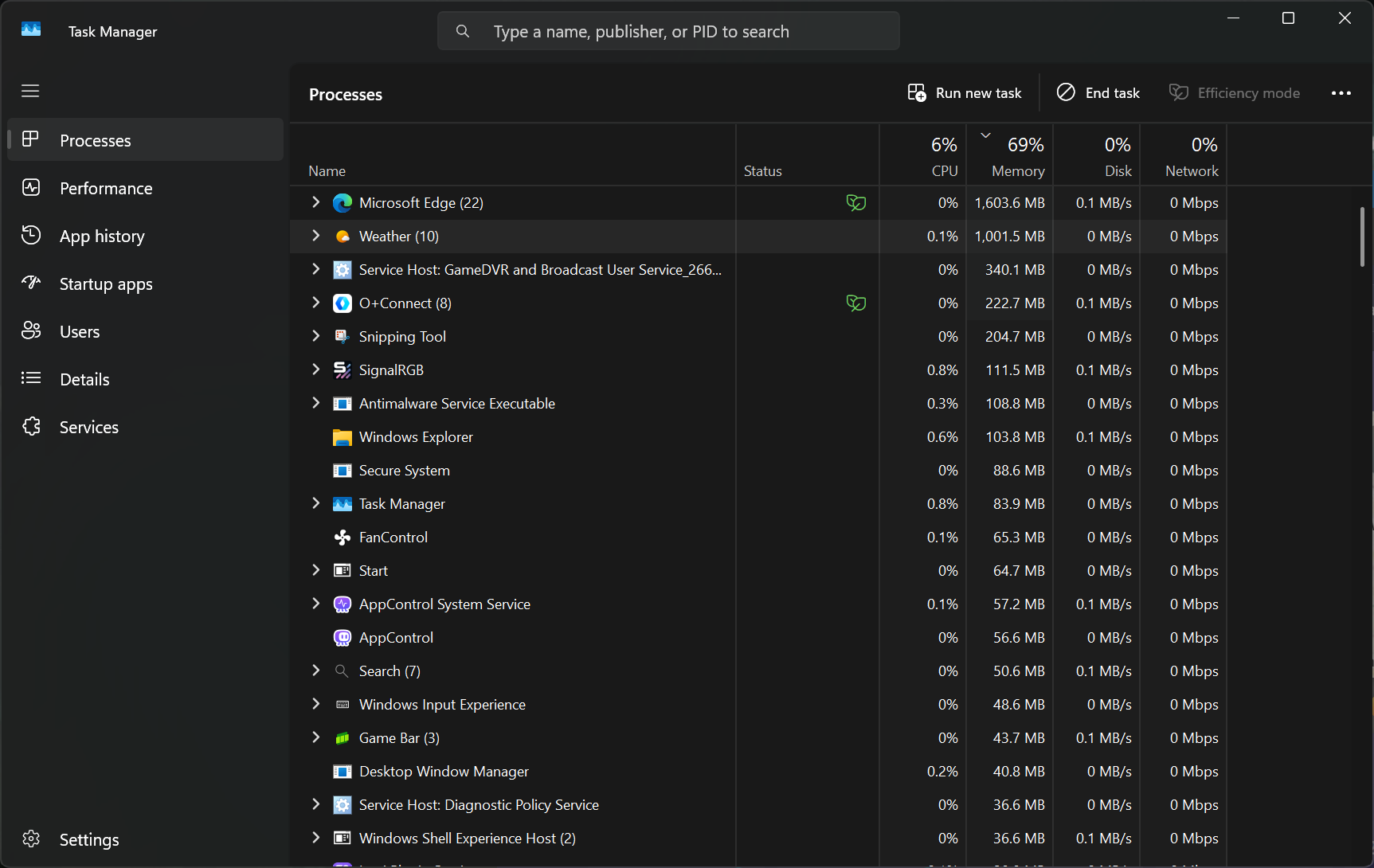
The author explains that getting accurate forecasts is not a cheap endeavor, so it's not like Microsoft is running a charity. But the comparison falls apart when you look at what the competition is offering. Apple's native weather app on macOS is just as beautiful, detailed, and accurate, yet it's free of ads. It also only consumes about 250MB of memory to show all that data, so 5x less than Windows. This is because MSN Weather is technically not even an app to begin with; it's a web wrapper that's pinging a bunch of browser tabs in real-time.
When the author clicked on the Task Manager entry for MSN Weather, they saw 8 Chromium-based subprocesses, confirming that they're just looking at a website being rendered via WebView 2. For context, native Windows apps are supposed to adhere to the WinUI framework, which the company is slowly adopting over Win32 and UWP. Microsoft is committed to updating all the native apps Windows ships with to Win32, which should significantly improve their optimization, but we don't know if the ads will suddenly disappear as well.
For us, it consumed up to 1GB of RAM (Image credit: Future)
The author saw Adobe Acrobat ads while checking the forecast, and we saw two ads — one for LendingTree and another for Spotify. Apart from that, scrolling around the app and clicking on the different menus and boxes was fast enough. We have to emphasize that the app really is granular and well-built from an aesthetic point of view; Microsoft gets full points for that, or is it MSN? That distinction is another issue that makes the weather app conundrum a bit more confusing.
When Microsoft promised to rebuild all native Windows 11 apps, it didn't explicitly say those would include MSN-branded services too, like MSN Weather and MSN News. Seeing as though they're simply called by their utilitarian names in the OS, there's a strong chance that these memory hoggers will also be eventually upgraded. For now, just stick to your phone, especially if you were among those who immediately Googled how to remove the weather widget from your taskbar that fateful day.
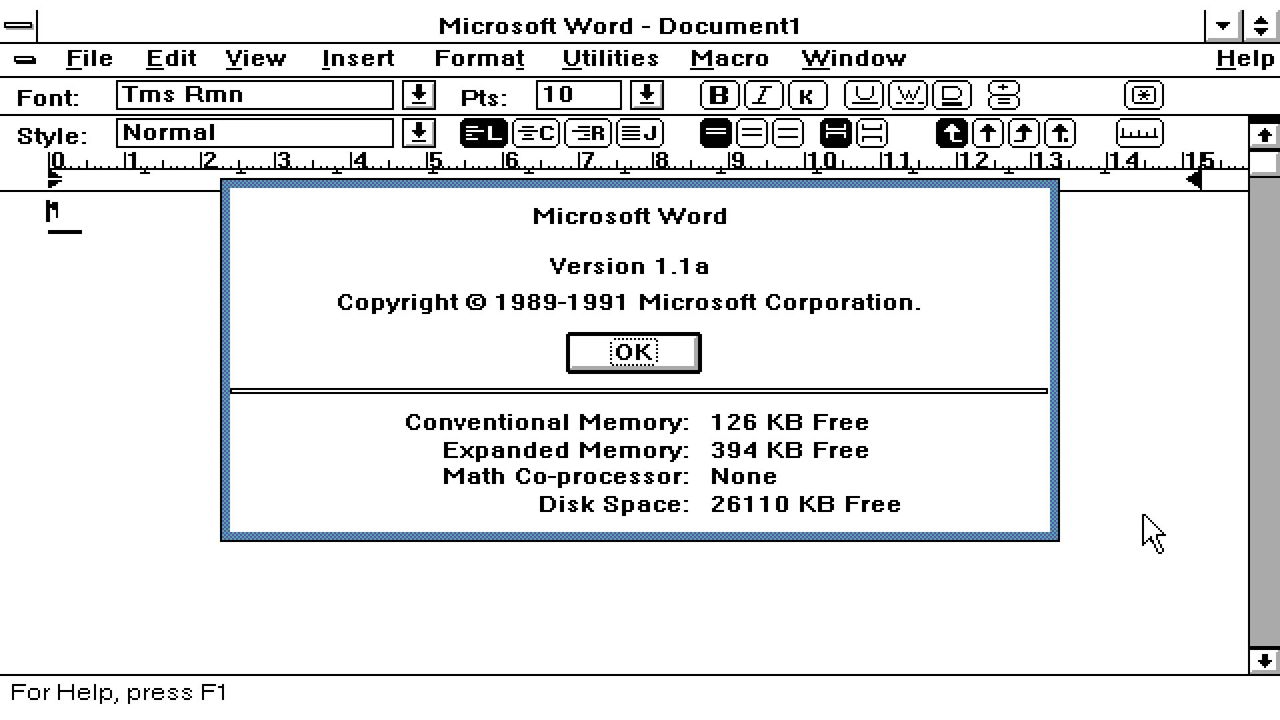
A developer has ported Microsoft Word for Windows 1.1a to x64 so it can now run natively on Windows 11 PC systems. JMarshall23 on GitHub stresses that this is a fully working native Windows x64 port using “original Word source and resources together with modern replacements for the 16-bit assembly, segmented-memory, and Win16 platform boundaries.” It also includes some extra features for “research purposes.” Microsoft Word for Windows 1.1a was originally released over a quarter of a century ago.
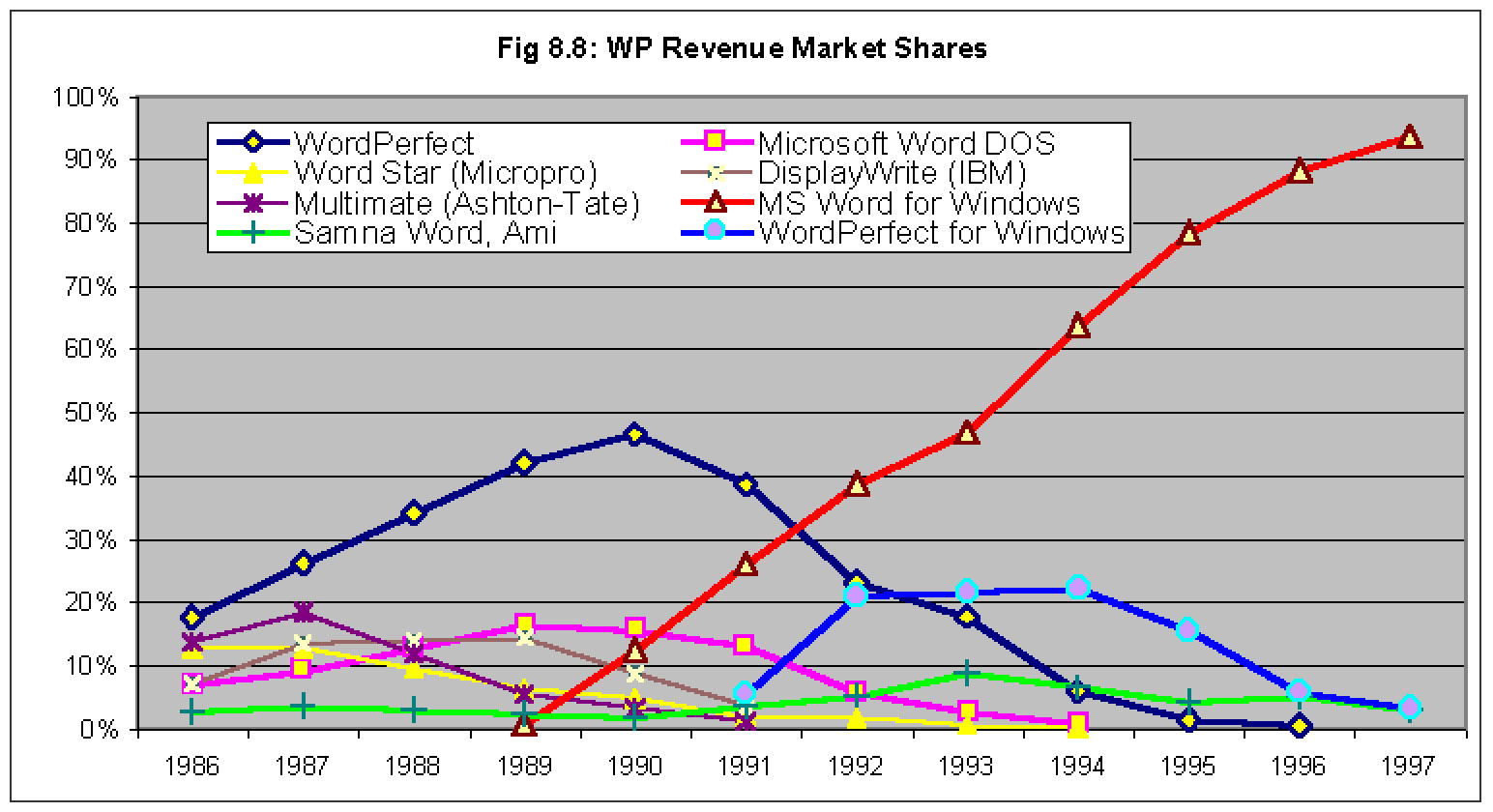
This release of Word marked a milestone in the word processing market, as it pioneered genuinely useful feature additions like WYSIWYG editing, graphics, and table insertion on Windows. It would spearhead the momentum in shifting users from DOS productivity monsters like WordPerfect to complete dominance in Windows-land. Word for Windows 1.1a added all its frills while remaining very efficient, running on systems with CPUs that ran in single-figure MHz speeds, and with as little as 1MB of RAM.
Another notable feature of this version of Word for Windows is that Microsoft permitted its source code to be released in full. You can still grab that code via the Computer History Museum (CHM). There you will find a 7MB bundle of C source, x86 assembly, build tools, and documentation. These 1,021 files in 33 folders are what JMarshall23 started with.
GitHub doesn’t have Windows x64 binaries ready for the casually curious on the lookout for a free, lightweight word processor to download and use. Instead, you’ll need access to Visual Studio 2022 with Desktop development with C++, a Windows 10 or Windows 11 SDK installed through Visual Studio, CMake 3.25 or newer, and PowerShell, notes Marshall. Then simply follow the GitHub instructions to build and run Word1.
It will be interesting to see if more comes from this x64 port, but Microsoft’s Word for Windows 1.1a code release carries a license that “permits only non-commercial use and does not give you the right to license it to third parties by posting copies elsewhere on the web,” says the CHM.
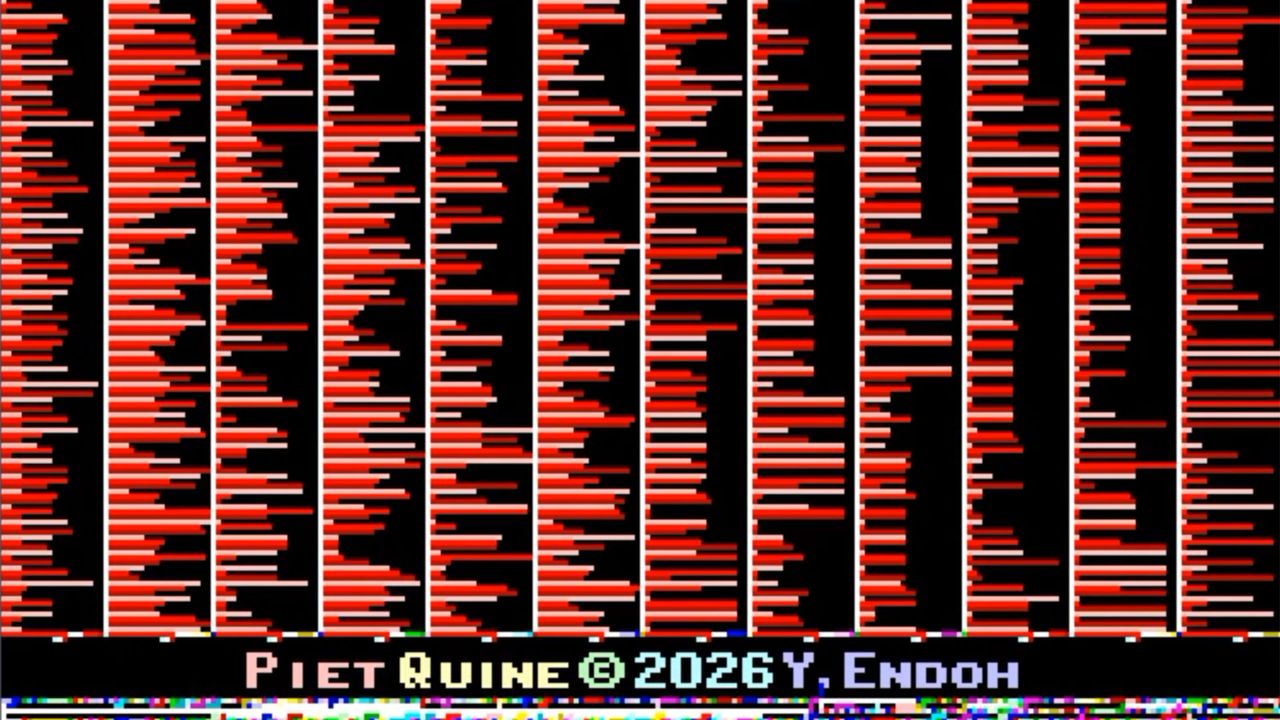
Champion coder Yusuke Endoh has been flexing their esoteric programming muscles on social media. Their latest confection is a Piet Quine – a GIF image that prints itself. In other words, the GIF is both the code and the precise result after running the code.
If you haven’t quite grasped the enormity of this feat from the title, it is worth breaking down the respective definitions of both Piet and Quine in a computer programming context. Piet is an esoteric programming language in which programs look like complex, colorful, tiled artwork. Inventor David Morgan-Mar named it after Piet Mondrian, the famous founder of the neoplasticism artistic movement. Such artwork is immediately recognizable with its bold squares and rectangles bordered by heavy black lines. Smaller Piet GIFs look a bit more Mondrian-y to me, but also look more like colorful QR codes than paintings.
Endoh has created a Quine, graphically. In computer coding, a Quine is a program that produces a copy of its own source code without any external input. This can be quite a tricky feat, even when confined to the world of ASCII text. A requirement of this coding art is that the output is a character-for-character identical representation of the input. It must not simply read its own file to do the duplication task.
When merging the two ideas above, together, things get a whole lot more complicated. However, the top-linked blog and the embedded video shine a light on the task at hand and how Endoh succeeded. Specifically, the video shows Piet Quine running. The Piet interpreter scans the source GIF image in a ‘load data’ phase, followed by a read of the GIF file header and palette info. The challenge here, raising the task above text Quines, is that the GIF folds in binary data, compression, and an awkward flow – they must all be handled deliberately to end up with the desired result.
A key thing to understand about the source image is that it includes a separately interpreted data part, compressed with an adaptive run-length encoding, and a code part. Endoh says that they managed to actually first achieve this way back in 2009, but the GIF was very tall, so not ideal for visual appreciation. The developer decided to ask Claude Code to analyze and reconstruct the original script and build a ‘landscape’ Piet Quine. Even with AI's help, it wasn’t easy to refine the design to the compact finished GIF seen in this article and video. Only after much work on shrinking the visuals and coaching Claude was the GIF shoehorned into the finished 4:3 landscape image (252 x 189 pixels).
Finally, Endoh reveals that a driving force behind their Piet Quine development efforts was the wish to raise awareness of the 2026 Obfuscated Programming Language Design Contest, which is running right now. If you can, please design an esoteric programming language and submit it! Endoh is one of the judges, and you have until October 1 to make your submission(s).
Last month, we covered a federal criminal case in which Microsoft's Global Device Identifier (GDID) helped the FBI catch an alleged hacker. Despite the noble cause, the implications of a persistent tracker built into Windows became difficult to ignore, and it was enough of a tipping point to convince Windscribe to do something about it. The VPN company has created an open-source project and script called "deGDID" that aims to strip GDID off your PC — but does so at the cost of breaking some Microsoft cloud services.
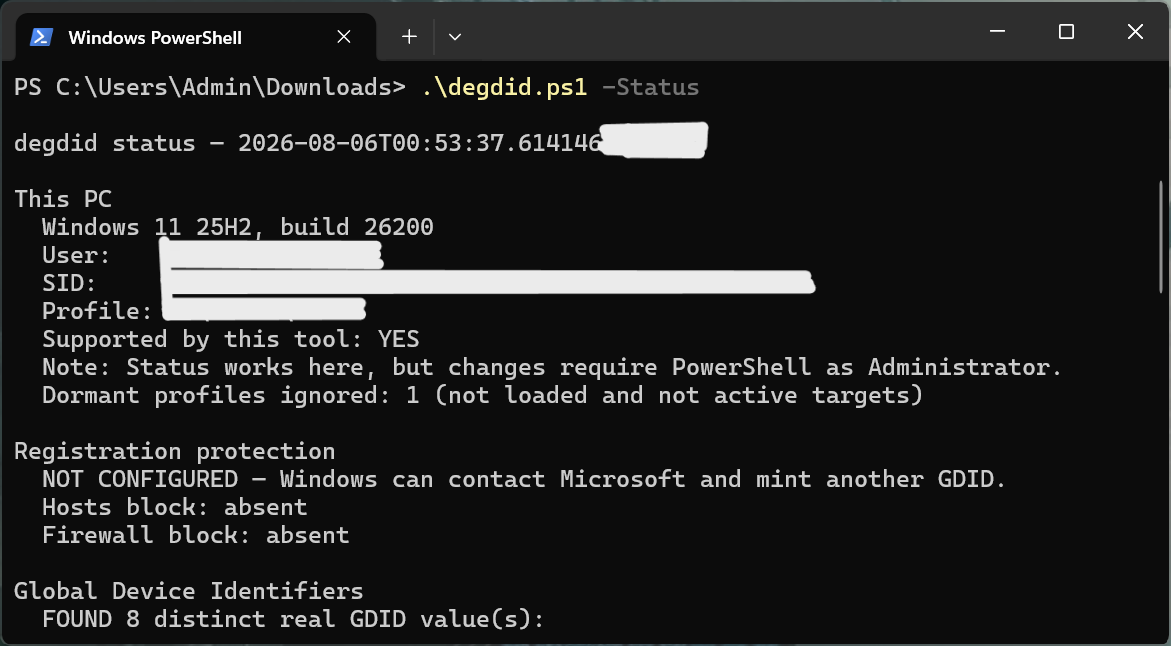
You can find the script on GitHub and run it via PowerShell with admin privileges. It's completely free and works in a very straightforward manner. There are three main execution flags that dictate how deGDID operates: –Status, which is read-only and tells you if a GDID is active on your rig; –Status –Redact, which generates logs with the GDID redacted so users can share diagnostic data more confidently; and –Protect, which completely wipes the GDID and prevents the creation of new ones.
FutureFuture
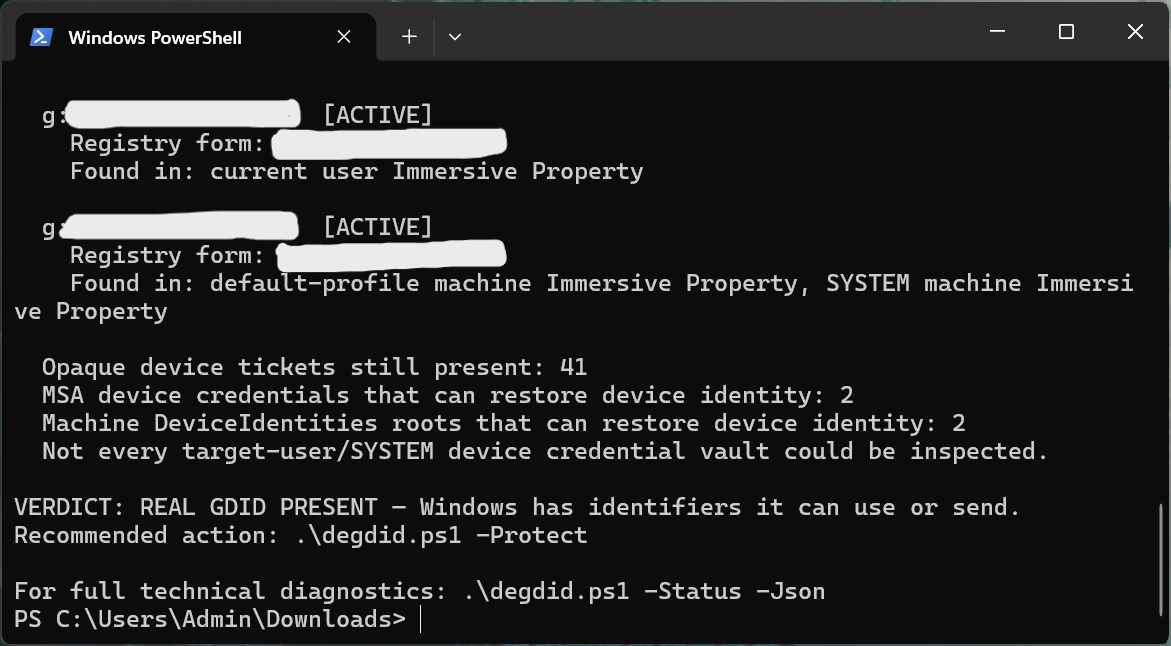
A fourth flag, –Unprotect, allows you to reverse the script in case you need to revert back to the default state. But –Protect is the one worth discussing. First, the script looks for server-issued GDID keys in the registry, where they remain cached, and purges them all. This is something you can do manually as well. In fact, Windscribe tried it on a virtual machine, but the GDID keys are silently re-minted in the background upon a reboot or whenever Windows contacts Microsoft servers again.
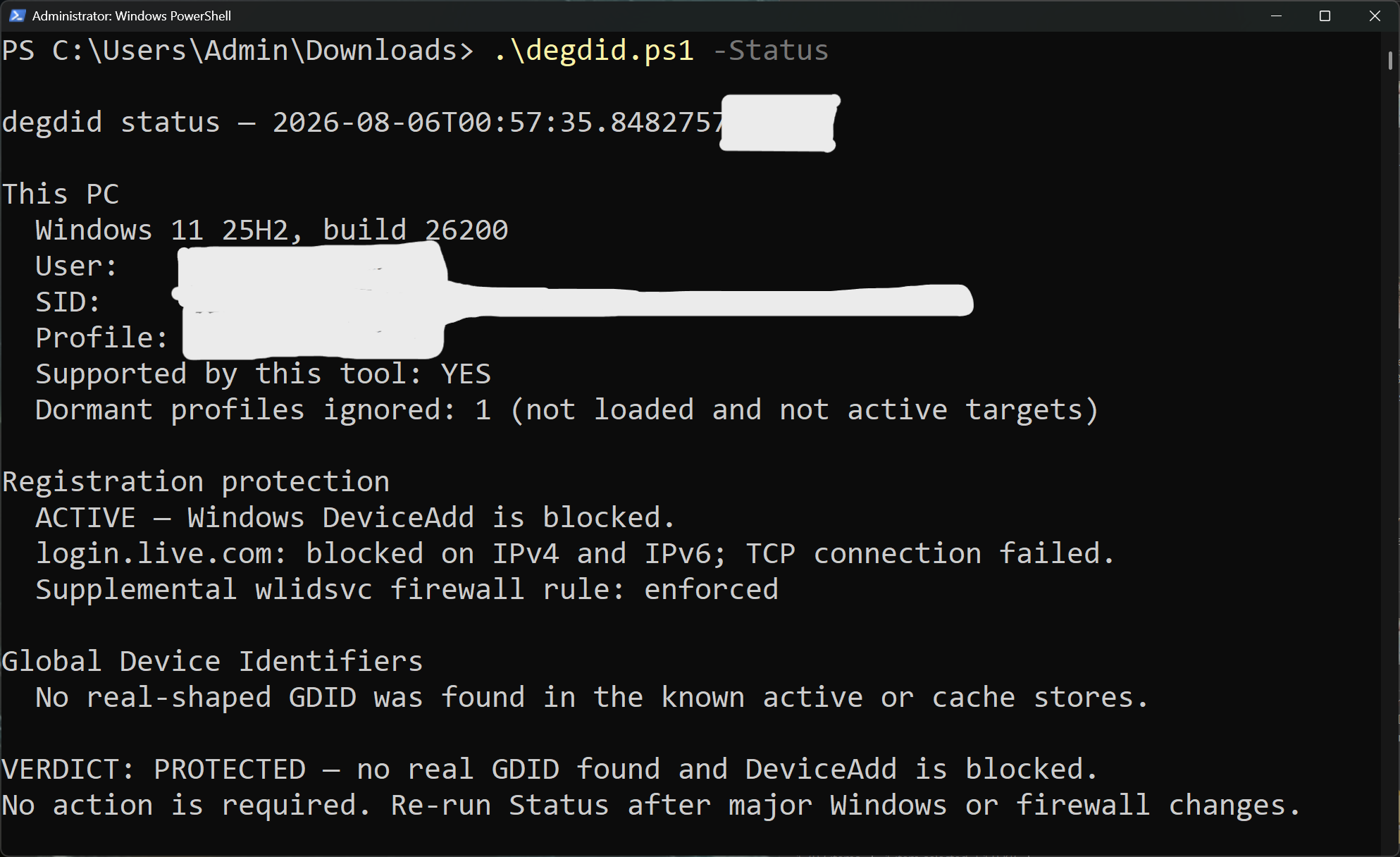
To close this loop, the script then modifies the ACLs (Access Control Lists) and registry permissions to prevent the OS from fetching and subsequently trying to remint the GDID keys. It puts up a firewall against the internal DeviceAdd endpoint, which completely cuts off Microsoft identity services from even seeing this as a registered Windows PC. This one-two punch completes the process, and the existing GDID keys are not only wiped, but the possibility of new ones being created is put to bed as well.
(Image credit: Future)
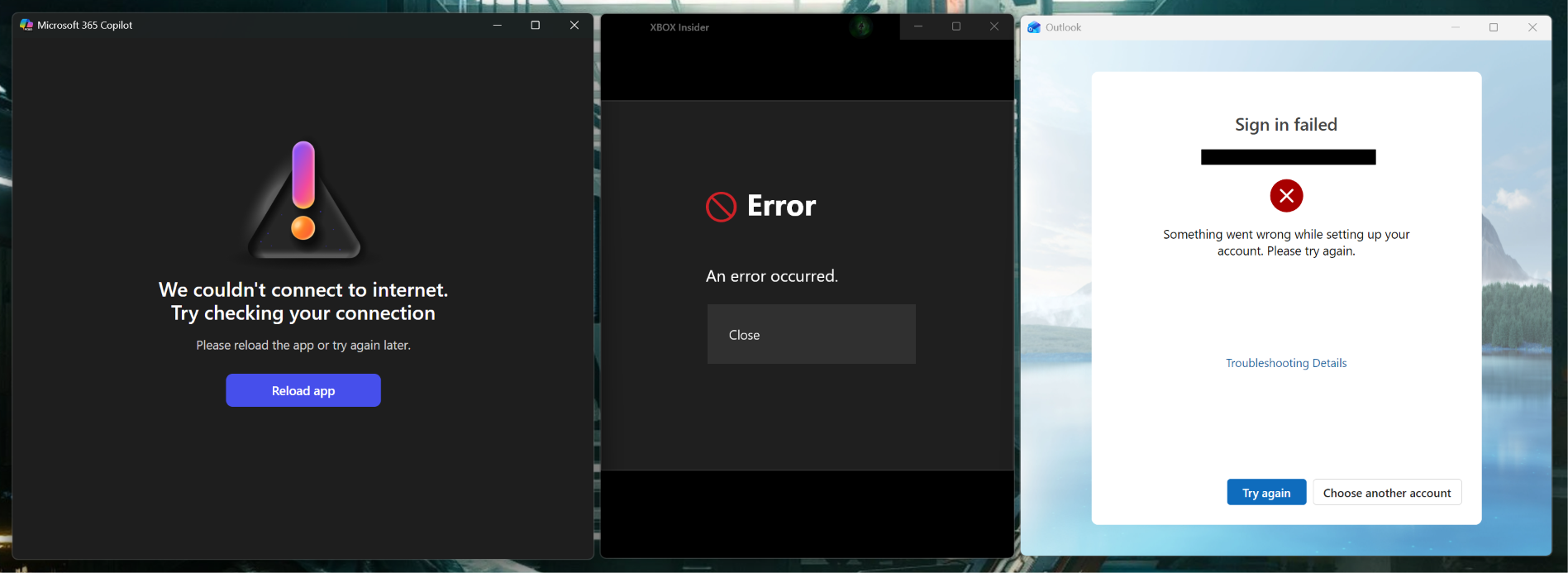
Keep in mind that old keys that are already server-side cannot be removed; Microsoft has access to them indefinitely. This script also only works on unmanaged systems with admin accounts. If you're part of an organization or domain, deGDID will refuse to run. More importantly, though, since it blocks Microsoft's DeviceAdd pipeline, some core Windows services will break because they'll fail to authenticate your Microsoft account.
The reason deGDID is even needed in the first place is that Windows has no native toggle to turn off GDID. It exists as a permanent device ID that can track you without your consent. It works across IP addresses since it sits beneath the layer where VPNs operate, so no amount of network tunneling can obfuscate it. This can explain why Windscribe was compelled to create deGDID — to combat a potentially invasive system that has the power to wreak havoc in the wrong hands.
(Image credit: Future)
We tried the script on a Windows 11 computer, and it worked as intended. Running the –Status flag showed multiple cached GDIDs that were then removed by the –Protect flag, and a new GDID didn't show up even after restarting. As expected, some Microsoft apps freaked out and returned connection errors. Account verification through login.live.com was also blocked across all browsers, though login.microsoftonline.com still worked. Online games and other apps continued to behave normally as well.
Windscribe says deGDID is a research project, and it will continue to evolve as more information about how GDID works is uncovered. For now, the fact that it can make core Microsoft services and features fail might be too much of a tradeoff for some. The script also doesn't promise to kill every GDID instance, and Microsoft already has your previous keys, so this is certainly not an ideal solution — but it's a good start to the fight against hidden trackers.
In May of this year, Microsoft said that 32GB of RAM is now the future-proof “no worries” configuration if you’re a gaming enthusiast, and that 16GB of RAM is now the new “practical starting point” if you want to have a smooth experience with Windows 11. However, it seems that the company is backtracking on this announcement as it removes all references to the post on the Windows Learning Center website, according to Windows Latest.
Microsoft previously posted a blog titled “How to optimize your gaming PC setup” in November 2025, where it said that 32GB is the ideal capacity for hardcore gamers who demand the best possible quality for AAA games or use mods a lot. However, this page is no longer available, and people who attempt to visit the link are automatically redirected to the Learning Center Homepage.
Even though Windows 11’s minimum specifications just require 4GB, the prevalence of many web-based apps and interfaces on the OS use up a lot of memory on many systems. While using web-based React and WebView2 is easier for developers, they’re not as efficient as apps that are built to run natively on Windows. This wasn’t a problem when memory was cheap and plentiful, as people could just spend a few dollars to upgrade their Windows PCs. However, now that memory modules are expensive and it’s hard to find the best prices for DDR5 and DDR4 kits, developers are going to be forced to optimize their software to use as little memory as possible.
This was actually what Windows programmers had to do in the 1980s and 1990s, when every Microsoft engineer had a stopwatch to ensure that their work remained fast, even on the limited hardware of the time. Even the original Task Manager, which was built by the same person who integrated ZIP file support into Windows, was only 80KB big so that it could run smoothly on “potato” hardware.
Hopefully, both Microsoft and app developers will rise to the challenge brought about by the memory shortage and make Windows efficient once more. This is especially true as Microsoft is now facing some competition from macOS and Linux (although Windows is, by far, still the most popular operating system today).
Microsoft said that it’s planning to optimize Windows 11 for systems with 8GB of RAM and above as part of its promise to improve Windows 11 in March 2026. The company said in its latest update that the optimization is part of expanding its focus on operating system upgrades, which include a faster out-of-the-box experience, easier parental controls, and improved voice interactions.
While the official minimum specifications for Windows 11 sit at just 4GB of RAM, most PC builders advise getting at least 16GB if you want to have a smooth experience. In fact, Microsoft has previously recommended 32GB of RAM for Windows 11 for gamers, especially if they want a system that can handle games in the near future. Unfortunately, the RAMpocalypse has forced both users and manufacturers to stick with slower DDR4 memory and lower capacities. Some experts predict that the entry-level PC will disappear by 2028, and we’ve even seen some manufacturers, including Apple, reintroduce 8GB laptops just to hit a specific price point.
The resurgence of 8GB systems will likely deliver a bad experience for users who stick with Windows 11, which is the likely reason why Microsoft is pushing for the optimization of its operating system. If Windows 11 performs poorly on these systems, it could draw users towards macOS or Linux alternatives as they blame the operating system for underperforming on limited hardware. In fact, we’ve already seen this happen before — after Microsoft ended support for Windows 10, MacBooks saw an uptick in sales as users migrated towards macOS instead of going for Windows 11. SteamOS is also encouraging some gamers to ditch Windows, and Valve is working on a general release for the OS, which many say contains less bloat and is a bit snappier than what Microsoft offers.
The RAM shortage crisis, alongside increasing competition, is forcing Microsoft to do better with Windows 11. Hopefully, these optimizations arrive sooner and don’t introduce new bugs, allowing both new and existing users to get more out of their systems.
The Windows blog post also gave an update on what improvements the company has made to Windows 11 so far. This includes a better Windows Search experience, more Taskbar and Start customizations, a more responsive and reliable File Explorer, among others. Many of these changes are still in preview, though, so unless you’re part of the Windows Insider Program, you’ll have to wait a few more weeks to months before you can start enjoying these changes.
The Steam Machine helped grow the popularity of Linux gaming, including installations of Bazzite and other gaming-oriented Linux distributions. Valve seemingly doesn't want to stop its open-source development efforts anytime soon, and is now working on a port of the Mesa Radeon Vulkan driver (RADV) to Windows; It's already running Counter-Strike 2, according to developers at Collabora.
As cross-platform development is rather tricky, Valve opted to get a port of RADV to Windows going by way of sponsoring contractors at Collabora. In its blog post, Collabora explained the several hoops it had to jump through to accomplish this task.
With Windows 10 and WDDM 2.0, Microsoft improved the split between graphics drivers' userspace code (the vast majority of the driver itself) and the kernel-level portion that actually talks to the graphics card. This presented the opportunity to hook RADV to the AMD kernel card driver. That's easier said than done, however, as communication between those parts often carries non-standardized data that RADV needs to understand. And to understand the "conversation," it needs to be recorded and analyzed.
An earlier 2024 effort by Faith Ekstrand yielded a basic-but-valuable utility for logging WDDM 2.0 calls and reverse-engineering them to produce a basic RADV implementation. Out of both debugging necessity and as a development tool, Collabora built and expanded upon Ekstrand's work, improving the logger to the point where it can now fully analyze any Vulkan application that runs with AMD's official driver and dump all the data passing to the kernel.
After a lot of work getting to grips with how the AMD driver interacts with the kernel driver, including but not limited to reverse-engineering obscure data structures, the team made progress, and Windows RADV is now able to run some games, including Counter-Strike 2.
Despite the ongoing effort, Collabora explains that since user- and kernel-space driver are a matched pair, changes to those aren't guaranteed to be backwards-compatible, meaning that even a fully functional RADV could break at any point. For that reason, Collobora is requesting that AMD, Microsoft, or both provide a documented interface to the kernel driver or an intermediary compatibility layer.
AMD graphics driver development on Linux has coalesced around the Mesa Vulkan stack, with both company and community devs contributing to the RADV project. Over in the Windows world, the only option is AMD's proprietary driver, which can cause a lot of headaches when developing cross-platform games and applications.
AMD's Vulkan driver for Windows has developed a reputation for instability. Meanwhile, Linux RADV is generally praised for its stability and performance, sometimes running faster than the AMD Windows driver, especially on older cards. With a rapid development schedule, it also generally sees fixes and speed upticks often.
If at some point using RADV on Windows becomes viable, you'd be getting an arguably more stable, mature driver with active development. Games' graphical issues could become far easier to debug and patch thanks to the open nature of RADV, and studios developing with Linux in mind can target the one platform instead of two with different behaviors. Any developer or company can contribute to the project, too.
Furthermore, this lets Valve improve Windows compatibility layers, and any optimizations can be carried over to both operating systems. All told, this is likely one of the several moving parts to improve Linux — thus the Steam Deck, Steam Machine, and upcoming hardware — as a viable gaming platform. Even a future notion of gamers installing RADV on Windows to get a performance or stability boost isn't too far-fetched.
Additionally, RADV on Windows would also help keep discontinued cards usable, and given pricing right now, that certainly would be a good thing.
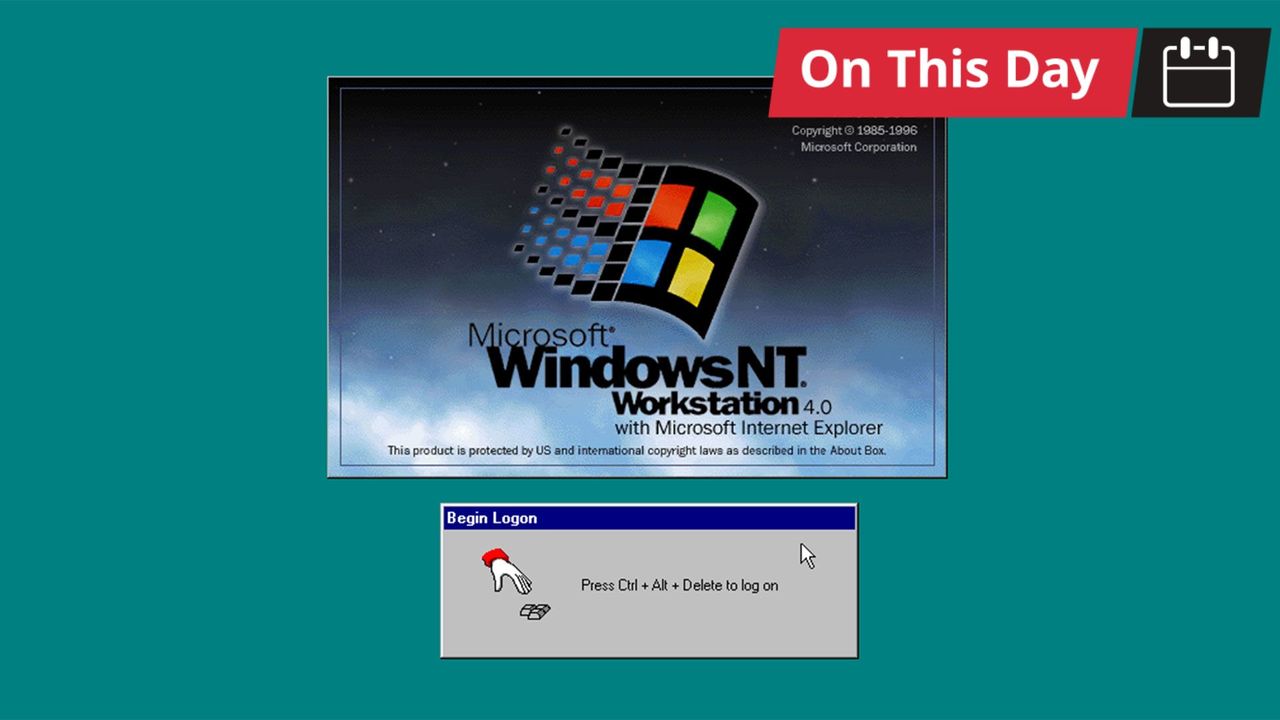
Microsoft released Windows NT 4.0 to manufacturing partners on July 31, 1996. Codename Cairo marked an important milestone in the history of Microsoft’s original server OS and would far outlive Microsoft’s original plans as enthusiasts and administrators clung to it, as older readers will be aware. Headlining features of NT 4.0, which made it a winner, include the melding of the intuitive new Windows 95 UI into the fully 32-bit enterprise OS. It was also notable for being the last version of NT to support Alpha, MIPS, or PowerPC CPU architectures.
Historical Windows NT timeline:
Windows NT Server 3.1 – in 1993, the first version of Windows NT also introduced NTFS
Windows NT Server 3.5 – in 1994, this update provided integrated support for Winsock and TCP/IP
Windows NT Server 3.51 - client/server support added in 1995
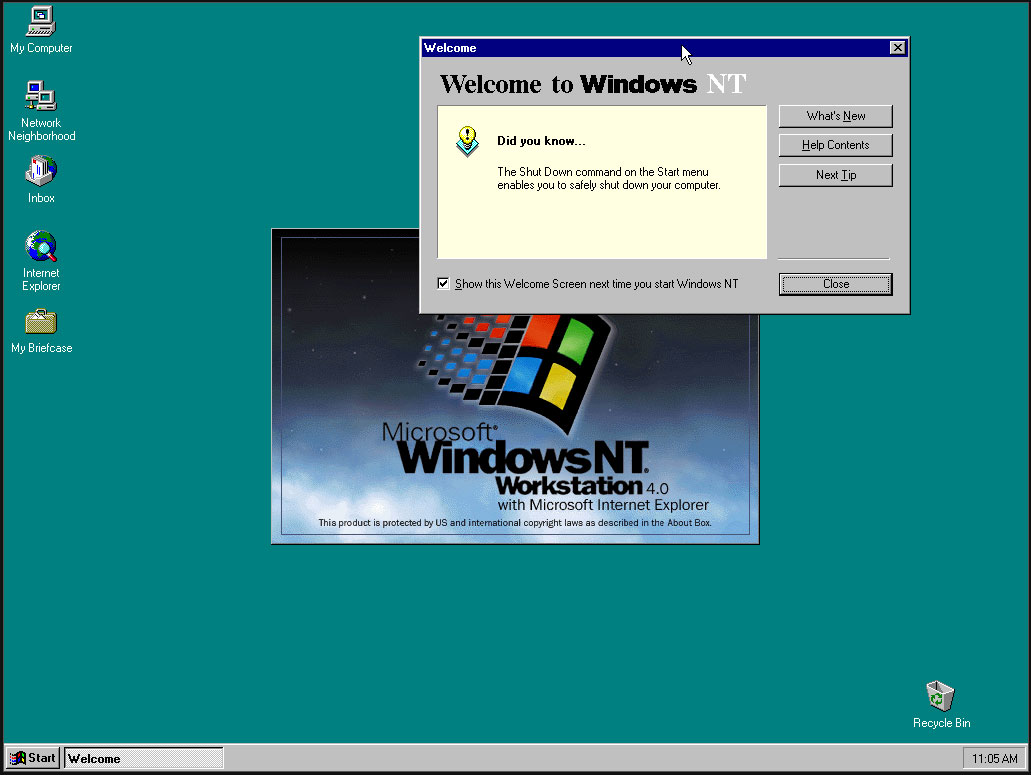
Windows NT 4.0 – in 1996, NT got the Windows 95 UI and the familiar My Computer, My Documents, and so on
Windows 2000 Server – the 5th NT release started a new naming scheme, introduced Active Directory, plus NTFS 3.0 with file system encryption
Followed by the more modern Server releases…
(Image credit: Microsoft)
After the initial Windows NT 4.0 release, Microsoft followed up with a version for embedded systems and its Terminal Server edition.
The Windows NT line was critical to Microsoft as it led the charge against dominant Unix server software ecosystems. Its first public release was in 1993, with version 3.1, but NT 4.0 coupled the underlying data server and personal workstation tooling with Win95 UI elements such as the Start Menu, Taskbar, Task Manager, and so on. It would also support new components like the cryptography API, DCOM, TAPI 2.0, and some DirectX (v2) features.
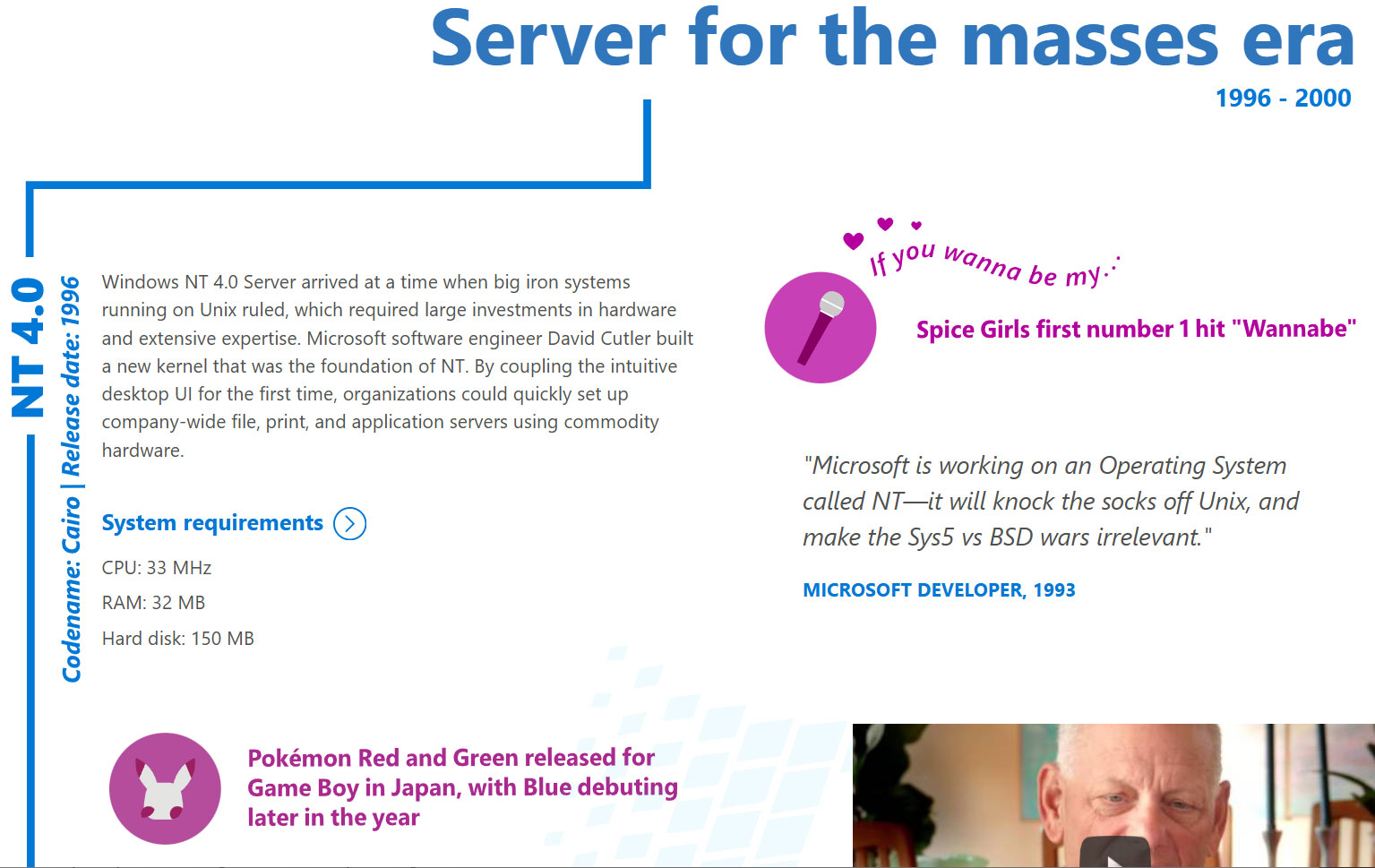
Despite all the new technology under the hood and the frills of the latest UI, Microsoft’s Windows NT 4.0 launched with remarkably low minimum requirements. Would-be users were recommended to install it on a PC with a CPU that ran at 33 MHz or better, had 32MB of RAM, SVGA graphics, and a hard disk with 256 MB capacity. This was in the Pentium / Pentium Pro era. NT 4.0 would become “the server for the masses,” boasted Microsoft on the OS’s 20th anniversary.
Another reason that NT 4.0 was so important is that it formed the foundation for the Windows XP release (2001), leaving the DOS-based 95, 98/SE, and Me versions of the consumer OS behind as archaic hybrids. In the half-decade between the release of NT 4.0 and XP, Microsoft had a lot of work to do, such as implementing Plug and Play, building out gaming tech, adding WDM drivers, and so on. Thankfully, PCs also grew in muscle, specs, and multimedia capabilities to make the larger and more demanding XP a big hit.
Windows XP landed with a core marketing line that it was “Built on NT technology,” which felt uncomfortable to read if you were from the camp that believed ‘NT’ was short for ‘New Technology.’
(Image credit: Tom's Hardware)
It is pretty easy to find an old Cairo release online for retro machine tinkering. Those interested in a more casual poke around in NT 4.0 out of interest, curiosity, or nostalgia will find there are some online installs you can play with via a web browser.
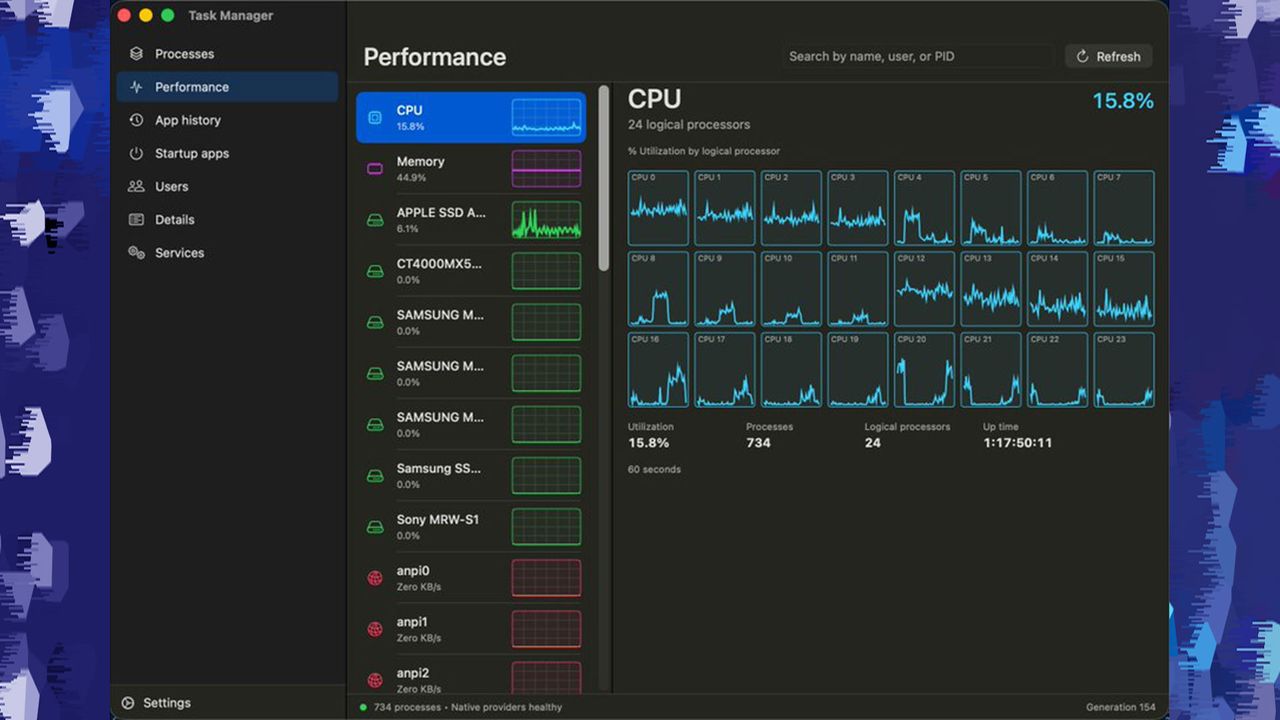
Legendary Windows developer Dave W. Plummer has shared details and screenshots of a version of Task Manager for Apple Mac computers. Apple computer users currently have Activity Monitor for peeking at CPU activity, memory usage, as well as closing apps and processes, by default. However, “Activity Monitor blows,” asserts Plummer, in response to people asking why he would port the classic Windows utility to the fruity computer.
Hey look, it's your old friend Task Manager... on the Mac! pic.twitter.com/JYfH6Ry3sBJuly 28, 2026
Preempting questions from his social media followers, Plummer mused over the optics of releasing Task Manager for Mac, due to his Microsoft development history. In case you missed it, Plummer was the original dev behind Windows Task Manager when it debuted as a lean and mean 80KB accessory. He’s also recently reimagined this essential Windows system tool in a retro-futuristic Atari Tempest remix.
Back in the world of Macs, and looking to the side from the world of PCs, there is indeed a case for a better task manager or activity monitor for Apple computers. The Windows utility has more features under the hood, giving it a far greater scope and utility value (task priorities, startup management, services control, and more). We haven’t tried the new Mac version of Task Manager; it hasn’t been released at the time of writing, but if it can decant some of the Windows features over to the Apple computing platform, it may be an attractive addition.
Plummer says the utility is currently in beta, and he intends to “throw it up on the App Store… (for free in Beta, because the first taste is always free).” There’s also, admittedly, a chance he will get bored with tinkering with it and release the source for others to continue with.
We already mentioned the optics over a seasoned Windows dev coding / porting staple Microsoft OS code to Apple Macs, but Plummer has addressed queries about this in further posts today. In this Tweet, the dev asserts that “Microsoft very graciously sent me the source code to XP Task Manager along with permission to share/demo it.” Moreover, the project is written in Swift and uses no original code, and Plummer says he has no post-Windows XP code to tap into, either.
Meanwhile, development continues apace, with Plummer providing insight into some drive meter activity coding he’s currently working on. The dev is finessing drive activity for Task Manager for the Mac right now and pondering over the flickery visuals resulting from “drawing instantaneous drive activity at 60fps.”
 登录
登录