阅读视图

发现新文章,点击刷新页面。
✇Tomshardware

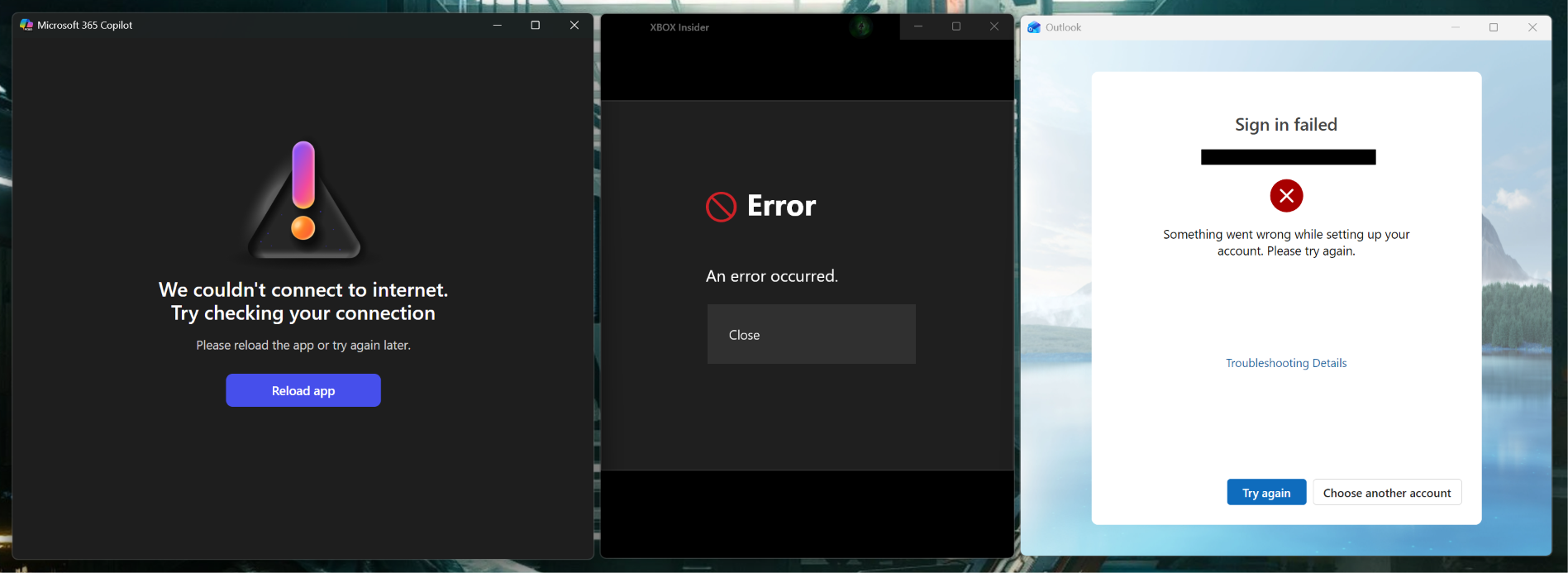
Microsoft rolls out emergency update for Windows 11's latest patch — recent update causes crashes on AMD graphics, Explorer hang-ups, and broken third-party integrations

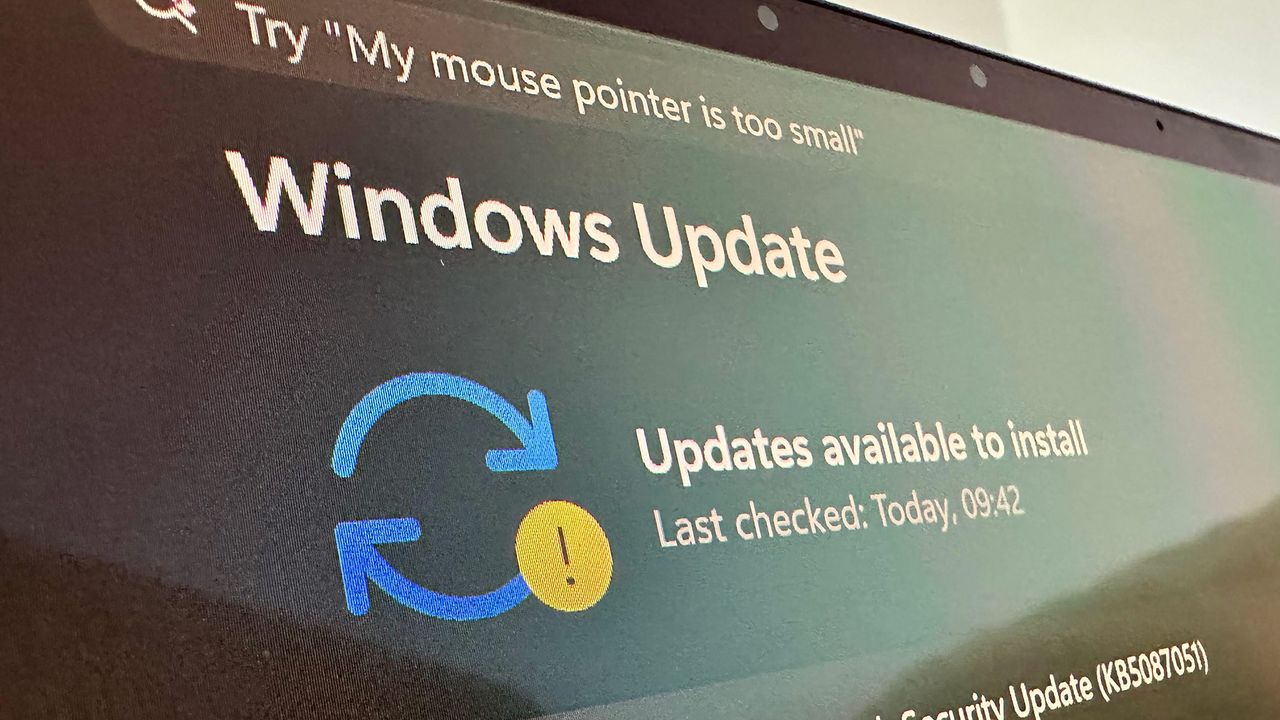
Microsoft has issued an out-of-band update for its recent Windows 11 patch, which has caused a number of bugs and issues. The September 2026 update was just released last Tuesday, and although it packs a number of new features and fixes nearly 1000 security flaws (commonplace in this day and age), there are also a few unfortunate regressions.

The 25H2 update finally reintroduces a movable taskbar, just like we've had since Windows 95, with an option to make the height smaller for compact displays. Likewise, the Start menu now has multiple configurable layouts, and you can toggle each main section on or off. Microsoft also revamped Windows Search — perhaps to finally be useful — and users can now choose to only have it display local results. Explorer got a handy tweak in the form of using KB, MB, GB size indicators, as well.

The update has also surfaced some serious bugs. First off, PCs with AMD Radeon GPUs are crashing, apparently due to the update provoking driver instability. Reinstalling the driver doesn't appear to help, and the reports unfortunately cover most contemporary AMD graphics cards. Microsoft did not mention AMD GPUs specifically in its latest update.

Microsoft noted that it has fixed an issue with Remote Desktop Services where RDS might become unstable, causing connection and sign-in failures.

Microsoft is also aware of an issue with audio output and microphone input going dead. Additionally, there are seemingly reports of audio devices starting up with a botched configuration, like tweaked 3D audio settings or speaker setups. The apparent workaround seems to be putting audio in a standard 2.0 configuration, but Microsoft has now addressed this issue in the emergency patch.

Explorer may display a black screen after logging in, leaving you with a perfectly functioning operating system but no visible UI. The File History backup feature is reportedly not detecting external drives, effectively making it useless. Of particular concern to enterprises, systems administrators, and homelabs, the Remote Desktop Service is also experiencing issues. Last but not least, Microsoft says it has addressed an issue where Claude Cowork is nonfunctional due to the update breaking HC-managed Linux VMs with Plan9 shared folders

Owners of HP and Lenovo systems are also advised to consider holding off on this update. Ever since the August 2026 patch (and now, cumulatively, with the September update), there are reportedly serious issues on both camps. On the HP side, there are instances of the update triggering BIOS corruption, leading to a failed install with no ability to recover the OS — though seemingly the OEM has published a new BIOS revision, so it's hard to say which side is to blame. Meanwhile, Lenovo users might have their machines black-screen or shut down out of the blue, seemingly due to power mismanagement.

While it's heartening to see that Microsoft has significantly increased its Windows development speed and is seemingly listening to customer feedback, a string of bugs after a major feature update are still common.

✇Tomshardware

Windows 11 can now reinstall itself from the cloud — Cloud Rebuild revives dead systems without secondary boot media, wipes broken installation and downloads a fresh copy of the OS

Microsoft has finally solved one of the biggest pain points of Windows with the rollout of Cloud Rebuild. The new recovery feature can reinstall Windows 11 even when an existing Windows installation is corrupt or refuses to boot. Available as a beta through the newly released Windows 11 Insider Beta Preview Build 26220.9343, the feature is essentially a hassle-free alternative to creating a Windows installation USB drive when a PC needs to be recovered.

According to Microsoft, Cloud Rebuild is designed to restore a Windows 11 PC to a “clean, known-good state” by downloading a fresh image of Windows along with the required drivers directly through Windows Update. Unlike the existing Reset this PC functionality, it does not depend on the health of your existing Windows installation, nor does it require users to have a USB drive or custom recovery image available.

The Cloud rebuild feature available in Windows Recovery

(Image credit: Microsoft)

Available via the Windows Recovery Environment (WinRE), users can access it by selecting Troubleshoot > Recovery and uninstall > Cloud rebuild from WinRE. Speaking of which, Microsoft has also improved networking support in WinRE. The recovery environment can now reuse eligible Wi-Fi profiles saved within an existing Windows installation, allowing a PC to connect during recovery without requiring administrators to separately configure Wi-Fi credentials in WinRE. Once the PC is connected, Cloud Rebuild checks Windows Update for the target Windows build and downloads the required files. Users can then confirm the Windows edition, language, and build before starting the reinstall.

The only catch here is that Cloud Rebuild completely wipes the system drive, meaning that the process removes all data stored in your main installation or C: drive, including locally stored files, accounts, applications, and settings, before reinstalling Windows. Thus, it is recommended to back up all your important files either locally or using a cloud-based service before starting the process. Once the installation is complete, the PC boots into the Windows out-of-box experience, similar to a fresh installation of Windows. For admin-managed PCs using Windows Autopilot and Microsoft Intune, the system can automatically reconnect to the organization's management infrastructure and restore assigned applications, policies, and backed-up settings.

Cloud Rebuild could particularly be useful when Windows becomes too corrupted to boot normally. Instead of finding another PC, creating installation media, and manually reinstalling Windows, users can potentially perform the entire recovery process directly from WinRE. The feature is still in preview; however, we can expect a wider release later this year.

✇Tomshardware

Developer uses Claude to vibe code a Windows 3.1 shell in an hour — reanimated 12MB retro launcher runs on both Windows 11 and Apple Silicon

作者 Mark Tyson

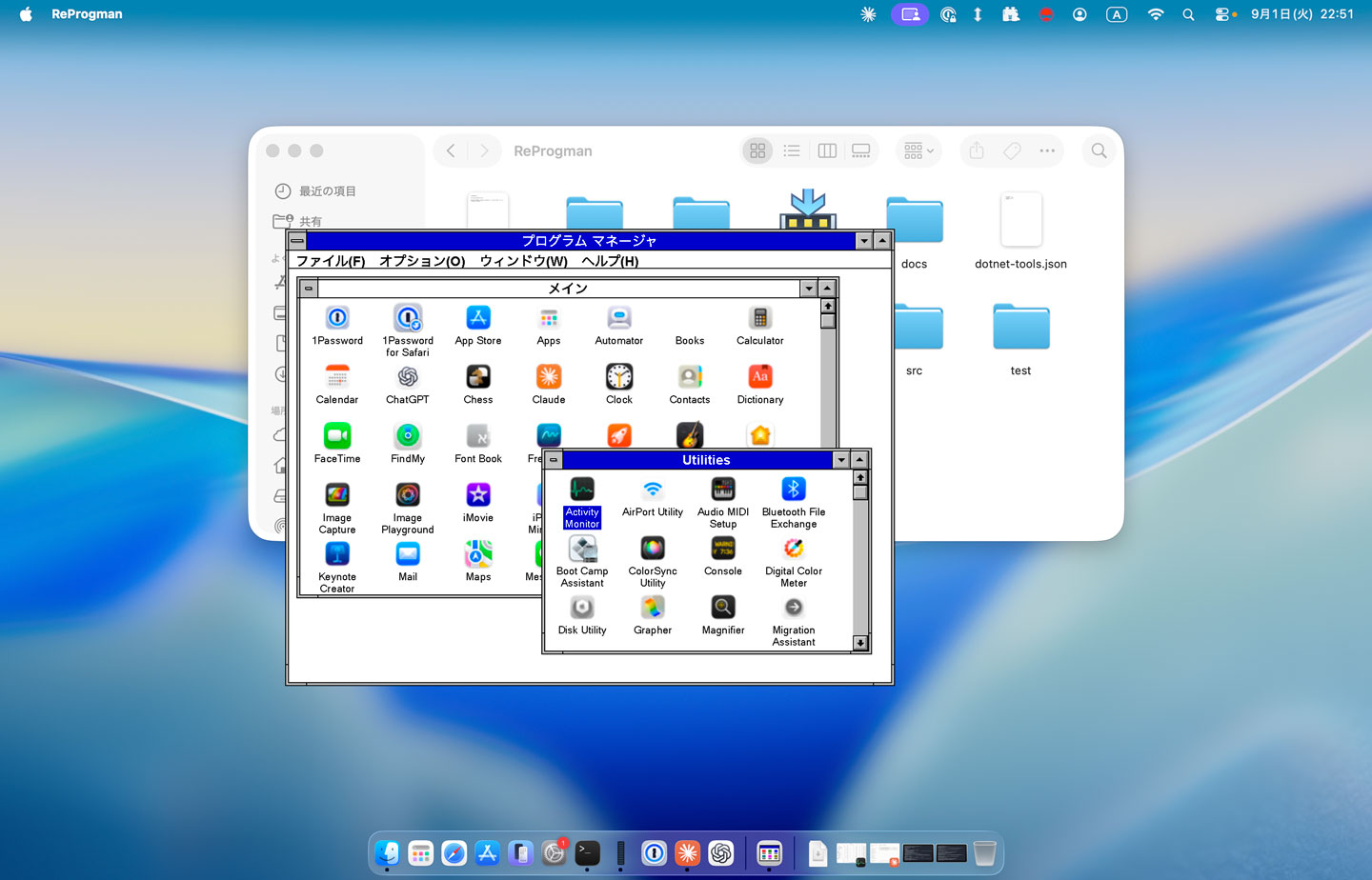
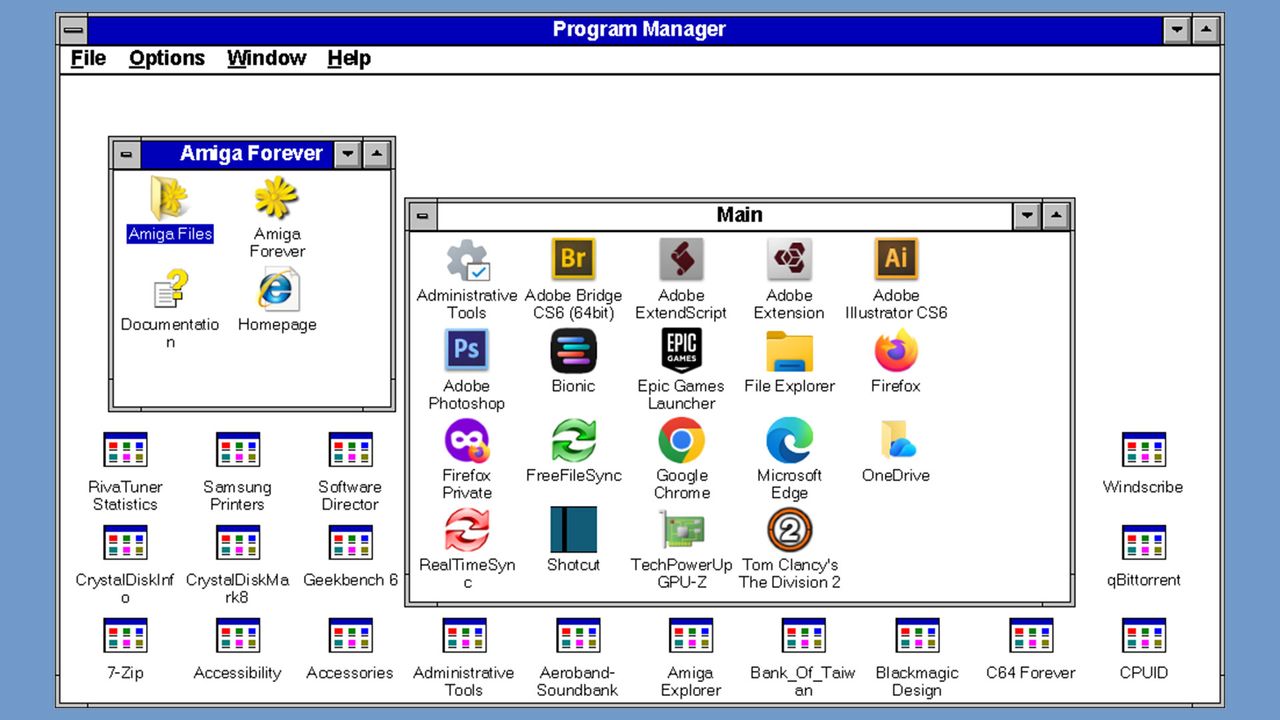
If you are yearning for a quick-shot retro Windows experience on your modern Windows 11 or macOS system, then there’s a new vibe-coded clone of the Windows 3.1 Program Manager that may interest you. Developer Mayuki has released a neat little nostalgia project dubbed ReProgman – named after the ancient Windows 3.1 ‘progman.exe ’, which was the primary shell of the era – until Windows 95 swept it away three decades ago.

ReProgman macOS screenshot

ReProgman macOS screenshot (Image credit: Developer Mayuki on GitHub)

ReProgman looks pretty authentic to my eyes, and it brought back memories of why I wasn’t sad to see it shrivel away from Windows machines. In a social media post about the release of ReProgman, Mayuki seems to agree with my sentiments. “I asked Claude to create a clone of the Windows 3.1 Program Manager,” wrote the developer (machine translation). “I think you'll enjoy reminiscing with it for about 30 seconds.”

Claude Code worked pretty swiftly to churn out this clone of the Windows 3.1 shell. The first version that was precipitated in about an hour was “pretty decent” but needed some effort to iron out the wrinkles. Then Mayuki complains again that actually using ReProgman induced boredom after about half a minute of usage.

The end-user-ready releases of ReProgman weigh in at between 12 and 16MB, so they are quite a trivial download and don’t need installing. Thus, it isn’t very taxing to give them a try for a spot of nostalgia-tinted navigation around your present system’s programs and files. Mayuki says that building and running this application needs the .NET SDK 10.0+. The code has been released on GitHub under the MIT license.

In conclusion, Miyuki’s ReProgman provides an easy trip down personal computing's memory lane, specifically to the Windows 3.X era of the early to mid-1990s. However, some will prefer to get their retro computing kicks by running the actual MS-DOS/Windows 3.1 combo on real hardware. As we discovered recently, that doesn’t limit users to dusting off an old i486 or similar. Back in April, an enthusiast demoed Windows 3.1X on ultra-modern bare metal with a system using a Ryzen 9 9900X and RTX 5060 Ti.

✇Tomshardware

Stripped-down Windows 11 for AI developers demands 64GB RAM and insane 250 GB/s bandwidth — Project Zenith will debut on AMD's flagship Ryzen AI Halo platform

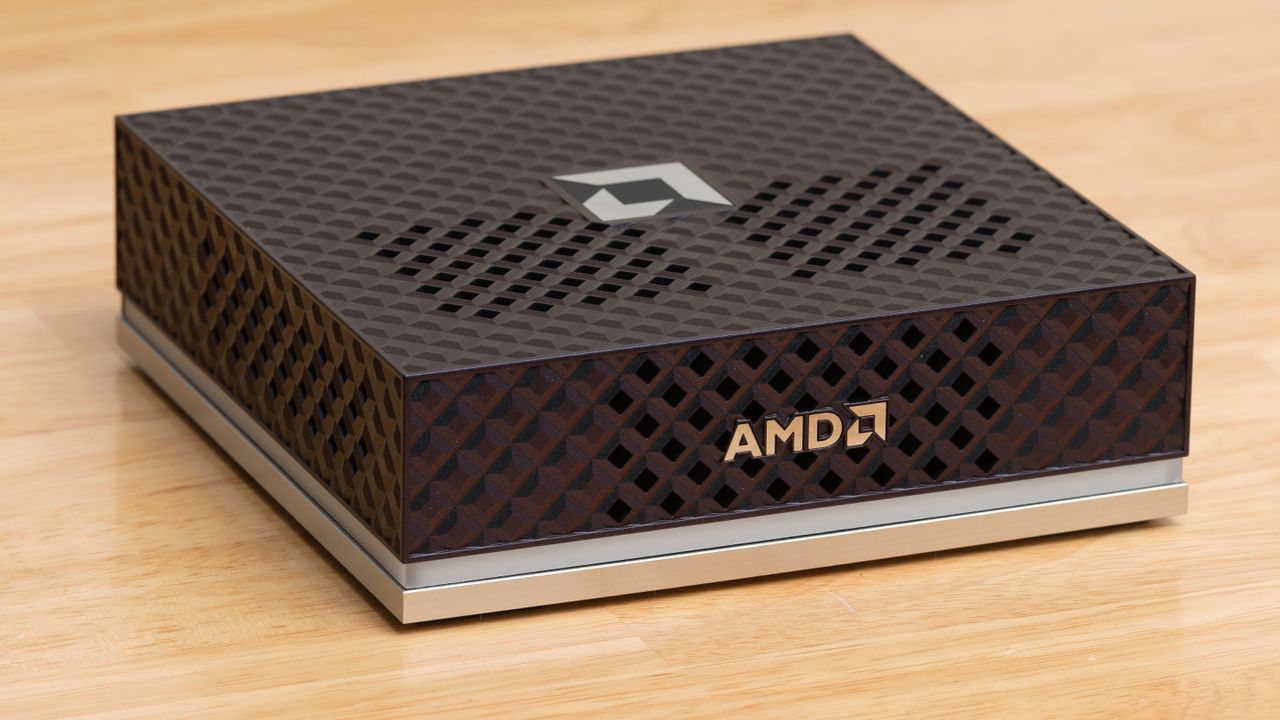
Microsoft just released another version of Windows 11 designed for developers, dubbed Project Zenith. According to the Windows Blogs, this operating system is optimized for developer workflows and will first become available on the AMD Ryzen AI Halo, Team Red’s direct answer to the Nvidia DGX Spark, although it will also arrive on more devices from Microsoft’s OEM and other silicon partners soon. Redmond calls Project Zenith “a ready-to-code distraction-free Windows experience on developer-class devices with 64 GB+ unified memory and 250+ GB/s memory bandwidth,” claiming that “developers can jump right in.”

It comes with pre-installed tools like Visual Studio Code, GitHub Copilot, PowerToys, WinAppCLI, Windows Dev Skills, Intelligent Terminal, PowerShell 7, Git, GitHub CLI, AzureCLI, Core Utils, Oh My Posh, Python 3.14+, uv, NVM, Node 24+, WSL 2+ Ubuntu, and .NET 10. Aside from that, Microsoft said it pre-configures Windows 11 so developers don’t have to dig through the settings menus of various apps to configure them for their needs.

It’s primarily designed for AI developers, especially since the devices it’s installed on are designed to run 30B+ parameter models locally and without meters. The company also made it more secure for developing and running agents, deploying features such as OS-enforced identity, containment through Microsoft Execution Containers (MXC), and enterprise-grade manageability for agents.

Project Zenith is Microsoft’s response to the AI token crisis, which has caused costs to spiral out of control, especially as agents use 1000x more tokens compared to standard AI. While frontier models would still be available on the cloud, AI developers could run everything else locally through devices like this, powered by this version of Windows 11. This should help AI developers keep using their agents without feeling the bite of tokenized billing, which is especially crucial for those working in smaller organizations or experimenting at home.

One big tradeoff with Project Zenith, though, is that it’s only available on expensive devices, at least for the moment. The AMD Ryzen AI Halo, with its AMD Ryzen AI Max+ 395 processor, 128GB LPDDR5x-8000 RAM, 2TB SSD, and integrated Radeon 8060S graphics, costs $3,999.99 on Micro Center. Even if Microsoft eventually makes Project Zenith available for separate purchase and installable on other mini-PCs, the 64 GB+ unified memory requirement will be a major roadblock, especially with skyrocketing RAM prices driven by the AI boom.

✇Tomshardware

Microsoft will expand Windows 11 Memory Integrity feature to more PCs starting in October — security feature reduces gaming performance on some systems

作者 Etiido Uko

Microsoft will begin automatically enabling its Memory Integrity security feature on a broader range of eligible Windows PCs through quality updates starting in October 2026, extending the kernel-level protection to more existing devices by default. In a September 1 blog post, Microsoft said the rollout will provide stronger protection for more devices against attacks targeting the Windows kernel, while PCs that already have Memory Integrity deliberately disabled will retain their existing configuration.

“Windows quality updates will begin enabling memory integrity protection on eligible devices,” Microsoft said. The updates will also enable Virtualization-based Security (VBS) where required, which provides the isolated environment underlying Memory Integrity. Before making the change, Windows will automatically assess each device using what Microsoft describes as readiness signals covering its hardware capabilities, compatibility, and performance.

The October rollout is basically an expansion of Microsoft’s existing default-enablement policy. Memory Integrity is already switched on by default on clean Windows 11 installations that meet Microsoft’s hardware requirements, as well as on Secured-core PCs. Current requirements include an 8th Gen or newer Intel processor for Windows 11 22H2, an AMD Zen 2 or newer processor, at least 8GB of RAM on x64 systems, an SSD of at least 64GB, compatible drivers, and enabled hardware virtualization. Automatic activation under that policy applies to clean installations and not upgrades of existing devices.

Memory Integrity — also known as Hypervisor-Protected Code Integrity (HVCI) — has existed since the Windows 10 era and was originally released as part of Microsoft’s Device Guard security technology. It uses VBS and the Windows hypervisor to move kernel-mode code-integrity checks into an isolated environment, helping prevent malicious or untrusted code and drivers from executing in the Windows kernel. Windows 10 generally left the protection optional outside configurations such as S mode, while Windows 11 made it more of a default security feature on compatible new installations.

The feature comes with a performance wrinkle familiar to PC gamers, leading many gamers to disable it. Microsoft acknowledged in 2022 that Memory Integrity and Virtual Machine Platform could affect gaming performance on some Windows 11 configurations, and advised gamers prioritizing performance that they could temporarily disable these protections while playing, warning that doing so reduces security. The company’s own gaming guidance subsequently continued to recommend temporarily disabling Memory Integrity and VMP where they interfere with gaming performance.

The security feature’s impact on performance depends on the hardware. Microsoft says Memory Integrity performs better on newer processors with hardware features designed to accelerate the required isolation, while older CPUs relying on software emulation can experience a larger performance hit. Driver compatibility can also prevent activation, with Microsoft documenting issues ranging from malfunctioning software to incompatible gaming anti-cheat solutions.

For most users, the October change requires no action. Eligible PCs will be evaluated and updated automatically, while administrator policies and previous user choices remain in place. Microsoft specifically says systems where Memory Integrity has already been disabled “won’t be automatically changed by this rollout,” leaving gamers and other users who previously opted out in control of the setting.

✇Tomshardware

Get up to $175 back for your pre-installed Windows 11 license — new portal provides legal forms, but warns buyers not to wipe storage first

The majority of PCs are sold with Windows 11 licensed, paid-for, and pre-installed. This fact irks many folks, especially Linux aficionados who intend to wipe all traces of Microsoft’s OS while their shiny new machine is box fresh. The Refund4Freedom site was put together by the Italian Linux Society and the Free Software Foundation Europe to help address this unfairness. “Consumers should be able to buy laptops without any specific operating system, and should not have to pay the license price if they don't want to,” asserts the site, and they have information and forms to help you get your cash back.

Refund4Freedom doesn't just help PC buyers in the quest to get Windows refunds; they have three key demands. Prevention is better than cure, right? The first demand is that “Device manufacturers and vendors should not impose an operating system or software on consumers, and should not force them to pay for software that they don't want.” This is central to the site’s message and purpose. However, it also wants to promote the idea that consumers should have the right to buy hardware without pre-installed software and see the price of the product with and without Windows, etc. Refund4Freedom also urges manufacturers and vendors to clearly outline the steps for requesting and obtaining a refund for pre-installed OSes and software. Of course, the process for consumers should be as friction-free as possible.

“Not all manufacturers and vendors are equal.”

“Not all manufacturers and vendors are equal,” notes Refund4Freedom on its website. Some are more helpful than others when it comes to refunds. You can read more on the website about each brand surveyed, but it looks like Acer and Lenovo both operate reimbursement procedures for Windows. Asus has a hidden reimbursement procedure, but we only get told of the Italy-centric way to reach out to Asus about it. Dell and HP don’t have any reimbursement procedure for Windows, according to the site.

Whichever brand of PC you buy, and the above list is far from exhaustive, you should follow a deliberate rejection procedure. If you intend to shun Windows, Refund4Freedom tells users to start up the PC and take pictures showing the contract clauses addressing reimbursement. Do not format or erase the computer at this stage. The next step is to contact the manufacturer's customer service. Do this in a recordable way, and so email/messaging is encouraged for records.

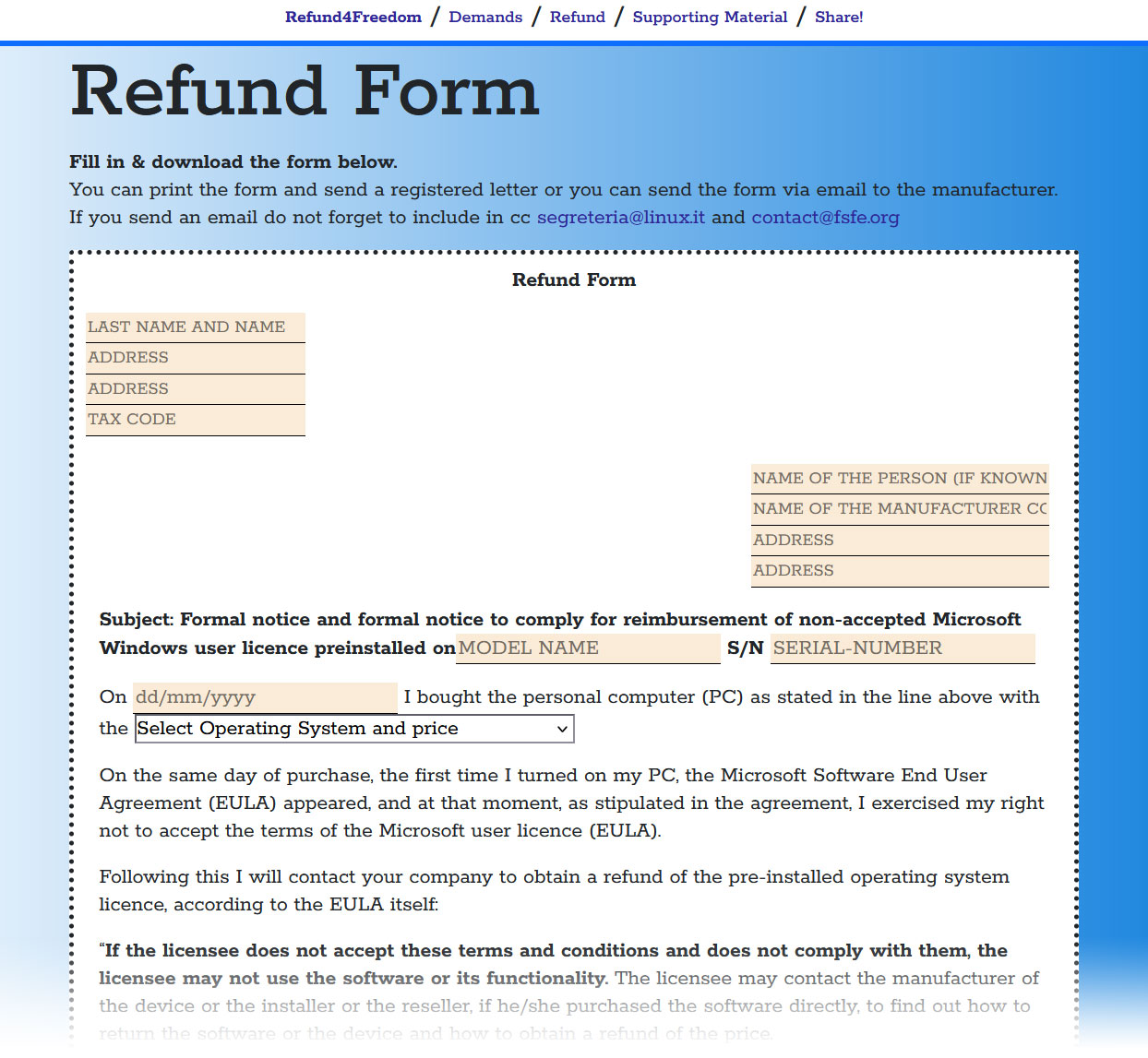
Refund4Freedom site for Windows OS refunds

(Image credit: Refund4Freedom )

If the above two steps aren’t working out for you, the Refund4Freedom site has a pre-made form you can fill in and forward. However, this is again Italy-centric. For example, towards the end it mentions the Autorità Garante della Concorrenza e del Mercato (AGCM), as well as a ruling by Judge Dr. Mirko Buratti of the Court of Monza… So, perhaps you can swap in some rulings appropriate to your country for this part of the form? Get your favorite LLM to hallucinate some local court rulings for you.

Finally, and whatever the outcome, Refund4Freedom asks its readers to report their experience, good or bad, to the aforementioned AGCM. To inspire you, the site includes several user reports of success, and I note one user getting back as much as €150 from Acer (~$175). That was a combination of Windows license reimbursement and a larger legal fee refund. A more typical reimbursement level is roughly $60.

✇Tomshardware

Microsoft blames RGB peripherals for crashing Windows 11 — RGB software is causing blue screens, crashes, and game freezes

Like clockwork, it's a new month and a new OS-breaking bug has been discovered in Windows 11's latest monthly update, KB5121003. Users reported random system instability, with games freezing or outright crashing, and even BSODs in worst-case scenarios. Microsoft investigated the issue and reached a vindicating conclusion — RGB software installed on affected PCs was interfering with core system components, causing Windows 11 to become unstable.

Online multiplayer titles such as Arc Raiders, Marvel Tokon: Fighting Souls, and The Finals were most affected by this issue. Reports mentioned these games exhibiting a pretty classic crash pattern. They'd suddenly hang and become unresponsive, show an "EXCEPTION_ACCESS_VIOLATION" blue screen, and force your computer to restart automatically.

An official update posted on Microsoft's Windows 11 25H2 health status page says, "this issue is related to peripherals or internal device components which have RGB lighting features." The software governing these devices would install drivers or code components with file names similar to "inpoutx64" to control the RGB. When you'd launch a certain game, inpoutx64 would trigger the issue and cause a crash.

Microsoft didn't explain the underlying cause, but it's likely tied to anti-cheat not appreciating a kernel-mode driver in user space. RGB software, like other apps, should be limited to user space, but the driver it uses to interface with peripheral controllers runs in kernel space. For anti-cheat software, this is essentially an exploit waiting to happen, so it tries to block the driver to make sure it doesn't inject malicious code.

If the driver is blocked upon startup and the RGB software unknowingly tries to push a lighting change or monitor a temp sensor, for instance, it hits a wall, and Windows throws up the EXCEPTION_ACCESS_VIOLATION error. If the driver is terminated mid-use while executing assembly instructions at the Ring 0 level, it causes a critical kernel fault. Kernel space typically can't recover from unhandled errors like these, so Windows triggers a blue screen as a precaution to protect your hardware.

Microsoft says it's "presently working to understand the relationship between these RGB components and the games which trigger this issue." The company will provide more info later, but for now, you can use the Registry Editor to manually disable the driver as a temporary solution. Embark Studios, developers of Arc Raiders and The Finals, also shared this method to fix crashes for now.

This could break some RGB software functionality, but you can use universal programs like SignalRGB or OpenRGB to control your devices as long as they're supported. Their specialized drivers have strictly defined whitelists that don't scare anti-cheat software. Still, if you're facing this issue, Microsoft suggests reporting it via Feedback Hub—that's how issues like this get prioritized in the first place.

✇Tomshardware

China reportedly orders state agencies to uninstall its government-only edition of Windows 10 — Beijing accelerates planned retirement over data security concerns

China's Ministry of State Security has told some state-linked organizations to remove a customized version of Windows 10 from their machines, Bloomberg reports, citing people familiar with the matter. The order reportedly accelerates a planned retirement that the software's developer had scheduled for February 2027, and it sent Chinese OS vendors' shares surging, with Hunan Kylinsec and Archermind both hitting Shanghai's 20% daily limit and China National Software climbing 10%. Bloomberg's sources attributed the directive to data security concerns but didn't specify what vulnerabilities Beijing is worried about.

The affected software is the government edition developed by C&M Information Technologies (CMIT), a joint venture set up in 2016 between Microsoft and state-owned China Electronics Technology Group, with the Chinese side holding the majority stake. The build is based on Windows 10 Enterprise but strips out OneDrive and other consumer-facing components, disables certain native functions, keeps updates and activation inside China, and lets government users substitute Chinese encryption algorithms for Microsoft's standard cryptography. China Customs and Shanghai's Commission of Economy and Informatization were among the first pilot customers when the edition launched in 2017.

Microsoft ended mainstream Windows 10 support globally in October 2025, which left CMIT's edition as the only Windows still officially sanctioned for Chinese government use. "Microsoft is not aware of a security incident affecting this product," a company spokesperson told Bloomberg, adding that it continues to receive regular security updates.

Beijing banned Windows 8 from government procurement in 2014, ordered a three-year replacement of foreign PCs in government offices starting in 2019, and in 2022 told central agencies and state firms to scrap foreign-branded computers entirely. The domestic stack built to absorb that demand now includes Kylin V10, UnionTech's UOS, and Huawei's HarmonyOS 5 laptops, and it reaches down to the silicon in systems like Huawei's Qingyun desktops running the homegrown Kirin 9000X.

StatCounter's traffic data shows how little of that campaign has reached the consumer market. Windows accounted for 87.64% of Chinese desktop web traffic in July 2026, and Windows 10 alone still made up 43.56% of Chinese Windows usage, compared with 50.01% for Windows 11, ten months after mainstream support ended. Roughly two in five Chinese desktops are currently running an unsupported Microsoft OS, the gap that CMIT's edition was meant to close for government users.

It's not clear what the scope of the new directive is, with Bloomberg's reporting covering “some” state-linked entities. CMIT didn't respond to the outlet's request for comment.

✇Tomshardware

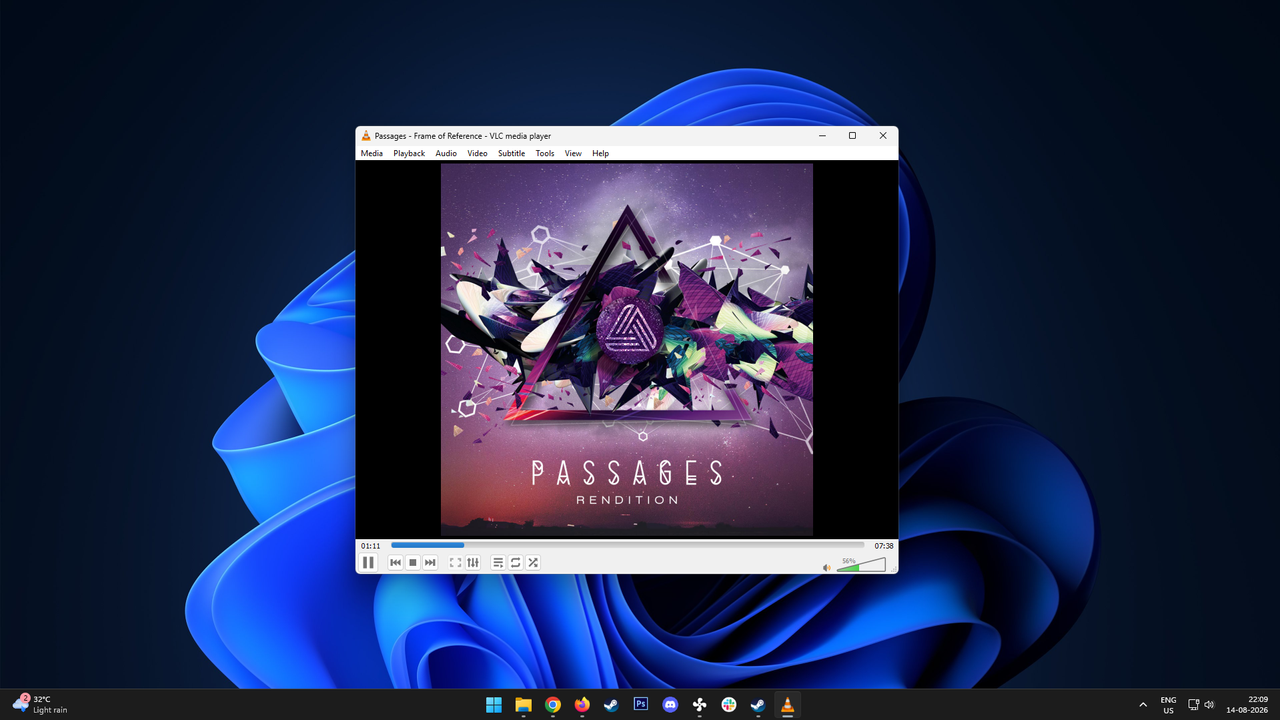
Devs blame Windows for VLC media player bug that causes 33-second delay when playing MP3 files — creators allege Microsoft Defender blocking plugin cache is to blame

Popular open-source media player VLC has run into an unusual issue on Windows 11 that causes it to take as long as 33 seconds to start playing a simple MP3 file, the side effect of a recent unexplained change to Windows. The issue was publicized after game developer Jonathan Blow said he had stopped using VLC in favor of Microsoft's Media Player because of the delay. He also used the incident to criticize the state of open-source software running on Windows.

Responding to Blow's complaint, the developers behind VLC player fired back and claimed that the media player itself was not responsible. According to the VLC team, the bug is primarily due to a Microsoft Defender issue introduced through a Windows 11 update that conflicts with VLC's plugin cache.

This is because of a « bug » from Microsoft Defender in one update of Windows 11, who magically made VLC plugins cache quarantined by Windows.Reinstalling VLC or regeneration of the plugin cache will fix this.Calling open source software embarrassing when it is a Windows… https://t.co/IFLrXFZFsvAugust 12, 2026


"This is because of a « bug » from Microsoft Defender in one update of Windows 11, who magically made VLC plugins cache quarantined by Windows. Reinstalling VLC or regeneration of the plugin cache will fix this. Calling open source software embarrassing when it is a Windows update that broke it is quite disrespectful," the account responded.

The cache is an important part of how the media player works, as it relies on plugins for codecs, demuxers, and input/output modules. Instead of putting everything into a single executable, VLC loads these components as and when required and uses a cache to avoid having to scan the entire plugin directory every time it loads. The issue seems to occur when Microsoft Defender quarantines or blocks VLC's plugins.dat cache file. As a result, VLC can take a noticeable amount of time to process its plugin system before finally beginning playback. We also tried to replicate the issue on a Windows 11 machine; however, VLC launched normally, and we did not experience any noticeable delay when playing an MP3 file.

The easiest way to fix this is to reinstall VLC or regenerate the plugin cache. The VLC Windows installer includes a dedicated executable file to reset the cache files. This can be accessed by either heading to the VLC installation folder and running vlc-cache-gen.exe or its shortcut within the Start menu called "VLC media player - reset preferences and cache files." Do note that this also removes any customized preferences, such as audio settings like equalizers, keyboard shortcuts, subtitles, etc.

A more reliable solution is to add an exception for the VLC installation folder in Microsoft Defender itself. This should prevent Microsoft Defender from interfering with VLC's cache files and avoid the same issue from recurring. While the workaround seems relatively simple, it is still far from being ideal. One should not have to jump through hoops just to play an MP3 file. While Microsoft is yet to comment on the issue, it remains to be seen whether a future Windows Defender update will address the underlying cause.

✇Tomshardware

Windows 11's built-in weather app hogs more than 1.2 gigabytes of RAM just to tell the forecast — memory-sucking web wrapper filled with ads masquerades as an actual application

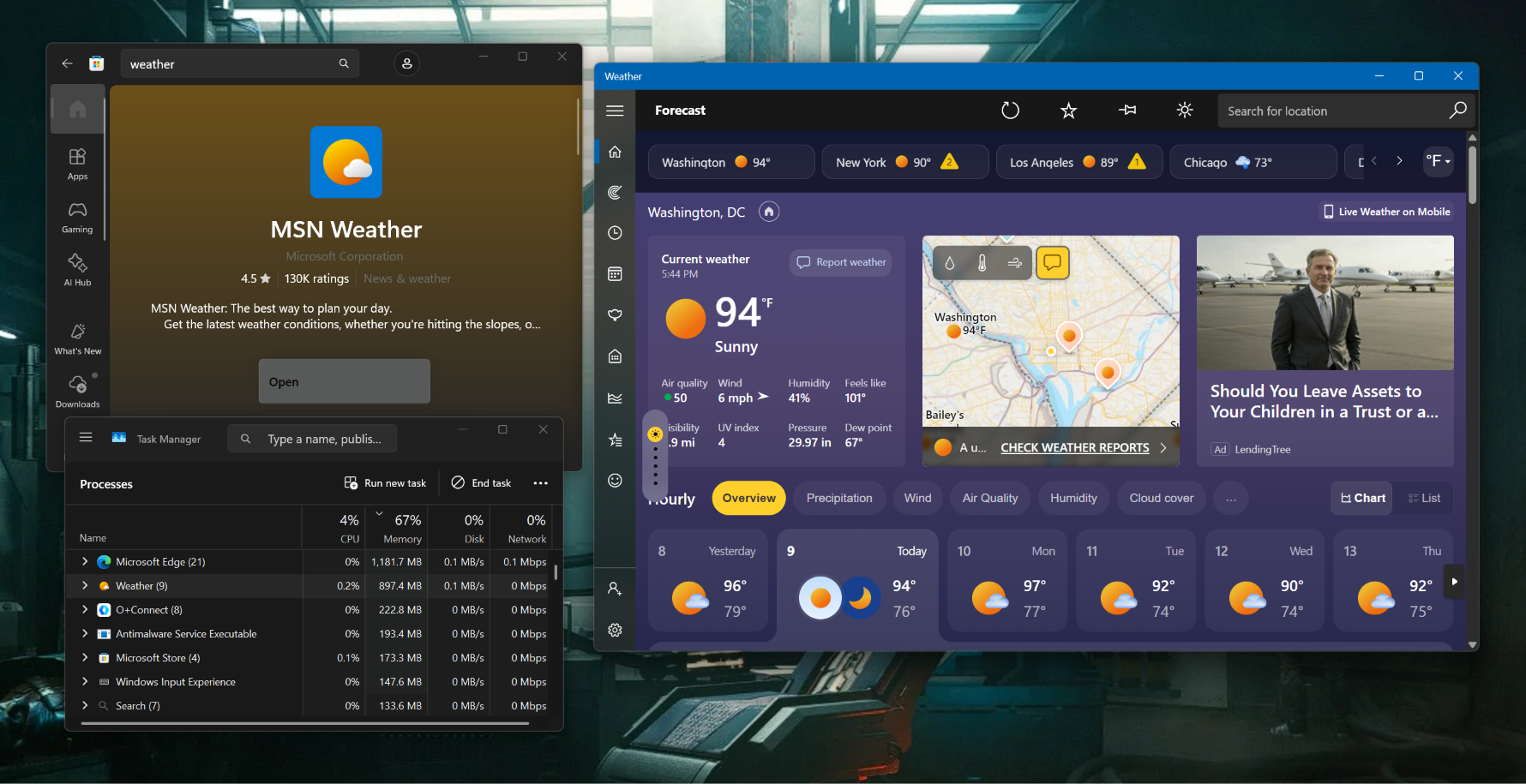
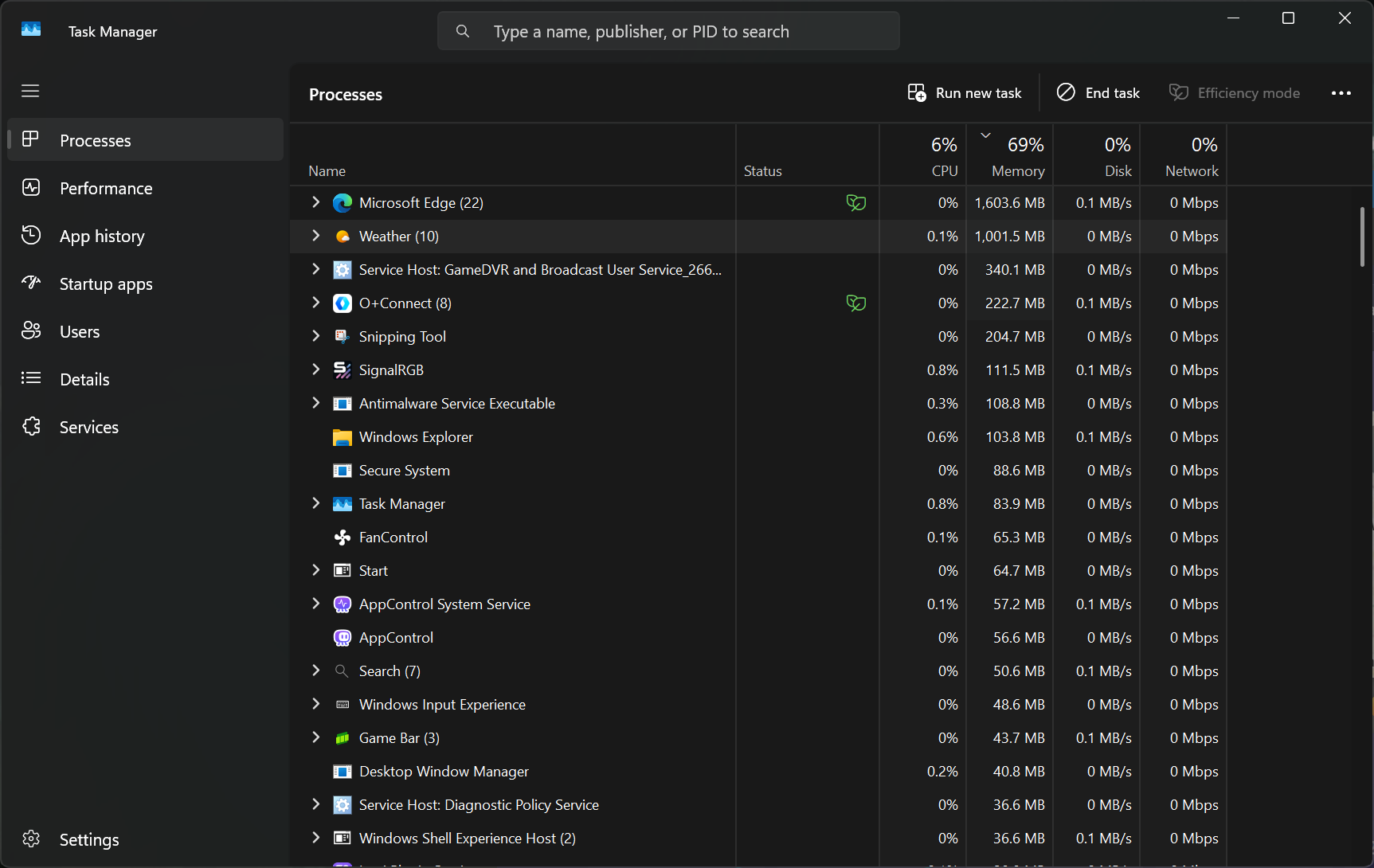
Windows is in a tough spot right now, with years of neglect and stagnation reaching a boiling point with customers. Lack of optimization, bloat, ads, forced AI slop, and persistent tracking have forced Microsoft to admit its missteps and commit to fixing the OS at large. Windows Latest's new testing shows that the built-in weather app is a perfect representation of the state of Windows. The "app" consumes up to 1.2GB of RAM while idling, and it serves up a bunch of ads while you check the temperature.

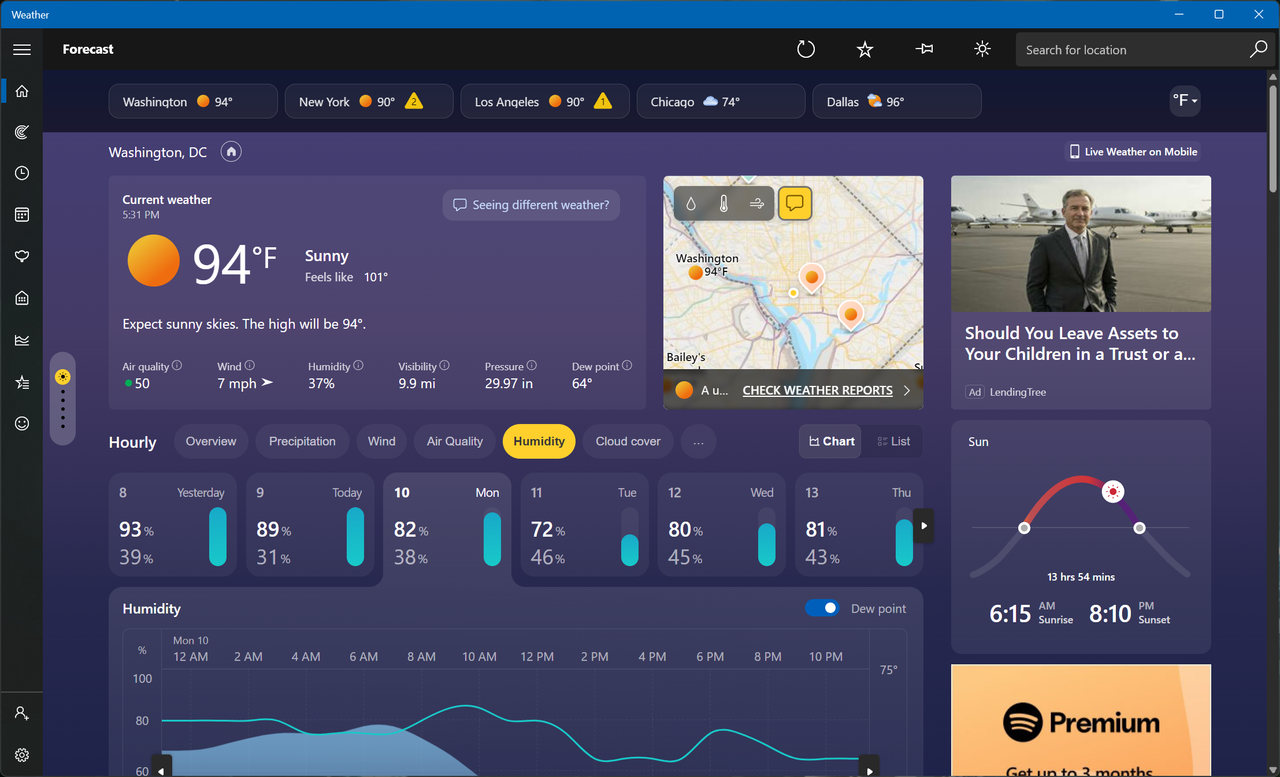
MSN Weather is the default weather app that ships with Windows, which explains why it's filled with promotions throughout, despite being part of a paid OS. To be clear, the app looks very modern and has all the data you could ask for, such as live radar overlays, hourly wind and precipitation breakdowns, air quality index, and moon phases. It's also accurate because the data is sourced from a bunch of different providers across the world, but mostly Foreca.

Windows 11's weather app

(Image credit: Future)

The author explains that getting accurate forecasts is not a cheap endeavor, so it's not like Microsoft is running a charity. But the comparison falls apart when you look at what the competition is offering. Apple's native weather app on macOS is just as beautiful, detailed, and accurate, yet it's free of ads. It also only consumes about 250MB of memory to show all that data, so 5x less than Windows. This is because MSN Weather is technically not even an app to begin with; it's a web wrapper that's pinging a bunch of browser tabs in real-time.

When the author clicked on the Task Manager entry for MSN Weather, they saw 8 Chromium-based subprocesses, confirming that they're just looking at a website being rendered via WebView 2. For context, native Windows apps are supposed to adhere to the WinUI framework, which the company is slowly adopting over Win32 and UWP. Microsoft is committed to updating all the native apps Windows ships with to Win32, which should significantly improve their optimization, but we don't know if the ads will suddenly disappear as well.

Windows 11's weather app

For us, it consumed up to 1GB of RAM (Image credit: Future)

The author saw Adobe Acrobat ads while checking the forecast, and we saw two ads — one for LendingTree and another for Spotify. Apart from that, scrolling around the app and clicking on the different menus and boxes was fast enough. We have to emphasize that the app really is granular and well-built from an aesthetic point of view; Microsoft gets full points for that, or is it MSN? That distinction is another issue that makes the weather app conundrum a bit more confusing.

When Microsoft promised to rebuild all native Windows 11 apps, it didn't explicitly say those would include MSN-branded services too, like MSN Weather and MSN News. Seeing as though they're simply called by their utilitarian names in the OS, there's a strong chance that these memory hoggers will also be eventually upgraded. For now, just stick to your phone, especially if you were among those who immediately Googled how to remove the weather widget from your taskbar that fateful day.

✇Tomshardware

VPN provider built a script to block Microsoft's hidden GDID tracking on Windows — Windscribe's "deGDID" erases existing identifiers and blocks new ones from being created

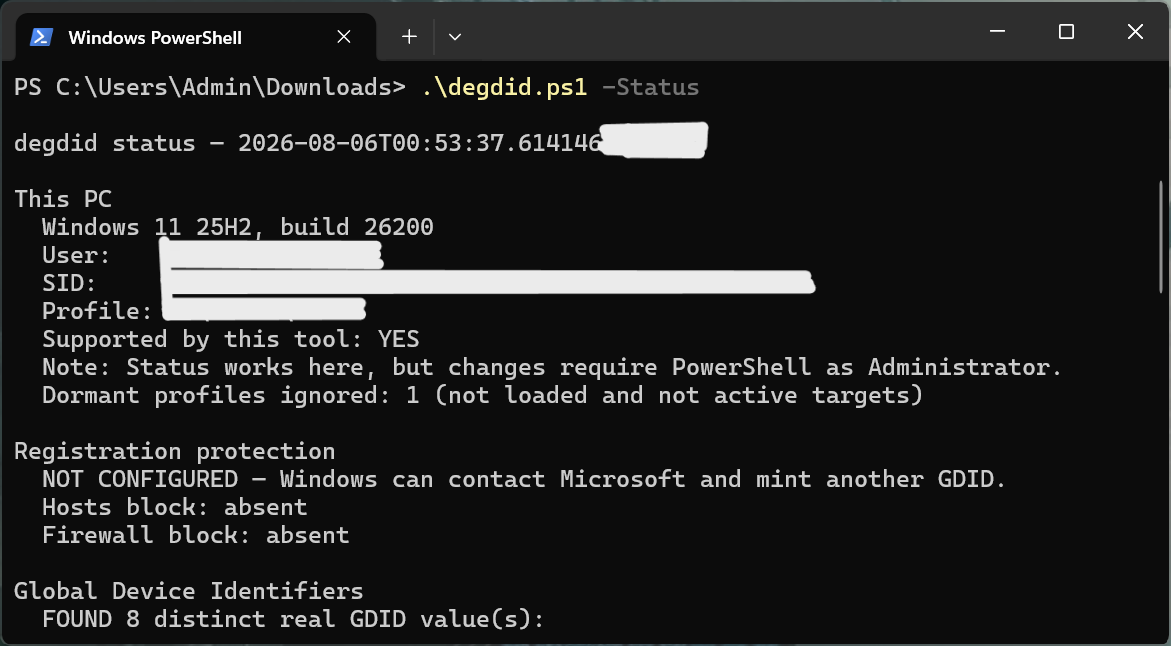
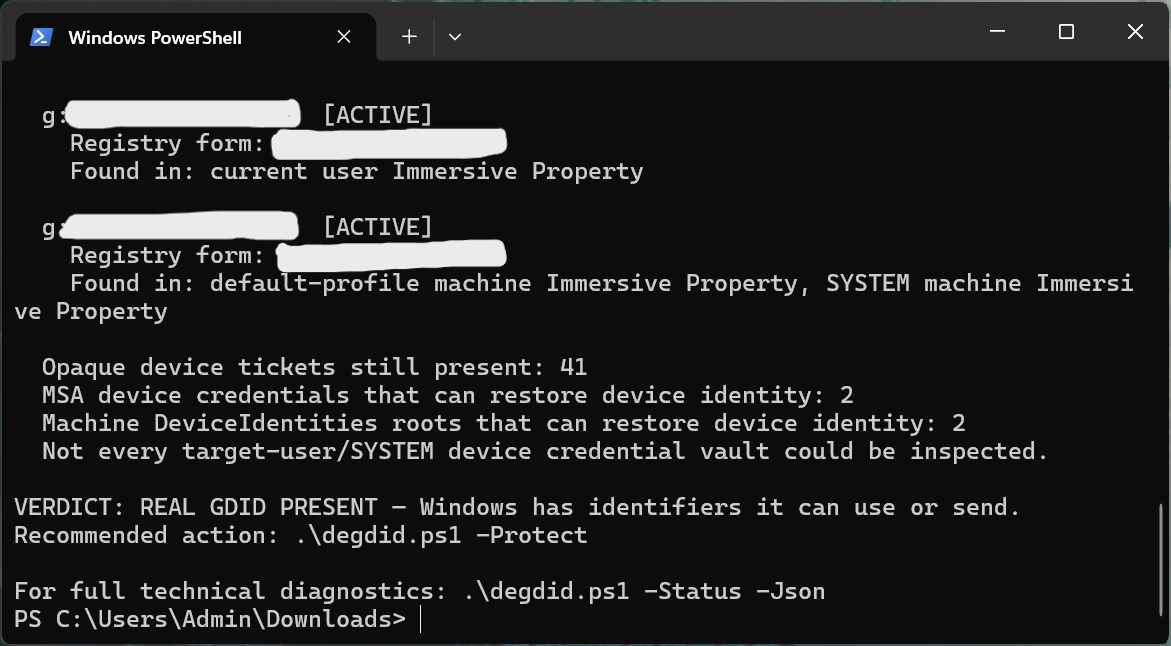
Last month, we covered a federal criminal case in which Microsoft's Global Device Identifier (GDID) helped the FBI catch an alleged hacker. Despite the noble cause, the implications of a persistent tracker built into Windows became difficult to ignore, and it was enough of a tipping point to convince Windscribe to do something about it. The VPN company has created an open-source project and script called "deGDID" that aims to strip GDID off your PC — but does so at the cost of breaking some Microsoft cloud services.

You can find the script on GitHub and run it via PowerShell with admin privileges. It's completely free and works in a very straightforward manner. There are three main execution flags that dictate how deGDID operates: –Status, which is read-only and tells you if a GDID is active on your rig; –Status –Redact, which generates logs with the GDID redacted so users can share diagnostic data more confidently; and –Protect, which completely wipes the GDID and prevents the creation of new ones.

Running the deGDID script
Future
Running the deGDID script
Future

A fourth flag, –Unprotect, allows you to reverse the script in case you need to revert back to the default state. But –Protect is the one worth discussing. First, the script looks for server-issued GDID keys in the registry, where they remain cached, and purges them all. This is something you can do manually as well. In fact, Windscribe tried it on a virtual machine, but the GDID keys are silently re-minted in the background upon a reboot or whenever Windows contacts Microsoft servers again.

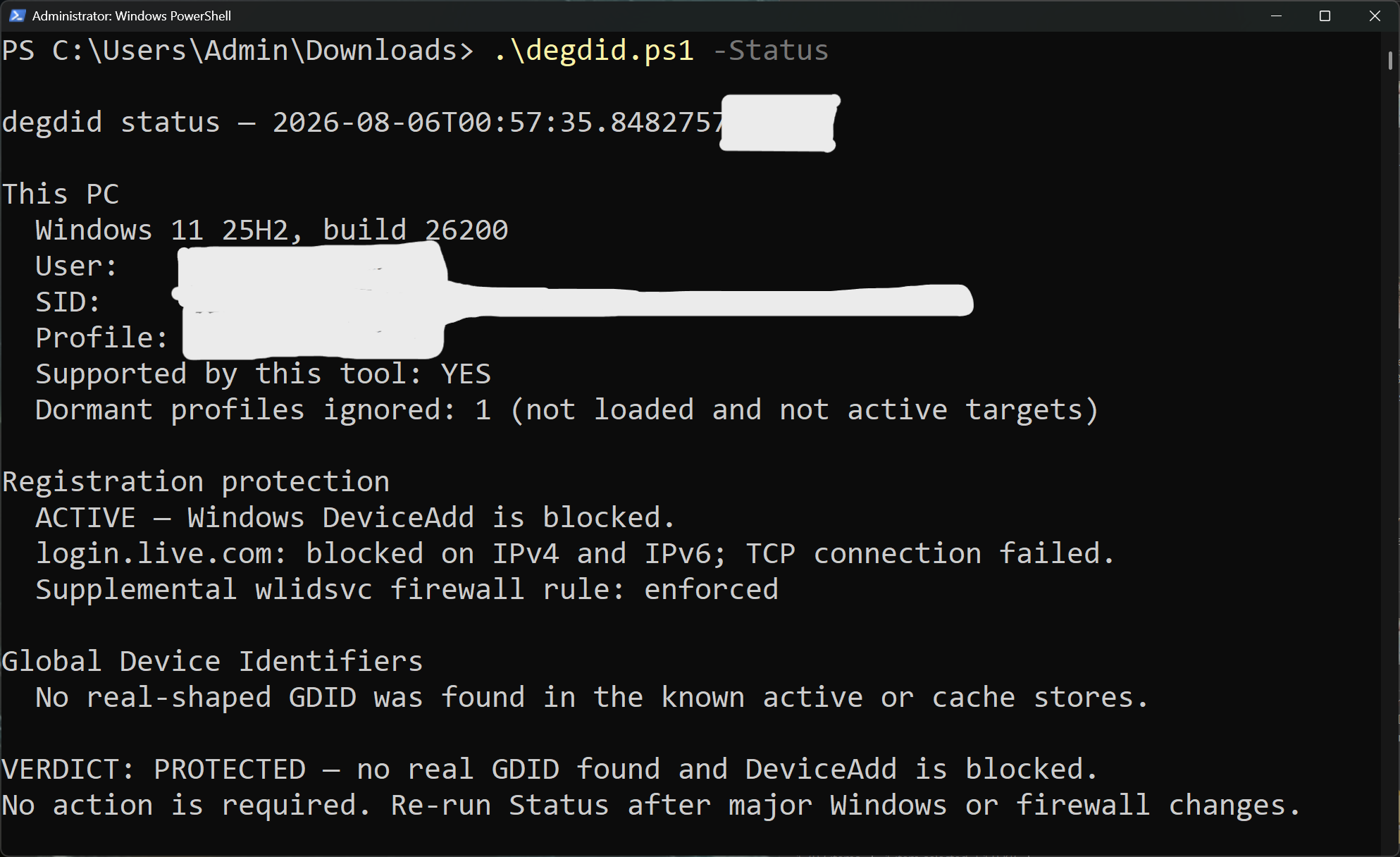
To close this loop, the script then modifies the ACLs (Access Control Lists) and registry permissions to prevent the OS from fetching and subsequently trying to remint the GDID keys. It puts up a firewall against the internal DeviceAdd endpoint, which completely cuts off Microsoft identity services from even seeing this as a registered Windows PC. This one-two punch completes the process, and the existing GDID keys are not only wiped, but the possibility of new ones being created is put to bed as well.

Running the deGDID script

(Image credit: Future)

Keep in mind that old keys that are already server-side cannot be removed; Microsoft has access to them indefinitely. This script also only works on unmanaged systems with admin accounts. If you're part of an organization or domain, deGDID will refuse to run. More importantly, though, since it blocks Microsoft's DeviceAdd pipeline, some core Windows services will break because they'll fail to authenticate your Microsoft account.

The reason deGDID is even needed in the first place is that Windows has no native toggle to turn off GDID. It exists as a permanent device ID that can track you without your consent. It works across IP addresses since it sits beneath the layer where VPNs operate, so no amount of network tunneling can obfuscate it. This can explain why Windscribe was compelled to create deGDID — to combat a potentially invasive system that has the power to wreak havoc in the wrong hands.

Microsoft online services degraded after running the deGDID script

(Image credit: Future)

We tried the script on a Windows 11 computer, and it worked as intended. Running the –Status flag showed multiple cached GDIDs that were then removed by the –Protect flag, and a new GDID didn't show up even after restarting. As expected, some Microsoft apps freaked out and returned connection errors. Account verification through login.live.com was also blocked across all browsers, though login.microsoftonline.com still worked. Online games and other apps continued to behave normally as well.

Windscribe says deGDID is a research project, and it will continue to evolve as more information about how GDID works is uncovered. For now, the fact that it can make core Microsoft services and features fail might be too much of a tradeoff for some. The script also doesn't promise to kill every GDID instance, and Microsoft already has your previous keys, so this is certainly not an ideal solution — but it's a good start to the fight against hidden trackers.

✇Tomshardware

Microsoft quietly purges 32GB of RAM recommendations from its website — company reels from the effects of the memory shortage as it released 8GB base models for Surface laptops this year

In May of this year, Microsoft said that 32GB of RAM is now the future-proof “no worries” configuration if you’re a gaming enthusiast, and that 16GB of RAM is now the new “practical starting point” if you want to have a smooth experience with Windows 11. However, it seems that the company is backtracking on this announcement as it removes all references to the post on the Windows Learning Center website, according to Windows Latest.

Microsoft previously posted a blog titled “How to optimize your gaming PC setup” in November 2025, where it said that 32GB is the ideal capacity for hardcore gamers who demand the best possible quality for AAA games or use mods a lot. However, this page is no longer available, and people who attempt to visit the link are automatically redirected to the Learning Center Homepage.

Many manufacturers are once again releasing laptops that just have 8GB of RAM. Microsoft is part of this move, as it dropped its budget Surface Go and Surface Laptop Go models and introduced 8GB base versions of its Surface Pro 12, Surface Laptop 13, and Surface Laptop for Business. Thankfully, Redmond is not leaving users who cannot afford expensive RAM out to dry, as it recently promised to optimize the operating system and reduce its footprint by this year.

Even though Windows 11’s minimum specifications just require 4GB, the prevalence of many web-based apps and interfaces on the OS use up a lot of memory on many systems. While using web-based React and WebView2 is easier for developers, they’re not as efficient as apps that are built to run natively on Windows. This wasn’t a problem when memory was cheap and plentiful, as people could just spend a few dollars to upgrade their Windows PCs. However, now that memory modules are expensive and it’s hard to find the best prices for DDR5 and DDR4 kits, developers are going to be forced to optimize their software to use as little memory as possible.

This was actually what Windows programmers had to do in the 1980s and 1990s, when every Microsoft engineer had a stopwatch to ensure that their work remained fast, even on the limited hardware of the time. Even the original Task Manager, which was built by the same person who integrated ZIP file support into Windows, was only 80KB big so that it could run smoothly on “potato” hardware.

Hopefully, both Microsoft and app developers will rise to the challenge brought about by the memory shortage and make Windows efficient once more. This is especially true as Microsoft is now facing some competition from macOS and Linux (although Windows is, by far, still the most popular operating system today).

✇Tomshardware

Microsoft vows to make Windows 11 fly on 8GB RAM amid memory shortage — optimizations to reduce OS memory footprint have begun

Microsoft said that it’s planning to optimize Windows 11 for systems with 8GB of RAM and above as part of its promise to improve Windows 11 in March 2026. The company said in its latest update that the optimization is part of expanding its focus on operating system upgrades, which include a faster out-of-the-box experience, easier parental controls, and improved voice interactions.

While the official minimum specifications for Windows 11 sit at just 4GB of RAM, most PC builders advise getting at least 16GB if you want to have a smooth experience. In fact, Microsoft has previously recommended 32GB of RAM for Windows 11 for gamers, especially if they want a system that can handle games in the near future. Unfortunately, the RAMpocalypse has forced both users and manufacturers to stick with slower DDR4 memory and lower capacities. Some experts predict that the entry-level PC will disappear by 2028, and we’ve even seen some manufacturers, including Apple, reintroduce 8GB laptops just to hit a specific price point.

The resurgence of 8GB systems will likely deliver a bad experience for users who stick with Windows 11, which is the likely reason why Microsoft is pushing for the optimization of its operating system. If Windows 11 performs poorly on these systems, it could draw users towards macOS or Linux alternatives as they blame the operating system for underperforming on limited hardware. In fact, we’ve already seen this happen before — after Microsoft ended support for Windows 10, MacBooks saw an uptick in sales as users migrated towards macOS instead of going for Windows 11. SteamOS is also encouraging some gamers to ditch Windows, and Valve is working on a general release for the OS, which many say contains less bloat and is a bit snappier than what Microsoft offers.

The RAM shortage crisis, alongside increasing competition, is forcing Microsoft to do better with Windows 11. Hopefully, these optimizations arrive sooner and don’t introduce new bugs, allowing both new and existing users to get more out of their systems.

The Windows blog post also gave an update on what improvements the company has made to Windows 11 so far. This includes a better Windows Search experience, more Taskbar and Start customizations, a more responsive and reliable File Explorer, among others. Many of these changes are still in preview, though, so unless you’re part of the Windows Insider Program, you’ll have to wait a few more weeks to months before you can start enjoying these changes.

✇Tomshardware

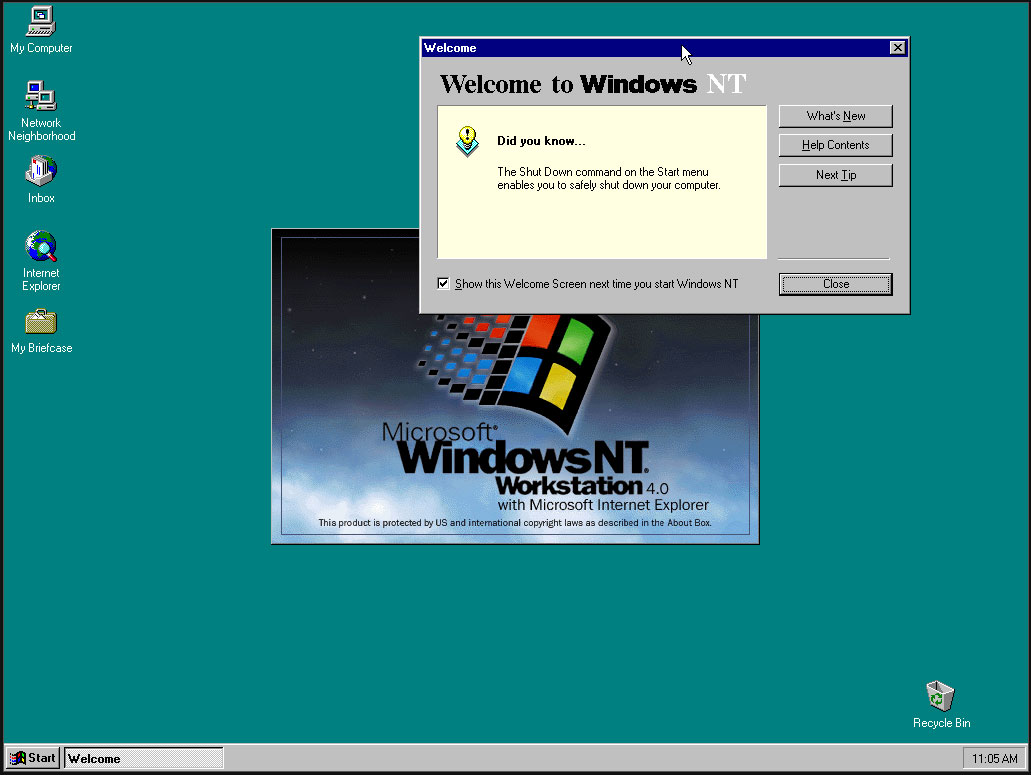
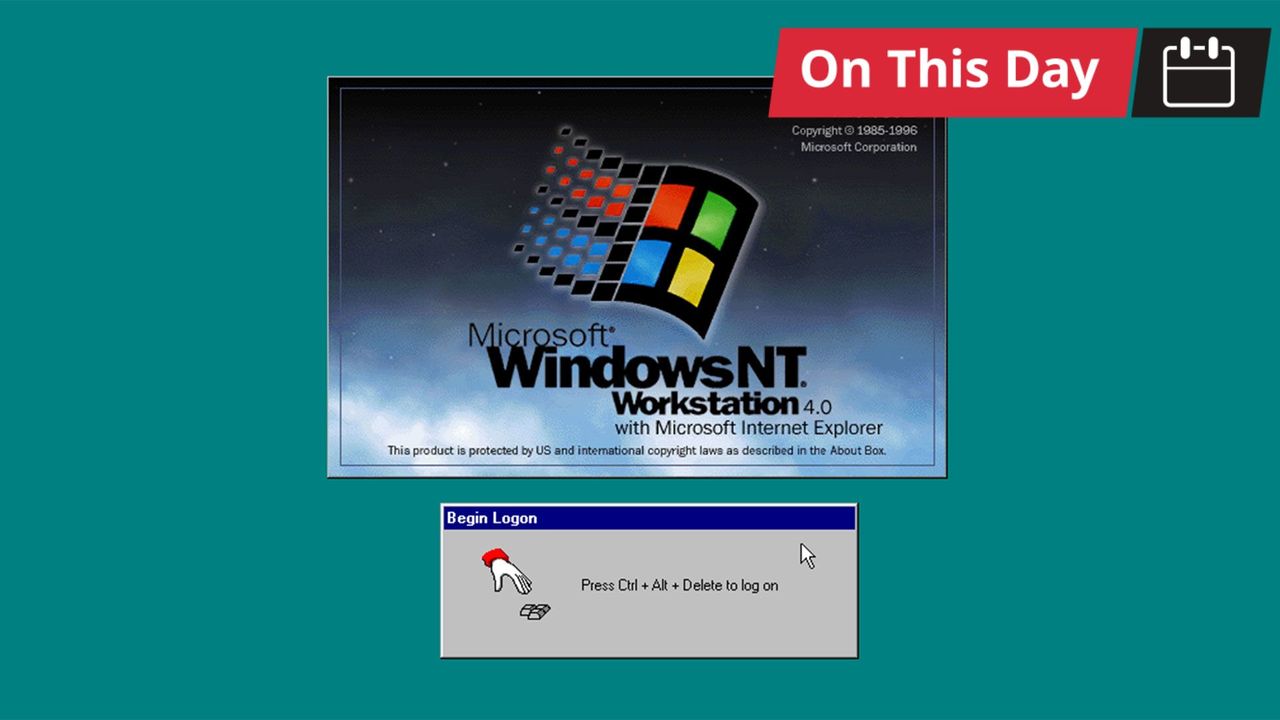
Windows NT 4.0 brought the Win95 UI to servers 30 years ago today — milestone unifying modern Windows OS hit RTM in the Pentium era

Microsoft released Windows NT 4.0 to manufacturing partners on July 31, 1996. Codename Cairo marked an important milestone in the history of Microsoft’s original server OS and would far outlive Microsoft’s original plans as enthusiasts and administrators clung to it, as older readers will be aware. Headlining features of NT 4.0, which made it a winner, include the melding of the intuitive new Windows 95 UI into the fully 32-bit enterprise OS. It was also notable for being the last version of NT to support Alpha, MIPS, or PowerPC CPU architectures.

Historical Windows NT timeline:

  • Windows NT Server 3.1 – in 1993, the first version of Windows NT also introduced NTFS
  • Windows NT Server 3.5 – in 1994, this update provided integrated support for Winsock and TCP/IP
  • Windows NT Server 3.51 - client/server support added in 1995
  • Windows NT 4.0 – in 1996, NT got the Windows 95 UI and the familiar My Computer, My Documents, and so on
  • Windows 2000 Server – the 5th NT release started a new naming scheme, introduced Active Directory, plus NTFS 3.0 with file system encryption
  • Followed by the more modern Server releases…

Windows NT 4.0

(Image credit: Microsoft)

After the initial Windows NT 4.0 release, Microsoft followed up with a version for embedded systems and its Terminal Server edition.

The Windows NT line was critical to Microsoft as it led the charge against dominant Unix server software ecosystems. Its first public release was in 1993, with version 3.1, but NT 4.0 coupled the underlying data server and personal workstation tooling with Win95 UI elements such as the Start Menu, Taskbar, Task Manager, and so on. It would also support new components like the cryptography API, DCOM, TAPI 2.0, and some DirectX (v2) features.

Despite all the new technology under the hood and the frills of the latest UI, Microsoft’s Windows NT 4.0 launched with remarkably low minimum requirements. Would-be users were recommended to install it on a PC with a CPU that ran at 33 MHz or better, had 32MB of RAM, SVGA graphics, and a hard disk with 256 MB capacity. This was in the Pentium / Pentium Pro era. NT 4.0 would become “the server for the masses,” boasted Microsoft on the OS’s 20th anniversary.

Another reason that NT 4.0 was so important is that it formed the foundation for the Windows XP release (2001), leaving the DOS-based 95, 98/SE, and Me versions of the consumer OS behind as archaic hybrids. In the half-decade between the release of NT 4.0 and XP, Microsoft had a lot of work to do, such as implementing Plug and Play, building out gaming tech, adding WDM drivers, and so on. Thankfully, PCs also grew in muscle, specs, and multimedia capabilities to make the larger and more demanding XP a big hit.

Windows XP landed with a core marketing line that it was “Built on NT technology,” which felt uncomfortable to read if you were from the camp that believed ‘NT’ was short for ‘New Technology.’

Windows NT 4.0 screenshots

(Image credit: Tom's Hardware)

It is pretty easy to find an old Cairo release online for retro machine tinkering. Those interested in a more casual poke around in NT 4.0 out of interest, curiosity, or nostalgia will find there are some online installs you can play with via a web browser.

✇Tomshardware

Windows 95 didn’t detect installers, it ‘guessed’ based on the file name, says veteran dev — it simply checked for words like setup, install, inst, or localized equivalents

Windows 95 worked out whether a setup program had run by reading the executable's name and checking it against a short list of hard-coded words, according to Microsoft engineer and semi-official Windows historian Raymond Chen, sharing the details via his Old New Thing blog. A filename containing "setup," "install," or "inst" flagged the program as an installer, which triggered the operating system's routine for repairing system files that installers had damaged. Three non-English entries appeared on the same list, which Chen identified as his own guesses at Italian, Turkish, and Hungarian.

The full match list ran to six terms: setup, install, inst, imposta, ayarla, and felrak. Chen wrote that "install" was redundant, because any name containing it already contains "inst," and speculated that the shorter entry was added later to catch installers named along the lines of "blahinst" without anyone deleting the original. A program whose own name produced no match got a second test, with Windows 95 checking whether the word "Setup" appeared anywhere in the path to the executable. A separate live check ran after any multimedia driver was installed through an INF file, added because those drivers frequently overwrote system DLLs.

This heuristic gated a recovery mechanism Chen described in March. Installers of the period overwrote system files without checking versions, disregarding Microsoft's rule that a file should only ever be replaced by a newer one. An installer carrying Windows 3.1 copies of shared DLLs, for example, would bury the newer Windows 95 versions underneath them, and every program that relied on the current files would break.

Windows 95 kept backup copies of commonly clobbered files in a hidden C:\Windows\SYSBCKUP directory. It would then let each installer finish, check its work, and restore the correct versions where the installer had downgraded them. This safety net depended entirely on correctly guessing that an installer had run, so a setup routine with an unusual name slipped past it, while an ordinary program named something like instant.exe tripped it for nothing.

The file check was often deferred until the next boot rather than run immediately, with Chen explaining that some installers, unable to replace a file already in use, would drop back to MS-DOS, run a batch file to swap the file, and restart Windows, so the cleanup pass had to wait for the reboot to catch anything the batch file had altered.

Windows 2000 debuted a new approach

Microsoft dropped this approach in Windows 2000, which introduced Windows File Protection. That system registers for file-change notifications through Winlogon restores protected files from a cache at %WinDir%\System32\dllcache, with no filename guessing and no waiting for a setup program to complete.

Then, Windows ME shipped a comparable System File Protection, and Vista onward moved to Windows Resource Protection, which guards files using access-control lists instead. The sfc /scannow command that Windows 11 users still run to repair system files descends directly from that work, having replaced a 1995 mechanism that decided when to act by scanning filenames for the word "setup."

✇Tomshardware

Companies are now using automatic Windows installers to display Adware through the Microsoft Store when you install new hardware — customer immediately gets McAfee ads on their PC after connecting new LG monitor; here's how to block the new ads

Unwanted ads can be one of the most infuriating parts of the modern tech experience, where hardware you already paid for is insistent on advertising even more slop to you. LG has a bit of a reputation in this regard, and it seems like the company is expanding its repertoire to even more invasive promos now. A user on the r/pcmasterrace subreddit shared that their brand-new LG monitor is showing them ads for McAfee.

Now my monitor is sending me paid ads for Mcafee?! from r/pcmasterrace

Most of us are already aware of the euphoric feeling associated with getting McAfee shoved into your face. Usually, though, it's limited to laptops and prebuilt PCs that come with bloatware, freemium software, or just outright premium software that you somehow acquired for free. It would sensibly drive a person insane if a new monitor that has no other job than displaying your GPU's output starts participating in these activities.

In this case, u/t40r just bought this monitor and plugged it into their computer for the first time. That's when they noticed a small pop-up in the corner right away. It was from the "LG Monitor App Installer," and the first thing it showed the OP was an ad for McAfee. That's right — it was something entirely unrelated to the monitor. But how did this app show up on u/t40r's PC when they didn't even set anything up yet?

The answer is apparently the great evil known as the Microsoft Store. Checking the startup apps in Task Manager confirmed that it added the LG Monitor App Installer to the PC automatically. It's similar to how motherboard software magically enters itself into your system when you reinstall Windows. That one makes a bit more sense, though, since it's supposed to help control or manage your computer.

Sure, the LG Monitor app could serve the same purpose for the monitor, but it wasted its precious first impressions on a McAfee ad instead of showing something useful to the customer. Persuasion be damned. Anyhow, we were able to confirm that this was not an isolated incident either, as another Redditor posted about the same issue just a week ago, along with the steps for the removal process via local group policy.

Windows update silently installed LG bloatware, which causes a McAfee pop up from r/pcmasterrace

Scouring through the comments also reveals other instances where users reported Alienware and Samsung engaging in similar ghost installs. It seems like a standard Microsoft policy of auto-downloading related monitor software, but it's then up to the manufacturer what they actually show in said app. Regardless, these apps don't seem to respect your preferences and just show up uninvited, even if you're already running a debloated version of Windows.

With recent discussions on just how granular Microsoft's telemetry can be, this openness starts to feel like an oversight just waiting to be exploited. Even if Microsoft thinks it's "helpful" to install utilities without consent, it should at least try to make sure those tools aren't throwing up ads. LG makes some of the best monitors on the market; otherwise, it's a shame that deeper software integration can sometimes undermine great hardware.

✇Tomshardware

RAM crisis provokes enthusiast to try Windows 11 on DDR1-era hardware — other key vintage components included the Core 2 Q6600 and ATI Radeon HD 4650 AGP

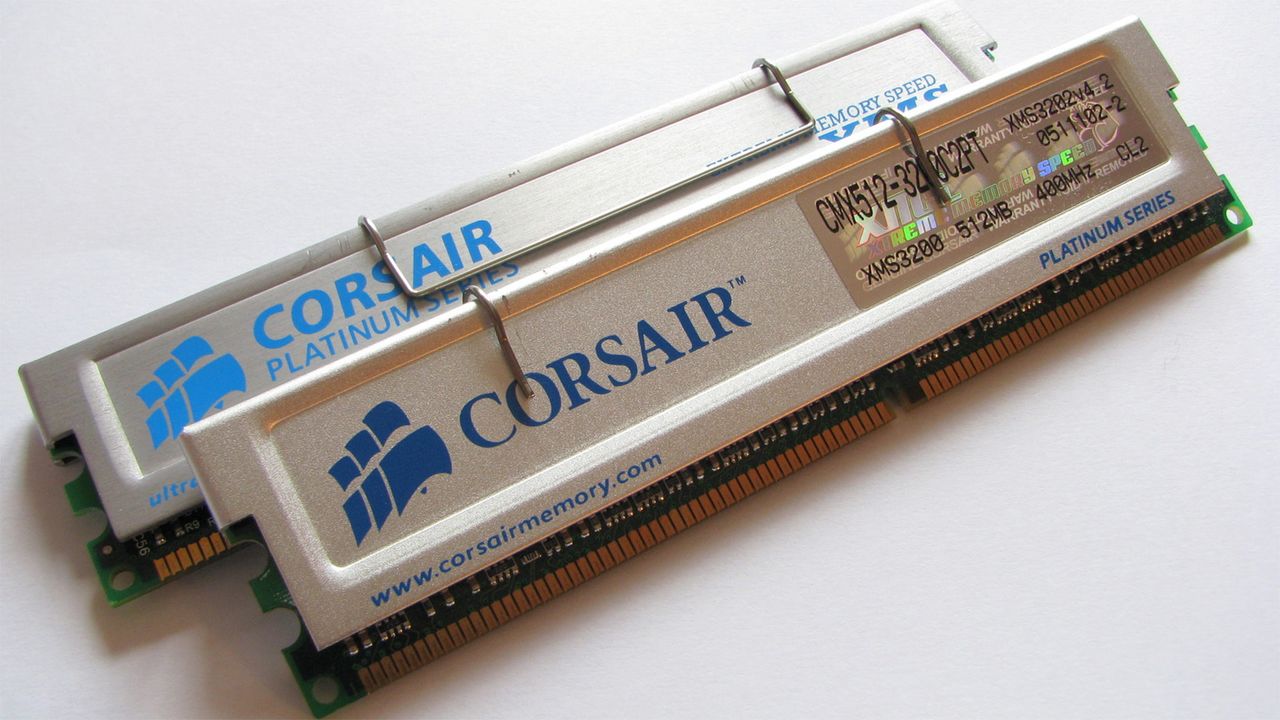
The RAMpocalypse is hitting enthusiasts hard. We recently reported on the crisis seeping down to affect supplies of the decades-old DDR2 gen RAM. So it comes as no huge surprise that a well-known tech tinkerer has been inspired to look at the viability of Windows 11 on an even more ancient DDR1 platform. Step forward Omores, who demonstrates Microsoft’s newest OS running on a Core 2 Quad Q6600, using a DDR1 motherboard, supported by an ATI Radeon HD 4650 AGP graphics card. “The best part,” says our hacky hero. “It’s completely stable.”

Windows 11 on a DDR1 motherboard, with AGP support enabled from r/windows

DDR1 first became available to PC builders and DIYers at the turn of the century, replacing the aging SDR SDRAM. The DDR1 rollout began with data rates like DDR-200 and DDR-266, being the preferred choice over older platforms featuring PC100 or PC133 SDRAM. We don’t know the rated speed of the DDR1 sticks Omores used, as it isn’t shown, but DDR-400 was the best official non-overclocked standard (a couple of years later). It would make sense to use the best memory on a cherry-picked older system like this.

Other key components of this age-defying Windows 11 PC build include an ASRock ConRoe 865PE motherboard. This is regarded as something of a legendary board as it bridged generations and allowed folks to use the latest Core 2 Duo and Core 2 Quad chips from Intel while keeping their DDR1 RAM and AGP graphics cards. It isn’t only today that PC DIYers have cared deeply about component longevity.

The last significant component in this DDR1 system that we were told about was the ATI Radeon HD 4650 AGP graphics card. This seems to have required the most wrangling to make it work with Windows 11 / modern software. However, Omores reveals that “With some 'hacking' ... AGP 8X is fully functional and H.264 hardware decoding is active.” The key was finding, then crowbarring, ATI’s Windows 7 64-bit drivers from 2012 onto the system.

Once some details of the setup were confirmed in the video using tools like CPU-Z and GPU-Z, Omores showed the ‘fresh’ Windows 11 DDR1 system running modern browsers, with embedded video and hardware decoding. A handful of games and 3D benchmarks were also shown running without glitches. Last but not least, the system did indeed run Crysis.

In a later comment on the Reddit post, Omores elaborates on how to install the ATi driver on Windows 11 and shares a more detailed video link. “I like that Windows 11 is rock stable on these older systems with no UEFI whatsoever and only ACPI 1.1,” adds the adventurer in older PC tech. “A lesser-known fact is that Windows 11 actually officially supports BIOS systems via Windows 11 IoT, so it's kind of expected to run smoothly.”

✇Tomshardware

Microsoft extends free Windows 10 security updates for a second year — program now ends on October 12, 2027

Microsoft has extended its free consumer Windows 10 Extended Security Updates (ESU) program by a year, pushing the cutoff for critical security patches to October 14th, 2027. The change came without any actual announcement, appearing instead in an edit to Microsoft's Windows 10 ESU support page. Devices already enrolled roll over to the new date automatically, with no action required from users. The program was originally set to expire on October 12th, 2026, one year after Windows 10 reached end of support on October 14th, 2025. With the extension, however, users who can’t or won’t move to Windows 11 now have a second free year of patches.

Speaking to BleepingComputer, Microsoft said that the change reflects “our ongoing commitment to helping customers stay secure during the transition,” adding that the extra year gives users “more time and flexibility to find the best PC for their needs while keeping them protected.”

In terms of enrollment, nothing has changed: users can enroll for free by syncing their PC settings to a Microsoft account through Windows Backup, by redeeming 1,000 Microsoft Rewards points, or with a one-time payment of $30. Users in Europe can enroll at no cost simply by signing in with a Microsoft account, a concession Microsoft made after pushback from consumer advocacy groups over its original requirements. A single ESU license covers up to 10 devices tied to the same account.

Microsoft's consumer program is limited to personal devices, however. Systems joined to an Active Directory domain or to Microsoft Entra, or managed through Mobile Device Management, are corporate-controlled and therefore not eligible. Personally owned machines that are only Entra-registered — e.g., a work account added to a personal device, rather than the device itself being organization-owned — still qualify.

Windows 11 has surged to roughly 73% of desktop share against Windows 10’s 26%, so it’s clear that the broader migration is working. Those users still on Windows 10 are increasingly the difficult edge cases, with around 400 million active PCs unable to officially upgrade to Windows 11 because their hardware fails its TPM 2.0, Secure Boot, or supported-processor requirements.

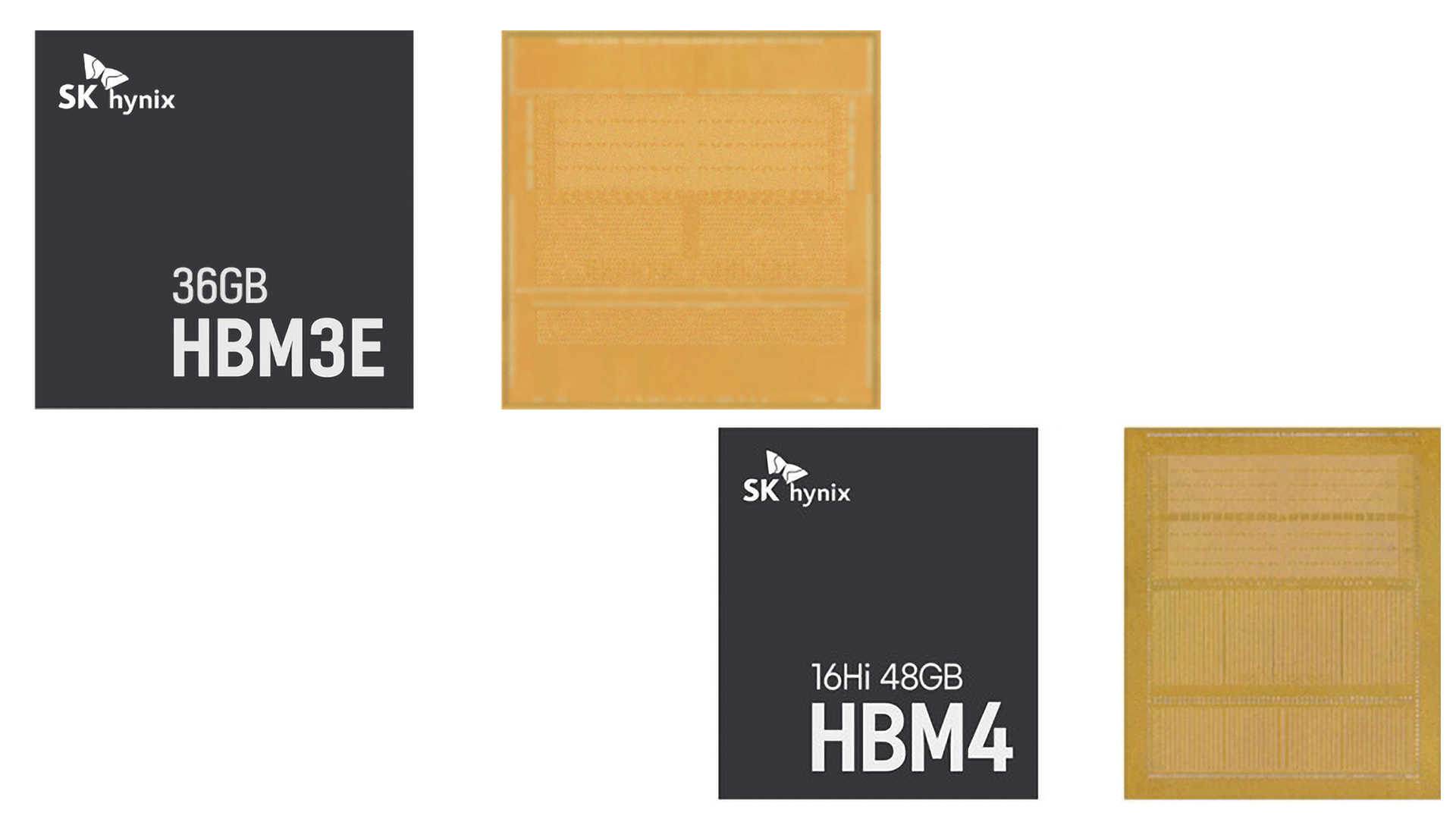
Users of those machines face a choice of remaining on unsupported Windows 10 or upgrading their hardware outright. But thanks to the AI-driven memory shortage, doing so has never been more expensive: DRAM contract prices have roughly doubled since early last year (and are expected to double again) as Samsung, SK Hynix, and Micron divert wafer capacity toward high-bandwidth memory for AI accelerators.

IDC expects PCs, tablets, and smartphone prices to rise 10% to 20% through the end of 2026, with memory now accounting for a far larger share of a system's bill of materials than it did two years ago.

For users unwilling to buy new hardware at current prices, some third-party options remain. The security firm 0patch has pledged to provide unofficial Windows 10 micropatches through 2030, and Linux migration efforts such as the End of 10 initiative continue to court holdouts whose machines can’t run Windows 11.

✇Tomshardware

Microsoft is reportedly testing Copilot+ AI features with discrete GPUs instead of NPUs — a feature available on Windows App SDK with a Windows Insider Experimental Channel build and Developer Mode turned on

Microsoft is experimenting with Windows AI features on non-Copilot devices, finally allowing AI features to run on discrete GPUs. This move expands its user base and gives more users access to Windows 11 local AI capabilities.

❌