阅读视图

发现新文章,点击刷新页面。
✇Tomshardware

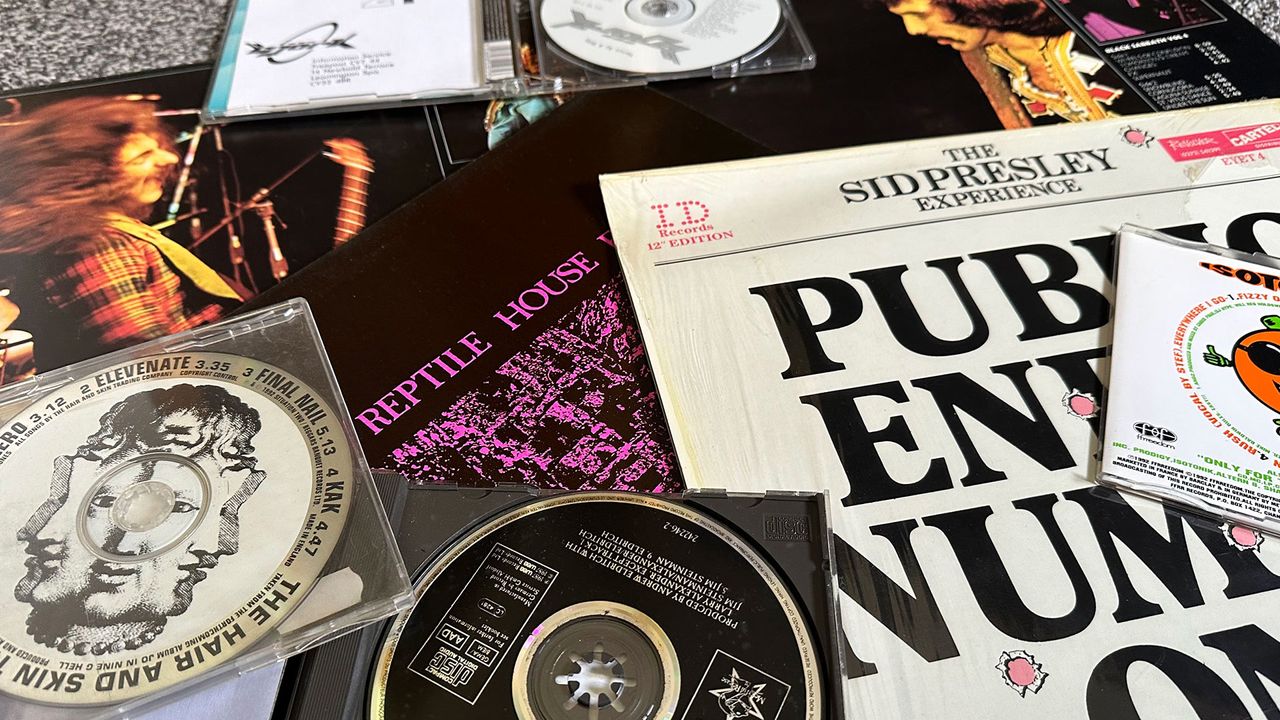
Sales of CD and vinyl music sees strong resurgence amid physical media backlash — US sales of ‘retro media’ were up 59% and 18%, respectively, in H1 2026

作者 Mark Tyson

There was good news for the U.S. recorded music industry this week, as the Recording Industry Association of America (RIAA) announced revenues outpaced inflation in H1 2026. “U.S. recorded music revenue reached $6B in the first half of 2026, up 6.9%,” noted the association. Probably more interesting, though, is that consumers have been seriously splashing cash on retro or legacy physical audio formats. A strong resurgence in CD and vinyl music sales saw both up double figures in the latest figures. “Physical revenues jumped 25.9%, powered by 17.7% vinyl growth and a 58.6% increase in CDs,” reported the RIAA.

With the extremely strong headline growth in ‘retro’ formats, one could be excused for thinking consumers are pulling back from digital music distributors like Spotify, Apple Music, YouTube Music, and so on. However, the RIAA underlines that “every major revenue category grew, reflecting a healthy and increasingly diversified marketplace.” While we focus on streaming, this digital segment generated $4.9B in H1 2026, up 4.7% and remaining the largest source of recorded music industry revenue. Other digital stats worth highlighting are the 6.4% growth in paid subscriptions, reaching $3.4B, and the 3.7% growth in free streaming, reaching $900M.

Returning to physical music media, the RIAA characterizes this resurgence as “continued fan excitement with different ways to experience music across an increasingly varied marketplace.” Indeed, I have seen more and more tempting special edition re-releases and remasters on CD and vinyl, for bands I enjoy listening to.

Overall, the numbers do seem to suggest that the boom in physical music distribution isn’t conclusive evidence that consumers are rejecting how the music streaming industry is changing its offerings (pricing, catalogs, etc). However, there may indeed be some backlash here, as we have seen in the TV/movie streaming business. Some consumers are increasingly frustrated with video streaming offerings and are building up home media catalogs by purchasing DVDs, Blu-rays, etc. We’ve started to see a bit of this in video gaming, too, as the high-profile case regarding Sony PlayStation digital game ownership has stirred some gamers into action.
✇Tomshardware

GeForce NOW exploit lets you access the full Windows desktop through a simple file swap — Modder runs local AI models on Ultimate tier with 48GB of VRAM and no restrictions

Nvidia's GeForce NOW cloud gaming service has been a popular way to access your games on the go without worrying about hardware. It has a free tier with titles like Fortnite, not even requiring a purchase, but the paid subscription enjoys much better specs and rate limits. As such, using the "Ultimate" tier, modder Zortos was able to gain full access to the Windows desktop inside GeForce NOW, allowing him to use it as a normal computer that can (ironically) run local AI models on it.

LM Studio on GeForce NOWGemma 4 31B (41 TPS) on Ultimate Tier pic.twitter.com/kspmKmunFlAugust 7, 2026

For context, GeForce NOW is only meant for gaming; Nvidia does not advertise it as a general, all-purpose cloud streamer like Shadow PC, for instance. Hence, doing all this is certainly against the terms of service, and you run the risk of your account getting banned. With that being said, ethically, you are paying for renting hardware, so trying to gain desktop access is predicated on how far your own moral scruples allow you to go.

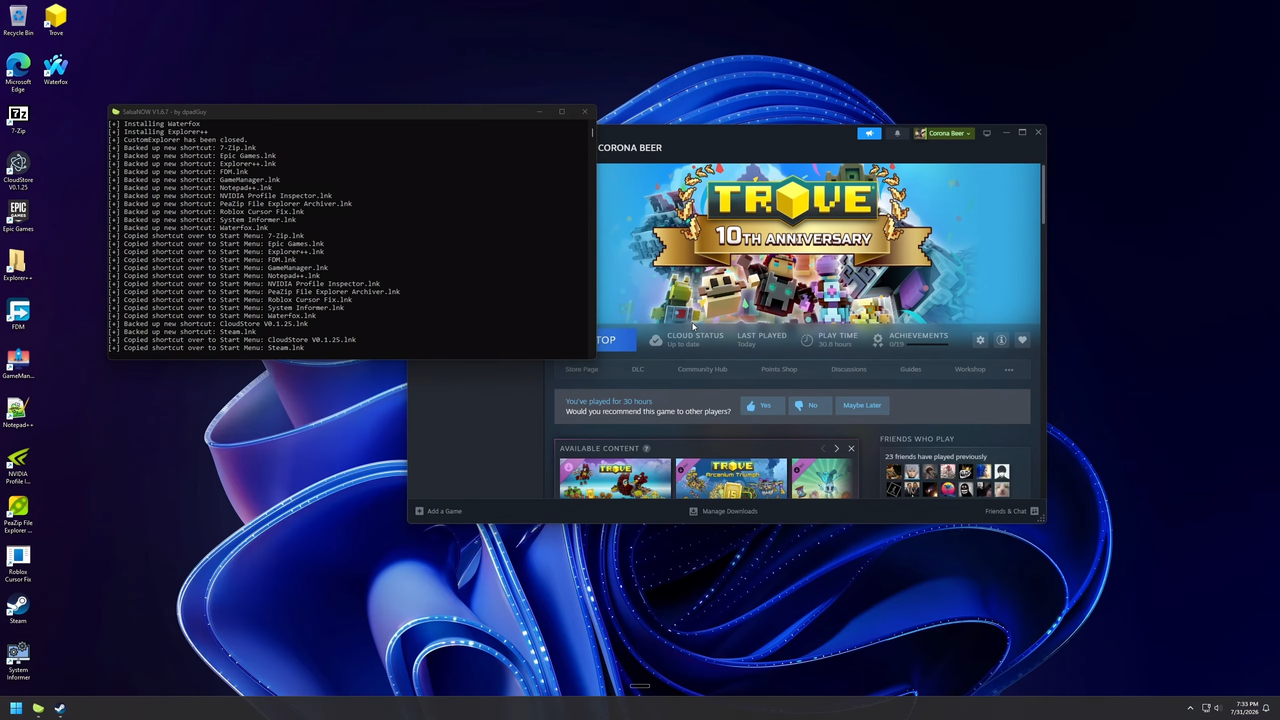
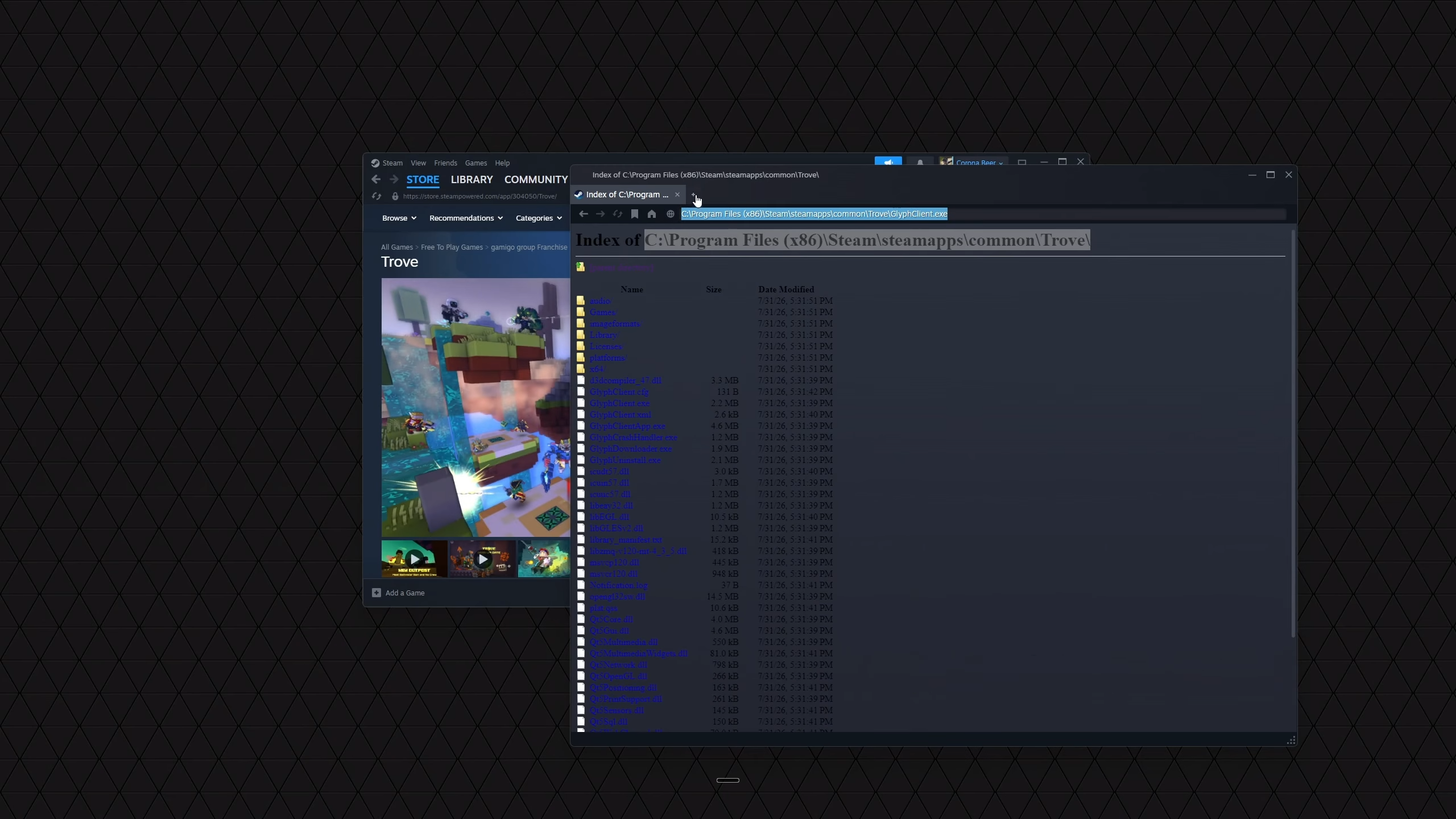
Anyhow, the exploit begins with an I2P (Install-to-Play) game that you download from Steam — Zortos uses Trove. You click on the publisher's name to open the built-in browser, from where you go to your C: drive through the address bar and essentially hijack the index. You open the steamapps folder that was just created for Trove and copy the path of the main executable from the contents.

Gaining desktop access in GeForce NOW

(Image credit: Zortos on YouTube)

This file is replaced with a decoy that deceives Steam into thinking you're actually starting Trove when you click on the "Play" button. In reality, it's a modified executable developed by another modder, dpadGuy, that just opens the desktop instead. Once inside, it really is the full Windows environment with no apparent restrictions. The video below even shows Zortos installing Wallpaper Engine and customizing the taskbar.

However, users have reported some discrepancies between their experiences, such as GeForce NOW simply closing the session when it sees the File Explorer open, or the service blocking file downloads, which is a necessary step to replace the executable. Zortos insists that the exploit is still working on his X account, and he even says that if you have persistent storage, the exploit will remain active between different sessions.

Keep in mind that you need a paid tier of GeForce NOW to be able to pull this off, and even if you do, it's against Nvidia's ToS as you're not allowed to venture beyond games. Running local AI models on a setup like this doesn't make sense because of the session rate limits, but the Ultimate tier Zortos used does give you access to 48GB of VRAM (thanks to an RTX Pro 6000D) so it might be worthwhile for some.

✇Tomshardware

400 domains used for illegal 2026 World Cup streams seized by US Justice Department — operation is five times the scale of the previous crackdown

The U.S. Department of Justice has announced the seizure of nearly 400 domains that were illegally streaming live matches from the 2026 FIFA World Cup. Running under “Operation Offsides,” the effort is being led by the National Intellectual Property Rights Coordination Center alongside Homeland Security Investigations, with a seizure warrant filed in the Eastern District of Virginia. The total number of domains taken down to date is roughly five times the amount taken down during the 2022 Qatar tournament, and HSI has warned that the streams can expose viewers to malware and connections capable of stealing financial data.

The 2026 tournament is being co-hosted by the U.S., Canada, and Mexico, giving U.S. authorities firmer jurisdiction than they held when the event was held in Qatar. Investigators traced the streaming infrastructure to servers in Peru and Bulgaria, with supporting takedowns in Croatia, Romania, Poland, and Colombia. FIFA identified the offending domains, and beIN Media Group, NBCUniversal, the Motion Picture Association's Alliance for Creativity and Entertainment, UFC, and Warner Bros. all helped supply further information.

Assistant Attorney General A. Tysen Duva of the Justice Department's Criminal Division said the seizures reflected the country's duty “as a host nation to protect the FIFA World Cup from criminals.” Domain seizures are a limited tool against operations that rotate addresses and fall back to redundant copies, hence why enforcement bodies suddenly pounce on hundreds of domains at once rather than one at a time.

Authorities have increasingly gone after the people running the streams and, in some cases, their customers. U.S. courts have separately tested the limits of piracy liability, with the Supreme Court ruling that ISPs aren’t liable for their subscribers’ infringement in March. Meanwhile, a Greek court jailed a torrent-site operator for five years last year, and an Irish court ordered Revolut to unmask more than 300 subscribers of a pirate IPTV service in March.

A 2021 Webroot analysis of illegal sports-streaming sites found that 92% carried some form of malicious content, typically delivered through the ad networks that fund the operations. Following the 2024 World Cup, Microsoft Threat Intelligence traced a December 2024 maladvertising campaign that reached nearly 1 million devices back to illegal streaming sites, where redirectors embedded in video frames funneled users through several hops to information stealers such as Lumma and Doenerium hosted on GitHub. Microsoft found the campaign hit both consumer and enterprise machines.

Infections like these often need nothing more than a simple click on a play or unmute button to start the redirect chain, with no download prompt and no need to enter any credentials. Operation Offsides remains active, and the Justice Department said it will continue to pursue the operators behind the seized sites.

❌