❌

普通视图

发现新文章,点击刷新页面。
昨天 — 2026年11月2日IT News

California county deploys autonomous firefighting drones with 500-gallon foam payload to attack wildfires

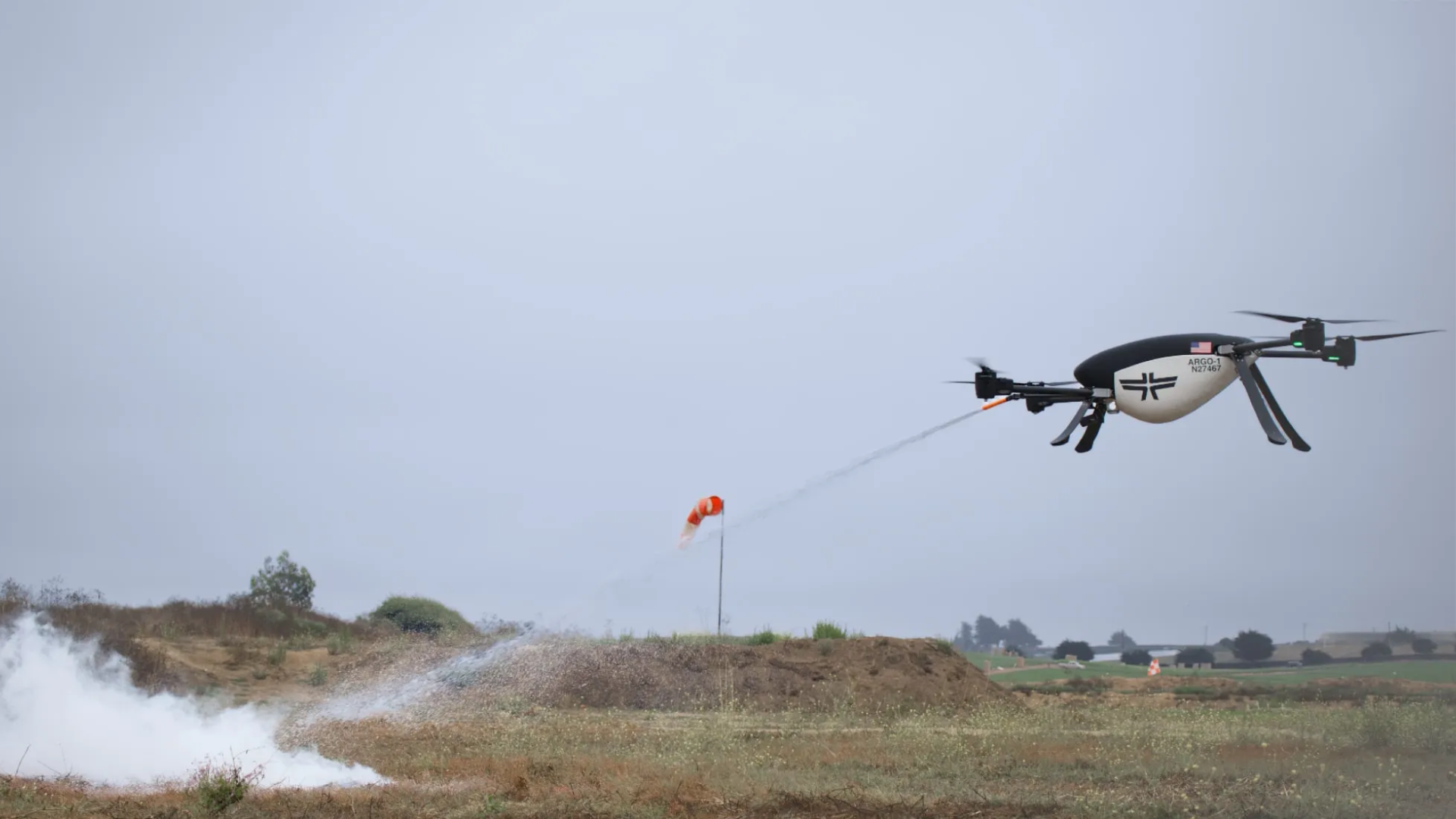
The San Bernardino County Fire Protection District has just acquired a fleet of five autonomous drones that will allow it to battle wildfires before they become worse. According to a press release (via PR Newswire), the drones will be provided by Seneca Systems, which will deploy the drones and a mobile operations base. These units also come with autonomy software, allowing a single pilot to supervise the entire team, which is capable of delivering over 500 gallons of firefighting foam to a target area.

BREAKING: The largest county in America by land area is deploying autonomous drones to fight wildfires.@Seneca_Systems has secured a deal with San Bernardino County Fire to deploy five autonomous firefighting drones, a mobile operations base, and autonomy software designed to rapidly suppress newly detected wildfires before they spread.The five-drone strike team can deliver over 500 gallons of finished firefighting foam, with a single pilot supervising multiple aircraft. The system is designed for rapid response, including nighttime operations and difficult-to-access terrain.San Bernardino County Fire Chief Dan Munsey has set an ambitious goal to stop 90% of fires before they grow beyond 10 square feet, with Seneca's autonomous rapid initial attack capabilities potentially playing a key role.The drones are expected to enter service ahead of the 2027 wildfire season.October 30, 2026

San Bernardino is the largest county in California and the United States by land area. Given the fact that the state is prone to wildfires, especially during spring, summer, and early fall, autonomous firefighting drones would help its firefighters cover more area and address localized fires before they become larger threats. “Our goal is to stop 90% of fires before they grow larger than 10 square feet,” San Bernardino County Fire Protection District chief Dan Munsey said.

"Seneca's aircraft give us a capability that has never before been possible: autonomous rapid initial attack. We've been working closely with Seneca for over a year to develop a system that meets our needs. This product will help us to get more quickly to parts of the County that are at the highest risk and help make those communities safer. It force-multiplies what our firefighters can do, and it keeps them safer while they do it."

The five-drone strike could be launched from anywhere, and they’re capable of reaching starting fires in under 10 minutes of detection. More importantly, the drones’ onboard sensor suite allows firefighters to operate them 24/7, allowing them to get to hard-to-reach areas even at night. This should help Munsey achieve his target of putting out wildfires before they become larger, difficult to control, and a threat to the county’s two million residents. More importantly, giving one firefighter the ability to direct five units could potentially free up other firefighting crews to respond to other incidents.

Civilian first-responder agencies have been using drones to augment their operations for years, but this is one of the first instances that an AI-powered Seneca drone will be deployed to support their operations. Nevertheless, Drones-as-First-Responder (DFR) systems have increasingly become more popular in the U.S., with both startups, like BRINC, and established companies, such as Flock, offering units to cut 911 response times. We’ve even seen some states deploy “Campus Guardian Angel” drones to help neutralize school shooters.
College student unofficially breaks world record for fastest jet-powered drone with 491 mph aircraft built in his dorm

2026年11月1日 19:00

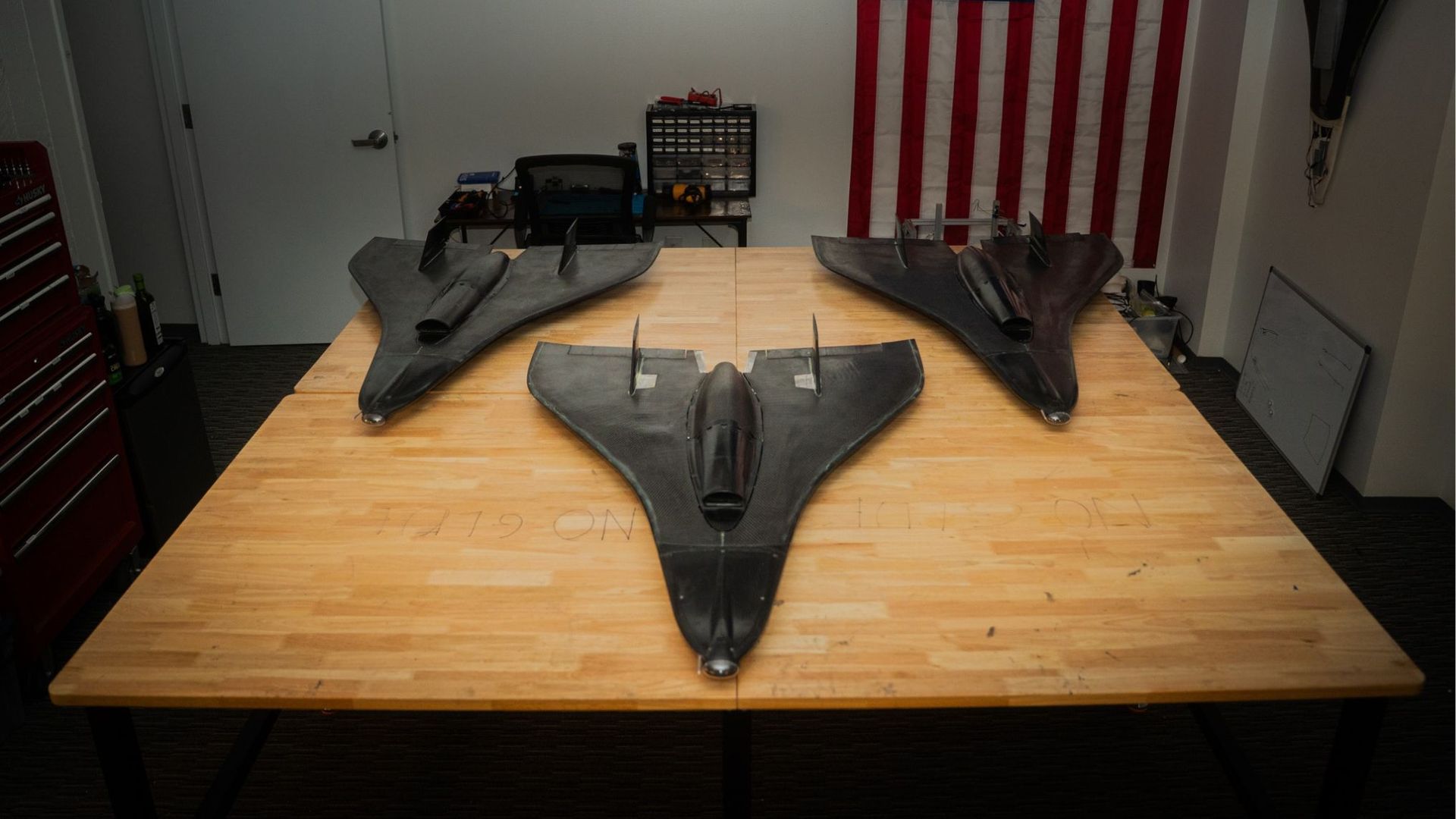
A new 'Reaper' jet-powered drone project just unofficially broke the previous drone speed world record of 465 mph by hitting 491 mph. Tomas Salvo is an aerospace engineering student at Georgia Tech, and his project was assembled in his dorm room. The drone is comprised of a custom-molded carbon fiber shell, laser-cut internal structure, and a 250N jet engine with a titanium 3D-printed nozzle, costing $13,000 to build. Tomas Salvo aims to win the $800,000 Boom Prize posted by Boom Supersonic CEO Blake Scholl.

My college dorm project just broke the world speed record.Reaper hit 790 km/h (491 mph) carrying a 1.2 kg (2.6 lb) payload. These 3 Reapers are now the world’s fastest small jet-powered drones. Each of them can hold that speed for 4 minutes on a full tank.Reaper can be rail- or truck-launched, climb to 2,000 m (6,600 ft) in under 20 seconds, then fly for 50 km (31 mi) at full speed.This is now a reliable and repeatable system. Future testing and small optimizations should push the top speed past 800 km/h (500 mph).October 30, 2026

Tomas Salvo’s Reaper project, which aimed to beat Niels Herbrich’s world record for the fastest jet-powered RC aircraft, went viral and caught the attention of Boom Supersonic CEO Blake Scholl, who sponsors the $800,000 Boom Prize ($750,000 cash, $50,000 Boom stock). The prize’s conditions are: First, pass Mach 1 for at least 5 seconds while climbing or level, not descending. Second, it must be an air-breathing aircraft with no on-board oxidizers or rockets for propulsion. Third, it must land intact, and lastly, the same aircraft (wings, fuselage, engine, and flight computer) must fly twice in one day. The participants must be individuals or teams, not corporations or people backed by venture capitalists or government funding; they want garage hobbyists.

We recently covered Mach Initiative’s Kingchaser, a 3D-printed jet-powered RC aircraft also aimed at beating Herbrich’s world record. They were beaten by Tomas Salvo, but Tomas’ run was not officially recorded by Guinness. The Kingchaser project was inspired by the Boom Prize; however, since they are not US citizens, they are not eligible to win it, but are still aiming to have an officially recorded Guinness World Record. The Reaper has a smaller engine than the Kingchaser at only 250N, compared to the Kingchaser’s 300N, but achieved a flight speed of 491 mph, beating the Kingchaser’s test flight of only 273 mph, as the latter did not have enough space to accelerate. However, Mach Initiative estimates a top speed of 550 mph if they had the space.

While the Reaper isn’t made out of PETG like the Kingchaser, it still utilizes some 3D printing, albeit in a much more expensive fashion — it has a titanium 3D-printed nozzle for its engine that replaces the stock nozzle, allowing the engine to sit further forward, improving the center of gravity without adding ballast on the front, weighing in at a total of 11 pounds. It’s made out of custom-molded carbon fiber on the outside with a laser-cut internal structure, all designed by Tomas Salvo and assembled in his dorm.

The Reaper was able to achieve its 491 mph speed while carrying a 1.2kg payload, with Tomas’ post further explaining that it could hold the speed for four minutes on a full tank, climb to 6,500 feet in under 20 seconds, and fly for a distance of 31 miles at full speed.

Before the Boom Prize, Tomas was able to land a few sponsorships that got him a JetCat 250N engine; however, we’re not sure how this fits with the Boom Prize’s rules barring corporate sponsorship. Since the Boom Prize's announcement, however, Tomas has resorted to crowdfunding, asking for $50,000 in August after raising $20,000, the source of which he did not disclose.

Both the Kingchaser and the Reaper are aiming at Herbrich’s world record, but they are still far from the 1,234.8 km/h or 767.3 mph Mach 1 speed that they need to surpass in order to win the Boom Prize. Mach Initiative responded to Blake Scholl’s X post about the Boom Prize, saying “challenge accepted,” but the rules may make them ineligible for the prize, making the Reaper a real contender for the $800,000, as it currently sits unrivaled by any other US project.

昨天以前IT News

Taiwan working on autonomous drone swarms to counter China’s increasingly aggressive grey-zone military tactics

2026年10月28日 19:30

Taiwan’s Ocean Affairs Council is working on an autonomous system that would allow drone fleets to coordinate and execute missions without human intervention in response to "grey-zone" activities carried out by China. According to the South China Morning Post, the council is working with the National Cheng Kung University, which has already completed simultaneous flight simulations of two drone fleets, with each fleet comprising 10 units. This is already the second step of the process, which has shifted from individual aircraft control to the coordination of two drone detachments.

This project is designed to help Taiwan’s Coast Guard Administration (CGA) to counter Beijing’s grey-zone tactics in the waters surrounding the island nation. There have already been instances of civilian Chinese ships damaging undersea cables that Taipei relies on, with the CGA increasing its defensive patrols around 24 undersea cables and closely monitoring nearly a hundred China-linked boats. Despite that, Chinese “research vessels” continue to loiter over Taiwan-U.S. undersea cables, mimicking the activities of Russian trawlers in the Atlantic.

“The next stage will involve hardware-in-the-loop testing, prototype integration and flight trials over actual maritime areas to assess reliability under different sea and weather conditions,” the council said. The researchers programmed the drones to have a minimum separation of 100 feet in 3D space, and they’re also incorporating leader-follower formation flying and dynamic obstacle avoidance. This should allow them to respond to quickly changing conditions out in the open sea and even deal with unexpected hazards.

More than that, the autonomous system Taipei is working on would let different types of drones coordinate their movements, divide tasks, and plan routes, primarily for maritime surveillance. This is especially important as it would allow them to use different types of drones to accomplish various missions, much like how different air forces use different aircraft types.

The project is currently focusing on three Western-made drones — the Jump 20, V-BAT, and Flexrotor. In fact, the Ocean Affairs Council just received the V-BAT, a VTOL drone built by U.S. defense firm Shield AI. This unit can take off vertically from the relatively constrained deck space of non-aircraft carrier ships and offers an endurance of over 12 hours for extended missions, making it ideal for the CGA, as it would not need to make major renovations to its ships to accommodate these drones while extending their reach.

Ukraine rescues wounded soldier using drone in daring 'world's first' UAV evacuation of a human

作者 Mark Tyson
2026年10月20日 18:00

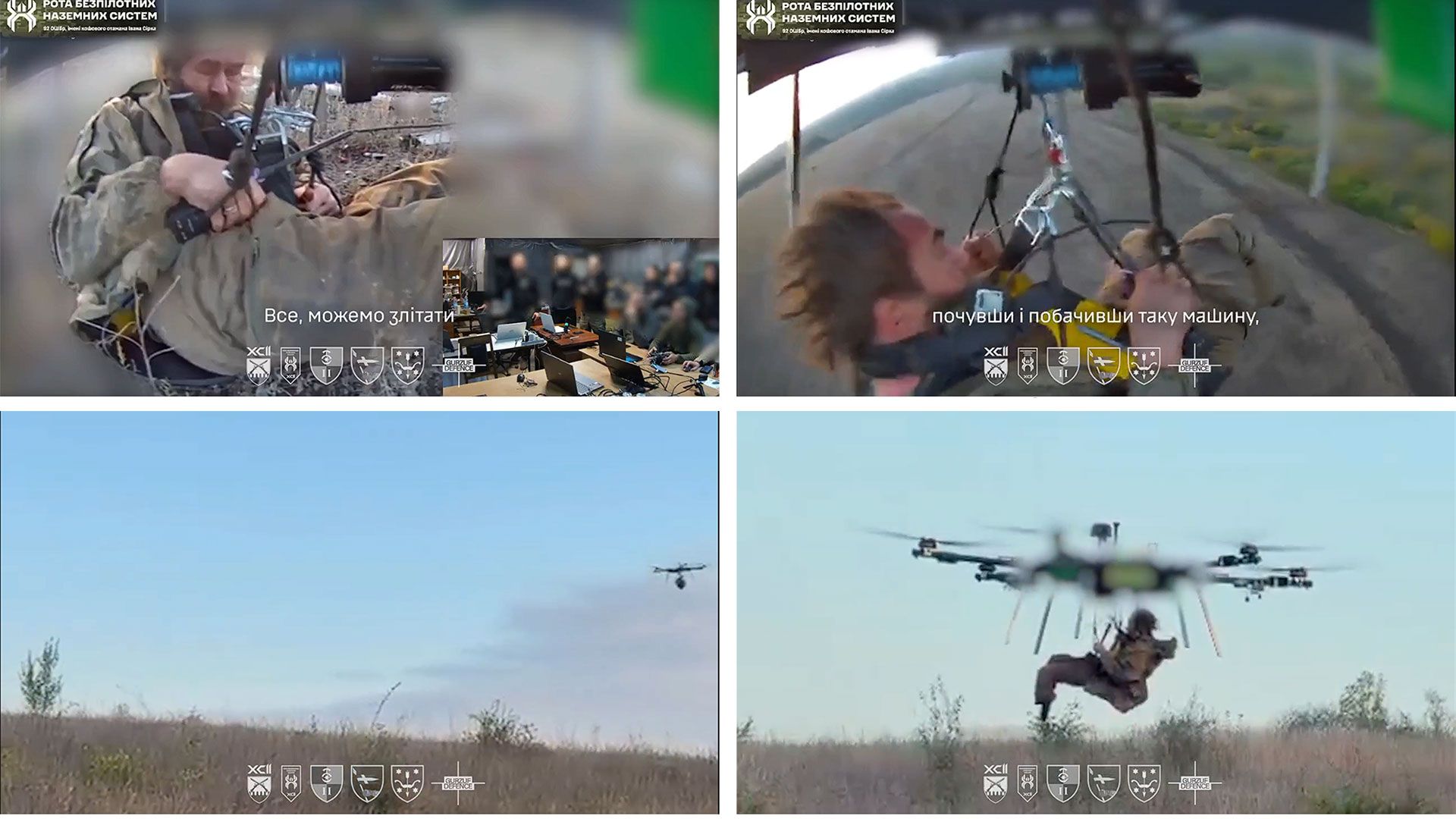
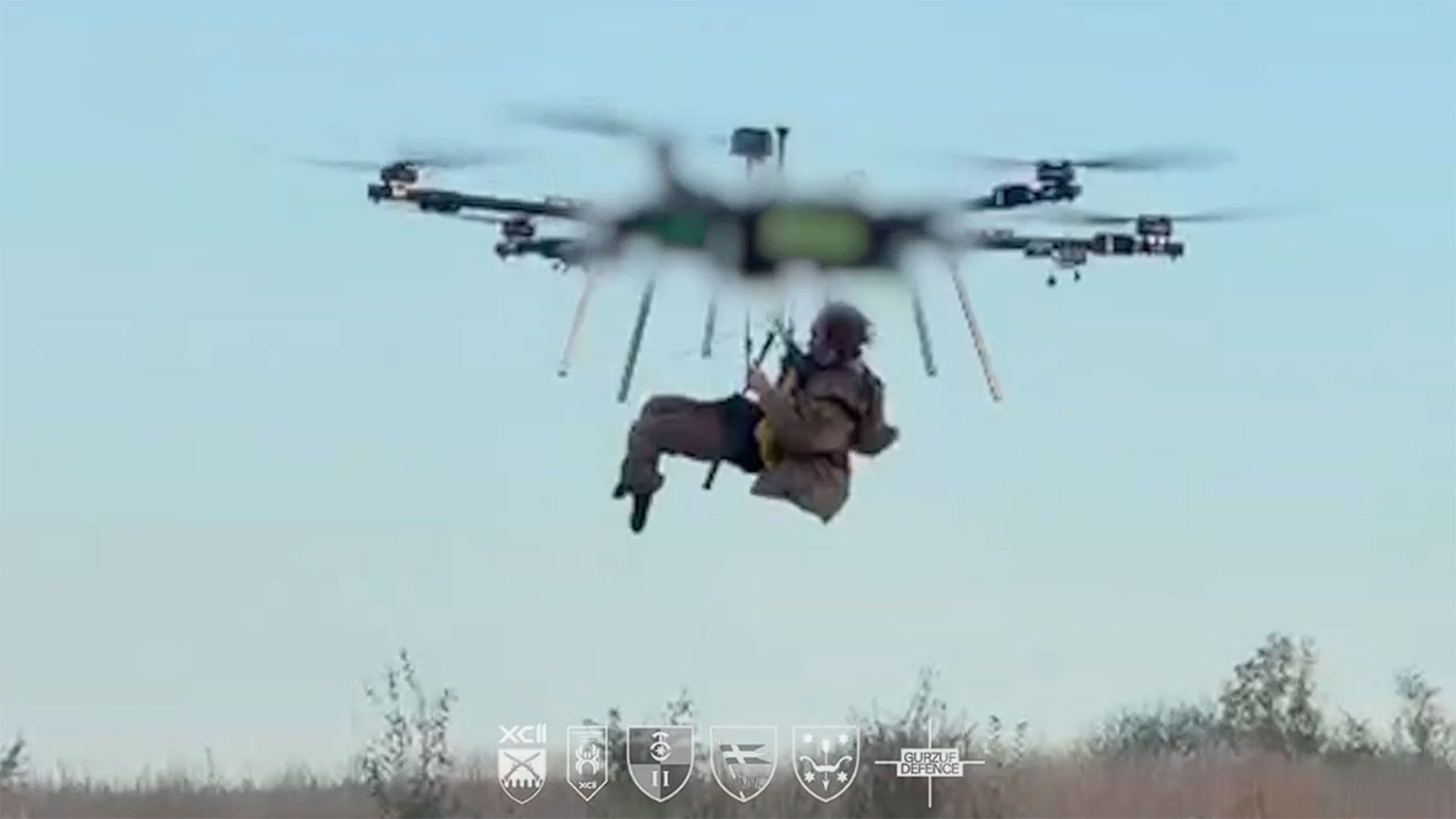
The Ukrainian military is claiming a world’s first after using an unmanned drone to rescue an injured soldier on the eastern Kharkiv front. Ukraine’s United24 news shared a video of the historic first. It also explained that the wounded infantryman was stuck in a heavily mined area, guarded by Russian kamikaze drones.

🔴 HISTORIC FIRST: Ukrainian forces completed the first-ever aerial evacuation of an injured soldier from the frontline using a drone.Soldiers from the 92nd Assault Brigade and 30th Mechanized Brigade used a heavy Gurzuf Defence hexacopter to rescue the wounded infantryman from a heavily mined area.October 19, 2026

The above video starts with the Ukrainian drone locating the soldier, callsign ‘Kostya,’ in enemy territory. Various media reports suggest he was 11 miles (18km) behind enemy lines, at the mercy of Russian kamikaze drones, and perilously located in a minefield. Traditional land-based rescue was therefore not possible, but Kostya bravely agreed to be part of the first-ever human drone-lift rescue plan.

After being located, the injured infantryman clipped himself into a harness. He said, “That’s it, we can take off,” when he was fully buckled into the rudimentary-looking harness. UAV operator, callsign ‘Black’ from the 20th Mechanized Battalion, 30th Infantry Brigade, then appeared in the video and explained: “We were constantly in touch with him."

Ukrainian drone rescue key facts:

  • Drone used: Gurzuf Defense hexacopter
  • Drone capable of carrying 130kg (~287 pounds)
  • Drone’s known range: it has previously transported 90kg (~198 pounds) loads up to 25km (16 miles)
  • Infantryman weight: 80kg (~176 pounds)
  • Rescue distance: 8km (11 miles)
  • Hazards: enemy kamikaze drones, mines, gravity, many more

Wounded soldier rescued using hexacopter drone

(Image credit: United24 news video)

Being in constant touch with the operations HQ would have been reassuring. However, the surrounding presence of a fleet of Ukrainian support drones, both kamikaze devices and UAVs with anti-drone nets, was probably most comforting.

Eventually dropping back into safe(r) territory, after what must have been an arduous, nerve-wracking journey, control said, “Congratulations, you’re on the ground,” to Kostya, as he touched down in a field. Then the control room erupted into applause. They got their man back safely, and he is now being treated and is in recovery.

UAV operator ‘Black’ was delighted with the concerted efforts that brought back this wounded soldier. “A lot of people were involved, and everything worked out for us,” he said. Importantly, this may be the start of a whole new system of personnel evacuations for wounded and/or stranded soldiers using drone technology, indicated brigade leader ‘Napalm’ toward the end of the video.

F-22 Raptor pilot successfully demonstrates command of 'wingman' fighter drone in simulated combat

2026年10月18日 23:02

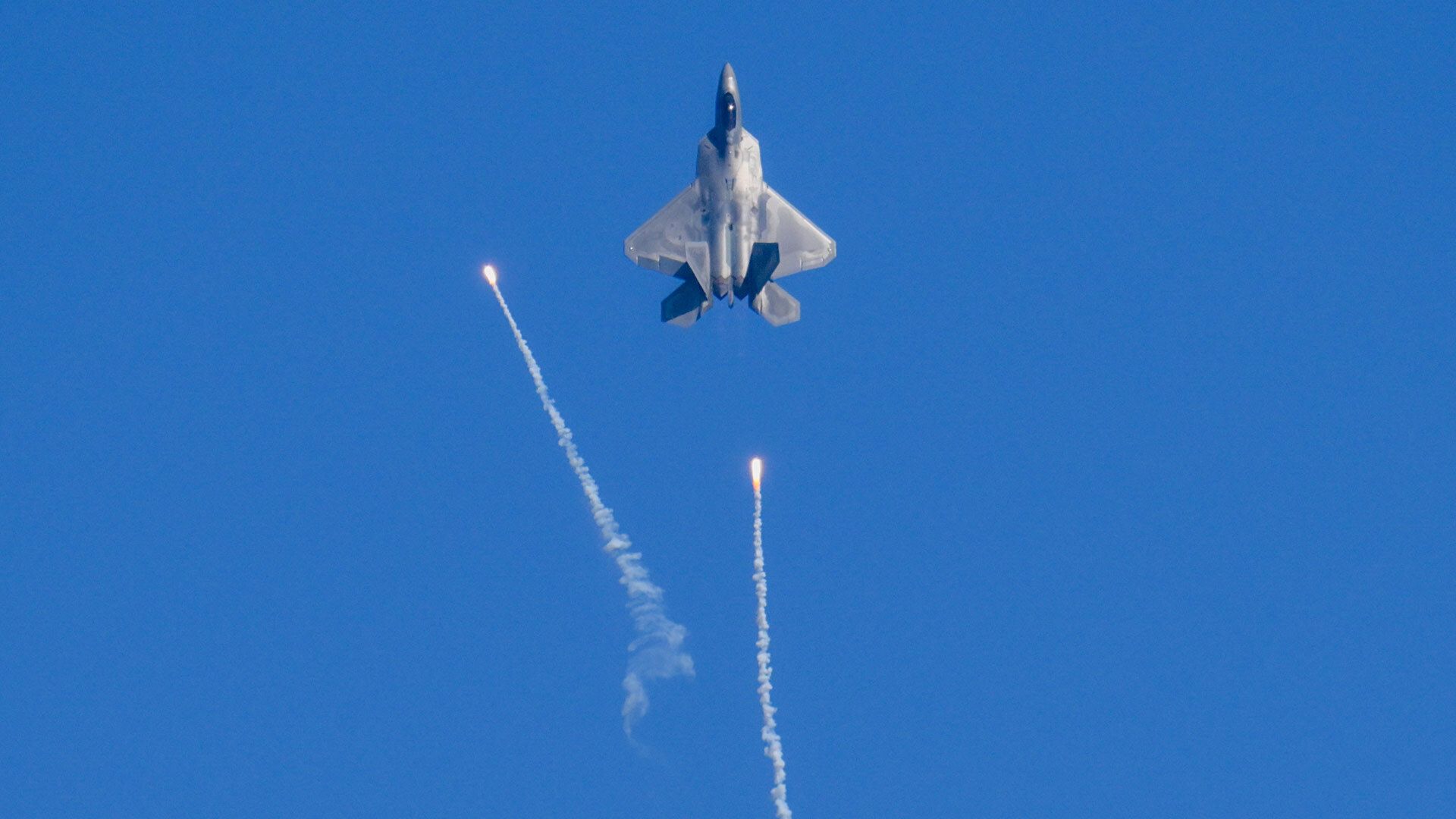
The U.S. Air Force has just successfully conducted an airborne test where an F-22 Raptor pilot directed an Anduril YFQ-44A Fury drone during simulated combat. According to The Defense Watch, the fighter pilot gave tactical commands to the autonomous wingman, which then interpreted them into a series of tasks and flight maneuvers to achieve the desired outcome.

The successful test is part of the USAF’s Collaborative Combat Aircraft (CCA), which seeks to integrate drones into fighter squadrons. These uncrewed aircraft must be able to respond to the fighter pilot’s tactical commands and then operate autonomously, though. That’s because fighter pilots already have a heavy workload — flying their own aircraft, managing sensor data, threat assessment, and weapons release decisions — so requiring them to manually fly a drone is next to impossible. Command integration means that the F-22 Raptor pilot could assign the Fury drone a specific tactical task, like monitoring for and engaging enemy air defenses, while they focus on the primary mission, such as taking out enemy fighters.

This does not mean that the USAF can start deploying drones alongside fighter jets in frontline squadrons, though. Successful command integration is just the first of several hurdles that the program must go through before it can achieve operational status. The program needs to determine the limits of the drone’s tactical autonomy, safe flight control, and weapons authorization, all of which are separate functions that must be tested accordingly. The Air Force also needs to see how the drone performs with electronic interference, and how it could continuously operate if it cannot receive instructions due to interrupted communications. Aside from figuring out the drone’s capabilities and incorporating it into fighter doctrine, it must also be integrated into the USAF’s logistics and supply chain. This includes drone maintenance and service, weapons handling, deployment procedures, and forward airbase operations with limited infrastructure.

Even though the latest test is seemingly successful, the CCA still needs to go a long way before it can start operational deployment. Nevertheless, the USAF is intent on pushing the project forward, as it sees autonomous drones as a force multiplier for crewed aircraft, allowing a single pilot to command multiple jets to achieve missions at a lower cost compared to using all-crewed aircraft. Other nations, like Sweden and China, are also experimenting with a similar concept of having a single operator take command of multiple drones, but the most significant difference of the CCA is that it focuses on air power instead of ground-based operations.

DJI’s first battery-swapping dock gets drones recharged and back in the air in under 45 seconds

作者 Shane Downing
2026年10月18日 18:30

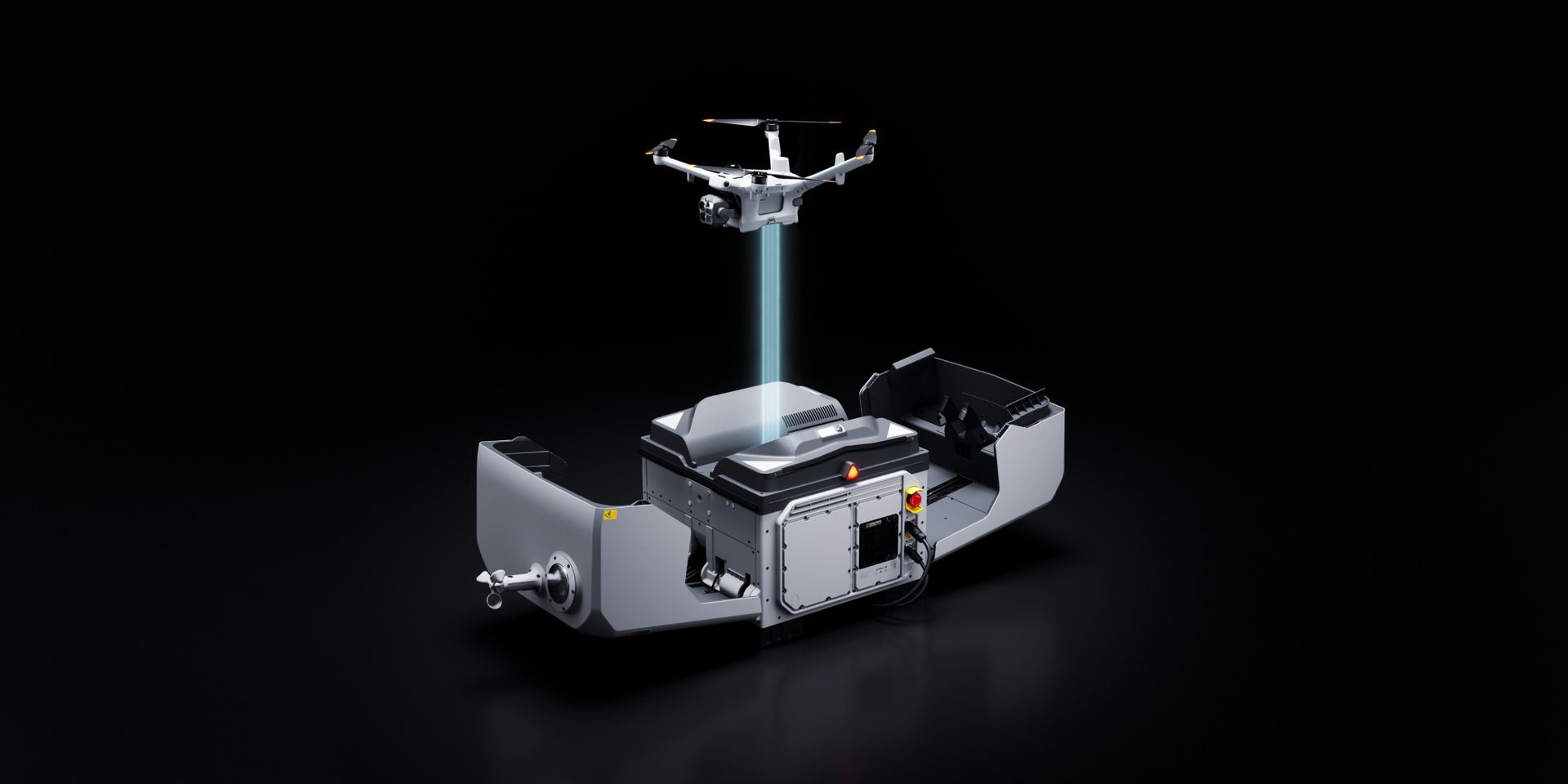
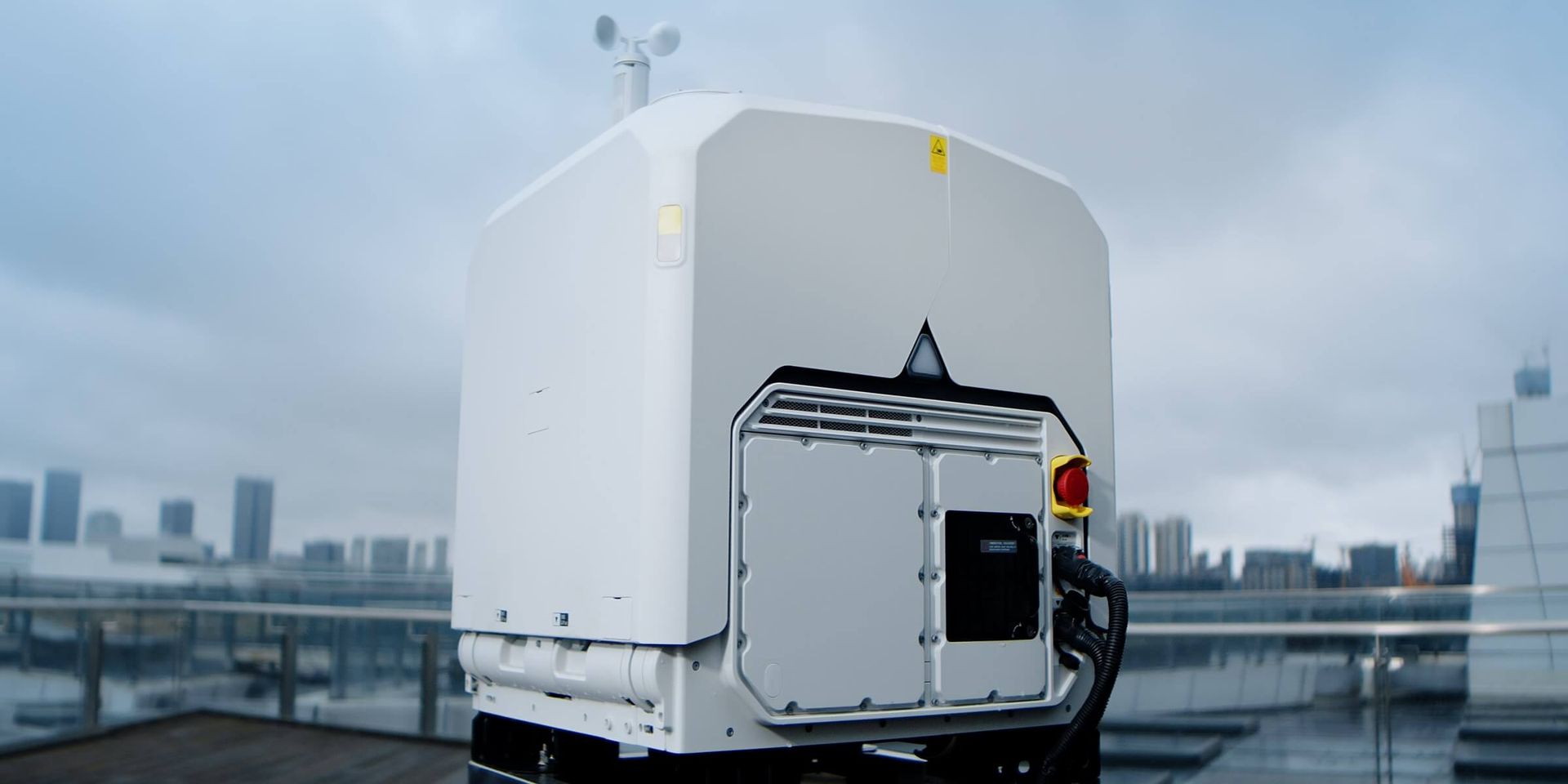
DJI has delivered a battery-swapping drone dock, the Dock 4, with an automated 25-second swap this week, according to a company press release. The dock bypasses the normal recharging process, which would take about 30 minutes, and DJI promises a turnaround of under 45 seconds from landing to takeoff. The drone-in-a-box solution is the first of its type by the company, although not in the industry, and is aimed at applications like emergency response but is not FCC-authorized or for sale in the U.S.

The company emphasizes the safety angle, pitching the Dock 4 as a “dock-as-a-first-responder (DFR)” solution. Its product page calls it “Always There, Always Ready.” Swapping the battery takes less than half a minute, and the drone is back in the air within 45 seconds of landing. The dock also charges two 925 g battery packs, rated at 260 Wh for 400 cycles, at once, estimated to take 27 minutes to get each from 15% to 95%.

DJI Dock 4 with its cover open and a Matrice 5TD drone hovering above it

(Image credit: DJI)

The packs also double as backup power, rated at about 4.5 hours each, in sequence. Additionally, with at least two packs loaded, the dock is able to continue swapping even when grid power is lost, although backup power doesn’t charge the packs. This configuration should enable a drone to handle back-to-back calls even in less-than-ideal circumstances. The new dock, 66 kg bare, also has the same 400 x 400 mm mounting holes as the Dock 3, but it only works with the Matrice 5TD drone and requires the DJI O4 Ground Station.

The Matrice 5TD drone is rated for almost an hour of forward flight, measured from 100% to 0% at 15 m/s and with no payload, with a few minutes less of hover time. It can move at up to 21 m/s, or 47 mph, but only in “FlyTo” tasks. It carries three 50 MP cameras: wide, 70 mm equivalent medium telephoto, and telephoto at 252 mm equivalent, which DJI calls 11x. It also has 1280 x 1024 native thermal and 2560 x 2048 in DJI’s UHR infrared mode, color night vision without a spotlight, and a laser rangefinder up to 3,000 m.

For sensors, it has rotating LiDAR, mmWave radar facing forward, up and down, and six-direction vision, and DJI says it is capable of detecting power lines at night. On-board AI allows for the detection of 17 object types, “such as cars, boats, or animals,” and DJI FlightHub 2 can search the feed by text or image and send alerts. The dock and drone are rated for temperatures from minus 40 degrees to 50 degrees Celsius (minus 40 to 122 degrees Fahrenheit) with IP56 and IP55 ratings, respectively. The drone is rated for winds up to 12 m/s, or about 27 mph.

For payload, the drone carries up to 450 g across three mounts for a speaker, spotlight, and parachute. The previous model, the Dock 3’s Matrice 4TD, has a lower-resolution 640 x 512 thermal camera, a 168 mm telephoto, a shorter 1,800 m laser range, and is only good down to minus 20 degrees Celsius (minus 4 degrees Fahrenheit). The drone upgrades are nice, but the new dock capabilities are the real selling point, especially for the intended applications. Currently, DJI partners in China are taking orders for a kit with the Dock 4, Matrice 5TD, and O4 Ground Station at 167,999 yuan, or about $25,000, for the hardware alone.

The new dock and drone sound great for other markets, but DJI’s own spec sheet has no FCC figures. This is likely because the FCC added all foreign-made drones and their critical components to its Covered List in December of last year. New models can’t get FCC authorization or be sold in the U.S. unless the Department of War or the Department of Homeland Security determines they don’t pose a security risk. DJI sued the commission earlier this year.

A separate FCC proposal published in August could pull previously authorized foreign drones that carry LiDAR or thermal sensors from sale, along with previously authorized docking stations. The FCC’s docket shows no final order on it as of Oct. 17, and the proposal would give sellers 180 days after Federal Register publication to stop importing and marketing covered gear.

SpaceX limits Starlink service for Ukraine’s high-speed military drones without prior warning

作者 Etiido Uko
2026年10月14日 21:04

Ukrainian officials have accused SpaceX of limiting its satellite internet services in the country, disrupting ongoing military and combat drone missions that rely on the technology, according to a Reuters report today, October 14. Presidential adviser Serhiy Beskrestnov said SpaceX has implemented a speed limit on its military-grade Starshield satellite terminals in Ukraine, hindering their operations at speeds above 100 miles per hour (160 km/h).

In a Telegram post on Wednesday, Beskrestnov said Elon Musk's company provided no prior warning before implementing the restriction. “Our defense forces did not receive a warning about this limitation, and this led to the disruption of several missions,” he wrote. The restriction specifically impacts the Starshield terminals in motion. The terminals, which are physically mounted onto mobile platforms such as drones and other military vehicles to provide high-speed, real-time communications during transit, have been crucial in guiding Ukraine's drone strikes that have decimated Russian logistics across occupied southern and eastern Ukraine.

Following the limitation, Ukraine's 7th Rapid Reaction Corps, deployed on the southeastern frontline, confirmed they had to cancel multiple missions. “According to our observations, during flights, the connection could drop for 10–20 seconds at speeds of just 110–120 km/h (68–75 mph). The drones kept moving, but these interruptions made them harder to control,” it told Reuters. Volunteer Serhiy Sternenko, citing military reports, said that the restrictions are tightening further, with connection drops occurring at speeds of just 60–70 km/h (37–43 mph). Sources in the country's defense ministry also stated that the limitation complicates logistics and drone operations.

While SpaceX has not provided a reason for the throttling, Ukrainian officials, including Beskrestnov, believe that the move is intentional, as it coincides with mounting pressure from Washington for Kyiv to halt its long-range drone strikes on Russian oil refineries after U.S. President Donald Trump called for an “energy ceasefire.” Musk posted on X on Saturday that “Zelensky has gone too far.” Ukraine is also striking data centers across Russia. The U.S. has been one of Ukraine's major allies since Russia’s full-scale invasion in 2022, providing billions of dollars worth of direct military assistance. Likewise, Starlink has been indispensable for Ukrainian battlefield communications; shutting it down would devastate the country’s frontline defenses.

Meanwhile, Ukrainian defense tech company Stetman is developing an independent domestic satellite communications system called UASAT-NANO to reduce heavy reliance on SpaceX for military operations.

US Army unit deploys drone assembled completely in-house, uses 3D-printed 'Dragoon Bombs' with ball bearing shrapnel

The U.S. Army’s 2nd Cavalry Regiment (2CR), based in Bavaria, Germany, has successfully launched an attack drone it claims is the first the unit has built and flown. According to Stars and Stripes, the soldiers of 2CR, also called Dragoons, used an Orqa MRM2-10 drone that they assembled and fitted with an electronic safety and arming device attached to a 3D-printed casing called “Dragoon bombs.” The explosives in the bomb could also be modified, such as adding ball bearings to target enemy personnel or using a shaped charge to defeat light armor. You can see the drone in action in the video embedded below.

“This is a conventional Army first, potentially an Army-wide first as far as a live, kinetic drone strike conducted without any contractor support (or) any external unit support,” company commander Capt. Michael Bapp said to the publication.

Regiment commander Col. Timothy Price also added, “Today’s success live strike using systems made by our Dragoons, armed by our Dragoons, and executed by our Dragoons, displays that we are adapting what we have on-hand now to meet the threat with a capable and credible force.”

While large UAVs have been used in combat by the U.S. military for decades, the use of small commercial drones for war gained widespread attention after Russia invaded Ukraine in 2022. The cost efficiency and relative availability of these devices helped Ukraine offset Russia’s numerical advantage. Both sides now use drones for tactical and strategic missions, and the military deployment of these systems has even spread to other conflicts and war zones, including those in the Middle East.

All the drone action that played out on the front lines of Ukraine caught the attention of the U.S. military, which is why its various branches have been experimenting with them. The U.S. Army has started a three-week boot camp that trains soldiers in 3D printing and drone piloting, called the Unmanned Advanced Lethality Course, and is building in-house capabilities to build and repair them. Meanwhile, the U.S. Marine Corps has created its own 3D-printed drone with zero China-sourced parts, while the U.S. Navy is bringing containerized drone fabrication aboard aircraft carriers.

Flock drones with cameras deployed as first responders in some US cities amid privacy concerns

Several towns and cities in the U.S. are experimenting with Flock’s Drones-as-First-Responder (DFR) system, which employs remotely operated drones that automatically launch from rooftop docks. According to Military.com, these units are integrated into emergency services systems, which can send drones in response to a 911 call, license-plate reader notification, or gunshot-detection alert. Once in the air, these units stream live footage to dispatchers and officers in the field.

Flock initially gained this capability when it purchased drone firm Aerodome, which sells drones with high-definition video, thermal imaging, and other onboard capabilities. It’s also not the only company advertising similar services, with one startup advertising a Starlink-connected first responder drone that lets it operate outside the range of its base station.

Some of the cities that are considering, have run a pilot project, or have signed a contract with Flock for its DFR system include Fort Worth, Texas; Castle Rock, Colorado; Dunwoody, Georgia; Fulton County, Georgia; and Middletown, Connecticut. Fort Worth said that during the two-month pilot program, the drone was deployed to 162 emergency 911 calls, with an average response time of 112 seconds. It was also the first unit to arrive in 76 of these calls and even allowed the authorities to clear 11 of them without needing to send officers to the scene. Furthermore, the city said that these units only respond to calls and do not patrol the skies over Fort Worth, and that the cameras on board their drones are pointed at the horizon until they reach the scene.

The company has recently been surrounded by controversy, especially when it comes to the misuse of its system and the apparent lack of security, despite the company maintaining that it has never suffered a data breach. Despite that, Middletown Police Chief Erik Costa was quoted telling CT Insider, “The drone’s purpose is not surveillance; it’s first response.” He also added that drone footage from the city “would not be shared…outside the building unless there is a search warrant” and that unused video recordings “would be erased within 30 days.”

Other cities have considered and turned down offers to run Flock’s DFR service within their jurisdictions. Berkeley, California, said no to a $2-million proposal that would have expanded its existing license-plate cameras to include drones, more cameras, and software, while Bridgeport, Connecticut, rejected a $500,000 lease for two DFR drones. Even the mayor of Middletown declined to sign the contract despite the city having approved a trial earlier this year. The most common reasons cited for these refusals include privacy concerns and fears that the data gathered in their areas of responsibility could be shared with or accessed by federal authorities without a warrant, even as Flock claims that it does not work with U.S. Immigration and Customs Enforcement (ICE).

While emergency responders find DFR and other similar services useful, the primary reason people oppose Flock’s service isn’t the drone units themselves, but the lack of trust in the company and the institutions that use them. So, unless the authorities address the underlying concerns, it’s likely that any type of surveillance — whether strapped to a pole or flying overhead — will always face some kind of resistance from the public.

Researchers build a drone that navigates with physical whiskers to operate in dark, dusty or smoky places where cameras or GPS can fail

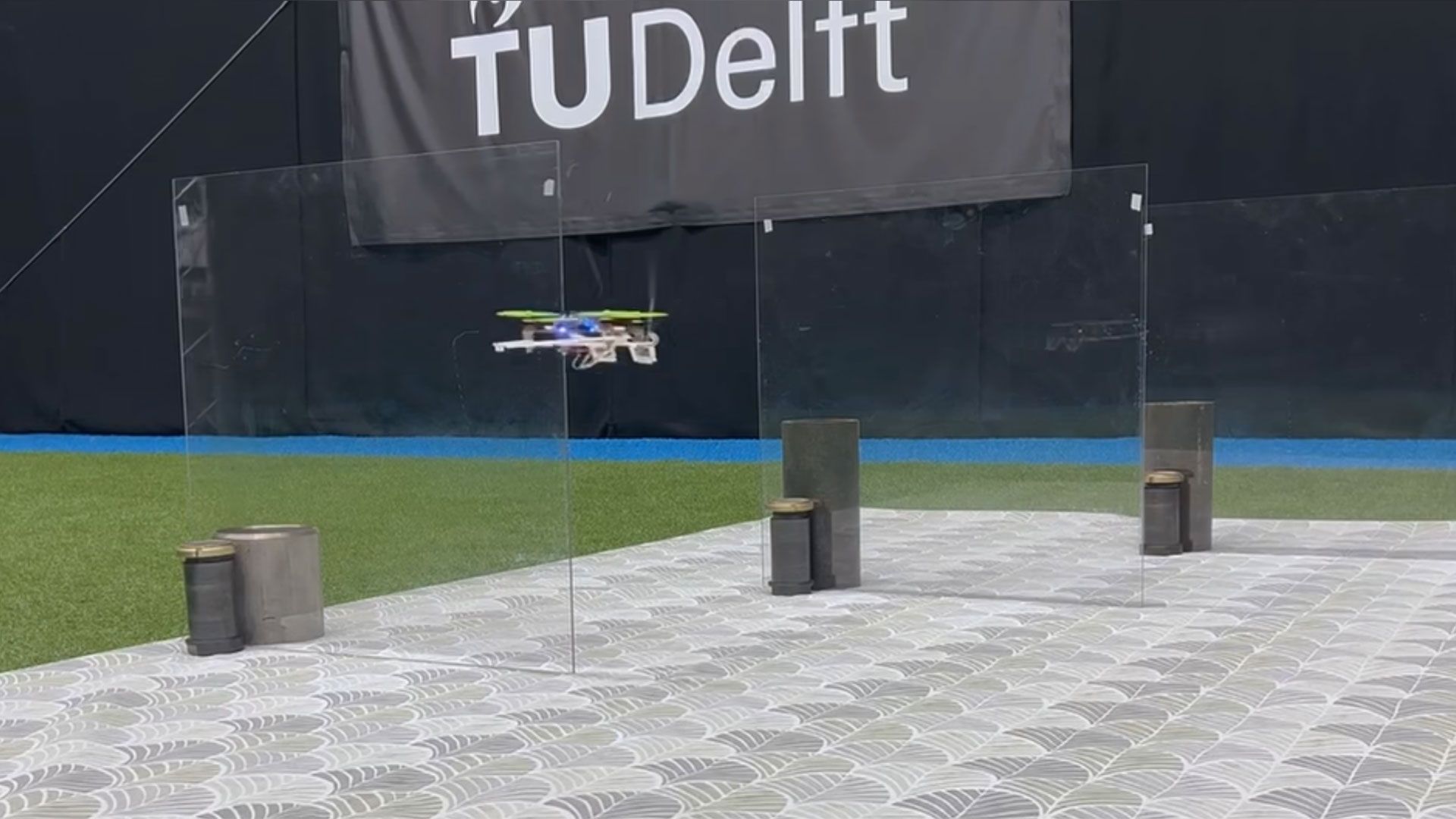
A team of researchers from The Netherlands’ Delft University of Technology built a lightweight whisker-based tactile sensor that allowed drones to navigate purely by touch. According to TechXplore, the system is designed for tiny autonomous robots weighing under 3.5 ounces or 100 grams, which face challenges in carrying heavy sensors, processors, and power sources, while sensors such as cameras, rangefinders, and LiDAR often have trouble navigating in poor conditions, such as dark environments or dust- and smoke-filled areas.

“Here, we aim to equip drones with rich tactile sensing — not for manipulation in the air, but for a novel concept of tactile navigation: using touch to explore and fly through the unknown,” Associate Professor of Aerial Physical Interaction and Embodied Intelligence Dr. Salua Hamaza told the publication. “But this comes with a challenge: for tactile sensing to work on drones, it needs to be lightweight, low-latency, and low-power. Inspired by nature, we found the answer in whiskers.”

Rodents and other small mammals use vibrissae, more commonly known as whiskers, to navigate in tight and dark spaces with low visibility. So, the team emulated this capability by attaching two whiskers to the front of the drone pointed upwards at an angle, with each one connected to three miniature pressure sensors at the base. As the whisker contacts a surface, the changes in each of the pressure sensors allow the drone to estimate its relative depth and location. The drone can then estimate the surrounding surfaces to avoid obstacles, follow the surface, and even map the area based on what it can feel.

Another challenge with equipping drones with whiskers is that airflow could potentially disrupt the system. So, the researchers built a lightweight, real-time processing pipeline that accounts for these minute changes and gives the whiskers millimetric precision. What’s more interesting is that this program, which can separate turbulence from surface detection, only uses 34 kilobytes of memory. “We wanted to show that touch does not have to come at the cost of size or computational power,” researcher Chaoxiang Ye told TechXplore. “Our entire tactile perception pipeline runs onboard using just 34 kilobytes of memory, allowing a tiny drone to sense and respond to its environment in real time.”

While this lightweight system won’t be useful for the world’s fastest drone, it’s still a great option for tiny drones designed for search-and-rescue operations. Rescue units equipped with these tiny drones could deploy them onsite to explore collapsed structures without endangering people or animals and would even pair well with this 3D-printed cyborg cockroach designed for rescue operations.

Autonomous NATO strike drone uses Nvidia Jetson Orin Nano to independently pick and bomb targets

作者 Shane Downing
2026年9月20日 19:20

Drones built with small, non-frontier computer-vision models autonomously identified and attacked targets in a recent demo, Ars Technica reports. Scaleout Systems, a Swedish AI startup, used a low-cost loitering munition from BAE Systems Bofors to strike a target as part of the Affordable Loitering Modular Ammunition (ALMA) program. BAE’s Winter Demo 2026 had the drone detecting and geolocating targets before ranking an armored engineering vehicle highest, autonomously flying to it, and dropping an explosive.

Scaleout’s demo video, “Technical Demo: Onboard Edge Intelligence for Autonomous UAV Missions,” shows the company’s drone spotting potential threats with AI, with all processing handled onboard. Beyond a button press to start the system, manual input is optional; the designated pilot remained a failsafe controller. The mission flew under human-set parameters to engage an armored engineering vehicle and required about 200 seconds of recon, with the full mission completed in under 320 seconds. The mission completed without needing communication, supporting Scaleout’s claim of resilience against electronic warfare.

The report referred to the munition as a “kamikaze drone,” but the program’s own term, “loitering munition,” is more descriptive. Most of the mission is spent searching, ranking targets, and waiting to strike. The company combines Scaleout Edge and “federated learning” in a “Tactical Computer Vision Network (TCVN).” Devices train AI locally and share model updates for rapid adaptation. Scaleout’s project, FEDAIR, is part of NATO’s DIANA accelerator, receiving 100,000 euros of development funding, training, and test access.

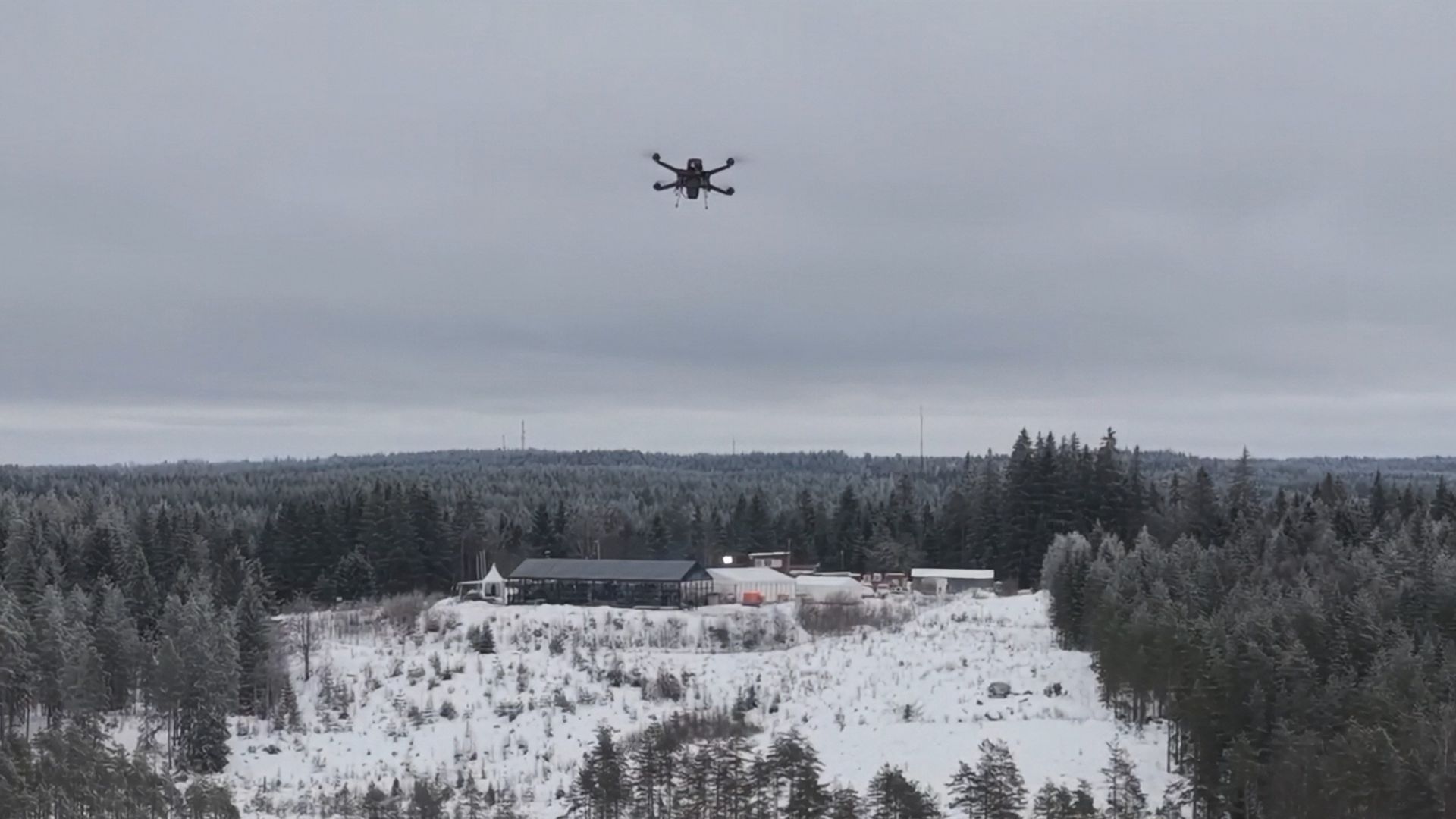
In a February post, Scaleout described a separate “arctic strike demonstration” at BTC Karlskoga, Sweden. The mission was flown at -18 degrees Celsius, about 0 degrees Fahrenheit, in the snow. There, an Airolit S1 airframe ran the YOLOv8 Nano object-detection model on Nvidia’s Jetson Orin Nano. Scaleout claimed a framerate of 30 fps at around 20 m/s, with a target latency of 30 ms or less and about 30 ms sustained in the field. Ranging without a depth sensor is possible using a pinhole camera model combined with known object size.

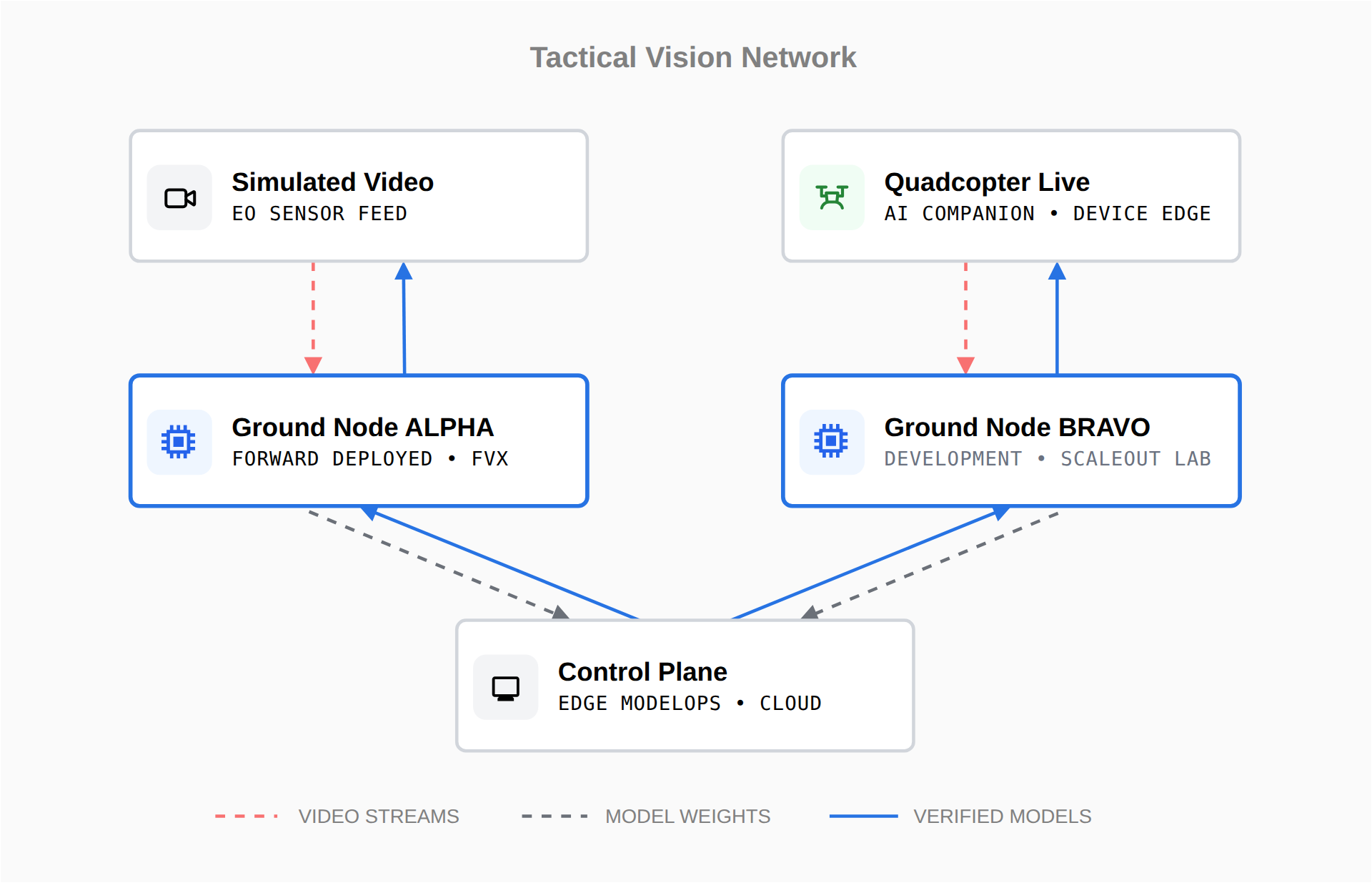
Scaleout’s follow-up June 30 post, “Resilient Edge AI for ISR: Inside Our Swedish Air Force Demonstration,” spoke of another test with Scaleout Edge “already deployed under an active licence.” The network used two ground nodes under a cloud-hosted Scaleout Edge control plane. The first was ALPHA, a forward-deployed node at the air base with a stable link, and the second BRAVO, a lab node in Uppsala whose connection was first degraded, then cut entirely. BRAVO kept inference and active learning at full frame rate while offline, logging detections locally, then backfilled on reconnect in priority order for heartbeat, critical alerts, drift, model updates, and telemetry. This test mimics the impact of external interference.

Diagram of Scaleout's Tactical Vision Network, from edge to control

(Image credit: Scaleout)

The demonstrations, license, and funding come before any official NATO procurement order or actual combat deployment. Concerns about lethal autonomous weapons are being addressed by a UN expert group. Its recent report concluded that human judgment and control are required to comply with the laws of war; its recommendations will be reviewed in Geneva in November. Still, Scaleout’s demonstrations show autonomous target selection running on the airframe, and in the February test it ran on a board hobbyists can buy. Whether BAE Systems Bofors moves ALMA from demonstration to procurement remains to be seen.

UK research agency backs drone-based internet service experiment with lasers, microwaves, and gravity waves used for wireless power — Britain invests $94 million into Starlink alternative

While China and Russia rush to build a SpaceX competitor, the UK is taking another route by developing an alternative to satellite internet that relies mostly on aircraft. Its Advanced Research and Invention Agency (ARIA) is funding 18 projects aimed at building aircraft that will deliver wireless communications to areas in the UK and the rest of the world that are not served by terrestrial networks. According to The Register, the program, called Enduring Atmospheric Platforms, aims to have a unit with a 300-watt communications payload aloft and holding station for a week.

These units are called high-altitude pseudo-satellites (HAPS), with ARIA allocating $94 million over three and a half years for these projects. There are three technical areas in focus at the moment: TA1, which aims to develop the underlying technologies; TA2, which looks into the integration and testing of the developed systems; and TA3, which will concentrate on actual deployment.

Two startups have proposed multiple drone systems that will cover the entire United Kingdom — Carousel, by Menapia, wants to build a constellation that can hover at altitudes of up to 12 miles, while Enduring Drone Networks, by VFP Aerospace, proposes a relay of units that automatically fly back to their ground station for charging and servicing, with a cost of about $67,000 per drone.

Two other proposals suggest wireless power — one is Scalable Laser Ltd, which is working on a laser-based technology that pairs high-power laser diodes on the ground with advanced photovoltaic receivers in the air. On the other hand, Space Solar Engineering Ltd wants to use radio frequencies, like microwave, to deliver power to airborne units. There’s also a more novel approach from the University of Bath, which plans to use atmospheric gravity waves — using the upward movement of air caused by weather fronts and geographical features and the subsequent pull of gravity that brings it back down — to extend the range and endurance of HAPS aircraft.

"This research expands the UK's leadership in high-altitude platforms to become the place where this industry is designed, built, and scaled," says ARIA program director Rico Chandra. "Getting there means backing bold ideas, from fixed-wing solar aircraft to designs nobody predicted, including aircraft that fly on spinning wings instead of propellers."

Waymo robotaxi calls cops on riders handling loaded AR-style ghost gun — Waymo alerted San Francisco police, then juvenile riders were stopped and arrested

作者 Mark Tyson
2026年9月13日 19:16

Following a tip-off from robotaxi firm Waymo, San Francisco police conducted a “high-risk vehicle stop” and arrested two juveniles last week. The crime? The Waymo had seen its two passengers handling a loaded AR-style assault rifle. Police who intercepted the car also found “suspected marijuana and mace spray,” reports SFGate.

Fully autonomous taxi cabs like the Waymo in this story are an increasingly common form of transport seen on the world’s roads. With no human driver, these electric vehicles are packed with sensors, cameras, and more, all tied into the software presence that is called the Waymo Driver. To ensure the utmost safety, the sensors also continually monitor passengers. This might typically check if passengers are following the rules regarding minor transgressions like smoking or not wearing a seatbelt. In this case, the cameras recognized something more serious.

From our understanding of the Waymo in-cabin camera monitoring procedure, humans may review footage when something is flagged by the in-car sensors. That may be how the source report can say that the AR was loaded, or that was a later discovery from the police stop that somehow got attributed to the Waymo phoning home.

According to the source report, this incident took place in the 800 block of 40th Avenue, in the Outer Richmond neighborhood, just before 4am on Thursday, September 3. Alongside a loaded ‘ghost gun,’ the police officers found suspected marijuana and mace. The individuals arrested, a male and a female, can’t be identified in the media due to their age. Reports say the specific charges they face are related to illegally possessing a firearm.

This isn’t the first case of a Waymo telling on its passengers. SFGate previously reported on San Mateo police being called after a pair of 15-year-olds were allegedly drinking alcohol and shooting toy ‘gel blaster’ guns in the taxi cabin.

Waymo robotaxis are now well established in San Francisco, Los Angeles, and some other major cities. Earlier in September, the service branched out into San Diego, Denver, and Tampa, Fla. More and more areas in the U.S. and abroad are giving the autonomous service permission to operate.

Ukraine triumphs in 'first-ever' drone-vs-drone boat battle — video shows Russian MBeK destroyed by Sargan 3000's 12.7mm automatic turret

作者 Mark Tyson
2026年9月13日 18:30

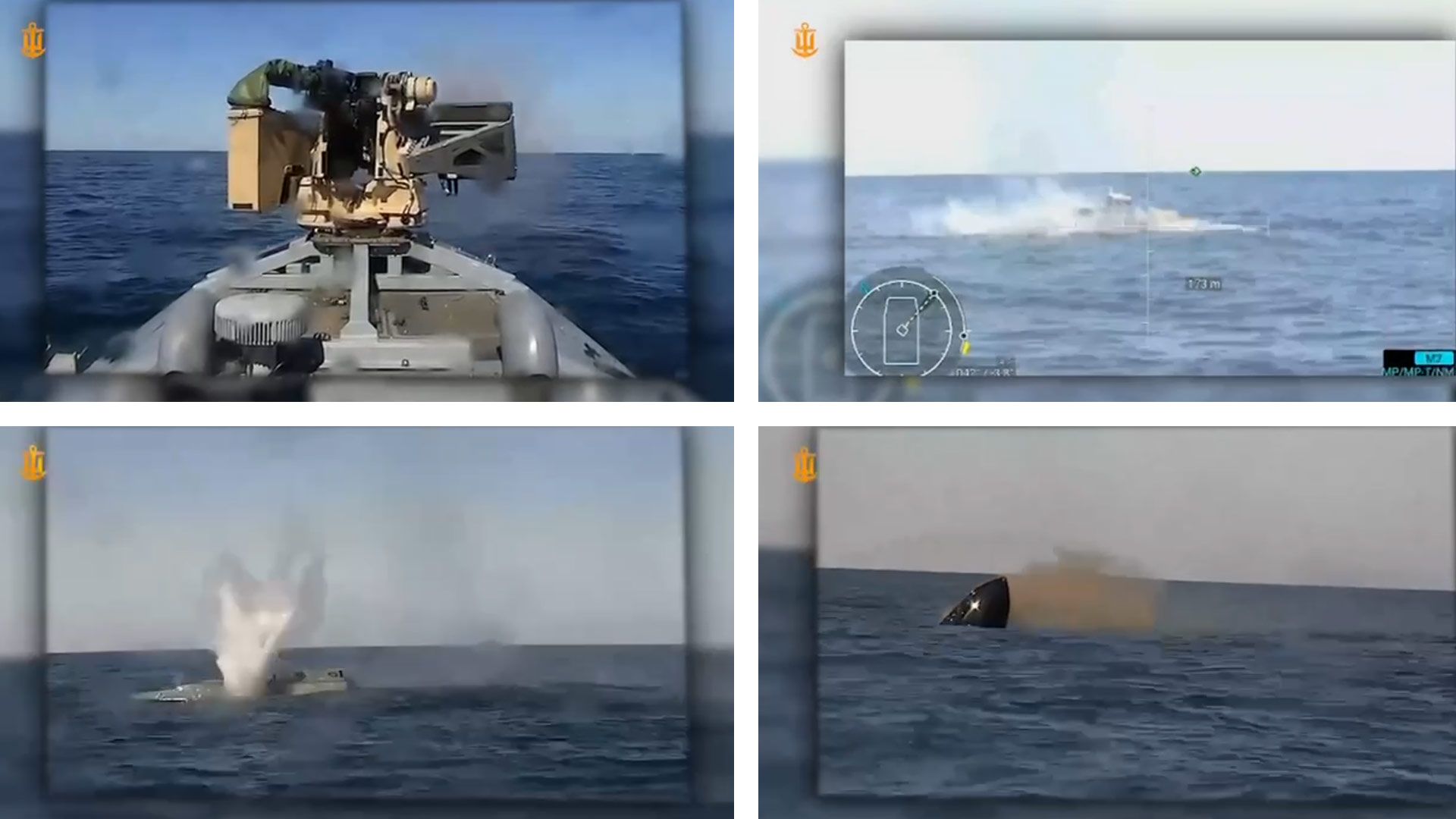
Ukraine’s Navy has claimed that it has won “the first-ever battle of unmanned naval boats” (machine translation). Its Sargan 3000 sea drone is shown destroying a Russian MBeK in the Black Sea in a video shared today on the official UA Navy Telegram channel.

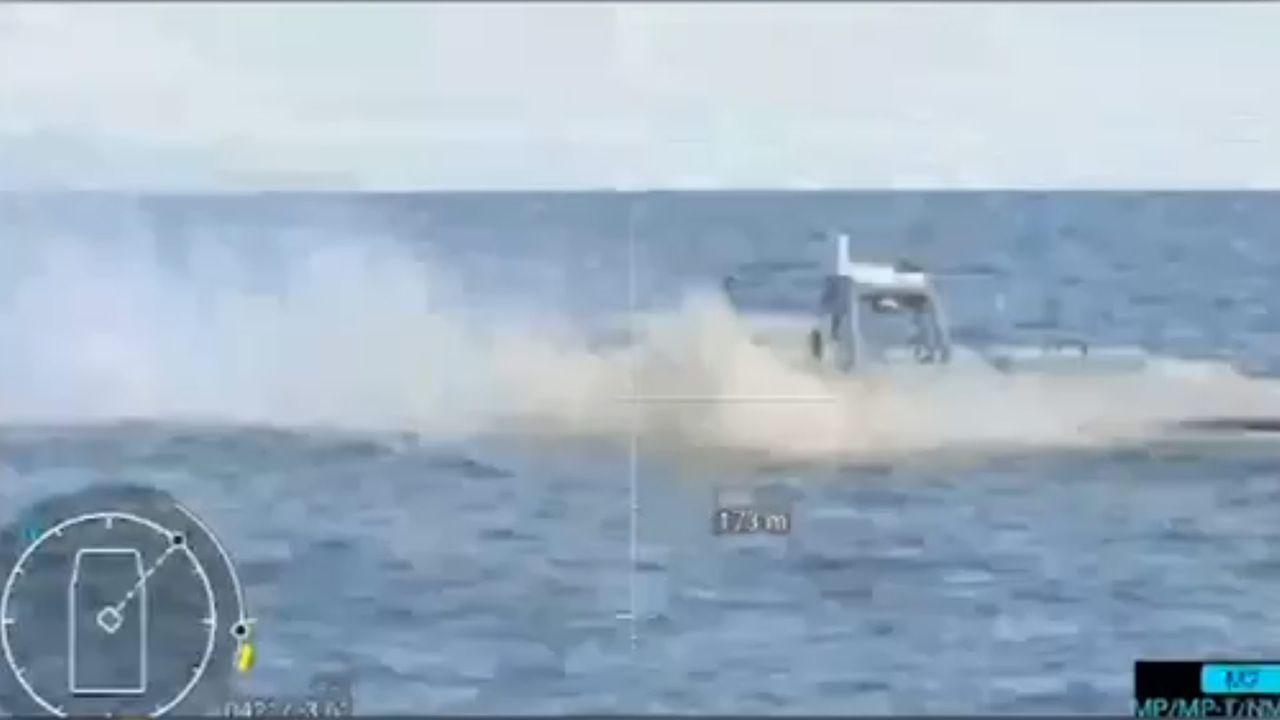
In the video, you can see the Ukrainian unmanned surface vehicle (USV) target what is claimed to be a Russian MBek and fire several rounds with its 12.7mm ‘Protector RWS’ automatic turret. The official Telegram bulletin states that the Russian USV was “detected by the GUR units.” We understand GUR is an acronym for the Main Directorate of Intelligence of Ukraine's Ministry of Defense.

After taking fire, there is at least one explosion, and then smoke begins to surround the Russian USV. Ukraine must also have had some flying drones in the vicinity, as we have some aerial footage of this historic unmanned naval duel.

Eventually, and we are uncertain how long the battle went on, the video shows the MBeK slipping down to its watery grave. The Russian vessel sank with a characteristic nose dive to the sea floor, perforated like a tea bag.

Sargan 3000 wins

(Image credit: UA Navy Telegram channel)

The Sargan 3000 entered service for the Ukrainian Navy in April 2026. Ahead of this latest headlining feat, the same type of USV hit the headlines for sinking a Russian FSB border patrol ship ‘Izumrud,’ off the coast of the Russian resort town Gelendzhik in mid-July.

Ukraine's unmanned sea drone is a multi-purpose platform, and its multi-payload flexibility appears to have been confirmed by imagery and operator statements. The automatic turret model in today’s video might be somewhat different from how the Izumrud wrecker was equipped, for example. Photos have also shown variants of this USV kitted out with an FPV drone carrier, plus two transport and launch containers, and a remote weapon station.

The Sargan 3000 is thought to be nearly 23 feet (6.9m) in length, has a combat radius of almost 1,000 miles (1,600 km), can carry a payload of up to 990 pounds (450kg), and has a top speed of around 50 knots. Ukraine can produce around 25 Sargan 3000 USVs a month, it is estimated.

The U.S. and UK are also busy developing sea drones. Some are already being tasked with protecting undersea cables and pipelines.

Iran could potentially reverse-engineer captured US underwater drone — several Iranian embassies mock US over capture, Navy claims lost Anduril vehicle was defective and unclassified

作者 Etiido Uko
2026年9月12日 19:30

Iran is likely to study and attempt to reverse-engineer a U.S. Navy underwater drone captured by Iranian forces near the Strait of Hormuz, potentially handing Tehran useful technology while delivering a setback for the Pentagon. According to a Reuters report published September 9, the 19-foot Dive-LD autonomous underwater vehicle malfunctioned while surveying regional waters before Iran’s Islamic Revolutionary Guard Corps recovered it.

Both the U.S. military and the drone’s manufacturer Anduril quickly moved to downplay the significance of the loss. Analysts cited by Reuters also said the captured drone was unlikely to provide Iran with a decisive military advantage. At the very least, however, the vehicle gives Tehran a propaganda victory and an opportunity to examine American undersea technology as the U.S.-Iran war enters its seventh month.

Tehran already appears to be having a field day with the situation, with Iranian embassies around the world mocking the U.S. for losing the drone. In an X post, Iran’s embassy in Ghana compared its recovery to pulling a plastic bottle from a fishing net, adding that it was “still blinking like an idiot.” Iran's embassy in Hyderabad was even more direct about what might happen next, posting: “Unboxing ceremony by our reverse engineers, tomorrow morning!”

A noticeable gap has emerged between how Anduril markets the Dive-LD and how the U.S. military is now describing the captured vehicle. Anduril promotes the Dive-LD as a highly reliable and adaptable large autonomous underwater vehicle capable of operating for up to 10 days in demanding environments, previously calling the platform the most reliable and flexible autonomous underwater vehicle on the market. The Navy, meanwhile, described the lost vehicle as an older, defective model that “neither collected sensitive data nor carried any classified sonar or radar equipment.”

Despite attempts to downplay the incident, Washington has historically taken similar incidents seriously. After Iran recovered an RQ-170 Sentinel stealth reconnaissance drone in 2011, then-President Barack Obama publicly requested its return. Tehran subsequently claimed that it had reverse-engineered the aircraft and unveiled domestic drones apparently influenced by its design. In 2022, the U.S. Navy dispatched a patrol ship and an MH-60S Seahawk helicopter after an Iranian naval vessel attempted to tow away an American Saildrone surface vehicle in the Gulf.

Iran's comical commentary is backed by a genuine ability to extract useful information from captured hardware. Bryan Clark, director of the Center for Defense Concepts and Technology at the Hudson Institute, told Reuters that Iranian engineers “could definitely reverse-engineer the mechanical systems.” However, he was more skeptical about Tehran’s ability to penetrate the software, which reportedly includes defenses intended to frustrate exploitation attempts.

Regardless of any reverse engineering limitations, analysts say Iran will continue to present the incident as evidence of Iranian control around the Strait of Hormuz and U.S. vulnerability there. “This is something that Iran has proven very adept at exploiting for its own benefit in terms of seeking to frame the narrative as one of U.S., in this case, ineptitude and their ability to sort of retain control over the Strait of Hormuz,” said Mona Yacoubian, director of the Middle East program at the Center for Strategic and International Studies.

The United States and Iran have been at war since Washington launched Operation Epic Fury in late February, with the conflict repeatedly spilling into the technology industry and its supply chains. In April 2026, an Iranian strike halted production at Saudi Arabia’s Jubail petrochemical complex, disrupting supplies of a critical resin used in PCB laminates. Iranian cruise missiles also reportedly struck an Amazon data center in Bahrain in July.

Trump slaps up to 100% tariffs on imported drones and critical components in latest move against China's proliferation of U.S. drone market, citing national security — products from allied nation face 10-15% rates

作者 Etiido Uko
2026年9月5日 18:20

The Trump administration has imposed tariffs of up to 100% on imported drones and their components. This is its latest move in a long-running campaign to reduce reliance on foreign drones and other electronics — especially Chinese — citing national security while bolstering the domestic supply chain. The tariffs came into effect on Thursday, September 3, 21 days after President Donald Trump signed the measure on August 13. Consequently, the U.S. Customs and Border Protection (CBP) published guidance detailing exact filing procedures and tariff rates for the affected drones.

The proclamation categorizes drones by capability, with the 100% rate applying to unmanned aircraft with a maximum takeoff weight above 55 pounds (25kg); any drone with thermal imaging and docking stations; and a defined list of critical components, including static converters, airframe components, and electronic control boards. The White House calls this category “particularly sensitive for natural security purposes.”

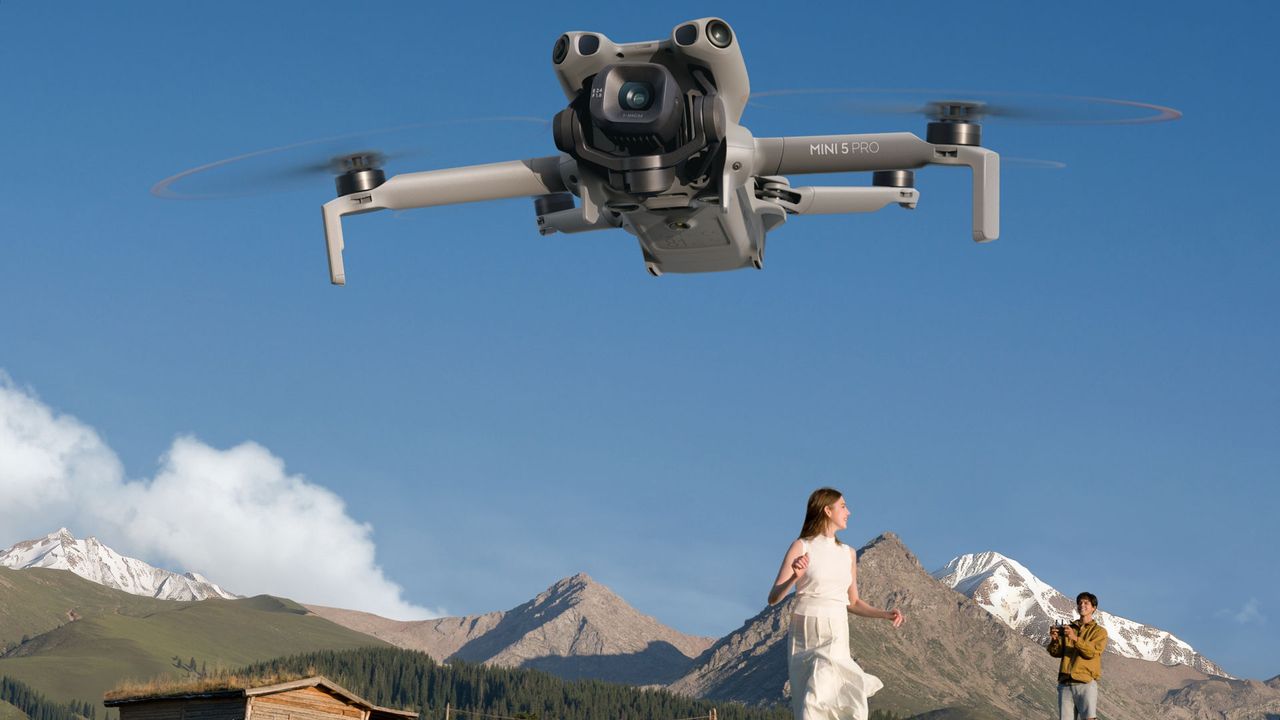
A 25% rate applies to smaller drones that lack those capabilities, as well as other components. This system of classification splits many brands into both categories. DJI’s thermal-equipped, public-safety Matrice series, for example, falls into the 100% bracket regardless of its weight, while consumer models such as the Mini and Air series are at 25%. Both rates apply to imports regardless of country of origin, except for specific allied countries. However, they overwhelmingly land squarely on China — home to DJI, which holds more than two-thirds of the global market and supplies the bulk of the drones on US shelves.

Drones and components from the European Union, Japan, Liechtenstein, South Korea, Switzerland, and Taiwan are set at 15%, while those from the United Kingdom are set at 10%, provided that substantially all of the hardware, software, and technology originates in those countries or the United States. The proclamation also phases in the tariff across two component groups. A 25% to 100% rate on finished aircraft, docking stations, and the most sensitive components — power converters, flight-control boards, and the airframe parts used in drones over 25 kilograms — took effect on Sept. 3. For a second, lower-priority group of components — largely the same categories of parts, but produced for smaller consumer and commercial drones — the rate, which is set at 25%, does not take effect until Feb. 9, 2027. The administration framed the 180-day runway as time for importers to shift sourcing.

The tariffs are the latest development in a widening federal effort to push Chinese drones out of the US market on grounds of national security. In December 2025, the Federal Communications Commission added all foreign-made drones and their critical components to its Covered List, blocking new models from the authorization they need to be sold domestically. Last month, the agency moved to retroactively ban previously cleared models it deems "military-grade," including those with LiDAR. That proposal's public-comment window closed September 2, one day before the tariffs took effect. If passed, many of the items affected by the tariffs would be automatically banned. Conversely, if the proposal fails, the tariffs would still apply significant pressure.

The proclamation pairs the duties with incentives meant to rebuild a domestic supply chain, with U.S. makers such as Skydio attracting major investment since the original ban. The onshoring push has also drawn scrutiny for its proximity to the president's family. Donald Trump Jr. has sat on the advisory board of Florida drone-parts maker Unusual Machines since November 2024 and holds a sizable stake. The company's shares climbed sharply after the tariff announcement. Government-ethics groups have flagged the arrangement as at least the appearance of a conflict.

Japan to mass-procure 3D-printed rocket-powered drone interceptor — Terra B1 capable of countering one-way attack platforms

作者 Mark Tyson
2026年9月5日 18:00

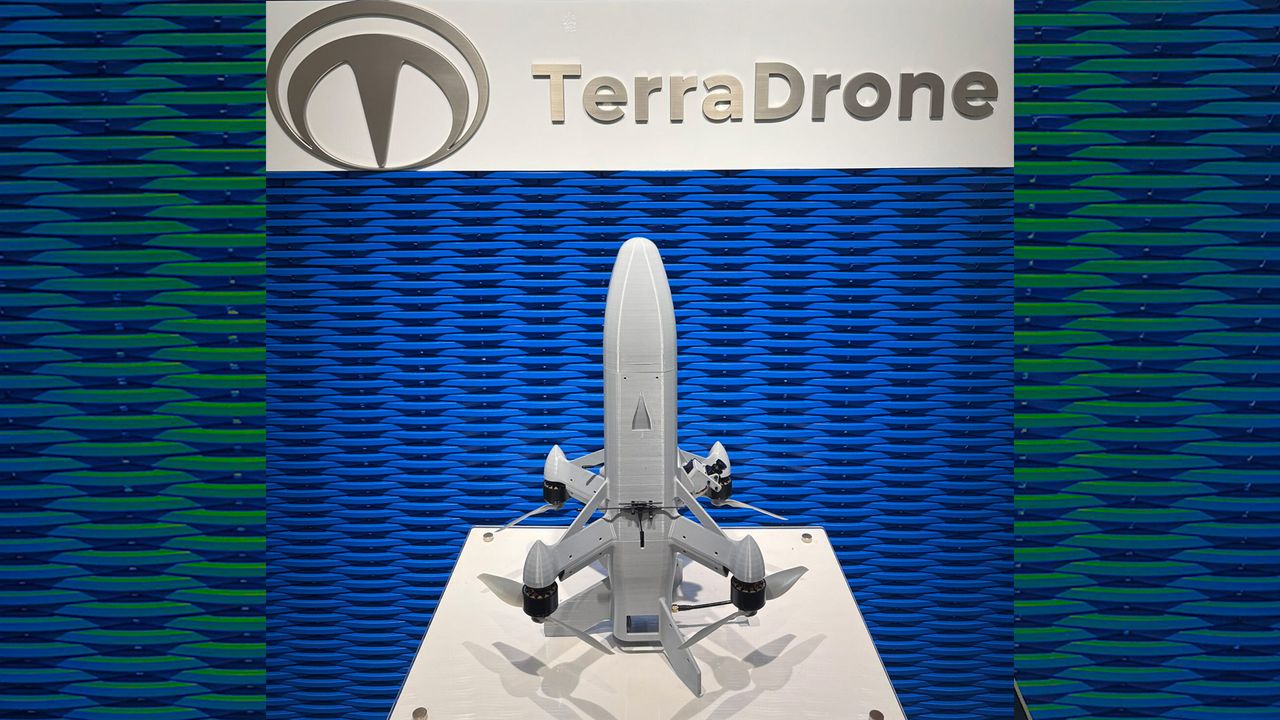
Japan’s military has decided to mass-procure Terra B1 interceptor drones. These drones are fabricated using 3D printers and are based on the tried and tested A1 model from Terra Drone, which began to be deployed by Ukraine earlier this year. A demo of the Terra B1 impressed Japan’s Maritime Self-Defense Forces enough to swing the mass-procurement agreement. These interceptors are expected to capably counter notorious drone threats like the Shahed designs and anti-radar loitering munitions such as the IAI Harpy, notes 3D Printing Industry news.

The Japanese Acquisition, Technology, and Logistics Agency (ATLA) is the body that rubberstamped the deal with Terra Drone. According to a press release from the latter, the Terra B1 is being mass-produced in Japan after successfully passing trials. It was just one of a range of designs put forward by 38 separate companies. To be chosen by ALTA, the B1 had to satisfy a number of criteria such as “effective range, flight duration, flight distance, maximum and cruising speed, guidance method, number of aircraft that can be controlled simultaneously, launch and recovery methods, integration with other systems, safety measures, [and] operational track record,” says Terra Drone. The first Terra B1 interceptors are expected off the domestic production lines sometime this month.

We witnessed the clamor for cheap and effective anti-drone solutions when the conflict between the U.S. and Iran erupted earlier this year. Gulf states seen as U.S. allies or sympathizers were repeatedly targeted by airborne Iranian threats, but their anti-air missiles weren’t designed to counter such attacks. Patriot missiles, for example, are too expensive and in too short supply to match drone threats 1-to-1. It wasn’t sustainable. It didn’t take long, therefore, for battle-proven Ukrainian anti-drone tech to be bought in.

Now we see Japan proactively following the cheap-yet-effective drone interceptor route. 3D printing is another emerging tech that will be applied here to enable Japan’s Self-Defense Forces “to acquire more effective drone countermeasure equipment with greater speed.” After a successful initial deployment by the Maritime Self-Defense Force, Japan’s Air Self-Defense Force and Ground Self-Defense Force may also look at customizing Terra B1 interceptors for their needs.

This isn't the first example of important synergies between drone and 3D printing technologies. We also recently reported on drones, drone parts, and other maintenance and repair essentials being 3D printed aboard the USS Essex. This was all done inside a compact containerized factory as the ship sailed to take part in RIMPAC 2026 around Hawaii.

US military uses high-energy lasers to shoot down three Mexican cartel drones over the southern border — narcos suspected of using UAVs for surveillance and reconnaissance to support illegal activities

2026年8月30日 18:00

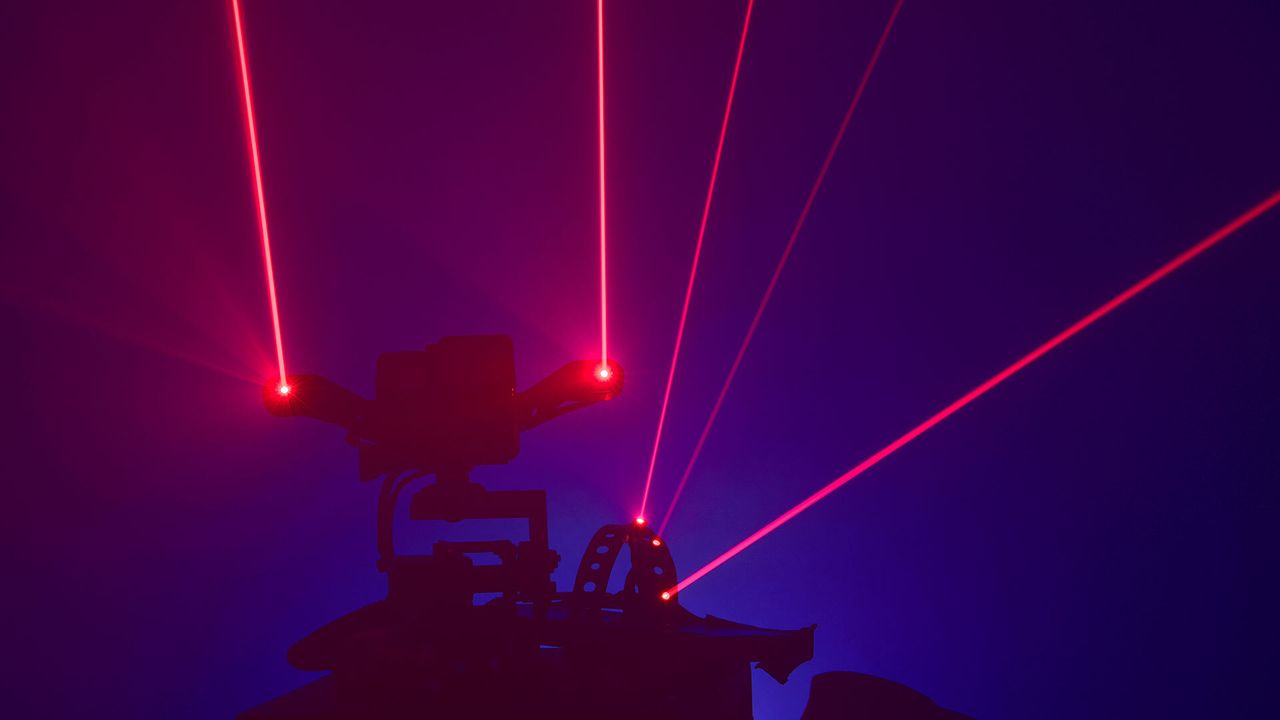
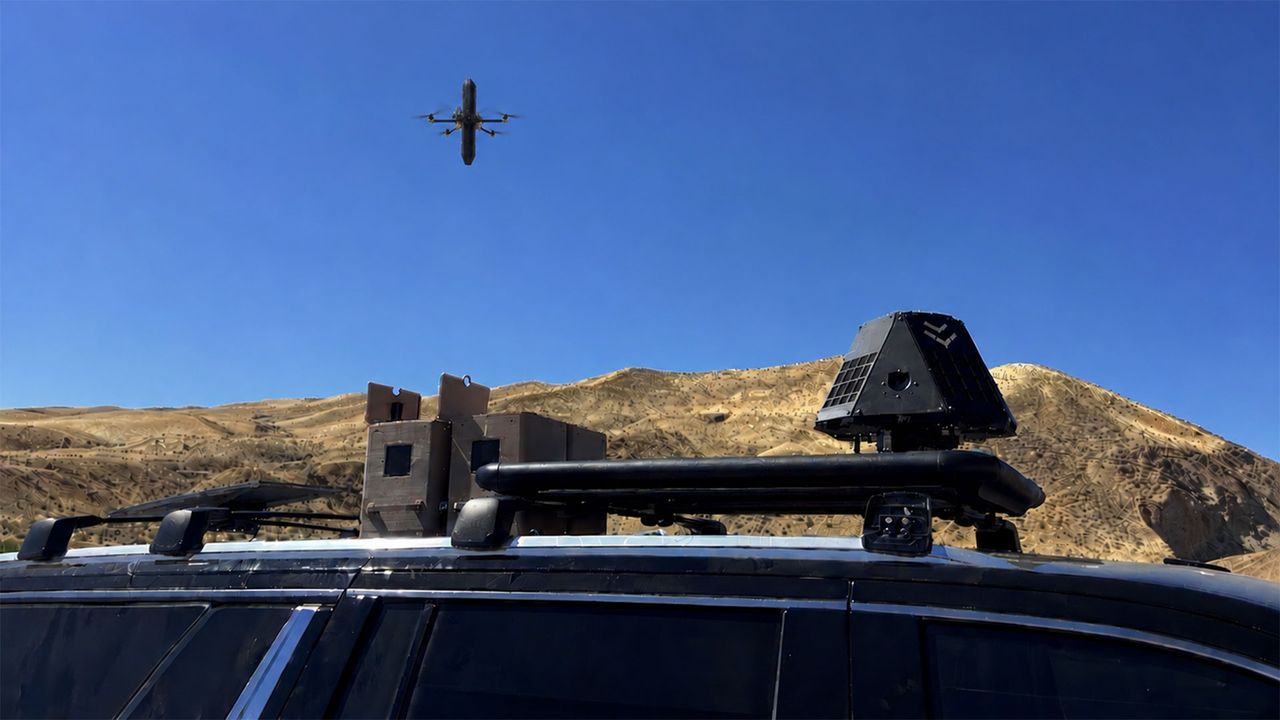
The U.S. military shot down three drones that were suspected of operating for Mexican cartels earlier this week. According to CBS News, the uncrewed aerial vehicles (UAVs) were destroyed by an “Army Multipurpose High Energy Laser System” operated by U.S. Northern Command (USNORTHCOM) between Tuesday evening and Wednesday morning.

"Cartel networks are increasingly employing unmanned aircraft systems to facilitate illicit human-smuggling and actively spy on our personnel and law enforcement partners," Maj. Gen. Curtis Taylor, commander of the southern border's Joint Task Force, said in a statement. "By integrating layered countermeasures alongside advanced directed-energy capabilities like this laser system, we have made it clear that we will not tolerate hostile surveillance." It’s unclear if the drones were shot down over American or Mexican airspace, but a military spokesperson told the outlet that they “were taken in coordination with all partners operating along the border.”

This isn’t the first time that a laser weapon has been used to defend American airspace. Back in February, the Pentagon used a similar system after it detected and shot down unknown aerial targets. This resulted in the emergency closure of a major airport, resulting in massive disruptions, and it also turned out that the targets were later reported to be just party balloons. Another incident involving the use of laser weapons happened a couple of weeks later, and it resulted in the shooting down of an actual drone this time. Unfortunately, the targeted drone turned out to be from the Customs and Border Protection unit, not a hostile one operated by the Mexican cartels. The military refused to release further details about the recent drone shoot-downs, citing operational security and ongoing operations, but they’ve hopefully hit the correct targets this time.

The U.S. isn’t alone in deploying drones for protecting its assets and territories. The UK has recently revealed that it’s deploying its DragonFire laser weapon on Royal Navy destroyers by 2027, while China has developed a backpack-sized man-portable anti-drone laser system that can hit targets up to 1,600 feet away. While these systems are expensive to acquire, they’re much cheaper to operate compared to traditional man-portable air defense systems or MANPADS, with each shot costing as little as $13 (versus the thousands to millions of dollars for missiles). This makes them more economically feasible for defending against drones, whose effective use in the battlefield has been made prominent by Ukrainians as they defended against the much larger Russian military. But even if you’re a civilian, you can get your own laser air defense system for around $1,000 and protect your home from flying bugs.

Startup raises $7 million to build backpack-portable 8.8-ounce drone interceptors — Mara claims 20x cost advantage over other interceptors, priced one-for-one against attack drones

2026年8月29日 22:16

San Francisco defense startup Mara has secured $7 million in a pre-seed round to produce what it calls Spike, a portable counter-drone system housed inside a backpack. The complete system costs $30,000 to $100,000, depending on the number of Seekers included, but its 250g (~8.8 ounces) autonomous interceptors are designed to cost no more than the few-hundred-dollar FPV quadcopters they destroy. Those quadcopters, which carry munitions capable of destroying armored vehicles worth millions, are now reported to be the leading cause of Ukrainian combat casualties.

A single Spike launcher holds up to 48 of the Seeker interceptors and reloads in less than a minute, with each Seeker capable of engaging targets out to roughly one mile, per Mara's published specs. In an exclusive interview, CEO Daniel Kofman told the outlet Tectonic Defense how FPV crews operate on the frontline. "They launch from anywhere at anything, and they never attack one at a time. They always attack four to six at a time in waves, doing pincer strikes in rapid succession or simultaneously."

The system's Spotter targeting unit fuses electro-optical and acoustic sensors with an optional low-emission W-band radar, and Mara says it detects and tracks fiber-optic and fully autonomous drones in all weather, day or night. Radio-frequency jammers and RF-based detectors can't touch either drone type, since neither emits a control signal to find or break.

Kofman says that the Seekers are built to trade at a "one-to-one" or a "worst case, two-to-one" cost ratio against the drones they intercept, with Mara claiming that the interceptor costs 20 times less than the next-cheapest alternative. Fully autonomous, Mara claims the Seekers respond much faster than a human can react to a 100 mph quadcopter, though a human stays in the loop at all times to set rules of engagement and abort launches.

Mara’s system is substantially cheaper than systems like Lockheed Martin's reusable Morfius X-Rotor, which downs swarms with high-power microwaves, but close to the $1,000 3D-printed interceptors Ukraine builds against Shahed-type drones, though those target larger, slower threats than FPV quadcopters.

Mara joined NATO's DIANA accelerator 2026 cohort and holds cooperative research agreements with three unnamed U.S. defense organizations. The company is also running a civilian pilot at a South Korean commercial port. Ukrainian forces have operated Spotter near the front line, where the company says it tracked multiple FPV drones from 40km (~25 miles) back, and Mara has its first paid order from a European NATO partner for an undisclosed exercise.

Ground-mounted Spike units are due to be in customers' hands by the end of 2026, with vehicle-mounted and man-portable variants and scaled production planned for 2027.

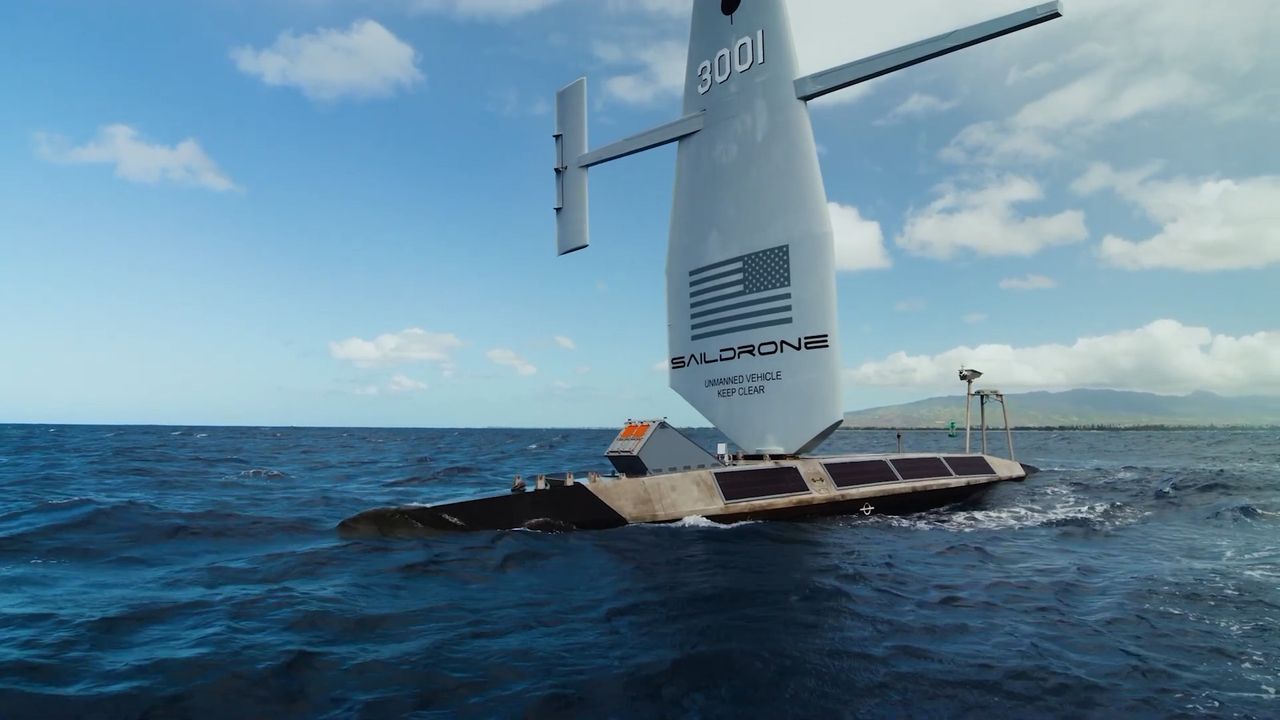
US Navy launches missiles from its first drone sailboat — Saildrone Surveyor launches dual JAGM missiles, carrier strike group tests armed USV and electronic warfare

2026年8月29日 18:00

The U.S. Navy successfully tested a sail-powered drone in live-fire exercises in the Pacific: the Saildrone Surveyor SD-3001 Unmanned Surface Vessel (USV), which was co-developed with Lockheed Martin to carry lethal combat technology. During the recent Rim of the Pacific (RIMPAC) 2026 exercises, the Saildrone launched two combat-proven Joint-Air-to-Ground Missiles (JAGM) in coordination with the USS Theodore Roosevelt (CVN-71) Carrier Strike Group. The Saildrone’s use in passive electronic warfare (EW) tasks was also verified during the exercises.

At RIMPAC, the USS Theodore Roosevelt (CVN-71) Carrier Strike Group had access to the Saildrone as a combat asset for the first time. Under the control of ARES, the sea drone successfully launched two lethal JAGM missiles. These missiles feature two independent guidance modes: a semi-active laser and millimeter-wave radar. Combining both, the JAGM can be effective in all weather, including low-visibility maritime environments.

The development of the Saildrone Surveyor SD-3001 USV with JAGM has been remarkably rapid. Work began on the collaborative project back in October 2025, with the partners hoping to “combine Saildrone unmanned surface vehicles with Lockheed Martin’s combat-proven effectors.” Both parts of the equation were operationally proven, yet getting everything working as intended within six months, and then taking part in a successful live-fire demo remains quite an achievement. The goal also required the integration of the USV into the Navy fleet environment so it would work with the Navy’s Adjunct Remote Engagement System (ARES). That’s what was demonstrated at RIMPAC this year.

Another useful function of the long-term, long-range autonomous Saildrone demonstrated at RIMPAC was its EW capability. The sail-sporting drone coordinated its sensors with an MH-60S helicopter to successfully detect, classify, and identify a surrogate threat during the exercises.

Lockheed Martin, Saildrone, and the U.S. Navy have more tests and trials planned for this seafaring USV. Saildrone notes that the “SD-3001 is now well on its way to its next mission.” Meanwhile, work alongside Lockheed Martin continues, with this demonstration claimed to have de-risked larger payload integrations planned for the larger Saildrone Spectre. The Spectre is expected to carry “significantly larger containerized capabilities including the Lockheed Martin Mk 70 launcher and SURTASS Towed Array.”

❌
❌