阅读视图

发现新文章,点击刷新页面。
✇Tomshardware

Waymo robotaxi calls cops on riders handling loaded AR-style ghost gun — Waymo alerted San Francisco police, then juvenile riders were stopped and arrested

作者 Mark Tyson

Following a tip-off from robotaxi firm Waymo, San Francisco police conducted a “high-risk vehicle stop” and arrested two juveniles last week. The crime? The Waymo had seen its two passengers handling a loaded AR-style assault rifle. Police who intercepted the car also found “suspected marijuana and mace spray,” reports SFGate.

Fully autonomous taxi cabs like the Waymo in this story are an increasingly common form of transport seen on the world’s roads. With no human driver, these electric vehicles are packed with sensors, cameras, and more, all tied into the software presence that is called the Waymo Driver. To ensure the utmost safety, the sensors also continually monitor passengers. This might typically check if passengers are following the rules regarding minor transgressions like smoking or not wearing a seatbelt. In this case, the cameras recognized something more serious.

From our understanding of the Waymo in-cabin camera monitoring procedure, humans may review footage when something is flagged by the in-car sensors. That may be how the source report can say that the AR was loaded, or that was a later discovery from the police stop that somehow got attributed to the Waymo phoning home.

According to the source report, this incident took place in the 800 block of 40th Avenue, in the Outer Richmond neighborhood, just before 4am on Thursday, September 3. Alongside a loaded ‘ghost gun,’ the police officers found suspected marijuana and mace. The individuals arrested, a male and a female, can’t be identified in the media due to their age. Reports say the specific charges they face are related to illegally possessing a firearm.

This isn’t the first case of a Waymo telling on its passengers. SFGate previously reported on San Mateo police being called after a pair of 15-year-olds were allegedly drinking alcohol and shooting toy ‘gel blaster’ guns in the taxi cabin.

Waymo robotaxis are now well established in San Francisco, Los Angeles, and some other major cities. Earlier in September, the service branched out into San Diego, Denver, and Tampa, Fla. More and more areas in the U.S. and abroad are giving the autonomous service permission to operate.

✇Tomshardware

Ukraine triumphs in 'first-ever' drone-vs-drone boat battle — video shows Russian MBeK destroyed by Sargan 3000's 12.7mm automatic turret

作者 Mark Tyson

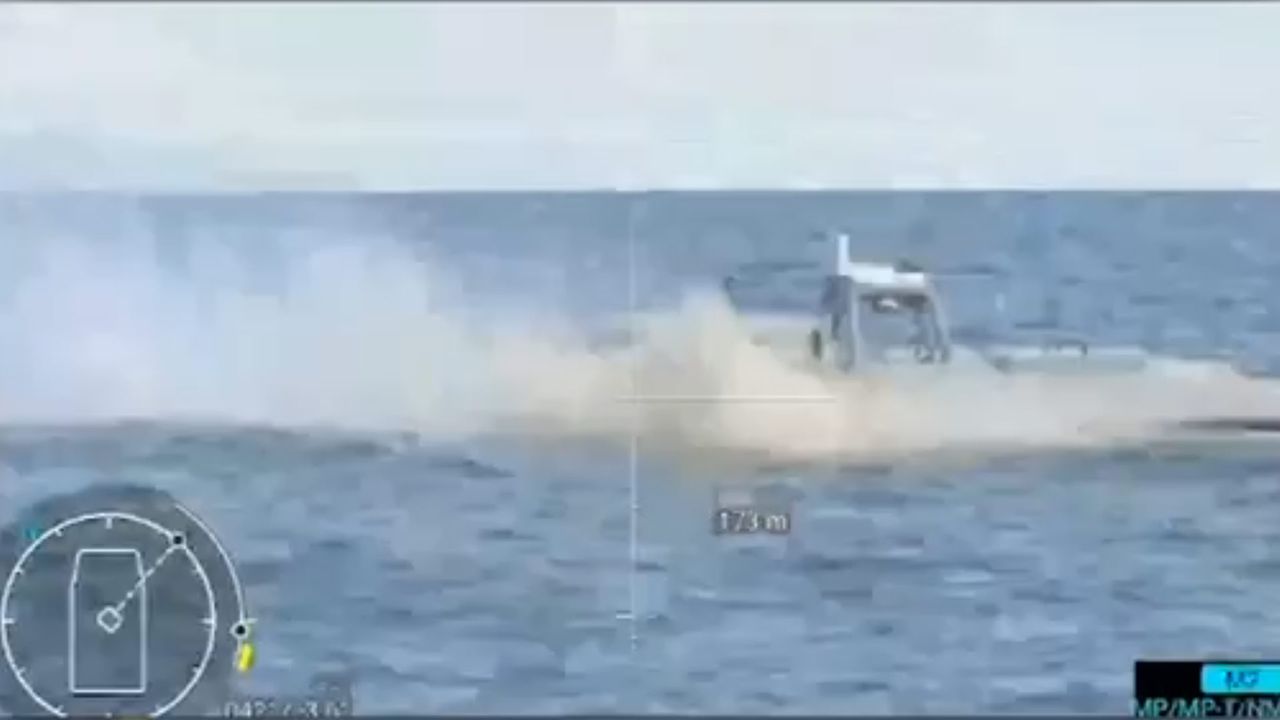
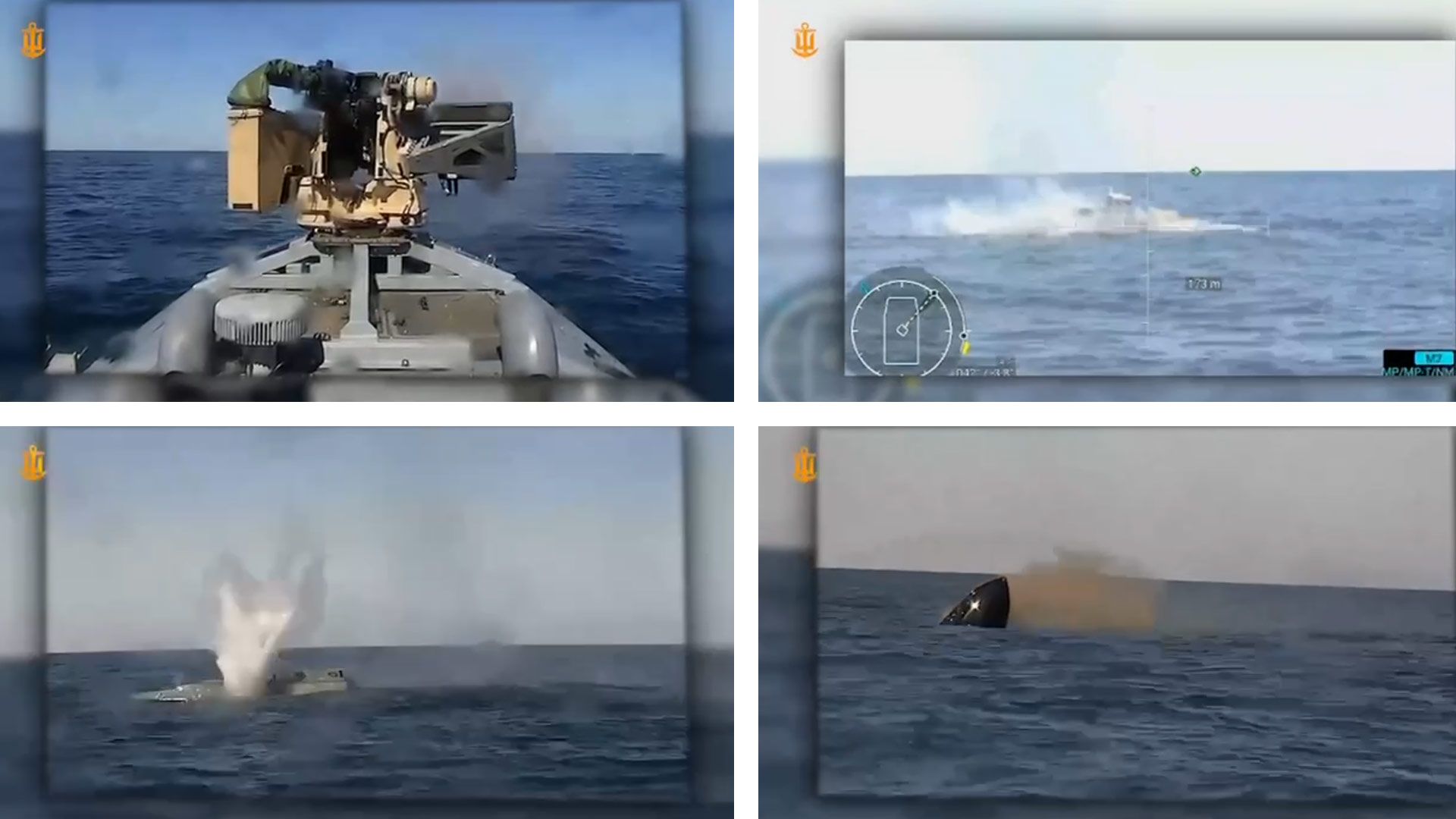
Ukraine’s Navy has claimed that it has won “the first-ever battle of unmanned naval boats” (machine translation). Its Sargan 3000 sea drone is shown destroying a Russian MBeK in the Black Sea in a video shared today on the official UA Navy Telegram channel.

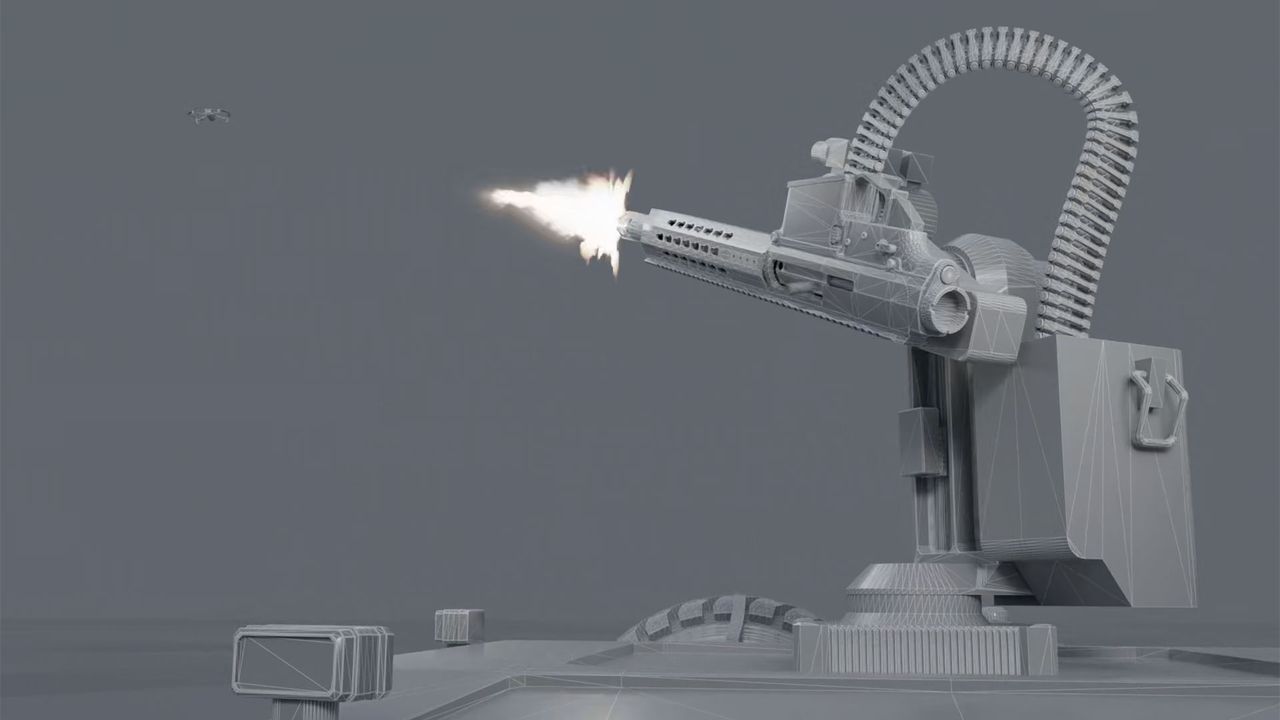
In the video, you can see the Ukrainian unmanned surface vehicle (USV) target what is claimed to be a Russian MBek and fire several rounds with its 12.7mm ‘Protector RWS’ automatic turret. The official Telegram bulletin states that the Russian USV was “detected by the GUR units.” We understand GUR is an acronym for the Main Directorate of Intelligence of Ukraine's Ministry of Defense.

After taking fire, there is at least one explosion, and then smoke begins to surround the Russian USV. Ukraine must also have had some flying drones in the vicinity, as we have some aerial footage of this historic unmanned naval duel.

Eventually, and we are uncertain how long the battle went on, the video shows the MBeK slipping down to its watery grave. The Russian vessel sank with a characteristic nose dive to the sea floor, perforated like a tea bag.

Sargan 3000 wins

(Image credit: UA Navy Telegram channel)

The Sargan 3000 entered service for the Ukrainian Navy in April 2026. Ahead of this latest headlining feat, the same type of USV hit the headlines for sinking a Russian FSB border patrol ship ‘Izumrud,’ off the coast of the Russian resort town Gelendzhik in mid-July.

Ukraine's unmanned sea drone is a multi-purpose platform, and its multi-payload flexibility appears to have been confirmed by imagery and operator statements. The automatic turret model in today’s video might be somewhat different from how the Izumrud wrecker was equipped, for example. Photos have also shown variants of this USV kitted out with an FPV drone carrier, plus two transport and launch containers, and a remote weapon station.

The Sargan 3000 is thought to be nearly 23 feet (6.9m) in length, has a combat radius of almost 1,000 miles (1,600 km), can carry a payload of up to 990 pounds (450kg), and has a top speed of around 50 knots. Ukraine can produce around 25 Sargan 3000 USVs a month, it is estimated.

The U.S. and UK are also busy developing sea drones. Some are already being tasked with protecting undersea cables and pipelines.

✇Tomshardware

Iran could potentially reverse-engineer captured US underwater drone — several Iranian embassies mock US over capture, Navy claims lost Anduril vehicle was defective and unclassified

作者 Etiido Uko

Iran is likely to study and attempt to reverse-engineer a U.S. Navy underwater drone captured by Iranian forces near the Strait of Hormuz, potentially handing Tehran useful technology while delivering a setback for the Pentagon. According to a Reuters report published September 9, the 19-foot Dive-LD autonomous underwater vehicle malfunctioned while surveying regional waters before Iran’s Islamic Revolutionary Guard Corps recovered it.

Both the U.S. military and the drone’s manufacturer Anduril quickly moved to downplay the significance of the loss. Analysts cited by Reuters also said the captured drone was unlikely to provide Iran with a decisive military advantage. At the very least, however, the vehicle gives Tehran a propaganda victory and an opportunity to examine American undersea technology as the U.S.-Iran war enters its seventh month.

Tehran already appears to be having a field day with the situation, with Iranian embassies around the world mocking the U.S. for losing the drone. In an X post, Iran’s embassy in Ghana compared its recovery to pulling a plastic bottle from a fishing net, adding that it was “still blinking like an idiot.” Iran's embassy in Hyderabad was even more direct about what might happen next, posting: “Unboxing ceremony by our reverse engineers, tomorrow morning!”

A noticeable gap has emerged between how Anduril markets the Dive-LD and how the U.S. military is now describing the captured vehicle. Anduril promotes the Dive-LD as a highly reliable and adaptable large autonomous underwater vehicle capable of operating for up to 10 days in demanding environments, previously calling the platform the most reliable and flexible autonomous underwater vehicle on the market. The Navy, meanwhile, described the lost vehicle as an older, defective model that “neither collected sensitive data nor carried any classified sonar or radar equipment.”

Despite attempts to downplay the incident, Washington has historically taken similar incidents seriously. After Iran recovered an RQ-170 Sentinel stealth reconnaissance drone in 2011, then-President Barack Obama publicly requested its return. Tehran subsequently claimed that it had reverse-engineered the aircraft and unveiled domestic drones apparently influenced by its design. In 2022, the U.S. Navy dispatched a patrol ship and an MH-60S Seahawk helicopter after an Iranian naval vessel attempted to tow away an American Saildrone surface vehicle in the Gulf.

Iran's comical commentary is backed by a genuine ability to extract useful information from captured hardware. Bryan Clark, director of the Center for Defense Concepts and Technology at the Hudson Institute, told Reuters that Iranian engineers “could definitely reverse-engineer the mechanical systems.” However, he was more skeptical about Tehran’s ability to penetrate the software, which reportedly includes defenses intended to frustrate exploitation attempts.

Regardless of any reverse engineering limitations, analysts say Iran will continue to present the incident as evidence of Iranian control around the Strait of Hormuz and U.S. vulnerability there. “This is something that Iran has proven very adept at exploiting for its own benefit in terms of seeking to frame the narrative as one of U.S., in this case, ineptitude and their ability to sort of retain control over the Strait of Hormuz,” said Mona Yacoubian, director of the Middle East program at the Center for Strategic and International Studies.

The United States and Iran have been at war since Washington launched Operation Epic Fury in late February, with the conflict repeatedly spilling into the technology industry and its supply chains. In April 2026, an Iranian strike halted production at Saudi Arabia’s Jubail petrochemical complex, disrupting supplies of a critical resin used in PCB laminates. Iranian cruise missiles also reportedly struck an Amazon data center in Bahrain in July.

✇Tomshardware

Trump slaps up to 100% tariffs on imported drones and critical components in latest move against China's proliferation of U.S. drone market, citing national security — products from allied nation face 10-15% rates

作者 Etiido Uko

The Trump administration has imposed tariffs of up to 100% on imported drones and their components. This is its latest move in a long-running campaign to reduce reliance on foreign drones and other electronics — especially Chinese — citing national security while bolstering the domestic supply chain. The tariffs came into effect on Thursday, September 3, 21 days after President Donald Trump signed the measure on August 13. Consequently, the U.S. Customs and Border Protection (CBP) published guidance detailing exact filing procedures and tariff rates for the affected drones.

The proclamation categorizes drones by capability, with the 100% rate applying to unmanned aircraft with a maximum takeoff weight above 55 pounds (25kg); any drone with thermal imaging and docking stations; and a defined list of critical components, including static converters, airframe components, and electronic control boards. The White House calls this category “particularly sensitive for natural security purposes.”

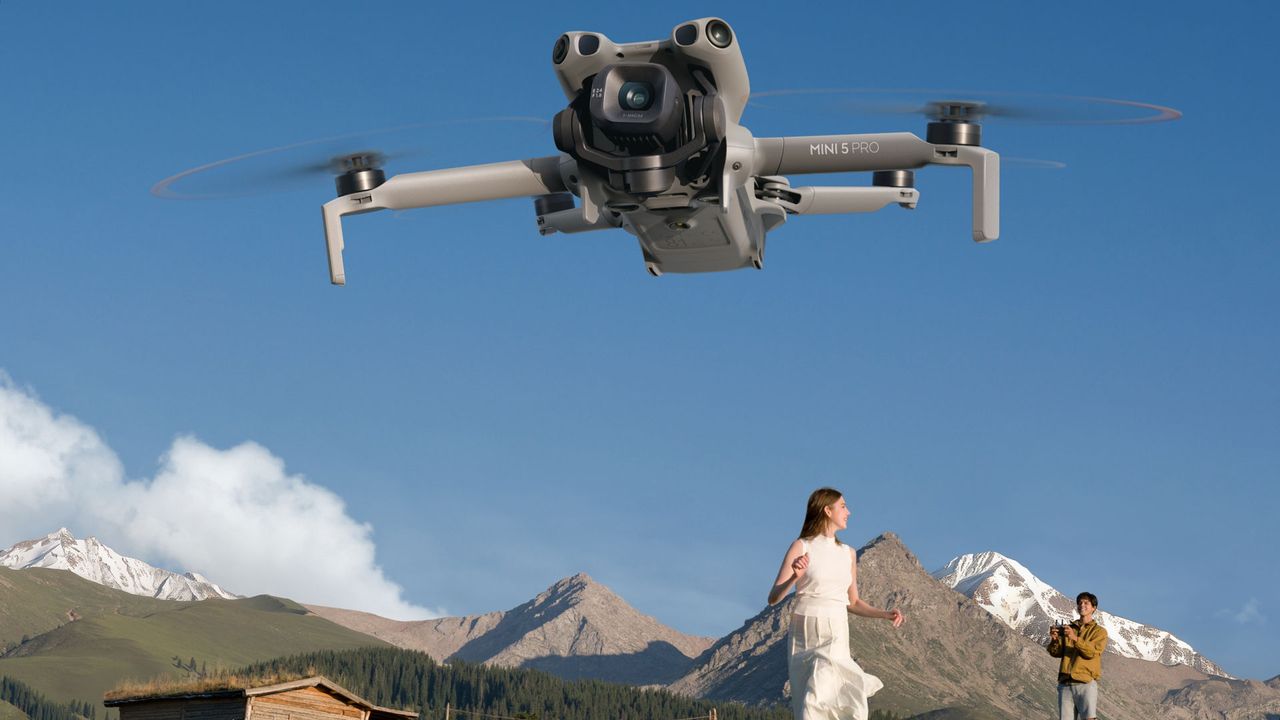
A 25% rate applies to smaller drones that lack those capabilities, as well as other components. This system of classification splits many brands into both categories. DJI’s thermal-equipped, public-safety Matrice series, for example, falls into the 100% bracket regardless of its weight, while consumer models such as the Mini and Air series are at 25%. Both rates apply to imports regardless of country of origin, except for specific allied countries. However, they overwhelmingly land squarely on China — home to DJI, which holds more than two-thirds of the global market and supplies the bulk of the drones on US shelves.

Drones and components from the European Union, Japan, Liechtenstein, South Korea, Switzerland, and Taiwan are set at 15%, while those from the United Kingdom are set at 10%, provided that substantially all of the hardware, software, and technology originates in those countries or the United States. The proclamation also phases in the tariff across two component groups. A 25% to 100% rate on finished aircraft, docking stations, and the most sensitive components — power converters, flight-control boards, and the airframe parts used in drones over 25 kilograms — took effect on Sept. 3. For a second, lower-priority group of components — largely the same categories of parts, but produced for smaller consumer and commercial drones — the rate, which is set at 25%, does not take effect until Feb. 9, 2027. The administration framed the 180-day runway as time for importers to shift sourcing.

The tariffs are the latest development in a widening federal effort to push Chinese drones out of the US market on grounds of national security. In December 2025, the Federal Communications Commission added all foreign-made drones and their critical components to its Covered List, blocking new models from the authorization they need to be sold domestically. Last month, the agency moved to retroactively ban previously cleared models it deems "military-grade," including those with LiDAR. That proposal's public-comment window closed September 2, one day before the tariffs took effect. If passed, many of the items affected by the tariffs would be automatically banned. Conversely, if the proposal fails, the tariffs would still apply significant pressure.

The proclamation pairs the duties with incentives meant to rebuild a domestic supply chain, with U.S. makers such as Skydio attracting major investment since the original ban. The onshoring push has also drawn scrutiny for its proximity to the president's family. Donald Trump Jr. has sat on the advisory board of Florida drone-parts maker Unusual Machines since November 2024 and holds a sizable stake. The company's shares climbed sharply after the tariff announcement. Government-ethics groups have flagged the arrangement as at least the appearance of a conflict.

✇Tomshardware

Japan to mass-procure 3D-printed rocket-powered drone interceptor — Terra B1 capable of countering one-way attack platforms

作者 Mark Tyson

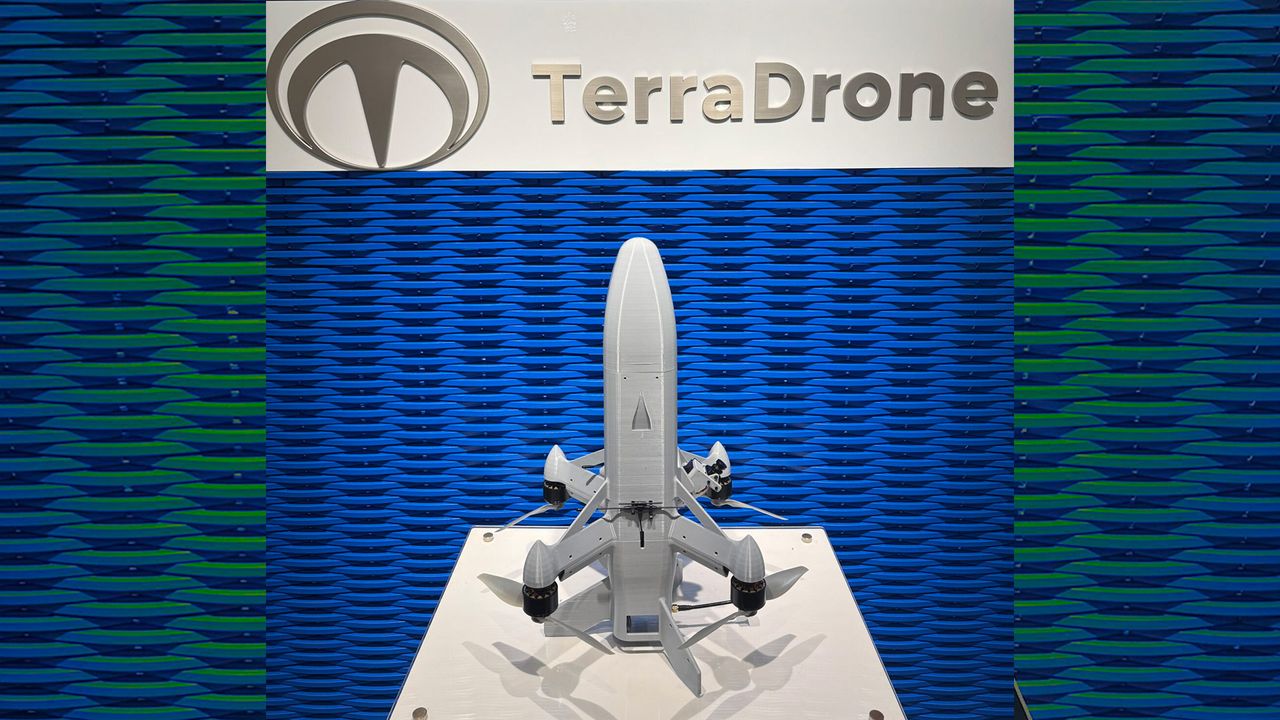
Japan’s military has decided to mass-procure Terra B1 interceptor drones. These drones are fabricated using 3D printers and are based on the tried and tested A1 model from Terra Drone, which began to be deployed by Ukraine earlier this year. A demo of the Terra B1 impressed Japan’s Maritime Self-Defense Forces enough to swing the mass-procurement agreement. These interceptors are expected to capably counter notorious drone threats like the Shahed designs and anti-radar loitering munitions such as the IAI Harpy, notes 3D Printing Industry news.

The Japanese Acquisition, Technology, and Logistics Agency (ATLA) is the body that rubberstamped the deal with Terra Drone. According to a press release from the latter, the Terra B1 is being mass-produced in Japan after successfully passing trials. It was just one of a range of designs put forward by 38 separate companies. To be chosen by ALTA, the B1 had to satisfy a number of criteria such as “effective range, flight duration, flight distance, maximum and cruising speed, guidance method, number of aircraft that can be controlled simultaneously, launch and recovery methods, integration with other systems, safety measures, [and] operational track record,” says Terra Drone. The first Terra B1 interceptors are expected off the domestic production lines sometime this month.

We witnessed the clamor for cheap and effective anti-drone solutions when the conflict between the U.S. and Iran erupted earlier this year. Gulf states seen as U.S. allies or sympathizers were repeatedly targeted by airborne Iranian threats, but their anti-air missiles weren’t designed to counter such attacks. Patriot missiles, for example, are too expensive and in too short supply to match drone threats 1-to-1. It wasn’t sustainable. It didn’t take long, therefore, for battle-proven Ukrainian anti-drone tech to be bought in.

Now we see Japan proactively following the cheap-yet-effective drone interceptor route. 3D printing is another emerging tech that will be applied here to enable Japan’s Self-Defense Forces “to acquire more effective drone countermeasure equipment with greater speed.” After a successful initial deployment by the Maritime Self-Defense Force, Japan’s Air Self-Defense Force and Ground Self-Defense Force may also look at customizing Terra B1 interceptors for their needs.

This isn't the first example of important synergies between drone and 3D printing technologies. We also recently reported on drones, drone parts, and other maintenance and repair essentials being 3D printed aboard the USS Essex. This was all done inside a compact containerized factory as the ship sailed to take part in RIMPAC 2026 around Hawaii.

✇Tomshardware

US military uses high-energy lasers to shoot down three Mexican cartel drones over the southern border — narcos suspected of using UAVs for surveillance and reconnaissance to support illegal activities

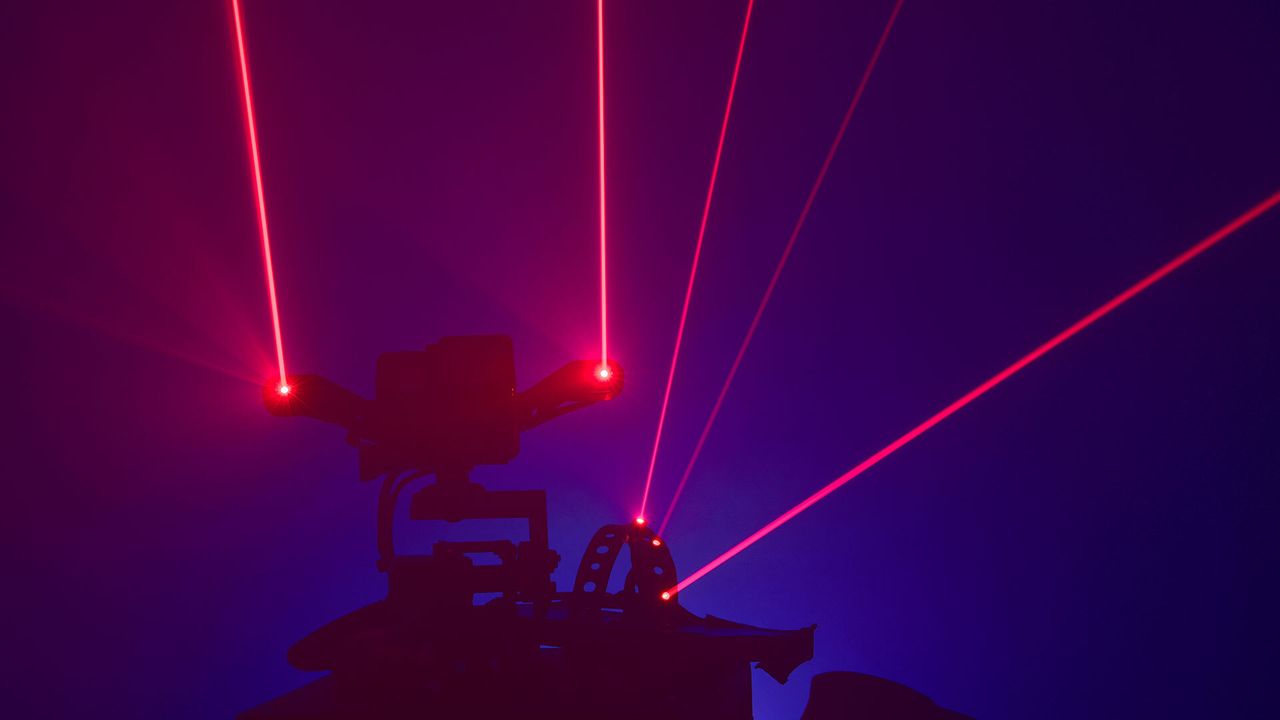
The U.S. military shot down three drones that were suspected of operating for Mexican cartels earlier this week. According to CBS News, the uncrewed aerial vehicles (UAVs) were destroyed by an “Army Multipurpose High Energy Laser System” operated by U.S. Northern Command (USNORTHCOM) between Tuesday evening and Wednesday morning.

"Cartel networks are increasingly employing unmanned aircraft systems to facilitate illicit human-smuggling and actively spy on our personnel and law enforcement partners," Maj. Gen. Curtis Taylor, commander of the southern border's Joint Task Force, said in a statement. "By integrating layered countermeasures alongside advanced directed-energy capabilities like this laser system, we have made it clear that we will not tolerate hostile surveillance." It’s unclear if the drones were shot down over American or Mexican airspace, but a military spokesperson told the outlet that they “were taken in coordination with all partners operating along the border.”

This isn’t the first time that a laser weapon has been used to defend American airspace. Back in February, the Pentagon used a similar system after it detected and shot down unknown aerial targets. This resulted in the emergency closure of a major airport, resulting in massive disruptions, and it also turned out that the targets were later reported to be just party balloons. Another incident involving the use of laser weapons happened a couple of weeks later, and it resulted in the shooting down of an actual drone this time. Unfortunately, the targeted drone turned out to be from the Customs and Border Protection unit, not a hostile one operated by the Mexican cartels. The military refused to release further details about the recent drone shoot-downs, citing operational security and ongoing operations, but they’ve hopefully hit the correct targets this time.

The U.S. isn’t alone in deploying drones for protecting its assets and territories. The UK has recently revealed that it’s deploying its DragonFire laser weapon on Royal Navy destroyers by 2027, while China has developed a backpack-sized man-portable anti-drone laser system that can hit targets up to 1,600 feet away. While these systems are expensive to acquire, they’re much cheaper to operate compared to traditional man-portable air defense systems or MANPADS, with each shot costing as little as $13 (versus the thousands to millions of dollars for missiles). This makes them more economically feasible for defending against drones, whose effective use in the battlefield has been made prominent by Ukrainians as they defended against the much larger Russian military. But even if you’re a civilian, you can get your own laser air defense system for around $1,000 and protect your home from flying bugs.

✇Tomshardware

Startup raises $7 million to build backpack-portable 8.8-ounce drone interceptors — Mara claims 20x cost advantage over other interceptors, priced one-for-one against attack drones

San Francisco defense startup Mara has secured $7 million in a pre-seed round to produce what it calls Spike, a portable counter-drone system housed inside a backpack. The complete system costs $30,000 to $100,000, depending on the number of Seekers included, but its 250g (~8.8 ounces) autonomous interceptors are designed to cost no more than the few-hundred-dollar FPV quadcopters they destroy. Those quadcopters, which carry munitions capable of destroying armored vehicles worth millions, are now reported to be the leading cause of Ukrainian combat casualties.

A single Spike launcher holds up to 48 of the Seeker interceptors and reloads in less than a minute, with each Seeker capable of engaging targets out to roughly one mile, per Mara's published specs. In an exclusive interview, CEO Daniel Kofman told the outlet Tectonic Defense how FPV crews operate on the frontline. "They launch from anywhere at anything, and they never attack one at a time. They always attack four to six at a time in waves, doing pincer strikes in rapid succession or simultaneously."

The system's Spotter targeting unit fuses electro-optical and acoustic sensors with an optional low-emission W-band radar, and Mara says it detects and tracks fiber-optic and fully autonomous drones in all weather, day or night. Radio-frequency jammers and RF-based detectors can't touch either drone type, since neither emits a control signal to find or break.

Kofman says that the Seekers are built to trade at a "one-to-one" or a "worst case, two-to-one" cost ratio against the drones they intercept, with Mara claiming that the interceptor costs 20 times less than the next-cheapest alternative. Fully autonomous, Mara claims the Seekers respond much faster than a human can react to a 100 mph quadcopter, though a human stays in the loop at all times to set rules of engagement and abort launches.

Mara’s system is substantially cheaper than systems like Lockheed Martin's reusable Morfius X-Rotor, which downs swarms with high-power microwaves, but close to the $1,000 3D-printed interceptors Ukraine builds against Shahed-type drones, though those target larger, slower threats than FPV quadcopters.

Mara joined NATO's DIANA accelerator 2026 cohort and holds cooperative research agreements with three unnamed U.S. defense organizations. The company is also running a civilian pilot at a South Korean commercial port. Ukrainian forces have operated Spotter near the front line, where the company says it tracked multiple FPV drones from 40km (~25 miles) back, and Mara has its first paid order from a European NATO partner for an undisclosed exercise.

Ground-mounted Spike units are due to be in customers' hands by the end of 2026, with vehicle-mounted and man-portable variants and scaled production planned for 2027.

✇Tomshardware

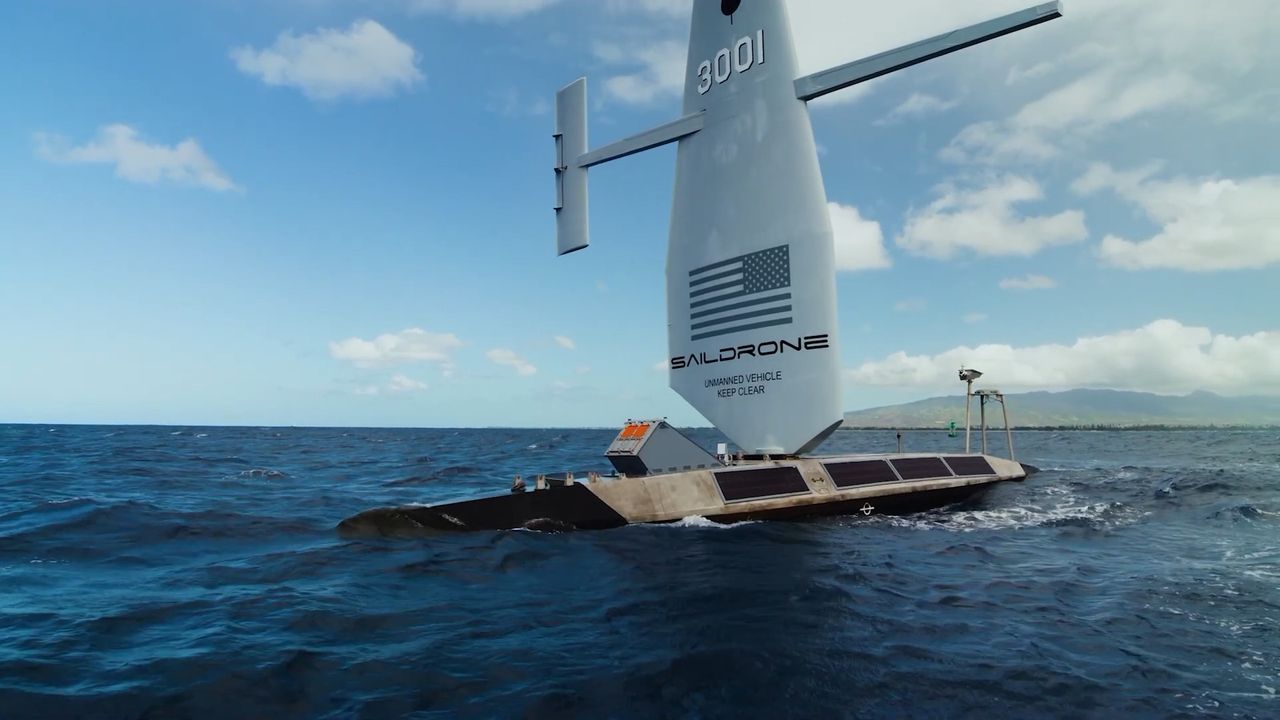
US Navy launches missiles from its first drone sailboat — Saildrone Surveyor launches dual JAGM missiles, carrier strike group tests armed USV and electronic warfare

The U.S. Navy successfully tested a sail-powered drone in live-fire exercises in the Pacific: the Saildrone Surveyor SD-3001 Unmanned Surface Vessel (USV), which was co-developed with Lockheed Martin to carry lethal combat technology. During the recent Rim of the Pacific (RIMPAC) 2026 exercises, the Saildrone launched two combat-proven Joint-Air-to-Ground Missiles (JAGM) in coordination with the USS Theodore Roosevelt (CVN-71) Carrier Strike Group. The Saildrone’s use in passive electronic warfare (EW) tasks was also verified during the exercises.

At RIMPAC, the USS Theodore Roosevelt (CVN-71) Carrier Strike Group had access to the Saildrone as a combat asset for the first time. Under the control of ARES, the sea drone successfully launched two lethal JAGM missiles. These missiles feature two independent guidance modes: a semi-active laser and millimeter-wave radar. Combining both, the JAGM can be effective in all weather, including low-visibility maritime environments.

The development of the Saildrone Surveyor SD-3001 USV with JAGM has been remarkably rapid. Work began on the collaborative project back in October 2025, with the partners hoping to “combine Saildrone unmanned surface vehicles with Lockheed Martin’s combat-proven effectors.” Both parts of the equation were operationally proven, yet getting everything working as intended within six months, and then taking part in a successful live-fire demo remains quite an achievement. The goal also required the integration of the USV into the Navy fleet environment so it would work with the Navy’s Adjunct Remote Engagement System (ARES). That’s what was demonstrated at RIMPAC this year.

Another useful function of the long-term, long-range autonomous Saildrone demonstrated at RIMPAC was its EW capability. The sail-sporting drone coordinated its sensors with an MH-60S helicopter to successfully detect, classify, and identify a surrogate threat during the exercises.

Lockheed Martin, Saildrone, and the U.S. Navy have more tests and trials planned for this seafaring USV. Saildrone notes that the “SD-3001 is now well on its way to its next mission.” Meanwhile, work alongside Lockheed Martin continues, with this demonstration claimed to have de-risked larger payload integrations planned for the larger Saildrone Spectre. The Spectre is expected to carry “significantly larger containerized capabilities including the Lockheed Martin Mk 70 launcher and SURTASS Towed Array.”

✇Tomshardware

Nvidia Jetson Orin-guided Russian AI drone killed three civilians in Ukraine, forensic teams say — first documented case of civilian deaths caused by a Russian drone using fully autonomous targeting

A Russian Molniya drone carrying an Nvidia Jetson Orin module crashed and killed three civilians at a gas station in Zaporizhzhia last month after choosing its final target without a human pilot, according to a New York Times investigation that cites Ukrainian air defense commanders, drone experts, and the forensic team that examined the wreckage.

Kateryna Bondar, a senior fellow at the Center for Strategic and International Studies, told the paper it's the first documented case of civilian deaths caused by a Russian drone using fully autonomous targeting. The dead were Tetiana Bubynets, a 19-year-old accounting student, and two men aged 41 and 48.

Human operators launched the drone toward the gas station, per the report, but the final aim point was selected onboard by software trained to recognize objects such as propane tanks. The aircraft failed to clear an apartment building on its approach, struck a wall, and detonated near people sheltering below, rather than striking its chosen target.

The strike drone flew in a group of roughly half a dozen aircraft, none of which emitted radio traffic, Ukrainian air defense officials said. Modules recovered from this attack and from intact test drones carried no encryption, so investigators could examine both the terrain imagery loaded for visual navigation and the code specifying which object classes the drone had been trained to attack. "Machines are making decisions to strike," Col. Serhiy Minaiev, Zaporizhzhia's air defense commander, told the NYT. Russia is understood to have begun AI-guided test flights of the mass-produced, fixed-wing Molniya in May, after months of self-targeting trials with the V2U.

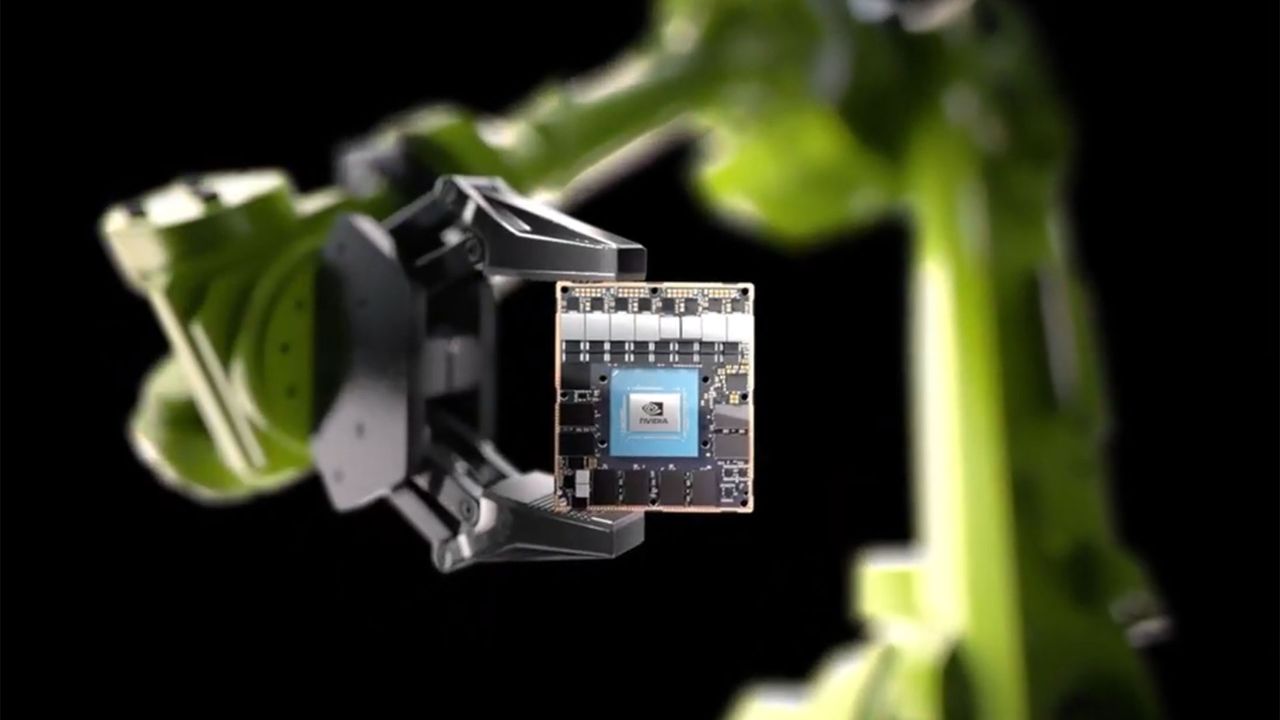
Nvidia confirmed to the New York Times that modules photographed in the recovered drones were Jetson Orin minicomputers, hardware that sells for a few hundred dollars. "Our Jetson Orin modules are consumer-grade products sold to students, developers, and startups for a wide range of beneficial applications," an Nvidia spokesperson told Tom's Hardware. "They are not available in Russia and are not designed for military purposes. Pre-owned Jetsons are available through many reseller channels. Although we cannot track products after they are sold, if we determine that any customer is violating U.S. export controls, we will take appropriate action."

Ukrainian investigators have now linked the Jetson Orin to four Russian weapon families. A teardown by Ukraine's GUR intelligence agency last June found one seated on a Chinese Leetop A603 carrier board inside the V2U loitering munition, in combat use since February 2025. Weeks later, a Ukrainian general said the module powered object recognition in the upgraded Shahed MS001, and earlier this month Ukraine reported the same silicon in the S-71M Monochrome cruise missile. Data-center AI accelerators fall under U.S. export controls; edge modules like the Jetson Orin, with variants starting at $249, don't.

Mykhailo Fedorov, Ukraine's recently ousted defense minister, told the NYT that Kyiv tested its own fully autonomous system against fuel storage and military equipment in occupied Crimea in recent months, and Ukrainian quadcopters killed Russian soldiers in autonomous mode as far back as 2024. In Zaporizhzhia, defenses now include roughly 240 miles of anti-drone netting and plastic sheeting propped at odd angles around propane tanks to throw off image recognition.

✇Tomshardware

Self-driving Ford F-250 truck with shotgun-equipped drone-killing turret tested by US Army — autonomous system designed to blast fast-moving drones at between 10 and 100 meters range

The U.S. Army tested an autonomous breaching vehicle with an onboard counter-UAS (C-UAS) turret during a live-fire exercise at Fort Bragg on August 18. As part of Project Sandhills 2.0, self-driving Ford F-250 trucks were put through their paces, some armed with computer-controlled drone-killing shotgun turrets.

Sandhills 2.0 builds on the original Sandhills project which spawned the Lancer UGV, built on the Polaris Ranger 1500 utility vehicle, which ended up being gifted to Ukraine. However, this new breaching solution adds C-UAS abilities to bolster their abilities to clear the way for human soldiers to advance. Breaching operations can be seriously compromised by a determined enemy using increasingly common FPV drone technology and this fact inspired the changes delivered in Sandhills 2.0.

Forterra AutoDrive system

(Image credit: Forterra)

The vehicle chosen for Sandhills 2.0 was a self‑driving Ford F‑250 truck, equipped with Forterra’s AutoDrive system. Ford’s readily available spares should make the F-250-based system easier to maintain and repair, reckons Forterra’s VP of defense. That is another important factor the designers weighed, for this latest iteration of a viable U.S. Army autonomous breaching vehicle.

Meanwhile, the Edda counter-unmanned aircraft system turret (built by Austin-based 9 Mothers) takes care of fast-moving drone threats of 7-inch diameter or larger, at ranges between 10 to 100m (33 to 328 feet). The source report notes that the turret weighs around 23kg (50 pounds).

Interestingly, the turret first detects incoming drones acoustically before an onboard visual tracking system locks on. This methodology prevents the F-250-based system from being easily detectable by advanced enemy drone sensors, suggests the source report. Finally the shotgun-armed Edda engages the enemy drone. According to 9 Mothers published data the Edda turret is an “ultra-fast, ultra-light, ultra-accurate motion platform — 5° in under 15 ms at 1.5 arcminute precision.” We would welcome some test data, though – like what percent of drones get destroyed in one shot, the maximum speed of drones that Edda can engage, or how many drones it can handle per minute.

✇Tomshardware

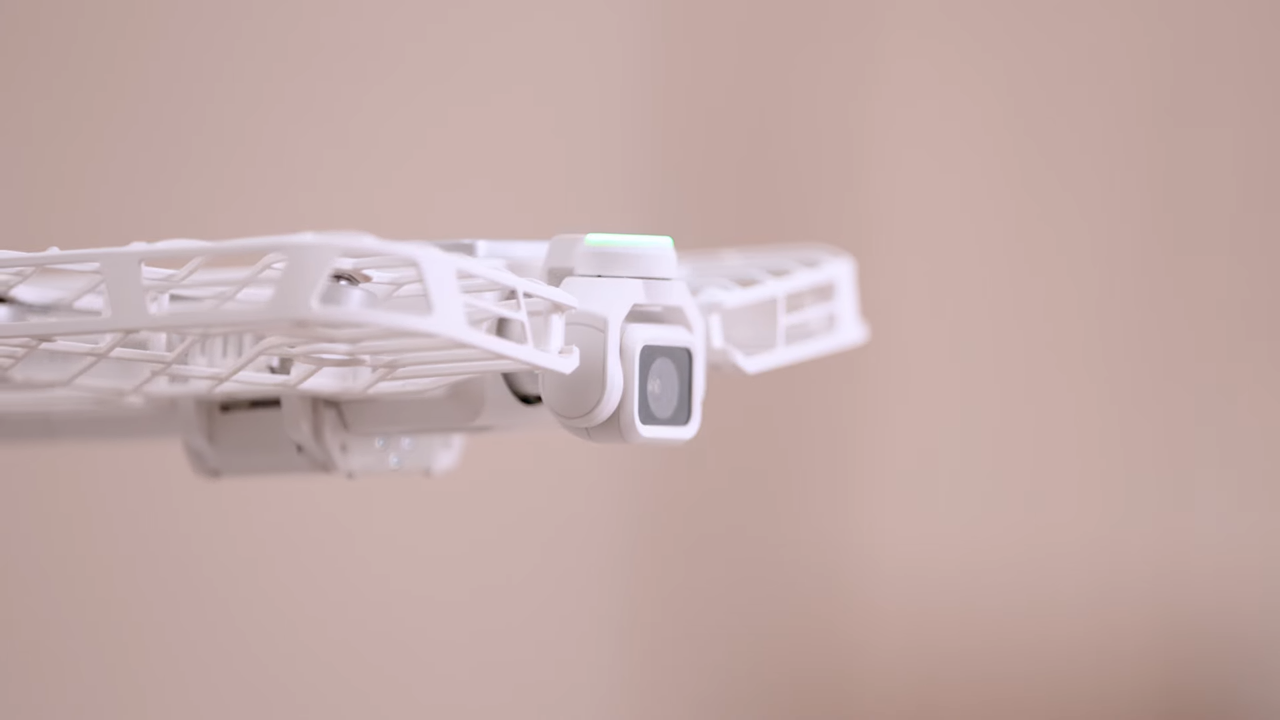
Modular pocket gimbal camera that transforms into a self-flying drone retroactively banned by FCC, certification revoked — Agency closes foreign UAS loophole on 230g HoverAir Versa

HoverAir has pulled the Flight Kit for its Versa camera drone from U.S. buyers on its Indiegogo campaign three days after it opened on August 19, telling backers that "due to a few remaining logistics updates with the Flight Kit, we're currently only shipping our PocketOnly and PocketCombo combos to the US." In a statement to DroneXL, however, the FCC says the authorization "was granted erroneously," the device is "a prohibited UAS critical component produced in a foreign country," and the company was "apparently willfully violating" the law.

The Versa, a 230g pocket gimbal camera that snaps into a separate propeller chassis to fly, raised more than $230,000 in its debut, thanks to a U.S. certification that HoverAir said let it dodge the ban that's kept DJI's newest models out of the country. The device's FCC ID has since disappeared from the commission's equipment database, according to The Verge, which said HoverAir declined to comment.

The FCC granted ID 2AIDW-ZZ-H-1-006 to Shenzhen Zero Zero Infinity Technology, the HoverAir parent's grantee entity, earlier this month for the Versa as a camera rather than a drone. The Flight Kit carries the motors and props but no radio, drawing power and telemetry from the camera through pogo pins, meaning it never needed its own FCC ID.

HoverAir announced the certification on August 18 and priced the camera at $449 early bird, with Flight Kit bundles starting around $630 and shipping slated for October. By August 21, U.S. visitors to the Indiegogo page couldn't see the Flight Kit tiers while Canadian visitors still could, and backers received an email attributing the change to "a few remaining logistics updates with the Flight Kit."

The December 2025 Covered List order that barred new authorizations for foreign-made drones also covers "UAS critical components," which the FCC's public notice DA 25-1086 defines to include flight controllers, navigation systems, batteries, motors, and "sensors and cameras," with the list marked as not exhaustive. A camera built to bolt onto a propeller frame satisfies that definition regardless of which product category it's certified under, and the FCC said it's now "sending guidance to all Telecommunications Certification Bodies to strengthen their due diligence of applications." The commission outsources equipment authorization to those private labs, which is likely how the Versa grant slipped through the cracks.

The only exemptions issued so far were approved back in January and cover Blue UAS-listed aircraft and components that qualify as domestic end products. Neither applies to a Chinese consumer camera; DJI is challenging the underlying order in court.

HoverAir's previous crowdfunder, the waterproof Aqua, raised more than $2 million from over 1,800 Indiegogo backers in August last year but missed the December deadline after the October government shutdown slowed FCC processing. It launched in more than 50 countries in May without the U.S., with American backers offered refunds.

The Versa is still listed with the Flight Kit in other markets, and U.S. backers can still take the camera-only tiers, though the FCC's statement that even the camera is a prohibited component casts doubt on that option. HoverAir is due to show the Versa at IFA in Berlin on September 3, with retail availability planned for fall.

✇Tomshardware

Startup to use drones to keep clouds away from solar farms, 'Our ultimate goal is to reduce the intensity of severe storms and hurricanes' — chemical-free tech promises up to 30% power boost for $30 to $60 an hour

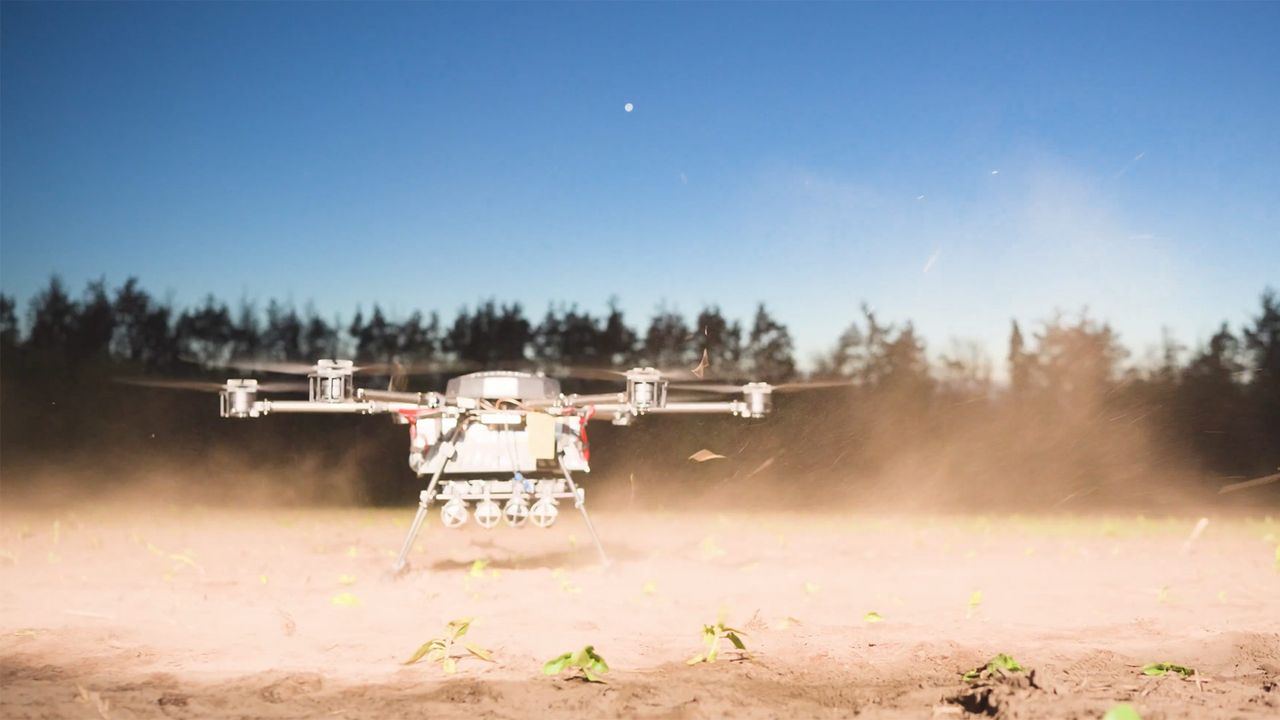
Meteoric, a startup by two engineers from the University of Cambridge and backed by Y Combinator, plans to build drones that will autonomously fly inside low- and mid-altitude clouds near solar farms to dissipate them and help keep power production in optimum conditions. According to Mete Karslioglu, Meteoric’s CEO, these drones will mechanically alter the water droplets inside clouds that cover solar farms, reducing their reflectivity and increasing the amount of sunlight that hits the panels below.

“Low and mid-level overcast clouds cut incoming sunlight by 73–82% while they’re overhead. We recover that without building new infrastructure,” Karslioglu wrote in their Y Combinator post. “Fleets of 10s-100s of autonomous drones that fly into low and mid-altitude clouds (1–5 km) over a solar farm and alter the water droplets that form them without using any chemicals. This reduces their reflectivity and brings back measurable amounts of sunlight to the panels below. Our cloud-loss model shows that this process can increase annual generation from existing assets by 10-30% across major U.S. grid regions, worth ~$5,000-28,000/MW, without building any new infrastructure.” They also added, “Our ultimate goal is to reduce the intensity of severe storms and hurricanes.”

How Meteoric's drones work

(Image credit: Meteoric)

It’s unclear what method the startup will use to help dissipate clouds, but it claims to have a working prototype that dissipated an artificial cloud by 13% in cloud-chamber tests. Techniques to dissipate fog and low clouds already exist, like dispersing solid or liquid carbon dioxide inside them to make the floating water droplets grow bigger and encourage them to fall from the sky, or through mechanical mixing, such as flying a helicopter through saturated air in order to mix them with drier air and make it easier for the water vapor to evaporate. However, Meteoric said that these methods are expensive, with aircraft operations costing $2,000 per hour or more. On the other hand, its electric drones would only cost $30 to $60 an hour, making its operations significantly cheaper.

This is a unique approach to one of the biggest problems of solar power, where changing weather patterns and the day/night cycle greatly reduce their output. Other institutions, both startups and tech giants, are also looking for ways to solve this. For example, Reflect Orbital proposes launching an orbital mirror to reflect sunlight in various areas to extend daylight, while Meta plans to put solar collecting satellites in geosynchronous orbit and then beam the sunlight to collectors on the ground below.

Now, the startup’s premise looks promising for localized applications, like solar plant deployments. However, its dream of scaling up to impact storms and hurricanes raises some questions. The World Meteorological Organization says that the amounts of energy involved in weather systems are so massive that it’s impossible to alter or eliminate severe weather phenomena. “Weather modification technologies that claim to achieve such large-scale or dramatic effects do not have a sound scientific basis and should be treated with suspicion,” the group said. There’s also the concern that modifying weather conditions, even locally, might have unintended consequences on the local ecosystem. Nevertheless, Meteoric’s plan to increase solar output by cutting cloud cover might be interesting for solar operators looking to maximize the production of their plants.

✇Tomshardware

Amazon delivery drone dumps Texas woman's parcel straight into her swimming pool — viral video surfaces the same week the company announces 500-city Prime Air expansion

On the same week that Amazon announced plans to expand its Prime Air Delivery service to 500 more cities and towns across the U.S., a video filmed by a Texas woman has surfaced, documenting the moment one of the company's delivery drones unceremoniously dumped a package straight into her swimming pool. The viral video was filmed after Lindsey Austen heard her drone buzzing loudly and ran outside to record it.

As you can see from the footage below, shared by ABC 7 News, the Texas Amazon customer was excited to receive her first drone-delivered order. "After hearing the loud buzzing of the drone arriving, she ran outside to record the delivery," the caption states. The painfully amusing footage shows the drone, humming loudly as it hovers over the woman's pool. The woman repeats "Oh my God" in anticipation, before yelling "Oh ****," as the autonomous robot opens its door and drops the package into the pool.

As mentioned, on Wednesday, Amazon announced it would expand Prime Air to nearly 500 cities and towns in the United States by the end of 2026, a 6x increase that will reportedly benefit tens of millions of customers. According to Amazon, its drone delivery selection includes millions of groceries, electronics, cosmetics, medications, and household products, which can be delivered in as little as 30 minutes.

Amazon already serves seven states with Prime Air, including the aforementioned Texas, where the unfortunate pool party took place. According to Amazon, Prime Air "is built to operate responsibly, and the safety of the employees, customers, and communities Amazon serves is the top priority." Its delivery service holds Federal Aviation Administration Part 135 certification, and "multiple independent systems" keep the drones "operating safely and predictably" while in flight, even in unexpected situations, Amazon claims. "Prime Air’s industry-leading Detect-and-Avoid system continuously monitors the airspace and environment around the drone. It’s similar to a trained pilot who scans the surrounding airspace, and it allows the drones to independently see and make real-time decisions while in flight," the company continues.

Adding to the irony, Amazon says that Prime Air drones use onboard cameras and sensors to navigate, check for obstacles, and deliver packages safely. Certainly, nothing unsafe happened in the video; the package fell harmlessly into the water, with no bystanders around to be struck. Likewise, in the video, the drone doesn't collide with any obstacles, but clearly, some malfunction in the final moments of delivery convinced the drone that simply dropping the package in the swimming pool was a good idea.

✇Tomshardware

Ukraine built a $48,000 long-range drone after covertly snapping Chinese factory photos, clone destroys Russian Tu-95 bomber — attack drone has 2,000 km range, country builds 6,000 flying-wing drones a year

A drone that destroyed a Tupolev Tu-95MS strategic bomber at Russia's Engels-2 air base last month turns out to be a MICH 2000, a reverse-engineered copy of a Chinese aircraft Beijing refused to sell to Ukraine, according to a factory report from defense outlet Oboronka. Built by an unnamed manufacturer exclusively for the SBU's 'Alpha' special operations center, the flying-wing drone carries up to a 60 kg warhead as far as 2,000 km and costs $48,000 in its base configuration, $2,000 less than the Chinese ZTK-150 it was copied from. It’s understood that Ukrainian developers covertly photographed the Chinese production line while attending pilot training there in late 2023.

China restricted exports of civilian drones in the summer of 2023 after Ukrainian units converted airframes like the Mugin-5 PRO into deep-strike munitions. A Ukrainian development team traveled to a Chinese factory late that year, found ZTK-150s in production, and negotiated to buy the manufacturing technology, but the factory's management blocked the sale.

Intermediaries offered pilot training instead, and the team accepted. "In parallel with the training, we photographed everything that was there," one team member, whom Oboronka didn't name, said in the report, which was cleared in advance by the manufacturer and the SBU. The team flew home with eight drones.

The first Ukrainian-built prototype crashed 1 km into its maiden flight in the summer of 2024, and Russian electronic warfare downed the third test aircraft. In the type's first combat sortie that October, one of three drones was shot down and the other two fell roughly 10 meters short. Yet, Alpha ordered production anyway.

Almost nothing of the ZTK-150 remains in the current MICH 2000 beyond its outline, the manufacturer told Oboronka. Two years of work localized engines, warheads, fuselages, and rocket boosters across dozens of Ukrainian suppliers, putting domestic content at 85% of the drone's value. Fitting a jam-resistant CRPA navigation antenna, however, cuts that to 55%, because the antennas cost $20,000 to $25,000 depending on module count and only a handful of companies worldwide make them. Ukraine has been chasing jam-resistant navigation across its strike drone fleet since at least 2025.

The company builds around 6,000 drones a year across eight versions, with buyers choosing analog, digital, or Starlink communications, and reinvests roughly $1 million a month in R&D while scaling toward 10,000 units annually. Fire Point, maker of the FP-1 that flew 2,500 km to hit Russia's largest refinery, targets 100,000 drones a year, though the FP-1 serves many units and the MICH 2000 has one customer.

Alpha has launched thousands of MICH 2000s at hundreds of targets, per the manufacturer, including a Wildberries logistics hub in Ryazan oblast, an anti-Starlink electronic warfare system near Gelendzhik, and the port of Ust-Luga, where one raid put more than 20 drones over the target. The SBU said the Engels-2 strike tore the tail section off the Tu-95MS, and satellite imagery later confirmed the bomber's destruction. A successor called MICH+ drops the type's forward canards and pairs a 70 kg warhead with a 600 km range at a target price near $40,000.

✇Tomshardware

Ukrainian drone regiment ‘decimates’ 3,500-strong U.S. armored brigade combat team in war game — High drone kill-rate forced continuous 'respawns,' reveals shortcomings in American response as drones easily spotted and destroyed tanks and armored vehicles

The 3rd Brigade Combat Team (3rd BCT) of the 1st Cavalry Division took part in the semi-annual Combined Resolve exercise in Germany, where it faced off with a dedicated U.S. Army OPFOR (opposing force) unit augmented by the 412th Unmanned Systems Brigade, better known as 412 Nemesis, an elite multidomain Ukrainian unit primarily operating drones. According to the Wall Street Journal, the 3,500-strong unit, which was tasked to attack the OPFOR, had many of its tanks and other armored vehicles eliminated during the simulated engagements.

The 3rd BCT is quite a powerful unit, and has been traditionally equipped with M1 Abrams tanks, M2 and M3 Bradley Fighting Vehicles, M109 Paladin Howitzers, and more. It also had standard electronic warfare and counter-drone operators to protect its vehicles against new threats. But despite the impressive armor and firepower of its equipment and the additional protection of its own specialized anti-drone troops, the 3rd BCT still didn’t stand a chance against the small and nimble drones of 412 Nemesis. It turned out that the biggest assets of the 3rd BCT are its biggest weakness. As the heavy vehicles maneuvered around the battlefield, they threw up plumes of dust that made them easy to spot by Ukrainian recon drones. From there, the UAV operators of 412 Nemesis turned these metal predators into sitting ducks as they either dropped bombs or explosives from loitering attack drones or used first-person-view (FPV) drones to smash directly into their targets.

Since this is an exercise, there were no actual losses — instead, damaged or destroyed tanks are marked by an attack drone hovering above them. Once an observer has awarded an official “kill,” the vehicle is sent back to the rear to “respawn” and continue the war game.

The WSJ noted that the U.S. pioneered the use of UAVs on the battlefield and often used them for reconnaissance and even long-range strikes. Even today, the U.S. Navy is developing an aerial refueling drone to release more important assets like the F/A-18 Super Hornet from mundane (but important) duties like air-to-air refueling. However, the Ukrainians have mastered the use of short-range drone warfare as they defended their country from the 2022 Russian invasion. The war has been going on for over four years now, and Ukraine’s successful use of drones has helped them hold off the Russians from pushing further into the country. Aside from using drones tactically on the front lines, Ukraine has also started deploying them strategically, conducting strikes deep into Russian territory and targeting gasoline infrastructure in Siberia, more than 1,500 miles (2,500km) from its launch site.

The experience of most units in American and NATO armed forces have been against poorly armed (but still dangerous) insurgents, so exercises like these are crucial for them to keep their edge. Even though the 3rd BCT was “decimated” in its initial engagements against the OPFOR and the 412 Nemesis, its performance gradually improved, and its troopers have become more proficient in dispersing their units to make them harder to target, as well as cover and concealment, making it harder for reconnaissance drones to spot them from afar.

While a few argue that drone warfare has made tanks obsolete, some officers in the U.S. military argue that this is only true if the situation has devolved into a stalemate, like the current situation on the Ukrainian front lines. If a gap in the lines appears and either side wants to exploit it, mobile warfare would still require the combined effort of tanks, armored vehicles, mobile artillery, helicopter support, and infantry. However, Ukrainian commanders disagree, saying that, in their experience, drones have made maneuver warfare unfeasible, at least for now.

Nations across the world recognize the threat that drones have to their forces, too. So, even as they build their own drone units, they’re also trying to develop effective counters to them, like this microwave system from Lockheed Martin or China’s man-portable anti-drone laser. If these devices make it to the front line and prove to be effective against drone attacks, they could potentially change the equilibrium and give one side an advantage over the other.

✇Tomshardware

US Navy 3D prints combat-ready drones and 1,000+ parts aboard aircraft carrier during exercise — containerized factory fabricated 80-mph FPVs and critical spares despite rough seas and 12-foot waves

During a two-week transit to RIMPAC 2026 in Hawaii, a containerized factory aboard the USS Essex 3D printed a dozen flight-ready drones, as well as over 1,000 parts including vital spares for Apache helicopters. 3D Printing Industry reports that this was the first maritime run of the xCell expeditionary manufacturing platform from Firestorm Labs. Furthermore, production wasn’t halted by the rough seas and up to 12 ft waves endured during the journey.

Big maritime milestone: xCell just proved expeditionary manufacturing works in real conditions.Firestorm's xCell platform printed 1,000+ parts, including 12 Squall FPV drones, en route to RIMPAC in Hawaii, as part of @NPS_Monterey CAMRE's distributed advanced manufacturing… pic.twitter.com/2jZEi3m4TIAugust 5, 2026

In Firestorm’s words, this additive manufacturing milestone using the xCell platform “just proved expeditionary manufacturing works in real conditions.” The 3D printers on board produced a plethora of useful things during the journey, on demand.

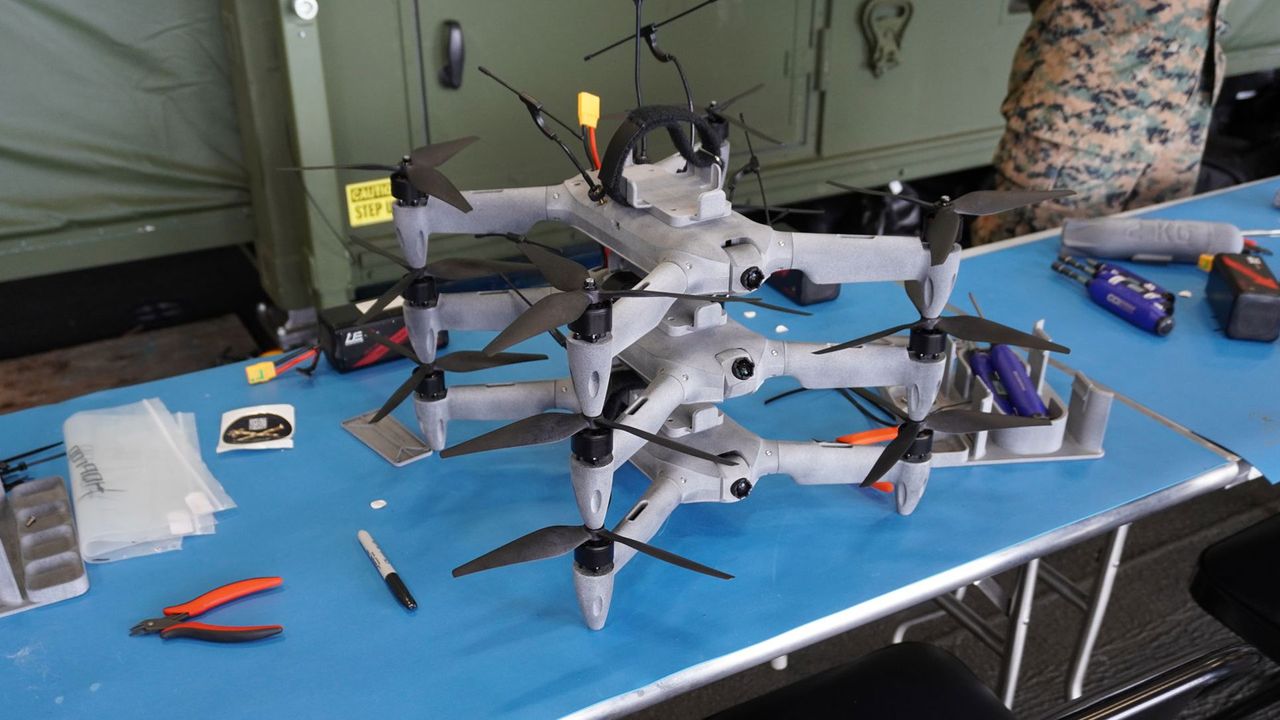
xCell’s containerized production line takes up just two expandable 20-foot ISO containers, or a single 40-foot equivalent. Inside are industrial HP Multi Jet Fusion polymer printers alongside semi-automated assembly stations.

Our headlining pick from the range of products that were manufactured at sea was the twelve quadcopter drones. These were Squall FPV drones, one of Firestorm Labs’ key products. The NDAA-compliant Squall is designed for U.S. forces to “Print. Build. Fly. Dominate.”

Squall has a range of up to 20 miles, a flight time of up to 42 minutes, a top speed of 80 mph, and can carry a 5.5-pound payload. These same drones were flown as adversary aircraft in a counter-UAS exercise when the USS Essex arrived at RIMPAC.

Drones might be the most newsworthy output from xCell, but other essentials that the crew printed en route to Hawaii included printed Apache helicopter rotor droop‑stops, designed to prevent $500,000 rotor damage during at‑sea operations. Another spare part highlighted by the source that was needed during the exercises was a 3D-printed custom vacuum‑hose coupling for life preserver testing.

Making up the 1,000+ 3D-printed parts and spares were crew-requested gadgets and gizmos like covers for electrical fittings, a bracket for mounting Starlink, gauges for checking deck tie-downs, and lots more. “Every part xCell printed on deck is one that doesn't need to be flown or shipped across contested waters — cutting the fuel, aircraft hours, and personnel it takes to keep a ship operational,” boasted Firestorm on social media. “Repairs that once meant days or weeks waiting on a resupply run can now happen in hours, on station.”

✇Tomshardware

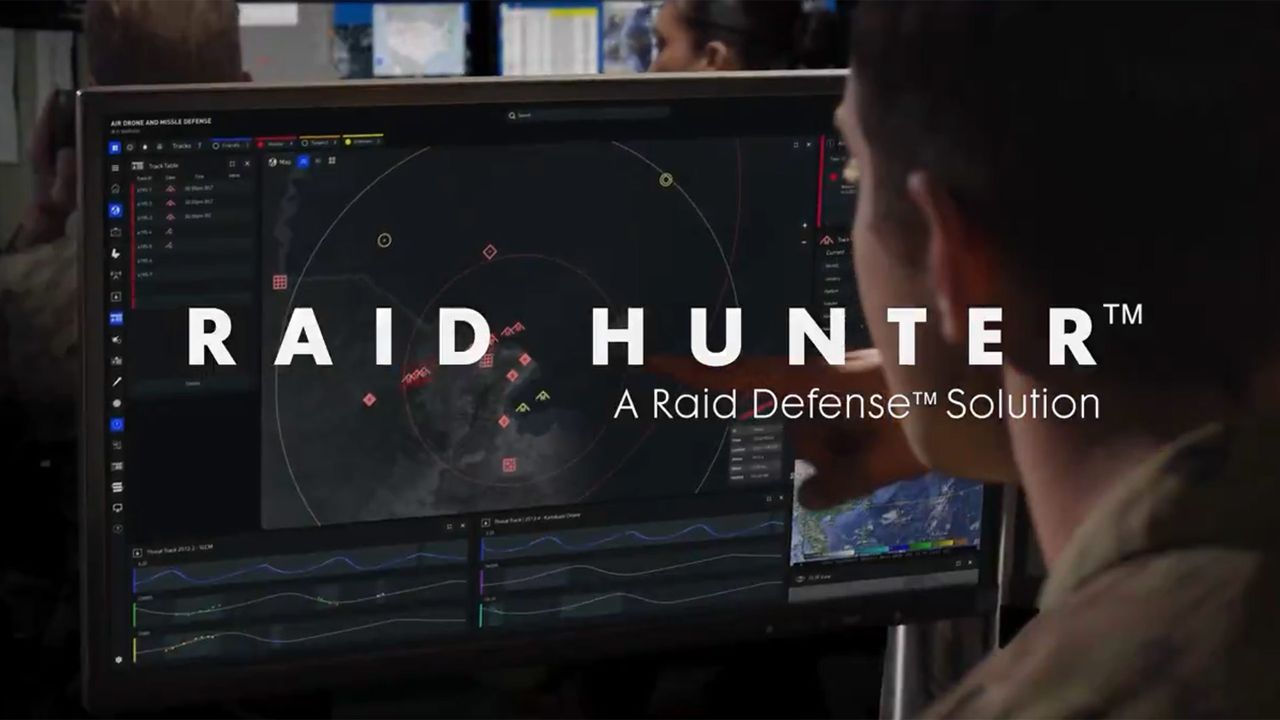
Anti-drone chain gun with 50mm precision-guided ammunition unveiled — Northrop Grumman's Raid Hunter is designed to wipe out drone swarms and cruise missiles

U.S. aerospace, defense and security giant Northrop Grumman thinks it has a solution that will provide short-range, layered air defense against the increasingly complex aerial threats we see in modern war. The new Raid Hunter uses the firm’s Chain Gun technology to defend targets from cruise missiles, drone swarms and other evolving threats. It thus addresses an area identified as a “critical short-range air defense gap.” Furthermore, the modular Raid Hunter can be rapidly deployed on the C-130 and other vehicles, with networking enabling sensor fusion and coordinated engagements.

The skies are changing. Defending against one threat isn’t enough anymore. Our Raid Hunter™ is built to meet the challenge with precision-guided gunfire and the speed needed to help protect what’s critical. pic.twitter.com/Meuqyg04oYAugust 11, 2026

We have seen in Ukraine, and more recently in the Middle East, that modern air defense systems are struggling with high-volume drone swarms and low-flying cruise missiles. The sheer amount of aerial threats is overwhelming defense systems that have traditionally been designed to knock out warplanes and cruise missiles. Moreover, expensive anti-air missiles such as the Patriot system seem inappropriate and imbalanced for stopping far cheaper and more numerous drones.

“War has evolved. Air Defenders need the ability to defend against large, complex raids designed to overwhelm traditional defense solutions,” said Kenn Todorov, VP and GM, command and control & weapons integration, at Northrop Grumman. This is the perceived gap Northrop Grumman hopes the Raid Hunter will fill.

Now that we have spelled out clearly what it is for, let’s look more closely at the Raid Hunter. Central to its proposed task is what Northrop Grumman calls its “proven Chain Gun technology, [and] precision‑guided 50mm ammunition.” This large-caliber and high-rate-of-fire gun is cost-effective, can be equipped with deep magazines, with fast reloads. It addresses “the economic challenge of massed swarming threats,” asserts the defense firm.

Northrop Grumman Raid Hunter
Northrop Grumman
Northrop Grumman Raid Hunter
Northrop Grumman

Raid Hunter is also easy to get into position, or move out of harm’s way, as a palletized modular design that can be vehicle-mounted or containerized.

This new counter-UAS solution’s abilities scale well, too. Northrop Grumman indicates that multiple Raid Hunter deployments can work as an integrated system in a networked, interoperable way. It also integrates with layered defense architectures – including other air and missile defense systems - to protect critical assets across a range of operations.

Tests of the Raid Hunter are going to continue this year to validate its counter-UAS and air defense capabilities. It is hoped that the tests will support accelerated fielding of these air defense systems.

✇Tomshardware

US imposes up to 100% tariffs on foreign-made drones and components — China remains primary target as Washington moves to reduce reliance on overseas suppliers

The Trump administration has announced new tariffs on foreign-made drones and their components, according to the Financial Times. The move is said to secure domestic supply chains and curb reliance on foreign technology, particularly from China. The new duties target both commercial and unmanned aerial systems, signaling a major push in the tech trade war. The administration justified the newly introduced tariffs on the grounds of national security under Section 232 of the Trade Expansion Act of 1962. Commerce Secretary Howard Lutnick said that import penetration is “substantial" and the US is "too reliant" on foreign drone producers.

According to the report, the White House will slap a 100% tariff on sensitive foreign drones, specifically those weighing over 25 kilograms or equipped with thermal imaging capabilities. Smaller, non-sensitive drones having a maximum take-off weight of 25kg will face a 25% import duty. To ease the transition, Washington is offering lower tariff rates for close allies. Drones from the European Union, Japan, Switzerland, and Taiwan will face a 15% tariff, while the United Kingdom is subject to a 10% rate, provided the hardware and technology originate in those locations or the US.

The regulation comes as the White House separately accused more than 40 countries of actively helping Beijing circumvent US tariffs by rerouting products through third-party nations. According to Craig Singleton, a US-China technology competition expert at the Foundation for Defense of Democracies, “It still primarily targets China, but it’s designed to stop supply-chain laundering." This allowed US companies to import and assemble millions of Chinese drone components like motors, rotors, and frames.

The tariffs are expected to force US commercial and government agencies into an immediate, capital-intensive pivot towards domestic or allied suppliers. Notably, US drone manufacturers, including AeroVironment Inc., Aevex Corp., and Unusual Machines Inc., saw their stock prices surge in post-market trading following the announcement.

Back in December 2025, the Federal Communications Commission (FCC) had announced a sweeping ban on new drones and critical components produced in foreign countries. This included products from Chinese manufacturers such as DJI and Autel Robotics. The decision followed a White House national security determination that foreign-made unmanned aircraft systems could pose risks related to surveillance, data exfiltration, and potential disruptions.

✇Tomshardware

Laser wireless charging could keep drones airborne indefinitely — improved receiver converts at 38.49% efficiency and uses nanocrystalline material for thermals

Reducing (or completely eliminating) the charge time for drones has been a continual area of research, with some advancements, such as quantum batteries showcased earlier this year, showing a lot of promise. Researchers at the Civil Aviation University of China have made a major breakthrough in laser-based OTA (Over The Air) charging that can convert energy at 38.94% efficiency.

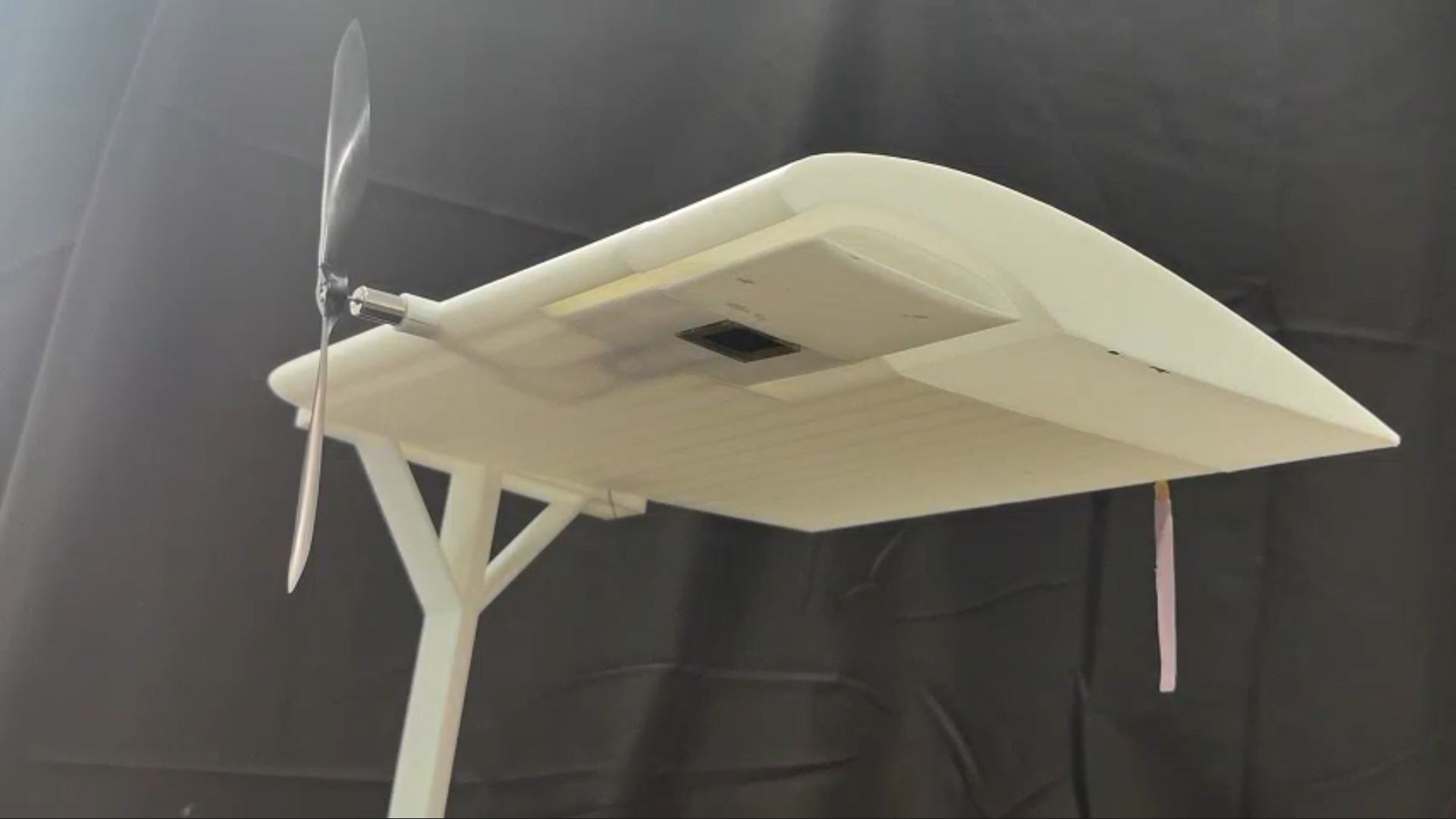
According to a study published in Matter & Light, scientists from the Civil Aviation University of China are testing a lightweight receiver that can harvest energy from a laser beam sent from the ground. The system uses a perovskite laser cell-thermoelectric (PLC-TE) tandem device, which combines two methods of generating electricity. The perovskite layer converts laser energy into electricity, while the thermoelectric layer recovers some of the resulting heat and turns it into additional power. Its output increases as the temperature difference between the laser-facing side and the cooler side grows.

A test drone that can power-on using laser light

(Image credit: Matter & light)

The major challenge with this setup is that intense laser beams heat up the receivers to a blistering 80 to 90 degrees Celsius, degrading efficiency and causing damage to the aircraft itself. “That was much higher than we expected and made us realize that heat buildup was a far more serious problem than we had imagined,” explained Jianhua Han, the study's senior author.

To overcome this challenge, Han's team added special nanocrystals to the receiver. As the nanocrystals are poor heat conductors, it allows them to act as a thermal barrier and protect the perovskite and thermoelectric layers. The team also added air channels to the drone's wings. As the propellers spin, airflow passes through these channels and carries excess heat away, helping to keep the system cool. The combination of nanomaterials and aerodynamic cooling resulted in a respectable 38.49% energy conversion efficiency during testing, which is one of the highest reported for this class of technology.

While the system is yet to undergo outdoor flight tests, this breakthrough alone is a significant step toward practical continuous flight for drones. As Han noted, going from 1 to 100 will require solving complex tracking and safety challenges, but this research establishes an important starting point for the future of drones and UAVs.

✇Tomshardware

HoverAir unveils the Versa modular pocket gimbal camera that transforms into a self-flying drone — Modular camera transforms into an auto-tracking drone by magnetically snapping together for instant palm launch and AI tracking

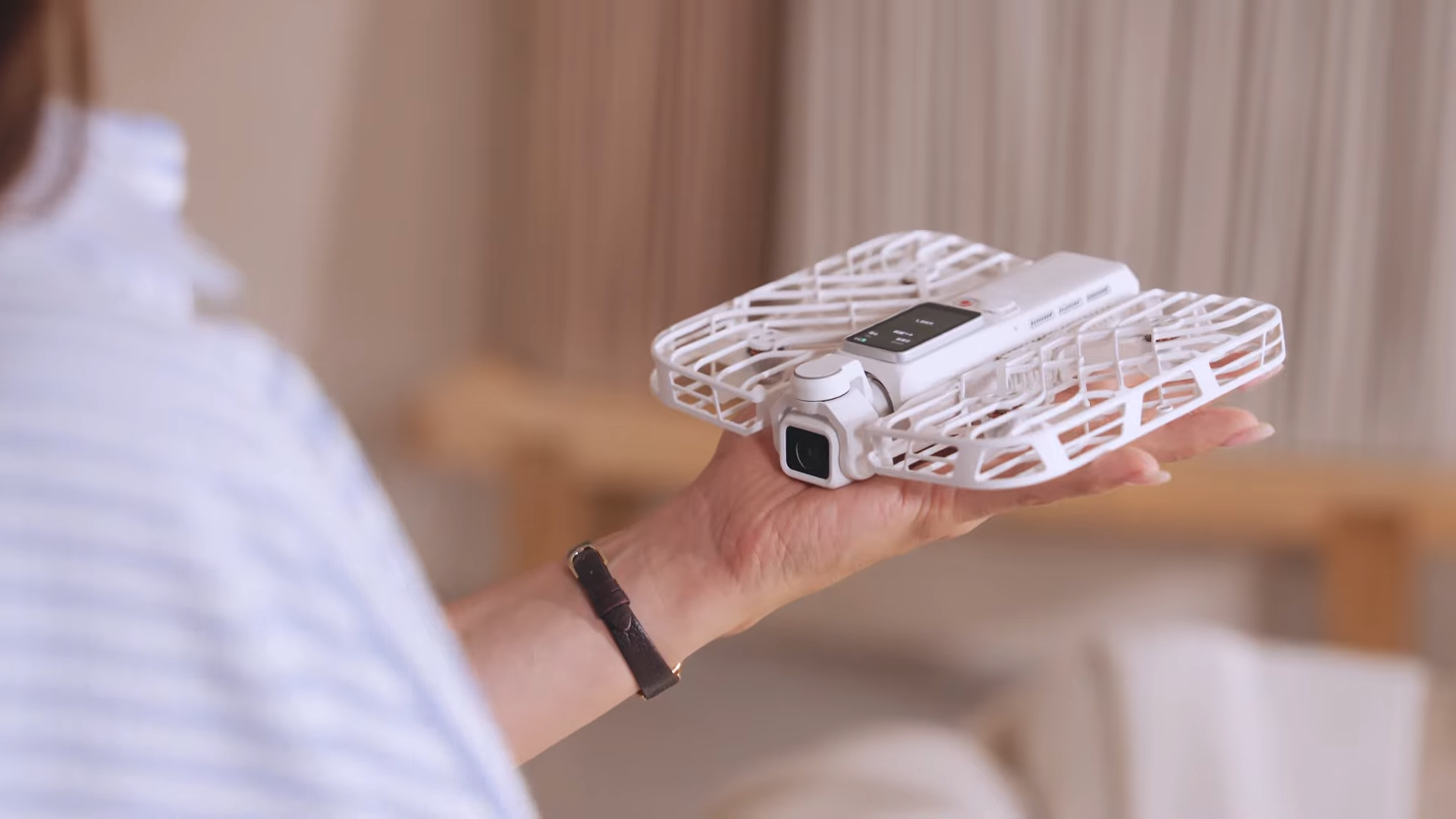
HoverAir, makers of self-flying selfie drones, have just unveiled the HoverAir Versa, combining their existing aerial expertise with the convenience of a pocket camera. At its core, the Versa is a high-end stabilized pocket gimbal camera, like the DJI Osmo, but it can magnetically snap onto a drone body and transform into a cinematic selfie drone. It's designed to tackle two different product categories simultaneously, but with the same goal of making it as easy as possible to film yourself (or others).

The Versa is actually HoverAir's first-ever pocket camera. It features a three-axis gimbal, which means it can adjust for tilt, yawn, and pitch to make sure your footage turns out stable. Compared to other options on the market, no pocket camera offers more than two-axis stabilization. It has a rotating screen and the accompanying controls for the camera, along with RGB accent lighting that also works as a status indicator. Overall, it looks like a pretty run-of-the-mill, well-made pocket camera.

HoverAir Versa

(Image credit: HoverAir on YouTube)

But the magic happens when you bring out the wings. A small, foldable drone body can magnetically attach to the camera unit via pogo pins located at the back of the device. Once connected, you just unfold the wings, gently tap the top, and it takes off right from your palm. There is no external controller needed because the device uses AI to track and follow you automatically. It has 10+ intelligent modes that can film you from any direction with AI-assisted framing, along with a neat 360° feature as well.

HoverAir Versa

(Image credit: HoverAir on YouTube)

In this mode, called 3D Worlds, the drone flies around to snap pictures of the scene from different angles and composites them into a single 360° scene that can be explored and shared later. Technically, this would be the third audience the Versa is trying to cater to — the Insta360 crowd, though that's real-time 360° video recording that you can also generously manipulate in post, so not exactly comparable. Still, it's a neat trick, and we'll have to see how well HoverAir implements it.

We don't have a price or release date; just a bunch of teasers so far that say it's coming soon. As such, specs are also up in the air, but the company is touting class-leading performance with the best dynamic range in the category. From the promotional material, we can infer that it has a large lens, and the drone body looks very compact. If HoverAir's previous selfie drones are anything to go by, the Versa could have support for up to 8K video in 10-bit Log or HLG, along with rapid flying speeds of up to 45 km/h.

HoverAir Versa

(Image credit: HoverAir on YouTube)

The test footage on HoverAir's website and the video we attached above look really impressive. The ingenuity of the concept warrants both excitement and skepticism, but it's undeniable that the Versa kind of feels magical. Nothing like it exists in the market today, and if the company can already ship excellent selfie drones like the X1 series, and pocket cameras aren't exactly rocket science, it stands to reason that harmonizing the two together is the only challenge for the Versa.

❌