普通视图

发现新文章,点击刷新页面。
今天 — 2026年8月1日IT News

Big tech spends more than $1 trillion on AI infrastructure — additional $745 billion expected to be added to the figure in 2026 alone

2026年8月1日 00:30

Amazon, Google, Meta, and Microsoft have spent more than a trillion dollars on AI infrastructure, including data centers, the chips inside them, and the power needed to run the facilities, since 2023. The Financial Times said that these four big companies have already hit $1.1 trillion in capital expenditure based on their latest earnings reports, and that an additional $745 billion is expected to be added to this figure just this year.

“There is basically no end in sight for the growth in capex,” RBC Capital analyst Rishi Jaluria told the publication. “Investors need these companies to toe the tight line between investing in AI and not compromising the things that have made them successful.” This massive investment has upended several other industries — namely electricity prices and memory and storage chips. The massive power demand that data centers have put on the power grid has forced many U.S. utility companies to spend billions of dollars to upgrade their respective infrastructure, which they then passed on to all consumers, not just the big ones that forced the upgrade.

This, alongside other environmental issues, has caused many Americans to push back against data center projects near their communities. The White House instituted the “ratepayer protection pledge” and made AI hyperscalers, utility operators, data center companies, and individual states promise that they will protect the average consumer from electricity cost increases. But so far, no state has taken a step to codify this pledge into law. Oregon actually enacted the POWER Act, which resulted in a 30% increase in the power bill of users that consumed more than 20MW while slashing the bills of residents by 1.3%, but the state did this in 2025, way before President Donald Trump called the tech giants into the White House and told them to “pay their own way.”

The mountains of cash that these tech giants are pouring into AI are also affecting the memory and storage chip industry. Since these AI hyperscalers have a lot of liquidity from investors, they are willing to pay top dollar for the HBM they need to run their data centers. Because of this, it made sense for Micron, Samsung, and SK hynix to prioritize them over DRAM, especially as they can charge a premium for these chips and there are customers who are willing to pay at those prices. This resulted in a shortage of consumer memory that started in 2025 — while this initially affected PC builders and enthusiasts, it has started to affect other industries that require memory as well, including cars and smartphones. Even Apple, which historically had huge sway over its suppliers, was forced to increase prices because of the shortages.

Aside from skewing other industries, the massive CAPEX the big four are going into is alarming some experts, warning that the promises and contracts they’re making are leading to “hidden debt” not listed in their balance sheets. The amount, worth around $1.65 trillion, is annotated in their quarterly financial statements as future obligations that will only come into play as the related asset or service comes online. The current value is 122% of the actual debt reflected on their balance sheets, which could give investors the wrong impression that they have fewer obligations than they actually have.

While the amount of money that the big four are spending on AI might seem dizzyingly high, we must note that these companies are raking in massive amounts of cash quarterly themselves. Microsoft’s latest quarterly revenue is $90 billion, while Meta made $60 billion in the same period. Alphabet (Google) announced revenue of nearly $120 billion, while Amazon made $200 billion. That is a total of nearly $470 billion for these companies in just the last quarter.

Still, that does not mean that they can just keep on spending on AI. For example, even though Google’s cloud business had a revenue of $11 billion last year, its price dropped after it announced that it spent more than it made last quarter — the first time this happened in the 20 years since it went public. Meta is also planning to rent out its AI compute, apparently following in the footsteps of Amazon, Google, and Microsoft, which have growing cloud businesses. However, this announcement caused a drop in its stock price. “They are a bit all over the place,” SLC Management managing director Dec Mullarkey told FT. “For investors it’s no longer growth at any cost; they want to see the spending flowing through to results, like at the Big Three.”

Apple CEO Tim Cook says the company is fighting 'a hundred-year flood' on memory pricing — expects to pay even more for memory in September following recent price hikes

2026年7月31日 22:54

Apple will pay even more for memory in the September quarter than it did in the June quarter, CEO Tim Cook told analysts on the company's earnings call on July 30, after memory costs accounted for more than the entire sequential decline in Apple's adjusted gross margin. Cook, speaking from Cupertino on his final call before John Ternus takes over as CEO, called the market "a hundred-year flood on the memory pricing." Apple's consolidated financial statements for the quarter ended June 27 put inventories at $11.09 billion, up 87% year over year, with $5.46 billion of cash consumed building that position over nine months. CFO Kevan Parekh said the benefit Apple gets from that carry-in inventory shrinks after September.

Apple held $5.93 billion of inventory at the end of June 2025 and $5.72 billion at its September fiscal year end, so the $11.09 billion reported for June 27 is a 94% increase in nine months. The cash flow statement puts the same movement at $5.46 billion consumed by inventories over those nine months, against a $1.22 billion release in the year-ago period. Measured against quarterly cost of sales of $54.65 billion, the June position works out to roughly 18.5 days of inventory, up from about 10.7 days a year earlier. Apple has run one of the leanest working capital positions in consumer electronics for two decades, but that has now been flipped on its head.

Parekh told analysts the carry-in inventory partially offset memory costs in the June quarter and will do so again in September, with a decreasing benefit beyond that. Cook said market pricing for memory keeps rising past September and that the effect on Apple's business could grow. Erik Woodring of Morgan Stanley asked whether Apple intends to pursue multi-year long-term agreements with suppliers at pre-agreed prices. Cook answered the second half of the question, on pricing philosophy, and left the agreements question alone.

Company gross margin was 49.3% in the March quarter and 48.1% in June, once the roughly two percentage points of tariff refunds come out, Parekh said, and more than 100% of that 120 basis point decline is explained by memory costs. Apple guided September gross margin to 47% to 48%, including about one percentage point of tariff refunds, putting the adjusted midpoint near 46.5%, and Parekh attributed that step down to the same dynamic. Foreign exchange was a factor in the June quarter but not the main one.

The cost of sales for products rose 8.1% year over year to $47.15 billion, while product revenue increased 18.1% to $78.68 billion, which lifted product gross margin to 40.1% from 34.5%. The Mac and iPad price increases that came in June, the tariff refunds, and the stockpile together more than covered the memory increase in the reported quarter. On the other side of the trade, SK hynix ran a 76% operating margin over the same three months on revenue of 79.32 trillion won and operating profit of 60.54 trillion won, the company said recently, and guided third-quarter DRAM bit shipments up only about 10% sequentially. TrendForce expects conventional DRAM contract prices to rise a further 13% to 18% in the third quarter.

Cook, asked whether Apple's push for sourcing flexibility is about securing volume or protecting its price points, said the DRAM market has three suppliers and that more of them would help on the supply side and perhaps on pricing, then corrected himself to say the pricing effect is unclear. He said Apple is "evaluating all options." The fourth supplier available to him is CXMT, which the Financial Times reported in July that Apple has begun testing DRAM for devices sold in China while lobbying Washington for clearance to use its parts more broadly. Representatives John Moolenaar and George Whitesides wrote to Commerce Secretary Howard Lutnick earlier this month, asking for purchases from CXMT and YMTC to be barred outright, including through allied supply chains. CXMT listed on Shanghai's STAR Market in July.

The unit supply constraints Apple flagged for the September quarter are a separate problem from memory pricing. Cook attributed them to the availability of the advanced process nodes Apple's SoCs are built on, after iPhone and Mac demand ran ahead of the company's plan, and said they'll hit iPhone, Mac, and iPad in September, against Mac primarily in the June quarter. Apple guided September revenue growth of 9% to 11% year over year, down from 16% in the previous quarter.

Lumentum CEO warns of impending bottleneck on critical material used for silicon photonics — fab and material shortfall already lags 30% below customer needs as co-packaged optics demand skyrockets

2026年7月31日 20:45

Lumentum CEO Michael Hurlston told an audience at the RAISE Summit in Paris earlier this month that indium phosphide, the compound semiconductor behind every laser in an AI data center, is heading into a supply squeeze worse than what we've already seen with DRAM / NAND, and that Nvidia's decision to fund Lumentum and its biggest competitor at the same time was a response to exactly that.

In his remarks, Hurlston said that telecom customers bought lasers in the hundreds, while Nvidia and the hyperscalers are asking for hundreds of millions. While Lumentum runs five indium phosphide fabs, it's still shipping more than 30% below what customers want. Nvidia's answer, in March, was to write $2 billion checks to Lumentum and Coherent, the two suppliers that, between them, make most of the world's high-speed datacom lasers, with purchase commitments and future capacity access attached to both.

"Between the two of us, I don't think we can service the demand that Nvidia and others are now putting on us to solve this resistance problem in the data center," Hurlston added.

Silicon doesn't emit light

Indium phosphide has a direct bandgap of roughly 1.34 eV, which lets it convert electrical current into photons efficiently. Silicon's bandgap is indirect, so it can guide, split, and modulate light but can't generate it. Every silicon photonics platform in production, including those of Nvidia, Broadcom, Marvell, and Cisco, still needs an indium phosphide laser somewhere in the package to supply the light for silicon to manipulate. Moving from pluggable transceivers to co-packaged optics changes where that laser sits and how it's mounted, but it doesn't remove it from the bill of materials.

Nvidia's marketing claims its photonics switches use four times fewer lasers than an equivalent pluggable deployment, alongside 3.5 times better power efficiency and ten times better network resiliency, all of which are vendor figures. Those savings are per port, and it's that port count that's exploding.

The high-end Spectrum-X Photonics configuration runs 512 ports at 800 Gb/s for 400 Tb/s of switching, and Quantum-X Photonics InfiniBand runs 144 ports at 800 Gb/s. Co-packaging also shifts the laser type toward high-power continuous-wave sources and external laser modules that feed multiple channels, which are harder to build than the electro-absorption modulated lasers inside a conventional pluggable. Coherent's Nvidia agreement covers that category of high-power CW lasers, external laser source modules, and fiber array units.

Capacity at Lumentum and Coherent

Lumentum posted record revenue of $808.4 million in its fiscal third quarter, up 90% year over year, with components revenue of $533 million and pump laser shipments up 80%. On the May earnings call, Hurlston told analysts the company expects its supply line to increase 50% measured from one December quarter to the next, and in the same breath said the supply-demand imbalance on EMLs had widened from the 25% to 30% given a quarter earlier to "somewhere greater than 30%," with pump lasers tighter still. A supplier growing output by half a turn per year and losing ground anyway is a clean measure of how steep the demand curve is.

Coherent's 6-inch indium phosphide line yields more than four times as many devices as its 3-inch line at less than half the cost, CEO Jim Anderson told investors on the company's fiscal Q3 call. Anderson said EMLs, CW lasers, and photodiodes are all in production on the 6-inch line with yields above the legacy 3-inch lines, and that internal capacity would double by the end of the June quarter, one quarter ahead of plan, then more than double again by the end of 2027. Coherent's revenue hit a record $1.8 billion, up 21%, with data center and communications now 75% of the total against roughly 41% a year earlier, and backlog stretching into 2028.

Logic and memory moved to 300mm wafers in the early 2000s. Indium phosphide is a brittle, expensive, small-boule material where the industry-wide upgrade currently underway is 3-inch to 6-inch, roughly the transition silicon completed in the 1980s. Lumentum's fifth fab, announced in March, is a converted Qorvo gallium arsenide plant in Greensboro, North Carolina, described as 4-inch and 6-inch compatible and ramping around 2028.

Running through China

Indium is recovered as a byproduct of zinc refining, so its output can't be scaled independently of zinc economics, no matter how much laser demand there is. The USGS Mineral Commodity Summaries 2026 put China at an estimated 760 tonnes of roughly 1,100 tonnes of global primary refined indium in 2025, about 69%, and recorded a 72% year-over-year fall in unwrought indium exports between September 2024 and September 2025 after Beijing placed the metal under export controls in February last year. The U.S. warehouse price averaged about $390 per kilogram in 2025 against $340 in 2024.

AXT's Chinese subsidiary Tongmei had to obtain Ministry of Commerce export permits, granted in June and August 2025, before it could resume shipping indium phosphide substrates out of China. The fabs Nvidia is funding sit downstream of that licensing regime, and the wafers going into them aren't made in the United States in meaningful volume.

DRAM contract prices rose 90% to 95% quarter over quarter in Q1 2026, the largest quarterly increase TrendForce has recorded, and the firm forecast a further 58% to 63% in Q2 with NAND up 70% to 75%. HBM is sold out for 2026. Hurlston is measuring his warning against a genuinely historic crunch, which makes it a strong claim rather than a throwaway one, and he runs a company whose valuation depends on the shortage persisting.

LightCounting's April 2026 market forecast puts current transceiver demand about 30% above supply, matching Lumentum's own figure, but states that the shortages should be gone by the end of 2026 and cuts expected Ethernet transceiver growth to 65% for the year after 82% in 2025 and 93% in 2024. Coherent, hitting its capacity doubling a quarter early, points the same way. The distinction from memory is that the fix here is a wafer-size transition already running in production with yields ahead of the old node, not a new fab that takes three years to build.

Setting up OpenClaw isn’t as straightforward as the internet wants you to think – running local AI on humble hardware

2026年7月31日 20:20

Unless you’ve been living under a rock, OpenClaw has dominated headlines, both good and bad, for much of early 2026. Developed by Peter Steinberger, the tool is an engine that spins up an AI agent that can autonomously act on your behalf, going so far as having the ability to run files, browse the web, and much more. Using a system named “Skills,” you can even teach your AI assistant to perform new tasks, with more integrations popping up daily. But how useful is it for the average person? I took it upon myself to answer that question by using the relatively humble Beelink SER10 MAX mini PC, which comes pre-installed with OpenClaw, to find out.

To kick things off, when setting up your OpenClaw installation, there’s a fairly large decision one has to make: Do you want to rely on Cloud resources and more powerful AI models, or run something locally? Beelink’s SER10 MAX ships with Qwen-3.5 9B, which is a relatively older and more outdated AI model. Since I want to keep things fairly simple, I opted for the local AI route first. To run larger models, you’ll need a lot of memory, so I first tweaked the humble Mini PC’s video memory up to 48GB, which should allow us to keep a larger, more complex model in memory. It also leaves us 16GB of system memory to play around with, which should be more than enough to run the terminal and ensure that everything else works as intended.

Selecting the ideal local AI model

Having 48GB of available video memory should allow us to run a fairly powerful AI model on the system. However, the downside of running a larger model is that token speeds are likely to be slightly lower than expected. However, for running the super-smart AI that does things for us locally, we want as much intelligence as we can get. For this exercise, I chose Google Gemma 4 31B (UD-Q8_K_XL), a near-lossless quantization, somewhat ambitiously, as I will learn shortly.

After downloading the model and running it in llama.cpp, we managed to attain 2.34 tok/s. On average, everyday queries took 116 tokens to generate, at 2.34 tok/s. That’s still too slow for fast everyday use. So, I took a deep breath and conceded that the humble Ryzen AI 9 HX 470 didn’t have fast enough memory or memory bandwidth to run such a large model at acceptable token speeds. Even if I had dropped the quantization to 4-bit, we’re still looking at the theoretical maximum of around 5 tok/s for that model in particular. If you had a faster machine with rapid RAM speeds, such as a Strix Halo system like the Framework Desktop, it might be more workable, but for a lower-end piece of silicon with relatively humble DDR5-5600 speeds, you’ll just have to accept a slightly more neutered model.

So, I eventually conceded that the smaller Gemma 12B (Q4_K_M) was a much more sensible choice for a device of this caliber. After loading things up into llama.cpp, we managed to get a much more sensible 10.64 tok/s on a general knowledge query: “What is Tom’s Hardware?” Now that I have a little piece of talking electrified sand on my desk, it’s time to configure OpenClaw.

Hatching HammerClaw

Setting up OpenClaw

(Image credit: OpenClaw)

The device I am using, the Beelink SER10 MAX, comes with OpenClaw pre-installed. The only real dependency it has is llama.cpp, which we configured earlier while testing which AI model to use. Since the llama.cpp port is open, OpenClaw leverages that to talk to the AI model, with all of its additional fanciness included. The OpenClaw installer is fairly straightforward in getting things up and running, including setting up a Telegram channel to communicate with our AI model remotely and configuring a gateway, so we can configure things without relying on Ubuntu’s terminal commands.

Within the installer, we start to define our new AI assistant: It asks what its name and identity are, some basic details about the user, as well as what principles it should uphold, in a very extravagant file named SOUL.md. Remember, our talking sand isn’t alive, so it’s all quite dramatic. Generating a SOUL.md file takes a while for our humble local AI model, which I’ve named HammerClaw. But can it do anything useful for me to justify its nascent AI existence? Right now, it’s taken five minutes to think about exactly what it is and what it’s doing.

After a little while, our little HammerClaw “hatches,” asking what its purpose is, who I am, and how it should talk. Personally, I don’t like it when AI models are verbose, so it’s straight and to the point, and should never, ever lie to me. When AI models can scale to rather humble devices like this one, the smaller, less-intelligent models can be error-prone. With our little local AI agent alive and kicking, it’s time for it to automate a task for us; it couldn't be that difficult… right?

Stumbling blocks

HammerClaw quickly wakes up, and I offer it a task: to gather ten news articles from trusted outlets and different parts of the day, ensuring freshness, with a small digest of what’s happened. Since most of my work on Tom’s Hardware Premium is centered around chipmaking and data centers, I want it to focus on those topics. HammerClaw then quickly takes the task and starts working out how to pull it off. It’ll use its built-in cron tools and felo-search to pull stories from the internet.

Now, here’s where things go bad for poor HammerClaw. It then begins to simulate the action, instead of actually performing it, despite saying that it had set up the cron jobs and skills required for the automated scheduling. Even worse, it hallucinated a list of links that went absolutely nowhere. After pointing the error out, it gets apologetic and investigates why things went wrong. As it turns out, some additional parts need to be configured, which it tried to do and failed once again. Agentic Tool use is now a specific benchmark, but when asking Gemma 4 12B to set up a multi-step task like this, it simply couldn’t manage with the conversational tone of my prompts.

Setting up OpenClaw
OpenClaw
Setting up OpenClaw
OpenClaw
Setting up OpenClaw
OpenClaw

It’s at this point that I asked HammerClaw to give itself a grade, to which it offered itself a B- on accuracy for hallucinating and making up news stories. Now, I don’t want to say that all OpenClaw AI agents would do this, as we are running a relatively light local model. I would expect that larger local models would be able to identify what they need to do much more efficiently due to having a significantly higher model parameter count. With that in mind, I wondered if another AI model could help HammerClaw along a little bit with this task. And so, I went onto my OpenRouter account and opened a chat with the big, beefy 2.8 Trillion Parameter Kimi K3.

Kimi K3 saves the day

Comparing a cloud-based frontier model like Kimi K3 and Gemma 4 12B just isn’t fair. One takes up terabytes of RAM to run, while Gemma fits inside a Mini PC that lives on my desk.

Instead of using Kimi K3 to run the AI itself, I tasked it with actually helping me set up the job that HammerClaw seemingly didn’t have the skills to pull off. This hybrid workflow – of using a local LLM in tandem with a more powerful one in the cloud- is a common setup for many AI enthusiasts. After about a dollar in tokens, it sent me a list of OpenClaw commands, skills, and instructions, after reading the current documentation for OpenClaw CLI to ensure it got everything right. It was flawless. I followed the instructions Kimi K3 gave me and entered them into an Ubuntu Terminal, where it successfully created a new skill for HammerClaw named ‘News-Intel,’ instructed me on how to enable the web-search functions, and set up the Cron jobs for the automated sends. Bearing in mind that I had never used OpenClaw before, it was all surprisingly smooth, even if our local model couldn’t do all of these tasks itself.

Setting up OpenClaw

(Image credit: OpenClaw)

With everything set up, the buck is then passed back to our much humbler Gemma 4 12B model-powered HammerClaw to execute the rest – after all, this is supposed to be a test for how Local AI models function. I executed the command for a manual run while checking the operational logs, where it was successfully calling all of the tools, and thought, against all odds, HammerClaw might actually be able to do it. A few minutes later, I received a Telegram message. HammerClaw had managed to locally execute the task and send me a digest of ten news stories.

Setting up OpenClaw

(Image credit: OpenClaw)

Of all of the things to automate, this is likely one of the simplest examples of how someone can use OpenClaw. While simple, it’ll also save me a bit of time every day staring at an RSS feed and looking for stories myself. But, it’s quite a distance away from the “speak, and it’ll do whatever you want it to!” promise that drew so many into a frenzy earlier this year.

Is it worth it for the average person?

If all you heard about OpenClaw is that it’s a magical AI agent that can do anything, as I’ve learned, it’s not quite the truth. Unless you’re well-versed in several elements, like understanding model choices and getting your head around what models perform well for tool-calling. Running a humble local setup might be fun, or interesting to tinker around with, but the true power for Local AI developers and tinkerers lies with the obvious: More power to run bigger, complex models, and more agents running tasks consecutively. In fact, we’ve taken a look at how these workflows can be used in practice with a mixture of Local and Cloud AI models for Tom’s Hardware Premium.

The issue here is that for our local model, this simple task – of running and sending us 10 news stories- could not set itself up, and that’s using hardware that already costs north of $1,500. As our resident local AI expert and GPU guru Jeff Kampman has recently tested, for those serious about AI who want real power without relying on the cloud entirely, you might want to save up your pennies to run stronger, faster local models, either using dedicated GPU-accelerated setups, or dedicated boxes such as the DGX Spark, or a cluster of Dell Pro Max GB10s, both of which will cost you north of $5,000. You’d hope that the models capable of running on that hardware wouldn’t fumble the setup of a relatively simple Cron job.

The real question is, will having a local AI inference box meaningfully change how you work, or the work you do, to pay for itself? For many, that’s the lingering question that many are asking themselves. For now, HammerClaw is sending me more articles every few hours, a task that can be performed by simple scripting. But the manual “sift” is being handled by an LLM. As neat as it is, I wouldn’t pay $1,500 for the privilege. Luckily, it’s not merely a box made for AI inference; there’s a whole computer attached.

Qualcomm-powered robot collapses spectacularly on stage during company's keynote — prepared stagehands rush to cloak and then carry off stricken humanoid (updated)

2026年7月31日 18:40

A Qualcomm exec suffered from one of the most disastrous tech demos we’ve ever seen live on stage at Computex 2026 this summer. In what should have been a wow moment during a press event in Taipei, Qualcomm hardware partner NEURA Robotics’ 4NE-1 humanoid robot quickly shifted gears from being a technical tour de force to a crashing mechanical shambles.

Robot powered by Qualcomm’s new AI chip dies mid-presentation from r/singularity

We see that the 4NE-1 humanoid robot is powered by Qualcomm’s Dragonwing IQ10 robotics reference design (RRD), claimed to be capable of 700 TOPS. But even before the robot’s spectacular malfunction, it didn’t look particularly healthy or nimble. 4NE-1’s slow shambling walking style radiated strong Two Soups vibes.

As the robot eventually hobbled close enough to the smart-suited presenter, the on-stage human picked up a Qualcomm Dragonwing IQ10 RRD from the robotically delivered platter and proudly showed it off to the attending crowd. As the applause and whoops subsided, the robot turned to face the crowd, and the presenter rolled on with his spiel.

Seconds into his script, the exec spun away to the side as the 4NE-1 humanoid robot very suddenly and noisily collapsed into a mechanoid mess. After resting in its terminal backbend for a second, one robot hand raised momentarily to make a futile gesture. Thankfully, the glass tray that had carried the Dragonwing IQ10 box onto the stage didn’t shatter.

Qualcomm’s Dragonwing IQ10 robotics reference design

We can think of another 'D' word for the strapline (Image credit: Qualcomm)

Stage hands seemed well-prepared

While the overall feeling from watching the video is one of shock from the ambling robot’s sudden noisy collapse, many on social media have commented on how unruffled and well-prepared the stagehands seemed to be. The silent and swift action of the black-clothed helpers, first cloaking the dead robot with purple silks, then the trio carrying it away, exits stage left, making it look like this catastrophe wasn’t such a surprise to some.

As the robotic remains were eventually removed through the side doors, we hear the brave speaker who carried on regardless come to the end of his polished presentation. The crowd politely and quite loudly claps - but is most of the applause for the speech, or for the unflappable stagehands who have efficiently extracted the heap that was the 4NE-1?

This late-emerging clip from Computex 2026 rivals the Windows 98 USB plug-and-play scanner crash during Bill Gates’ presentation at Comdex. That infamous software crash event may well have prompted the creation of the USB Cart of Death.

Startup plans to put nuclear-powered data centers in the sea — modular units could be much faster to deploy, but questions about reliability and longevity remain

2026年7月31日 18:00

Data centers on land are facing increasing opposition and having a hard time getting off the ground — from power connection issues that can take months or years to resolve, to neighborhood concerns about noise and air pollution, as well as their impact on the local water supply. One startup called Atomarine wants to solve this by building nuclear-powered data centers on barges and deploying them at sea.

There have already been various proposals to put data centers out at sea (or even submerged) from established names and startups. We’ve seen conventional examples from companies like Samsung Heavy Industries and Japanese shipping company MOL who to put the servers on dedicated ships and are powered by liquefied natural gas (LNG). There are also more innovative solutions from startups that want to put them in the bases of ocean-based wind turbines or in wave energy converters.

Atomarine differs by building data centers as floating barges, similar to floating oil platforms, which can be deployed anywhere — even in international waters. This should help cut down on the permitting process, and it doesn’t have to worry about disturbing neighbors. The electricity needed to run the infrastructure is then delivered by a power ship moored alongside the barge supplied by LNG ships. Once small modular nuclear reactors (SMRs) become commercially available and certified for shipboard use, operators can then swap out the conventionally powered electricity suppliers with a nuclear one relatively quickly. And because these data center barges are modular in nature, it would be relatively easy to upgrade and scale the floating data center.

While this project sounds promising, building a megastructure like this comes with several challenges. The biggest one is that the ocean is massive and unpredictable, so these barges must be engineered to face extreme weather conditions, making them quite expensive to deploy. It must also be connected to high-speed internet (unless the operators plan to ship tons of drives daily), so they’ll have to lay undersea cables, as well. Furthermore, data servers are particularly sensitive equipment, so they must be upgraded to ensure that they can withstand the continuous rolling motion and the salty environment of the sea. There’s also the question of an SMR’s viability in shipborne use, although the U.S. Navy already has a good track record of running nuclear reactors aboard massive vessels.

The mounting opposition against data centers, both by the general public and politicians, is making it harder and more time-consuming to build new projects across the U.S. While an ocean-based data center like this is likely going to be significantly more expensive and technically challenging than land-based developments, this might become the fastest option in the future if the idea proves to be viable.

昨天 — 2026年7月31日IT News

Shanghai Aishengna named as the maker of China's first domestic immersion DUV chipmaking tools — first viable domestic 7nm-capable scanner to be completed by 2038

2026年7月31日 00:23

Reuters has named Shanghai Aishengna Electronic Technology Group as the state-owned company producing China's first domestic immersion deep ultraviolet lithography (DUV) scanners, a day after news of the program broke without identifying the manufacturer. Aishengna was established in August 2023 with RMB 7 billion, around $1 billion, in registered capital and is thought to have absorbed engineering teams from Shanghai Yuliangsheng Technology and Shanghai Micro Electronics Equipment.

Aishengna has been named by a single source who declined to be named, and its shareholders, SMEE and Yuliangsheng, didn’t respond to requests for comment. SMIC has been testing a Yuliangsheng immersion tool since September 2025, and first deliveries are slated for SMIC, Hua Hong Semiconductor, and ChangXin Memory Technologies.

Photoresist, coater tracks, and light sources

Tokyo Electron held an 89% share of the global coater/developer market in 2022, per Shared Research's analysis of the company's own disclosures, with its chief executive putting the figure near 90% and at 100% for EUV production. A scanner only exposes the wafer, however. It’s the track that's responsible for applying the resist film, baking it, and developing the pattern after exposure, and it has to be mechanically and thermally matched to the scanner in a single cluster, which is why the two are bought together. Shenyang Kingsemi has reached 28nm-class track capability and is currently targeting 14nm.

JSR, Tokyo Ohka Kogyo, Shin-Etsu, and Fujifilm hold a combined 72.5% of the ArF photoresist market, while Chinese suppliers hold under 1% of ArF immersion resist specifically. Nata Opto-electronic built a 25-ton ArF line, later expanded to 50 tons, passed customer qualification in December 2020, and completed project acceptance in 2024 with little volume to show for it. Xuzhou B&C says its ArF immersion products cover 45nm to 28nm and can stretch to 14nm, and chairman Fu Zhiwei has put mass production of China's core advanced resists five years out.

Cymer, Gigaphoton, and Coherent hold more than 80% of the ArF excimer laser market between them, and Cymer has been an ASML subsidiary since 2013. Beijing RSLaser shipped China's first high-power domestic excimer laser in 2018 under the national Project 02 program and has a 4 kHz 193nm ArF prototype aimed at 90nm and 65nm-class tools, generations behind what 28nm immersion requires.

Carl Zeiss SMT has been ASML's sole projection optics supplier since 1983, and Zeiss SMT revenue grew from €1.2 billion in 2016 to €4.1 billion in 2024. It’s not currently known what, if any, Japanese tooling is inside the Aishengna machines, but excimer sources and precision optics are areas where Chinese substitution is believed to be lacking.

CXMT

CXMT is projected to reach around 350,000 wafer starts per month by the end of 2026, roughly 25,000 short of Micron, up from 40,000 in 2020. DRAM scaling at 1a and 1b-class nodes runs on immersion multipatterning because CXMT has no EUV access, which makes any potential ramp lithography-gated rather than cleanroom-gated. DRAM contract prices rose 93% to 98% quarter on quarter in Q1 2026, and TrendForce projected a further 58% to 63% in Q2, lifting DRAM industry revenue 81% to $97 billion. A domestic immersion source is therefore worth having to CXMT, even at inferior overlay and throughput.

A DUV-only 7nm flow needs roughly 19 spacer-defined multipatterning masks from the front end through the second metal layer, against about 10 for an EUV-based N7+ process, by one published comparison of SMIC's process. SemiAnalysis has put SMIC's 7nm defect density near 0.14, around double TSMC's N5 and N6. ASML CEO Christophe Fouquet told analysts during the company's July earnings call that rising DRAM lithography intensity partly reflects "the increased replacement of multi-patterning with more cost-effective single-exposure EUV." As such, every exposure China adds to compensate for the missing EUV burns scanner hours a thin domestic fleet doesn't have.

The MATCH Act

China fell to about 14% of ASML's sales in Q2 2026 from 33% across 2025, and installed base management, the service and upgrade business, brought in €2.8 billion of ASML's €9.3 billion in second-quarter revenue. H.R. 8170 would ban both the export and the servicing of immersion DUV systems to any destination in China and designate SMIC, Hua Hong, Huawei, CXMT, and YMTC as restricted entities by statute. Former ASML chief executive Peter Wennink has said the company can service most Chinese tools, but not with spare parts of U.S. origin that fall under export control, which is the mechanism that the MATCH Act would widen.

The bill remains in committee after clearing the House Foreign Affairs Committee in April, with a Senate companion filed as S. 4281, and no floor vote yet scheduled. Its 150-day allied-alignment clause would also reach Nikon, which sold 11 ArF immersion systems in FY2024 and none in the first three quarters of FY2025, and which plans to deliver a new immersion prototype to a major chipmaker by 2027. ASML expects about 130 immersion shipments this year and intends to raise immersion capacity 30% in 2027, with a further 30% under investigation for 2028.

As for Chinese providers, SMEE prototyped its SSA600 ArF tool in 2011 and never reached sustained commercial sales, and a late-2023 shareholder claim that the company had developed a 28nm machine was subsequently retracted. SiCarrier showed etch, CVD, PVD, and ALD tools at SEMICON China 2025 without a lithography system, and a December 2025 government contract reported as a lithography award turned out to cover a KrF tool at 110nm. We’ve previously assessed that China’s toolmakers are more than a decade behind the market leaders.

The AI Futures Project's June forecast puts a commercially viable domestic 7nm-capable immersion scanner between 2032 and 2038, with a median of 2035, and claims ASML holds 98.7% of the immersion market today. Five machines in 2026 would be under 4% of ASML's annual immersion output, and each would still need a coater track, a qualified ArF immersion resist, and an excimer source to print a single wafer; China leads in none of those three.

Amazon accidentally spent $1.8 million using Claude for menial coding task, went 860% over budget —'catastrophically expensive' coding blunders discovered in internal Amazon AI usage metrics

2026年7月31日 00:08

Amazon has several internal reports that show how AI is causing the company to overspend on various projects. The Financial Times reports that the cost overruns reached $1.8 million, and that is just for one project. These mistakes used to be “trivially cheap,” but AI models made them “catastrophically expensive,” especially as token spending drastically increased with the deployment of AI agents.

The biggest blunder, so far, is the $1.8-million bill that came from a failed Claude Sonnet AI deployment, which was supposed to match author details with listings on Amazon, representing an 860% increase over the allocated budget that was only detected some five months after the issue started happening. Other problems that surfaced include a $541,000 additional cost that came from a project building, ironically, a financial auditing tool, and a $134,000 extra expense for a system designed to reduce delivery times in the company’s logistics network.

“As with any new technology, we’re experimenting, learning and improving how we use it, including how we drive cost efficiencies,” Amazon said in an internal presentation, according to FT. “Cherry-picking small, isolated examples where teams are learning from one another and portraying them as business as usual doesn’t reflect how teams across Amazon are using AI.” And even though overspending more than a million dollars on failed AI projects might seem excessive for the average person, the tech giant’s latest quarterly revenue sits at more than $181 billion, meaning these excess AI expenses don’t even account for 0.1% of what it makes in a month.

This is not the first time that AI-related issues have cropped up in Amazon’s workflow. Earlier this year, AWS reported several outages that were driven by AI coding bot blunders, but the company fixed this by limiting the access of AI agents instead of giving them the same permissions as the senior engineers that they’re tied to. It also used to have an internal leaderboard that showed which employees used AI the most, but has since dropped it as spiraling AI costs made them think twice about the policy.

Many tech companies have been pushing their people to use AI, supposedly to increase productivity through tokenmaxxing. However, the Uber CTO said that there is no link between this policy and shipping successful products. And as agents took over and AI providers switched from subscription to per-token models, costs have become so great that companies are using up their annual budgets in a matter of weeks. While this might not be an immediate issue for tech giants like Amazon and Microsoft, it is unsustainable for most other companies out there.

Google could build more AI accelerators than Nvidia sells in 2028, analyst claims — could push the company to use Intel Foundry to meet its goals

2026年7月30日 22:35

Google was among the first hyperscalers to develop its own custom AI processors about a decade ago and has been steadily ramping their deployment since then. The company seems to be so confident about its TPU v9 due in 2028 that it intends to order 12 – 15 million of such processors, according to a Fubon Research note to clients published by Sean. If the information is correct, Google may not only produce more or a comparable number of AI accelerators than Nvidia, but may also need to use Intel Foundry to meet its goals.

"Based on our checks, Google plans to have 12 – 15 million TPUs in 2028," the paper reads. "Entering 2028, Google’s TPUs will enter the V9 generation with four compute dies, suggesting that their capacity consumption will more than double in 2028 versus 2027."

Fubon estimates that Nvidia supplied 8.2 million data center AI GPUs in 2026 and is on track to increase the number to 12.4 million in 2028. If Fubon is correct about Google's plans to produce 12 – 15 million 9th-generation TPUs in 2028, then the company may produce more, or at least a comparable number of AI accelerators, than Nvidia in 2028.

TSMC is not enough

How the performance of Google's v9 TPUs will stack against Nvidia's Rubin and Rubin Ultra is something that remains to be seen, but the fact that Google intends to use four compute chiplets on these AI accelerators clearly points to the fact that the company bets big on the performance of these processors. Meanwhile, building an AI accelerator with four large compute chiplets is a major engineering effort, which Google seems to have accomplished.

"Although we do not have the detailed allocation yet, we think it is difficult to reach Google’s target with TSMC alone, and Intel's supply is a must by 2028," the paper continues.

Researchers from Fubon are not sure whether Google's allocations at TSMC will be enough to meet the company's demand for 12 – 15 million 9th Generation TPUs, so they think that Google will have to use Intel Foundry's capacity to meet its volume goals. Over the past few months, we have seen reports claiming that Intel had landed orders to make three million TPUs for Google following months of Google's testing of Intel's advanced packaging technologies. Indeed, if Google wants to make its silicon at Intel Foundry, usage of Intel's advanced packaging services makes great sense. It should be noted that when compute chiplets are developed, they must be developed with their packaging technology in mind, as Intel's EMIB/EMIB-T and TSMC's CoWoS-L are incompatible.

World's largest consumer of AI accelerators

If the information about Google's plans to produce 12 – 15 million TPUs in 2028 is correct (note that the difference between 12 and 15 is 20%, which is huge) and Google will indeed deploy more AI accelerators annually than Nvidia sells to the entire market, it would mark a dramatic shift in the AI hardware landscape. It will not only make Google the world's largest consumer of AI accelerators (as the company will unlikely cease buying Nvidia hardware), it will eventually make Google the owner of the world's most capable AI hardware fleet. Whether or not Google will use its overwhelming AI compute capacity primarily for its own services, or will lend the majority to other is something that remains to be seen.

Meanwhile, for Google's rivals, the milestone will underscore the growing importance of vertically integrated AI infrastructure, where cloud providers design chips tailored to their own software stacks, workloads, and data centers instead of purchasing off-the-shelf GPUs.

Yet, Google's surpassing Nvidia in unit shipments would not necessarily diminish Nvidia's dominant position. AI demand continues to expand so rapidly that both companies could increase deployments simultaneously, but Google will simply grow faster, at least till Nvidia ups production of its AI accelerators with Feynman and Feynman Ultra in 2029 – 2030. After all, Nvidia's AI GPUs are sold out. What Nvidia should worry about is not the volumes of TPUs that Google can deploy, but rather the fact that these processors do rely on a software stack that rivals Nvidia's CUDA, the company's main competitive advantage.

Foreign-made robot vacuums caught up in FCC robot ban — covers any ground robot over 4.4 pounds with a 200 kbps connection

2026年7月30日 21:03

New FCC legislation against foreign-made advanced robotic devices may have inadvertently introduced a ban on non-U.S. robot vacuums from being imported into the United States, according to The Verge. The FCC has added foreign-produced advanced robotic devices and connected power inverters to its Covered List, blocking new models from the equipment authorization they need before they can be imported, marketed, or sold in the United States.

The four-part test buried in the underlying national security determination catches any ground-traveling robot heavier than 4.4 pounds, including its dock, provided it carries an environmental sensor and a network link running at 200 kb/s or faster, and it names "AI or machine-learning model weights" as covered software. The determination, attached as Appendix C to the FCC's public notice, applies to a mechanical mobile device capable of locomotion, obstacle avoidance, navigation, or movement on the ground that operates at a distance from a human operator.

Devices qualify only if they also contain all three of a sensor that perceives its environment, a wired or wireless connection capable of at least 200 kb/s in either direction, and software controlling autonomous navigation, perception, data collection, or remote command and control. Bluetooth satisfies the connectivity test, as do Wi-Fi, cellular, and satellite. FCC media relations director Katie Gorscak confirmed to The Verge that robot vacuums meet the definition.

Six categories are exempted: connected vehicles of any gross weight, rail vehicles, uncrewed aircraft, uncrewed underwater vehicles, FDA-regulated devices including surgical systems and powered wheelchairs, and fixed industrial arms such as SCARA, delta, and gantry designs. Drones were placed on the Covered List separately in December.

Both determinations define "foreign-produced" as anything failing to qualify as a domestic end product under 48 CFR § 25.101(a), the Buy American Act rule. Under that provision, an item must be manufactured in the U.S., and the cost of domestic components must exceed 65% of the cost of all components for goods delivered through 2028, rising to 75% from 2029.

The same paragraph waives the component test for commercial off-the-shelf items, which would leave only the U.S. manufacturing requirement for a mass-market consumer robot. Manufacturers can apply to the Department of Defence for a Conditional Approval that lifts the restriction, a process that both Netgear and Amazon's Eero brand cleared within weeks of March's router ban.

Covered List status blocks Class I and Class II permissive changes under 47 CFR §§ 2.932(b) and 2.1043(b), the mechanism manufacturers use to push firmware and security fixes to certified hardware. The Office of Engineering and Technology suspended those prohibitions for robots and inverters hours after the listing, repeating the relief it gave drones in January, routers in March, and both categories through 2029 in May.

We've seen with DJI just how damaging an entry on the Covered List can be. The company disclosed in an April court filing that the FCC revoked authorizations for 14 existing products and blocked 25 planned 2026 launches, and Chinese customs data reported by Nikkei Asia showed civilian drone exports to the U.S. down 60% to 70% year over year since December. DJI is suing over the designation.

Shipping container-launched cargo rocket promises 550-pound deliveries 750 km away in 15 minutes — $1.25M Air Force contract backs 'Rook' cargo rocket that flies into space to speed deliveries

2026年7月30日 19:45

Hop Aero, a six-person Y Combinator startup based in Orange, California, has published the first public details of what it calls ‘Rook,’ an autonomous rocket the company says will carry 550 pounds (250 kg) of cargo up to 750 km in about 15 minutes, launch from a standard 40-foot shipping container, and land on unprepared ground with no runway or fixed infrastructure. The company's Y Combinator listing gives Okinawa to Taiwan as the reference mission for that 15-minute flight and pitches Rook as a way to put swarms of autonomous unmanned systems on a battlefield. However, Rook hasn’t flown yet, and Hop Aero's only government funding is a single $1.25 million Air Force contract that expires in October.

Introducing Rook by @Hop_Aero (YC S26): an autonomous hypersonic cargo rocket that delivers 550 lbs up to 450 miles in ~15 minutes.It launches from a standard 40-foot shipping container and lands on unprepared surfaces—no runways or fixed infrastructure required. pic.twitter.com/GDtnZtPYYkJuly 28, 2026

A minimum-energy ballistic arc covering 750 km needs roughly 2.64 km/s at burnout and peaks near 181 km, by some quick napkin math, which puts Rook well above the 100 km Kármán line into space. The ballistic coast alone accounts for about six-to-seven minutes, leaving around eight of the claimed 15 minutes for boost, reentry, and landing. A 40-foot ISO container offers about 12.03 m of internal length and 2.35 m of width, capping the vehicle's dimensions. Rocket Lab's Electron stands 18 m tall and delivers about 300 kg to low Earth orbit.

The Air Force Research Laboratory made Rocket Cargo a Vanguard program in June 2021 and awarded SpaceX $102 million in January 2022 to work on the concept with Starship. Starship flew its 13th test on July 24, with the upper stage later splashing down in the Indian Ocean.

The Air Force renamed the effort Point-to-Point Delivery in its fiscal year 2025 budget request and asked for $4 million. A Johnston Atoll environmental review covering up to 10 reentry vehicle landings a year was suspended in July 2025, and Rocket Lab's AFRL reentry demonstration on Neutron hasn't flown yet. The Navy's answer to the same forward-supply problem is 3D printing spare parts at the deployment site.

Co-founder Jacob Balaj previously worked at Masten Space Systems, which ran more than 600 vertical takeoff and landing flights over 18 years and was developing its Xogdor vehicle for point-to-point payload transport when it filed for Chapter 11 in July 2022. Astrobotic bought the assets for $4.5 million that September.

Inversion Space, another Y Combinator company, raised a $44 million in Series A funding and employs around 60 staff, but its subscale Ray demonstrator failed to leave orbit in January last year after a short circuit stopped the deorbit engine from igniting. Hop Aero says it has completed one tethered test of a small-scale prototype at the Oklahoma spaceport. At the time of writing, no company has yet flown a licensed commercial point-to-point cargo delivery.

30 Georgia homes are being acquired via sale or eminent domain to expand power grid — one affected family member says it’s ‘for the data centers’

2026年7月30日 19:20

The largest utility company in Georgia is conducting a massive upgrade of its grid, and part of this project requires the connecting its Ashley Park Substation to Plant Wansley, which is currently undergoing an upgrade. The 35-mile stretch between the two facilities will go through Fayette, Heard, Fulton, and Coweta Counties, and require the removal of 30 residential properties along its path, reports Fortune. This included Ansley Brown’s family home, who took to Instagram to share her story.

“Georgia Power is forcibly taking people’s homes, okay? They have no choice in this matter,” Brown said in her IG post. “As you can see behind me, these are the power lines, and this is my childhood home. My childhood home is being taken by Georgia Power — they’re going to bulldoze this entire property to the ground. We don’t have a choice in this. They’re going to be expanding these power lines. Why? For the data centers. All of this is for the data centers.”

Thankfully, her family was able to get in touch with their representative, Brian Jack (R-GA), who sent people on the ground to take stock of the situation and connected the two parties. Brown said in her last update that they’ve already settled with Georgia Power, with the company telling Fortune that the family has agreed to a settlement for an undisclosed amount.

While this ended up on a somewhat positive note for the family, this is an example of what one report previously warned about government using eminent domain to seize land for the AI infrastructure build out. Georgia Power isn’t exactly building the transmission line to connect a power plant directly to a data center, but AI data centers’ massive power demands have caused massive opposition to projects like this to appear nationwide. It also doesn’t help that an AI data center, which is being accused of secretly using up 29 million gallons of water, sits less than five miles to the southwest of the substation.

the Fayetteville substation sitting under five miles north of the QTS data center

(Image credit: Google Maps)

The current administration has been pushing for AI data centers, believing that it needs all that infrastructure so it can win the “AI race” against China. However, the U.S. power grid is sorely lagging behind its Asian rival, meaning U.S. power utilities and electricity providers are spending billions of dollars to upgrade the grid. This, in turn, is being passed on to every power consumer, which is heavily affecting the average American. President Donald Trump instituted and expanded the “ratepayer protection pledge” in attempt to control the spiraling costs.

California has been trying to pass a law that will codify these promises, but the same tech companies that signed the pledge are also reportedly lobbying against the bill. At the moment, Oregon is the only state that has a regulation that forces big consumers (like data centers) to pay their fair share, with industries using 20MW or more getting slapped with a 30% increase in their power bill while residents and commercial users get their costs slashed by 1.3%.

Firm that uses AI to locate ancient lost shipwrecks is hiring a literal pirate to salvage sunken treasure, paying up to $500,000 a year — AI mines 500 years of Spanish colonial records spanning 80 million pages to find undiscovered wrecks and lost cargo

2026年7月30日 18:00

A firm that is using AI to locate ancient shipwrecks is sending out a call to seafarers to salvage sunken treasure. The general impression of the state of the tech job world might be that people are being fired left and right, and the only open jobs are AI-related. But what if you could use your sailing and diving experience all the same? That's what AE Studio, a software consultancy and AI research firm, is looking for: a literal pirate to hunt for treasure in the ocean. The work location is "extremely remote."

The requirements are quite extensive, requesting a lifetime of nautical experience, diving certifications, and the ability to do so "in conditions insurance companies decline to cover," plus bureaucratic handling of permits, ports, and sea creatures. Bonus ballast includes having pre-1800 salvage experience, proficiency in Spanish, Portuguese, and Dutch, sailing certifications, owning your own dinghy, and "operational experience in Somalia, Hormuz, or Malacca" — clearly indicating this job is not for the weak of mast or faint of sail.

Applicants ticking all the boxes in the cargo manifest can expect a compensation package inspired by 17th-century privateer commissions: equity in this new venture (retained when it's spun off AE Studio Skunkworks), cash "weighted heavily toward upside" of the $50k-$500k range, and a share of the plunder. The company handles logistics and legal costs.

If by now you're wondering what this has to do with AI, the explanation is fairly simple: AE Studio claims it's using AI to go through 80 million pages of records spanning five centuries of Spanish colonial paperwork. The data includes nautical, admiralty, and insurance writings, and the final goal is to locate lost shipwrecks and their sweet, juicy booty in the areas most likely to contain them after cross-referencing the info.

As "the model does not swim," prospective buccaneers act as the proverbial robot arm for the actual search-and-plunder operations. The firm does warn that the first few dives are bound to result in empty hands. Amusingly, AE Studio appears to draw a mathematical parallel between the reward of falsifying historical records to hide treasure and incentive-driven alignment failures in AI training.

AE Studio went as far as to post a quartet of not-really-hidden coordinates of potential work sites. Drawing on my Portuguese lineage as a bona fide sailor (and totally not on Claude's research abilities), the sample spots in question likely refer to:

  • 24°52'14"N 81°39'08"W: west of Key West, Florida, the wreck site of Spanish galleon Nuestra Señora de Atocha, lost in a hurricane, in 1622.
  • 27°21'02"N 80°17'55"W: Florida's "Treasure Coast", where eleven Spanish ships went glub-glub in 1715.
  • 15°04'31"N 75°58'12"W: off of Cartagena, Colombia, seemingly part of Spanish shipping lanes; 1739.
  • 06°12'47"S 38°22'04"E: the only dry-land point near the coast of Tanzania; 1798.

Despite its whimsical and playful nature, the job listing is real, and AE Studio's Skunkworks division is known for its off-the-wall projects. As the description mentions equity and profit sharing on recovered booty, it's possible, if not likely, that the project eventually becomes its own subsidiary, attracting entrepreneurial pirates. I was looking for a career change, anyway, and it's good to revisit my roots.

Pennsylvania town lists 43 specific demands to approve new AI data center project — developer calls local demands 'too difficult' as council slams response as 'approval by tantrum'

2026年7月30日 17:30

Plymouth Township, which sits roughly 13 miles to the north of Philadelphia, said that it will approve a new data center project on the condition that it meets 43 specific demands. While Pennsylvania state law prohibits blocking a landowner from using their property lawfully, Ars Technica says that townships can impose zoning restrictions and health and safety regulations. Because of this, Plymouth created a nine-page plan that covers everything from noise, light, and air pollution, to water and power use, as well as land use, taxes, and even future decommissioning of the data center.

Many jurisdictions would have just outright rejected or delayed the data center project, which is owned by Brian O’Neill, but Plymouth Township decided to go in a different direction. It still allowed the application to go through, as not doing so would expose the local government to legal action, but gave the developer the outlined demands (listed in pages 4 to 12 of this PDF) that it needs to meet to get the green light from its people. The township said that the applicant initially showed that they would implement that township’s provisions, which were derived from the demands of its residents.

“The Council can, should, and will do everything in its power to ensure the health, safety, and welfare of the Township, our environment, and our residents. This is always our top priority,” Council President Lynne Viscio said in a statement. “We understand that a hyperscale data center raises numerous significant concerns, issues, and questions. Accordingly, we spent considerable time researching and developing a comprehensive set of requirements to address the concerns raised by residents, our own concerns, and the issues raised by other subject matter experts.”

Unfortunately, the data center developer rejected the concerns after seeing the breakdown of demands. It then filed a second application challenging the provisions set in the zoning ordinance, saying that they make building the project “too difficult” for the developer. Plymouth Township did not look kindly upon this, saying it “is a blatant attempt by the Applicant to demand approval by tantrum.” It’s currently unclear how Plymouth Township will move forward with the issue, with the application currently awaiting approval from the Zoning Hearing Board.

As for O’Neill, he told the Philadelphia Inquirer that the accusations of was part of a “misinformation campaign” against his project, and that he has been “negotiating in good faith” with the township’s attorney and had even agreed to most of the provisions. “We are sympathetic to the fact that they are under tremendous political scrutiny from people outside the township, as well as residents inside the township, and that makes giving a landowner their property rights … challenging,” he told the local newspaper. “However, I am a landowner, and I do have rights, and it is their job to be impartial and fair in their analysis and response.”

These requirements are meant to prevent the various challenges that other communities face with data center deployments. Examples of these include a Michigan data center generating noise 24/7 that has been affecting residents for over two years, PJM Interconnection, the U.S.’s largest power region, hiking electricity prices by 76% due to AI demand, a Meta data center contaminating a city’s reclamation water supply, and Elon Musk’s Colossus 2 data center facing a lawsuit for its unpermitted natural gas turbines spewing nitrogen oxides and other pollutants.

昨天以前IT News

Nvidia employee implicated in escalating AI GPU smuggling scandal, but demand only intensifies for Nvidia hardware

2026年7月29日 23:10

An Nvidia employee has been detained in Taiwan over allegations of forgery and breach of trust, in relation to the Supermicro smuggling scandal, that saw servers ostensibly sold to companies in Southeast Asia routed to China instead. Nvidia itself hasn't been accused of wrongdoing, and it published a statement calling smuggling a "nonstarter," saying that any GPUs sold through such a system would have no "service, support, or updates."

But that hasn't stopped Nvidia from taking its own measures to reduce its exposure to potential future smuggling efforts. Earlier this month, it created a form of "whitelist" for companies it sells to. It also investigated the firms it will continue to do business with, even sending staff members to customer data centers at the urging of the White House for verification.

Prosecutors have made it clear from the start that Supermicro isn't under investigation, merely its employees. The same is true of Nvidia. But as the AI frontier model race heats up and the White House floats banning Chinese models outright, Nvidia could face further restrictions on its hardware sales and greater scrutiny of its international actions.

Investigation escalation

The Supermicro smuggling scandal first came to light in March, when a trio of individuals were detained for deliberately mislabelling servers planned for sale to Southeast Asian countries. Instead, though, they sold them to China, getting around US export controls. The detentions included Supermicro co-founder, Yih-Shyan "Wally" Liaw, as well as a Supermicro sales manager in Taiwan, and a third-party broker who previously worked at Supermicro.

Where those detentions happened on U.S. soil, though, the investigations went international in May, when the Taiwan Keelung District Prosecutors' Office executed search warrants against three individuals it claimed were involved in illicit smuggling efforts. Although it was said to be independent of the U.S.-led investigation, it involved a similar scheme designed to smuggle Nvidia hardware into China.

In Taiwanese law, selling GPUs to China — even the U.S.-restricted kind — isn't strictly a crime, but filing fraudulent paperwork and falsifying documentation absolutely is. That's why Taiwanese authorities have leaned on local fraud laws to tackle this increasingly international case.

Although the authorities were clear that Supermicro as a company wasn't being investigated, a number of high-level employees were. That continued in June when Taiwanese officials raided the Supermicro offices in Taiwan, as well as the homes of six individuals and three company sites, all said to be involved in the smuggling scheme.

The widening scope of the investigation ultimately pulled in workers from Supermicro distributor Albatron Technology and data center operator Chief Telecom. Taiwan has since said it is considering placing a criminal ban on all AI chip exports to China, locking down smuggling routes that have been actively exploited for several years.

But now the investigation is escalating up the supply chain and has now reached Nvidia itself. Although the company isn't under investigation, Nvidia's culling of potentially problematic suppliers and buyers might not do much if its own workers are facilitating the smuggling actions.

This is serious

The Nvidia employee in question has the surname Chang, but has remained otherwise unnamed. He was detained on suspicion of falsifying business documents, with authorities searching his home and workplace on July 24, marking the first time that Nvidia's premises have been investigated in this manner since the start of the smuggling scandal.

Prosecutors consider him strongly suspected of the charges, with a very real risk for attempted flight, destruction of evidence, and collusion with witnesses.

"Smuggling is a nonstarter," an Nvidia spokesperson told Tom's Hardware. "We primarily sell our products to well-known partners, including OEMs, who help us ensure that all sales comply with U.S. export control rules. Even relatively small exporters and shipments are subject to thorough review and scrutiny on both sides of the globe, and any diverted products would have no service, support, or updates."

Although authorities are clear that they are not investigating Nvidia as a company, an employee's involvement in the scheme will put a spotlight on Nvidia's actions and raise further questions about any additional involvement it or its employees may have had.

CEO Jensen Huang said in May that there was "no evidence of any AI chip diversion," but the situation has obviously changed since then. At the beginning of June, U.S. Senator Elizabeth Warren wrote to Nvidia general counsel Tim Ter, asking for evidence that supported Huang's claims.

Supply and demand

At the time of writing, there is a legitimate channel for Chinese firms to purchase Nvidia GPUs, but they're not the most cutting-edge Blackwell chips. There are older Nvidia GPUs granted licenses that are reviewed on a case-by-case basis, with the U.S. government taking a 25% revenue share cut of the sales. This reportedly adds up to just 75,000 units for 10 different Chinese companies - a relatively trivial amount of GPUs for Nvidia.

This is for the China-only, neutered Nvidia GPUs like H20 and H100s — not the cutting-edge GB200 and GB300 Blackwell-based stacks available to Western AI developers.

But this legal demand comes despite the lack of cutting-edge hardware options, the regulatory hoops that those involved need to jump through, and the Chinese government using carrots and sticks to encourage the use of domestic chip options.

That's because for certain tasks, Nvidia GPUs remain the best. For training, there's nothing that can compete with Nvidia's options. Chinese firms like Deepseek have tried previously, but they had to switch back to Nvidia when Chinese alternatives didn't measure up. Although some post-training fine-tuning is now possible on Chinese hardware, the Moonshot's headline-grabbing Kimi K3 was trained on potentially smuggled Nvidia Blackwell GPUs.

Considering the impact that Kimi K3 has had on the AI industry, it's hard not to imagine other Chinese AI developers looking to have their own "Deepseek moment" wouldn't search out access to Blackwell GPUs themselves.

The net may be closing on the Supermicro smuggling scheme, but the incentive is there for others to take its place, if they haven't already.

Update: July 30, 2026, 2:45 AM (PT) Headline edited to reflect broader trends in AI GPU smuggling, altered passage to clarify that multiple schemes were previously in operation.

Teacher arrested for clapping in support of opposition at an AI data center meeting — gigawatt-scale project gets approved anyway despite community resistance

2026年7月29日 21:06

Police from Emporia, Kansas, arrested a teacher for applauding a speaker who was speaking out against a proposed zoning change to accommodate a planned data center in the area. According to 12 News, the police dragged 37-year-old Lux Claridge from the community meeting and charged him with disorderly conduct and interference with law enforcement. The commissioners had reportedly repeatedly warned against clapping and making other reactions while someone was speaking.

A video circulating on the internet shows Claridge clapping five times after a speaker closed their statement. We can hear in the clip below someone saying, “Ask him to leave,” followed by a second voice confirming, “Can I?” The voice then asked a police officer, “Chief? Will you ask-will you take the next person out that claps or anything, please? Thank you.”

The cops then approached Claridge, who said, “I have a right to speak.” The police were nonetheless insistent, which is when he said, “Drag me out.” Four officers then proceeded to cuff the teacher and hoisted him off to Lyon County Jail.

The data center’s critics warned against the project, saying that it could strain the local power supply and negatively impact the residents’ water quality. Their concerns are not without merit, as AI data centers have caused a massive 76% increase in electricity costs in the U.S.’s largest power region, while a Meta site is accused of muddying an entire town’s water supply.

Despite that, Emporia, located about 100 miles Southwest of Kansas City, approved the zoning changes needed for the Flint Hills Digital Campus project to move forward with the permitting process. This does not mean that the data center will immediately start construction, though, as it probably still needs to go through several more steps before it can break ground.

This isn’t the first time that a data center dissenter was hauled off to jail for reasonably pushing back against the said project. An Oklahoma farmer was arrested back in April for trespassing after going a few seconds over his allotted time and handing paperwork to the commissioners. Pushback against projects like these have been happening across the country, with several jurisdictions like Seattle and New York State enacting one-year moratoriums to study the potential effects of these infrastructure projects and how they could be mitigated.

President Donald Trump created the “ratepayer protection pledge” to force AI hyperscalers to “pay their own way” when it comes to electricity costs. He has even expanded this recently to include states and utility companies, with 23 governors and 187 firms signing up on the promise. Unfortunately, this is just a piece of paper and has no legal or regulatory power over the signees, with tech companies pushing back against a California bill that wants to turn this into law.

At the moment, Oregon is the only state that has passed and enacted a law that forces electricity consumers that used 20 MW or more to cover their fair share. Because of this, Portland General Electric, the state’s biggest power generator, has increased data center bills by 30% while cutting residential electricity costs by 1.3%.

Claridge is currently out on bail and is awaiting his hearing in September. "I'm glad to be out, but this is an inconvenience, really," Claridge said to local media. "It's not really deterring me from speaking out or, I guess, clapping."

Memory maker SK hynix's profit rises 557% amid global shortage, expansion costs climb to $27 billion — shares slide despite mammoth earnings as expectations outpace reality and global AI selloffs continue

2026年7月29日 19:56

SK hynix reported second-quarter revenue of 79.32 trillion won and operating profit of 60.54 trillion won on Wednesday, the latter up 557% year over year at a record 76% operating margin, and used the same Seoul earnings call to lift its 2026 capital spending guidance to the high 40 trillion won range as AI server demand keeps outrunning what the company can produce. Third-quarter DRAM bit shipments are guided up around 10% sequentially, following a quarter in which DRAM average selling prices rose roughly 30%, and NAND prices rose in the mid-50% range.

SK priced 177.9 million American depositary receipts at $149 each earlier this month, raising $26.51 billion in the largest share sale by a non-U.S. company on record, with the SEC filing earmarking proceeds for Korean manufacturing facilities and equipment, including EUV scanners.

Wednesday's capex number is roughly the same size and funds an accelerated mass production schedule at the M15X fab in Cheongju, the Yongin Phase 1 cleanroom that opens in early 2027, and the previously announced P&T7 advanced packaging plant and M17 NAND base, which SK hynix said will be built in phases according to customer demand. Cash and short-term investments hit 88 trillion won at the quarter's end, up 33.6 trillion won in three months, against interest-bearing debt of 18.6 trillion won and a debt-to-equity ratio of 7%.

CEO Kwak Noh-jung called 2027 the worst year of the shortage on the day of the Nasdaq listing and put the end of the crunch beyond 2030. Full-year DRAM demand is growing at a mid-20% rate by the company's own estimate, against bit shipments guided up around 10% next quarter. None of the capacity now being funded will produce wafers before 2027.

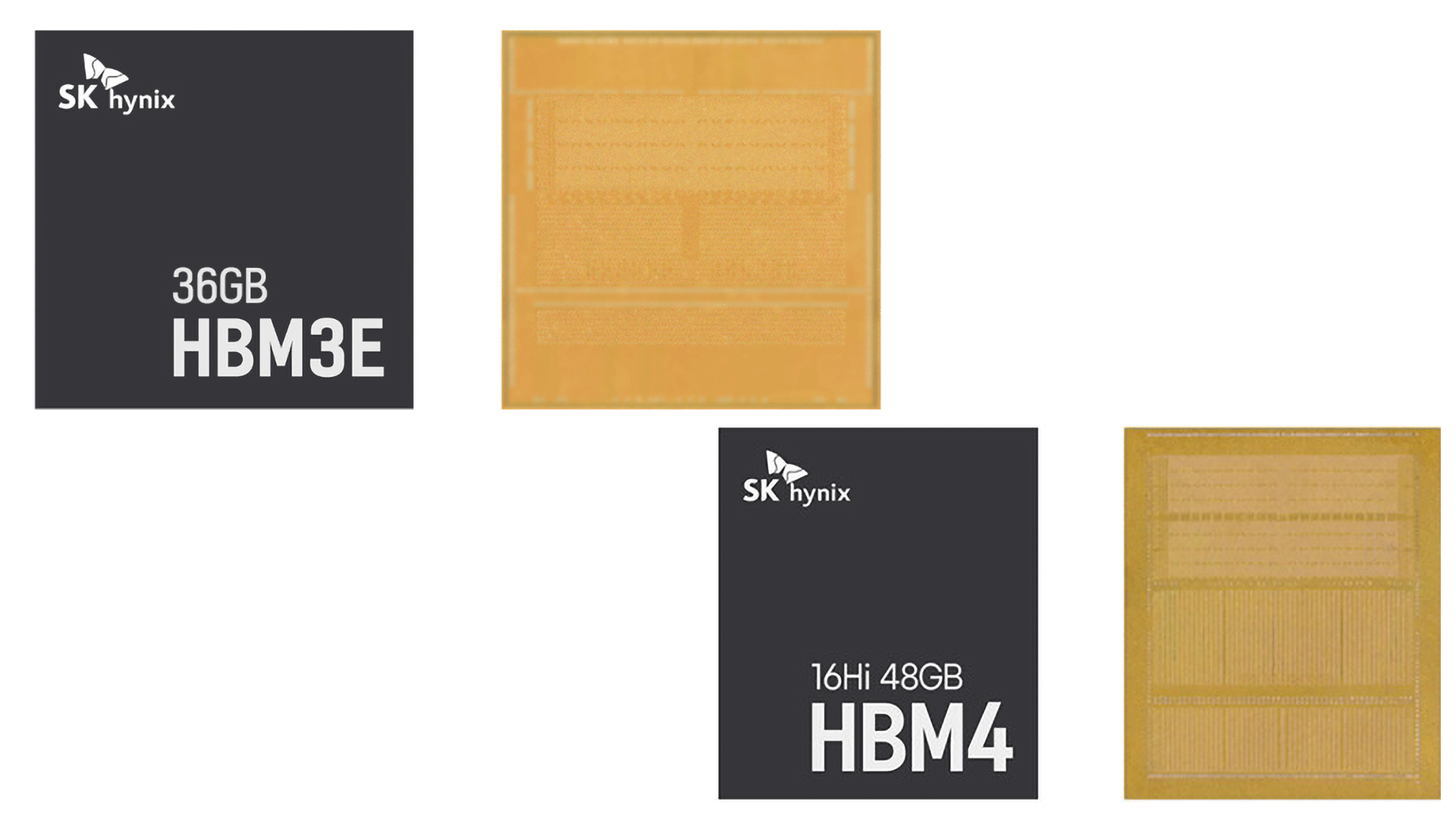
Operating profit landed below the 64.1 trillion won that brokerages surveyed by Yonhap Infomax had modeled. Executives attributed the softer blended DRAM ASP to product mix and to high-value shipments pushed into the second half, and said the gap should close as HBM4 and 1c-node conventional DRAM ramp up. HBM4 entered mass production during the quarter, and HBM4E samples have shipped, with volume production targeted for 2027.

Triggered by global selloffs, SK hynix closed down around 10% in Seoul on Wednesday, and Samsung Electronics fell 5%, with the KOSPI ending the session 6% lower and below 6,000 for the first time since April 14. The index touched 5,262 at one point, down almost 13%, taking its five-session decline to 17% and cutting a year-to-date gain that had reached 116% in June to 34%. Over the past month, SK hynix has lost 47% of its value and Samsung 37%. The KOSPI fell 10.84% on Tuesday and triggered a marketwide circuit breaker after SK hynix's American depositary receipts dropped below the $149 price at which they listed on Nasdaq on July 10.

Weaker shareholder-return expectations compounded the earnings miss, with SK hynix telling analysts only that additional returns remain under evaluation and would be disclosed within the year. Josh Gilbert, eToro's lead analyst for Asia-Pacific and the Middle East, told Bloomberg that "expectations had simply moved ahead of what even another record quarter could deliver."

CXMT closed its Shanghai debut up 466% on Monday after raising 57.92 billion yuan for DRAM wafer lines, and a report last week put China at low-volume production of domestic immersion DUV scanners running to around five units this year. TrendForce still has conventional DRAM contract prices rising 13% to 18% in the third quarter, with NAND up 10% to 15%.

Three US states to deploy 60mph drones armed with pepper spray to neutralize school shooters — ‘Campus Guardian Angel’ drones can also smash windows and ram attackers

2026年7月29日 19:36

The drone arms race is set to enter U.S. schools with Mithril Defense’s Campus Guardian Angel drones in at least nine schools across three states before the year is out. The Washington Post reports that the pilot program will be tested in Florida, Georgia, and Colorado schools with and without resource officers on campus. Securely siloed drones will be situated in key areas around campus, triggered by teachers via app or panic button, then fly to combat gun-toting attackers with a mix of strobes, sirens, pepper spray, and a 60 mph attacker-ramming capability.

If this is a successful initiative, it could go some way to lift the terrible specter of gun violence overshadowing U.S. students. The Washington Post notes that since Columbine in 1999, almost 400,000 students have experienced gun violence at school.

The Campus Guardian Angel drone rollout will be quite expensive. For example, the five schools in Georgia set to adopt drone defense will get $500,000 in backing to run the pilot program. However, politicians and legislators in that state appear to have passed the budget with ease.

This is how the Campus Guardian Angel drone system is designed to work:

  • Drones are sited at secure locations around the campus,
  • A teacher will trigger the drone deployment using an app or panic button,
  • Remote pilots take control and distract, deter, and disable aggressors using a mix of strobes, sirens, pepper gel, and 60‑mph impacts,
  • Drone system reaction speed is crucial.

Campus Guardian Angel drones

(Image credit: Mithril Defense)

Mithril Defense says that the Campus Guardian Angel drones can react and reach a shooter as quickly as 15 seconds. Justin Marston, Mithril’s founder and CEO, made a few other bold claims regarding his drone system’s reaction speed. For example, Marston said a drone like the Guardian Angel ‘might’ve saved lives in Uvalde.’ That’s a direct reference to the massacre at an elementary school in Uvalde, Texas, where 19 students and two teachers were killed in 2022.

The drone defense firm's CEO underlined that “the first 120 seconds are incredibly critical, because that’s when most of the shooting happens.” That implies that he thinks Campus Guardian Angel drones could be successfully deployed within that very narrow time window. But Uvalde was quite unusual, as responding law enforcement seemed paralyzed, waiting over an hour to enter the classroom.

These school-based drone systems are not without their critics. Some say that the funds may be better spent on prevention than cure. Even Mithril’s founder and CEO’s opinion seems to be that if these drones aren’t prompted into action within two minutes, they aren’t living up to their promise.

There is also the concern that drones could misidentify students or protection officers when controllers are under pressure. Others say that military-style drone systems aren’t appropriate for schools, and will cost a lot more than simple measures and routines regarding locked doors.

With the three states proceeding with pilot programs this year, we may see the true value and capabilities of the Campus Guardian Angel drones. If these drone-protected schools don’t suffer any terrible shooting incidents, then it may be claimed that the drones are at least a deterrent.

China's Moonshot AI reportedly used Nvidia Blackwell chips for training Kimi K3 — company circumvented both U.S. export and Chinese import controls to acquire compute

2026年7月29日 18:00

Keeping the upper hand in the AI arms race has become a vital goal for both the U.S. and China, and Nvidia's Blackwell AI chips are one of many flashpoints in that fight. The US government bars their sale to Chinese firms, while Chinese policies block their import as the country tries to spin up an advanced AI chip industry of its own.

But as we've discussed multiple times and then some more, Chinese AI firms are quite creative with workarounds for these restrictive policies. That's the case of Moonshot AI, which has reportedly made good use of Blackwell for training the recently released Kimi K3 frontier-level model, and is seemingly looking to obtain additional access in preparation for Kimi K4.

The Information says "people with knowledge of the matter" told it that Moonshot employed two Chinese firms that have Blackwell chips in their respective datacenters despite the bilateral restrictions we mentioned. Given that those chips are scarce enough right now even when obtained legitimately, it's unsurprising that neither firm had enough of them on hand to let Moonshot train K3. This reportedly forced Moonshot to figure out how to join multiple eight-chip Blackwell servers together and across datacenters in order to harness the necessary computing power.

The report also mentions "a researcher at a major Chinese tech firm who works on model training" as stating that Kimi K3 has "started a new round of arms race" in the country's AI industry. They further added that training frontier models is difficult or impossible with the promising but slowly developed homegrown chips. By that source's account, Chinese AI accelerators remain a generation or two behind Nvidia's current offerings and are reportedly several months in backorder.

For inference work, Moonshot reportedly relies on Nvidia's China-market HGX H20, a last-gen chip that isn't blocked by trade laws on either side of the Pacific. The firm recomends setups with at least 64 H20 GPUs for running Kimi K3. Those requirements, combined with that frontier model's desirability, meant that Moonshot quickly ran out of computing capacity to run K3 and currently has subscriptions on a waiting list. Given it's an open-weight model, and that its weights were released this week, many other inference providers are serving it, perhaps alleviating that bottleneck.

Meanwhile, White House Director Michael Kratsios claimed last week in a tweet that that Moonshot AI both "acquired GB300-equipped servers and has accessed GB300s in Thailand." While buying Blackwell chips is illegal, renting them is apparently fair game, at least until the proposed Remote Access Security Act takes effect. That law is designed to prevent the rental loophole by treating remote access as an export event. There's no telling exactly how the U.S. would enforce this law across other jurisdictions, though.

At any rate, the Department of Commerce is formally investigating if Chinese firms are accessing advanced U.S. chips like Blackwell GPUs, and that's likely to be an ongoing point of contention as the war for frontier model supremacy continues.

In China, it's an open secret that many of the country's high-level own or have access to Blackwell and other advanced chips, but despite all the trade restrictions and pushing the usage of local-made chips, the CCP has seemingly yet to crack down on said AI players. Some have theorized that the turning of this blind eye is intentional so Chinese firms like Moonshot can catch up to the likes of Anthropic and OpenAI.

Intel closes out RAMP-C production pilot that paid Nvidia and others to run test chips on 18A — program helped lay a path for secure domestic chip production on advanced processes

2026年7月29日 17:30

Intel Foundry says that it has completed RAMP-C, the United States government program awarded to the company in 2021 to stand up a secure, domestic leading-edge chip ecosystem on its 18A process. The program funneled money to commercial and defense partners to run test chips on a design kit that wasn't finished yet, and its conclusion marks readiness for external customers who will pay full price to fabricate real products, including those who might use the Intel Secure Enclave manufacturing flow that RAMP-C helped to shape.

The announcement doesn't name any customers that Intel may have secured as a result of RAMP-C, although the program roster has been public for years and includes Nvidia, Microsoft, IBM, Qualcomm, Boeing, and Northrop Grumman. That may be down to the sensitive nature of any actual defense industrial base (DIB) products that are likely to be produced with the Secure Enclave defense-focused manufacturing flow for those products, which spans project stages from design to chip fabrication to advanced packaging.

Intel says RAMP-C was one of the programs that influenced Secure Enclave, and having a number of potential DIB customers run and test prototypes on 18A through likely generated valuable knowledge for Intel, the U.S. government, and its partners as those stakeholders work together to create a defense-ready domestic chip source.

Stu Pann, then SVP and GM of Intel Foundry Services, told Tom's Hardware back in February 2024 that the program's announced partners were IBM, Microsoft, and Nvidia, and that all three were running test chips paid for by RAMP-C. The funding let them "operate with immature PDKs, which normally they wouldn't do," Pann said, and covered their associated costs. Intel got PPAC data in return: how prospective customers rated 18A on power, performance, area, and cost.

Intel disclosed the roster in stages rather than all at once. Nvidia, Qualcomm, Microsoft, and IBM were named across the first two phases, Boeing and Northrop Grumman joined in July 2023, and Trusted Semiconductor Solutions and Reliable MicroSystems came in under a third phase that Intel says was awarded in April 2024.

Nvidia's participation runs back to the program's early phases, four years before it agreed to buy $5 billion of Intel common stock in September 2025, a deal that closed in December at $23.28 per share for more than 217.4 million shares. That agreement covers custom x86 CPUs and RTX SoCs, and carries no commitment to manufacture Nvidia silicon at Intel.

Secure Enclave, the follow-on program Intel references, is worth up to $3 billion and was finalized alongside the company's $7.86 billion CHIPS Act award in November 2024. Congress required that CHIPS money pay for it, which is why the commercial grant is smaller than the $8.5 billion originally proposed.

Intel Foundry booked $293 million in external revenue last quarter against $5.8 billion in total segment revenue and a $2.1 billion operating loss, according to the company's Q2 2026 financial results. Fortinet, named last week as the first publicly disclosed external foundry customer under CEO Lip-Bu Tan, is building its security processor on Intel 4 rather than 18A. On the same earnings call, Intel committed to 14A high-volume manufacturing in 2028.

❌
❌