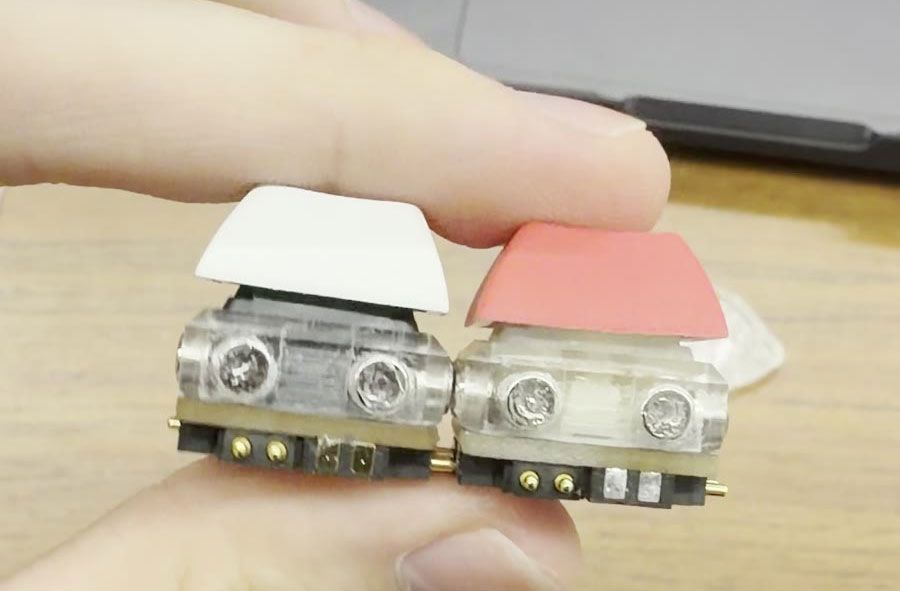
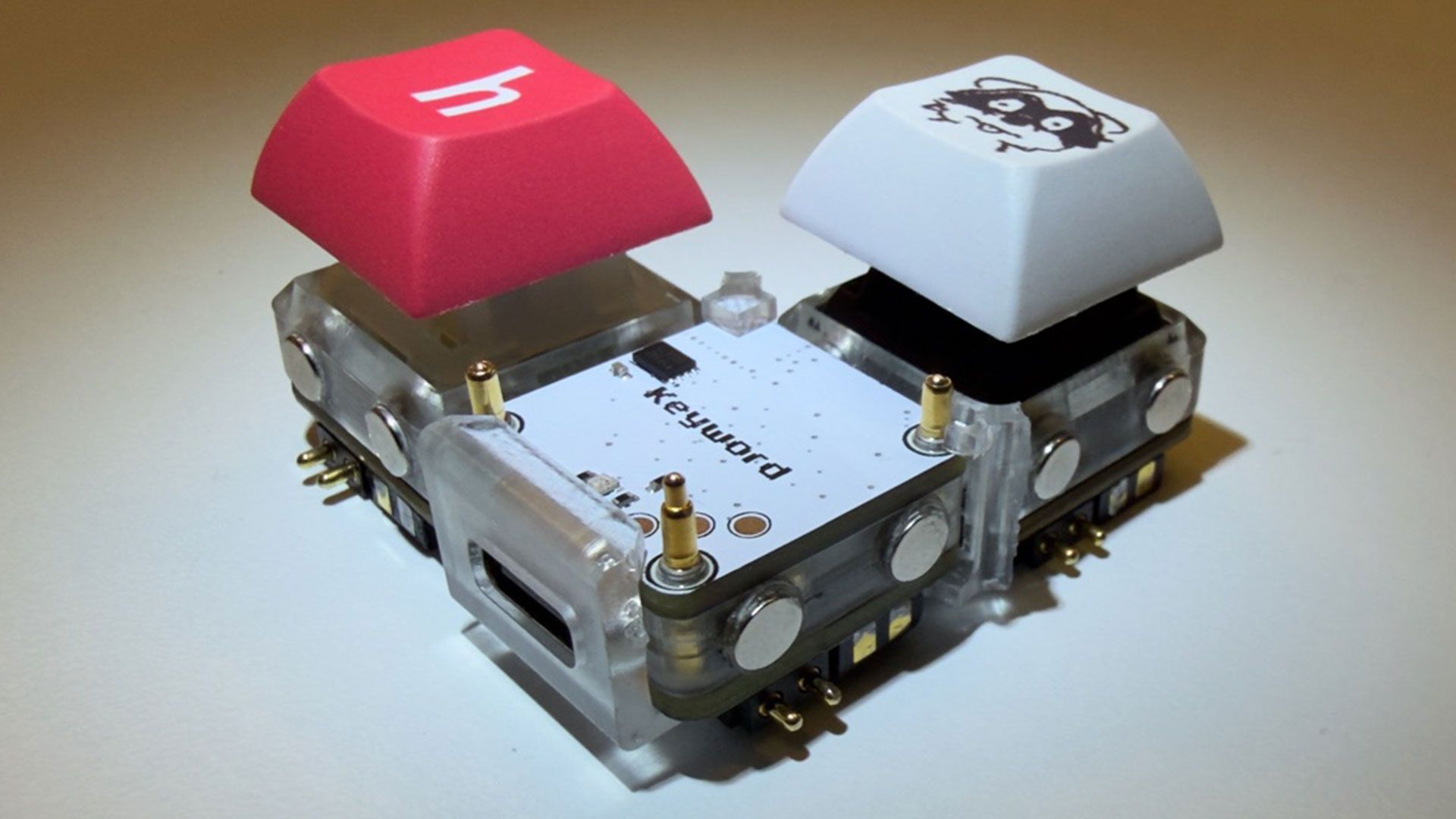
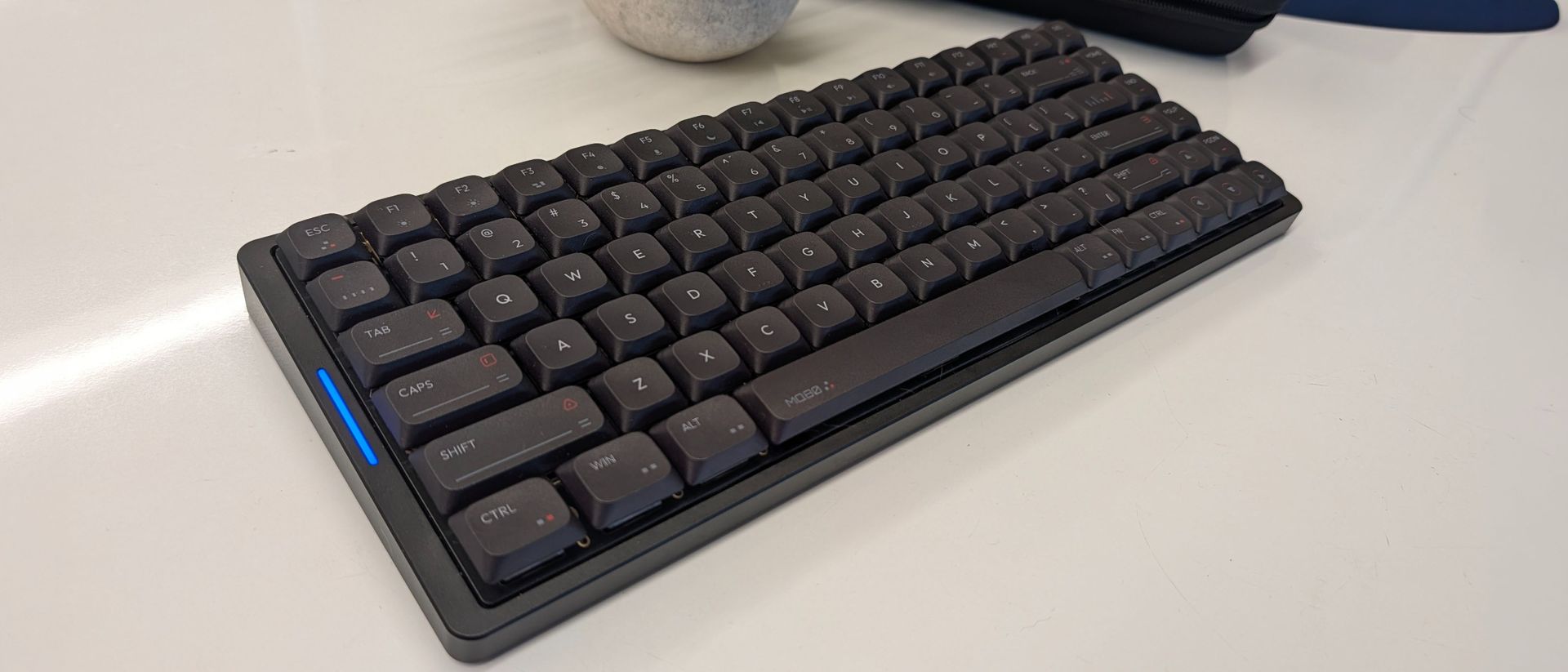
Developer notaroomba (AKA Nathan Alspaugh) has published details of his Keybytes project on GitHub. In essence, this is a modular project where a Keyword hub is magnetically connected to Keybit keys, and each key has its own microcontroller. Hence the number of keys and their layout are entirely up to the user, with a modular design akin to building Lego.
We’ve seen oodles of imaginative and truly excellent mechanical keyboards over recent years, but Keybytes probably offers the greatest flexibility with regard to layout and key selection we’ve ever seen.
notaroomba on GitHubnotaroomba on GitHub
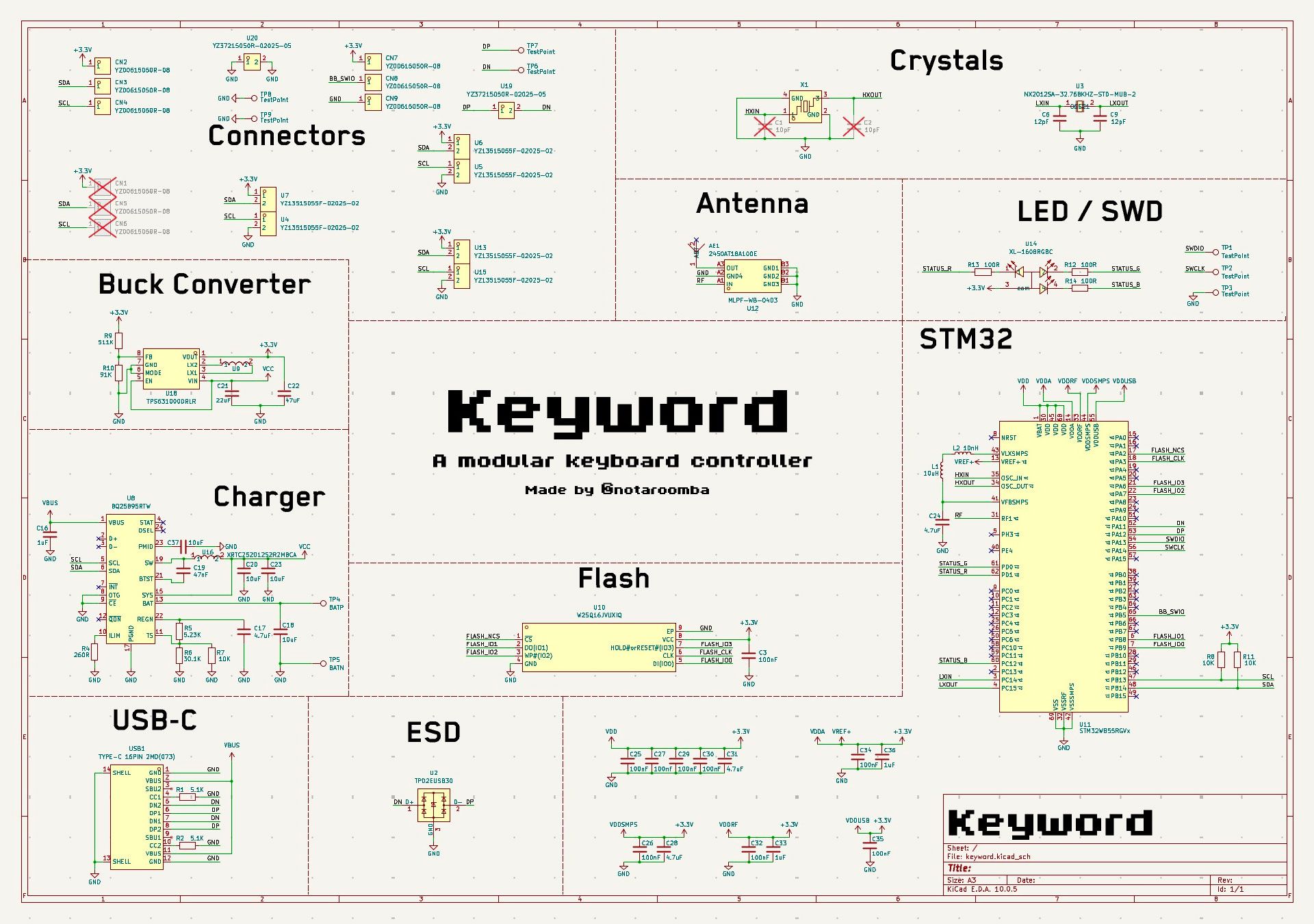
It starts with a Keyword, which is the main board that the Keybits connect to. This central component houses a stacked pair of PCBs. The top board packs an Arm Cortex M4-powered microcontroller, Bluetooth antenna, and flash memory. The lower board offers USB-C, charging, and a buck-boost converter.
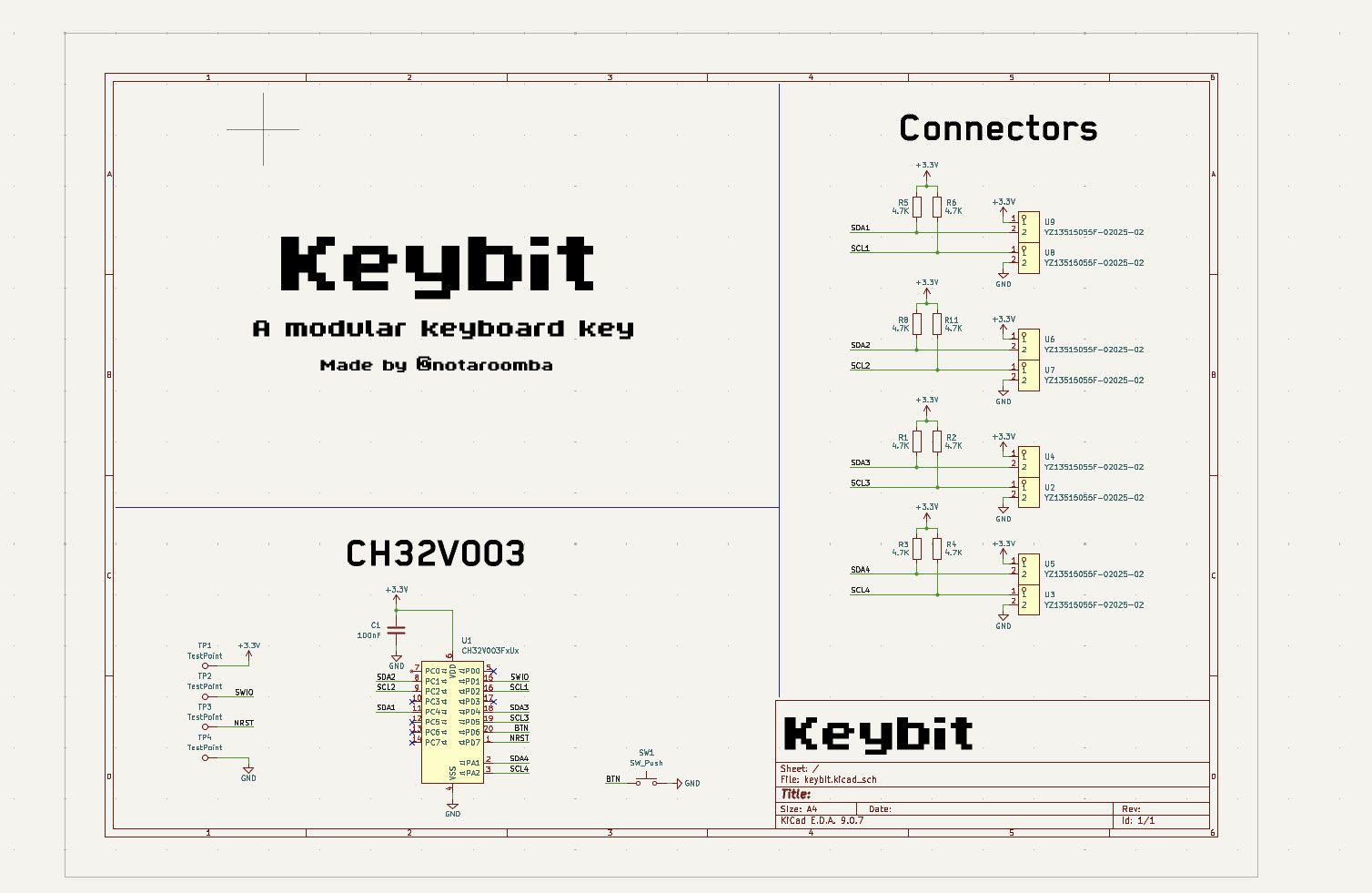
Adding keys seems like a cinch. Every Keybit, one of the modular keys, contains a CH32V003 RISC-V microcontroller. Moreover, it features pogo pins on all 4 sides of every key for power and I2C. The case is magnetic so you can connect it to any aspect of the Keyword and other Keybits. Atop the Keybit, a Cherry MX switch is installed. We guess you can follow the GitHub MIT-licensed plans for this project and use your preferred variety of mechanical switches.
On the GitHub project page, there are no more than two Keybits together with a Keyword, so you don’t get to see what crazy layout plans he’s hoping to conjure up. However, it is still early days. Per the project journal, Keybytes only became a thing back in March this year, and it was only over the weekend that the developer got to finally boast “it finally works!!”
notaroomba on GitHubnotaroomba on GitHub
Both the Keyword and the Keybit modules are 1U sized (19.05 x 19.05mm).
Alspaugh, a student at MIT, has shared all the assets, files, and details you might need to make your own Keybytes keyboard. The GitHub repository says that everything is released under the permissive MIT license.
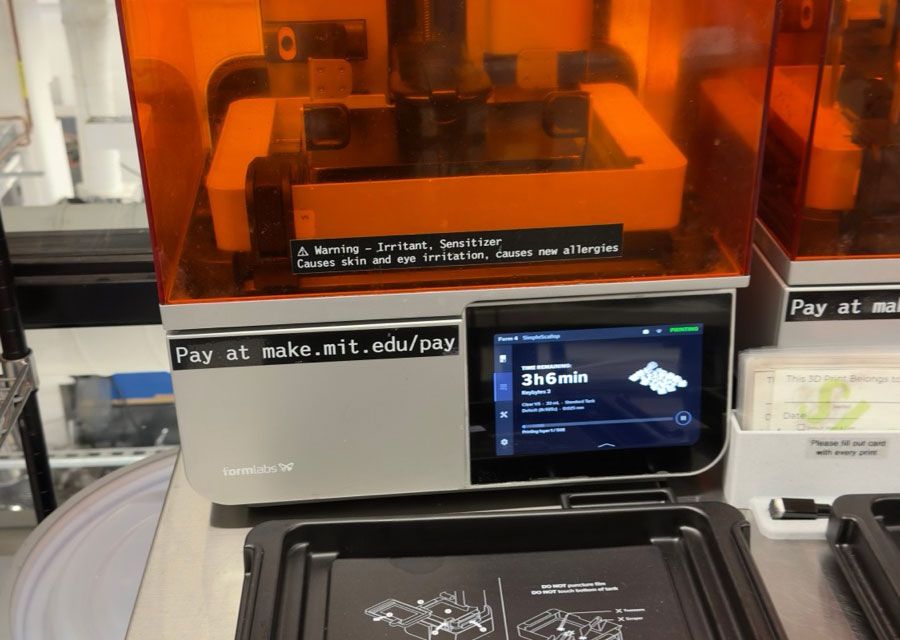
It might quickly become expensive for individuals to put together a usable layout with, say, 60 keys. Getting the PCBs made, buying and soldering all the components, and 3D printing all the custom bits and pieces is also a considerable task when your proposed keyboard layout is more than a handful of shortcut keys. In the aforementioned journal, Alspaugh actually mentions that he priced up a “full sized keyboard (2 keywords and like 110 keybits) and it's around $900 assembled.”
Keyword has a status light, but the Keybits lack any kind of lighting. My wishlist for Keybytes 2.0 includes customizable RGB lighting, and I would also like to propose Dialbits, a Fingerprintbit, and a matching Touchpadbit.
When it comes to mechanical keyboards, IQUNIX has always been ahead of the curve. Before COVID turned the mainstream onto mechanical keyboards, the company had already been releasing some of the best mechanical keyboards available, quietly making the case for PBT keycaps and premium materials that have since become the norm.
With a catalog of traditional mechanical keyboards under its belt, it’s not surprising that the company would be ready to branch into new territory. It has the Hall Effect demographic covered with its EZ series, but the MQ80 goes another direction entirely. It takes all of the lessons the company learned about how to create an exceptional typing and gaming experience and compressed it. It’s all aluminum, low profile, and offers some of the best-sounding keystrokes of its kind, but steep competition and poor portability hold it back from being the go-to pick it might otherwise be.
IQUNIX MQ80 Specs
Number of Keys
80
Switches
IQUNIX Rose Gold (Linear)
Backlighting
Per-key RGB
Onboard Storage
4 Layers/Profiles
Dedicated Media Keys
Fn Shortcuts
Additional Ports
None
Connectivity
USB, 2.4GHz, Bluetooth 5.1
Cable
Braided, 6 feet
Keycaps
High purity PBT plastic
Construction
Aluminum case, multilayer sound damping
Software
VIA (web)
Dimensions (LxWxH)
12.64 x 4.90 x 0.41 - 1.08 inches
Weight
2.6 pounds (1180 grams)
MSRP
$159.99
Release Date
February 25, 2025
Design and Construction of the IQUNIX MQ80
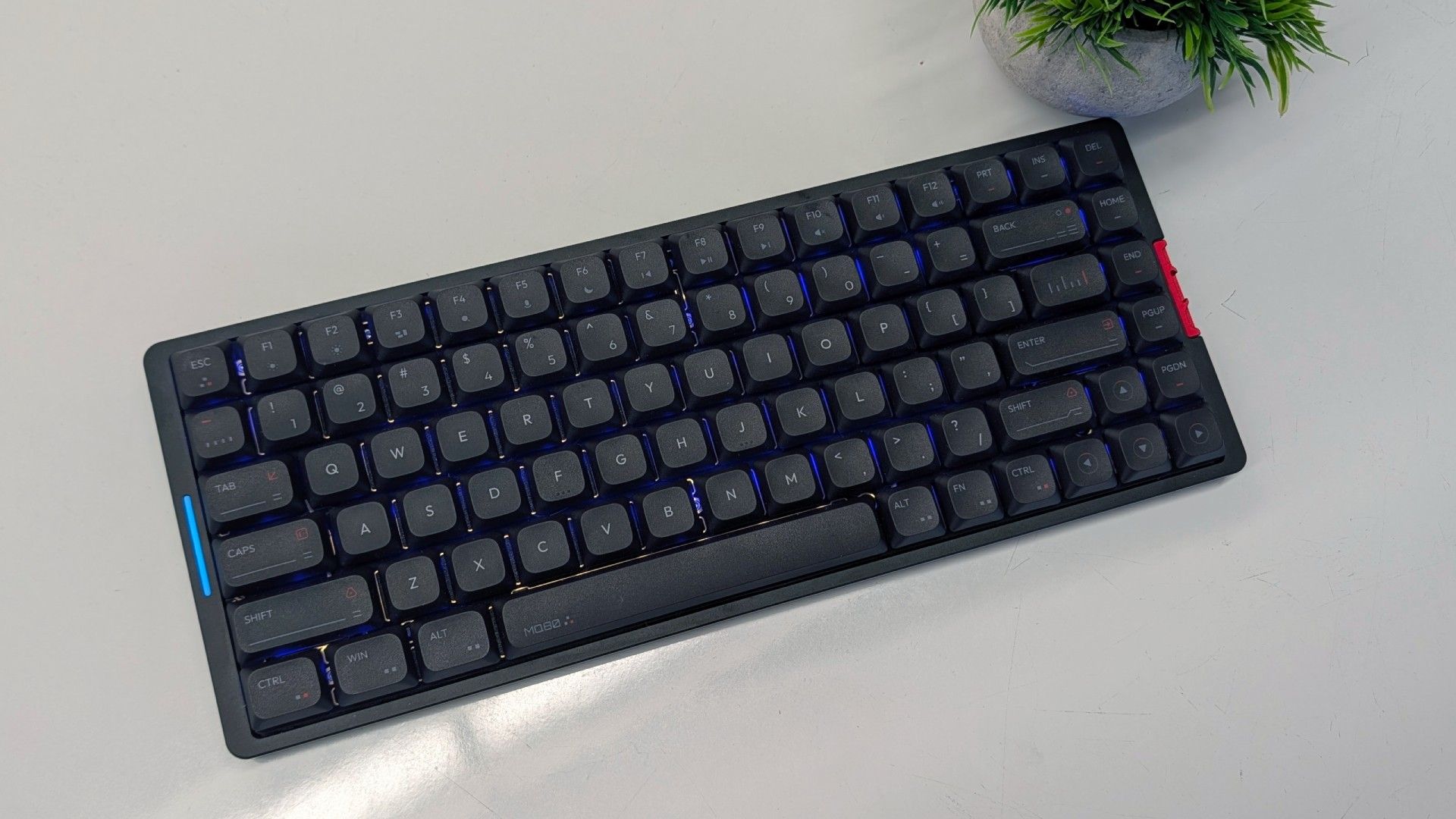
The IQUNIX MQ80 breaks the mold for IQUNIX, but carries the same 75-percent layout as countless mechanical keyboards before it. The form factor is sometimes referred to as a “Compact TKL,” since it shares most of the same keys — minus the blank spaces in between. The result is a condensed slab of keys, including a full function row, arrow cluster, and seven navigation and editing keys.
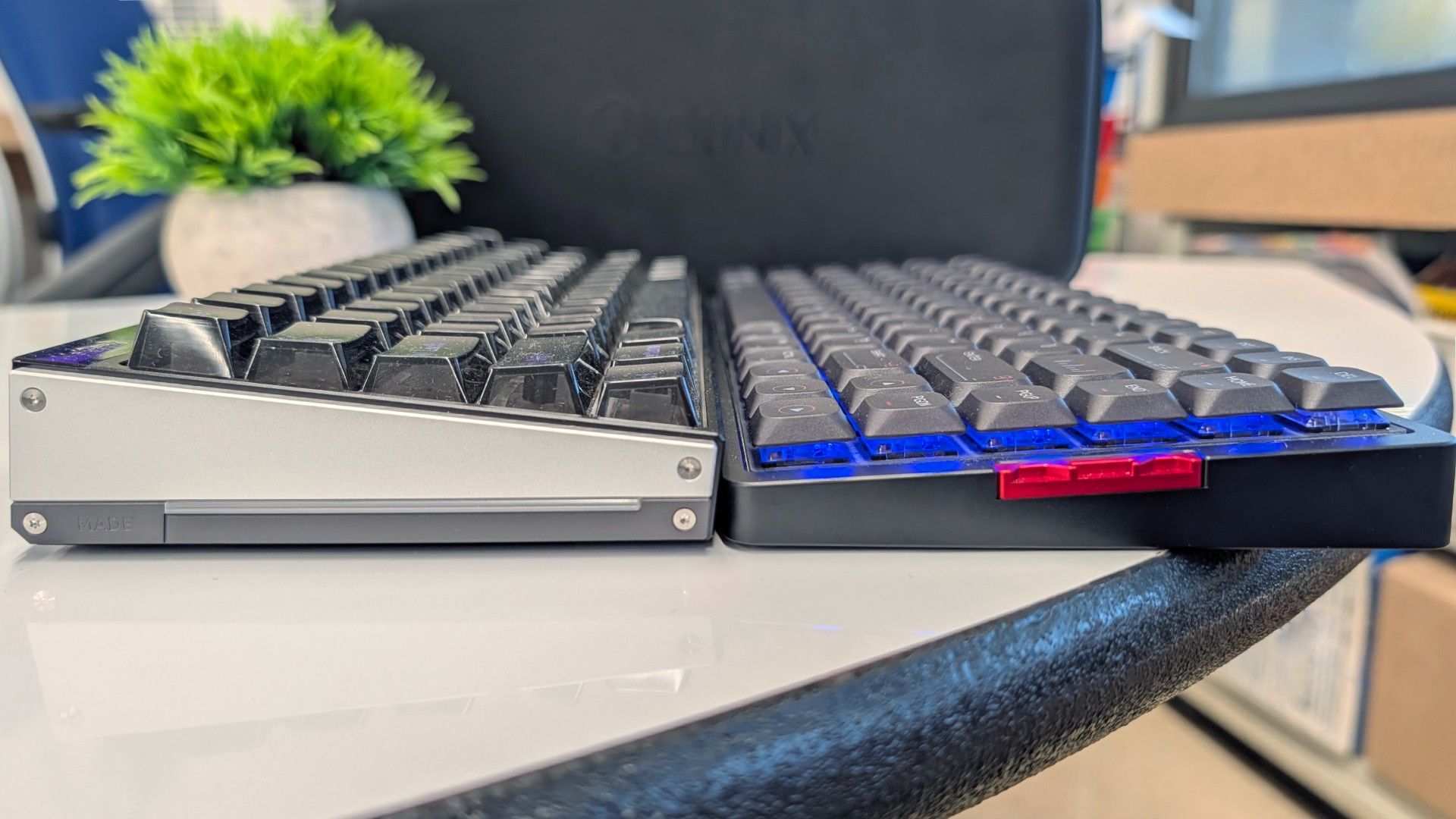
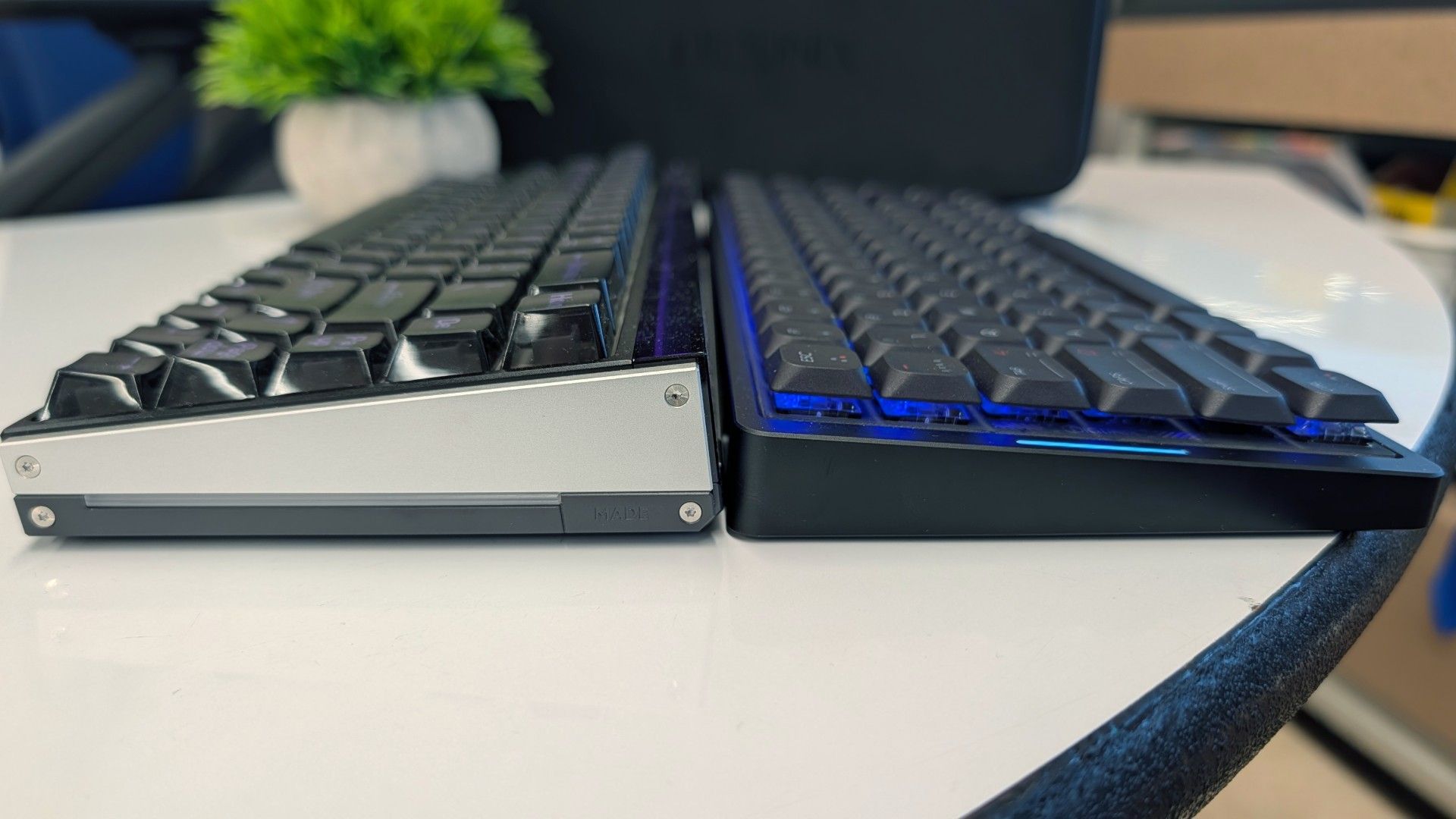
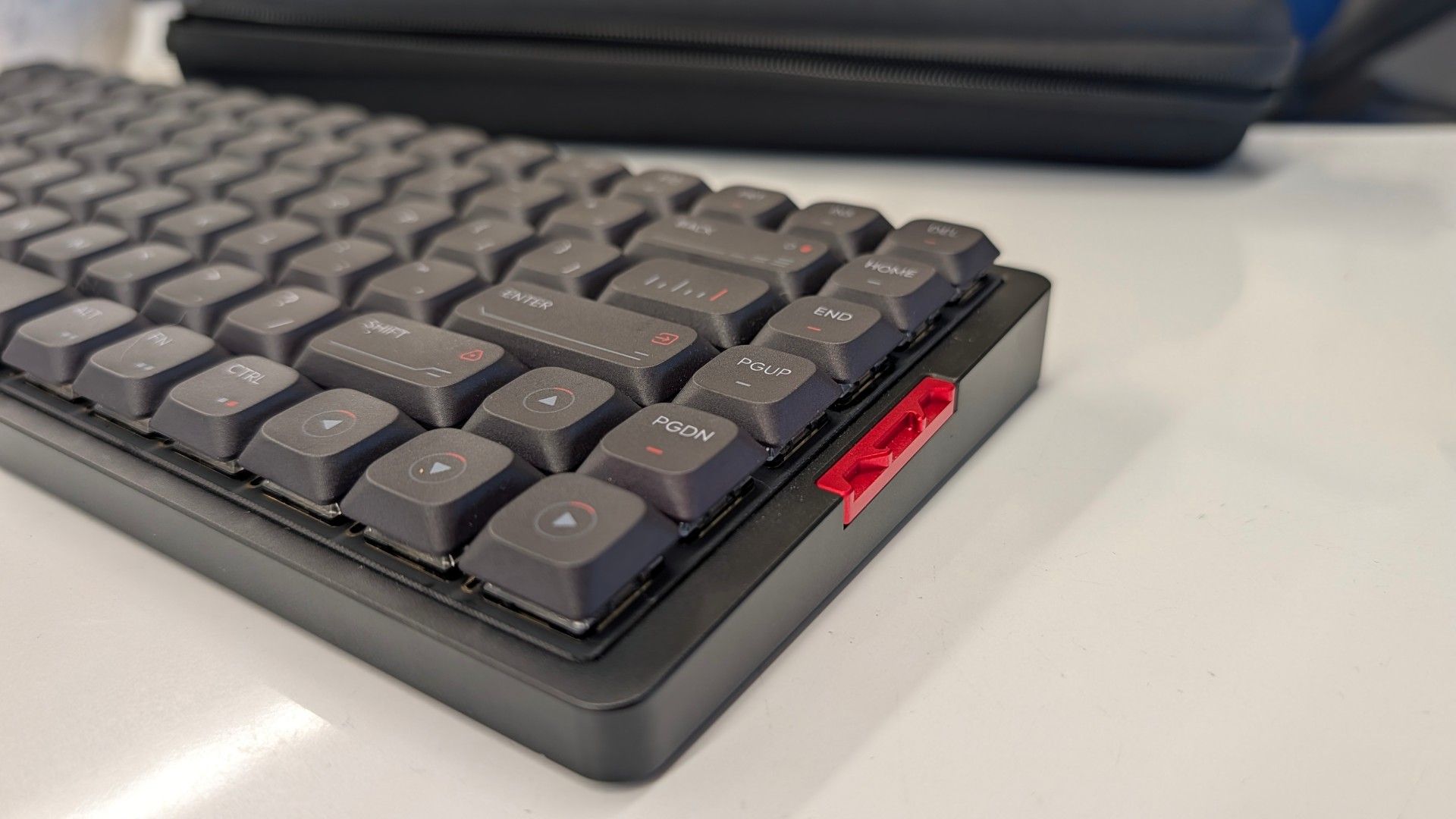
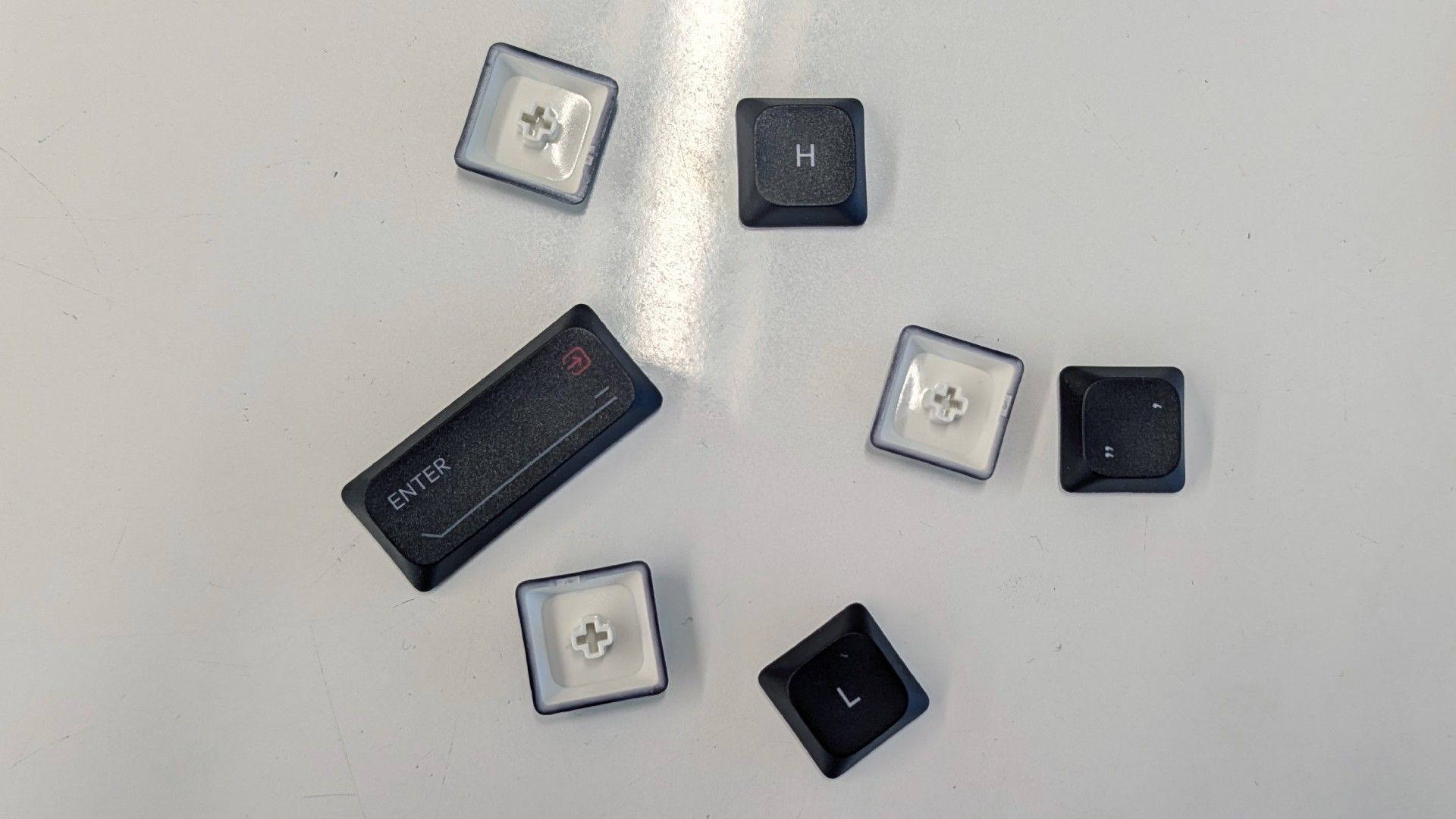
Nothing too out of the ordinary there, but the MQ80 marries that compact layout with an impressively low height of only 0.4 inches (10.8mm) at the front and 1.08 inches (27.5mm) in the rear. The keycaps are the same height across every row, and while they're scooped to keep your finger centered above the switch, they otherwise feel identical below the finger tip. This makes it an easy transition if you’re coming from a laptop or Apple Magic Keyboard, but first-time LP users should be prepared for a learning curve.
(Image credit: Tom's Hardware)
The keyboard is wireless and supports both 2.4GHz and Bluetooth 5.1 connections, as well as wired if you need to use it while it’s recharging. It sports a 4,000 mAh battery which IQUNIX claims can sustain the keyboard for up to 350 hours. This is with the usual caveats of that being over Bluetooth with all of the lighting disabled, etc. etc. — but I was able to use it for close to two weeks between recharges, even with the lighting on.
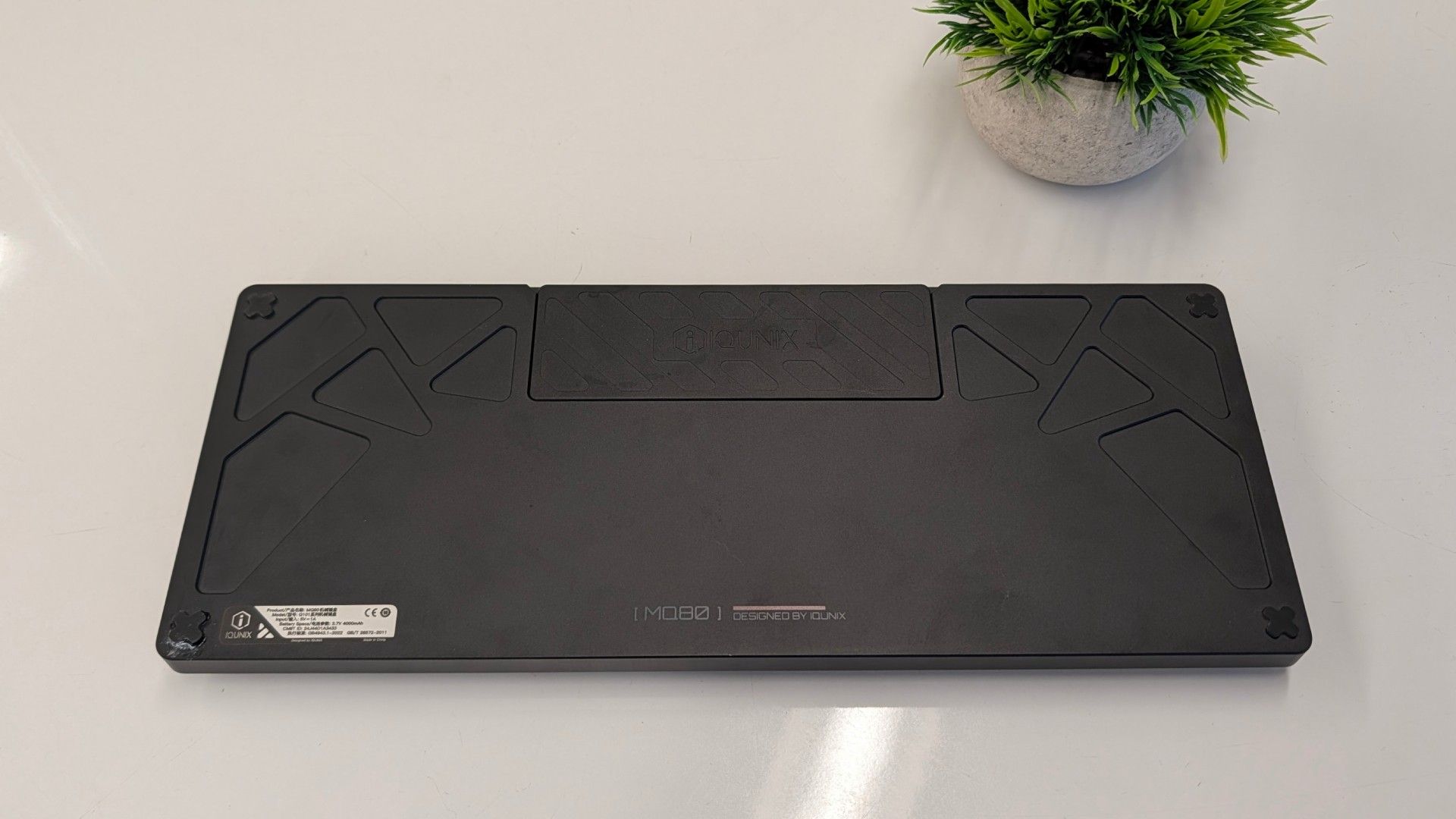
The MQ80 is a bit of a curiosity, if I’m being honest. It's thin, yes, but it’s certainly not light. It uses a heavy, CNC-milled aluminum case, just like the company’s prior models and countless others aiming for that “premium feel.” It’s a case study in how looks can be deceiving.
(Image credit: Tom's Hardware)
In fact, it has been a pretty common occurrence for people to comment on how surprising its weight is. The keyboard tips the scales at 2.6 pounds, which is around what you encounter with a full-size mechanical keyboard or nicer TKL. From a low profile keyboard that everyone assumes will be airy and effortless to carry around, it flies in the face of what you might expect.
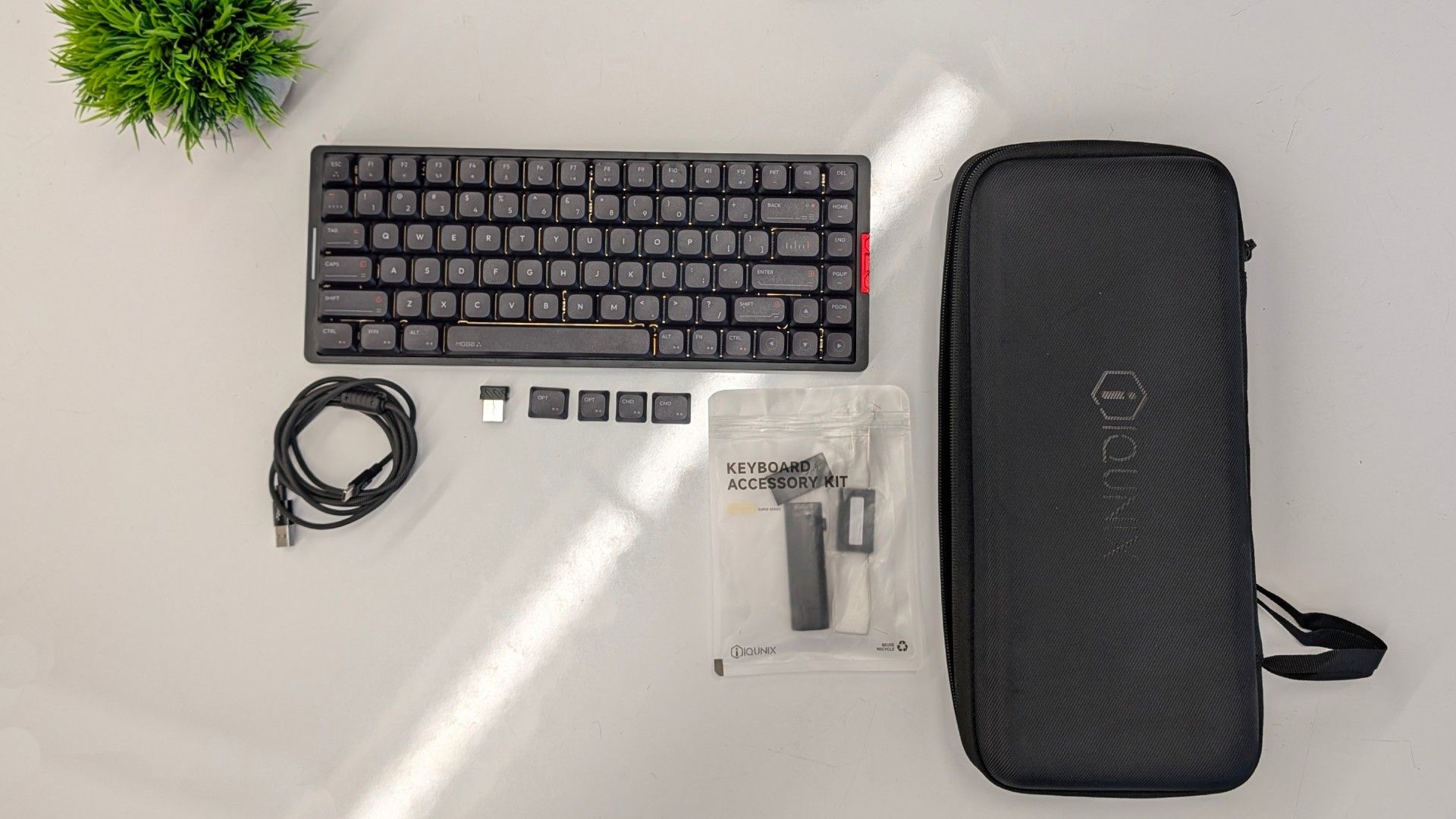
So while technically, yes, it’s a portable keyboard (IQUNIX even provides a nice hardshell carrying case to tote it around in), it's not one I could see most people wanting to carry every day. Instead, this seems designed to live on your desk, providing a solid option for fans of the profile who prefer to use it for all of their typing — not just on the go.
(Image credit: Tom's Hardware)
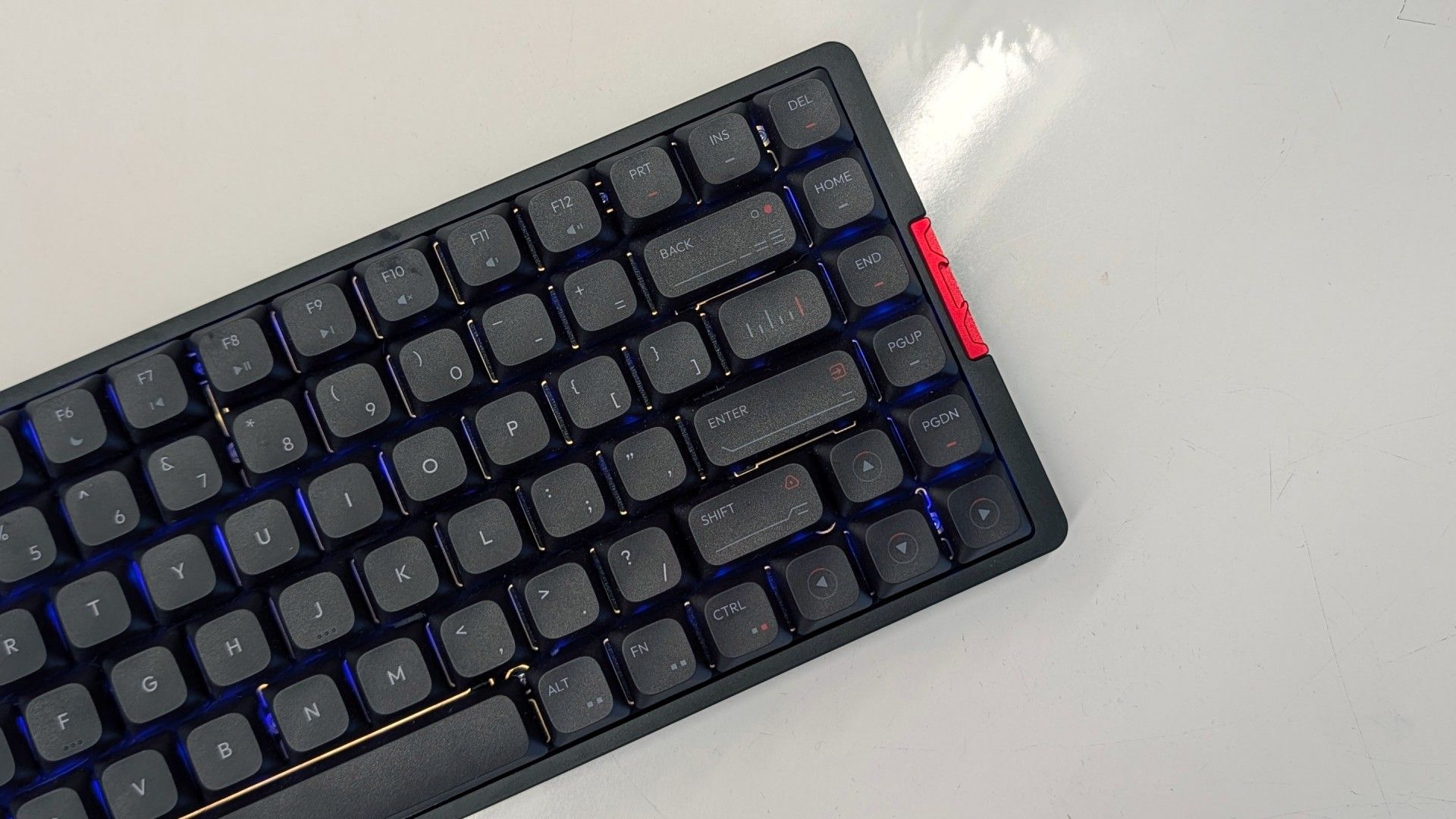
In typical IQUNIX fashion, the MQ80 is built to an enthusiast's standard. The case features intricate milling with plenty of small accents that lend it a vaguely cyberpunk impression. The keycaps feature colored legends and contrasting accents that complete its visual identity. The keyboard is available in white or black with keycaps to match, and both look fetching.
The keycaps are made of thick PBT plastic. They have a light texture to add some grip to your typing experience and use dye sublimated legends that won't chip or fade over time.
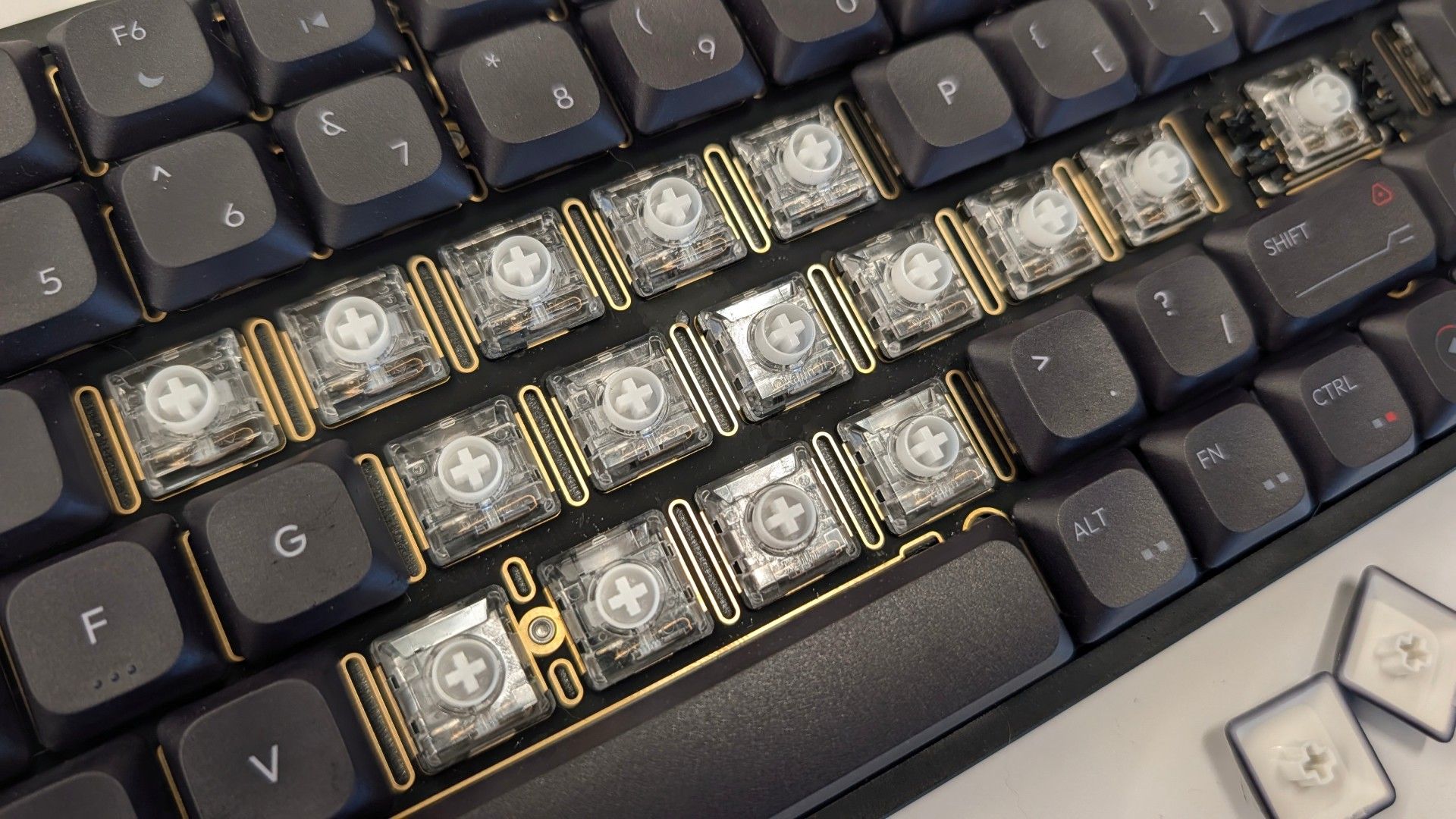
The switches below those keycaps are Kailh Rose Red, a lightweight linear switch with a 40g actuation force, 2.8mm of travel distance, and a 1.2mm actuation point. Despite their shortness, they offer 70% of the movement of a full-height switch. This makes them easier to transition to in how they feel to bottom out, but they still feel sensitive. This is a keyboard to use with a light touch or you'll find yourself with strings of single letters or running from cover before you mean to.
(Image credit: Tom's Hardware)
The switches are hot-swappable with any Kailh Choc V2 alternative, but there just aren't many options. Gateron has run away with the variety end of the low profile switch market, but you can swap them out if you're inclined to do so.
The keyboard features per-key RGB backlighting, customizable within the VIA web configurator or with shortcut keys. The keycaps aren't backlit, however, so it's not great for use in the dark if you aren't a touch typist.
The internal structure of the keyboard is where things get really interesting. The MQ80 came into the world following a run of pre-built custom keyboards IQUNIX produced under its SUPER product line. It pulled direct influence from the boutique, limited run, group buy custom keyboards popular on r/mechanicalkeyboards. All of those lessons come into play with the MQ80.
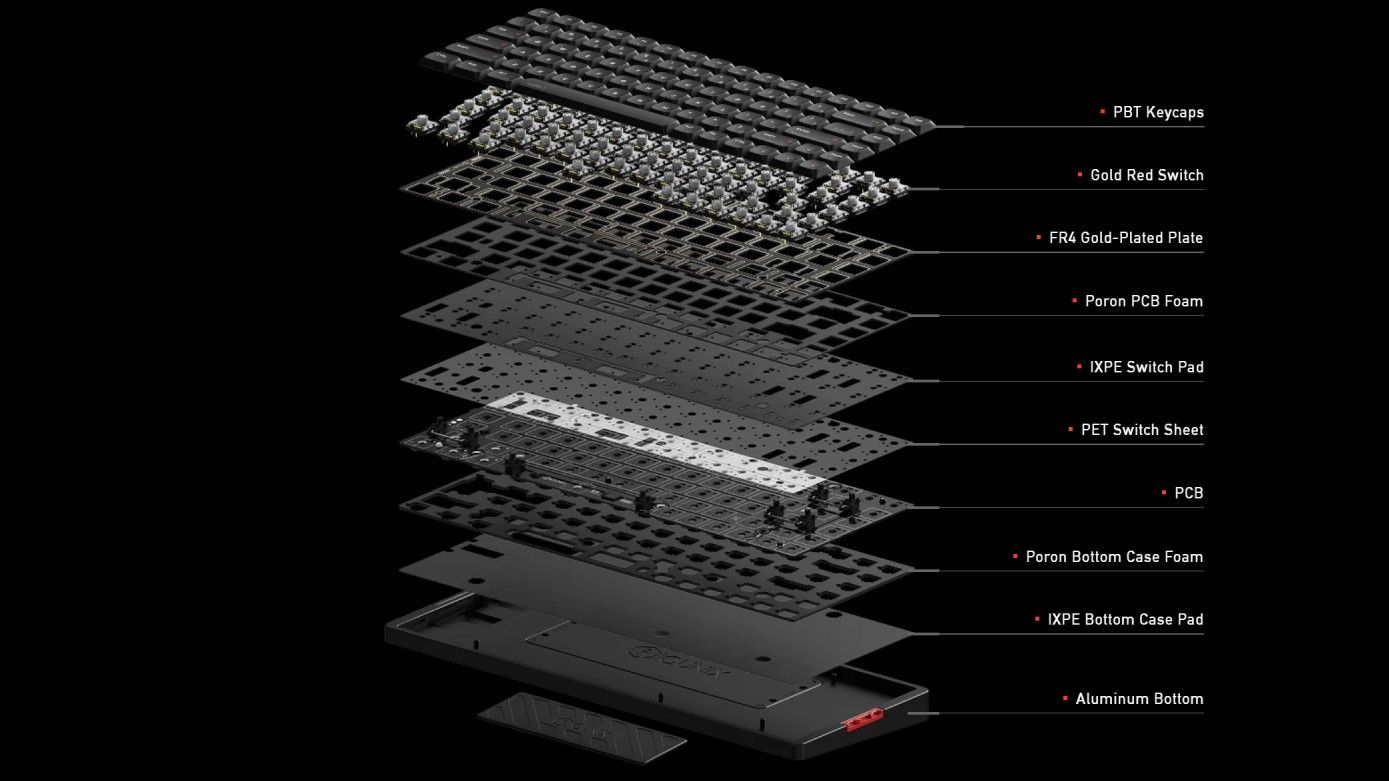
Beneath the keys lies a multi-layer assembly that makes even the best gaming keyboards look simple in comparison. It's an intentional system meant to filter and refine the sound and feel of every keystroke without the need to customize or adjust anything yourself.
(Image credit: IQUNIX)
Moving from the top down, the switches snap into a fiberglass (FR4) plate, a middle-ground material that balances firmness with crisp keystrokes.
Beneath the plate and PCB are two layers of foam, each with different acoustic properties, and a plastic film. The first layer of foam is thick PORON and fills in the empty space between the switches, plate, and PCB. It cuts reverb and helps isolate each switch. A much thinner, less dense sheet of IXPE foam and a plastic PET sheet sit below the switches to add a crispness and pop to each keystroke.
Below the circuit board is another layer of PORON foam that filters soundwaves that pass through and cushion each press. Finally, in the very bottom of the case is another layer of IXPE foam intended to reflect mid-range sounds and act as a final buffer before hitting the aluminum of the case.
(Image credit: Tom's Hardware)
It sounds like a lot and it is, but it doesn't end there. The PCB assembly attaches to the case with a modified gasket mount ("Le-Tray Gasket Mount") that imparts some of the qualities of gasket mounting into this much slimmer design. Six arms from the assembly attach to the case with silicone buffers, holding it aloft to deliver pillowy bottom outs.
As a wireless keyboard, IQUNIX also had to fit a battery into its slim frame. It's surprisingly large given the space constraints with a 4,000mAh capacity. This translates into 350 hours of rated uptime, but only when using Bluetooth and no RGB backlighting. In practice, keeping RGB on high and using 2.4GHz, it lasts around 45 hours but your specific figure will depend on use.
Typing Experience on the IQUNIX MQ80
While there's an obvious pre-requisite to prefer low profile keys, you'll also need to be a fan of linear switches. And not just that, you'll need to be a fan of lightweight, fast actuating low profile switches with keycaps that feel identical under your fingers.
If I sound a little salty, I'm not. It's just that I've used hundreds of mechanical keyboards and typed A Song of Ice and Fire worth of words on them, including more than a fair share of competing low profile keyboards, and it's still a pain in the ass to switch back to them.
(Image credit: Tom's Hardware)
At least at first, because you do get used to it and the light touch required. Before long, I remembered to pay special attention to the navigation bumps on the "F" and "J" keys. Once everything clicked, I honestly felt faster and more nimble as a typist.
Surprisingly, this didn't translate into actual WPM in my case. I average right around 110 WPM on my day-to-day full height keyboard. Swapping to the MQ80, my raw speed increased slightly, likely due to the lightweight switches and the floating posture I adopted to accommodate its height. My actual average words-per-minute on MonkeyType actually decreased to 105 WPM due to having to backspace to correct typos.
So, typing speed is a bit of a wash (at least for me) but it's hard to argue that the sound and feel of typing on the keyboard is less than exceptional. The multiple layers of sound dampening quiet and deepen the sound of each keystroke in a satisfying way. The Le-Tray Gasket Mount system also gives bottom outs a softness that's reminiscent of, but slightly stiffer than, the gasket mounts used on most full height gaming keyboards.
(Image credit: Tom's Hardware)
The thing is, since IQUNIX launched the MQ80 to Kickstarter in early 2025, Nuphy released the third iteration of its Air75 series, the Air75 V3, and it delivers a typing experience that I feel is at least as good and is objectively more customizable with its Gateron low profile switches and tactile and silent switch options at checkout.
As a heavy handed typist, I prefer a lot of tactility, especially on a keyboard with perfectly flat rows. The only option for "not a light tactile" were Kailh Black Cloud switches and would have run me half the cost of the keyboard itself.
None of this is to say that the typing experience is bad. It's genuinely not. IQUNIX knows its stuff. All of this is simply to say that there's an important trade-off and if you don't like light linear switches or paying a premium to replace them, the MQ80 probably isn't the keyboard for you.
If you like that light touch, the custom keyboard-esque feel of its keystrokes filtering through all of that foam and milled aluminum, then you're probably going to love it.
Gaming Experience of the IQUNIX MQ80
Most of the same considerations from the typing experience apply to gaming as well, but fragging enemies is really where the MQ80 felt most at home to me.
Those lightweight switches that were a liability to typing accuracy suddenly feel like hair triggers. If you're connected using the 2.4 GHz dongle or plugged in via USB, its 1,000 Hz polling rate ensures that every keystroke comes through instantly - though, it still doesn't compare to the growing number of 8,000 Hz keyboards out there on paper. Whether you'll be able to tell the difference is up for debate.
(Image credit: Tom's Hardware)
While the layers of cushioning and damping don't have a direct impact on how effective the MQ80 is for gaming, much like typing, they just make the experience that much more pleasant.
Apart from its switches, there's a dearth of dedicated gaming features unique to the keyboard. The keys are reprogrammable and support string macros, but you won't find a fancy software suite to support the experience here. Instead, IQUNIX went open source and the MQ80 is better for it.
Software for the IQUNIX MQ80
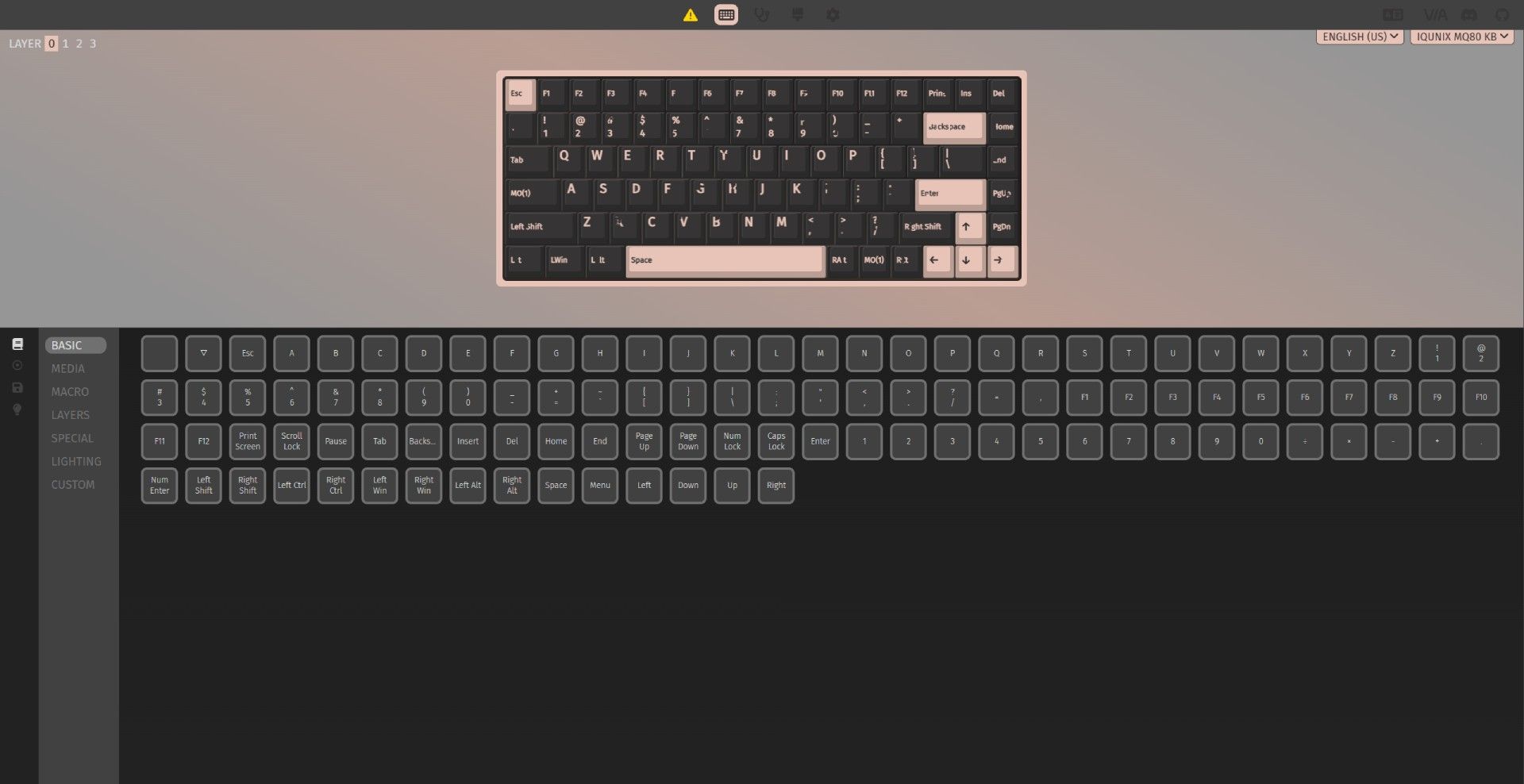
Where the MQ80 comes into its own is its programmability. Unlike many traditional gaming keyboards, it doesn't have downloadable software that needs to stay running in the background. Instead, IQUNIX opted to support VIA, a web-based configurator that allows you to make changes on the fly while also saving them to the keyboard.
It's simple on the surface, but is surprisingly powerful once you dive into it. Every key can carry up to four different actions or macros, broken into layers for quick shortcut access. Much like holding Shift, you hold or tap a key of your choice and access those additional layers of keymaps.
(Image credit: Tom's Hardware)
While this functionality isn't unique to VIA or the MQ80 by any means, big gaming companies usually require you to keep their software running to access layered functions (ex. Razer HyperShift). Here, every change is written directly to the keyboard's firmware and will work on any machine, exactly as programmed.
The web client itself is fairly simple. You have a graphic of your keyboard layout with all of your current mappings on display. Underneath are all of the different commands that can be mapped, including things like media controls, additional F-keys (all the way to F24), macros, RGB controls, and virtually anything else you might want to assign to a keystroke.
The biggest feature you'll miss out on, apart from proprietary features like game-synced RGB backlighting, is the ability to assign backlight colors to individual keys. It's possible to change the brightness, hue, and saturation across its dozen or so preset animations, but creating an entirely custom lighting scheme requires creating your own code and flashing it to the keyboard manually.
The Bottom Line
(Image credit: Tom's Hardware)
The IQUNIX MQ80 is a very good keyboard. For a lot of users, I'm confident that they would describe it as "Great" or even "Amazing." I wouldn't fault them for that. This is essentially the luxury option in the low profile space at this point.
But it's too heavy to easily tote around without questioning your life choices. If portability is important to you, I highly recommend the Nuphy Air75 V3. Or, if you're looking for something a little more office friendly than the Nuphy, the Lofree Flow 2 is another great choice that also comes with a tactile switch option.
At the end of the day, all three of these options are good for the money but only the MQ80 feels like a luxury option thanks to its heavy case. If you're not planning on carrying it back and forth to work and you like a fast switch, the MQ80 is a solid choice.
Sometimes you need a keyboard, and you need it now. That was where I found myself a couple months ago during local AI testing with one of the Nvidia GB10 boxes on my bench. Those systems are incredibly picky about which wired keyboards they'll work with for some reason, and moving the one known-good board I have on hand between systems under test was becoming a massive headache.
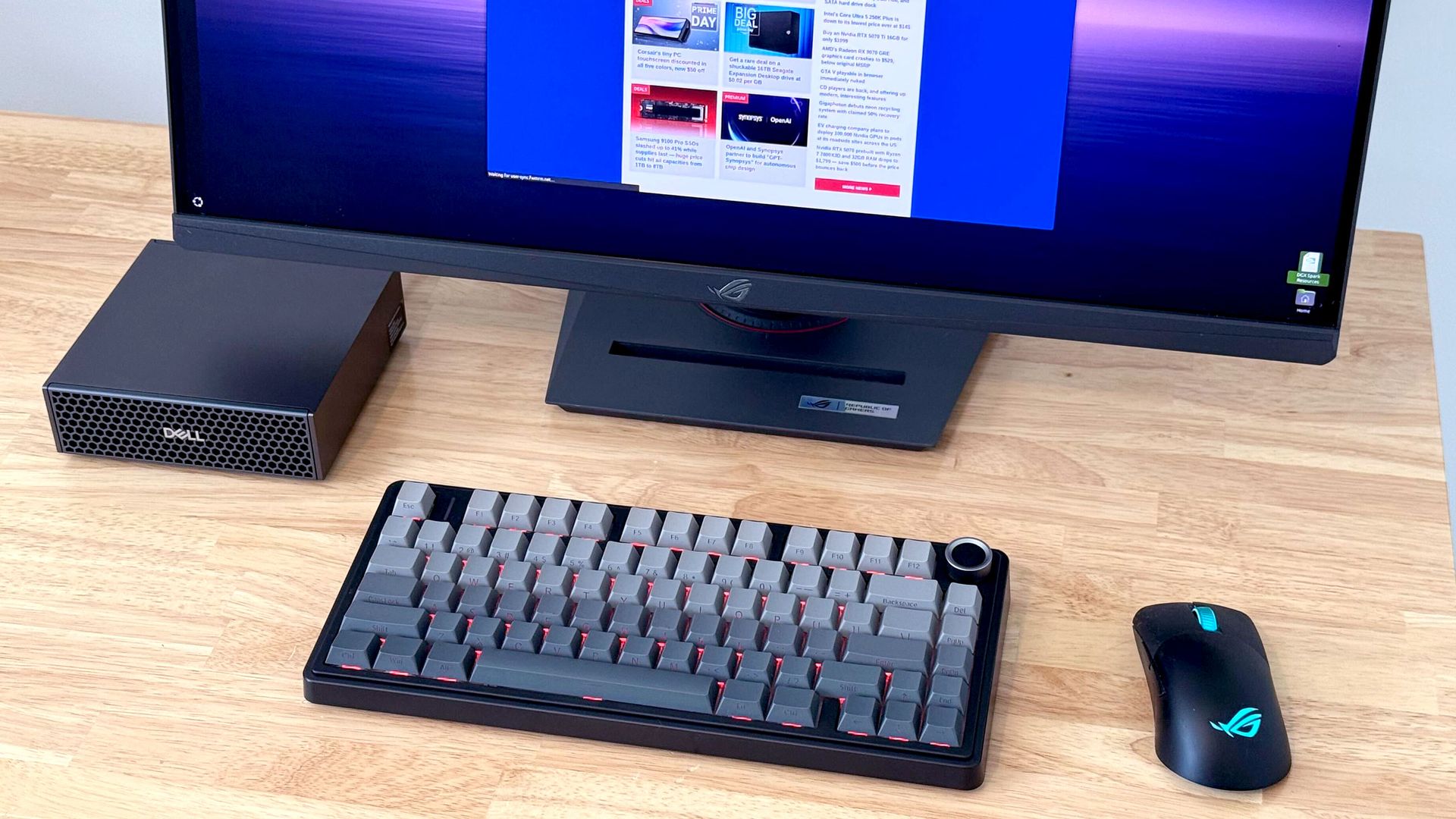
After one too many inconvenient keyboard swaps, I had had enough. I wanted a compact Bluetooth board that I could dedicate to my workbench, and I wanted it now. Testing on that GB10 system couldn’t wait, and I didn't want to get stuck in analysis paralysis. So I hopped on Amazon, filtered my choices down to items with same-day delivery, and found the Epomaker x Aula F75 Pro for just $65.
(Image credit: Future)
AULA
Aula F75 Pro Wireless Mechanical Keyboard
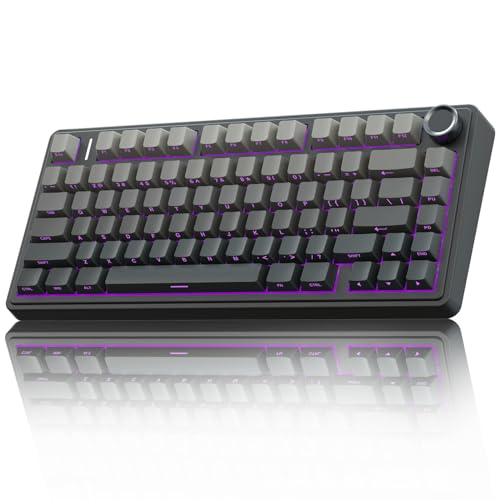
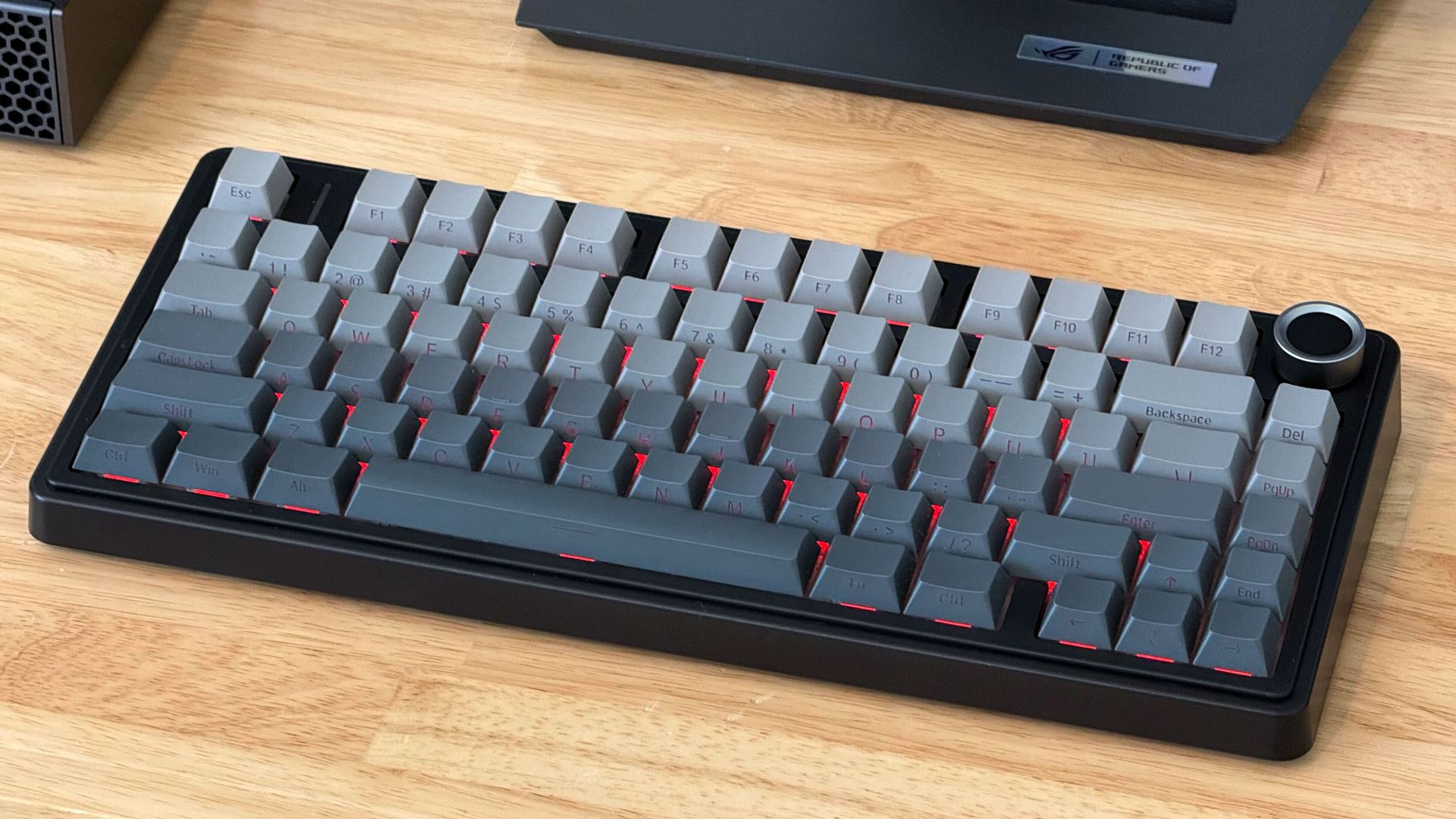
The Aula F75 Pro keyboard is feature packed with Leobog Reaper switches, dual-tone PBT keycaps, a volume knob, and wired, 2.4 GHz, and Bluetooth connectivity, among other features.
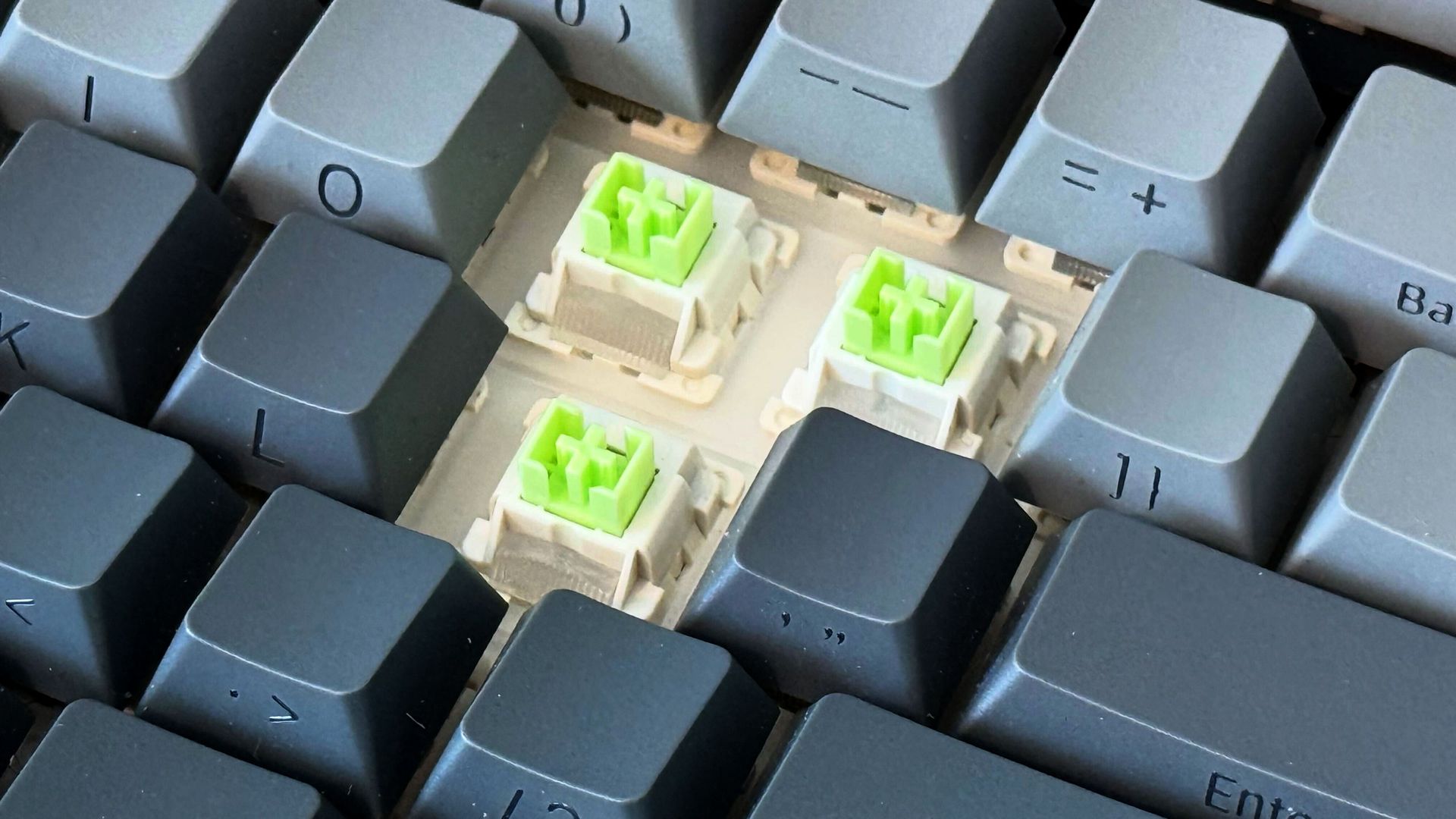
I was suspicious of this board at first, given the lack of in-depth independent reviews online and its unfamiliar switches. It uses Epomaker’s Leobog Reaper switches, which didn't map directly to any of the standard Cherry MX switches or their knockoffs that I'm used to.
But according to the spec sheet, they were linear and didn't have an incredibly heavy actuation force, which is the most important spec I look for in a keyboard when protecting my RSI-ravaged wrists. And they claimed to come pre-lubed, which is an upgrade I’ve never performed myself on any of my prior boards. So we were off to a good start.
The rest of the F75 Pro's feature list suggested custom keyboard DNA in its lineage. Spiffy dual-tone PBT keycaps with side legends? Check. A stack of noise-shaping and noise-reducing materials inside, including a cotton layer and a hefty silicone foundation? Check. A dedicated volume knob that doubles as a mute button? You got it.
Throw in wired, 2.4GHz wireless, and Bluetooth connectivity (with multiple Bluetooth pairing profiles), along with customizable RGB LED backlighting, and I was sold. And for such a low price, plus a few bucks extra for same-day delivery, I was willing to risk it if some aspect of this board wasn’t quite up to snuff.
A couple hours later, my Amazon delivery driver dutifully dropped the F75 Pro at my doorstep. And after a few minutes with the printed shortcut guide so I could pair it over Bluetooth, I had it connected to my GB10 box and was typing away in a terminal.
(Image credit: Future)
Despite this board’s low price, the Leobog Reaper switches underneath its keys are honestly the nicest I’ve ever felt. They’ve ruined me for every other board with MX-style switches I have. Whether it’s down to their pre-lubed treatment or inherent construction quality, they don’t have the tiniest bit of wobble or grit in their strokes like the red switch clones in many of my other mechanical keyboards.
The Reapers have a light 36gf initial force, a 45g actuation force and a 55gf bottom-out force, so they don’t place undue stress on my hands and wrists, and they have a nice, high-pitched audible “thock” at the bottom of their range that serves as pleasant reassurance for a successful keypress without rising to the level of a deafening click like blue-type switches might. The five-layer acoustic dampening stack within this board makes it the nicest-sounding one I own, too. And if I ever get tired of these particular switches, the Aula F75 has hot-swap support for easy modding.
I feel like I’m more accurate with these switches than I am with other boards in my office, and at 107 wpm with 99% accuracy on the MonkeyType test, I’m slightly faster than average on this board, too.
For all the thoughtful stuff that might be happening inside the F75 Pro's chassis, the outer plastic shell does feel a bit cut-rate. If you want the pleasure of knowing your board is clad in milled aluminum, carved stone, or some other exotic solid, this board doesn’t offer that satisfaction. But you're not touching the shell as you type. You're touching (and listening to) the keys. And I can attest that the tactile and auditory experience of typing on this board is far, far better than you would expect given its low price.
I also appreciate that most of the Aula F75’s functionality is available without installing any extra software. Although a utility is available, I’ve never felt the need to install it. I do have to refer to the included cheat card to figure out certain Fn combos, though, so don’t throw yours away if you get an F75 Pro of your own.
I do wish this board’s 75% layout dropped the volume knob for a dedicated Home key, but I can live with its existence on a Fn layer given the rest of this board’s virtues. And again, this board sells for $65 (and possibly even less during the current Prime Big Deal Days event). Given the hundreds of bucks that boards from big brands usually go for, I’ll enjoy what I hope is a long-lived and premium typing experience and keep the extra cash in my pocket.
There are loads of budget mechanical keyboard options, but few companies do affordable clackers better than Keychron. And the company's 87-key mainstay, the Keychron K8, is on sale at Woot for the lowest-ever price of just $34.99 when you add the code KEYCRON. In fact, if you're a new Woot customer, the price drops $5 more to just $29!
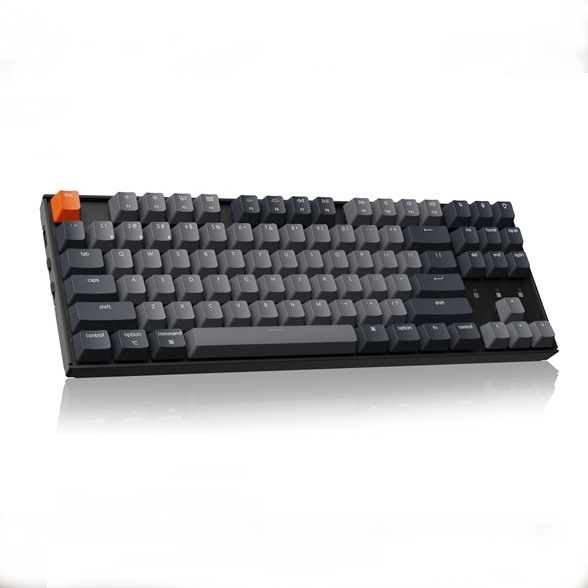
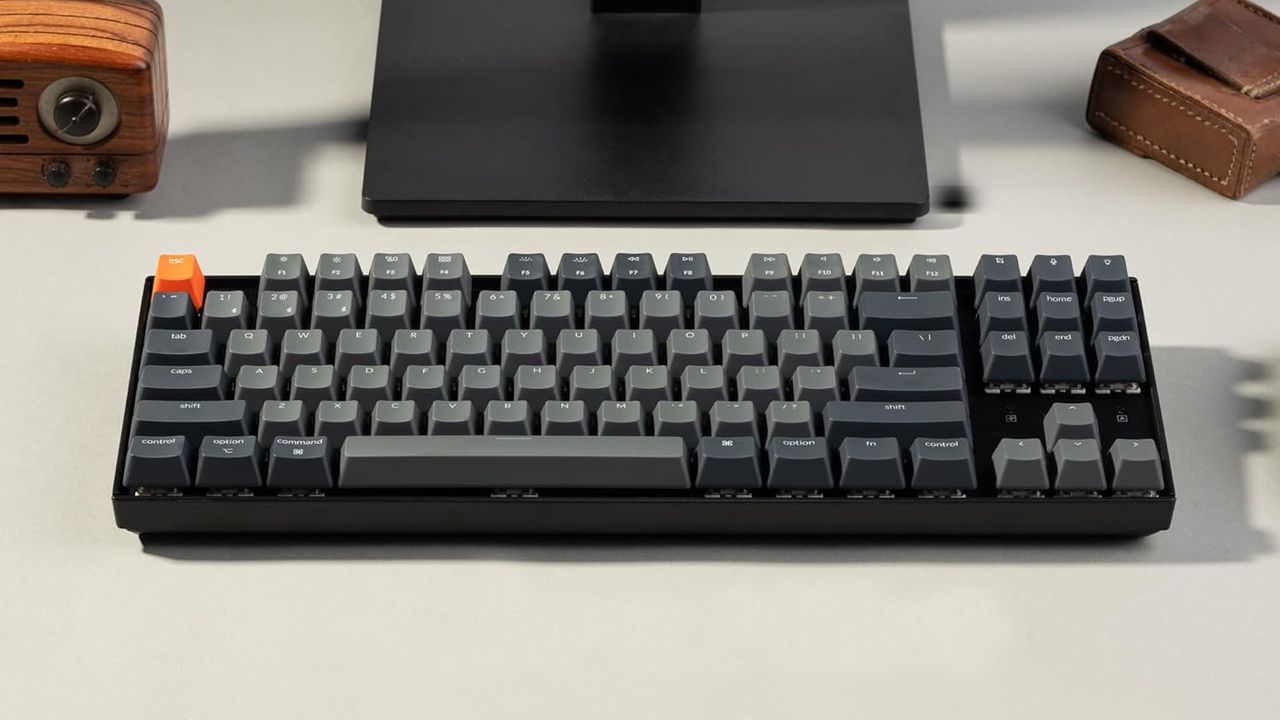
For this surprisingly low sale price, you get a compact TKL layout, Gateron Red linear switches, and a white backlight – sorry, RGB fans. Note this is the Mac-specific model, but it of course supports both Windows and macOS, and Keychron includes extra keycaps for both operating systems. This model is also wireless, but solely via Bluetooth, so serious gamers will want to connect via the USB-C port for faster response times.
This 87-key keyboard is nicely compact, sports Gateron Red linear switches, keycaps for both Mac and Windows, and a white backlight. It is wireless, but is Bluetooth-only, without an RF USB dongle. So you may want to plug the keyboard in while gaming.View Deal
This model sports a plastic chassis, rather than the metal of some pricier models. But it doesn't look or feel cheap. I used a similar (slightly more compact) Keychron K2 for years as my main keyboard for work and gaming, and it served me well until I upgraded to the prettier, more premium K8 HE last year. I've used three or four Keychron keyboards extensively over the past several years and have had no serious hardware issues with any of them. My original K2 even survived a soup spill (once I cleaned it and let it thoroughly dry before turning it on again) years ago.
When a keyboard like the Keychron K8 is on sale for just $34, there's no reason to opt for no-name budget options. You could certainly spend more and get something with magnetic switches, RGB, a volume knob, and a metal chassis. But if you spend less, you'll almost certainly wind up with something significantly worse than the Keychron K8.
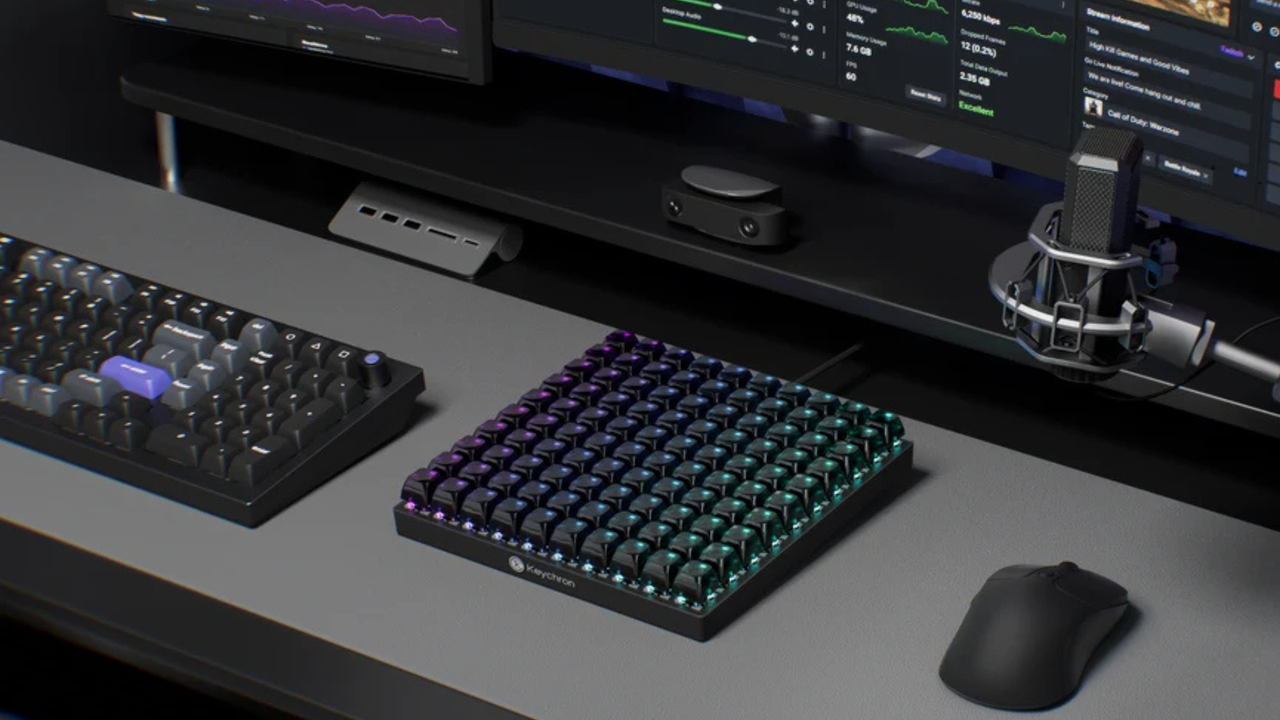
Keychron, which is known for making some of the best mechanical keyboards, just announced the C100 8K macro pad, which is available on Amazon and the Keychron website for $64.99. This massive device features a 10-by-10 customizable keyboard, allowing you to set its functionality as needed (except for the four corner keys). It also uses exclusive pre-lubed Keychron Apex tactile switches, paired with transparent ASA keycaps, making it easier to see its per-key RGB lighting.
The C100 8K is not just any macro pad, though. It features hot-swappable switches, so you can easily replace the Keychron Apex switches with ones that you prefer. It also has an 8K polling rate, making it the perfect macro pad for high-stakes competitive matches. This makes it the perfect addition for those who need a macro pad for both gaming and productivity. The online Keychron QMK launcher also makes it easy to customize the keyboard without requiring you to install software directly on your PC.
This macro pad is compatible with Windows, macOS, and Linux, meaning it will work with most major desktop operating systems. It’s the perfect addition for those who want to be more efficient and find that their MMORPG mouse still doesn’t offer enough buttons for their needs. Because Keychron is known for making some of the best wireless and budget mechanical keyboards, we have high expectations for the functionality and feel of the C100 8K. The only drawback that we can see is that it doesn’t come with a wireless option, so it might be annoying or even a no-go to those who want a wire-free desk.
100 keys might be overkill for most people, but these are actually crucial for those with specialized workloads. Aside from productivity enthusiasts and gamers who want to keep all complicated macros and commands at their fingertips, these are also useful for video editors who work on projects that have hundreds of layers, photo editors working on thousands of images, programmers who frequently input the same commands over and over again, and more. This is also great for sim enthusiasts who want to recreate all the buttons found in race cars, aircraft, trucks, and more, without spending more money on specialized panels. And if they have access to a 3D printer, they can even build their own specialized keycaps for the C100 8K macro pad, turning it from a generic macro pad into something that shows the actual buttons they use for their sims.
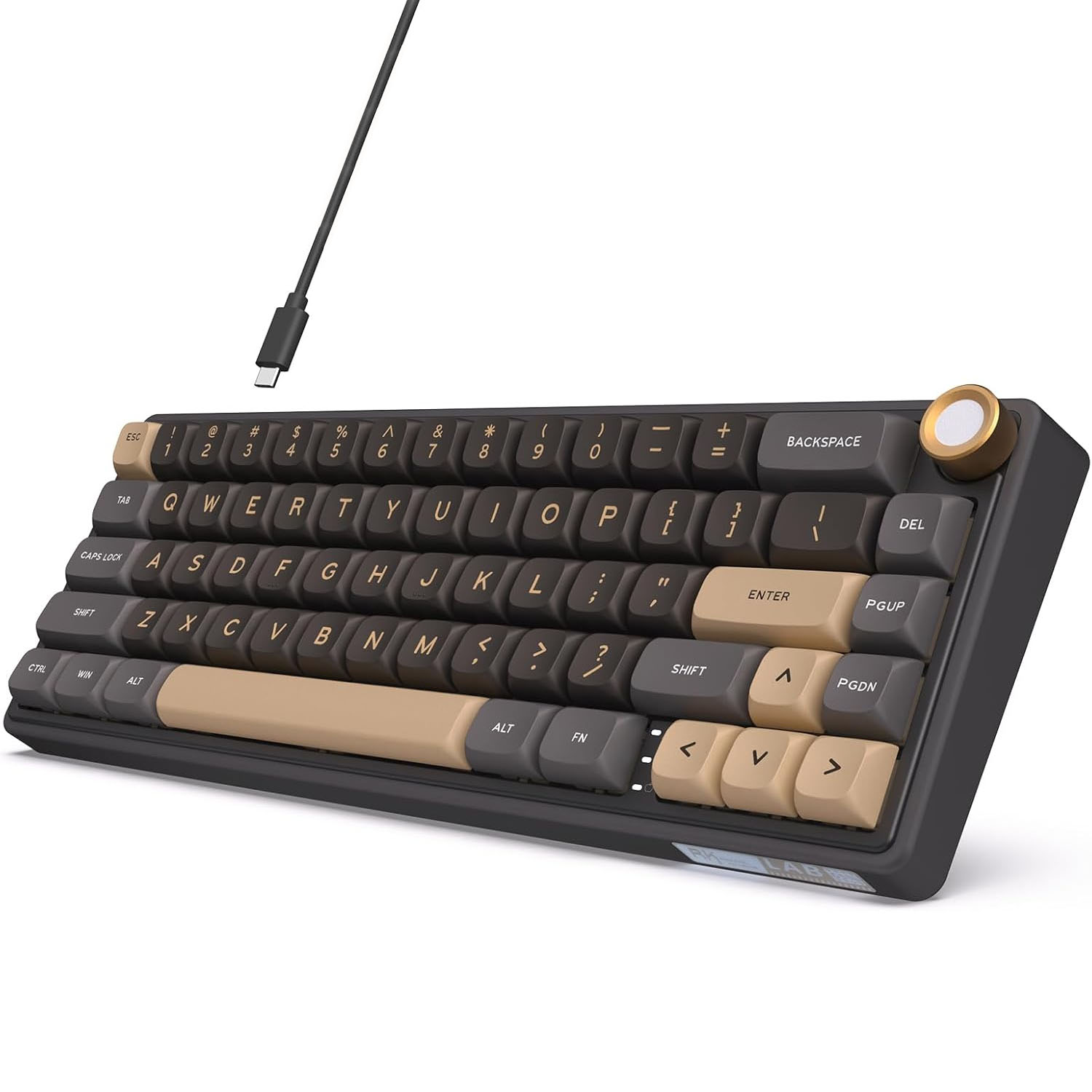
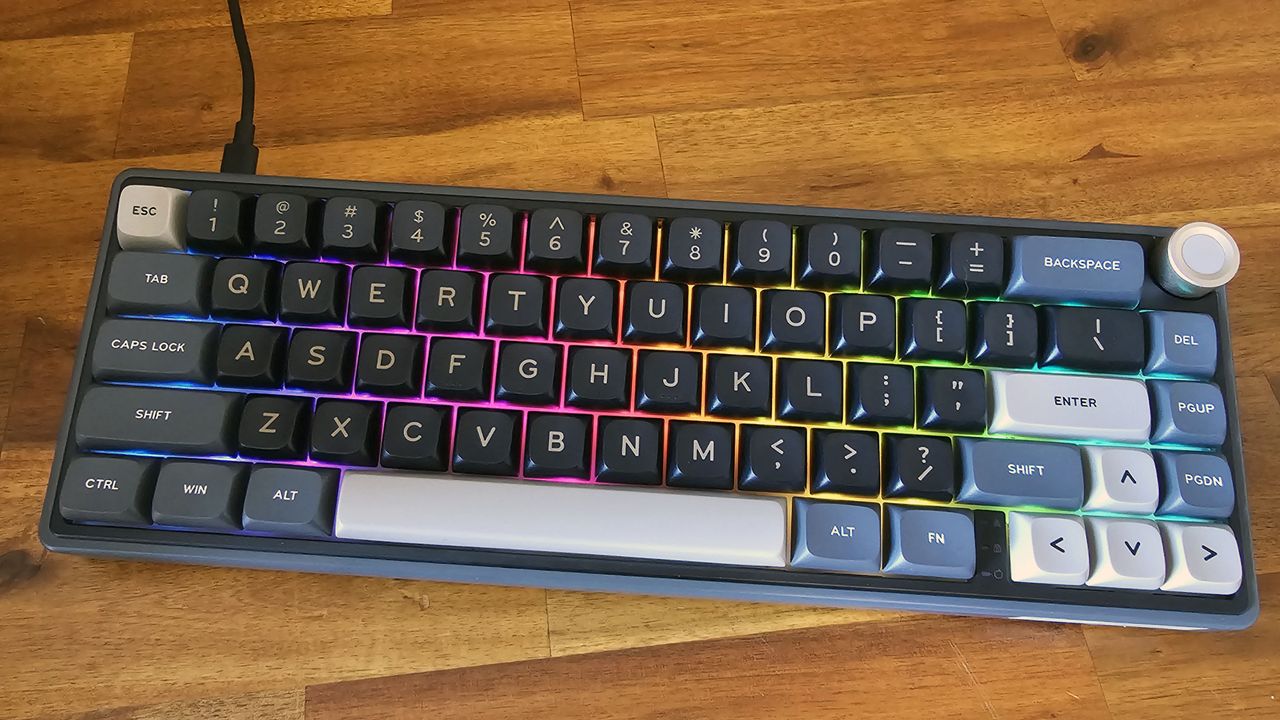
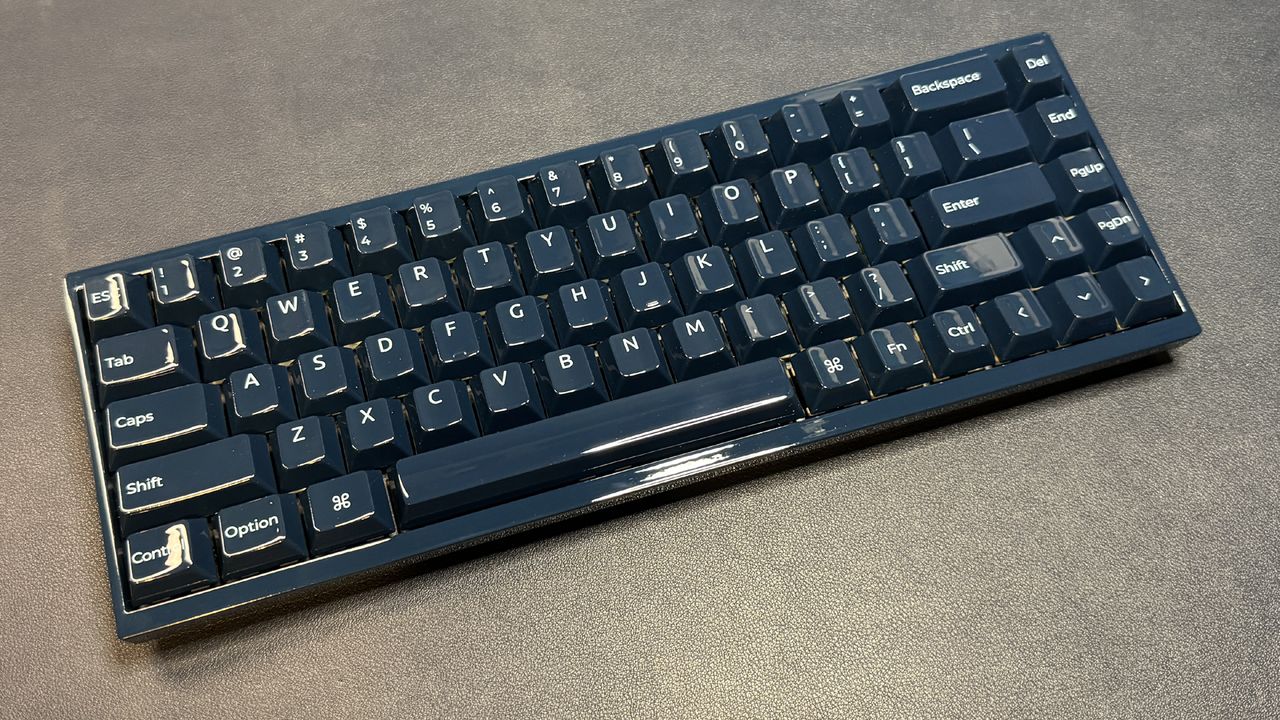
The Royal Kludge RK R65 is one of our picks for best budget mechanical keyboards thanks to its stand-out feature set and excellent sound and feel for the price, which normally ranges from $50-$60. But today at Amazon, you can pick up this compact 60% clacker for just $44.99 if you clip the $10 digital coupon.
The RK R65's feature set reads like something that costs at least twice as much. The wired keyboard boasts RGB backlighting, factory-lubed switches (RK Cream in this variant), a gasket mount, two silicone pads to absorb stound, and (somewhat) metal volume knob. The result is the best-sounding budget keyboard I've ever used — so much so that I've been using it as my daily driver in the office for over a year, despite the lack of a Function row and other handy keys.
The RK R65 is an excellent budget 60% wired keybaord, with RGB, swappable factory-lubed linear switches, a gasket mount and silicone pads, QMK/VIA support for customizing keys, and a metal volume knob. This is by far one of the nicest-sounding and nicest-looking keyboards I've used in this price range.View Deal
Of course, the 60% layout is best-suited to gaming, and it works quite well for that. But with its dedicated arrow keys, I can also get by using it for productivity. And if you don't like the bronze-and-brown color scheme of this model, there are four other color and switch options that are currently priced between $48 and $50.
Keep in mind, as much as this keyboard delivers excellent features for the price, Royal Kludge had to cut corners somewhere. The chassis is basically all plastic save for the knob, which is also partially plastic. So don't expect a weighty, premium-feeling shell. Still, if you consider the price — especially when it's on sale, as it is today — this is a whole lot of keyboard for something that falls decidedly into the budget range.
It is also probably the best-sounding keyboard I've ever used that didn't cost well more than $100. So much so that, while I have several other keyboard options, I plan to keep using the RK R65 at work for the foreseeable future.
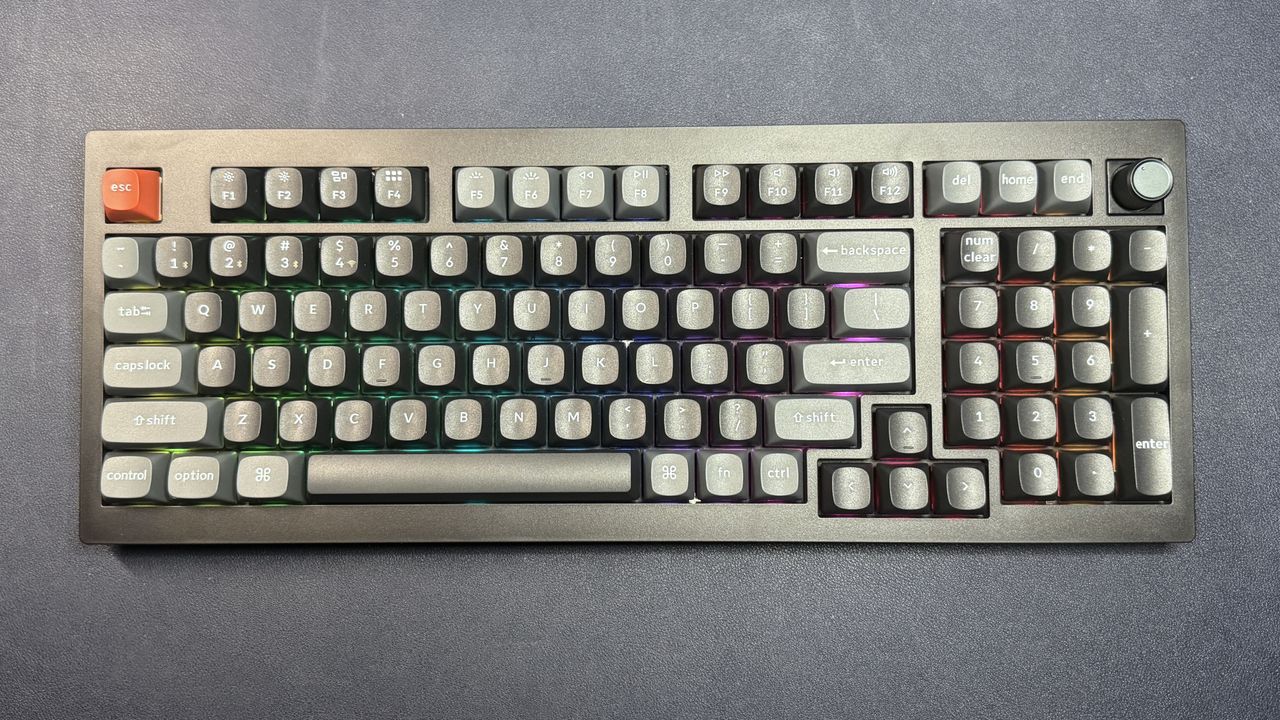
The Keychron V5 Ultra 8K is a wireless mechanical hot-swappable keyboard with a 96-percent layout and up to an 8,000 Hz polling rate — and it gets up to 660 hours of battery life.
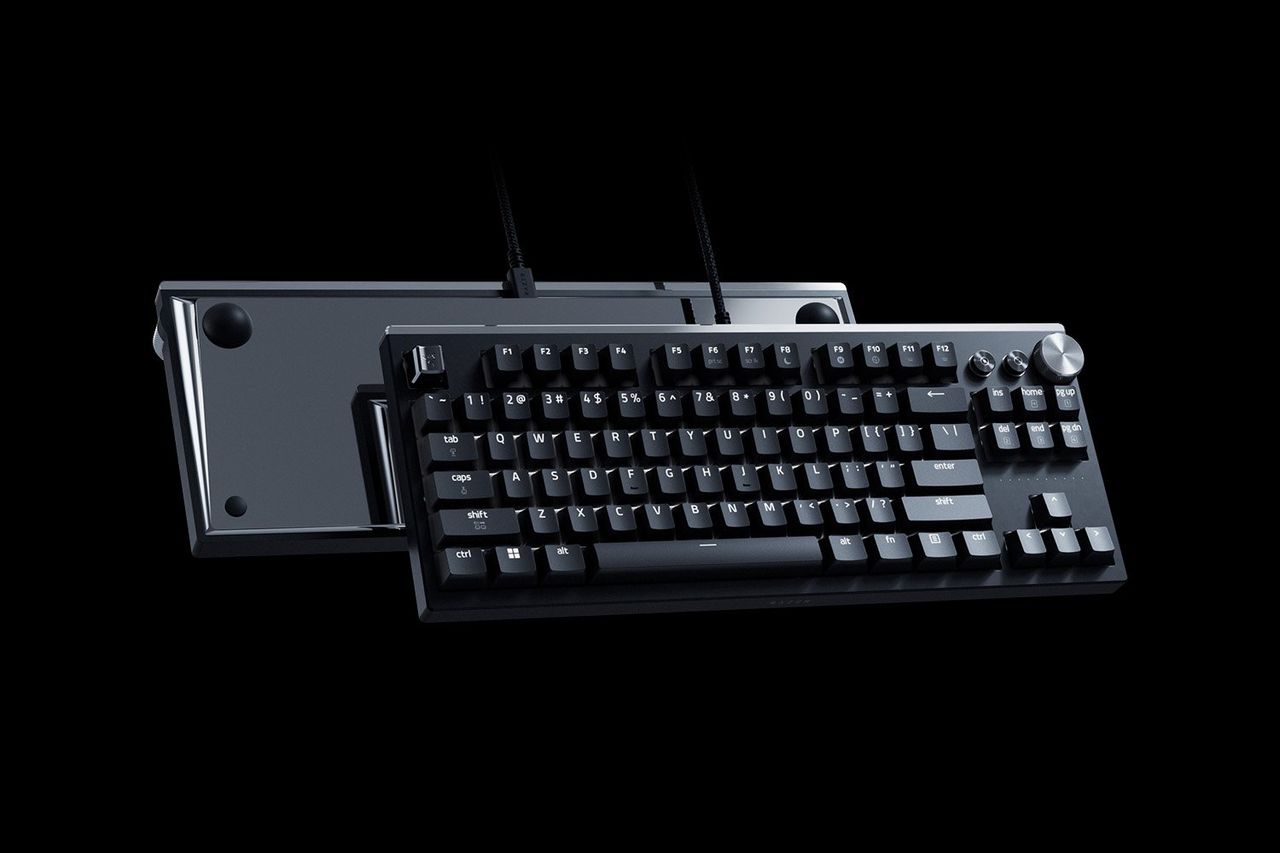
Razer has a new flagship gaming keyboard, the Huntsman Signature Edition, that embraces a fully CNC aluminum construction and PVD mirror finish on the back. The $500 keyboard is basically a spruced-up Huntsman V3 Pro aimed at gamers that wanted a more aesthetically pleasing keyboard.
A superb typing experience and plenty of oomph for gaming. Kailh Glaze Jellyfish Pro linear switches are at the heart of this fantastically priced keyboard.
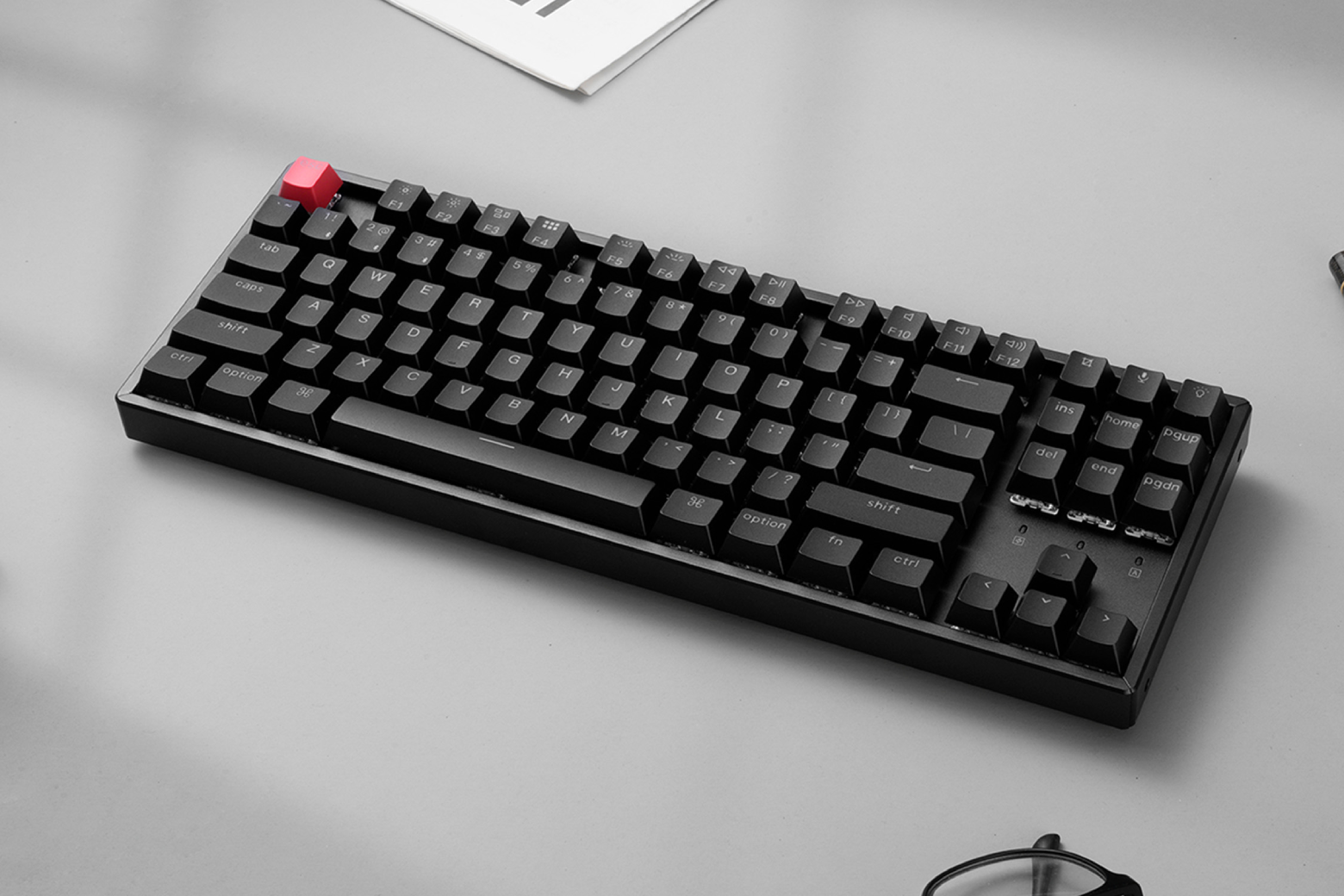
Keychron's HE keyboards are pretty and packed with gaming features, like lubed magnetic switches. And they're on sale for Amazon's Prime Day in multiple sizes / layouts.
The premium Norbauer Seneca mechanical keyboard is one of the most expensive input devices we have seen. Despite its sky-high price range, spanning $3,600 to $8,090 plus extras, device buyers face up to a nine-month wait.
I satisfied my retro 1990s keyboard longings by building an Apple ADB to USB converter with a handful of cheap components and some cool configurable firmware.
 登录