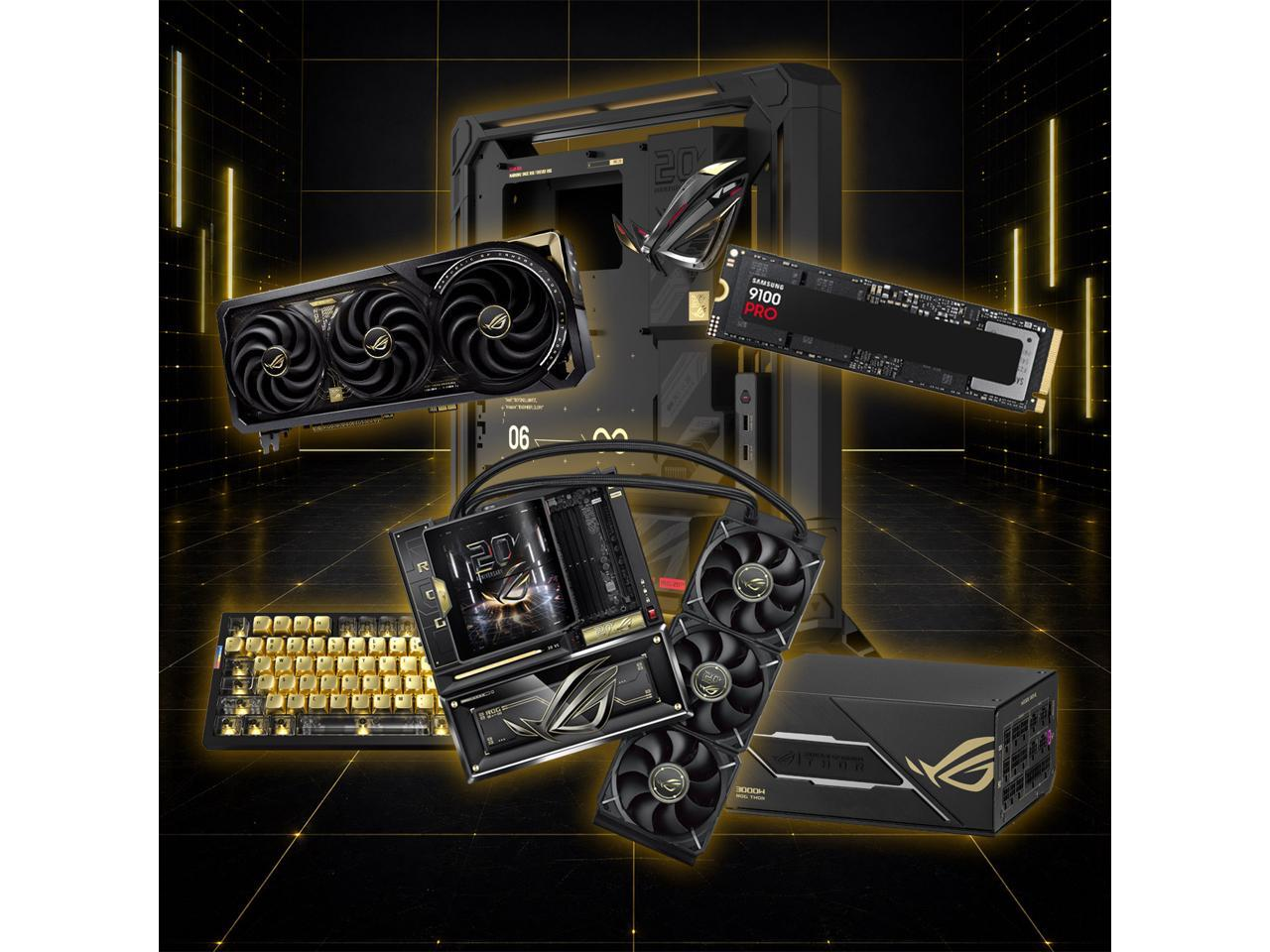
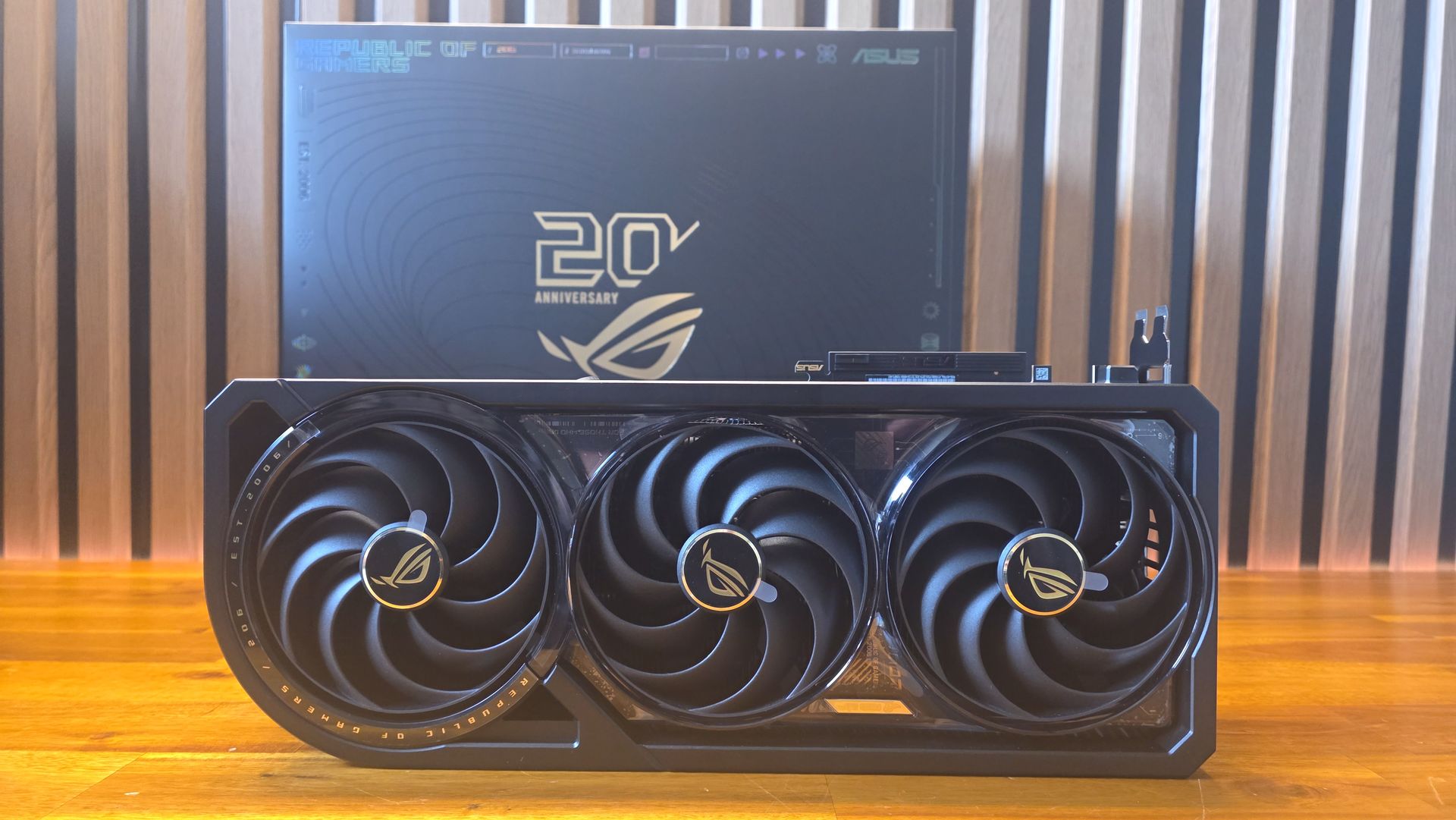
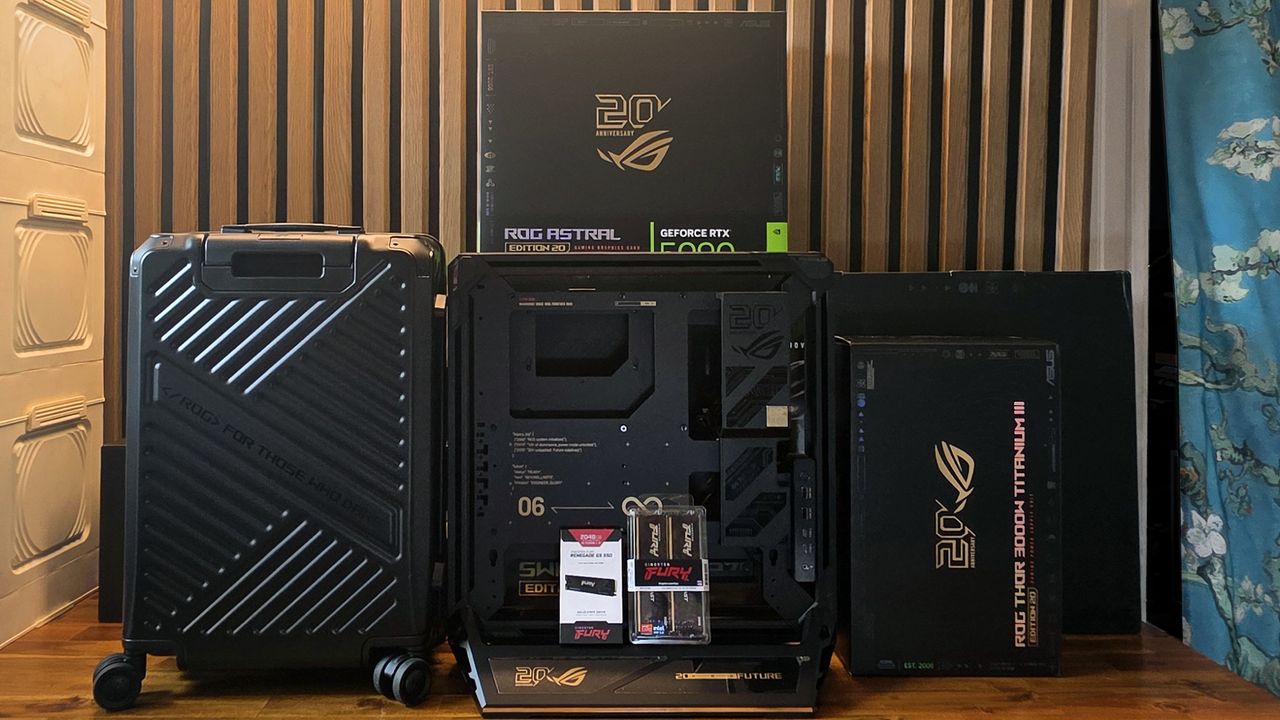
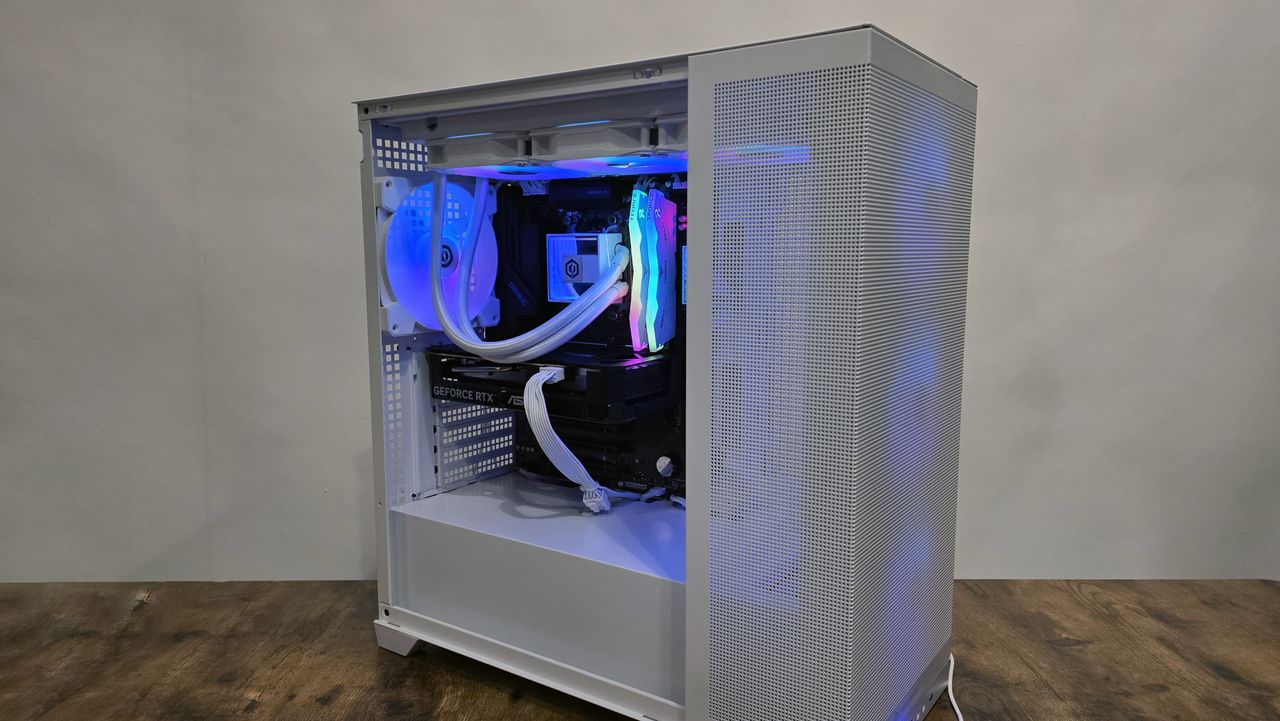
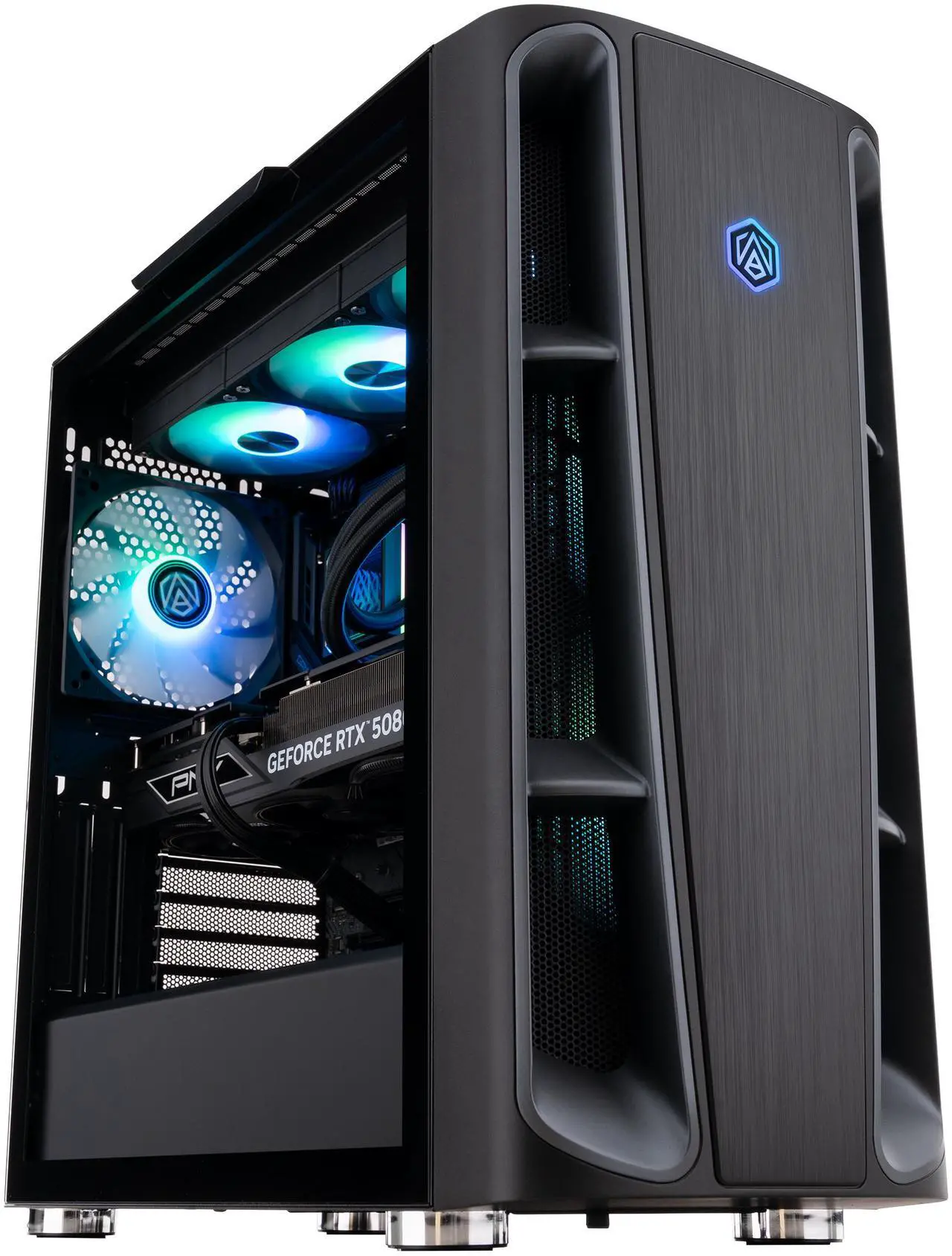
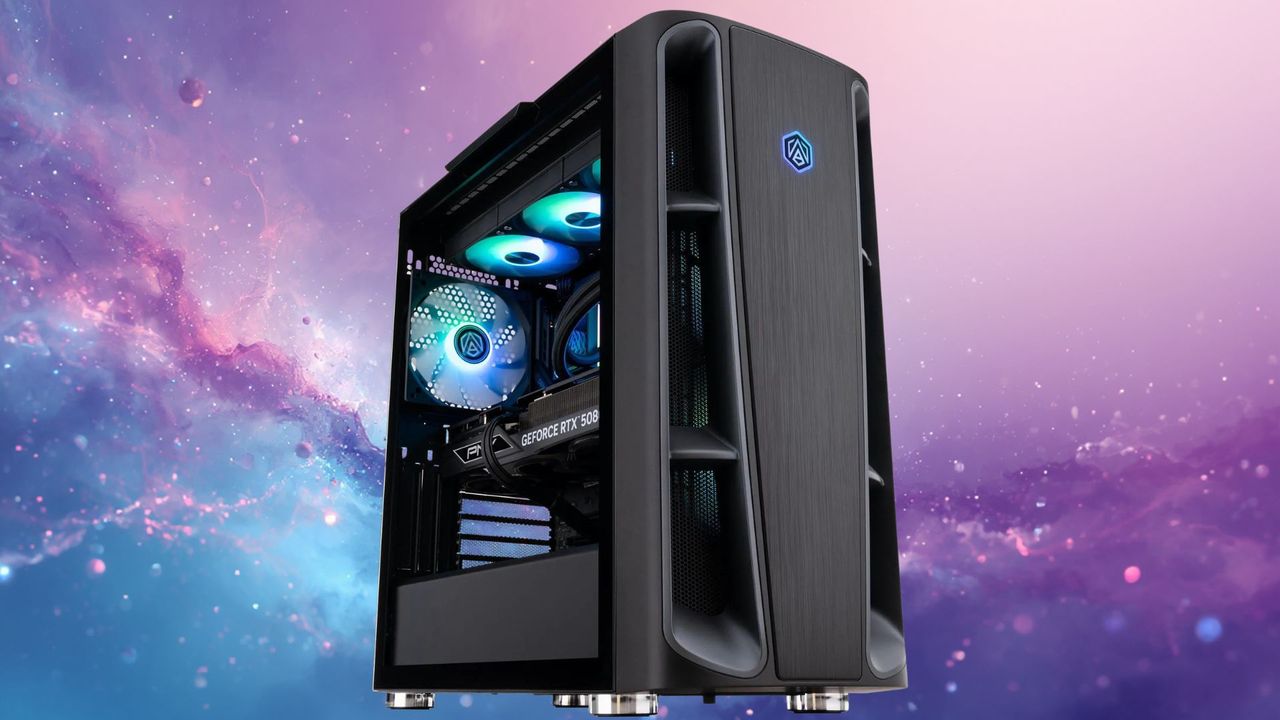
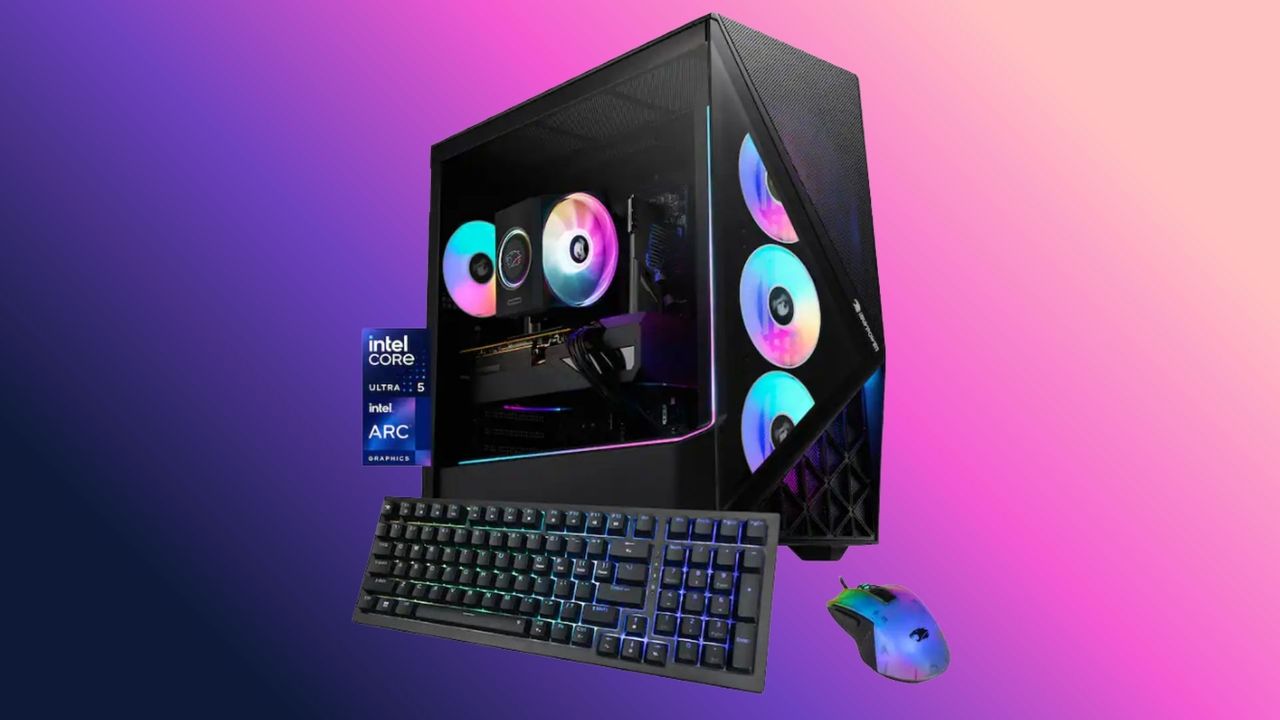
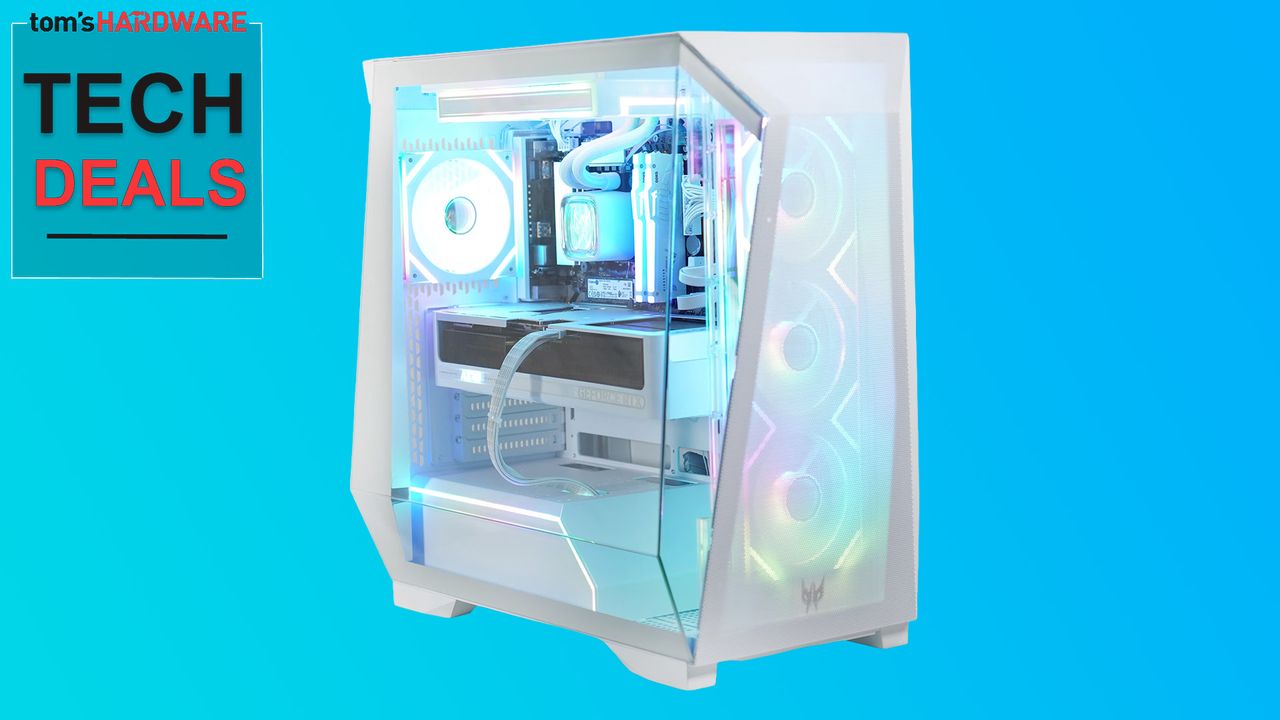
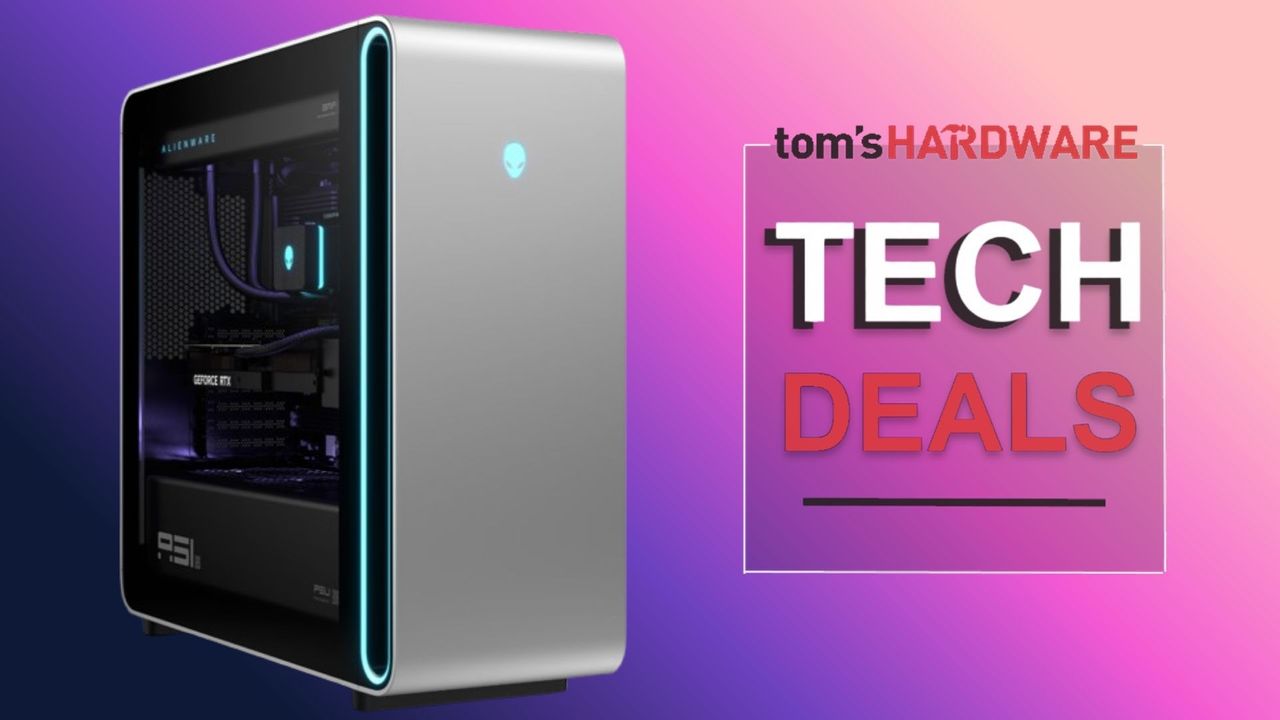
We've reviewed Asus' ROG Edition 20 anniversary kit. We've built a PC with it. It's about as premium as a gaming PC build can get. Right now, you can pick up the same kit for a whopping $10,849.96 on Newegg in a combo deal. To put it mildly, this is one expensive deal, but it's actually hiding a secret gem: it's the cheapest RTX 5090 graphics card on sale right now.
Writing up a near-$11,000 combo set as a deal might seem silly, but one of the core components here is the Asus ROG Astral GeForce RTX 5090 Edition 20 that is priced as part of this deal at $5,999. You can't buy this Astral card on sale individually right now. In fact, you can barely buy an RTX 5090 anywhere. RTX 5090 stock has almost completely disappeared in the United States, with only sketchy third-party sellers offering it at prices approaching $10,000.
This premium GPU is now ultra premium and, for the time being, ultra rare. Does that make this $10,849.96 Newegg combo deal a good option? If money is no object, you're perversely getting some value for your money, as long as you don't think too hard about the RTX 5090's original $1,999 MSRP.
ROG Edition 20 combo: $10849.96 This frankly ridiculous bundle includes all of Asus' ROG Edition 20 kit, including the ROG Astral RTX 5090, ROG Crosshair X870E, ROG Thor Titanium III 3000W PSU, and the ROG GR20 open-frame PC case. No discount, but the RTX 5090 is the cheapest you'll find it, in the oddest way.View Deal
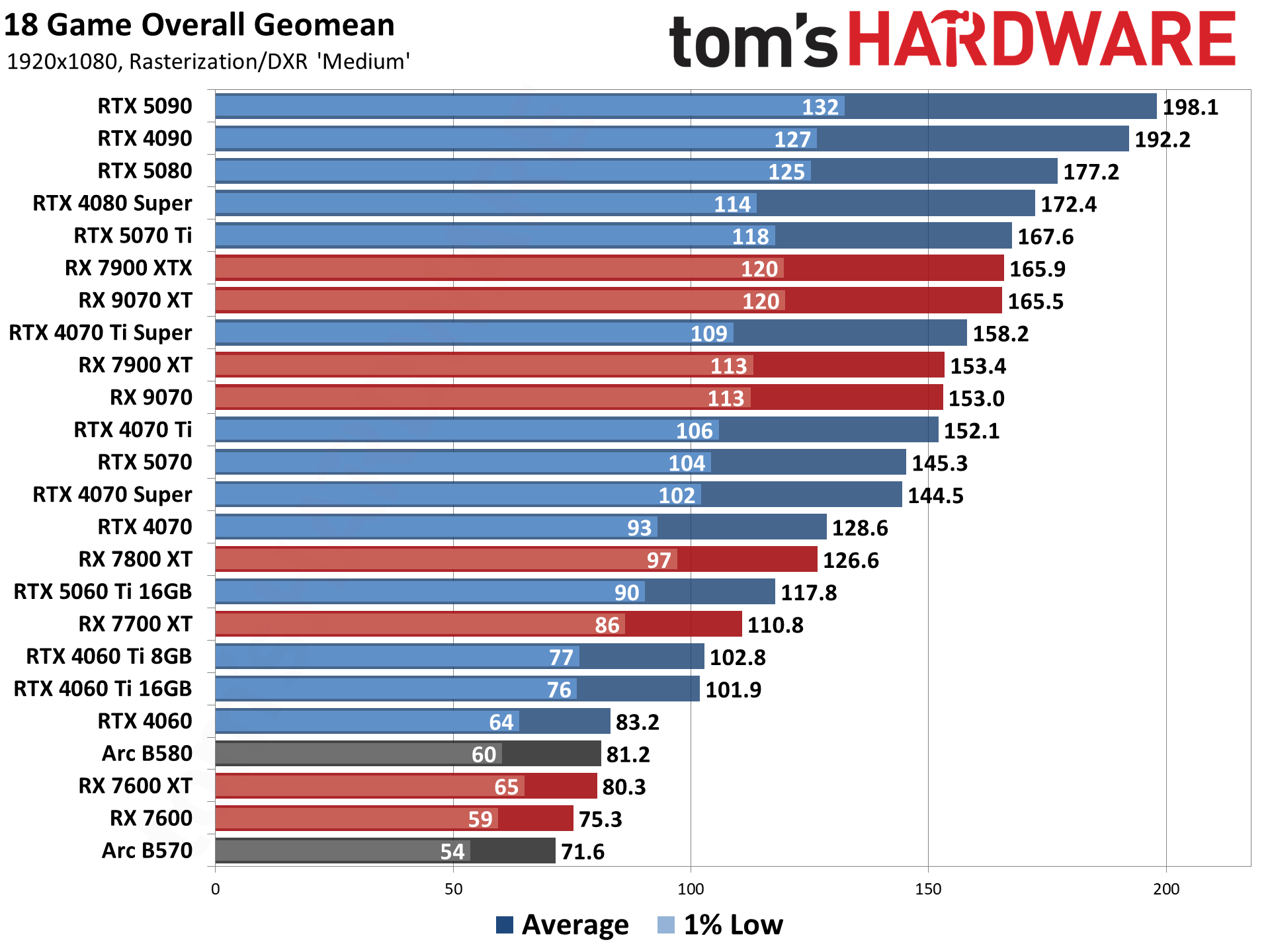
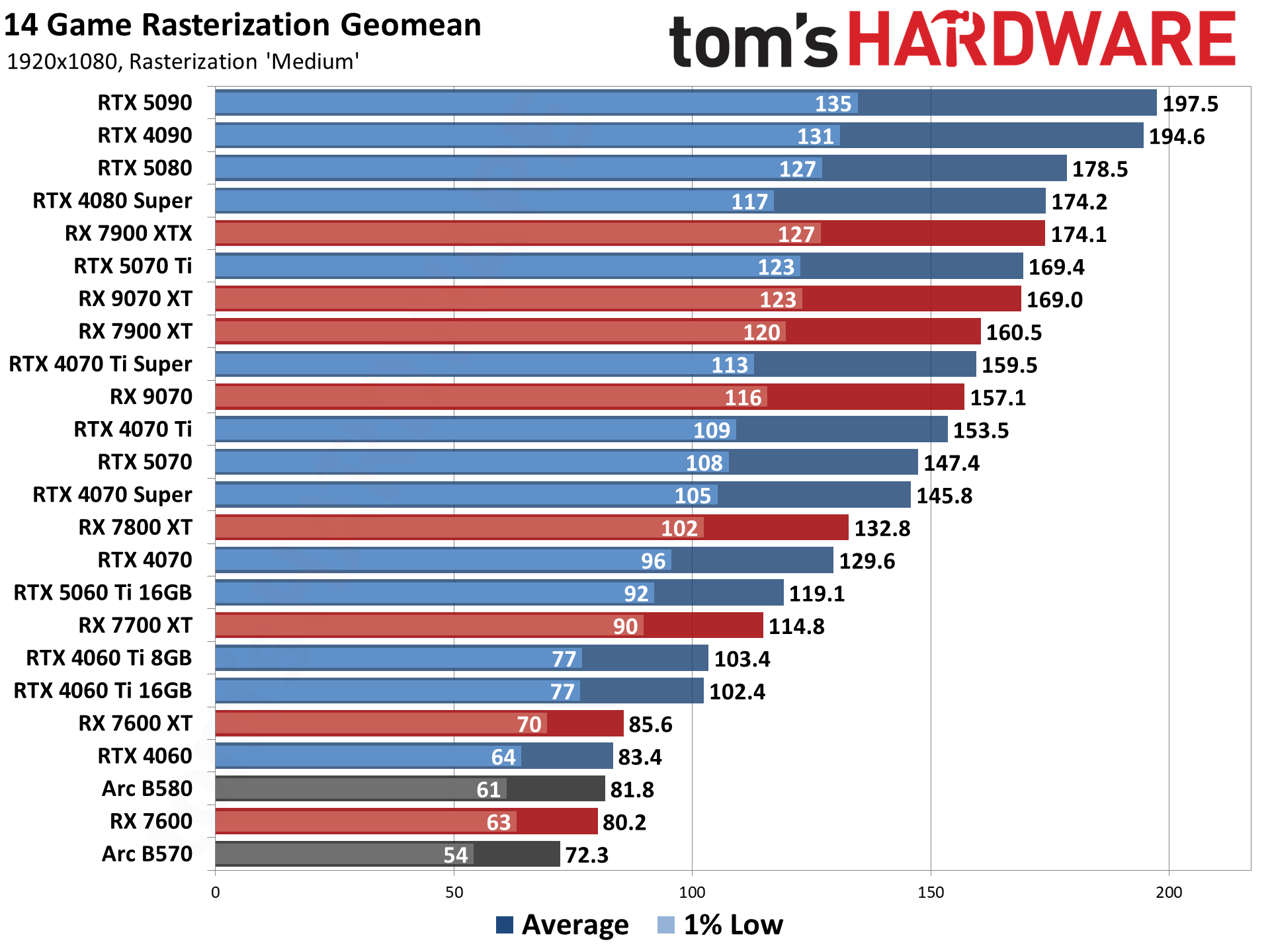
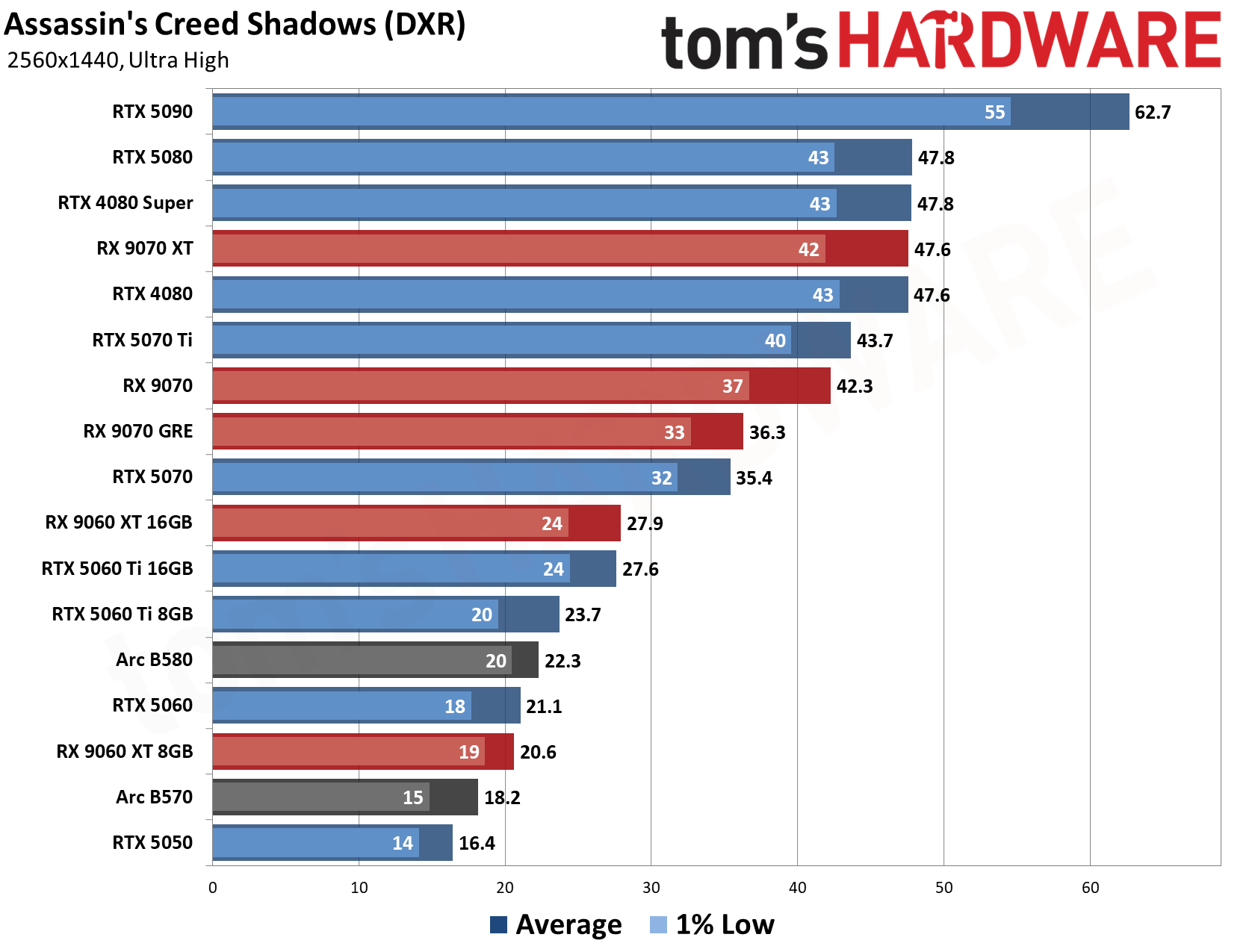
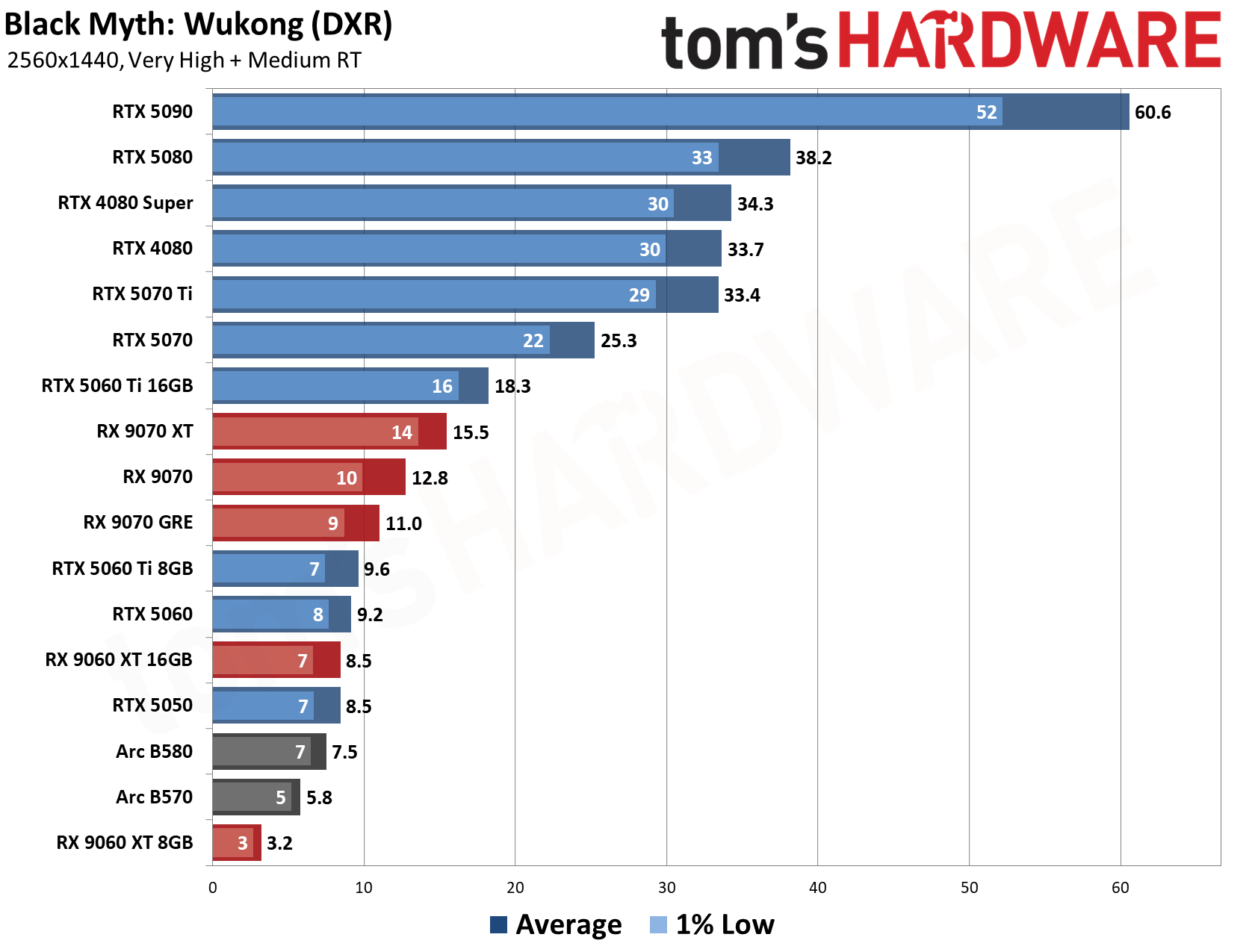
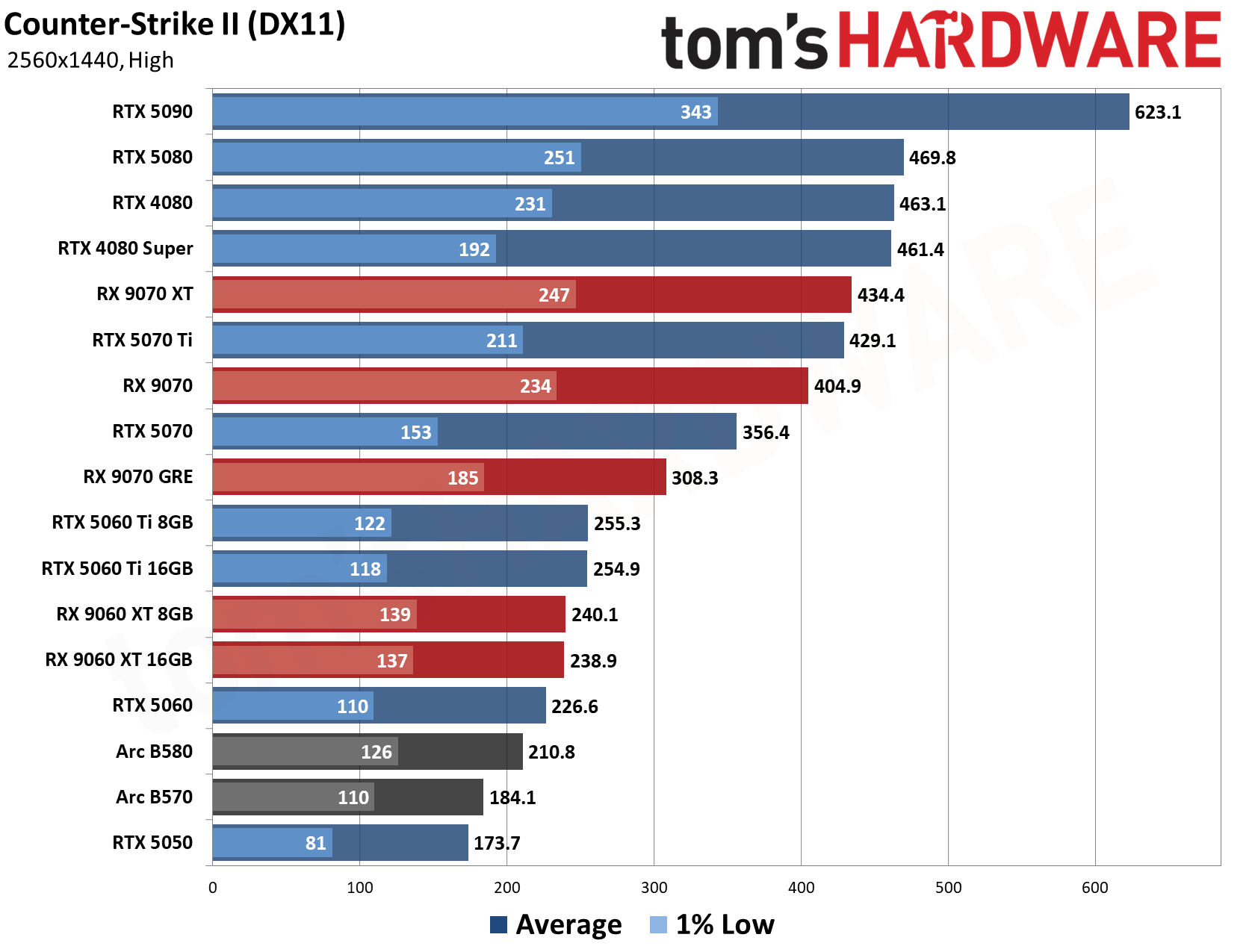
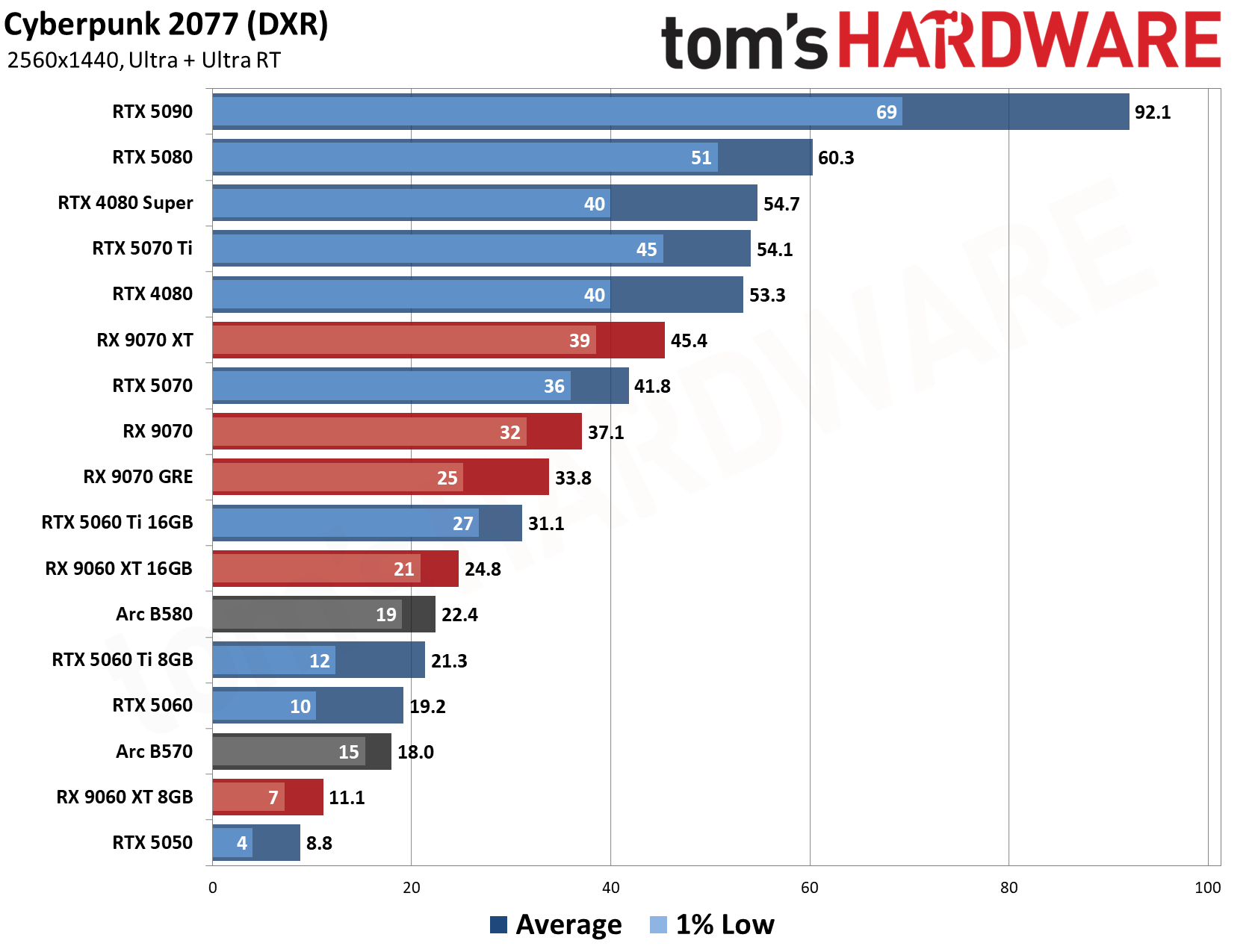
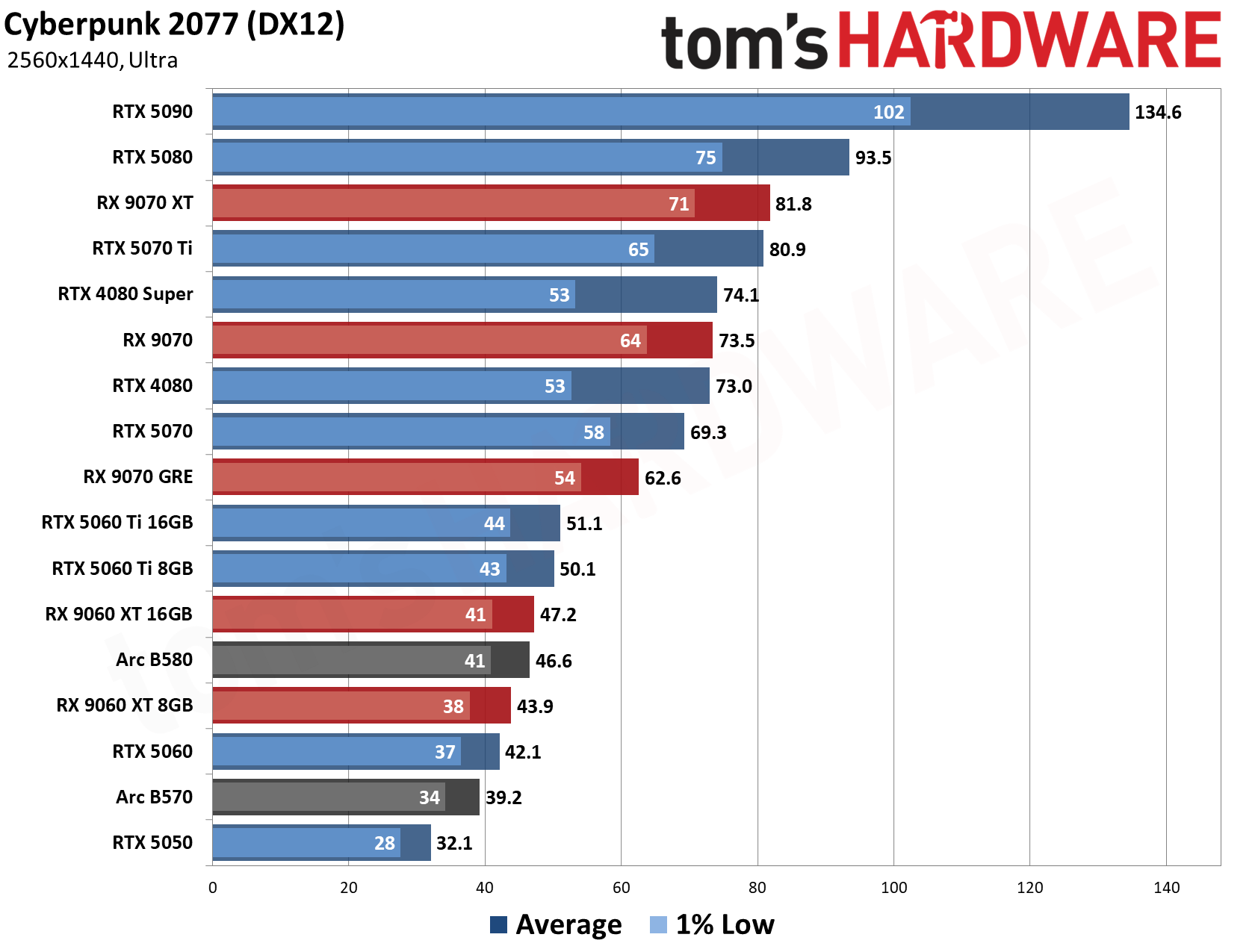
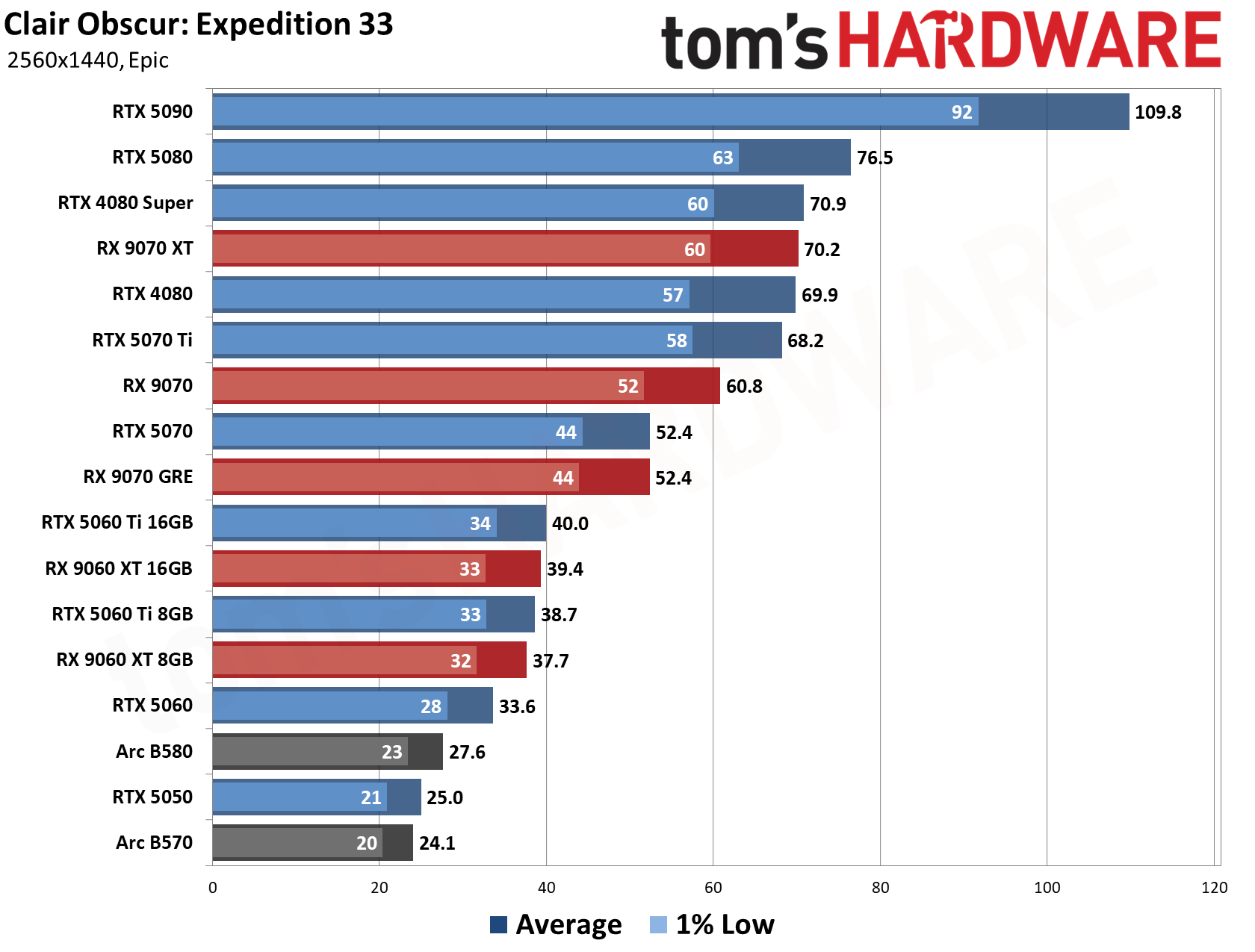
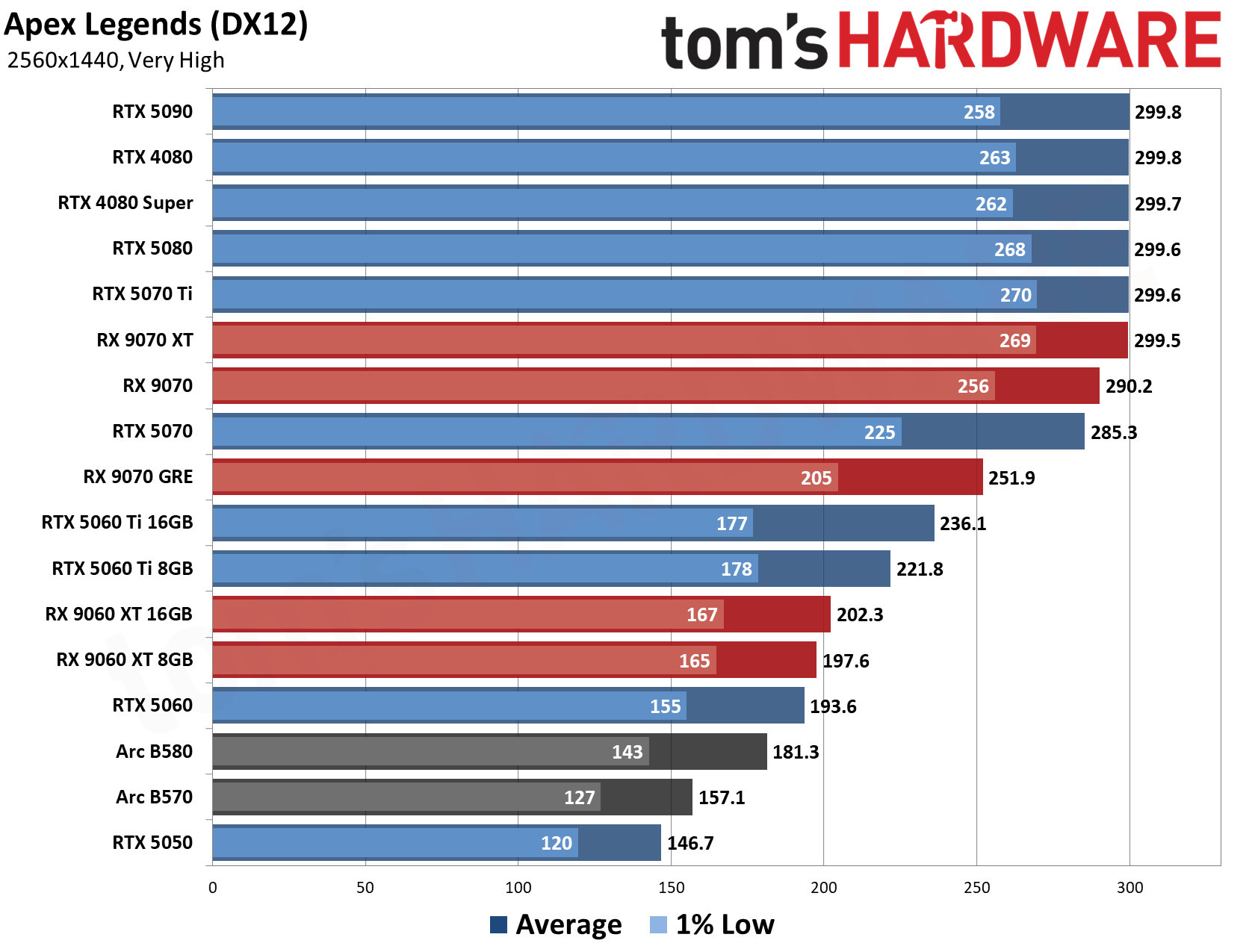
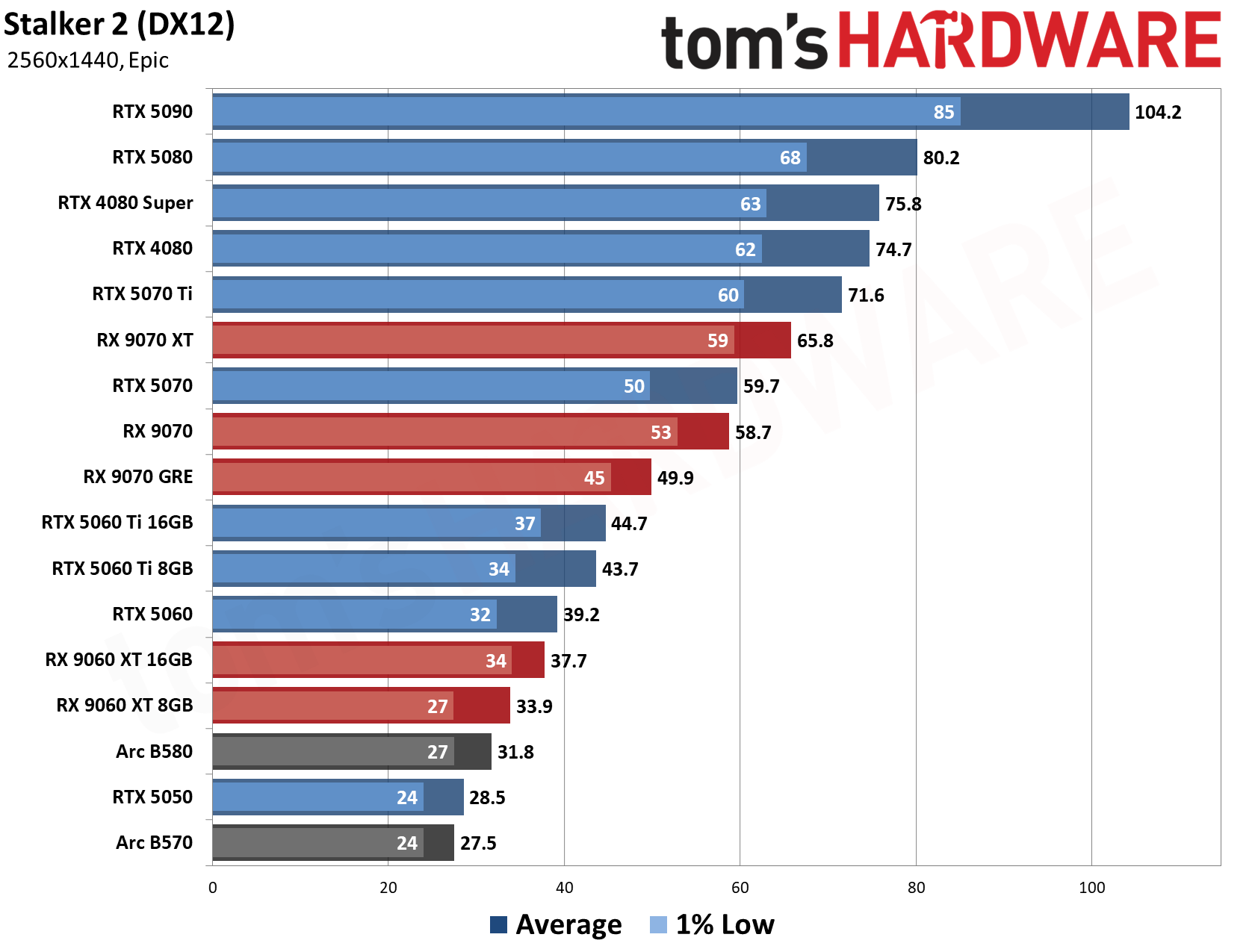
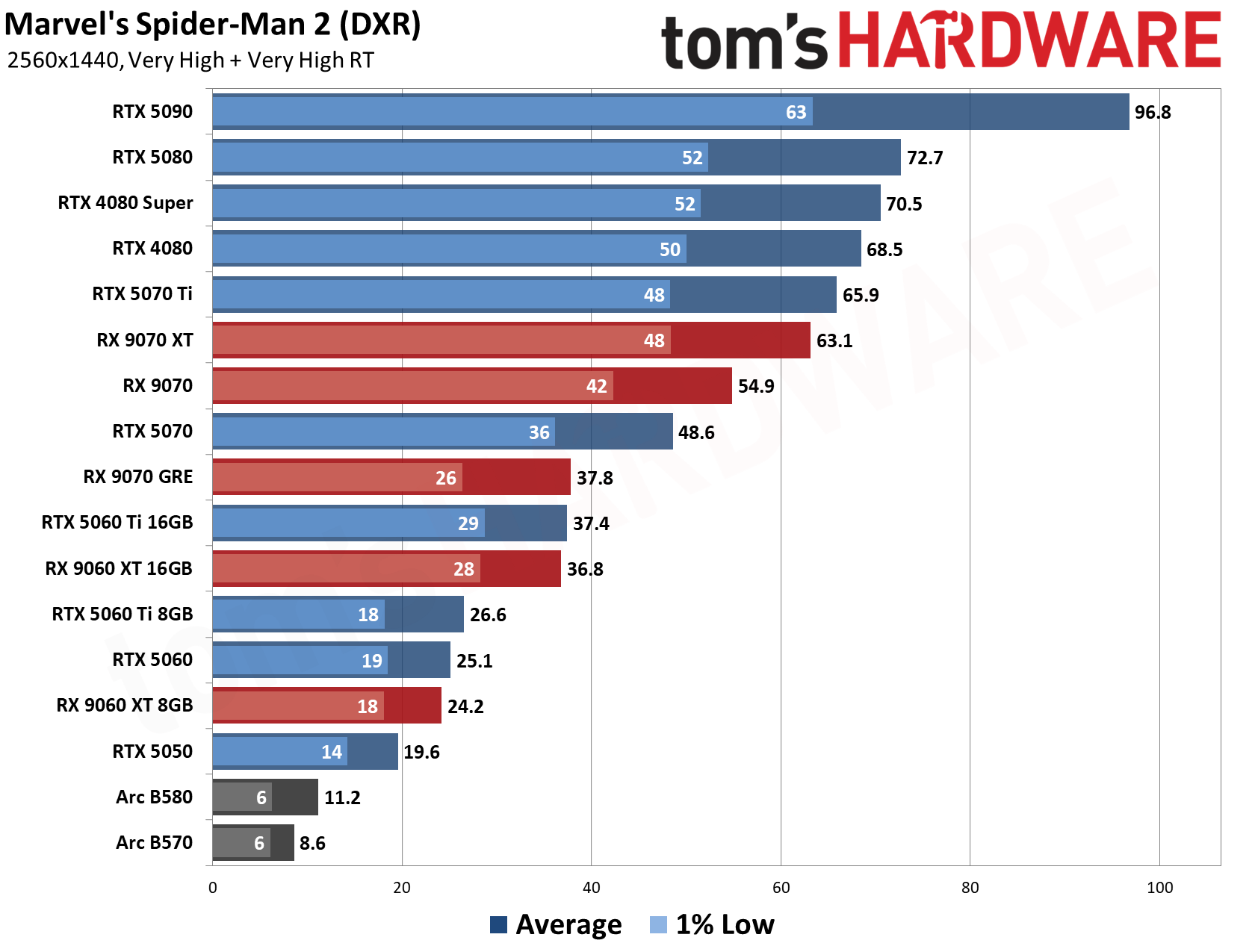
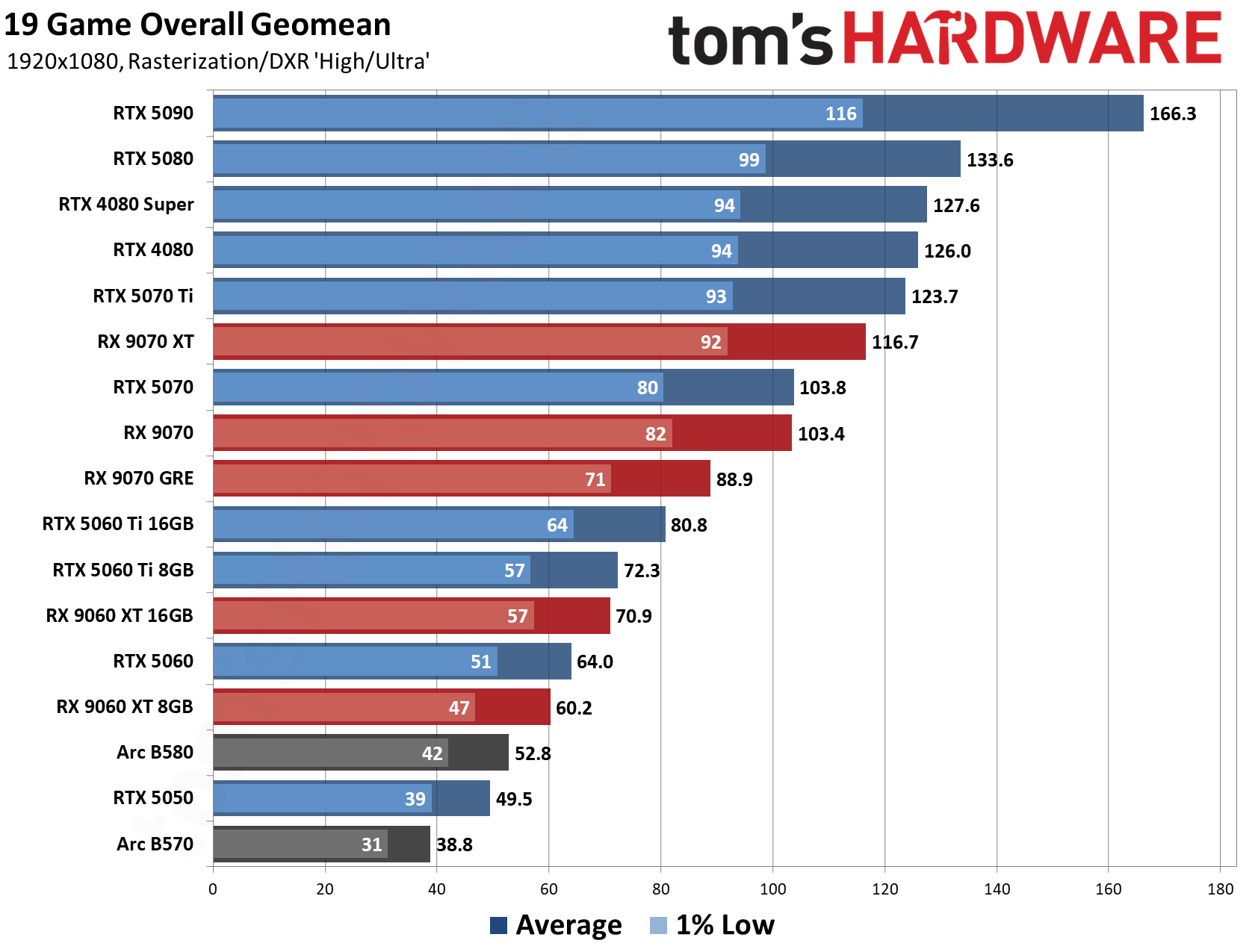
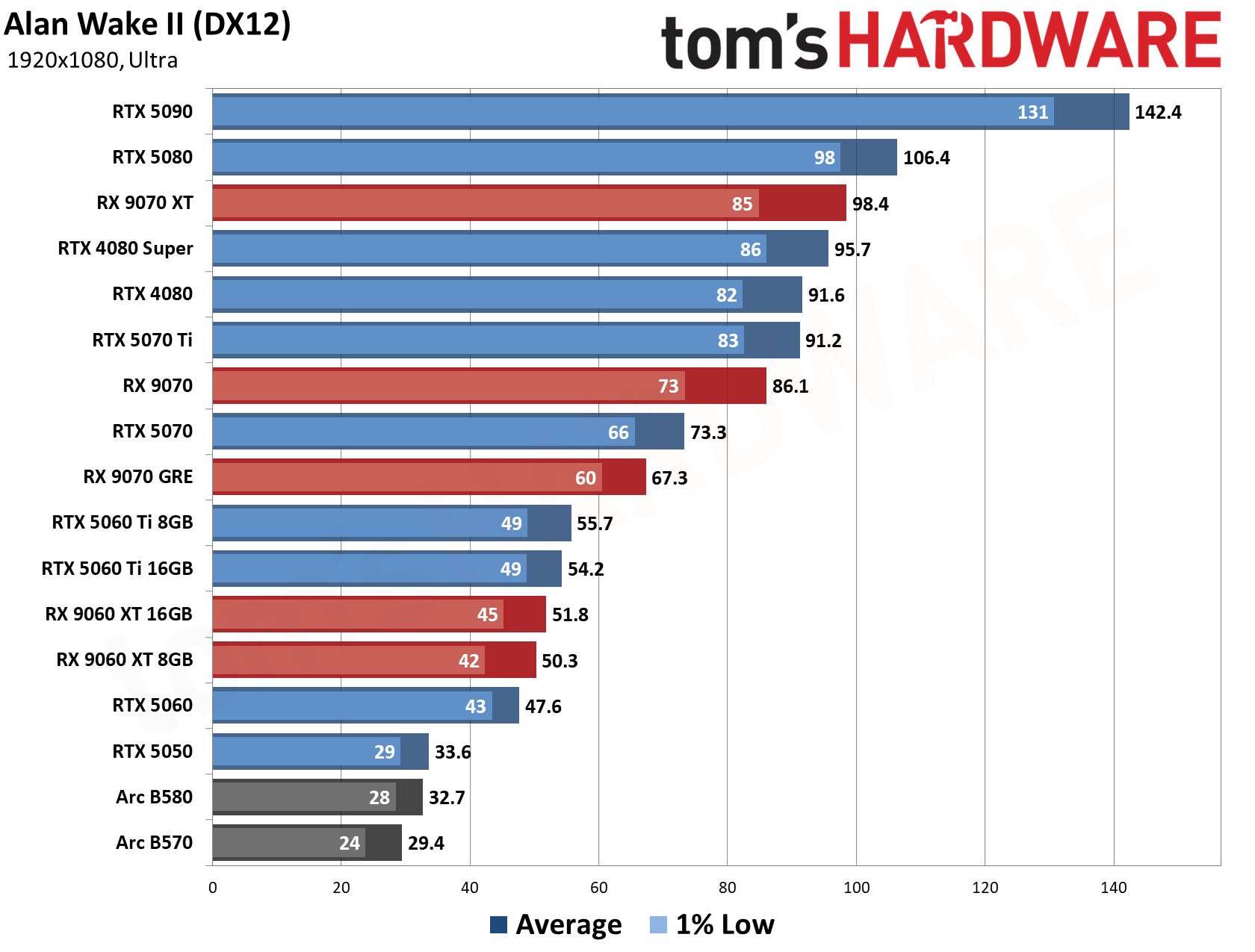
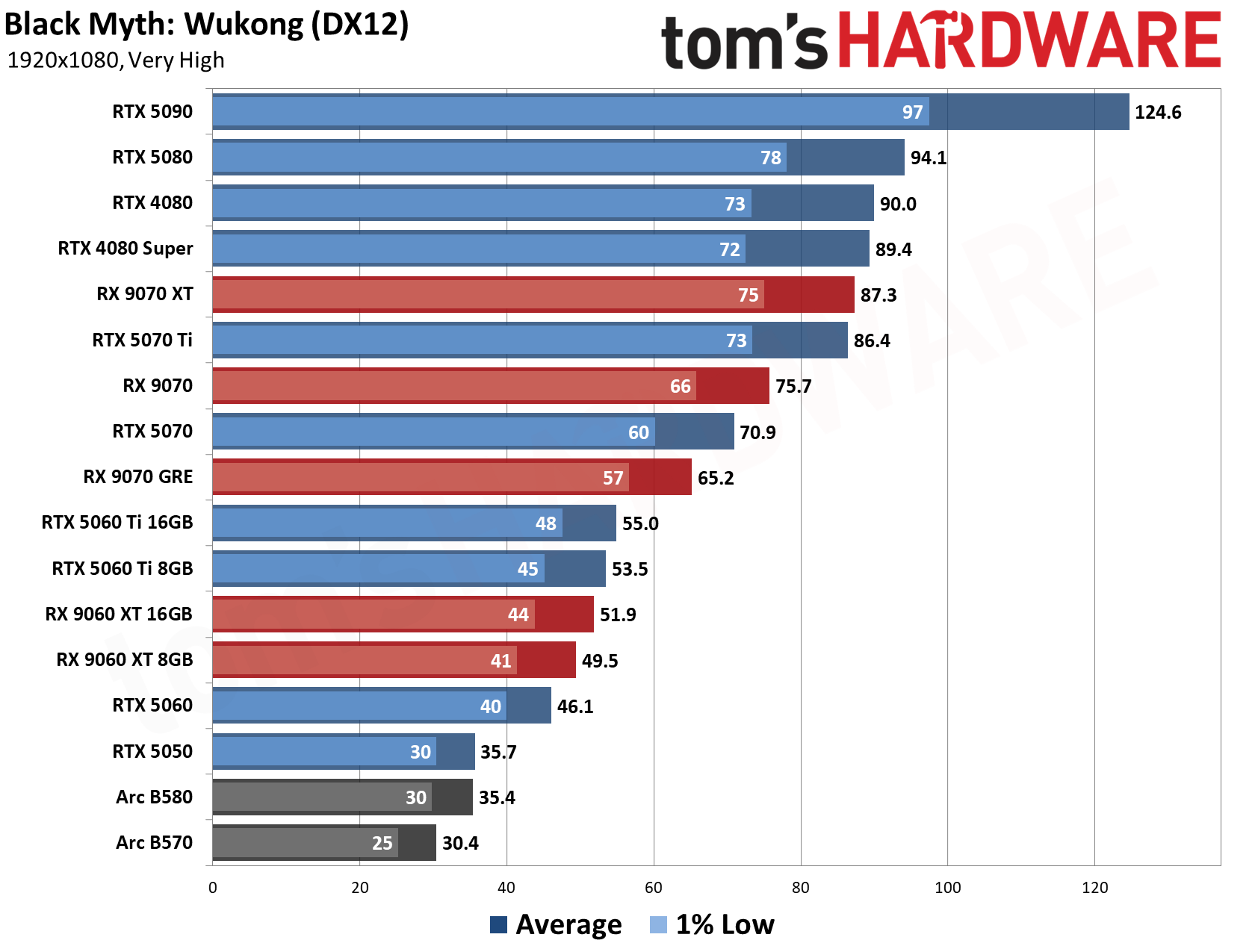
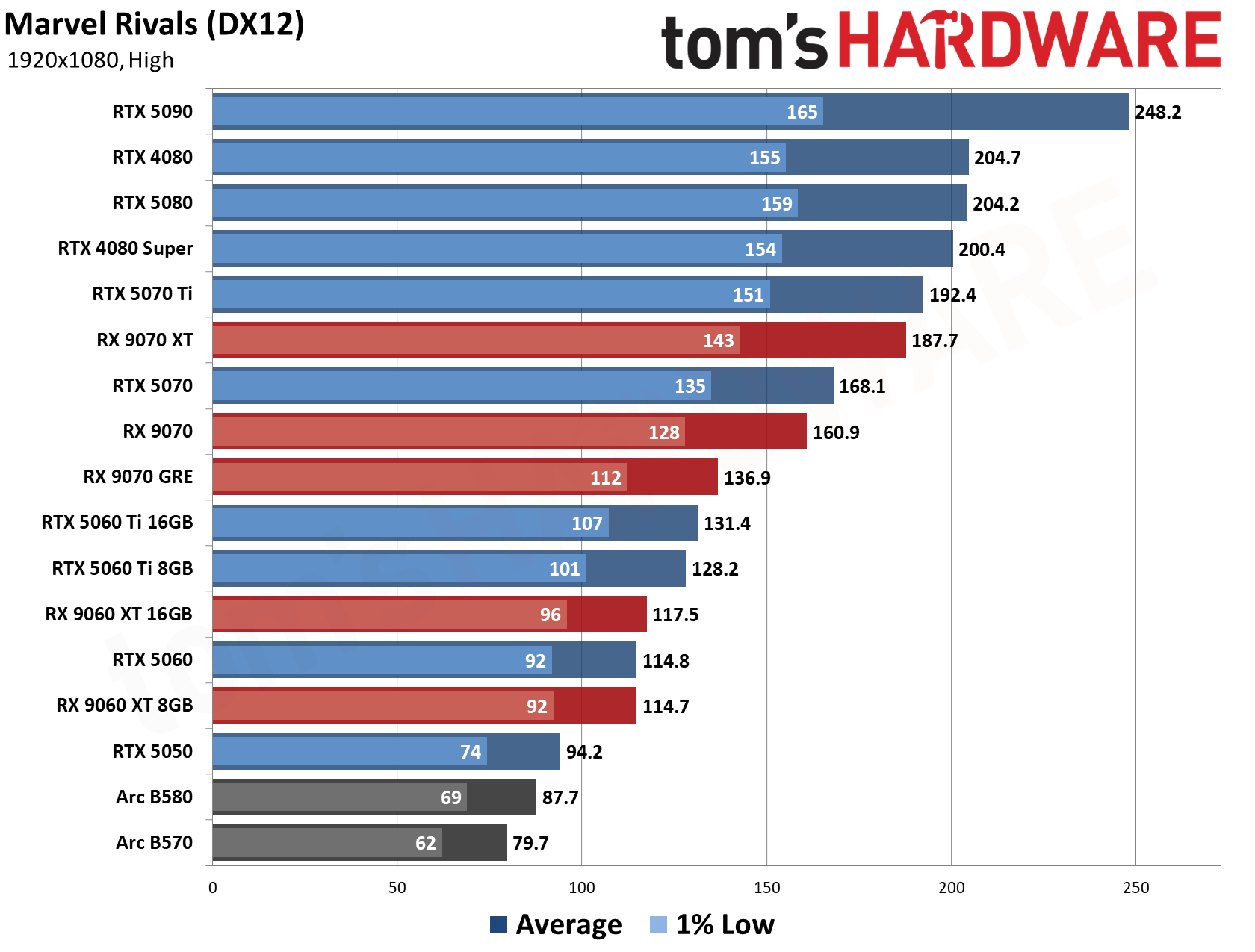
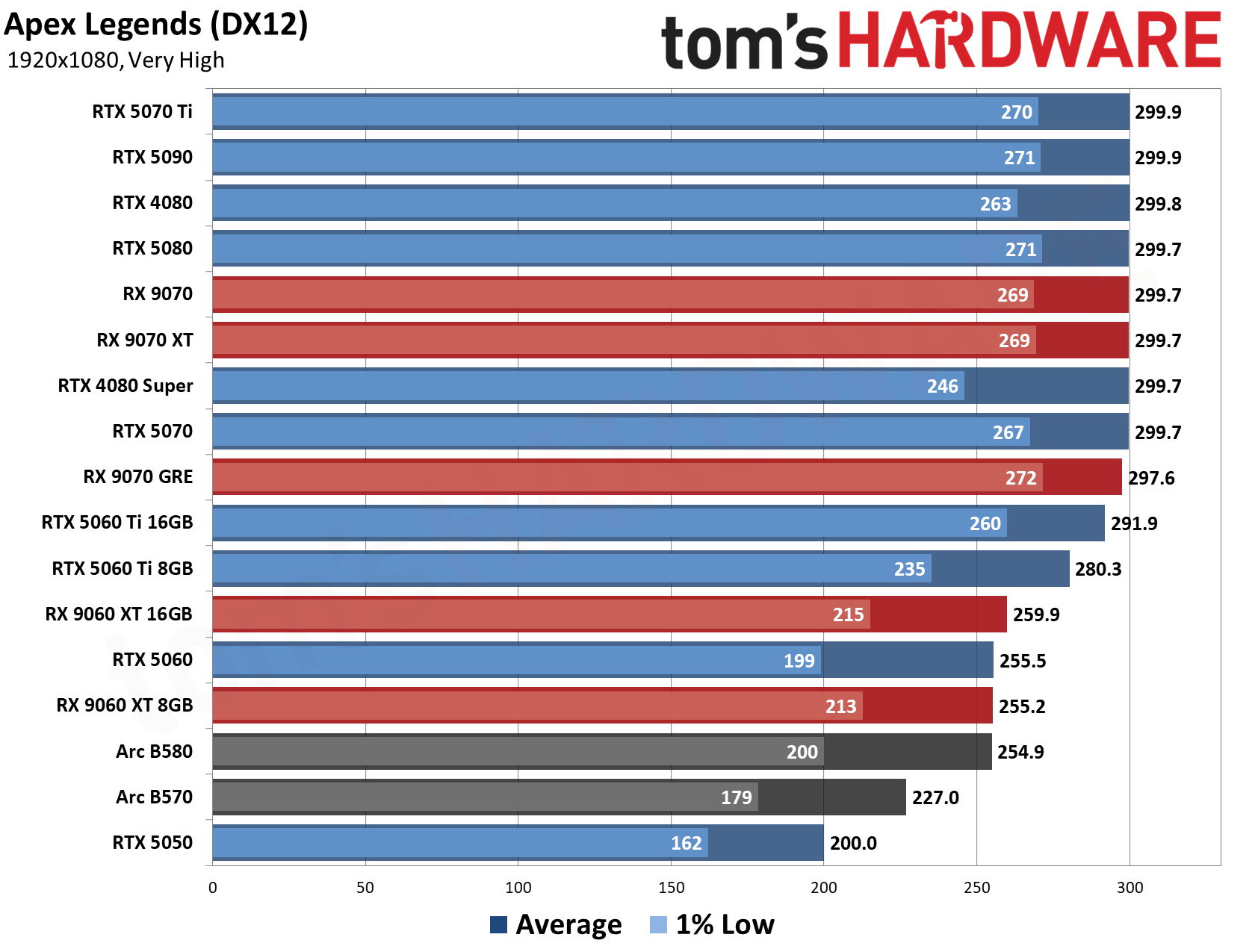
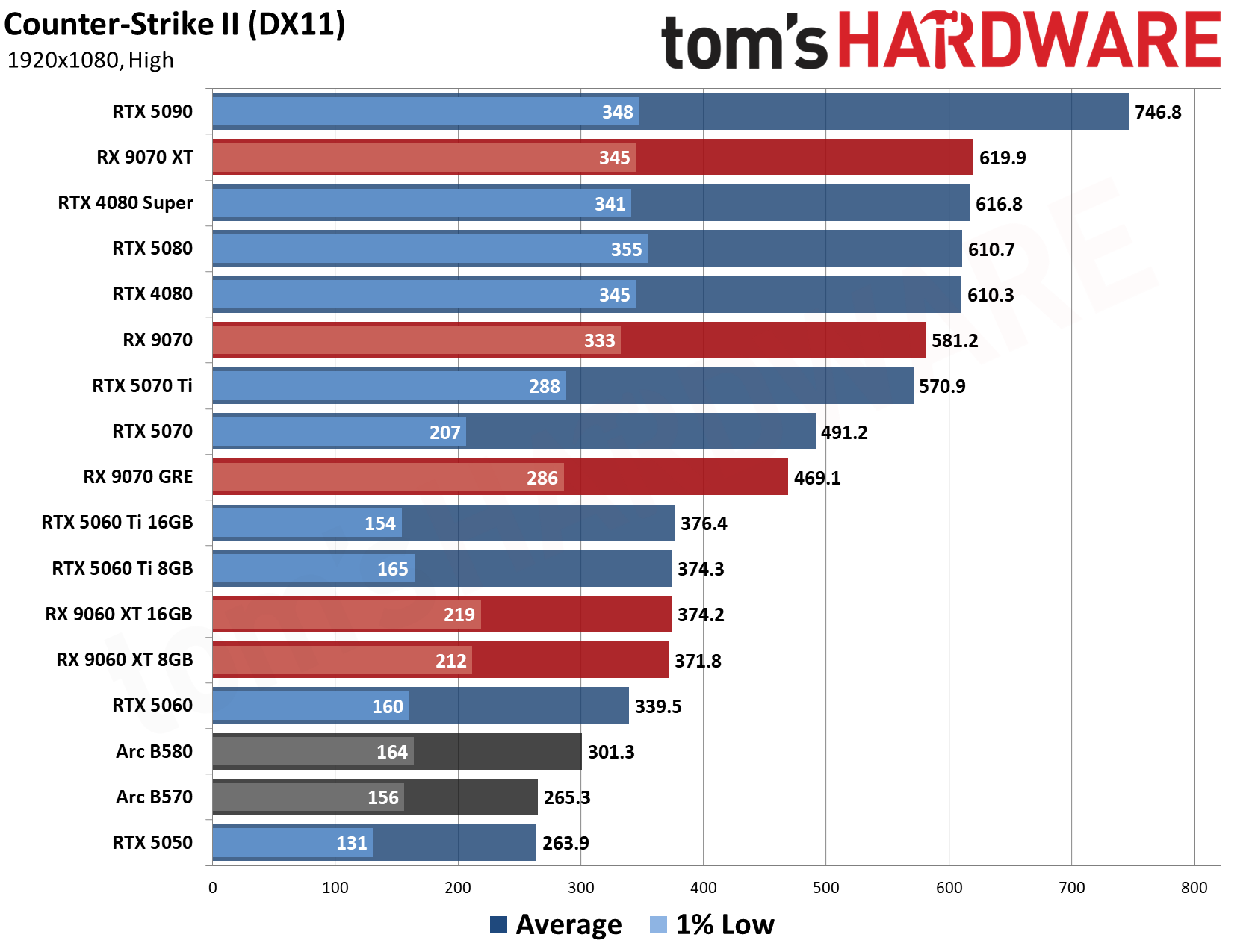
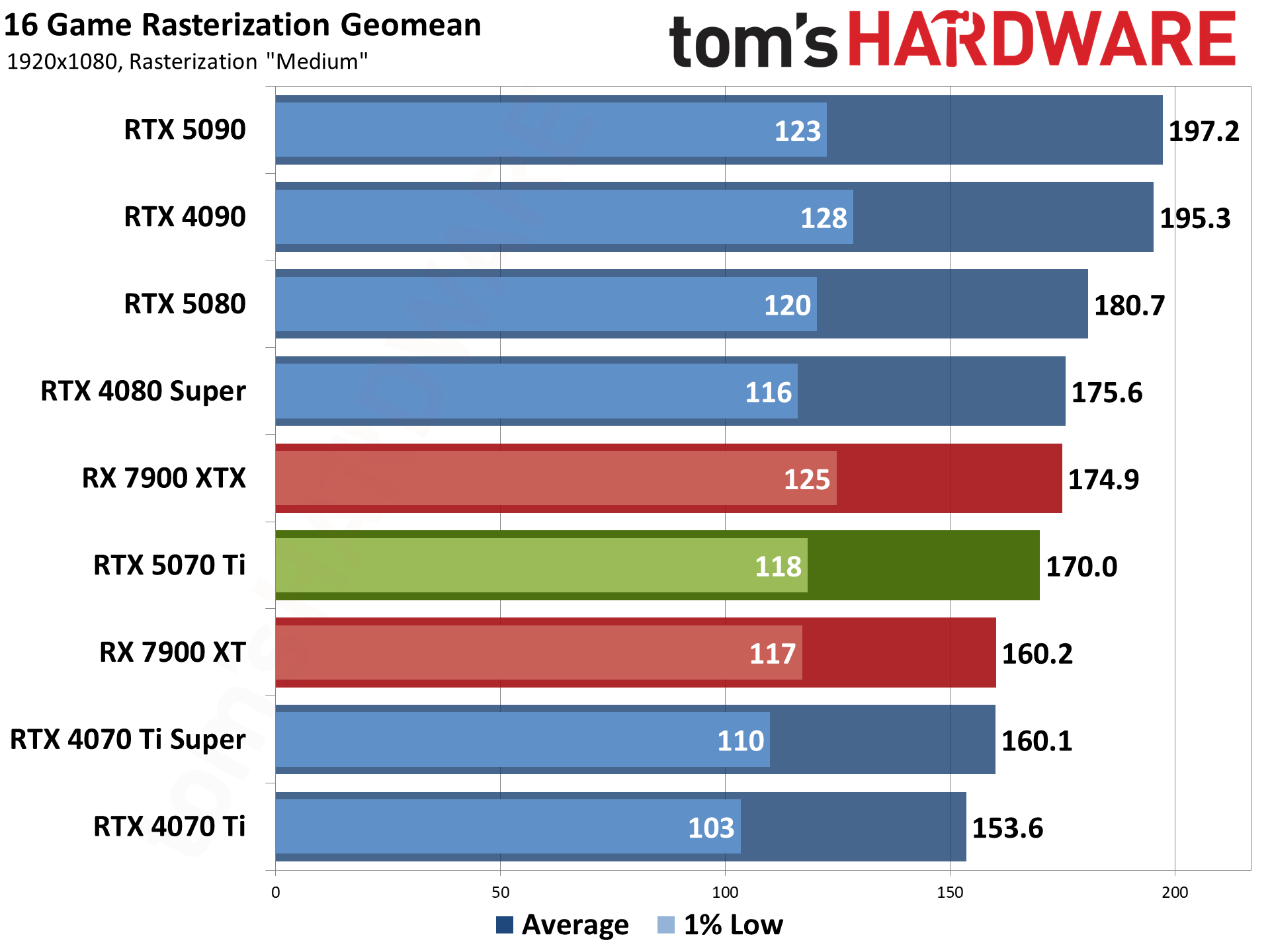
Yes, the GPU is an unstoppable force for any gamer. Our GPU benchmarks make that very clear. The RTX 5090 is the best GPU you can buy, and no other consumer GPU is going to beat it. It has 21,760 CUDA cores and 22GB of GDDR7 VRAM, with a 512-bit memory bus and bandwidth speeds of up to 1,792 GB/s.
This Astral is a world-beater of its own, though. It features an upgraded design, with a second BTF power connector to pull up to 800 watts, a glass backplate, and a curved OLED screen. It has faster clocks, hitting 2,750 MHz, with a 4.7-slot design. Performance-wise, the OG Astral is beating world records, so this is a card that you can really push to its limits (if you're not scared of charred power cables).
Tom's HardwareTom's HardwareTom's Hardware
The $6,000 GPU aside, you're also getting a $3,299 Asus ROG Crosshair X870E Edition 20 motherboard. Asus has a few variants of this, but the Edition 20 board here has (alongside some beautiful gold accents) supports for up to nine M.2 SSDs, with five slots on the board and more via add-in cards. There are six USB-C ports, plus two 20 Gbps front-panel connectors. Large copper VRM heatsinks work with its integrated AIO cooler, with a curved 6.7-inch AMOLE screen and a huge copper heatsink. Probably overkill, but for $3,299, you want it all.
You're also getting a $899.99 Asus ROG Thor Titanium III 3000W Edition 20 power supply. It's a PSU, but 3000W isn't to be sniffed at, and it'll certainly provide enough power for the monstruous Astral RTX 5090. It’s fully modular, with another OLED display (magnetic, this time) which you can mount either side, or extend with a cable.
(Image credit: Tom's Hardware)
Finally, you get the Asus ROG GR20 open-frame EATX PC case, set at $649.99. This is a totally new design from Asus, supporting large EATX motherboards, and you can stand it vertically or horizontally. There's a crossflow fan to blow cool air onto the GPU, RGB light strips, and several fast USB ports. It's mostly aluminum, with some plastic, magnetically attached cosmetic covers around the sides.
$10,849.96 for this Asus combo kit is so much money for anyone to spend on a gaming PC build, but, unfortunately, we are where we are. As our Asus ROG Edition 20 build write-up mentions, this is a kit that few will buy and own. AI is pushing gaming PCs to new heights, and it's a real shame that we're now seeing current-gen flagship GPUs like the RTX 5090 becoming so rare to buy that combo offers like this are, perversely, almost good value. If you're spending $6K or more on a GPU, though, then it might make sense. You won't find an RTX 5090 cheaper (or, probably, at all, at least for some time) so if you want the best gaming PC build that you can find, this is the kit you'll want. For once, we don't imagine this will sell out soon, but Newegg might pull the deal at any point.
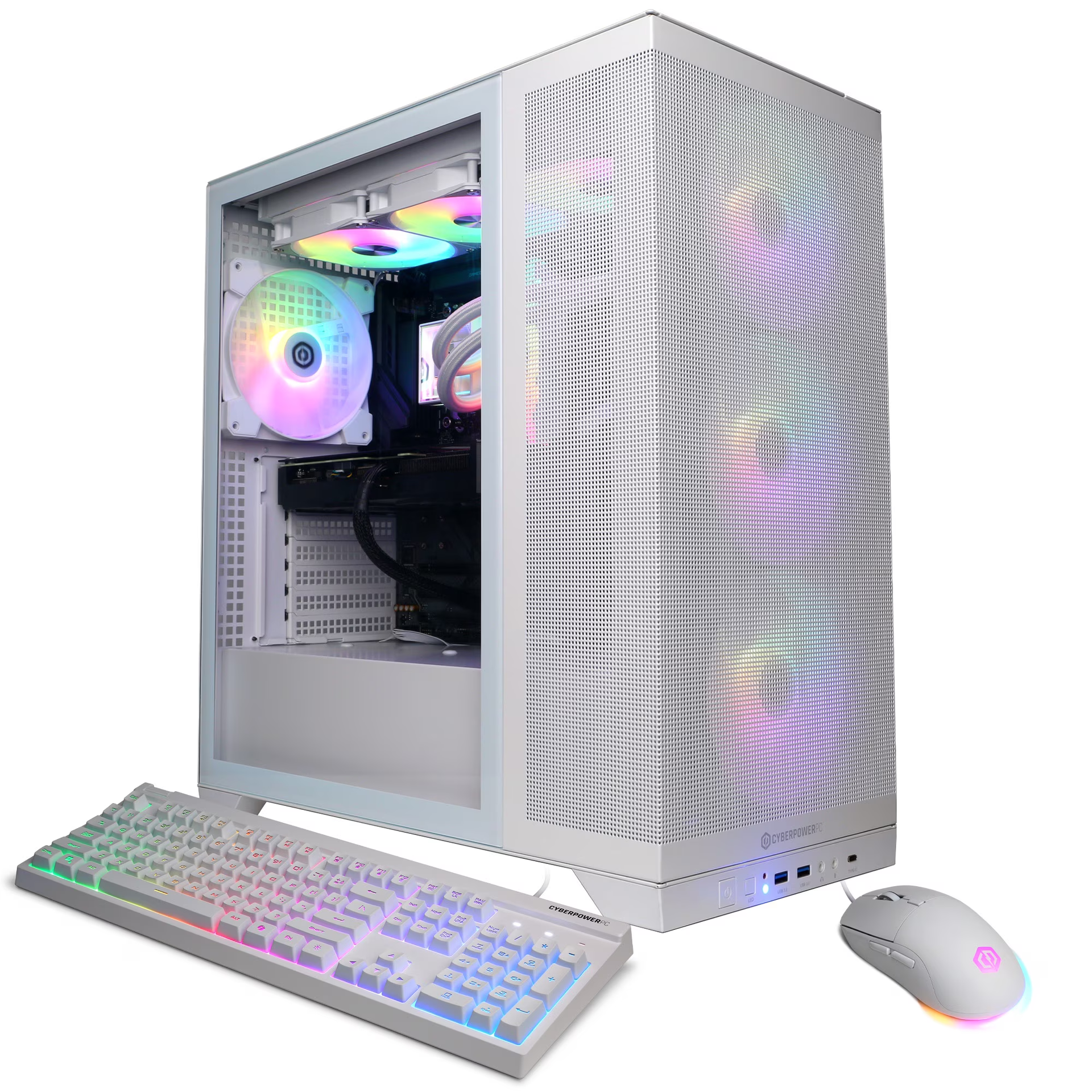
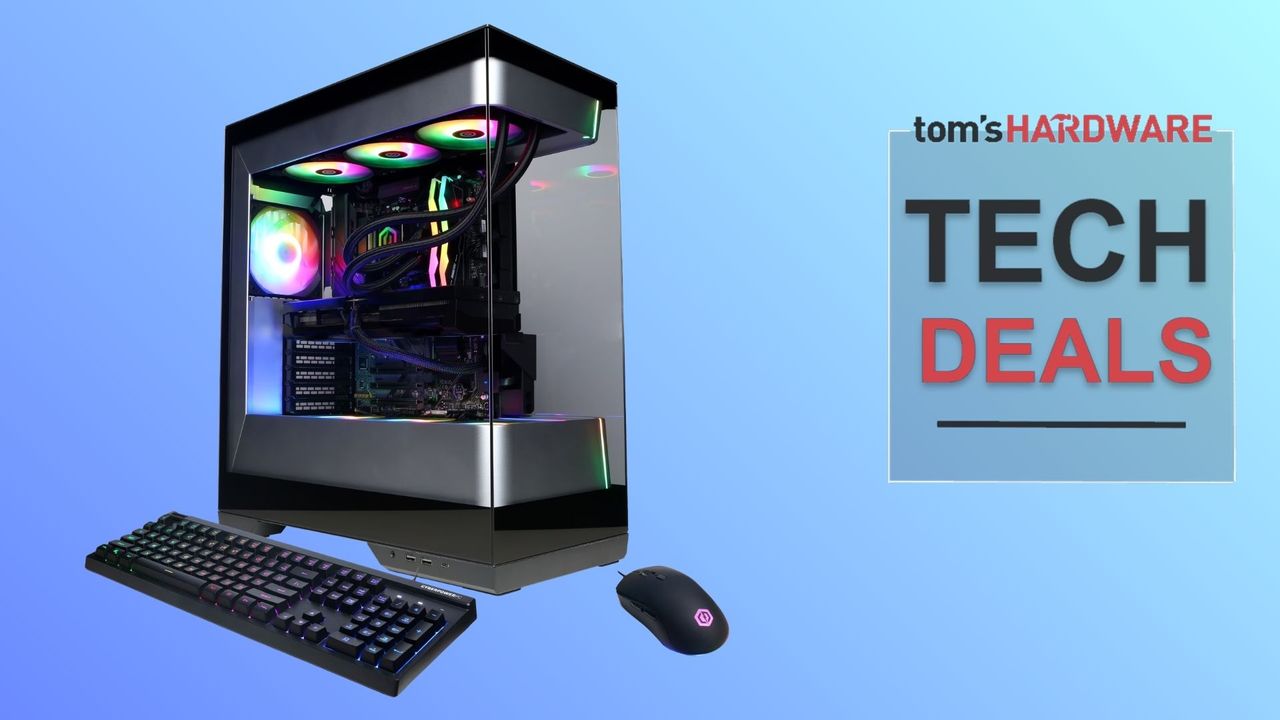
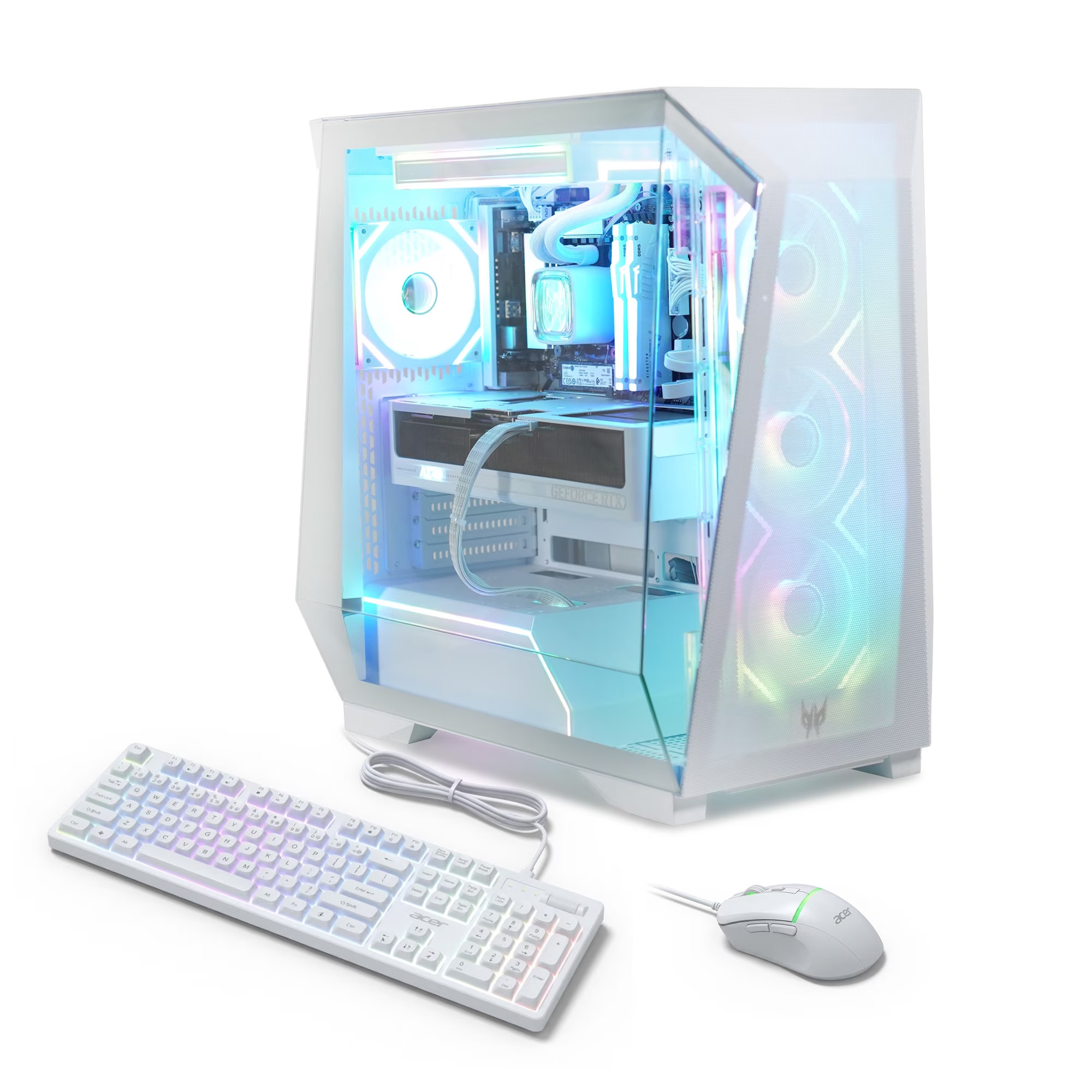
A pre-built gaming PC with one of AMD's top X3D chips inside is always going to be a formidable option, especially if it's coupled with a current-gen Nvidia GeForce GPU. That's exactly what you're getting with this all-white CyberPowerPC machine, down to $1,859.99 thanks to a $560 discount, that ships with a 9800X3D, RTX 5060 Ti, and 32GB of DDR5 RAM.
That's a serious set of specs with few compromises to think about in a market that's seen huge price rises over the last 12 months. Building a new gaming PC has become far more expensive than buying a good pre-built, and the specs you're getting here set you up with a rig that'll let you play games at 1440p at high frame rates and the best graphics presets for years to come. This particular rig scored 4 stars in our CyberPowerPC Gamer Supreme review, with praise for its performance and room for upgrades later.
Featured in this rig is one of Nvidia’s current mid-tier graphics cards in the RTX 5060 Ti. It ships with 4,608 CUDA cores and a boost clock speed of 2,527MHz, along with that all-important 16GB of GDDR7 VRAM. Unlike the RTX 5090, this RTX 5060 Ti only requires a single eight-pin PCIe connector to deliver power, so you won't need a huge amount of electricity to run it.
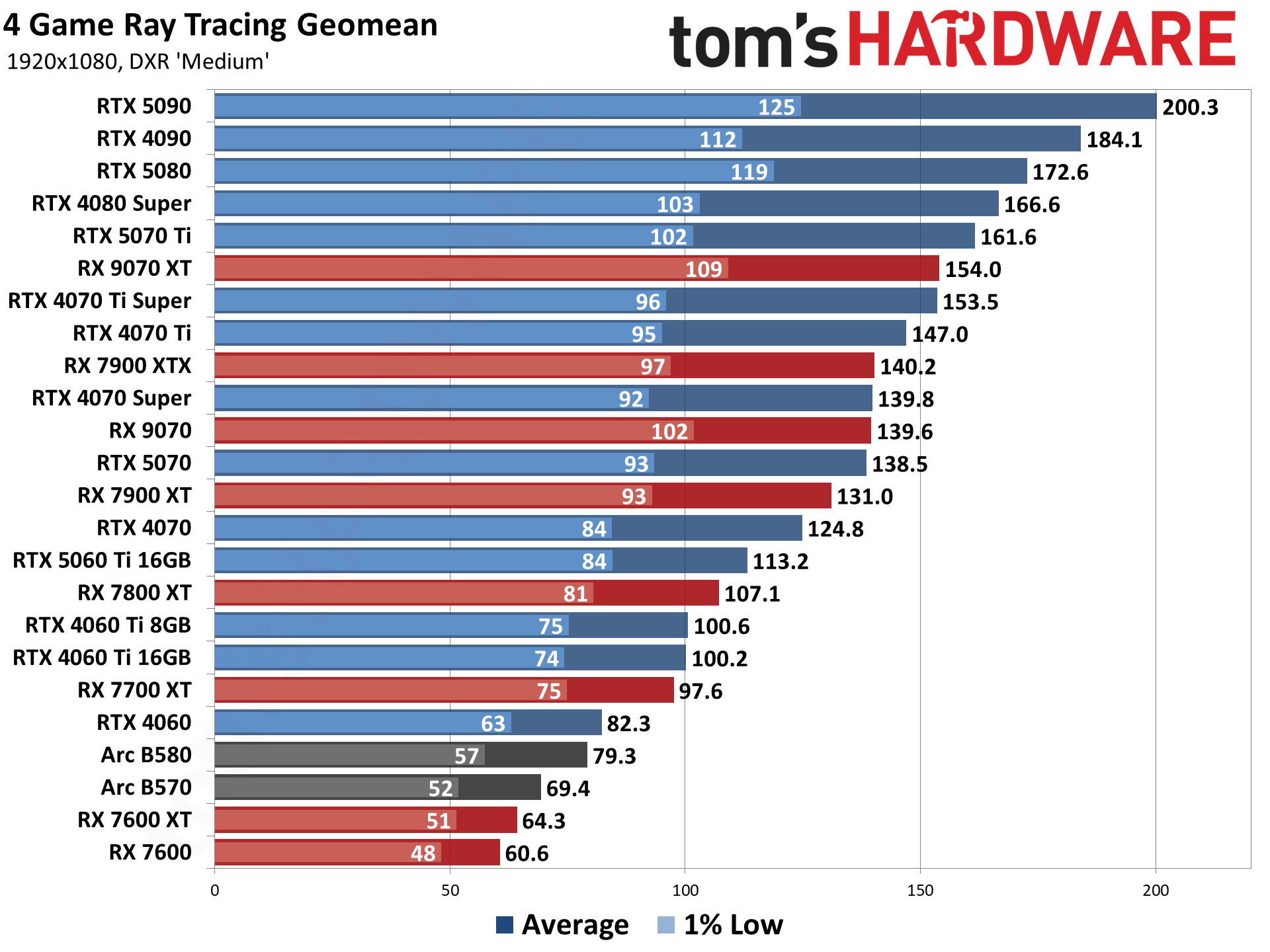
Our RTX 5060 Ti 16 GB review is clear that this GPU is a very good option for mid-tier builds, with ray tracing performance proving to be much better than its rivals. You've also got the full support of Nvidia DLSS 4, giving you access to functionality like multi-frame generation to give your rig a frame rate boost in the most resource-heavy games, especially if you want to try and push to 4K.
At this price point, though, 16GB of VRAM is the serious winner. You're giving yourself much more headroom for better performance than the budget-friendly 8GB GPUs that you'd otherwise have to switch to. That'll mean that stable gaming at 1440p will be easier to achieve.
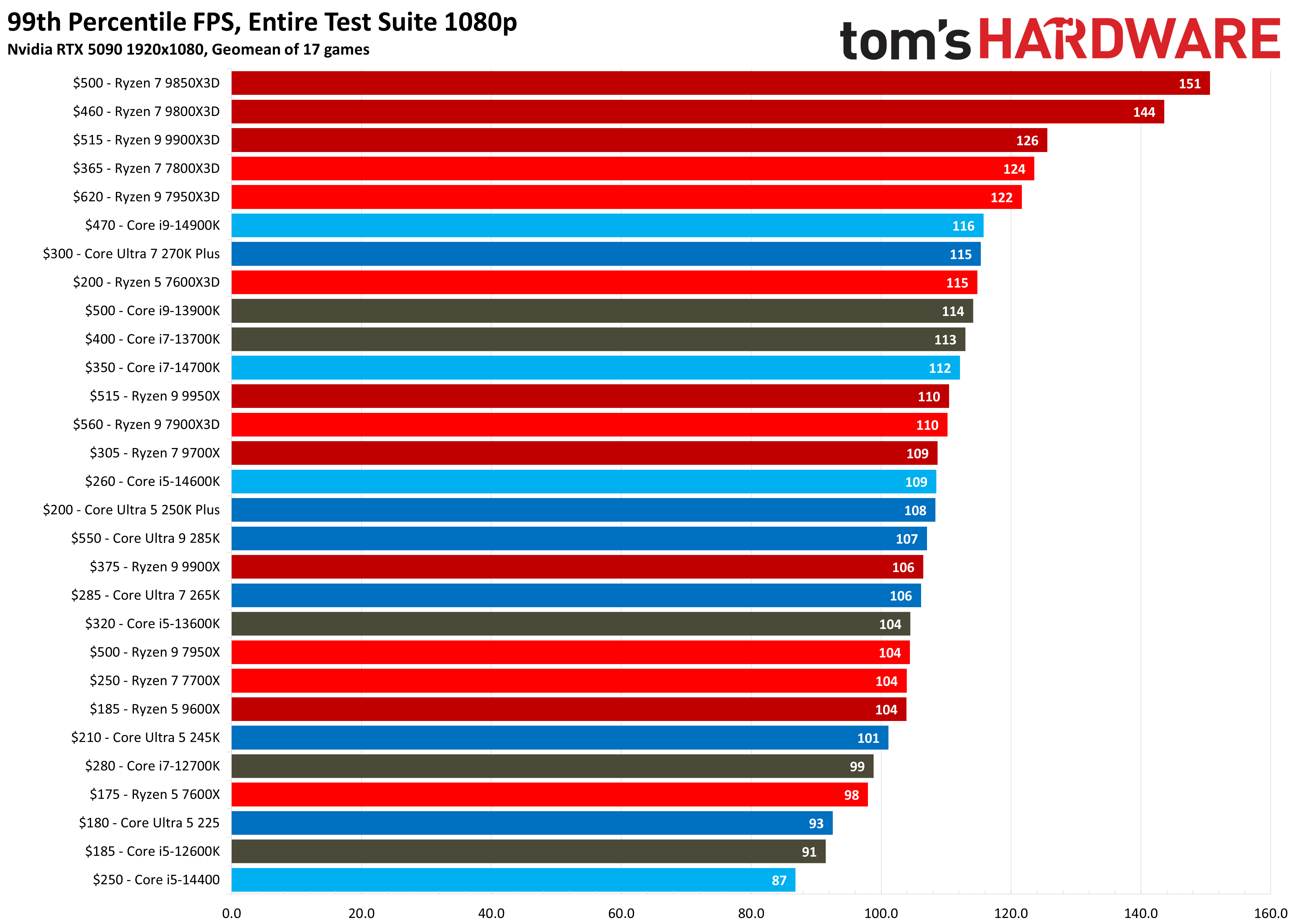
Couple that with the eight-core AMD Ryzen 7 9800X3D. This continues to be the best CPU overall for gamers, even if AMD has launched faster models since, because of its price-to-performance value. It continues to offer outstanding gaming performance, as the CPU benchmarks show, with 1% low frame rates that ensure the smoothest possible gameplay. The power of AMD 3D V-Cache, stacking extra L3 cache (96MB in total) so that games don't need to drop down to the slower system RAM, gives you a serious performance boost.
You won't see much compromise elsewhere, either. 32GB of DDR5 RAM means you won't face memory bottlenecks, and a 2TB Gen 4 SSD gives you good storage capacity for several big game installations alongside Windows. You're also getting Wi-Fi 6 and Bluetooth 5.2 wireless connectivity, along with Gigabit Ethernet for a wired setup.
The $1,859.99 sale price for the CyberPowerPC Gamer Supreme rig on sale here is a good price given its performance potential. You're getting a solid 1440p-capable gaming PC, with the best CPU and a formidable GPU to match, with plenty of room to upgrade in the future, and a lot of longevity until then. Don't expect this $560 discount to be around for long.
The DDR5-6000 RAM in this PC is currently worth $400 alone, making this build a good value proposition over buying the parts yourself. Likewise, the GPU is worth $450, meaning that more than half your build cost is covered by just these two parts. This PC would be perfect as a beginner gaming rig or mid-range replacement for a DDR4 gaming PC. With a Raptor Lake refresh CPU and Nvidia's latest GPU technology, it's the perfect stepping stone into modern PC gaming without breaking the bank.
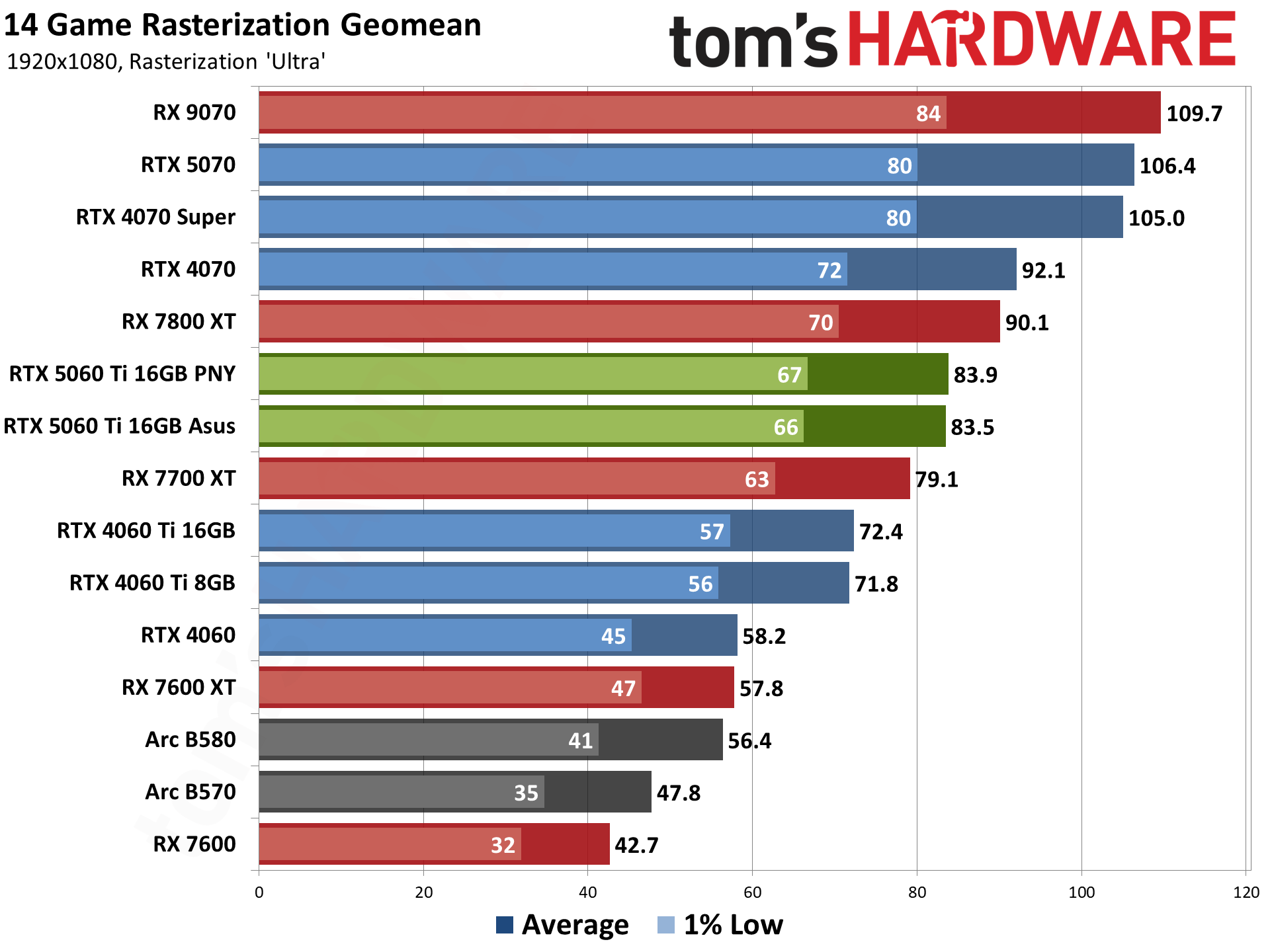
As you can see, without frame generation, the RTX 5060 can put out a respectable 41 frames per second across our 1440p test suite, and easily manages 60 frames per second at 1080p in our other testing. Using Nvidia's DLSS technology, you'll be able to bump that up no problem and enjoy high-fidelity gaming with good frame rates. With just 8GB of VRAM, this card won't be useful for 4K gaming but would make a great upgrade for someone on an older RTX 30-series card or integrated graphics.
The GPU is complemented by the excellent Intel Core i7-14700F CPU, with 20 cores (eight performance and 12 efficiency), perfect for productivity and gaming workloads. The Raptor Lake Refresh CPU offers boost clocks of up to 5.4GHz.
This is a great all-round build at the price point, as evidenced by the strong supporting cast of components. You're getting that all-important 32GB of DDR5-6000 RAM for multitasking and gaming, as well as a 1TB Gen 4 SSD — specifically Kingston's SNV3S — for storage.
The motherboard is an ASRock B760M-CX with room for M.2 expansion should storage prices settle down in the future. You also get a very capable Cooler Master Hyper 212 air cooler, more than enough for this CPU, as well as a 650W 80 PLUS Gold PSU.
It also features Wi-Fi 6E and Bluetooth 5.2, as well as a copy of Windows 11. For the price, this is a really good PC in the current market. You're getting a $300 discount, plus a further $120 off when you use the promo code SSF73457, for a $420 discount total. Thanks to the Intel's Gamer Days sale, you'll also get two free games to enjoy on your new PC: Tomb Raider: Legacy of Atlantis and Star Wars: Galactic Racer, due to be released in February 2027 and October 2026, respectively. That's $120 of free upcoming new releases to enjoy on your new PC.
The individual cost of some of these components makes this a pretty remarkable deal in Fall 2026. The RTX 5080 GPU in this rig alone will set you back more than $1,500 in today's market. The CPU is nearly $500, bringing the cost of just those two components to 2/3 of the build's entire price.
RAM and SSD prices are heavily inflated, which means 32GB of DDR5 would normally set you back $400 right now. Add the storage to the bill of materials, and you've covered nearly the entire cost of this PC before you've added the case, fans, cooler, motherboard, and PSU. With the best CPU for gaming on the market and a huge GPU, this PC is no slouch either.
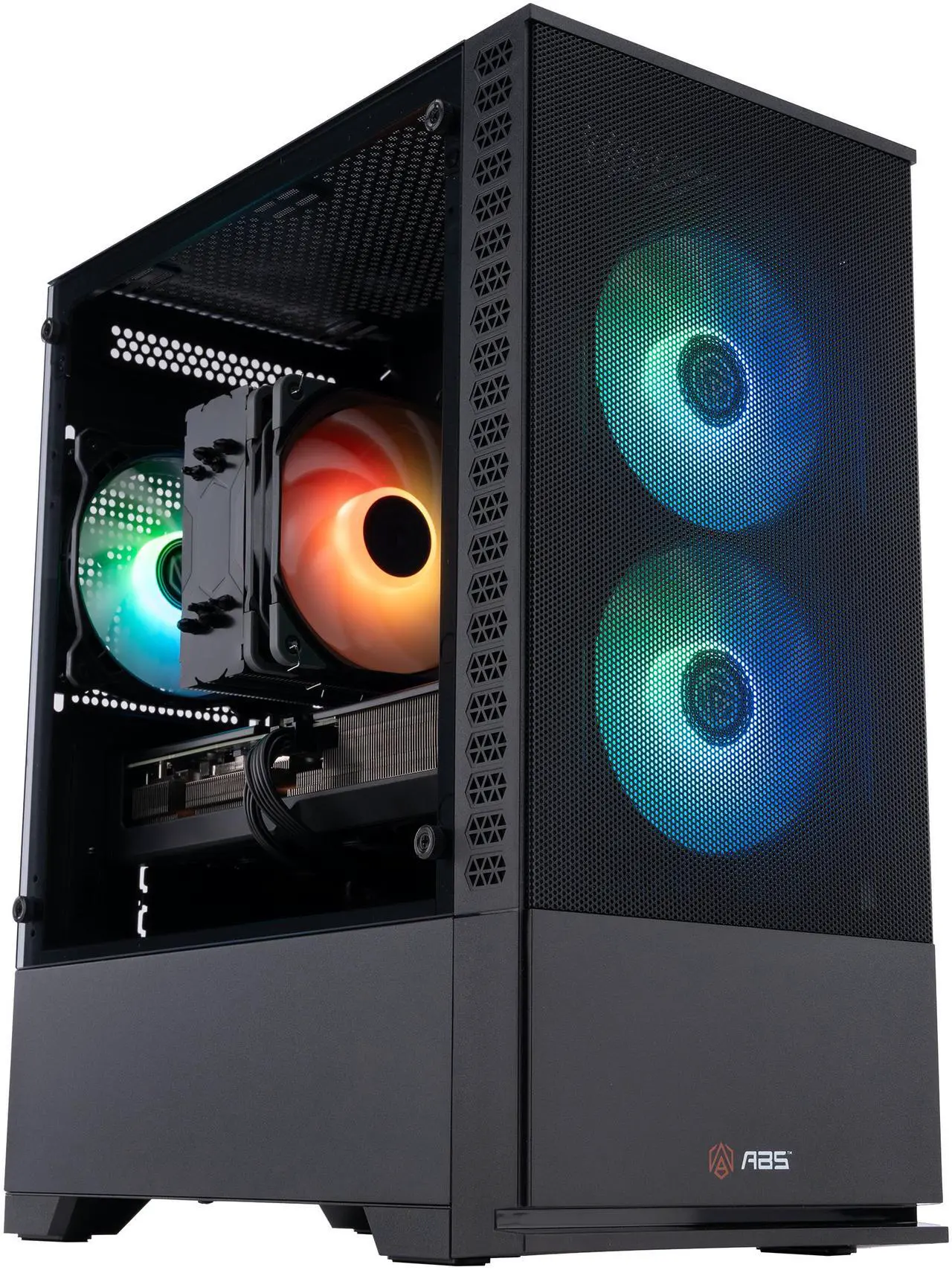
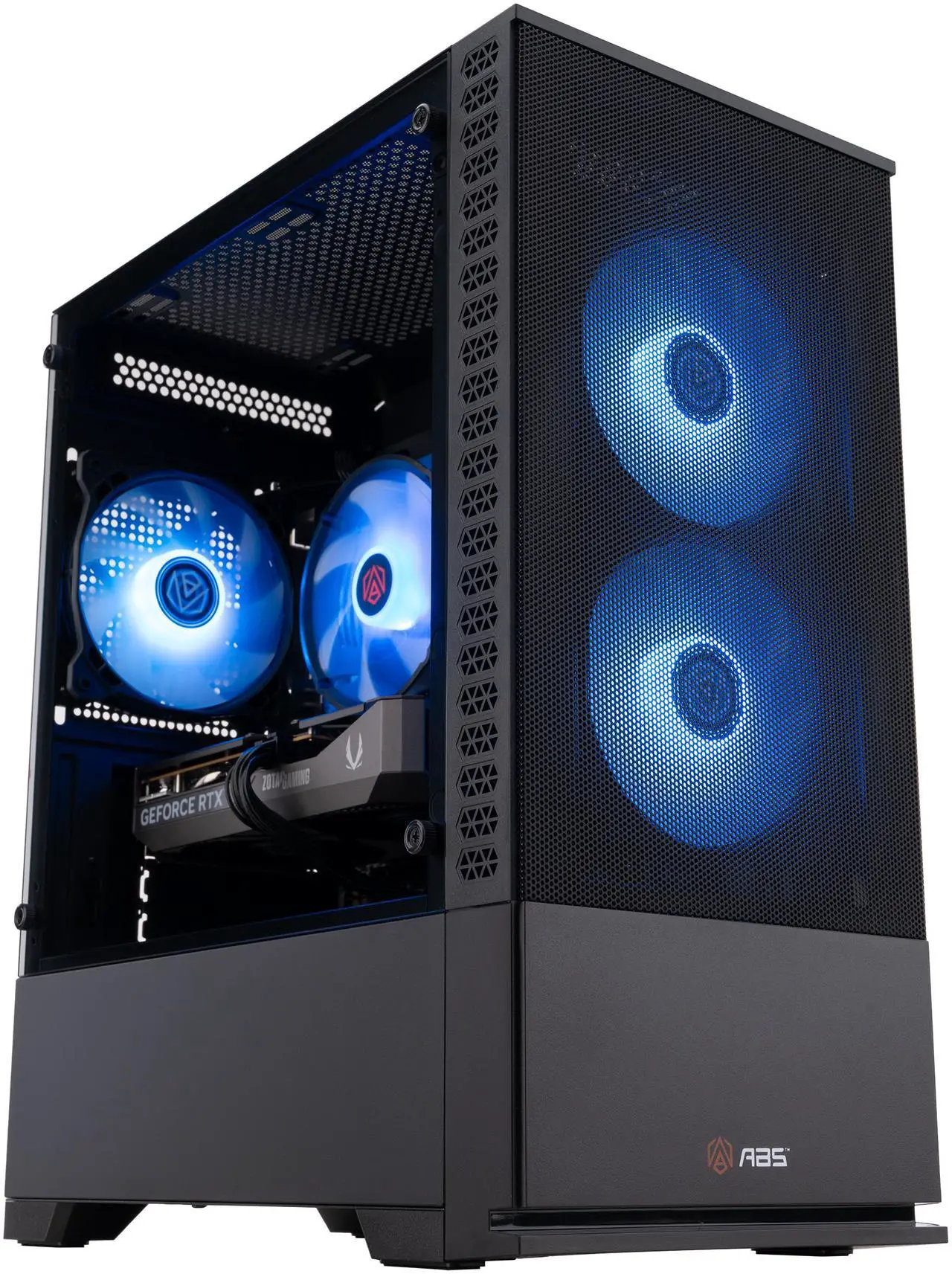
Grab a huge saving on this ABS Kaze II Aqua gaming PC, made and shipped by Newegg. It comes equipped with an AMD Ryzen 7 9800X3D, Nvidia GeForce RTX 5080, 32GB of DDR5 RAM, and a 2TB SSD.View Deal
While the 9800X3D is not quite the fastest gaming CPU on the market these days, it is still the best all-rounder by some distance thanks to its combination of power efficiency and performance compared to the 9850X3D. This 8-core, 16-thread CPU chews through gaming titles, even at 4K, thanks to its 3D V-cache. Reducing reliance on slower RAM, this industry-leading tech makes AMD's X3D CPUs the best gaming chips on the market, as you can see from our testing data.
Tom's HardwareTom's HardwareTom's Hardware
The RTX 5080 likewise needs no introduction. This behemoth features 16GB of GDDR7 VRAM and 10,752 CUDA cores. As you can see from our GPU hierarchy, that translates into average frames per second of 60 even at 4K, performance eclipsed only by the extremely powerful and expensive 5090. At 1440p, we clocked average fps of over 100. The 5080 will also unlock Nvidia's powerful DLSS 4.5 and new DLSS 5 technology for frame generation and neural rendering.
Headline components aside, this build features 32GB of Kingston Fury DDR5 6400 RAM, a fantastic addition considering it's easy to hide cheap, slow RAM inside a pre-built PC. The SSD is Team Group's NV5000 2TB Gen 4 drive, giving you plenty of storage and gaming performance. The motherboard is a Gigabyte B850 with Wi-Fi 6, giving you plenty of power and performance as well as room for expansion in the future. The build also features a 360mm AIO cooler for the CPU, Windows 11, and a 1000W 80 Plus Gold to keep everything running.
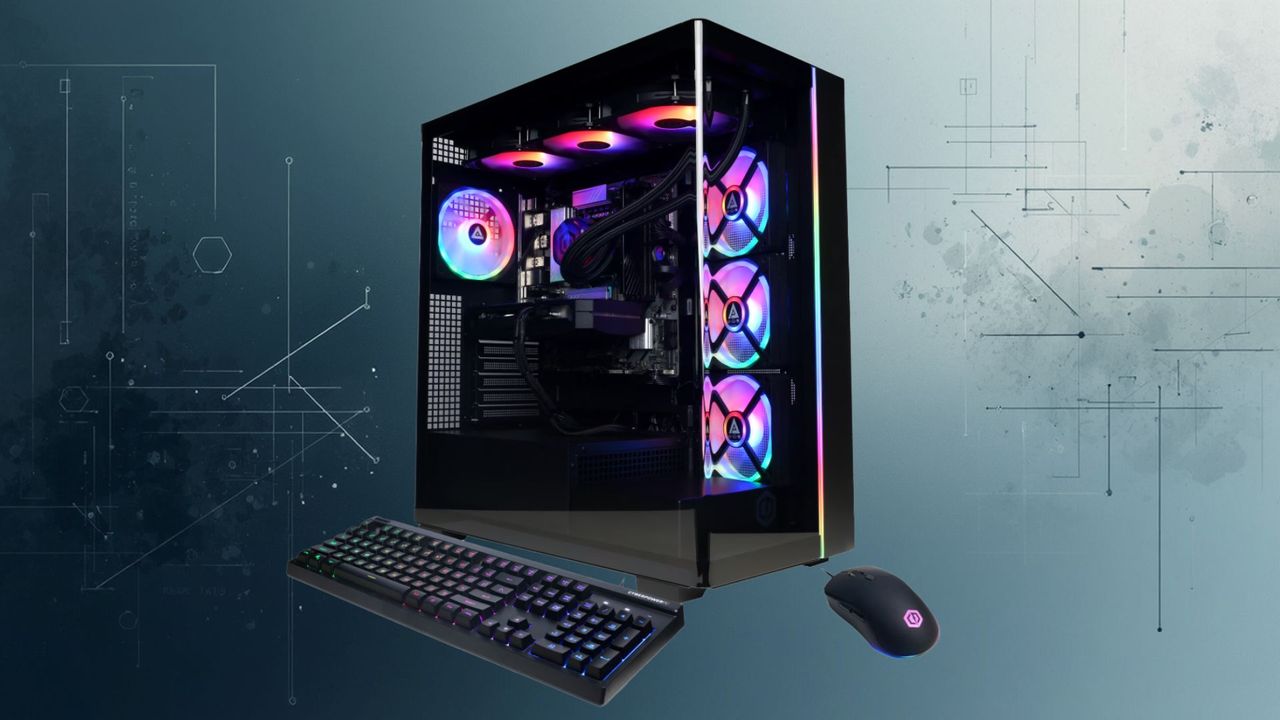
Walmart is currently offering a 21% discount on an impressive all-rounder prebuilt system from CyberPowerPC. The Gamer Supreme desktop gaming PC is now $1,399, a saving of $370.99 from the original listed price of $1,769.99. With this component selection, you get both a gaming PC and an incredible computer for everyday work and productivity applications.
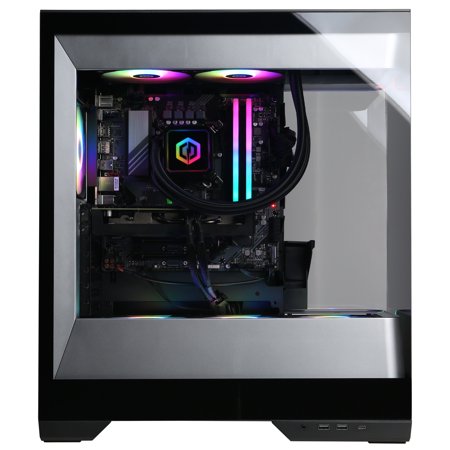
Inside the glistening glass panel case is Intel's Core Ultra 7 270K Plus processor, an Nvidia GeForce RTX 5060 Ti graphics card with 8GB of VRAM, 16GB of DDR5 memory, and a 1TB SSD for storage. This selection of components makes for a complete and competent gaming and productivity PC, with plenty of room for upgrades in the future.
Gamer Supreme Desktop Gaming PC: was $1769.99 now $1399 This CyberPowerPC Gamer Supreme gaming PC sports an Intel Core Ultra 7 270K Plus processor, an Nvidia GeForce RTX 5060 Ti graphics card with 8GB of VRAM, 16GB of DDR5 memory, and a 1TB SSD for storage. View Deal
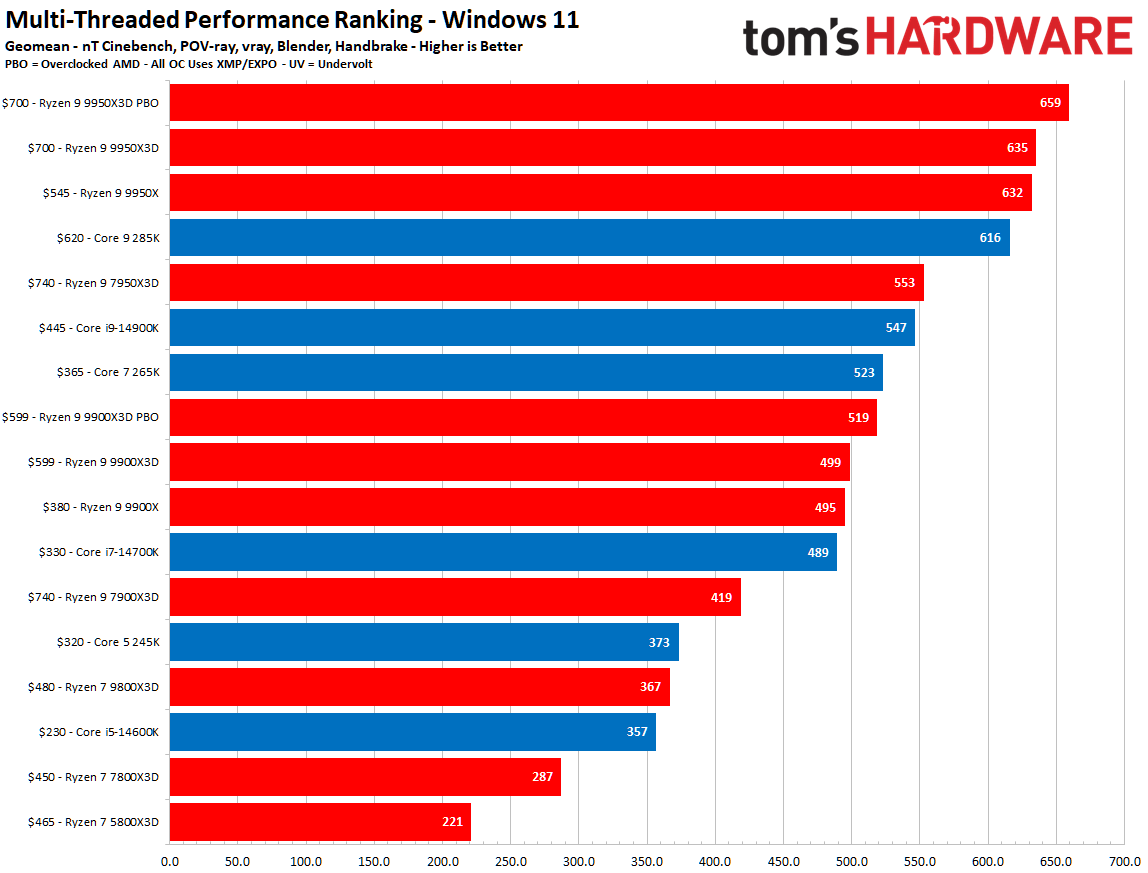
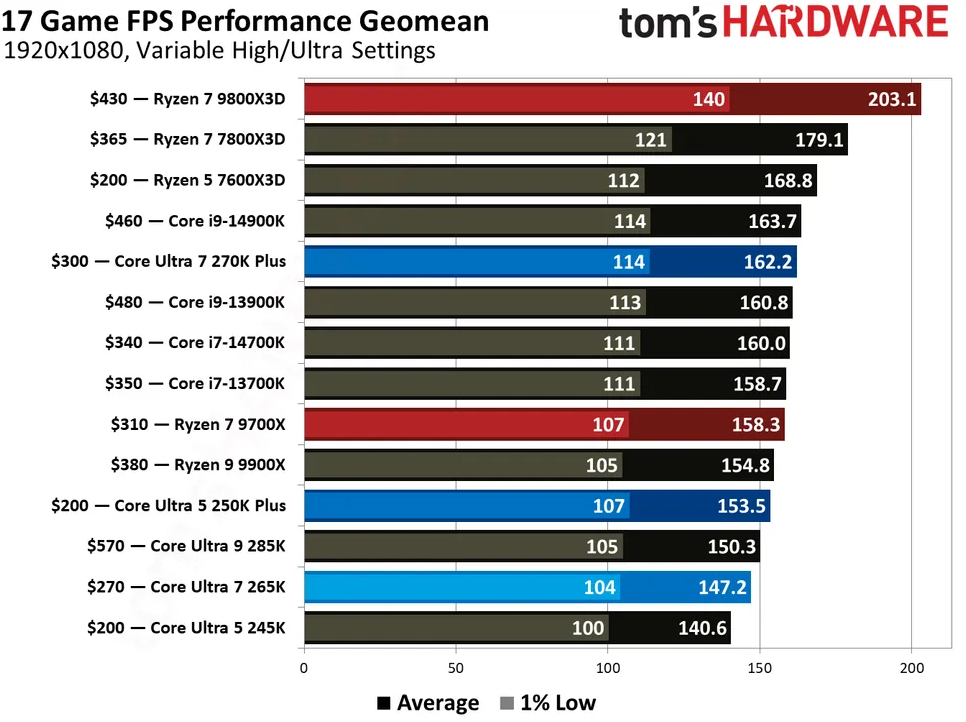
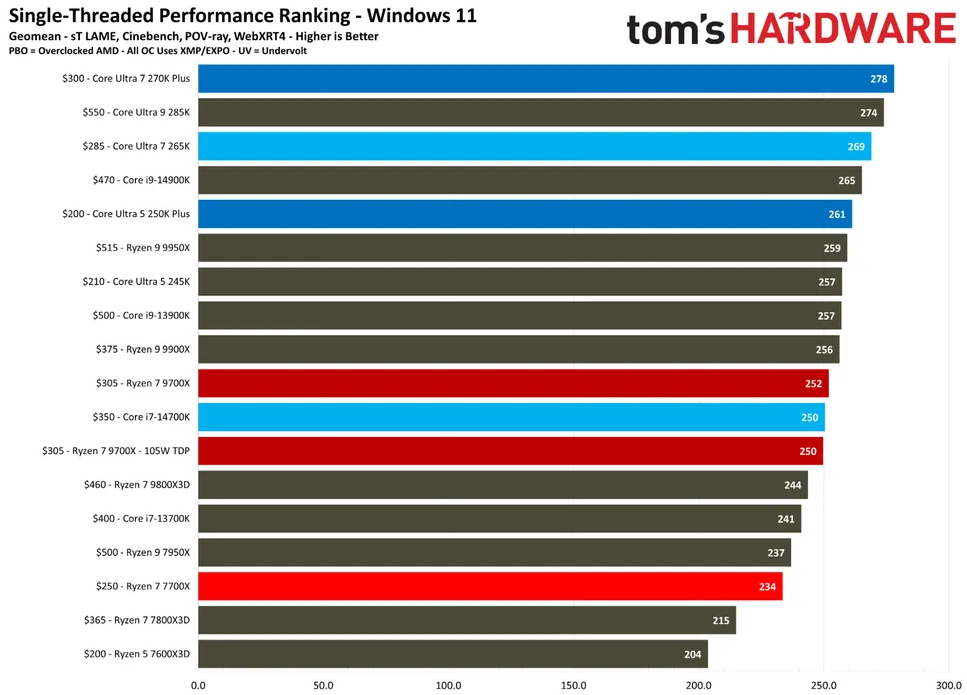
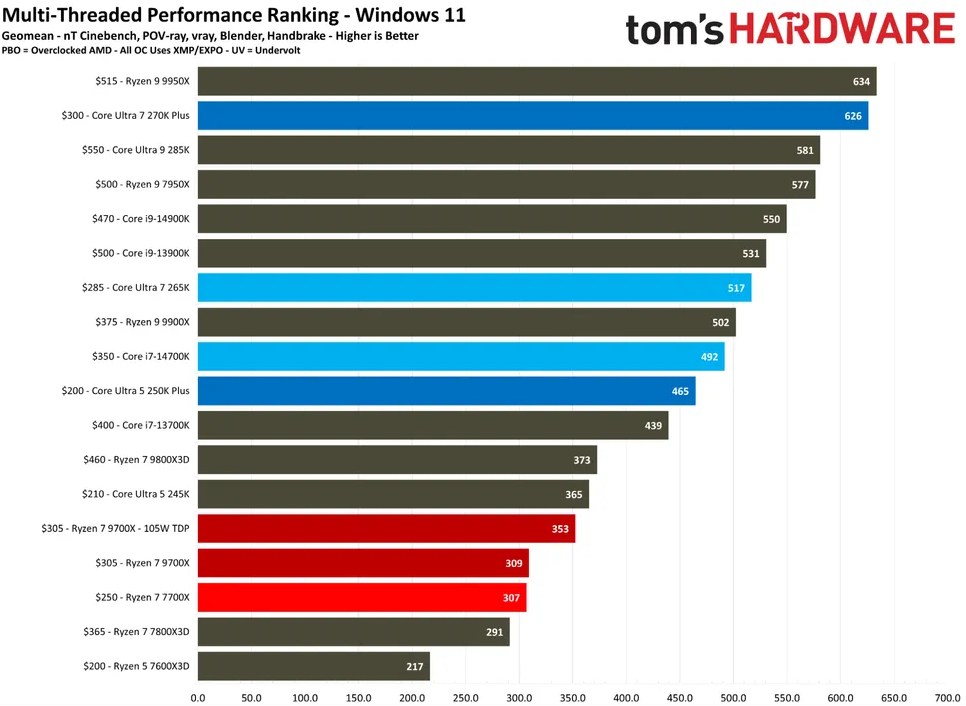
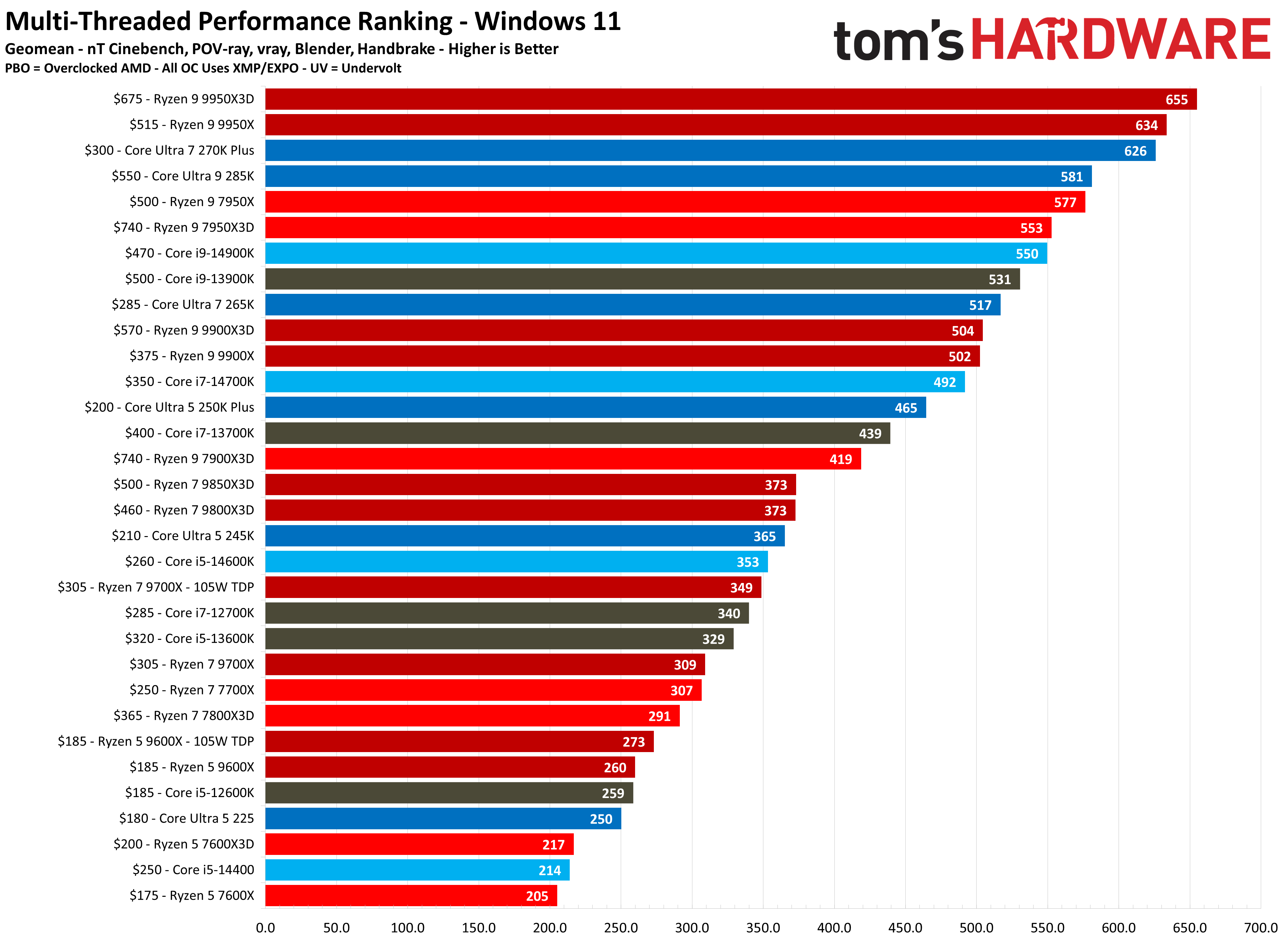
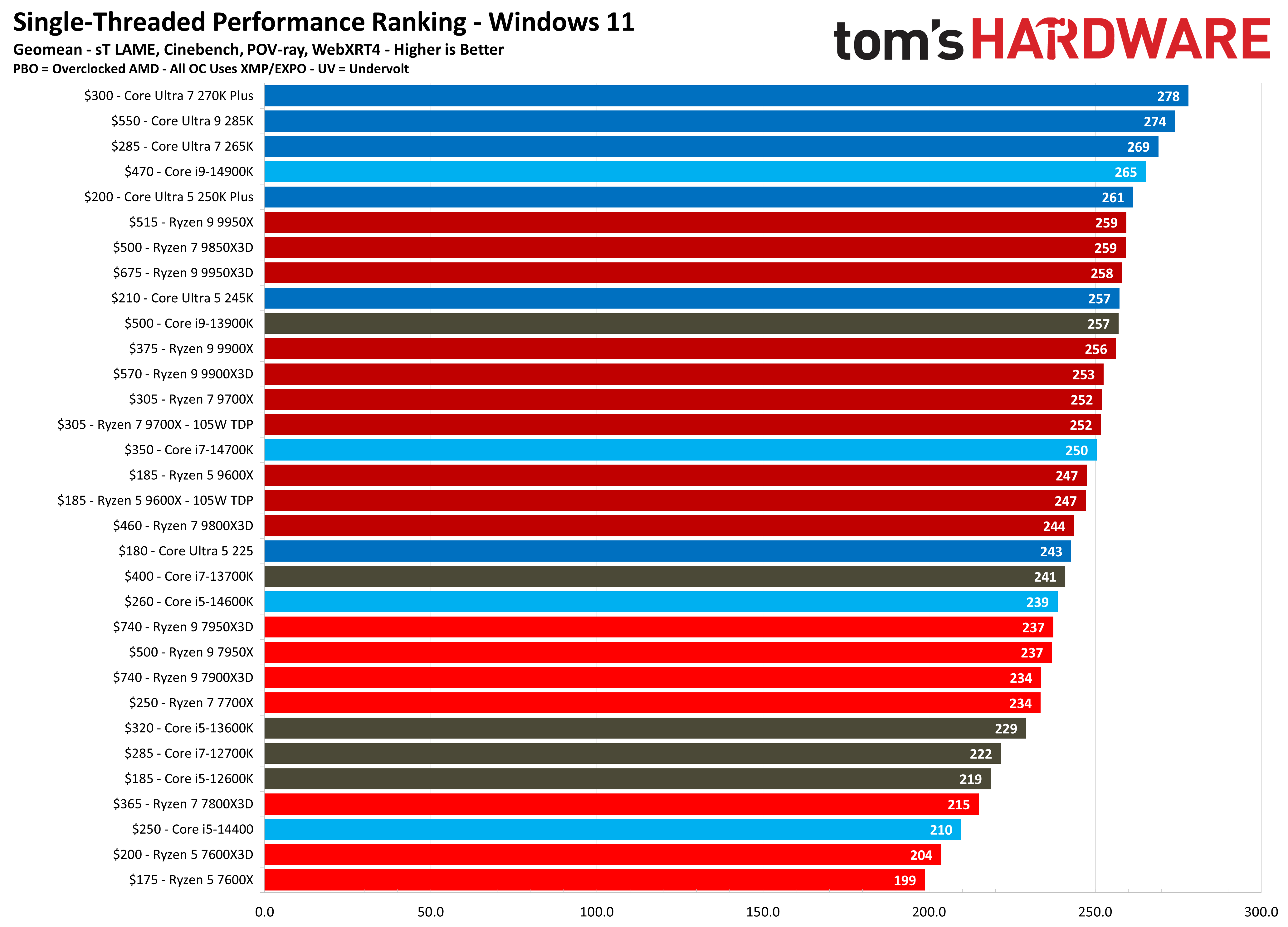
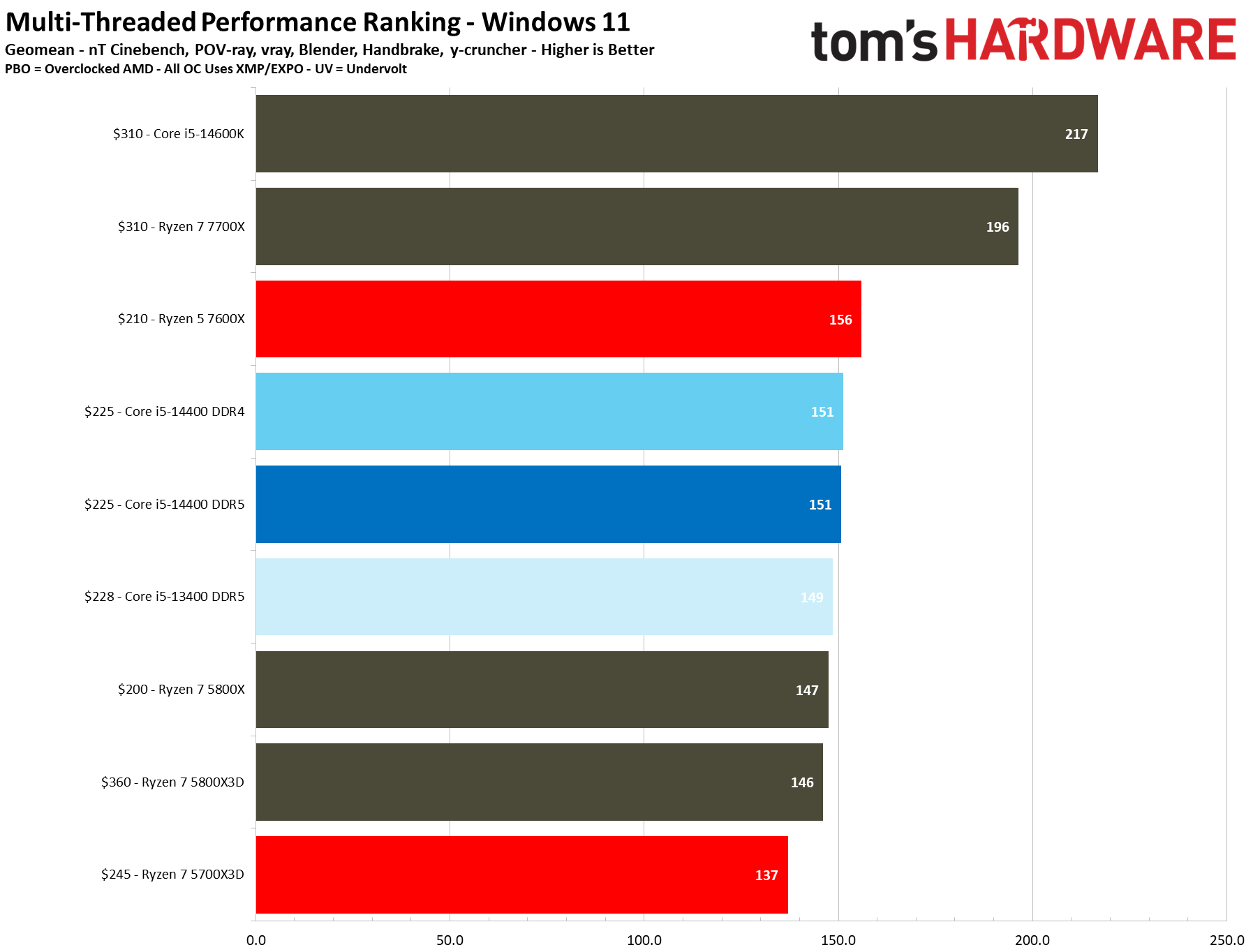
One of the standout component choices in this prebuilt gaming PC is Intel's Core Ultra 7 270K Plus processor. It's currently Intel's best value-for-money CPU on the market with impressive gaming performance, and even more impressive multi-threaded productivity performance. The 270K Plus can go toe-to-toe with AMD's Ryzen 9 9950X in productivity workloads — all while costing half the price.
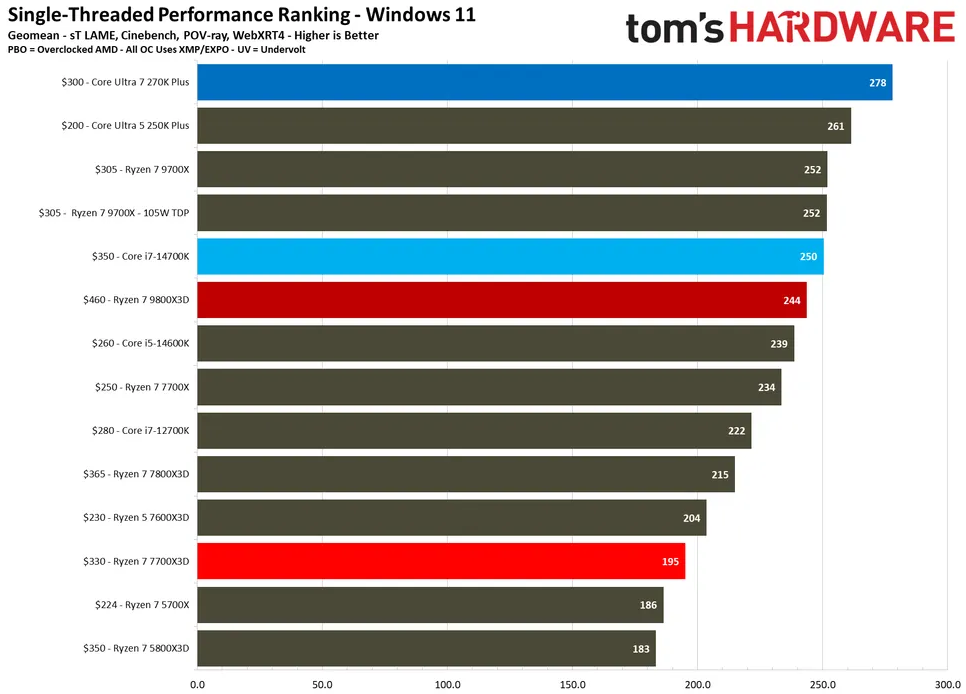
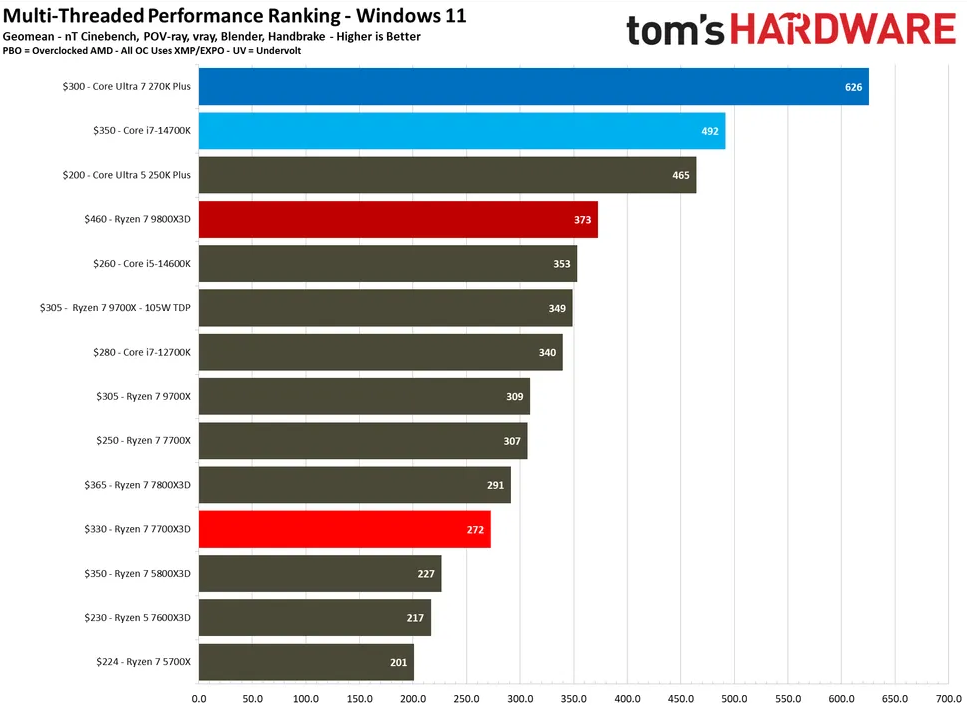
You can see from our benchmarking charts below that the Intel Core Ultra 7 270K Plus isn't as fast as AMD's purely gaming-focused X3D offerings, but when it comes to single-threaded and multi-threaded workloads, it's a monster and is only superseded by a much more expensive chip. Not only that, but the 270K Plus is fully unlocked for overclocking.
FutureFutureFuture
Prebuilt gaming PCs have risen to the forefront when it comes to value these days, thanks to the ever-rising component prices of memory, graphics cards, and storage, which have driven the self-build enthusiast market to the edge. This CyberPowerPC build uses all current parts, including DDR5 memory and the impressive Core Ultra 7 270K Plus, giving you plenty of power and performance for the money you spend on this system.
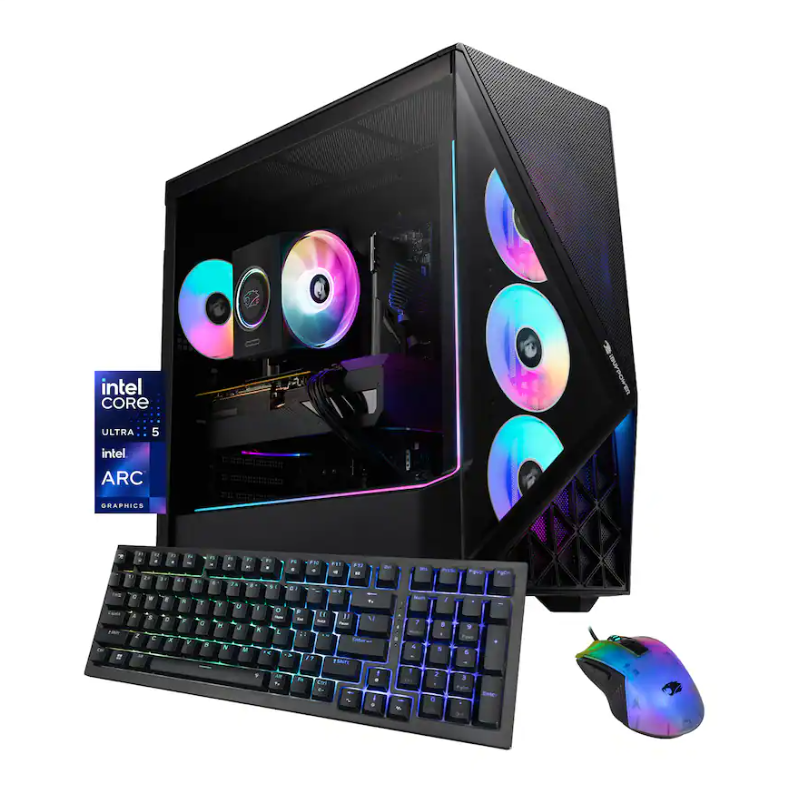
Best Buy has stepped onto the stage with a huge selection of deals in its seasonal Labor Day sales, with decent price cuts on computers and tech. A standout budget-friendly offering is the iBuypower Slate Gaming PC with Intel Arc B570 graphics at just $899. Much cheaper than a Steam Machine and a perfect starter gaming PC for 1080p gaming, this cheap gaming PC deal gives you $300 off its $1,199.99 list price.
iBuypower's Slate gaming PC comes with a 10-core, 10-thread Intel Core Ultra 5 225F processor, an Intel Arc B570 graphics card with 10GB of VRAM, 16GB of DDR5 memory, and a 1TB NVMe SSD for storage. This is a great combination of parts for a 1080p gaming rig, and at just $899, it defies the current economic climate when it comes to PC pricing.
Slate Gaming PC (Arc B570): was $1199.99 now $899 A bargain-budget gaming PC in today's economy. This frugal machine features an Intel Core Ultra 5 225F processor and an Intel Arc B570 graphics card with 10GB of VRAM. There's also 16GB of DDR5 memory and a 1TB NVMe SSD for storage. View Deal
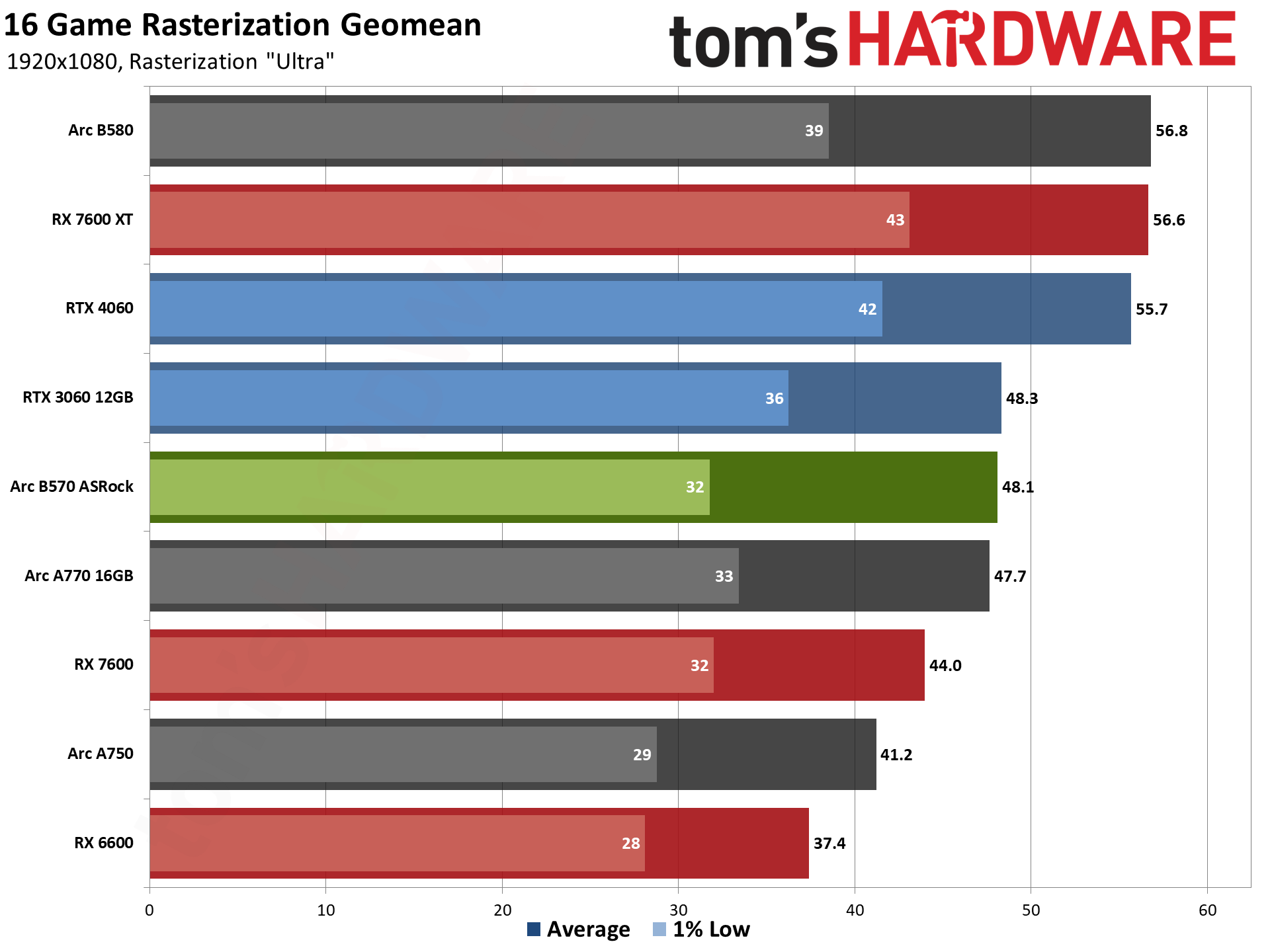
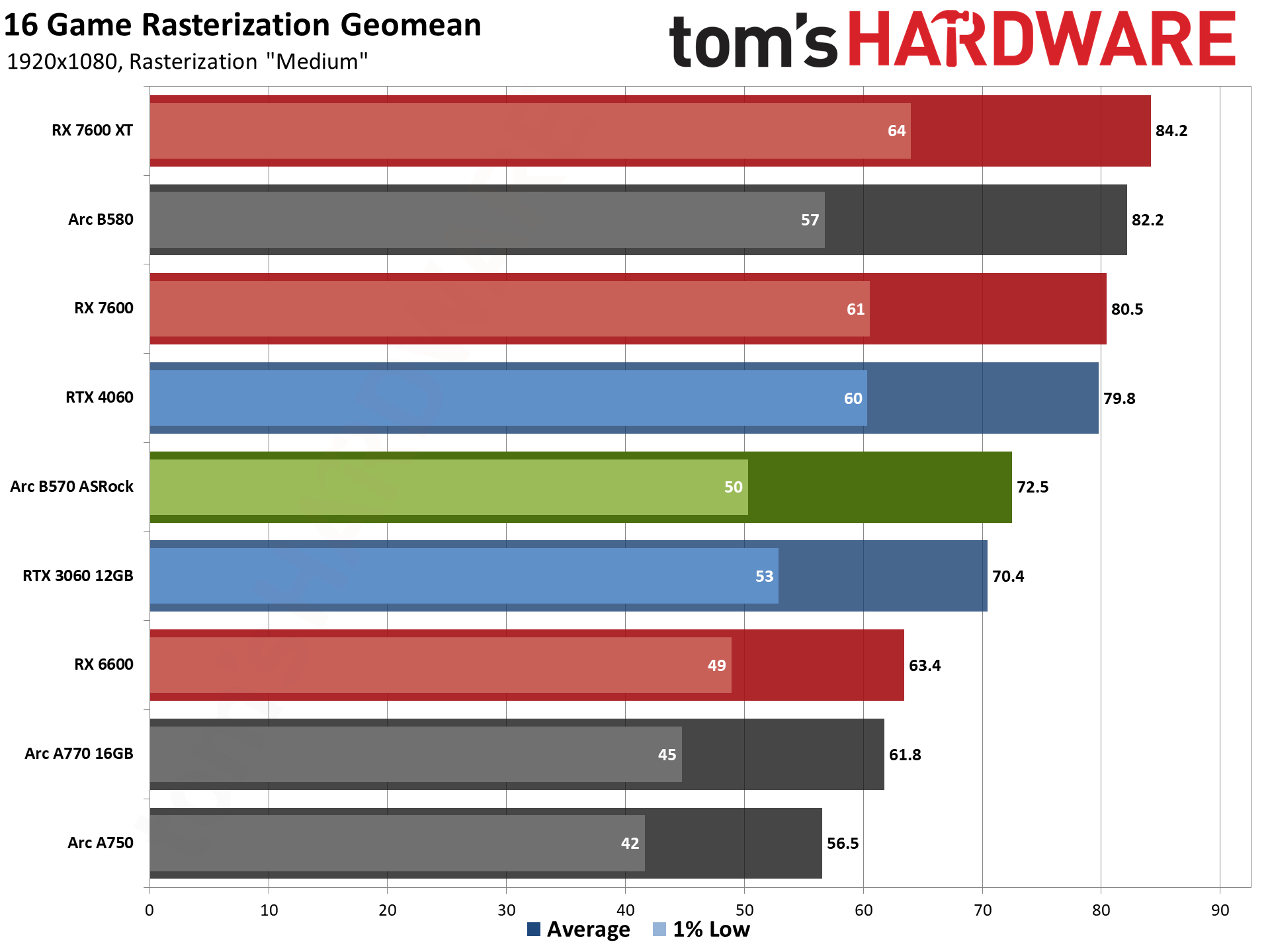
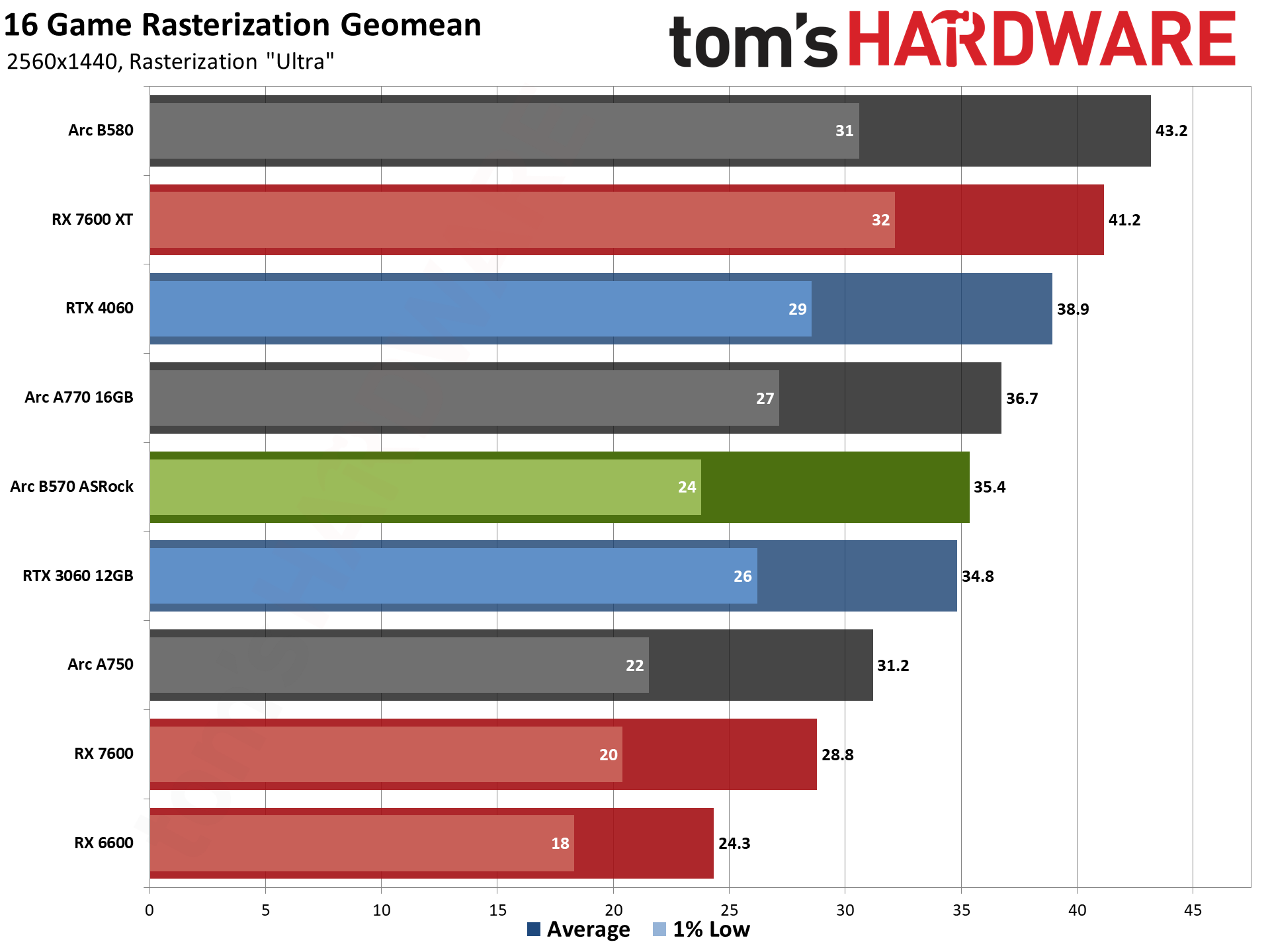
The heart of this PC is the Intel B570 graphics card, which comes with a generous amount of VRAM. For 1080p gaming, 10GB of VRAM is more than ample to handle the textures and shaders on high and ultra settings, but as with any other GPU, it will start to struggle in 1440p gaming when that VRAM gets swallowed up and starts using the CPU to compensate. The B570 is a budget graphics card, but it has come a long way since launching, thanks to driver optimizations and compatibility with more games.
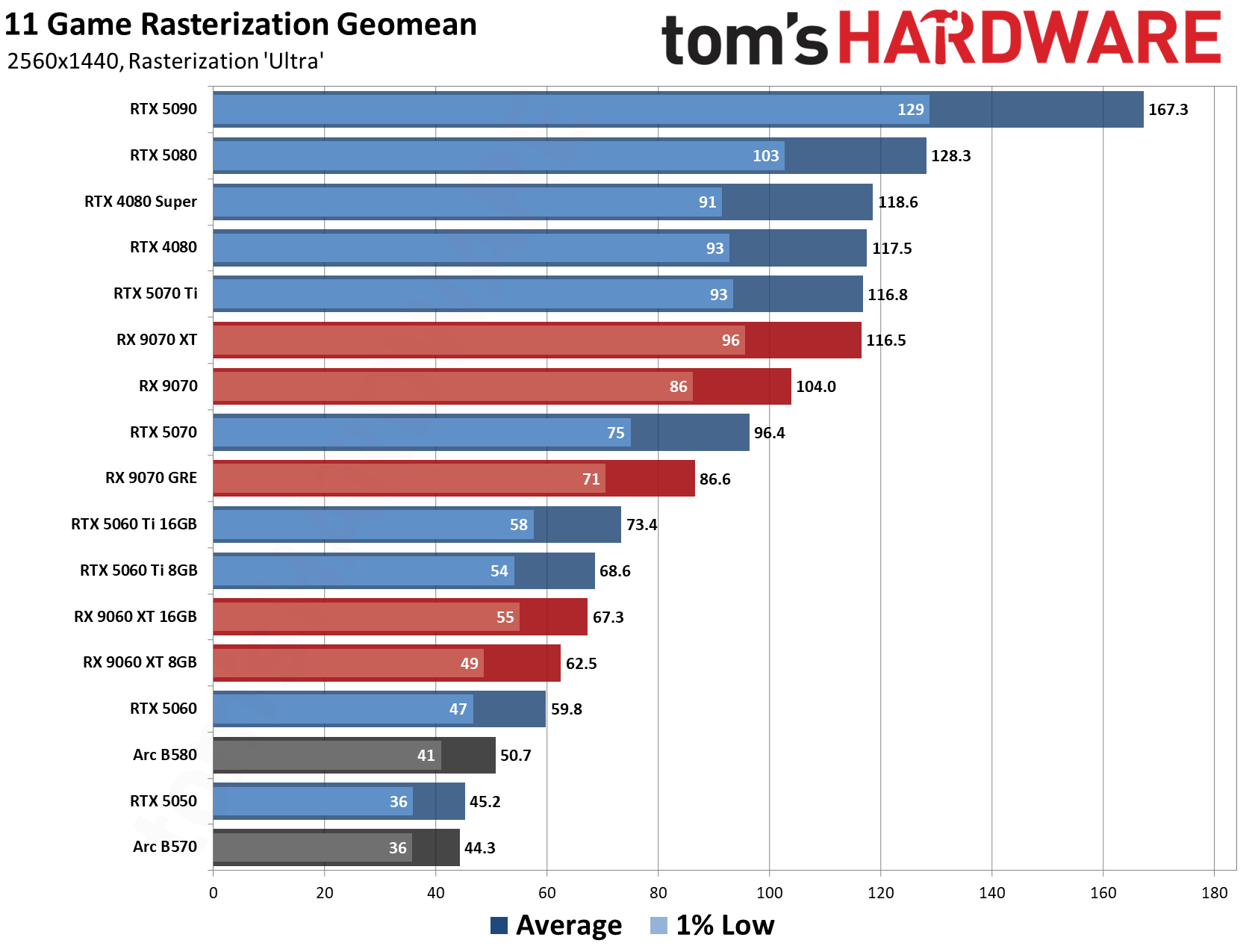
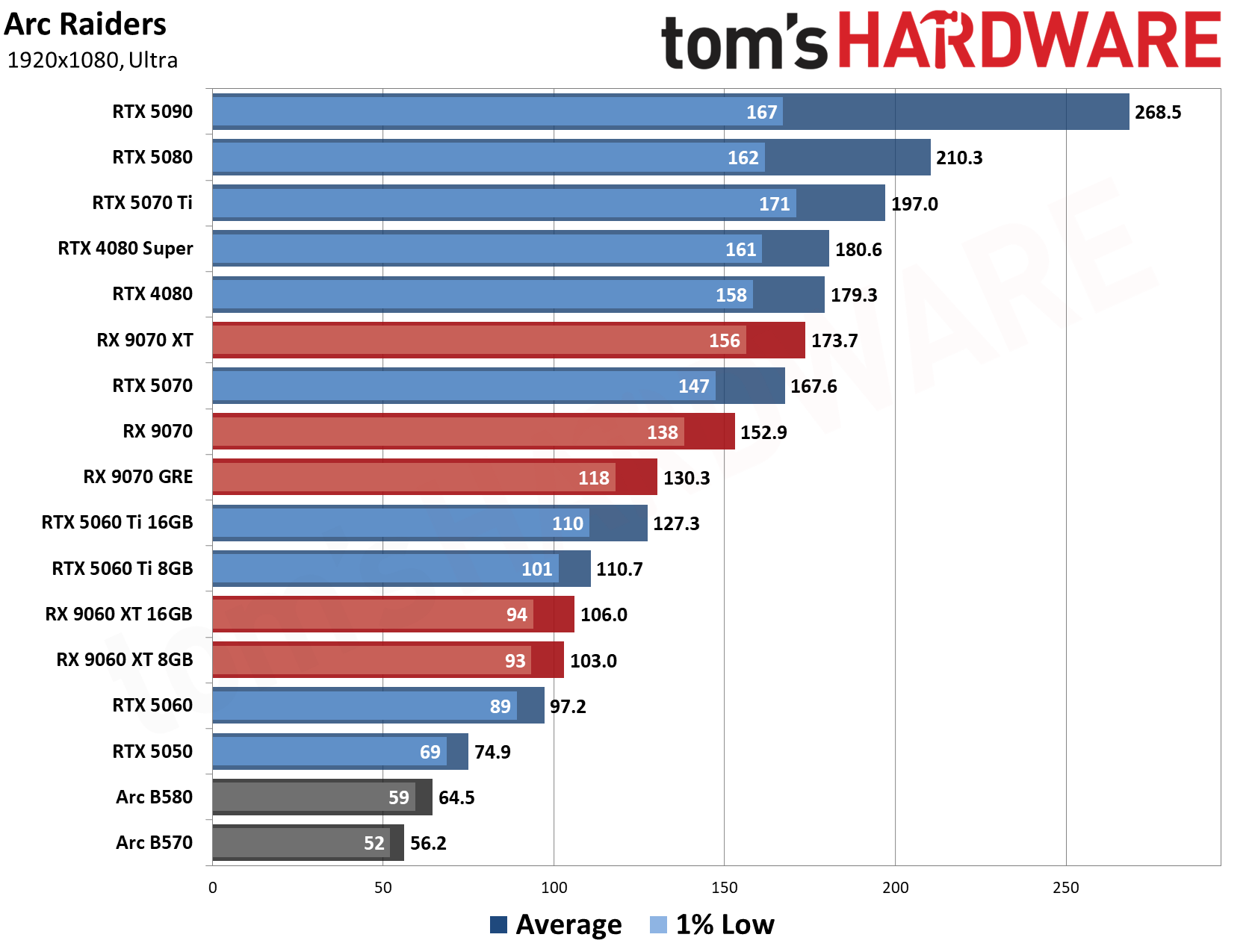
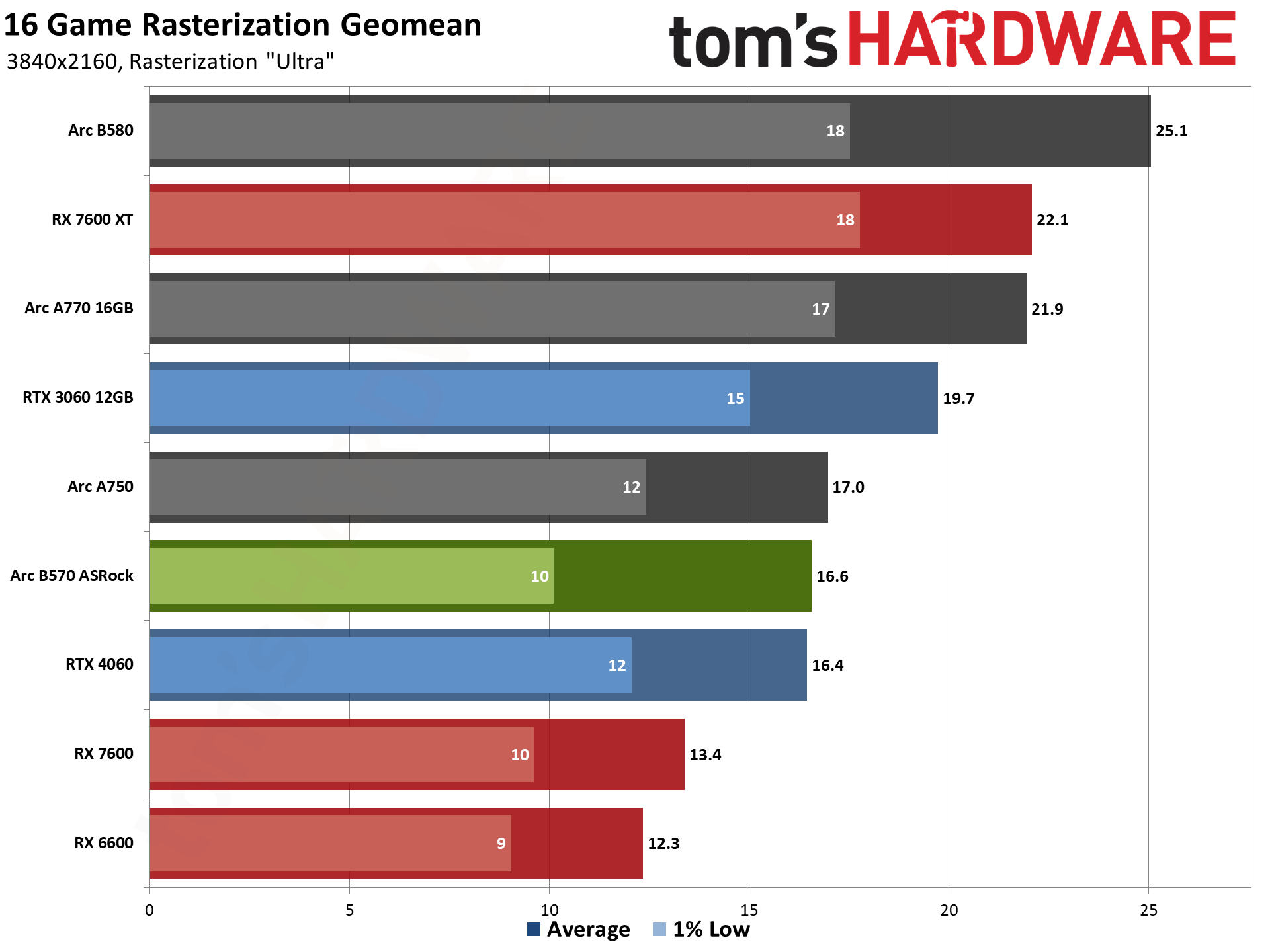
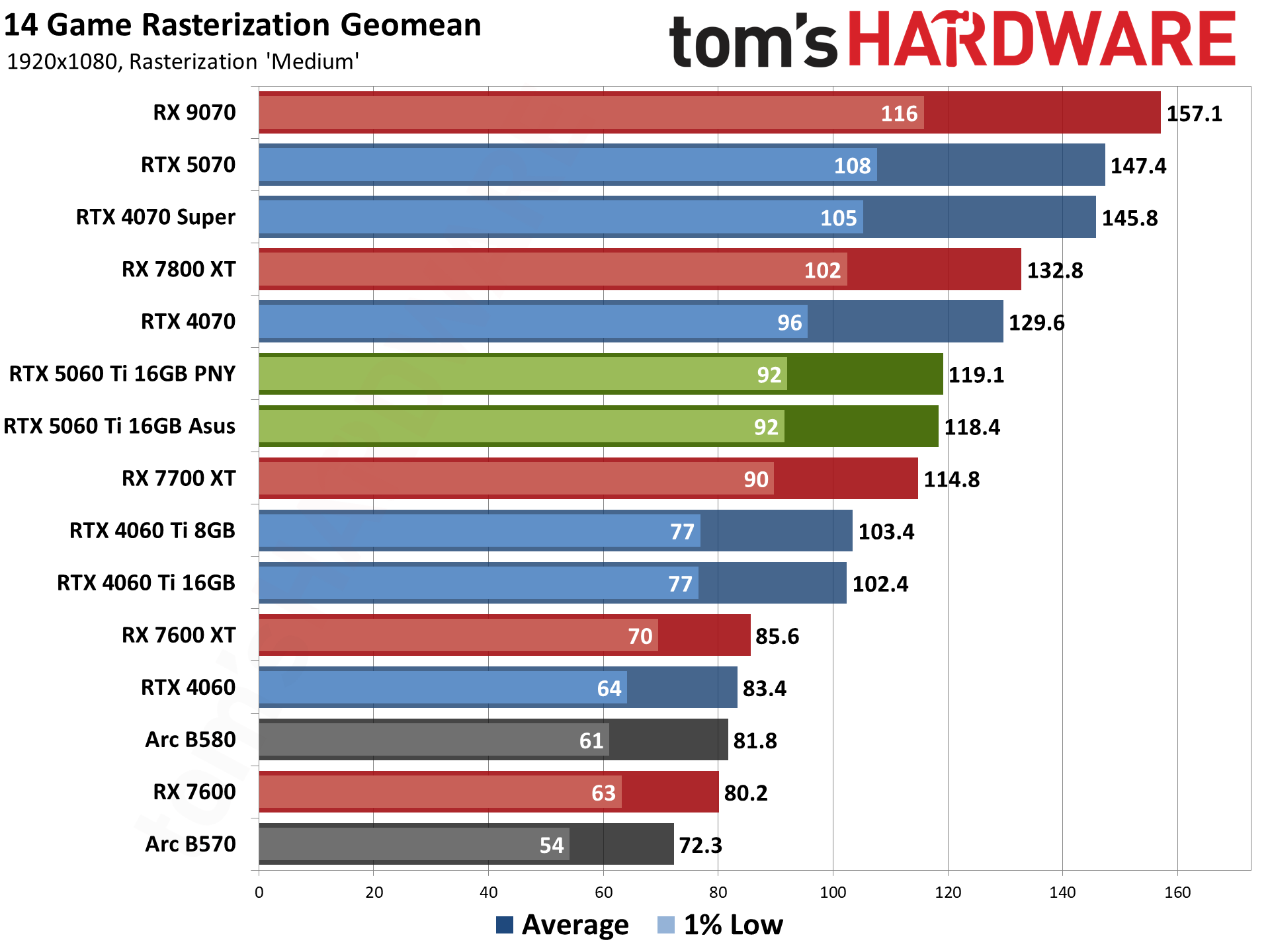
You can see in our below chart from our rasterization benchmarking game suite that the B570 sits in the middle of the pack, competing with the Nvidia RTX 3060 12GB. You can check out our Intel Arc B570 review for more detailed information on this GPU's performance, where we put it through its paces in our suite of benchmarking tests.
Buying a prebuilt gaming PC is currently much cheaper than trying to construct your own gaming PC, thanks to the skyrocketing price of memory and storage. PC builders are able to grab these parts much cheaper than normal consumers can and have managed to offset the price rises with their stocks of components. This, however, cannot last, so you're definitely better off grabbing something soon, before the inevitable increase in prices.
Prebuilt gaming PCs also come with the added bonus of an easier warranty situation. Should anything go wrong with your computer, the whole system is covered, and you don't have to troubleshoot individual parts and manufacturers for an RMA, either.
For just $899, this is a superb deal for a starter gaming PC if you're just getting into PC gaming, or feel like stepping away from the higher prices on game consoles and digital game prices. PC gaming is currently much cheaper for game purchases, too.
This gets you the best gaming CPU on the market, a mid-range GPU perfect for 1440p gaming, and ample RAM and storage in an economy where all of those commodities are increasingly hard to find. The 32GB of DDR5 RAM will cost you $400 alone, while a Gen 4 2TB SSD is around $250 minimum. The GPU in this build is also now $800, which means that on those three components alone, you'd be spending nearly $1,500. That's before you factor in the $464 CPU, accounting for nearly the entire price of this build before you've considered a motherboard, PSU, case, cooling, and the build cost.
The AMD Ryzen 7 9800X3D is the best gaming CPU on the market thanks to its 8-core, 16-thread power with boost clocks of up to 5.2 GHz. The standout feature is its 3D cache technology, which drastically improves fram rates, as you can see from our gaming benchmark data below.
Tom's HardwareTom's HardwareTom's Hardware
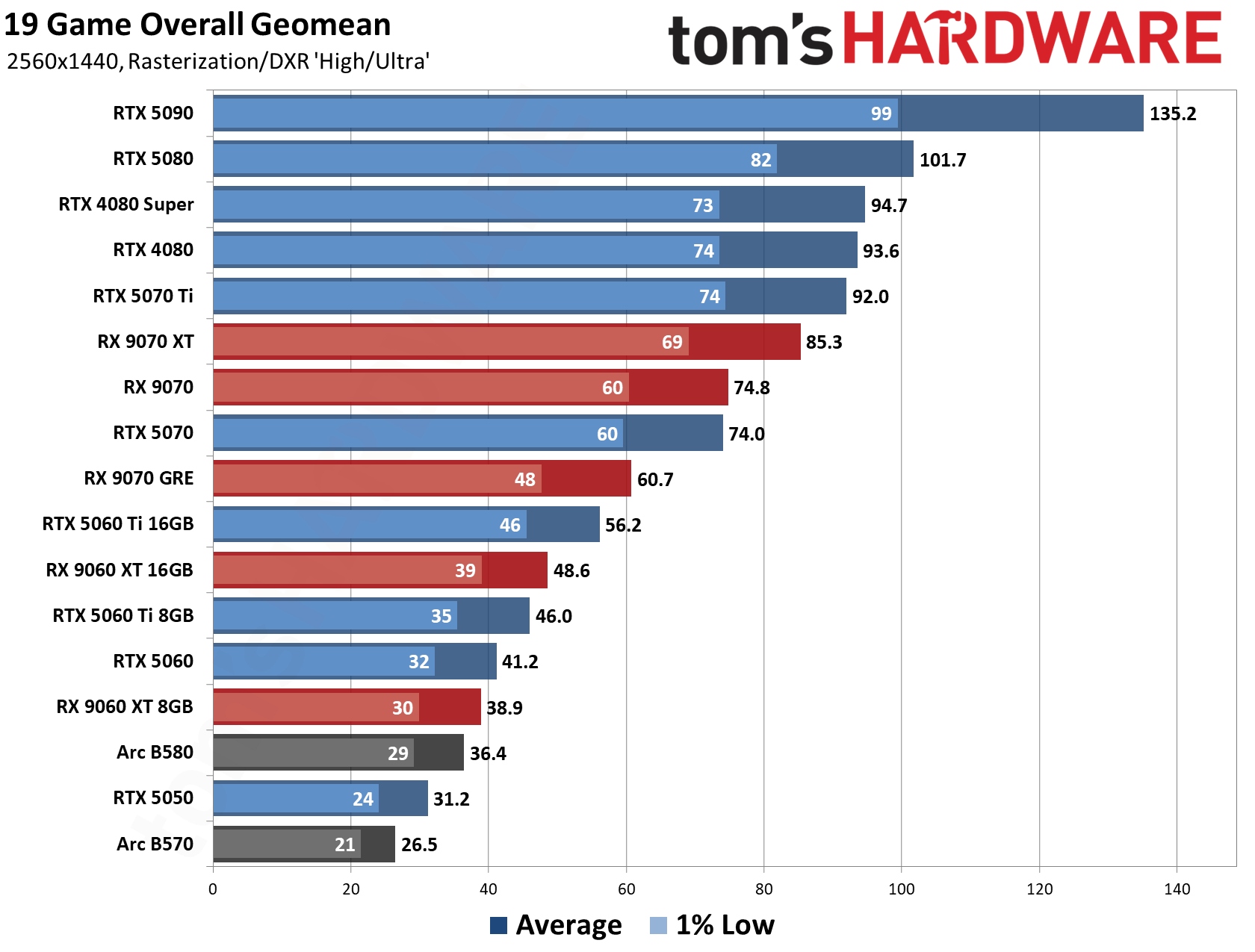
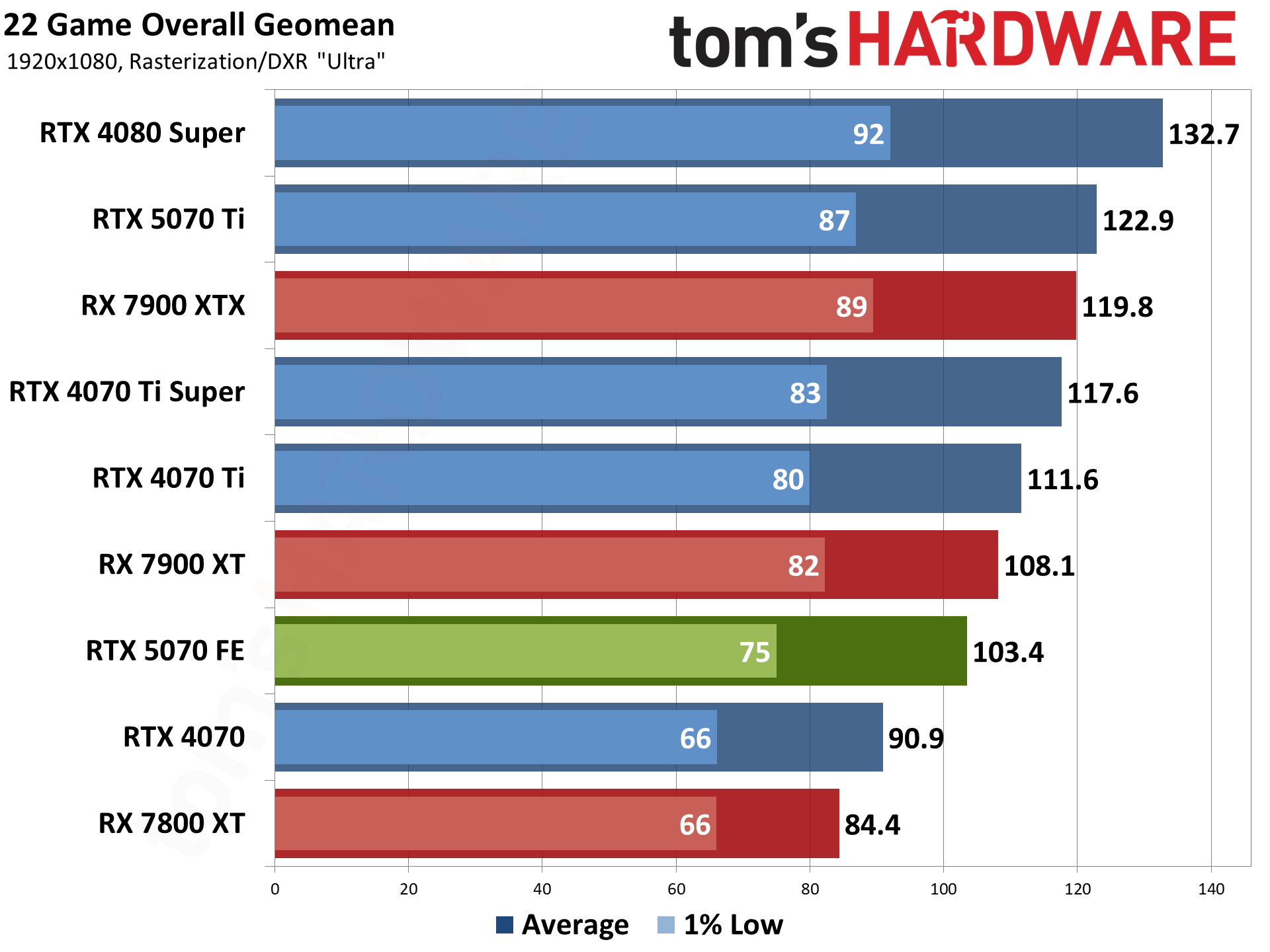
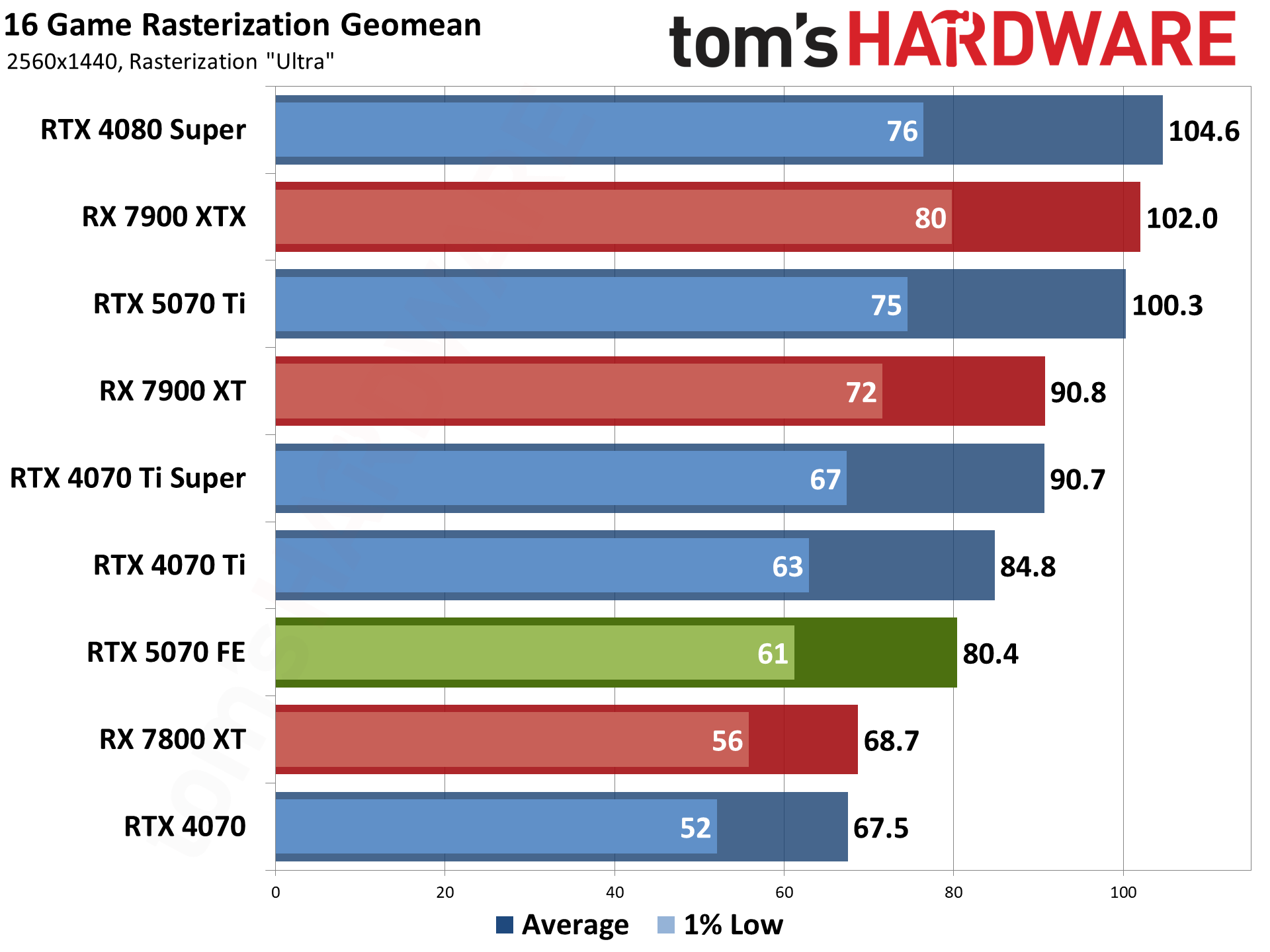
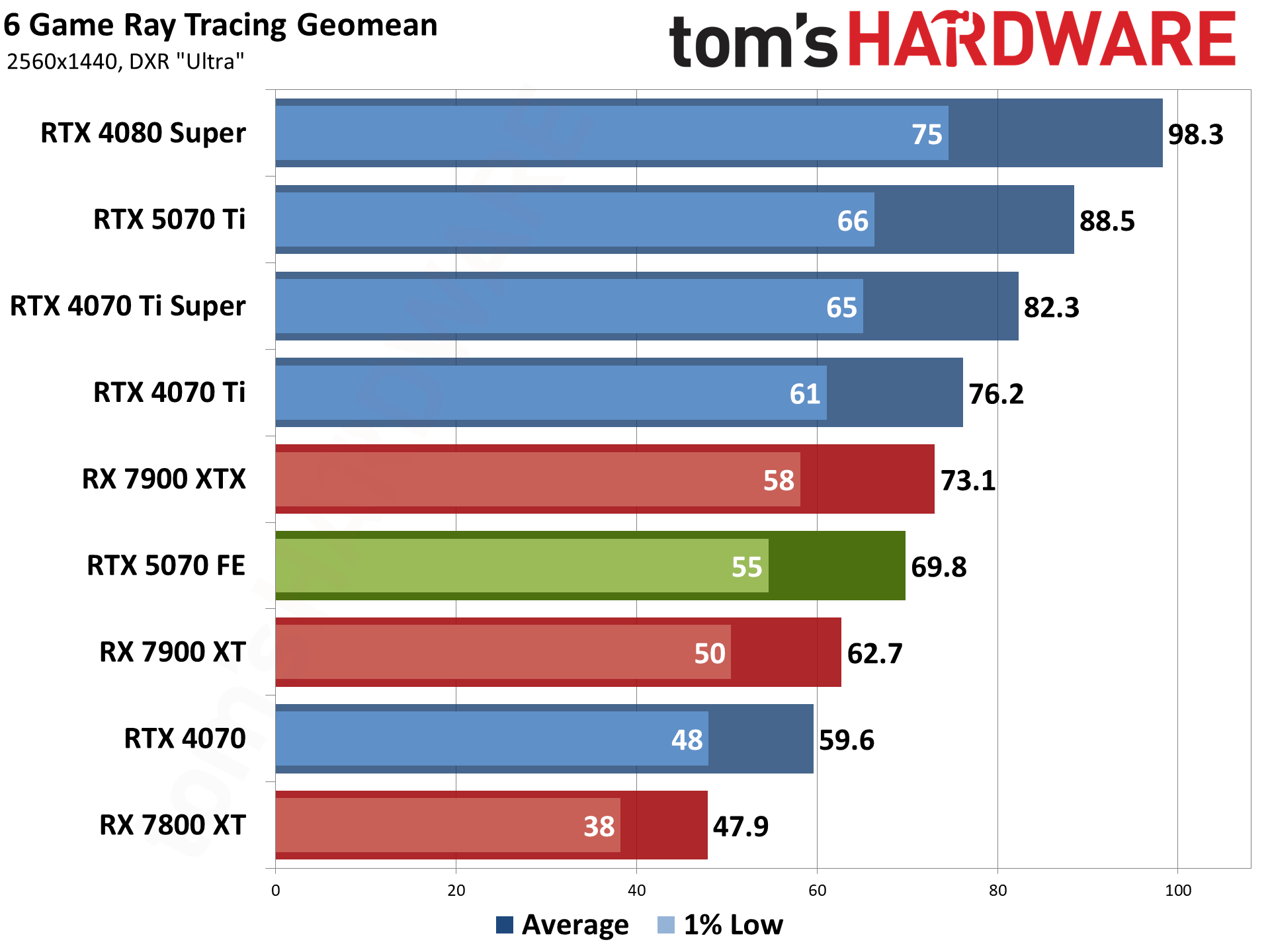
The RTX 5070 is an excellent pairing; with 12GB of VRAM, it's an ample card for 1440p gaming, or 4K at a push if you use Nvidia DLSS. As you can see, the 5070 averages 74 frames per second in our 19-game testing suite at 1440p.
The rest of this PC's specs are also pretty positive. 32GB of DDR5 RAM and 2TB of SSD Gen 4 storage are considered generous in today's market, so you've got enough RAM for multitasking and gaming as well as plenty of storage. Liquid cooling is more than enough for this processor, and the B850 motherboard will provide plenty of ports for connectivity as well as headroom for expansion.
Ultimately, the selling point of this PC is the price; given the current market cost of its components, you're saving a small fortune versus building a PC like this yourself. As mentioned, the $800 GPU, $464 CPU, $400 RAM, and $250 SSD make it a worthwhile purchase.
Thanks to a slightly older but no less capable processor, this is a bit of a sleeper deal that is really good value in the current market. As noted, the GPU alone now costs around $1,500 to buy. 32GB of DDR5 RAM is $400, so you've almost spent $1,900 on just two components, before you factor in the SSD, CPU, motherboard, cooler, PSU, and case.
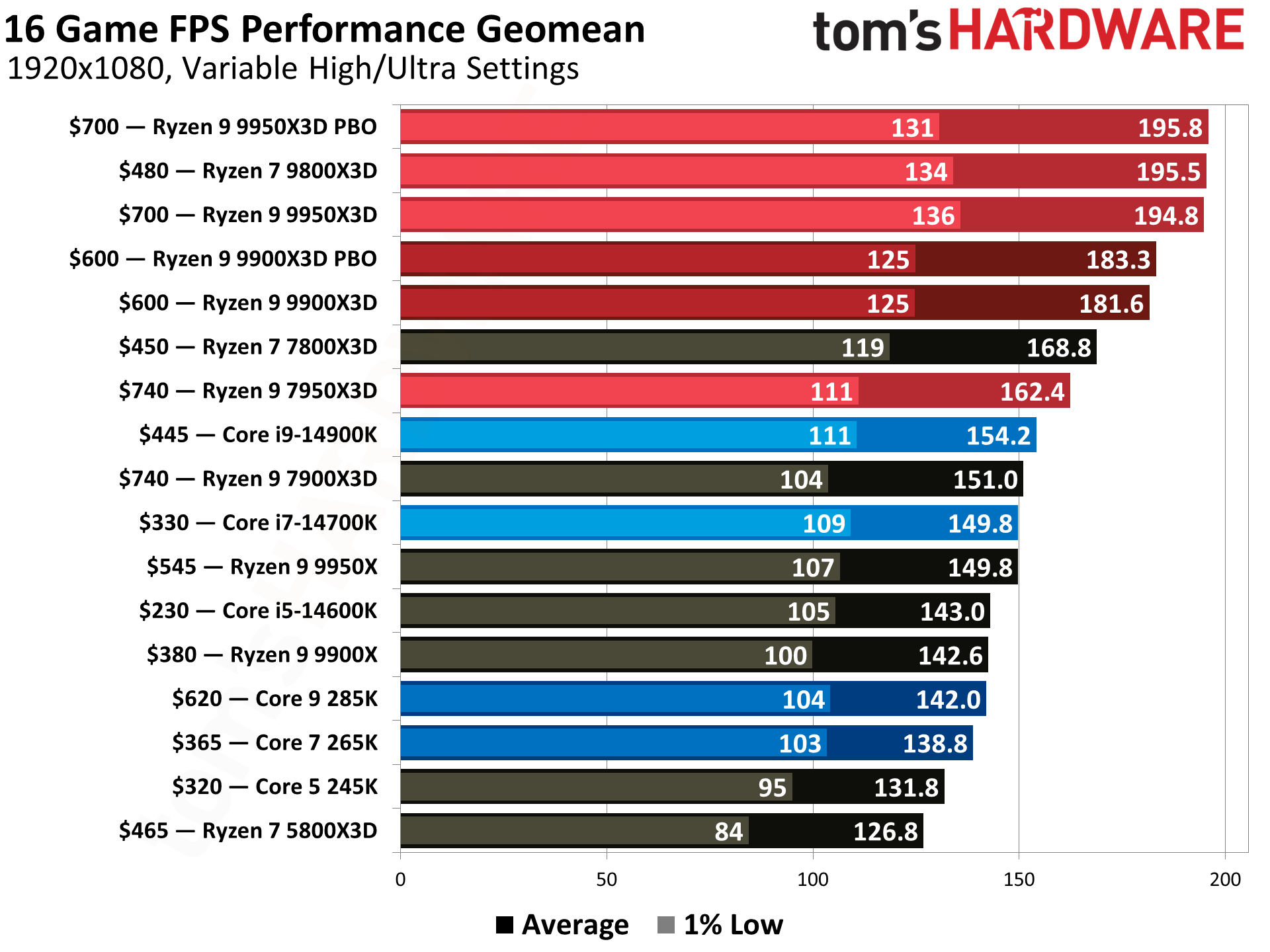
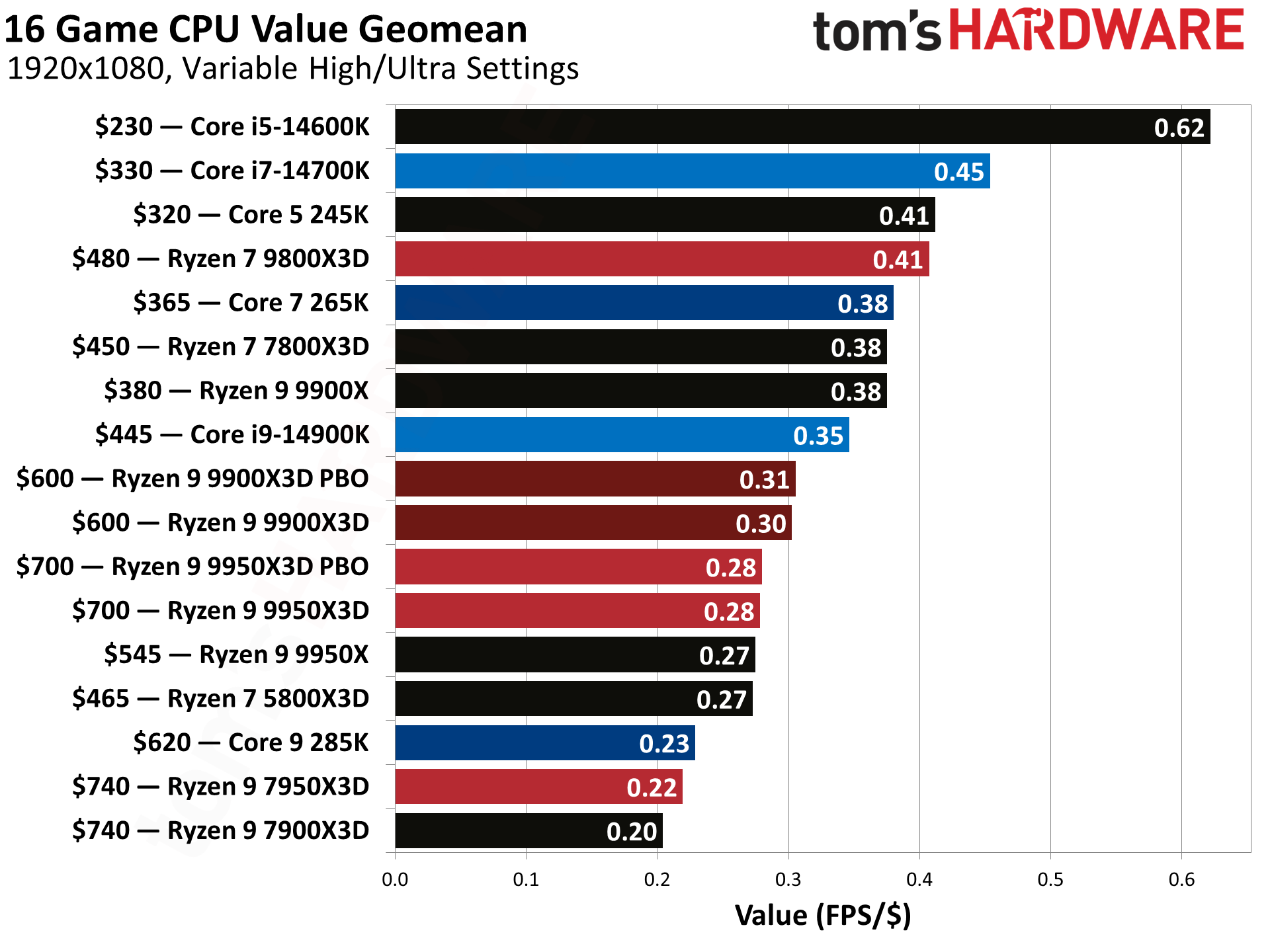
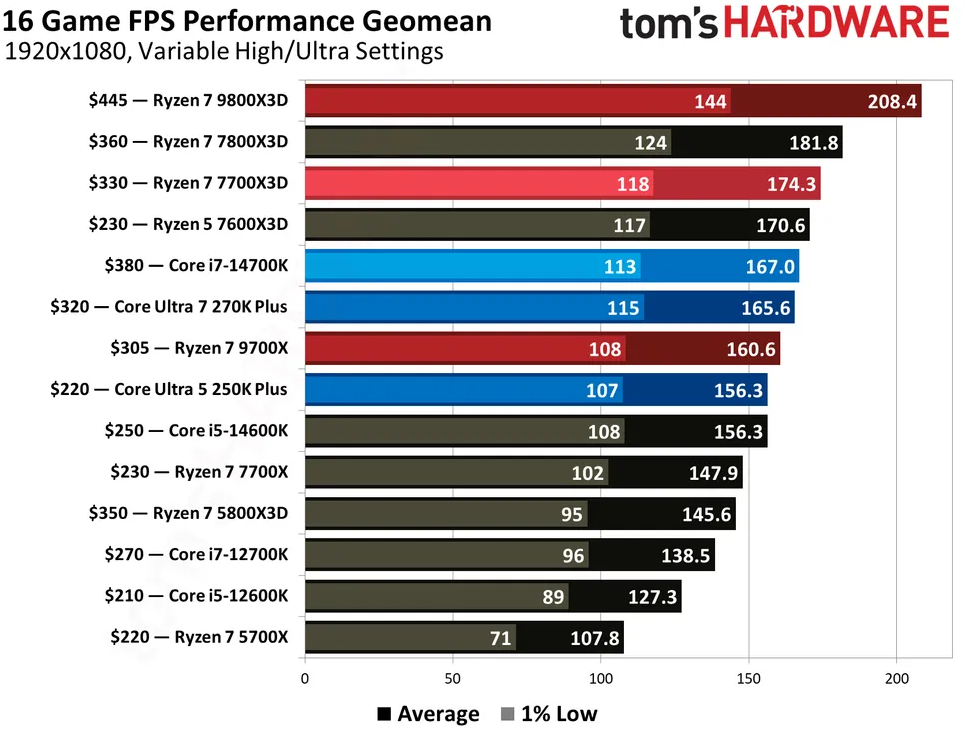
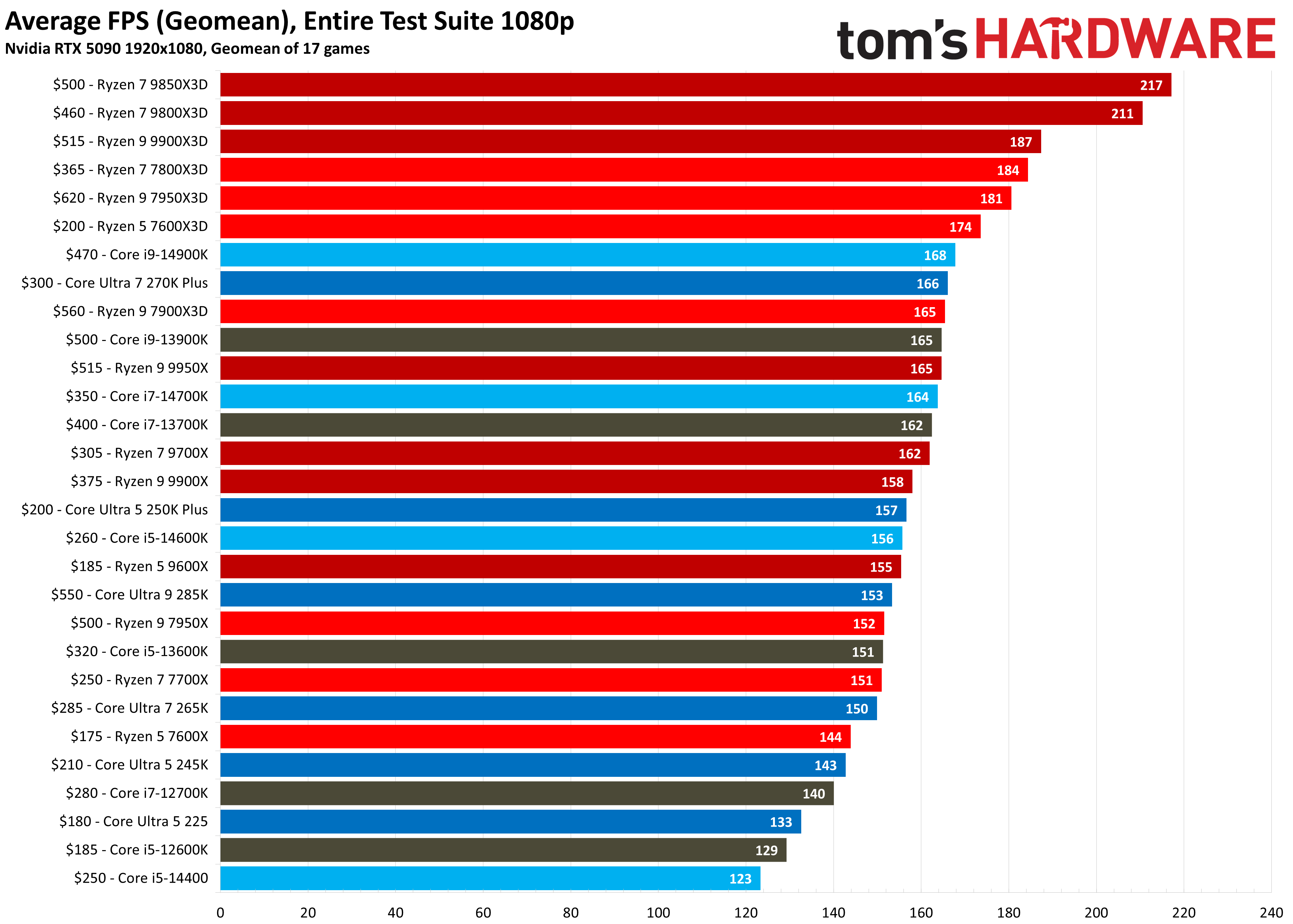
As you can see, this PC doesn't contain a benchmark-busting X3D CPU from AMD; however, the Core i7-14700F is a capable 20-core Raptor Lake Refresh. It features eight performance cores and 12 efficiency cores, with boost speeds of up to 5.4GHz. Despite being a couple of years old, it still averages 150 frames per second in our 16-game testing suite at 1080p, and, thanks to its price, it offers the best value (FPS/$) of any CPU we've tested.
Tom's HardwareTom's HardwareTom's Hardware
The RTX 5080 is the headline component here, as the second-best graphics card on the market, only behind the RTX 5090, which will cost you around $4,800 these days.
With 10,752 CUDA cores and 16GB of VRAM, this will chew through any title, even providing a solid base for 4K gaming, not to mention access to Nvidia's DLSS technology for even more frames.
The RTX 5080 makes the raw power of this gaming PC extremely appealing, and more than makes up for a slightly older CPU, a compromise worth taking in the current economy.
Other specs include a 1TB PCIe 4.0 SSD, 32GB of DDR5 6000 RAM, Wi-Fi 6E, Bluetooth, an 850W PSU, and liquid cooling.
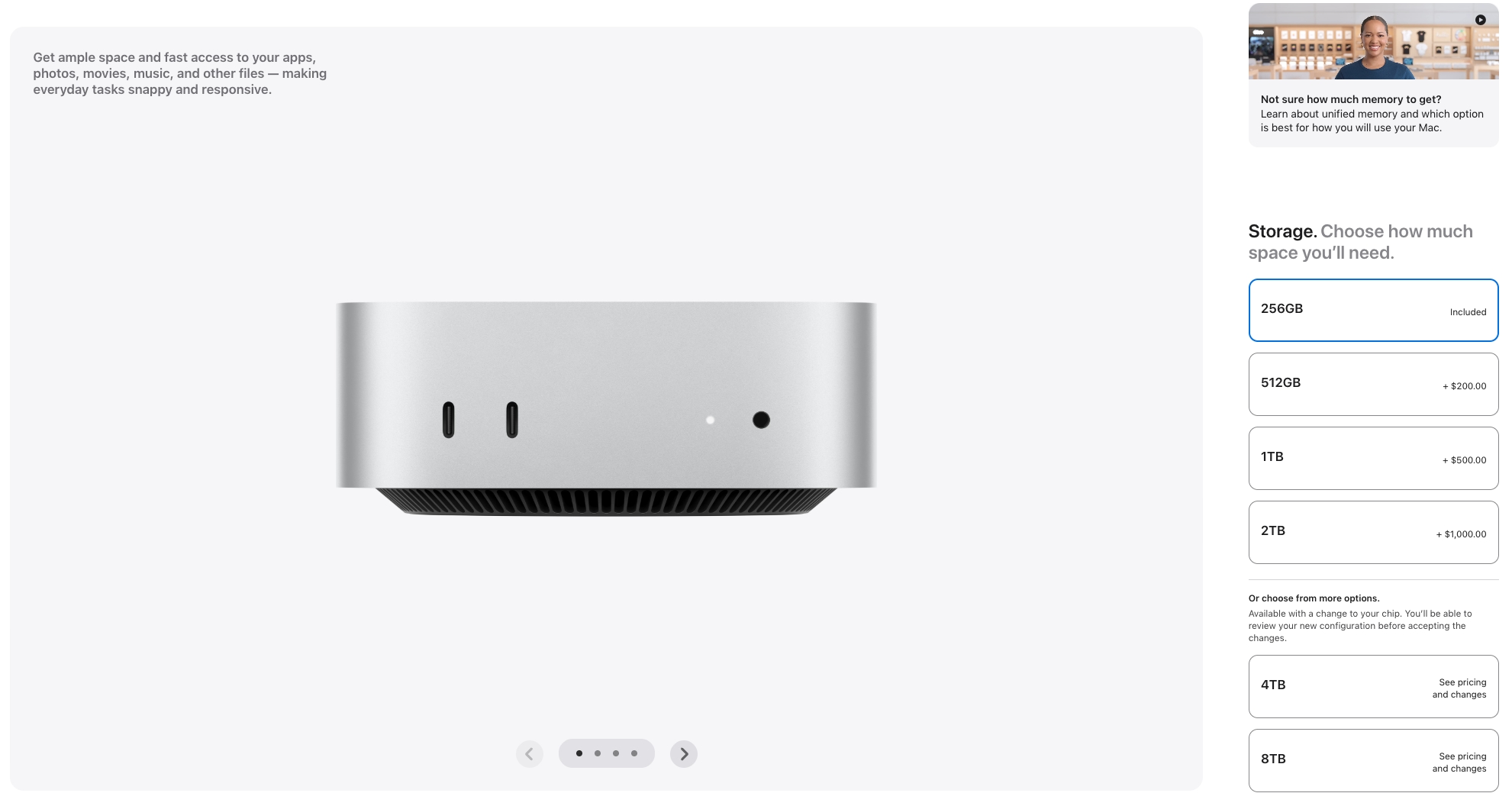
The new M6 Mac mini is now priced at $899, a $100 increase over the already inflated $799 price for the M5 version on June 25th. To put those increases in perspective, the M4 Mac mini had a base price of $599 when it originally launched in October 2024.
The new $799 base price is an even more bitter pill to swallow, given that the headless computer still comes with only 256GB of base SSD storage. One would think that the $300 price increase over the course of two months would at least lead to a doubling of the base storage, but the ongoing memory/storage shortage makes that wish unthinkable; at least in Apple’s eyes.
If you want to see more eye-watering pricing, take a look at the hardware upgrade costs for the base Mac mini. The system comes standard with 16GB of unified memory, but an extra 8GB (taking the total to 24GB) costs a whopping $200. If you want 32GB (the maximum allotment for the M6 chip), that’ll cost you an extra $400.
Things don’t look much better on the storage side, with an upgrade from 256GB to 512GB costing $200. The 1TB and 2TB storage options cost $500 and $1,000, respectively. Apple’s value-leader Mac mini is now in uncharted territory. A maxed-out Mac mini (M6, 32GB, 2TB) costs $2,229.
Apple's base Mac mini gets a price hike and more expensive storage upgrades. (Image credit: Apple)
Even the M5 Pro version of the Mac mini couldn’t escape the AI tax, as the base configuration now costs $1,699, up from $1,599 for the M4 Pro version (June 25 pricing) and a far cry from the $1,399 price of the previous generation earlier in the year. That price gets you a 15-core GPU and a 16-core GPU, while stepping up to the uprated 18-core CPU/20-core GPU version adds $200. Memory upgrades are deflating to the psyche, as upgrading from 24GB to 48GB adds $600, while the 64GB option is $1,000.
Storage options are absolutely mind-boggling: a 1TB SSD requires an additional $300 outlay, while the max 8TB SSD configuration is listed at $3,800. The range-topping configuration (M5 Pro, 18-core CPU/20-core GPU, 64GB, 8TB) costs $6,699.
If there’s any consolation, the new Mac Studio holds the line on pricing ($2,499) in its base configuration (18-core CPU/32-core GPU, 36GB, 512GB). The price stasis is somewhat surprising given the hardware upgrades, including a new M5 Max SoC and PCIe Gen 6 SSD. However, upgrades are pricey, with the 18-core GPU/40-core GPU variant of the M5 Max adding $300 to your bill. The upgraded SoC is the only way to unlock additional memory options (48GB, 64GB, 128GB).
Stepping up the Mac Studio with M5 Ultra more than doubles the base, entry price of the M5 Max config at $5,499. This gets you a 30-core CPU and 64-core GPU, while the upgraded 36-core CPU/80-core GPU is a $1,300 option. 96GB of RAM comes standard, while 256GB is a $4,000 upcharge. SSD options are equally expensive: 2TB costs $500, and 16TB costs $7,500.
No matter which way you slice it, those firmly entrenched in the Apple hardware ecosystem are paying a heavy price for memory/storage shortages. Apple customers are doubly affected, as the company’s traditionally outrageously priced memory and storage upgrades have become even more expensive, putting Apple’s previously value-driven models like the Mac mini out of reach of bargain shoppers.
For contrast, the cheapest available RTX 5090 GPU that you can buy, in stock, from a reputable retailer costs $4,829 right now. You're spending $30 less for the entire rig here, including 64GB of DDR5 RAM and a 2TB SSD for a fully spec'd, fully powerful gaming PC that'll handle high-end 4K gaming with good frame rates. Trying to build a comparable PC on your own would set you back thousands of dollars more at current market rates: you simply can't beat this deal right now.
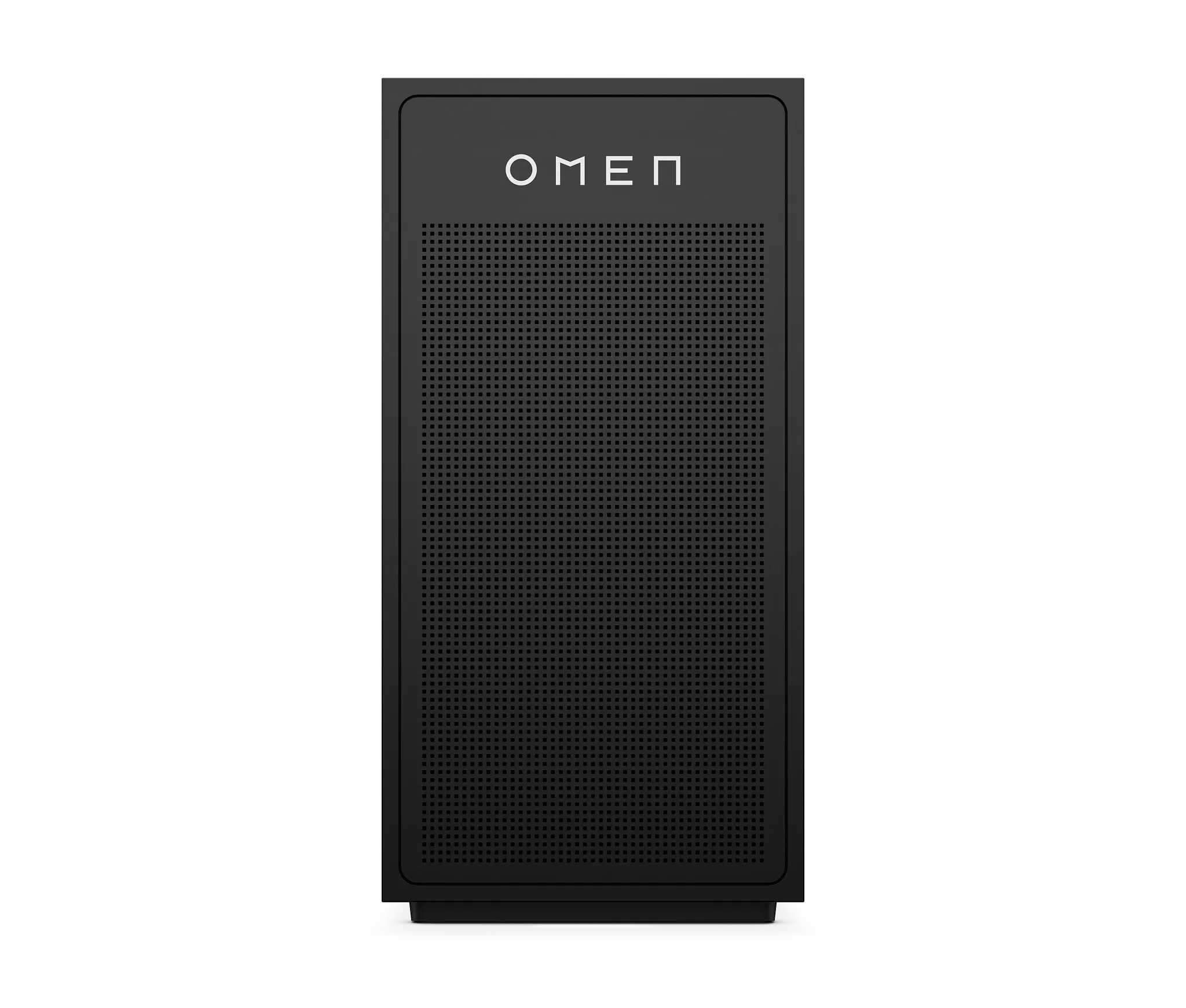
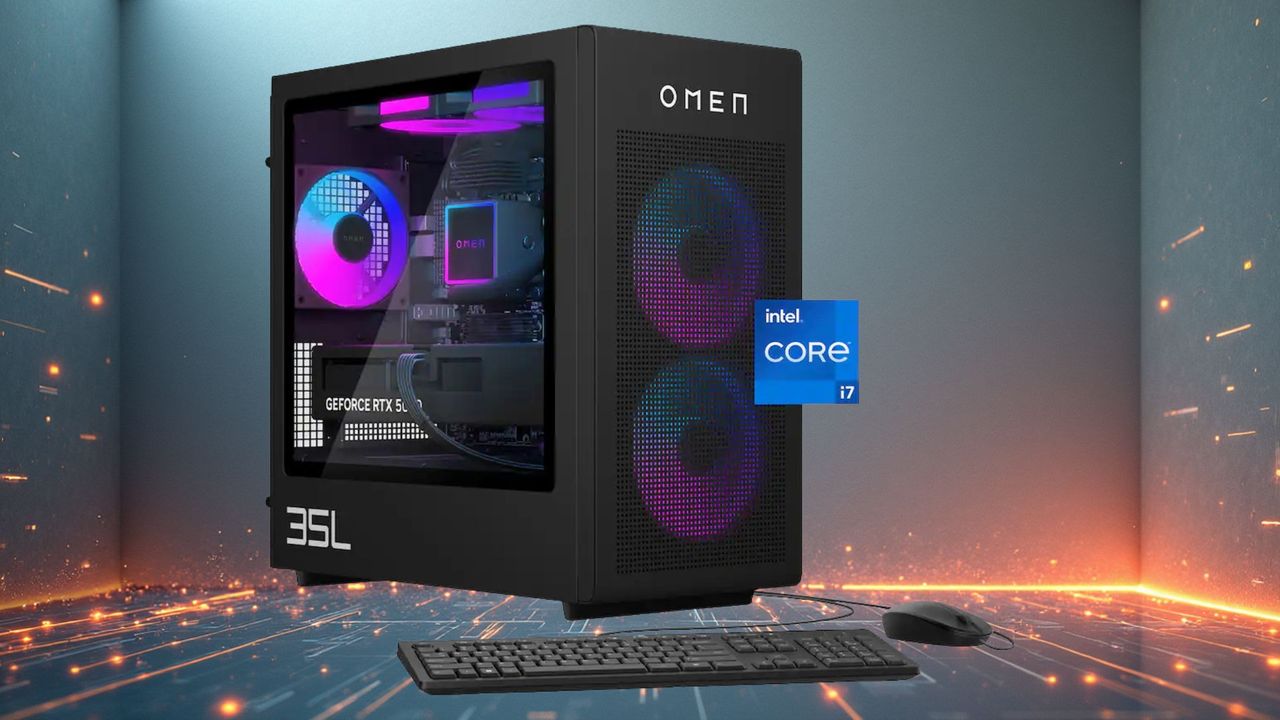
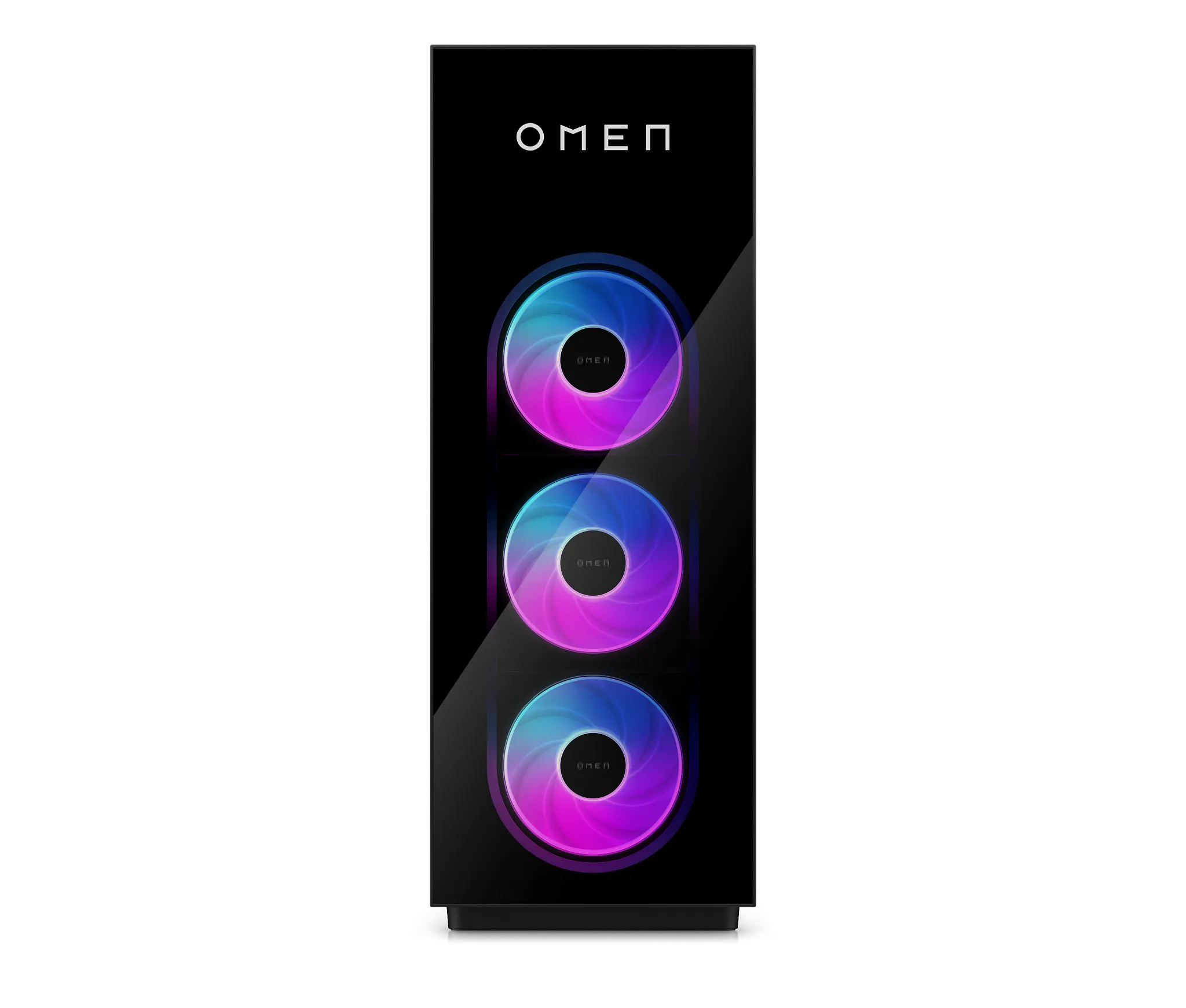
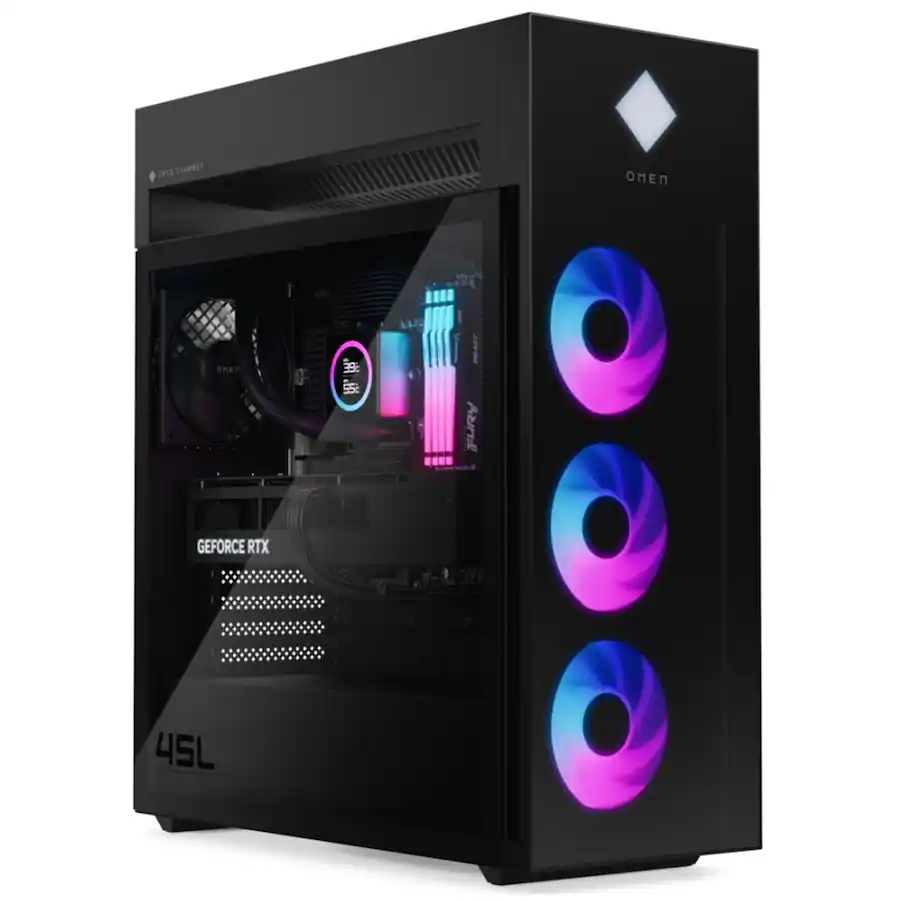
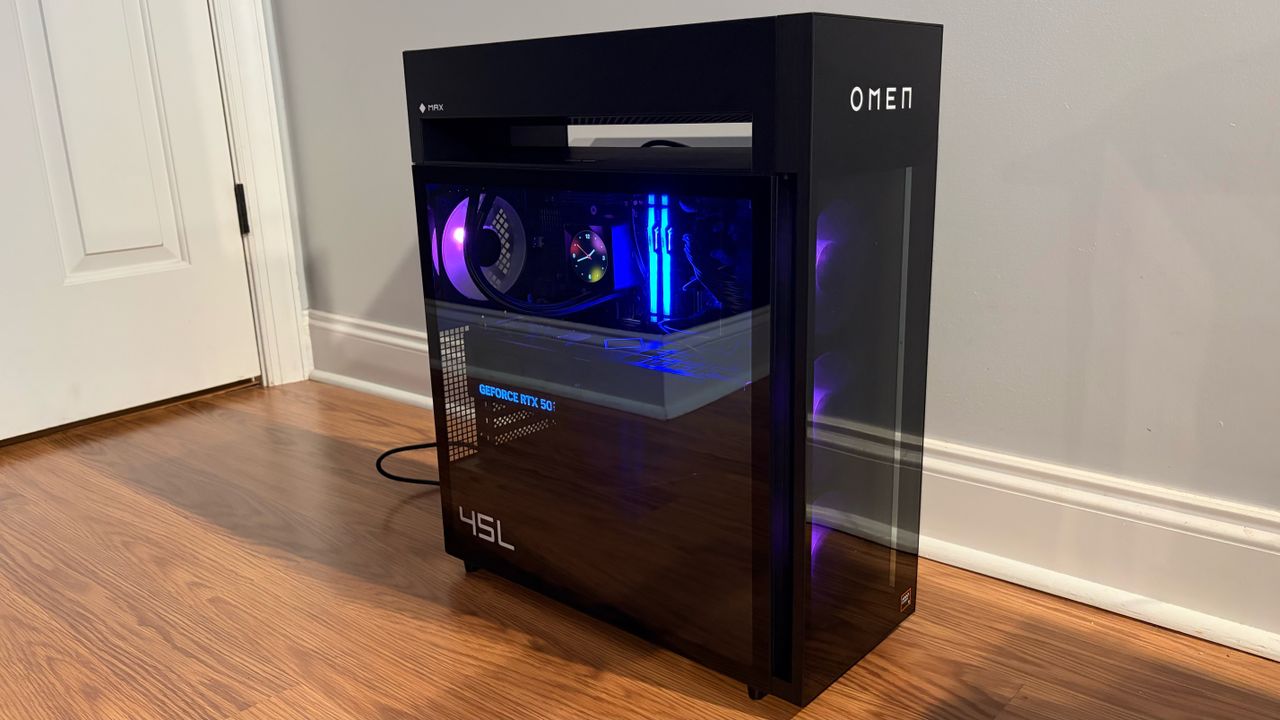
Price aside, this isn't a budget build, but a machine made with serious gaming in mind. The HP Omen Max 45L is one of HP's flagship builds and, as our HP Omen Max 45L review shows, it's a seriously high-quality one. The case it ships with is huge, with three 120mm fans at the front. The model we reviewed had slightly different specs, but the design matches up completely.
A massive $2,200 saving is available right now on this HP Omen Max 45L gaming PC, fitted with an RTX 5090, Core Ultra 9 285K, 64GB of RAM, and 2TB of SSD storage.View Deal
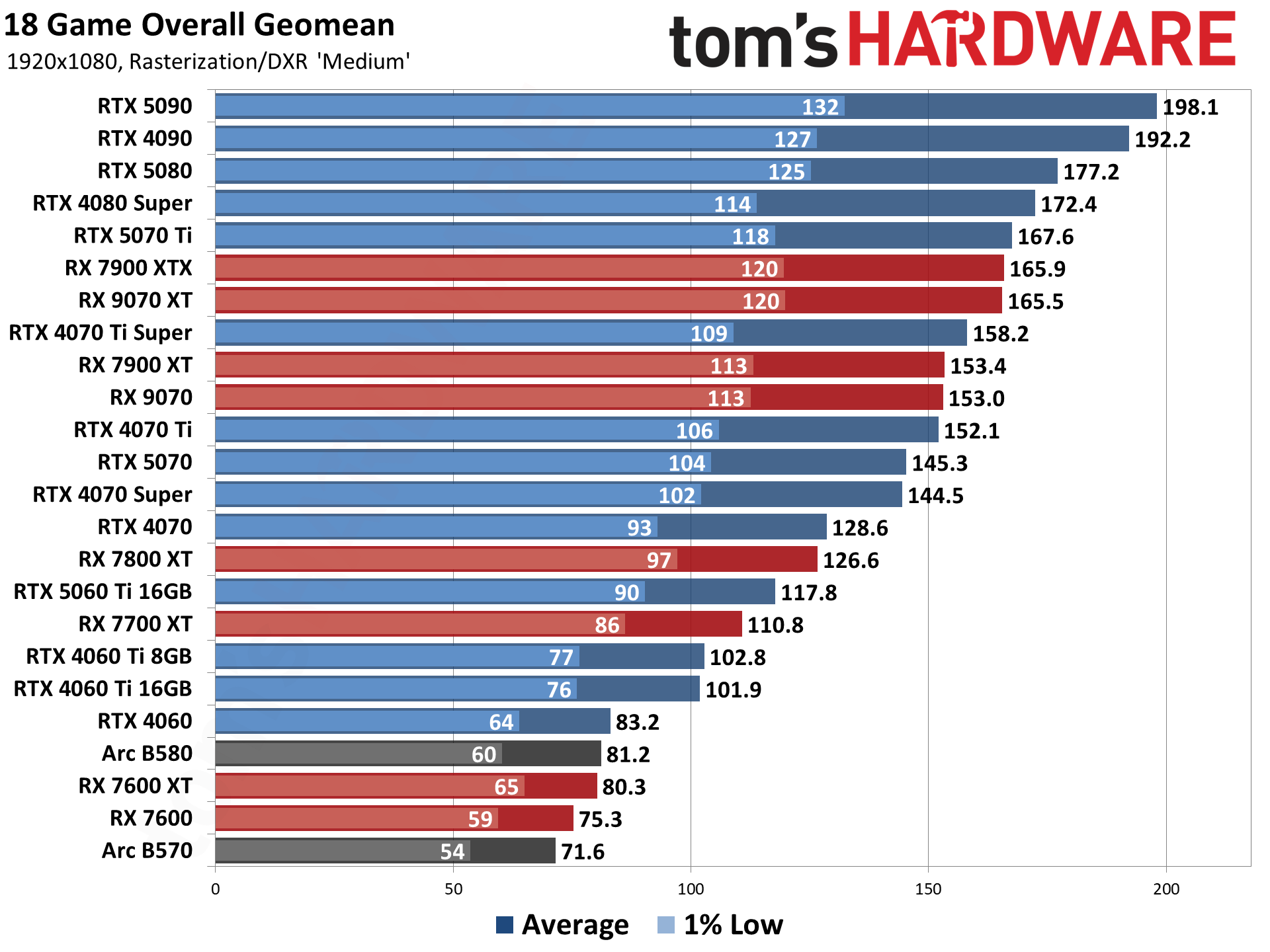
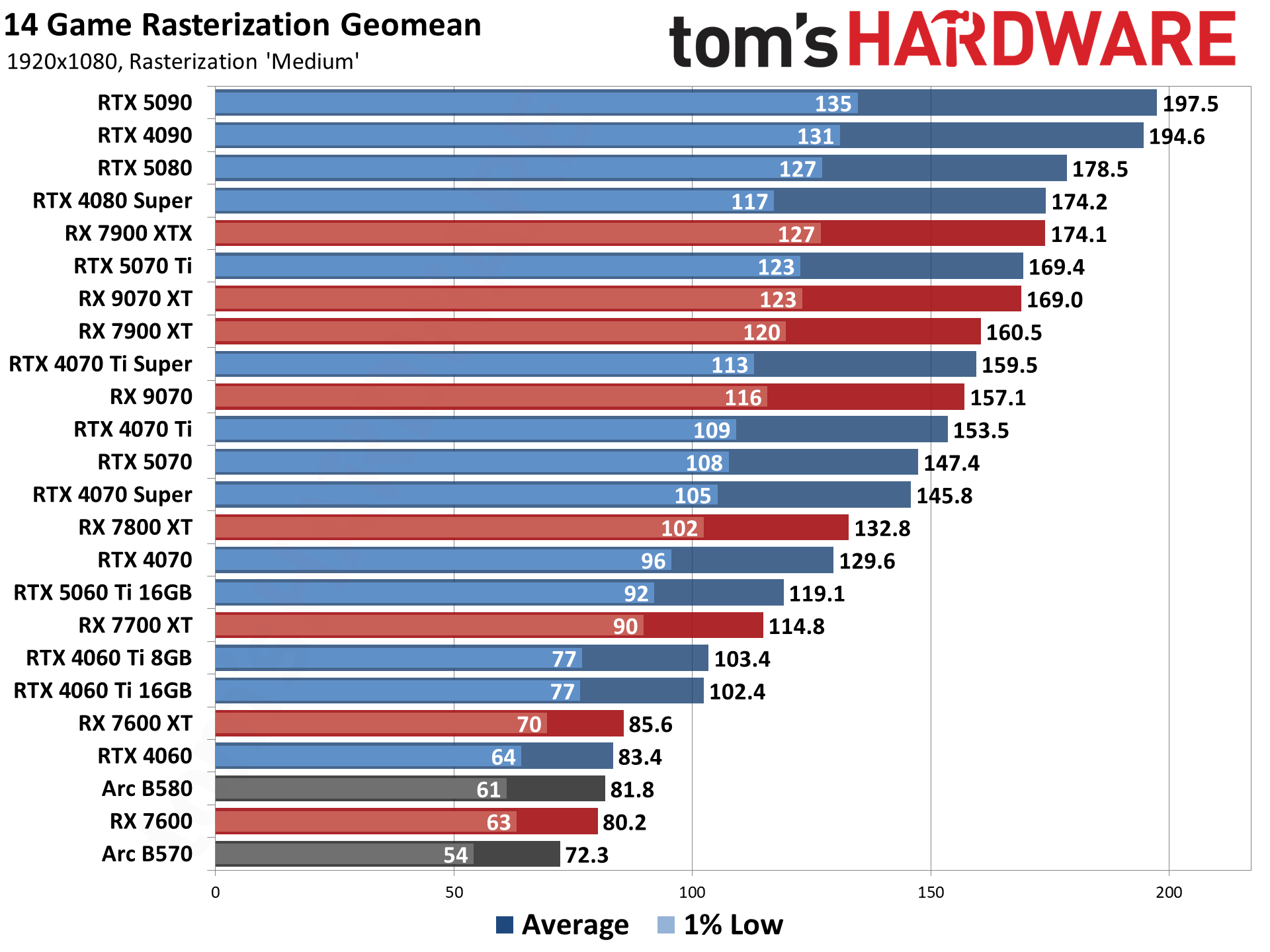
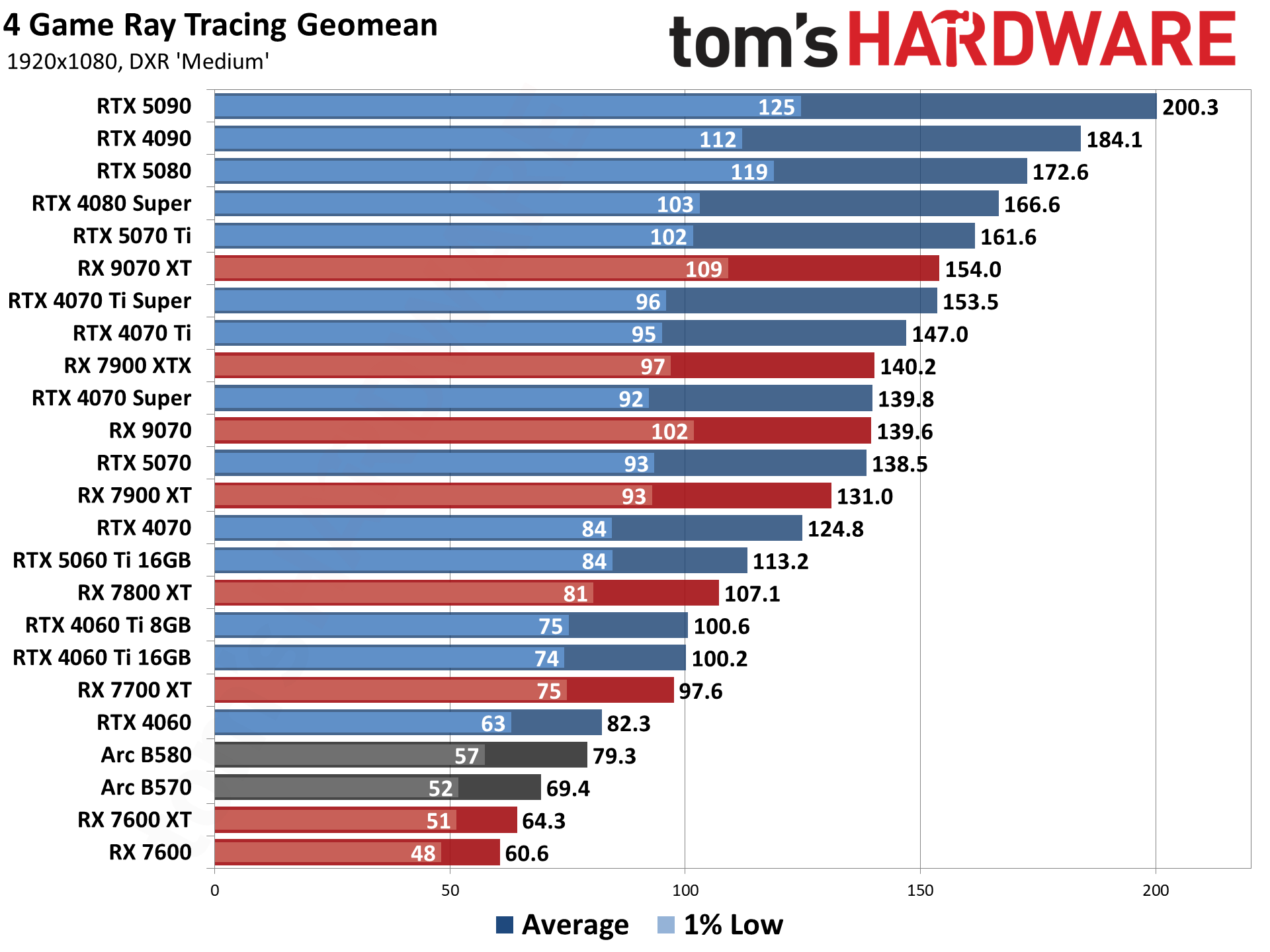
While the hefty RAM and SSD storage are great for gamers, it's the graphics card that you're going to be wowed by. Our GPU benchmark data below confirms that the RTX 5090 is the best consumer graphics card you can buy. No other consumer GPU is able to match it. The RTX 5080 is its next current-gen rival, but the RTX 5090 has more than double its CUDA count (hitting 21,760) and has a massive 32GB of GDDR7 VRAM, using a 512-bit memory bus with bandwidth speeds of up to 1,792 GB/s.
Tom's HardwareTom's HardwareTom's Hardware
The CPU in this machine is the Intel Core 9 Ultra 285K. This is a 24-core CPU, shipping with eight performance cores, which are typically best for the high-performance gaming you'll want to perform on this machine. You also get 16 additional efficient cores for multi-threaded tasks. The 285K is a fully unlocked and overclockable CPU, and the performance cores come with a standard clock speed of 3.7 GHz, which will boost up to 5.7 GHz.
Intel Arrow Lake CPUs like the 285K didn't really excite for gaming when they launched, trailing behind AMD powerhouses like the 9800X3D. That isn't a huge problem here, though, as the raw performance offered by the RTX 5090 is a significant counterweight against any deficiencies in the 285K, and will easily offset and heavily compensate for its shortcomings here. It also helps that updates since launch have improved the 285K's gaming performance to close some of the gap.
For gaming, thanks to the RTX 5090, you can expect to manage high frame rates at 4K and with ray tracing enabled using Ultra graphics presets. Nvidia DLSS 4 support means that, if you ever did hit a performance issue, multi-frame generation can give you a frame rate lift, using AI to boost frame rates in any intensive (or more likely, poorly optimized) games.
The 64GB of Kingston Fury DDR5 RAM is a good uplift to help keep performance high, too, and is worth around $700 in today's market. The RAM offers speeds of 5,600 MT/s and is split across four 16GB modules. You're also getting a 2TB NVMe M.2 SSD with this PC, offering Gen 4 speeds, which should give you a good amount of space to install a couple of big AAA games.
All in all, though, it's the price that makes this HP pre-built a must-buy for gamers. The RTX 5090 itself costs more than this PC does, and that's before you consider that you're getting 64GB of DDR5 RAM and 2TB of SSD storage in a world where AI has forced memory prices to skyrocket.
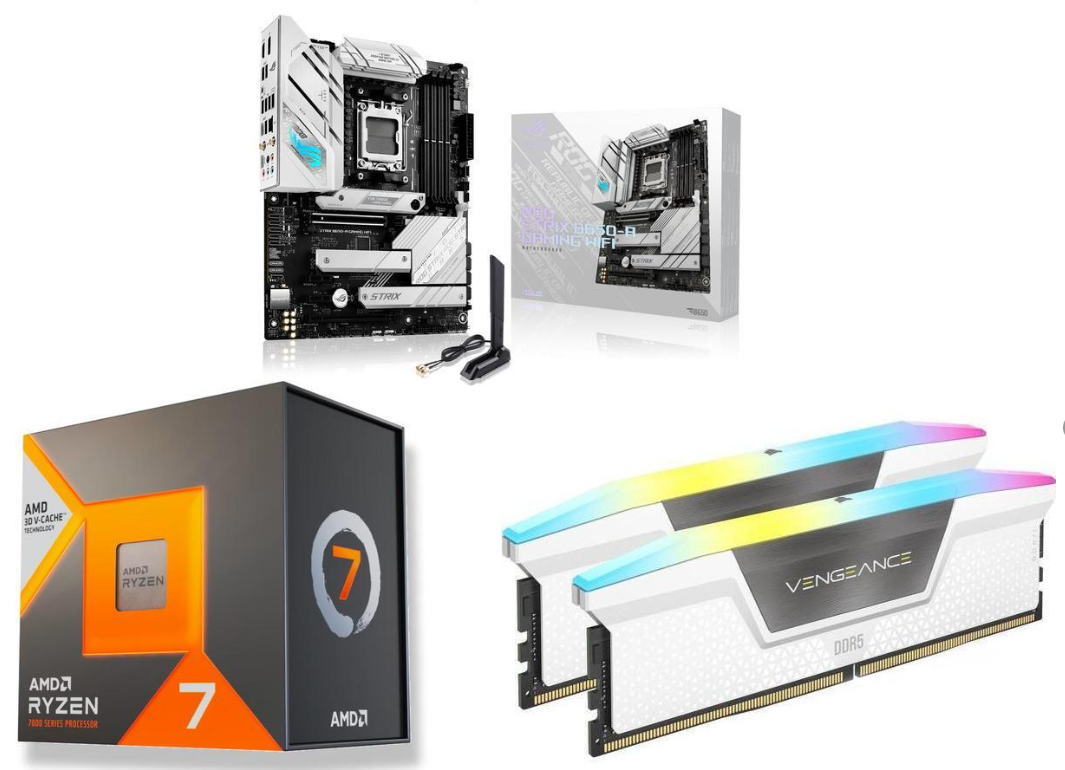
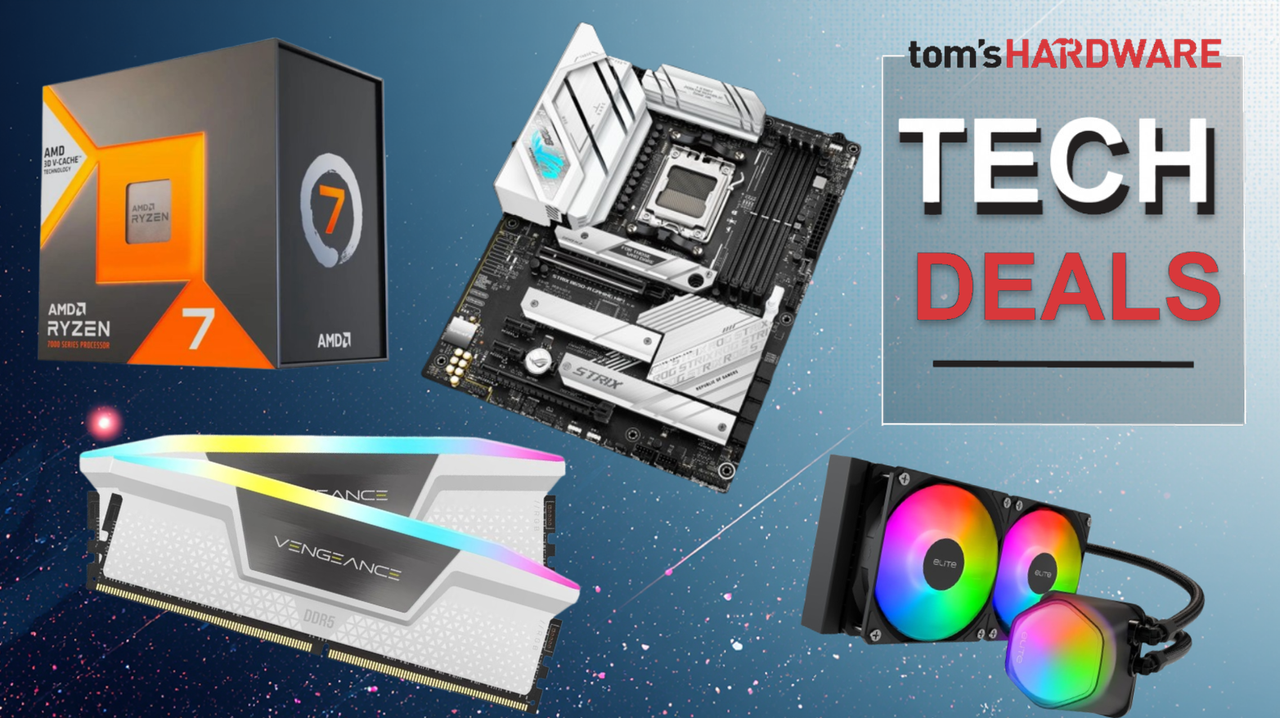
While the Ryzen 7 7700X3D isn’t quite as fast as the 9800X3D, the 8-core 16-thread Zen 4 processor is still one of the top gaming chips and is well ahead of the recently re-released (and expensive, $349.99 at Newegg) Ryzen 7 5800X3D. Performance-wise, the 7700X3D is squarely between the faster 7800X3D and slower 7600X3D, and it clearly holds its own among its peers and is a great 1080p/144 0p gaming chip while not paying for the more expensive 9000 series X3D chips. Newegg also throws in a free Cooler Master Elite Liquid 240 AIO ($80 value), which pairs nicely with the processor.
Along with the processor is a 16GB (2x8GB) kit of Corsair Vengeance DDR5-6000 CL36 RAM in white to match the motherboard. This kit features a frosted RGB light bar that runs the length of the sticks, drawing attention inside your case. Or, if RGB lighting isn’t your thing and you prefer a stealthy appearance, you can turn it off. The DDR5-6000 speed lands in the sweet spot for the AM5 platform and is a worthwhile, good-looking option. The SK Hynix ICs under the heatsink pair nicely with the board and offer plenty of overclocking headroom if you choose.
FutureFutureFuture
Asus’ ROG Strix B650-A Gaming Wifi is a mid-range motherboard with a black PCB, silver/white heatsinks, and ROG RGB, providing a stark contrast of colors inside your chassis. The board offers capable power delivery, three M.2 sockets (one PCIe 5.0) and four SATA ports for storage, fast networking with integrated Wi-Fi 6E and 2.5 GbE, ample USB ports on the rear I/O including 20 Gbps Type-C port on the rear IO (8 other Type-A ports), a quality audio solution with the Realtek ALC4080 chip and Savitech SV3H712 combo, and finally, it offers a DIY-friendly design to help building your PC easier.
Together, this three-item combo can turn your AM5 upgrade dreams into reality without breaking the bank. At only $609.99, it’s a serious option for building or upgrading your gaming PC. And since it’s AM5, you can drop-in-upgrade to a 9000-series processor, AMD’s latest and greatest, like the Ryzen 7 9800X3D in the future.
Building a PC is more expensive and thereby more stressful than ever in 2026. A good old-fashioned pre-built is a great way to save yourself some time and a ton of cash on parts, with exorbitant RAM, SSD, and GPU pricing yet to fully filter down to the pre-built market. As such, you can score this Intel Core Ultra 9 285-powered CyberPowerPC with an AMD Radeon RX 9060 XT 16GB, 32GB of DDR5 RAM, a 2TB SSD, and more for just $1,849, a $500 discount.
Considering 32GB of DDR5 RAM alone costs $400 right now, stacking up the cost of parts in this build reveals its value pretty quickly. The Intel Core Ultra 9 285 is around $700 at the moment, with the 285K retailing at $514. A 2TB M.2 PCIe 4.0 drive will set you back around $250, and the GPU in this build is $460. That's nearly the entire cost before you've factored in a case, motherboard, PSU, and cooler, not to mention the build cost.
The spec of this PC is admittedly a slightly strange combination of GPU and CPU. Intel's 285 Arrow Lake CPU is the company's current-gen 24-core flagship. With eight performance cores and 16 efficiency cores, it performs extremely well in multi-threaded Windows 11 testing. While it can't match AMD's potent X3D Ryzen chips in gaming, it was still more than enough to average 153 frames per second in our 1080p testing suite of 17 games.
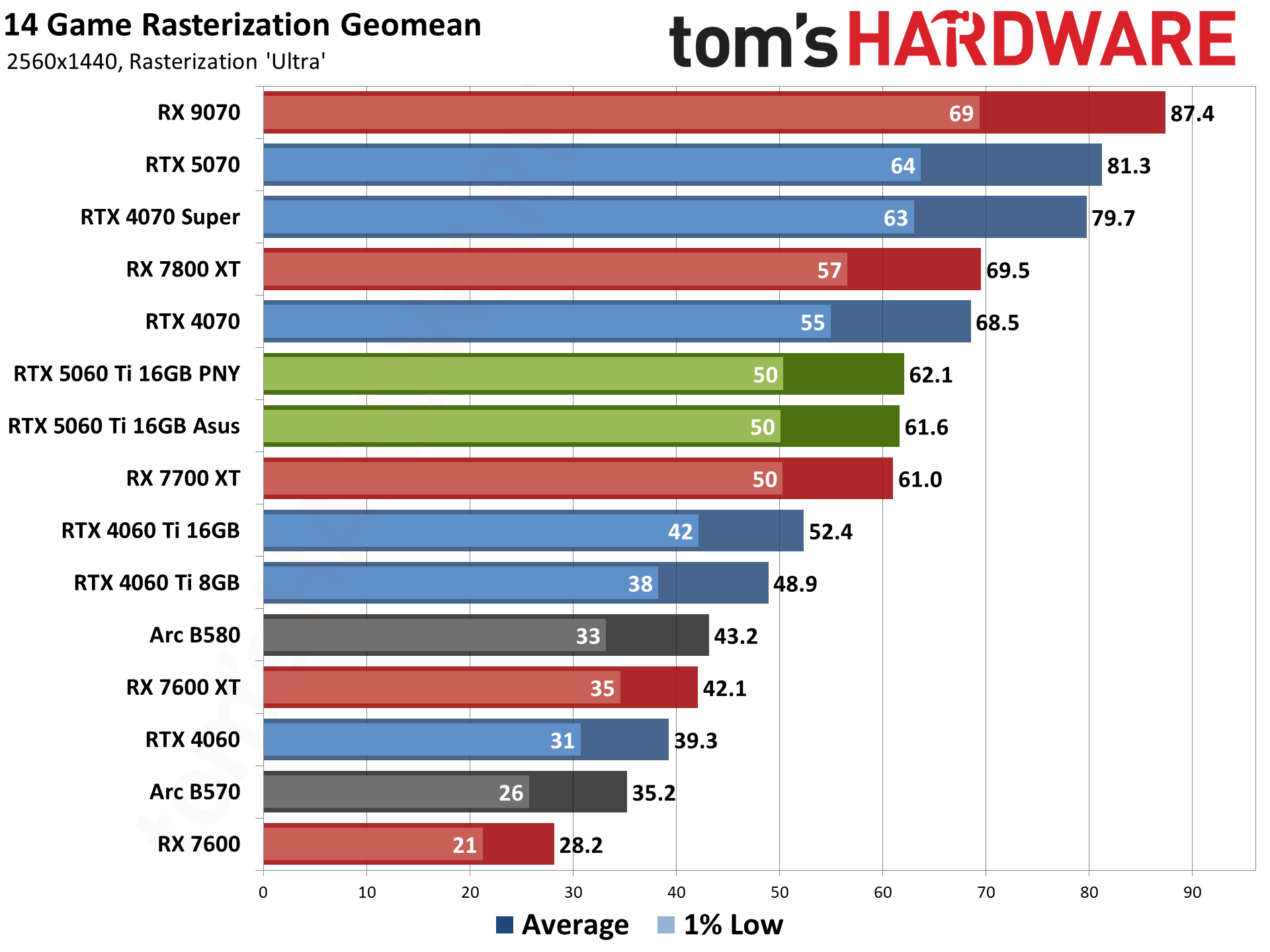
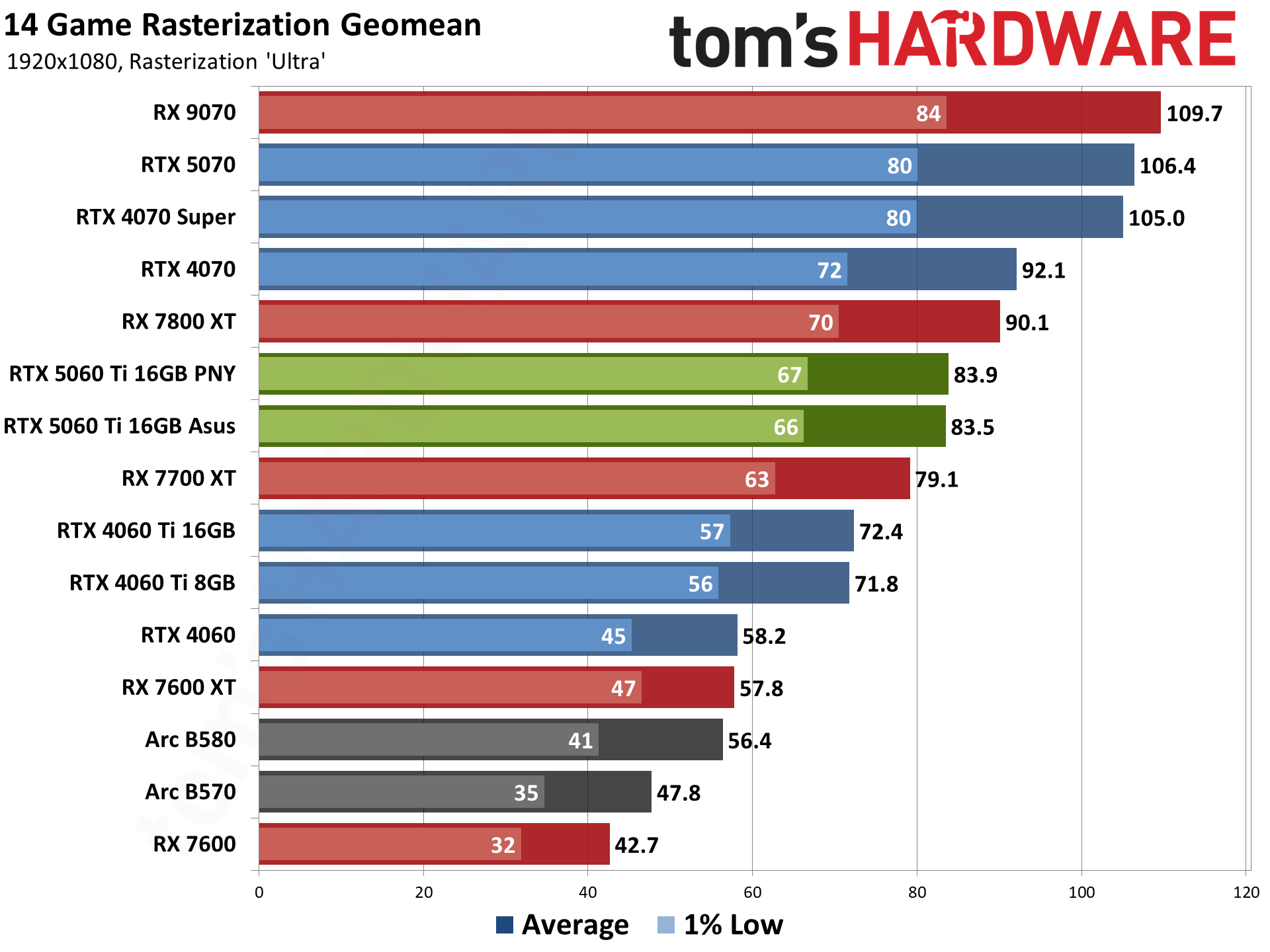
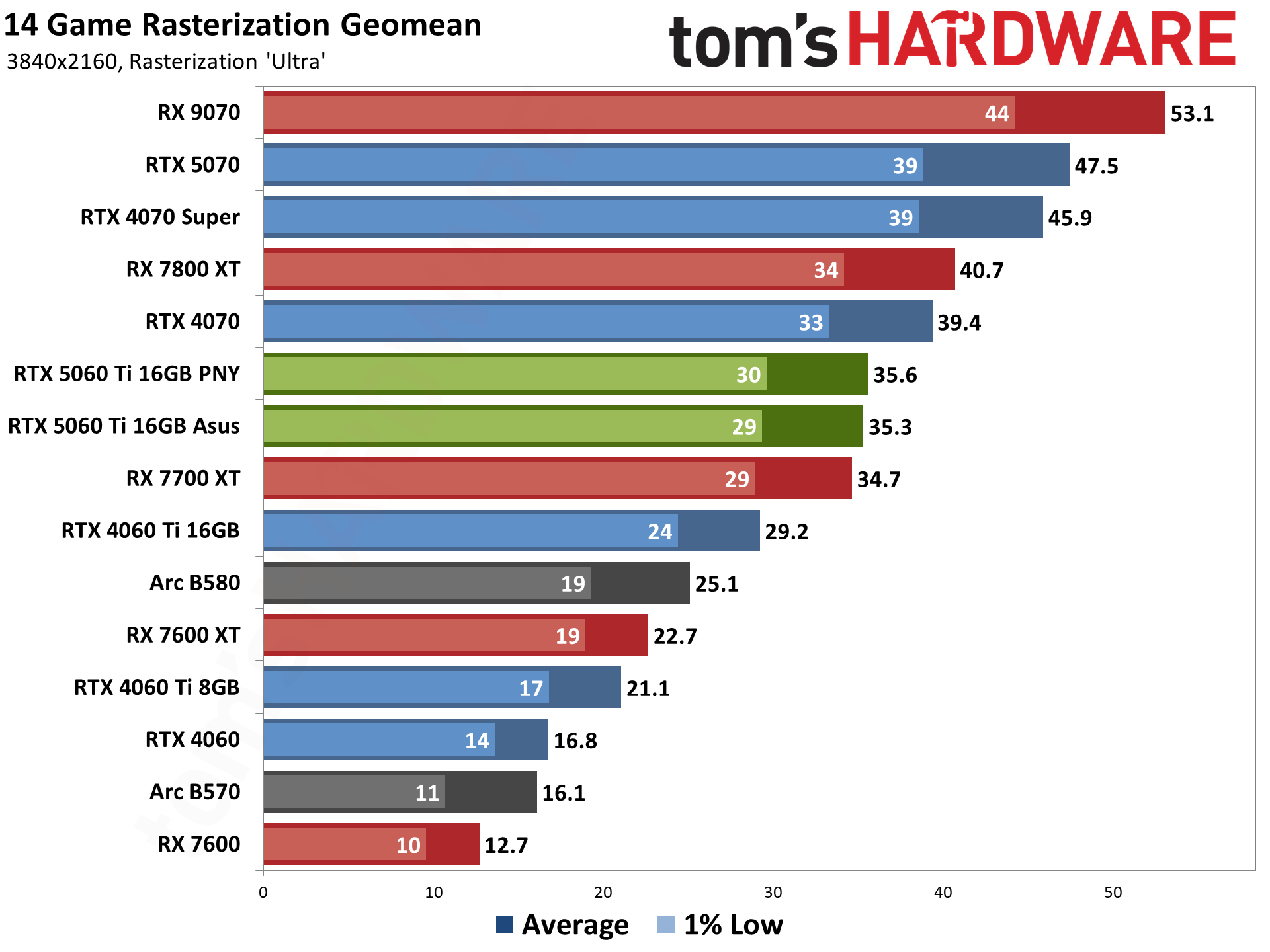
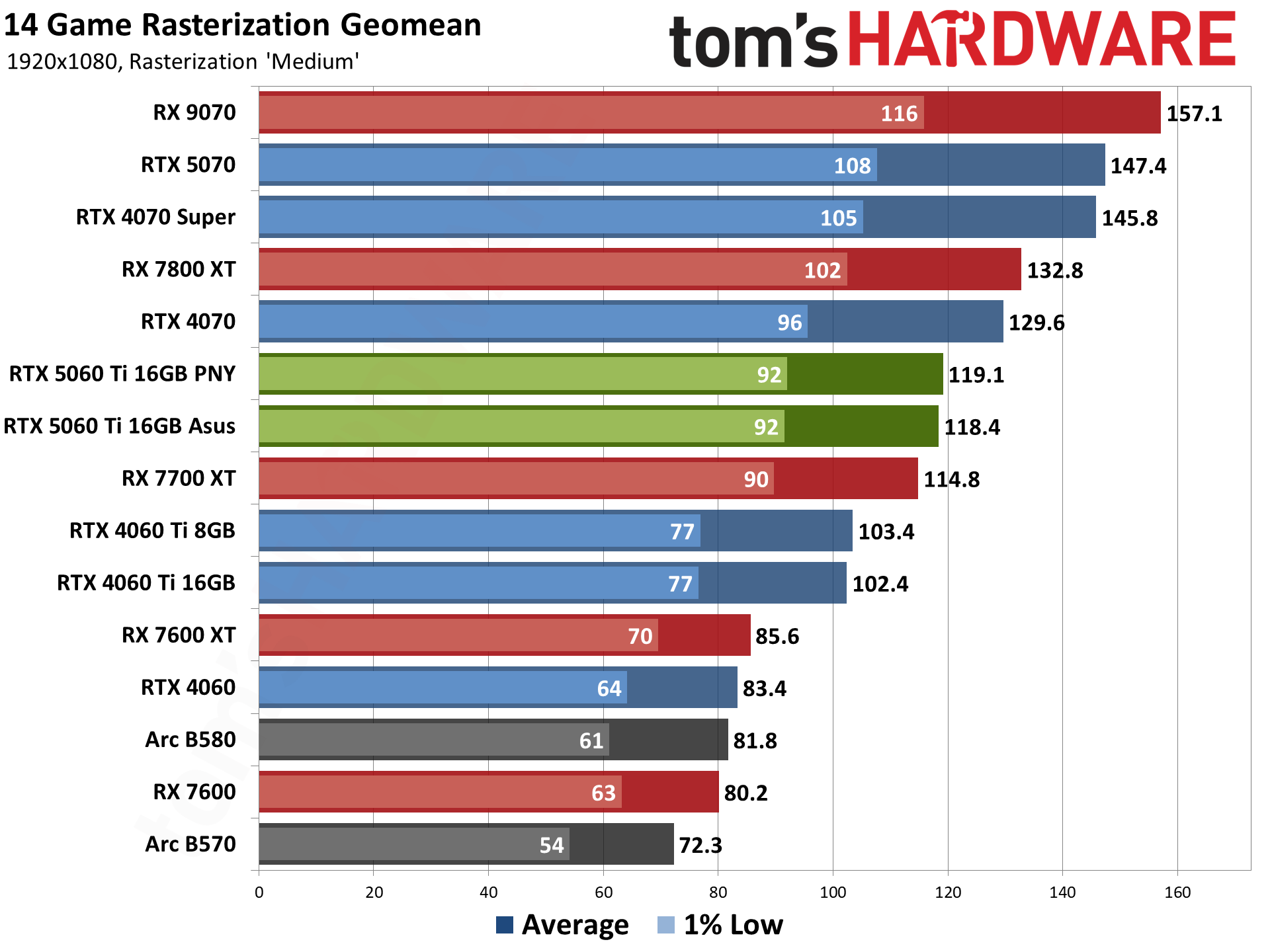
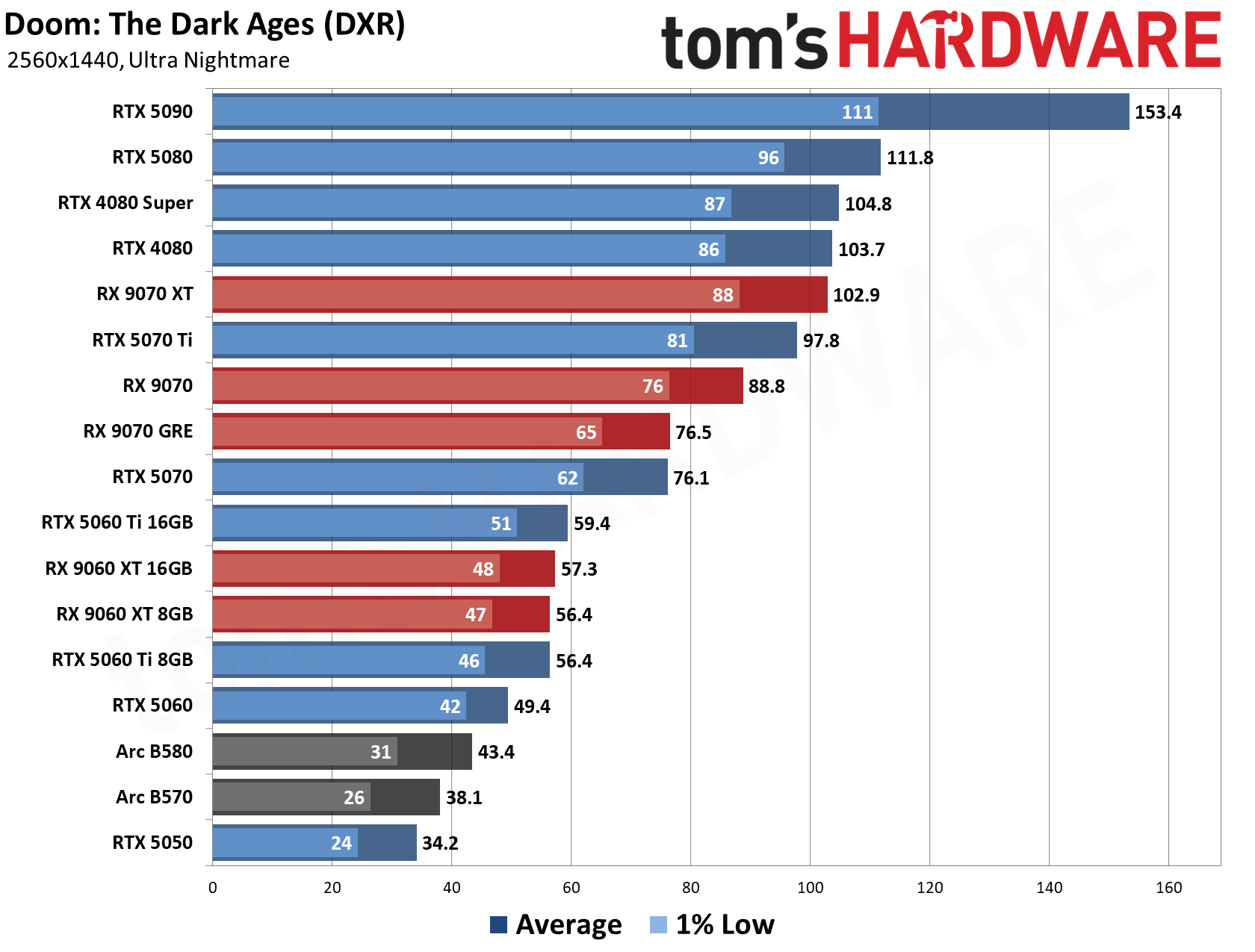
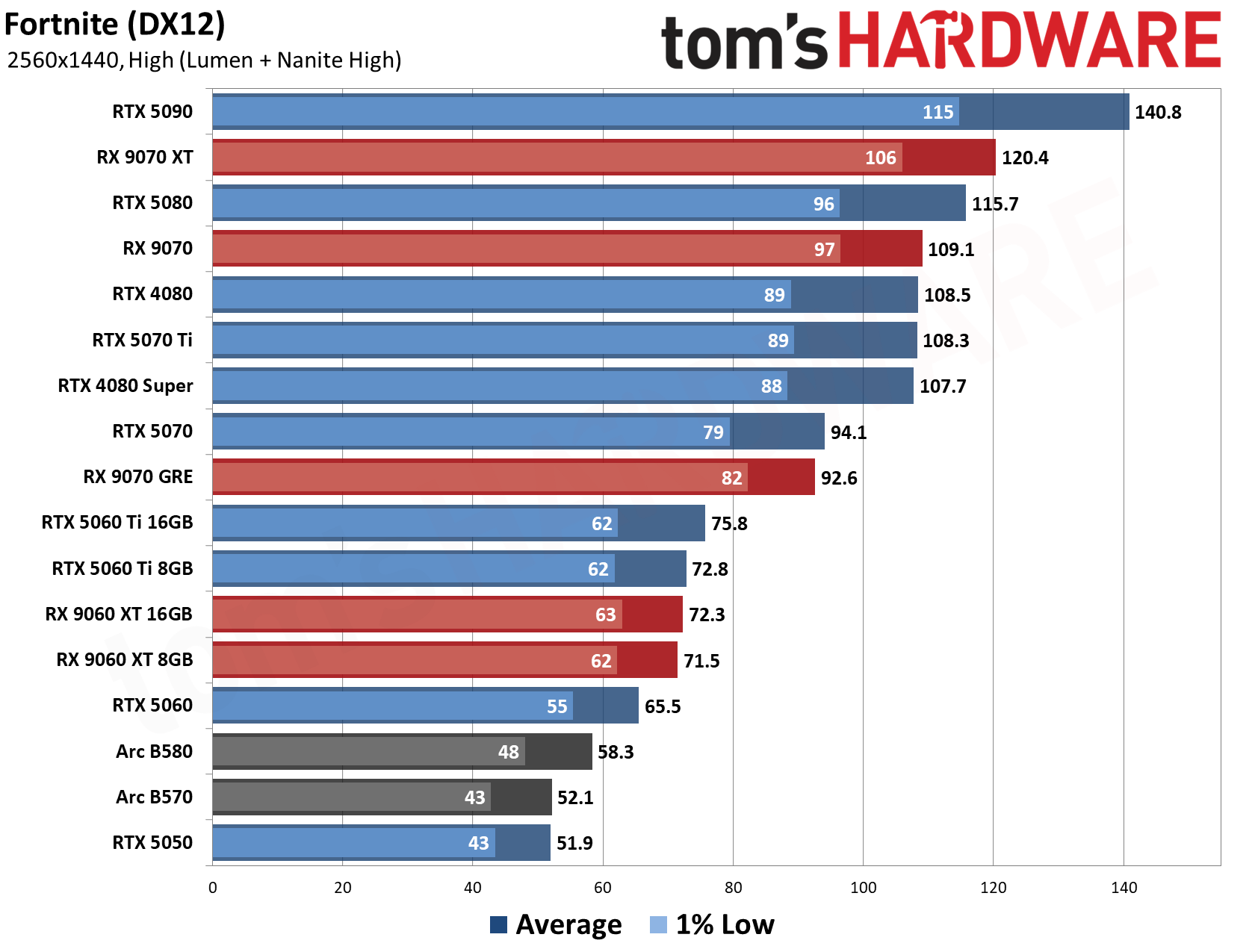
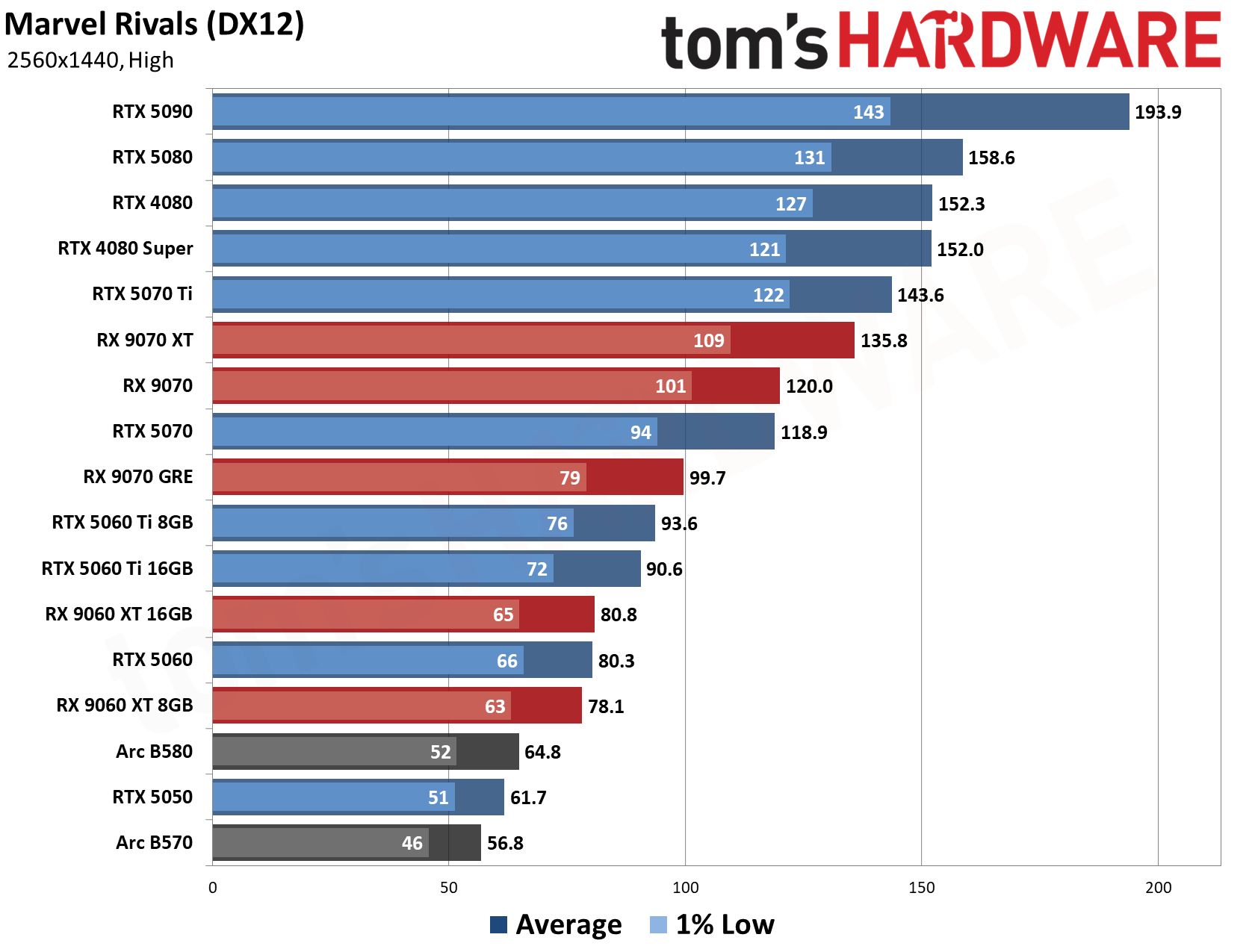
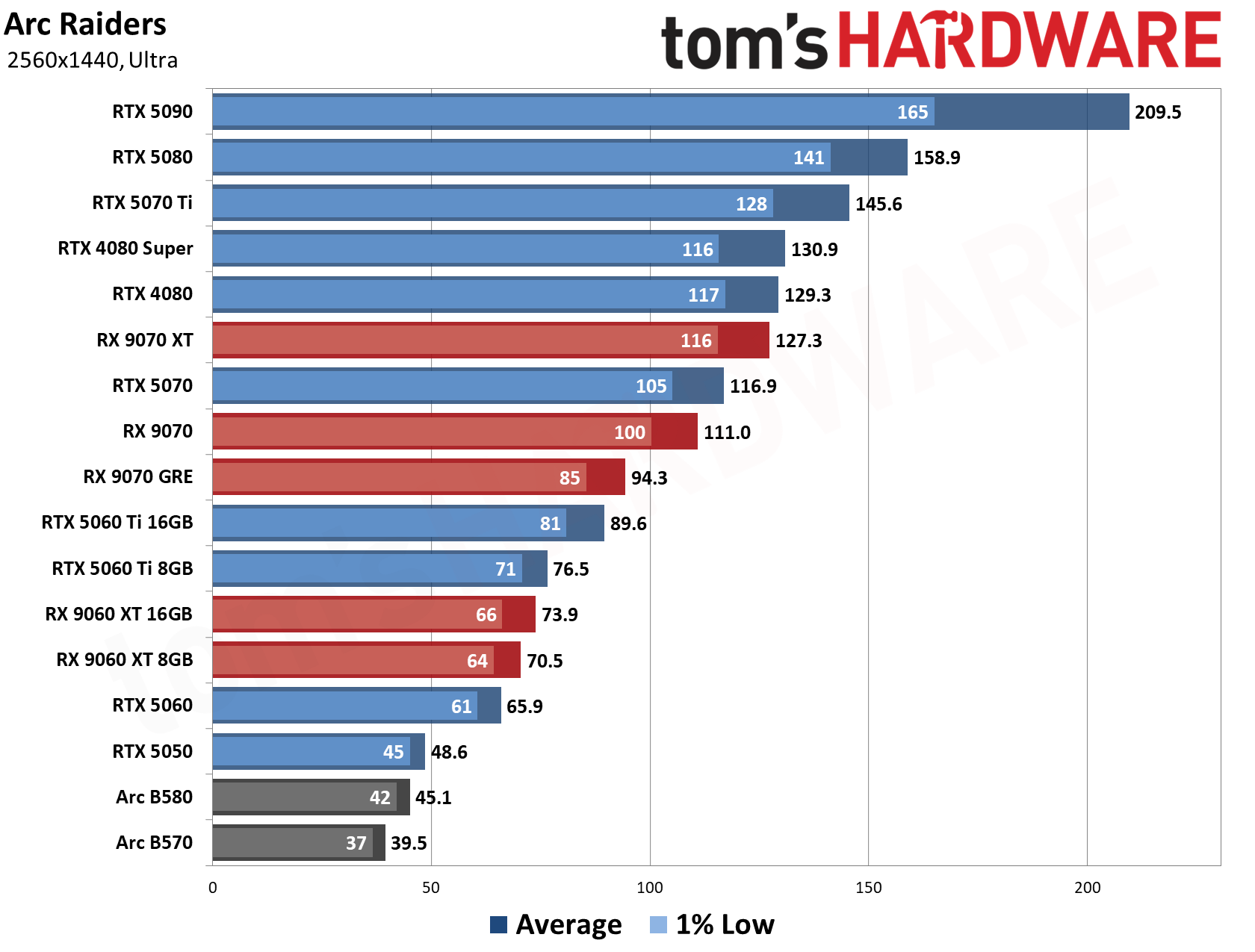
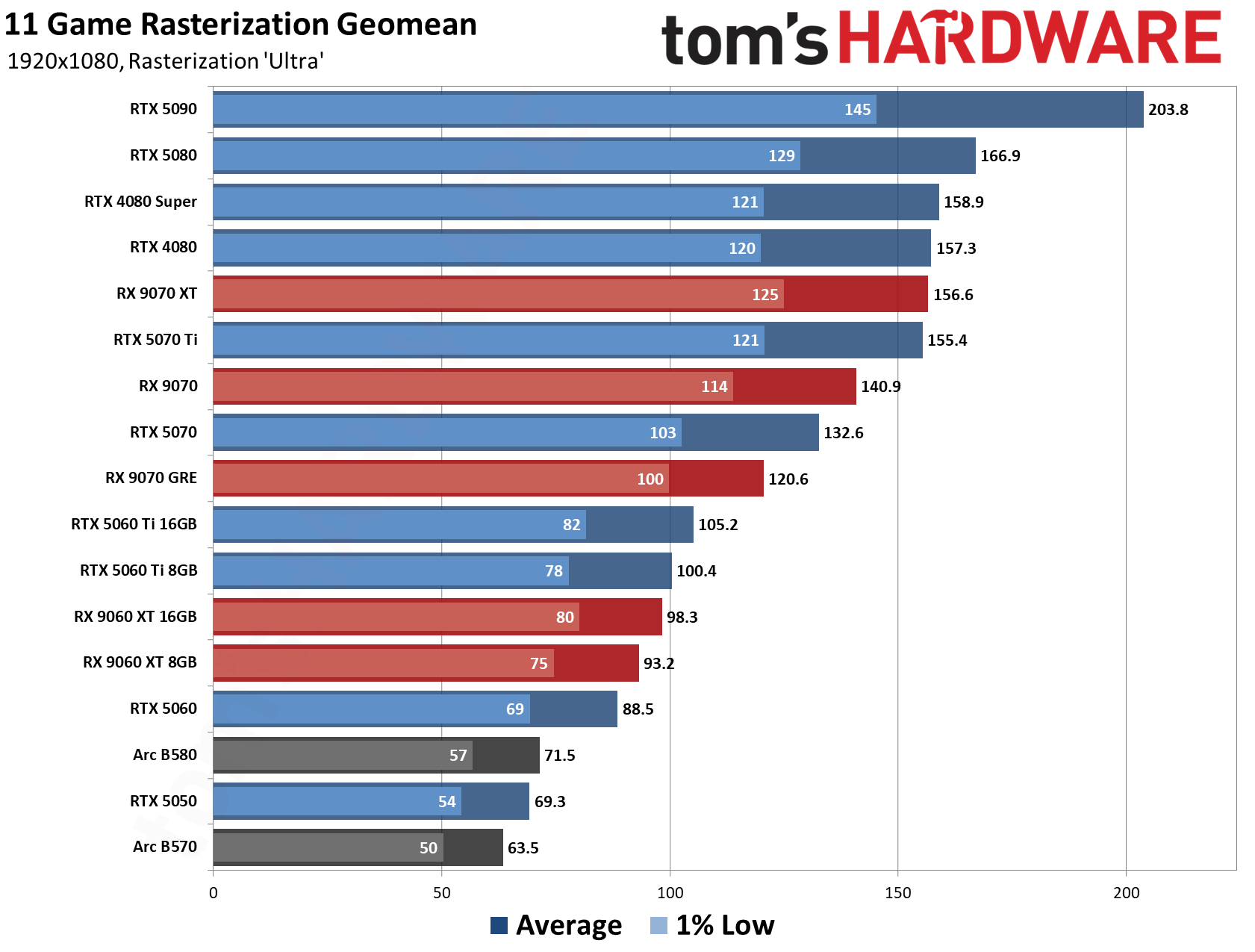
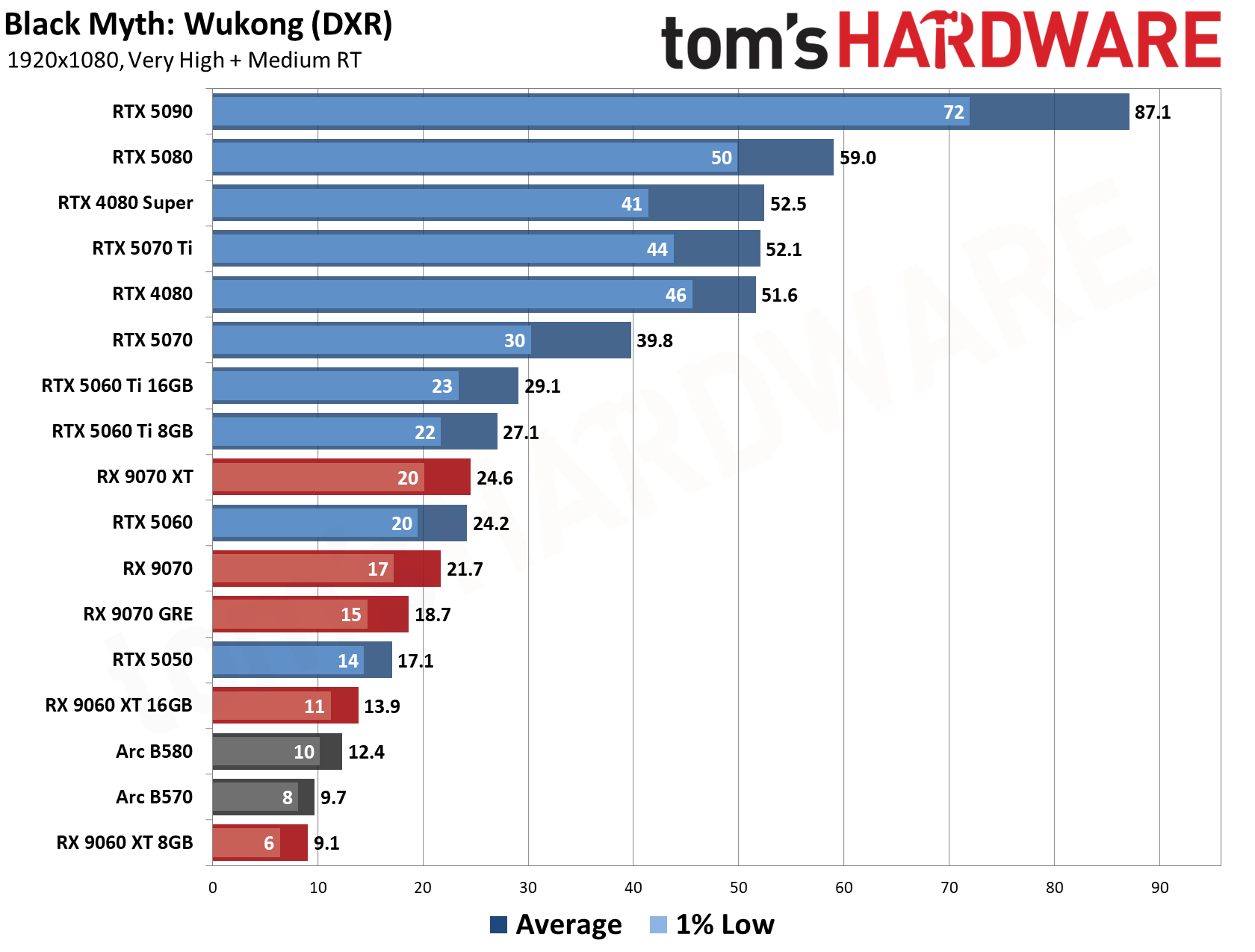
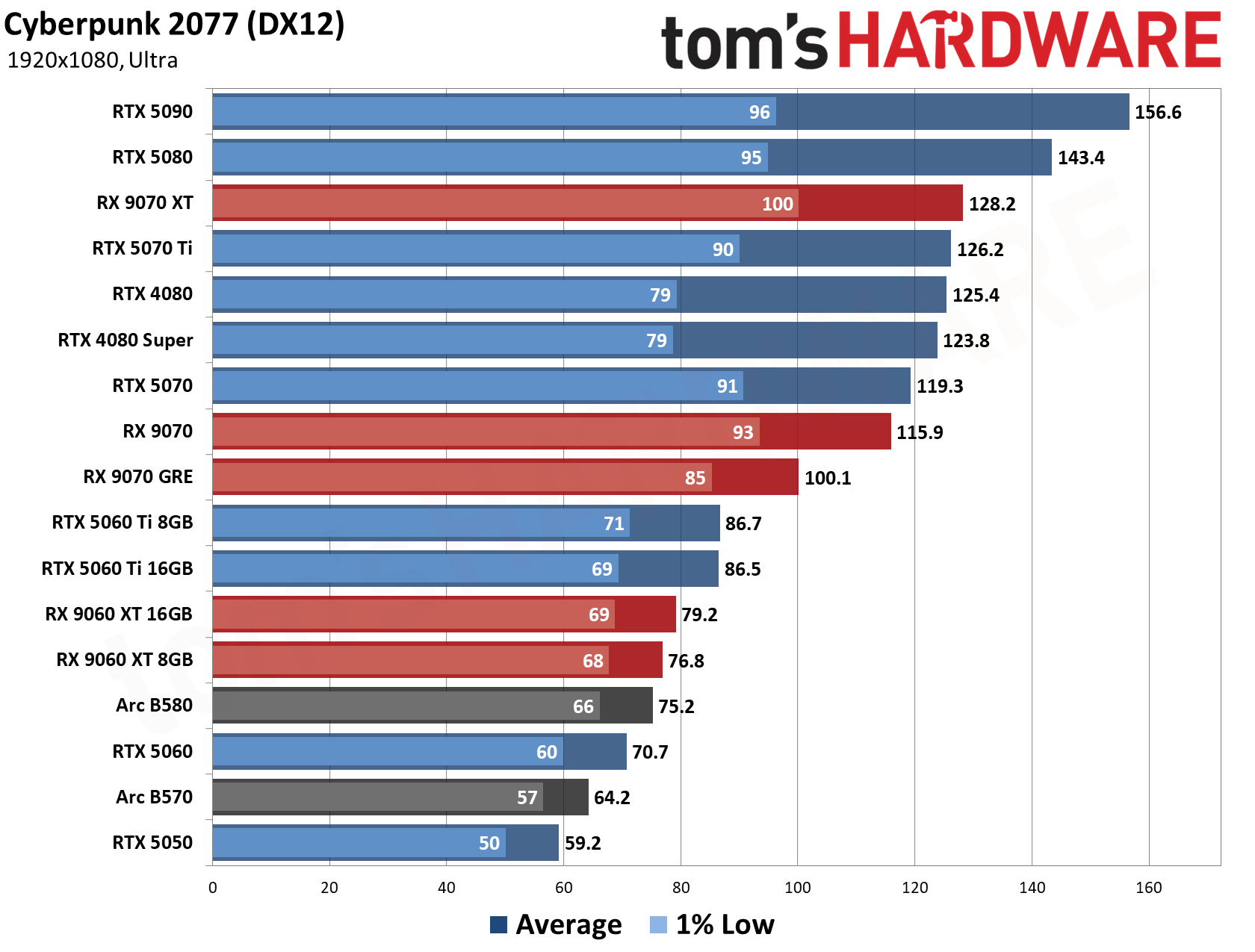
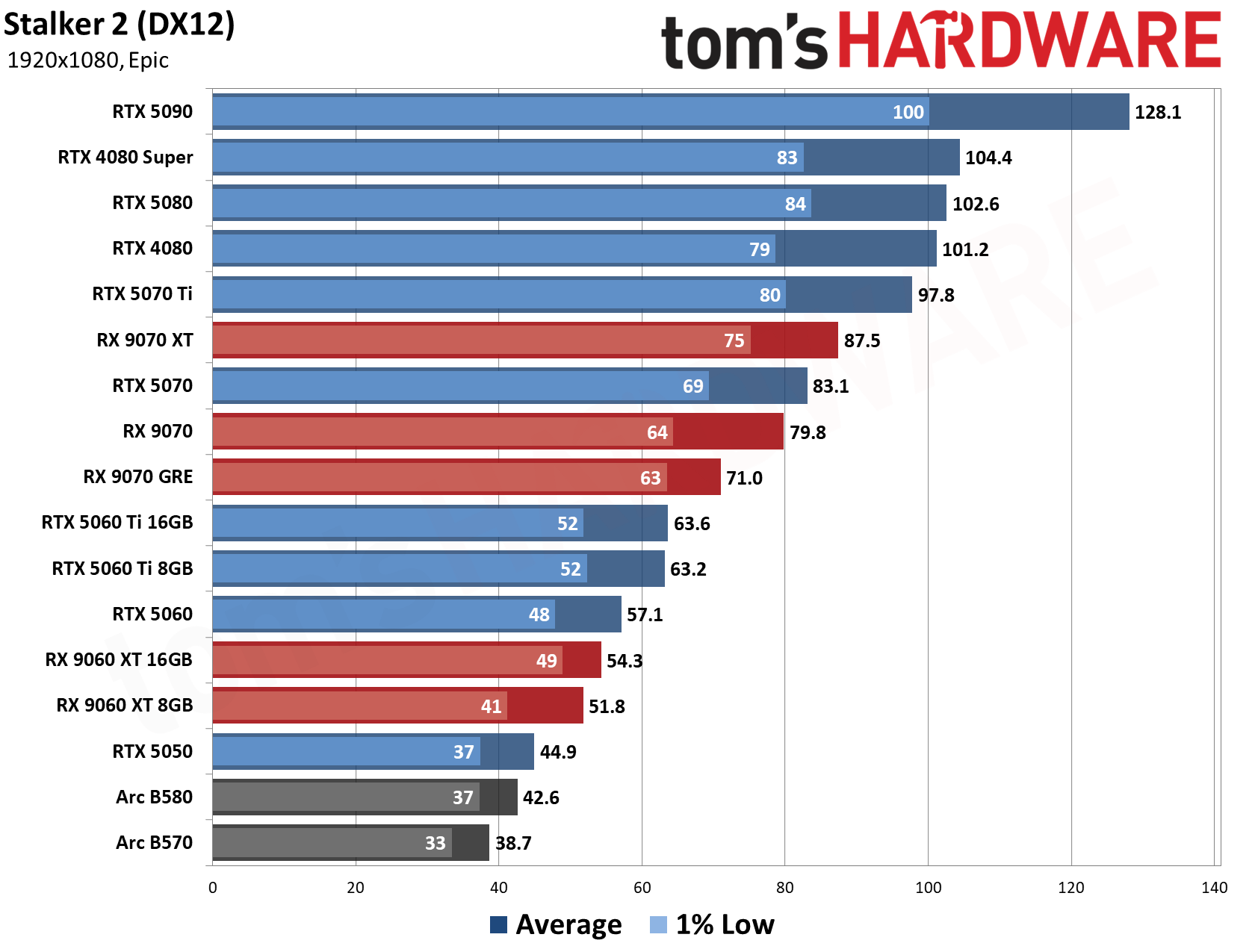
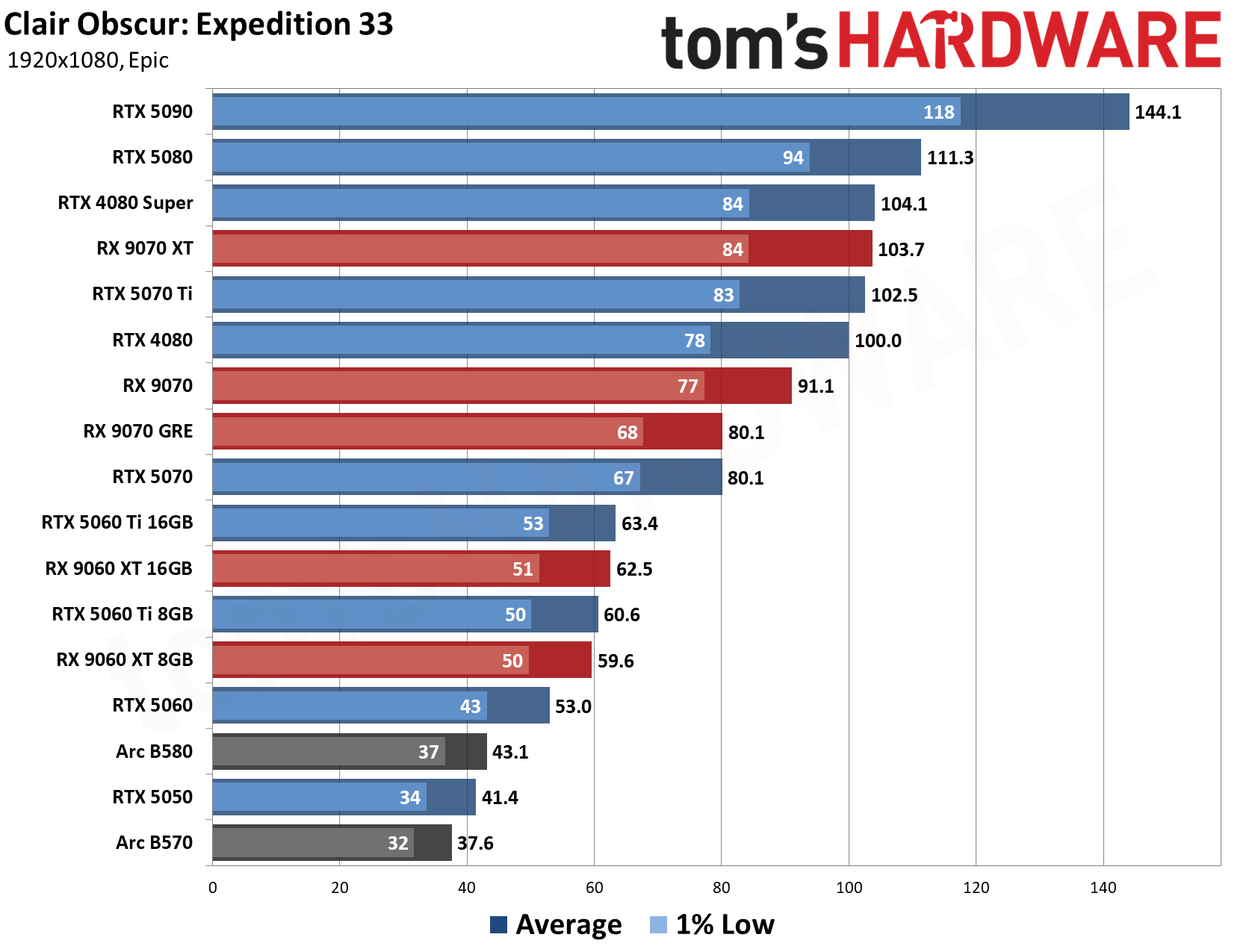
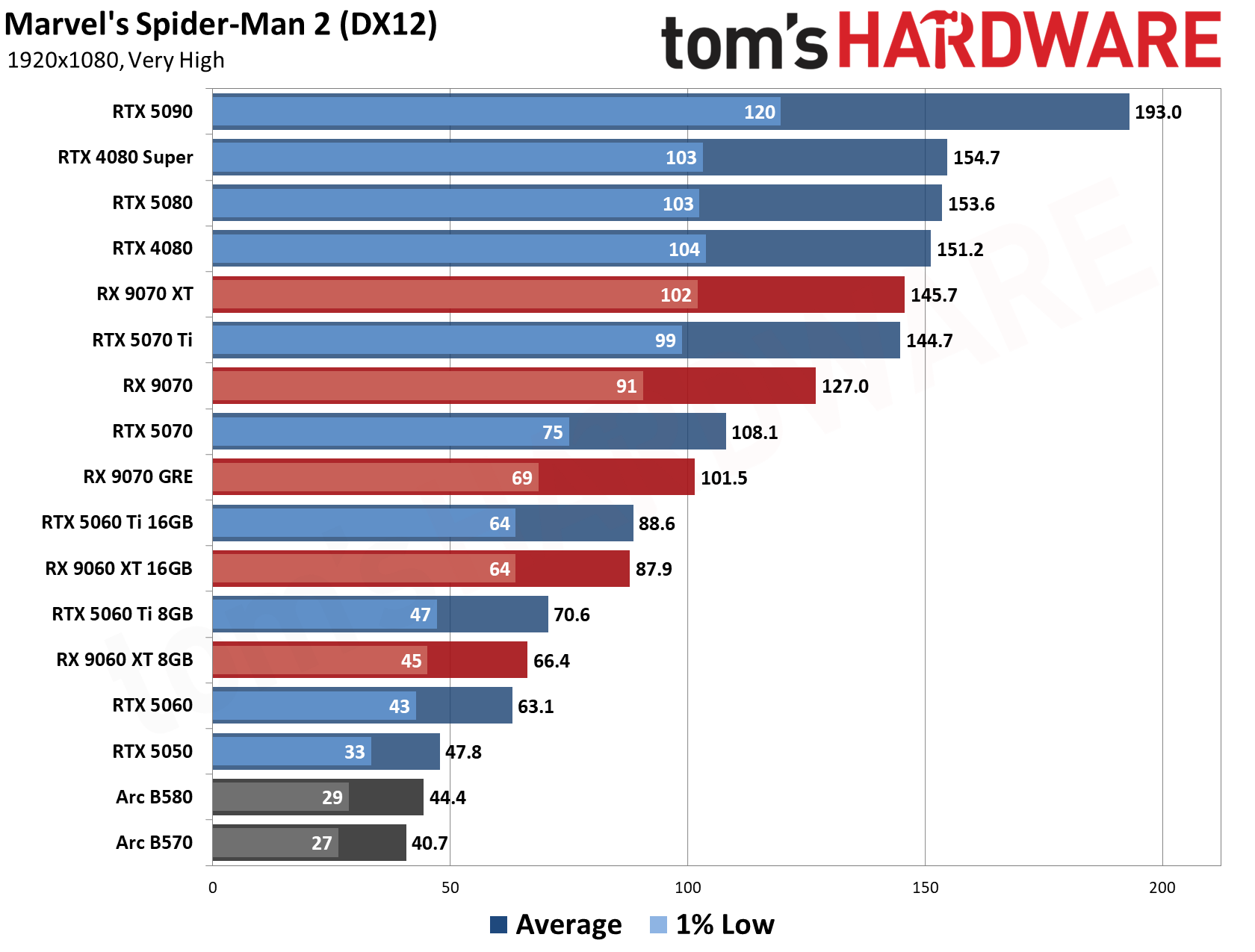
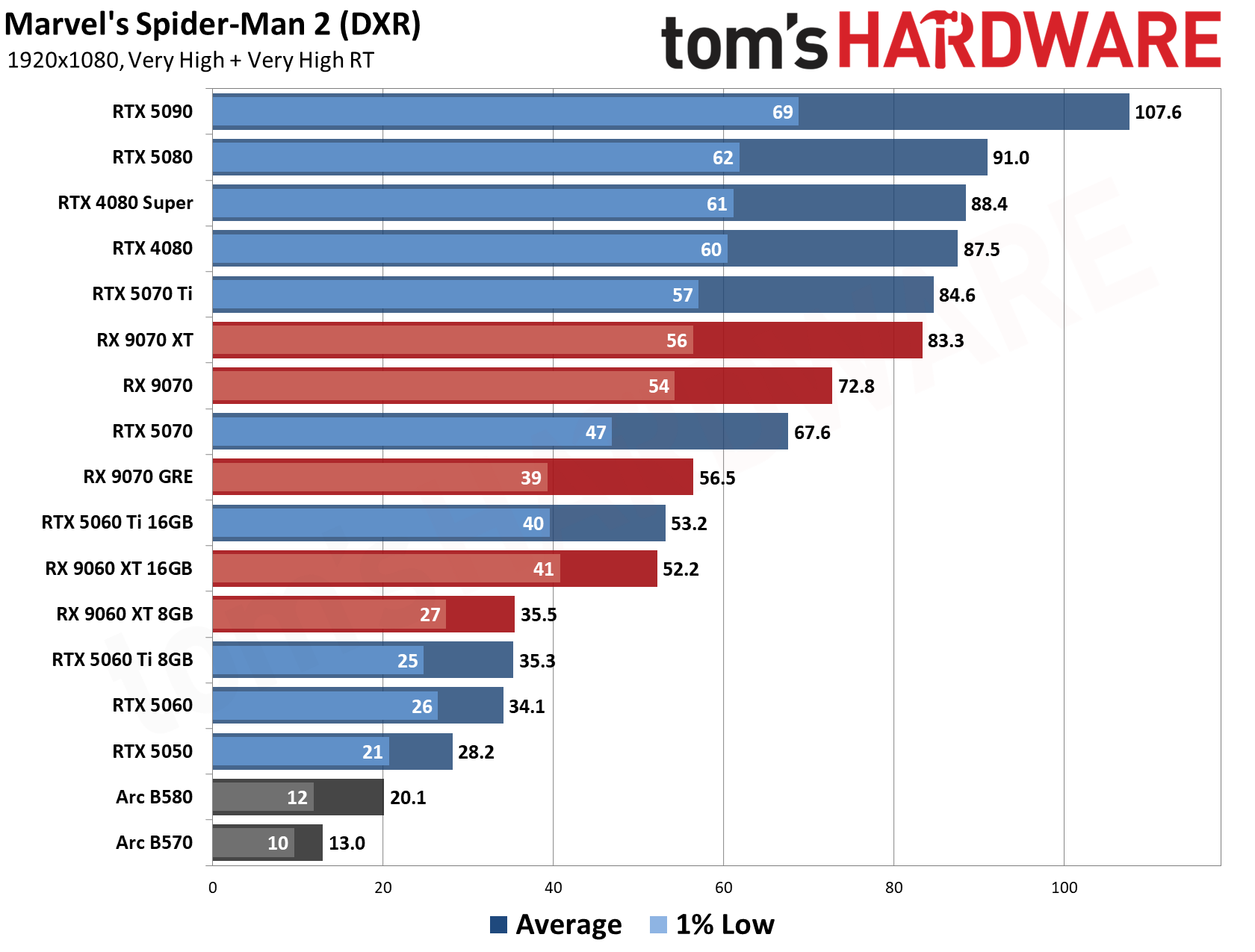
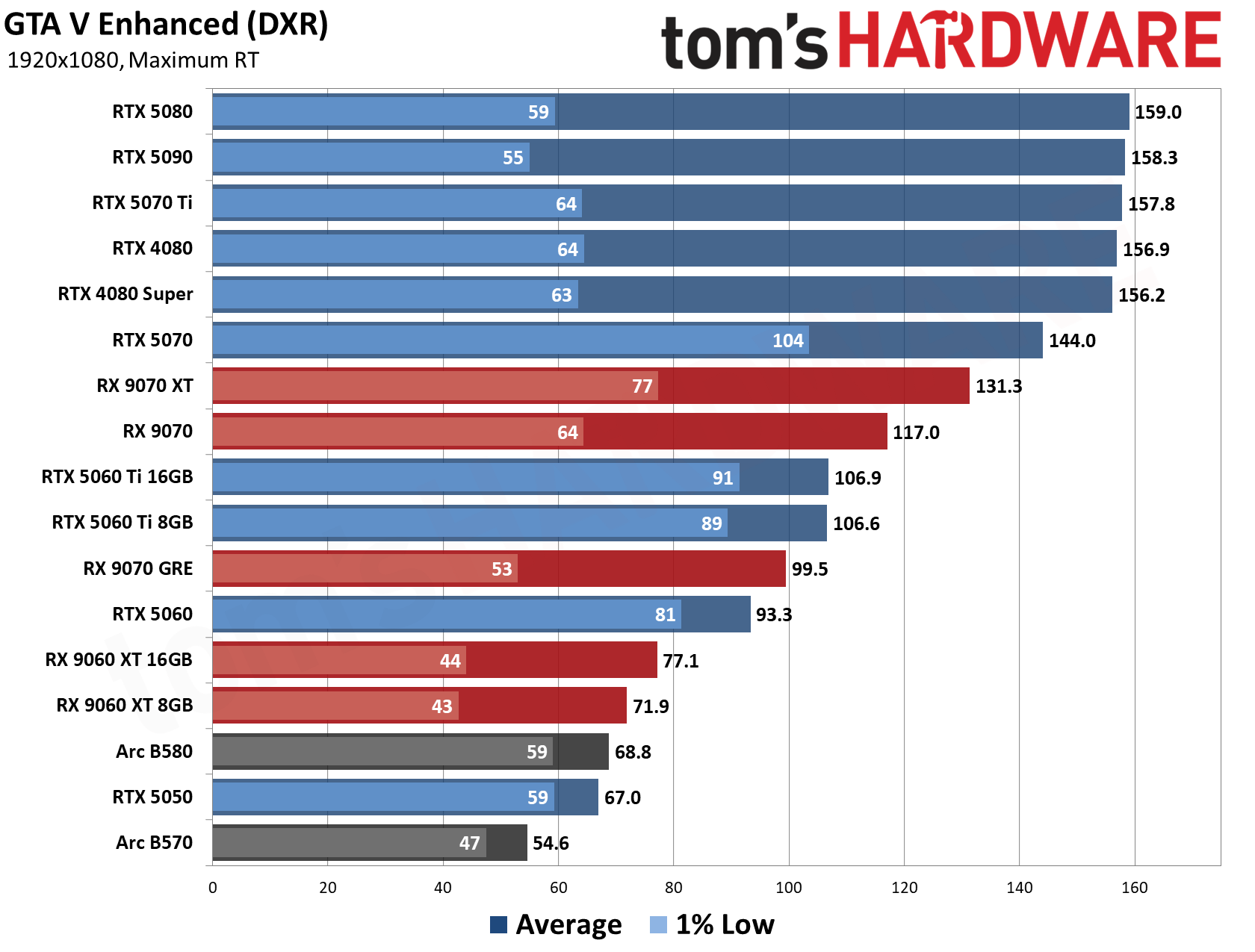
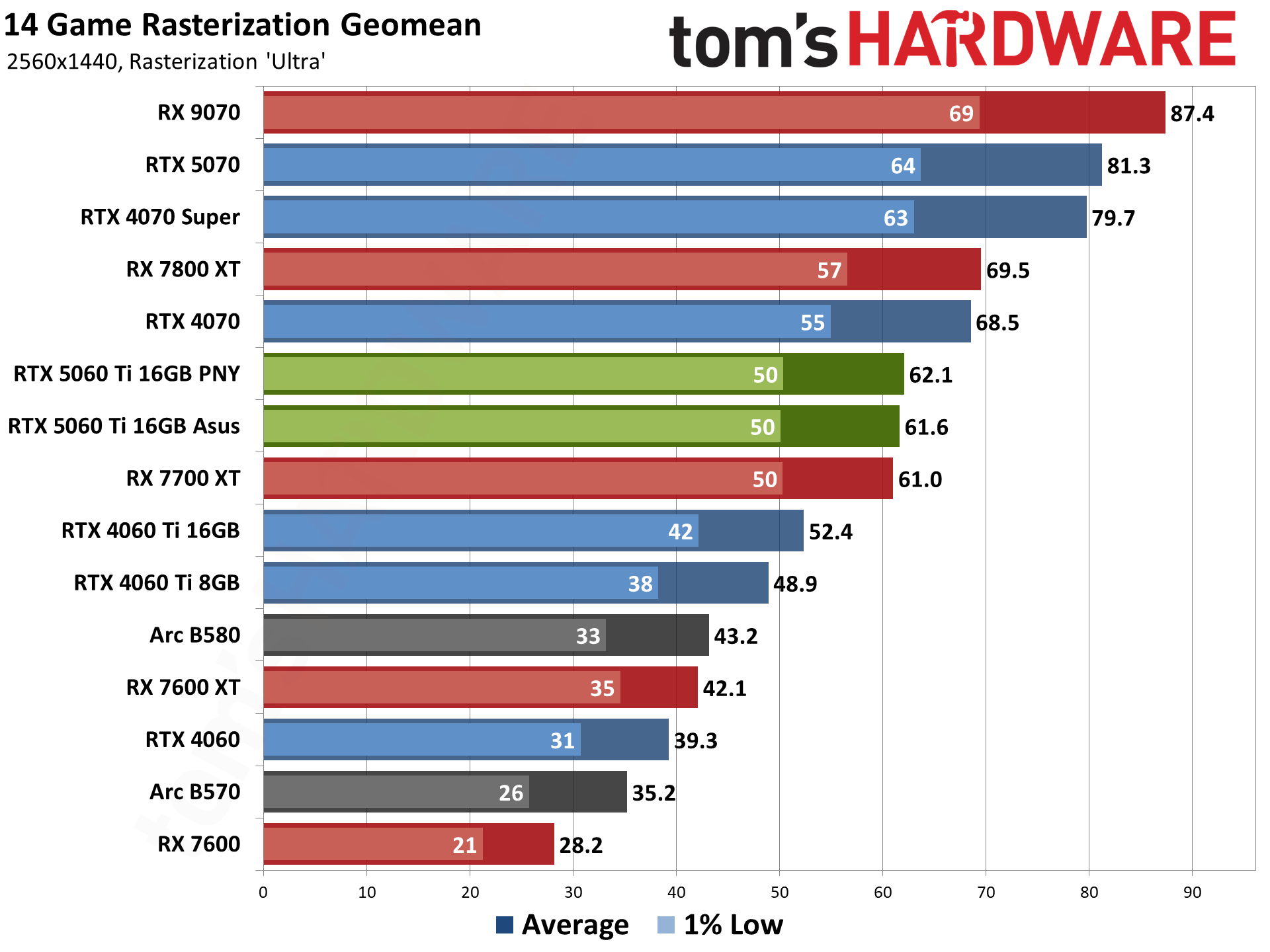
As you can see from our GPU testing data, the Radeon RX 9060 XT 16GB is on par with the RTX 5060 Ti 8GB, but lags behind the RX 9070 and RTX 5070, as is to be expected. With its 2048 shares and 16GB of VRAM, this card sustained averages of nearly 60 frames per second in our 1440p Ultra tests, making it a great mid-range card. You'll likely struggle at 4K without some compromise, but this is a great card for middle-of-the-road performance.
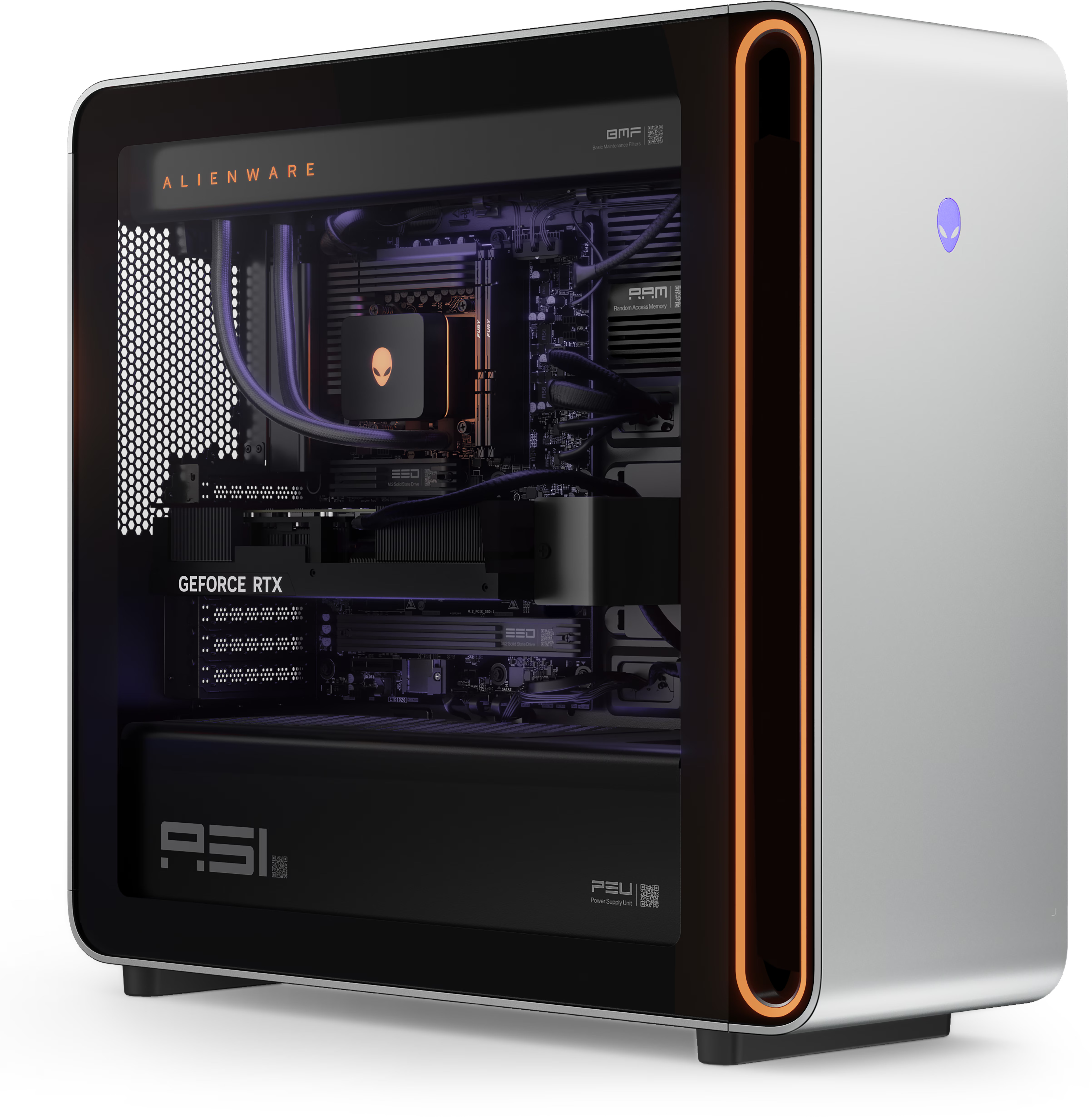
With graphics card prices continuing to rise, the bar for selling a 5090 PC for less than the cost of the card is admittedly a little lower than it used to be, but this is still a crazy deal. For less than the cost of a 5090, you get the card, plus a 20-core Intel Ultra 7 265K processor, 32GB of DDR5 7200 RAM, 1TB M.2 Gen 5 SSD, and a 1500W power supply, all housed inside a sleek Alienware case. Other bonuses include a copy of Windows 11 and a 240mm AIO CPU cooler.
Area-51 Gaming PC with RTX 5090: was $6329.99 now $4779.99 Get an RTX 5090 with an entire gaming PC thrown in, all for less than the cost of the card by itself. Features 20-core Intel Ultra 7 265K processor, 32GB of DDR5 7200 RAM, 1TB M.2 Gen 5 SSD, and a 1500W power supplyView Deal
The standout of this build, as you've probably guessed, is the absolutely monstrous RTX 5090. The best graphics card on the market by some distance, its massive 32GB GDDR7 VRAM pool and 21,760 CUDA cores mean it will chew through any title at 4K, or a local AI workload without breaking a sweat.
Tom's HardwareTom's HardwareTom's Hardware
The rest of this PC, while not the most premium spec, is definitely not to be sniffed at either. The Intel Core Ultra 7 265K is arguably a little underpowered at this level, but the RTX 5090 will more than make up for any shortcomings. The Arrow Lake CPU has excellent single-threaded performance, and when paired with a 5090 in our CPU testing data, can pump out 150 frames per second at 1080p on average across our 17-game test suite. That being said, if you'd like a bit of a CPU boost, you could opt to configure a Core Ultra 9 285, with more cores, cache, and a higher boost clock speed.
While we'd have previously hoped for 64GB of RAM in a build of this magnitude, the AI-induced component crisis means that is no longer a reality. Fortunately, you can upgrade the DDR5 6400 to DDR5 7200 with Intel 200S boost — which our testing shows can boost gaming performance by 7% — for free in this particular deal. You also get a 1TB Gen 5 SSD and a 1500W power supply.
While it might not feature AMD's benchmark-busting X3D CPU range under the hood, buying any PC for less than the going rate of the 5090 is not to be sniffed at in the current PC market. Indeed, CPUs and motherboards remain some of the only PC components with healthy discounts in the current climate, so buying this rig and doing a bit of surgery to the processor isn't out of the question either.
Prebuilt PCs usually get a bad rep but during these difficult times, they're actually a beacon of light as we navigate the component crisis. We've found a great deal on one such system — the Acer Nitro 85. It comes with an RTX 5070 graphics card and a 20-core Core Ultra 7 265F processor for just $1,499 on Walmart right now. That's $600 less than it usually retails for, and you get 16GB of DDR5 RAM along with a 1TB Gen4 SSD on top.
With an RTX 5070 and 20-core Intel Core Ultra 7 processor at its heart, the Nitro 85 is a great midrange system that will handle any workload, while looking good doing so.View Deal
The Acer Nitro 85 is perfect for 1440p gaming at the highest settings, and even a bit of 4K gaming with upscaling tricks thanks to Nvidia's rich software suite. You get features like DLSS, multi-frame gen and RTX HDR which all contribute to a better gaming experience. The RTX 5070 is third on our list of the very best gaming GPUs you can buy because of its exceptional value proposition, and this deal only enhances that. The 12GB of VRAM, while not a lot, is enough for demanding titles today.
Tom's HardwareTom's HardwareTom's Hardware
Alongside the 5070, you also get an Intel Core Ultra 7 265F with 8 P-cores and 12 E-cores and a max clock speed of 5.3 GHz. This is a high-end chip capable of driving even faster GPUs, so you're set for both gaming and professional workloads. It's cooled by a 240mm AIO liquid cooler. Talking to the CPU is 16GB of DDR5 RGB RAM and a 1TB PCIe 4.0 M.2 SSD slotted inside a standard motherboard that supports Wi-Fi 7 and has a 2.5 Gbps ethernet port.
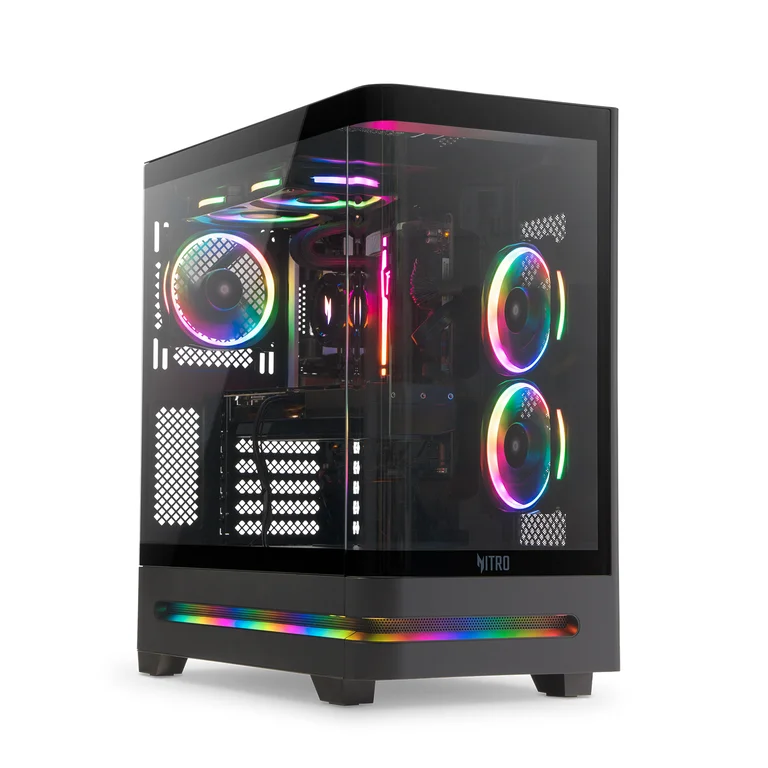
The whole system is powered by a 600W PSU and enclosed inside a sleek-looking panoramic case with RGB accents and three RGB fans. In terms of front panel I/O, you get 1x USB 3.2 5 Gbps Type-C Port, 2x USB 3.2 5 Gbps Type A Ports and 1x 3.5mm audio jack on the top. The entire system is also covered by a 1-year warranty, and you have plenty of room onboard to upgrade the PC beyond that when things normalize.
The Acer Nitro 85 is a powerful prebuilt that can easily cruise through whatever task you throw at it. We kitted out a very similar system on PCPartPicker and the total cost came out to over $2,000 and that's without a Windows 11 license. So, for just $1,499 on Walmart right now, you're really getting your money's worth. With no foreseeable end to the ongoing RAMpocalypse, don't miss out on a stellar deal like this.
If you need a top-tier gaming system that delivers on performance and aesthetics, the Predator Orion 6000 (PO6-605-UR15W) should do the trick. While Acer's prebuilt gaming beast usually retails for $2,799.99 at U.S. retailers, Walmart is currently offering a massive 25% discount, bringing the price down to $2,099 for a limited time. That is savings of up to $700 that you can put toward a new gaming monitor or other gaming accessories.
The Predator Orion 6000 is an exceptional choice of gaming system for demanding gamers. It features a powerful Core Ultra 7 265KF processor, liquid-cooled by a 240mm AIO cooler. The chip has 20 cores and a boost clock speed of up to 5.5 GHz. Paired with 32GB (2x16GB) of DDR5 memory, the Orion 6000 easily exceeds the requirements of today’s AAA games and is fully prepared for future releases.
The system doesn’t cheap out on storage, either. It comes equipped with a 1TB PCIe 4.0 SSD that delivers lightning-fast load times and ample space to build your gaming library. In today’s market, with memory and SSD prices continuing to surge, a gaming system with 32GB of memory and a 1TB SSD is a rare sight.
The Predator Orion 6000 is a high-end gaming system with a Core Ultra 7 265KF, Nvidia GeForce RTX 5070 Ti, 32GB of DDR5 memory, and a 1TB PCIe 4.0 SSD.View Deal
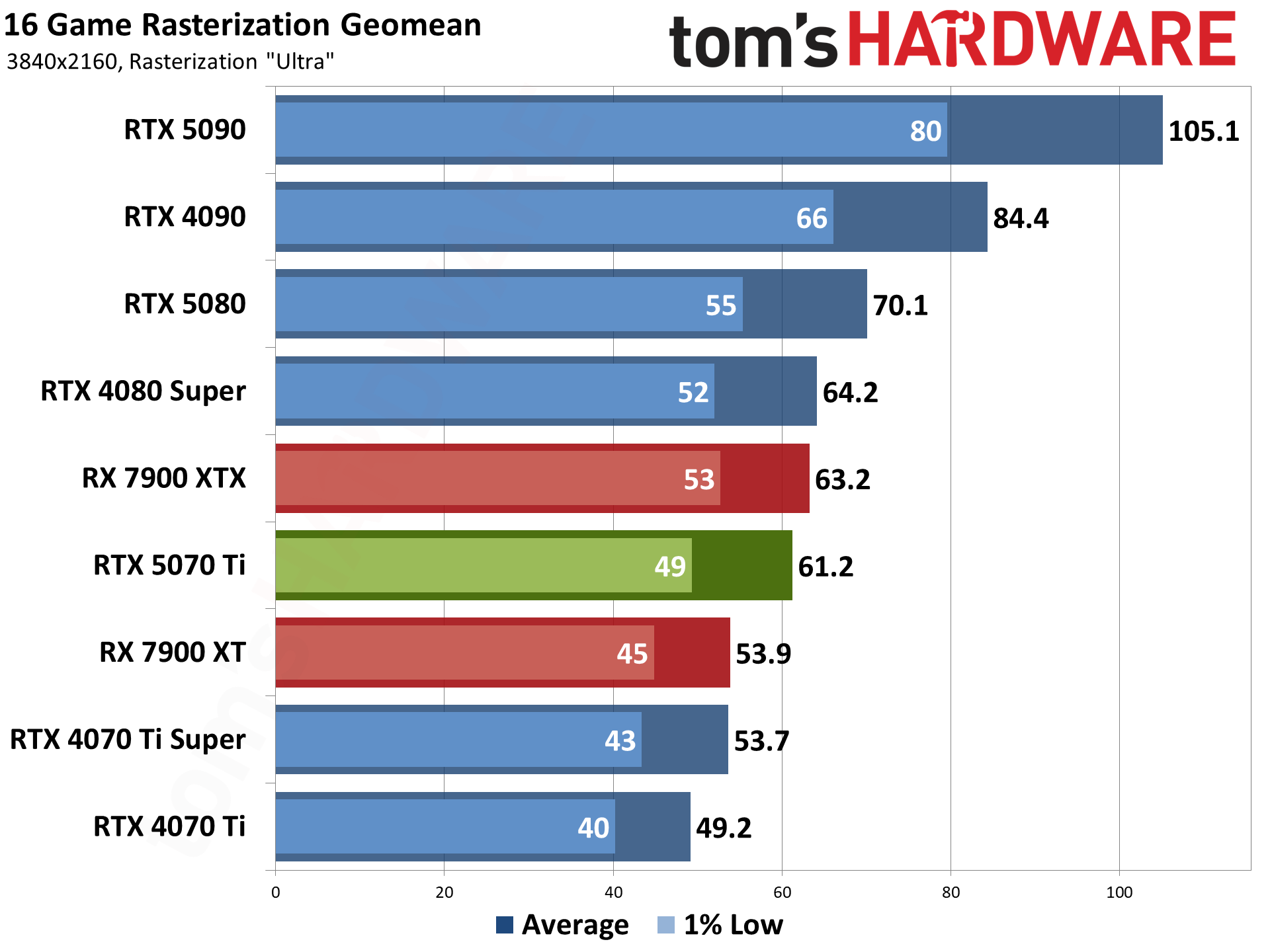
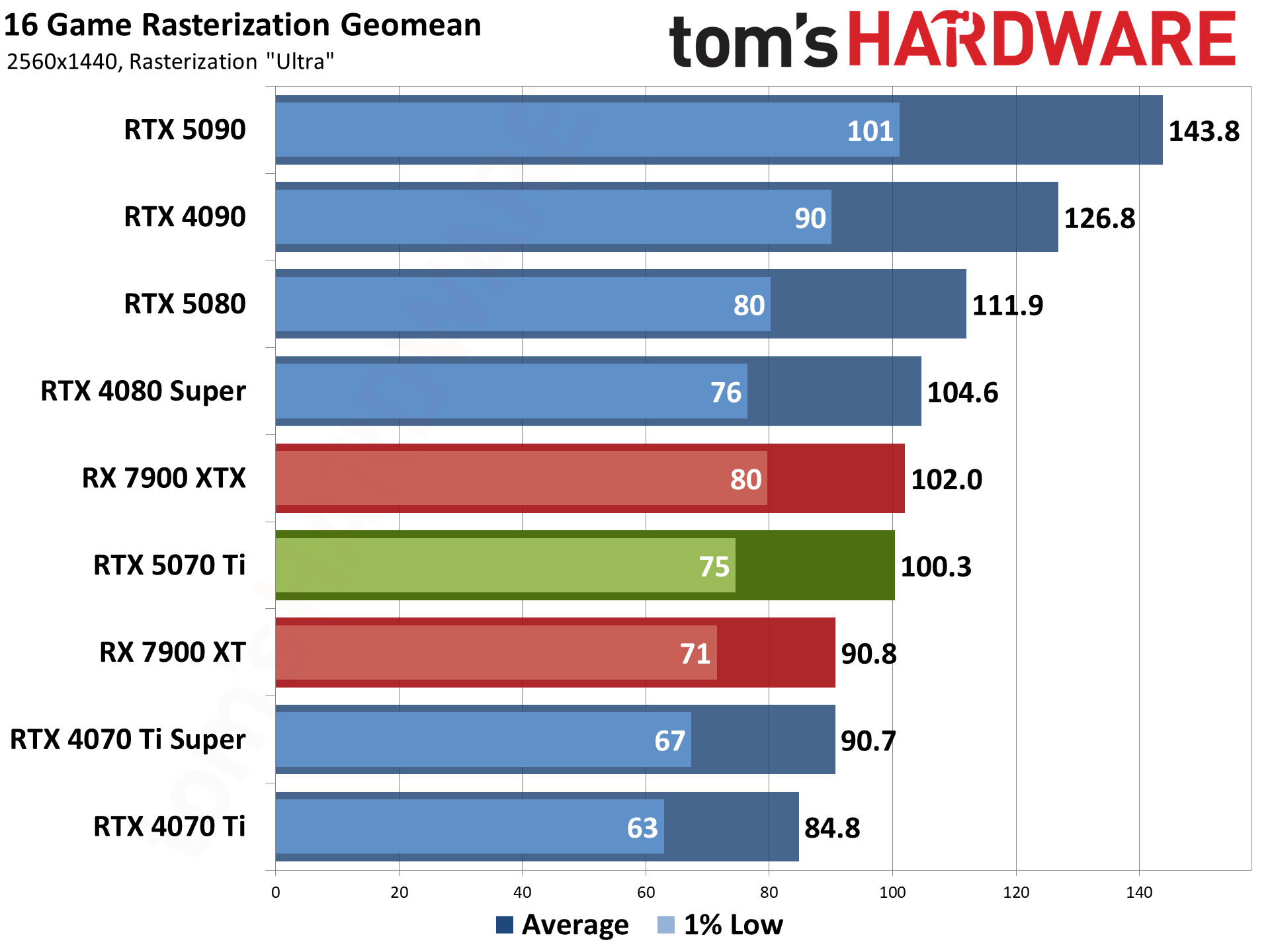
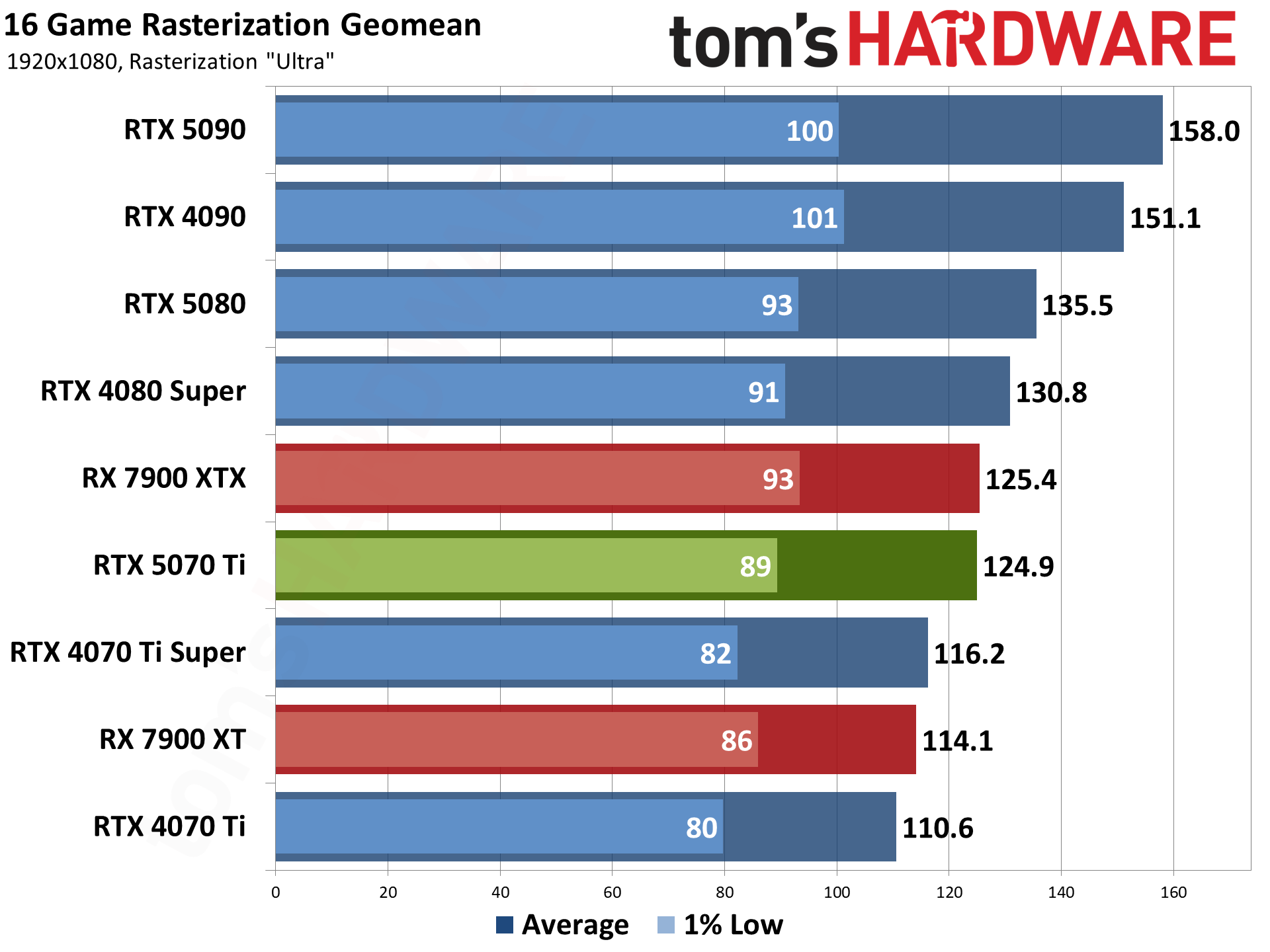
While the Predator Orion 6000 is clearly a powerful gaming system, the GeForce RTX 5070 Ti, one of the best graphics cards, is undoubtedly the component that draws the most attention. Powered by Nvidia’s latest Blackwell architecture, the GeForce RTX 5070 Ti delivers great gaming performance at 1440p (2560x1440) resolution. Not only does it dominate at 1440p, but it is also an extremely competent performer at 4K (3840x2160) resolutions.
The Predator Orion 6000 is eligible for Intel’s Gamer Days campaign, running from August 10 through September 13. When you buy the Orion 6000, you’ll receive free digital copies of Star Wars: Galactic Racer and Tomb Raider: Legacy of Atlantis, launching October 6, 2026, and February 12, 2027, respectively.
With prices for memory, SSDs, and graphics cards always fluctuating, building a custom PC may not always be the best route. Sometimes buying a prebuilt system is not just convenient; it can also offer big savings. When you factor in a significant discount, like the current deal that brings the price down to just $2,099, the Predator Orion 6000 is just hard to ignore.
For a budget-priced 1080p gaming rig with decent enough specs, you're going to need over $1,000 in the current market. Right now, one of the best specs at this price point is this ABS Cyclone Aqua gaming PC for $1,099.99 at Newegg. You're saving $300 on its usual price, and you're getting a machine that will deliver enough juice for solid 1080p gameplay.
This system features an Intel Core i5-14400F processor, along with a current-gen Nvidia GeForce RTX 5060 GPU, 32GB of DDR4-3200 memory, and a 1TB SSD. Right now, you'll struggle to find a competitor that offers similar performance for this machine at a lower price. The current state of the market has pushed 1080p budget machines like this above $1,000, with AI forcing RAM, SSDs, and GPUs to rapidly increase in price. ABS, a brand that Newegg owns and operates itself, is delivering good specs here for a price that still remains affordable.
The ABS Cyclone Aqua gaming PC comes with a 10-core Intel Core i5-14400F CPU, an Nvidia GeForce GeForce RTX 5060 graphics card, a 1TB NVMe SSD with Gen 4 speeds, and 32GB of DDR4-3200 RAM. This mid-range gaming desktop rig is ready for 1080p gaming.View Deal
This is inescapably a machine for 1080p gaming. First, the GPU, with the Nvidia GeForce RTX 5060 shipping with 3,840 CUDA cores, along with 8GB of GDDR7 VRAM. This is an entry-level GPU that sits above the RTX 5050, with Nvidia DLSS 4 support giving it the latest Nvidia software enhancements in-game. Multi-frame generation is the key DLSS 4 feature for gamers on this rig, as it'll give you a decent AI-generated frame rate boost in any resource-heavy games.
You're also getting the Intel Core i5-14400F with this ABS machine, and this Intel Raptor Lake Refresh CPU continues to be an option for gamers in budget pre-builts this year. It has 10 cores, six of which are the performance cores that you'll want for gaming, along with four efficiency cores for multi-threaded work, and a clock speed that can boost up to 4.7 GHz. Yes, the Intel i5-14400F falls behind its AMD rivals for performance these days, but at 1080p on a budget rig, the gap doesn't make much difference.
You're also getting 32GB of GSkill Ripjaws V Series DDR4-3200 memory in this rig. DDR4 is an unfortunate compromise at this price point, so no DDR5 here, but with RAM costs continuing to be as high as they are, we'll be expecting an extended lifespan for DDR4 machines anyway. You also get 1TB of SSD storage, thanks to the Kingston SNV3S M.2 2280, offering Gen 4 speeds and giving you enough storage for a couple of big game installations, at least.
RAM and SSD pricing means that even budget PCs are getting more expensive, but the $1,099 sale price for this ABS Cyclone Aqua RTX 5060 rig isn't a bad one in the current market. These specs will give you enough power for 1080p gaming for the next few years, at least, while the price makes it a competitive option that few other pre-built machines on sale can beat right now.
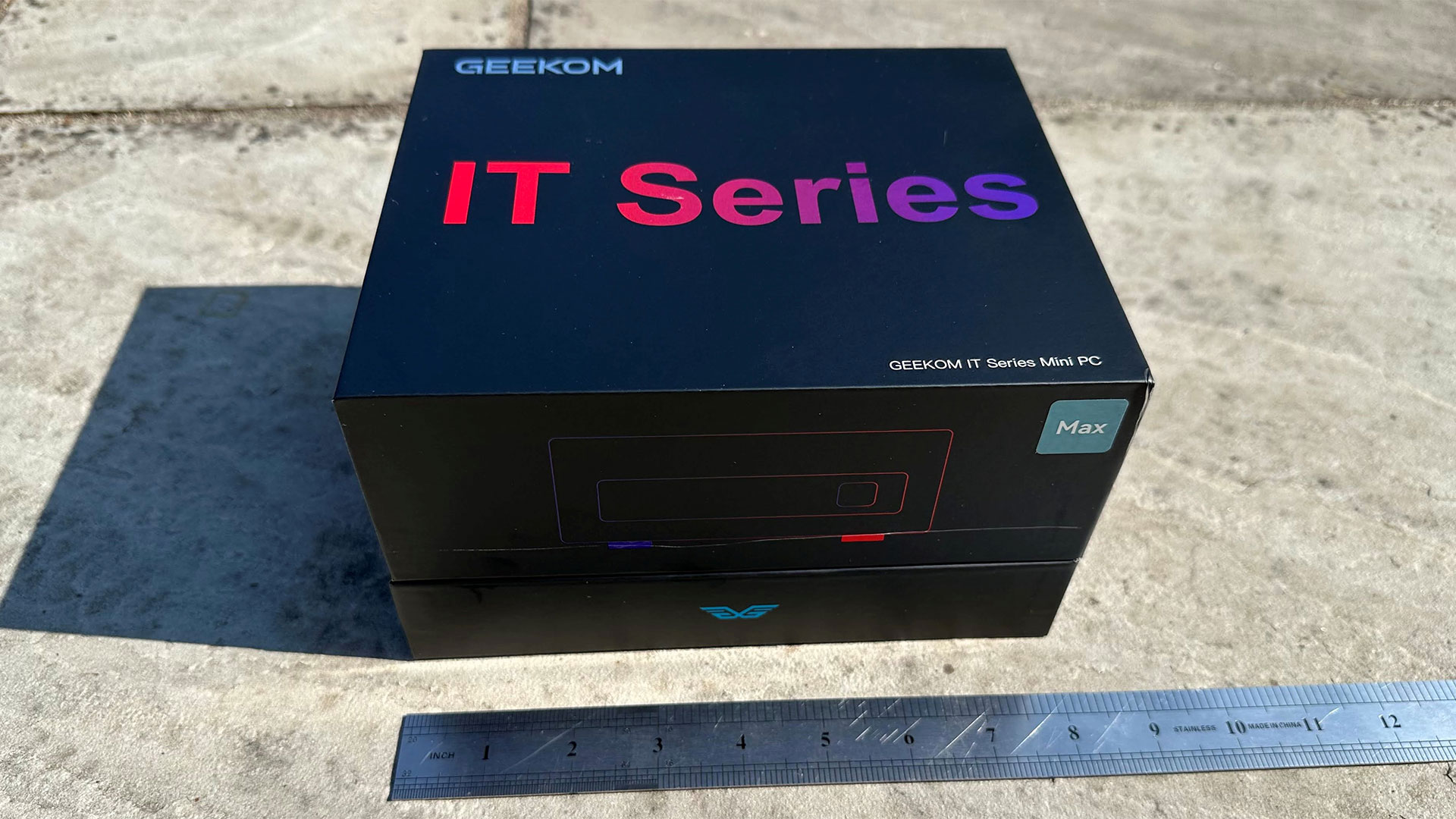
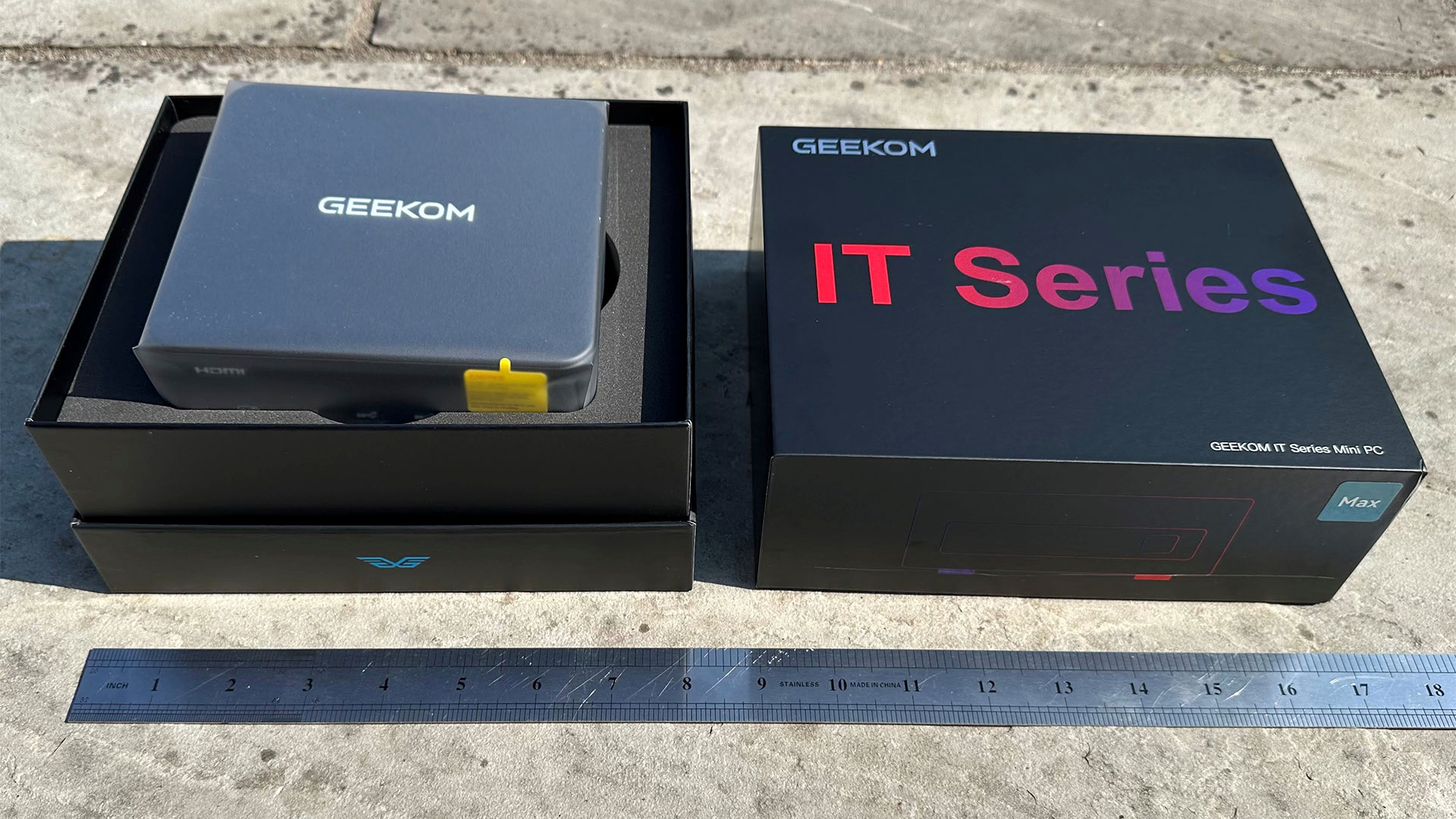
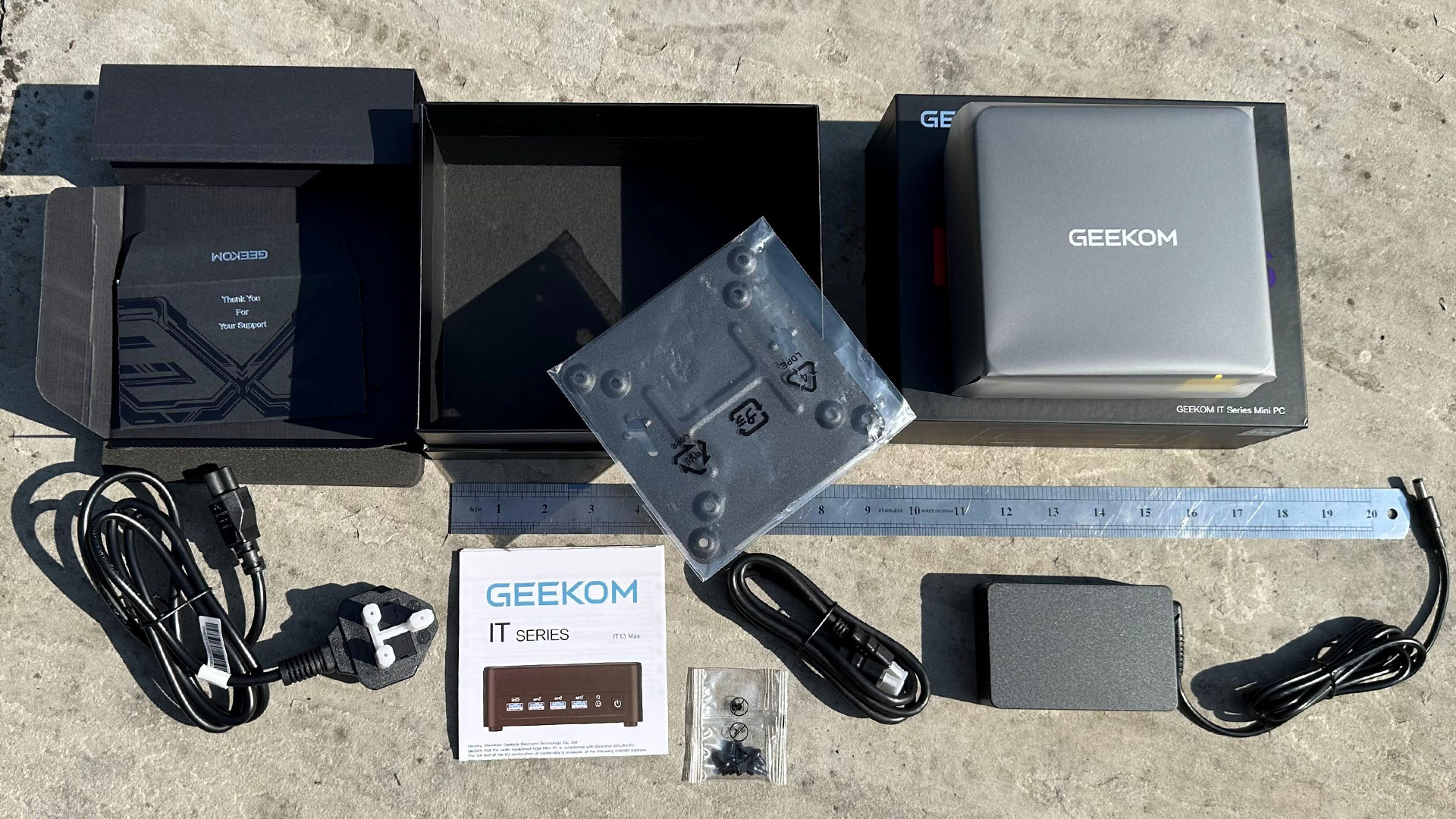
The strategy of using last-gen laptop parts in mini PCs used to mean excellent performance at competitive prices. At least, it did until the RAMpocalypse swept across tech. Nevertheless, Geekom is pushing the idea that its IT13 Max, using a Core Ultra 9 185H at $799, offers a value option in mid-2026. Looking at some of the other prices for mini PCs we’ve seen recently, it might be right.
Other than the reasonable Ultra 9 tier price for the performance, RAM and storage in the current market, Geekom delivers a very competent mini PC here. It looks like an unassuming, business-like machine from the outside, but has plenty of ports, easy internal access, and is very sturdy.
Design of the Geekom IT13 Max 2026
Tom's HardwareTom's HardwareTom's Hardware
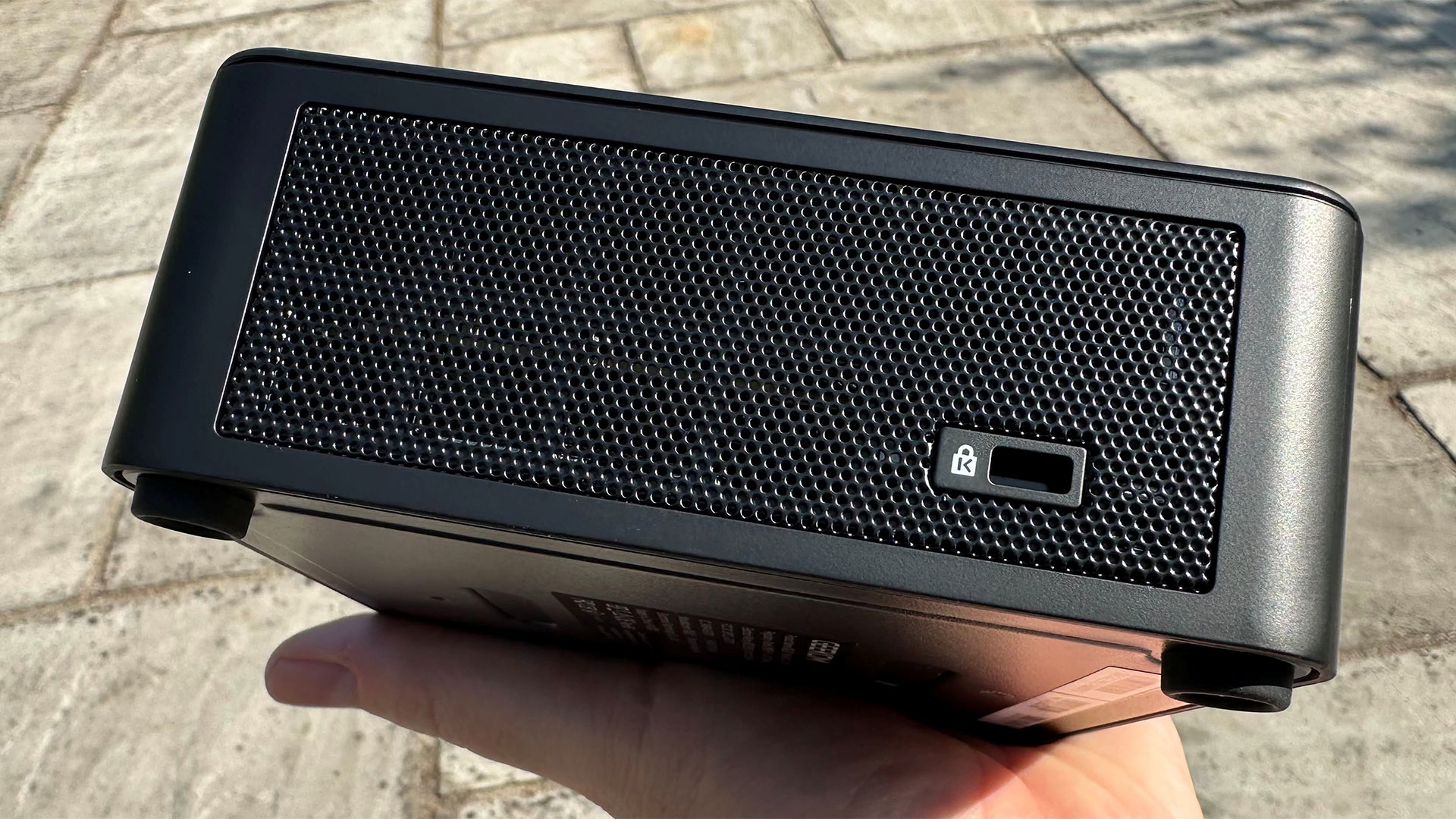
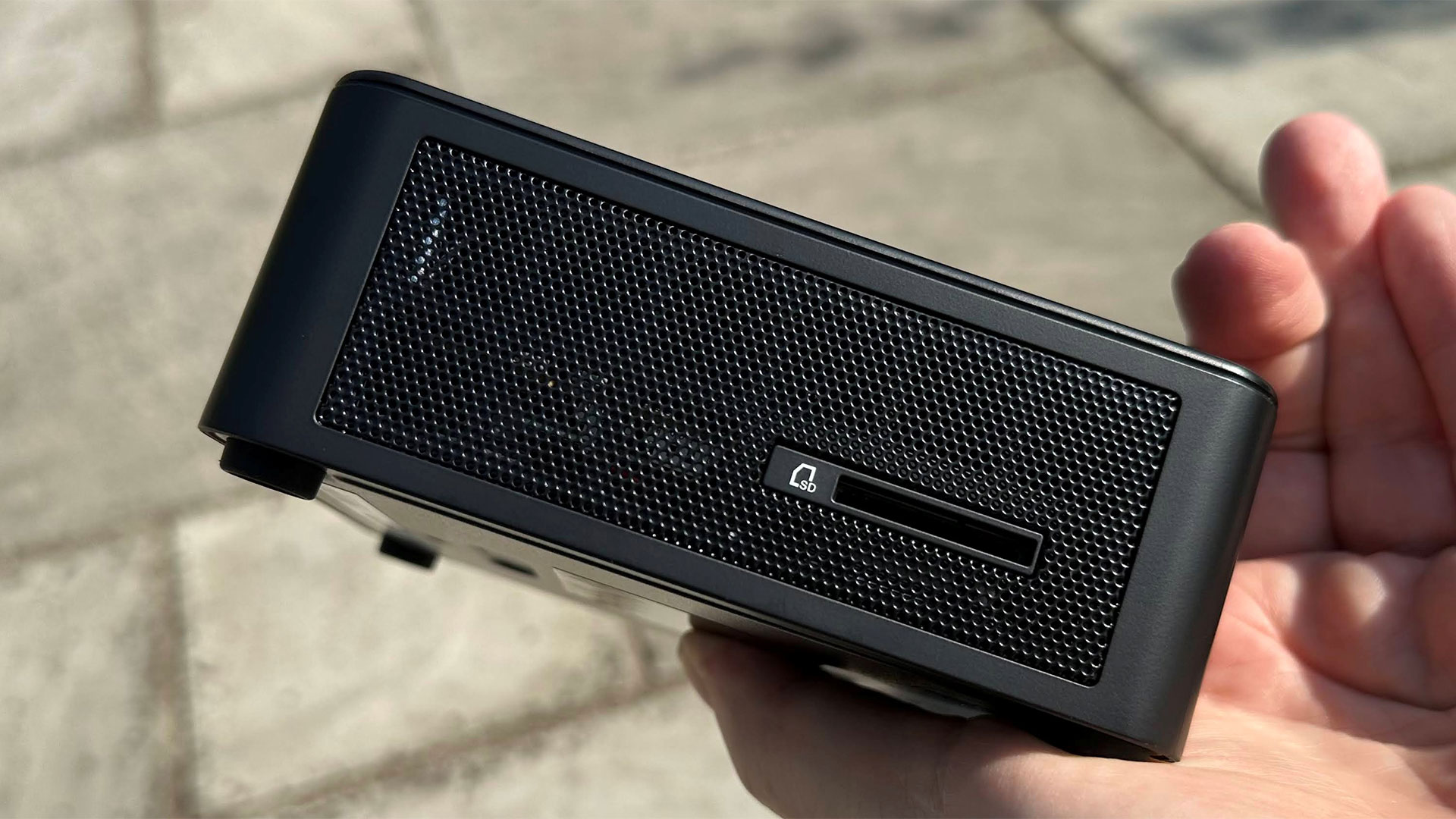
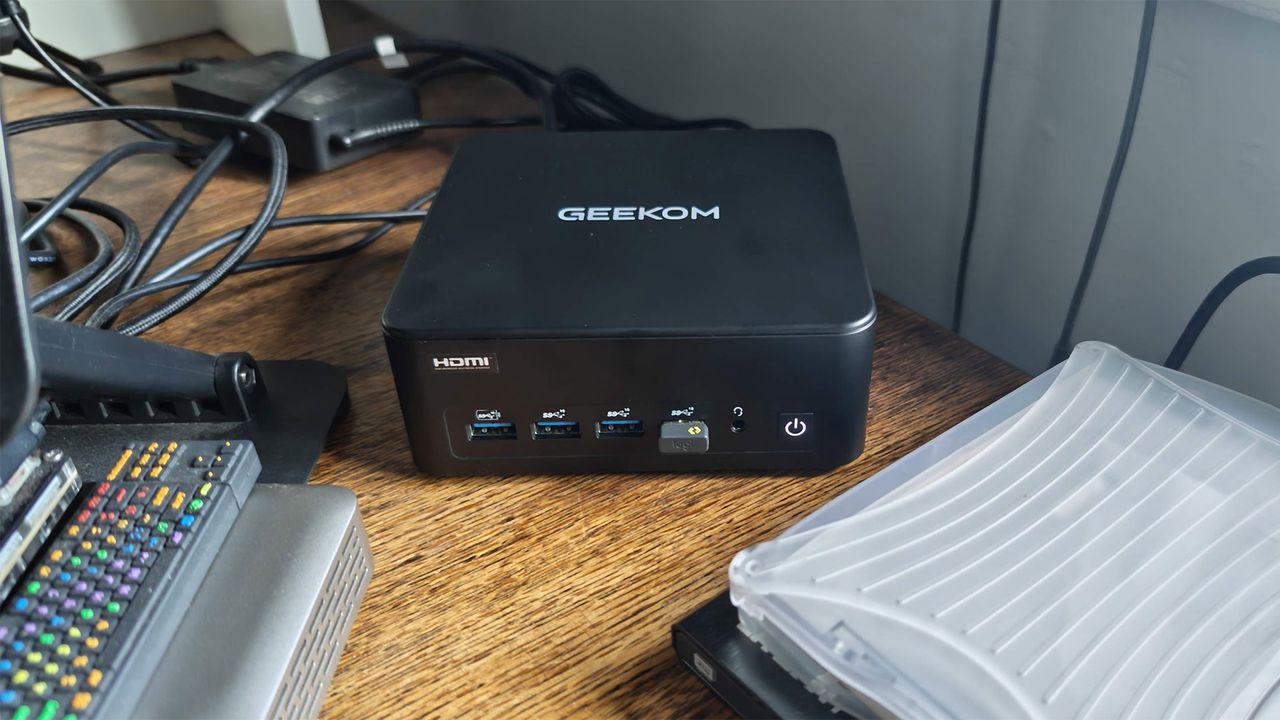
Geekom’s new IT13 Max 2026 follows a very traditional NUC design. With its just-under-a-liter volume, this black device is just slightly bigger in every dimension than the MSI Cubi NUC AI+ 3MG (0.8 L), and shares a lot of the matte dark understated design and subtle branding of that unit. Later on, you’ll notice this pair has a lot in common when it comes to performance, too, despite being two Intel generations apart and featuring a huge price gap.
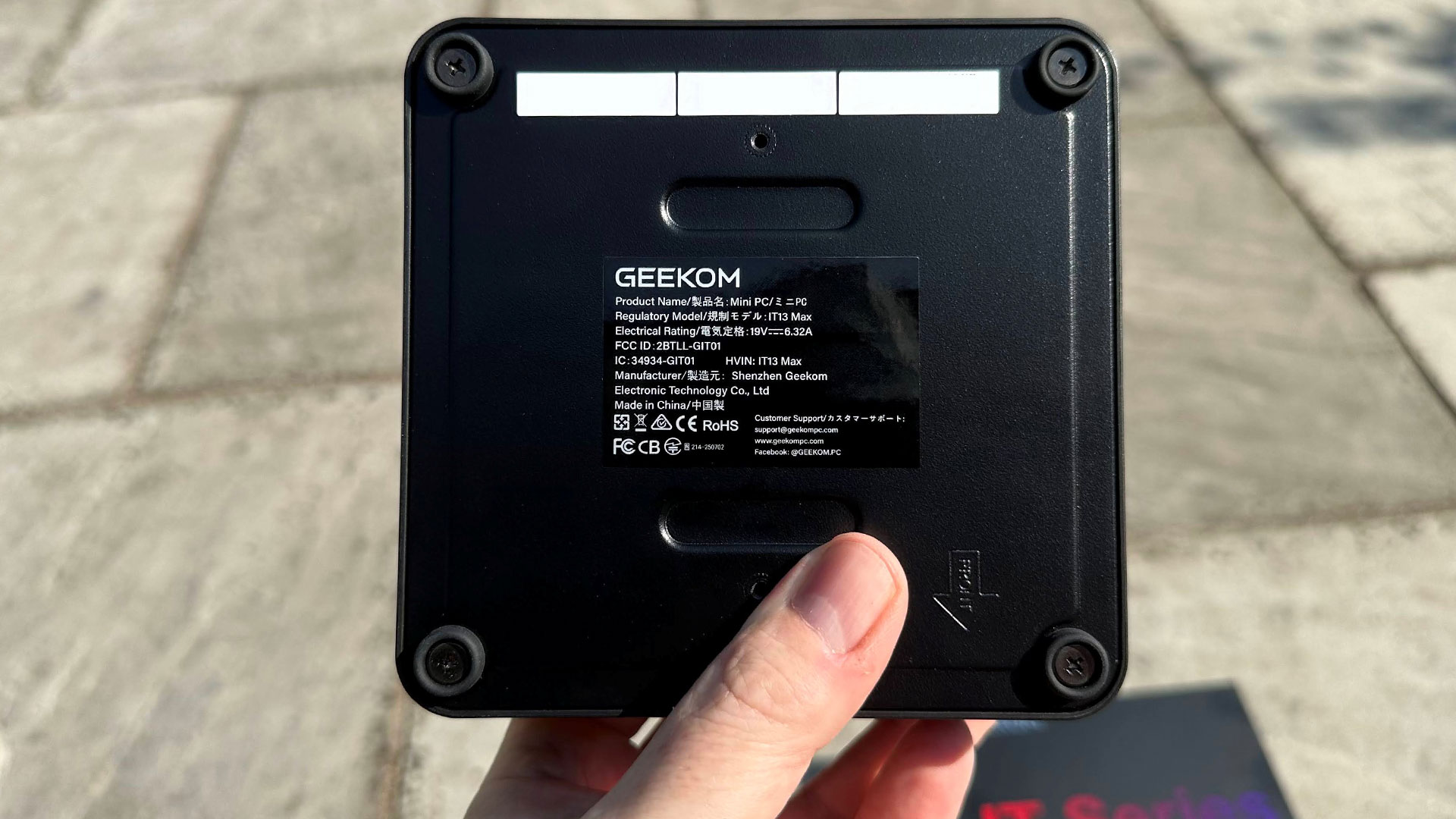
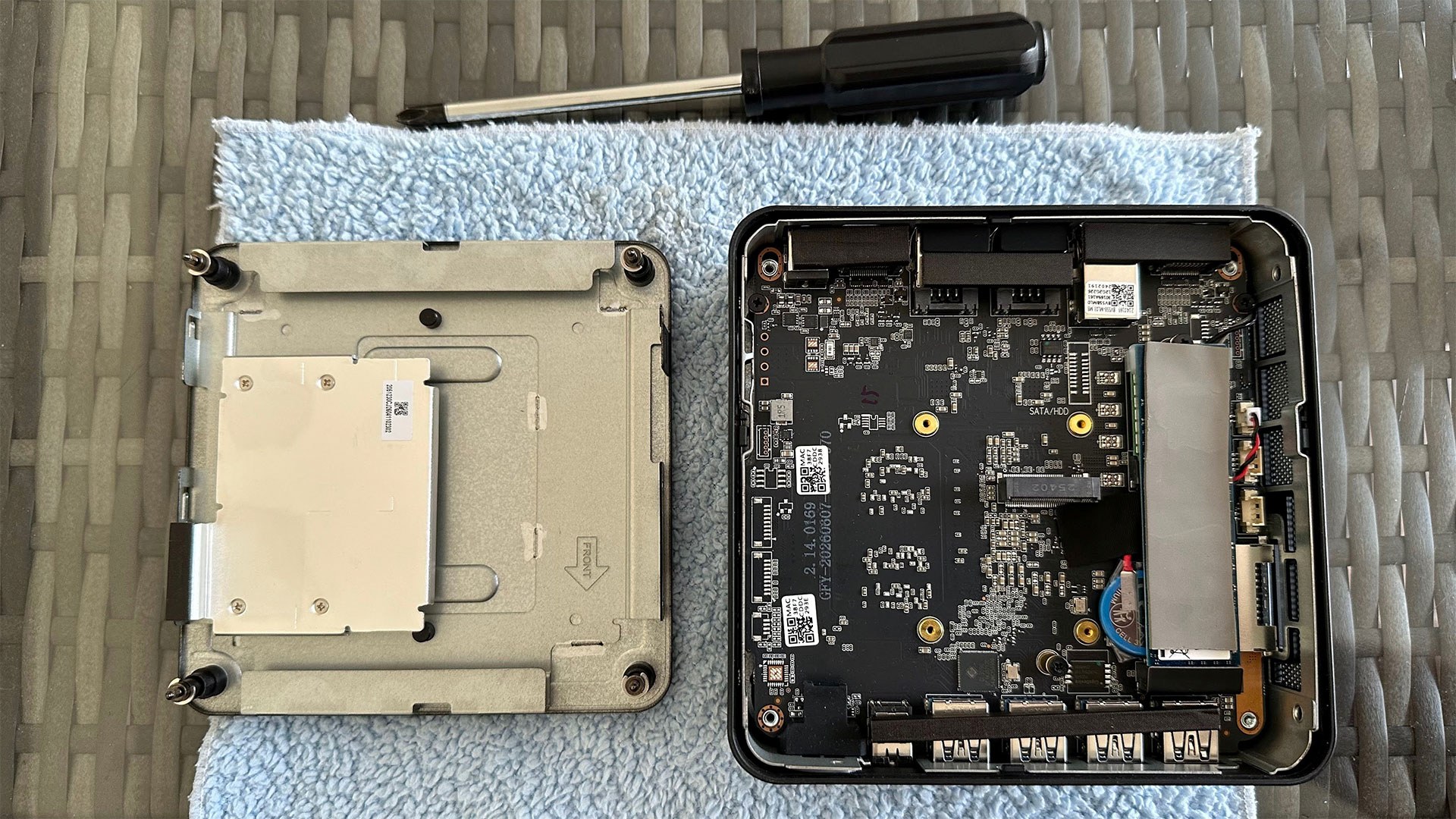
Geekom uses a matte plastic outer shell here, but the perforated venting areas to the sides and removable bottom plate are metal, as is an inner chassis. It is pretty easy to get into the IT13 Max, as there are just four screws positioned in the center of the rubber feet.
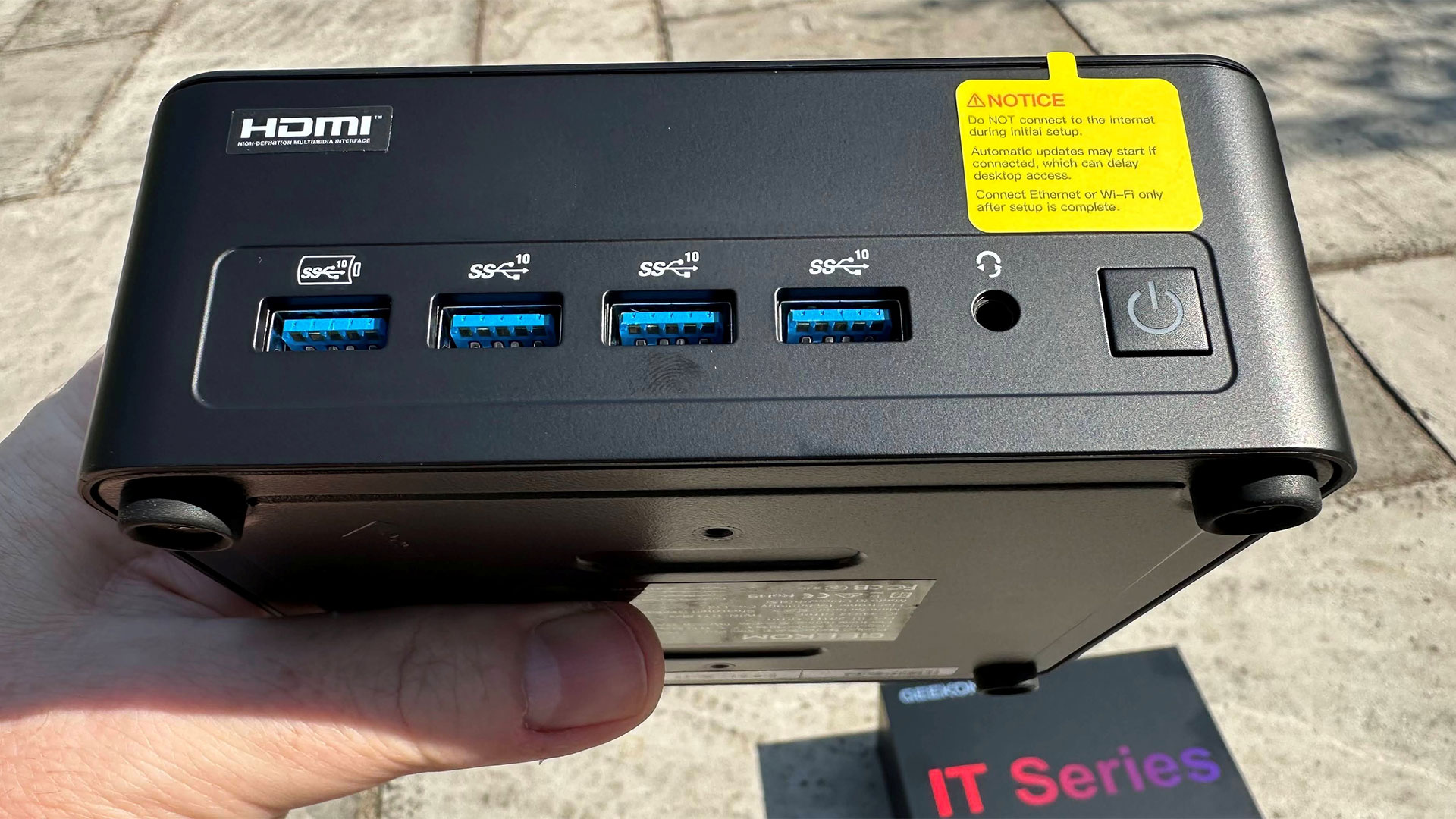
Users have access to power and headphones on the front panel, and a wide range of fast USB, networking, and monitor connection options. Geekom hasn’t implemented any biometrics in the power button, for example, and also eschews the addition of a Copilot button.
Geekom IT13 Max 2026 Specifications
Processor
Intel Core Ultra 9 185H (16C/22T), up to 5.1 GHz, 45W
Graphics
Intel Arc integrated graphics using eight Xe cores
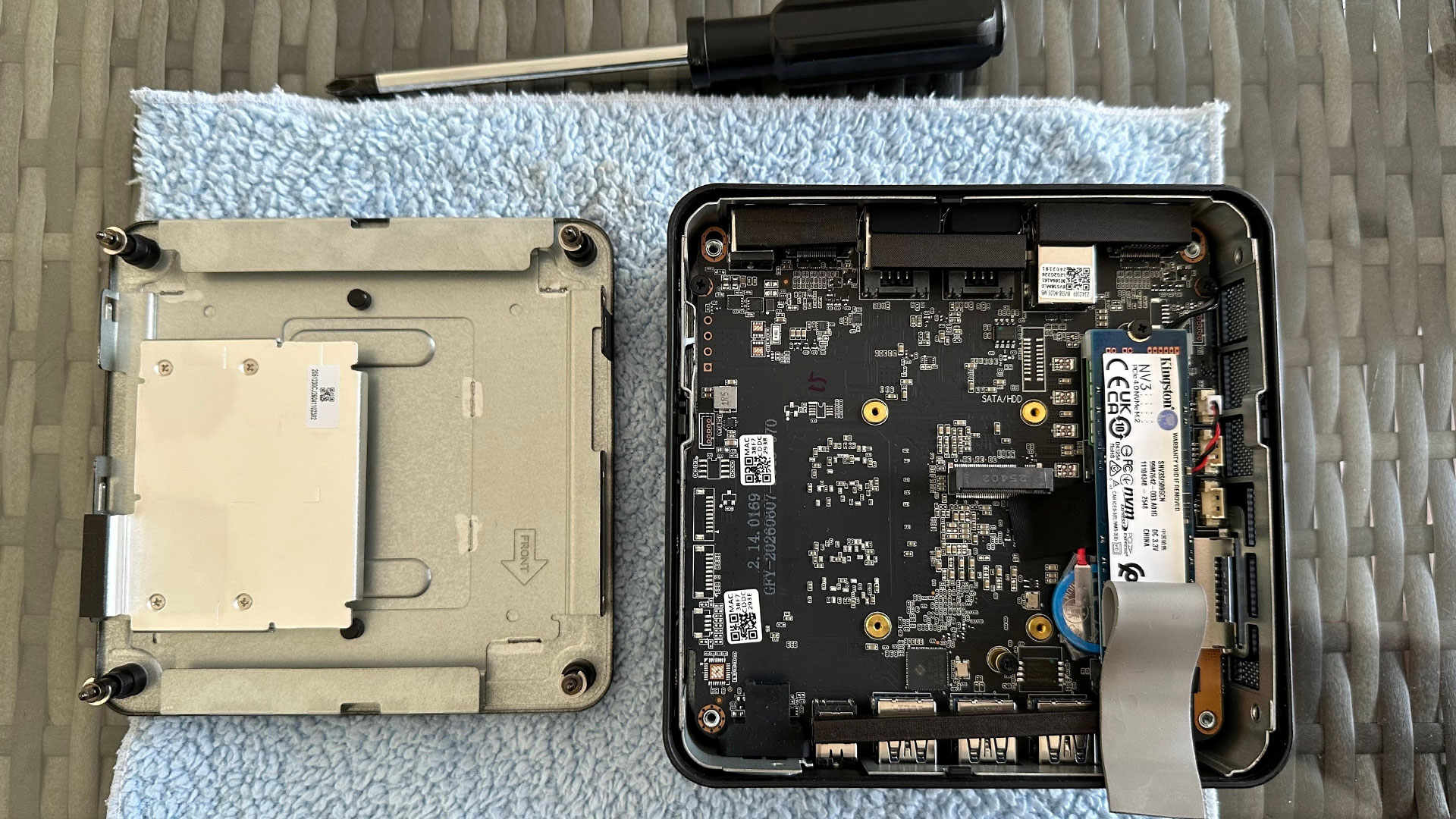
When I decided to look inside, two of the four rubber feet could be unscrewed by hand, but another pair were just a little too tight, so I had to reach for my Phillips-head screwdriver. Once you get into this Geekom mini PC, there’s not much you can do, as the RAM is soldered.
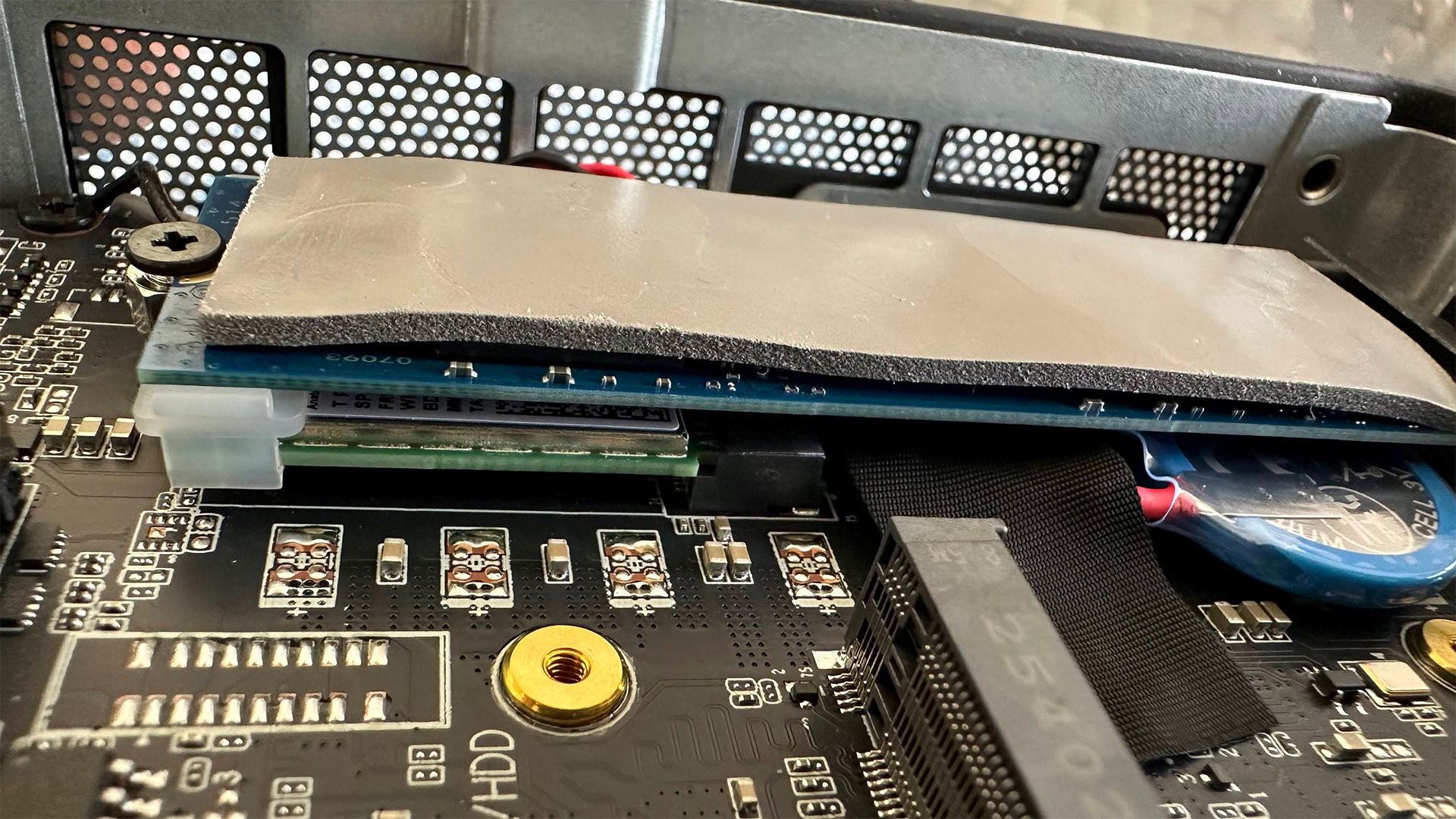
The only upgrades users have access to are swapping the installed M.2 devices. There’s an M.2 2280 SSD slot with the NVMe PCIe4 500GB Kingston drive and thermal pad in place. Under that is the system’s M.2 2230 wireless connectivity card. To the side of these, I saw a vacant M.2 2242 slot. Oddly, the spec sheet I got from Geekom mentioned 2.5-inch SATA SSD/HDD expansion options, and not M.2 2242. There seemed to be an unused SATA header area on the motherboard, so perhaps specs were changed at a late stage of development.
The system offers a good array of ports built-in, and I didn’t want or need to reach for a docking solution during testing.
On the front of this mini PC, there is a generous row of four USB 3.2 Gen 2 Type-A ports. One of these supports always-on smart device charging. Next to these ports is a 3.5 mm audio jack and an inset power button with a white LED to indicate it is powered up.
On the left side, there is a full-size SD card reader, and on the right, you will find a Kensington lock slot.
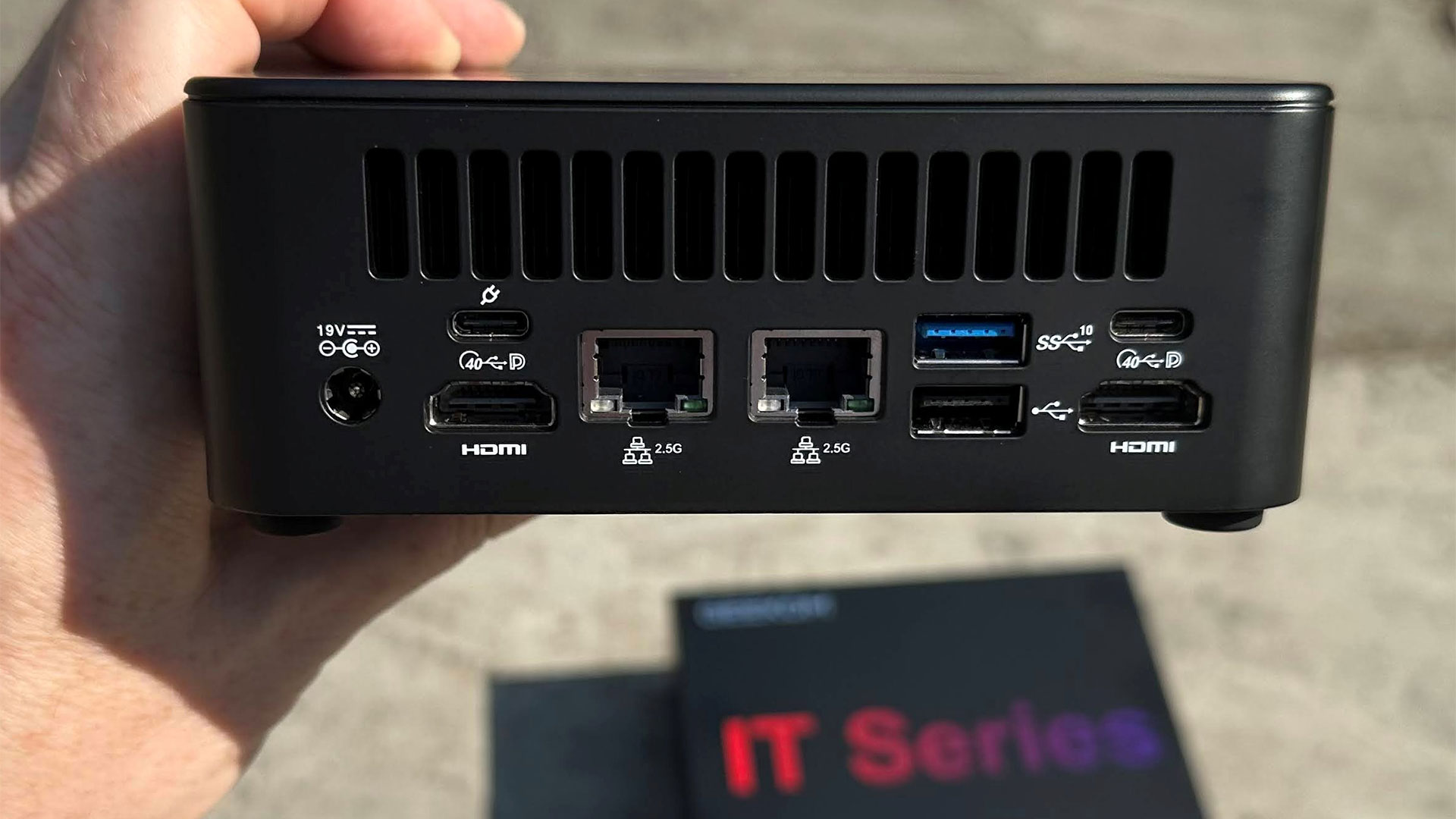
At the rear of the IT13 Max 2026, there’s a series of vents, and below them, most of the I/O. This includes a USB 3.2 Gen 2 Type-A port, a USB 2.0 Type-A, two USB4 Type-C (both with DP-Alt, one offers Power in), two RJ-45 2.5 Gbps Ethernet ports, a pair of HDMI 2.0 ports, and a DC‑in barrel jack for the supplied power brick.
Test System Setup
System
CPU
(i)GPU
Memory
Chassis
GMKtec EVO-T2
Intel Core Ultra X7 358H (16C/16T: 4P + 8E + 4 LPE), up to 4.8 GHz
Intel Arc B390 (Xe3, 12 cores, up to 2.5 GHz)
2x 32GB LPDDR5X-8533 soldered
Dual-fan,1.72 liters
MSI Cubi NUC AI+ 3MG
Intel Core Ultra 9 386H (16C/16T: 6P + 8E + 2LPE), up to 4.9 GHz
Intel Graphics (Xe3, 4 Cores, up to 2.5 GHz)
2x 16GB DDR5-5600 Sodimm
Single fan, 0.52 liters
Geekom A9 Max 2026
AMD Ryzen AI 9 HX 470 (12C / 24T: 4x Zen 5 , 8x Zen 5c), up to 5.2 GHz
Radeon 890M (RDNA 3.5, 16 CUs, up to 3.1 GHz)
1x 32GB DDR5-5600 Sodimm
Single fan, 0.82 liters
Arctic Senza AI 370
AMD Ryzen AI 9 HX 370 (12C / 24T: 4x Zen 5 , 8x Zen 5c), up to 5.1 GHz
Radeon 890M (RDNA 3.5, 16 CUs, up to 2.9 GHz)
2x 16GB LPDDR5X‑8000 soldered
Passive, 4.82 liters
Beelink SER10 MAX
AMD Ryzen AI 9 HX 470 (12C / 24T: 4x Zen 5 , 8x Zen 5c), up to 5.2 GHz
Radeon 890M (RDNA 3.5, 16 CUs, up to 3.1 GHz)
2x 32GB DDR5-5600 Sodimm
Single fan, 0.81 liters
Geekom IT13 Max 2026
Intel Core Ultra 9 185H (16C/22T: 6P + 8E + 2 LPE), up to 5.1 GHz
Intel Arc graphics (Xe-LPG, 8 cores, up to 2.35 GHz)
2x 16GB DDR5-5600 Soldered
Single fan, 0.97 liters
GMKtec Evo-X3
AMD Ryzen AI Max+ 395 (16C/32T: 16x Zen 5), up to 5.1 GHz
Radeon 8060S (RDNA 3.5, 40 CUs, up to 2.9 GHz)
2x 64GB LPDDR5X-8000 Soldered
Triple-fan, 2.69 liters
Productivity Performance on the Geekom IT13 Max 2026
Geekom boasts of all-round flagship performance from this new mini PC and thankfully skips any outlandish AI-related claims. Now we are getting down to testing, we shall see if there are any glaring weaknesses that come from choosing Intel’s previous-previous-gen silicon.
Geekom has opted for older silicon in the IT13 Max 2026, utilizing Intel’s Core Ultra 9 185H (16C/22T), which boosts up to 5.1 GHz, and shares die space with an Arc iGPU featuring eight Xe cores. This is quite a lot of compute and GPU resources in a little SoC, and that’s why the Ultra 9 185H was one of the top mobile processors a couple of years ago. There’s an NPU on board, too, but it can only muster 11 TOPS according to Intel’s data sheets. The question is if that chip, alongside 24GB of RAM and a 500GB, still stands up.
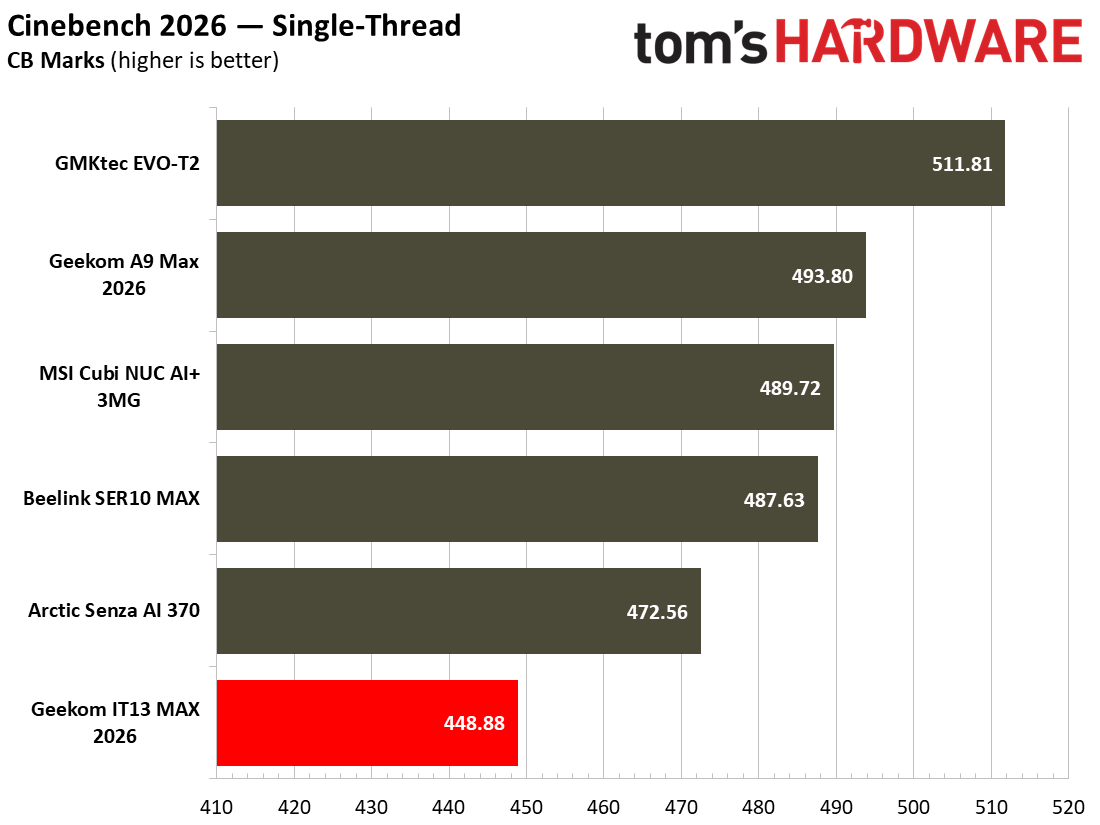
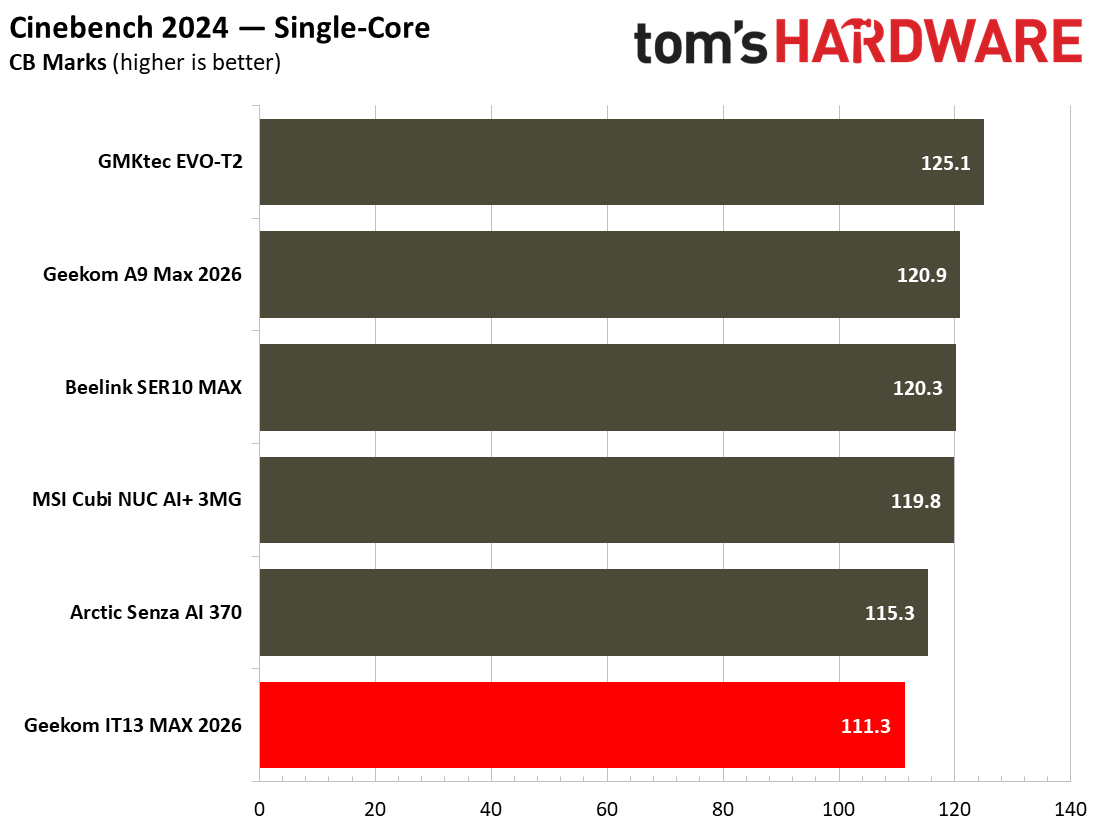
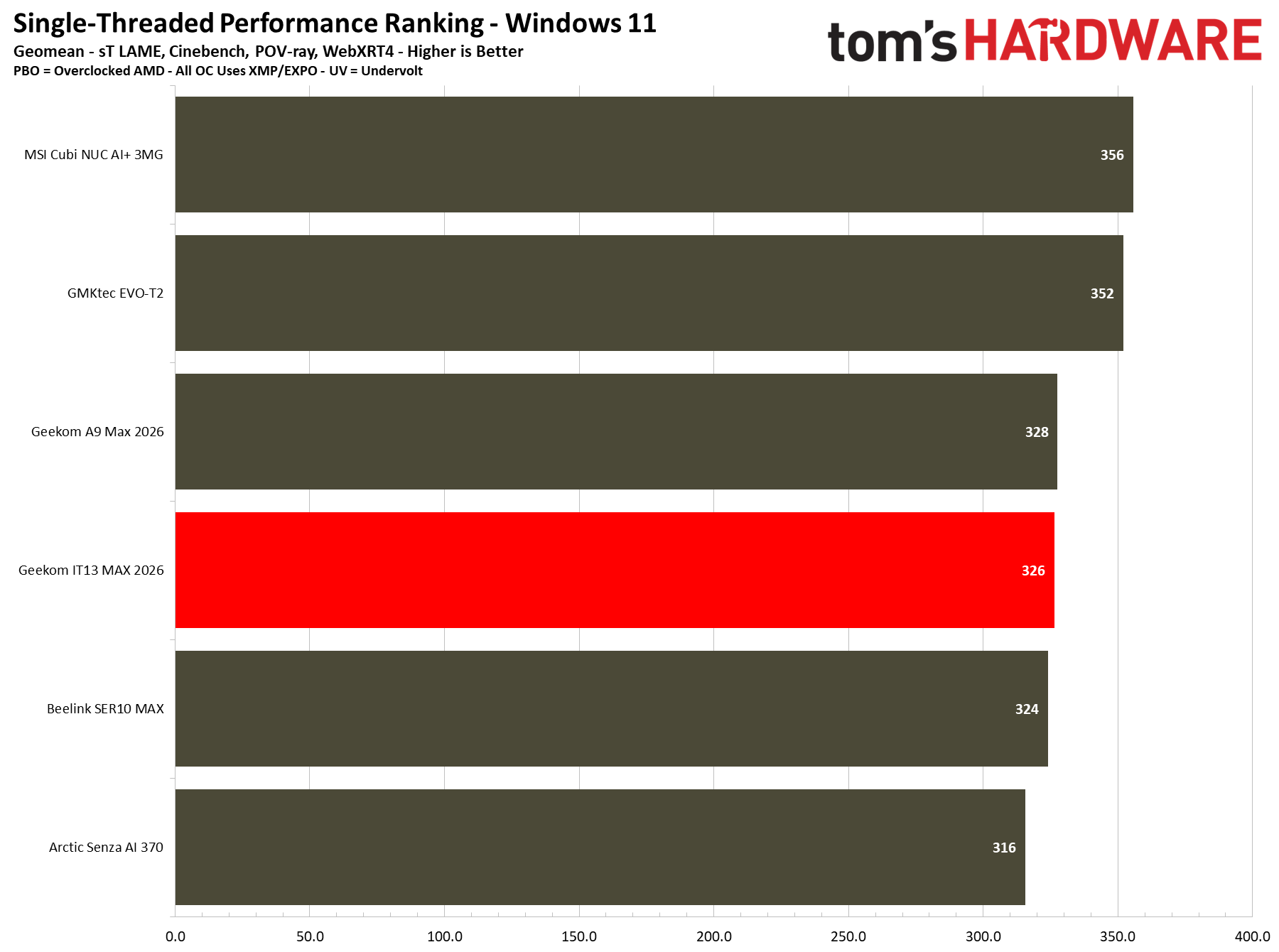
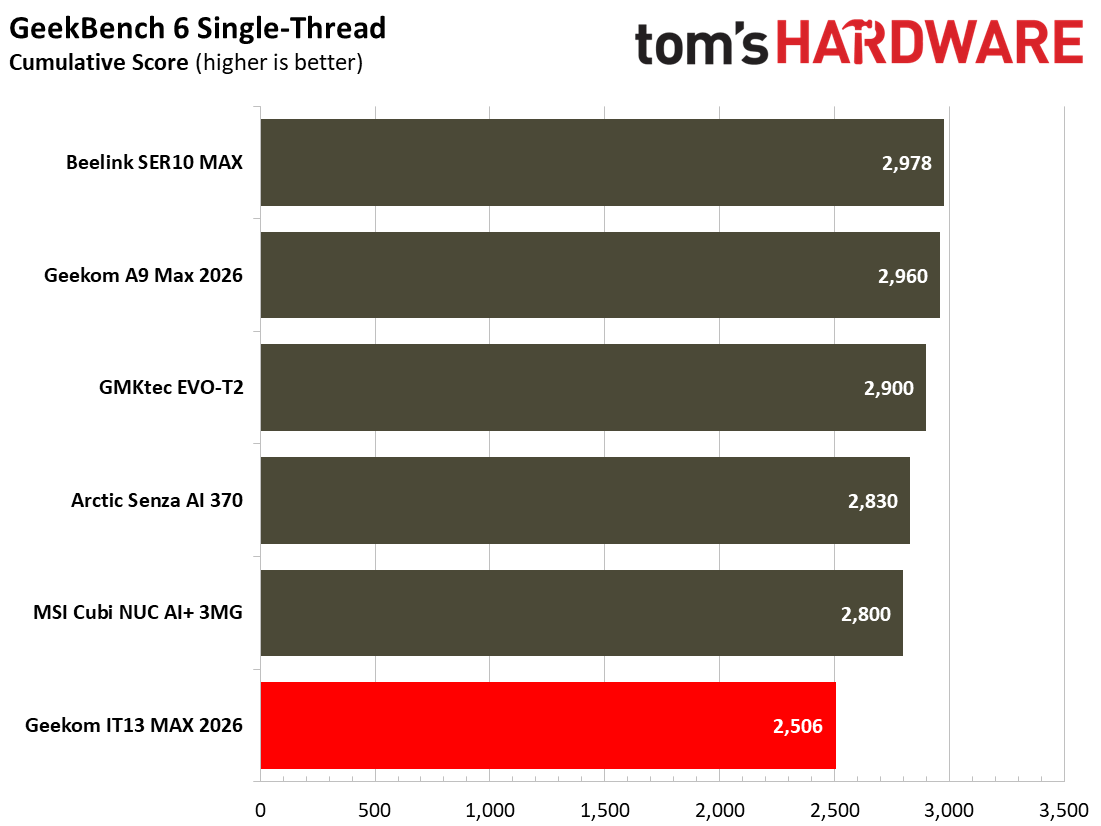
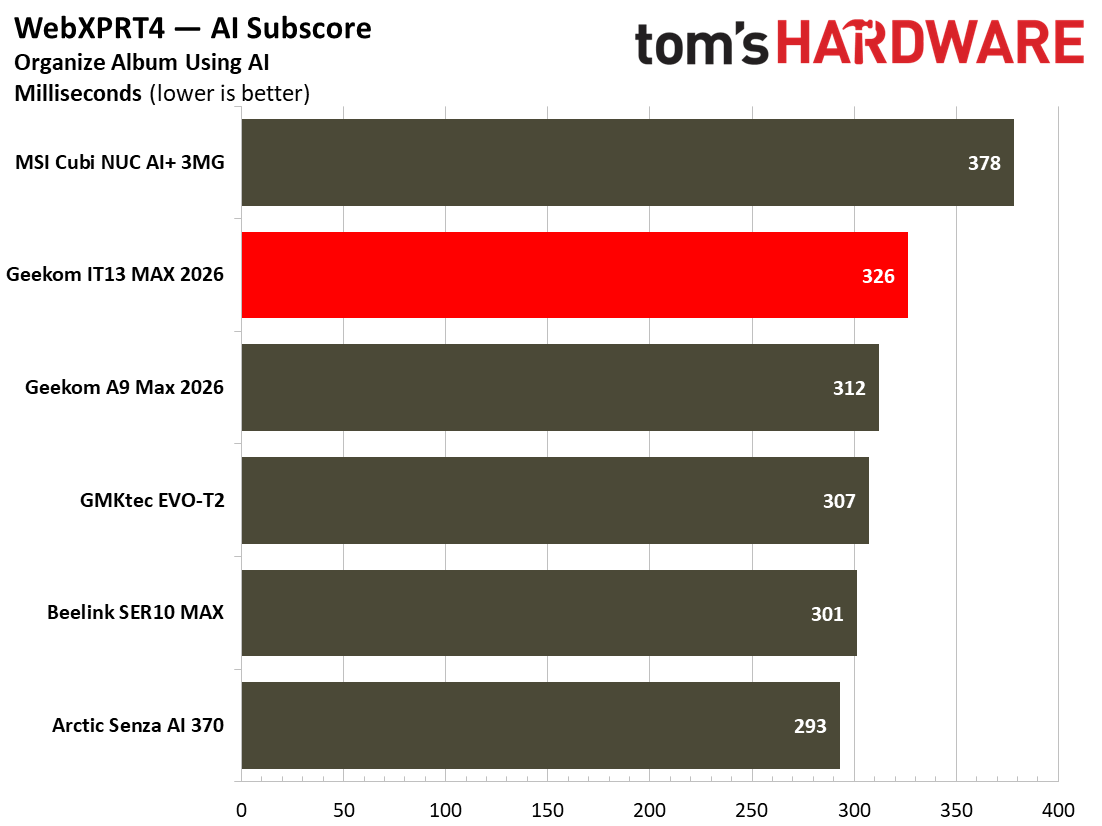
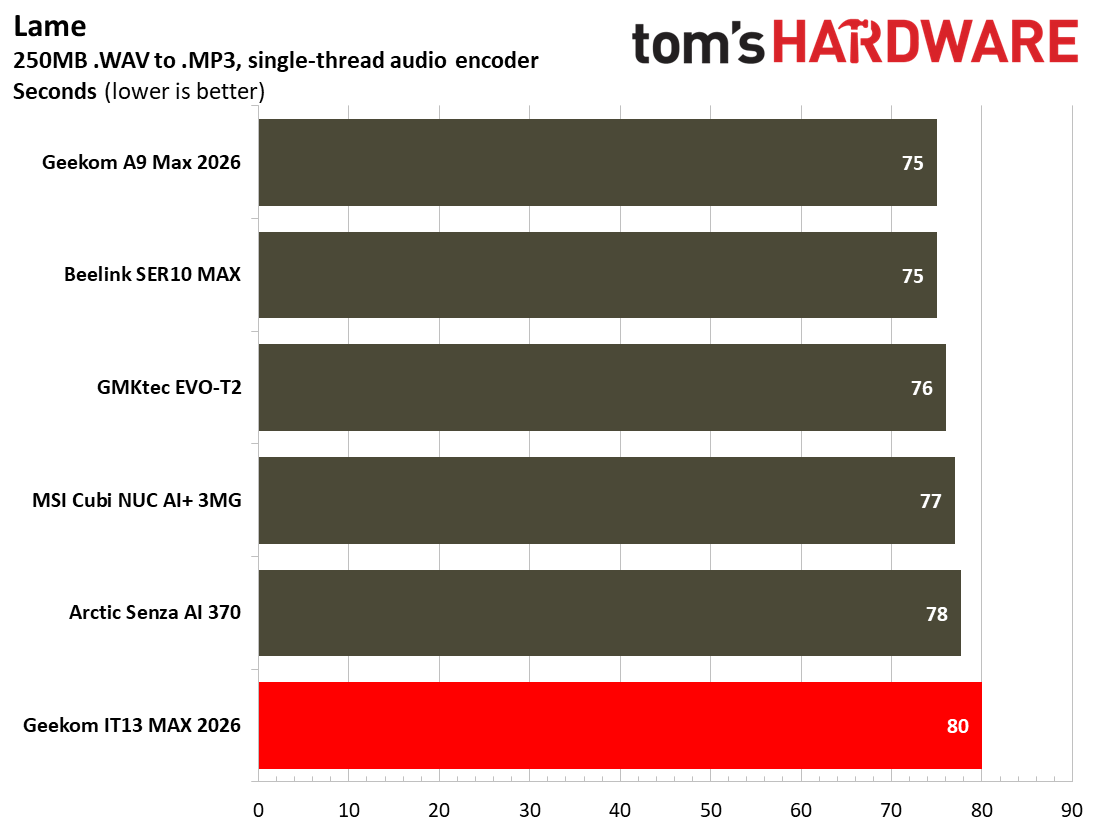
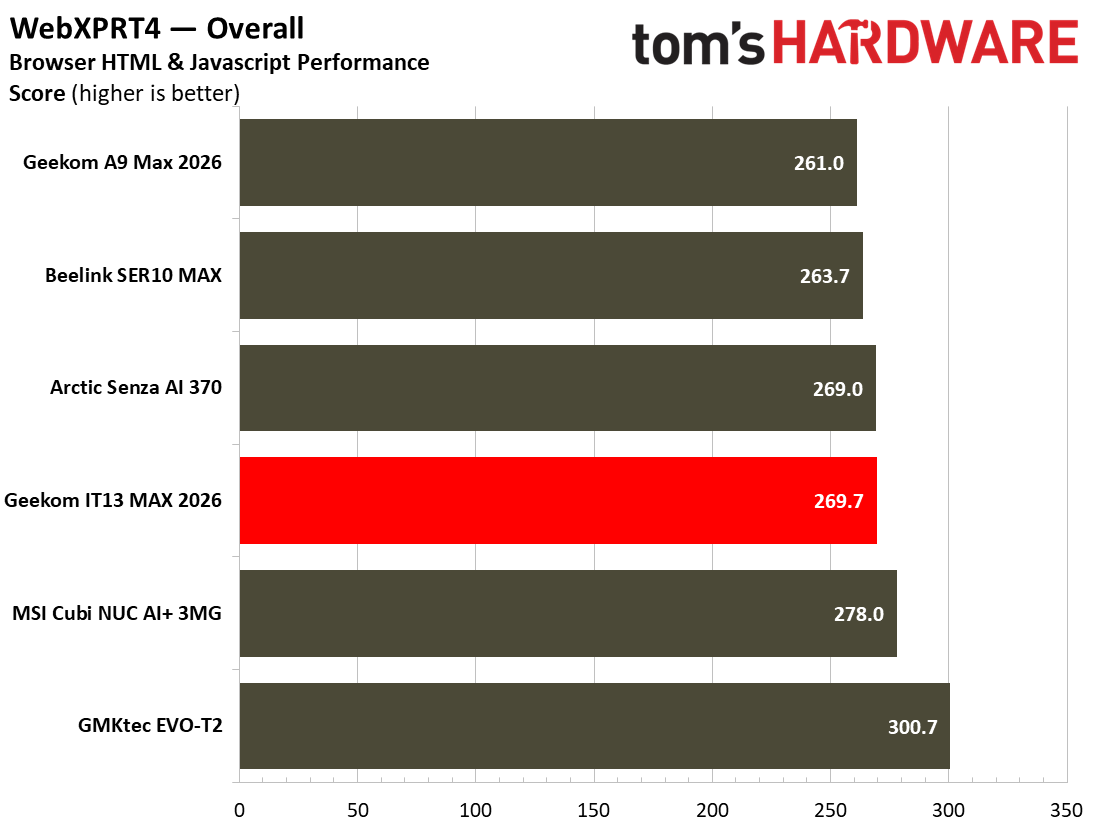
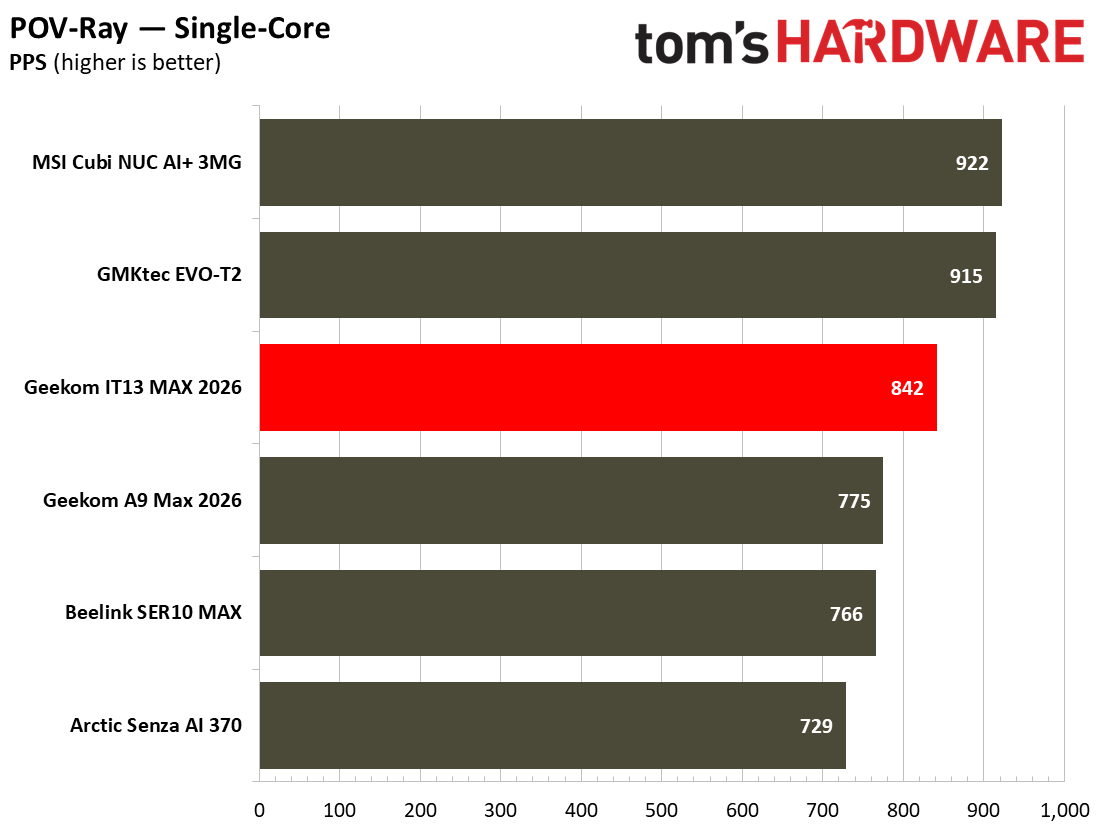
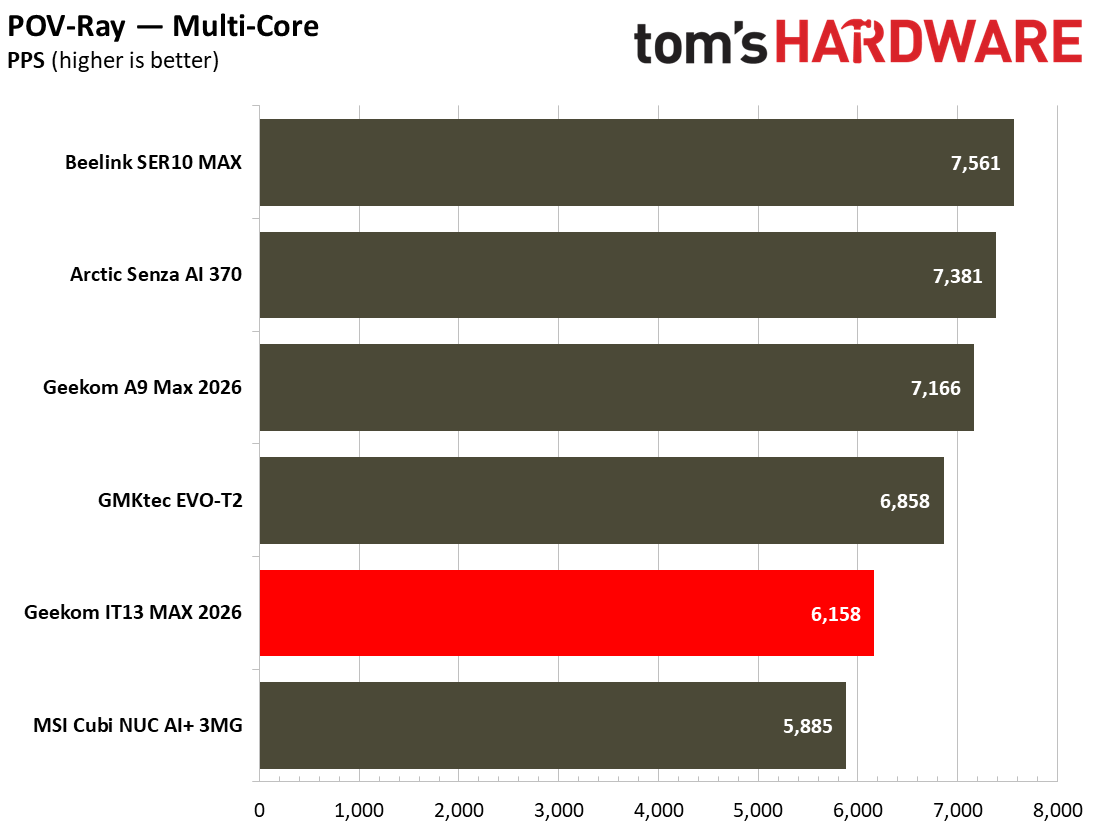
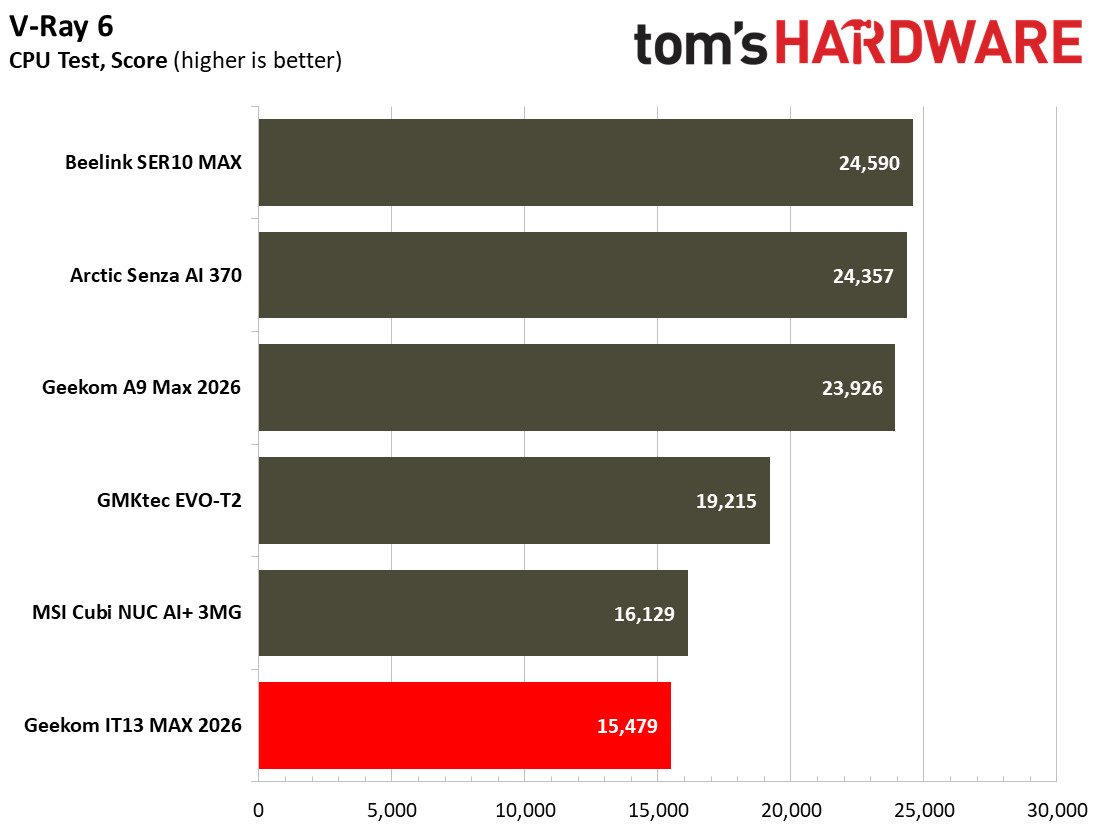
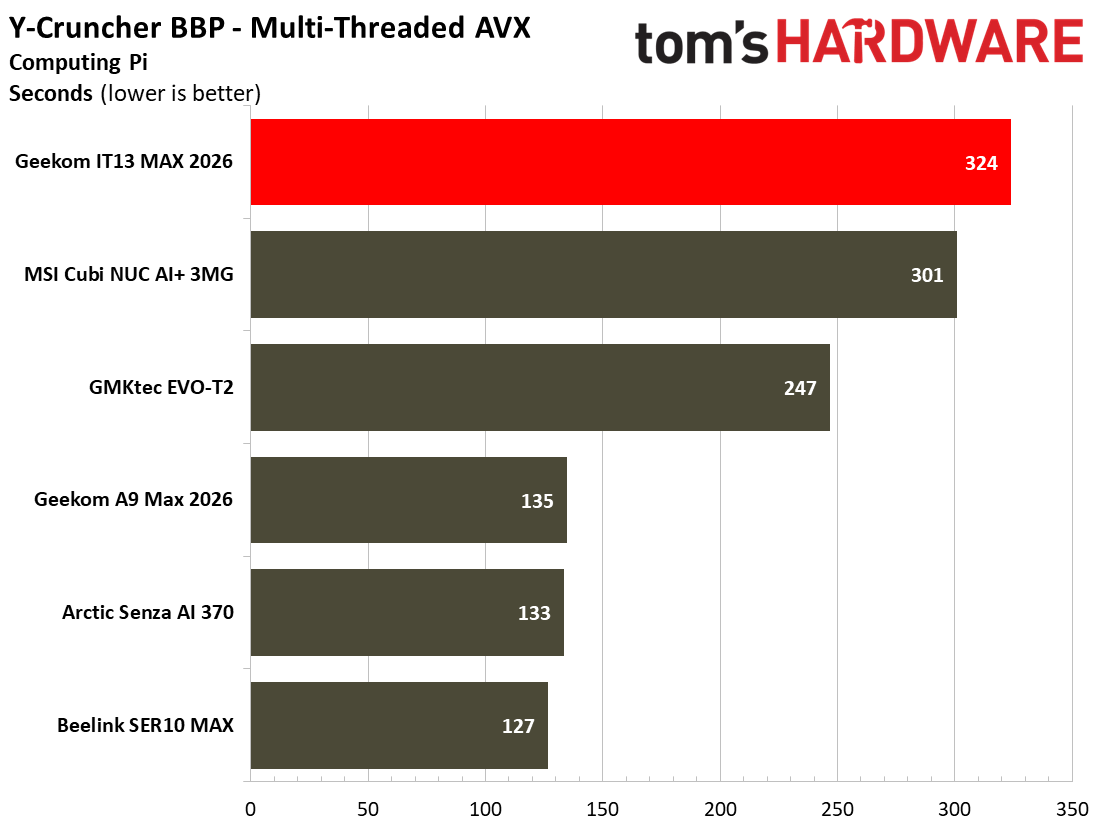
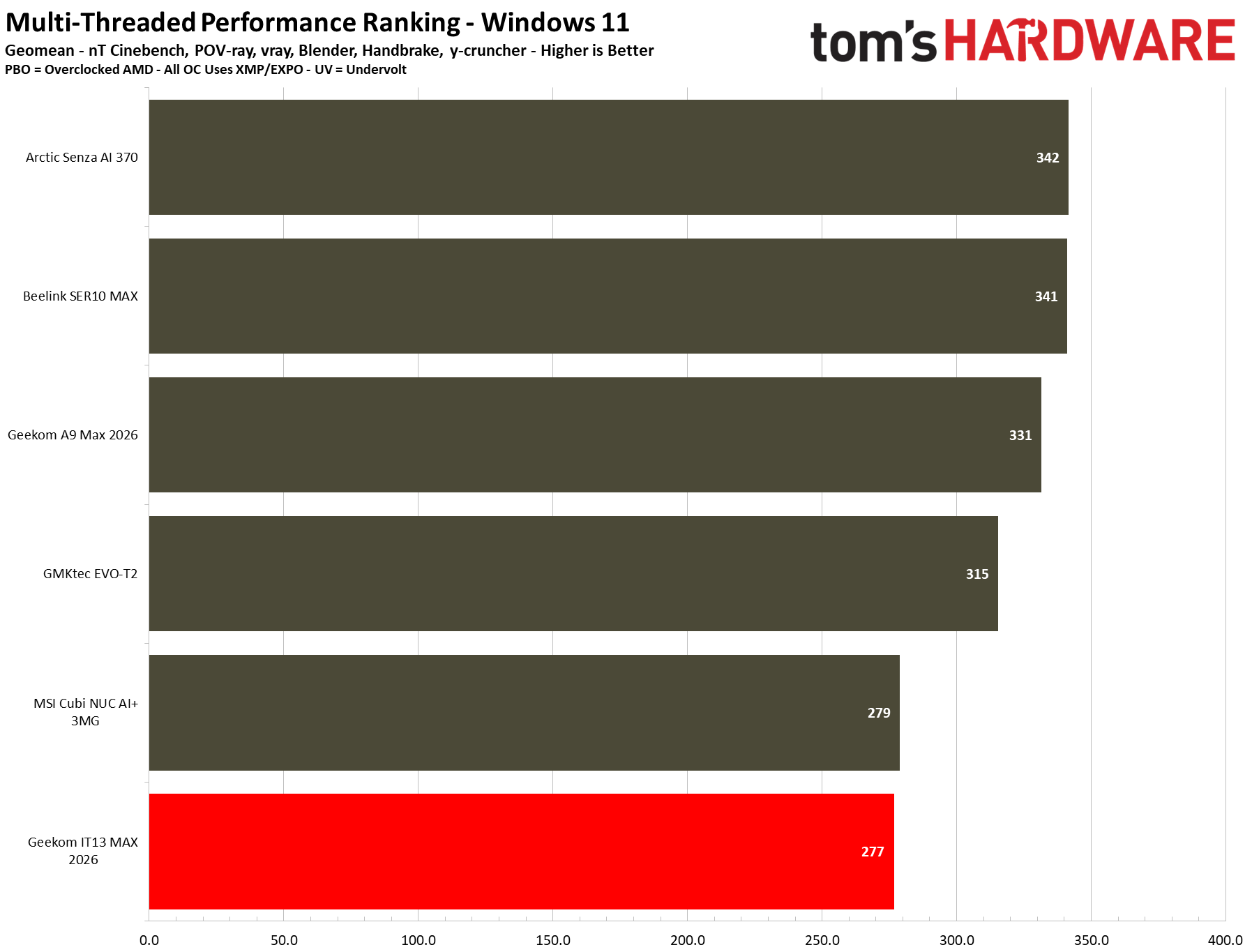
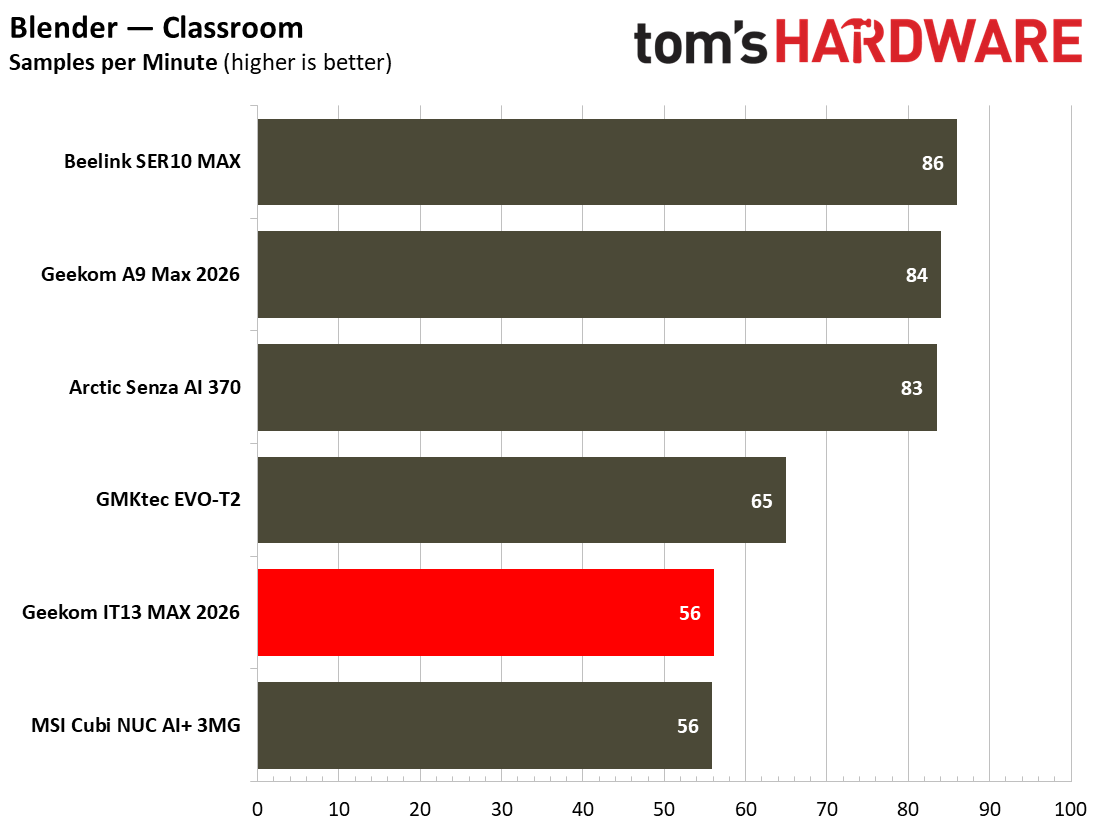
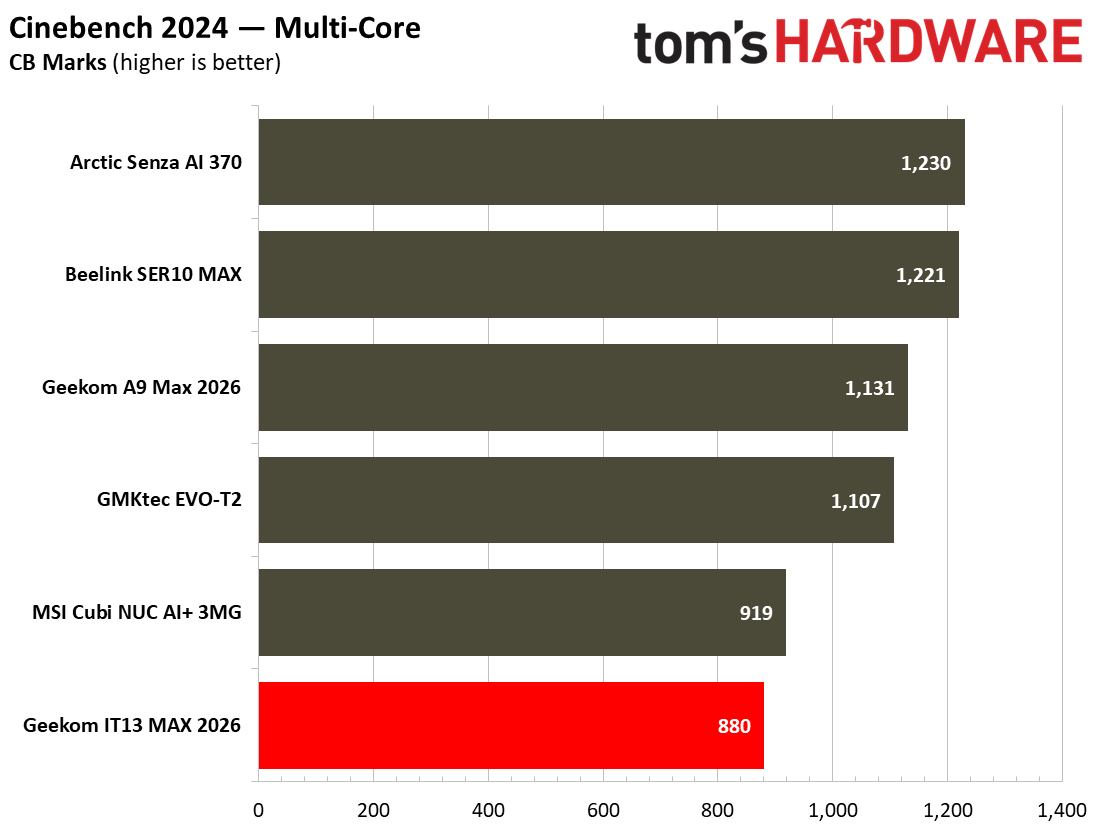
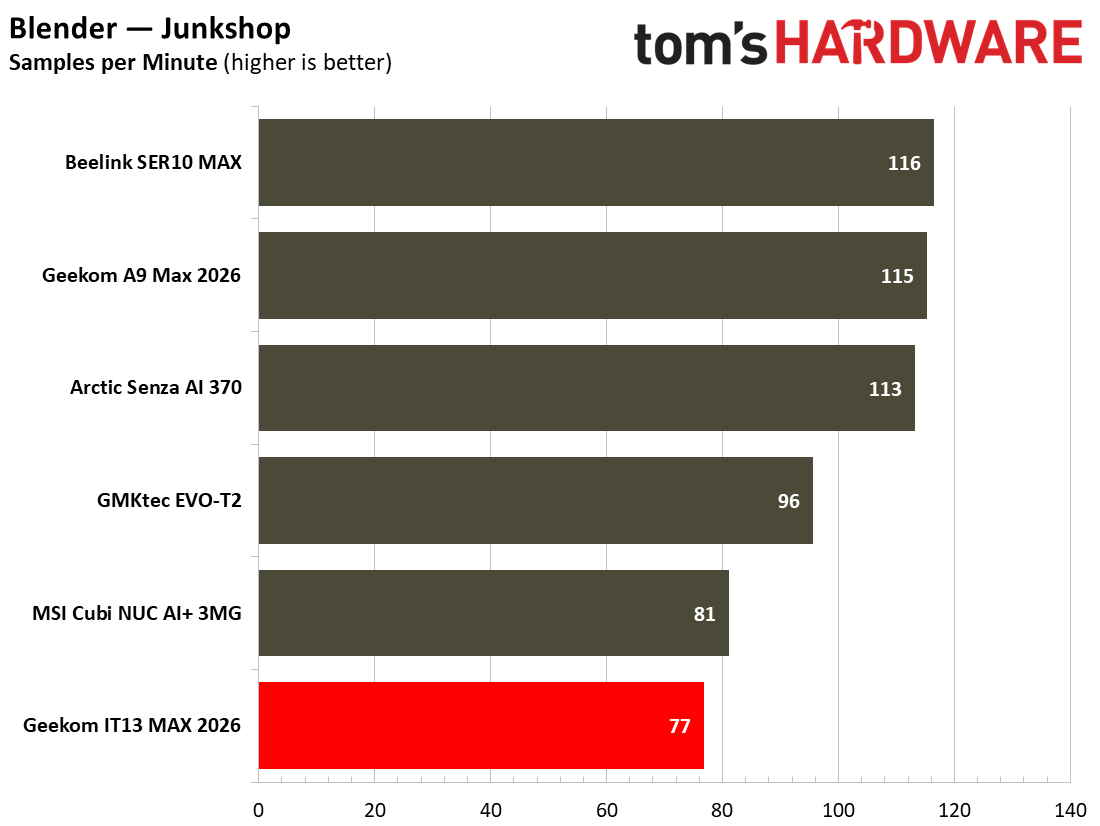
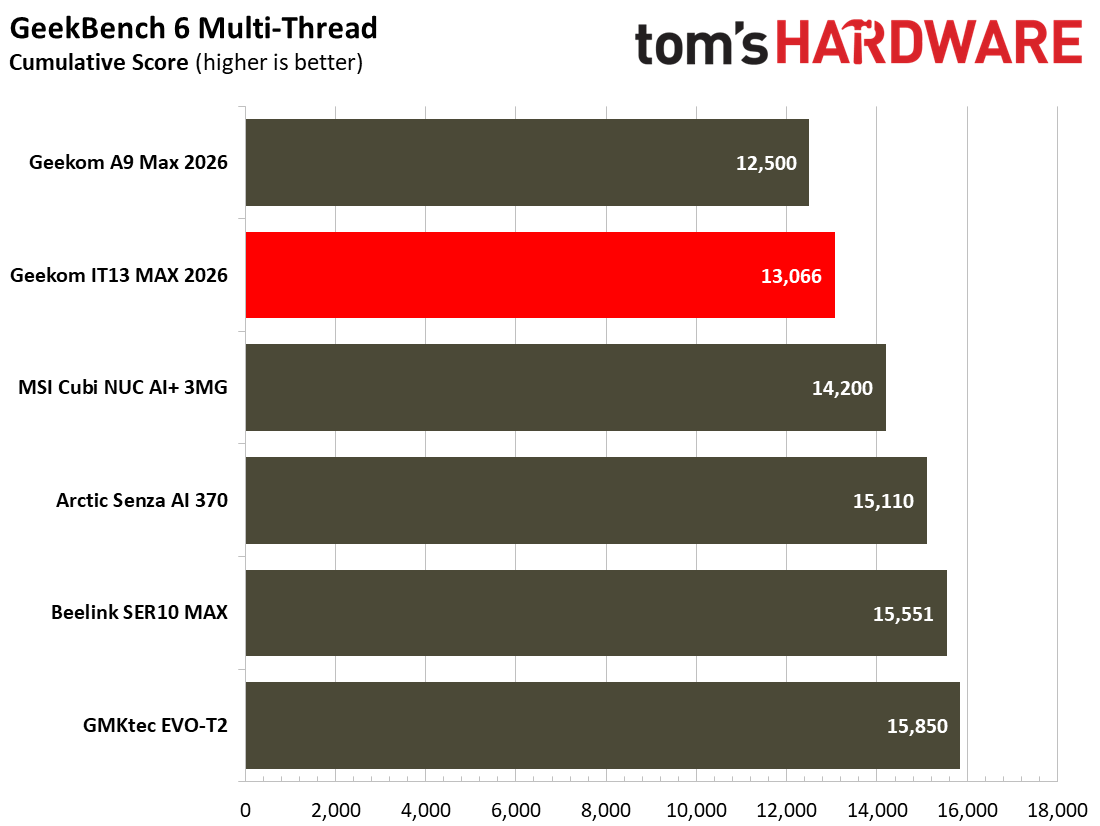
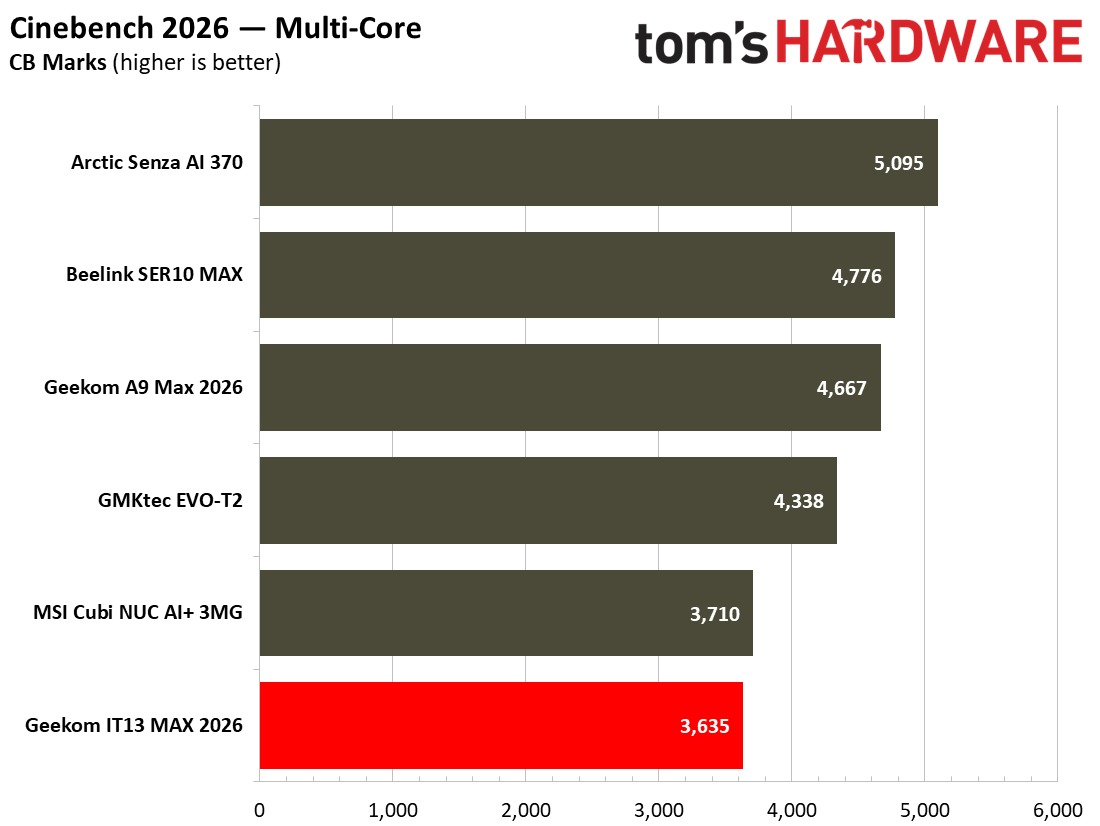
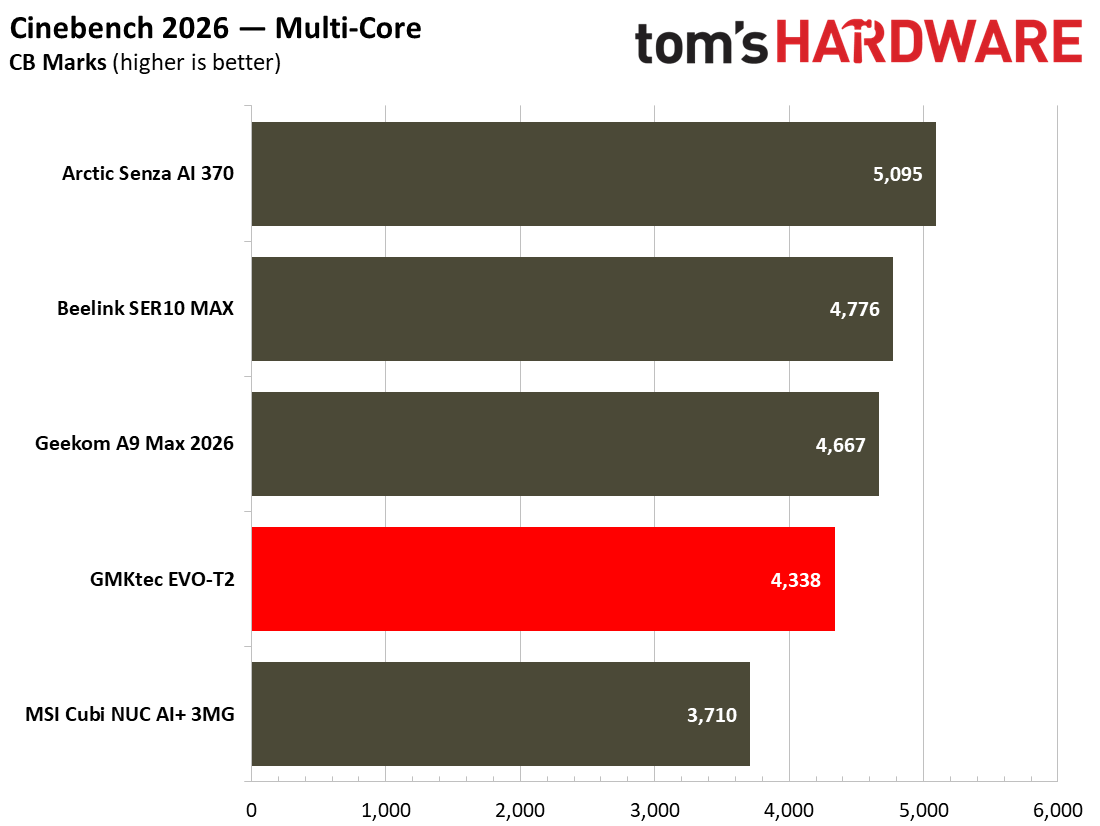
In the comparison charts above, you can see how the IT13 Max squared up to more modern rivals. In Cinebench 2026, Maxon’s current-gen CPU rendering benchmark, the single-thread result of ~450 points does mean that the Meteor Lake machine does trail the pack, but it isn’t a disaster. Turning to the multicore result in the same test, the latest Geekom mini PC with its older “Meteor Lake” chip basically matches the MSI Cubi NUC AI+ 3MG based on Intel “Panther Lake” silicon. Admittedly, the former’s 16C/22T core/thread count and higher power limits lift it against the Intel Core Ultra 9 386H with 16C/16T in the MSI.
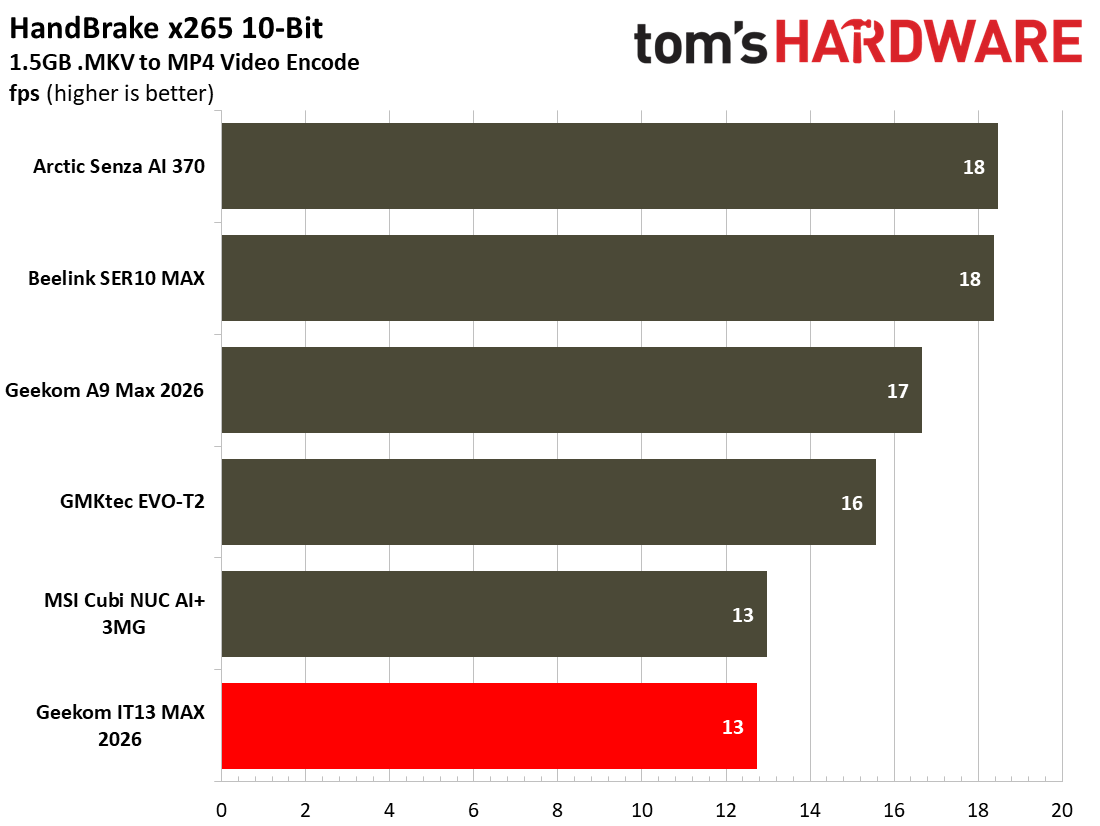
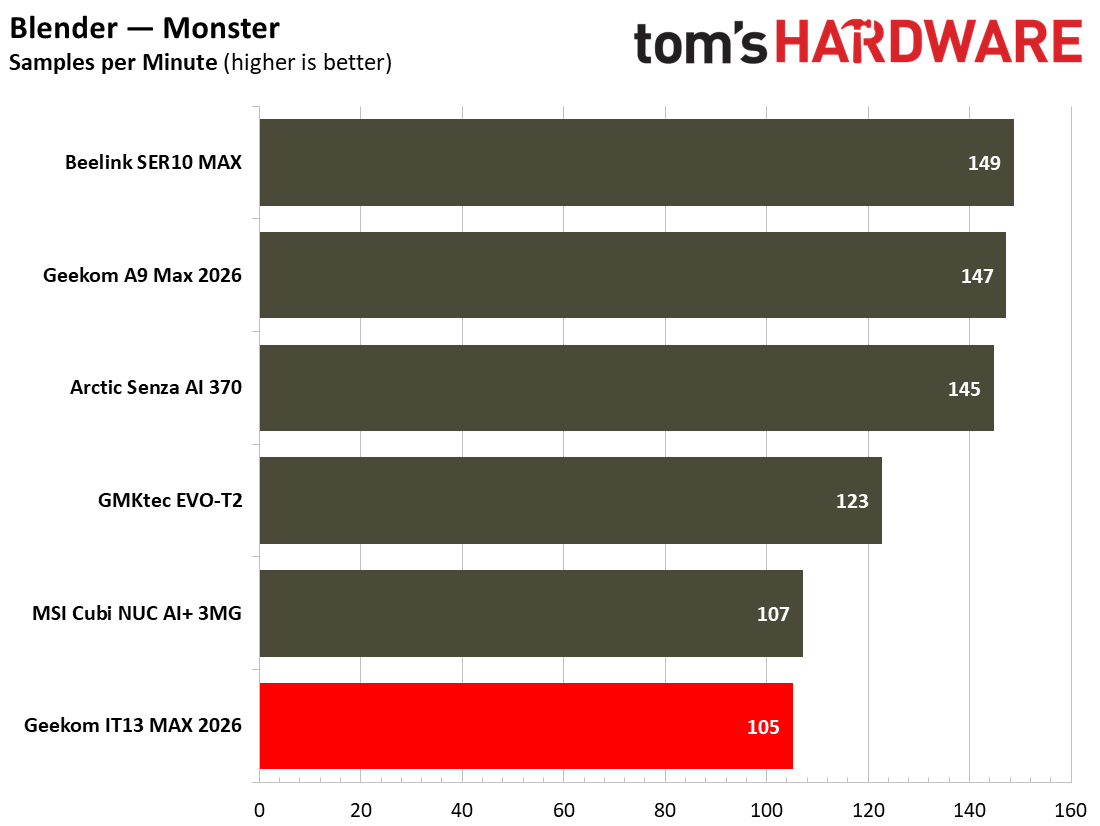
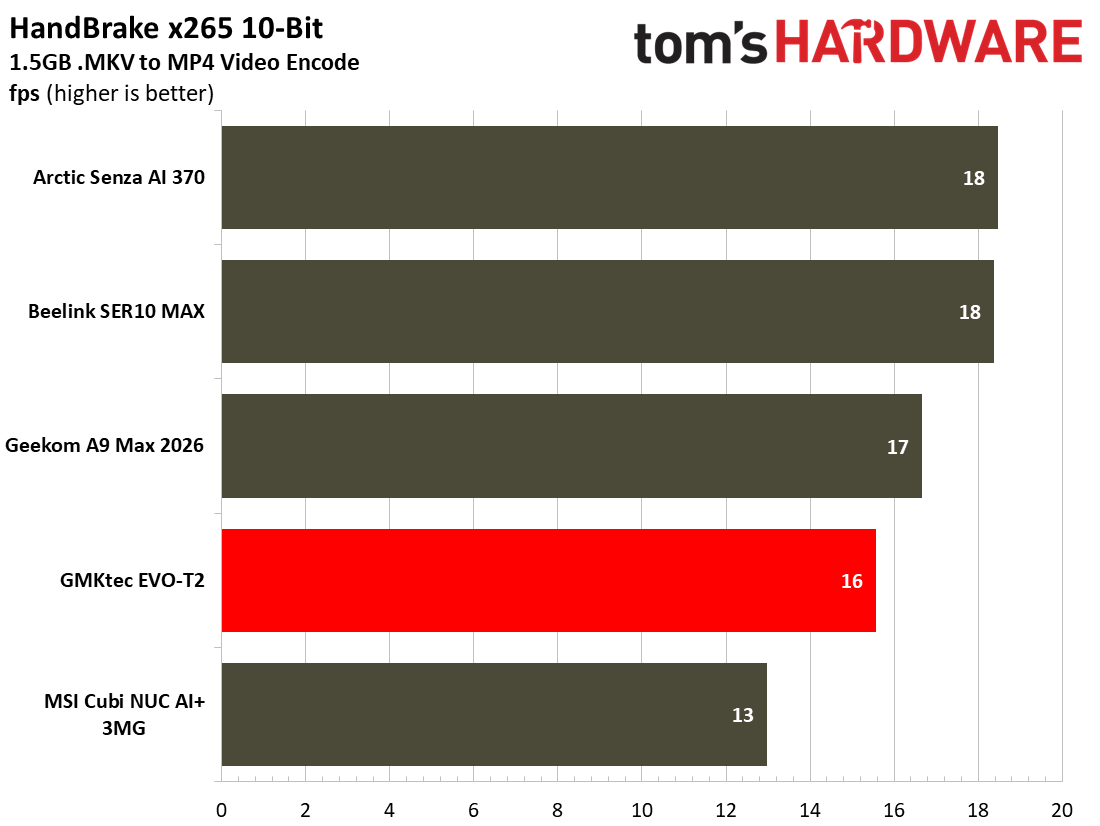
In HandBrake, the Geekom managed 13 frames per second on our standard video transcoding test. That’s neck and neck with the MSI, again, but only with very long videos would you likely notice how it lags behind.
Gaming and Graphics on the Geekom IT13 Max 2026
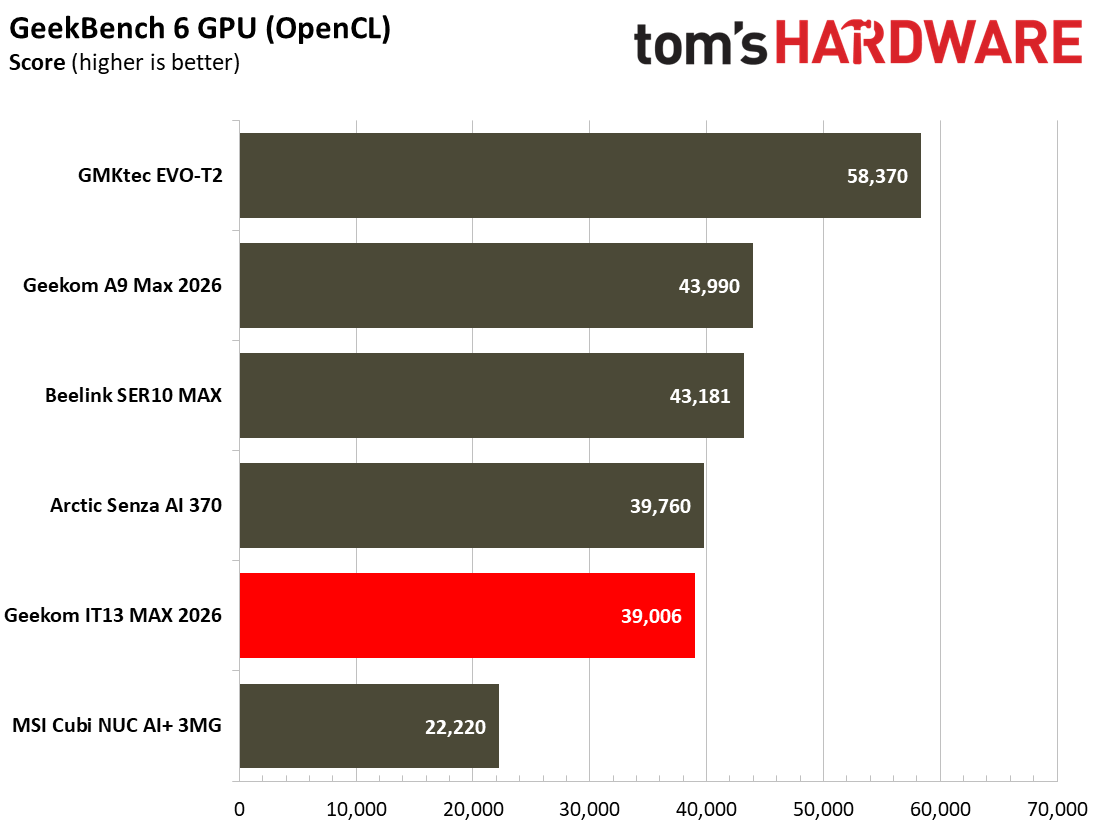
The Geekom IT13 Max isn't hopeless in gaming, but it sits in the lower portion of our mini PC game benchmark comparison tables. It mostly performs better than the MSI Panther Lake mini PC, again. Not bad for something from two generations prior.
For my traditional spell of gaming fun before serious benchmarking, I decided to go on a quick adventure in Borderlands GOTY Enhanced (2019). The game ran at an average of about 80 frames per second when using the High preset at 1080p. I didn’t have any problem with frame rates mostly in the 80s, periodic dips in the frame chart looked worse than they actually felt during the game. It is definitely an older game now, and while the iGPU ran at close to its max utilization on my uncapped frame rate run, the CPU was barely burdened.
Tom's HardwareTom's Hardware
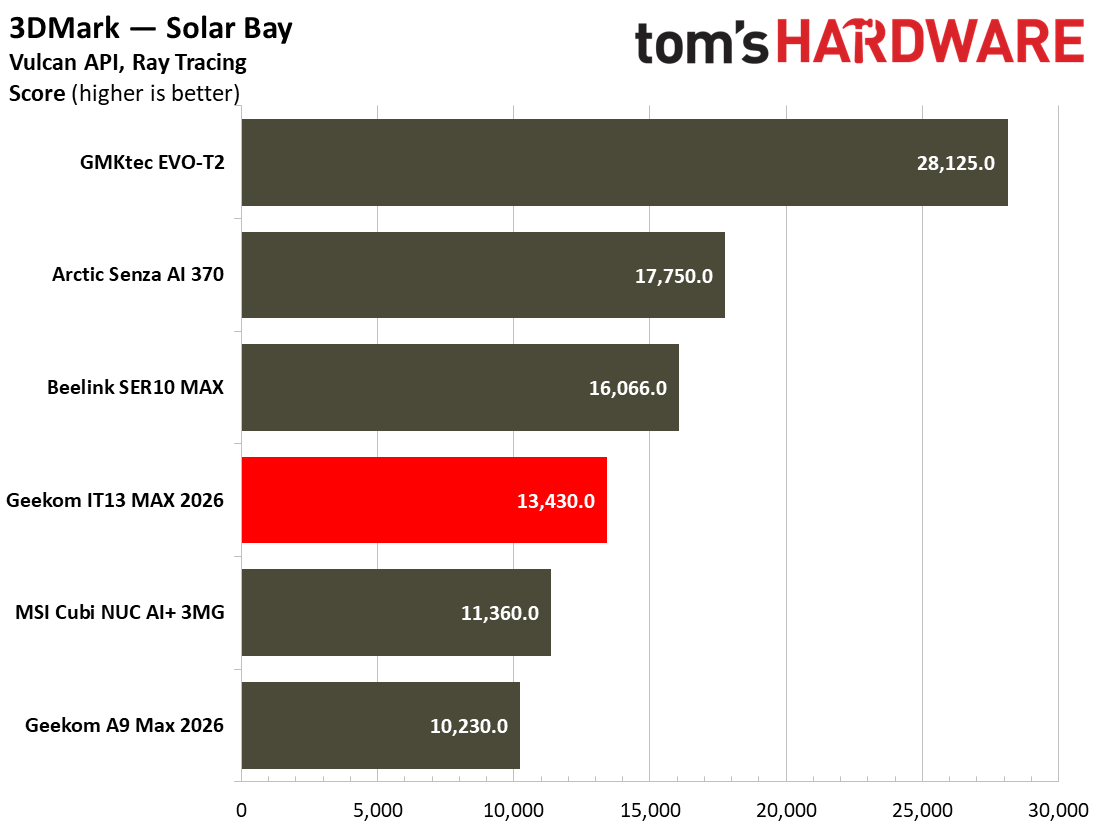
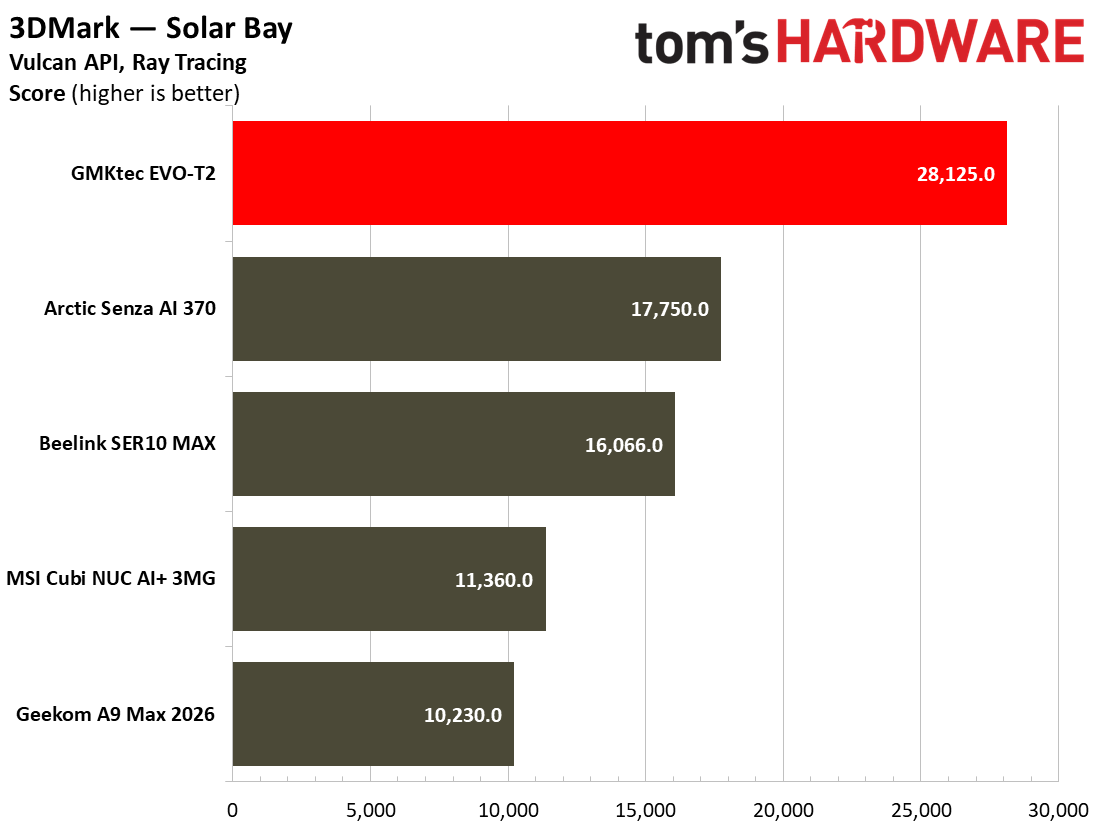
I also ran a few synthetic gaming benchmarks, a trio of 3DMark tests. One of those was the cross-platform 3DMark Solar Bay, which is well-weighted for iGPU performance comparisons, delivering playable frame rates on this type of graphics hardware.
The Geekom IT13 Max 2026 earned a score of 13,430 in this test. The Meteor Lake mini PC’s score (with eight Xe-LPG) cores is about 18% faster than the newer Panther Lake rival (with four Xe3-LPG cores). Both of them, and the AMD Ryzen AI mini PCs we have tested crumble in comparison with the GMKtec Evo-T2 with the best Panther Lake iGPU, the 12 Xe3-LPG core B390.
Moving onto some popular AAA gaming titles, I next checked how Shadow of the Tomb Raider performed on the Geekom. Its average of 37 and minimum of 29 frames per second put it once more very squarely in the same territory as the MSI Cubi NUC AI+ 3MG mini PC.
Cyberpunk 2077 was technically playable using the Steam Deck 1080p preset that we have been using for mini PC comparisons. Its average and 1% low results were 36 and 30 frames per second, respectively. Very slightly behind the Cubi NUC AI+ 3MG this time by both those metrics. Running Cyberpunk 2077 at 1080p using the high preset (no upscaling tech) is not recommended, as the IT13 Max achieved an average of 21 frames per second.
The overall picture that emerged was that the Geekom IT13 Max 2026 isn’t bad at modern gaming with low-ish settings, with upscaling if available, but is more suited to lighter and older titles.
Power, Heat, and Noise when using the Geekom IT13 Max 2026
I tested the IT13 Max 2026 with the default power profile Geekom shipped it with, which is a Processor Base Power (PBP, PL1) of 45W, a Maximum Turbo Power (MTP, PL2) of 70W, and a PL4 of 120W, according to system information tools. During testing, I measured total system power consumption with a plug-in power meter, as well as reading the CPU temperatures using a Windows utility.
Tom's HardwareTom's Hardware
At low load, with Google Docs open for typing among a few other browser tabs, the system consistently pulled around 14W. At the same time, the CPU temperature would stick around 43 degrees Celsius.
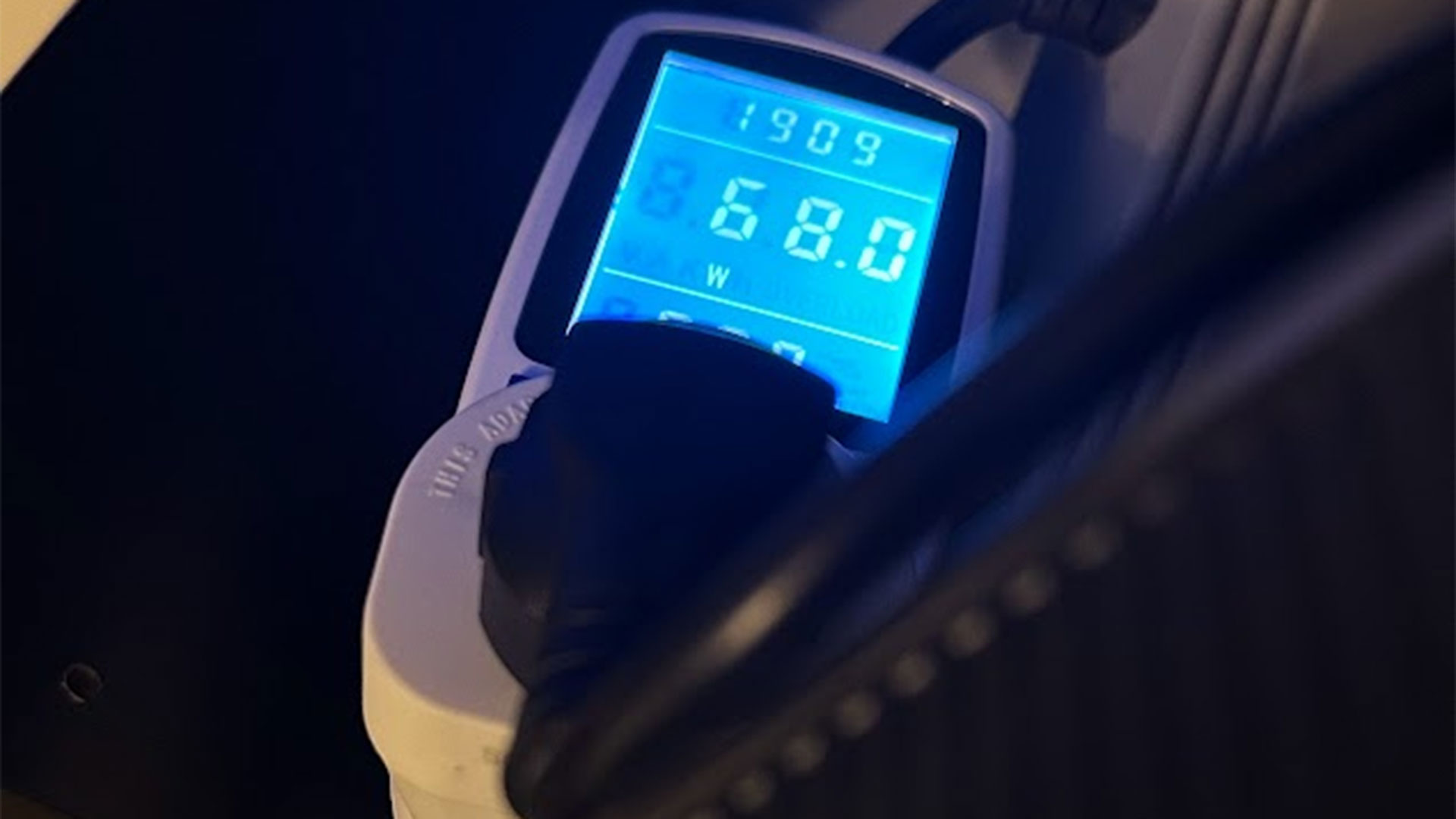
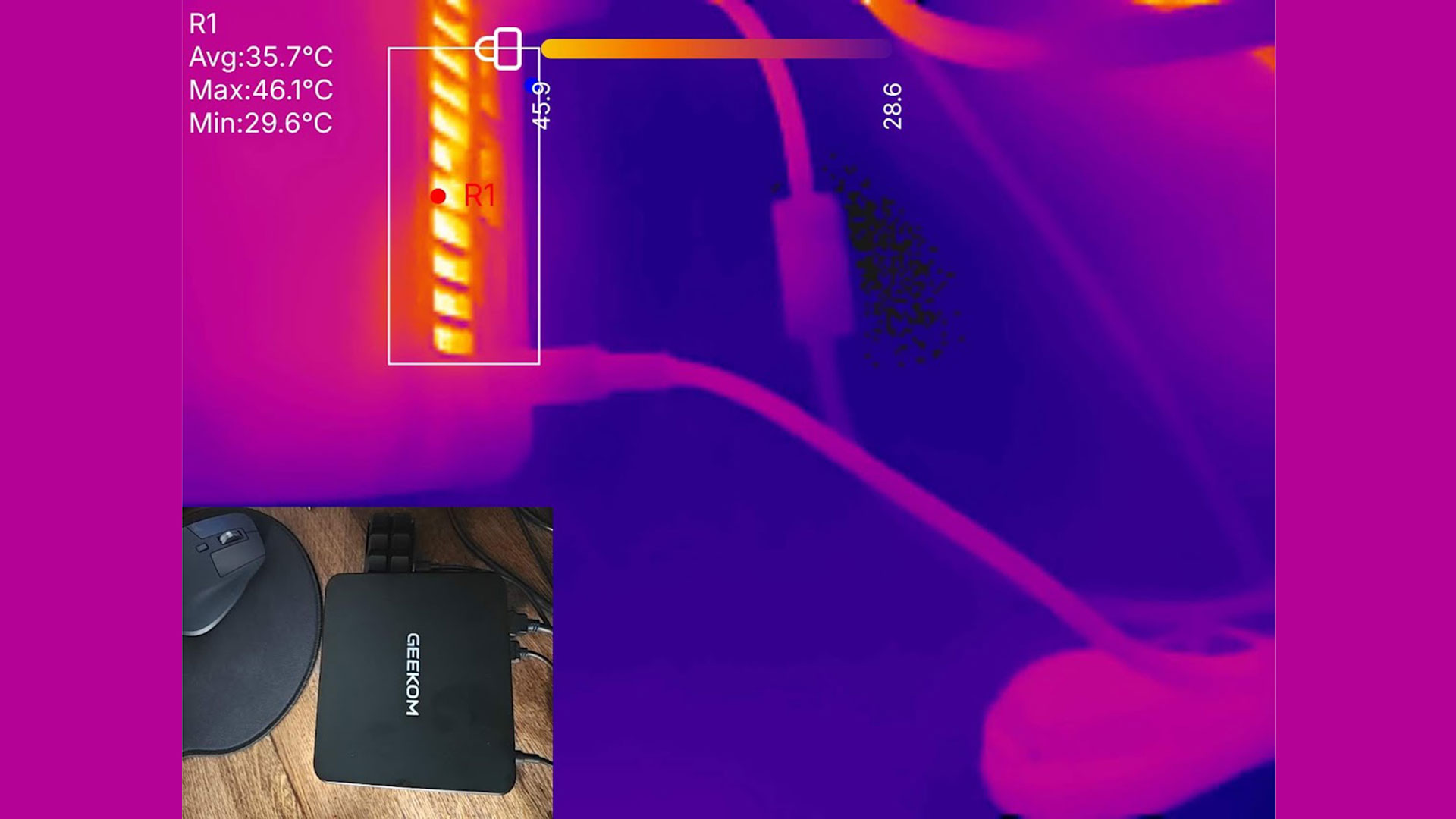
During prolonged stress testing of the IT13 Max 2026, the highest wattage consumed by the whole system momentarily spiked to around 85W, but a stable sustained level of ~70W was generally observed. It also seemed to stabilize at approximately the 70 degrees Celsius level after initially climbing higher.
Thermal pic taken under load with system tools reporting a CPU temperature of ~70 degrees Celsius. (Image credit: Tom's Hardware)
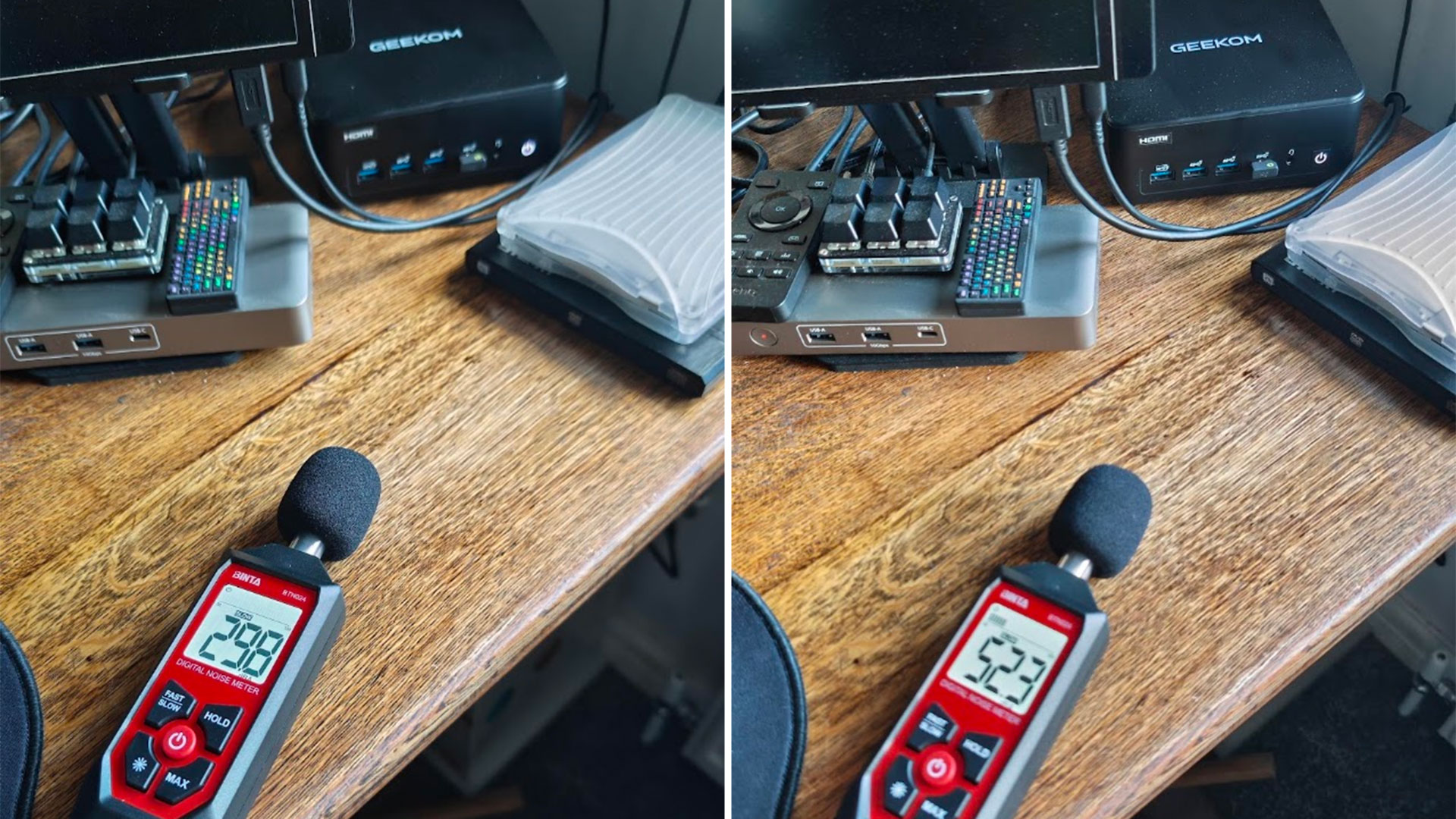
The Geekom is a quiet mini PC, but you can hear the small cooling fan blowing clearly if it is put through any demanding CPU or GPU task. My meter showed 29.8 dB when idling, which is good, but the noise level ramped to a more than noticeable 52.3 dB when the system was under a sustained load.
Software and Warranty on the Geekom IT13 Max 2026
This mini PC came with Windows 11 Pro preinstalled and activated. As usual, before testing, we ensured Windows and drivers were fully up to date.
There were no utilities added by Geekom. Checking the Installed Apps list on Windows revealed both Realtek Audio Console and Realtek Card Reader as the only non-standard components in a typical Windows install.
Linux is also fully supported, according to the official spec sheets.
Geekom sells the IT13 Max 2026 with a three-year warranty, though the company does require you to pay a return shipping fee.
Those browsing and interested in this particular configuration should be careful, though. Geekom is still selling an older variant of the IT13 Max with very similar specs but with two SODIMM slots, making it expandable to 96GB of DDR5-5600 memory. This other Core Ultra 9 185H device comes with a single 16GB SODIMM and a 1TB SSD preinstalled. It is usually $899, but Geekom is currently selling this version for the same $799 if you prefer its RAM/SSD configuration.
Bottom Line
During my testing of the Geekom IT13 Max 2026, I found it to be a dependable device. In the current climate, the soldered dual-channel 24GB of RAM might be a sweet spot if you want your integrated GPU to access a decent chunk of the memory pool. It is interesting to see the prior IT Max model now moved down to the same $799 price if you don’t want to accept soldered RAM, would like more preinstalled storage, and are otherwise attracted to owning a tiny PC powered by Intel’s Core Ultra 9 185H with its 16C/22T and reasonable Arc iGPU.
It is very interesting to see this mini PC match the far more modern MSI Cubi NUC AI+ 3MG we tested recently (which costs far more, as is often the case for enterprise pricing) in many of the benchmark applications and games. The MSI uses a Core Ultra 9 386H, so this is a reasonably fair U9 vs U9 comparison. In practice, the Geekom even seemed to idle at a slightly lower wattage than the MSI, but admittedly, it would pull around 70W under load, which is 15W more than the MSI Panther Lake was observed consuming. This points to one of the biggest attractions of most mainstream Panther Lake CPUs being their efficiency, which is far more important in a laptop than a mini PC like this.
To conclude, this does indeed seem like a capable, moderately quiet under light day-to-day loads, and power-efficient offering for the ticket price in mid-2026. At $799 the prior model might offer some of the best competition if removable RAM, albeit just 16GB, and a 1TB preinstalled SSD can sway you.
Intel's Panther Lake processors have brought powerful graphics and efficient performance to laptops. Now, mini PC companies are packing them into small desktops. With the Evo-T2 GMKtec stretches the form factor by fitting it in a spacious - for mini PCs - twin fan chassis, and equipping one of the most capable of Intel’s 18A (laptop) processors with 64GB of fast DDR5. While GMKtec calls it an AI system in its marketing, the Arc B390 iGPU and OCuLink port mean that the potential gaming capabilities are one of the big focuses for this quiet, compact, and expensive device.
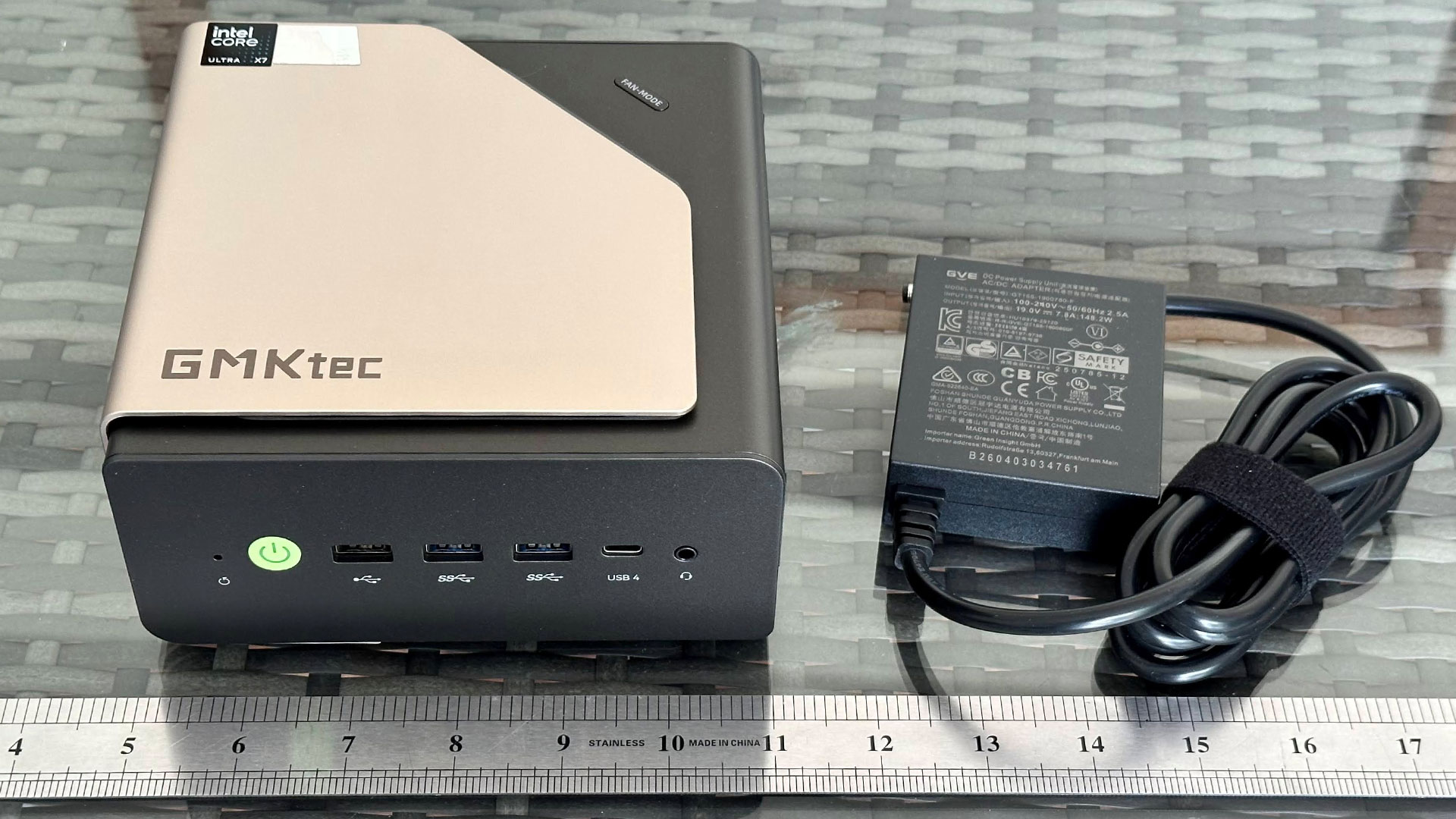
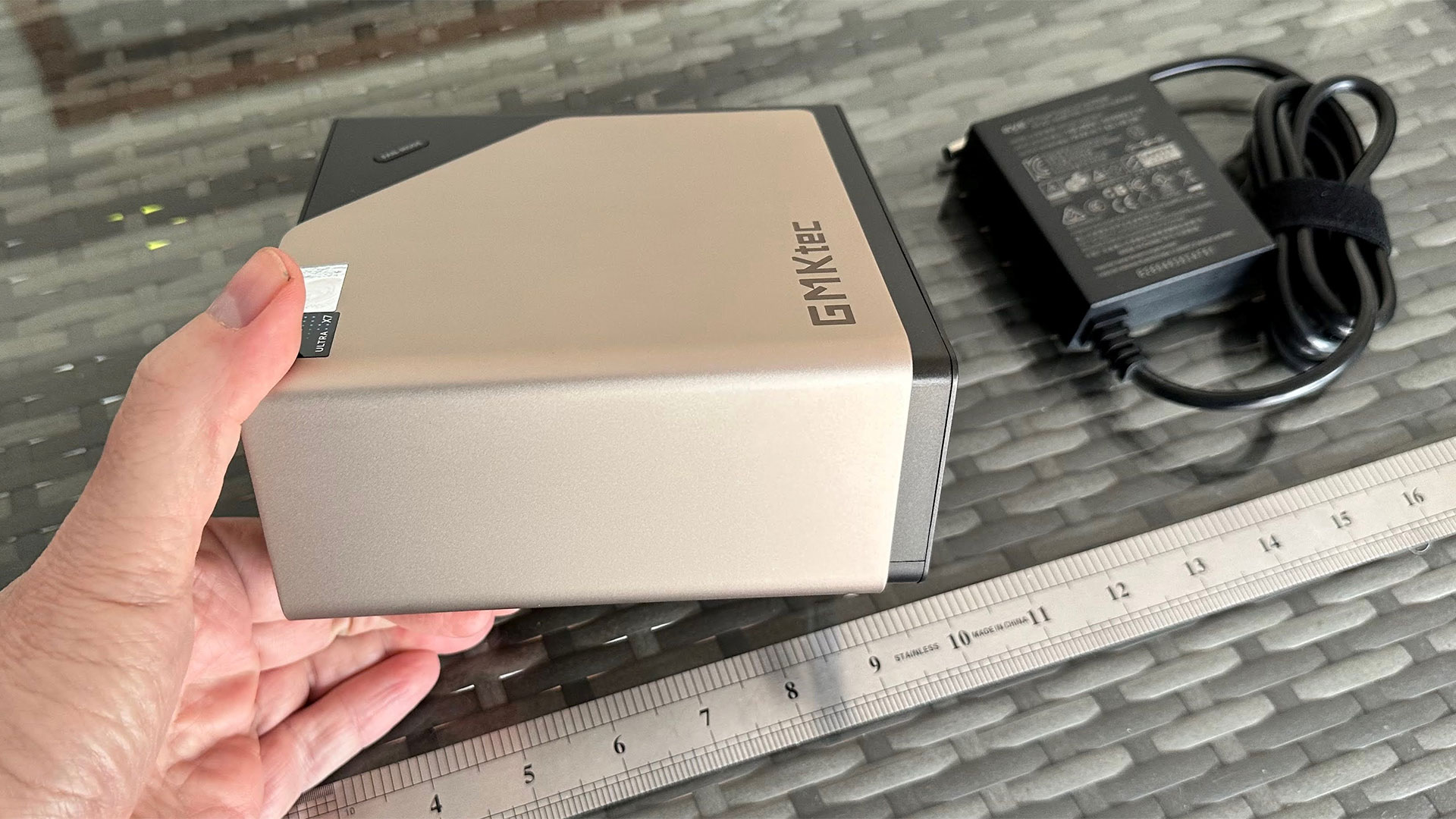
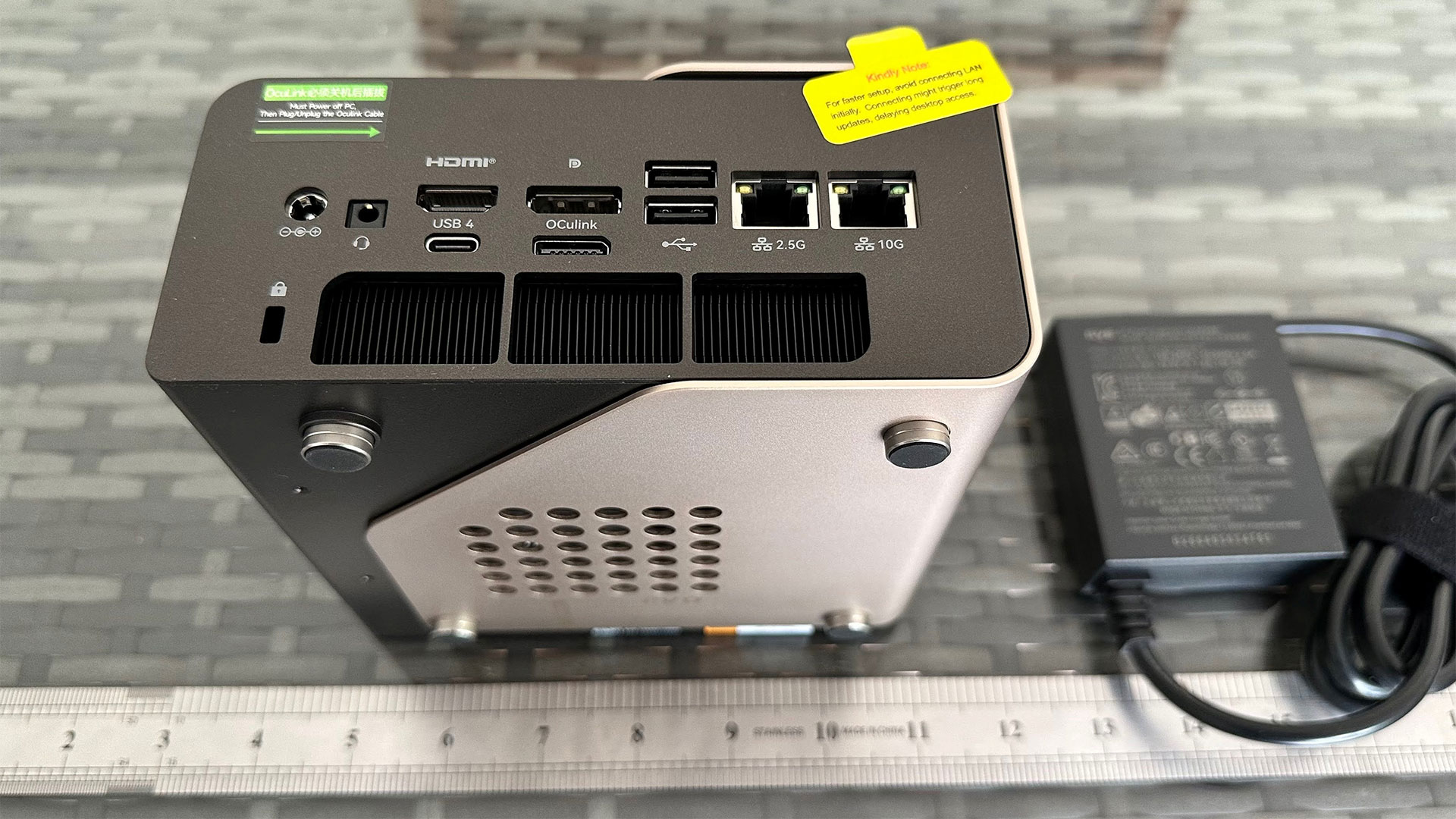
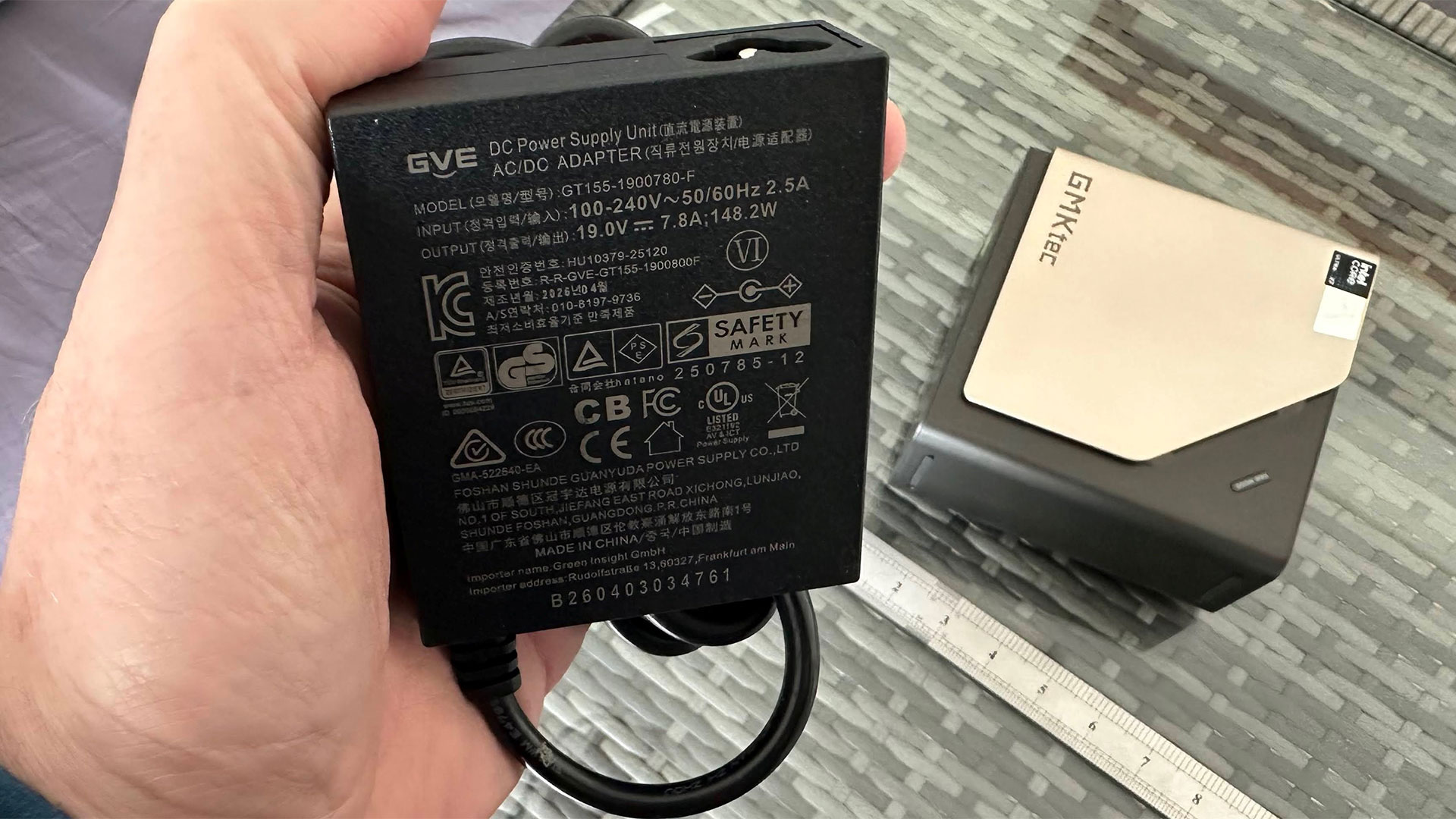
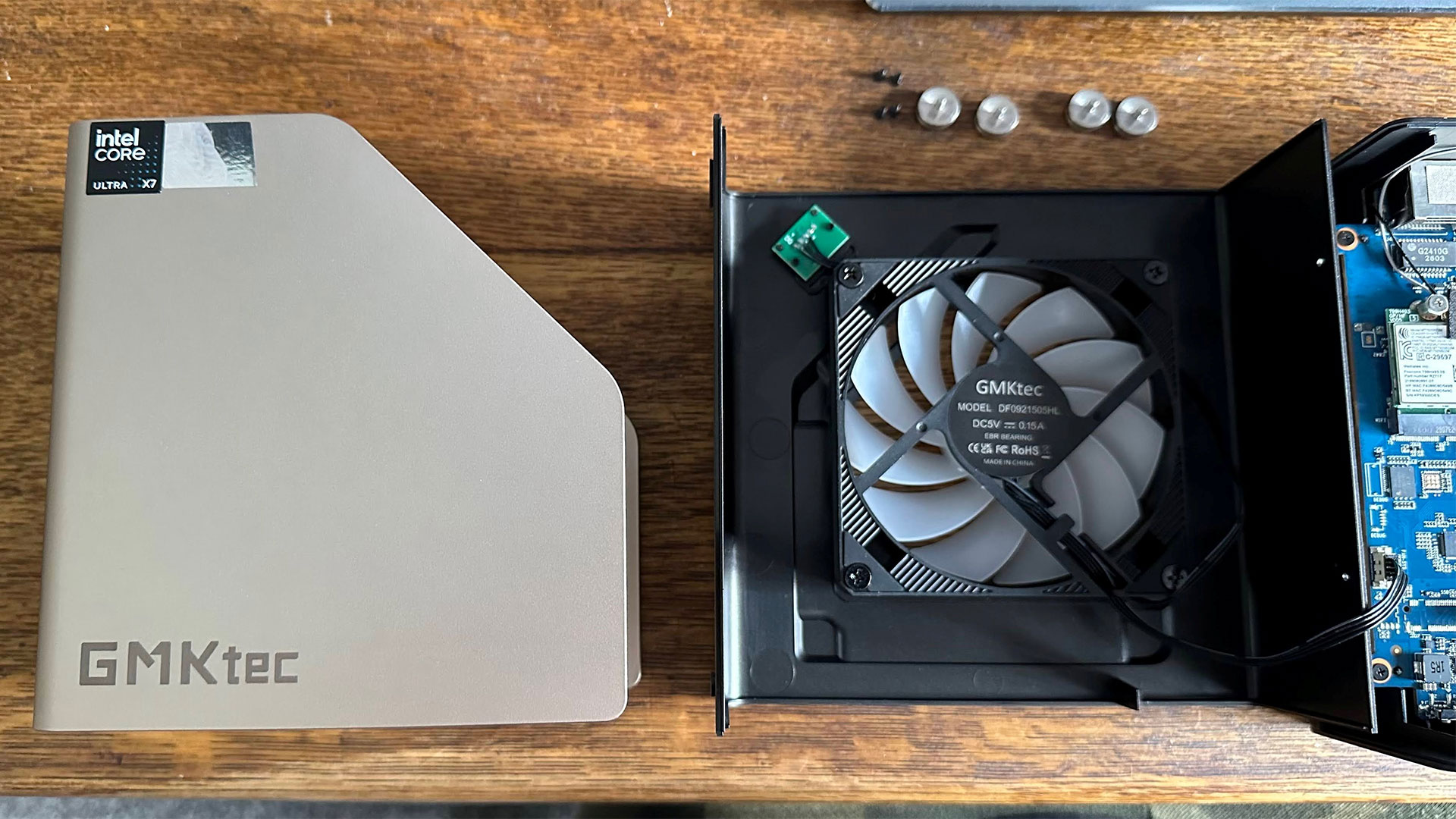
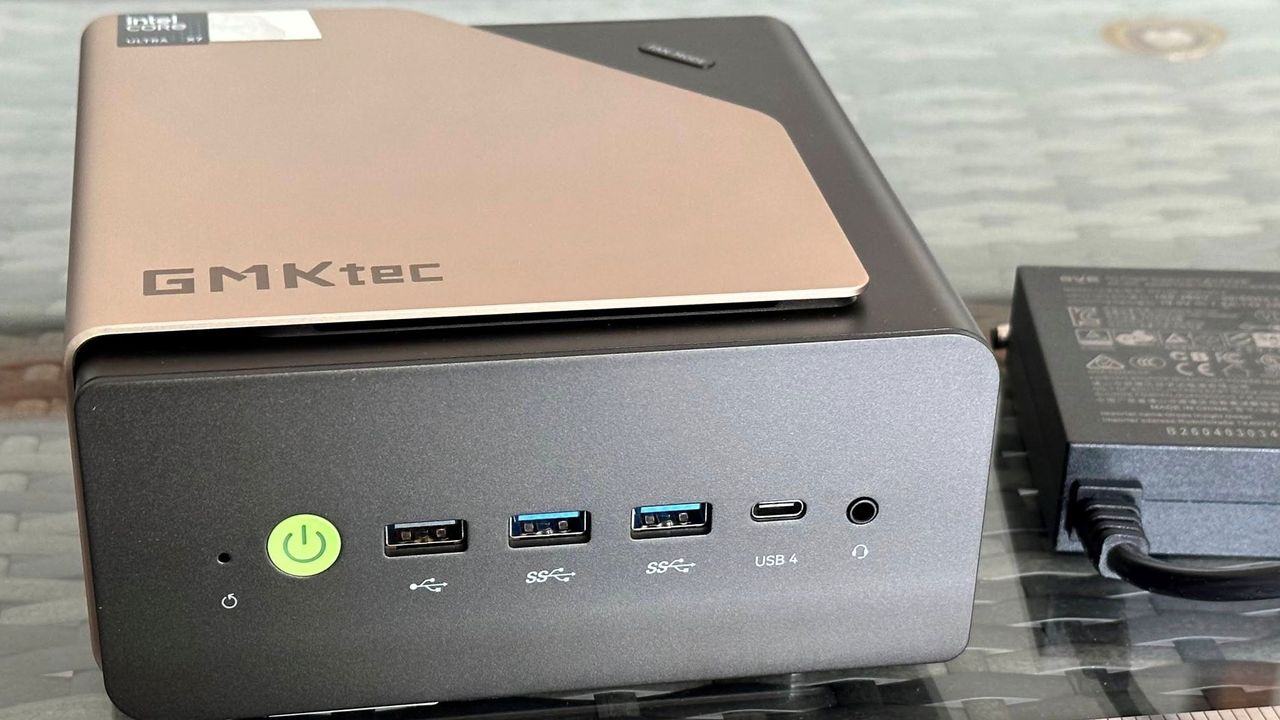
The GMKtec Evo-T2 is small, of course, but is rather more portly than the typical NUC, measuring in at 6.06 × 5.94 × 2.90 inches (1.72 liters). For context, a ‘standard’ NUC like the Asus NUC 14 Essential measures 5.31 x 4.53 x 1.42 inches (0.56 liters). Its functional plastic shell is lent extra style and strength thanks to a 2 mm-thick gold-colored anodized metal shell that wraps around three sides.
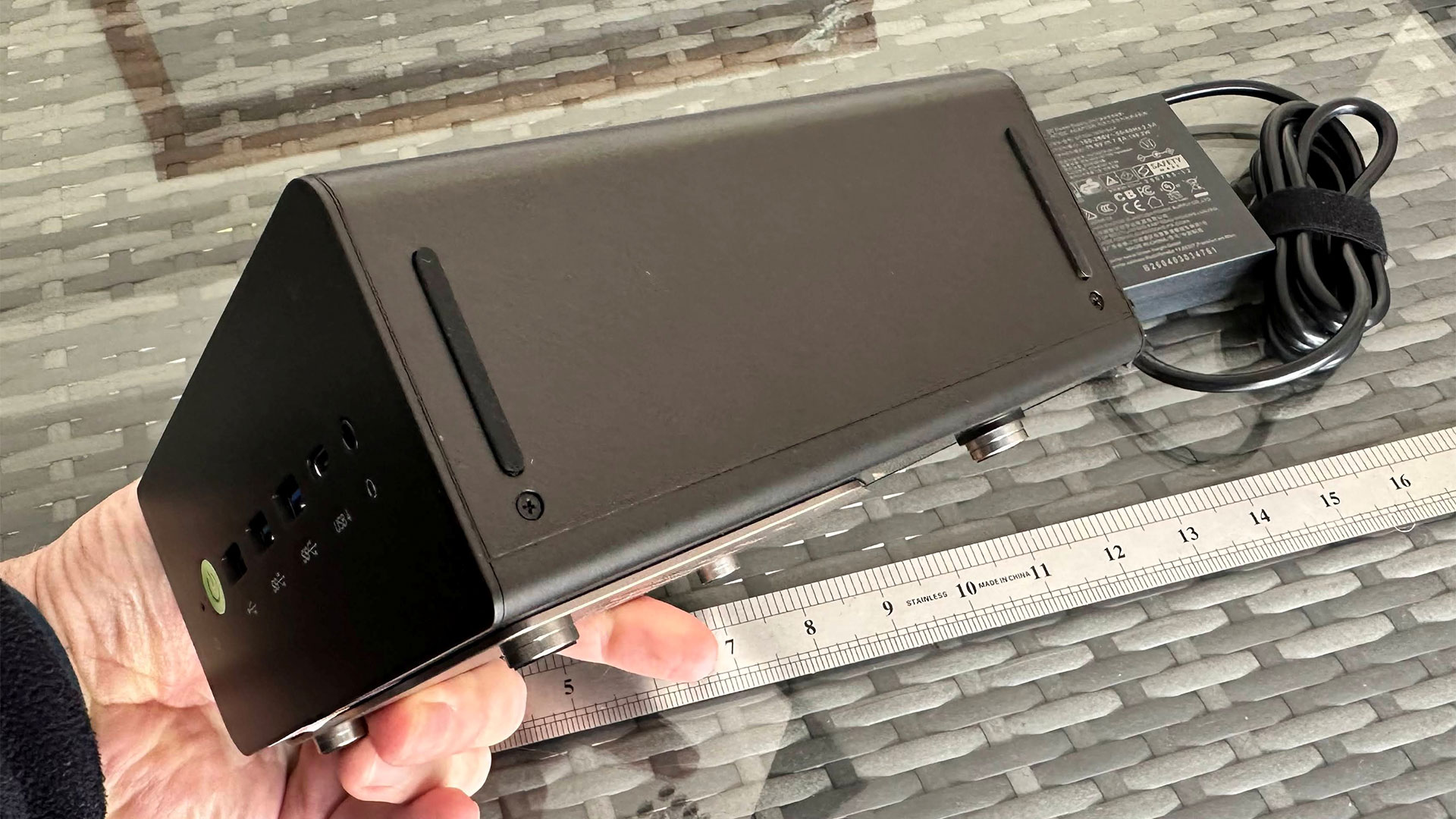
I had no issues with the form or construction of the Evo-T2. I like that it has rubber feet for both horizontal and vertical orientations. There’s even a VESA mounting plate in the box, so you can attach it to the back of a monitor. If you put it behind something, it may be tricky to reach the power switch, ports, and fan-mode switch button, though.
GMKtec has made it pretty easy to open up the Evo-T2 for servicing and upgrades. However, the 64GB LPDDR5X-8533 RAM is soldered in, and that's the only option the company sells. If you need more RAM, you'll need to look elsewhere.
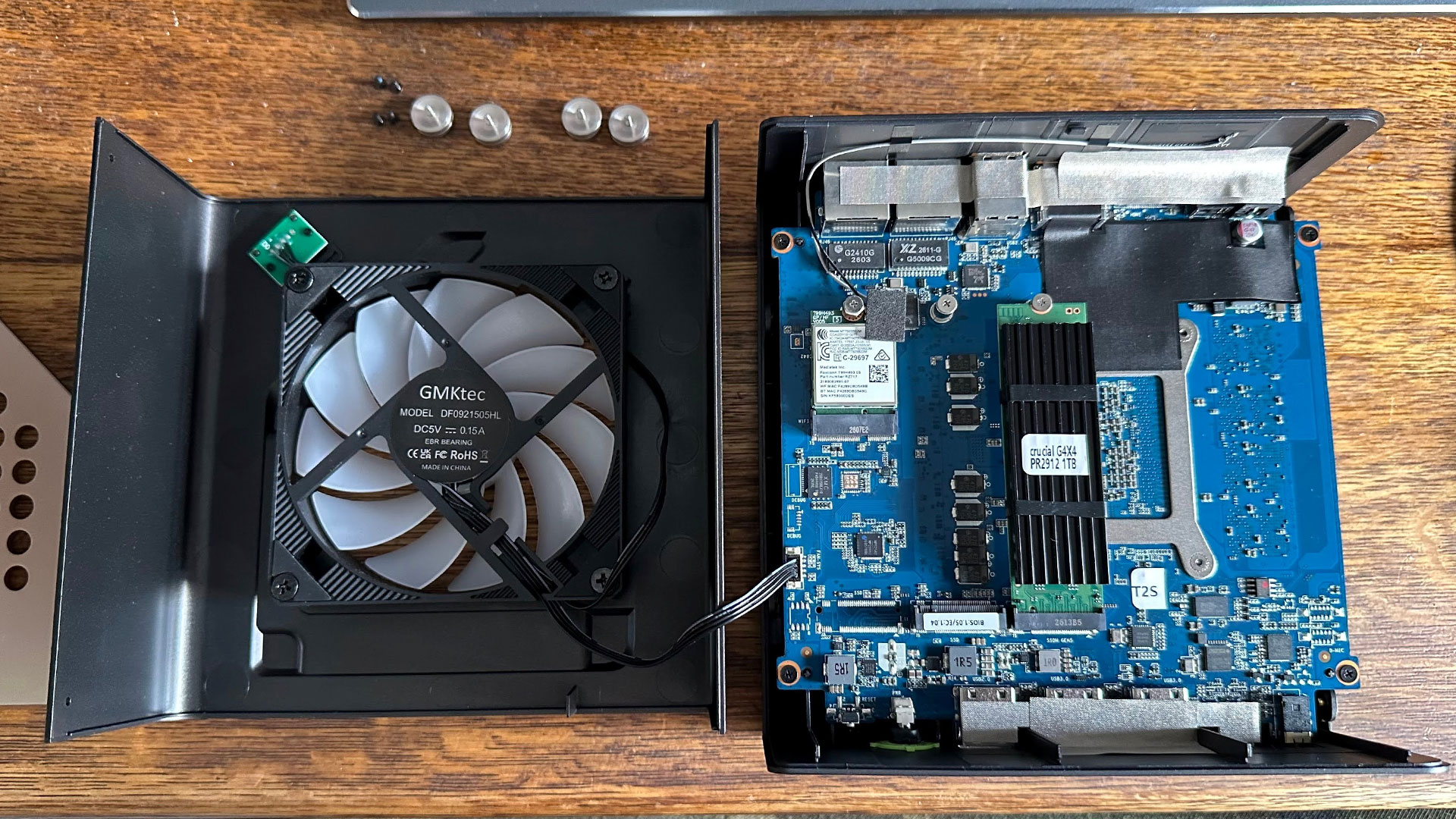
After taking off the wrap-around metal shell by removing three of the four thumbscrew feet by hand, you get access to the four screws that hold the two halves of the plastic case together. These are mini Philips screws, nothing esoteric, and once removed, you can lift the top-half of the case away to reveal user-serviceable areas of the motherboard.
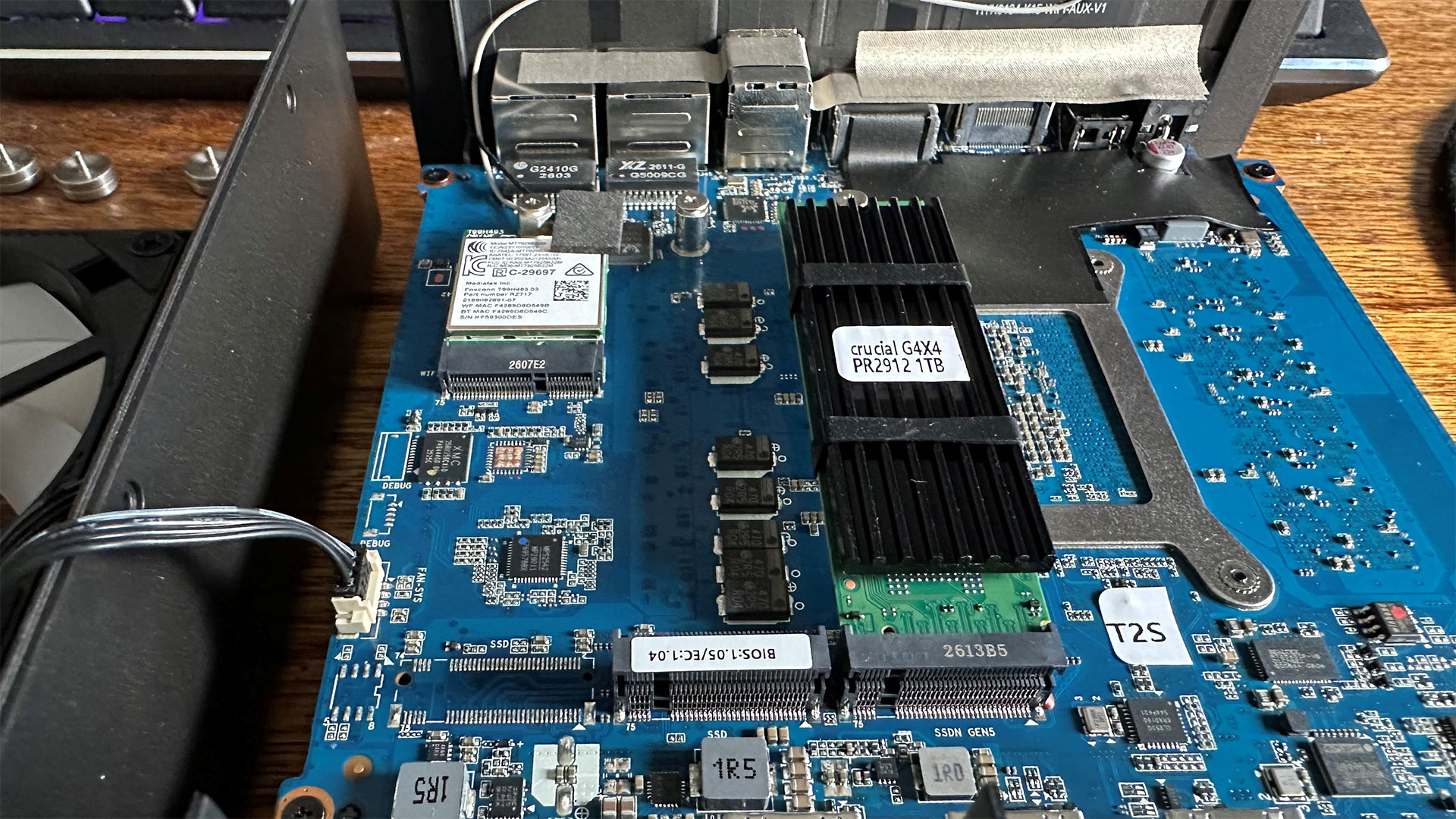
In our photos, you can see there are two M.2 2280 slots, one with a Crucial PCIe Gen4x4 1TB SSD, the other one vacant. Then there’s an M.2 2230 slot with the wireless card installed. Those offer all your internal expansion / upgrade options. Thankfully, the case top with its integrated fan and fan controller is on a decent length of connector cable, making it easy to work inside this chassis without having to detach it. I didn’t try to disassemble the system any further, but I could see that the other side of the motherboard was fitted with a laptop-style fan and blower – which exhausts at the back of the PC, beneath the device’s rear ports.
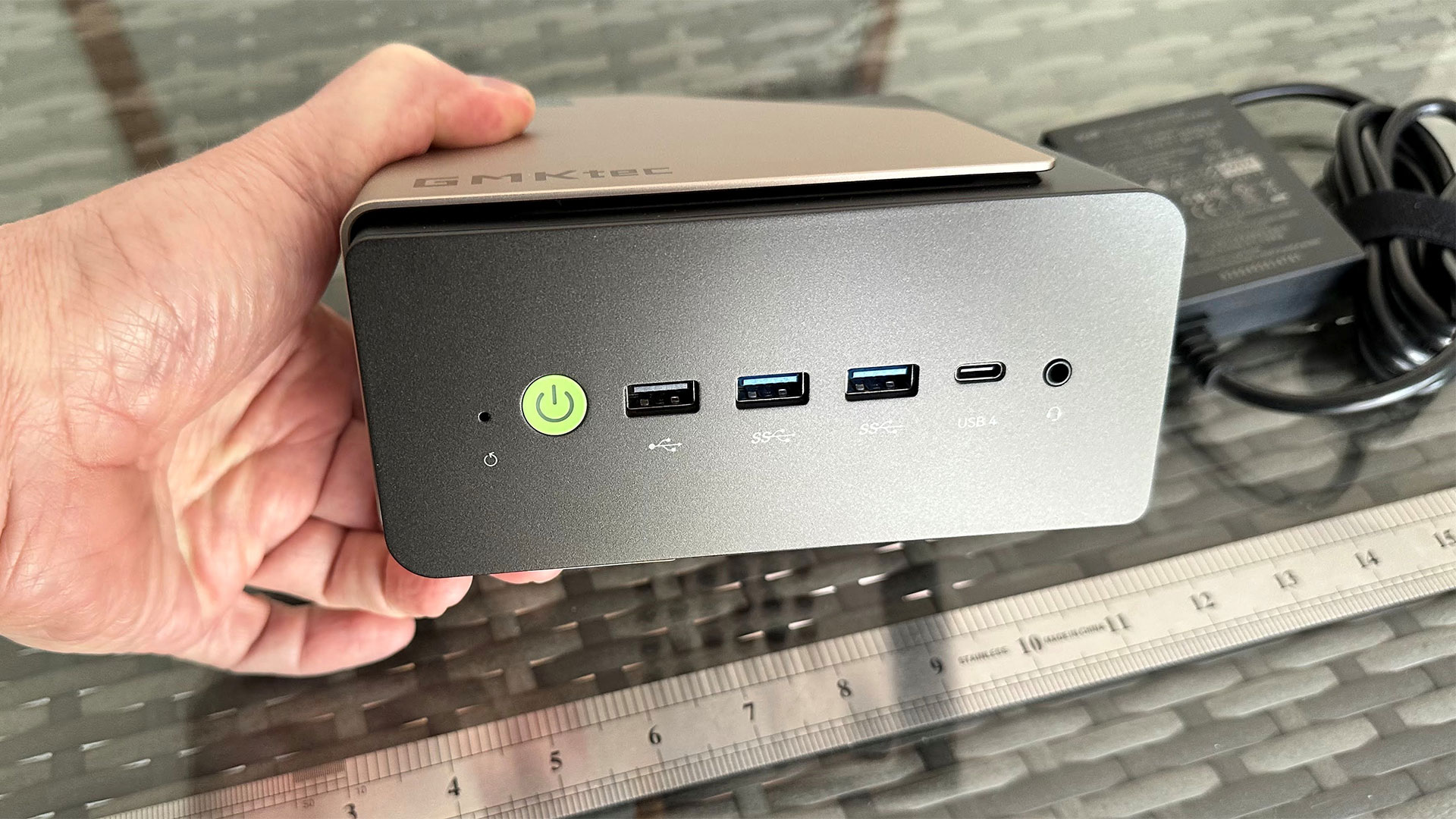
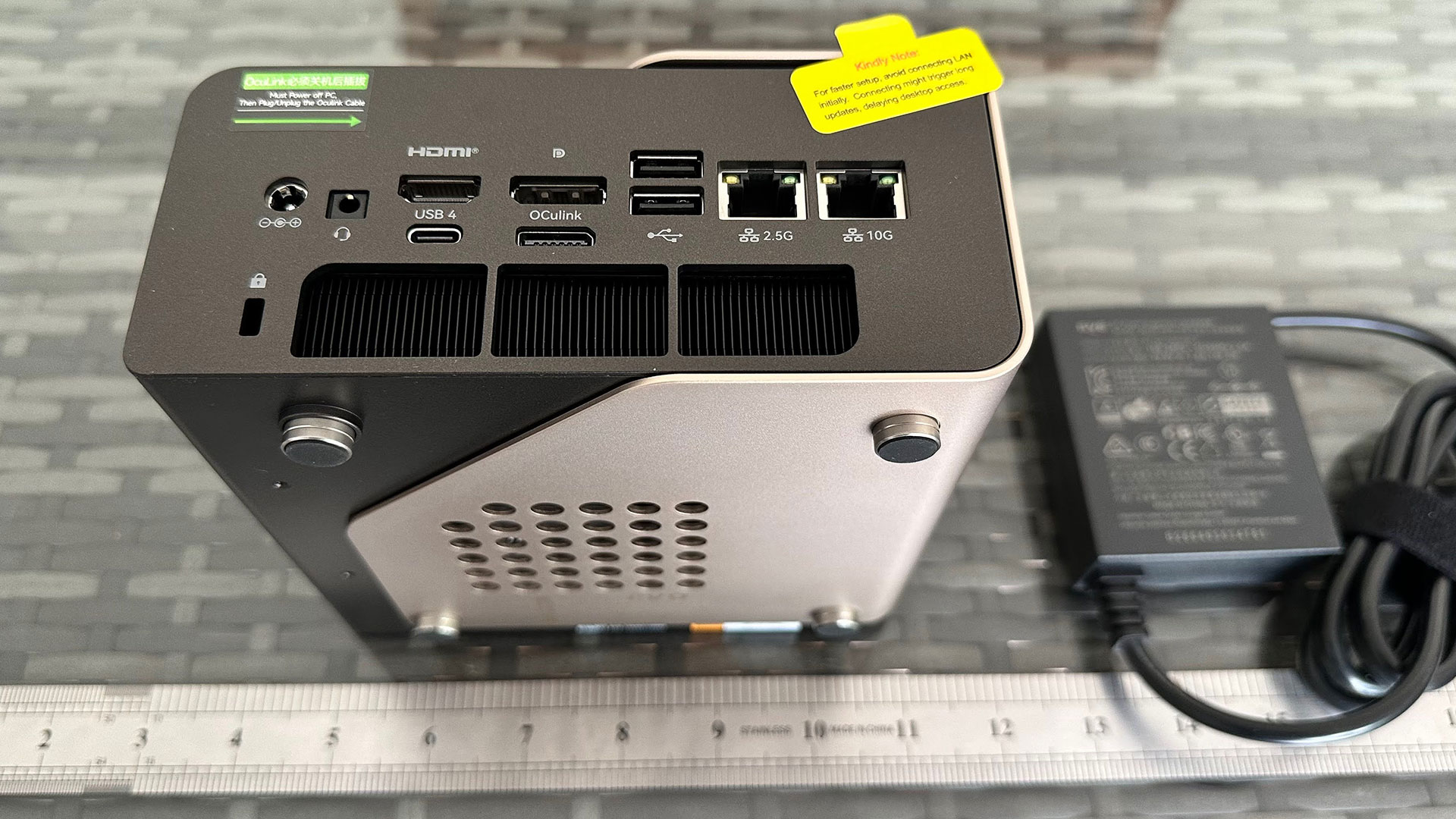
For a very compact system, the Evo-T2 offers a good selection of fast connectivity. We’ve listed the entire number and variety of ports in the specifications table above, but there is no shortage of USB Type-A ports built-in. GMKtec has also been smart to put one of the two USB4 ports front and back, as well as a 3.5 mm audio jack front and back. The system allows for four screens to be attached directly via the pair of USB4 ports plus HDMI and DP ports, simultaneously. Then there is an OCuLink port for equipment like eGPU docks.
Lastly, two Ethernet ports are present for up to 10G wired networking. For wireless networking, there is Wi-Fi 7 on board, and Bluetooth 5.4 is also built-in – these run from an M.2 2230 card.
Productivity Performance on the GMKtec Evo-T2
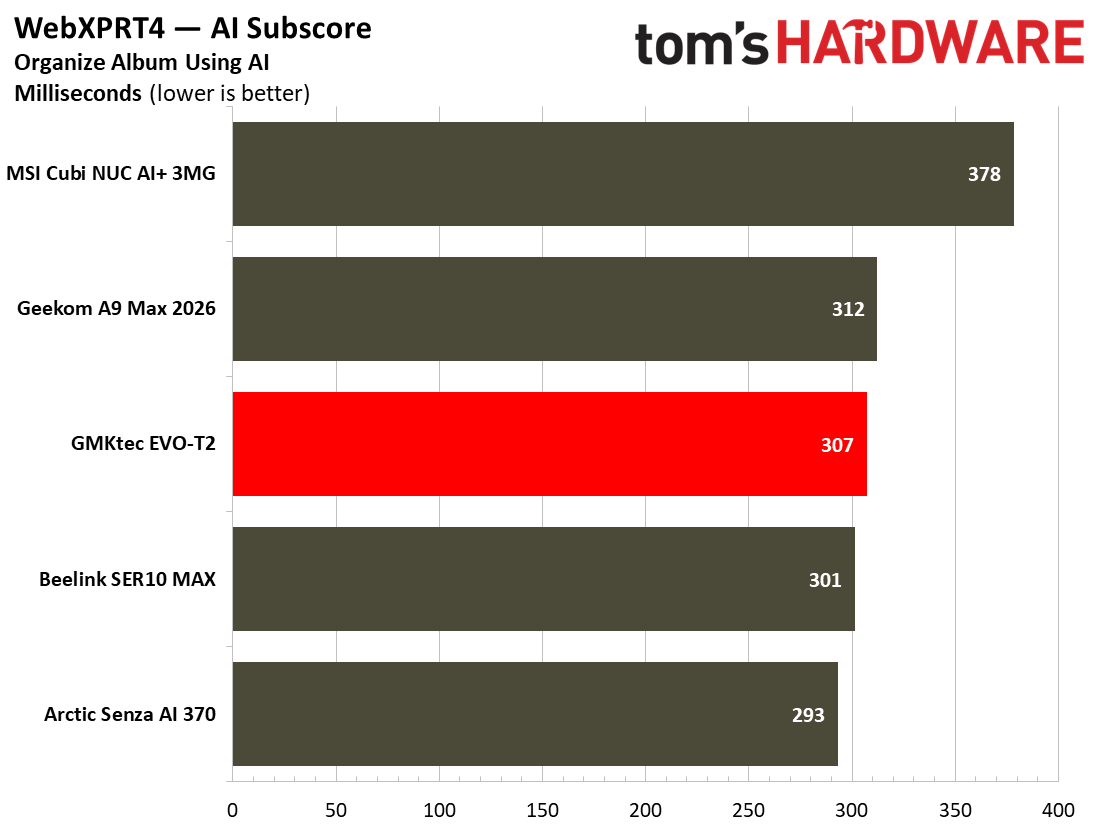
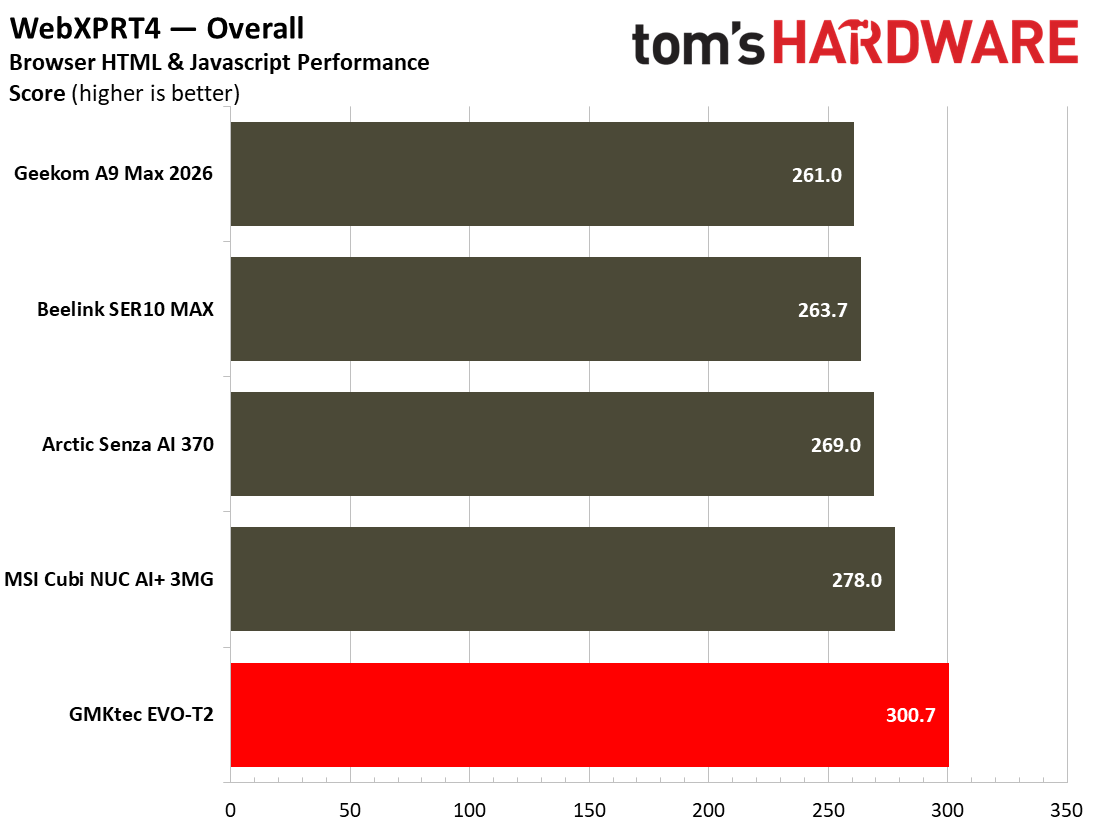
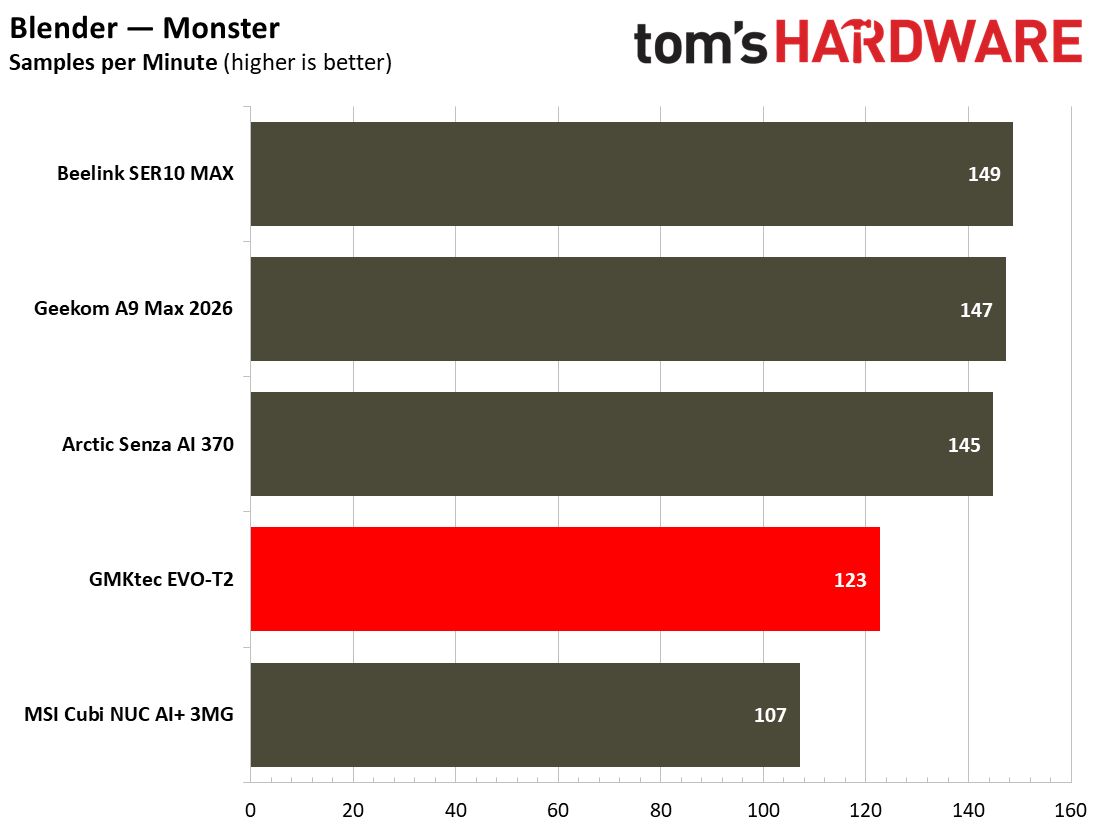
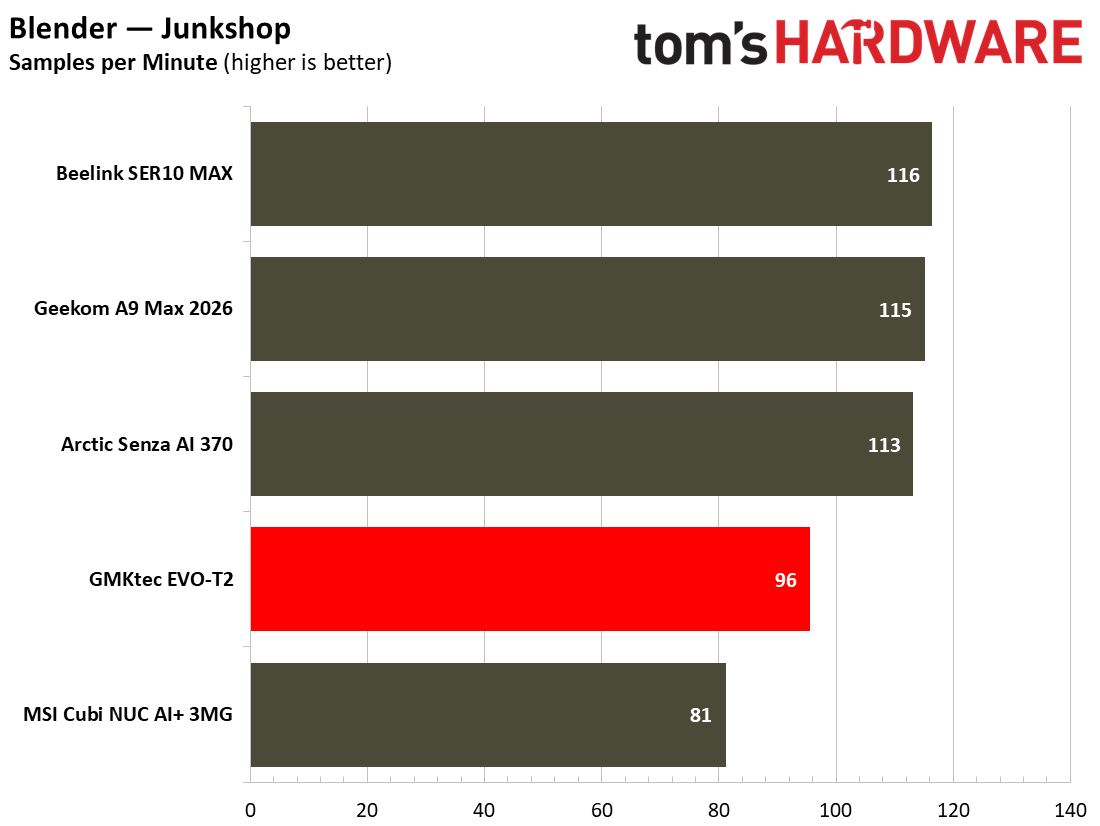
Between the Intel Core Ultra X7 358H and 64GB of fast DDR5 RAM, you will have no issues with office productivity on this compact system. And this processor has the best iGPU available from Intel for accelerating certain parallel workloads too.
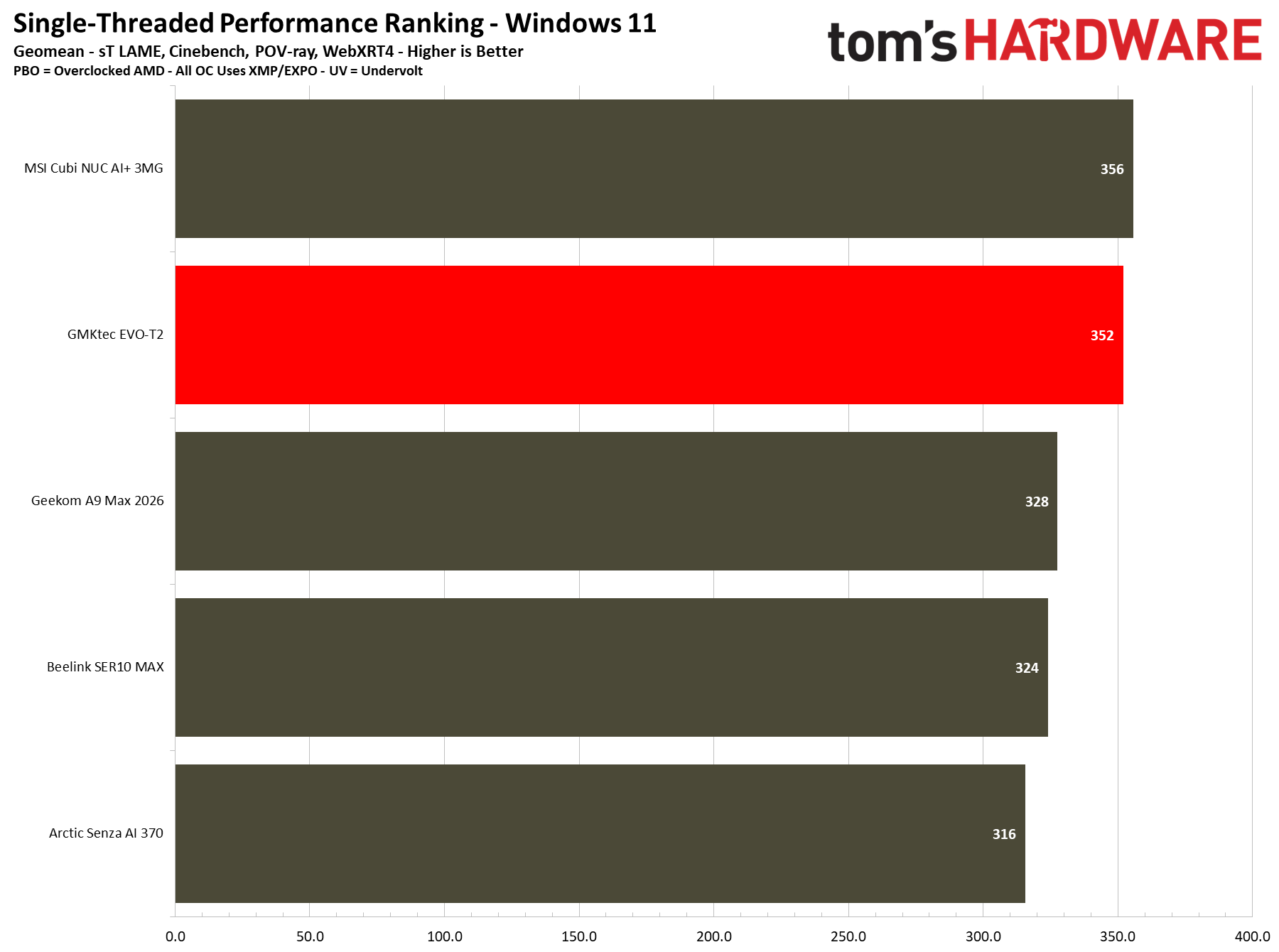
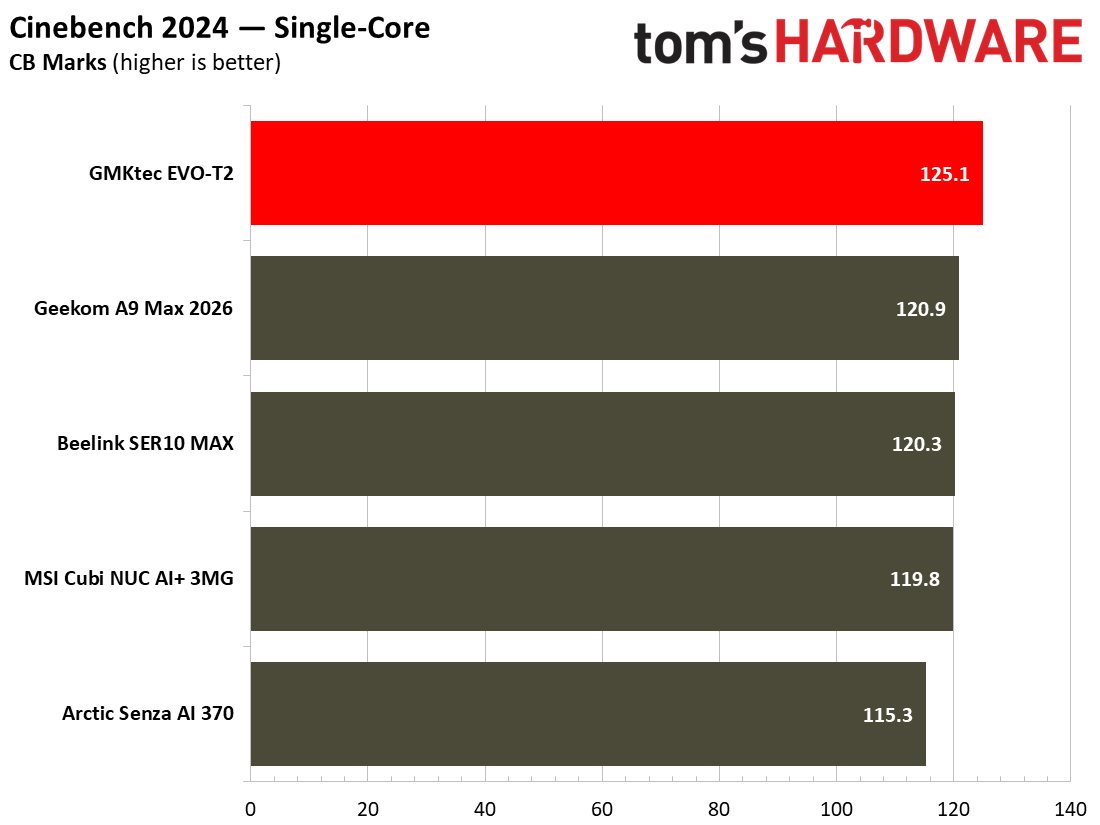
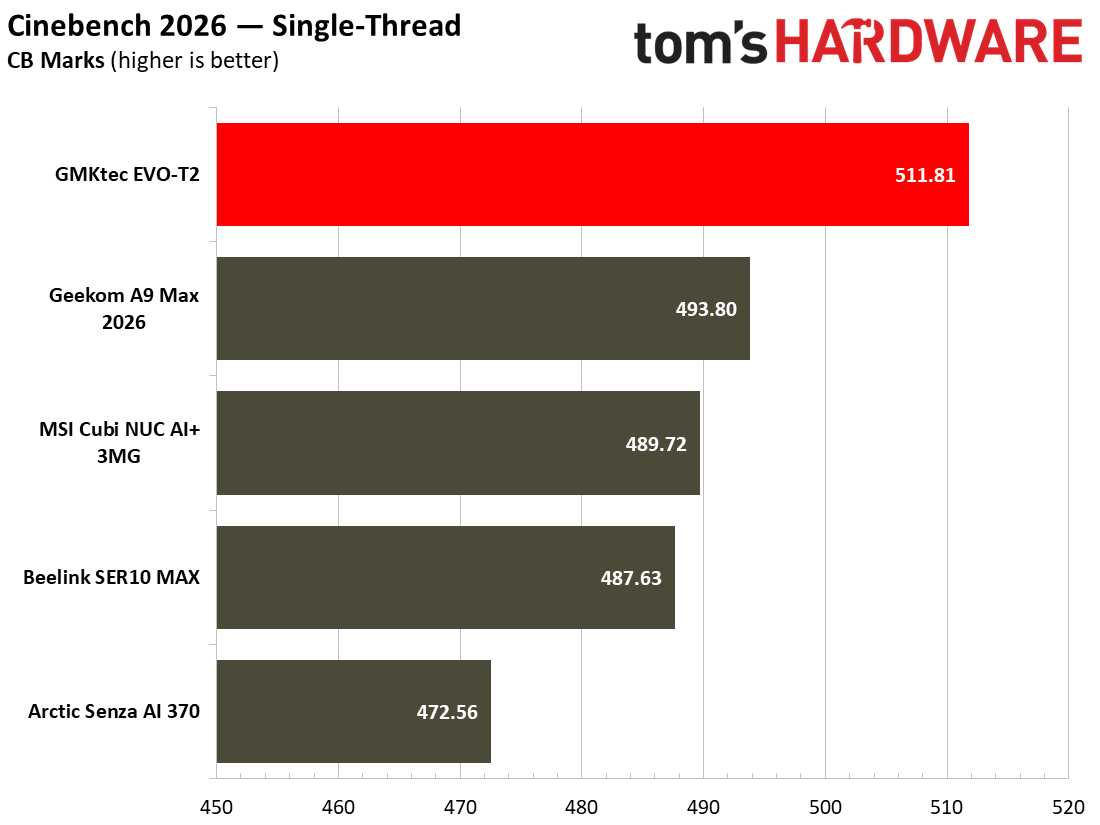
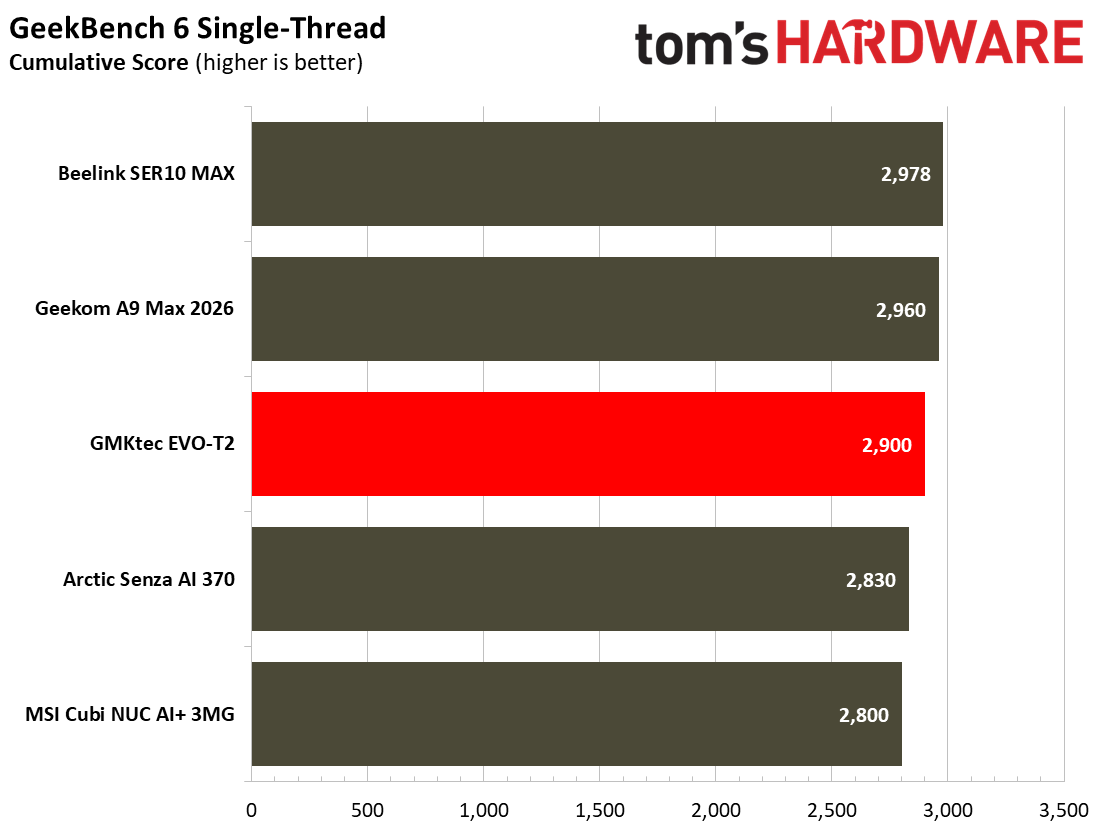
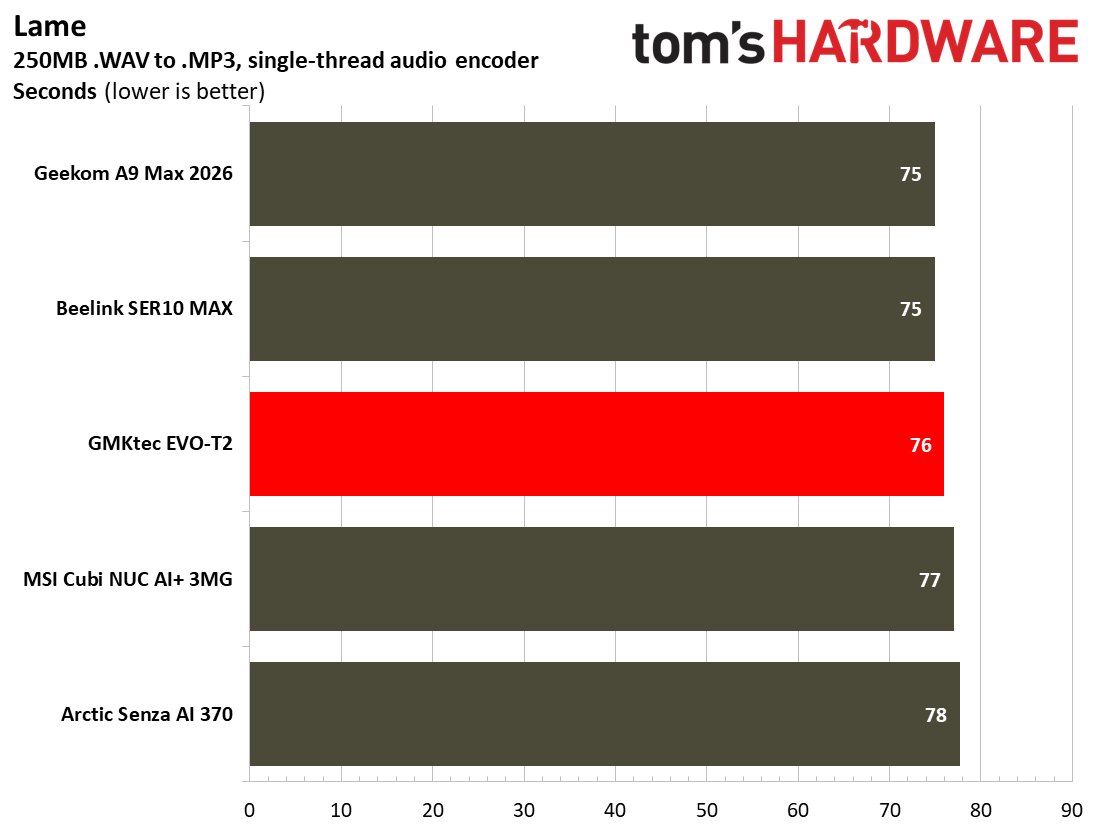
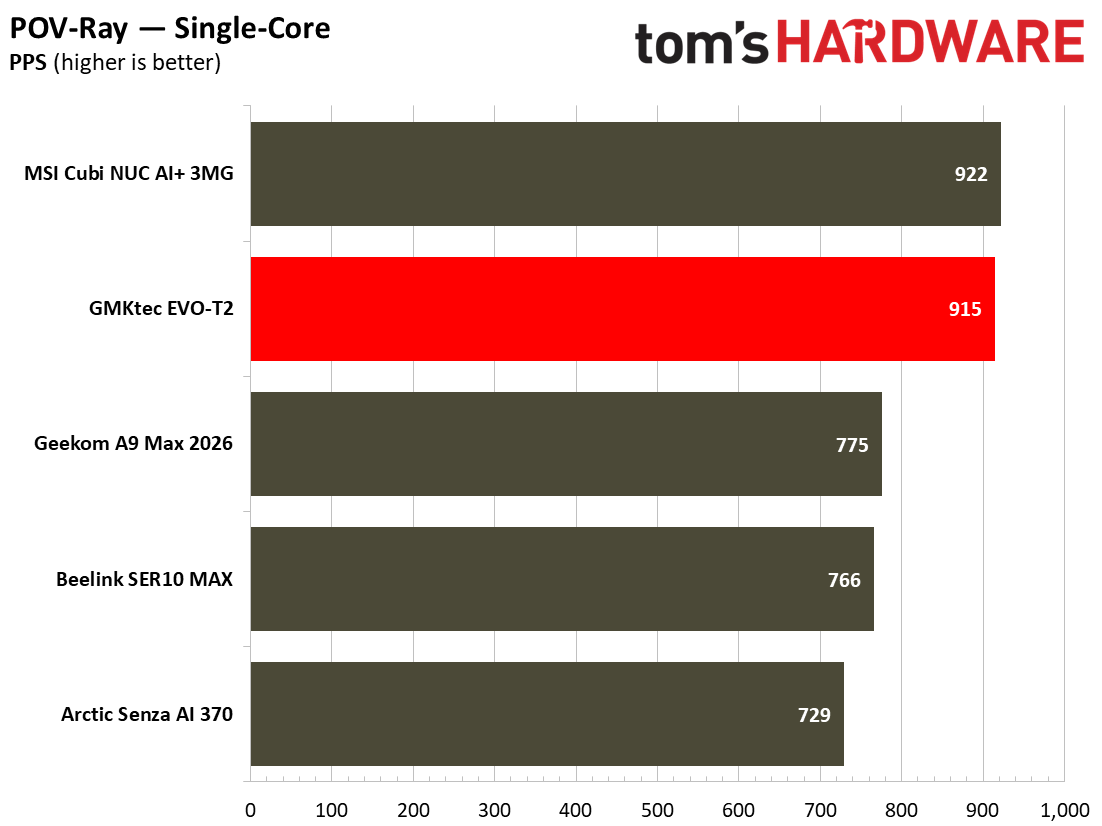
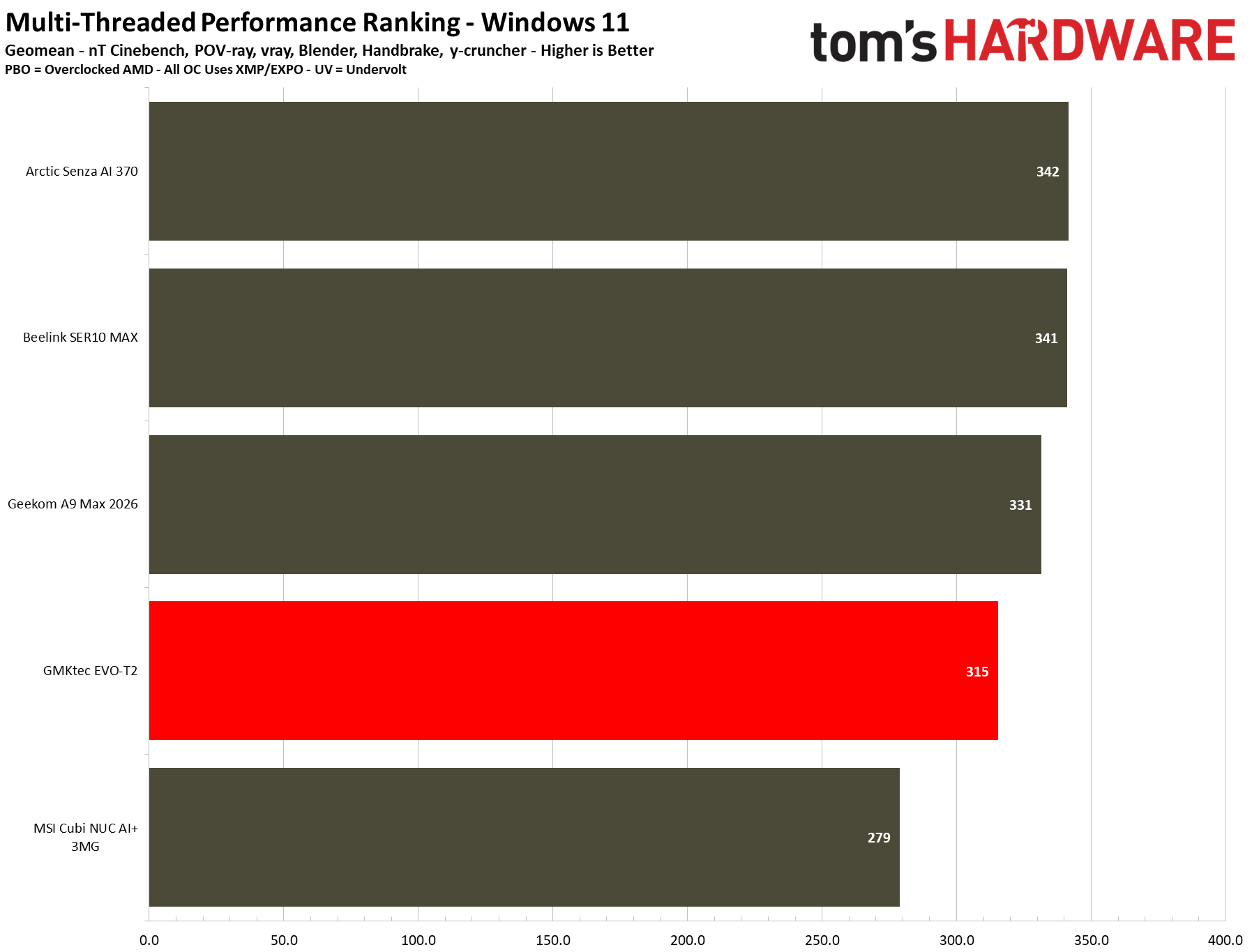
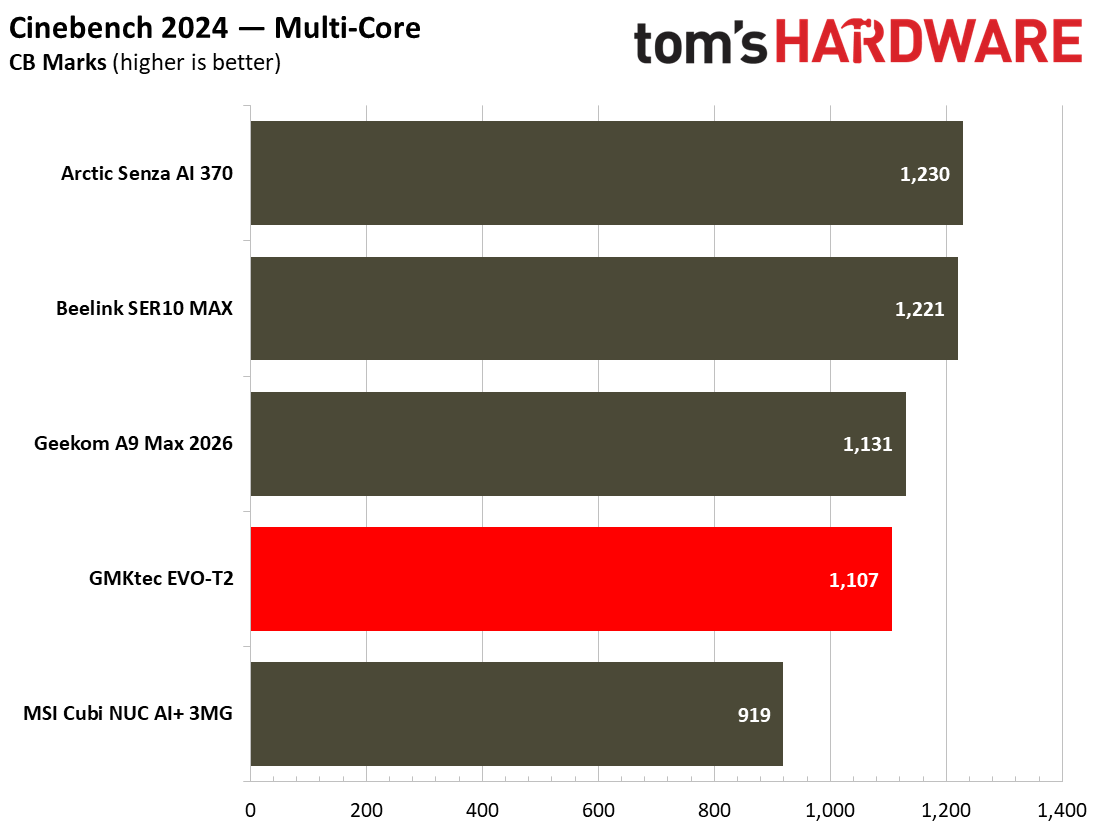
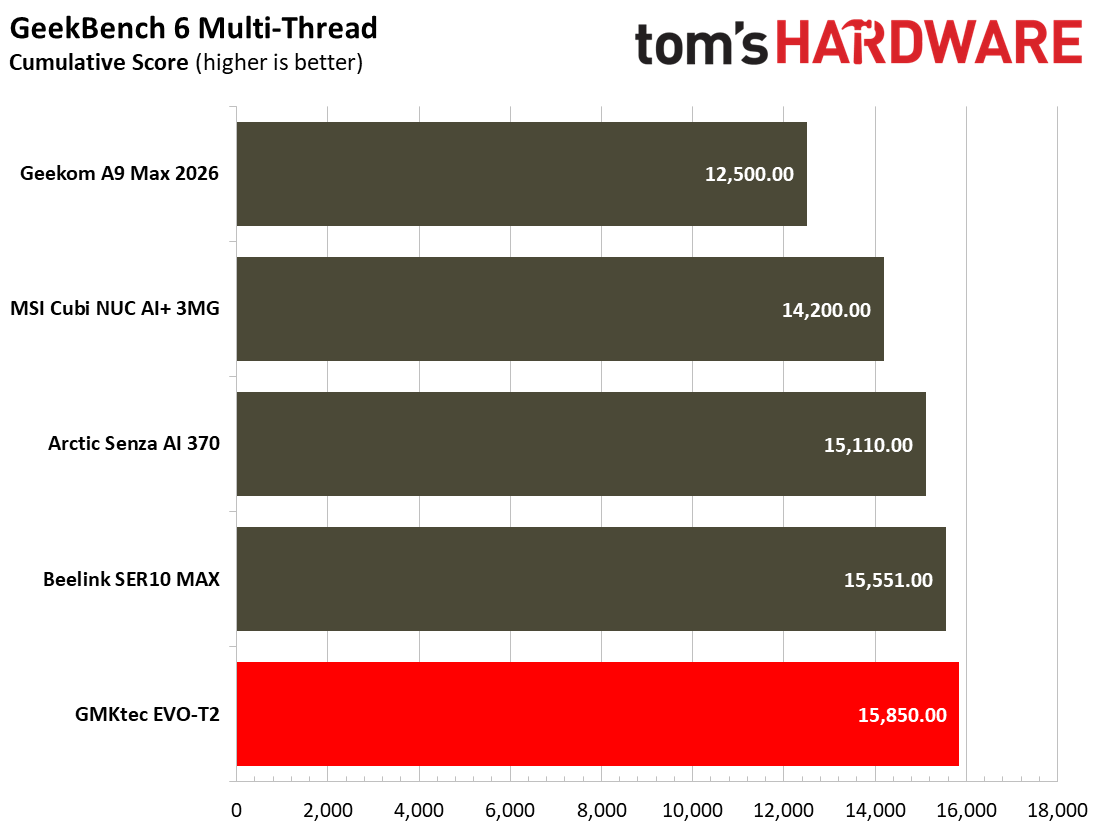
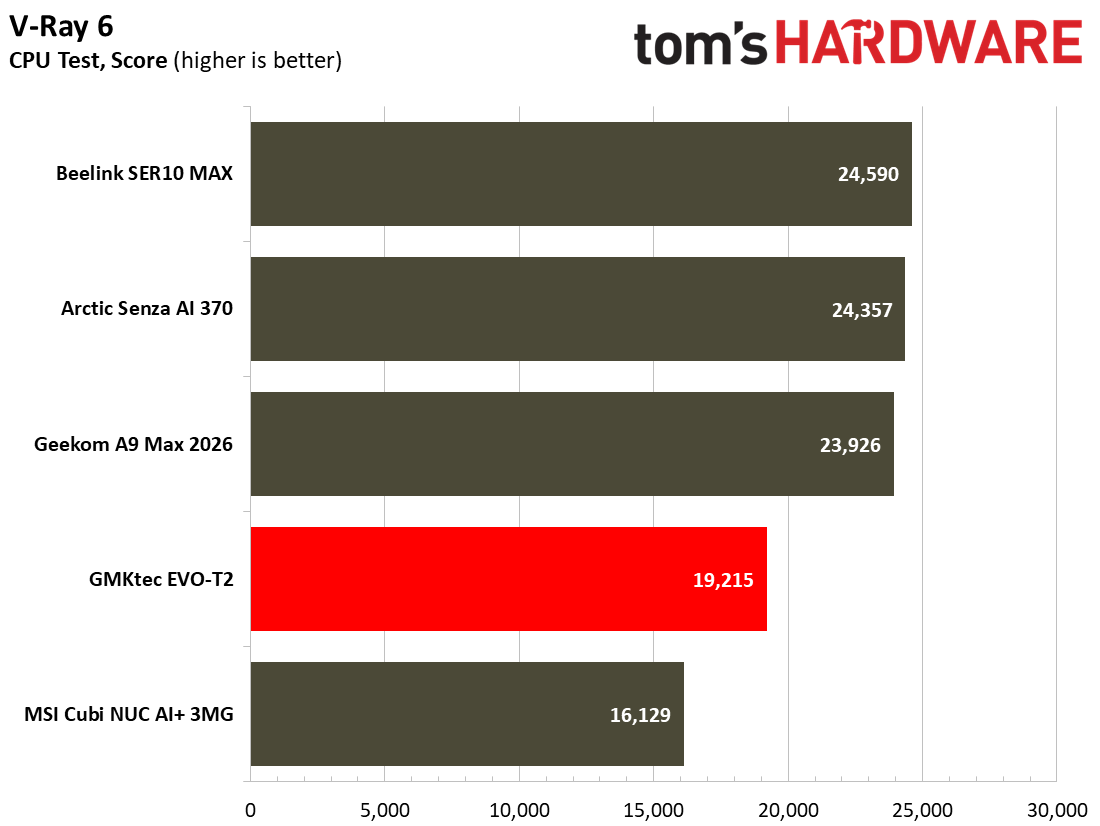
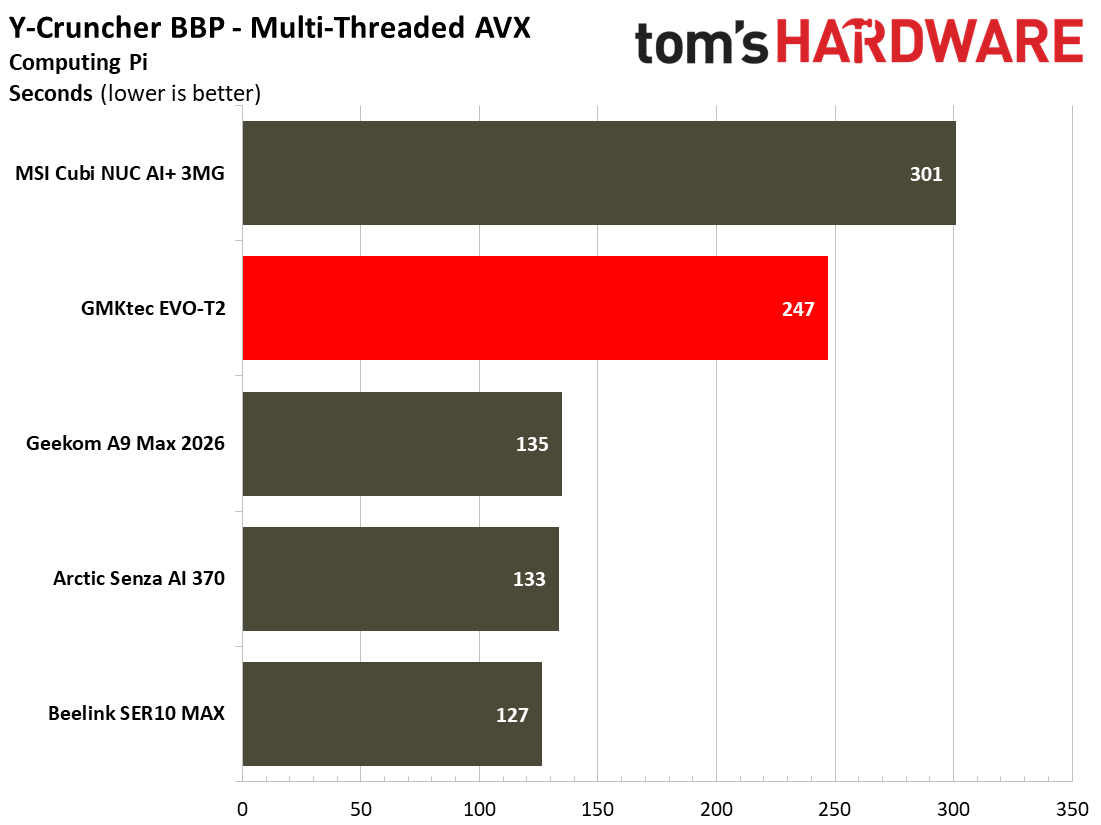
In our single-core CPU-stressing mini PC benchmarks suite, the Intel Core Ultra 300 chips outshined their AMD Ryzen AI 300 and 400 rivals, which is usually a good indicator for responsive performance. However, the Intel 16C/16T processors were predictably outclassed by the AMD 12C/24T chips that fill our mini PC comparison charts at this time when it comes to multi-threaded workloads.
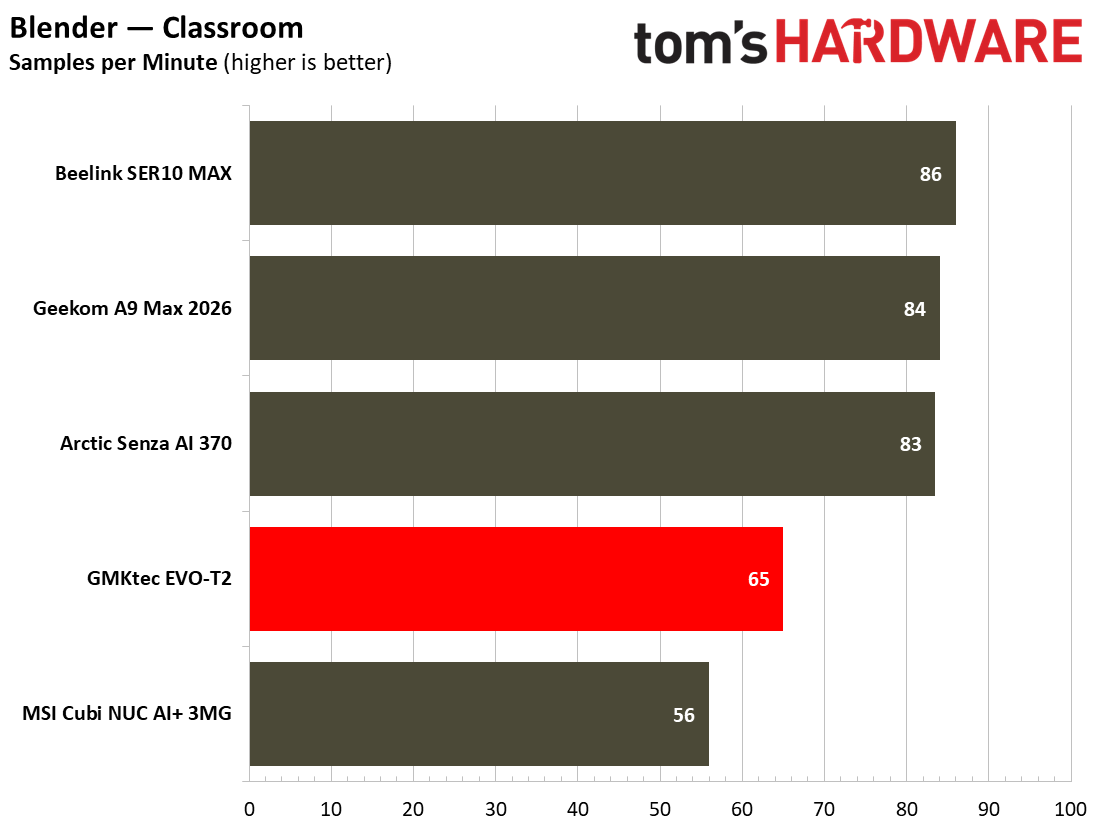
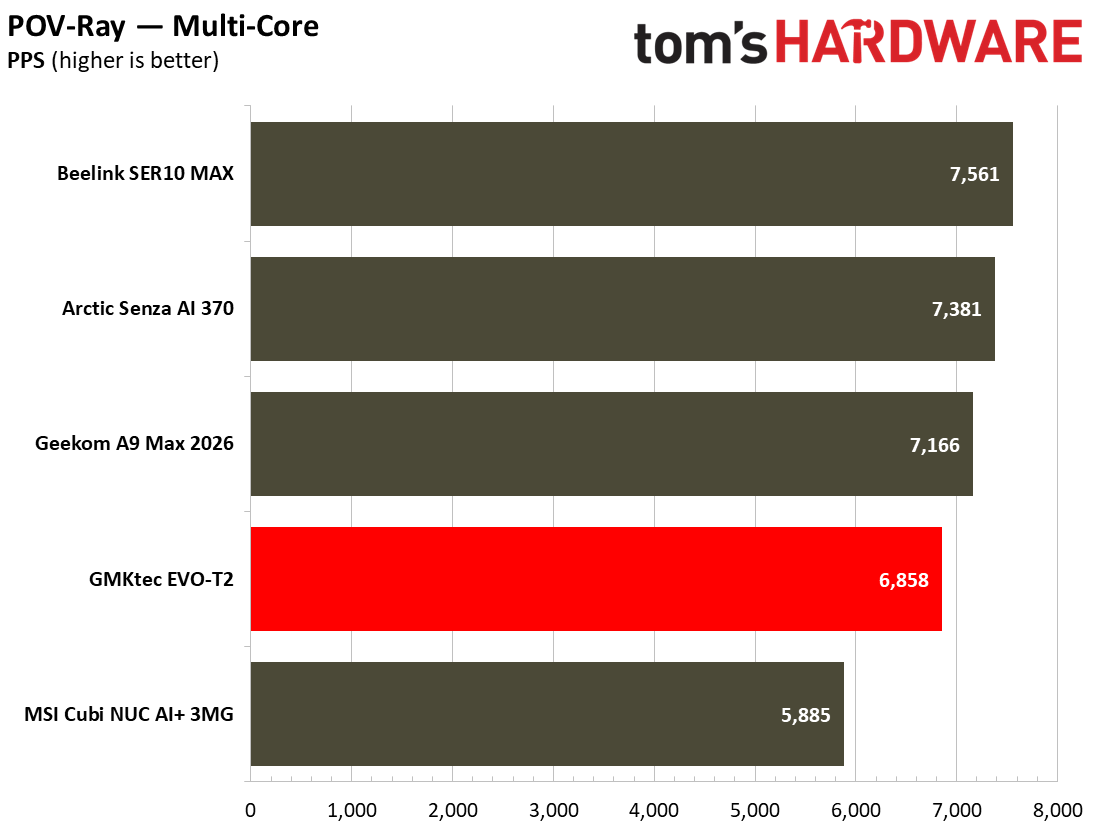
Focusing on the Cinebench 2026 multi-core test shows that the GMKtec Evo-T2 trailed the AMD Ryzen AI pack in this popular visual rendering test. The Panther Lake machine’s score of 4,338 was respectable, but the trio of AMD competitors were between 7.5% and 17.5% ahead.
When tasked with a spot of video transcoding using HandBrake there’s a similar story to tell, but the Evo-T2 wasn’t left in the dust, as you can see. Transcoding at 16 frames per second isn’t a disastrous result when the AMD competition achieves 17 or 18 frames per second.
During our demanding tests, the GMKtec Evo-T2 stayed admirably cool and quiet.
Gaming and Graphics on the GMKtec Evo-T2
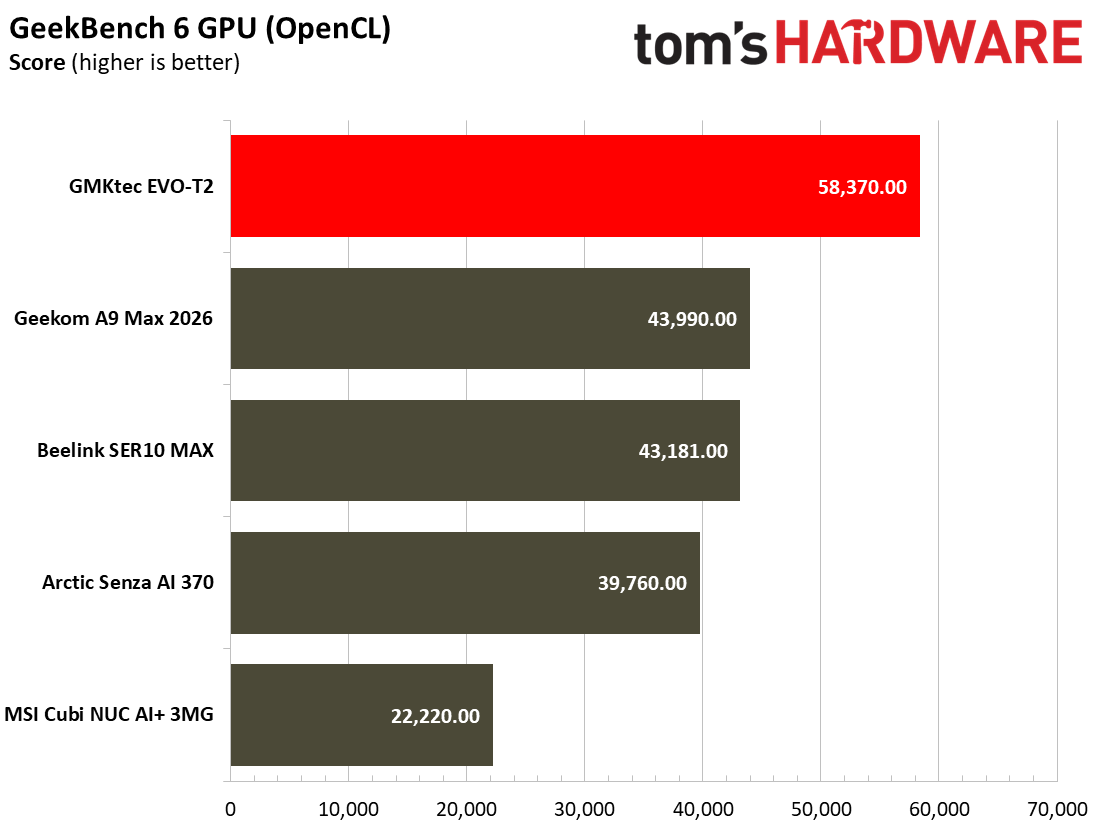
The GMKtec Evo-T2's Core Ultra X7 358H processor includes an integrated GPU, the Intel B390, with 12 Xe cores. We've seen similar graphics arrangements in handhelds like the MSI Claw 8 EX AI+, so we had high hopes.
Before moving onto our standard synthetic and iconic PC gaming tests, I decided to run around in Far Cry 5 using the Normal preset, 1440p, and no resolution scaling. The game ran smoothly at the native QHD resolution of my primary monitor at a consistent 60 frames per second with the settings mentioned. I enjoyed a half-hour rampage in this open-world first person doomsday cult-combating adventure set in rural Montana.
Our set menu of gaming benchmarks include a trio of 3DMark synthetics and two popular AAA PC games. 3DMark Solar Bay is a great way to frame and compare cross-platform iGPU performance. Steel Nomad targets higher-end gaming PCs and tests raw graphics performance with its heavy GPU load. Finally, Speed Way is a 2025 benchmark from UL that uses DirectX Raytracing tier 1.1 for real-time global illumination and real-time ray-traced reflections. It is the most demanding test of the trio and mini PCs with iGPUs can currently only achieve single-digit frames per second performance in this test.
Tom's HardwareTom's Hardware
GMKtec’s mini PC achieves great scores for an iGPU. For example, its Steel Nomad score of 1,624 is almost 1,000 points better than the Arctic Senza AI 370 we reviewed recently, which packs AMD’s Radeon 890M iGPU supported by a fast LPDDR5X‑8000 dual-channel memory pool.
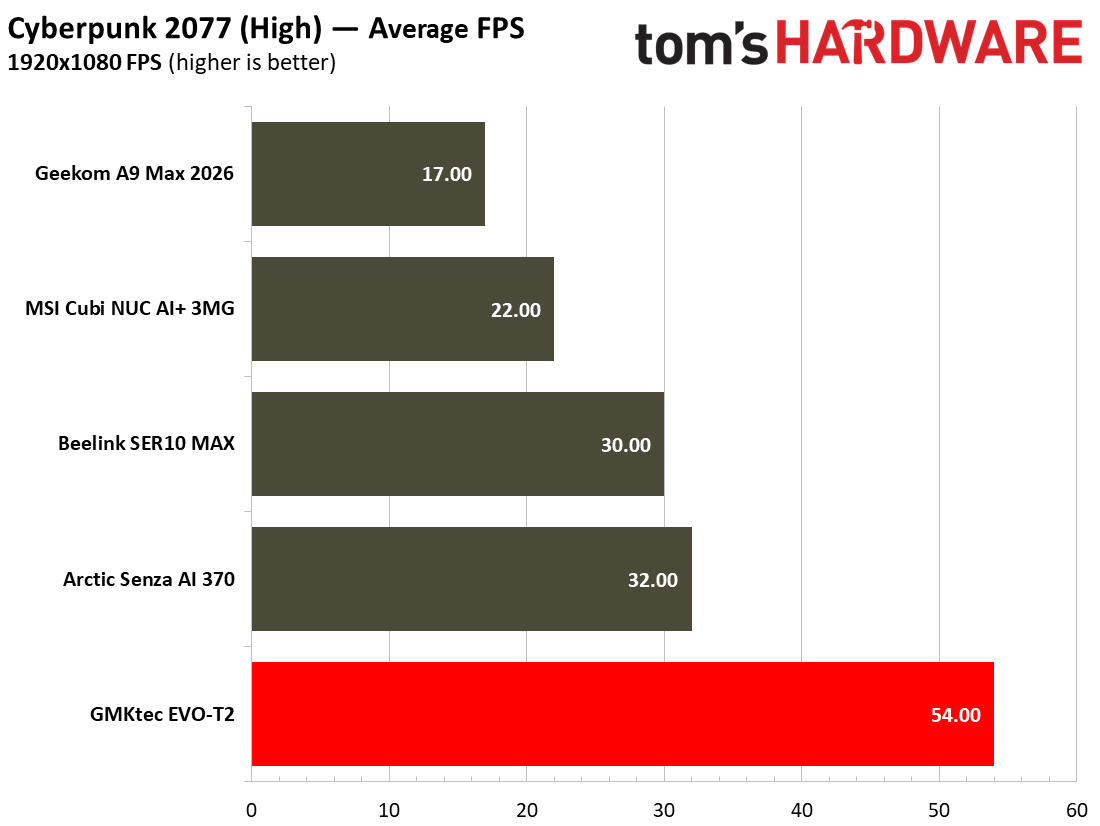
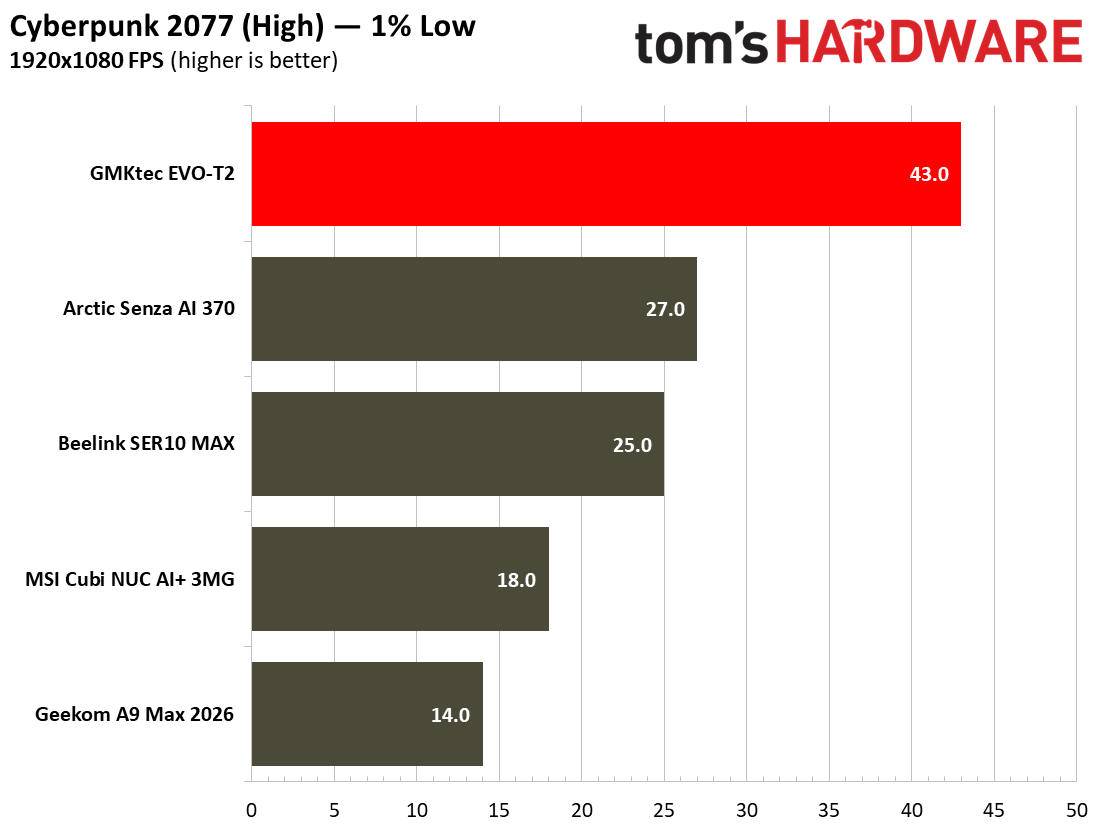
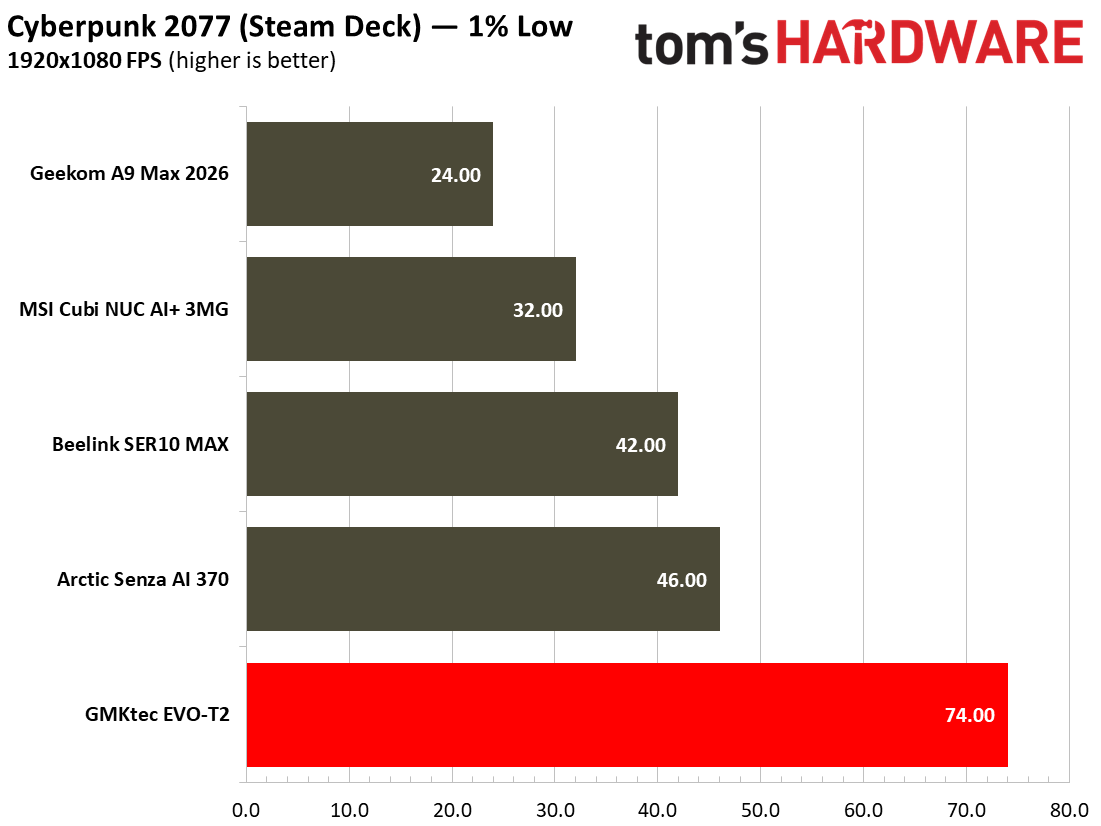
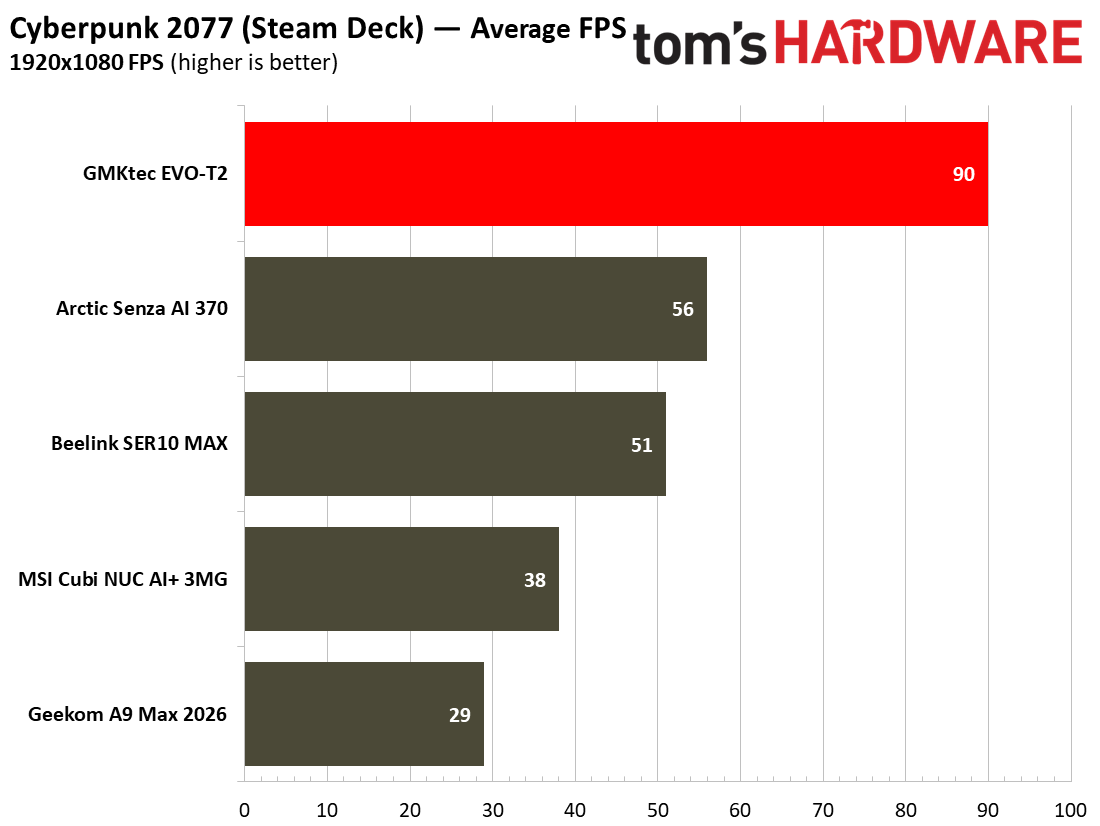
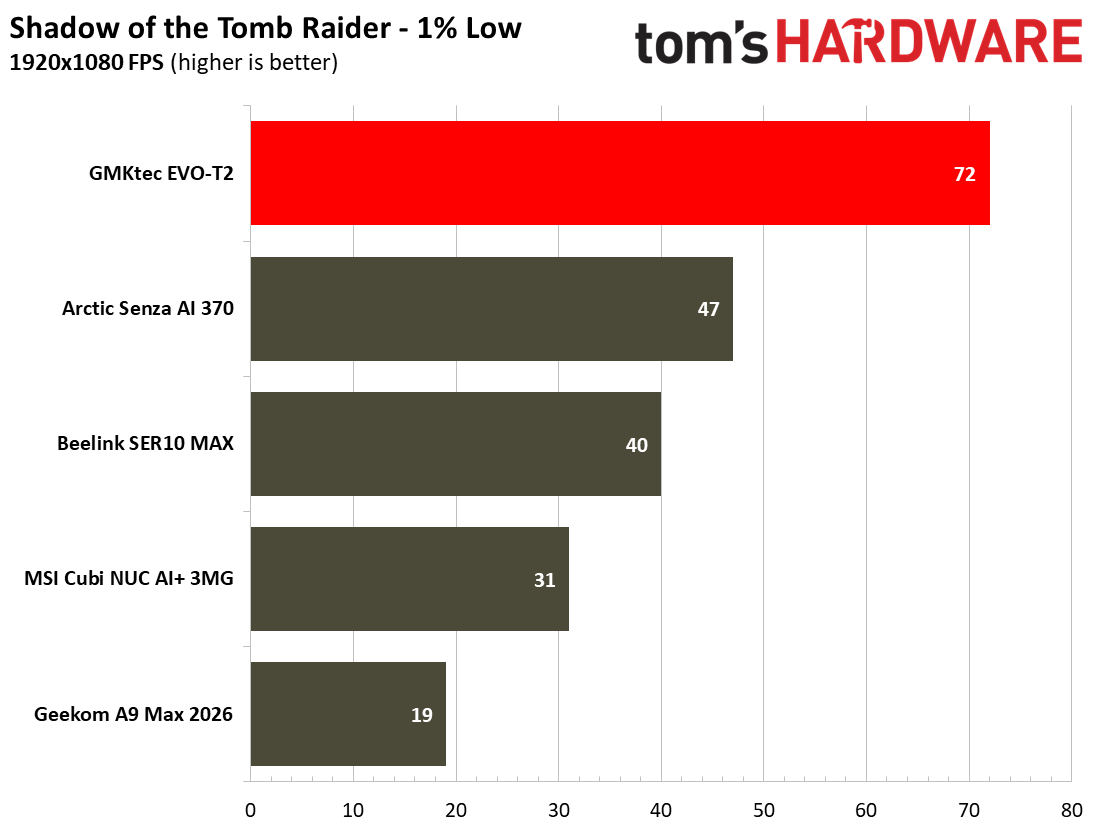
Moving on to more real games, let’s check the data provided by the multi-scene benchmarks built into Shadow of the Tomb Raider and Cyberpunk 2077. The former scales well with processor resources and can still often look and run great on a humble iGPU. As for Cyberpunk 2077, it can really put the squeeze on even the strongest modern GPUs, so here we've used two settings to show how the GMKtec Evo-T2 can perform.
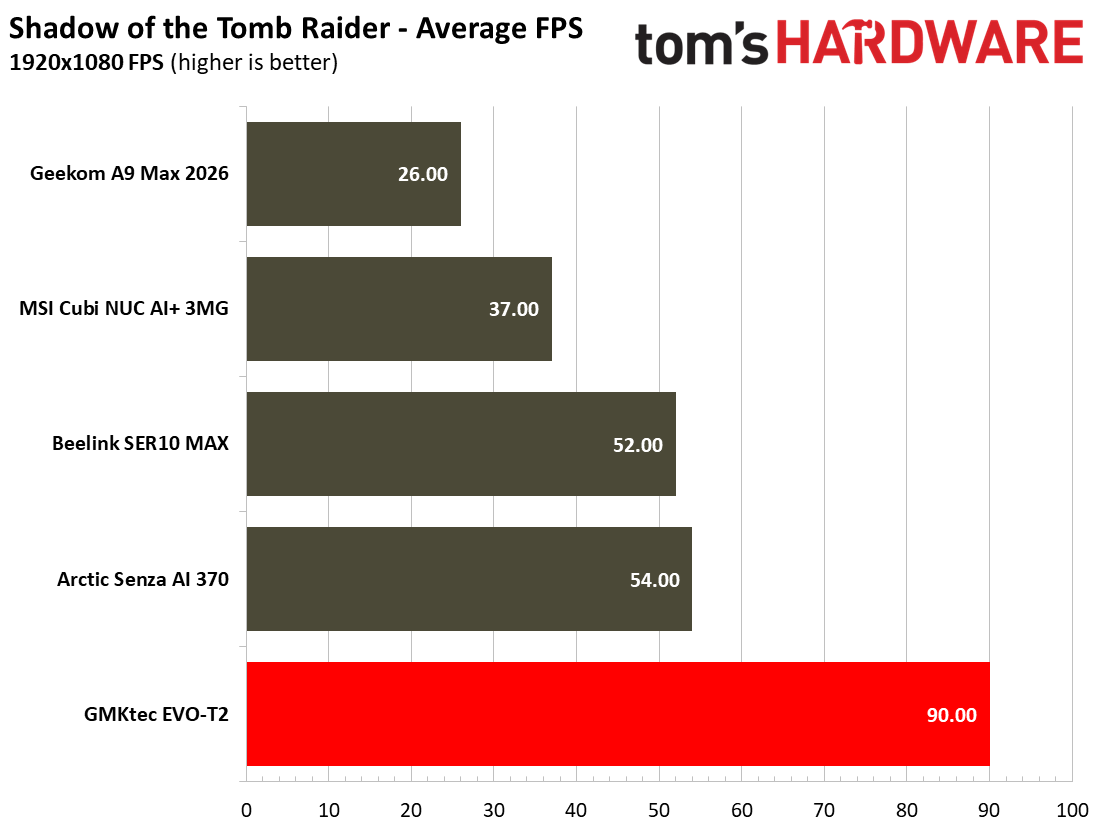
The Shadow of the Tomb Raider High 1080p test score shows a comfortably smooth 90 FPS on average, with the low of 72 FPS, also pleasantly above the magic 60 FPS zone. Gamers might be able to squeeze a higher quality setting or move up and enjoy this title in 1440p High. This is a pretty good effort for integrated graphics.
As for Cyberpunk 2077, the Steam Deck + 1080p preset looked very fluid with only minor drops, comfortably remaining above the 60 FPS zone. Adjusting some of the graphics settings, and even applying some level of upscaling technology, using the High 1080p preset should also easily push the GMKtec Evo-T2’s average FPS from the mid-50s to over 60 but with a clear visual advantage over using the Steam Deck preset.
Power, Heat, and Noise when using the GMKtec Evo-T2
Tom's HardwareTom's HardwareTom's Hardware
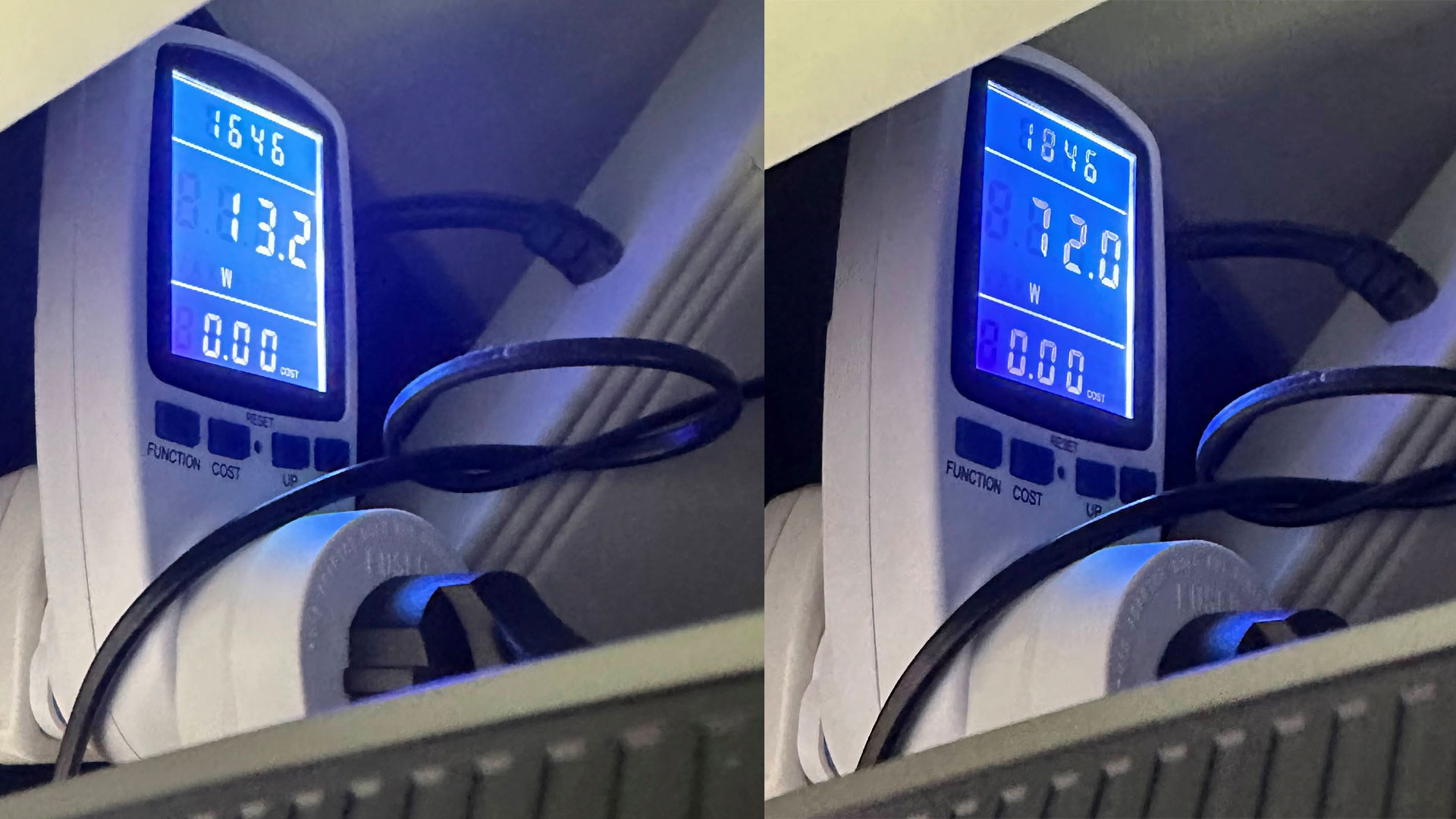
When I left the GMKtec Evo-T2 to idle, my meter measured wattages around 13W from the wall for the whole system. In the middle of active productivity work, mixing desktop Word and having several browser tabs open, consumption increased to about 20-25W. When the system was pushed with simultaneous CPU and GPU benchmarks running, power draw seemed to peak at around 72W, measured at the wall.
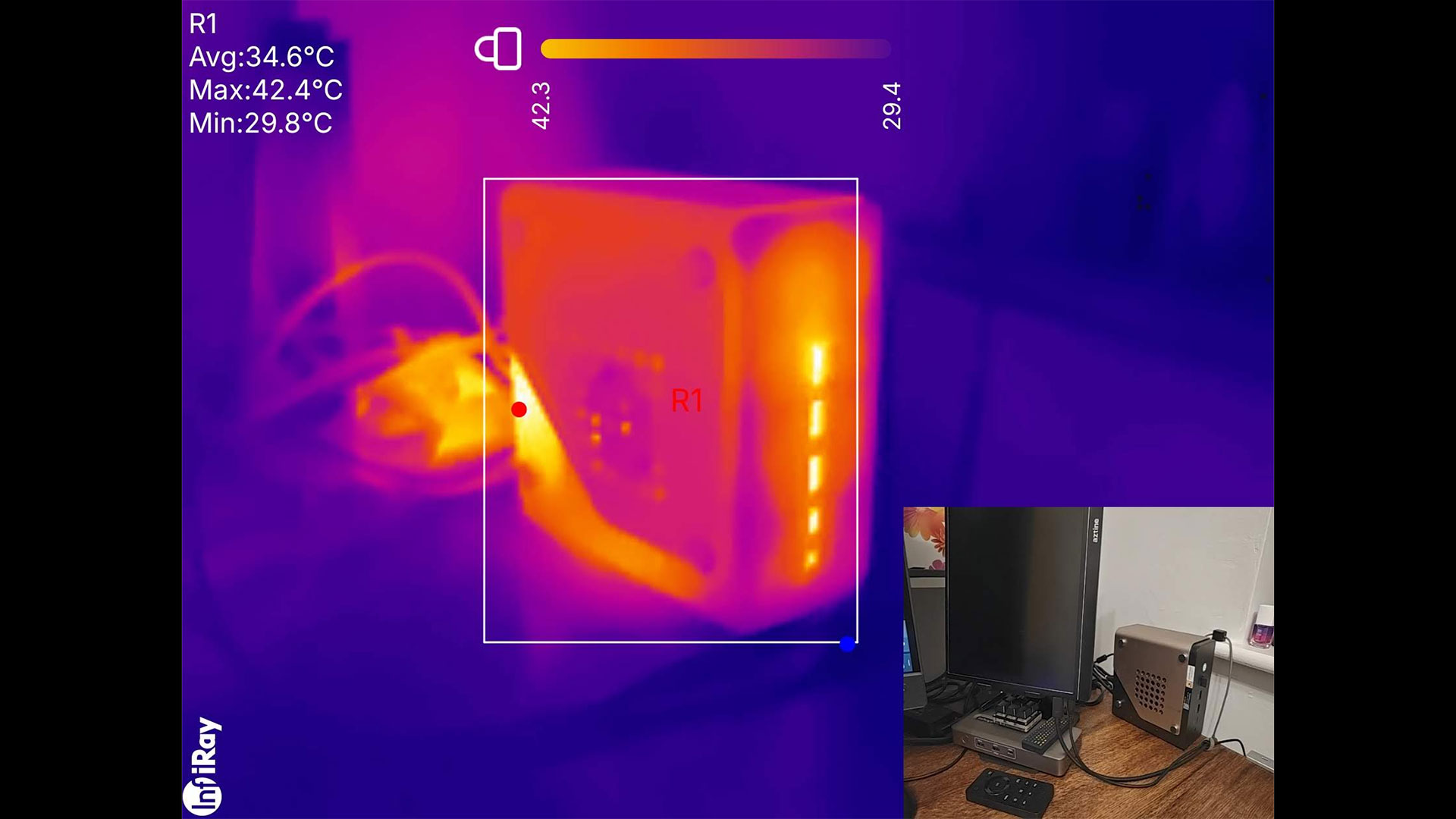
System tools showed that during light activities like browsing the web and writing, the CPU temperature stayed around 44 degrees Celsius (in a 28 C room). Playing Far Cry 5 for 30 or 40 minutes, the reported CPU temperature seemed to oscillate between 80 C and 88 C. However, running a workload like Cinebench R23 multicore, the temperatures seemed to creep a smidgen higher over time, with the highest measurement I saw at 90 C.
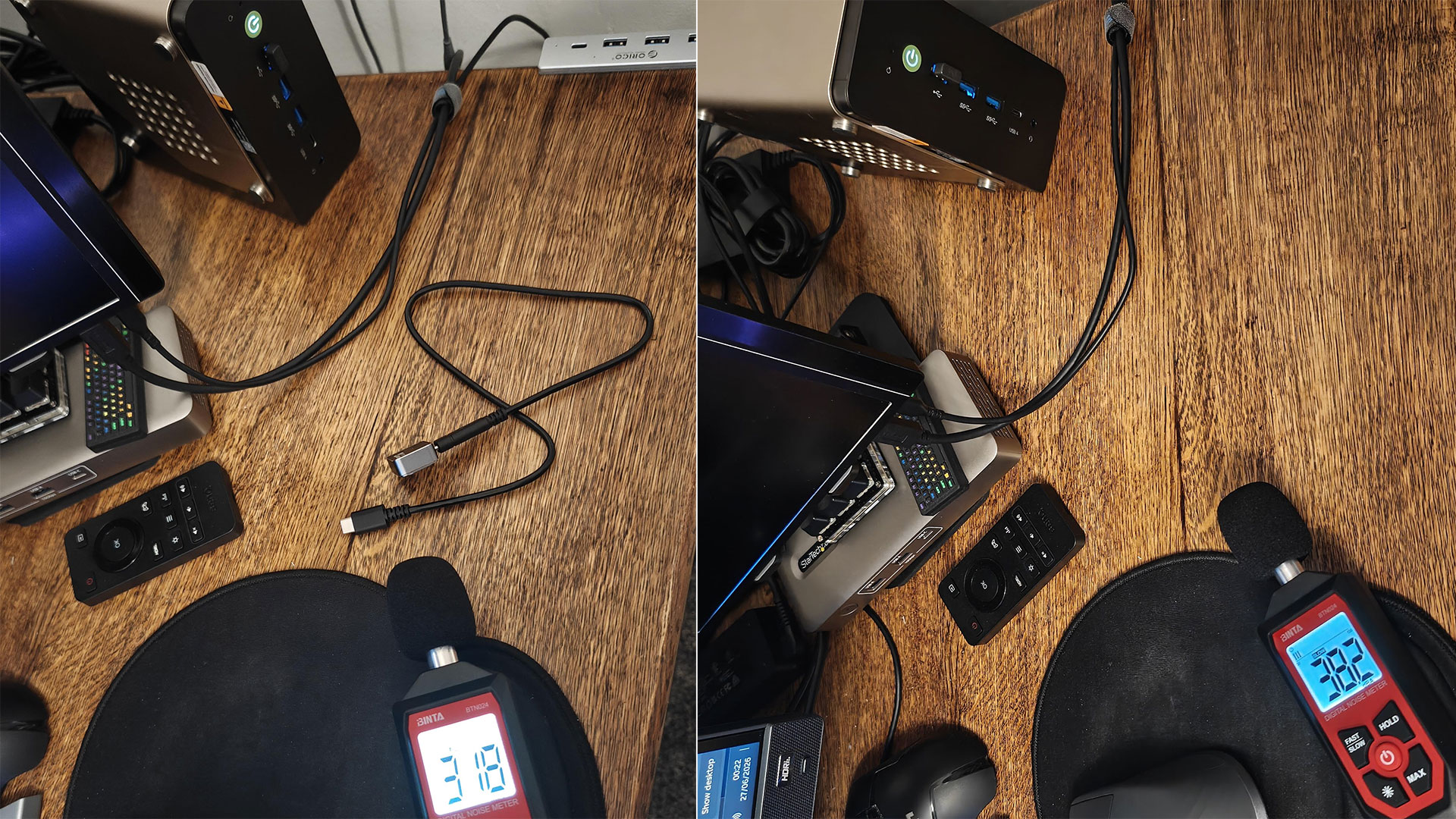
GMKtec’s powerful Panther Lake mini PC was a quiet operator in general. My measurements from about a foot in front of the device show it runs idle at 32 dBA. Putting as much strain on the system as possible, with multiple heavy CPU and GPU tasks, the loudest volume the fans reached was 38 dBA. I didn't find the fans to be irritating. Even at the loudest levels, the sound produced is a kind of low-frequency hum.
The GMKtec Evo-T2 ships with Windows 11 Pro installed. Customers are warned by GMKtec’s stickers over the Ethernet ports not to connect to the internet on first boot. This may help in avoiding some long update times and let you get straight to using your new device.
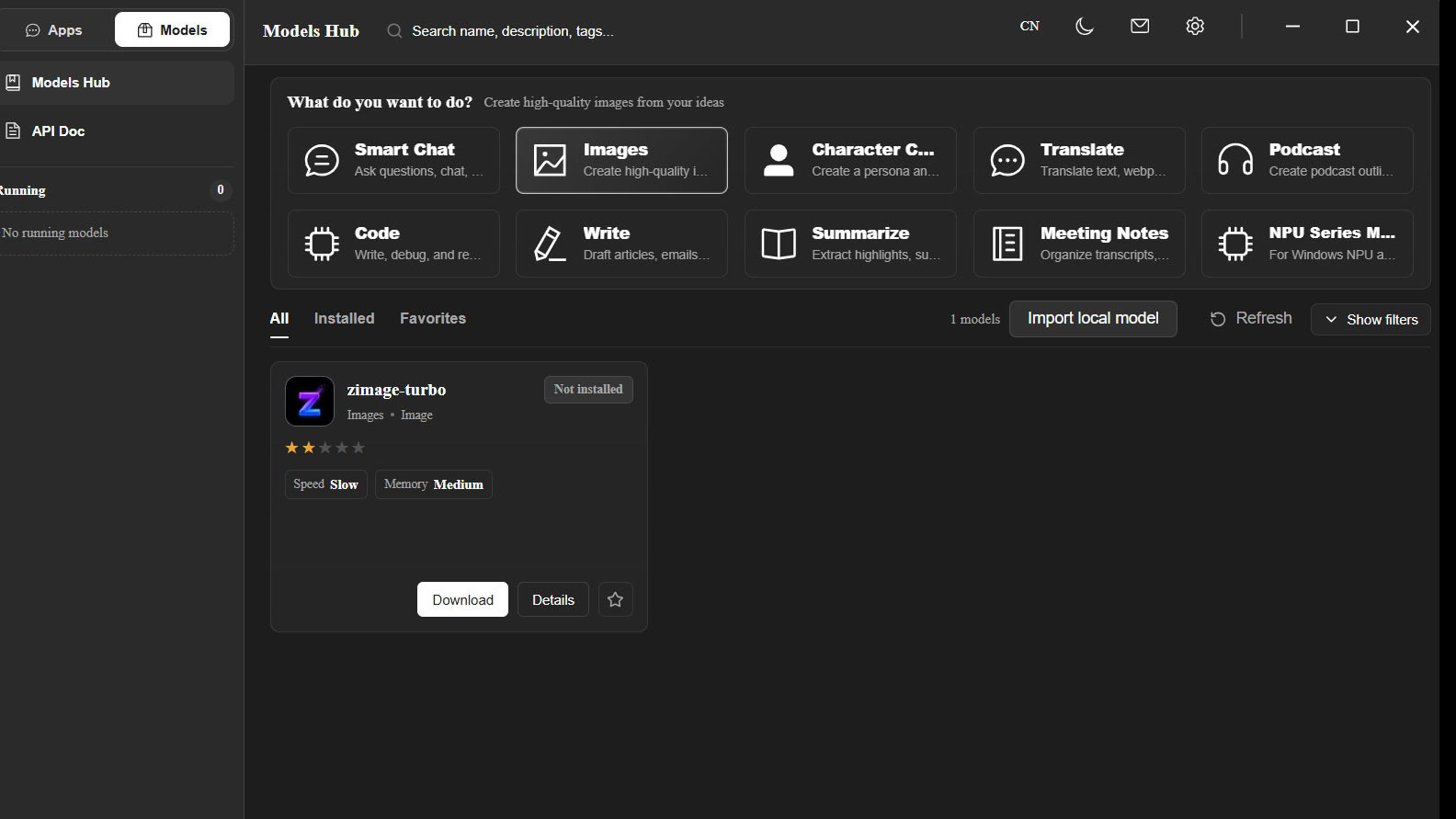
GMKtec includes AI and LLM software preinstalled. A PDF on the desktop alongside several utilities guides you through selecting some local LLMs, downloading, and installing them.
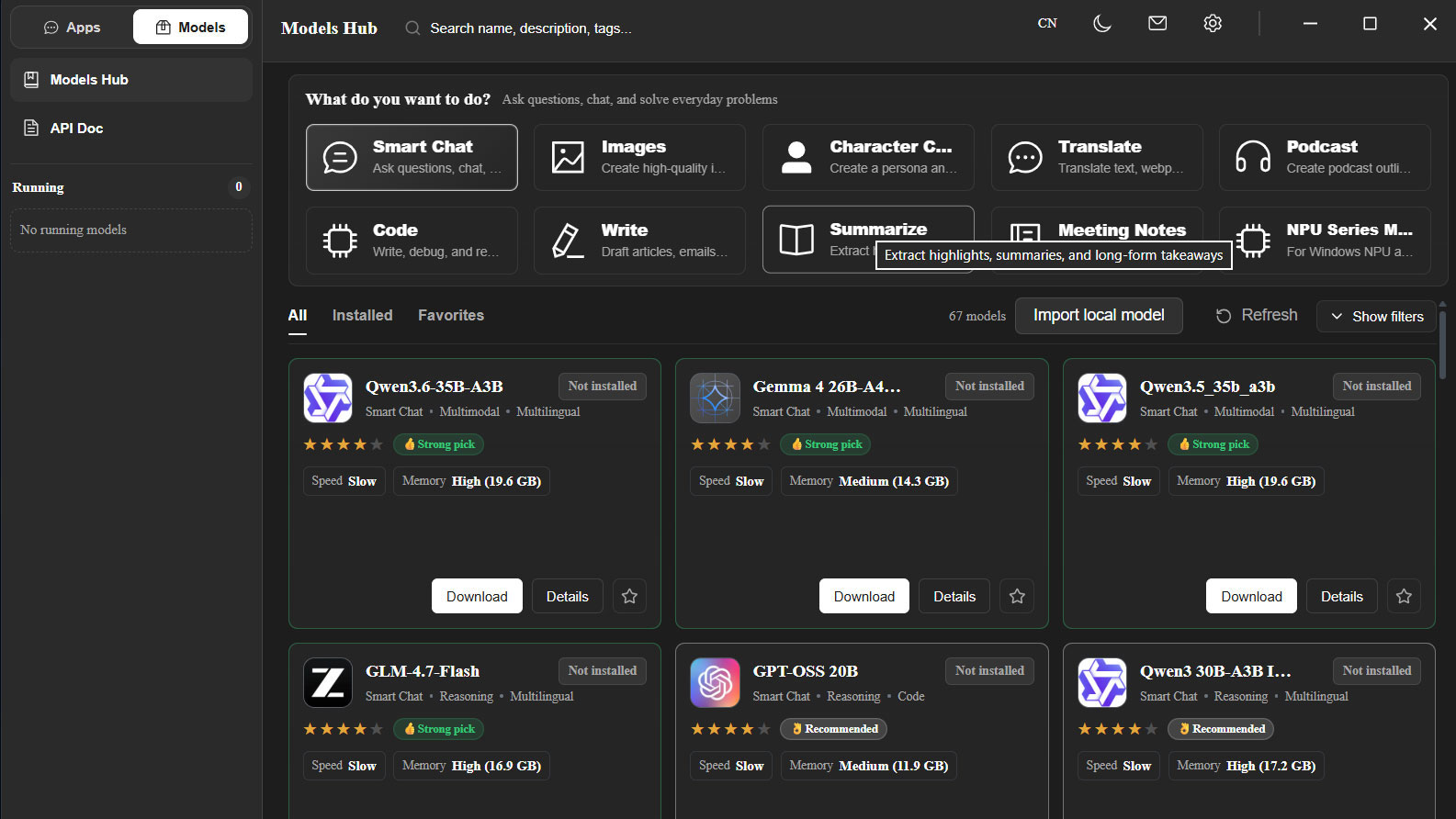
The first step was to run a pre-installed utility called Herdsman, which is where you pick some LLMs based on the software recommendations for different tasks. It also offered summaries of the chosen model’s response speed, capabilities, and memory use. Straight away I hit a slight roadblock with certain pages / dialogs popping up in Chinese. With Google Translate on mobile, I managed to navigate this, but it isn’t ideal.
With the model downloads complete, I could now test out the pre-installed AIPC and GMKtec Claw software. My initial test queries were run using the Alibaba-developed Qwen3.6-35B-A3B / Balanced model. This hogged a little over 27GB of my memory, according to Windows, so the 64GB system total seemed well chosen for this LLM. Responses from queries were not slow, with metrics reporting an average Prefil speed of 500+ t/s, and Decode of 30 t/s. When asking it to “write a 500-word essay on the history of computing," it finished in 26 seconds. Watching the Windows system monitor when Qwen was busy showed that it solely relied on the GPU (using 90-95% utilization) for acceleration. The NPU was completely untaxed, and the CPU’s low ~10% utilization was probably mostly due to background tasks and housekeeping.
Other prompts I tried demonstrated that local AI was just as capable as online models at being totally wrong about a subject. Then, the agentic AI app also underwhelmed by failing in a pretty simple task I asked it to complete - checking an airline booking given the reference number.
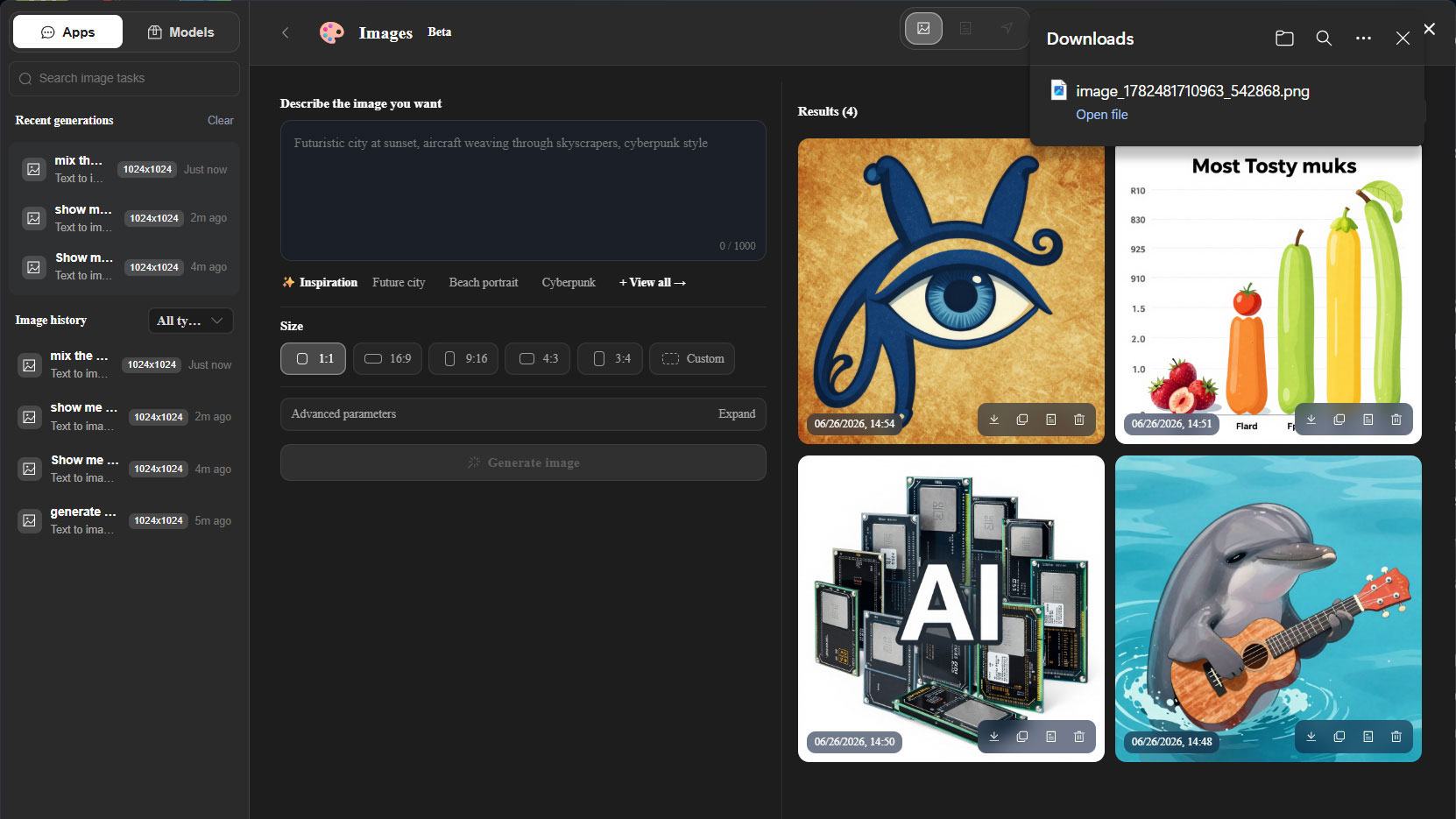
Using Zimage Turbo (10.86GB) to generate 1,024 x 1,024 pixel images from prompts resulted in a wait of just over 20 seconds for each result. Again, this used the GPU.
These GMKtec-supplied tools may have potential, but the supplied software suite suffers from partial translations and fewer chat, reasoning, and coding models available than if you just went and downloaded the well-known LM Studio. (However, LM Studio users would also need something like ComfyUI to set up image generation models they wanted to use.)
GMKtec sells the Evo-T2 with a one-year warranty.
Configurations of the GMKtec Evo-T2
We tested the GMKtec Evo-T2 with Intel Core Ultra X7 358H, 64GB RAM, and 1TB SSD, which is listed at $1,959 on the firm’s US site. That chip is one of the best Panther Lake mobile processors with its 16C/16T CPU tile (4x P‑cores, 8x E‑cores, 4x LP E‑cores) running at up to 4.8 GHz. This is aided by Intel Arc B390 (12 Xe cores), which is muscular for an iGPU. Another section of the SoC features a dedicated NPU capable of 50 TOPS, says Intel. However, GMKtec likes to highlight that the total AI power of this Intel processor is 180 TOPS
GMKtec sells just two Evo-T2 configurations in the US, and both have 64GB LPDDR5X-8000 memory. There are two M.2 SSD slots inside, and the manufacturer provides a 1TB Crucial E100 PCIe 4x4 drive using Micron 176-layer QLC NAND pre-installed in the device we received. Windows 11 Pro is included, as are the aforementioned GMKtec local LLM software tools.
We reviewed the Evo-T2 in its $1,959 configuration with 64GB of RAM and a 1TB SSD. On the U.S. web store, there is just one other configuration, a model with the same tech specs but with an “853GB AI SSD” (Phison aiDAPTIV+) instead of the regular 1TB SSD, with an MSRP of $2,399.
Customers ordering an Evo-T2 from the U.S. are told that they won’t have to face any additional import fees, though the store suggests that you should order now because price hikes are coming.
Bottom Line
GMKtec wants to call this an AI machine, and the 64GB of RAM certainly helps towards its local LLM aspirations. But the software it preloads for local AI needs more polish. I’d say that the GMKtec Evo-T2 is far from a one-trick pony, though, and I enjoyed using it as my daily driver for a few weeks.
This mini PC easily handled all the productivity workloads I threw at it. Gaming was excellent for an iGPU – and probably only the aforementioned Ryzen AI Max+ 395 APU with Radeon 8060S graphics does better in a single package. Also, this machine is compatible with one of the best eGPU interfaces available, OCuLink, for connecting a desktop GPU of your choice if and when you feel the need. Many enthusiasts still find this interface works better than Thunderbolt 5 or USB4 v2.
GMKtec’s Evo-T2 is a quiet-running mini PC showcasing one of the best Panther Lake chips in the Core Ultra X7 358H. Having 64GB of fast memory on board feels like something of a luxury in the current climate. However, the $1,959 MSRP is just $40 less than the 64GB version of the GMKtec Evo X2 AI Mini PC with Ryzen AI Max+ 395, with integrated Radeon 8060S graphics that we reviewed in February (was $1,499, but now $1,999 with “price increase coming soon”).
If you're a content creator or a gamer that needs to have a whopping 32GB of VRAM to power either your software applications or run your favorite games on extreme fidelity settings, then you're looking to own an RTX 5090 graphics card. Unfortunately, these GPUs do not come cheap, with the current lowest price on an available-to-buy 5090 sitting at an eye-watering $4,399.99. However, with this amazing Dell deal on an Alienware Area-51 gaming rig for $4,779.99, you can bag a whole gaming PC that includes the RTX 5090 for just $380 more than purchasing the standalone graphics card.
The Alienware Area-51 gaming PC in question comes packed with the aforementioned Nvidia GeForce RTX 5090 graphics card, but also includes the 20-core Intel Core Ultra 7 265K processor, 32GB of high-speed DDR5 7200 MT/s memory, and a 1TB SSD for the operating system and game storage.
All of the above components are packed into Dell's own Alienware case with a tempered glass side panel to show off the internals of the system. A 240mm liquid AIO cools the Intel Core Ultra 7 265K, and a beefy 1,500W 80 Plus Platinum-certified power supply has all the juice needed to run the RTX 5090. The Area-51 does away with Dell's old proprietary parts ecosystem and lets you add upgrades more easily, so you're able to add more memory or a bigger SSD down the line.
This Alienware Area-51 gaming PC is a top-spec powerhouse with performance to smash through gaming at 4K. It includes an Intel Core Ultra 7 265K CPU, Nvidia GeForce RTX 5090 GPU, 32GB of fast DDR5-7200 RAM, and a 1TB SSD.View Deal
The RTX 5090 is the most powerful consumer GPU on the market right now. It comes with 21,760 CUDA cores, over double the RTX 5080's 10,752 count, along with a massive 32GB of GDDR7 VRAM, using a 512-bit memory bus with memory bandwidth up to 1,792 GB/s. In our benchmarking results from our review of the RTX 5090 we can see that this super powerful GPU dominates the competition in all performance metrics.
Tom's HardwareTom's HardwareTom's Hardware
The Alienware Area-51 gaming PC in this deal has the ability to play any game at extreme frame rates and power high-refresh-rate gaming monitors, even at 4K resolutions. It's the best GPU to experience ray-traced graphics without severely compromising in-game graphics settings, and with the extreme pricing of the RTX 5090 at the moment, it's one of the best value ways to purchase an RTX 5090-powered gaming PC if you can afford one.
Yes, it should be $2000 cheaper, but thanks to the AI-boom ruining PC component prices for us enthusiasts, this is one of the best deals you will find on an RTX 5090 prebuilt gaming PC right now.
When you're buying a pre-built gaming PC, you'll want to consider how many years the rig you're buying is going to be able to play the latest games. Luckily, this Newegg deal on an ABS Cyclone Aqua machine for $1,329.99 right now unlocks performance that should last for some time. Unlike plenty of other budget rigs that stick with 8GB GPUs, this machine from Newegg's own ABS brand features an RTX 5060 Ti with 16GB VRAM, giving you the option to game at 1440p for less than $1,400. You'll need to use the coupon code SSF72762 for $70 off to get the full discount, however.
The PC hardware market has seen huge price increases, so a gaming PC with specs like these remaining at an affordable price is worth considering. While the RTX 5060 Ti 16GB is the star of the show, you're also getting 16GB of DDR5 RAM, a 1TB SSD, and the 20-core Intel Core i7-14700F to sink your teeth into. The 14700F is still a popular choice in pre-builts, despite being a little older, with decent performance for gaming.
$70 off with coupon code ssf72762
This ABS Cyclone Aqua gaming PC is ready for 1080p and 1440p gaming. It features an Nvidia GeForce RTX 5060 Ti 16GB, 16GB DDR5 RAM, a 1TB SSD, and a 20-core Intel Core i7-14700F CPU.View Deal
With this build, you're securing yourself one of Nvidia’s current mid-tier graphics cards, featuring a GPU with 4,608 CUDA cores and a boost clock speed of 2,527MHz. Unlike the RTX 5090, this RTX 5060 Ti only requires a single eight-pin PCIe connector to deliver power, so you're not expected to be guzzling huge amounts of power with this rig.
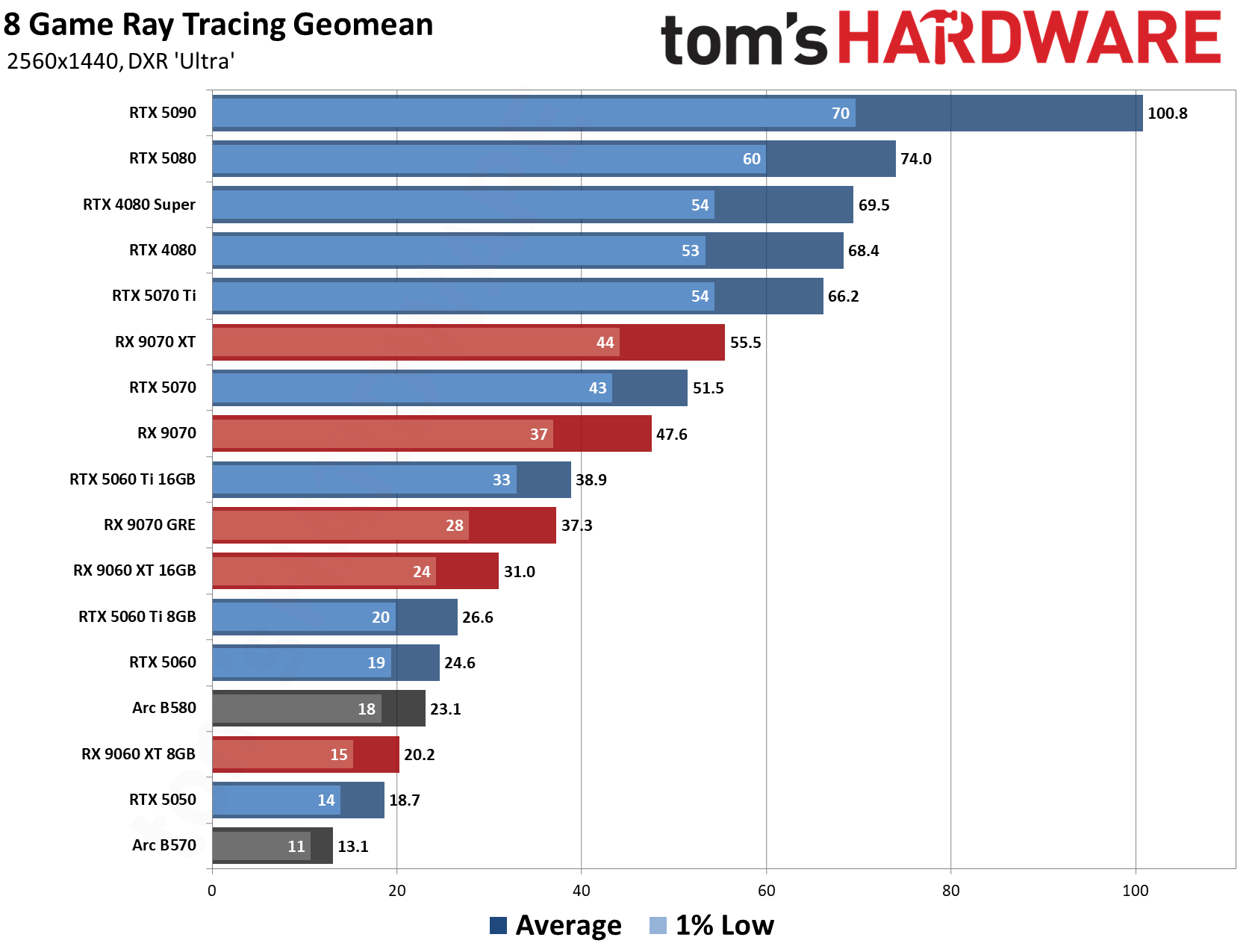
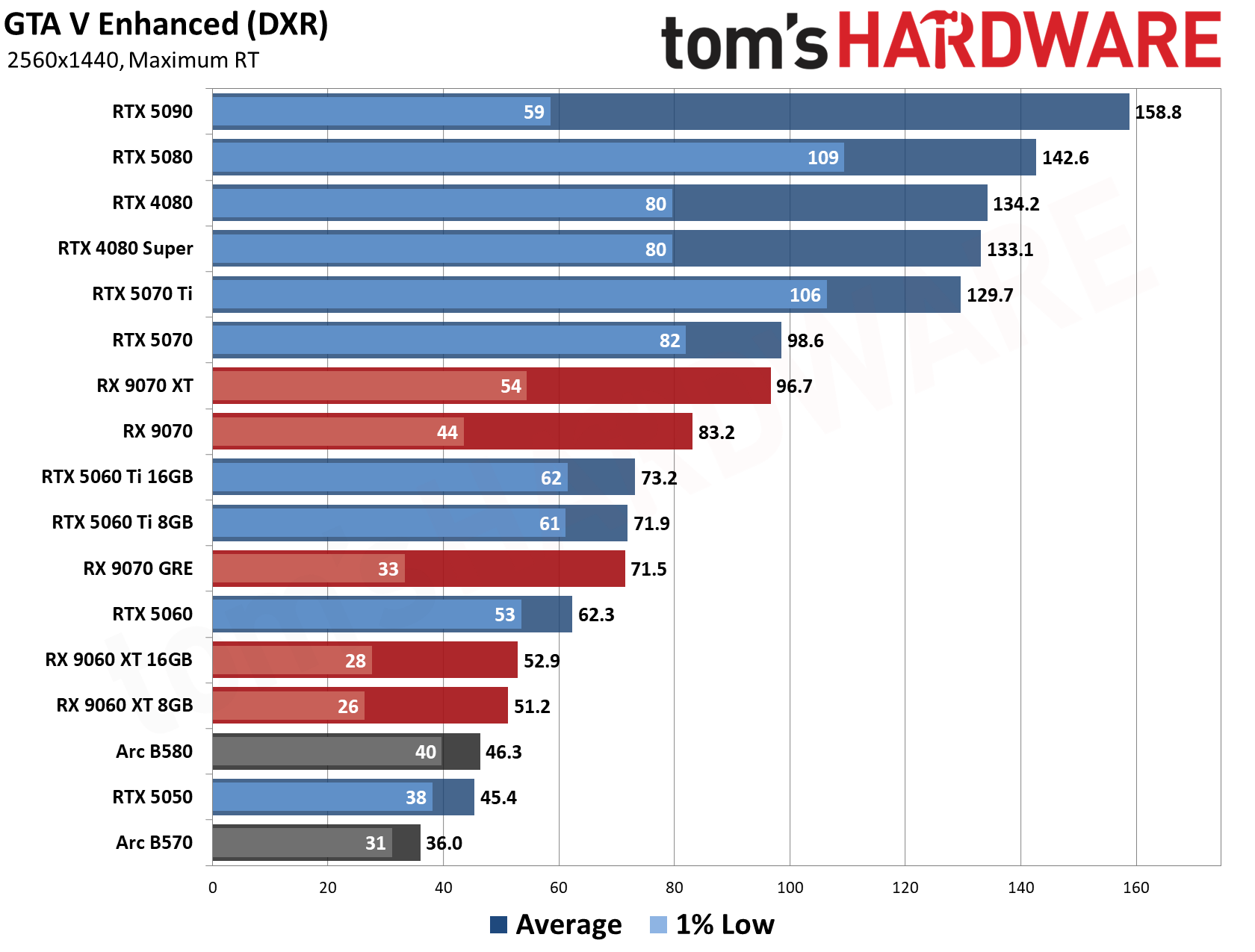
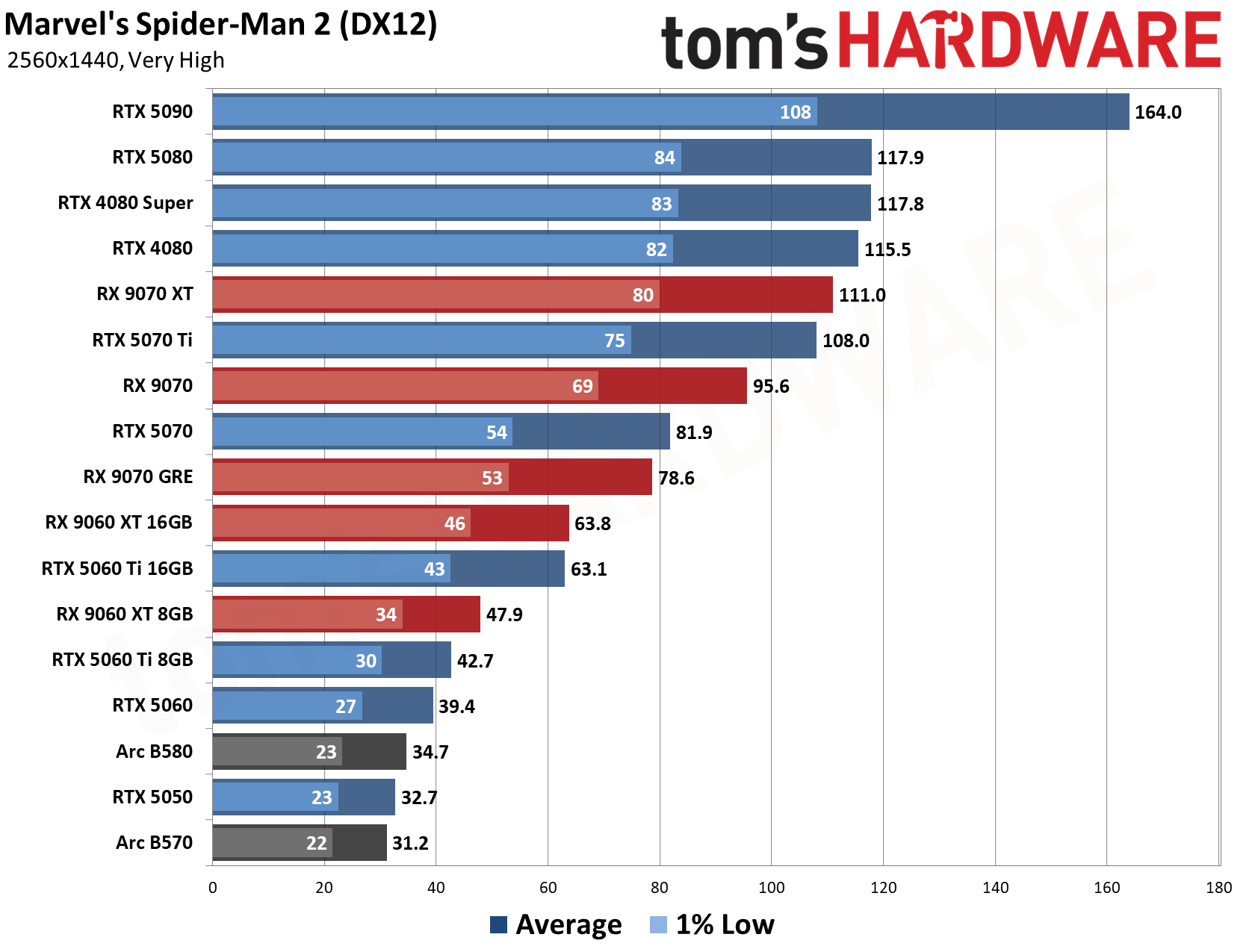
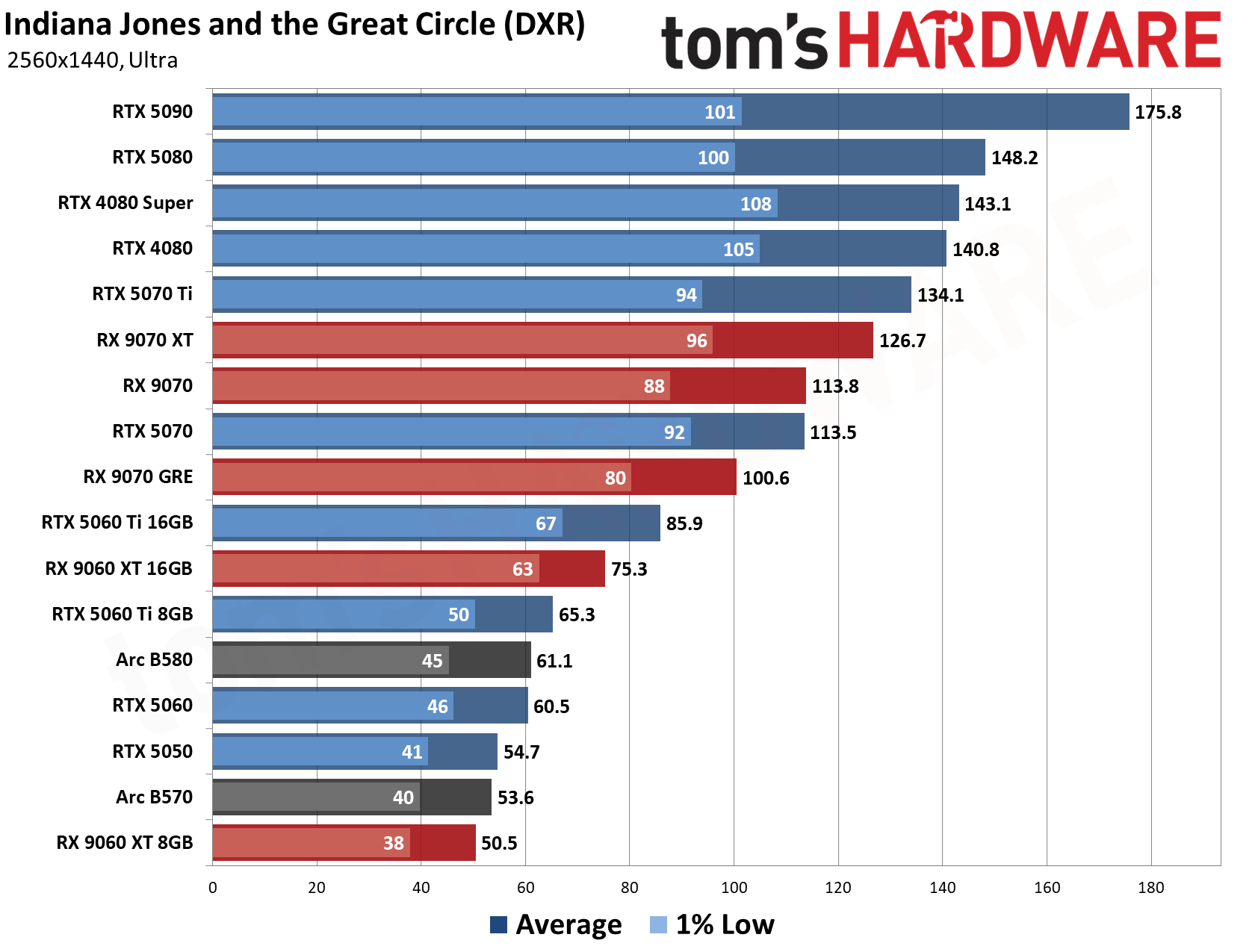
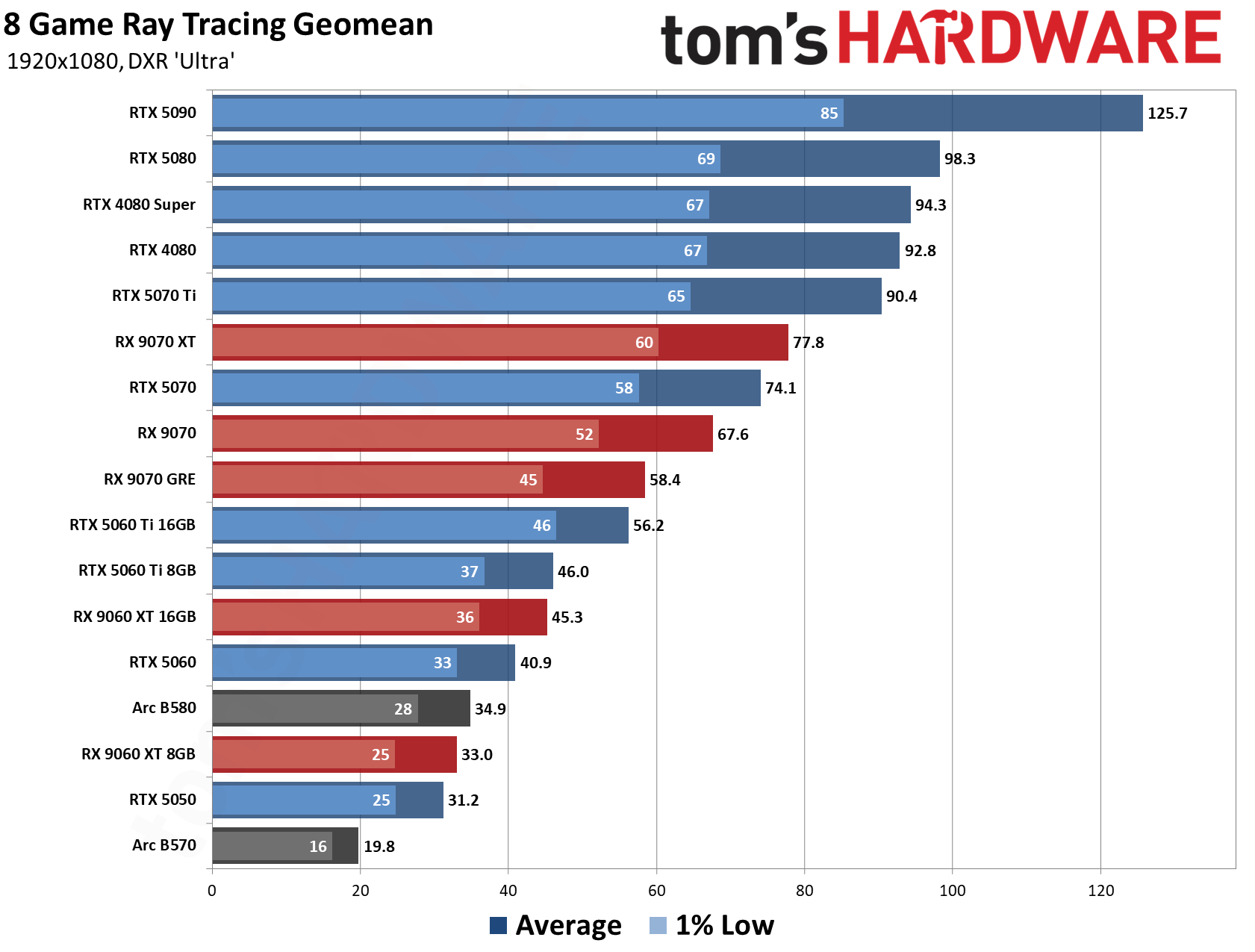
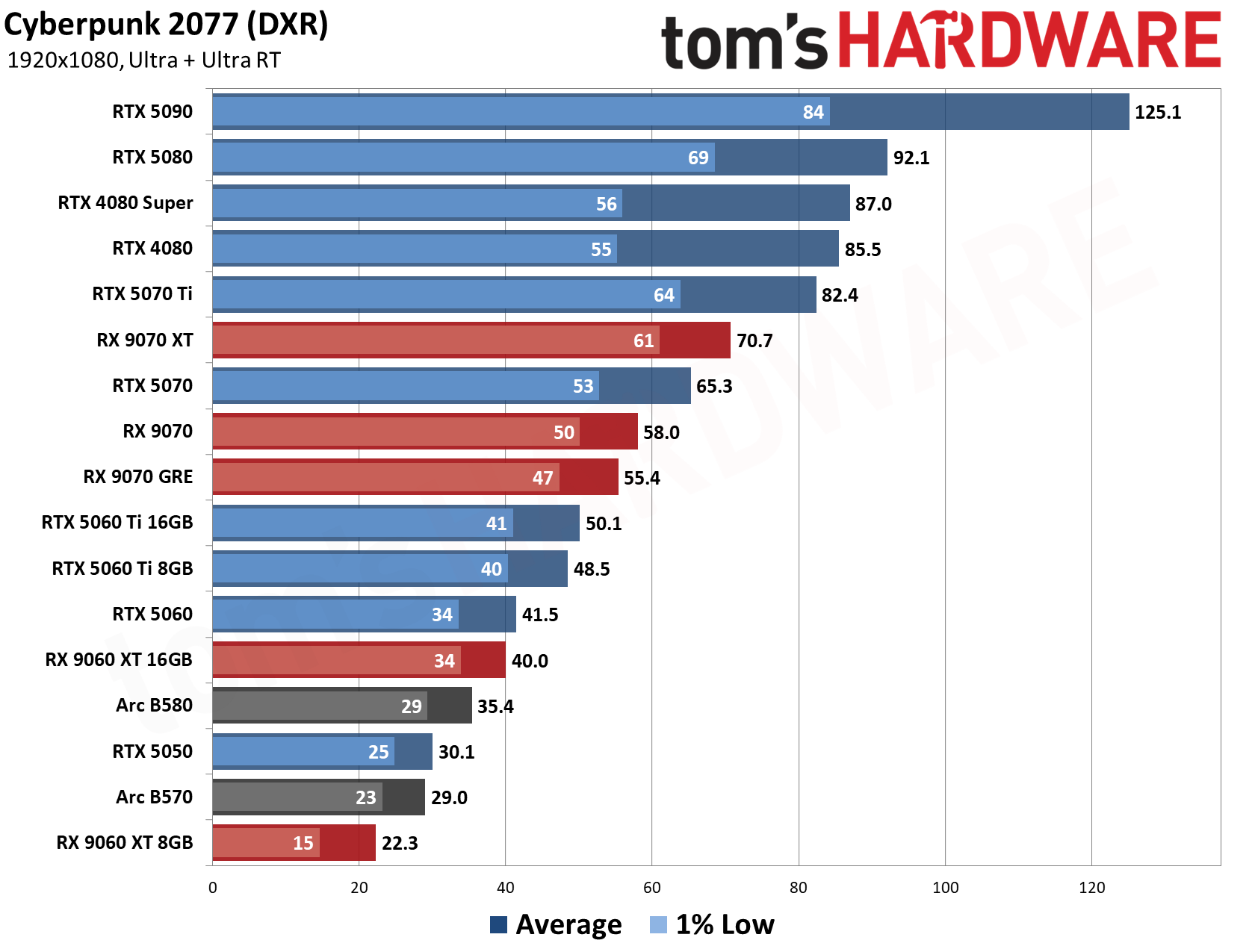
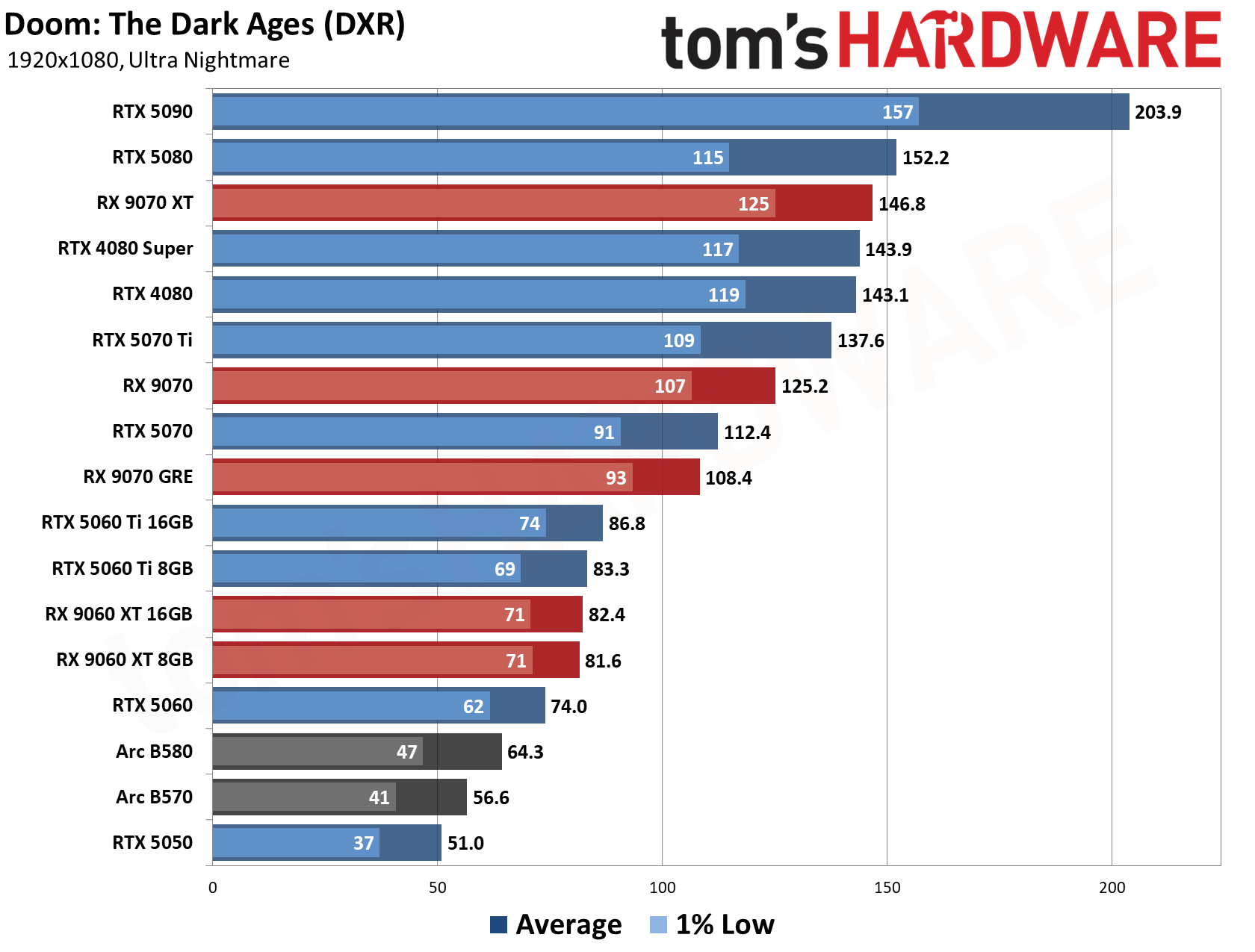
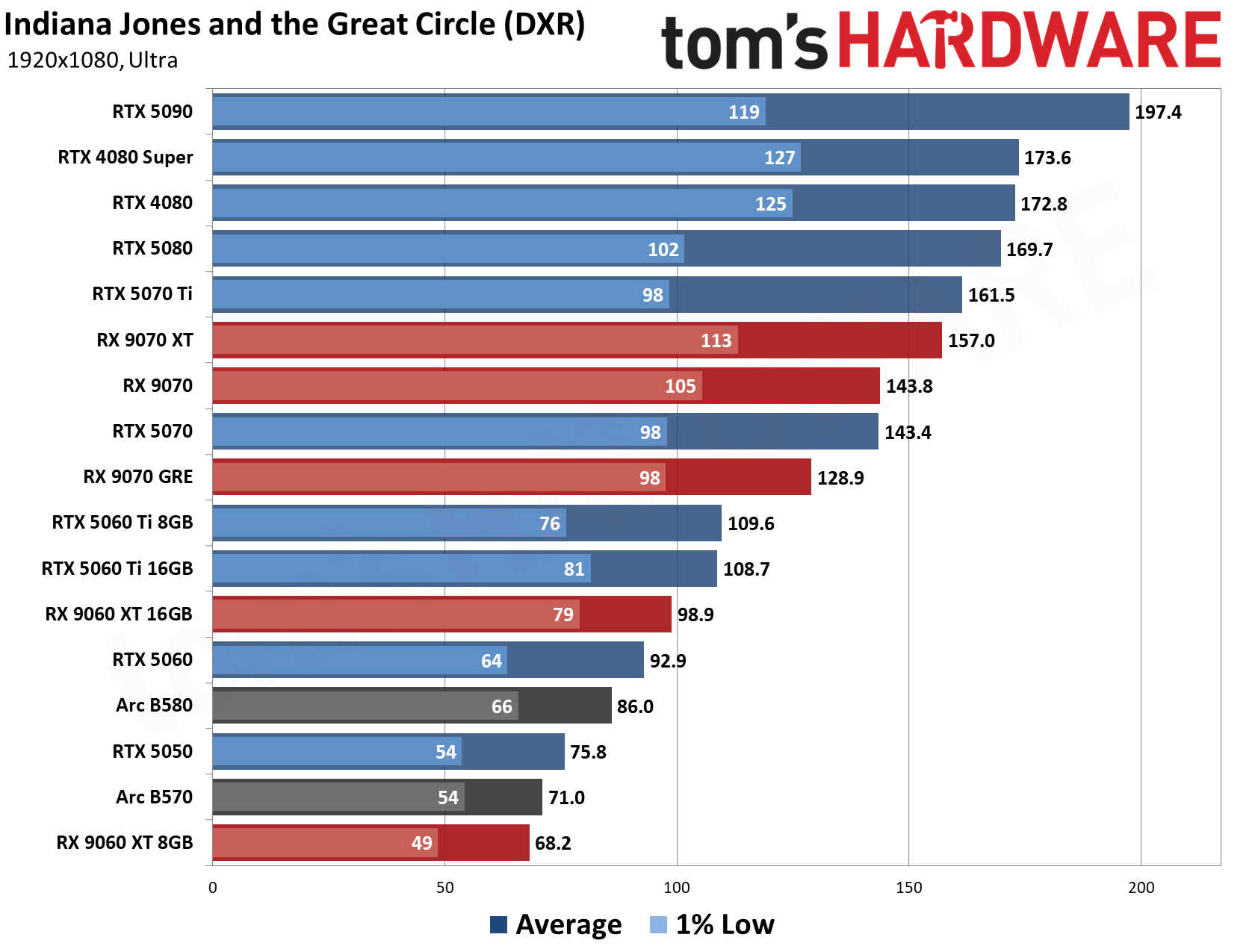
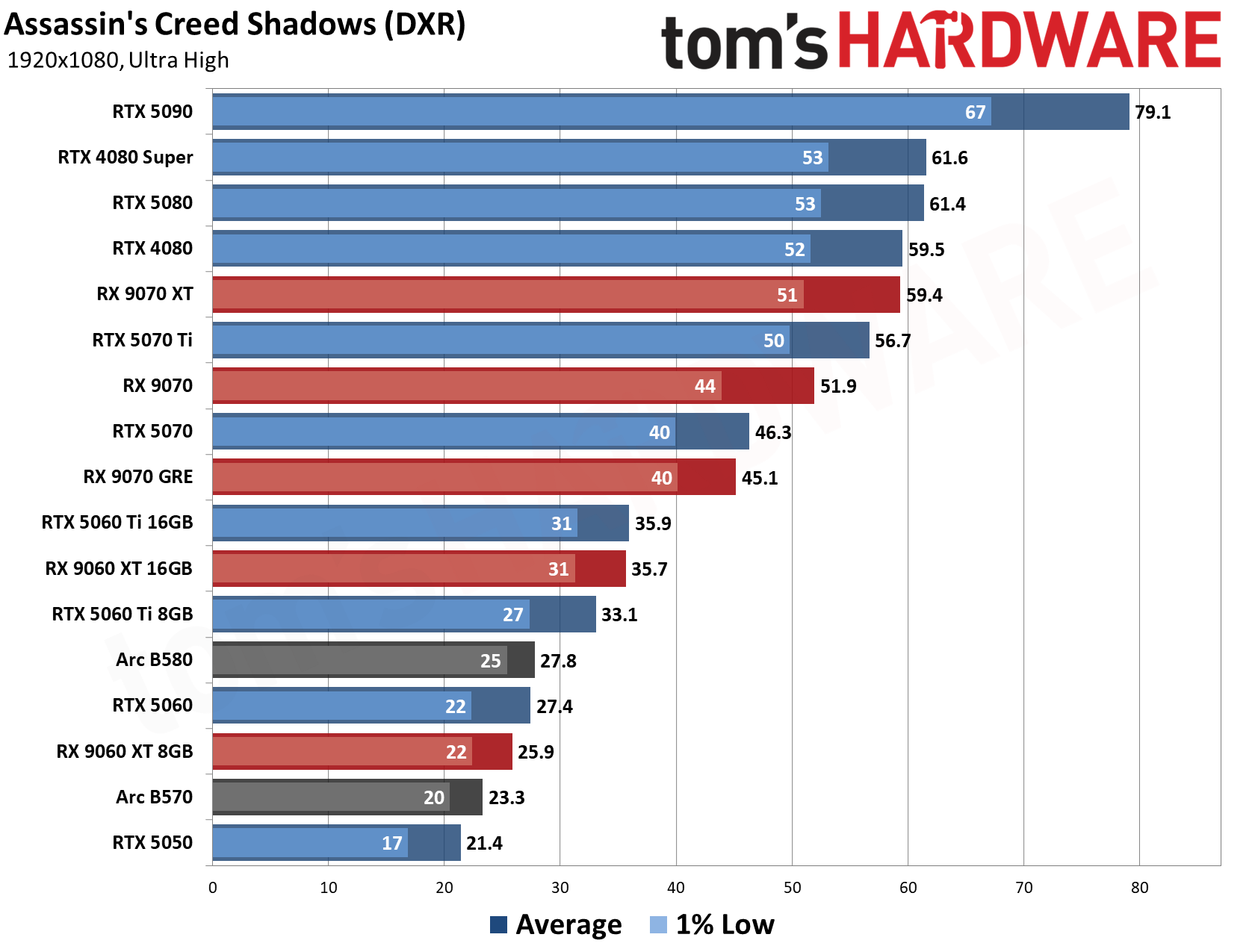
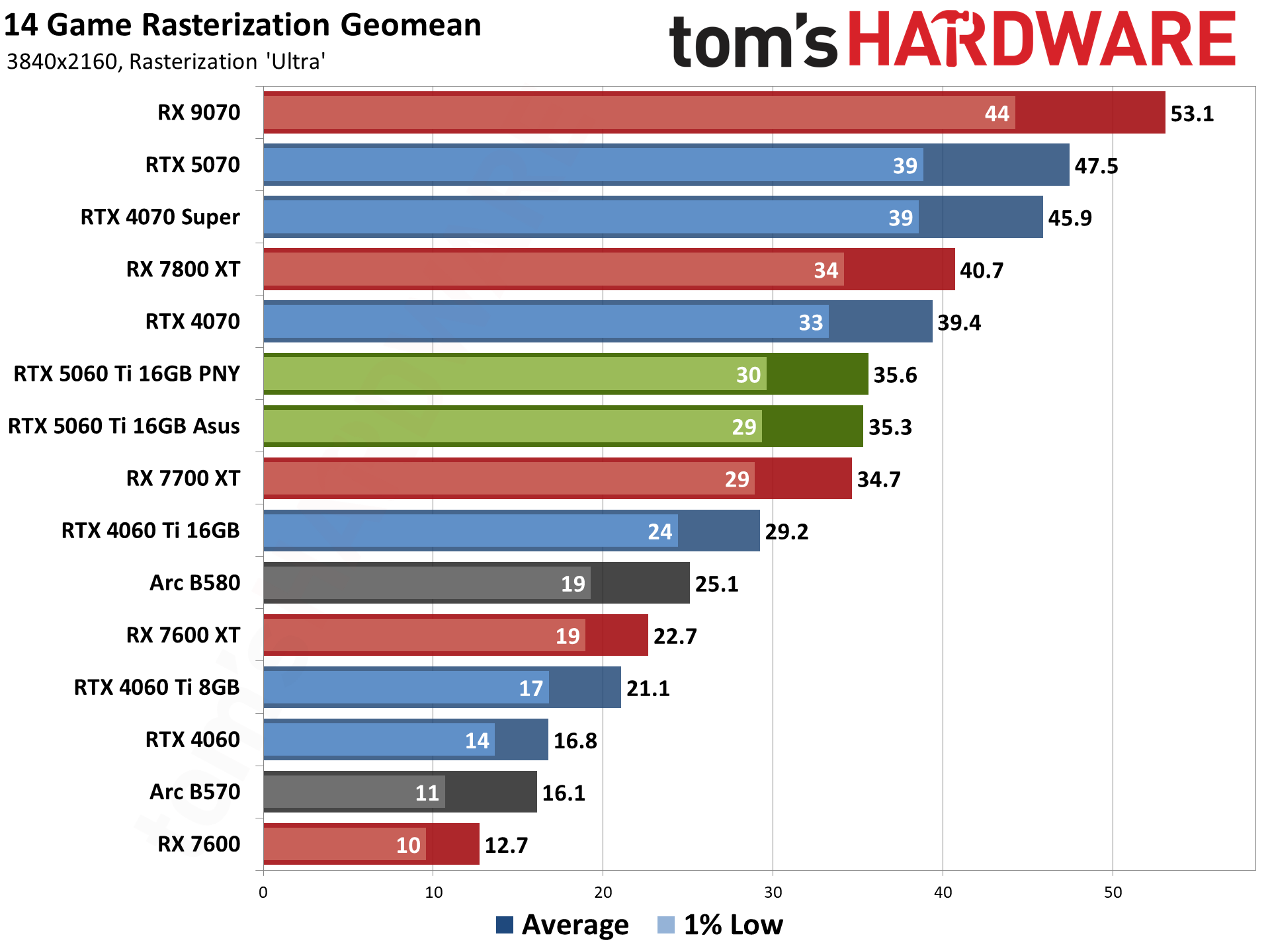
Our RTX 5060 Ti 16 GB review is clear about how impressive this GPU is for mid-tier builds, with the charts below showing how the card's ray-tracing power is especially formidable in comparison to its rivals. DLSS 4 support, meanwhile, unlocks the full software capabilities of this Blackwell GPU, with multi-frame generation helping to give your rig a frame rate boost in the most resource-heavy games, especially at the higher resolutions.
The big win, though, is that VRAM. 16GB of GDDR7 is a significantly better option for any build, but especially compared to the 8GB variants you'll usually find at this price point. It gives you much greater headroom for performance while playing the most resource-heavy games, especially if 1440p is in your sights.
The GPU isn't the only good part about this build, however. While the Intel Core i7-14700F is getting older, this Raptor Lake Refresh CPU is still a popular choice in pre-built systems at this price point. It ships with 20 cores, a max turbo clock speed of 5.4 GHz, and a 65W TPD. Those 20 cores are split across eight performance cores, which are the best options for gaming, along with 12 efficient cores for multi-threaded work. Performance-wise, the 14700F won't be a bottleneck alongside the RTX 5060 Ti at either 1080p or 1440p while gaming.
You're also not settling for outdated specs, either. This machine skips DDR4, which is still used in budget builds to reduce costs, and instead comes with 16GB of G.Skill Flare X5 DDR5-6000 RAM. While 32GB would be better, RAM pricing is sky-high at the moment, so it's a compromise. 16GB won't give you as much breathing room, but using DDR5 adds to the longevity of this machine, giving you scope to upgrade later.
As for storage, you're getting a 1TB Patriot P410 SSD included in this rig. It offers Gen 4 speeds and enough space, at least, for you to install a few big game installations, alongside plenty of indies. Wi-Fi 6E and Bluetooth 5.2 wireless connectivity are included, along with Gigabit Ethernet.
The $1,329.99 sale price for this ABS Cyclone Aqua gaming PC is hard to beat at the moment. The RTX 5060 Ti 16GB GPU means you've got the power to game at 1440p if you choose to do so, but with PC hardware costs continuing to rise, there's no guarantee that it'll be around at this price for long. If you're interested, don't forget to use the SSF72762 coupon code to save that extra $70.
 登录
登录