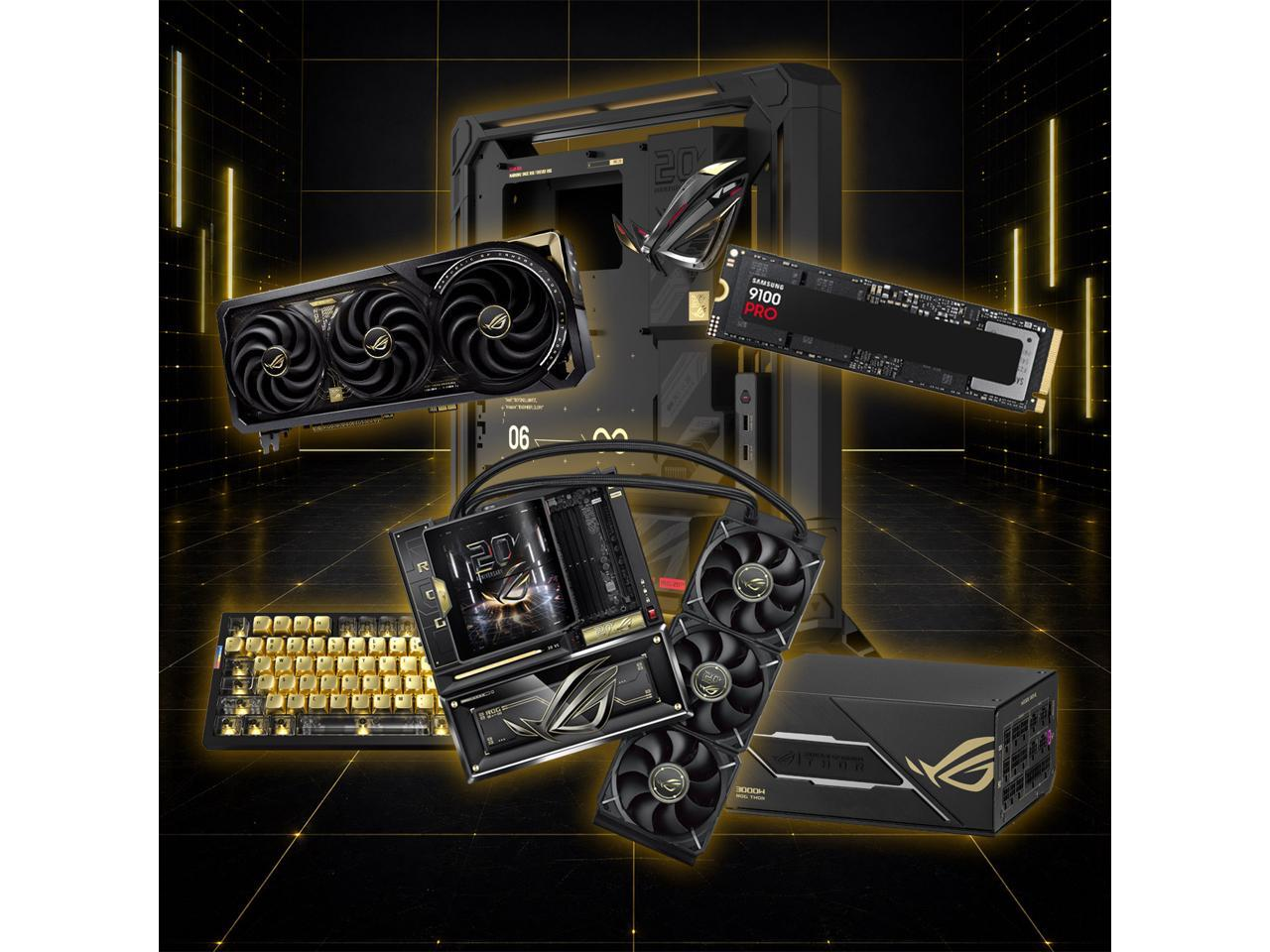
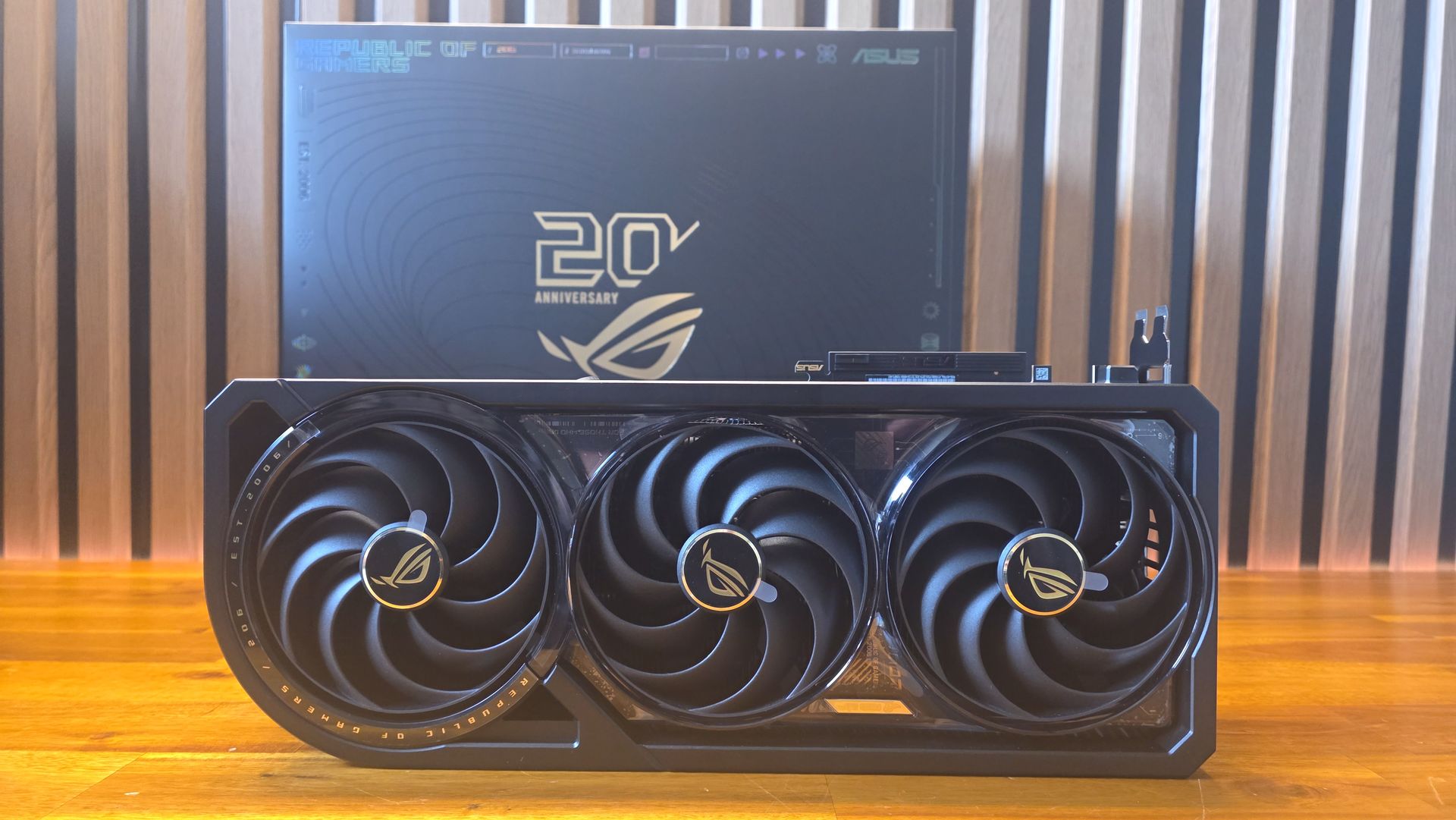
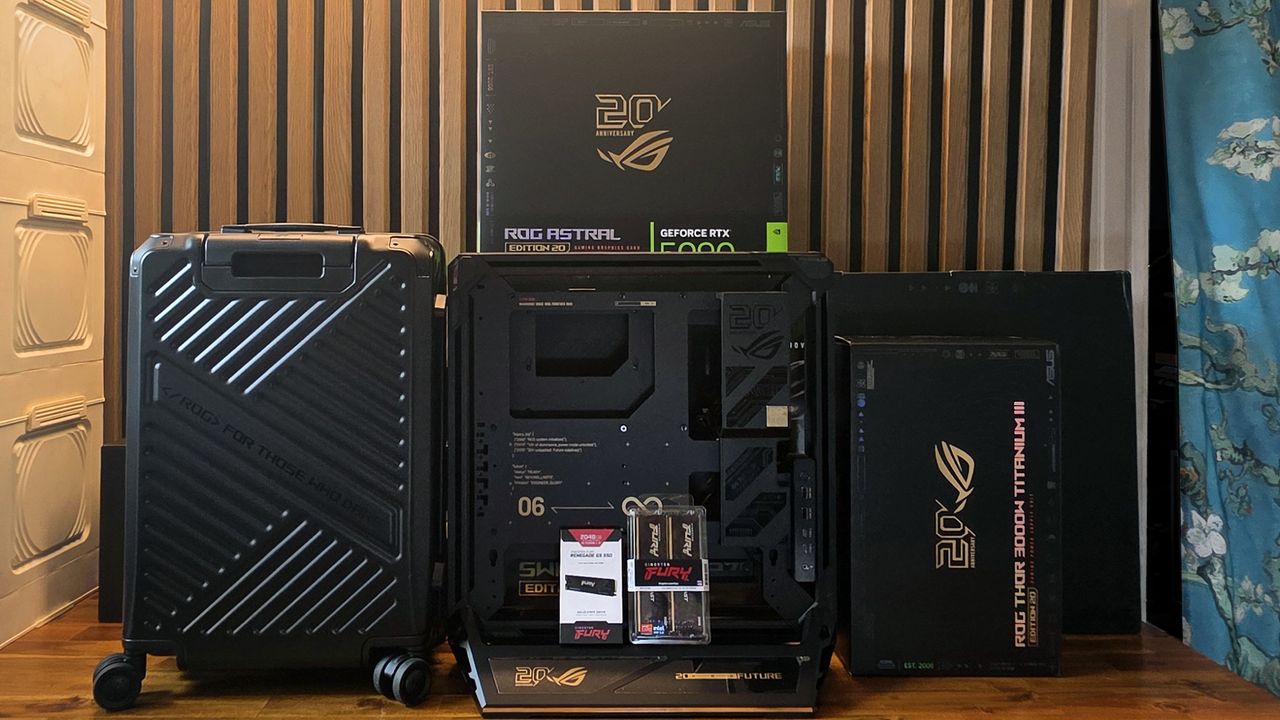
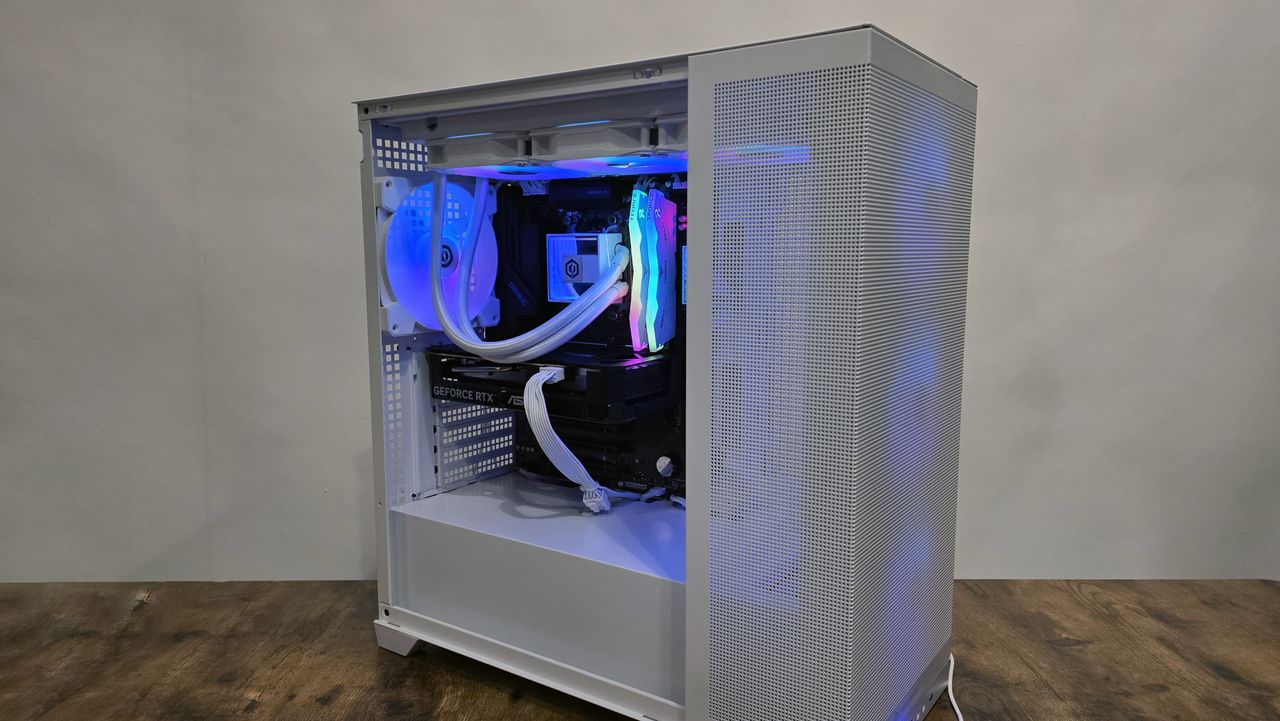
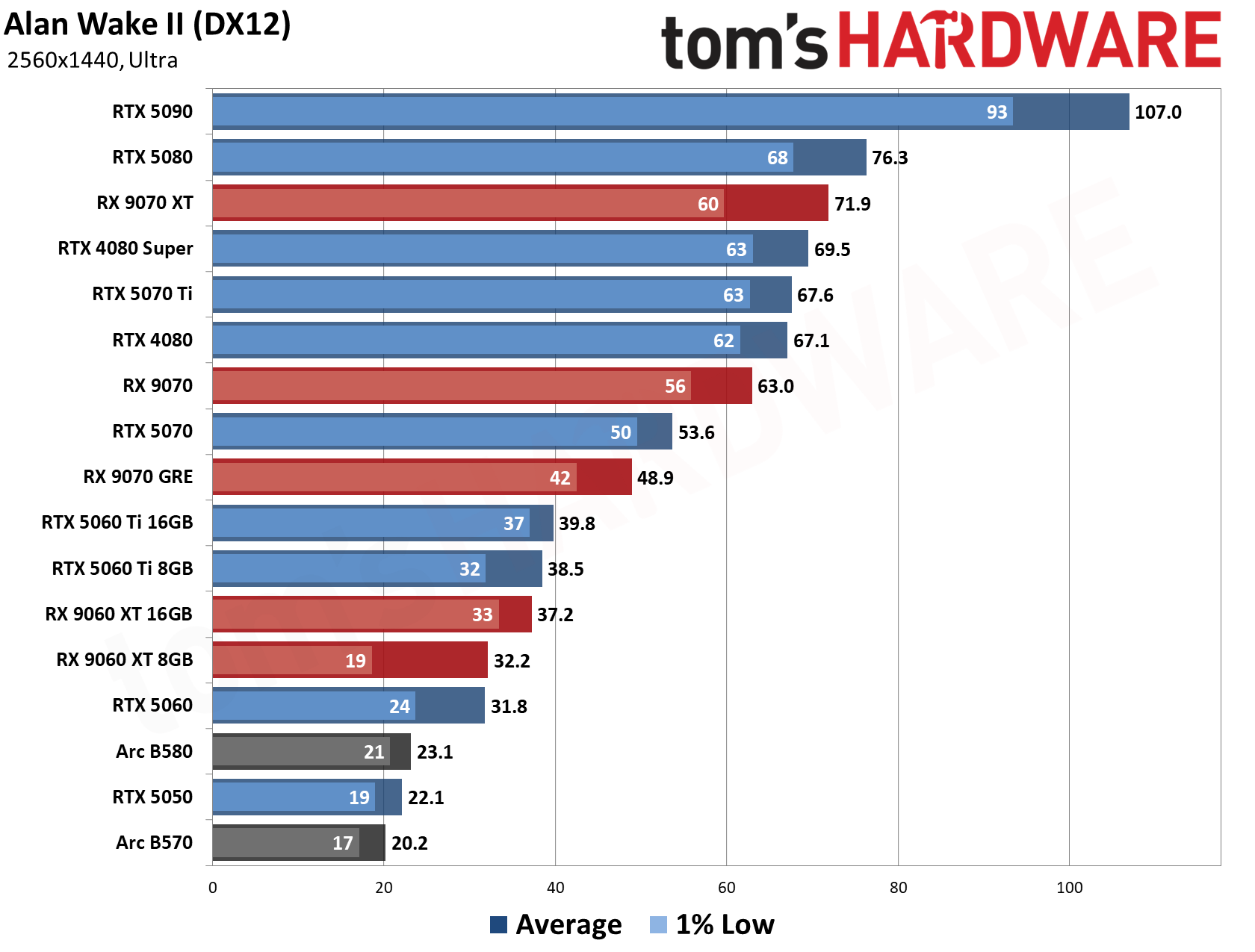
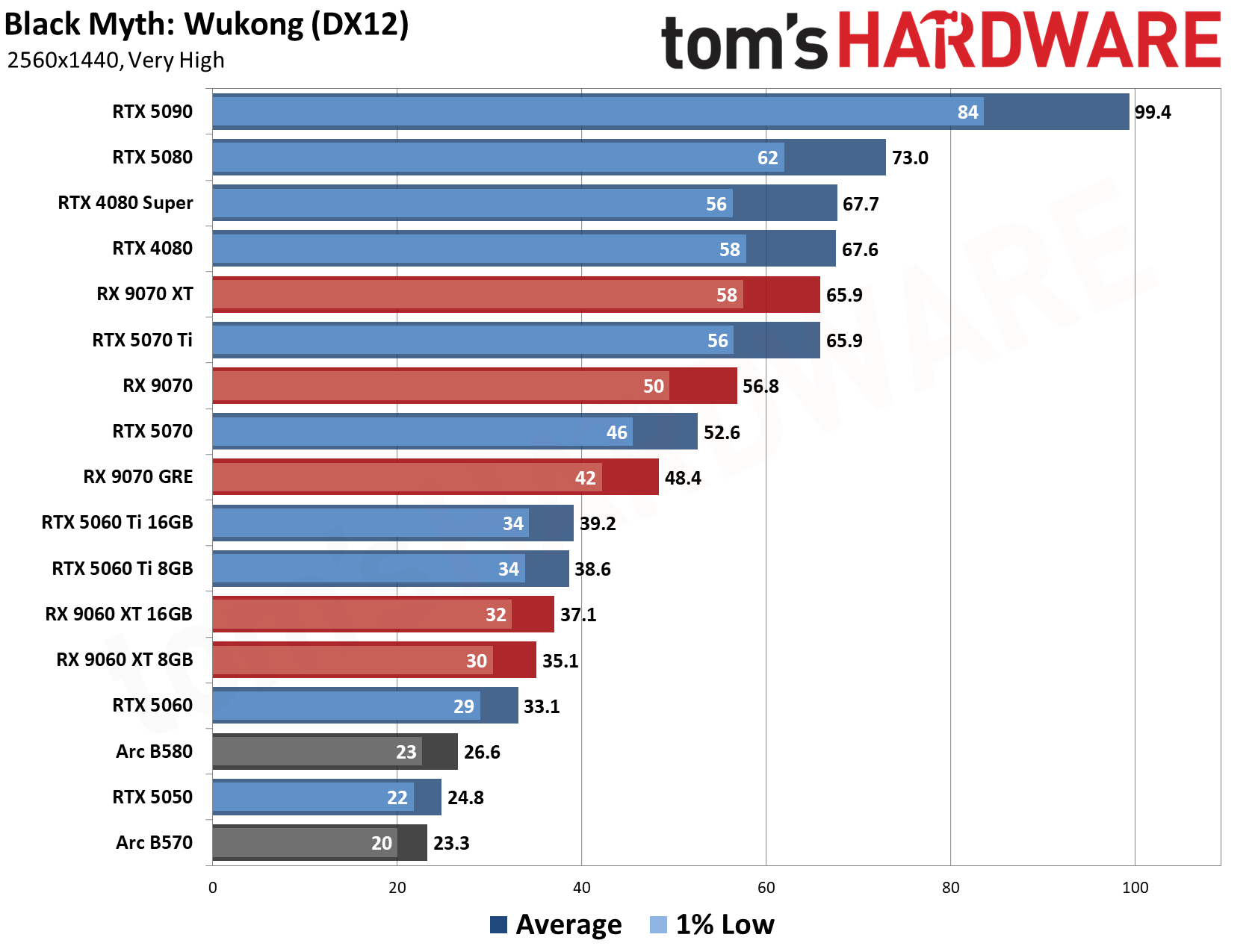
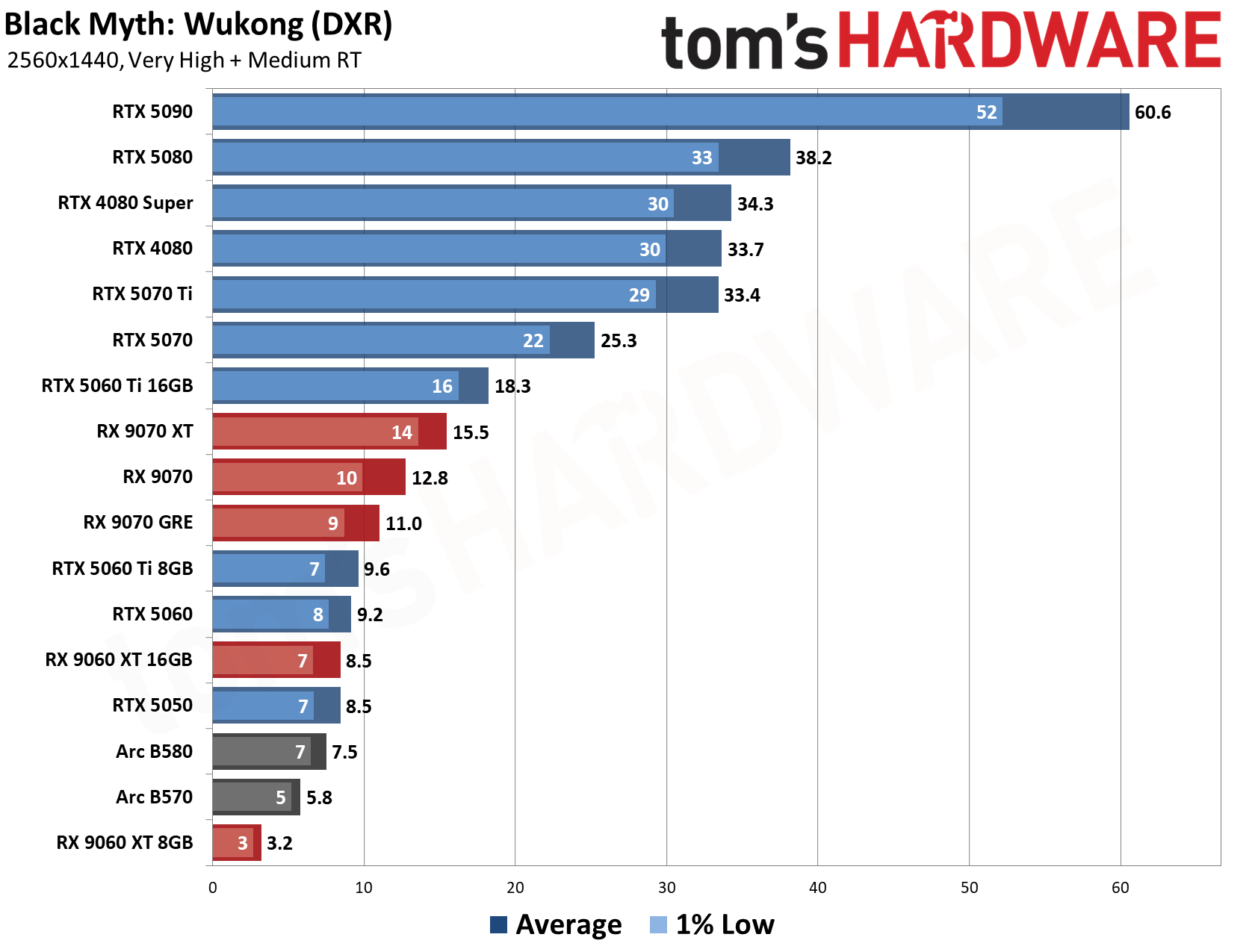
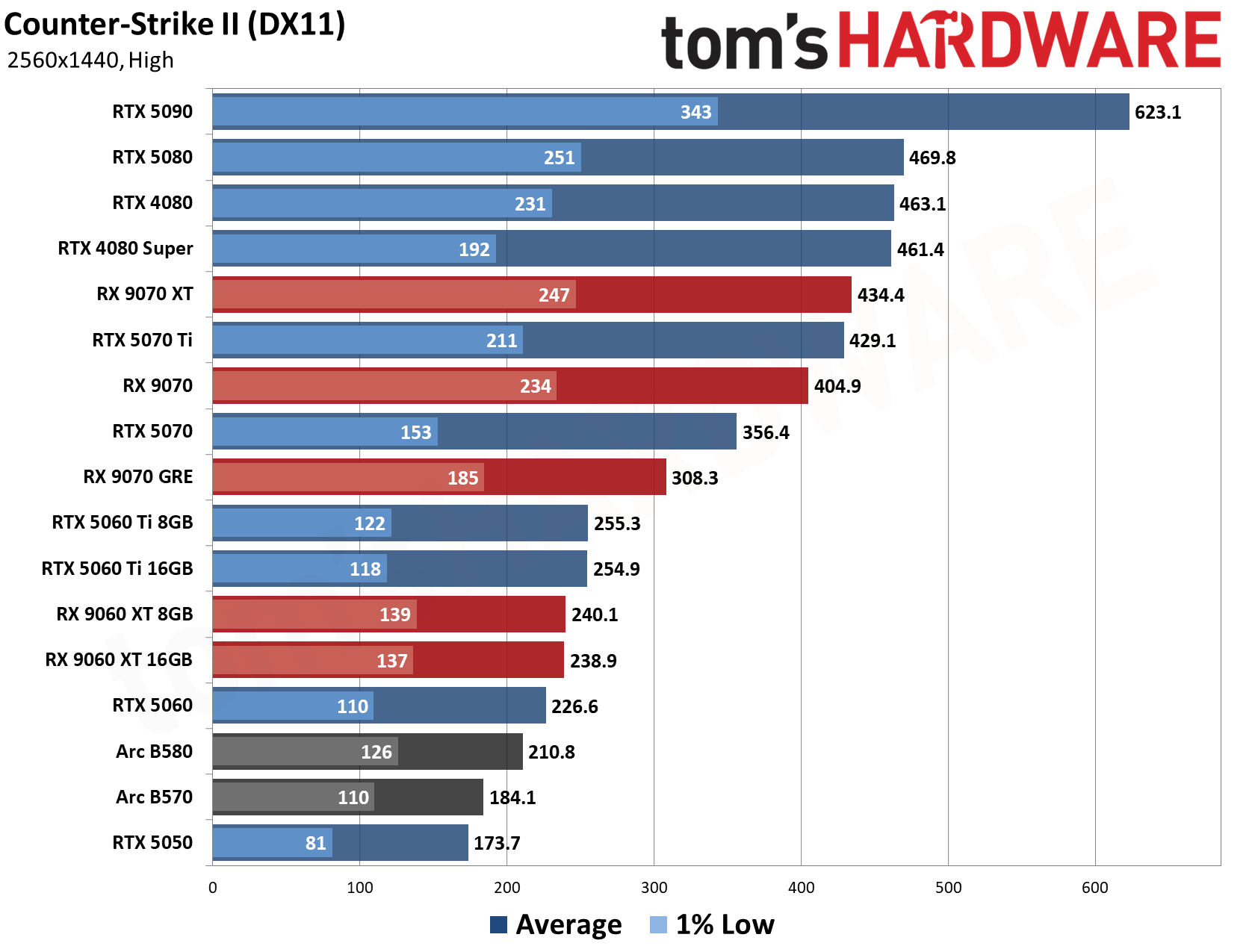
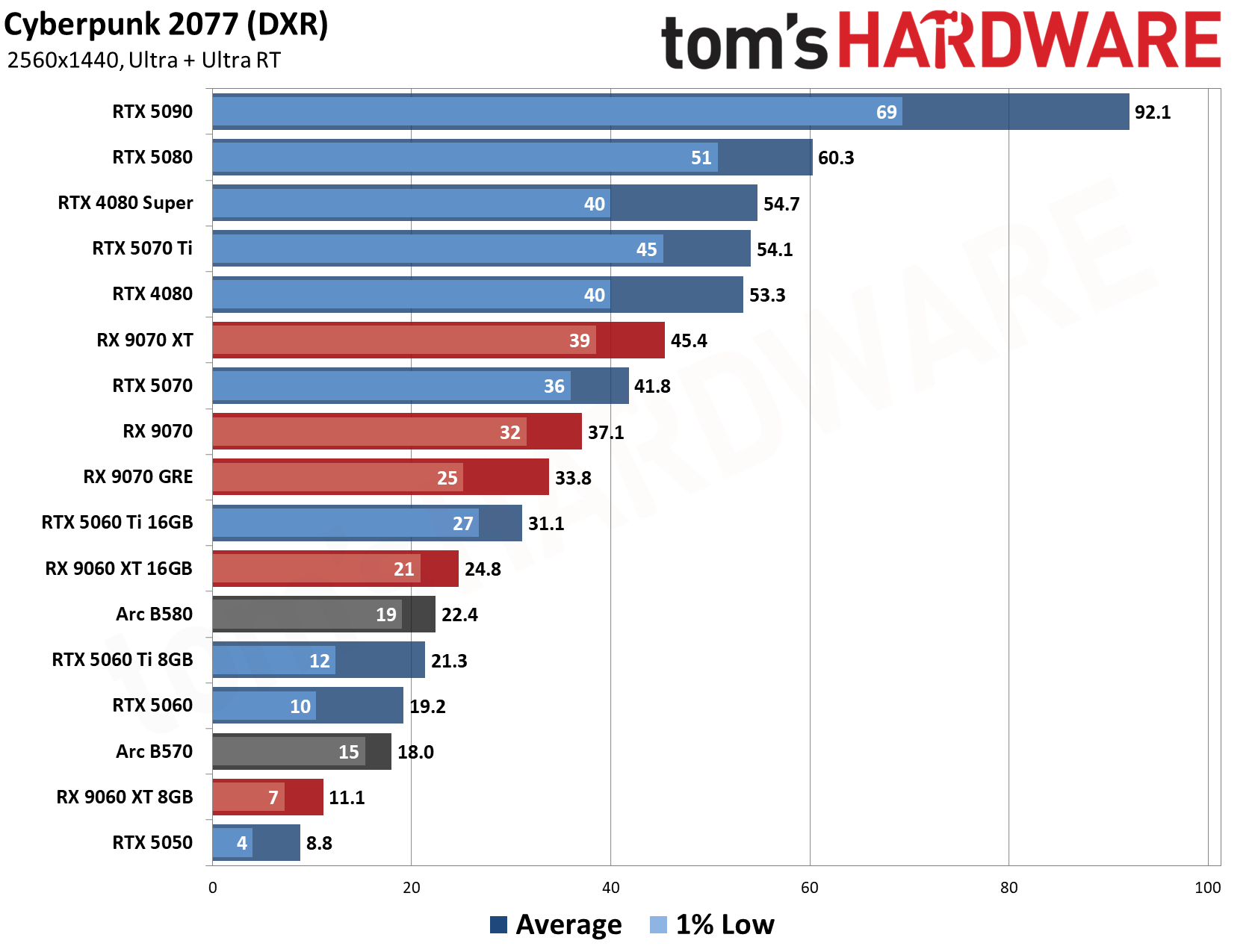
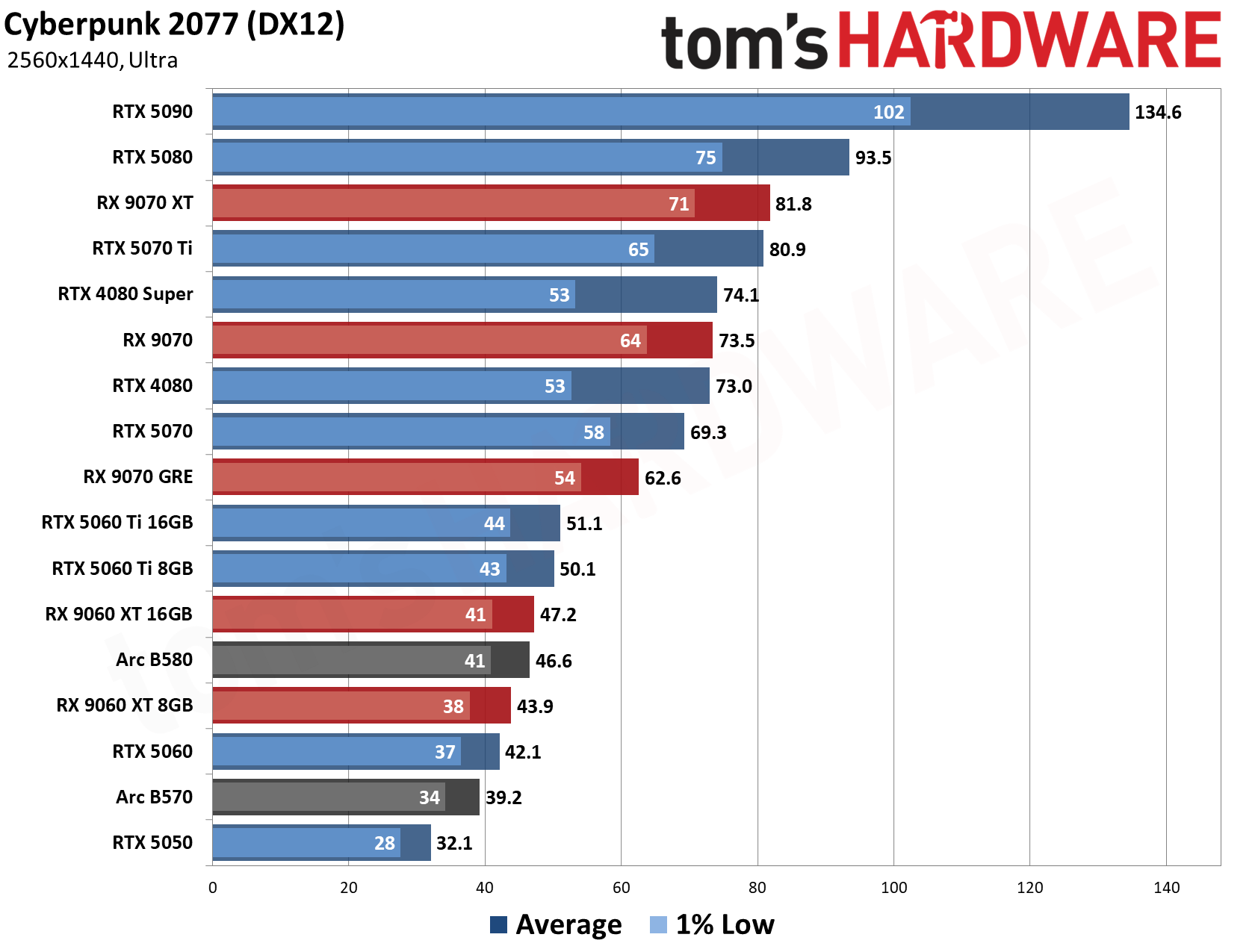
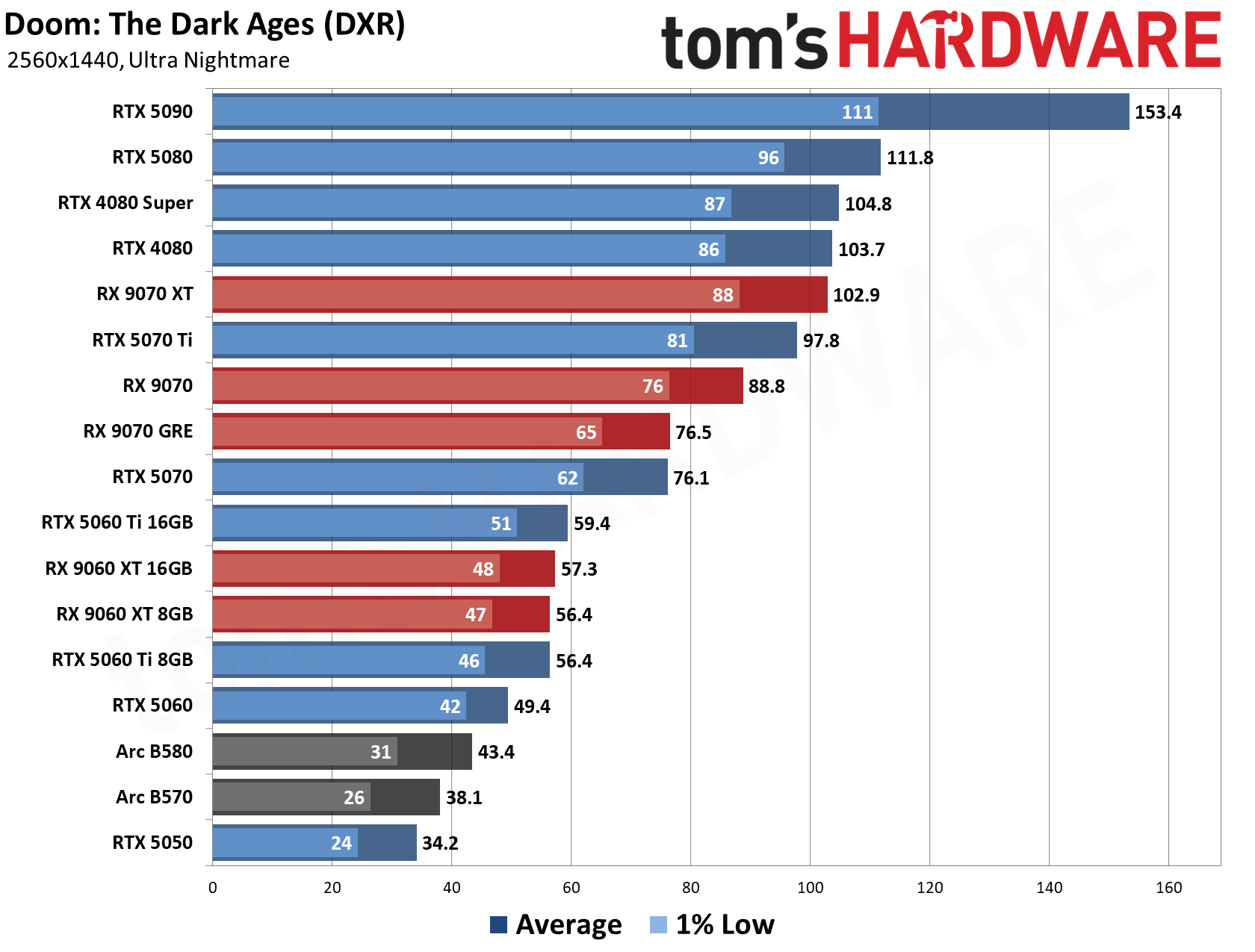
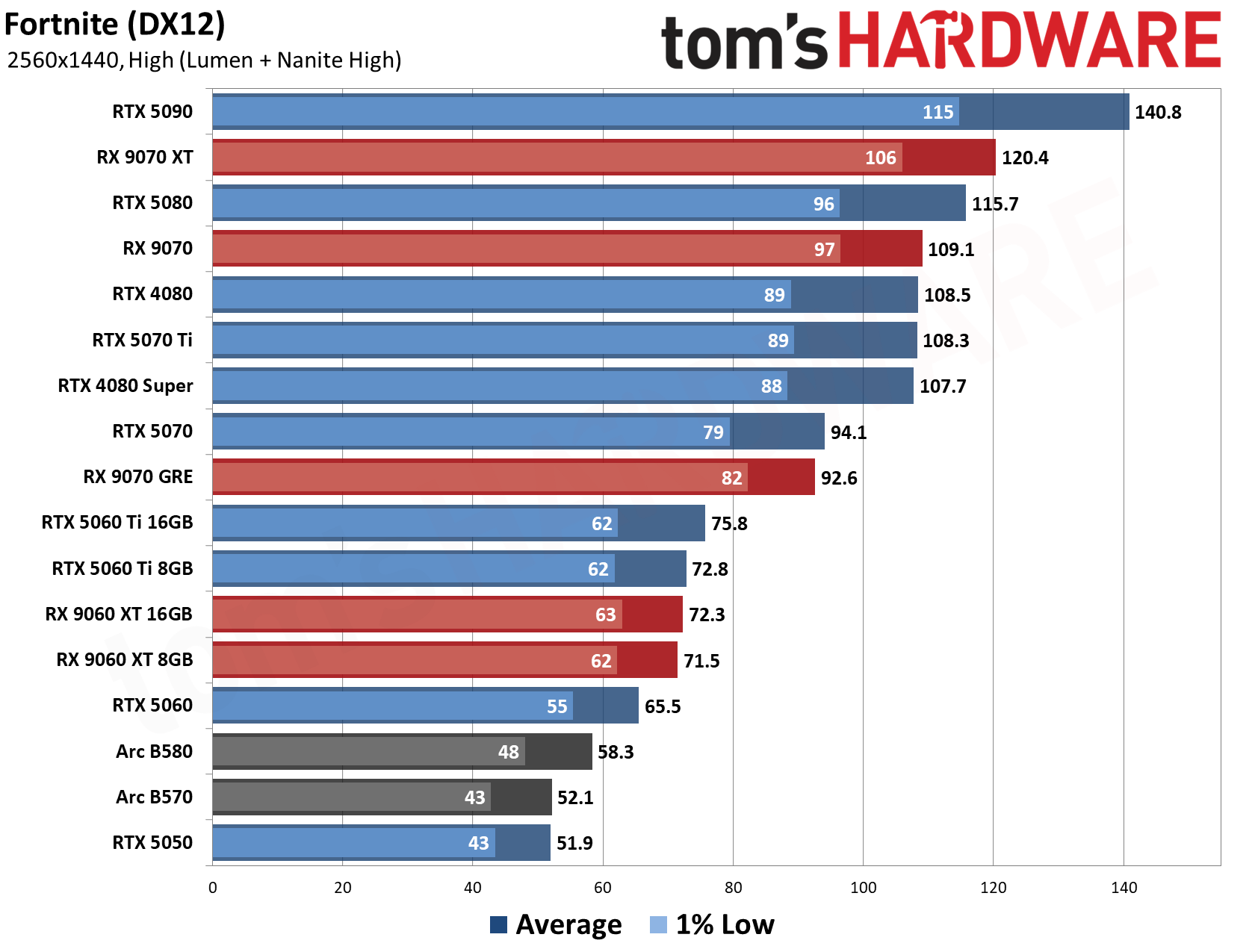
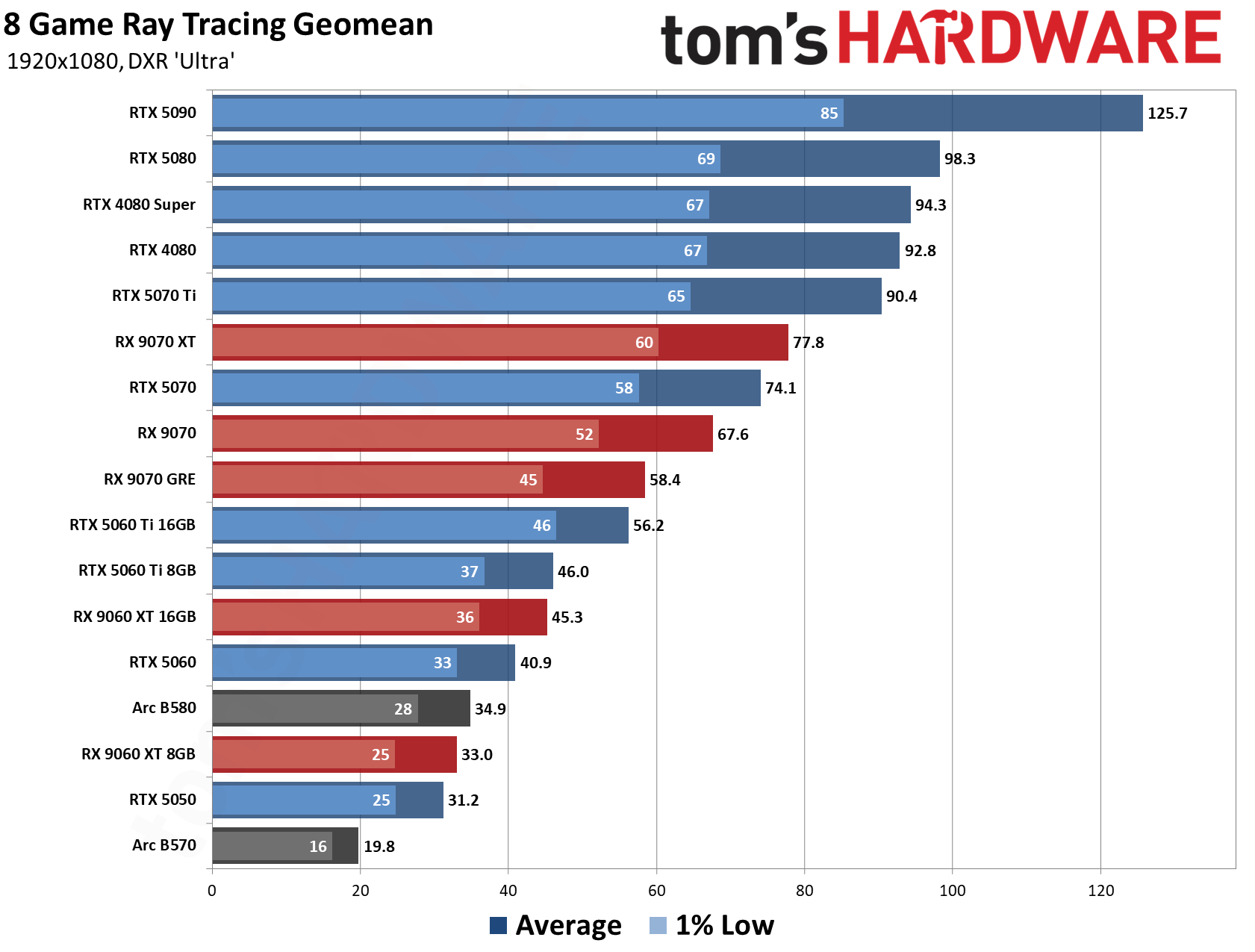
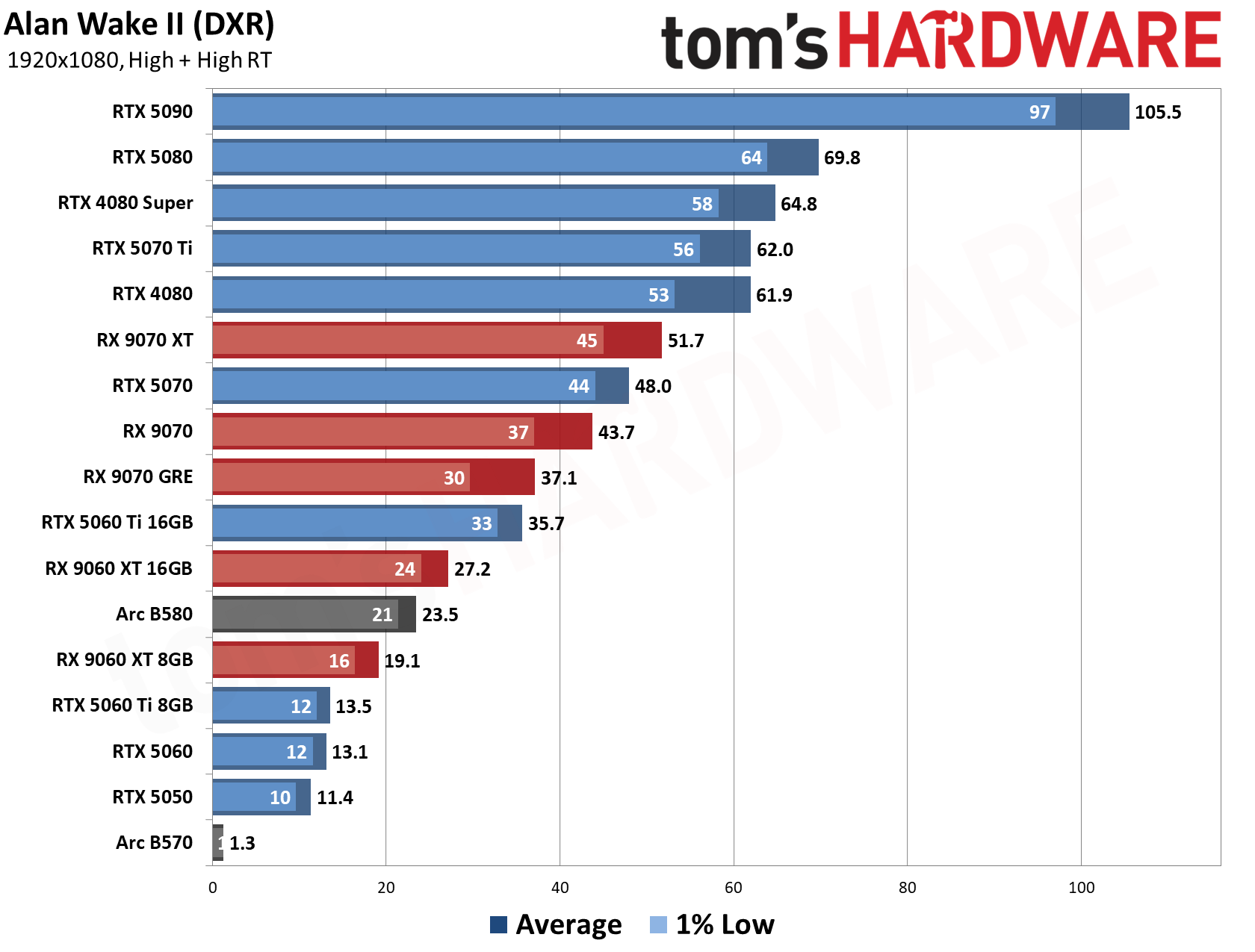
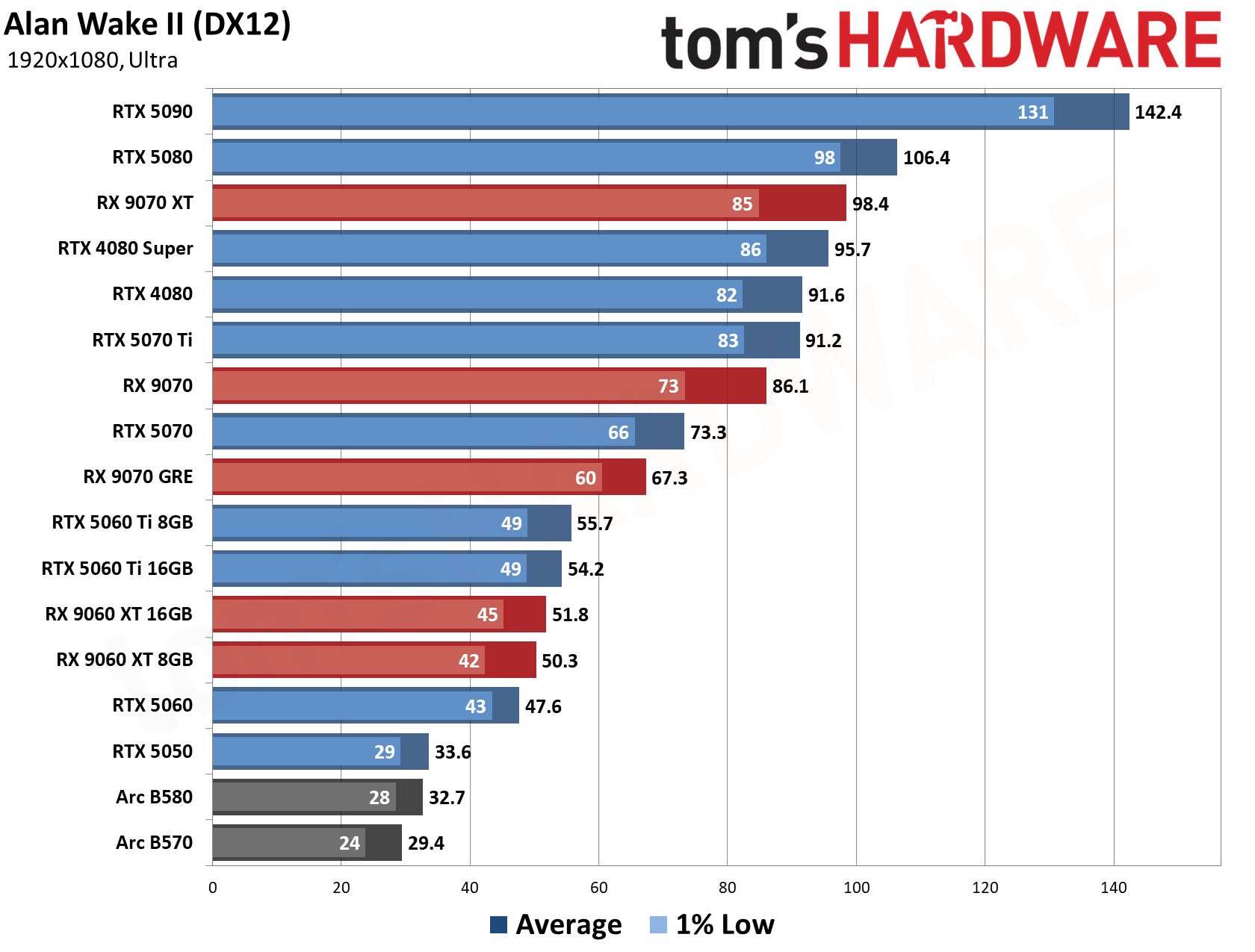
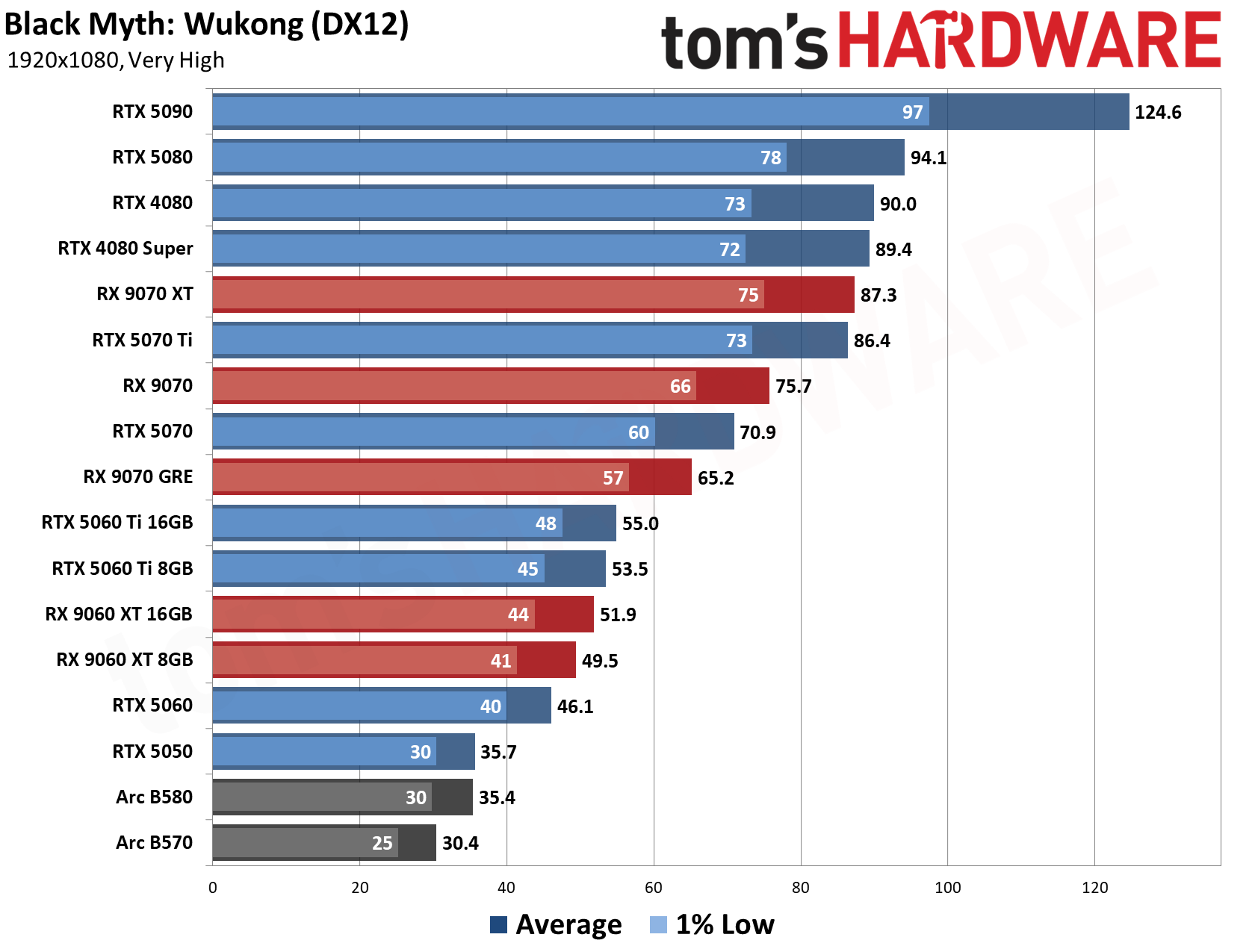
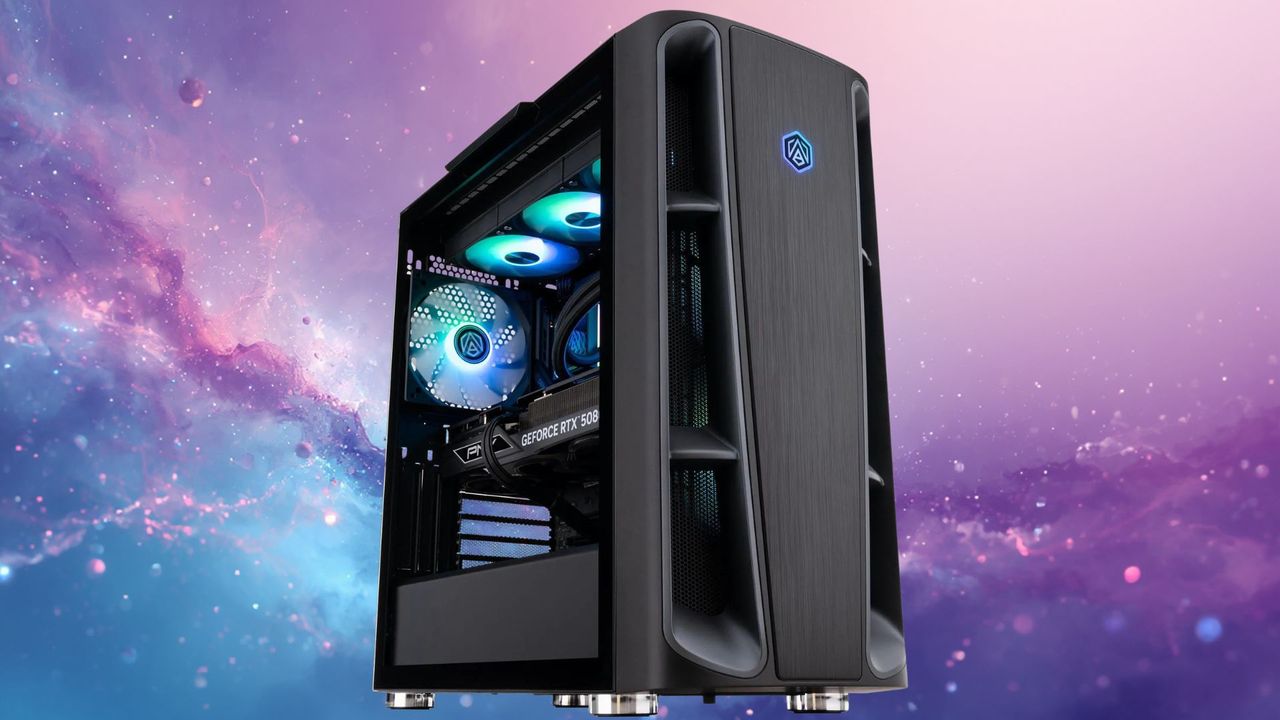
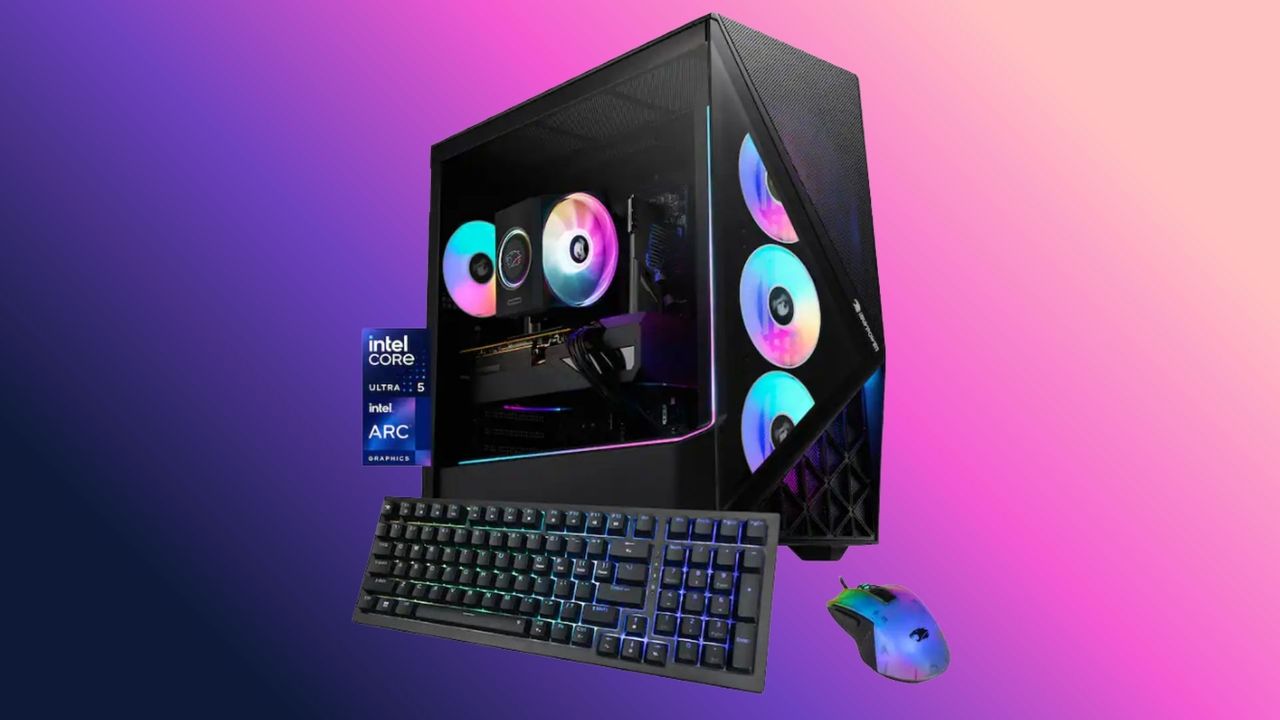
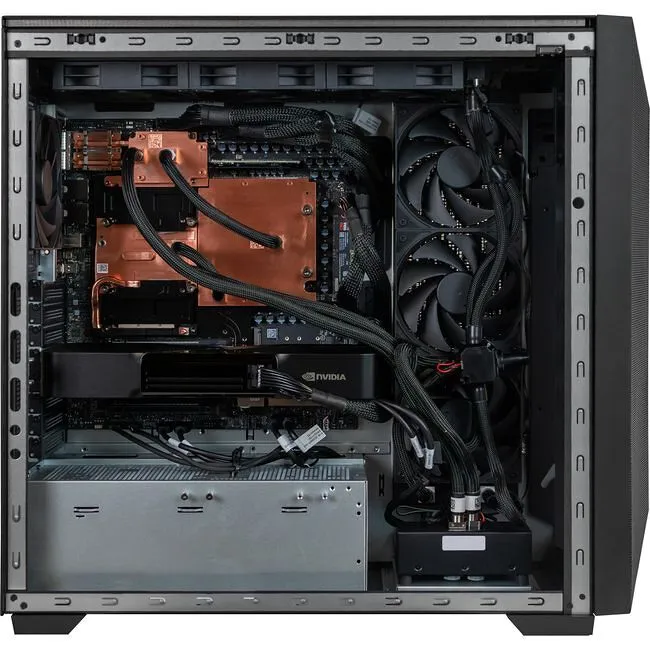
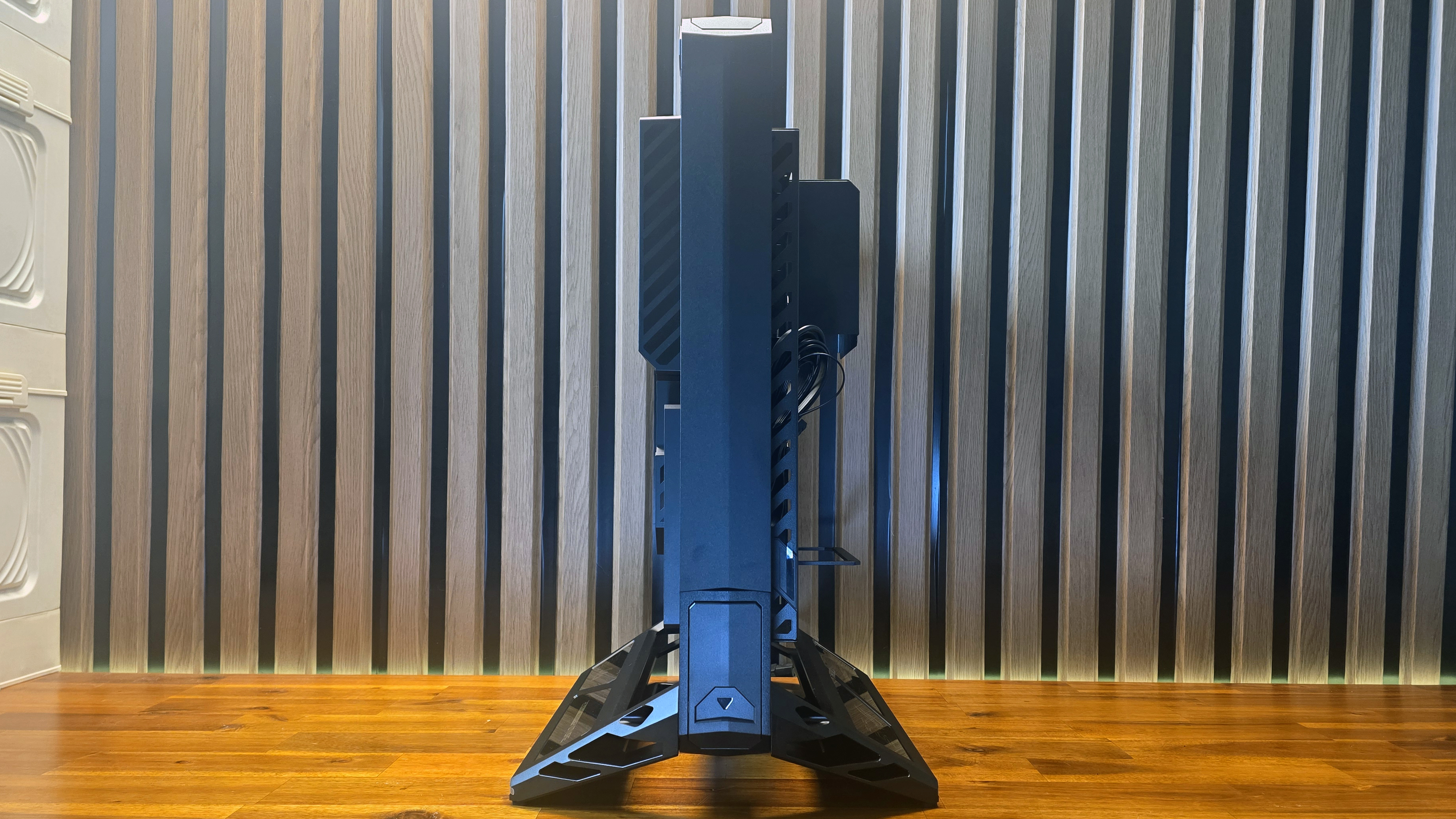
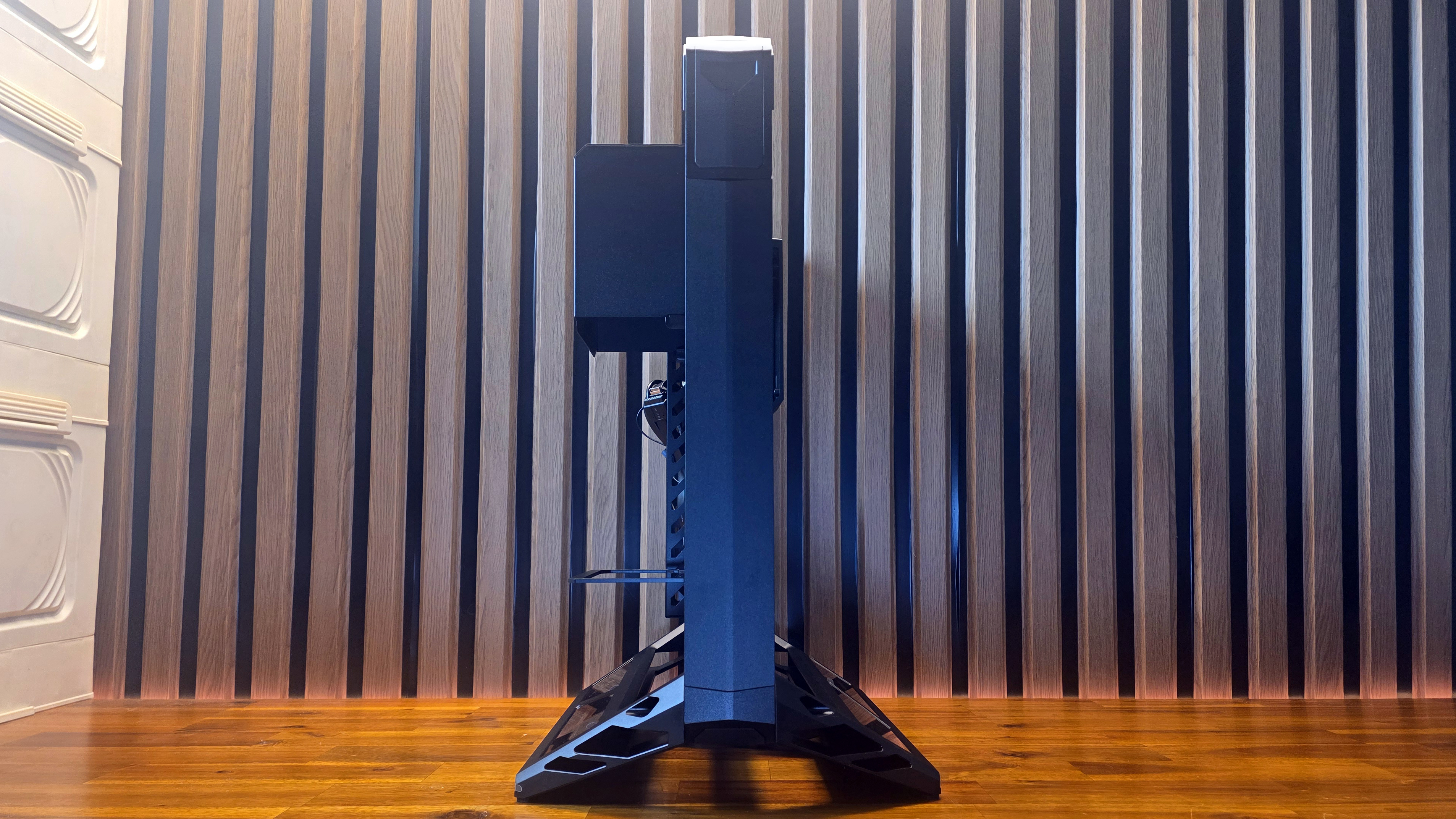
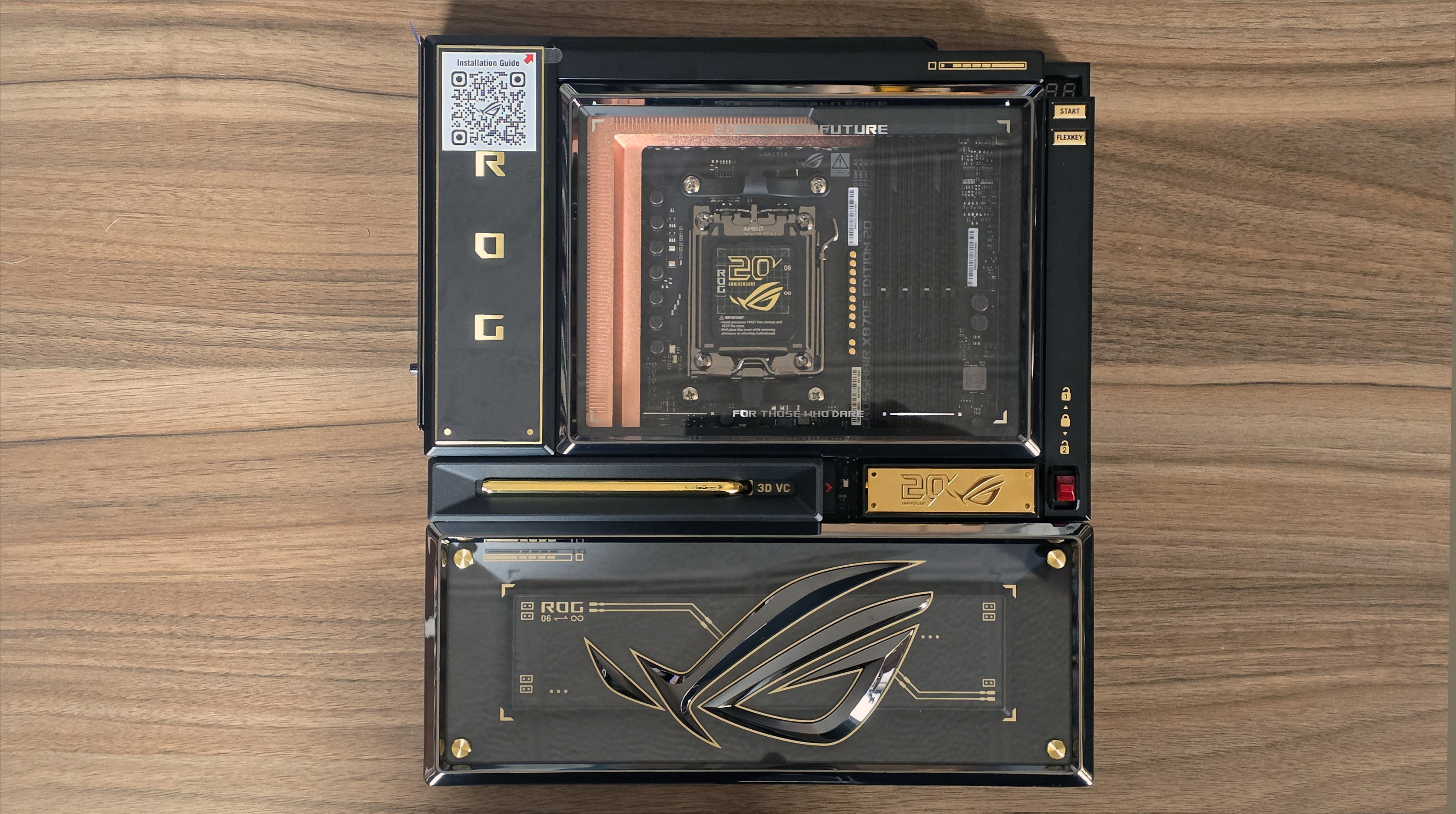
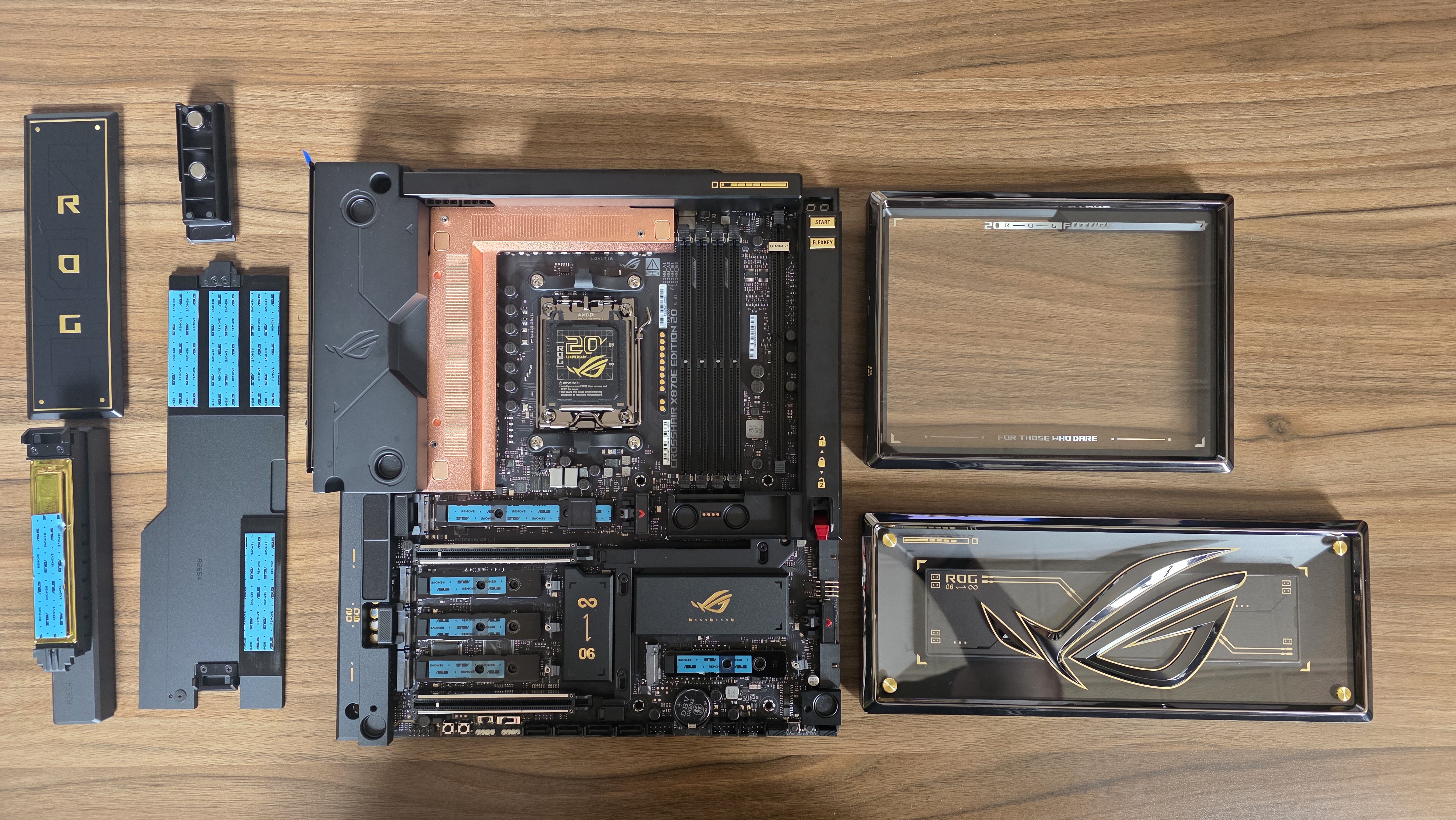
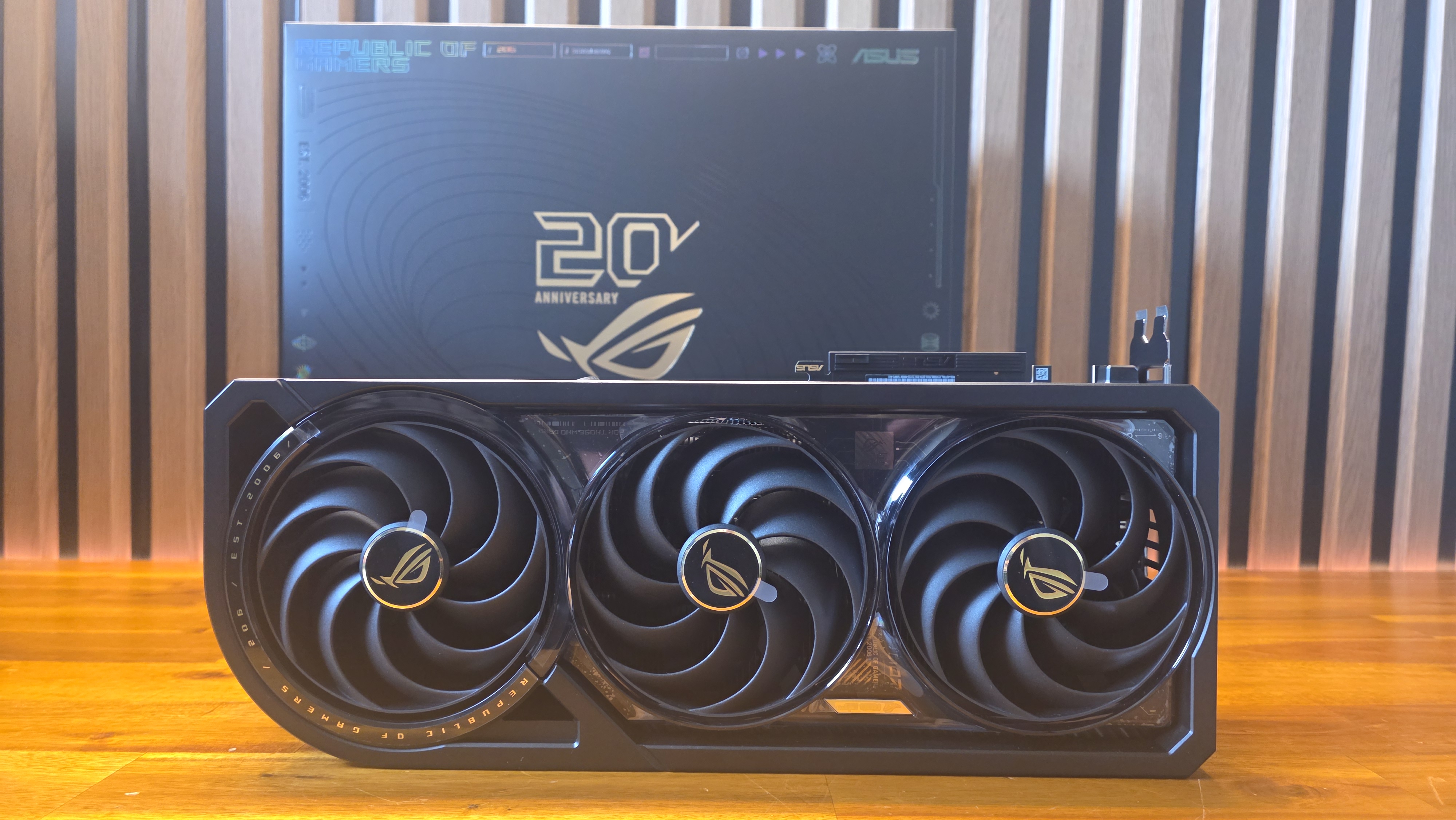
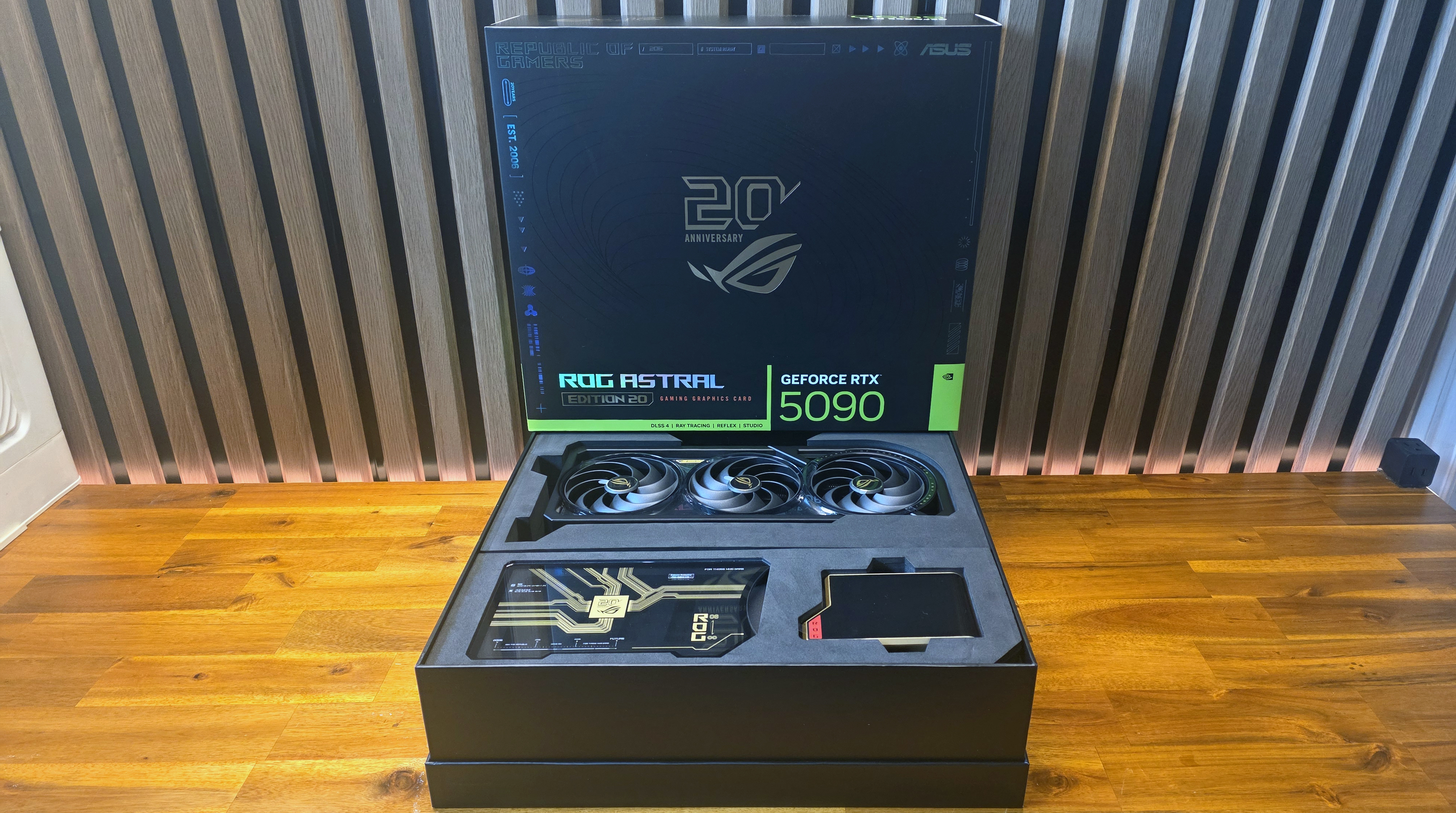
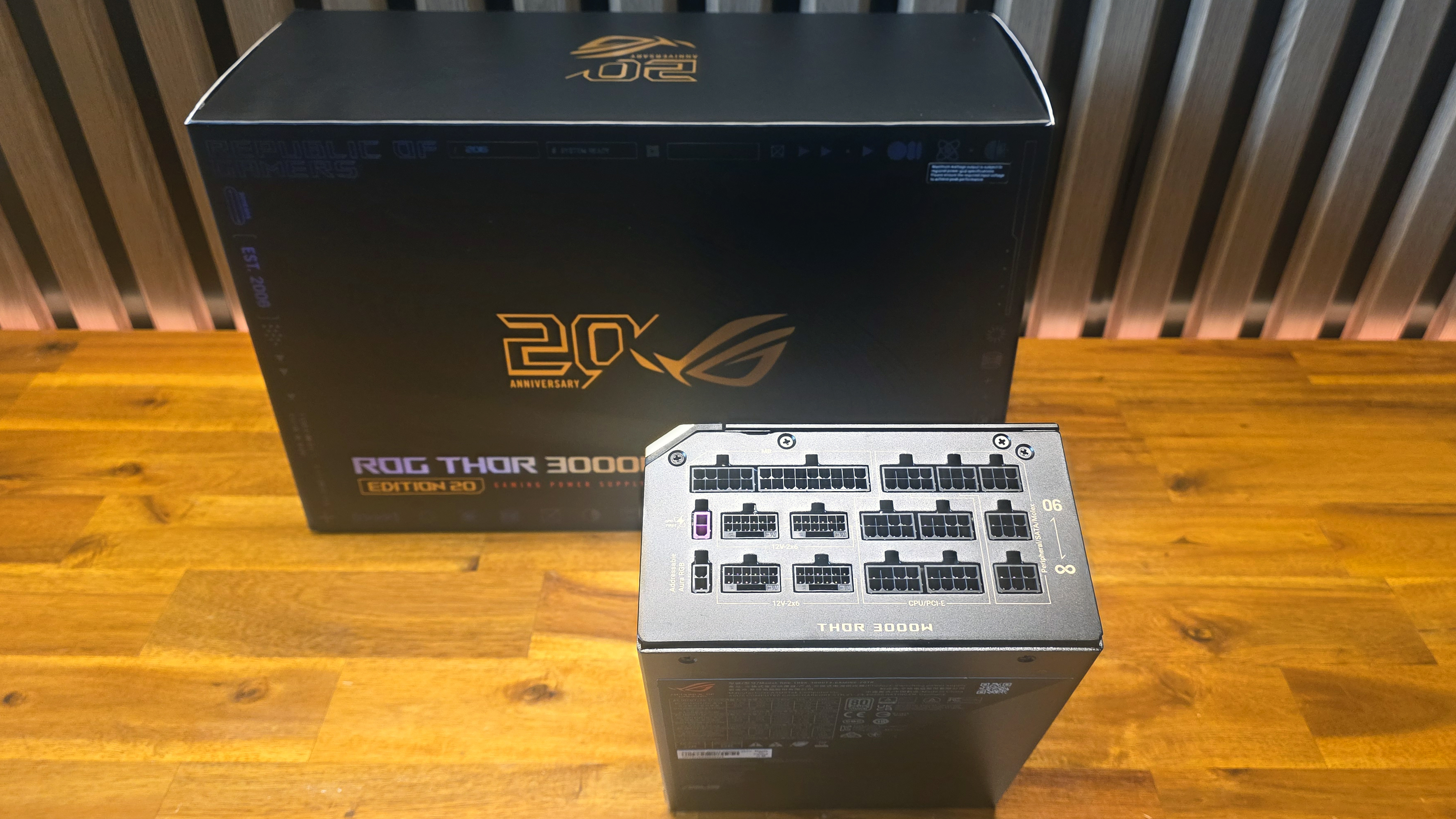
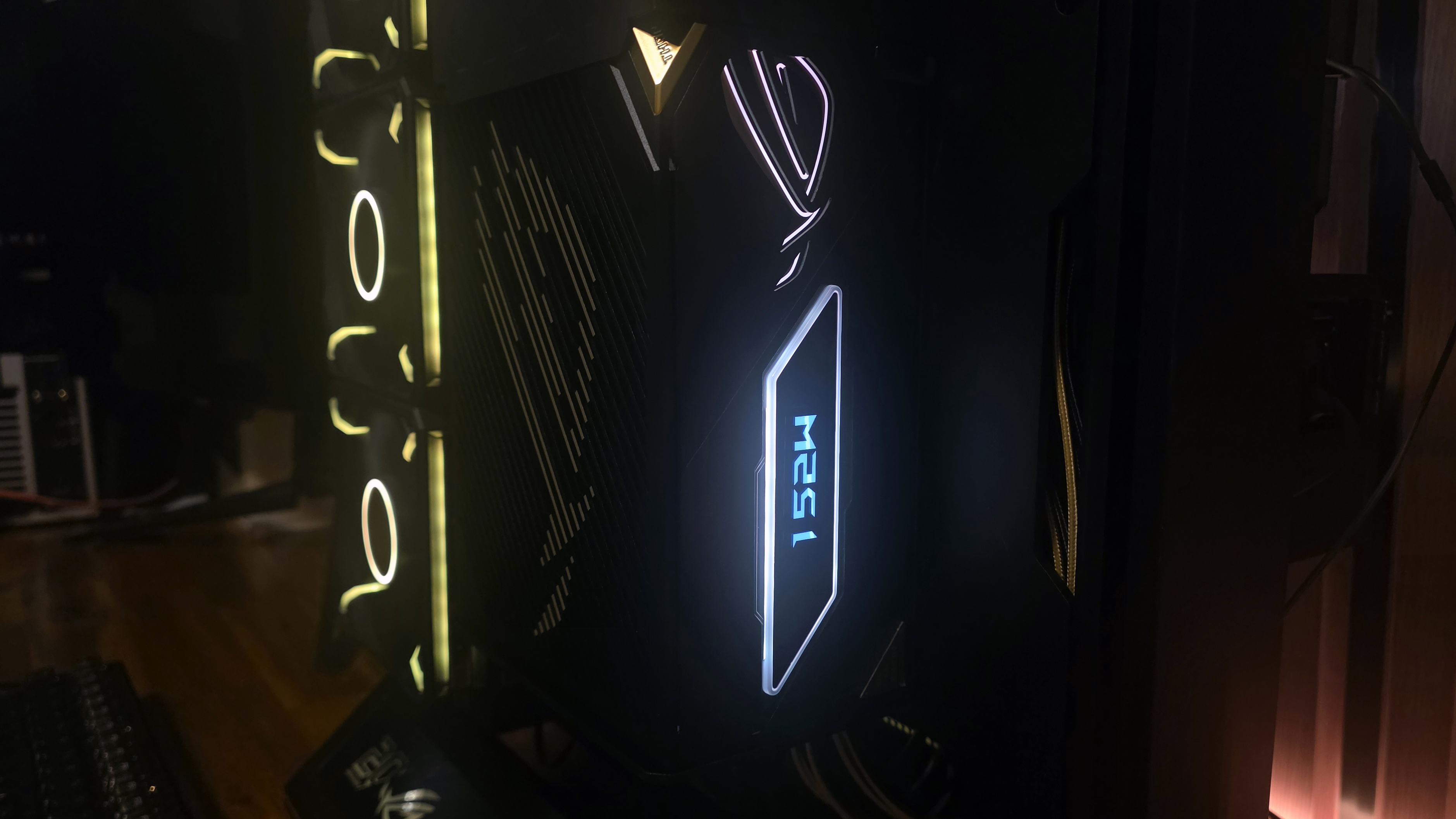
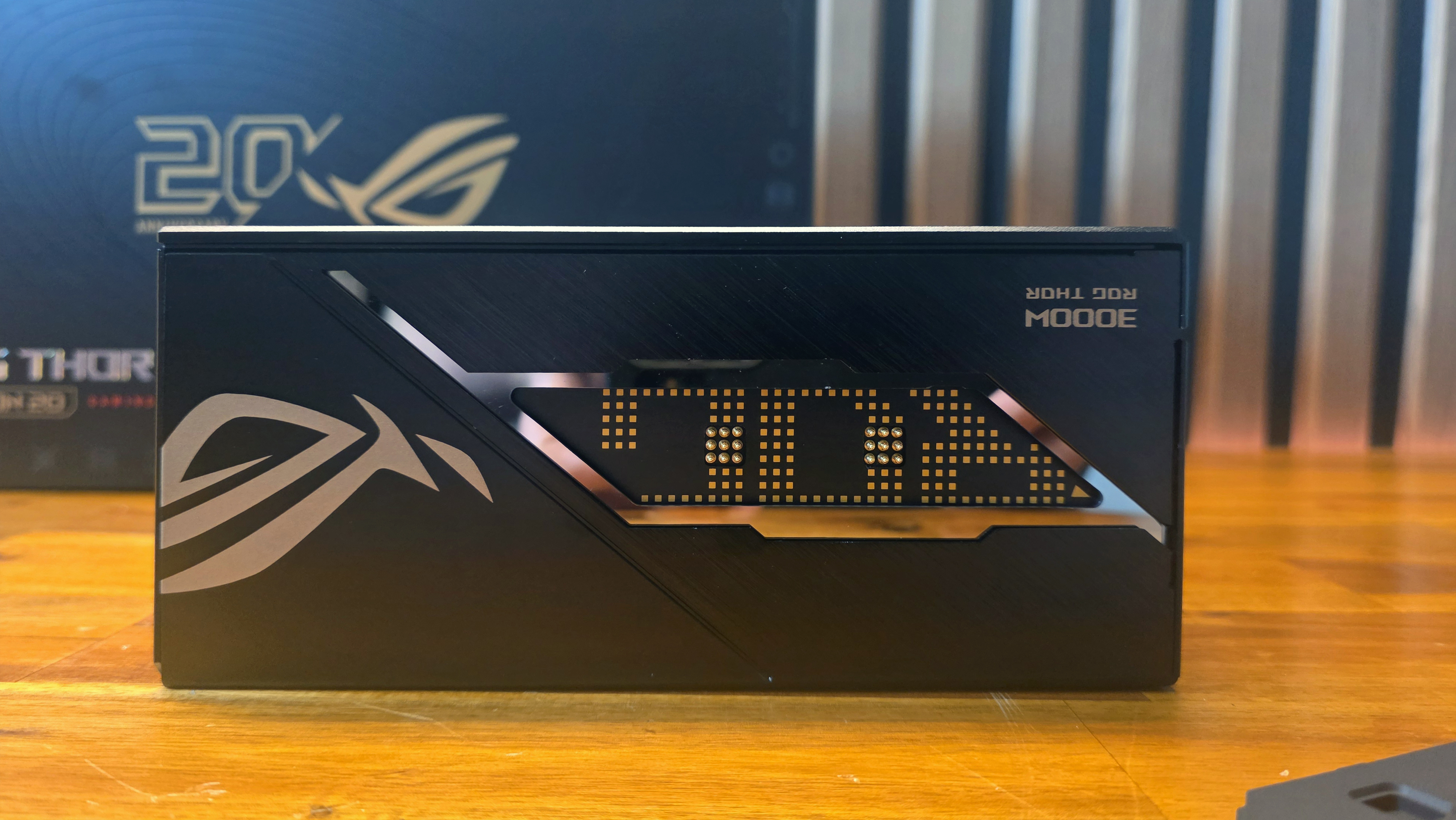
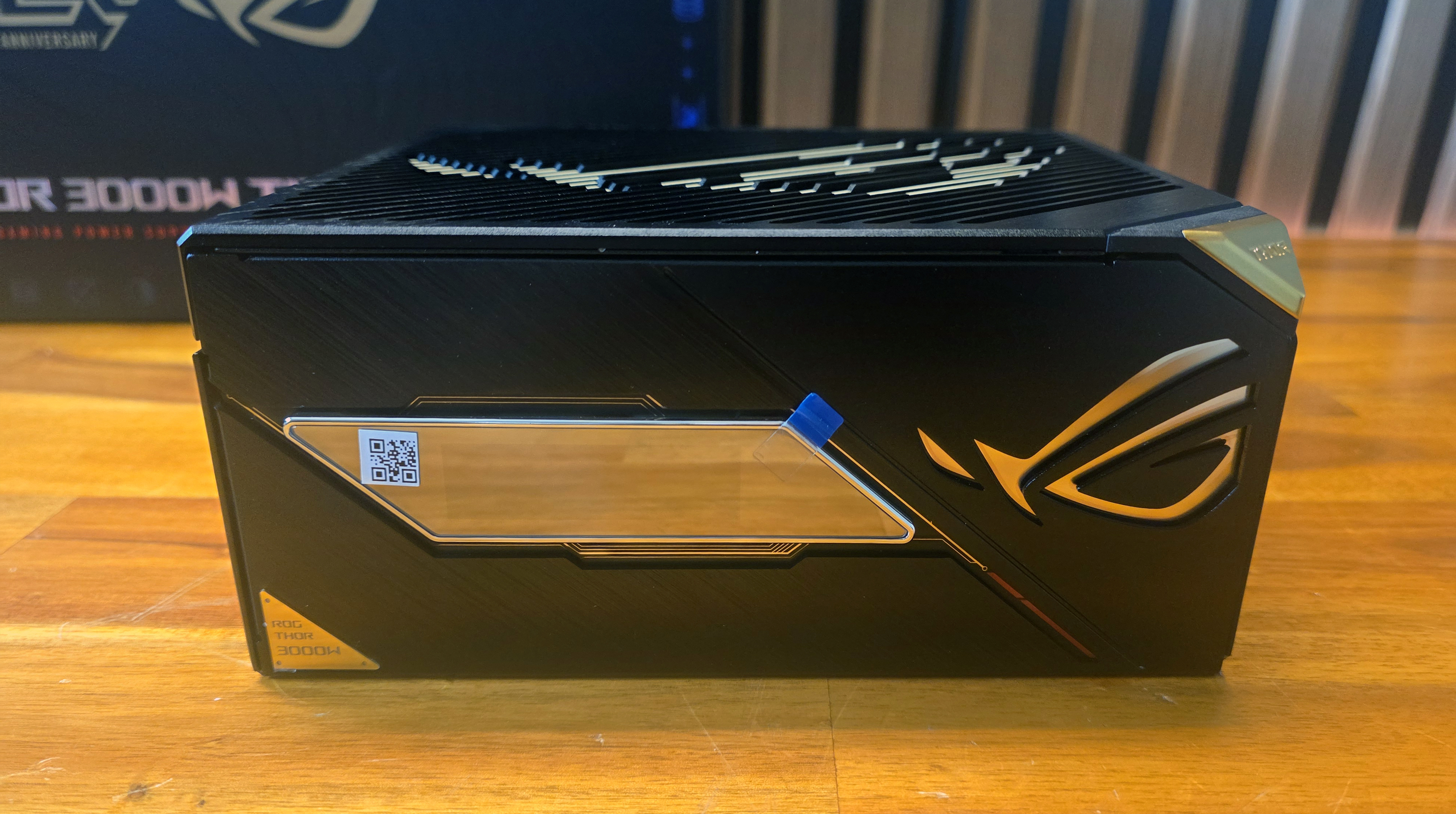
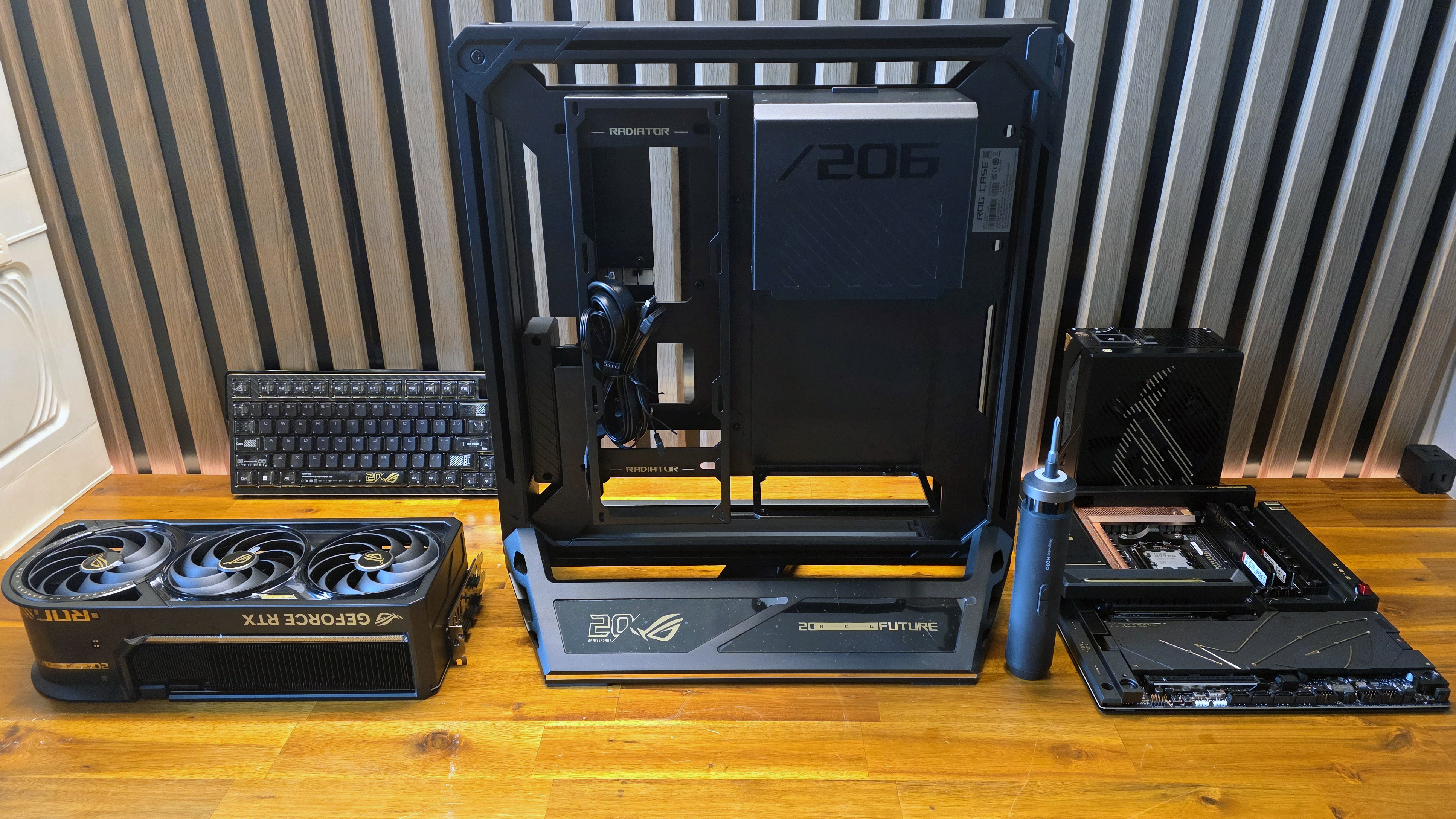
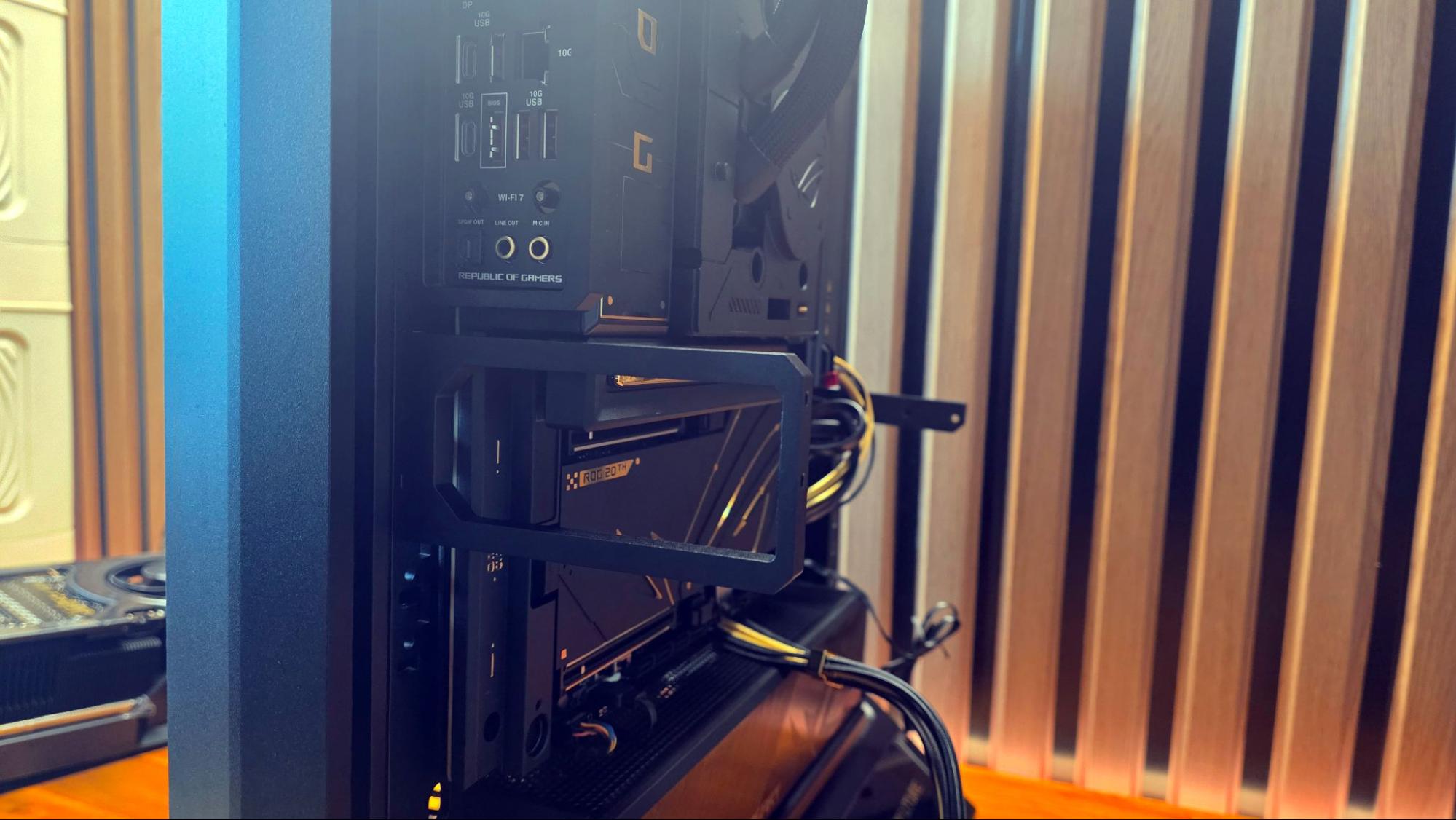
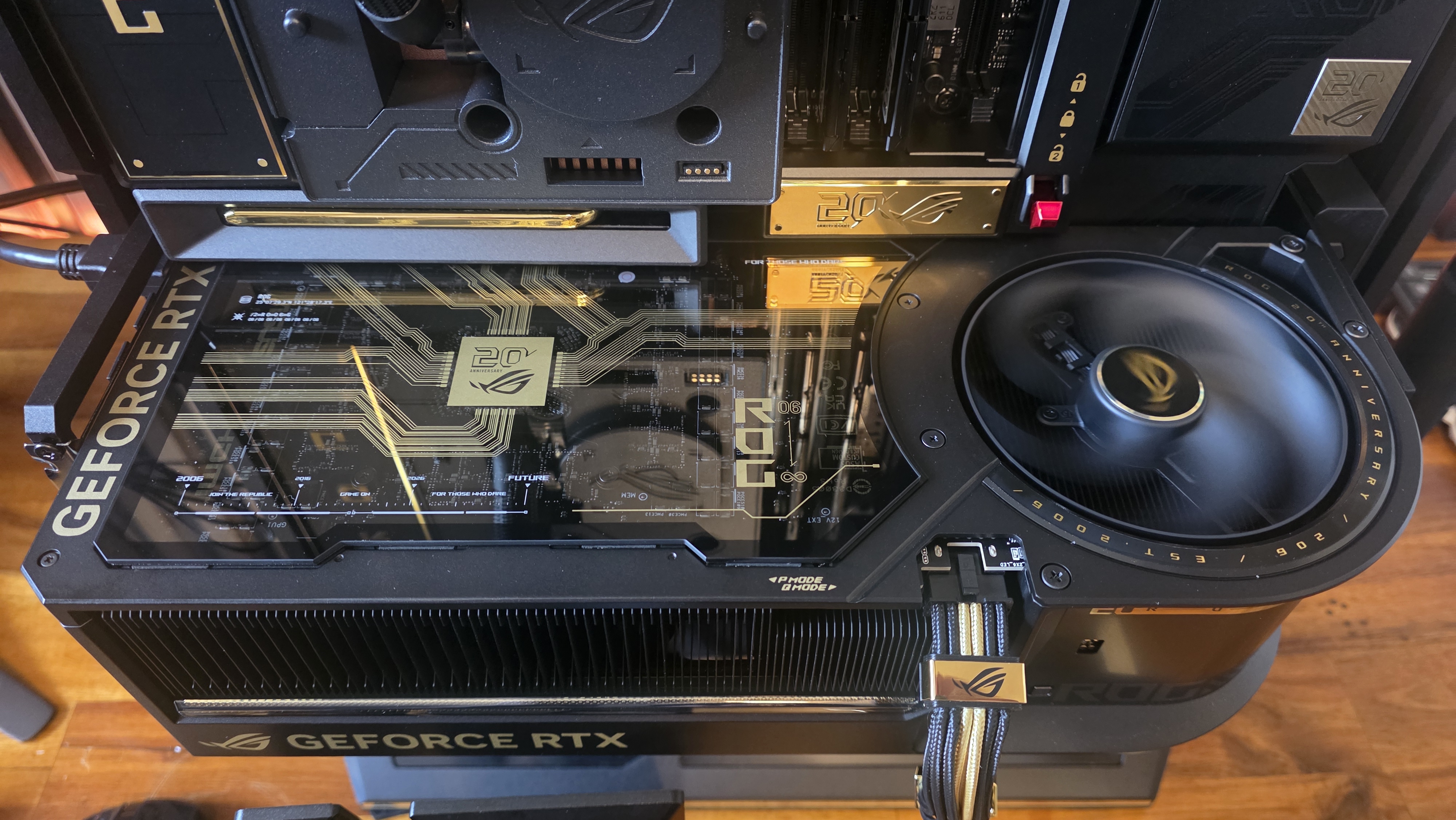
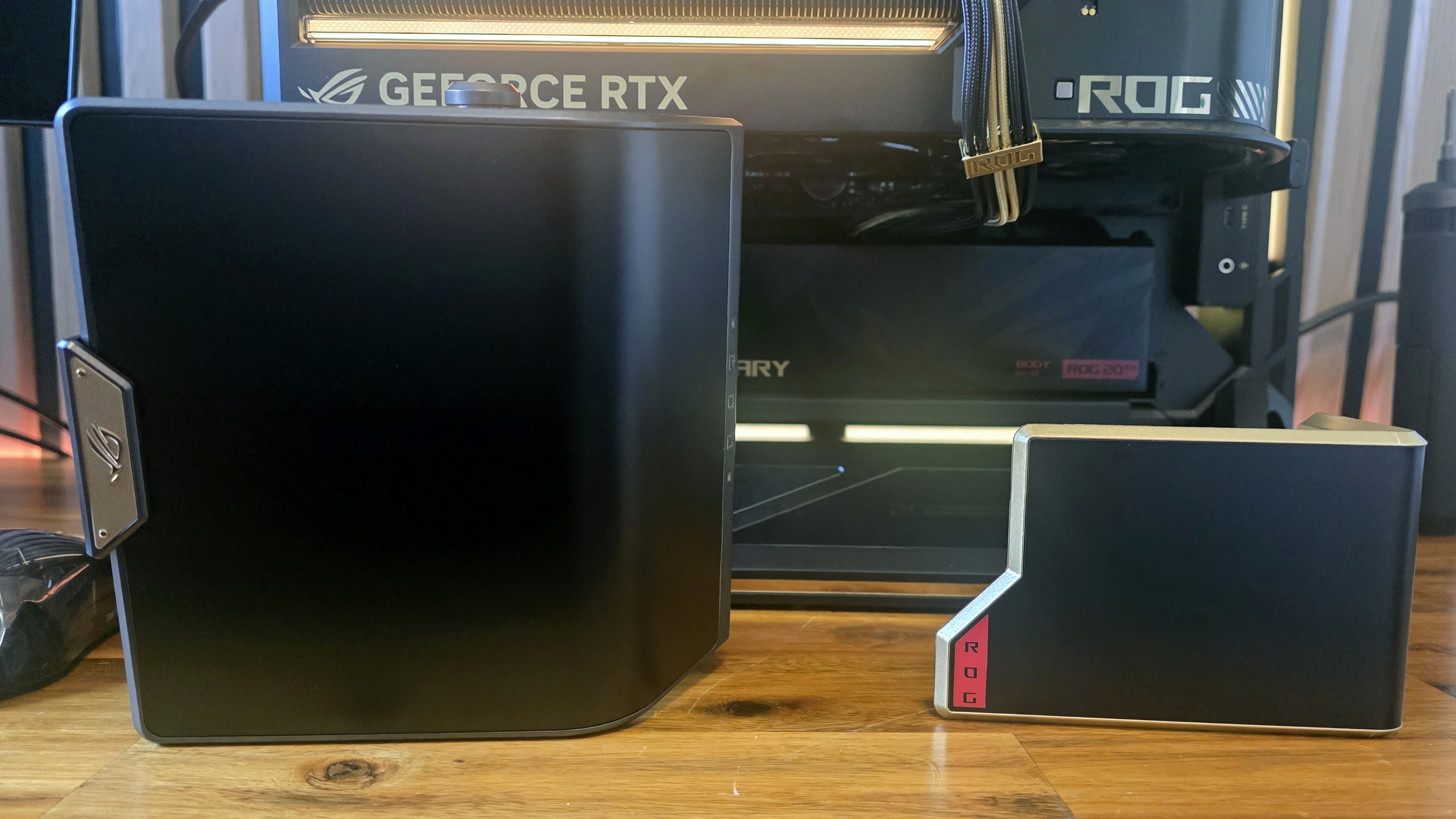
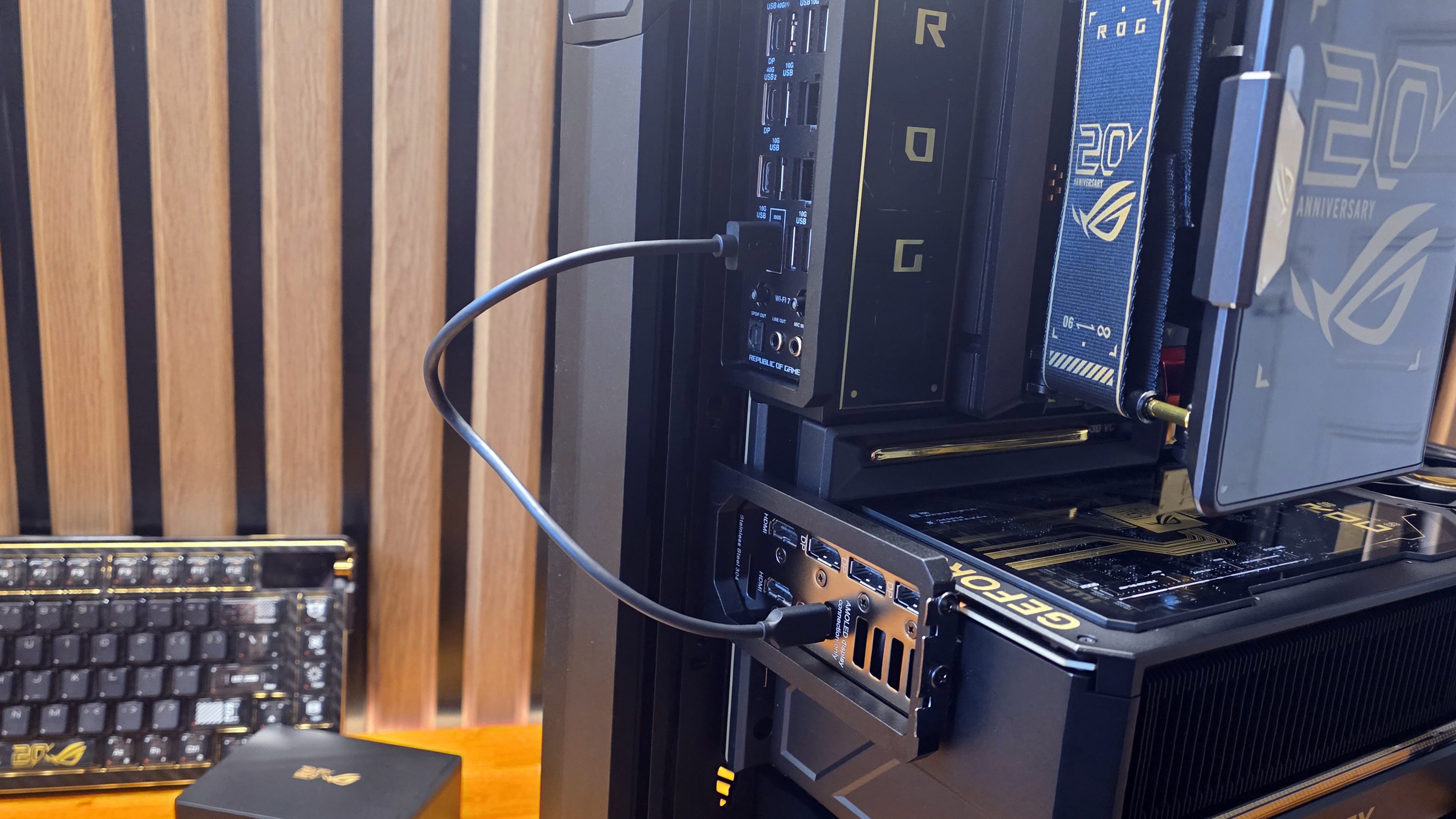
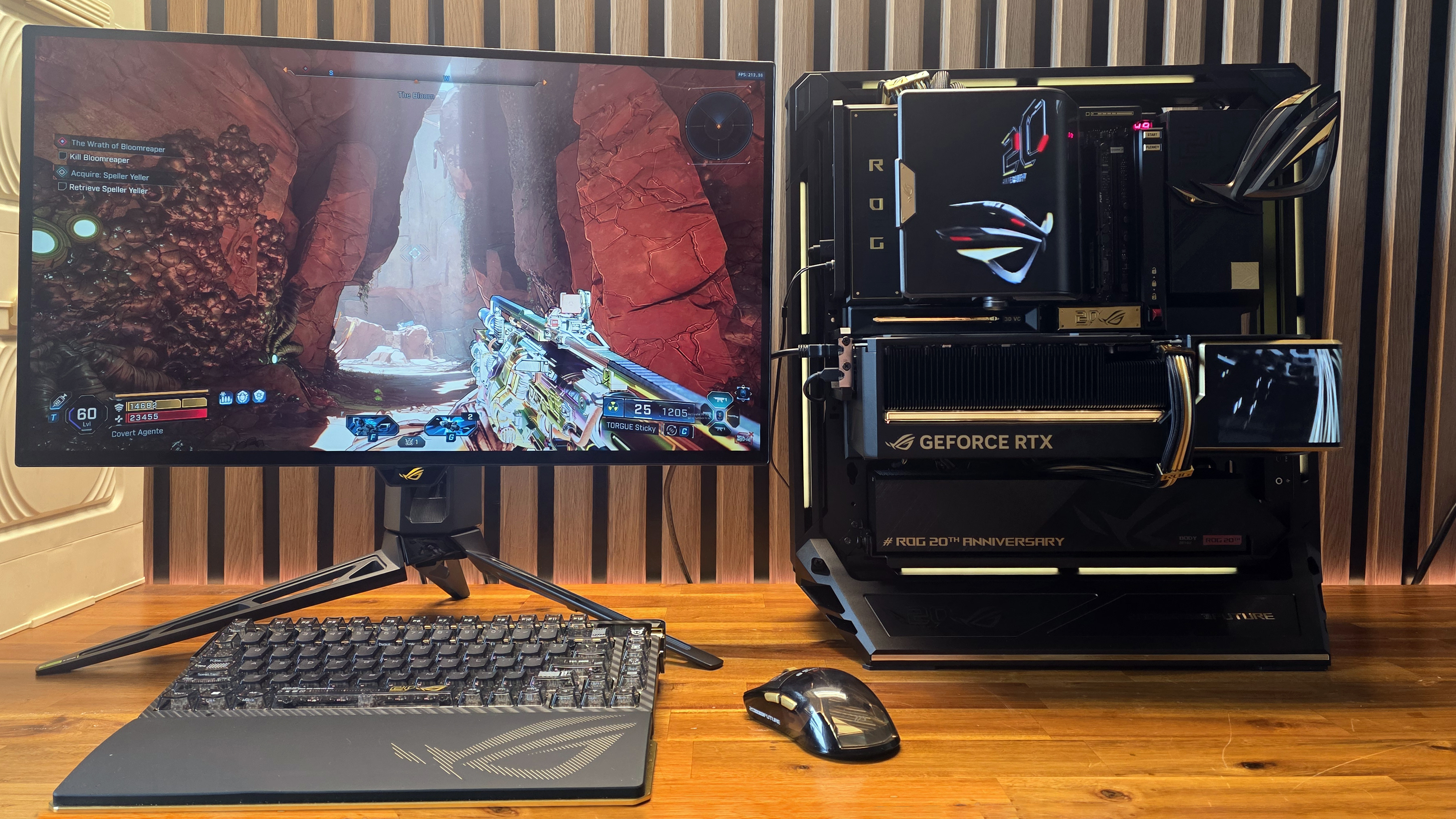
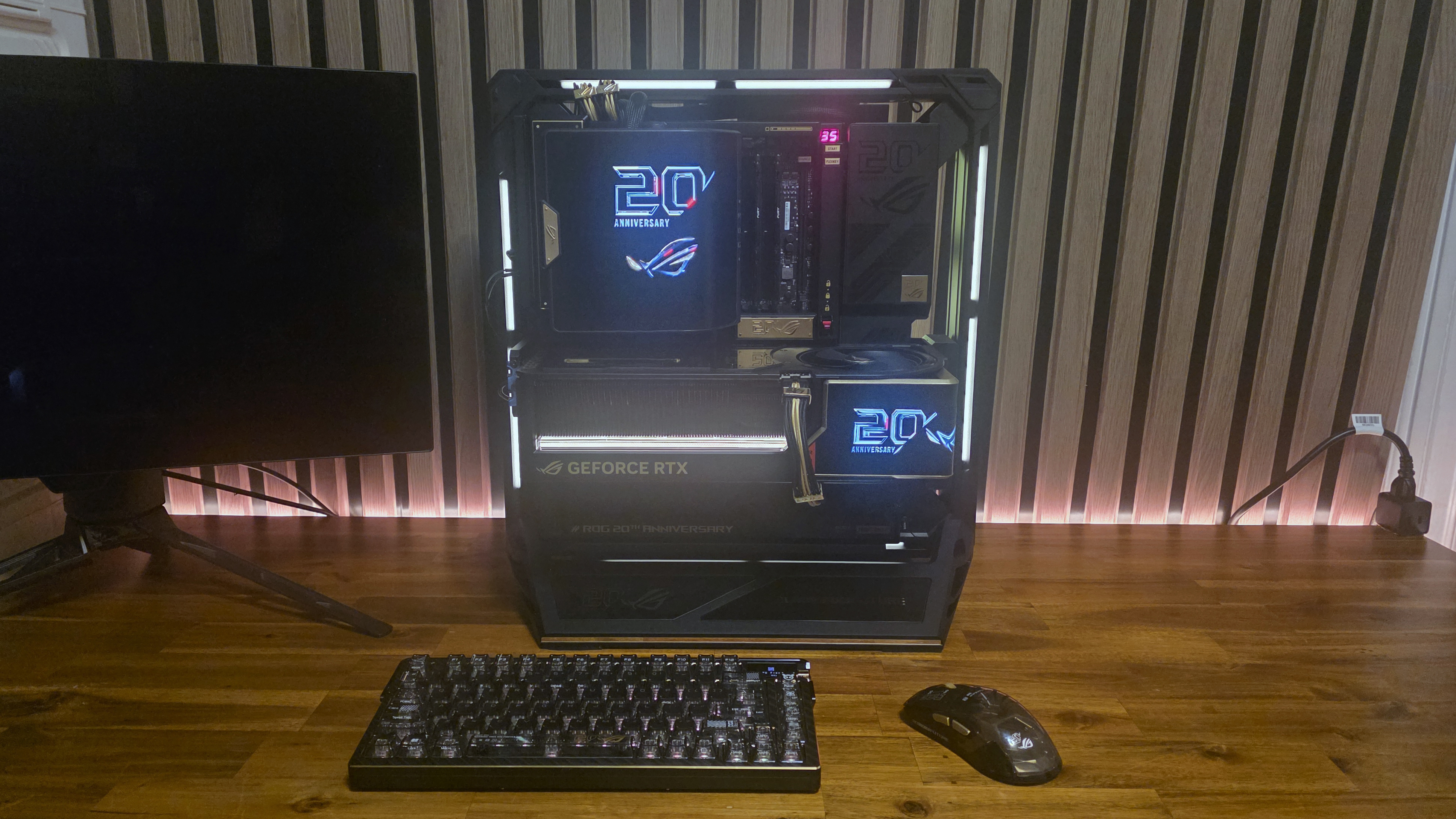
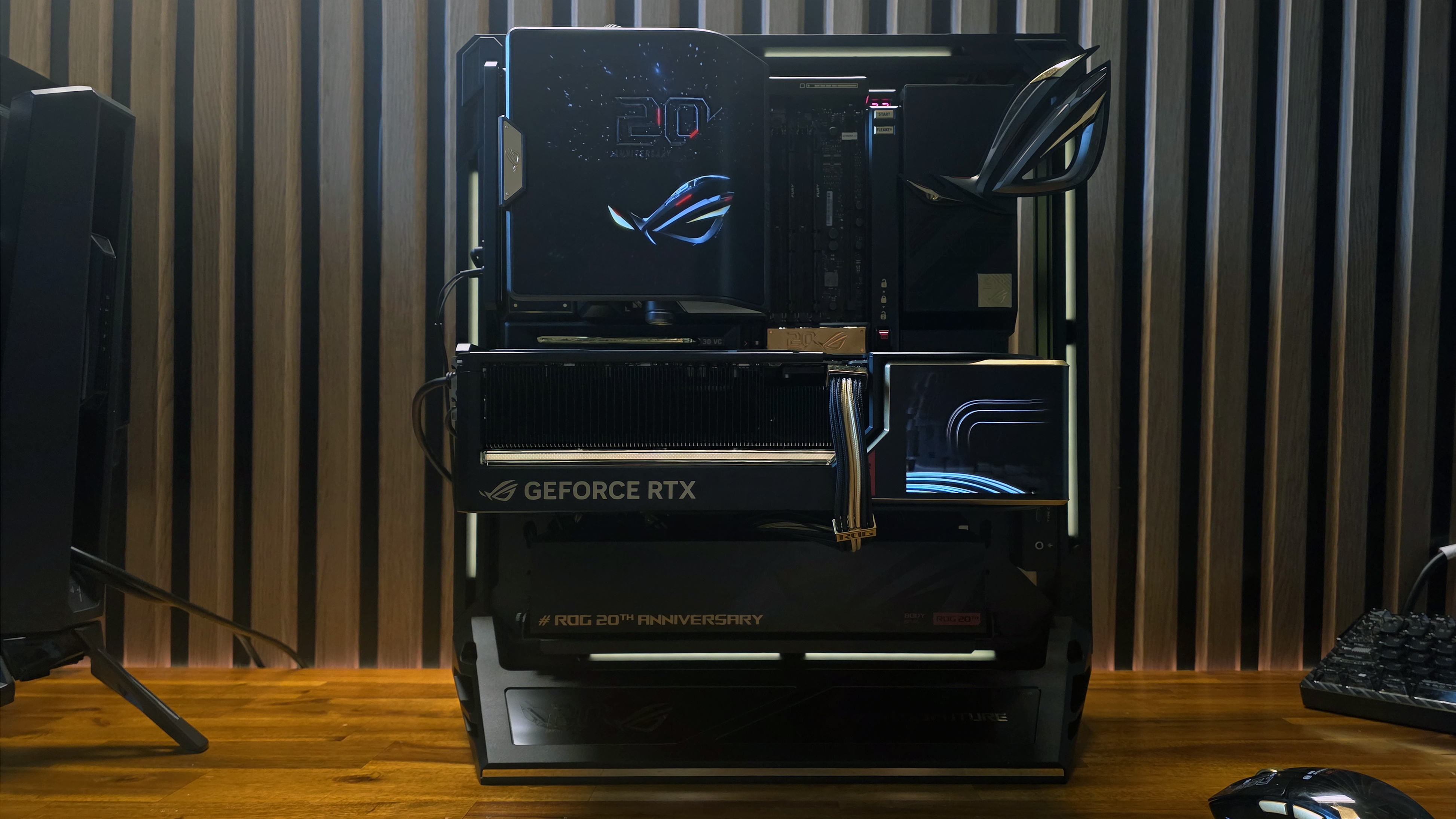
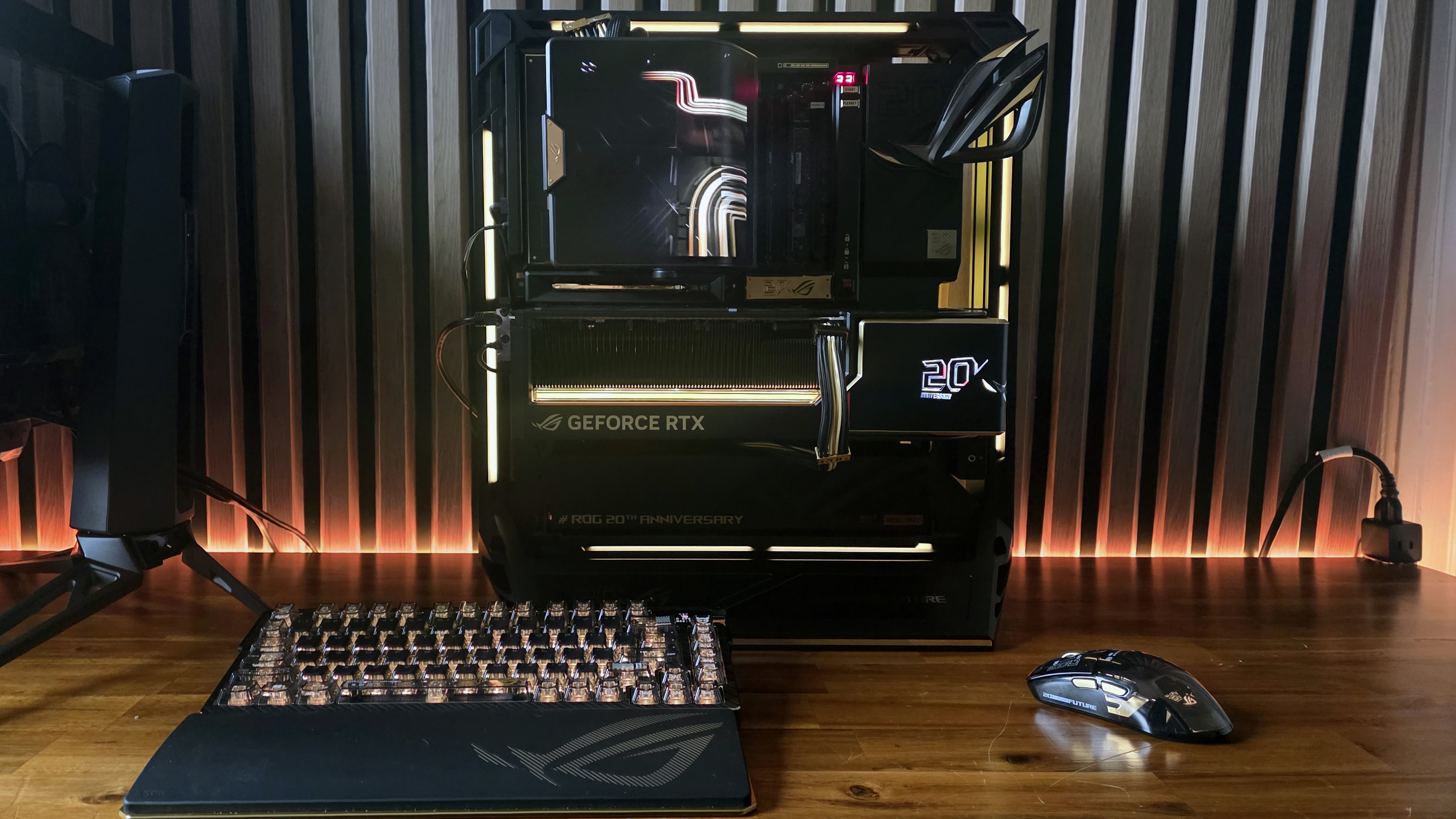
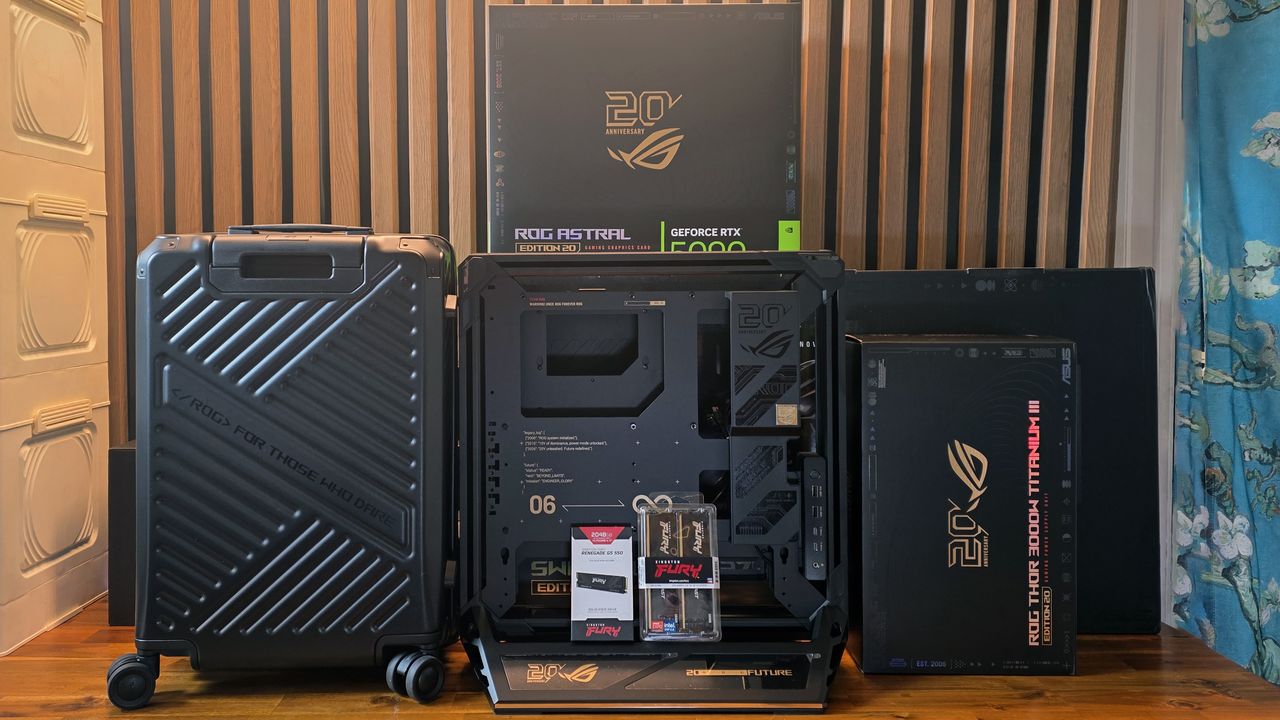
We've reviewed Asus' ROG Edition 20 anniversary kit. We've built a PC with it. It's about as premium as a gaming PC build can get. Right now, you can pick up the same kit for a whopping $10,849.96 on Newegg in a combo deal. To put it mildly, this is one expensive deal, but it's actually hiding a secret gem: it's the cheapest RTX 5090 graphics card on sale right now.
Writing up a near-$11,000 combo set as a deal might seem silly, but one of the core components here is the Asus ROG Astral GeForce RTX 5090 Edition 20 that is priced as part of this deal at $5,999. You can't buy this Astral card on sale individually right now. In fact, you can barely buy an RTX 5090 anywhere. RTX 5090 stock has almost completely disappeared in the United States, with only sketchy third-party sellers offering it at prices approaching $10,000.
This premium GPU is now ultra premium and, for the time being, ultra rare. Does that make this $10,849.96 Newegg combo deal a good option? If money is no object, you're perversely getting some value for your money, as long as you don't think too hard about the RTX 5090's original $1,999 MSRP.
ROG Edition 20 combo: $10849.96 This frankly ridiculous bundle includes all of Asus' ROG Edition 20 kit, including the ROG Astral RTX 5090, ROG Crosshair X870E, ROG Thor Titanium III 3000W PSU, and the ROG GR20 open-frame PC case. No discount, but the RTX 5090 is the cheapest you'll find it, in the oddest way.View Deal
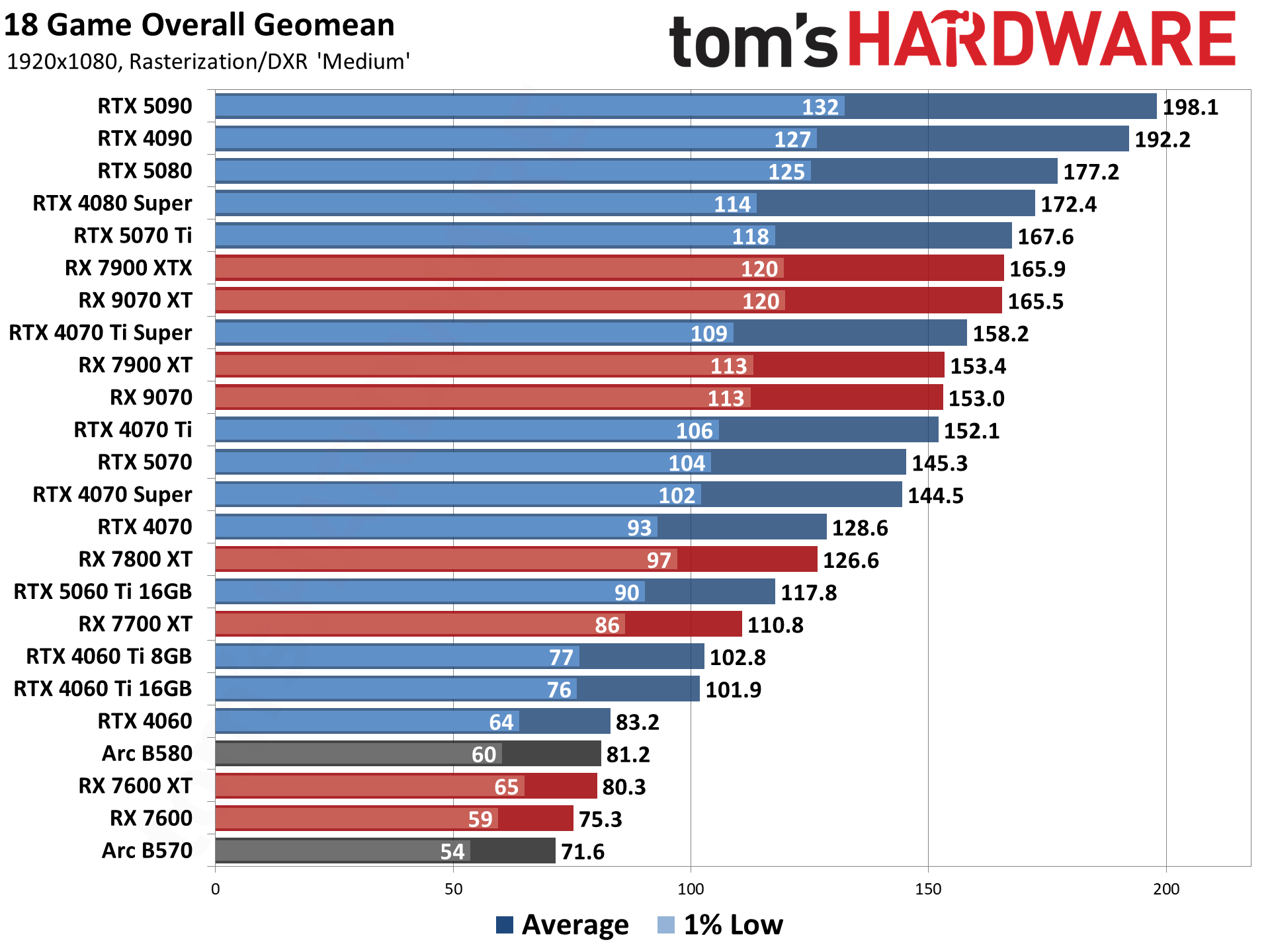
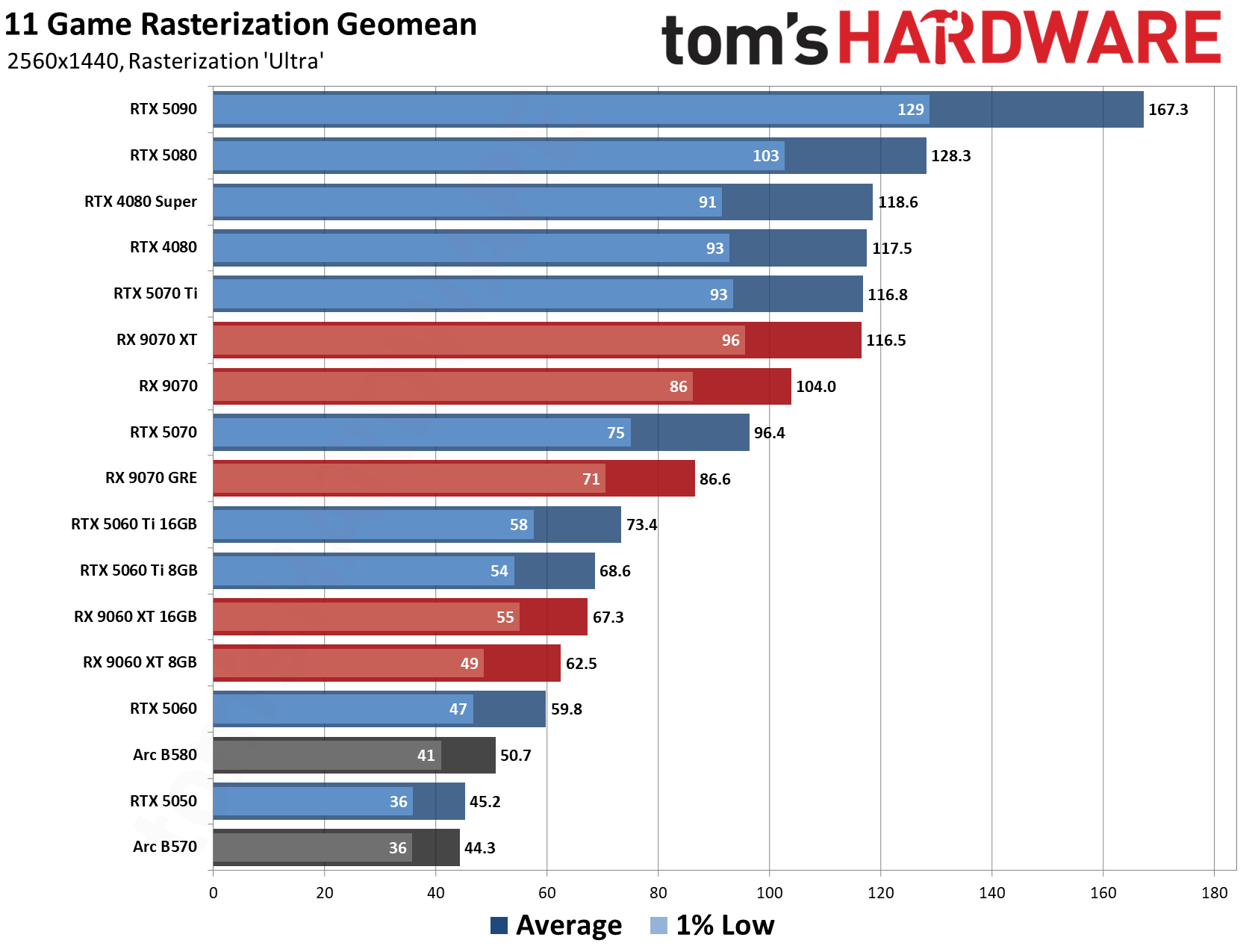
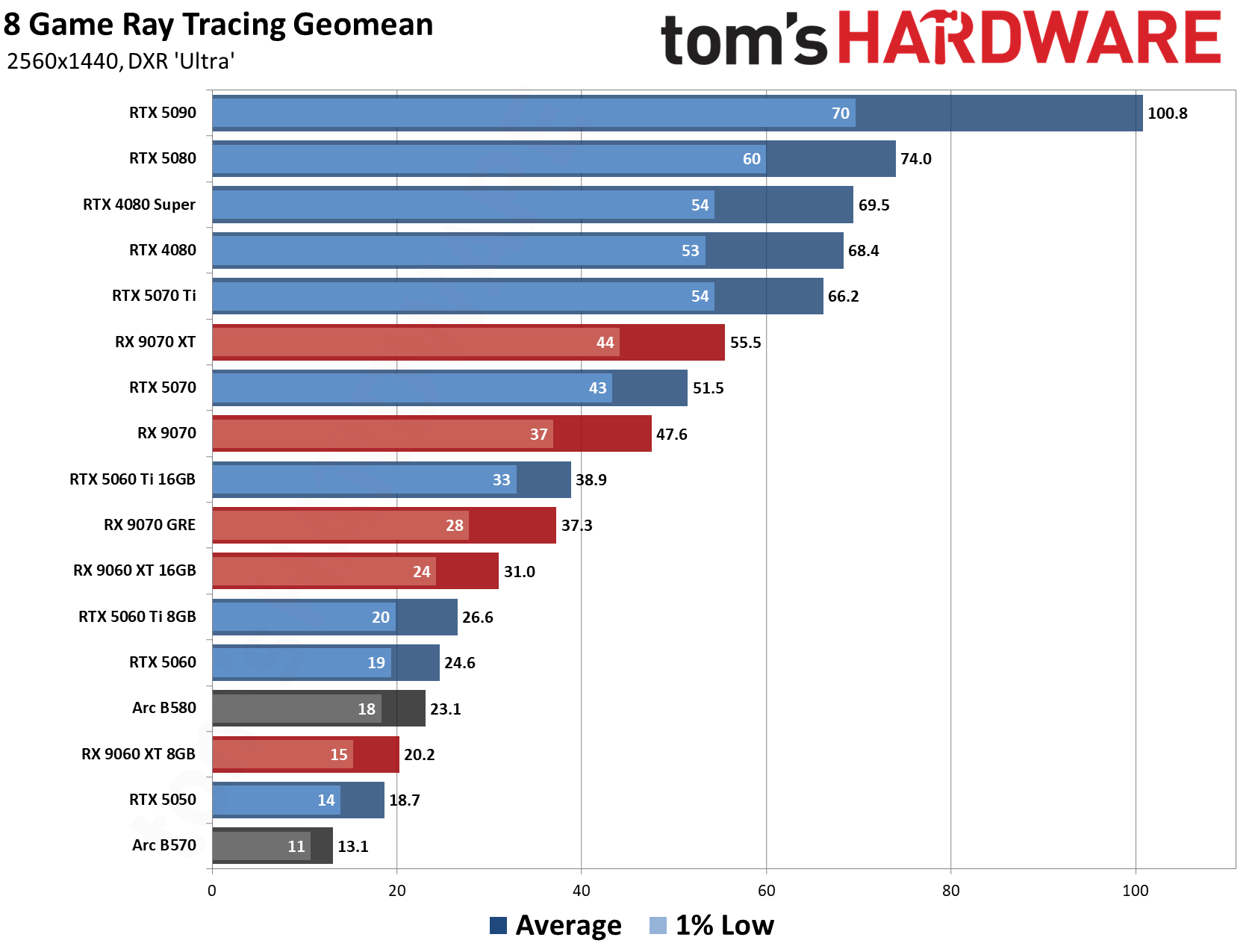
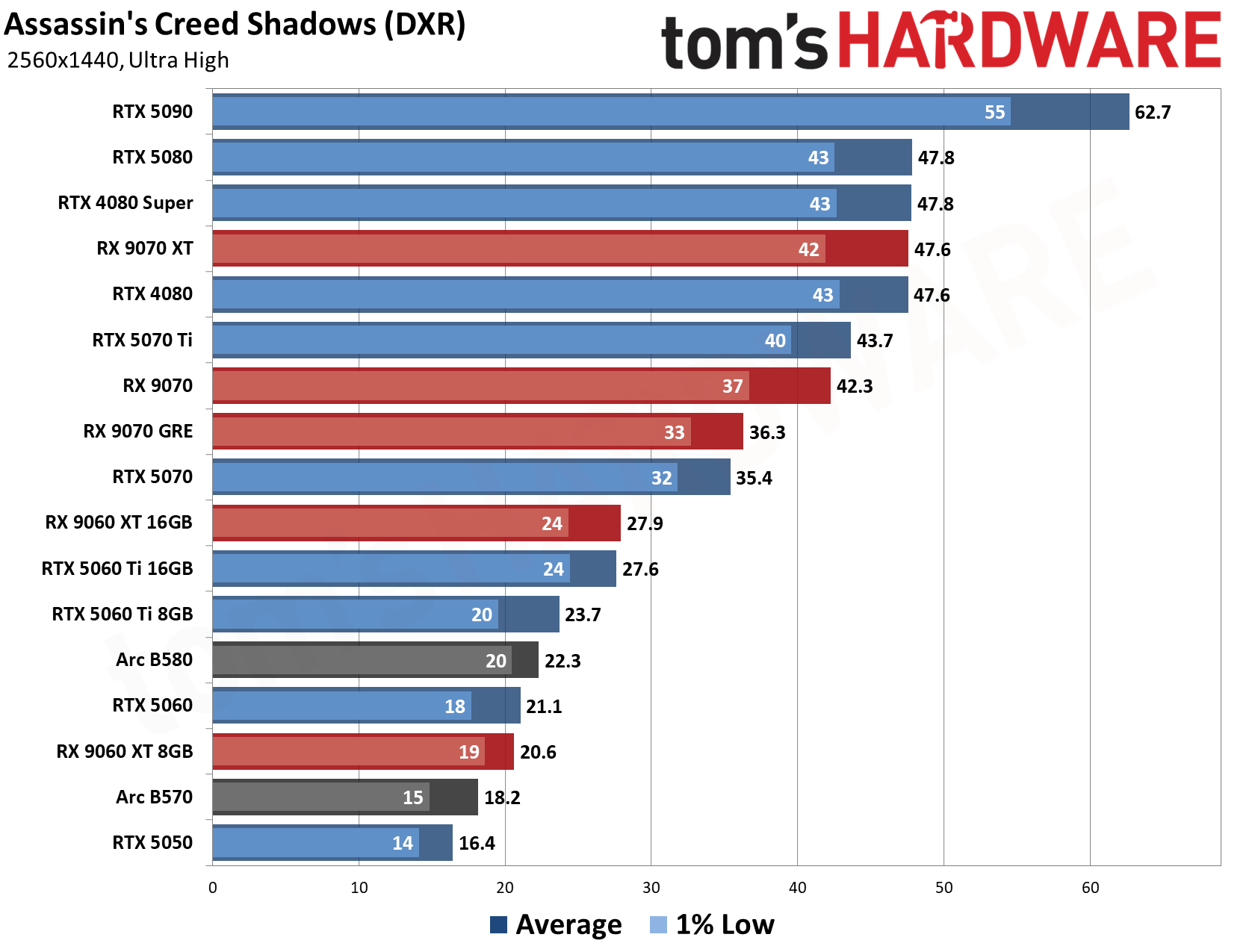
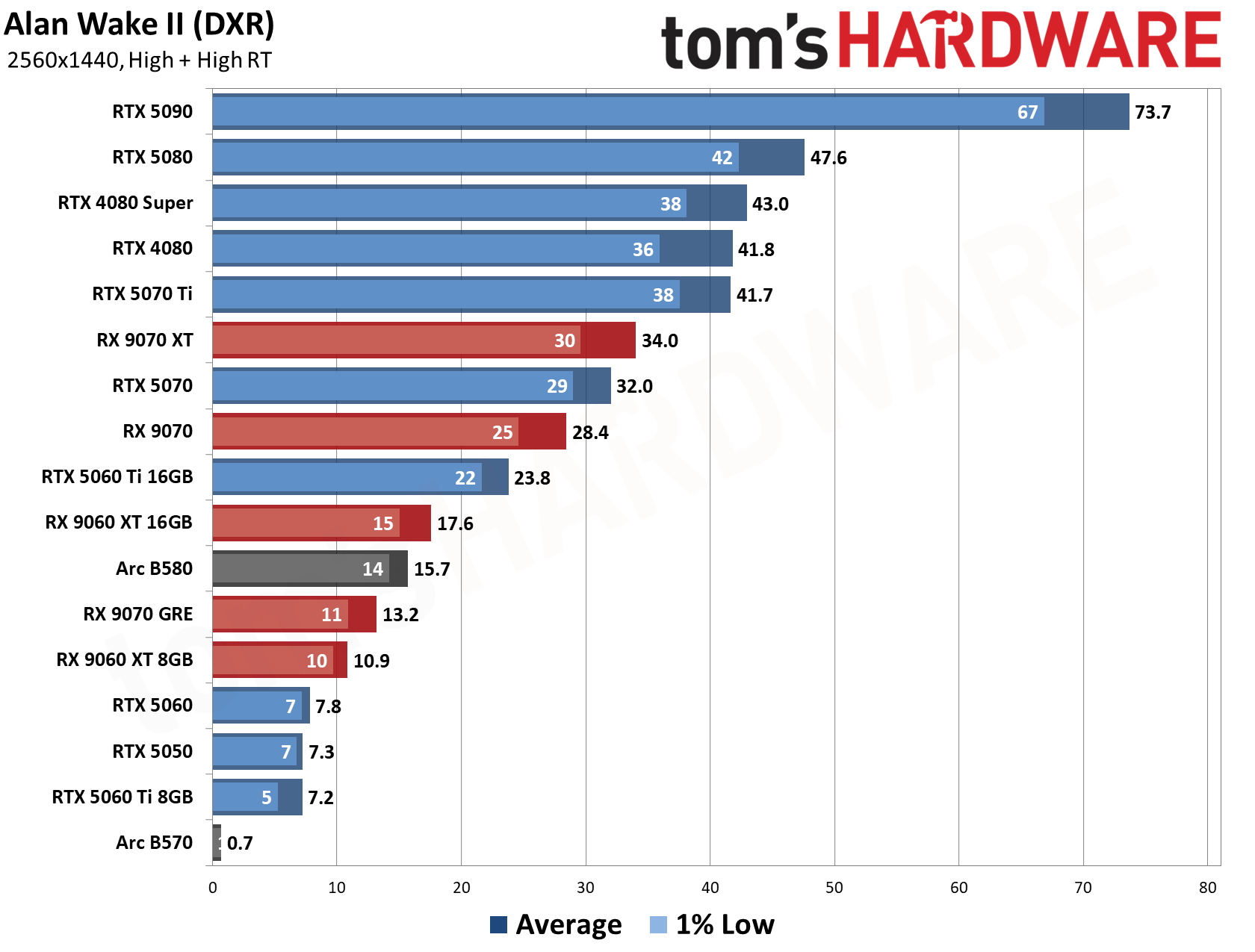
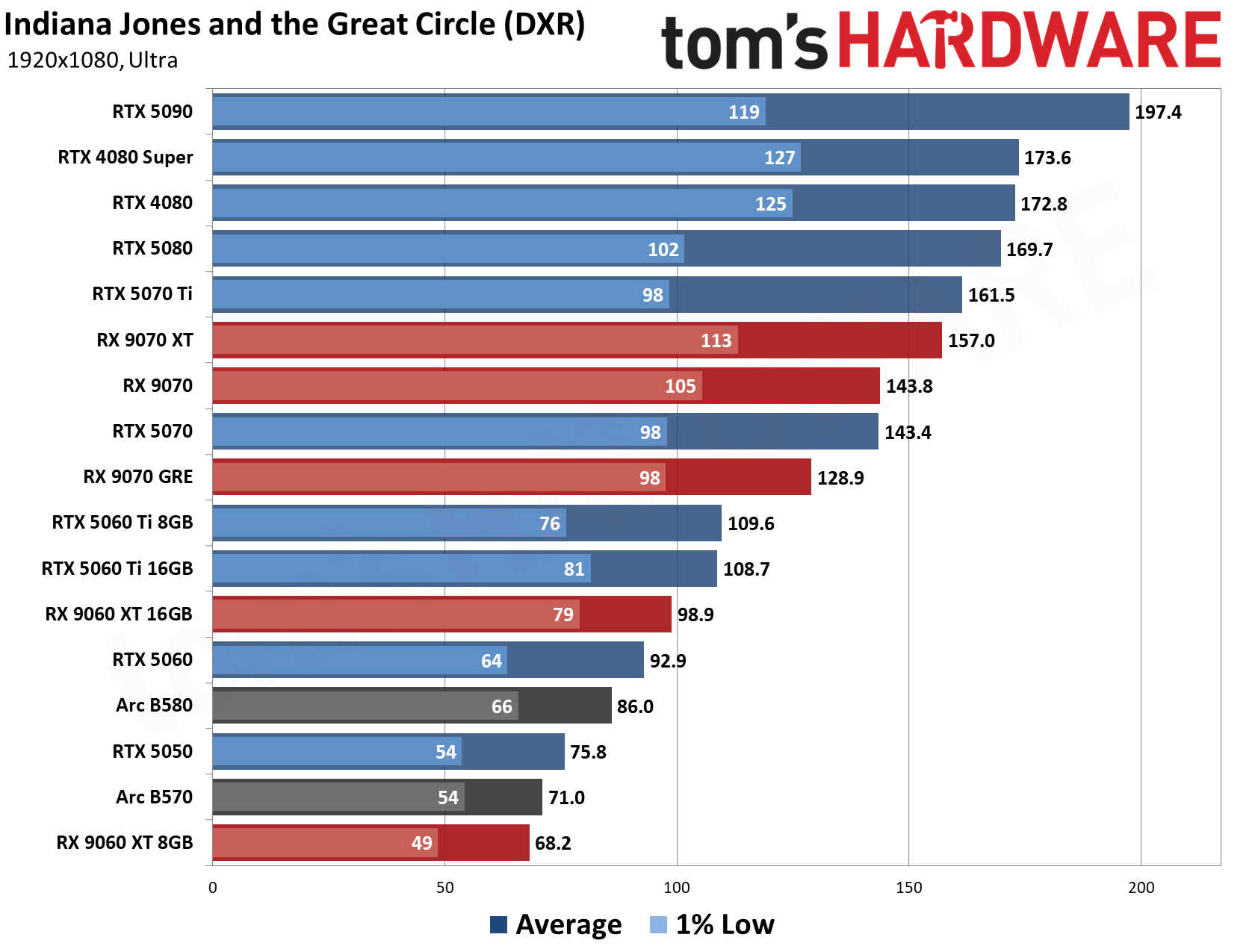
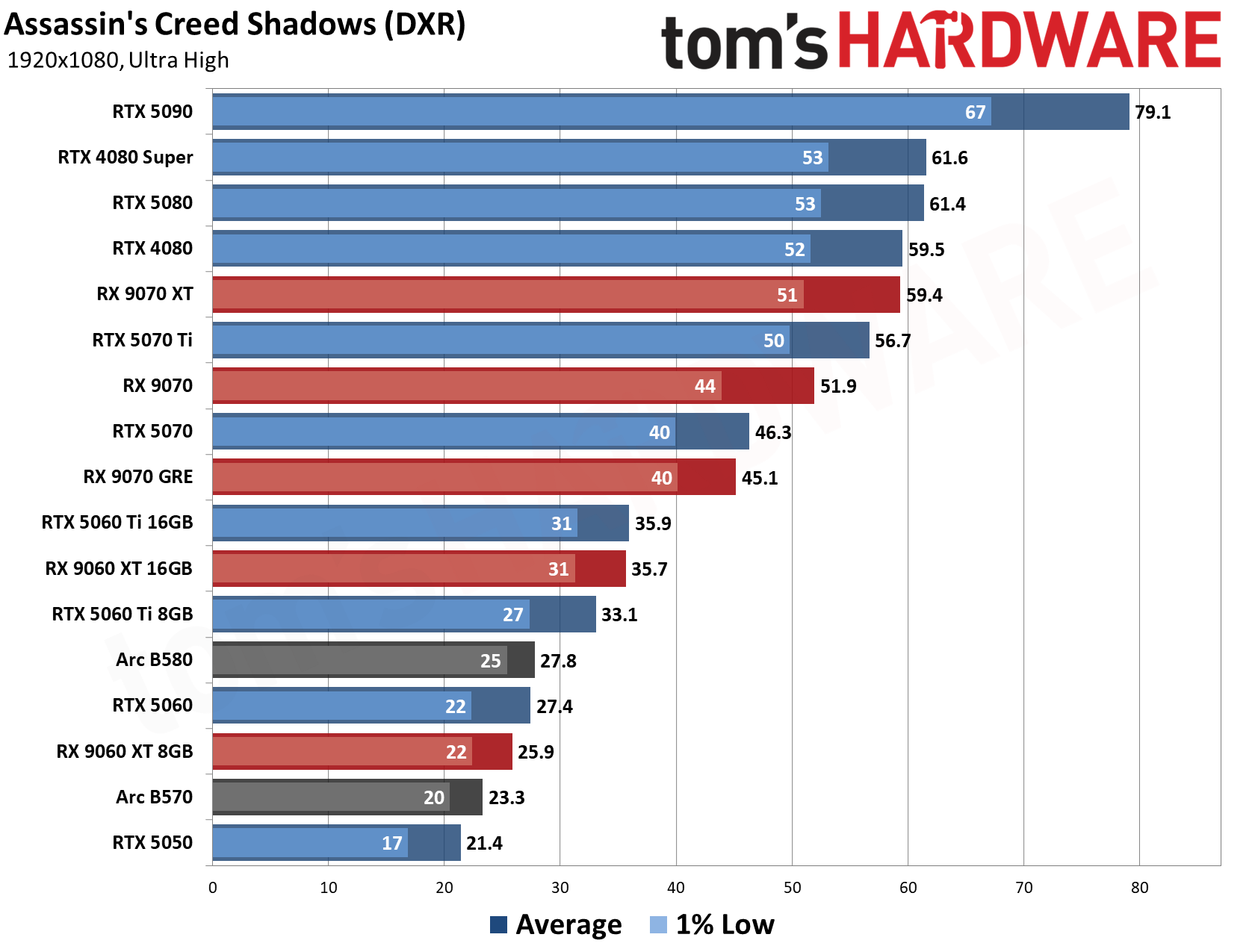
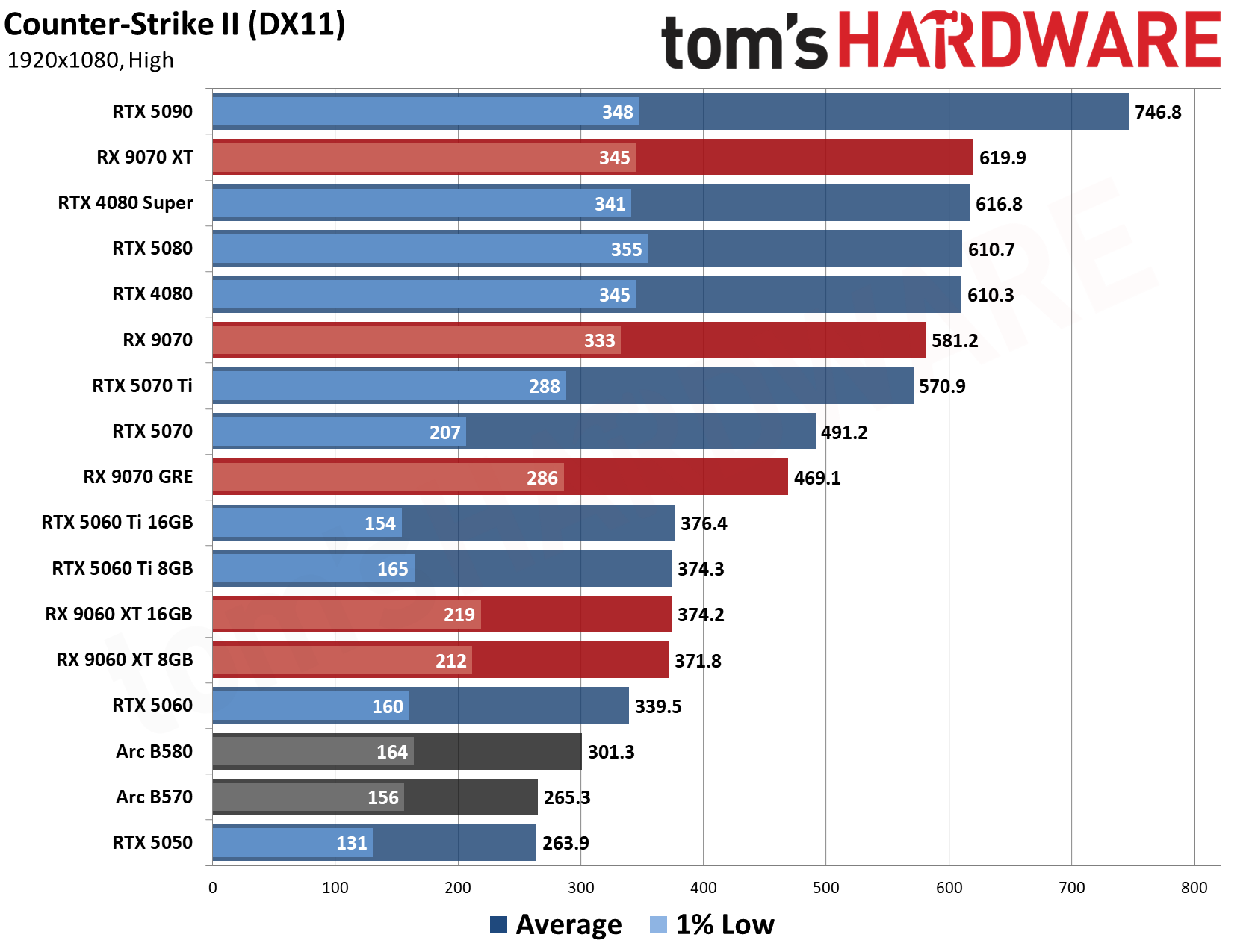
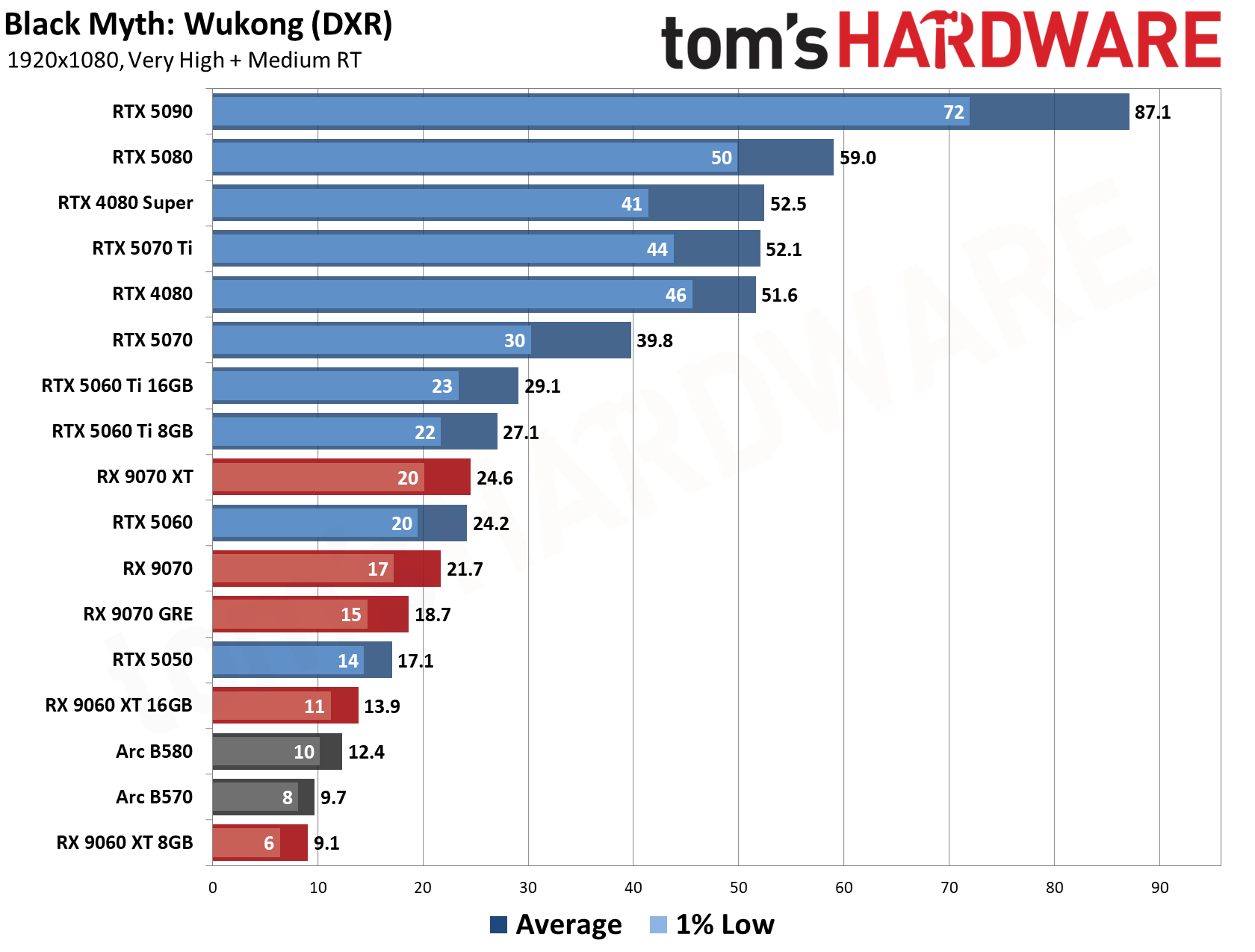
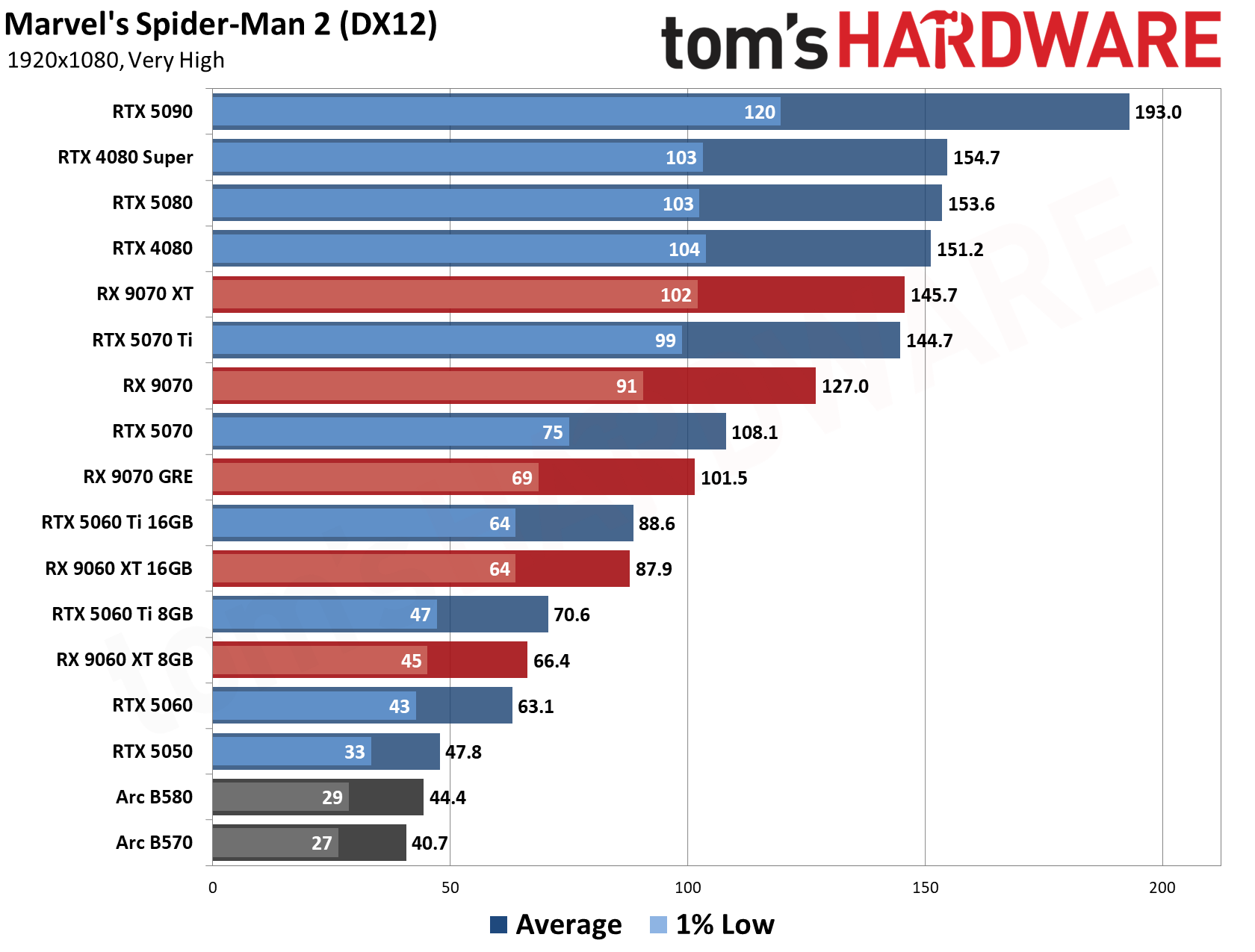
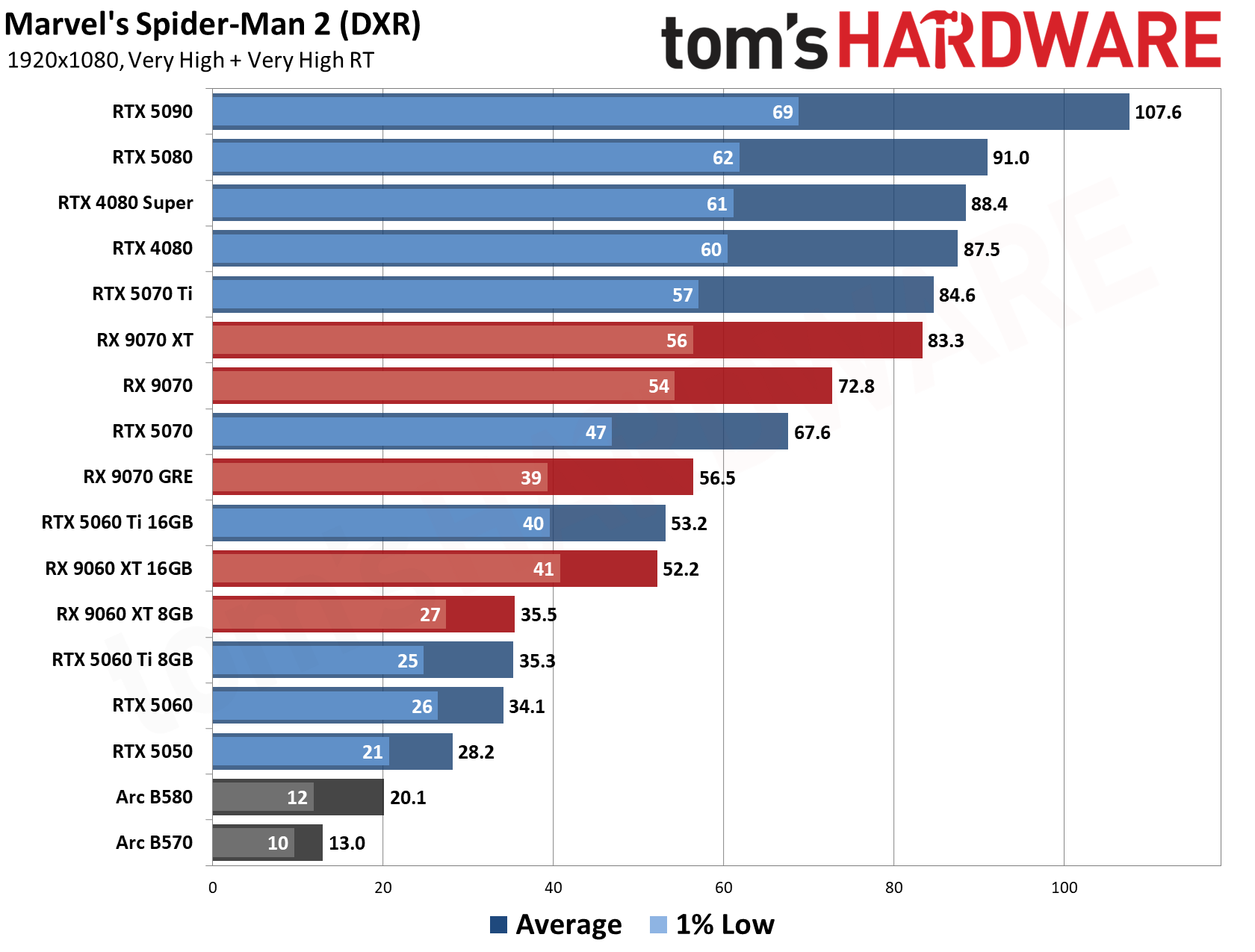
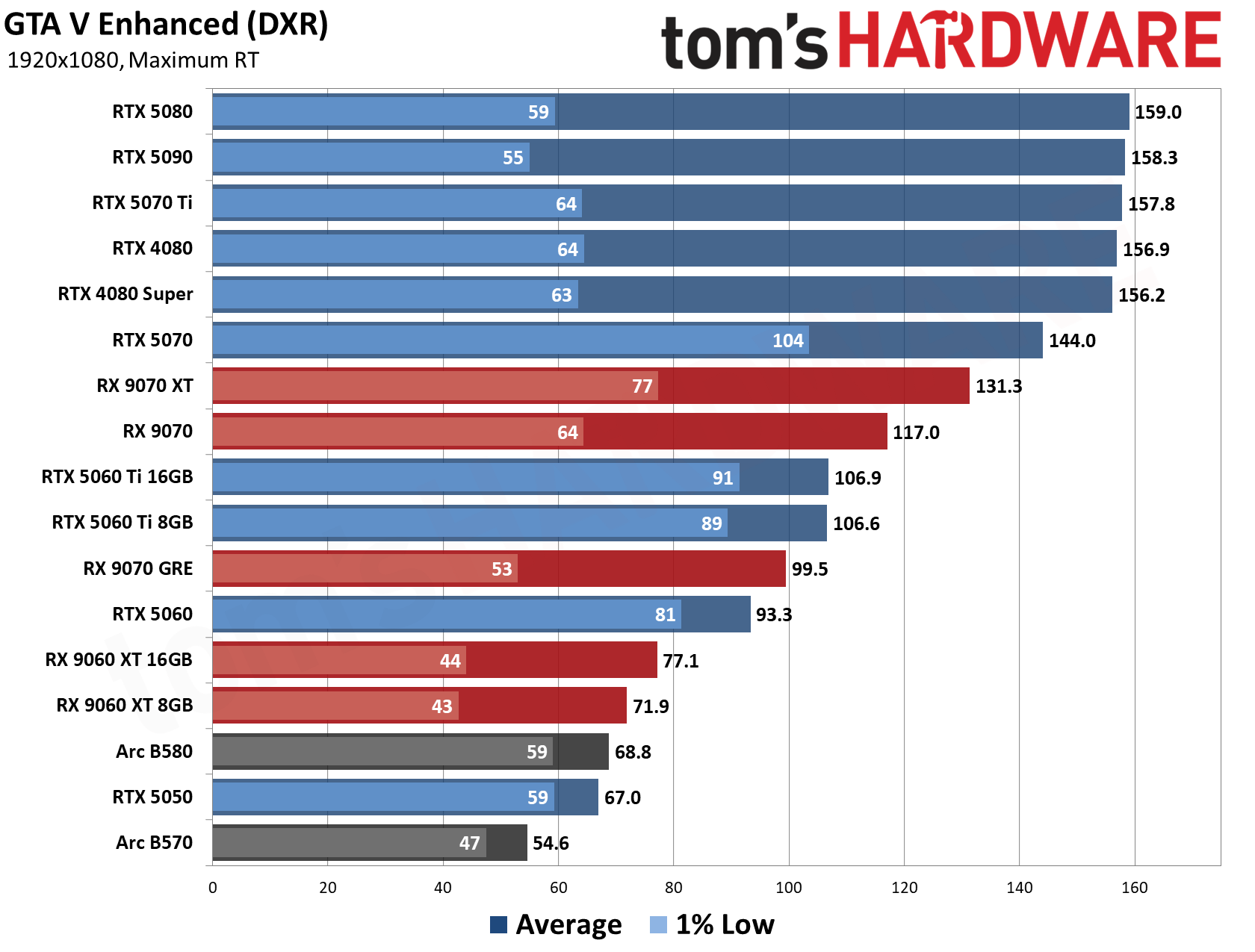
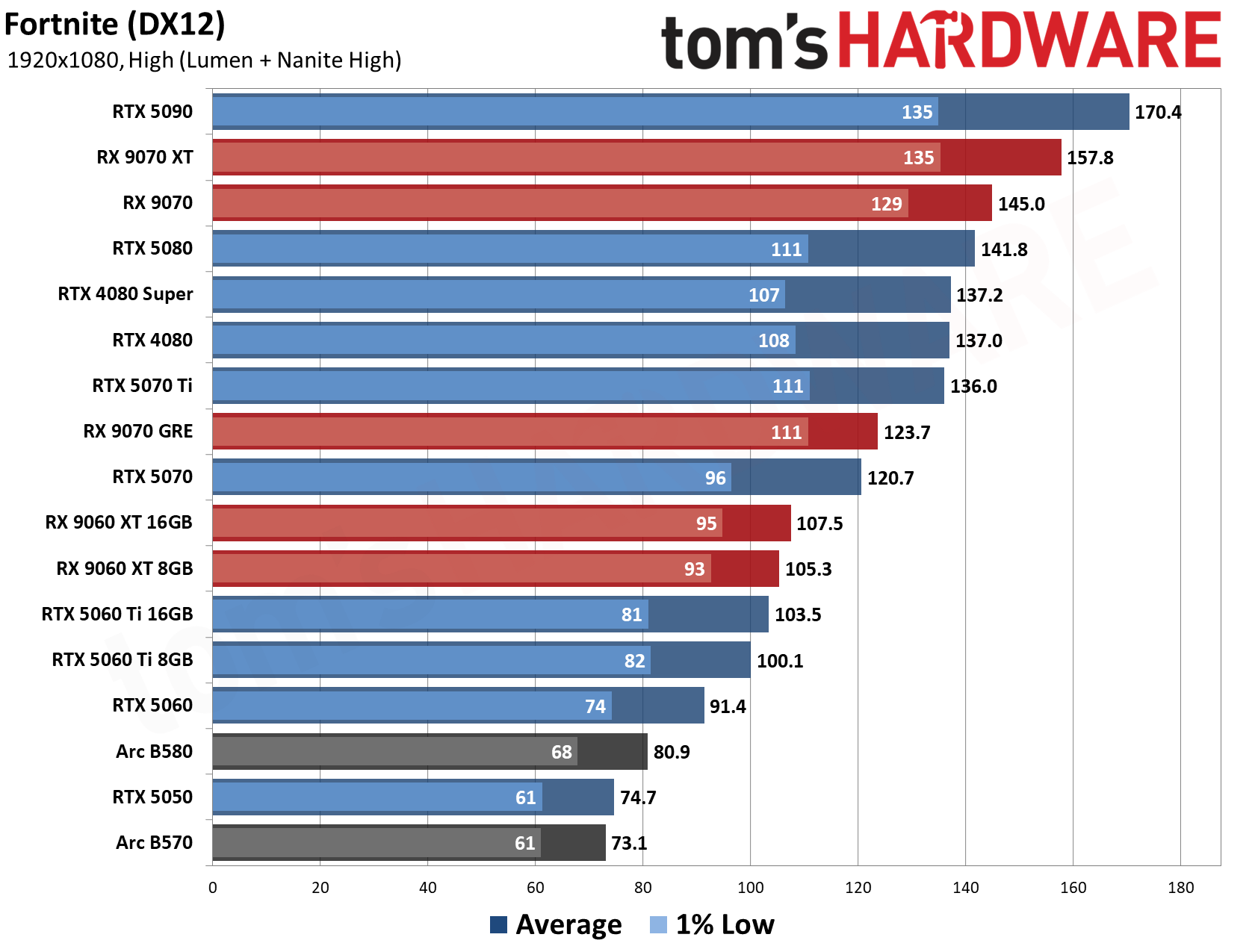
Yes, the GPU is an unstoppable force for any gamer. Our GPU benchmarks make that very clear. The RTX 5090 is the best GPU you can buy, and no other consumer GPU is going to beat it. It has 21,760 CUDA cores and 22GB of GDDR7 VRAM, with a 512-bit memory bus and bandwidth speeds of up to 1,792 GB/s.
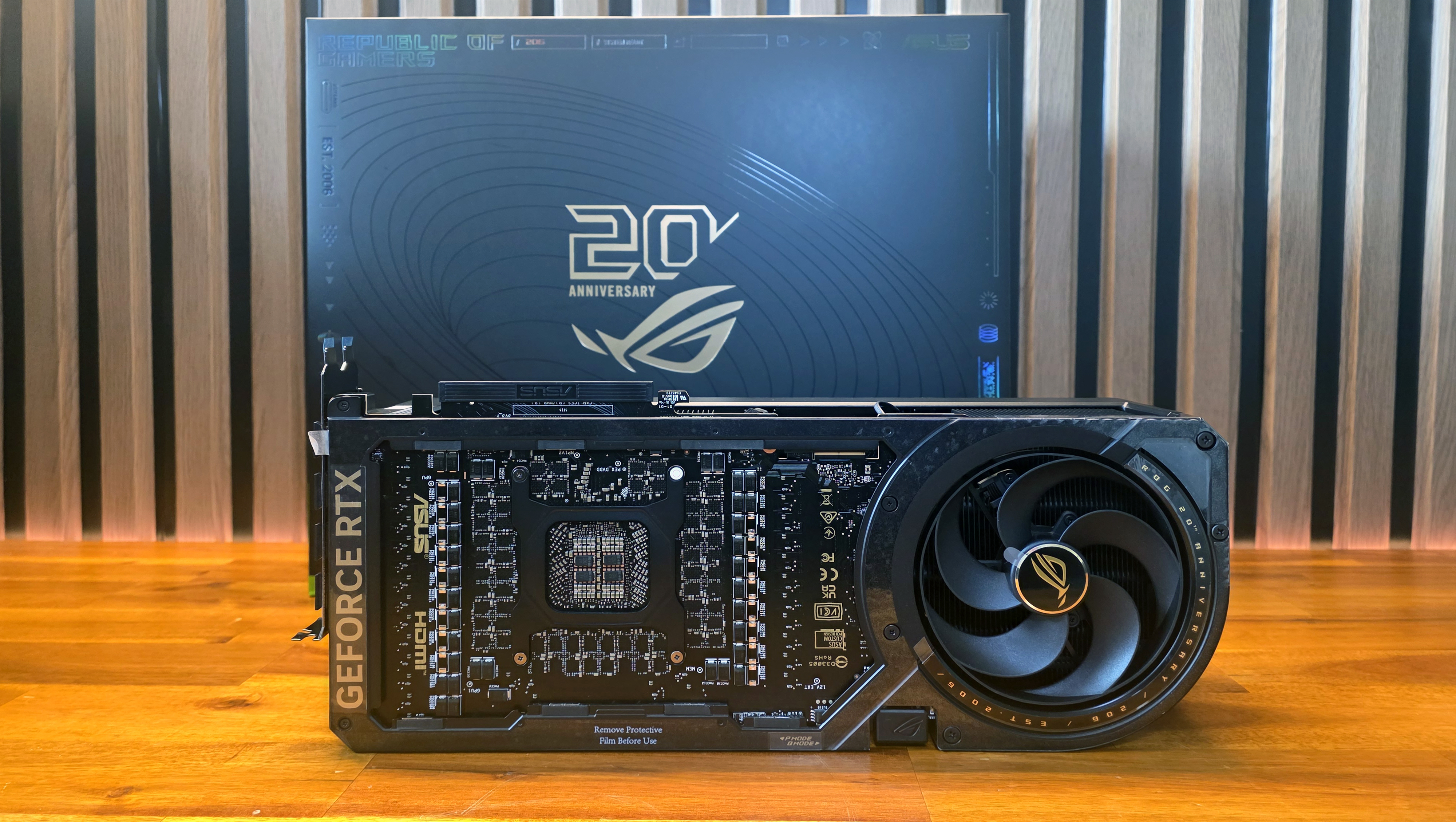
This Astral is a world-beater of its own, though. It features an upgraded design, with a second BTF power connector to pull up to 800 watts, a glass backplate, and a curved OLED screen. It has faster clocks, hitting 2,750 MHz, with a 4.7-slot design. Performance-wise, the OG Astral is beating world records, so this is a card that you can really push to its limits (if you're not scared of charred power cables).
Tom's HardwareTom's HardwareTom's Hardware
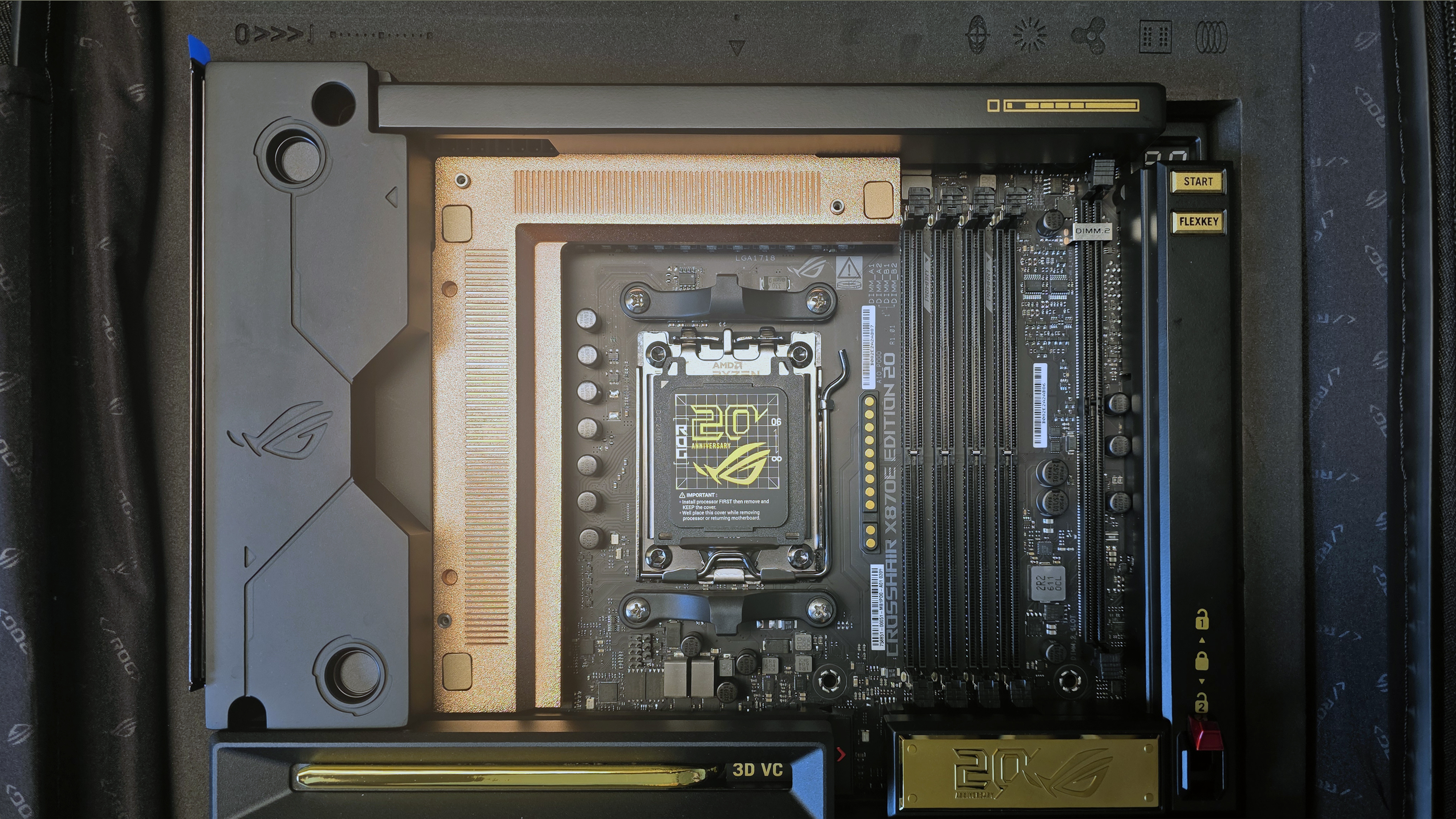
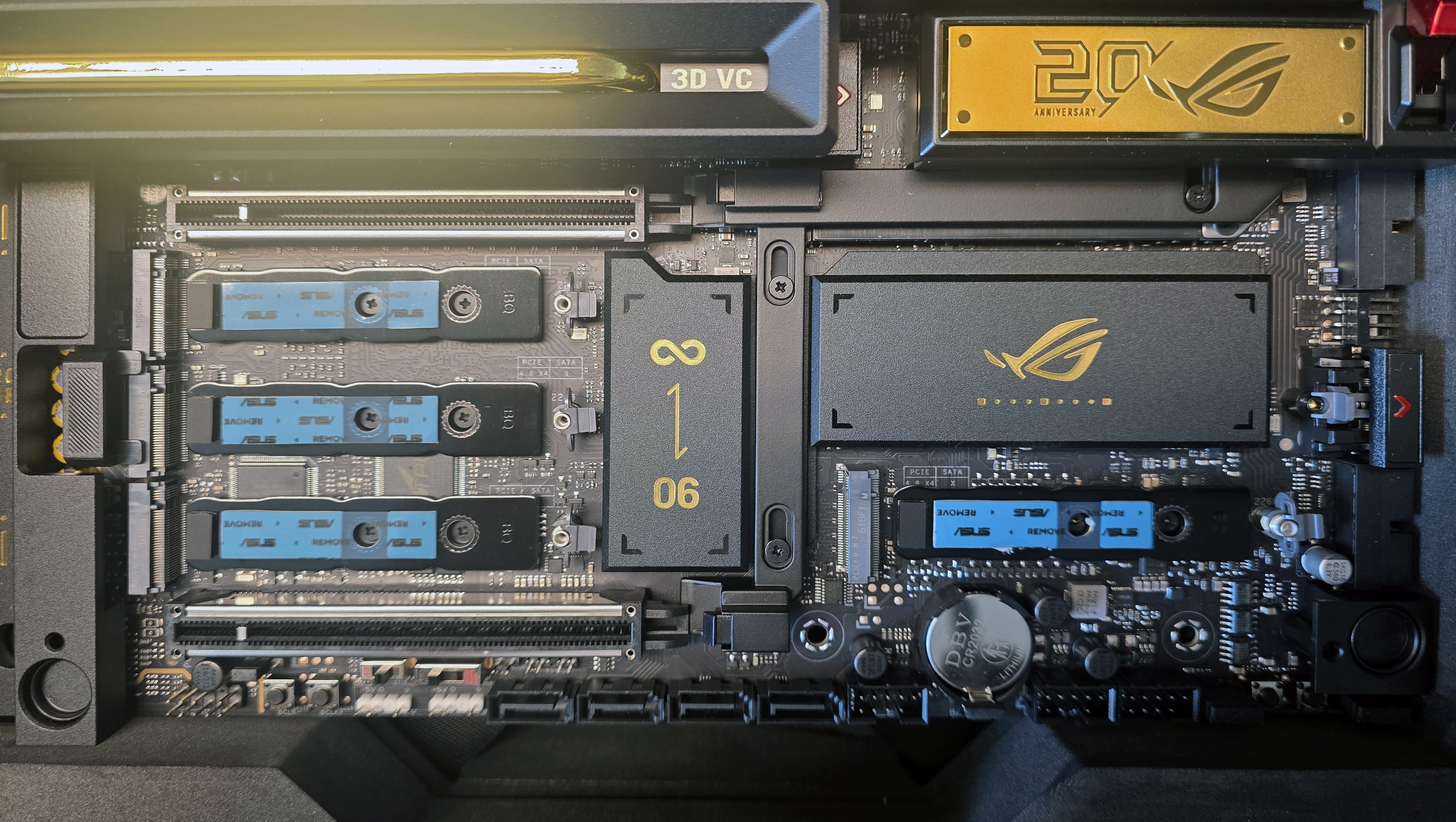
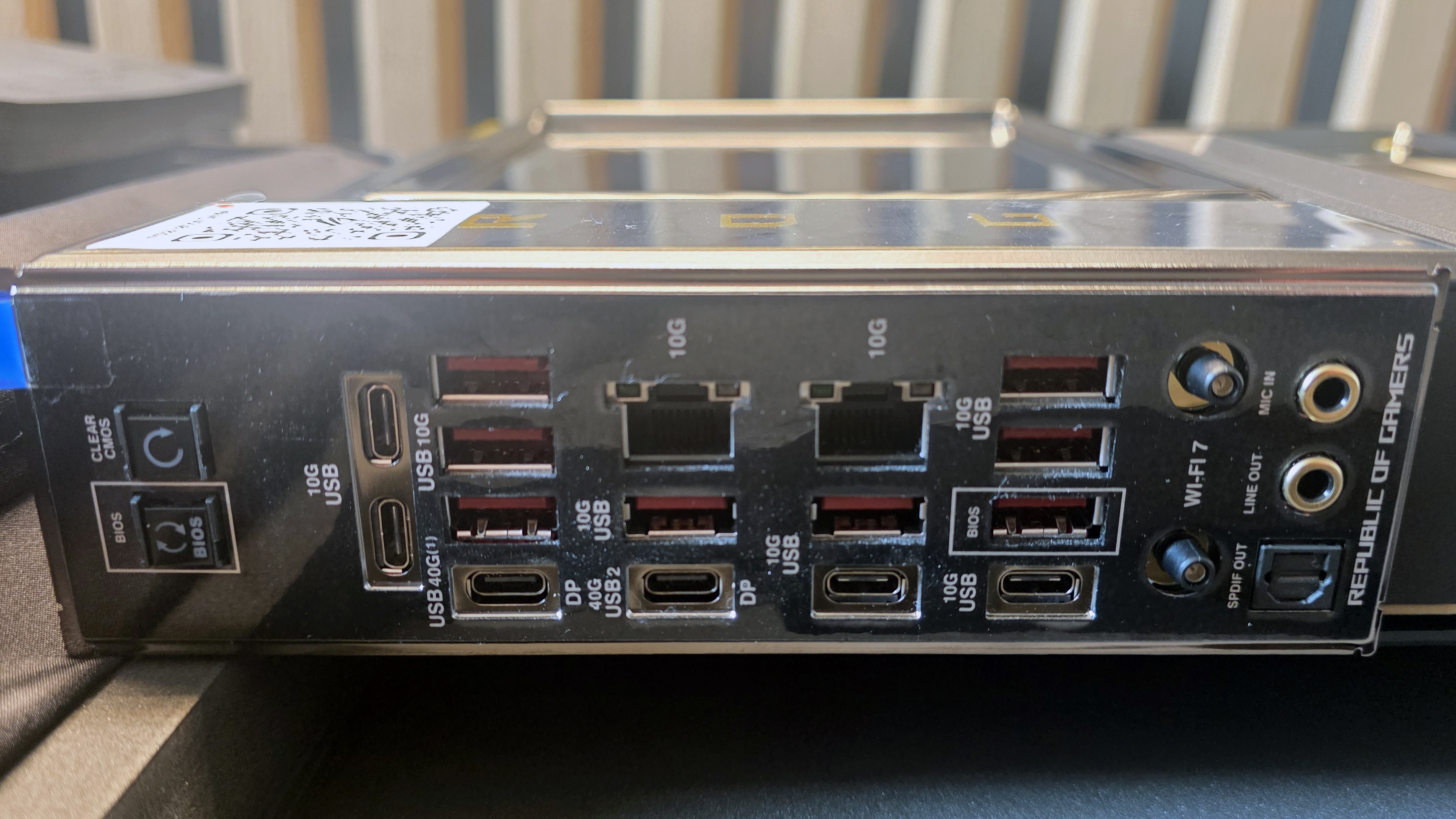
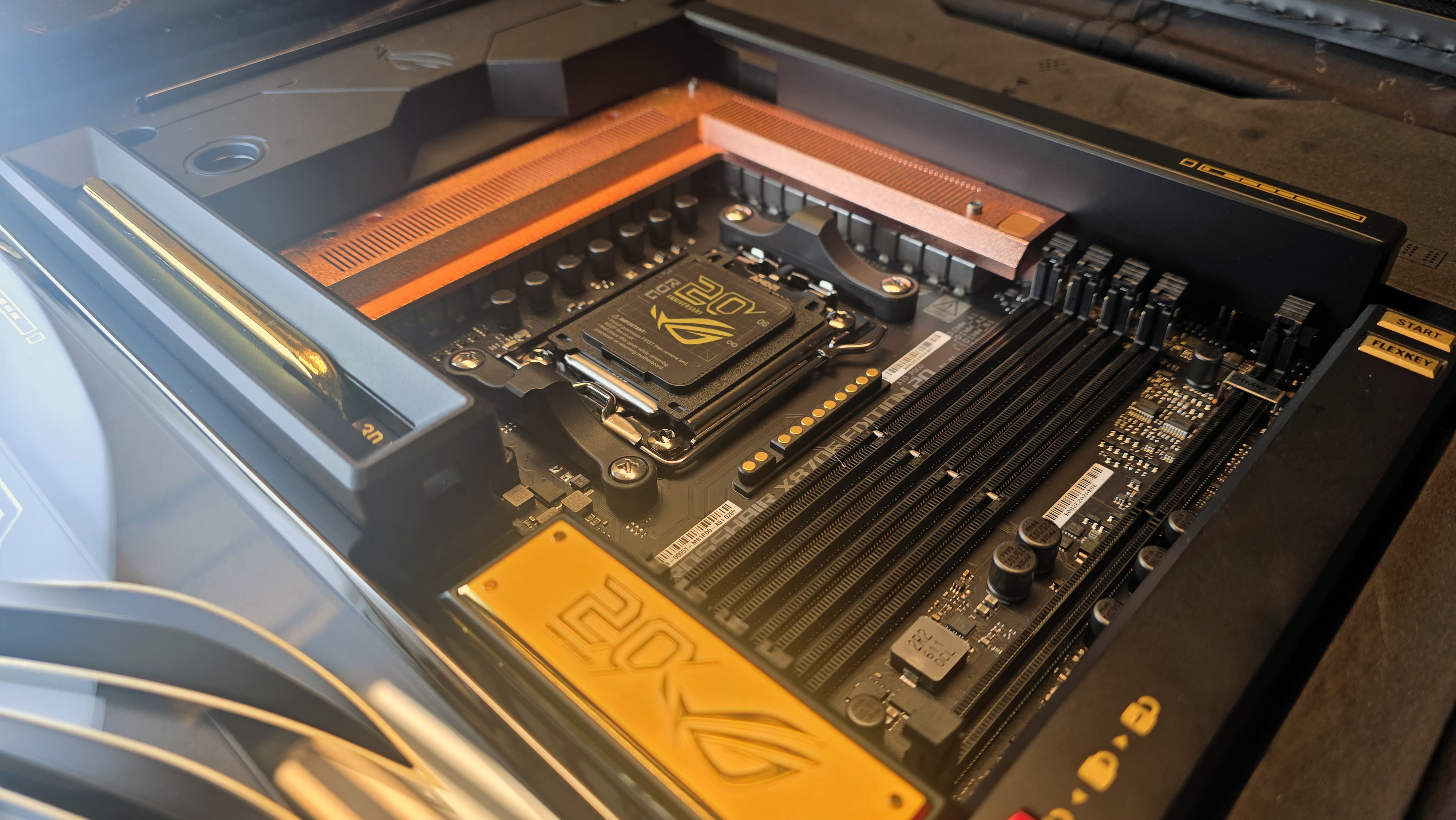
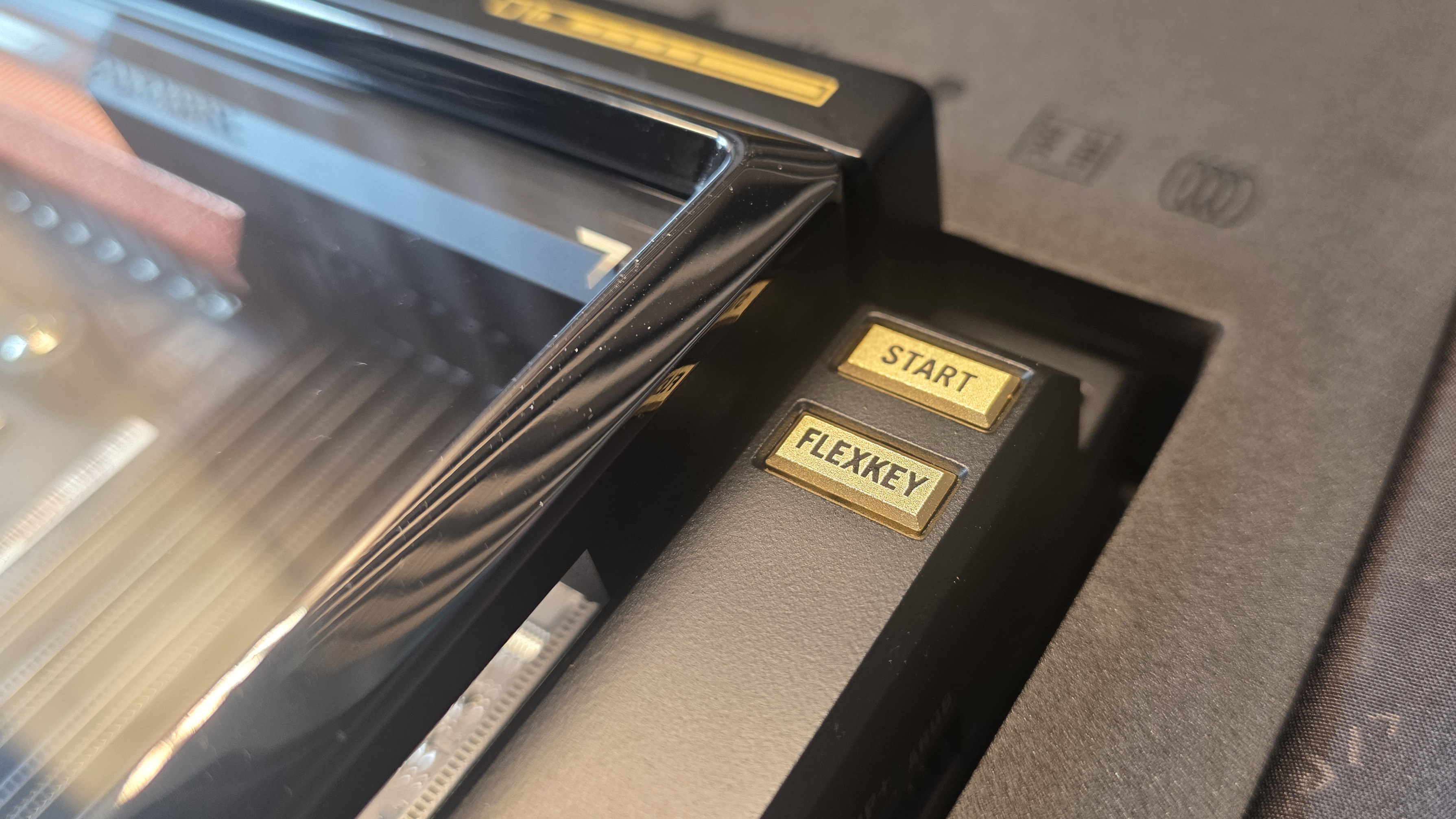
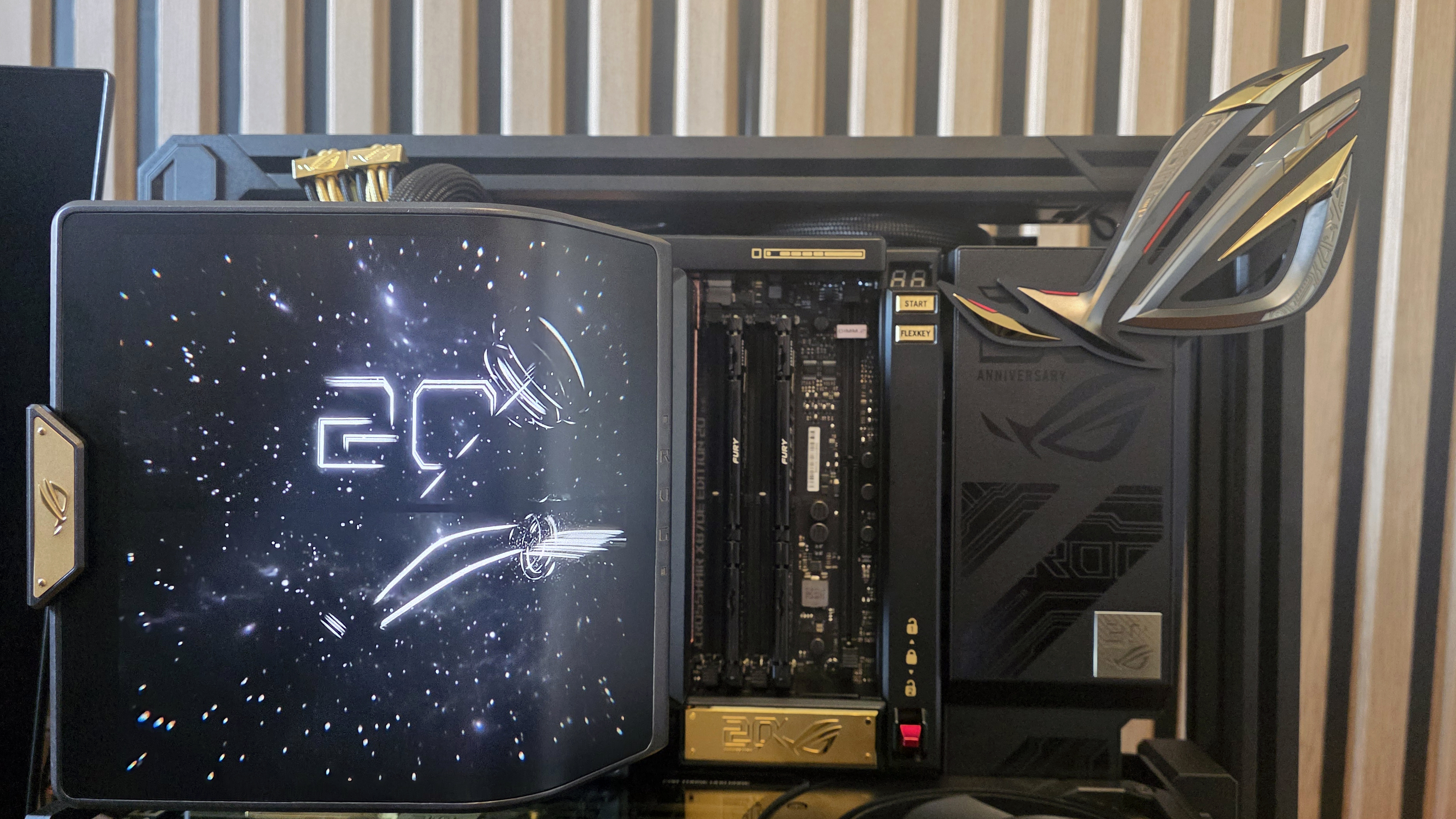
The $6,000 GPU aside, you're also getting a $3,299 Asus ROG Crosshair X870E Edition 20 motherboard. Asus has a few variants of this, but the Edition 20 board here has (alongside some beautiful gold accents) supports for up to nine M.2 SSDs, with five slots on the board and more via add-in cards. There are six USB-C ports, plus two 20 Gbps front-panel connectors. Large copper VRM heatsinks work with its integrated AIO cooler, with a curved 6.7-inch AMOLE screen and a huge copper heatsink. Probably overkill, but for $3,299, you want it all.
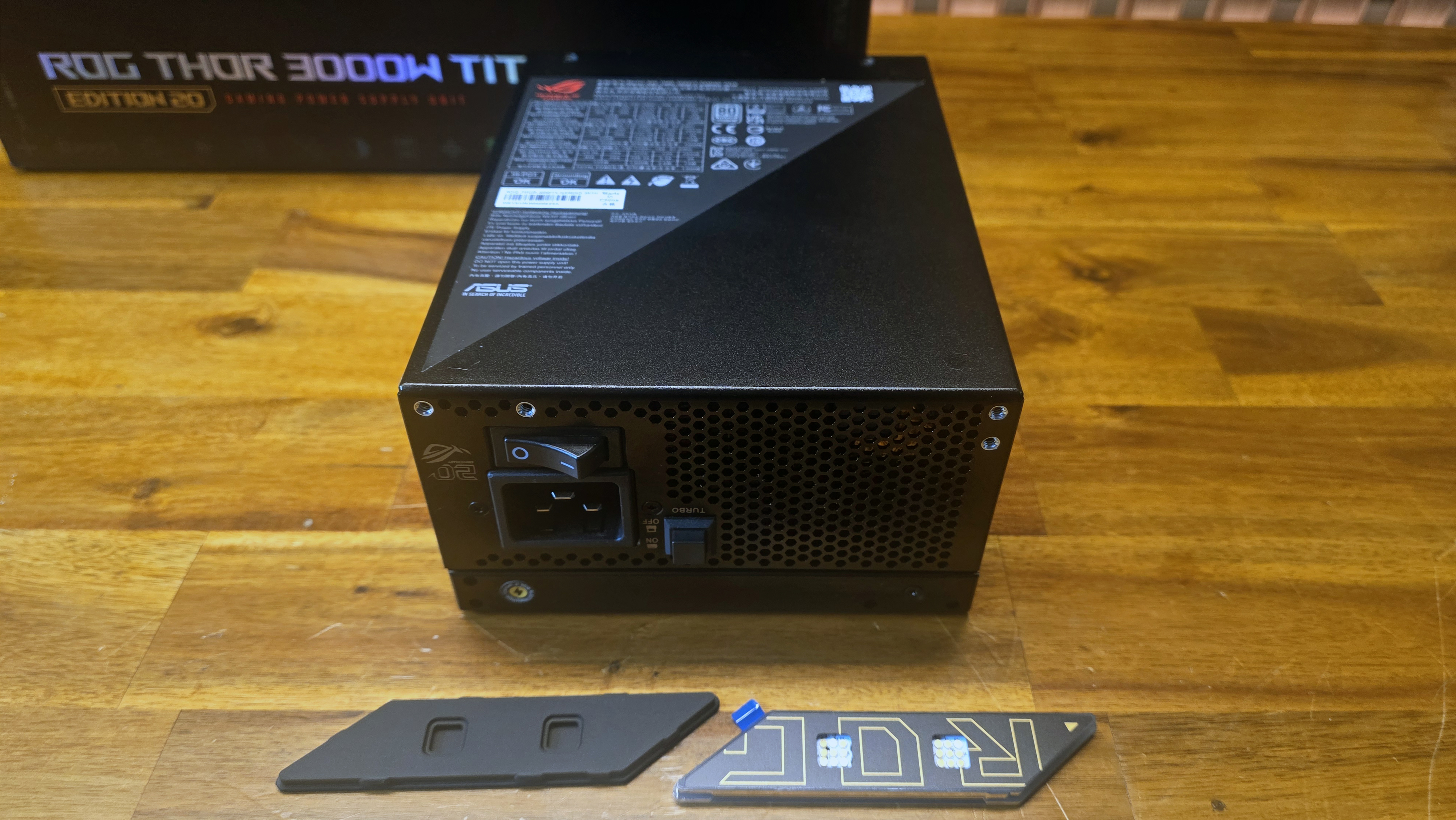
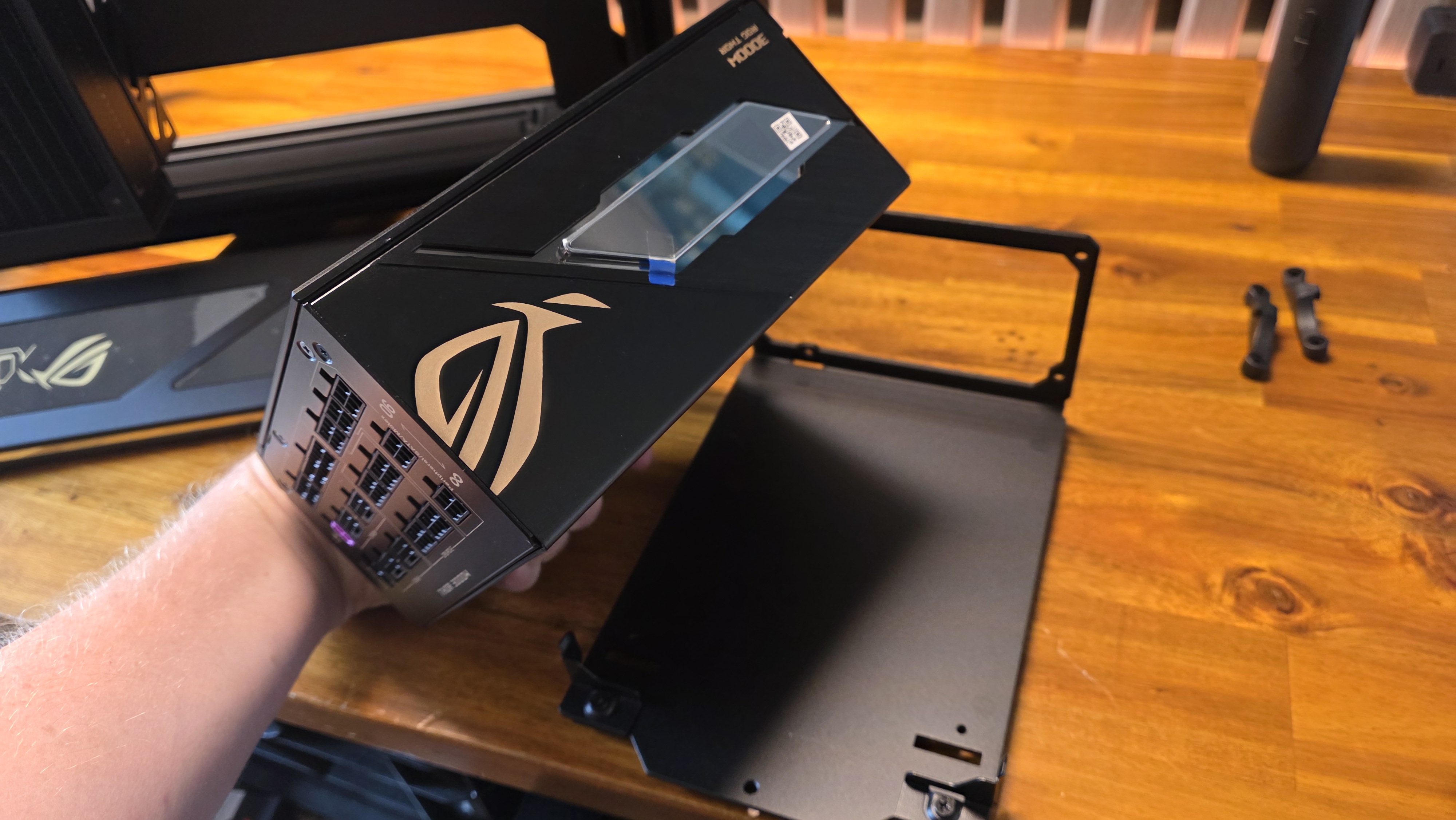
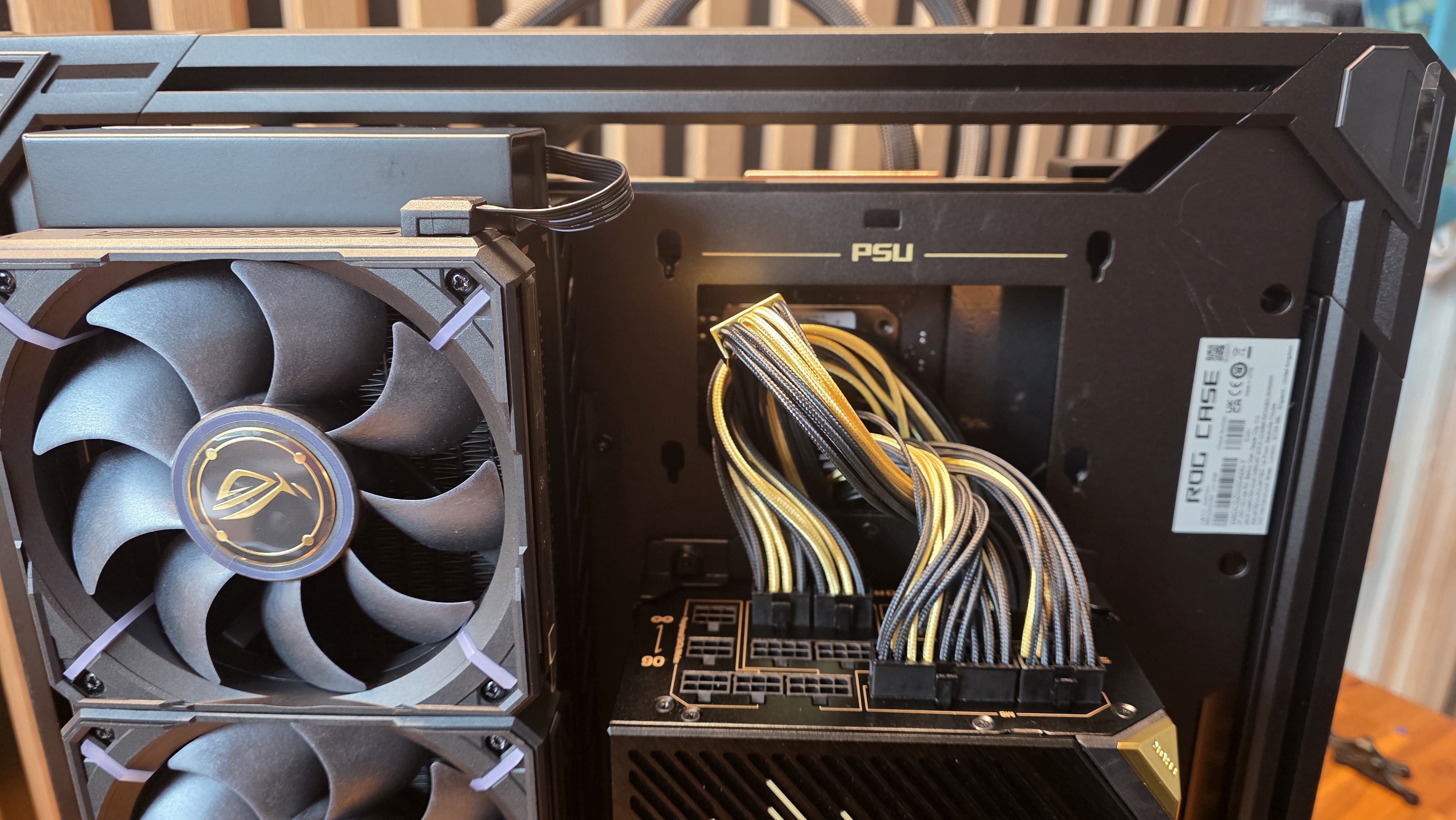
You're also getting a $899.99 Asus ROG Thor Titanium III 3000W Edition 20 power supply. It's a PSU, but 3000W isn't to be sniffed at, and it'll certainly provide enough power for the monstruous Astral RTX 5090. It’s fully modular, with another OLED display (magnetic, this time) which you can mount either side, or extend with a cable.
(Image credit: Tom's Hardware)
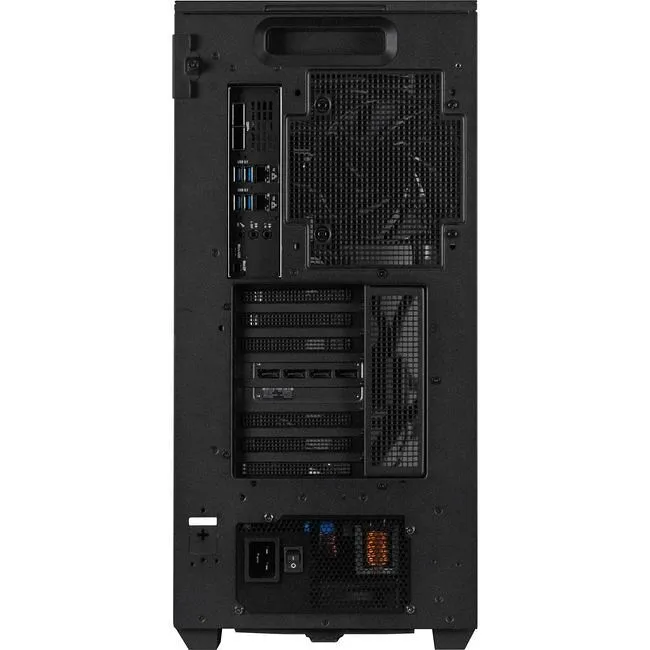
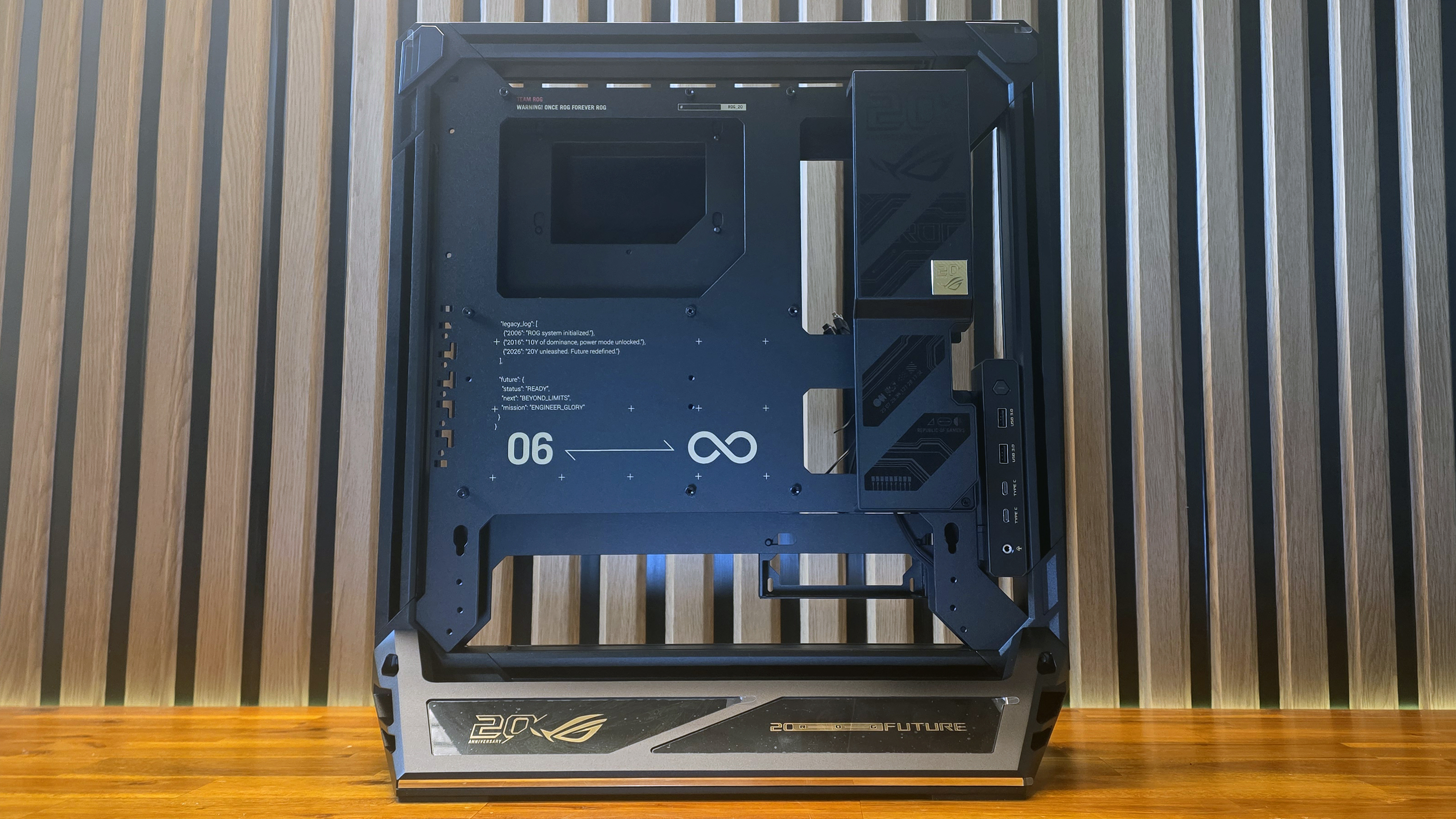
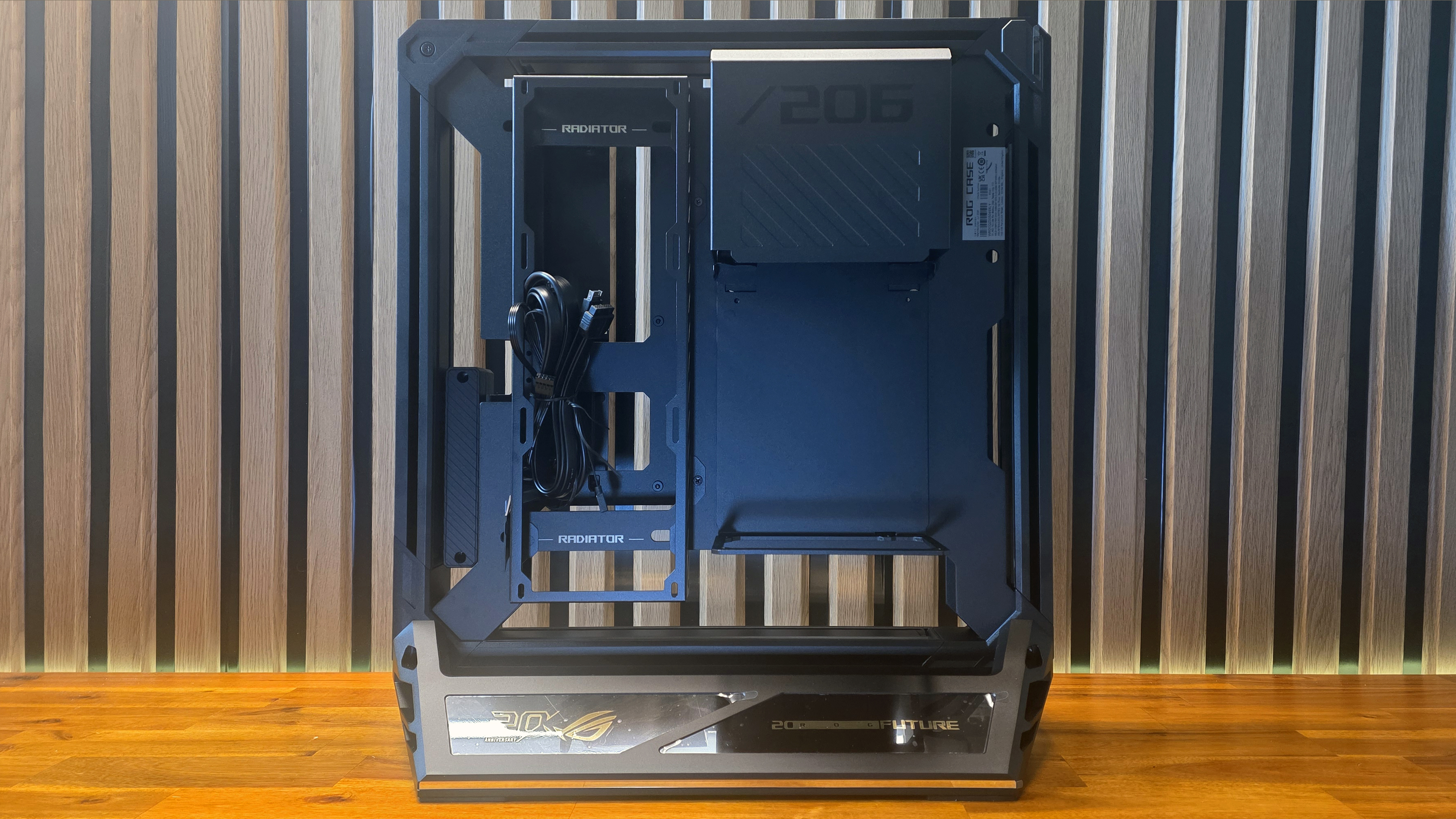
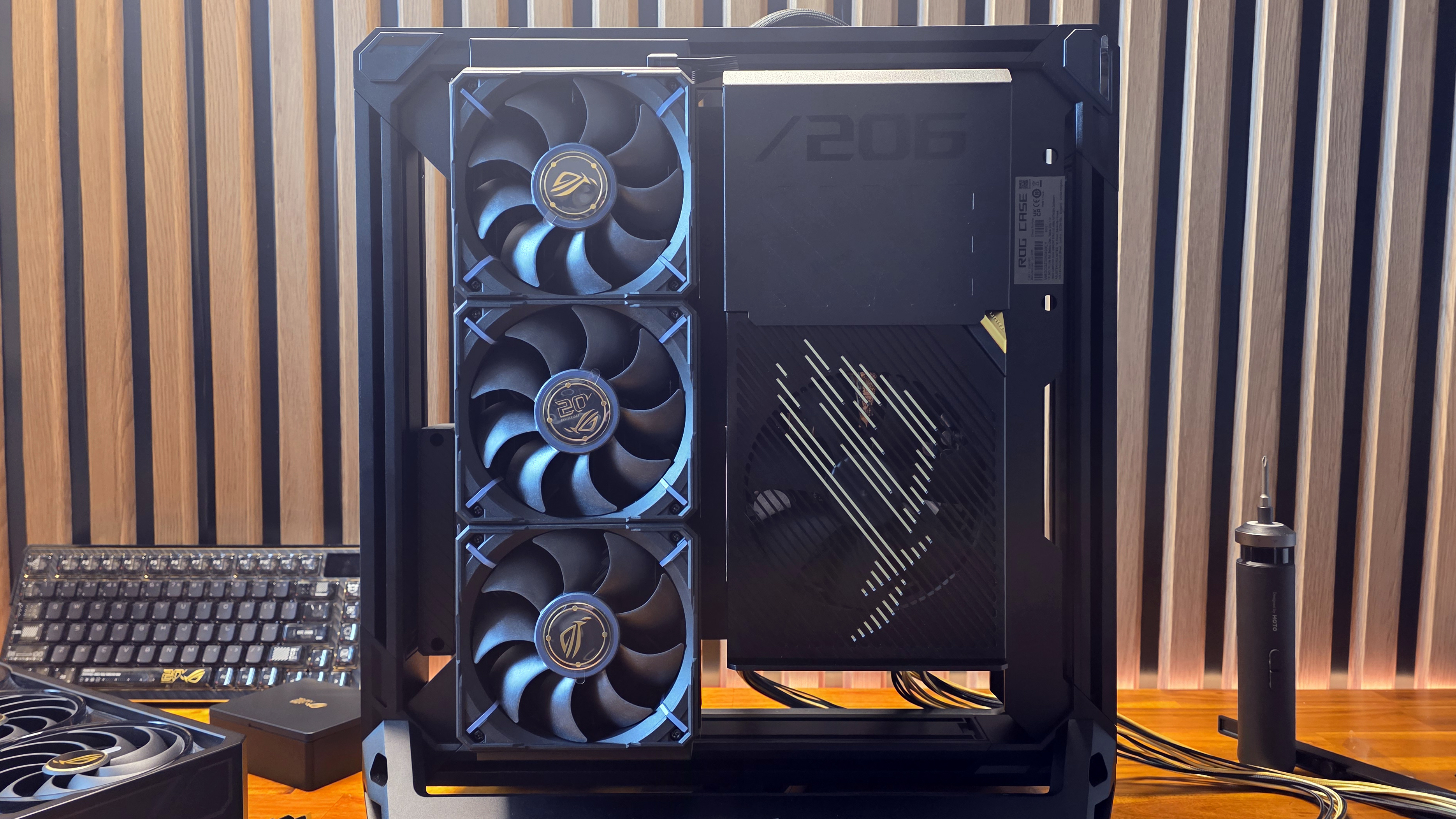
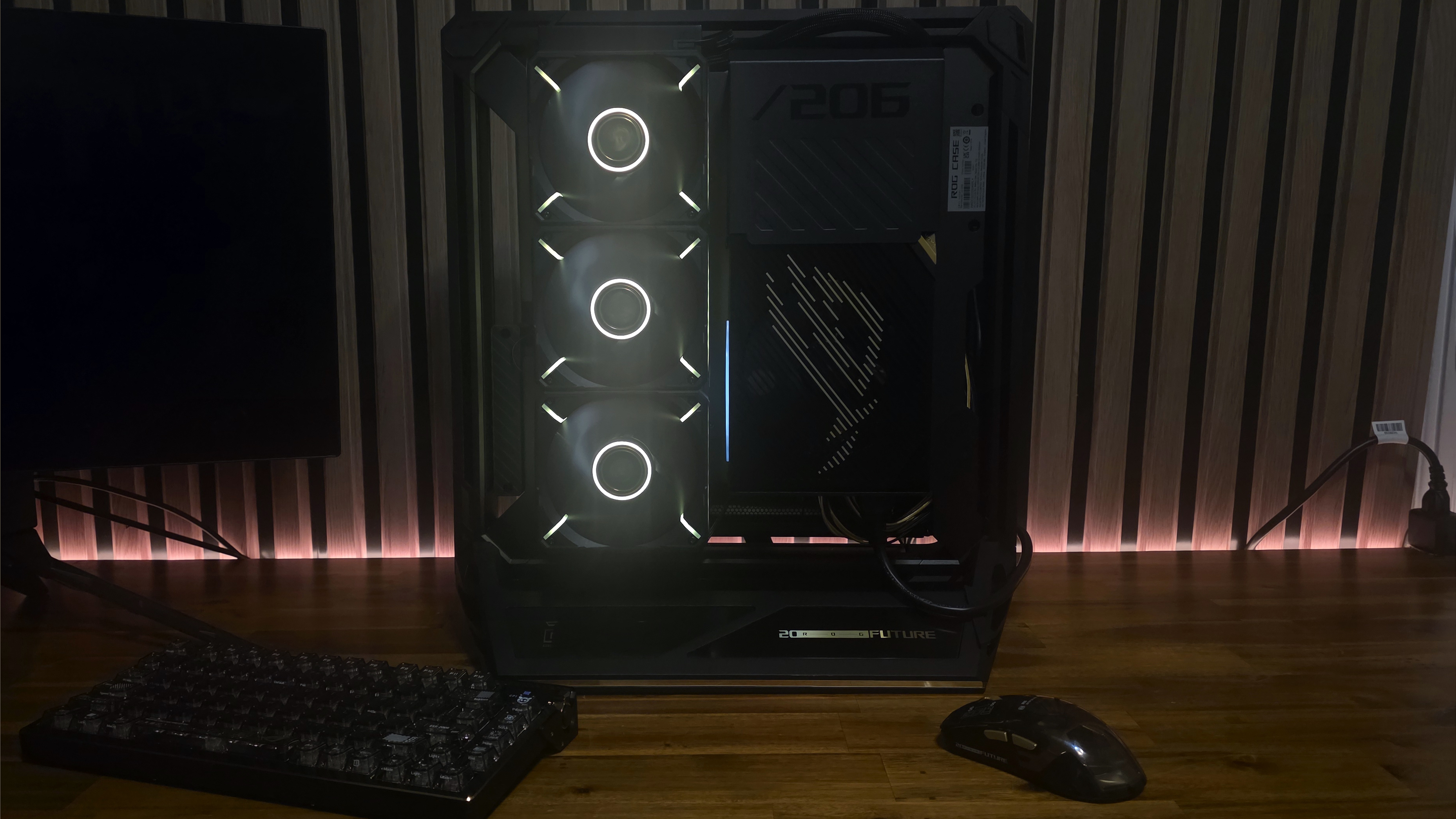
Finally, you get the Asus ROG GR20 open-frame EATX PC case, set at $649.99. This is a totally new design from Asus, supporting large EATX motherboards, and you can stand it vertically or horizontally. There's a crossflow fan to blow cool air onto the GPU, RGB light strips, and several fast USB ports. It's mostly aluminum, with some plastic, magnetically attached cosmetic covers around the sides.
$10,849.96 for this Asus combo kit is so much money for anyone to spend on a gaming PC build, but, unfortunately, we are where we are. As our Asus ROG Edition 20 build write-up mentions, this is a kit that few will buy and own. AI is pushing gaming PCs to new heights, and it's a real shame that we're now seeing current-gen flagship GPUs like the RTX 5090 becoming so rare to buy that combo offers like this are, perversely, almost good value. If you're spending $6K or more on a GPU, though, then it might make sense. You won't find an RTX 5090 cheaper (or, probably, at all, at least for some time) so if you want the best gaming PC build that you can find, this is the kit you'll want. For once, we don't imagine this will sell out soon, but Newegg might pull the deal at any point.
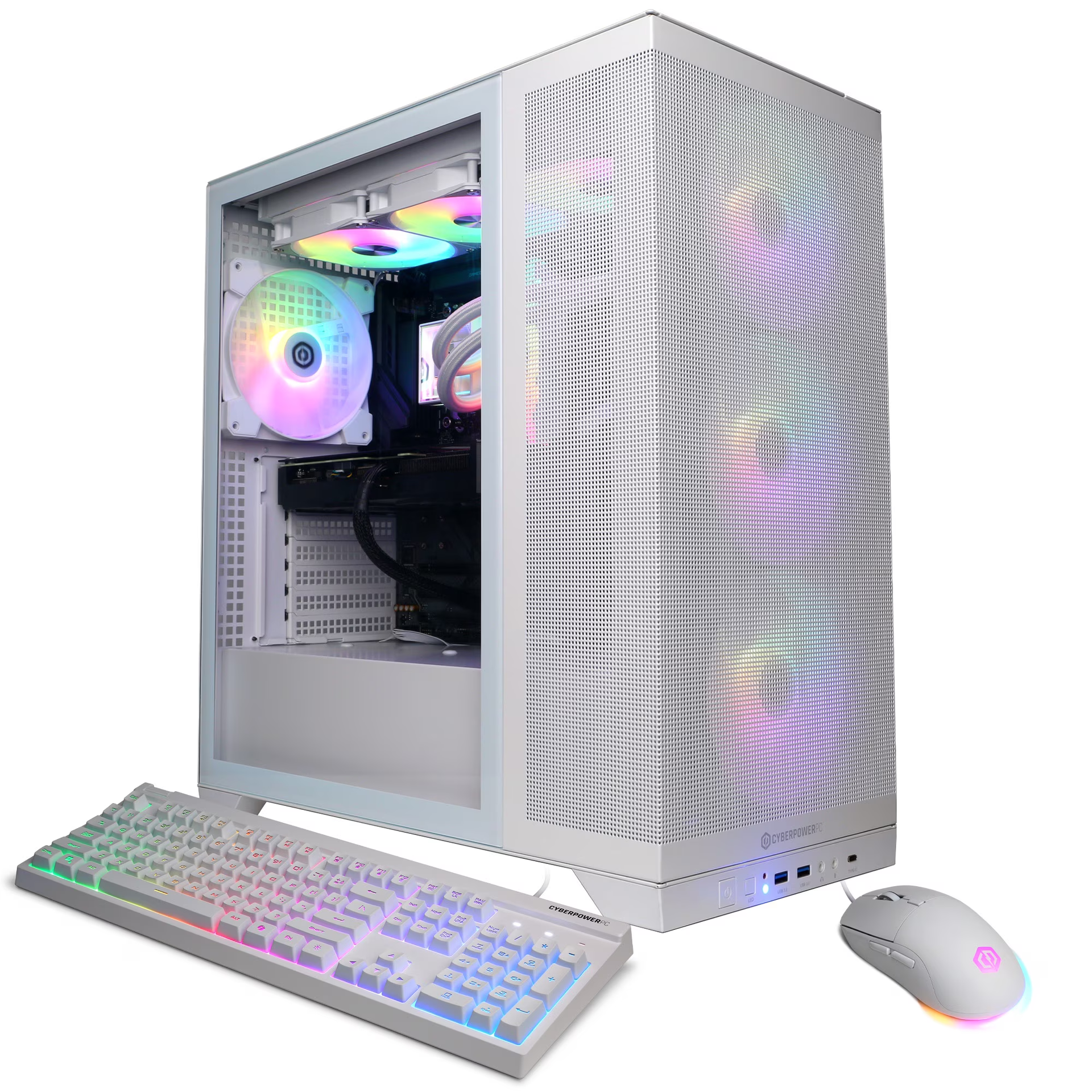
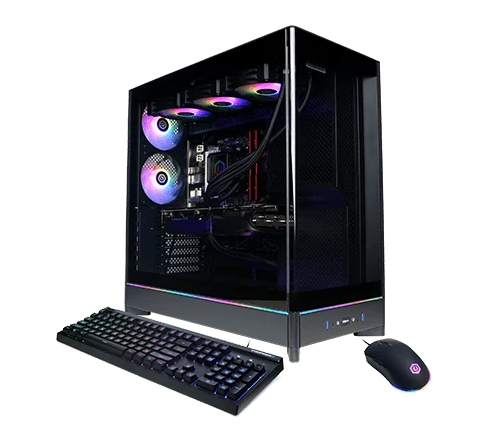
A pre-built gaming PC with one of AMD's top X3D chips inside is always going to be a formidable option, especially if it's coupled with a current-gen Nvidia GeForce GPU. That's exactly what you're getting with this all-white CyberPowerPC machine, down to $1,859.99 thanks to a $560 discount, that ships with a 9800X3D, RTX 5060 Ti, and 32GB of DDR5 RAM.
That's a serious set of specs with few compromises to think about in a market that's seen huge price rises over the last 12 months. Building a new gaming PC has become far more expensive than buying a good pre-built, and the specs you're getting here set you up with a rig that'll let you play games at 1440p at high frame rates and the best graphics presets for years to come. This particular rig scored 4 stars in our CyberPowerPC Gamer Supreme review, with praise for its performance and room for upgrades later.
Featured in this rig is one of Nvidia’s current mid-tier graphics cards in the RTX 5060 Ti. It ships with 4,608 CUDA cores and a boost clock speed of 2,527MHz, along with that all-important 16GB of GDDR7 VRAM. Unlike the RTX 5090, this RTX 5060 Ti only requires a single eight-pin PCIe connector to deliver power, so you won't need a huge amount of electricity to run it.
Our RTX 5060 Ti 16 GB review is clear that this GPU is a very good option for mid-tier builds, with ray tracing performance proving to be much better than its rivals. You've also got the full support of Nvidia DLSS 4, giving you access to functionality like multi-frame generation to give your rig a frame rate boost in the most resource-heavy games, especially if you want to try and push to 4K.
At this price point, though, 16GB of VRAM is the serious winner. You're giving yourself much more headroom for better performance than the budget-friendly 8GB GPUs that you'd otherwise have to switch to. That'll mean that stable gaming at 1440p will be easier to achieve.
Couple that with the eight-core AMD Ryzen 7 9800X3D. This continues to be the best CPU overall for gamers, even if AMD has launched faster models since, because of its price-to-performance value. It continues to offer outstanding gaming performance, as the CPU benchmarks show, with 1% low frame rates that ensure the smoothest possible gameplay. The power of AMD 3D V-Cache, stacking extra L3 cache (96MB in total) so that games don't need to drop down to the slower system RAM, gives you a serious performance boost.
You won't see much compromise elsewhere, either. 32GB of DDR5 RAM means you won't face memory bottlenecks, and a 2TB Gen 4 SSD gives you good storage capacity for several big game installations alongside Windows. You're also getting Wi-Fi 6 and Bluetooth 5.2 wireless connectivity, along with Gigabit Ethernet for a wired setup.
The $1,859.99 sale price for the CyberPowerPC Gamer Supreme rig on sale here is a good price given its performance potential. You're getting a solid 1440p-capable gaming PC, with the best CPU and a formidable GPU to match, with plenty of room to upgrade in the future, and a lot of longevity until then. Don't expect this $560 discount to be around for long.
A tech enthusiast says that they managed to put together a home lab-worthy Proxmox server using PC parts scavenged from the nearby county landfill. Furthermore, Tsuto told fellow Redditors that they now routinely raid the dump’s separate electronics recycling area once a week. We can’t blame them; their gallery of liberated hardware includes plenty of valuable trinkets like SSDs, HDDs, GPUs, even RAM, complete laptops, and more.
‘It’s wild what people throw away these days,’ says the successful tech scavenger. Tsuto seems to admit that many of the bits and pieces are “on the older end,” but even folks paying cold, hard cash at retail in 2026 are competing for components like RTX 3060s, AM4 motherboards/CPUs, and DDR4. That’s how hard the components shortage is hitting folks.
Tsuto also seems rather pleased with an Asus ROG laptop found at the landfill site. “The Asus ROG laptop just needed a $25 battery off Amazon and still has decent enough specs for casual gaming for my son,” they comment. Pixel peeping Tsuto’s gallery indicates that this portable gaming laptop packs an Intel Core i7-4710HQ (4C/8T) supported by 16GB of RAM, and allied with a GeForce GTX 860M 2GB GPU. It will be playing less demanding titles such as Stumble Guys, we see.
In a follow-up post, the Redditor explains that one of their home lab projects that has been built from the dumpster finds includes a Proxmox server. It’s a dusty-looking machine (it’s a shame Tsuto hasn’t found an air duster yet?), but it is ample for their needs. The ‘new’ Proxmox machine is said to pack in “Two mirrored 256GB SSDs for the OS, one extra 1TB SSD for fast storage, and three 2TB HDDs in RAID1 for ZFS storage.”
Despite the lavish tech finds from this landfill, Tsuto says they actually bought some key components off Amazon to finalize the system – a Core i7-7700 and 64GB of RAM. We hope the RAM wasn’t bought in recent months, with the prices as they are.
Where I live, you might as well rob a bank as try and swipe electronics from the local council recycling centers. There’s security and cameras around these trash = treasure hoards, which can be particularly appealing to folks who appreciate retro computing.
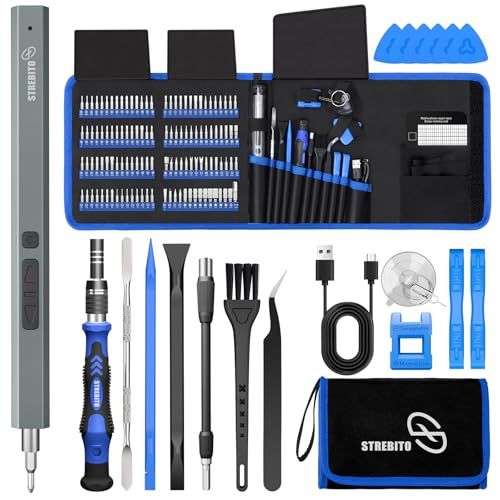
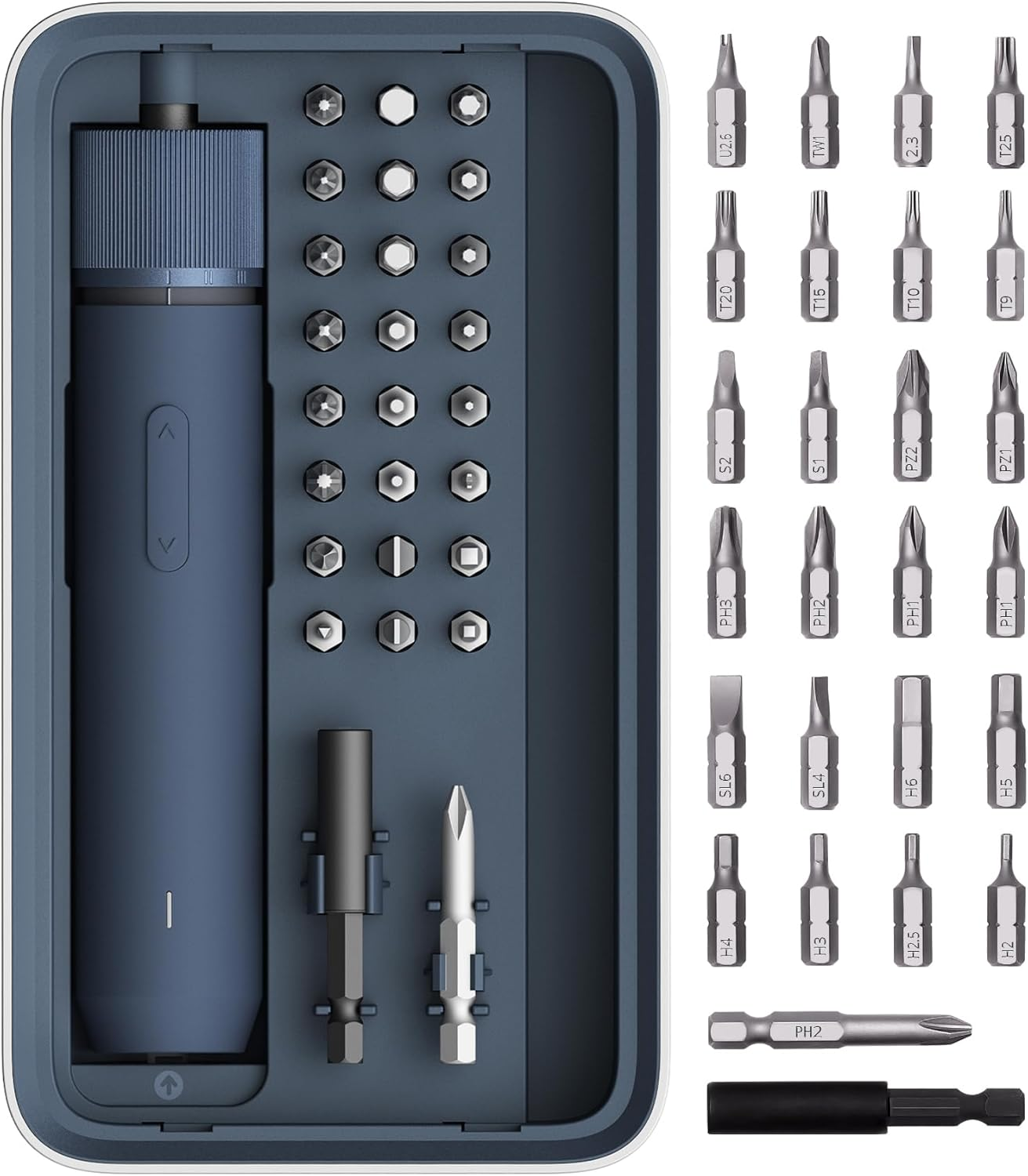
If you need to kickstart your hobbyist toolbox with a set of kit, then you'll want to take advantage of this Amazon deal. This Strebito 144-in-1 kit is just $39.99 right now, which gives you a 20% saving on its usual price for a set that includes both a precision and an electric screwdriver, along with 22 maintenance tools and 120 different magnetic driver bits to work with.
Basically, this is the ultimate starter kit for anyone looking to build or repair any kind of electronics, including PCs and laptops, and at an affordable price. You're gaining a complete set with two different drivers, a whole set of bits, built-in LED lighting, and a set of tools to help you clean, scrape, and adjust for any kind of project you're working on.
144-in-1 Electric Screwdriver Set: was $49.99 now $39.99 This 144-in-1 electric precision screwdriver set comes with 120 magnetic bits and 22 repair tools for various disassembly and maintenance tasks, along with a precision screwdriver and electric driver for your PC building and hobbyist repairs.View Deal
The big deal here is those two drivers, which you'll each need for two different types of repair jobs. The mini electric driver has a 350 mAh battery, which you'll be able to charge up within an hour using a USB-C cable.
Specs-wise, it features adjustable torque options between 0.15 and 0.5 Newton-meters, along with speeds of 200 RPM. It's a good option for getting into tight spaces like a PC case, with a built-in LED light to help you see better. As for the precision screwdriver, that gives you a much higher set of torque, up to 7 Newton-meters in this case, for when you need to apply a bit of heavy pressure to get the job done.
Worried about not having the right bits? Not with this kit. 120 different options are available here, covering all of the major head styles. You've got flathead, Torx, Phillips, and Pozidrive bits to choose from here. There's even a magnetizer/demagnetizer tool to help your drivers keep hold of the screws, but if you're worried about the magnets damaging your electronics, you can demagnetize them, too. There's a 5.7 x 3.3-inch magnetic project mat included here so that you can keep it all organized while you're building or repairing, too. This Strebito set also includes brushes, scrapers, and a suction cup to round out the 22 extra repair tools, which you'll find useful for taking apart your electronics.
All in all, the $39.99 price for this Strebito 144-in-1 precision screwdriver set makes it an affordable must-buy for someone who needs to expand their kit. As we head towards the holidays, you can even put it aside as the perfect gift for the DIYer, hobbyist, or PC builder in your life, too. With Strebito's lifetime guarantee included, you'll be covered if you have any issues.
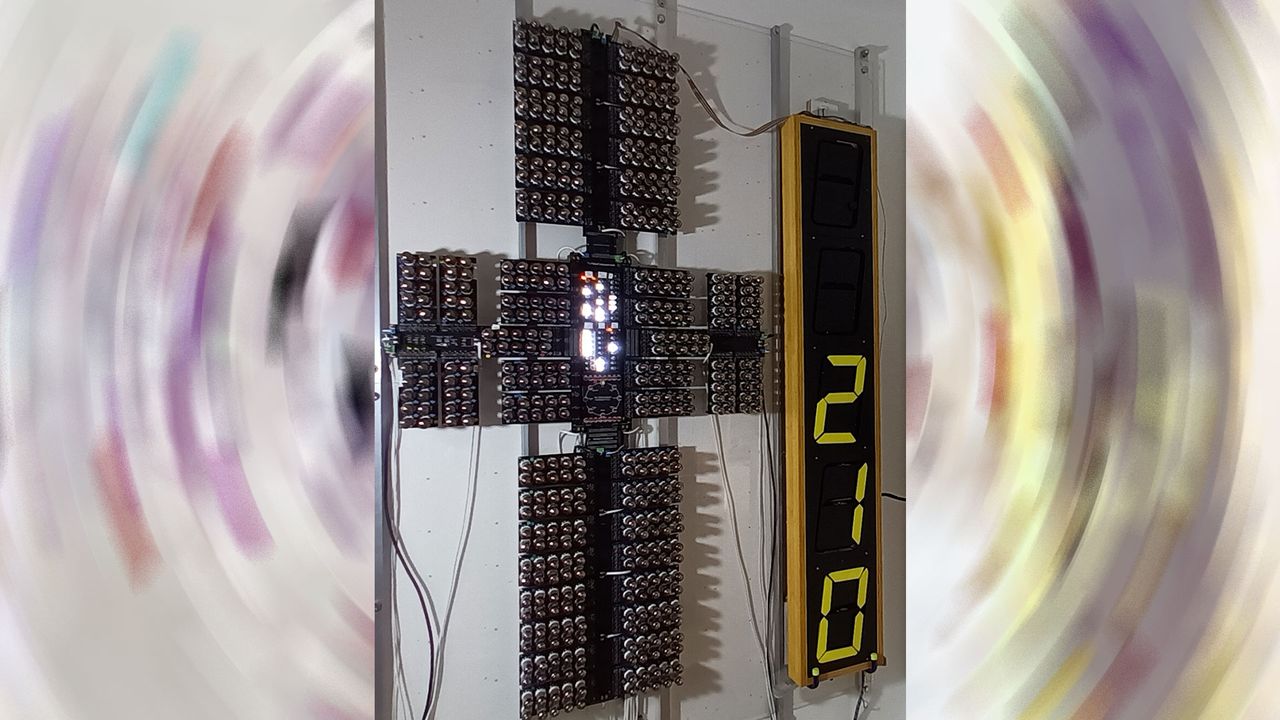
A self-taught electronics tinkerer called Mike recently shared details of his retro-computing project on Hackaday. It certainly is retro, as the design eschews modern computer component niceties like microprocessors or microcontrollers. Instead, Mike’s computer is “a modern 8-bit design, built with recycled 1950s vacuum tubes.” It uses 460 Soviet-era 6N3P (Cyrillic 6Н3П-ЕВ) double triode tubes, which were manufactured around 50 years ago, combined with era-appropriate germanium diodes.
The wall-mounted vacuum tube-based computer you see in the video above is apparently the third tube computer Mike has engineered this decade. Previous iterations have sometimes come to an explosive end…
Of course, there have been a number of famous historically significant computers based on arrays of these tubes or valves, which offer similar functionality to the transistors that largely succeeded them. There are plenty of reasons the computer industry moved from tubes to transistors, and then silicon ICs, but enthusiasts aren’t bound by such practicalities.
Mike notes a few drawbacks with vacuum tubes, actually. Most notably, this simple 8-bit computer design needs 460 of these fragile, rather bulky, white-hot glowing tubes to run. Furthermore, these used/old stock 6N3P models only have about a 500-hour operational life, so a few handy spares are required, as is a stepladder to reach the whole array of tubes, which may fizzle out at any time. The tubes run hot, so Mike's computer room is always toasty whether the season makes that a nice thing or not. A fire extinguisher is always kept handy, and the room smells of burning dust.
Performance and capabilities are about as limited as one might expect. Mike notes that starting The Tube Computer (MK3) means waiting 10 to 15 mins after power-on for the machine to literally warm up. This is followed by a mandatory reset to get the tubes into a unified operational state.
For compute functionality, Mike’s Tube Computer architecture uses an arithmetic logic design to perform just the five essential functions needed for its instruction set (sum, carry, not, increment, and XNOR). Meanwhile, its instruction cycle relies on a non-pipelined architecture with a six-step fetch and single-execute cycle.
Components:
460 × 6N3P vacuum tube
46 × 10 tube pcbs
1 × 190cmx130cm 4mm acrylic panel
3 × 2m 30mmx30mm Aluminium box section
5 × Backplane pcbs
User interaction with this wall-mounted homemade computer varies depending on the program in use. Currently, Mike has it set up to run an Airship Simulator piloting a British R80 airship from Brighton to Paris. “By pressing controls on the image of the bridge of the R80, you can direct the airship software,” says Mike. “These membrane buttons simply put 5 volts directly to the input board of The Tube Computer. You can control the ballast, gas release, engine power, elevators, rudder and the bow mooring gear, which is used to release the airship from the tower.”
Another charming feature of this admittedly “build it now, fix it later” computer design is the very audible accompanying ex-British Rail flip-digit display. That add-on will invoke another entirely different flavor of nostalgia for some of our readers.
The DDR5-6000 RAM in this PC is currently worth $400 alone, making this build a good value proposition over buying the parts yourself. Likewise, the GPU is worth $450, meaning that more than half your build cost is covered by just these two parts. This PC would be perfect as a beginner gaming rig or mid-range replacement for a DDR4 gaming PC. With a Raptor Lake refresh CPU and Nvidia's latest GPU technology, it's the perfect stepping stone into modern PC gaming without breaking the bank.
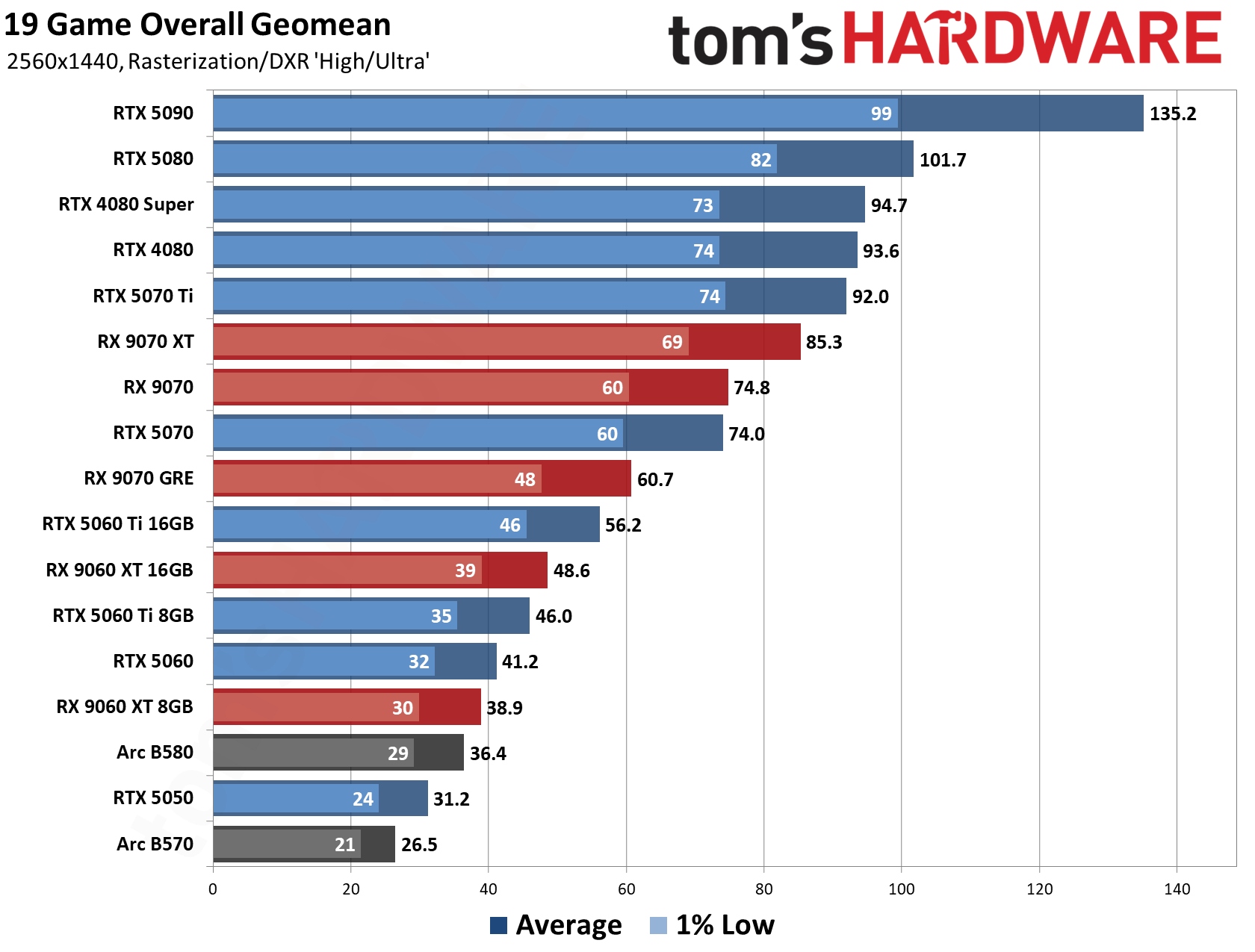
As you can see, without frame generation, the RTX 5060 can put out a respectable 41 frames per second across our 1440p test suite, and easily manages 60 frames per second at 1080p in our other testing. Using Nvidia's DLSS technology, you'll be able to bump that up no problem and enjoy high-fidelity gaming with good frame rates. With just 8GB of VRAM, this card won't be useful for 4K gaming but would make a great upgrade for someone on an older RTX 30-series card or integrated graphics.
The GPU is complemented by the excellent Intel Core i7-14700F CPU, with 20 cores (eight performance and 12 efficiency), perfect for productivity and gaming workloads. The Raptor Lake Refresh CPU offers boost clocks of up to 5.4GHz.
This is a great all-round build at the price point, as evidenced by the strong supporting cast of components. You're getting that all-important 32GB of DDR5-6000 RAM for multitasking and gaming, as well as a 1TB Gen 4 SSD — specifically Kingston's SNV3S — for storage.
The motherboard is an ASRock B760M-CX with room for M.2 expansion should storage prices settle down in the future. You also get a very capable Cooler Master Hyper 212 air cooler, more than enough for this CPU, as well as a 650W 80 PLUS Gold PSU.
It also features Wi-Fi 6E and Bluetooth 5.2, as well as a copy of Windows 11. For the price, this is a really good PC in the current market. You're getting a $300 discount, plus a further $120 off when you use the promo code SSF73457, for a $420 discount total. Thanks to the Intel's Gamer Days sale, you'll also get two free games to enjoy on your new PC: Tomb Raider: Legacy of Atlantis and Star Wars: Galactic Racer, due to be released in February 2027 and October 2026, respectively. That's $120 of free upcoming new releases to enjoy on your new PC.
The individual cost of some of these components makes this a pretty remarkable deal in Fall 2026. The RTX 5080 GPU in this rig alone will set you back more than $1,500 in today's market. The CPU is nearly $500, bringing the cost of just those two components to 2/3 of the build's entire price.
RAM and SSD prices are heavily inflated, which means 32GB of DDR5 would normally set you back $400 right now. Add the storage to the bill of materials, and you've covered nearly the entire cost of this PC before you've added the case, fans, cooler, motherboard, and PSU. With the best CPU for gaming on the market and a huge GPU, this PC is no slouch either.
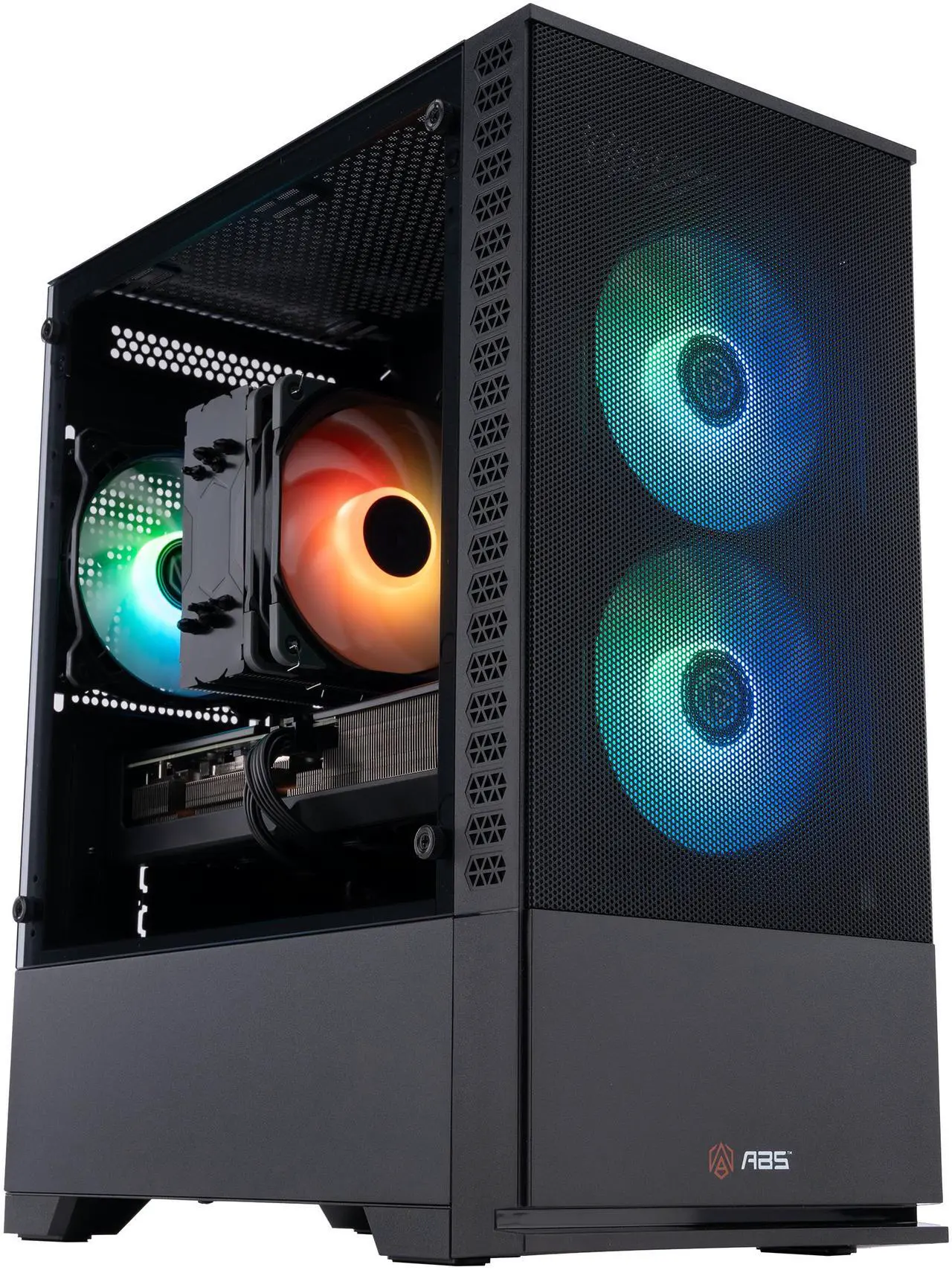
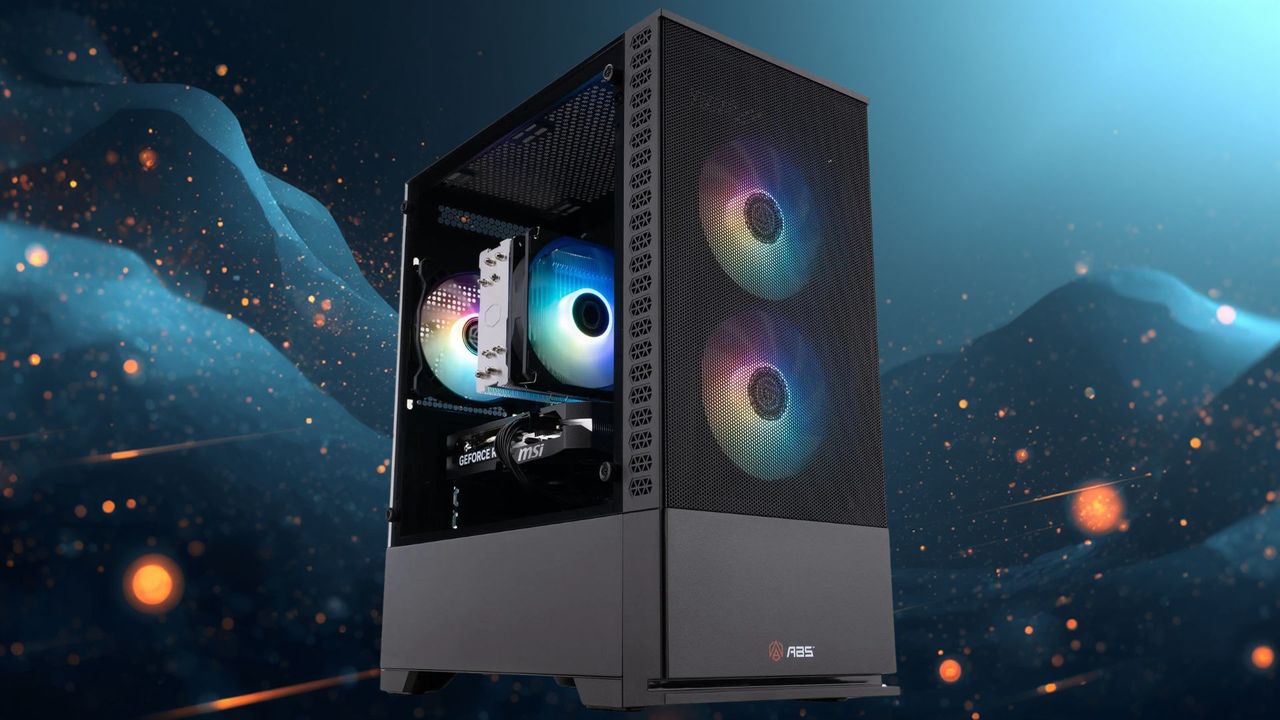
Grab a huge saving on this ABS Kaze II Aqua gaming PC, made and shipped by Newegg. It comes equipped with an AMD Ryzen 7 9800X3D, Nvidia GeForce RTX 5080, 32GB of DDR5 RAM, and a 2TB SSD.View Deal
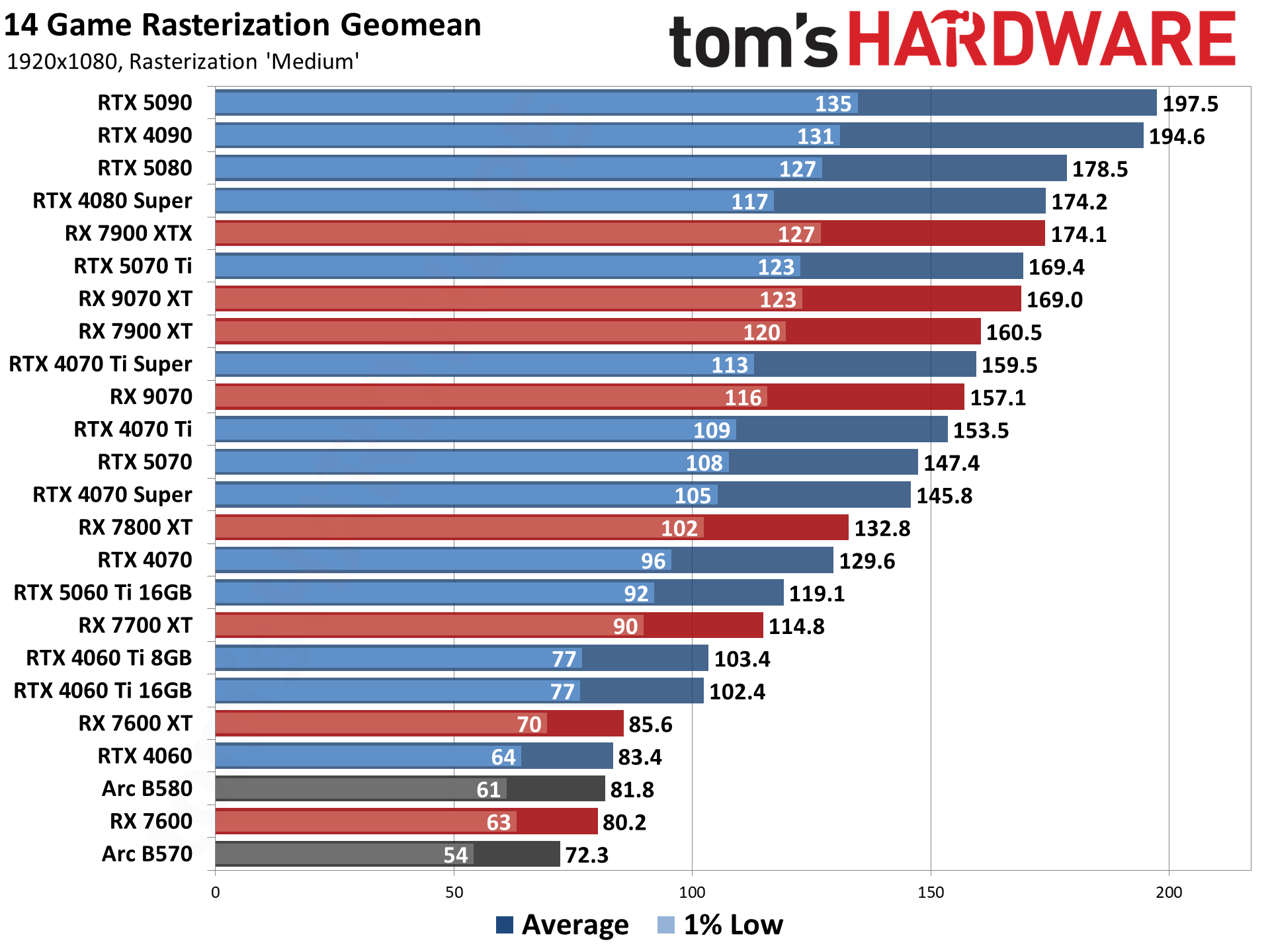
While the 9800X3D is not quite the fastest gaming CPU on the market these days, it is still the best all-rounder by some distance thanks to its combination of power efficiency and performance compared to the 9850X3D. This 8-core, 16-thread CPU chews through gaming titles, even at 4K, thanks to its 3D V-cache. Reducing reliance on slower RAM, this industry-leading tech makes AMD's X3D CPUs the best gaming chips on the market, as you can see from our testing data.
Tom's HardwareTom's HardwareTom's Hardware
The RTX 5080 likewise needs no introduction. This behemoth features 16GB of GDDR7 VRAM and 10,752 CUDA cores. As you can see from our GPU hierarchy, that translates into average frames per second of 60 even at 4K, performance eclipsed only by the extremely powerful and expensive 5090. At 1440p, we clocked average fps of over 100. The 5080 will also unlock Nvidia's powerful DLSS 4.5 and new DLSS 5 technology for frame generation and neural rendering.
Headline components aside, this build features 32GB of Kingston Fury DDR5 6400 RAM, a fantastic addition considering it's easy to hide cheap, slow RAM inside a pre-built PC. The SSD is Team Group's NV5000 2TB Gen 4 drive, giving you plenty of storage and gaming performance. The motherboard is a Gigabyte B850 with Wi-Fi 6, giving you plenty of power and performance as well as room for expansion in the future. The build also features a 360mm AIO cooler for the CPU, Windows 11, and a 1000W 80 Plus Gold to keep everything running.
Hoto screwdrivers have become a key component in the Tom's Hardware staff toolkit in recent years, and this particular model has been one of my favorites. I've used it for DIY projects during my house reno, but it's also been useful for PC repairs and other odd jobs. The battery life means I've only had to charge it a couple of times in nearly a year of heavy usage. If that sounds good to you, you'll want to grab the 40% discount on this 25-bit Hoto electric screwdriver kit, now priced at just $29.98 for a limited time only.
This kit is an upgraded version of the model I own; it's the same driver, but with extra bits and a better case, so it's a little bit more robust for users. The 40% discount brings it back to a price that we've seen a few times in recent months, but the kit does spike up and down, so you'll want to grab it while it's on offer.
25-piece Electronic Screwdriver Set: was $49.99 now $29.98 This Hoto magnetic electronic screwdriver is powered by a 1,500 mAh battery, allowing you to drive over 1,000 screws on a single USB-C charge. It weighs 250g, features three different torque settings, and includes 25 ultra-hard screw bits, rated for 60HRC hardness on the Rockwell scale.View Deal
You're getting the familiar 3.6V electric driver here, with a 1,500 mAh battery that Hoto claims allows you to drive over 1,000 screws without the need to charge it. That does match my own experience, as I've only needed to charge it a couple of times since I picked it up late last year. I use it extensively, pretty much every weekend, too. To charge it, you'll need to use the supplied USB-C cable, and it takes about two and a half hours to fully charge.
This is a fully adjustable driver, so it can handle a few different scenarios, with three different torque settings to choose from. It has an LED light at the top to help you see when you're driving in dark spaces like PC cases, and it'll stop immediately as soon as you release the button. It's magnetic, so keeping hold of tiny screws won't be a problem here.
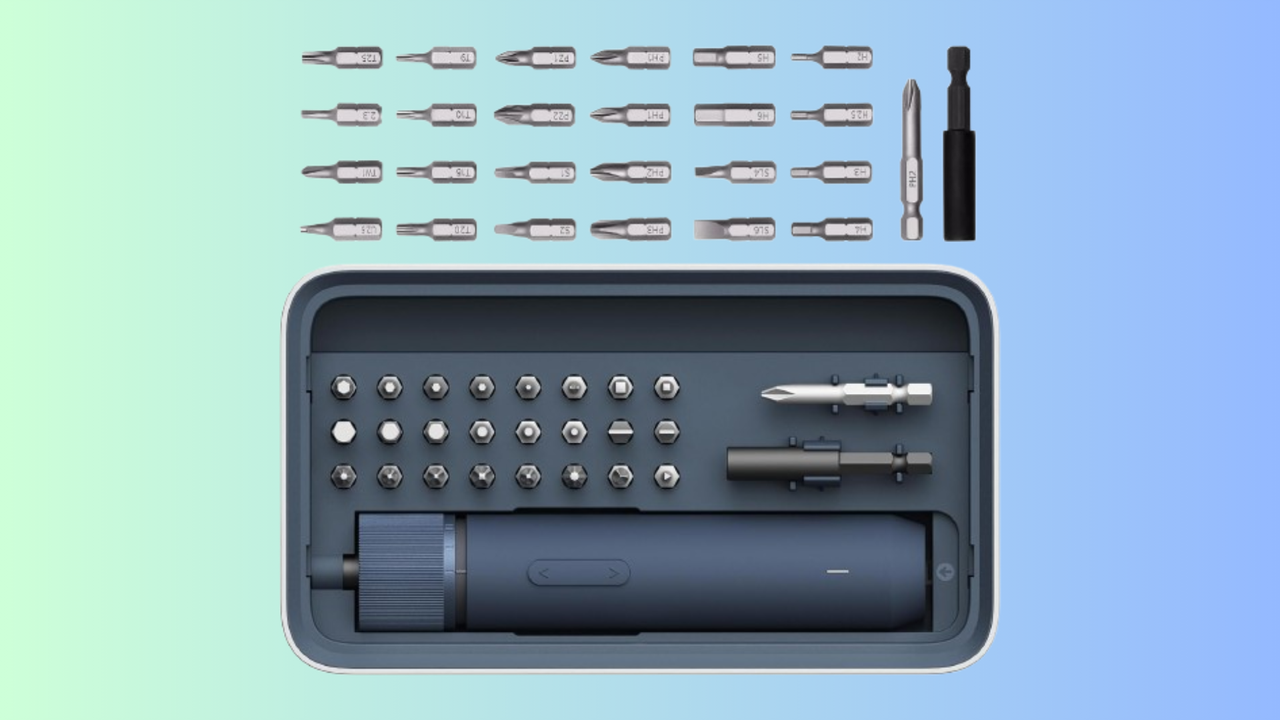
You get an upgraded storage case with this Hoto model, which helps to both protect the driver and keep your bits organized, and it's a nice upgrade over the circular casing I received with the earlier NEX O1 Pro kit. You're getting 24 different screw bits here, along with an extended PH2 bit, giving you access to Phillips, Torx, flat, hexagon, and Pozidriv head bits, which are all rated for 60HRC on the Rockwell scale.
The $29.98 sale price on this 25-piece Hoto electric screwdriver set makes this a must-buy for hobbyists. If you need a starter set for a PC building kit, or just want a few handy tools for DIY-ing around the home, then this Hoto kit is a good place to start. It's versatile, lightweight, and a good option for when you just need a bit of extra power compared to manual driving.
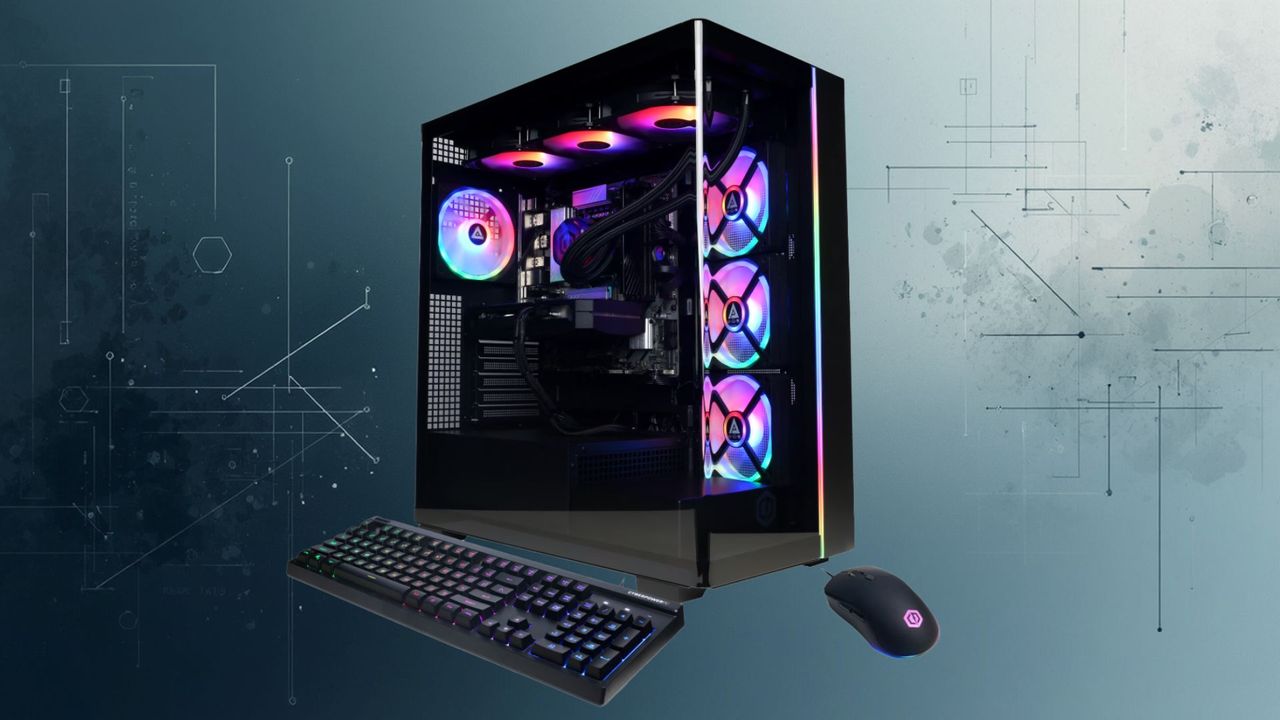
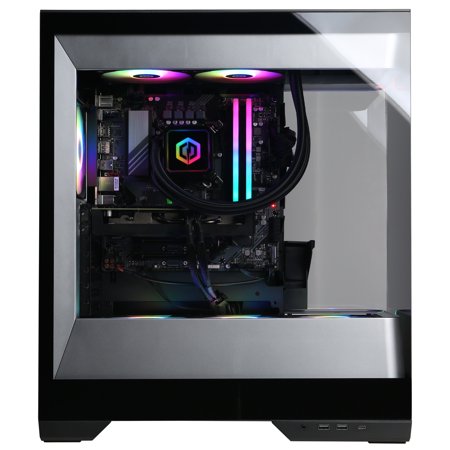
Walmart is currently offering a 21% discount on an impressive all-rounder prebuilt system from CyberPowerPC. The Gamer Supreme desktop gaming PC is now $1,399, a saving of $370.99 from the original listed price of $1,769.99. With this component selection, you get both a gaming PC and an incredible computer for everyday work and productivity applications.
Inside the glistening glass panel case is Intel's Core Ultra 7 270K Plus processor, an Nvidia GeForce RTX 5060 Ti graphics card with 8GB of VRAM, 16GB of DDR5 memory, and a 1TB SSD for storage. This selection of components makes for a complete and competent gaming and productivity PC, with plenty of room for upgrades in the future.
Gamer Supreme Desktop Gaming PC: was $1769.99 now $1399 This CyberPowerPC Gamer Supreme gaming PC sports an Intel Core Ultra 7 270K Plus processor, an Nvidia GeForce RTX 5060 Ti graphics card with 8GB of VRAM, 16GB of DDR5 memory, and a 1TB SSD for storage. View Deal
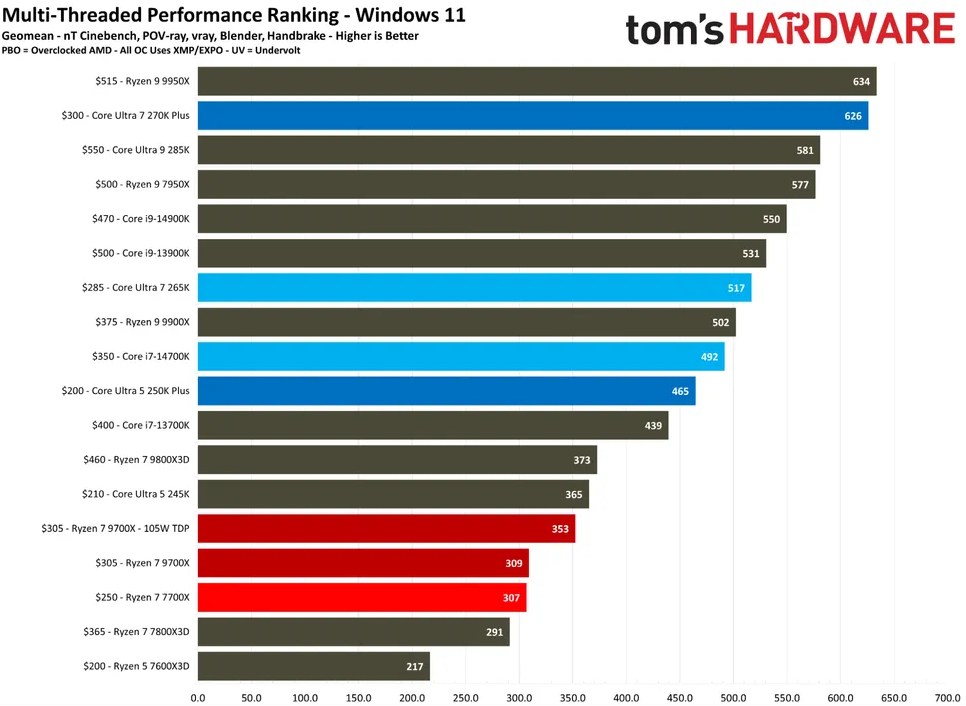
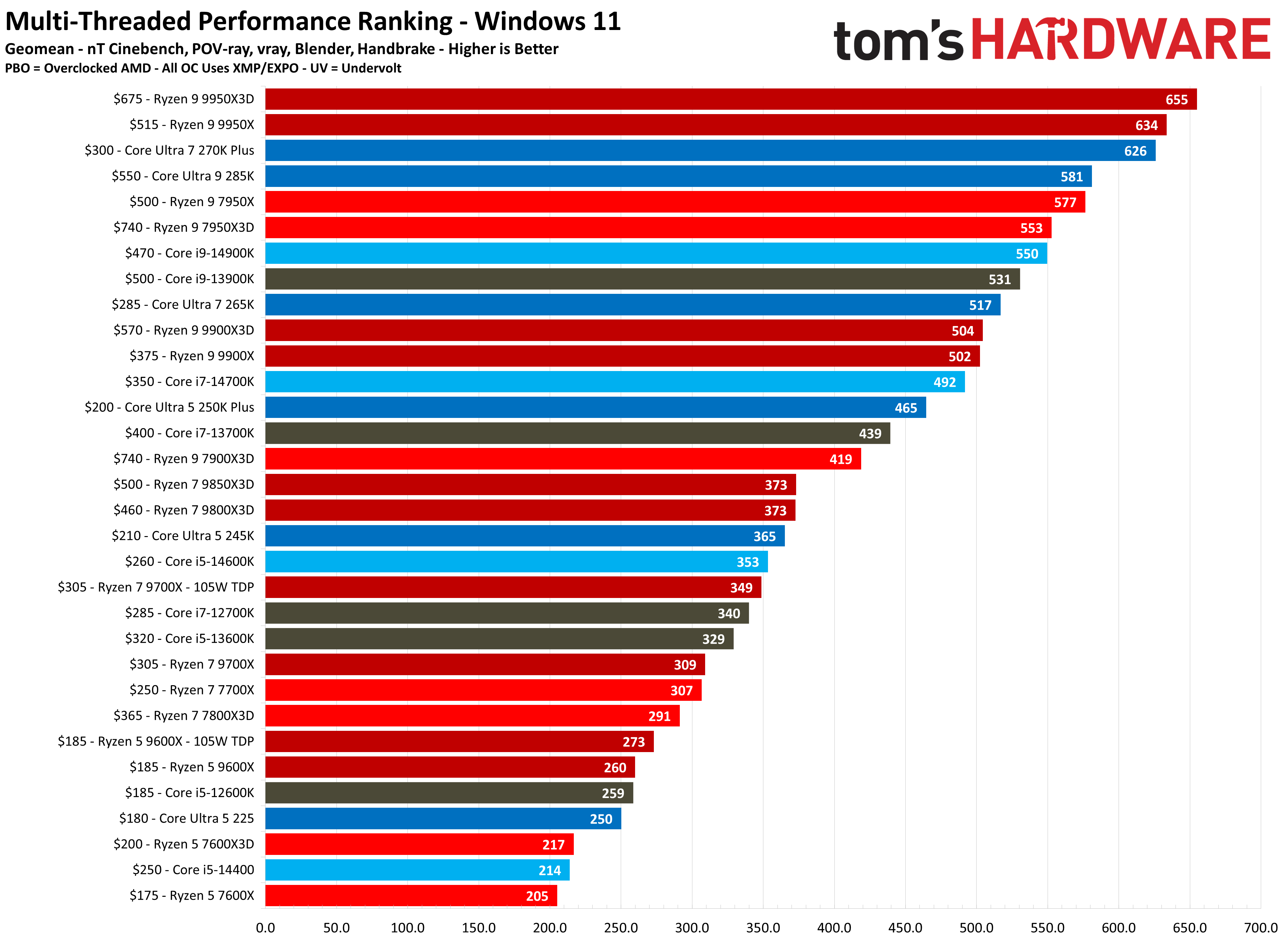
One of the standout component choices in this prebuilt gaming PC is Intel's Core Ultra 7 270K Plus processor. It's currently Intel's best value-for-money CPU on the market with impressive gaming performance, and even more impressive multi-threaded productivity performance. The 270K Plus can go toe-to-toe with AMD's Ryzen 9 9950X in productivity workloads — all while costing half the price.
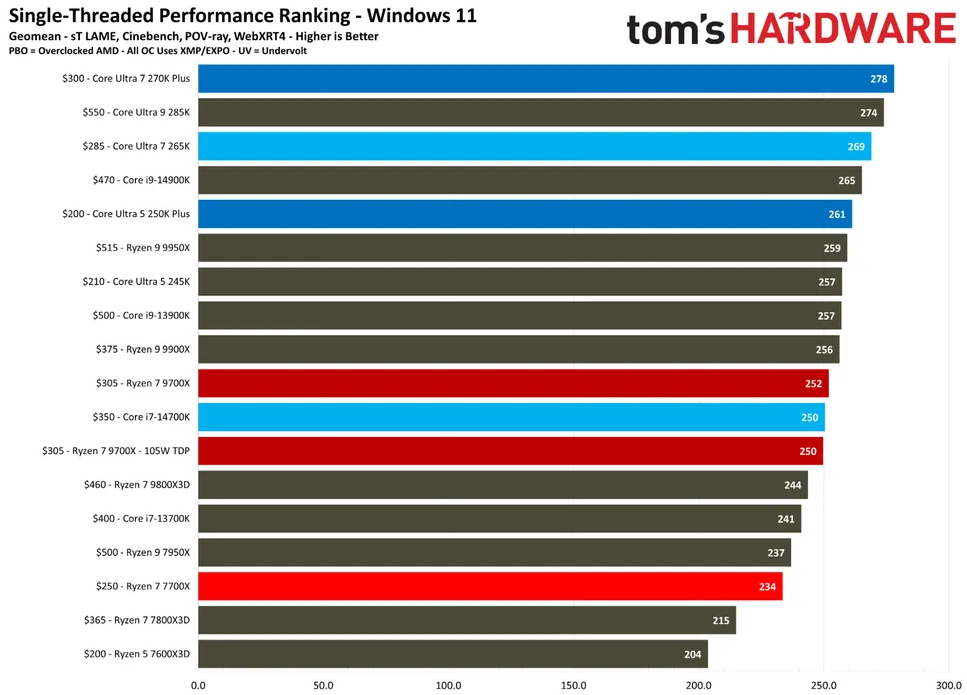
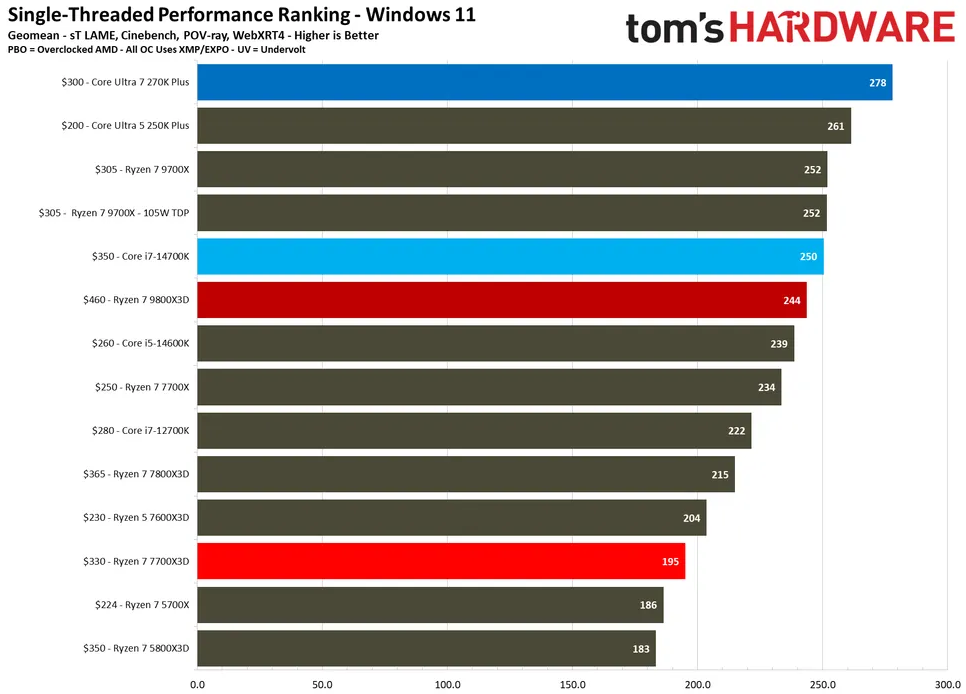
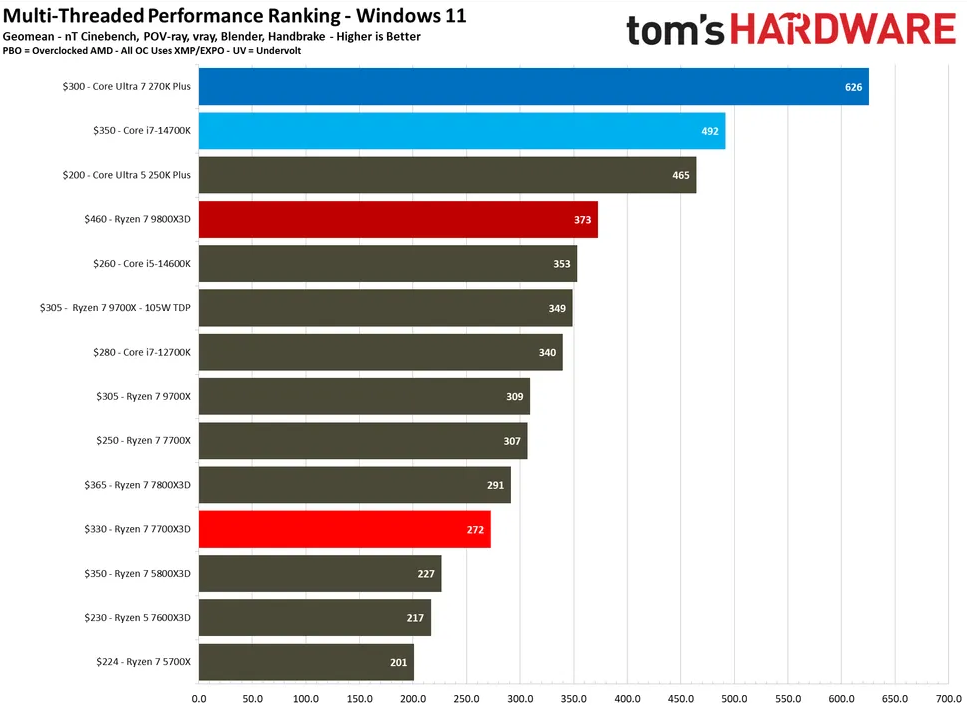
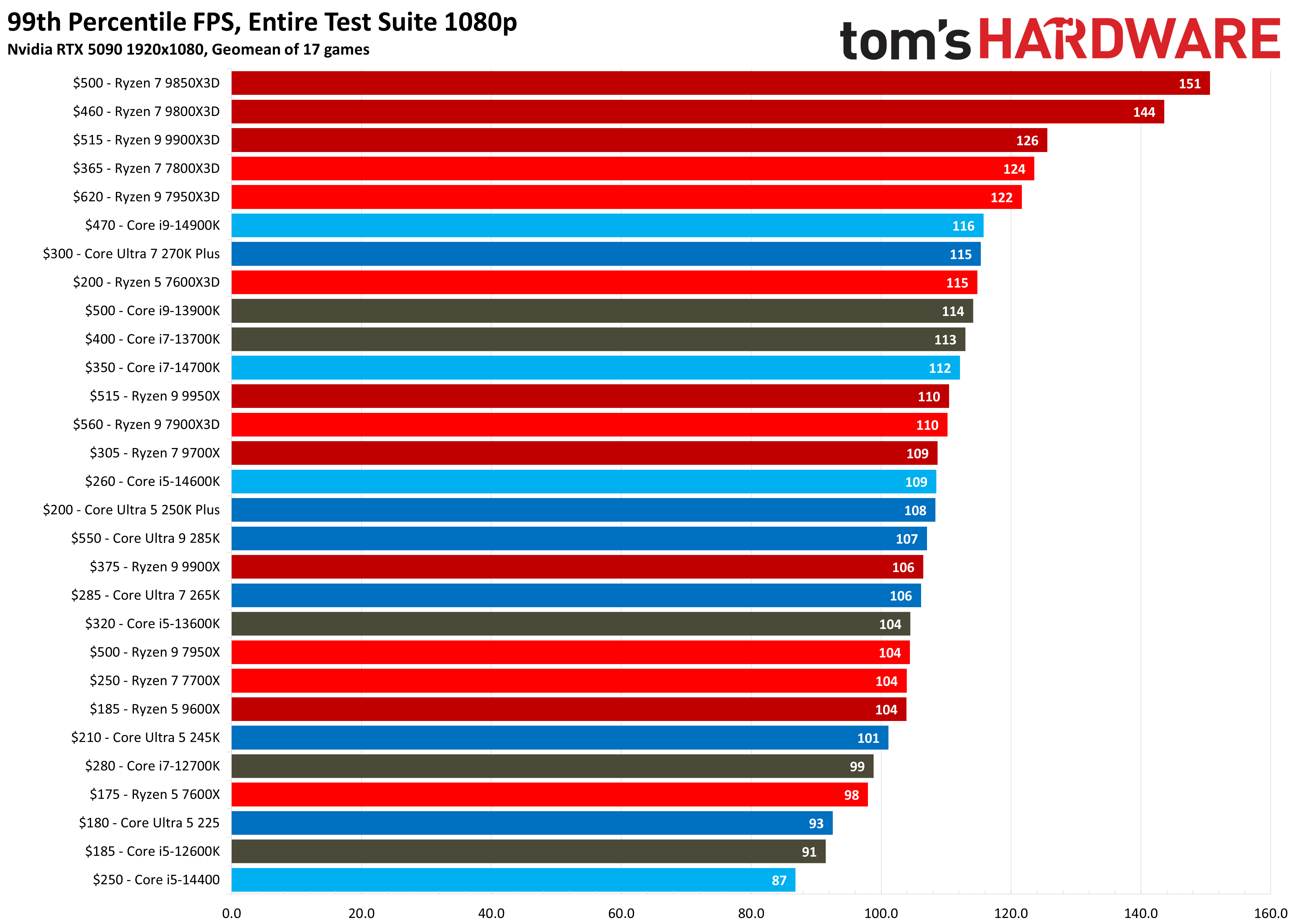
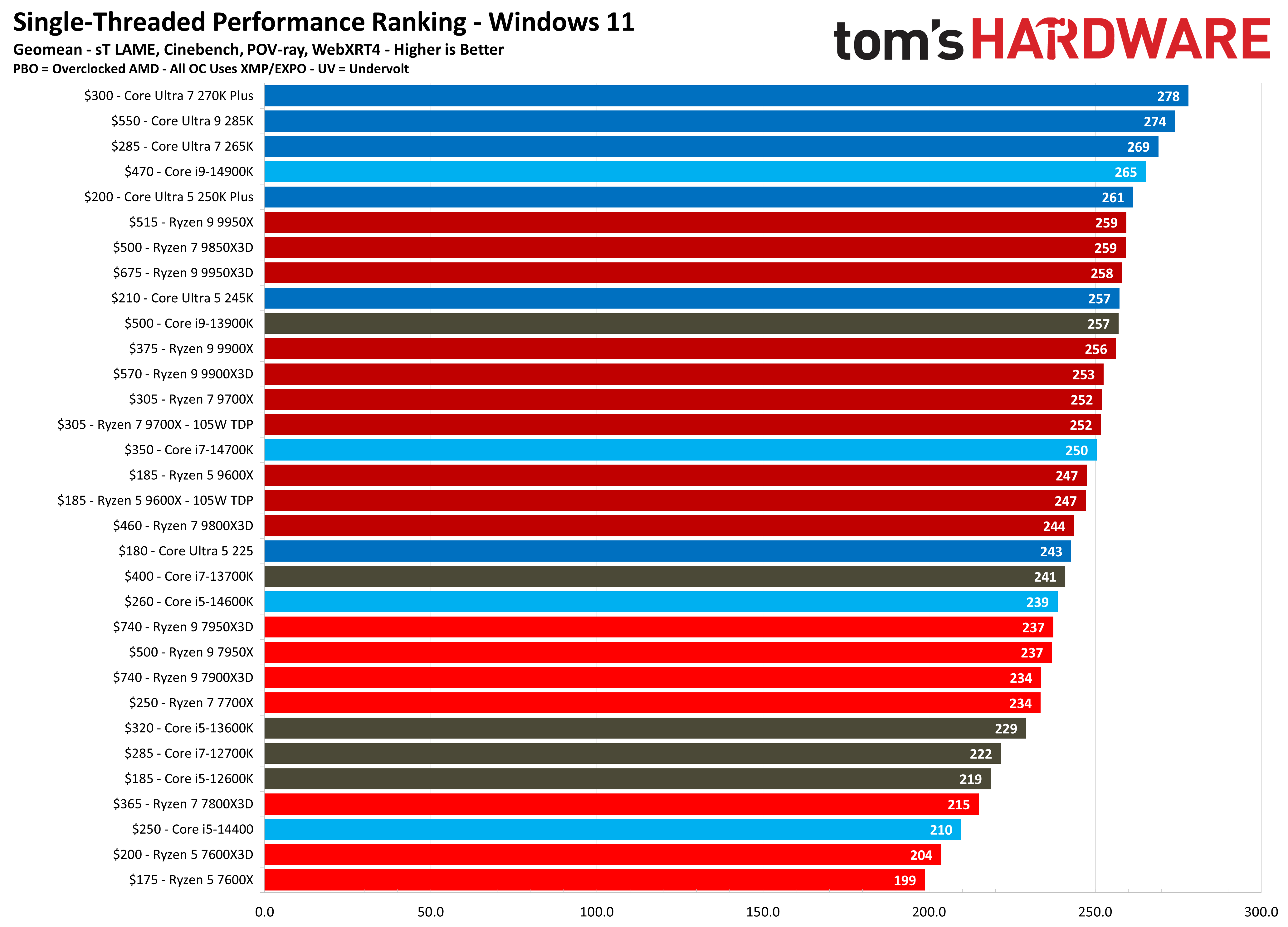
You can see from our benchmarking charts below that the Intel Core Ultra 7 270K Plus isn't as fast as AMD's purely gaming-focused X3D offerings, but when it comes to single-threaded and multi-threaded workloads, it's a monster and is only superseded by a much more expensive chip. Not only that, but the 270K Plus is fully unlocked for overclocking.
FutureFutureFuture
Prebuilt gaming PCs have risen to the forefront when it comes to value these days, thanks to the ever-rising component prices of memory, graphics cards, and storage, which have driven the self-build enthusiast market to the edge. This CyberPowerPC build uses all current parts, including DDR5 memory and the impressive Core Ultra 7 270K Plus, giving you plenty of power and performance for the money you spend on this system.
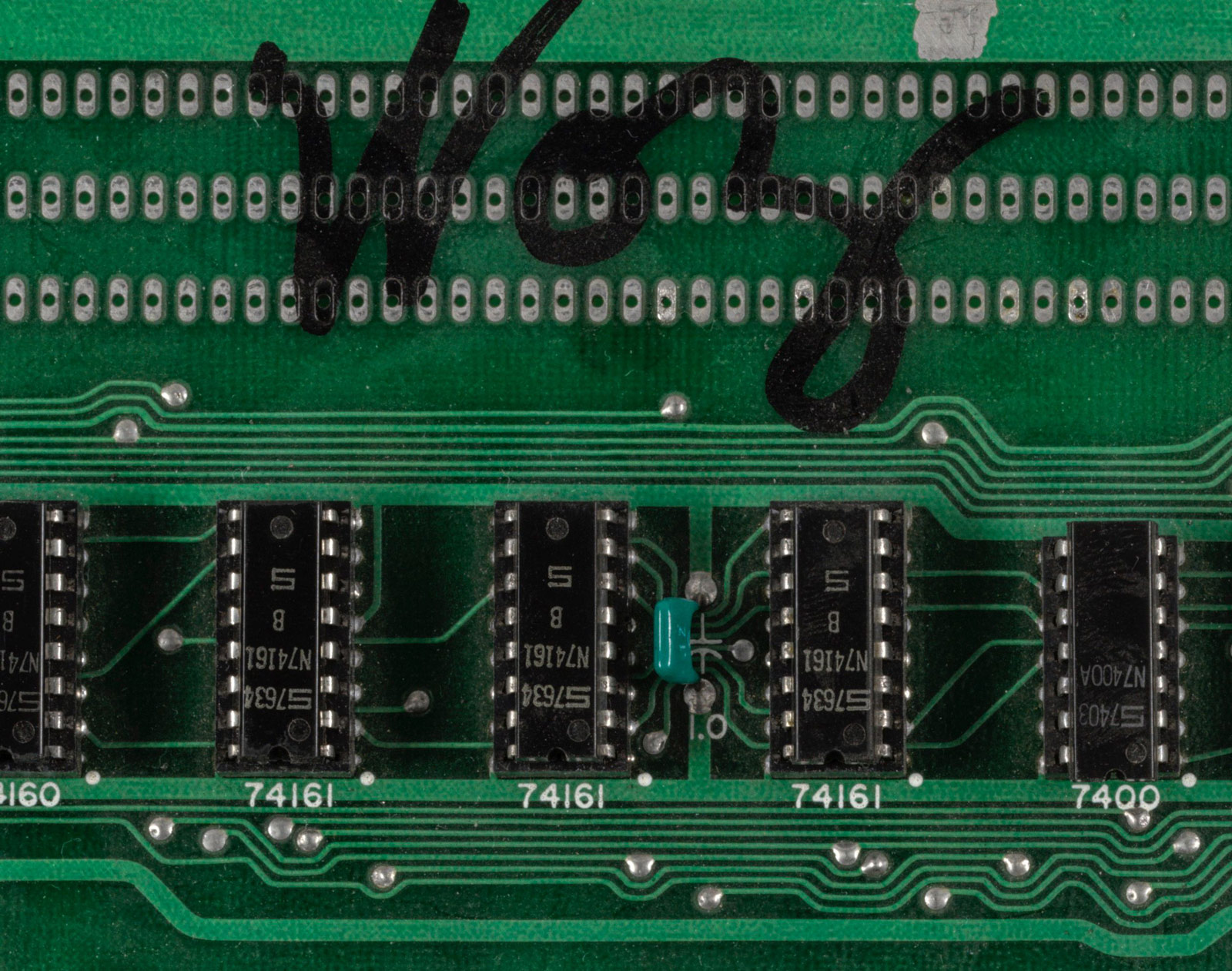
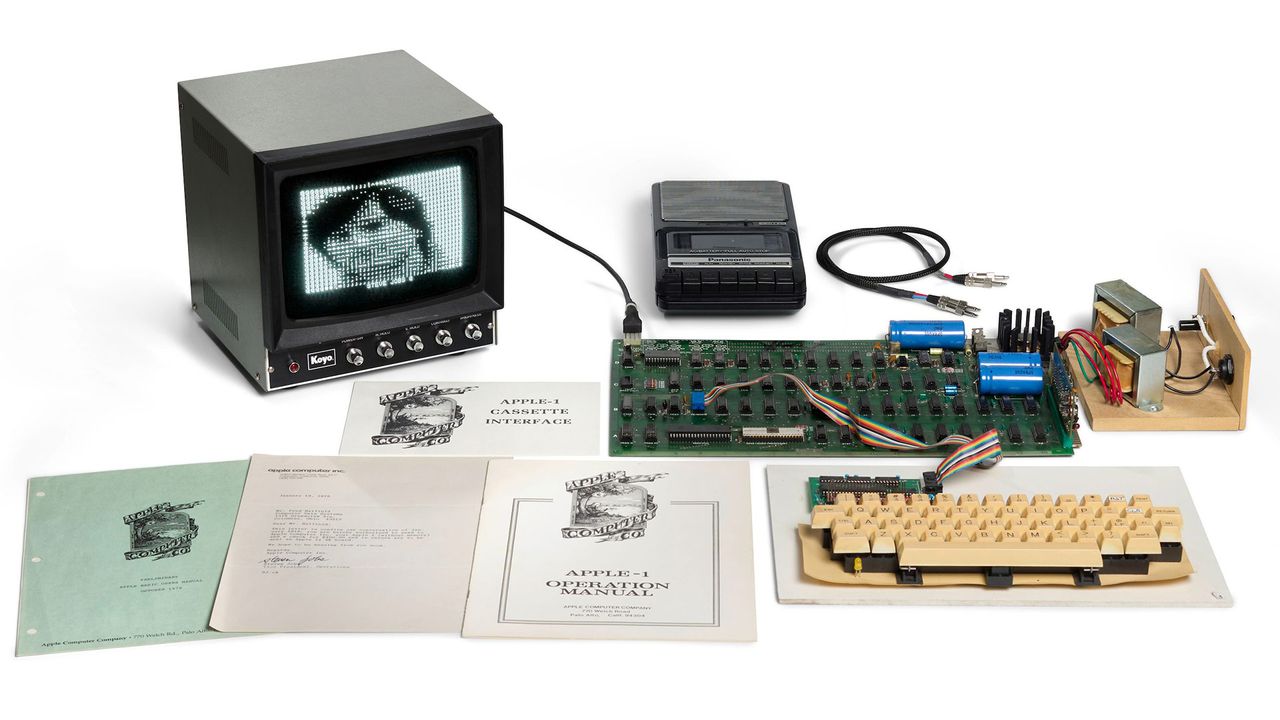
A “beautifully preserved in working condition” Apple 1 computer motherboard signed by Steve Wozniak, accompanied by a letter signed by Steve Jobs, is up for auction next month at Bonhams in New York. The official estimate for this precious piece of computing history is US$500,000 - US$800,000, but we note that this ‘Hatfield’ Apple 1 previously sold for $686,000 in 2013. Let’s take a closer look at what you could get for your slightly under a million dollars.
This isn’t just an artifact to be encased in a glass cabinet. You could do that, of course, but Bonhams assures auction watchers that this Apple 1 is a working model. It also seems to come with all the essential accessories you'd need to get some computing done.
The motherboard is the centerpiece of the sale, of course. It is labeled “Apple Computer 1 / Palo Alto. Ca. Copyright 1976,” on the component side, with ‘NTI’ stamp underneath (second batch), and the board is complete with a white ceramic MOS Technology 6502 microprocessor, keyboard interface and connector, 3 original Sprague ‘Big Blue’ capacitors, 8KB RAM, expansion connector, cassette board connector, original Apple cassette interface board labeled ‘Apple 1 Cassette Interface Copyright 1976,’ explains the auctioneer description of the lot.
A period-appropriate monitor, cassette recorder, and pair of ASCII keyboards make up the 'Hatfield' Apple 1 hardware offering. Then there is also a selection of manuals, which would have come with the hardware bought in the late 1970s. An original Apple-1 Operation Manual; an original Preliminary Apple BASIC Users Manual with a green coversheet bearing Apple's original Newton logo, and an original Apple 1 Cassette Interface manual are included in the sale.
Another attraction of this auction is undoubtedly the Steven Jobs-signed letter. It is a letter from Jobs (dated 1978) to the original owner, Fred Hatfield, authorizing the exchange of the Apple 1 for an Apple II 4k board. The letter came in response to Hatfield complaining about the lack of software for the Apple 1. Jobs signed the letter making the offer, and it includes his title at the time: Vice President, Operations of Apple Computer Inc.
We’ve reported on Apple 1 auctions before, and this Hatfield sample is one of the most desirable Apple hardware artifacts, being from a batch personally designed and hand-built - then signed - by Steve Wozniak. The Apple 1 computer was first demonstrated in early 1976. Fellow Homebrew Computer Club members and Byte Shop visitors would buy up the first batch of (50) Apple 1 devices in the summer of 1976. Fred Hatfield, a computing enthusiast working at Computer Data Systems in Columbus, Ohio, bought his model sometime in 1976 from the second batch made available. In total, less than 200 Apple 1 systems were made.
The Hatfield Apple 1 last changed hands in 2013, achieving $686,000 at auction. Now, 13 years later, the estimated range of US$500,000 - US$800,000 might seem low, but sometimes auctioneers do this to catch broader interest. This Apple 1 will be sold as part of the History of Science, Technology & Computing auctions at Bonhams, New York, between October 4 and 14. You will be able to take part in the auction online.
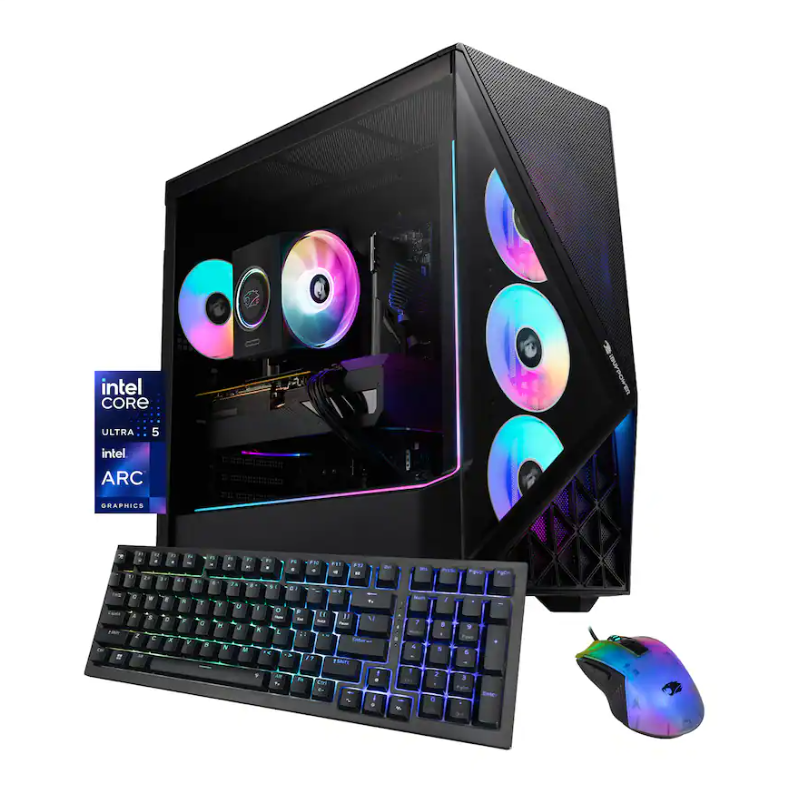
Best Buy has stepped onto the stage with a huge selection of deals in its seasonal Labor Day sales, with decent price cuts on computers and tech. A standout budget-friendly offering is the iBuypower Slate Gaming PC with Intel Arc B570 graphics at just $899. Much cheaper than a Steam Machine and a perfect starter gaming PC for 1080p gaming, this cheap gaming PC deal gives you $300 off its $1,199.99 list price.
iBuypower's Slate gaming PC comes with a 10-core, 10-thread Intel Core Ultra 5 225F processor, an Intel Arc B570 graphics card with 10GB of VRAM, 16GB of DDR5 memory, and a 1TB NVMe SSD for storage. This is a great combination of parts for a 1080p gaming rig, and at just $899, it defies the current economic climate when it comes to PC pricing.
Slate Gaming PC (Arc B570): was $1199.99 now $899 A bargain-budget gaming PC in today's economy. This frugal machine features an Intel Core Ultra 5 225F processor and an Intel Arc B570 graphics card with 10GB of VRAM. There's also 16GB of DDR5 memory and a 1TB NVMe SSD for storage. View Deal
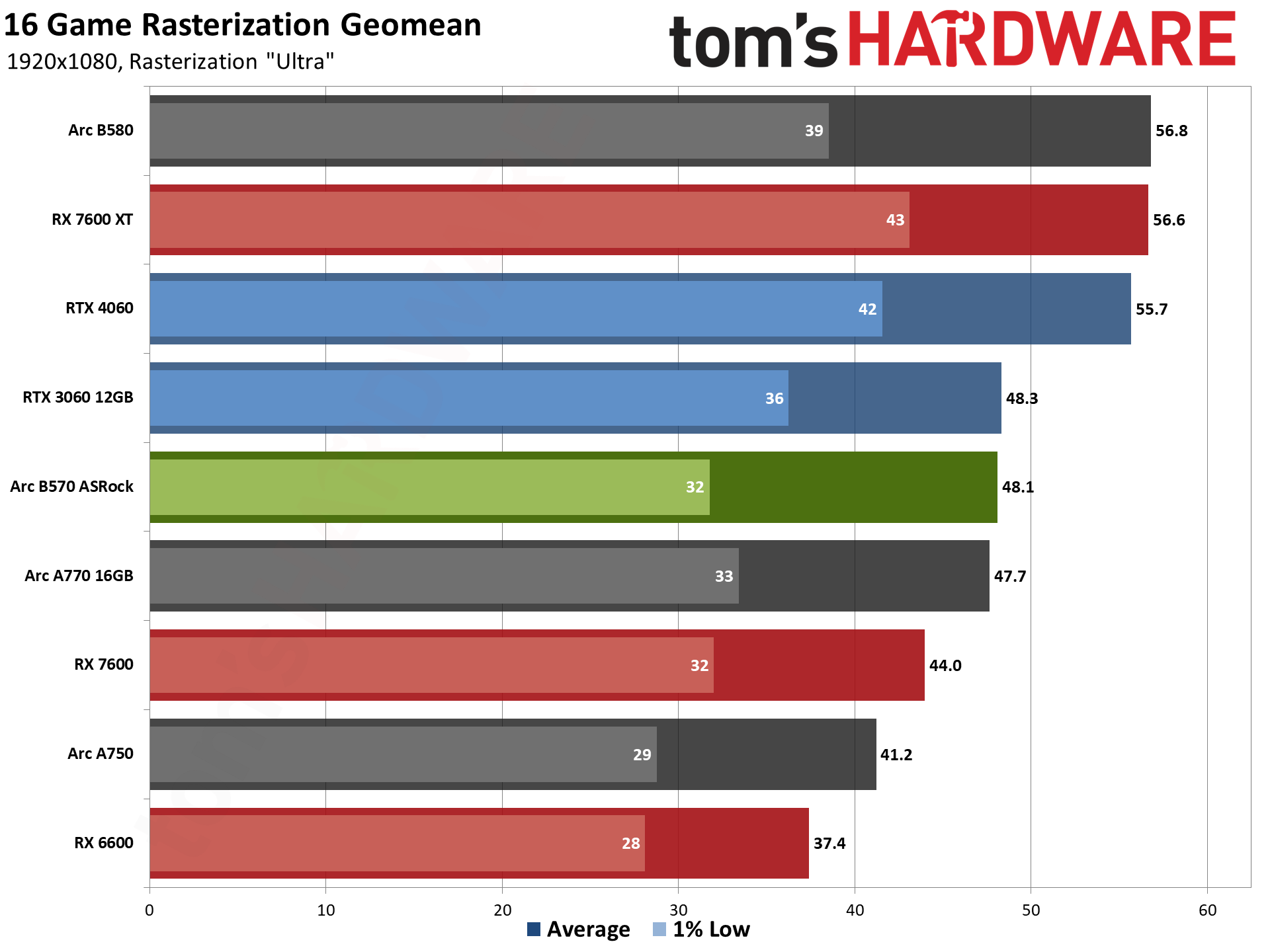
The heart of this PC is the Intel B570 graphics card, which comes with a generous amount of VRAM. For 1080p gaming, 10GB of VRAM is more than ample to handle the textures and shaders on high and ultra settings, but as with any other GPU, it will start to struggle in 1440p gaming when that VRAM gets swallowed up and starts using the CPU to compensate. The B570 is a budget graphics card, but it has come a long way since launching, thanks to driver optimizations and compatibility with more games.
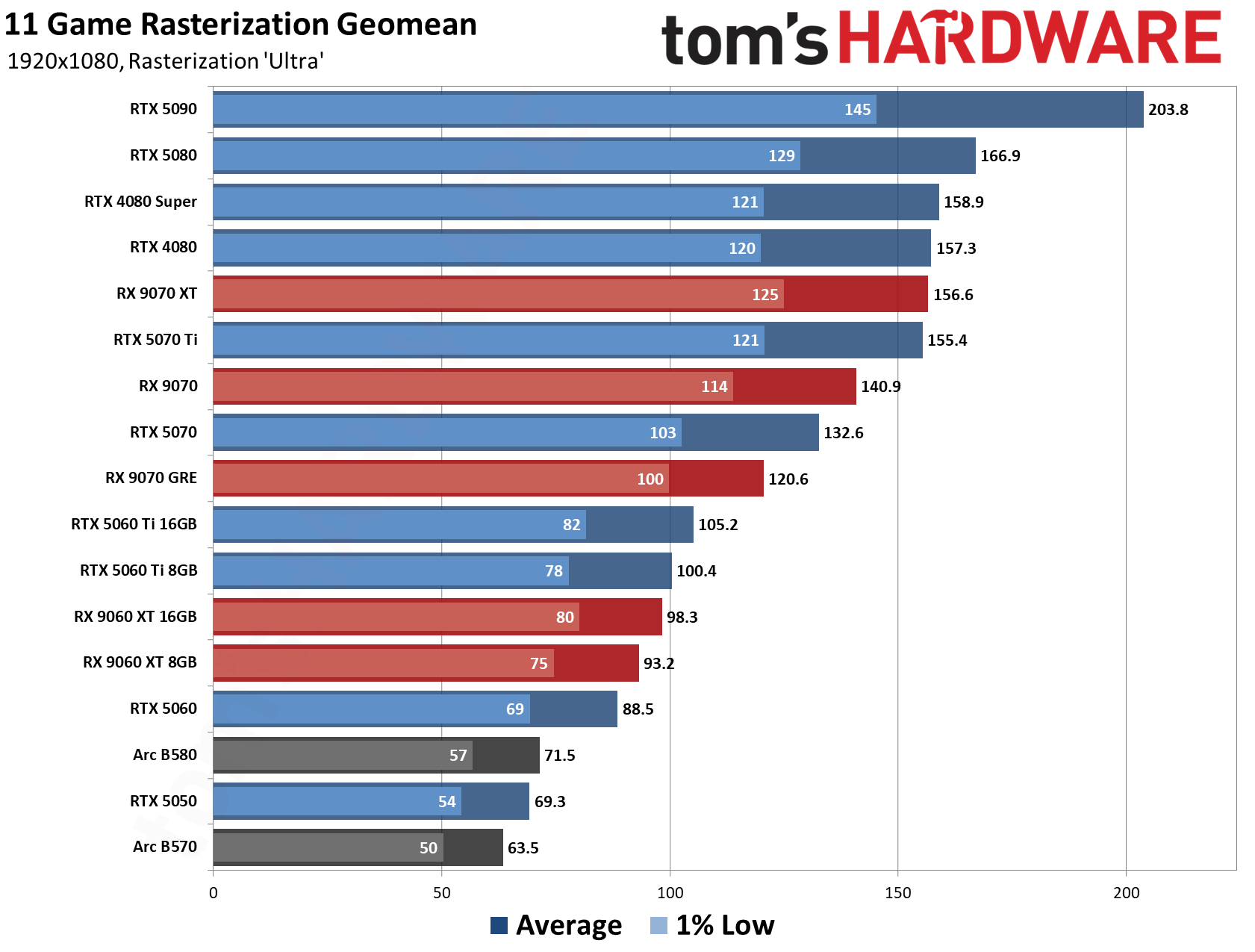
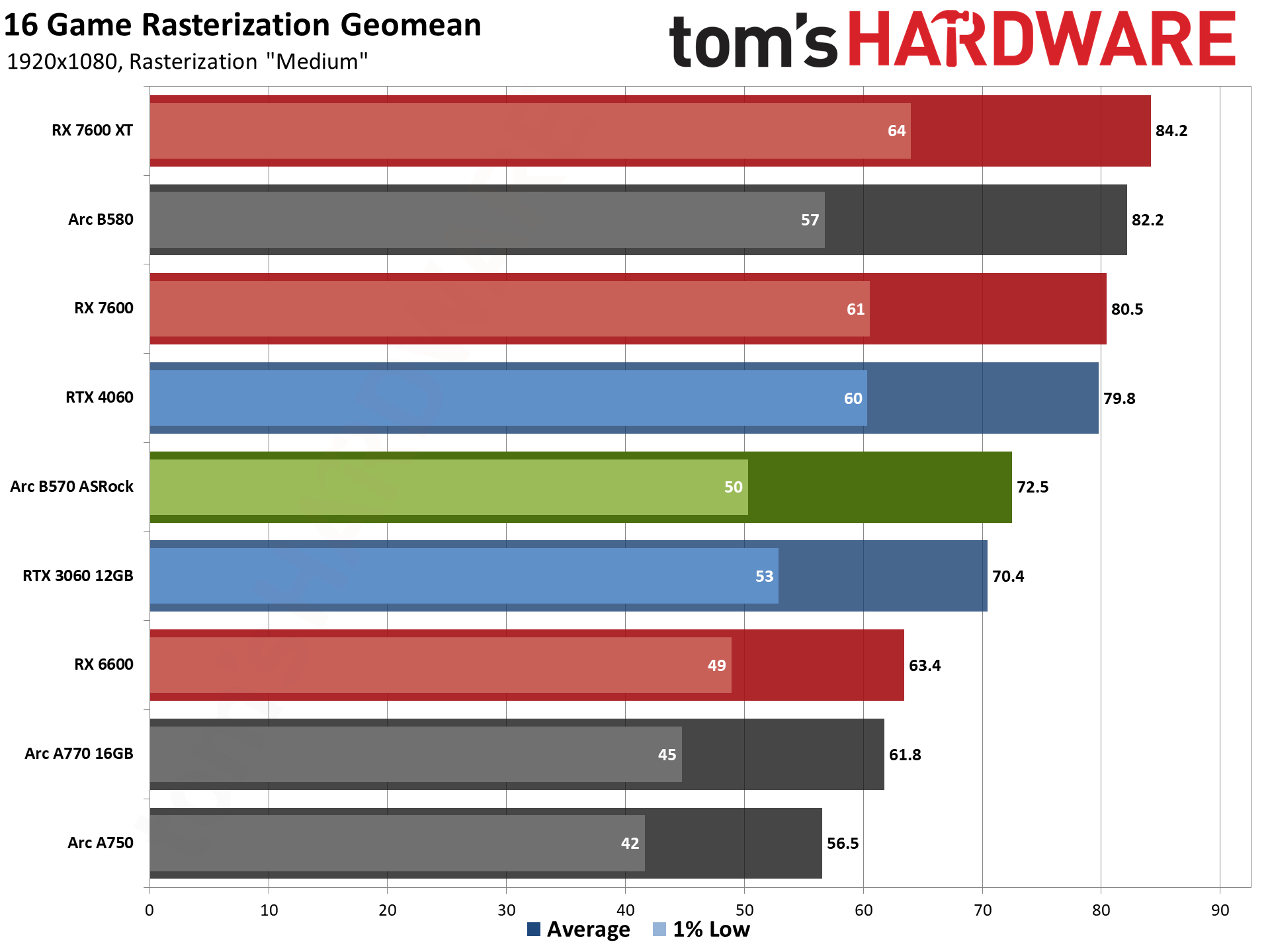
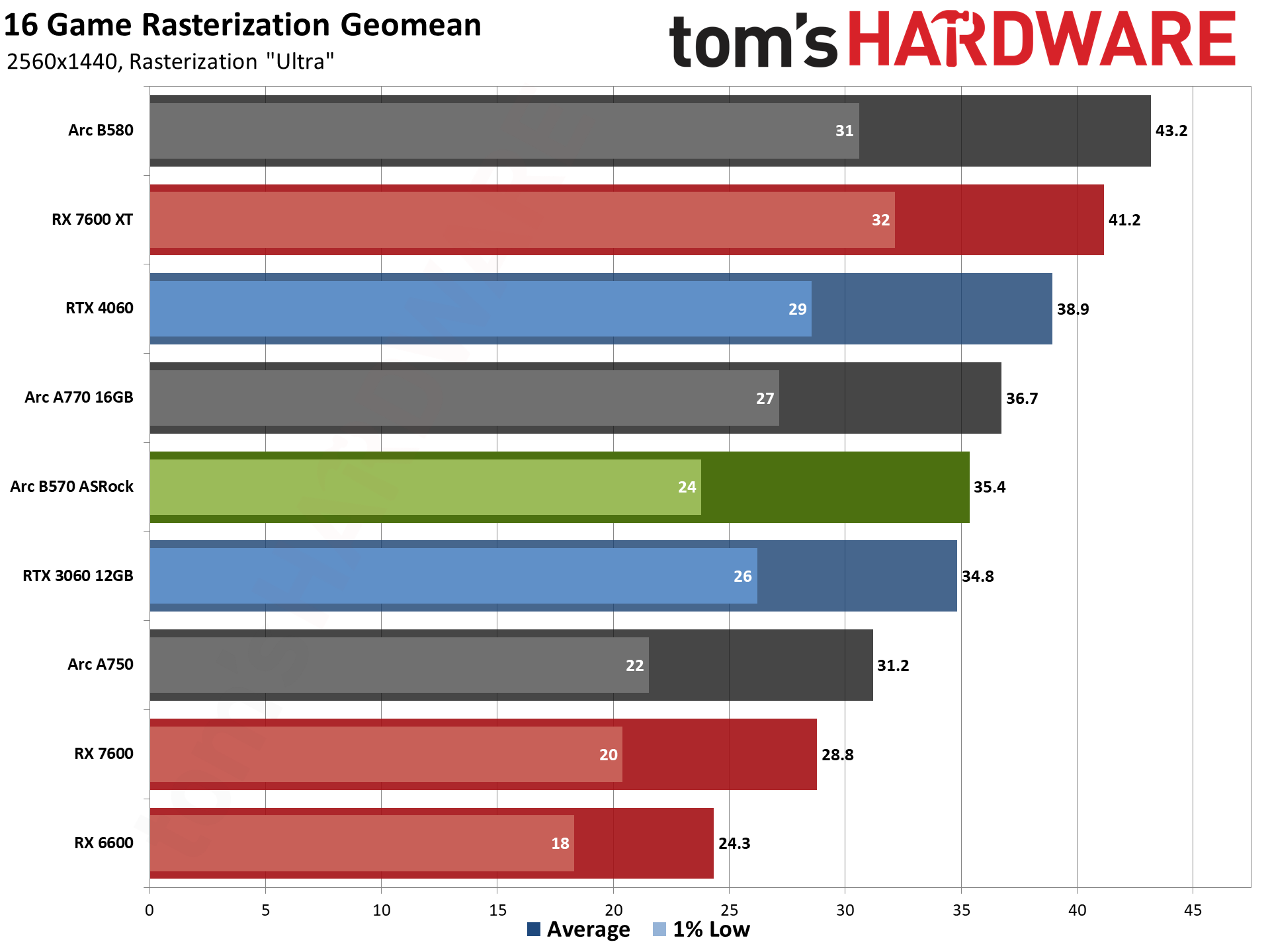
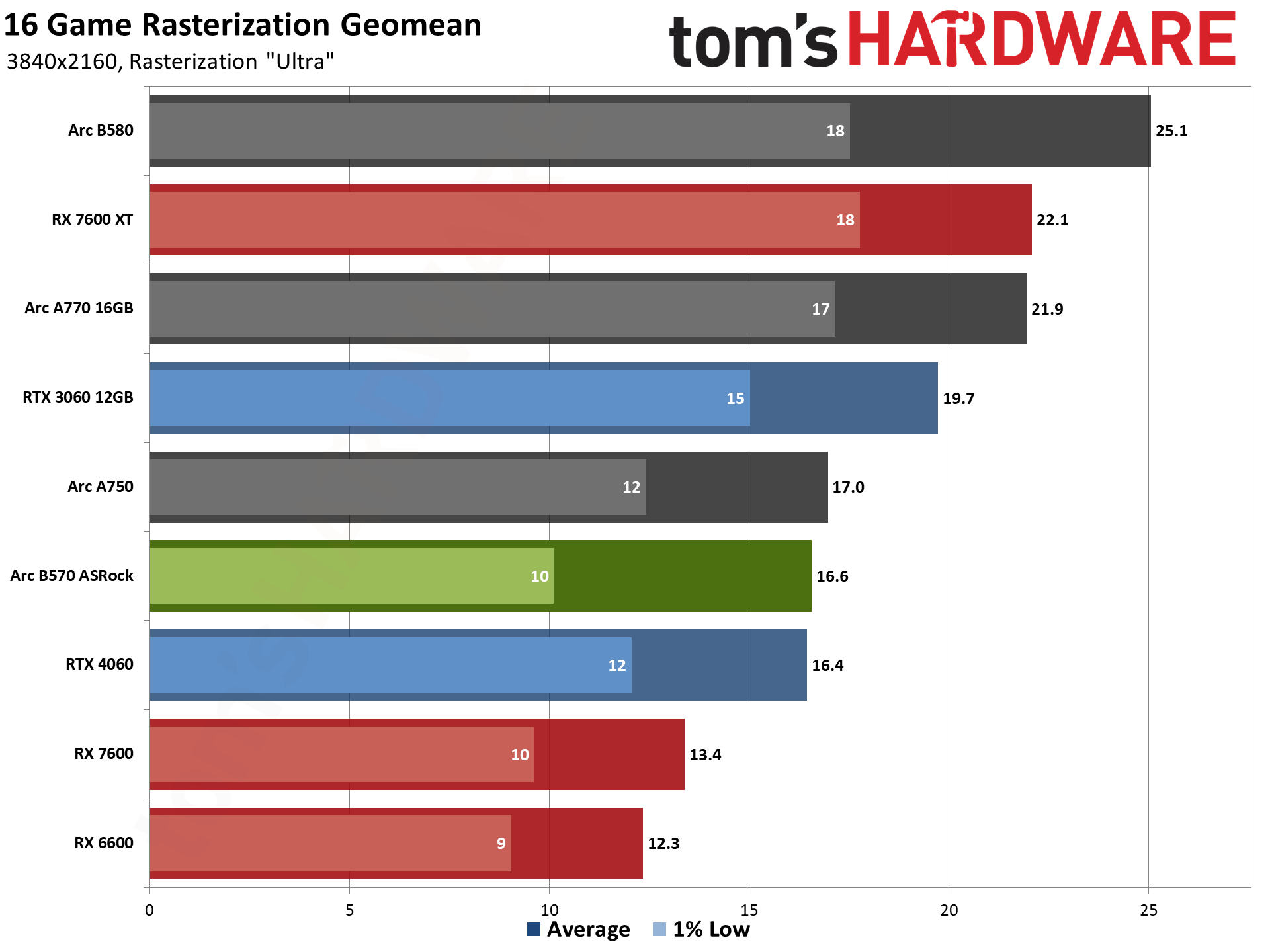
You can see in our below chart from our rasterization benchmarking game suite that the B570 sits in the middle of the pack, competing with the Nvidia RTX 3060 12GB. You can check out our Intel Arc B570 review for more detailed information on this GPU's performance, where we put it through its paces in our suite of benchmarking tests.
Buying a prebuilt gaming PC is currently much cheaper than trying to construct your own gaming PC, thanks to the skyrocketing price of memory and storage. PC builders are able to grab these parts much cheaper than normal consumers can and have managed to offset the price rises with their stocks of components. This, however, cannot last, so you're definitely better off grabbing something soon, before the inevitable increase in prices.
Prebuilt gaming PCs also come with the added bonus of an easier warranty situation. Should anything go wrong with your computer, the whole system is covered, and you don't have to troubleshoot individual parts and manufacturers for an RMA, either.
For just $899, this is a superb deal for a starter gaming PC if you're just getting into PC gaming, or feel like stepping away from the higher prices on game consoles and digital game prices. PC gaming is currently much cheaper for game purchases, too.
This gets you the best gaming CPU on the market, a mid-range GPU perfect for 1440p gaming, and ample RAM and storage in an economy where all of those commodities are increasingly hard to find. The 32GB of DDR5 RAM will cost you $400 alone, while a Gen 4 2TB SSD is around $250 minimum. The GPU in this build is also now $800, which means that on those three components alone, you'd be spending nearly $1,500. That's before you factor in the $464 CPU, accounting for nearly the entire price of this build before you've considered a motherboard, PSU, case, cooling, and the build cost.
The AMD Ryzen 7 9800X3D is the best gaming CPU on the market thanks to its 8-core, 16-thread power with boost clocks of up to 5.2 GHz. The standout feature is its 3D cache technology, which drastically improves fram rates, as you can see from our gaming benchmark data below.
Tom's HardwareTom's HardwareTom's Hardware
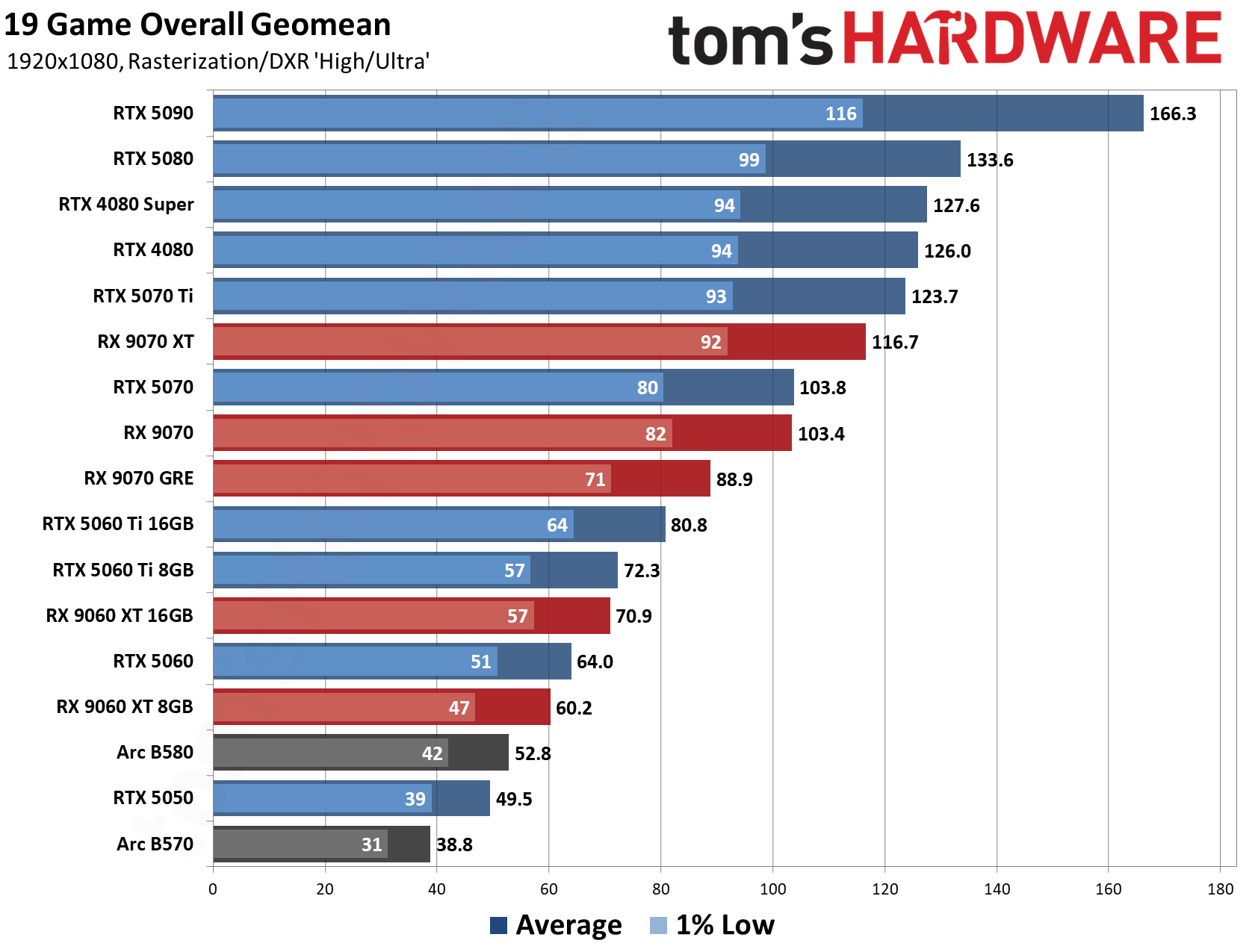
The RTX 5070 is an excellent pairing; with 12GB of VRAM, it's an ample card for 1440p gaming, or 4K at a push if you use Nvidia DLSS. As you can see, the 5070 averages 74 frames per second in our 19-game testing suite at 1440p.
The rest of this PC's specs are also pretty positive. 32GB of DDR5 RAM and 2TB of SSD Gen 4 storage are considered generous in today's market, so you've got enough RAM for multitasking and gaming as well as plenty of storage. Liquid cooling is more than enough for this processor, and the B850 motherboard will provide plenty of ports for connectivity as well as headroom for expansion.
Ultimately, the selling point of this PC is the price; given the current market cost of its components, you're saving a small fortune versus building a PC like this yourself. As mentioned, the $800 GPU, $464 CPU, $400 RAM, and $250 SSD make it a worthwhile purchase.
Thanks to a slightly older but no less capable processor, this is a bit of a sleeper deal that is really good value in the current market. As noted, the GPU alone now costs around $1,500 to buy. 32GB of DDR5 RAM is $400, so you've almost spent $1,900 on just two components, before you factor in the SSD, CPU, motherboard, cooler, PSU, and case.
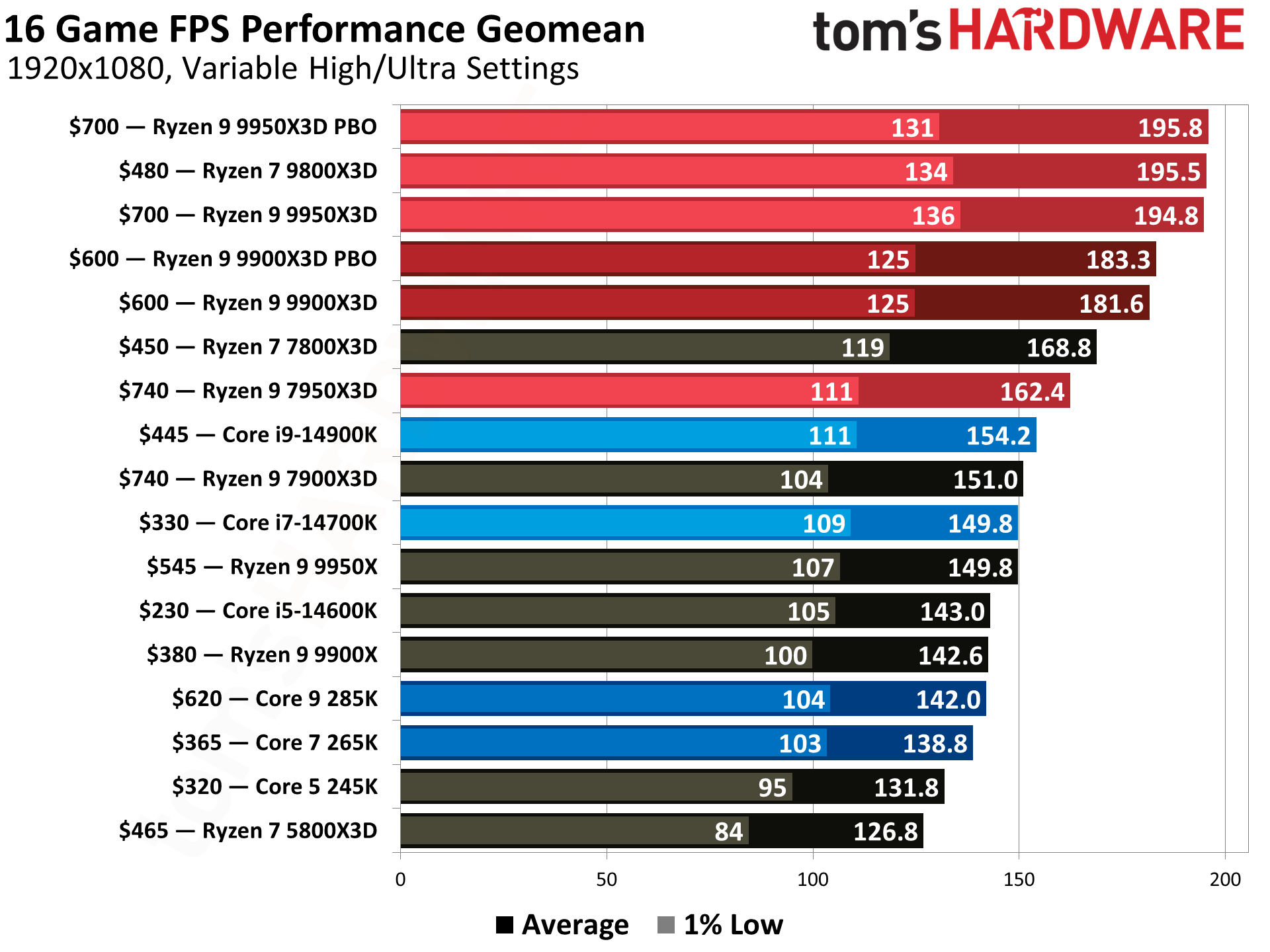
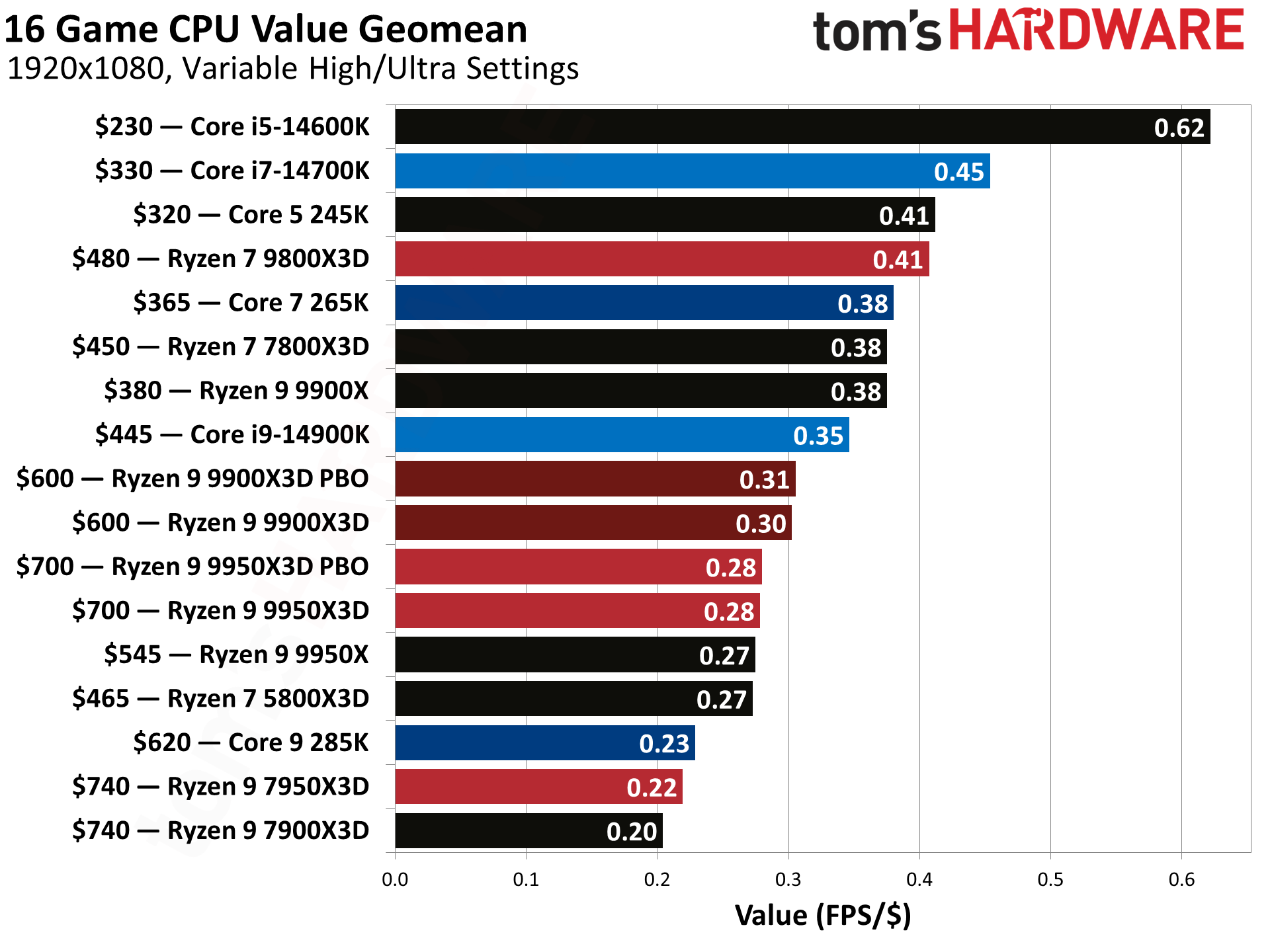
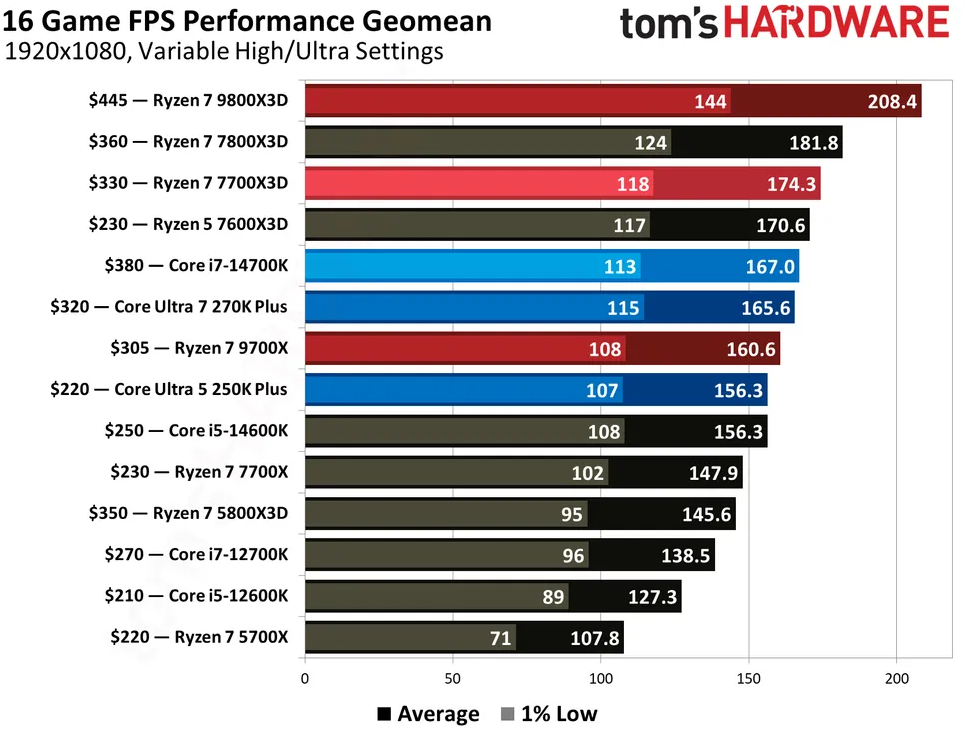
As you can see, this PC doesn't contain a benchmark-busting X3D CPU from AMD; however, the Core i7-14700F is a capable 20-core Raptor Lake Refresh. It features eight performance cores and 12 efficiency cores, with boost speeds of up to 5.4GHz. Despite being a couple of years old, it still averages 150 frames per second in our 16-game testing suite at 1080p, and, thanks to its price, it offers the best value (FPS/$) of any CPU we've tested.
Tom's HardwareTom's HardwareTom's Hardware
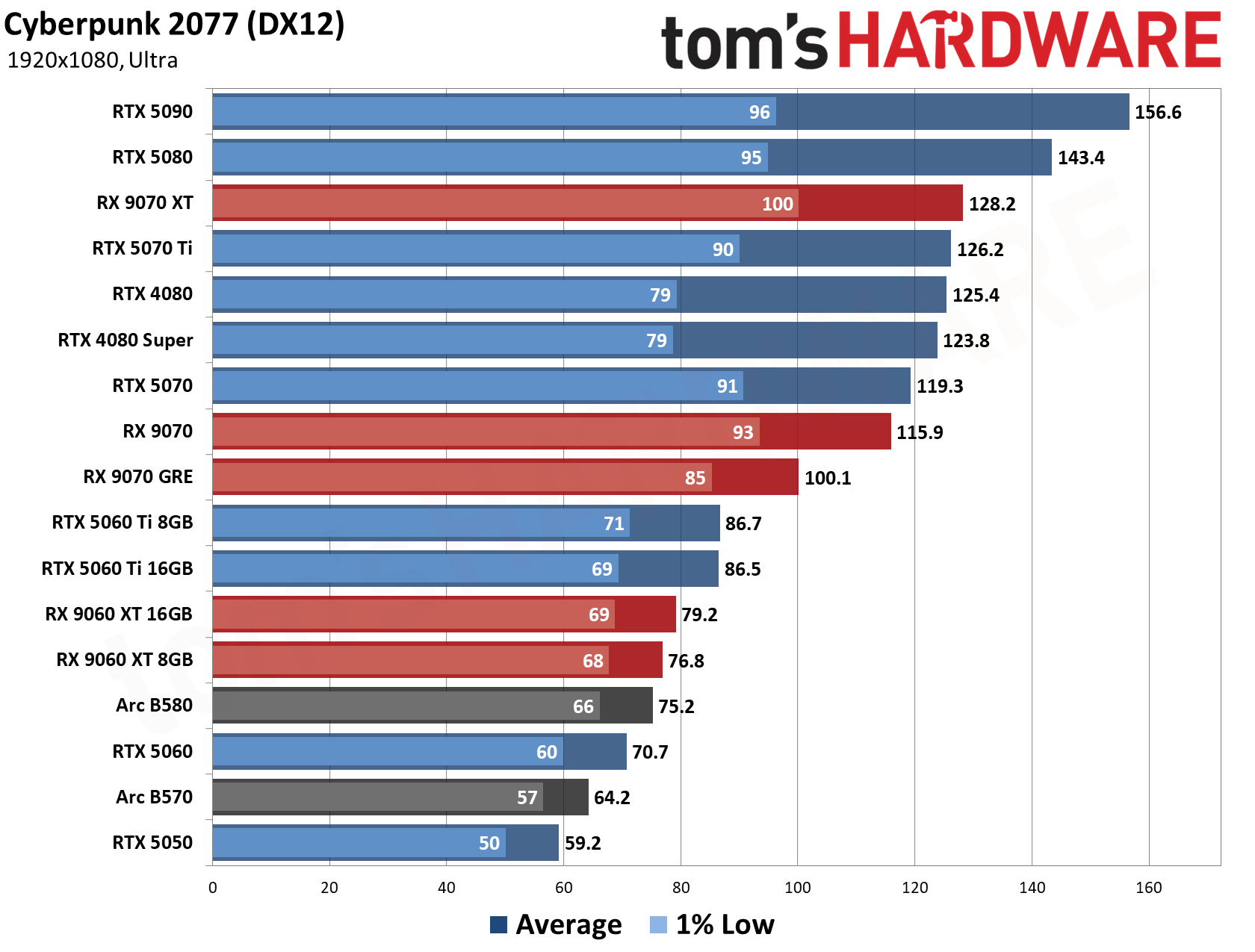
The RTX 5080 is the headline component here, as the second-best graphics card on the market, only behind the RTX 5090, which will cost you around $4,800 these days.
With 10,752 CUDA cores and 16GB of VRAM, this will chew through any title, even providing a solid base for 4K gaming, not to mention access to Nvidia's DLSS technology for even more frames.
The RTX 5080 makes the raw power of this gaming PC extremely appealing, and more than makes up for a slightly older CPU, a compromise worth taking in the current economy.
Other specs include a 1TB PCIe 4.0 SSD, 32GB of DDR5 6000 RAM, Wi-Fi 6E, Bluetooth, an 850W PSU, and liquid cooling.
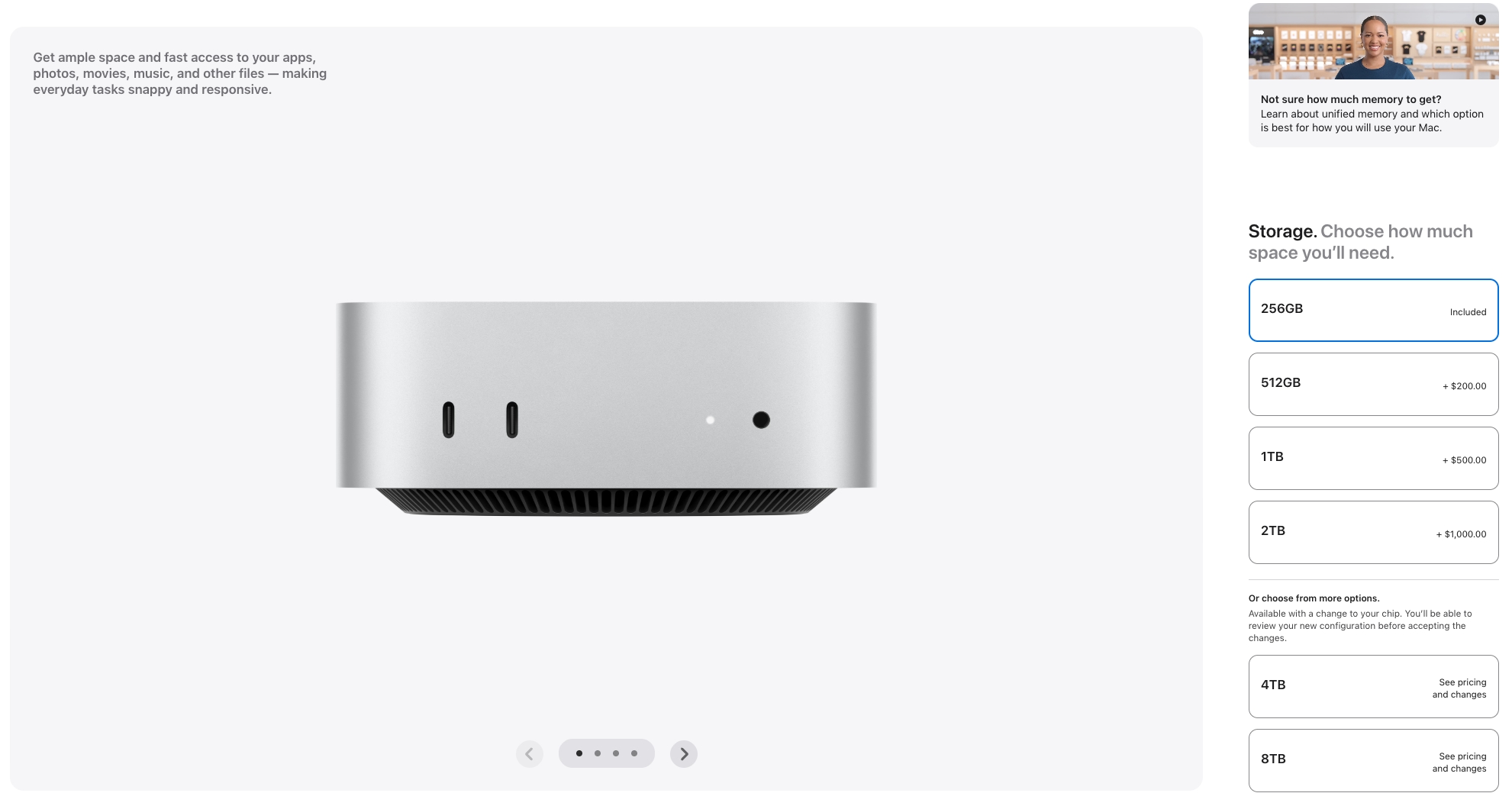
The new M6 Mac mini is now priced at $899, a $100 increase over the already inflated $799 price for the M5 version on June 25th. To put those increases in perspective, the M4 Mac mini had a base price of $599 when it originally launched in October 2024.
The new $799 base price is an even more bitter pill to swallow, given that the headless computer still comes with only 256GB of base SSD storage. One would think that the $300 price increase over the course of two months would at least lead to a doubling of the base storage, but the ongoing memory/storage shortage makes that wish unthinkable; at least in Apple’s eyes.
If you want to see more eye-watering pricing, take a look at the hardware upgrade costs for the base Mac mini. The system comes standard with 16GB of unified memory, but an extra 8GB (taking the total to 24GB) costs a whopping $200. If you want 32GB (the maximum allotment for the M6 chip), that’ll cost you an extra $400.
Things don’t look much better on the storage side, with an upgrade from 256GB to 512GB costing $200. The 1TB and 2TB storage options cost $500 and $1,000, respectively. Apple’s value-leader Mac mini is now in uncharted territory. A maxed-out Mac mini (M6, 32GB, 2TB) costs $2,229.
Apple's base Mac mini gets a price hike and more expensive storage upgrades. (Image credit: Apple)
Even the M5 Pro version of the Mac mini couldn’t escape the AI tax, as the base configuration now costs $1,699, up from $1,599 for the M4 Pro version (June 25 pricing) and a far cry from the $1,399 price of the previous generation earlier in the year. That price gets you a 15-core GPU and a 16-core GPU, while stepping up to the uprated 18-core CPU/20-core GPU version adds $200. Memory upgrades are deflating to the psyche, as upgrading from 24GB to 48GB adds $600, while the 64GB option is $1,000.
Storage options are absolutely mind-boggling: a 1TB SSD requires an additional $300 outlay, while the max 8TB SSD configuration is listed at $3,800. The range-topping configuration (M5 Pro, 18-core CPU/20-core GPU, 64GB, 8TB) costs $6,699.
If there’s any consolation, the new Mac Studio holds the line on pricing ($2,499) in its base configuration (18-core CPU/32-core GPU, 36GB, 512GB). The price stasis is somewhat surprising given the hardware upgrades, including a new M5 Max SoC and PCIe Gen 6 SSD. However, upgrades are pricey, with the 18-core GPU/40-core GPU variant of the M5 Max adding $300 to your bill. The upgraded SoC is the only way to unlock additional memory options (48GB, 64GB, 128GB).
Stepping up the Mac Studio with M5 Ultra more than doubles the base, entry price of the M5 Max config at $5,499. This gets you a 30-core CPU and 64-core GPU, while the upgraded 36-core CPU/80-core GPU is a $1,300 option. 96GB of RAM comes standard, while 256GB is a $4,000 upcharge. SSD options are equally expensive: 2TB costs $500, and 16TB costs $7,500.
No matter which way you slice it, those firmly entrenched in the Apple hardware ecosystem are paying a heavy price for memory/storage shortages. Apple customers are doubly affected, as the company’s traditionally outrageously priced memory and storage upgrades have become even more expensive, putting Apple’s previously value-driven models like the Mac mini out of reach of bargain shoppers.
For contrast, the cheapest available RTX 5090 GPU that you can buy, in stock, from a reputable retailer costs $4,829 right now. You're spending $30 less for the entire rig here, including 64GB of DDR5 RAM and a 2TB SSD for a fully spec'd, fully powerful gaming PC that'll handle high-end 4K gaming with good frame rates. Trying to build a comparable PC on your own would set you back thousands of dollars more at current market rates: you simply can't beat this deal right now.
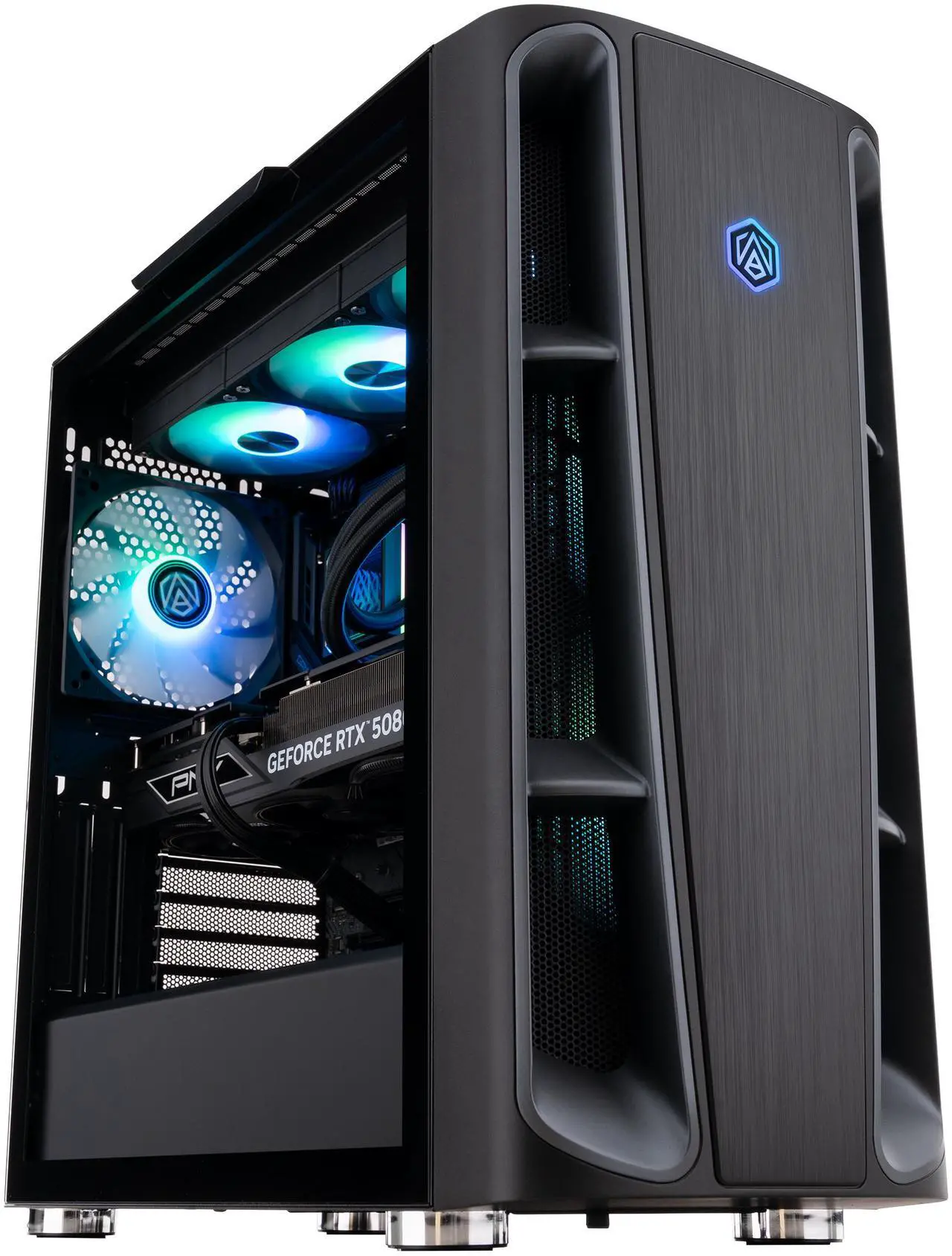
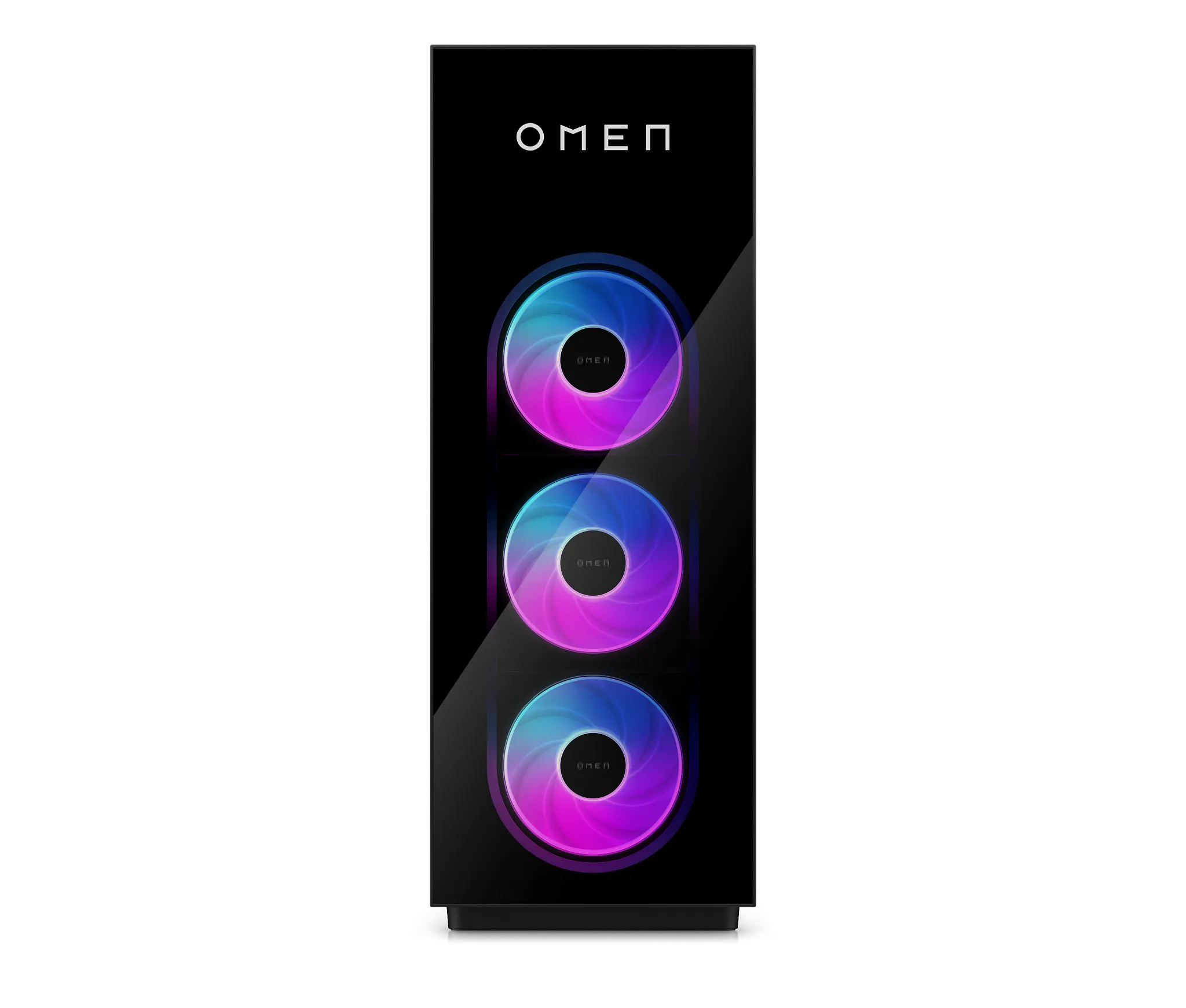
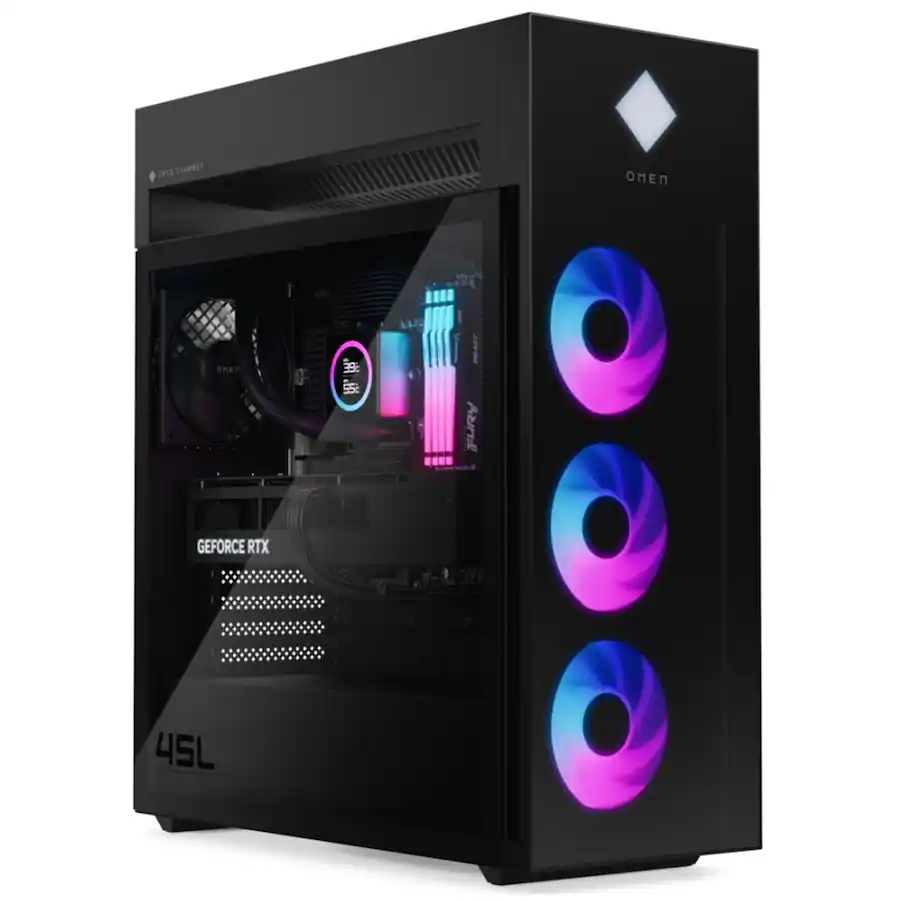
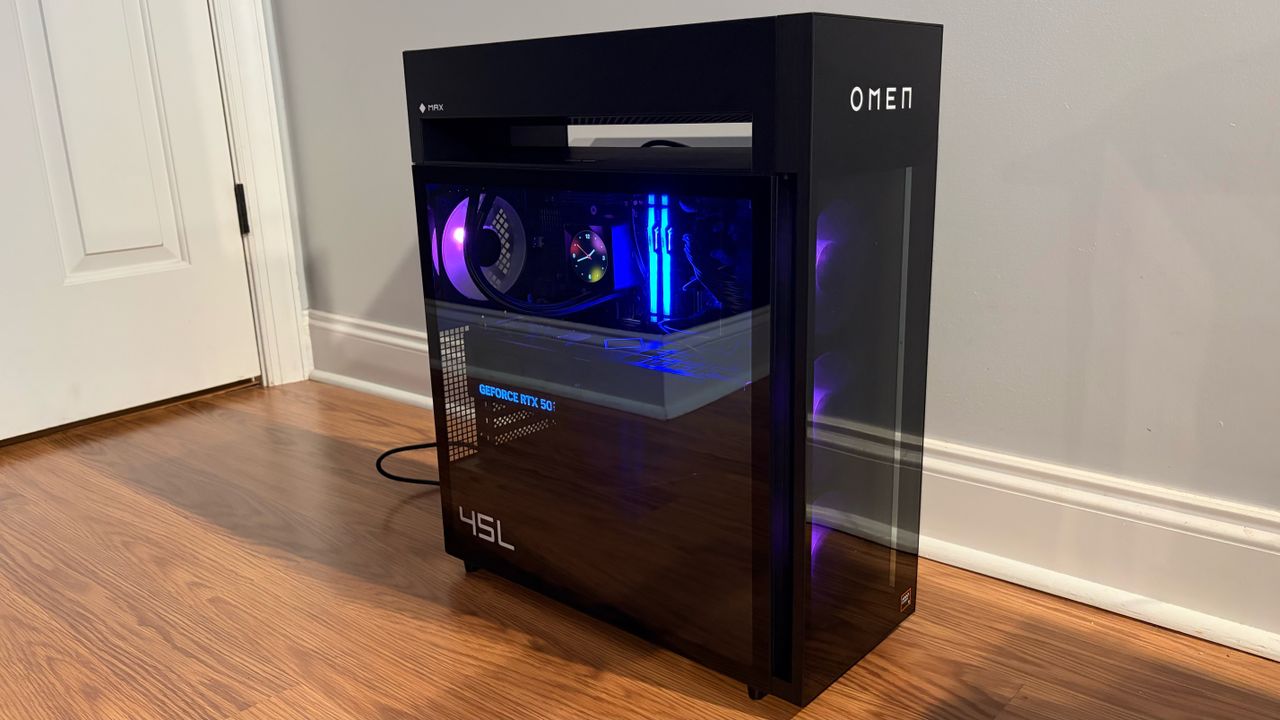
Price aside, this isn't a budget build, but a machine made with serious gaming in mind. The HP Omen Max 45L is one of HP's flagship builds and, as our HP Omen Max 45L review shows, it's a seriously high-quality one. The case it ships with is huge, with three 120mm fans at the front. The model we reviewed had slightly different specs, but the design matches up completely.
A massive $2,200 saving is available right now on this HP Omen Max 45L gaming PC, fitted with an RTX 5090, Core Ultra 9 285K, 64GB of RAM, and 2TB of SSD storage.View Deal
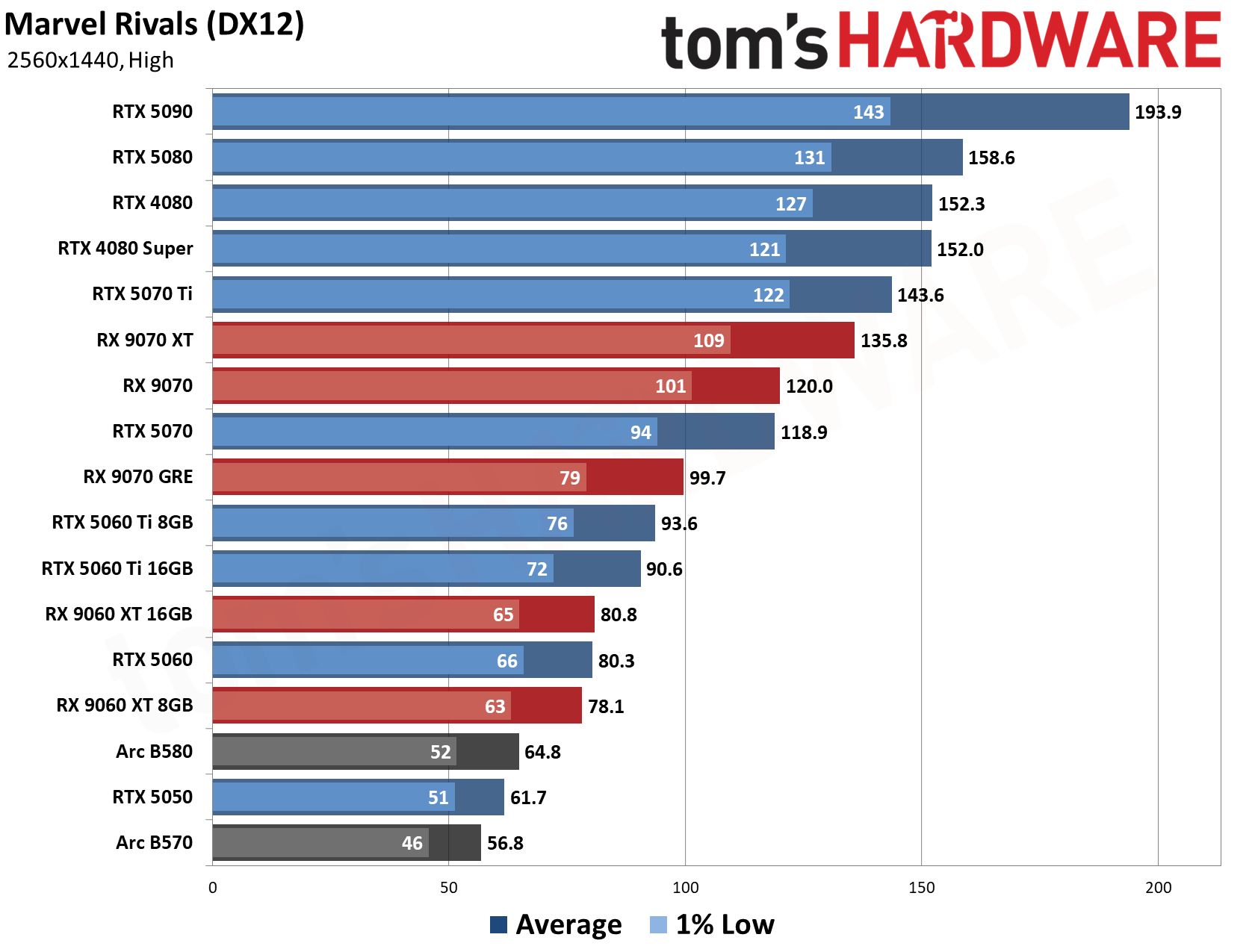
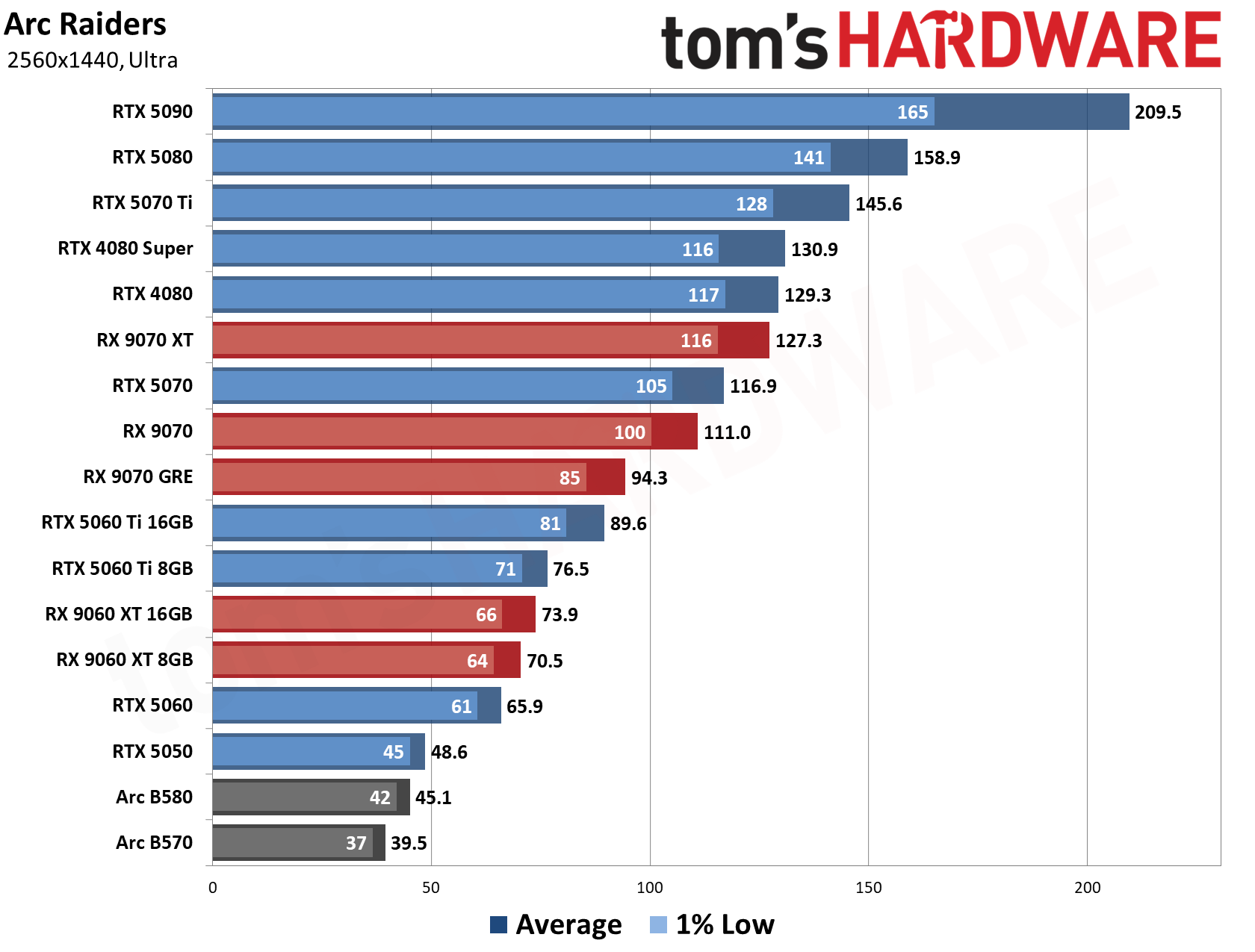
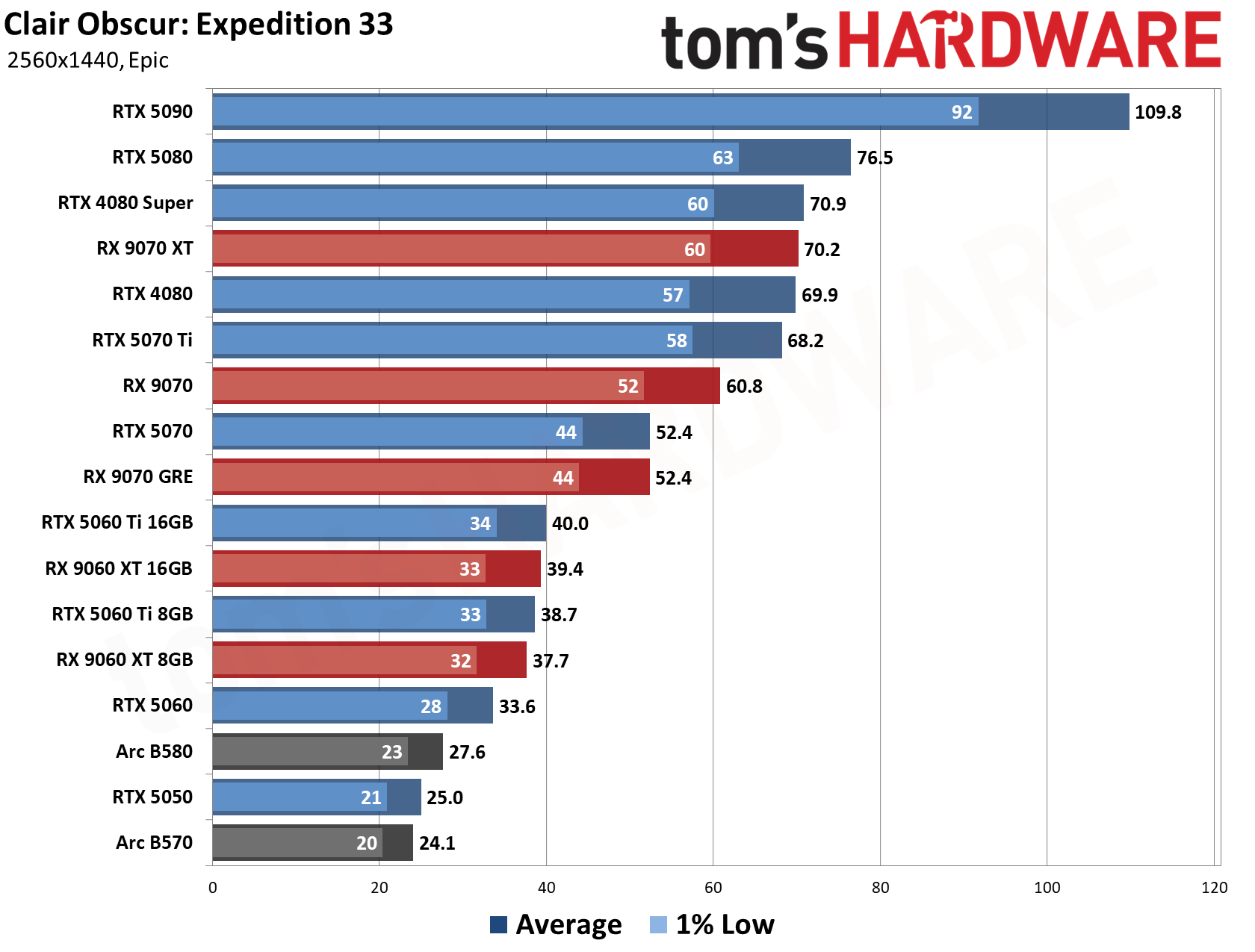
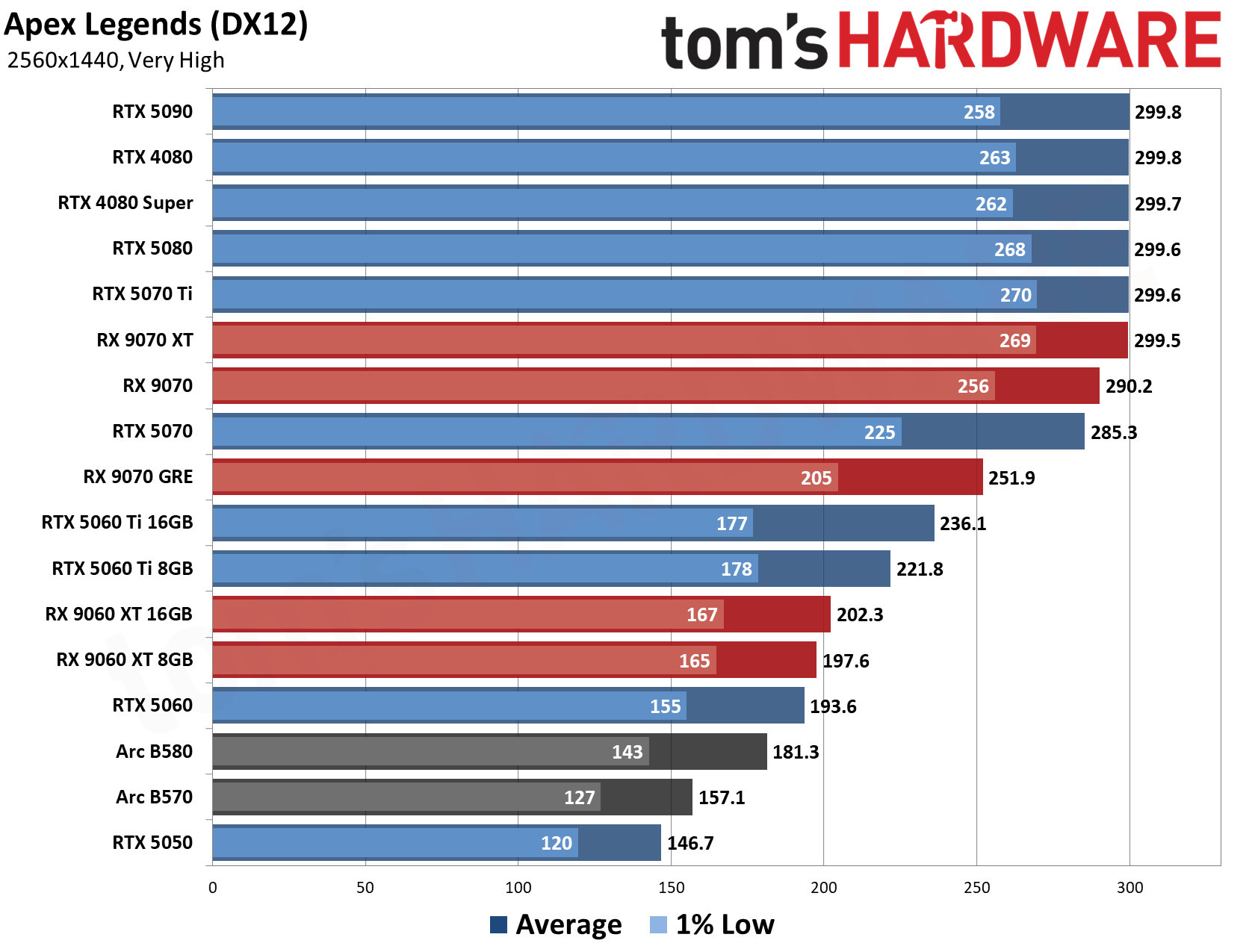
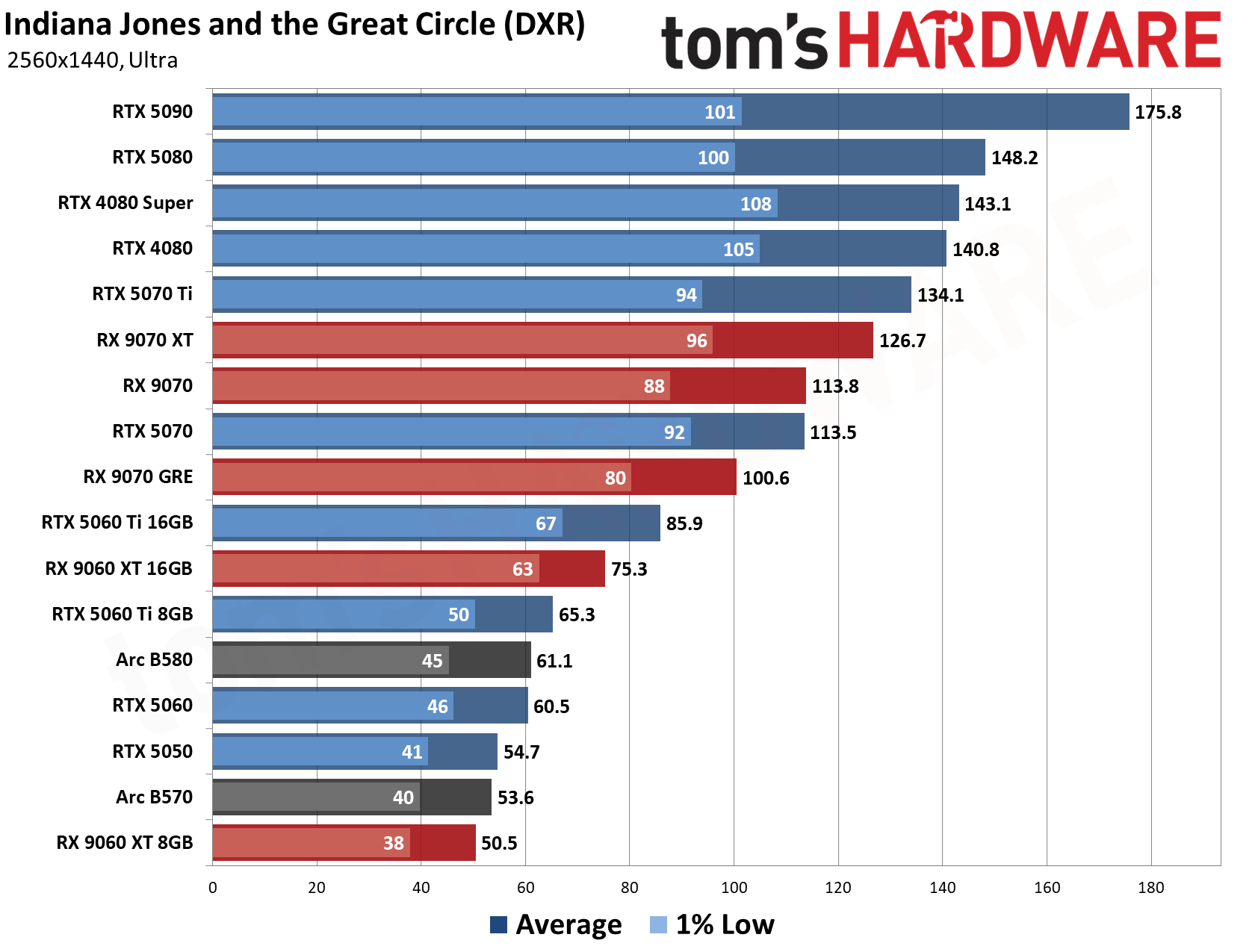
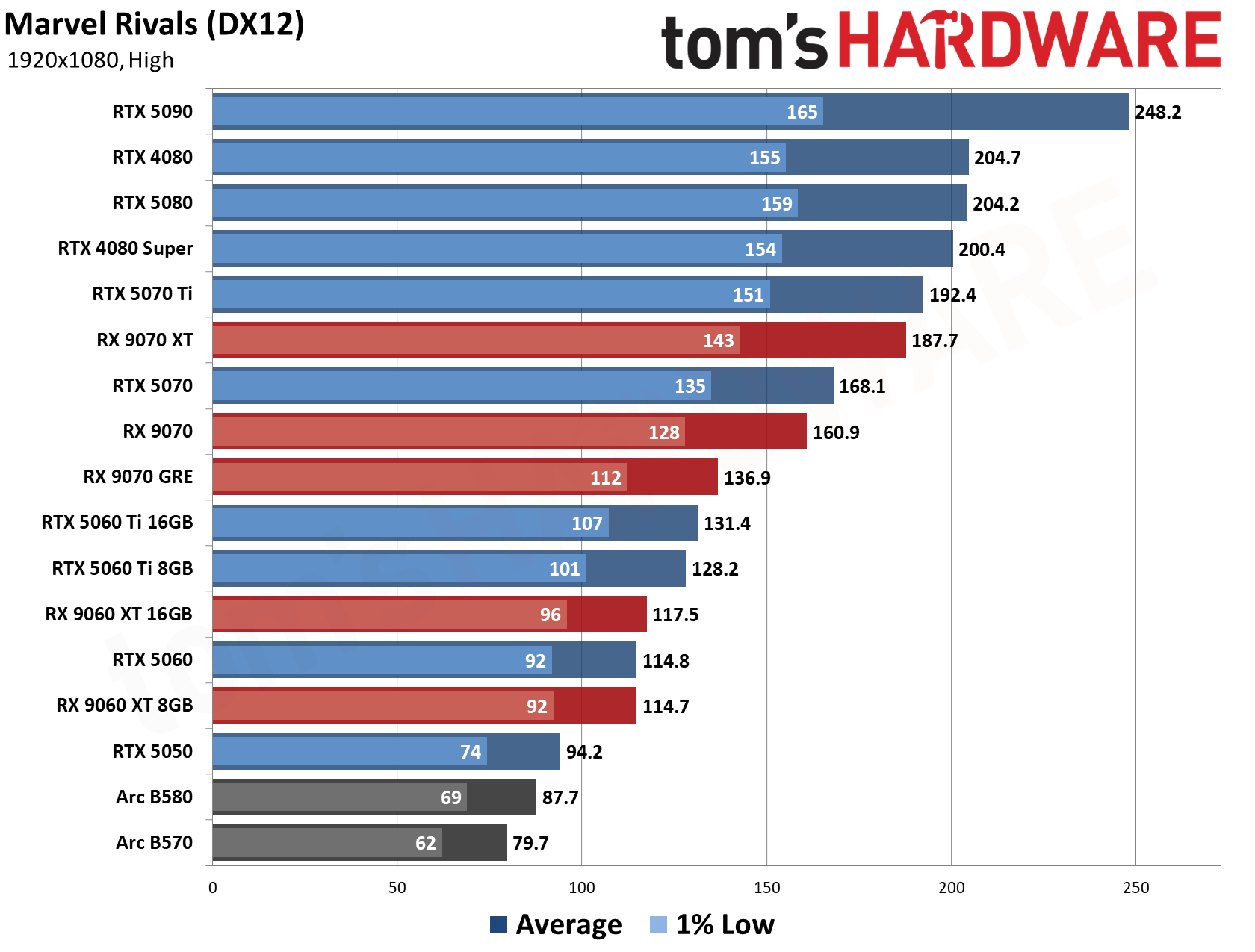
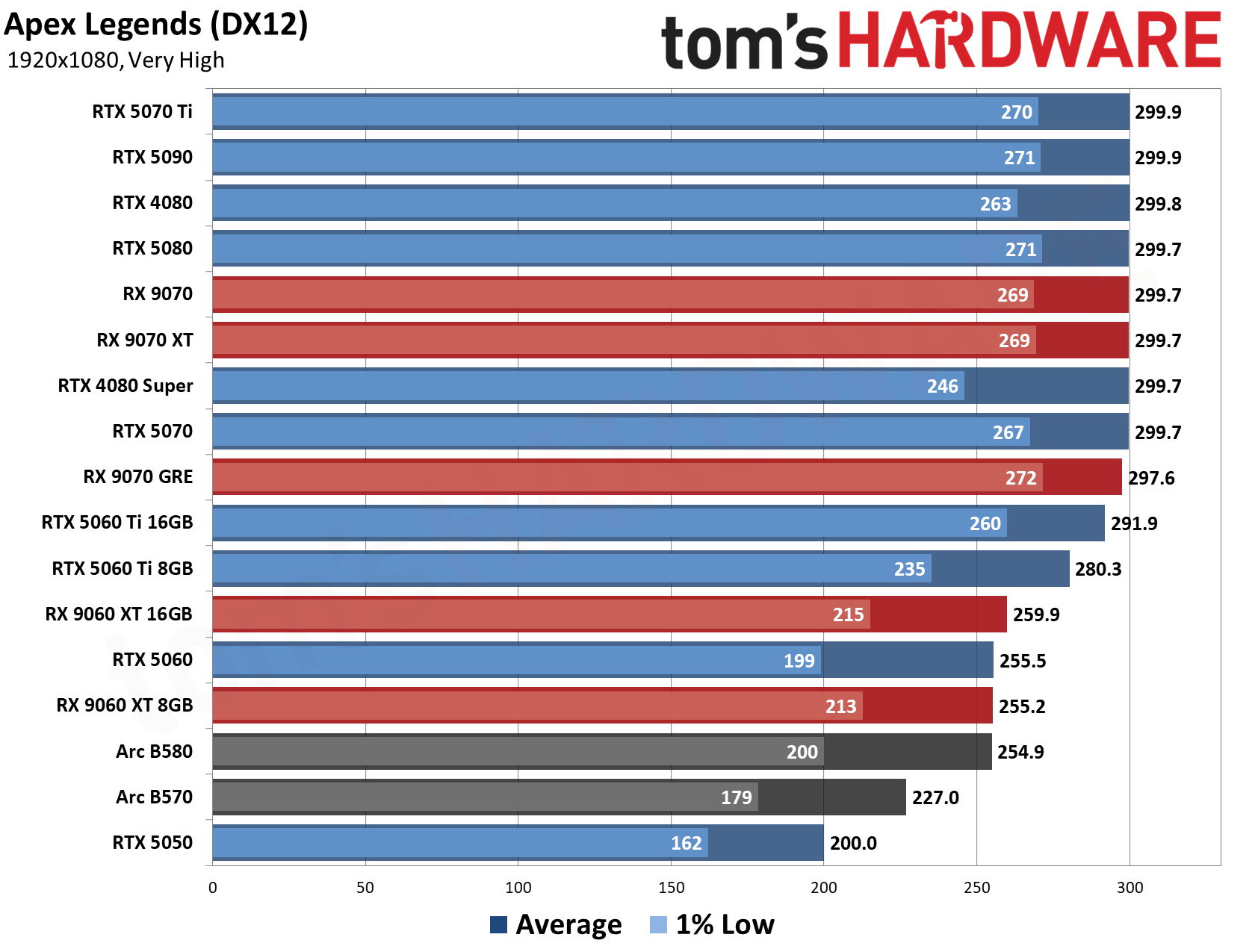
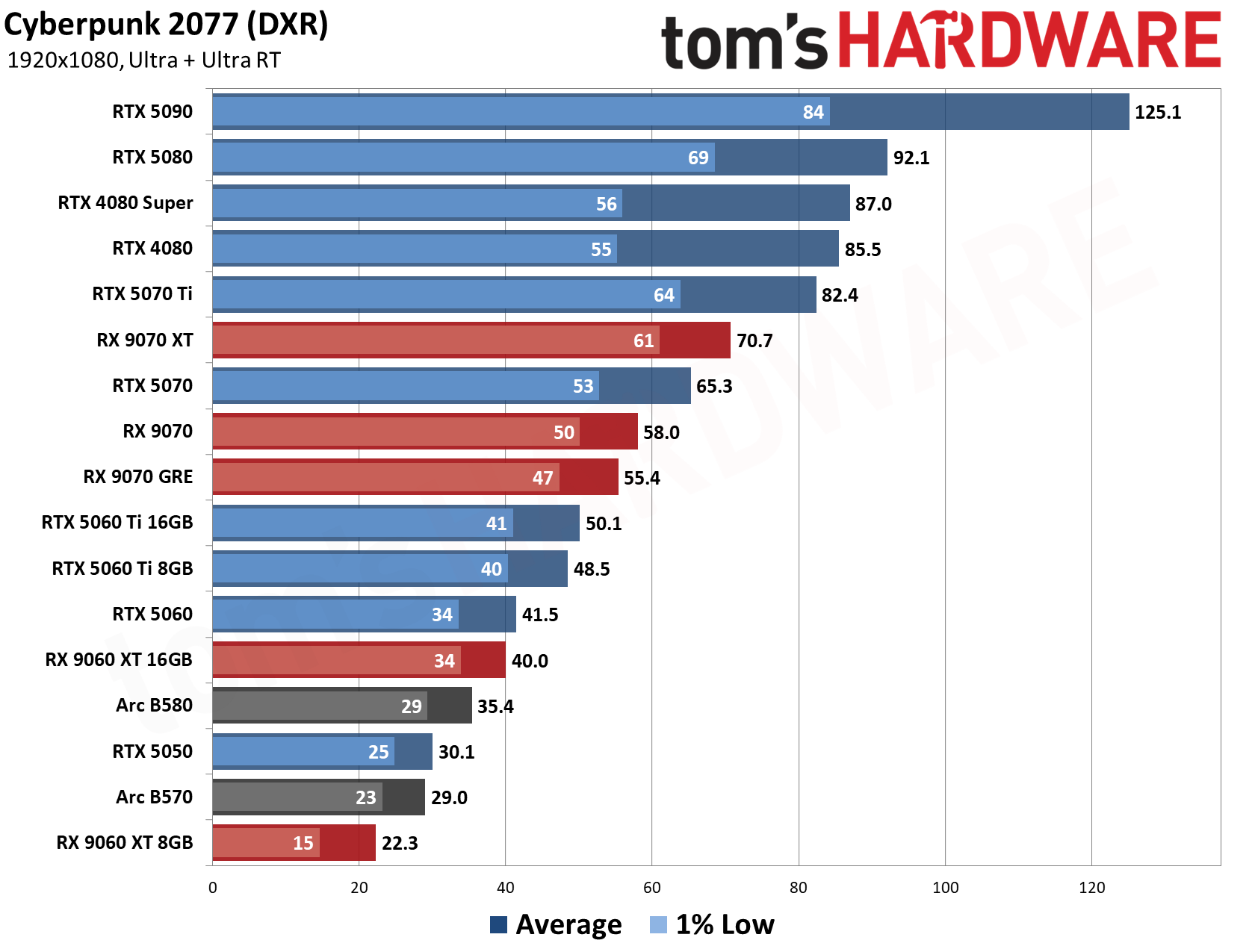
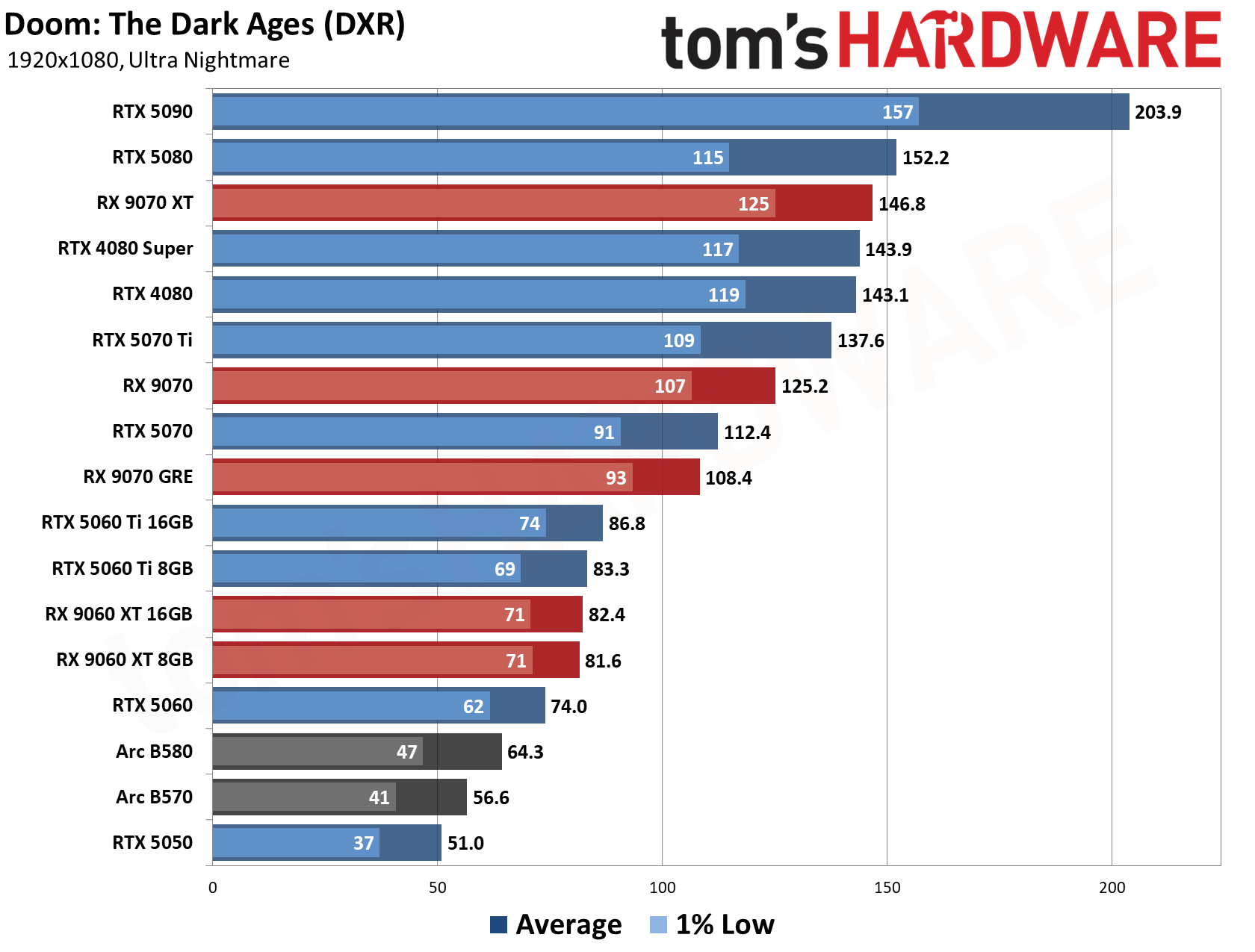
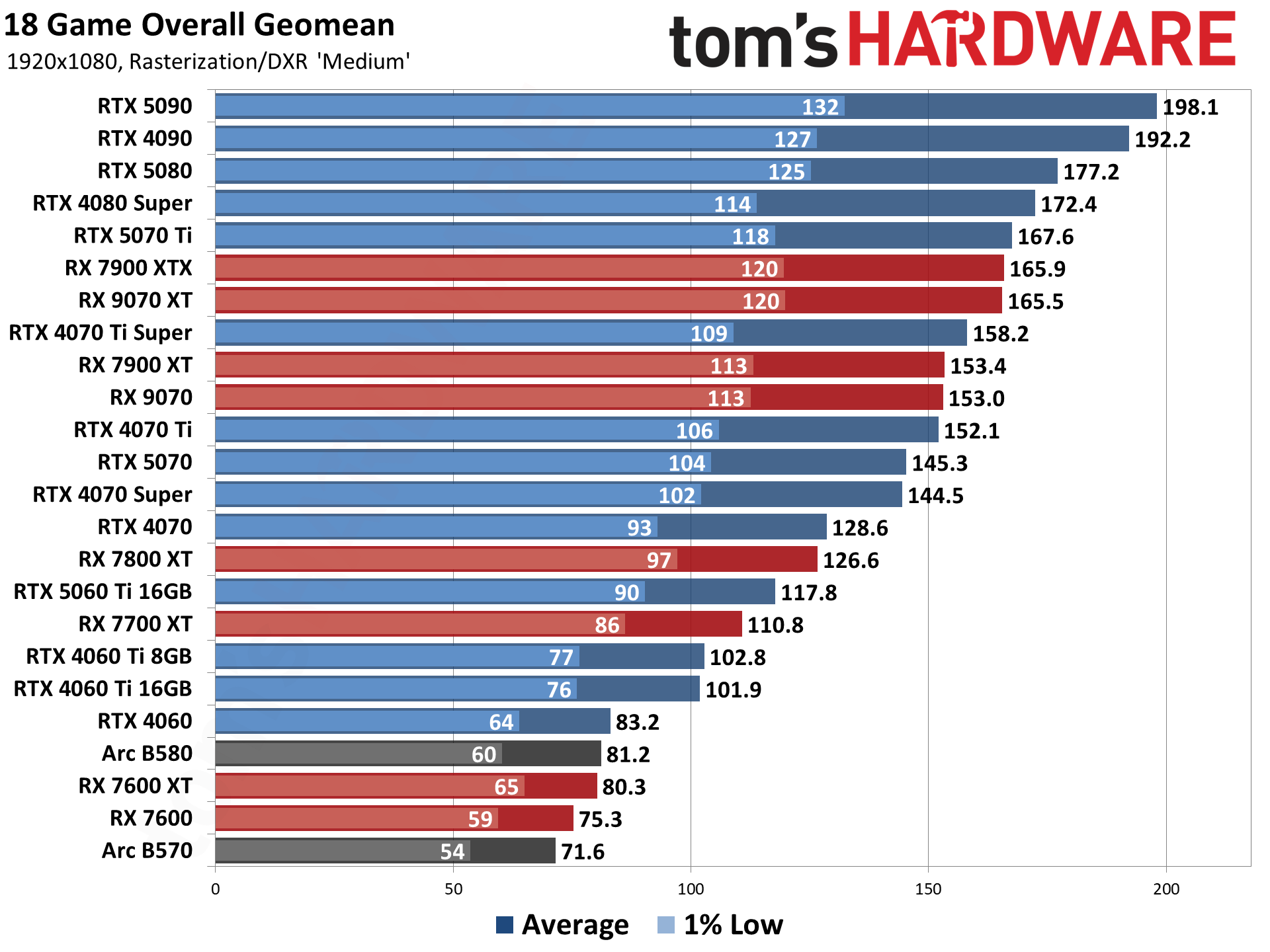
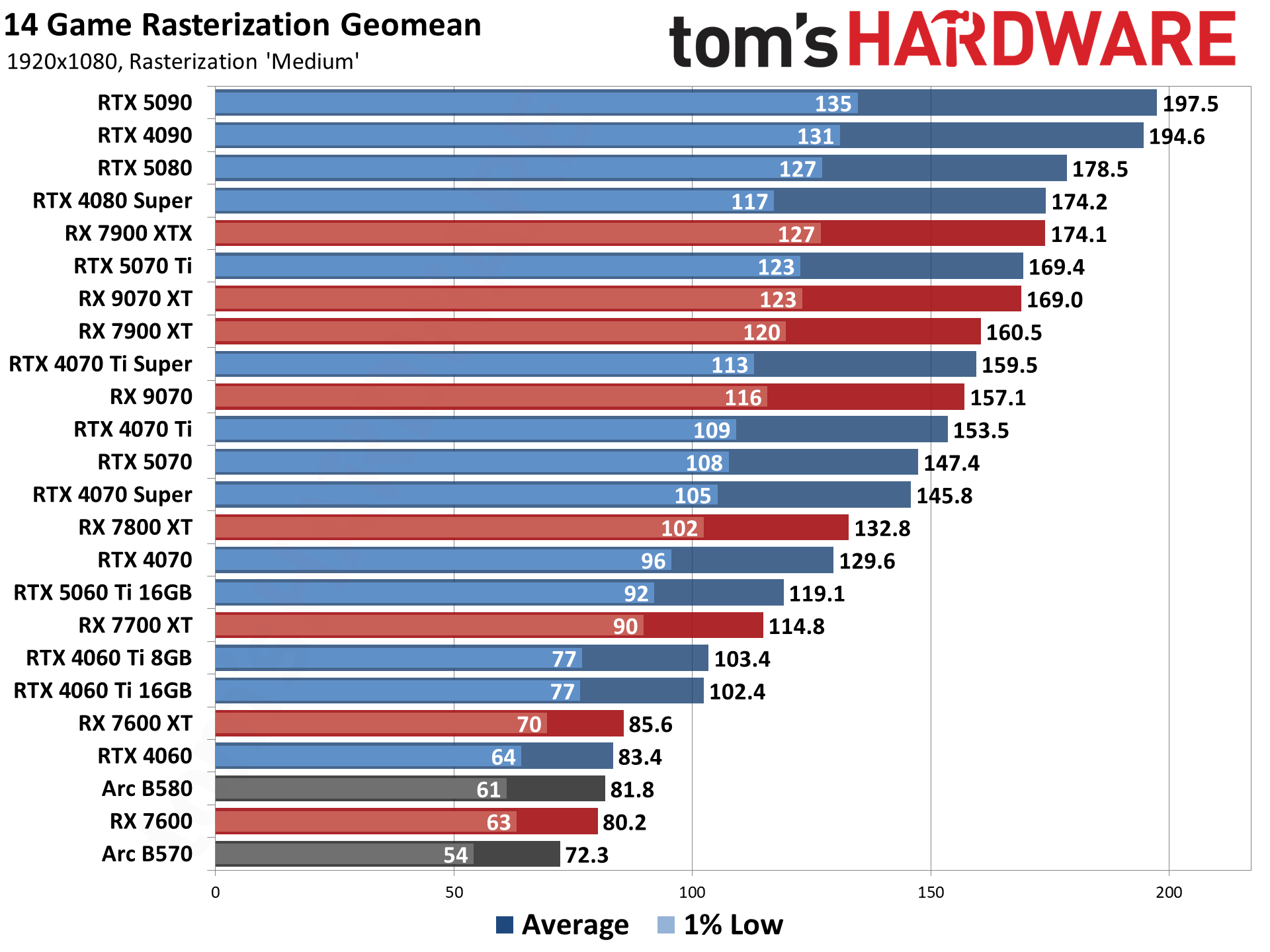
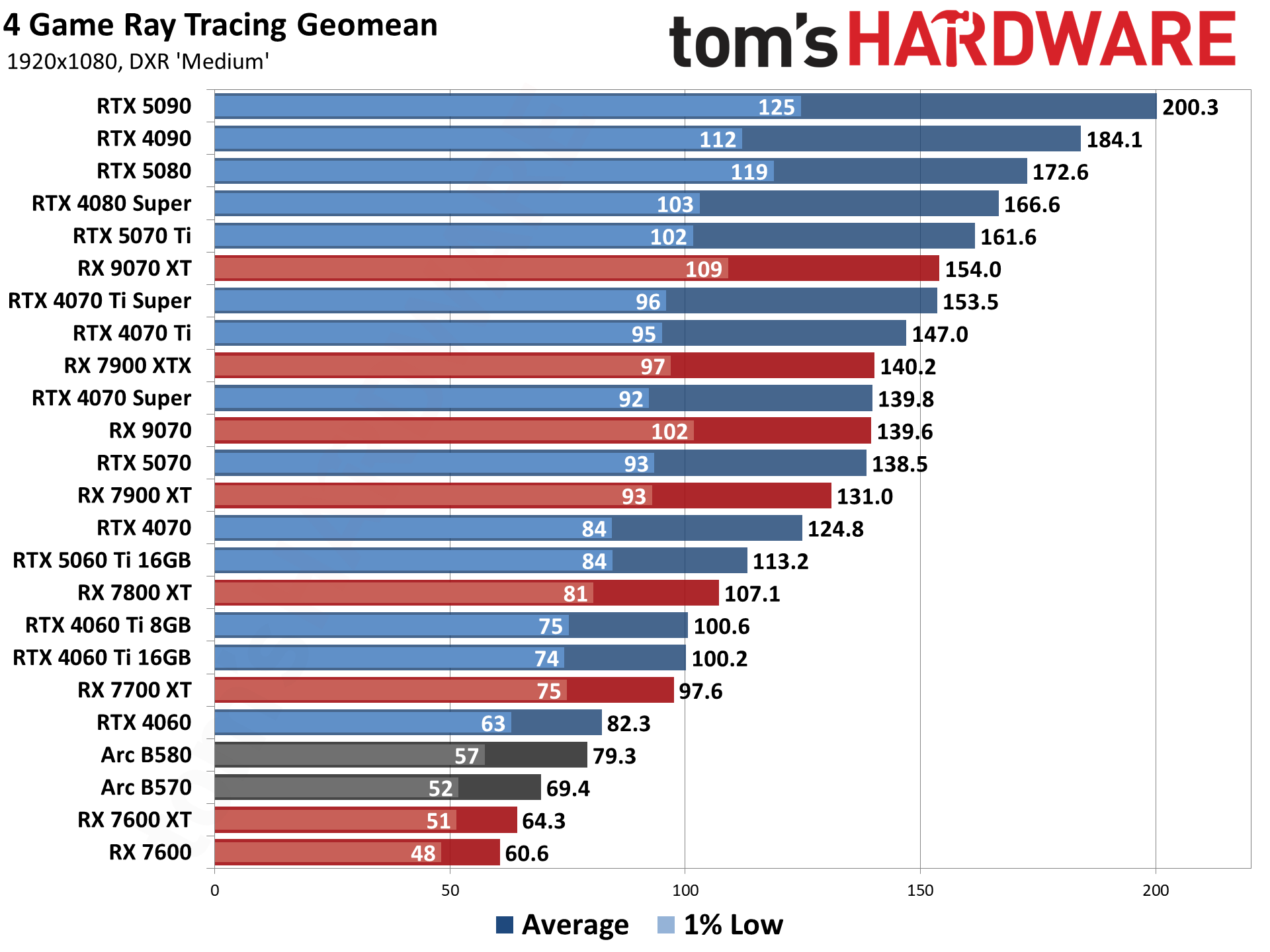
While the hefty RAM and SSD storage are great for gamers, it's the graphics card that you're going to be wowed by. Our GPU benchmark data below confirms that the RTX 5090 is the best consumer graphics card you can buy. No other consumer GPU is able to match it. The RTX 5080 is its next current-gen rival, but the RTX 5090 has more than double its CUDA count (hitting 21,760) and has a massive 32GB of GDDR7 VRAM, using a 512-bit memory bus with bandwidth speeds of up to 1,792 GB/s.
Tom's HardwareTom's HardwareTom's Hardware
The CPU in this machine is the Intel Core 9 Ultra 285K. This is a 24-core CPU, shipping with eight performance cores, which are typically best for the high-performance gaming you'll want to perform on this machine. You also get 16 additional efficient cores for multi-threaded tasks. The 285K is a fully unlocked and overclockable CPU, and the performance cores come with a standard clock speed of 3.7 GHz, which will boost up to 5.7 GHz.
Intel Arrow Lake CPUs like the 285K didn't really excite for gaming when they launched, trailing behind AMD powerhouses like the 9800X3D. That isn't a huge problem here, though, as the raw performance offered by the RTX 5090 is a significant counterweight against any deficiencies in the 285K, and will easily offset and heavily compensate for its shortcomings here. It also helps that updates since launch have improved the 285K's gaming performance to close some of the gap.
For gaming, thanks to the RTX 5090, you can expect to manage high frame rates at 4K and with ray tracing enabled using Ultra graphics presets. Nvidia DLSS 4 support means that, if you ever did hit a performance issue, multi-frame generation can give you a frame rate lift, using AI to boost frame rates in any intensive (or more likely, poorly optimized) games.
The 64GB of Kingston Fury DDR5 RAM is a good uplift to help keep performance high, too, and is worth around $700 in today's market. The RAM offers speeds of 5,600 MT/s and is split across four 16GB modules. You're also getting a 2TB NVMe M.2 SSD with this PC, offering Gen 4 speeds, which should give you a good amount of space to install a couple of big AAA games.
All in all, though, it's the price that makes this HP pre-built a must-buy for gamers. The RTX 5090 itself costs more than this PC does, and that's before you consider that you're getting 64GB of DDR5 RAM and 2TB of SSD storage in a world where AI has forced memory prices to skyrocket.
Nvidia officially launched the latest DGX Station desktop at Computex 2026 earlier this year, but the announcement was not accompanied by an explicit price tag. The expectation of an MSRP withers away when it comes to enterprise-grade hardware anyway, but still, early chatter had pointed toward a $100,000 ballpark figure. That number has just been confirmed, as a DGX Station from Exxact was found listed for $94,930 on its website, featuring the all-powerful GB300 Superchip, ready to customize and buy.
I repeatedly asked Nvidia at Computex how much the DGX Station desktop tower PC was going to be. The rep kept dodging the question. Welp. It's $100,000 pic.twitter.com/WRxL5Iq7k9August 22, 2026
The desktop tower in question is the Valence VWS-158270643 that was originally unveiled a few months ago and was part of the lineup shared by other OEMs such as Dell and HP. Since this hardware is not meant for regular consumers — those who can afford it can pay really any price for it — Nvidia's partners don't make its cost outright public information. Instead, you can ask for quotes or inquire about a proper deployment to get the number. That's why the Exxact listing is newsworthy.
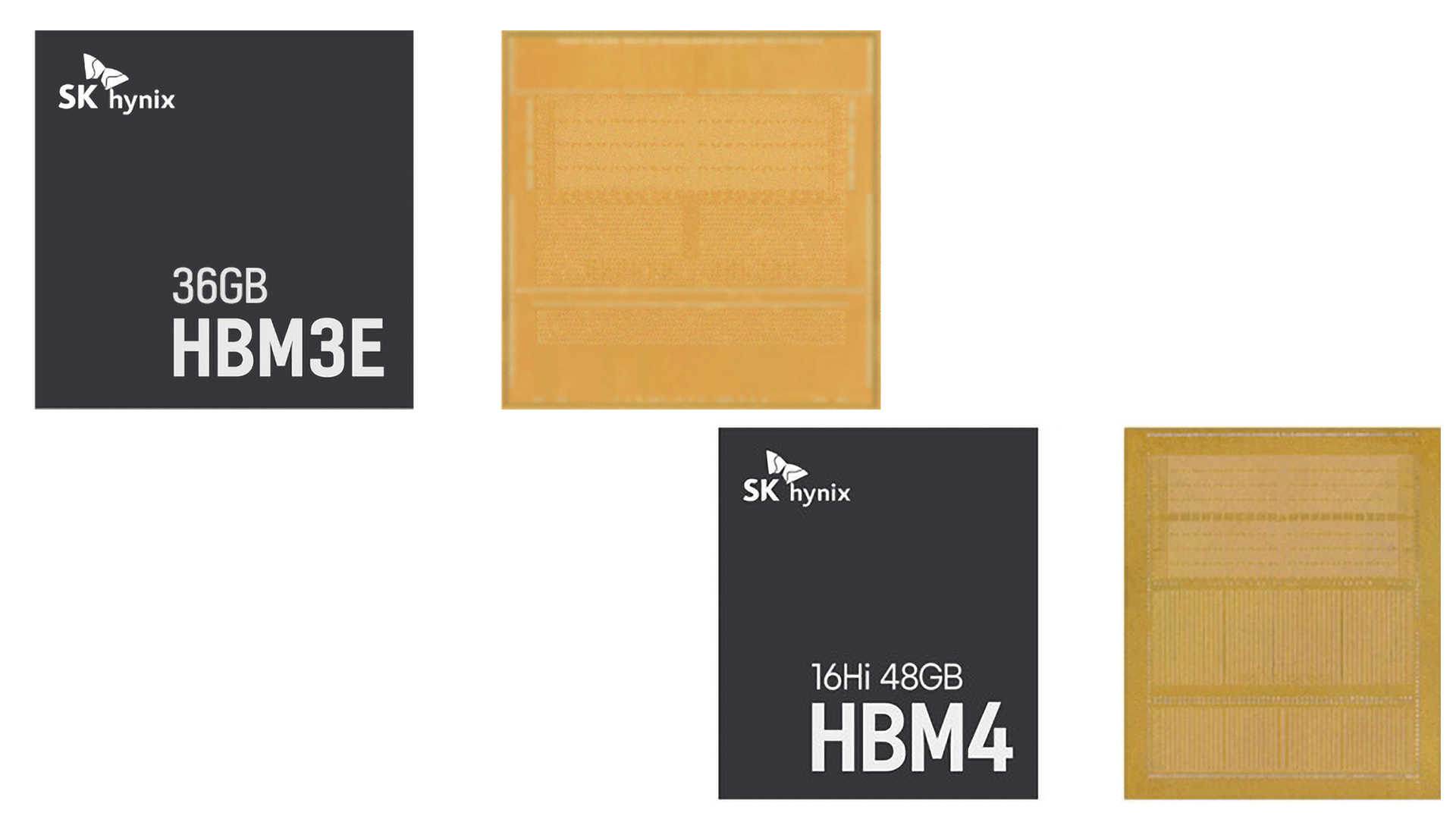
The Valence VWS-158270643 starts at $94,930, and that gets you one GB300 enclosed in a standard full-sized tower. The main draw of the GB300 is the Blackwell Ultra GPU that comes with 252GB of HBM3e memory. It talks to a 72-core Arm-based Grace CPU through a 900 GB/s NVLink-C2C interconnect that shares a further 496GB of LPDDR5x RAM with the GPU.
Combined, you get a massive 748GB pool of unified memory that allows you to fine-tune and deploy AI models locally instead of worrying about token costs or any cloud vulnerabilities. For large enterprises that need to quickly iterate on the go and want maximum security, a DGX Station is considered a worthwhile investment even at $100,000, especially if the smaller DGX Spark isn't enough for your workloads.
ExxactExxactExxact
The Valence VWS-158270643 in specific can be configured with different GPUs for video output (since the GB300 doesn't have one) and you get a few SSD options to choose from based on your training data needs. There are three "optimized configs" that go up to $96,316. The top-tier manual configuration costs $108,350 with an RTX Pro 6000 Blackwell (that has its own 96GB of VRAM) and 2x extra 2TB PCIe 5.0 SSDs.
The Valence VWS-158270643 comes with a 1,600W 80+ Titanium power supply (which is enough to cover a dedicated display-out GPU as well), so it can be plugged into any standard outlet, just like a regular PC. Though it comes with Linux-based DGX OS out of the box instead of Windows. Both the Grace CPU and the Blackwell Ultra GPU are liquid-cooled with a massive direct-to-chip (D2C) coldplate, and there are three fans up top for optimal airflow.
Front panel I/O is nonexistent, but there are 2x QSFP112 ports at the back driven by the integrated ConnectX-SuperNIC for 800 Gbps/s interconnect between two DGX Station towers. There's also 1x 10 Gbps RJ45 port, a dedicated 1Gbps RJ45 management port, 1x mini-DisplayPort for local BMC management (not display out), 1x USB Micro-B for direct serial access to said BMC, 4x standard USB Type-A, and a 3.5mm headphone jack.
Exxact did not disclose the exact materials of the tower, but we can infer from the pictures that it's made out of steel, and the design is rather sleek. For $100,000, you also get a 3-year warranty so you can rest assured your parts are insured against a potential popping of a bubble. You can order up to ten of these at the same time, but there's no standard checkout page; you still have to provide your details in order to be contacted back for a purchase.
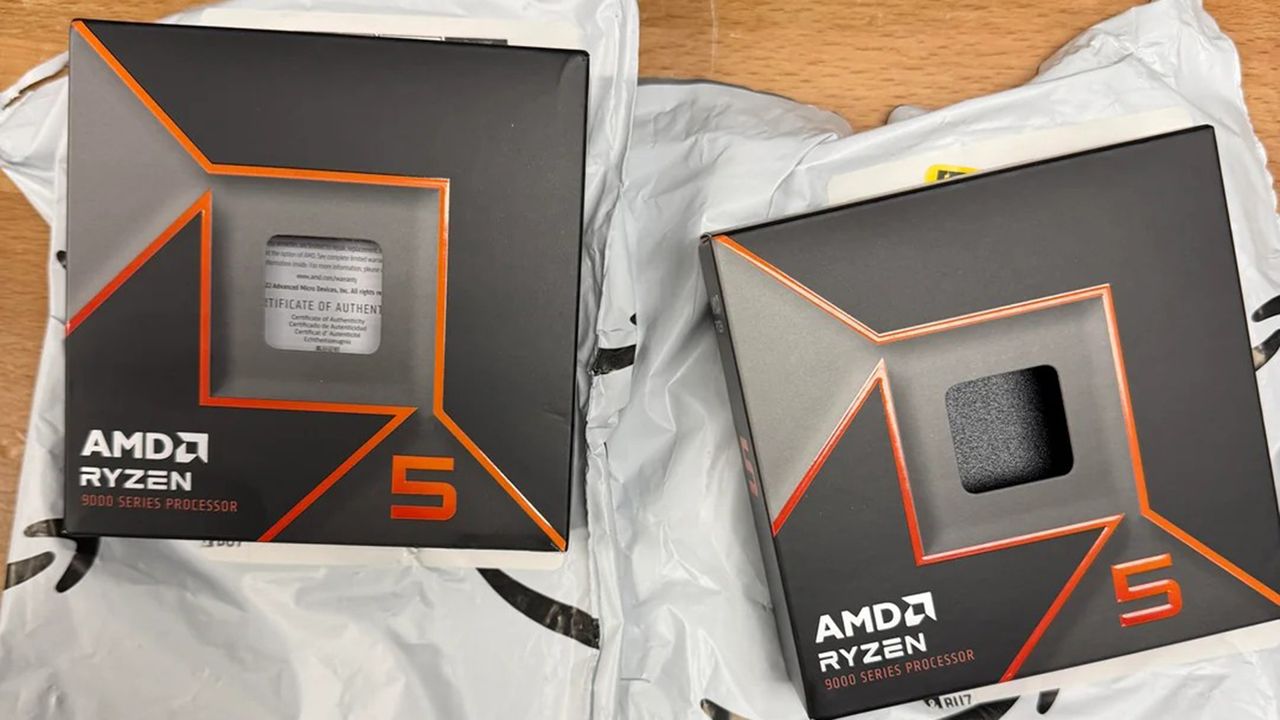
A New York-based computer repair and custom gaming PC retail store is the latest victim of an alleged Amazon delivery scam. Sharing their experience in a Reddit post, one of the co-owners of PC Plug wrote that they ordered an AMD Ryzen 5 9600X a few days ago but received only the box, with the CPU missing. After immediately requesting a refund, they went on to purchase another CPU with next-day delivery. However, they once again received only the retail box, with no CPU inside.
The post also mentions that they record every product unboxing and maintain proper documentation specifically for such cases. Instead of ordering directly from Amazon or the manufacturer, one of the inventory managers accidentally purchased the CPU from “The Tech Group,” a third-party seller with decent ratings whose orders were fulfilled by Amazon. However, they claim those ratings could be fake.
The co-owner told Tom's Hardware that they order 90% of their hardware inventory through Amazon, which amounts to roughly $10,000 a month. “This is the first time we’ve received a product with no hardware in it, and it happened twice in the matter of three days.” They also shared that this may have happened around 10 times over the last five years, with packages arriving damaged or missing a few components.
They also claim to have security camera footage showing both Amazon packages being opened and found to contain only the CPU boxes. While they are not familiar with The Tech Group, they did notice a Reddit user claiming to have previously purchased from the seller without any issues. The store usually orders directly from Amazon or manufacturers on the platform, but the two Ryzen 5 9600X from the seller “slipped through the cracks.” Despite having a good track record with Amazon, the co-owner is now concerned that the attention surrounding the incident could potentially put their Amazon account at risk, as much of the business relies on Amazon Business Prime to purchase hardware inventory.
Such scams are quite common on Amazon, where buyers sometimes receive completely different, or in this case, no product at all. In a recent case, a Reddit user ordered a lightly used Ryzen 9 9900X3D from Amazon Warehouse but discovered that the box contained a much older Ryzen 9 3900X, a 2019 AM4 processor worth substantially less than the 2025 flagship originally ordered.
It is highly recommended to always purchase from reputable sellers and verify the seller’s ratings and reviews before placing an order, especially if you are planning to buy expensive computer hardware. Make sure you also record the unboxing, as video evidence can be useful if the package arrives damaged, tampered with, or missing an item.
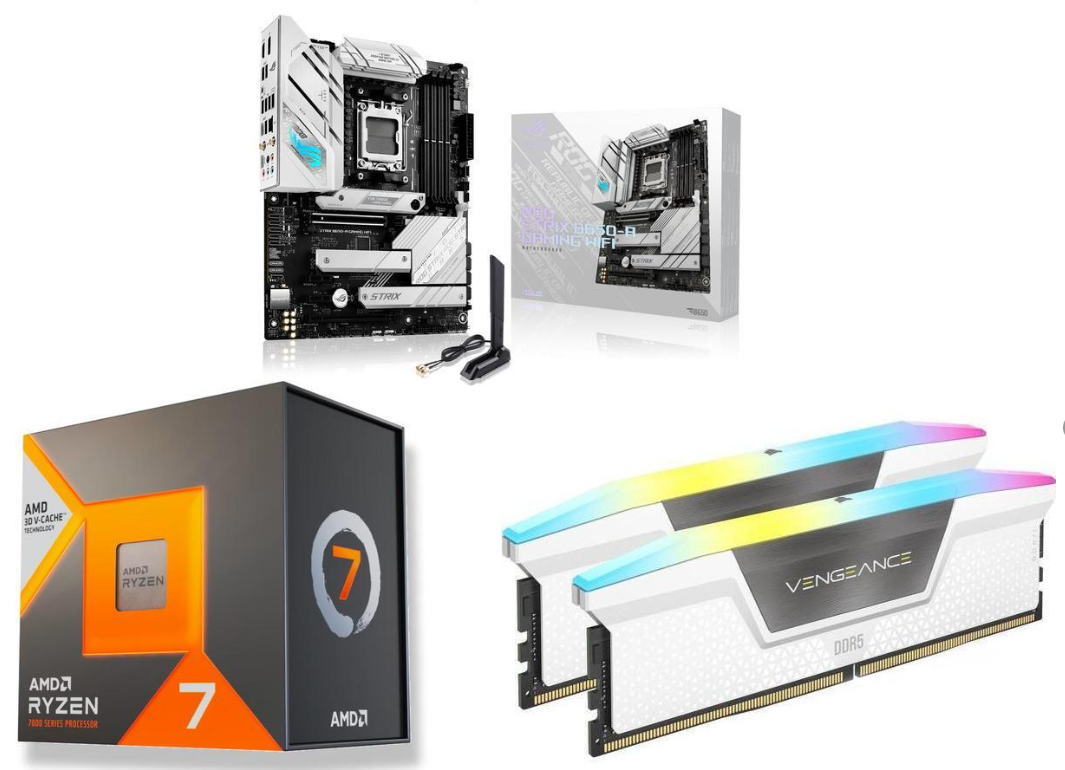
While the Ryzen 7 7700X3D isn’t quite as fast as the 9800X3D, the 8-core 16-thread Zen 4 processor is still one of the top gaming chips and is well ahead of the recently re-released (and expensive, $349.99 at Newegg) Ryzen 7 5800X3D. Performance-wise, the 7700X3D is squarely between the faster 7800X3D and slower 7600X3D, and it clearly holds its own among its peers and is a great 1080p/144 0p gaming chip while not paying for the more expensive 9000 series X3D chips. Newegg also throws in a free Cooler Master Elite Liquid 240 AIO ($80 value), which pairs nicely with the processor.
Along with the processor is a 16GB (2x8GB) kit of Corsair Vengeance DDR5-6000 CL36 RAM in white to match the motherboard. This kit features a frosted RGB light bar that runs the length of the sticks, drawing attention inside your case. Or, if RGB lighting isn’t your thing and you prefer a stealthy appearance, you can turn it off. The DDR5-6000 speed lands in the sweet spot for the AM5 platform and is a worthwhile, good-looking option. The SK Hynix ICs under the heatsink pair nicely with the board and offer plenty of overclocking headroom if you choose.
FutureFutureFuture
Asus’ ROG Strix B650-A Gaming Wifi is a mid-range motherboard with a black PCB, silver/white heatsinks, and ROG RGB, providing a stark contrast of colors inside your chassis. The board offers capable power delivery, three M.2 sockets (one PCIe 5.0) and four SATA ports for storage, fast networking with integrated Wi-Fi 6E and 2.5 GbE, ample USB ports on the rear I/O including 20 Gbps Type-C port on the rear IO (8 other Type-A ports), a quality audio solution with the Realtek ALC4080 chip and Savitech SV3H712 combo, and finally, it offers a DIY-friendly design to help building your PC easier.
Together, this three-item combo can turn your AM5 upgrade dreams into reality without breaking the bank. At only $609.99, it’s a serious option for building or upgrading your gaming PC. And since it’s AM5, you can drop-in-upgrade to a 9000-series processor, AMD’s latest and greatest, like the Ryzen 7 9800X3D in the future.
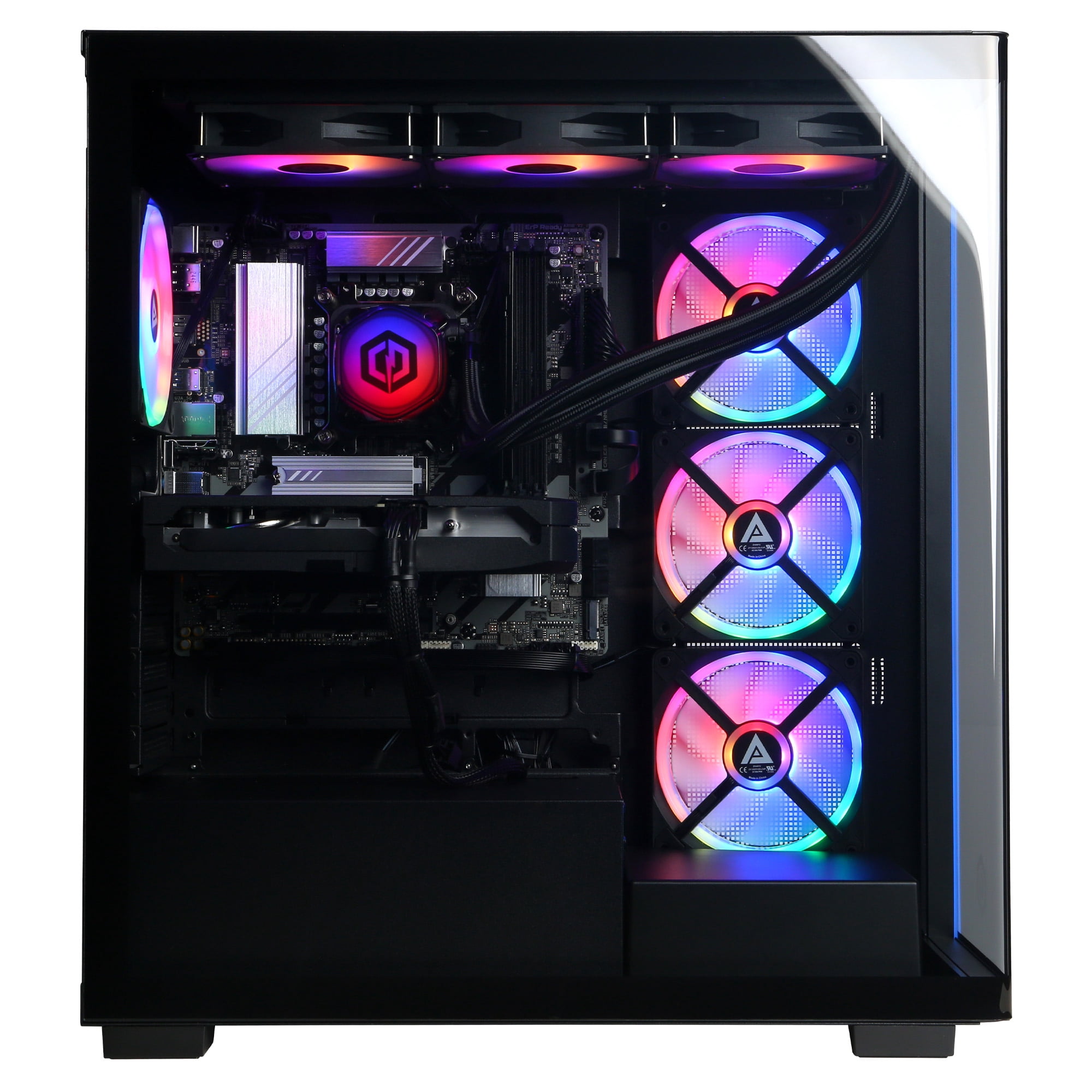
Building a PC is more expensive and thereby more stressful than ever in 2026. A good old-fashioned pre-built is a great way to save yourself some time and a ton of cash on parts, with exorbitant RAM, SSD, and GPU pricing yet to fully filter down to the pre-built market. As such, you can score this Intel Core Ultra 9 285-powered CyberPowerPC with an AMD Radeon RX 9060 XT 16GB, 32GB of DDR5 RAM, a 2TB SSD, and more for just $1,849, a $500 discount.
Considering 32GB of DDR5 RAM alone costs $400 right now, stacking up the cost of parts in this build reveals its value pretty quickly. The Intel Core Ultra 9 285 is around $700 at the moment, with the 285K retailing at $514. A 2TB M.2 PCIe 4.0 drive will set you back around $250, and the GPU in this build is $460. That's nearly the entire cost before you've factored in a case, motherboard, PSU, and cooler, not to mention the build cost.
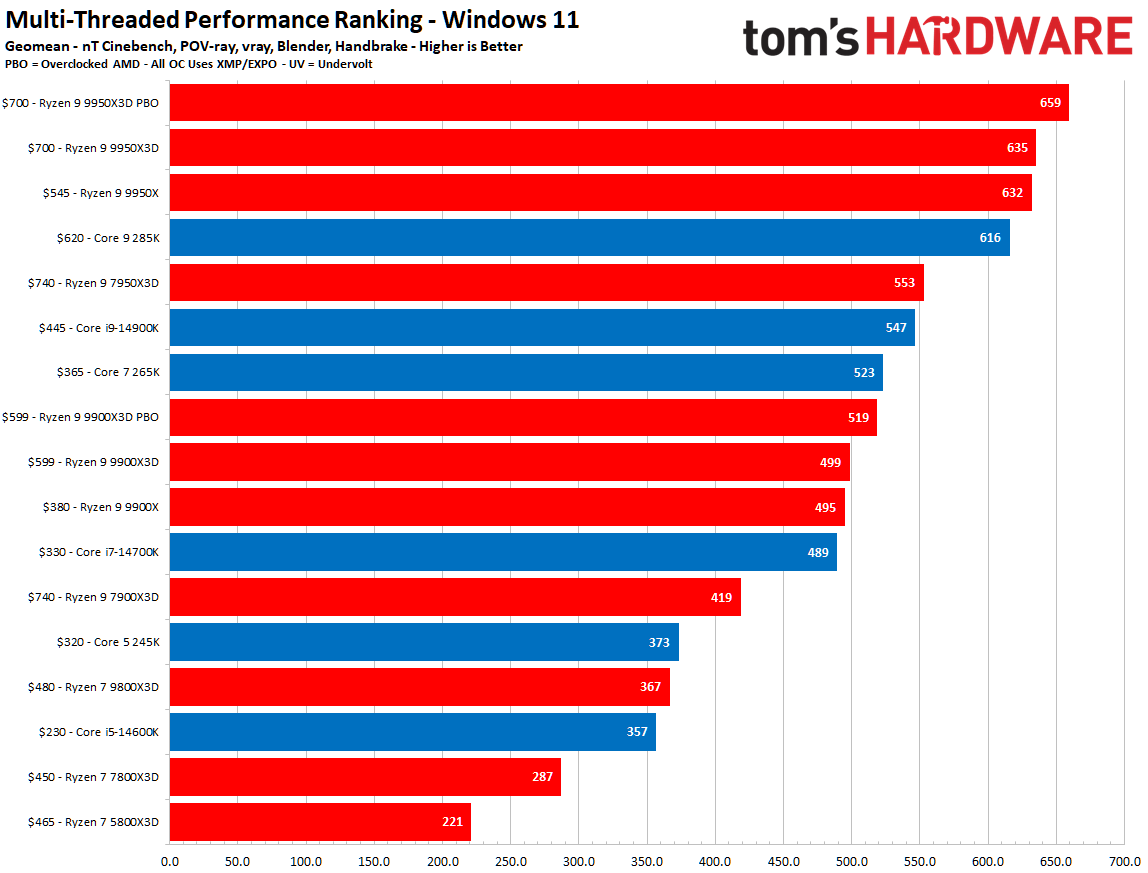
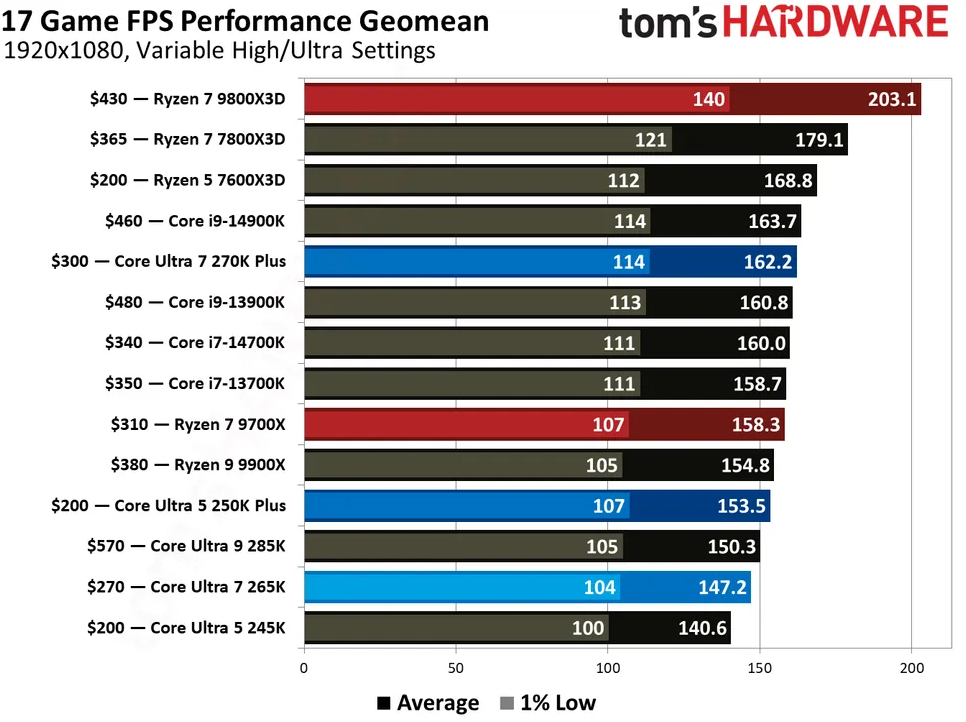
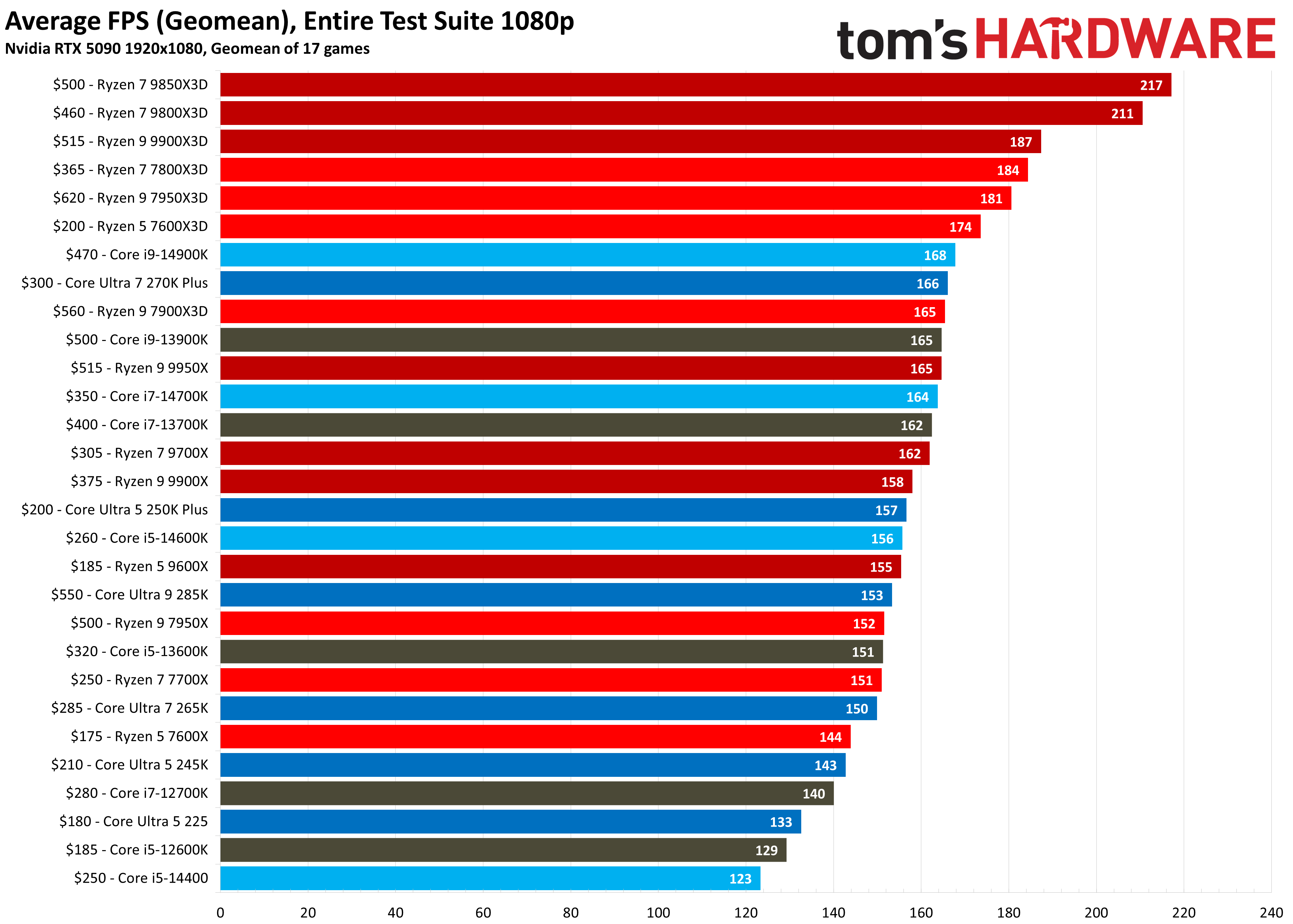
The spec of this PC is admittedly a slightly strange combination of GPU and CPU. Intel's 285 Arrow Lake CPU is the company's current-gen 24-core flagship. With eight performance cores and 16 efficiency cores, it performs extremely well in multi-threaded Windows 11 testing. While it can't match AMD's potent X3D Ryzen chips in gaming, it was still more than enough to average 153 frames per second in our 1080p testing suite of 17 games.
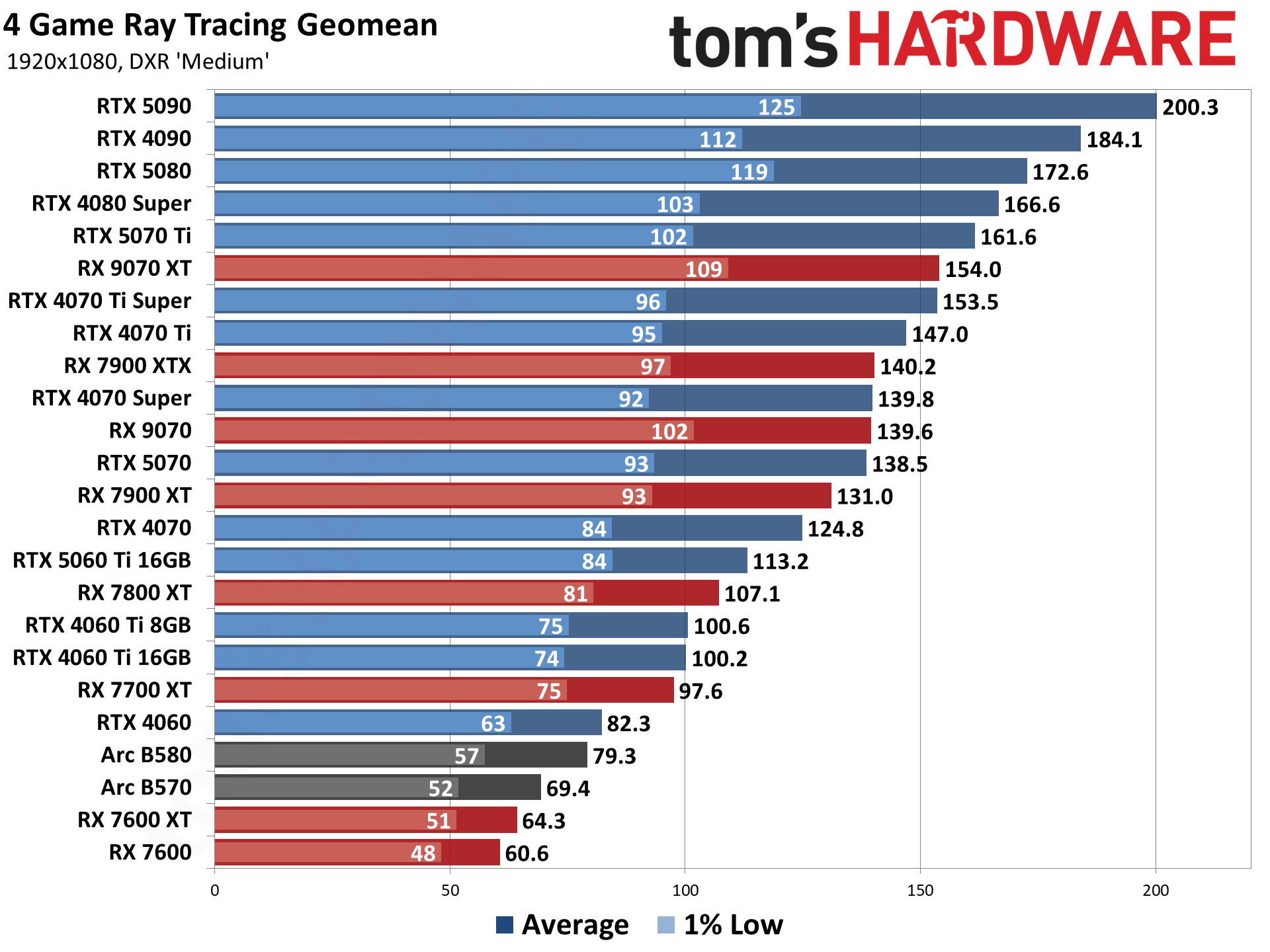
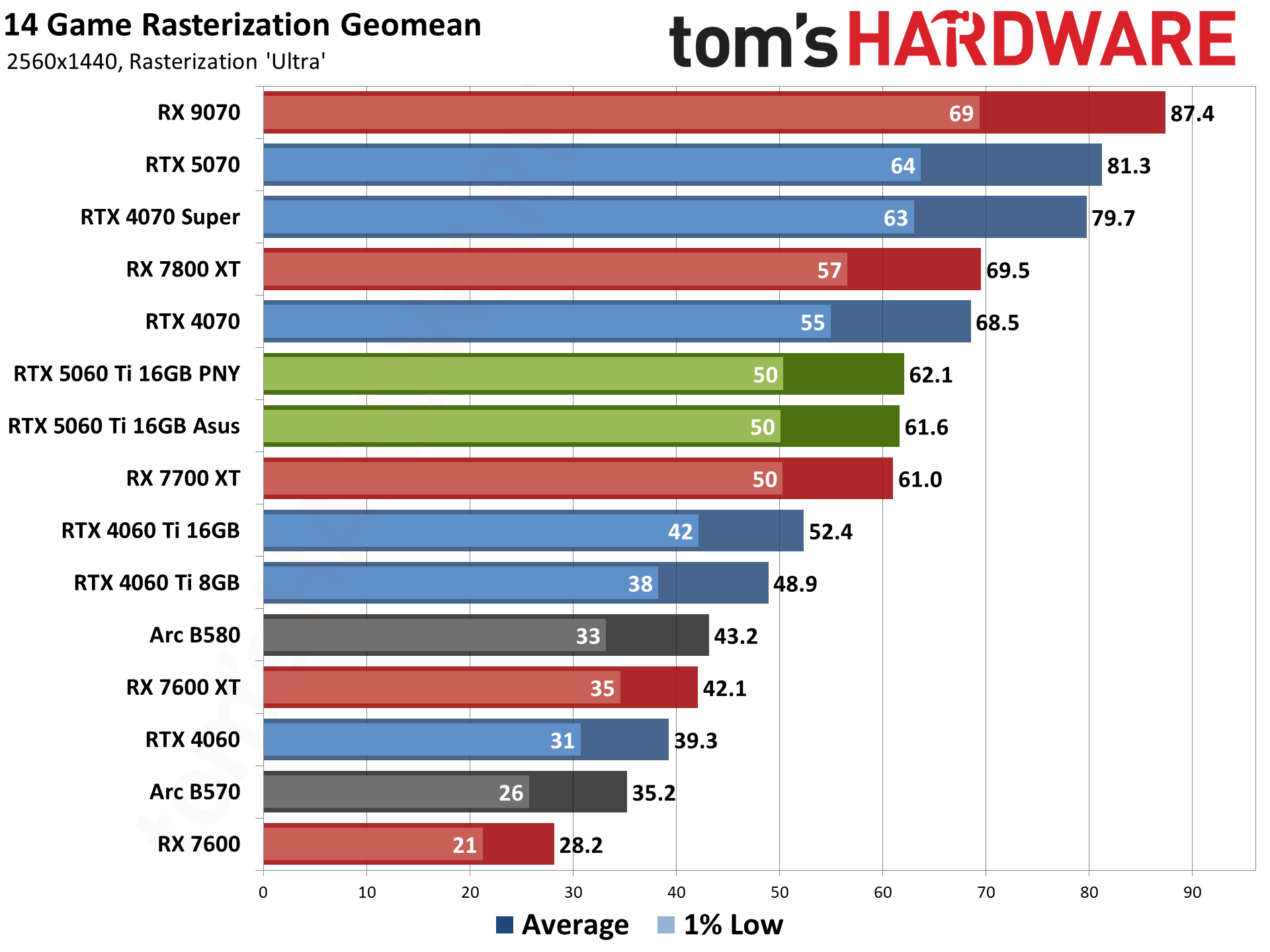
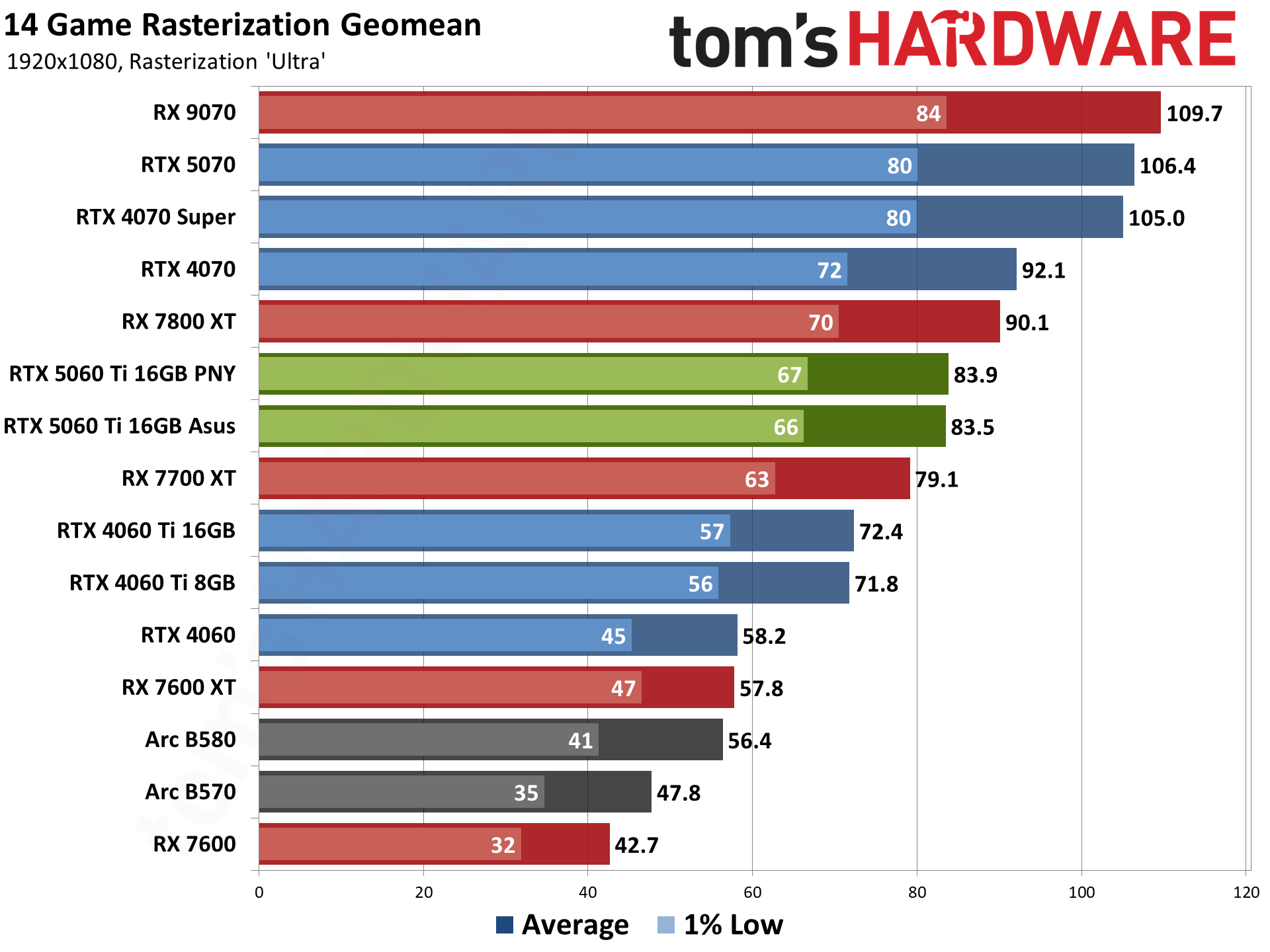
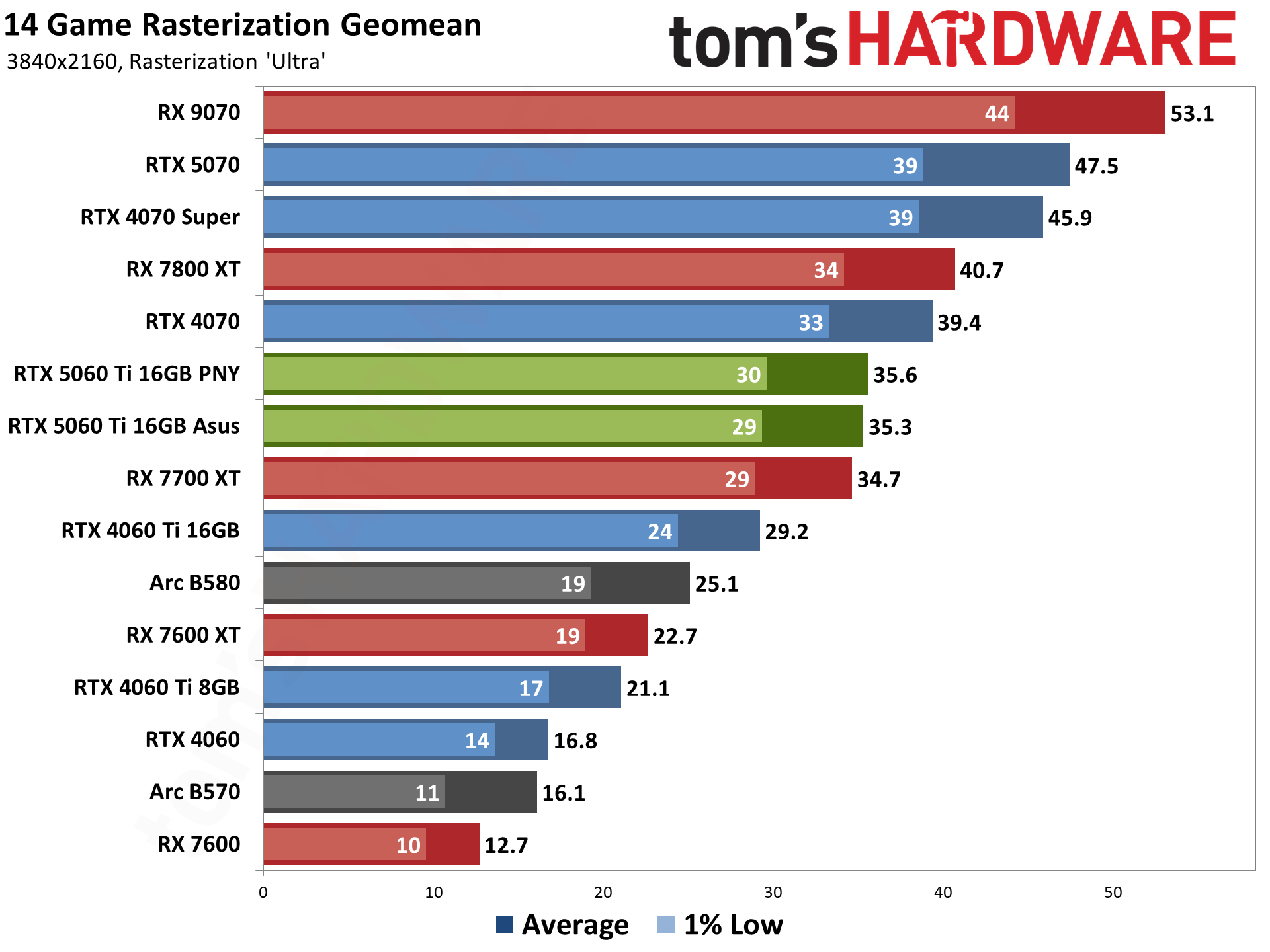
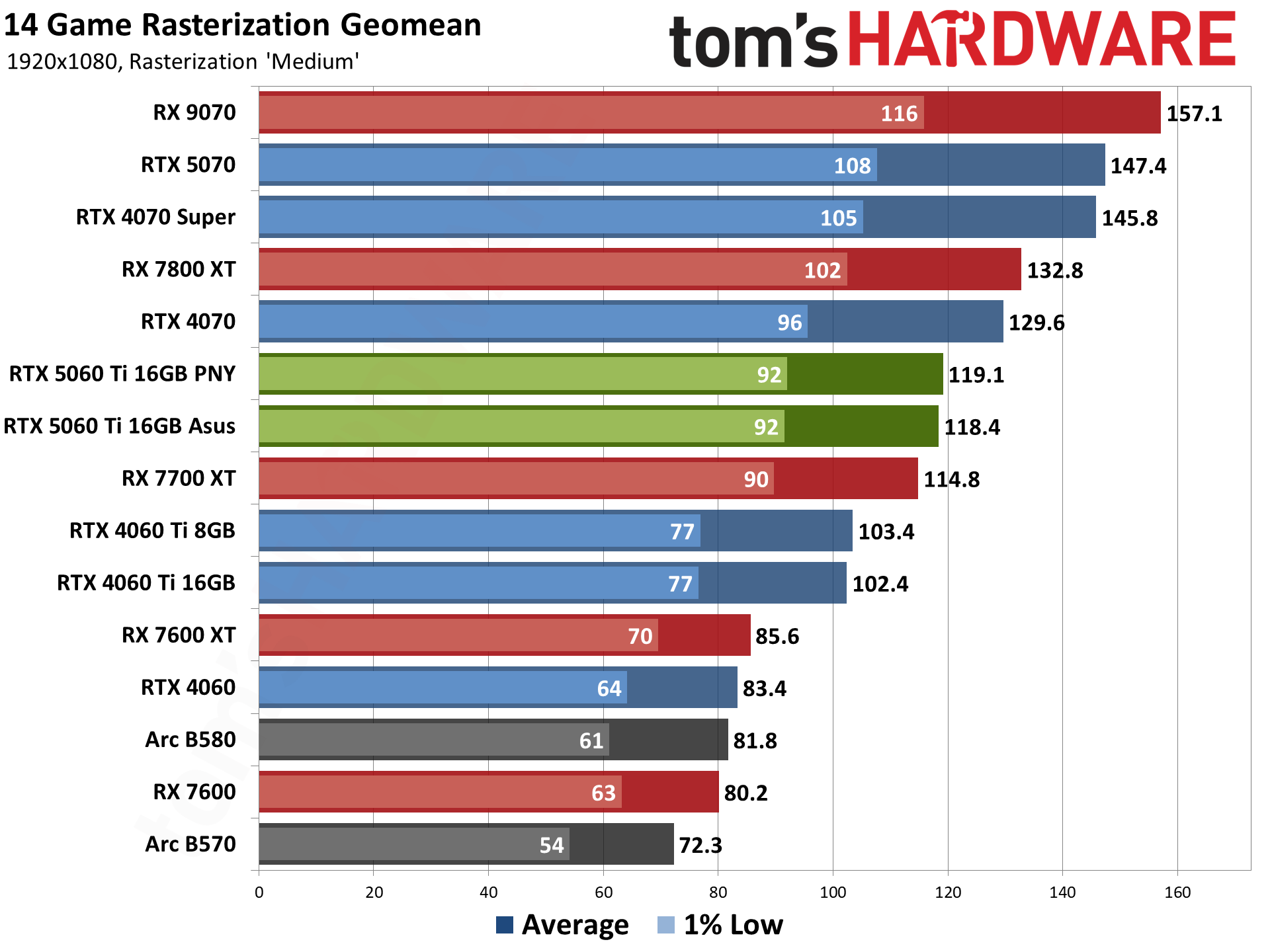
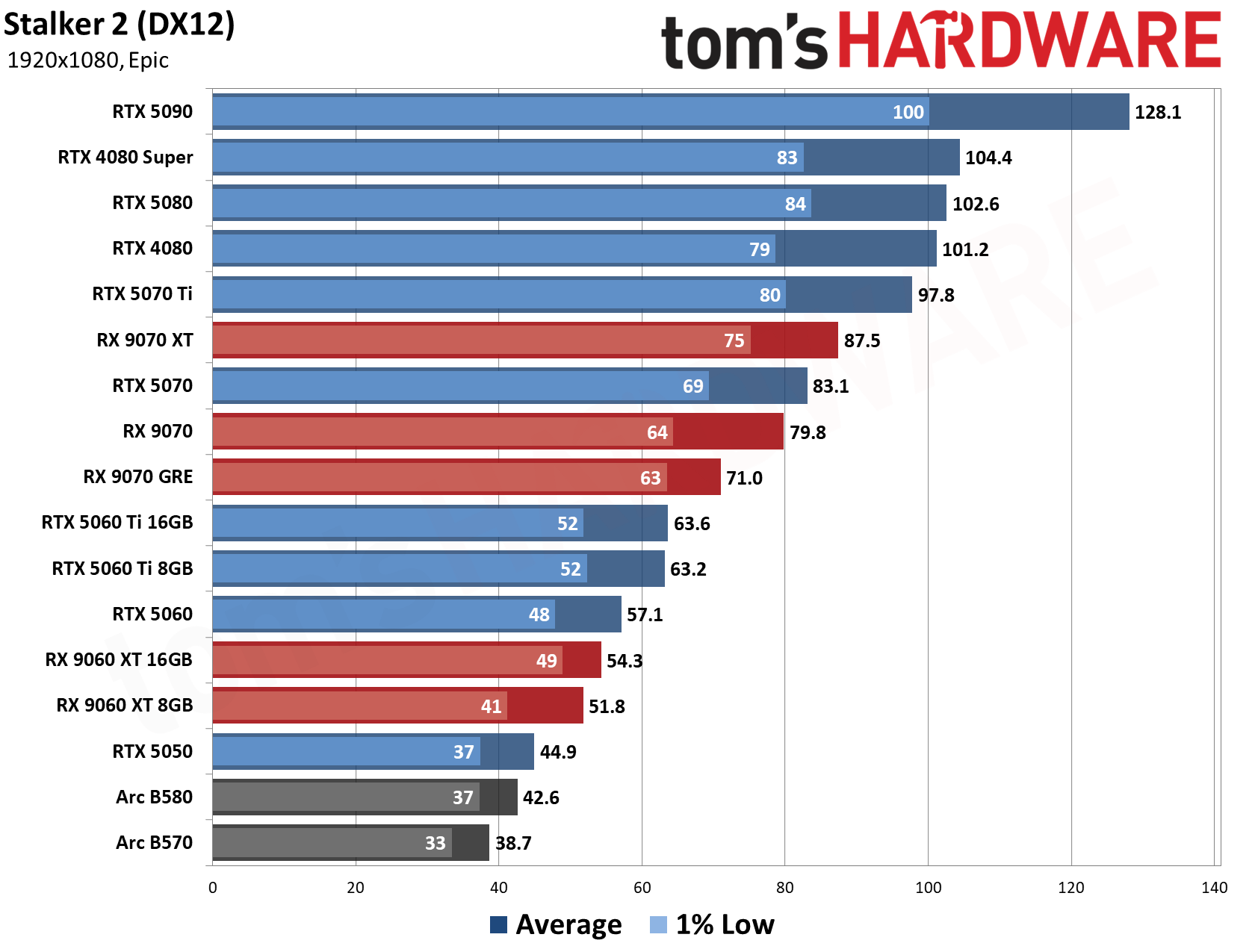
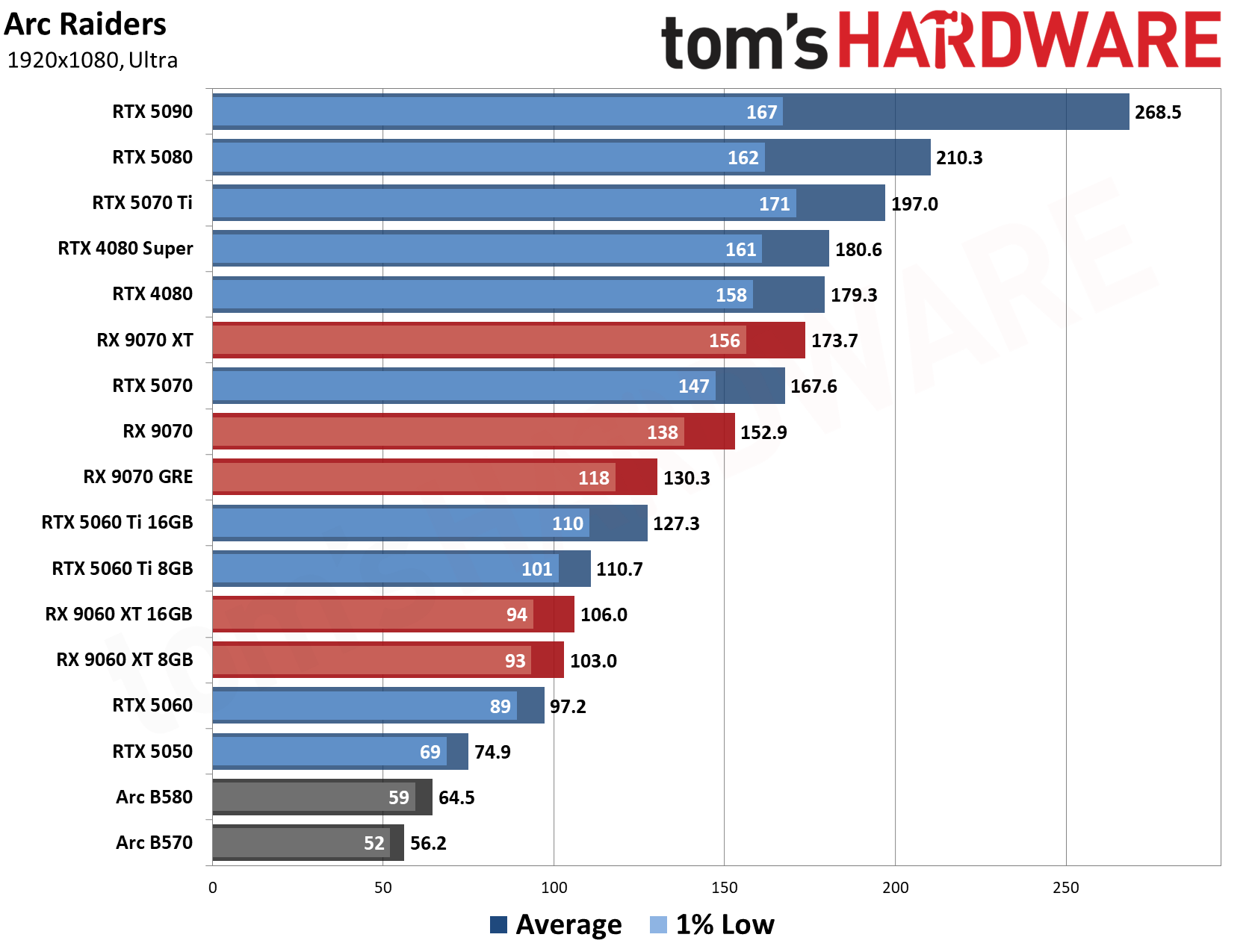
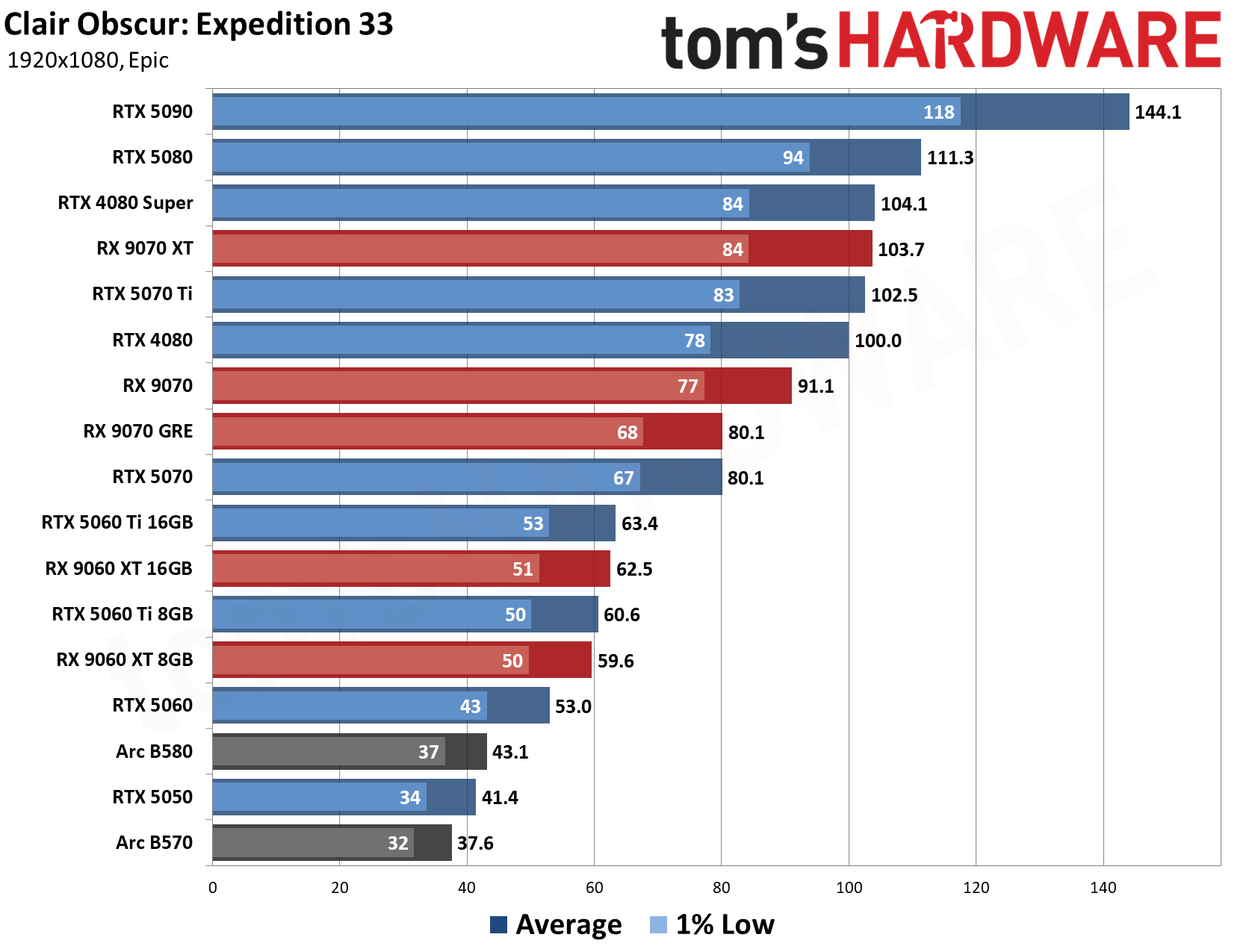
As you can see from our GPU testing data, the Radeon RX 9060 XT 16GB is on par with the RTX 5060 Ti 8GB, but lags behind the RX 9070 and RTX 5070, as is to be expected. With its 2048 shares and 16GB of VRAM, this card sustained averages of nearly 60 frames per second in our 1440p Ultra tests, making it a great mid-range card. You'll likely struggle at 4K without some compromise, but this is a great card for middle-of-the-road performance.
In these days of expensive SSDs, high RAM prices, and gaming GPU stagnation, it’s not often that even we find a good reason to build a PC. So when Asus reached out asking if we’d be interested in building a system based around its extensive Edition 20 anniversary lineup, I instinctively said yes. Having seen most of the components at Computex 2026 earlier this summer, I knew I was going to be dealing with premium, high-end parts that would make for a striking, powerful PC.
What I didn’t expect was to receive five large packages, weighing over 150 pounds, and for the motherboard and cooler to come in their own ROG suitcase (yes, that’s a thing), or for the 3,000W PSU to sell for $899 all on its own. This was clearly going to be a unique PC building experience, but it’s certainly not for everyone. In fact, considering the high price of pretty much all of the parts here, this is a build for the select few. But that doesn’t mean the build process wasn’t interesting.
Let's just get this out of the way early on, though: Building any gaming PC right now is expensive. Building one with an RTX 5090 is prohibitively pricey. Building one with these specific parts will set you back roughly $15,000, including the matching peripherals and OLED monitor with a translucent back panel. Think of this as the PC build for Saudi princes, the Elon Musks of the world, or for those of you who, unlike me, were smart enough to use your GPU for Bitcoin mining starting sometime in 2010, and cashed out when the cryptocurrency was trading high.
So yes, this might just be about the most expensive PC you could build today – at least with consumer-focused parts and not maxing out the RAM and storage. But many of us are likely finding ways to deal with the PC hardware we have right now; let’s take a look at what piecing together a new build is like if money is no object and you want the cohesive design that comes from sourcing all (or at least most) of your components from one company.
We’ll go step-by-step through the rather unique build process of this Asus ROG Edition 20 build shortly. But first, here’s a look at the parts, their prices, and, in some cases, how much the components weigh. Because, gold accents or not, there’s a whole lot of heavy metal involved in this build.
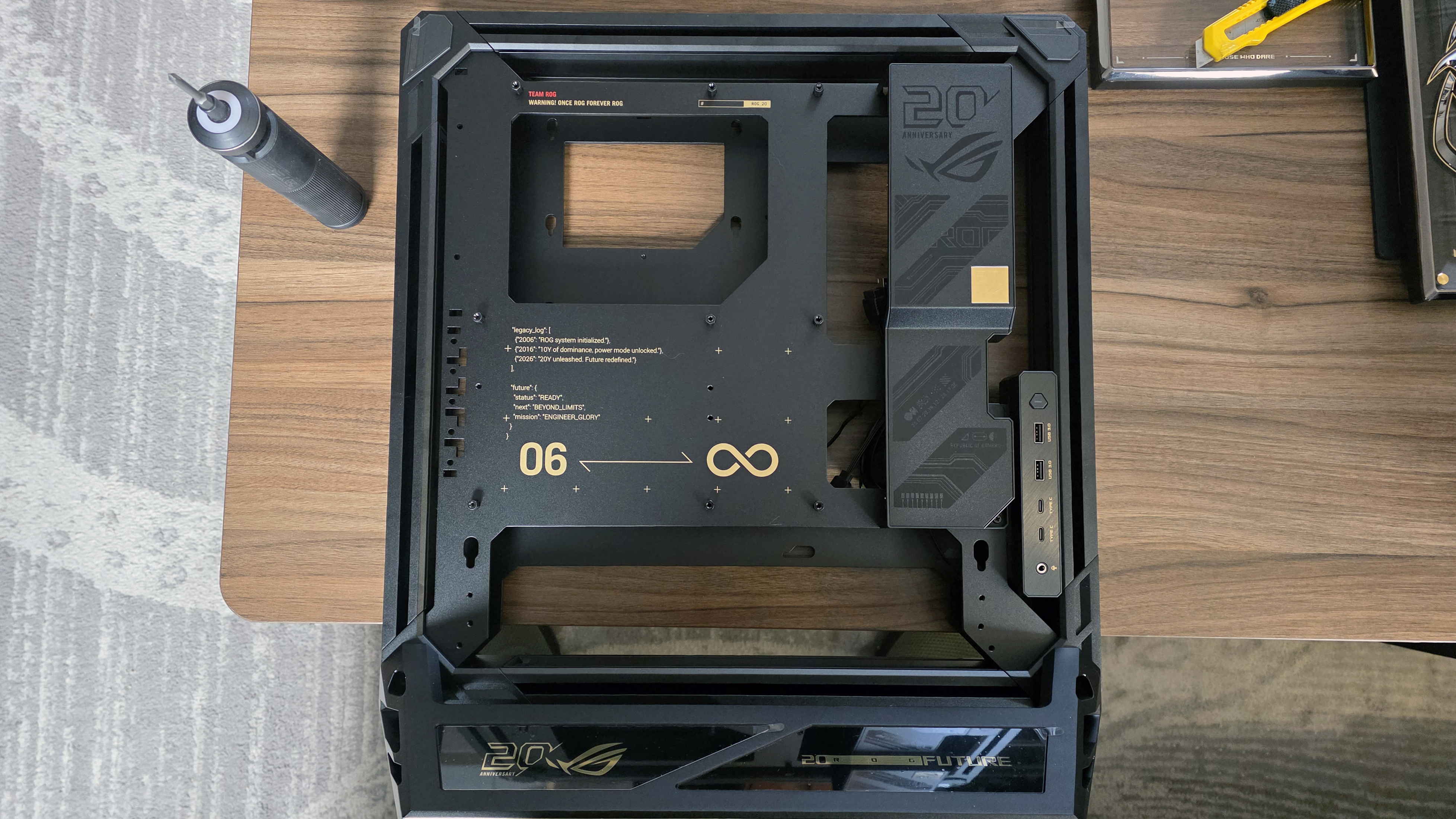
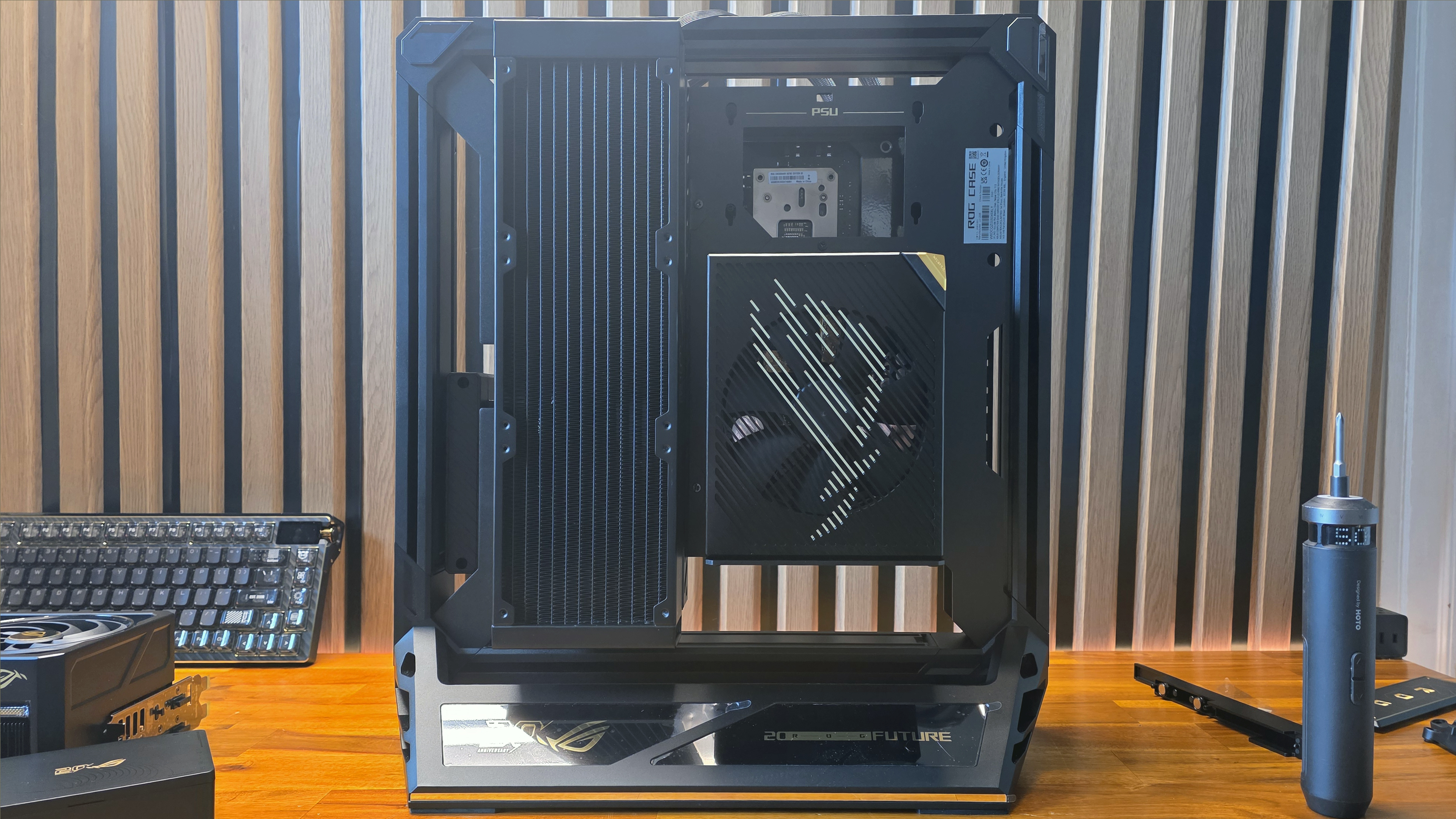
Many of the components here are based on existing parts, with some new aesthetic accents and features, but the ROG G20 is a new open-frame chassis that supports large EATX motherboards and can be converted to stand vertically, horizontally as a testbed, and even diagonally for a striking leaning-back look.
It has a crossflow fan that mounts on the bottom to blow cool air onto the GPU, RGB light strips around the edges, and four fast USB ports (two 5Gbps Type-A and two 20 Gbps Type-C) that can be mounted near the bottom (default) or up top. It’s extremely solidly built, mostly from aluminum, and weighs 20.5 pounds. But some of the cosmetic covers, particularly around the edges, are plastic and magnetically attached. They have a tendency to move and become misaligned easily. In fact, one was stuck to a steel part, several inches from where it belonged when I first took the case out of the box.
It sells for between $650 and $730. If that sounds like a lot for a case, it is. But if you’re feeling sticker shock already, buckle up because we’re just getting started.
Asus offers a fewiterations of its Crosshair X870E E-ATX flagship board. This Crosshair X870E Edition 20 variant, apart from the gold accents of the Edition 20 lineup, supports up to nine M.2 SSDs (five on the board and four via two included add-in cards), and has more USB-C ports than any board I’ve seen outside of a trade show (six, plus two 20 Gbps front-panel connectors).
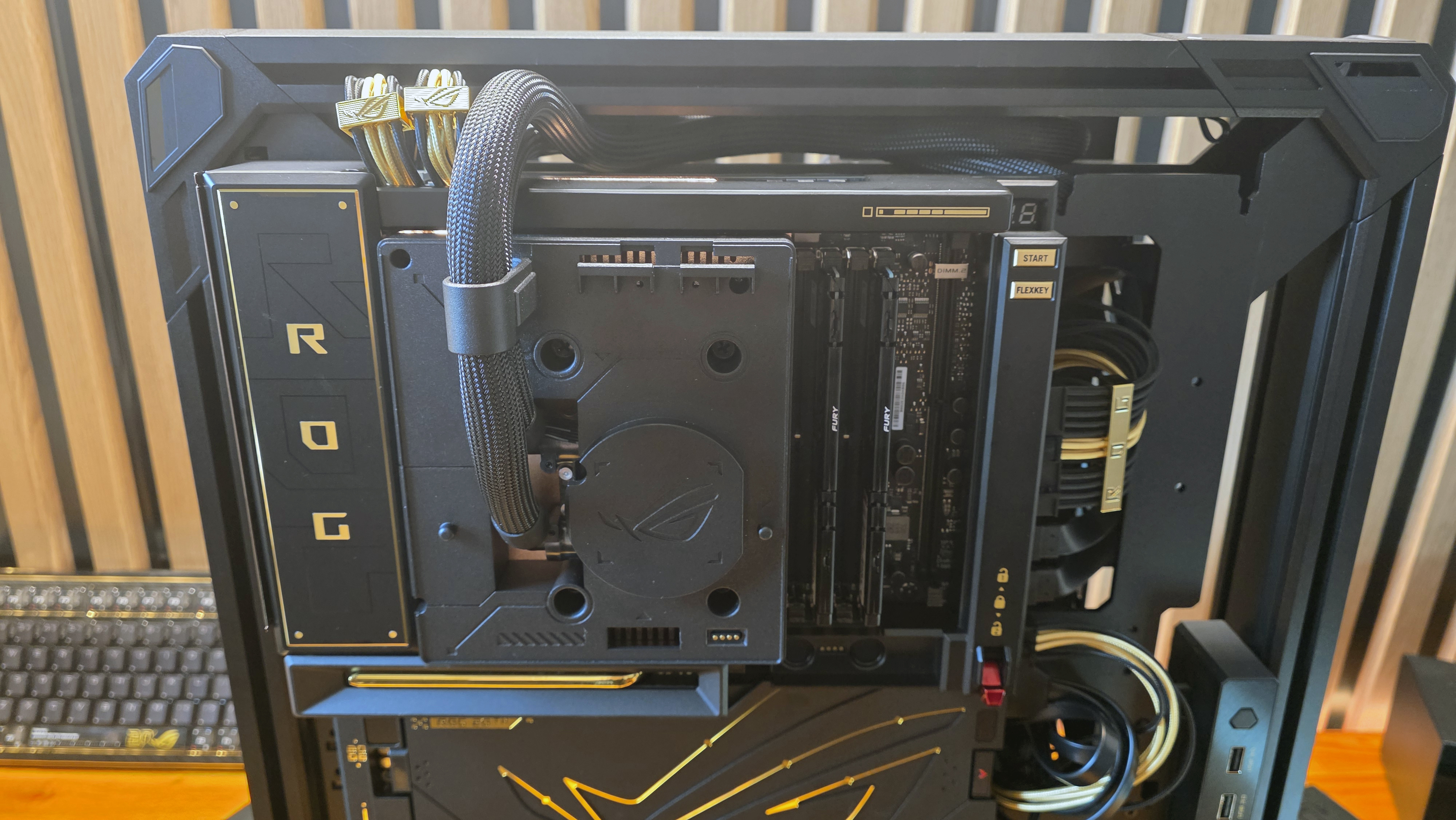
It also has large copper VRM heatsinks designed to specifically thermally mesh with the bundled Ryugin 260 Edition 20 AIO cooler. The cooler has a massive curved 6.7-inch AMOLED screen (actually two of the curved screens we’ve seen on some other AIOs, stacked on top of one another). The cooler also features a massive copper heatsink bigger than my hand. It’s arguably overkill for anything AMD has put out on AM5 to date. But of course, high-end motherboards and coolers are all about overkill. And when you’re paying $3,299.99 for a motherboard and cooler combo, some level of overkill should probably be expected.
Asus ROG Astral GeForce RTX 5090 Edition 20 graphics card
Tom's HardwareTom's HardwareTom's Hardware
How do you top the record-setting ROG Astral 5090? If you’re Asus’ design team, you add a second back-connector power option so it can pull up to 800 watts, a glass backplate, and a curved OLED screen all its own. Unfortunately, since the Crosshair Edition 20 motherboard isn’t a BTF model, we can’t test the card’s performance with extra power here.
The GPU’s curved screen also requires you to run a USB cable from the back of the GPU to the motherboard for power and data, which feels a little lame given the sky-high $5,999 asking price.
Most RTX 5090 builds don’t need anywhere near this much juice, but the dual-voltage ROG Thor Titanium III 3000W Edition 20 is a PSU monster designed to deliver up to 3000W of power, specifically for the above Astral 5090 Edition 20 GPU (or, I guess, any other PC with extreme power needs). At 190 x 150 x 86 mm, it’s large, but not massive, given its power rating. It’s fully modular (naturally, for this class). And it sports its own magnetic OLED display, which can be mounted on either side, or extended via a cable to somewhere more visible in your case.
At $899, this PSU is an option you can easily skip if you aren’t looking to push the most power possible through Asus’ singular Edition 20 RTX 5090. Without a 230V power outlet, you’re going to be limited to 1600W from the Thor, anyway. You can get a good 1300W ATX 3.1 power supply for less than half this price, which would be more than enough to run an RTX 5090 system. But then, of course, you would have one less screen.
You can grab the above components separately or, if you want to save about $80, you could buy the board, cooler, case, GPU, and PSU together in a bundle from Best Buy for the small sum of $10,849.
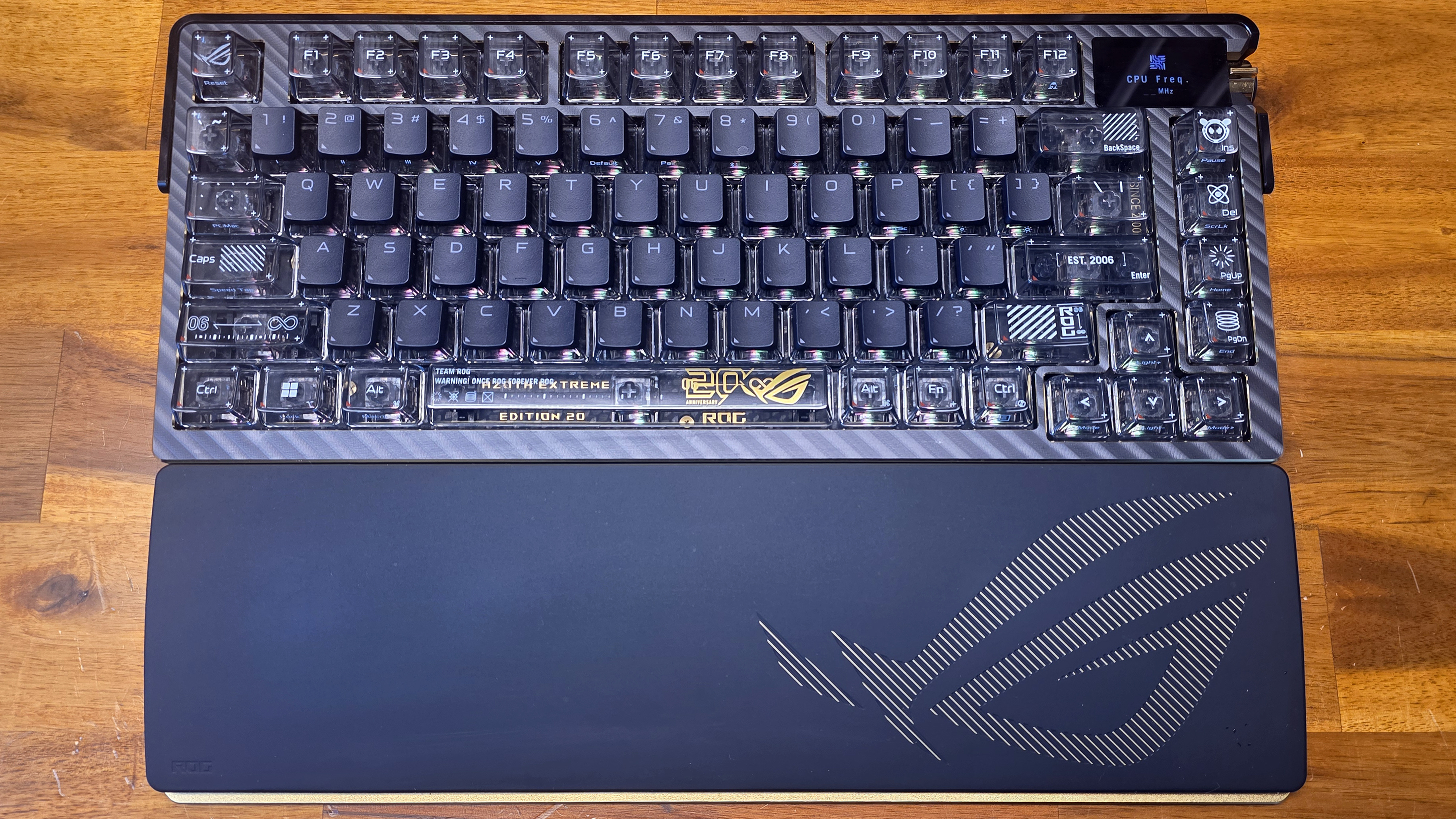
We covered the Azoth Extreme 75% Edition 20 pretty extensively ahead of Computex. It’s a reimagining of the carbon fiber-adorned ROG Azoth Extreme we looked at in 2024, with a mix of transparent and partially transparent keycaps. It’s $100 more expensive than the launch price of the previous Azoth, pegging this keyboard at $599. There’s also a gold metal jog wheel, gold accents along the back, magnetic gold feet (in two sizes), and even gold screws holding the whole thing together. And, naturally, the RGB backlighting under the switches defaults to a gold color out of the box.
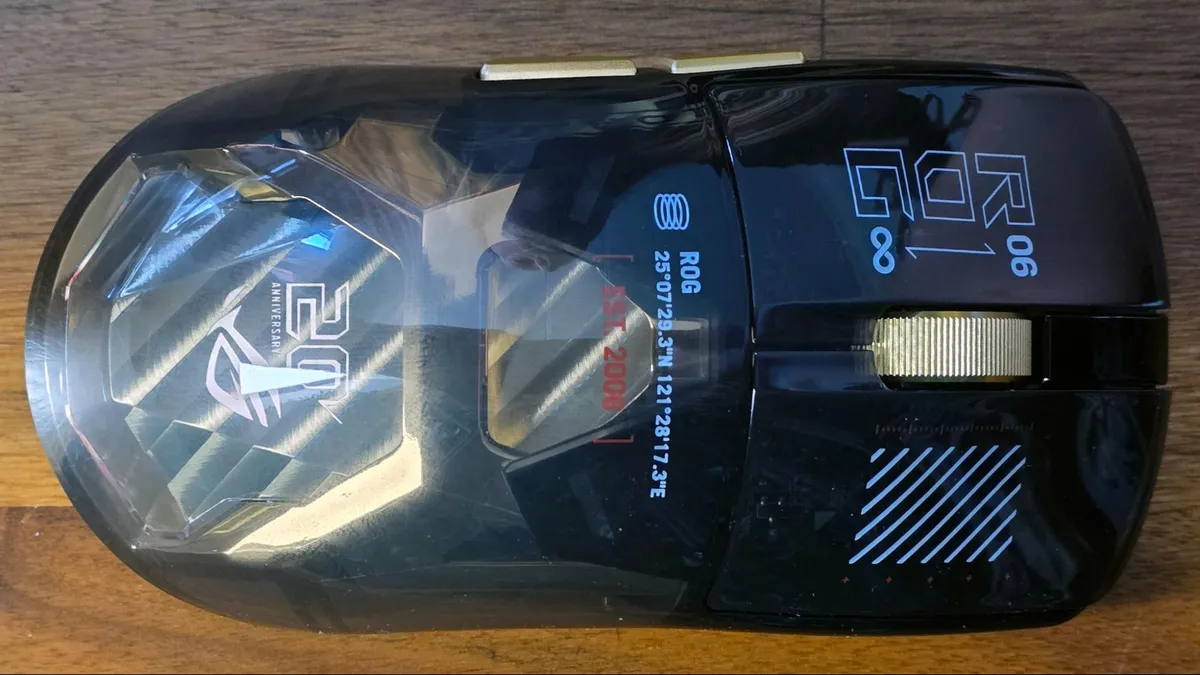
We also checked out the ROG Harpe II Extreme Edition 20 mouse ahead of Computex earlier this year. It packs a 65K sensor, a gold scroll wheel and side buttons, and a transparent chassis with RGB that illuminates the ROG 20th Anniversary logo. There isn’t much to complain about in terms of specs, although many will balk at the $259 price. Having used it extensively for a couple of weeks, it feels and performs well. My main concern is what the transparent plastic will look like after years of regular gaming.
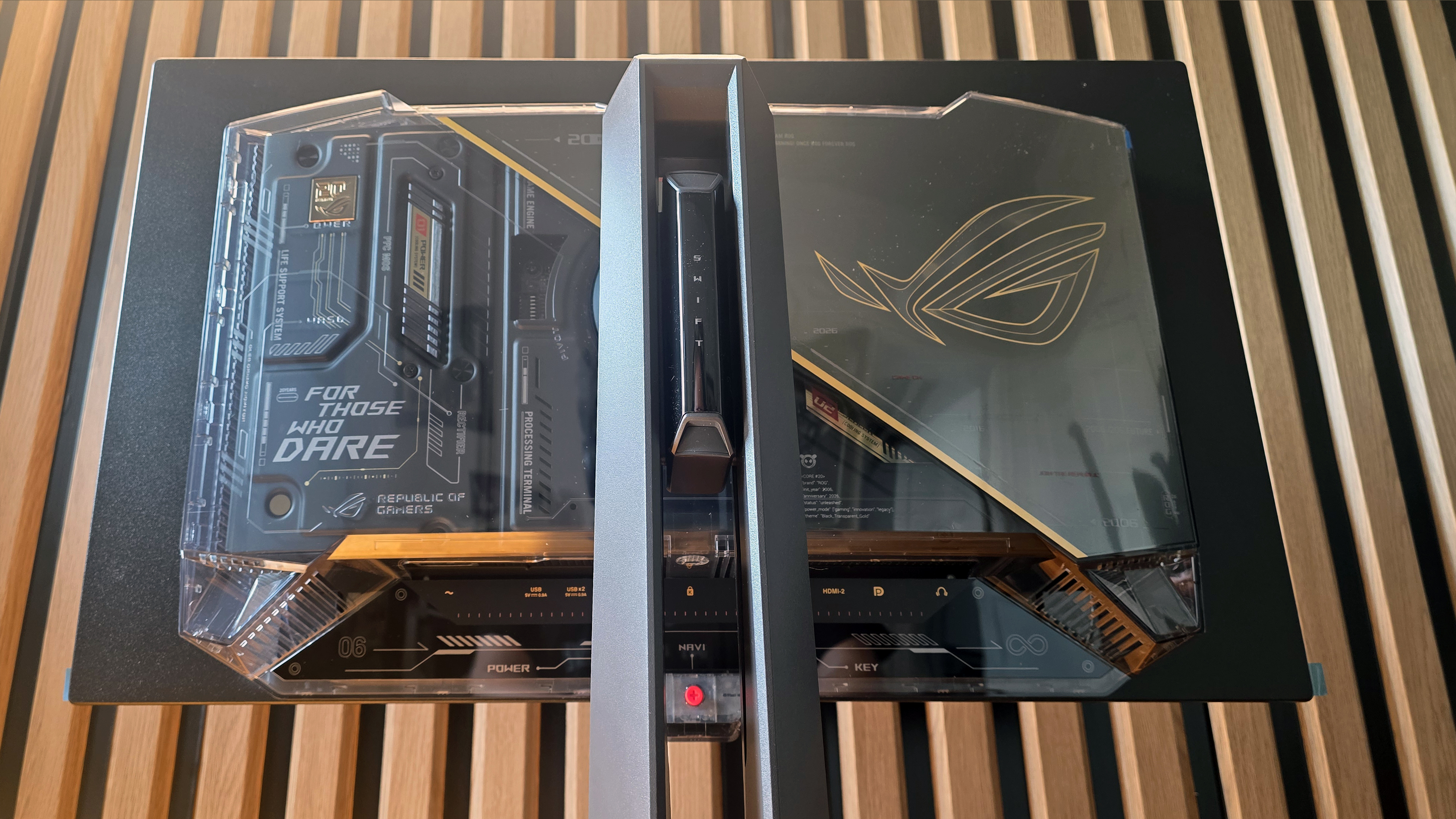
Asus ROG Swift OLED PG27AQWP-W Edition 20 gaming monitor
Tom's HardwareTom's HardwareTom's Hardware
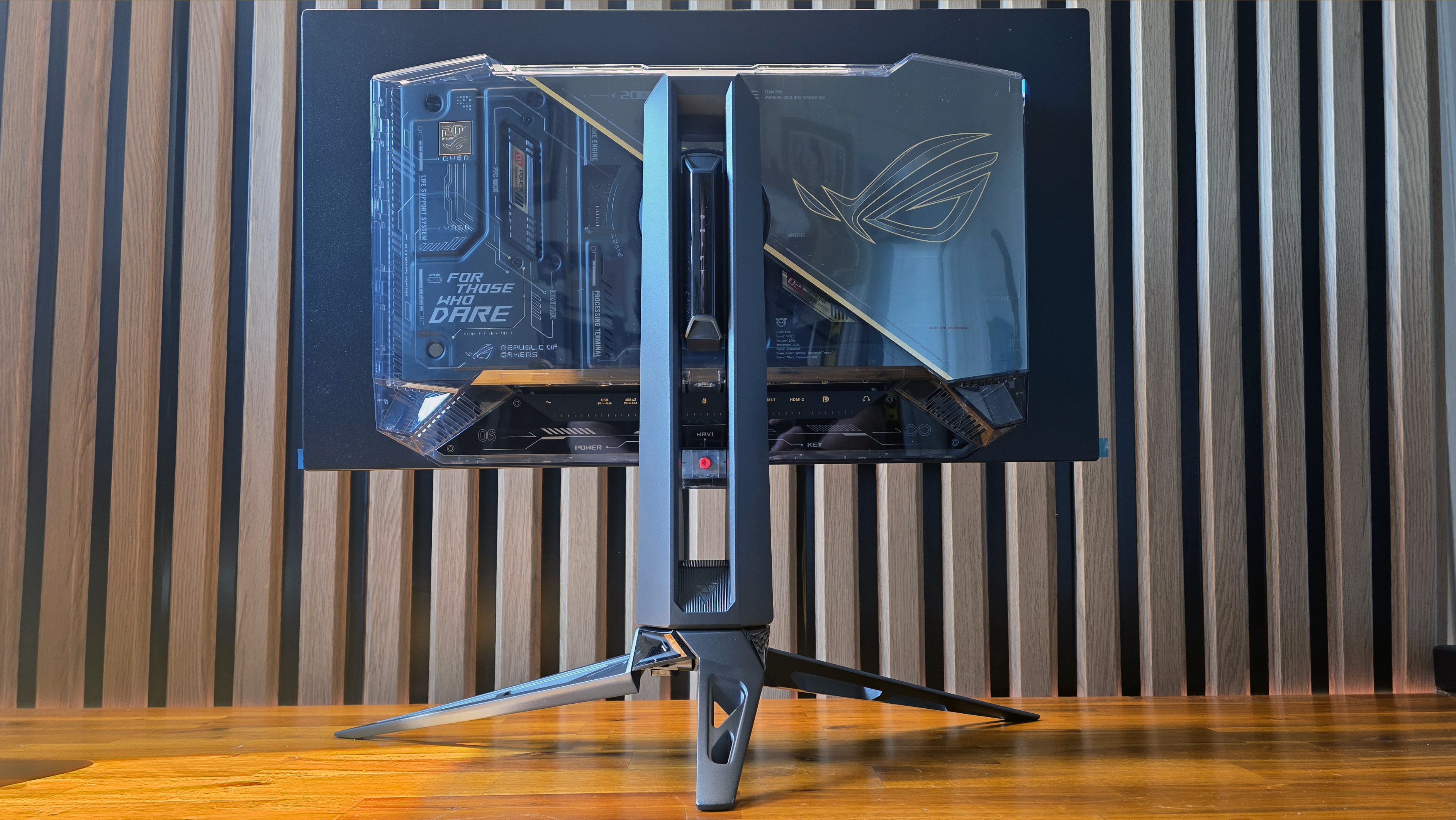
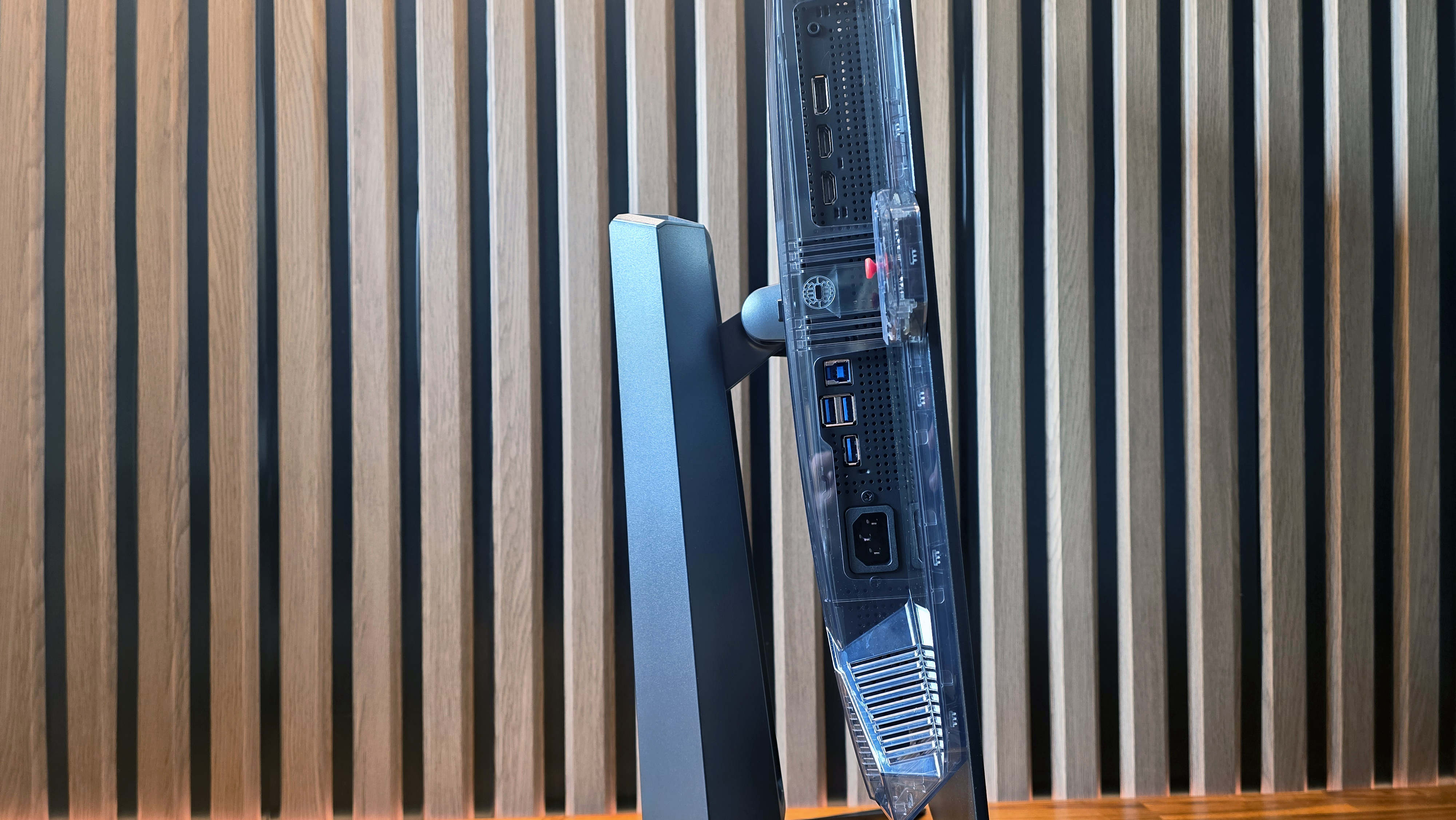
We tested the non-Edition 20 version of this OLED earlier this year and gave it a perfect score. It can do 540 Hz refresh at its native 2560 x 1440 resolution, or a wild 720 Hz at 720p. It was also bright and color accurate. The Edition 20 variant looks to have generally the same specs, and costs about $100 more for the addition of some gold plating, stealth-black futuristic looks, and an undoubtedly striking transparent rear chassis panel that matches the look of the above Harpe II Extreme Edition 20 mouse.
Its tandem OLED panel is rated to 1,500 nits of peak brightness, and a button below the screen lets you easily switch between the panel’s 540 Hz and 720 Hz modes. It’s a nice gaming screen, to be sure, and Asus hasn’t tacked on as much Edition 20 tax here as elsewhere, but high-refresh panels tend to kick out a lot of heat, and I have to wonder how soon the pretty back panel will start to change from clear to yellow, or just cloudy.
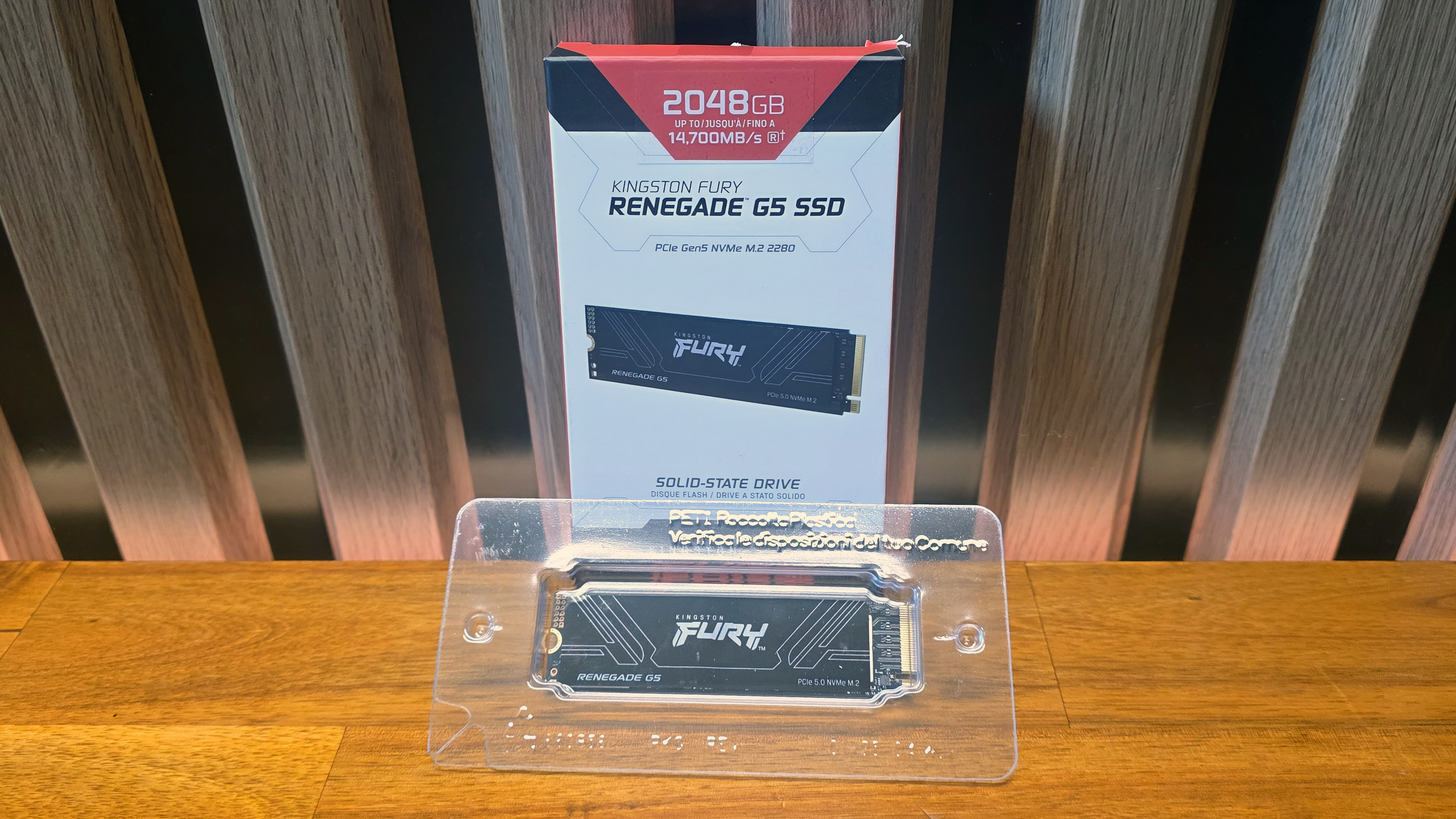
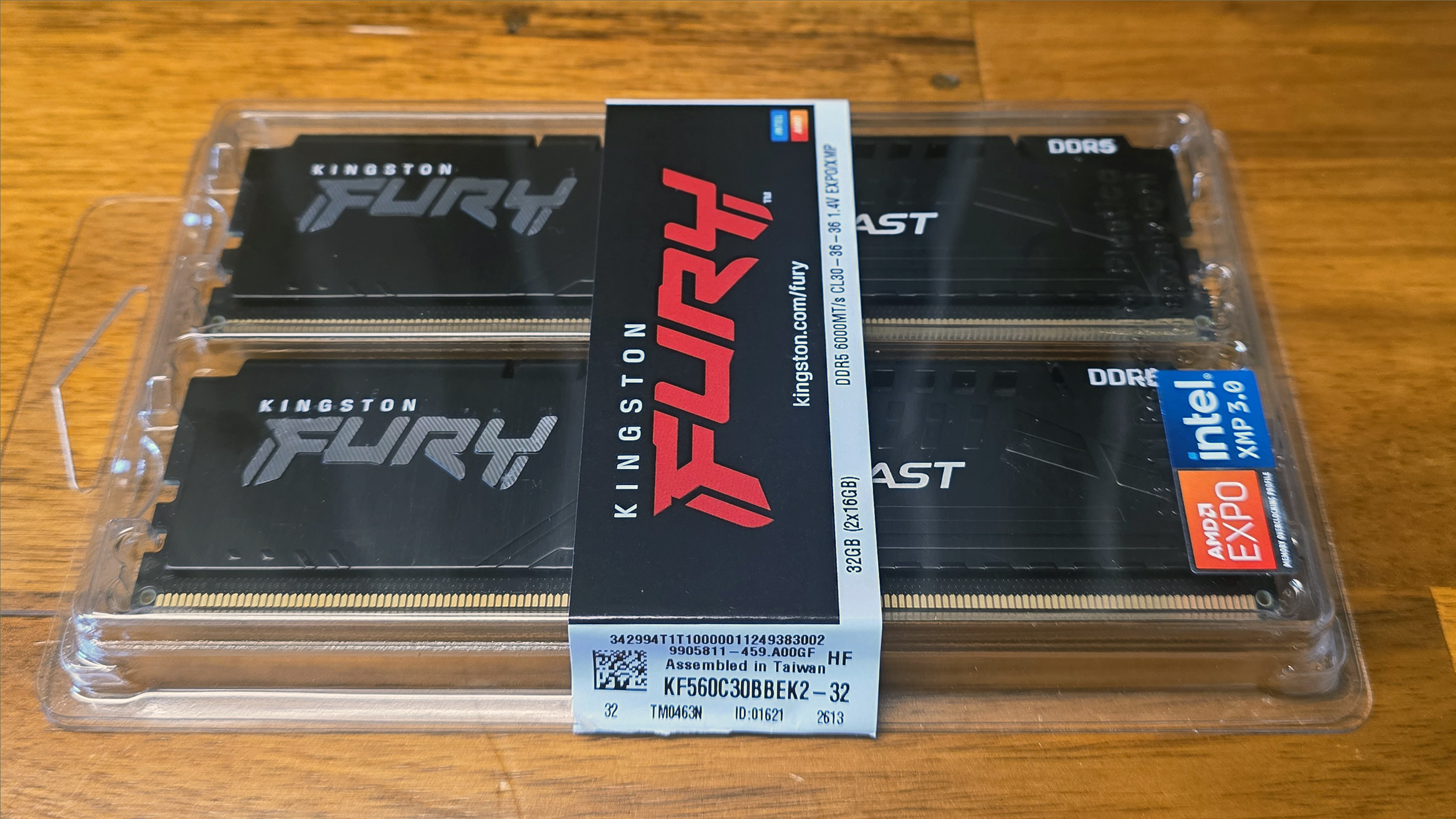
Along with the above parts, we were also sent a speedy Fury Renegade PCIe 5 SSD from Kingston, as well as 32GB of DDR5 for testing the system. We added our own 9950X CPU.
I was hoping to get my hands on some of the Asus-branded RAM we also saw at Computex, but I was told by a rep that the Asus RAM is solely destined for the Chinese market. Perhaps it’s made by CXMT.
Building an Asus ROG Edition 20 PC: The good, the bad, and the AMOLED
(Image credit: Tom's Hardware)
Asus offers up a 17-step system build guide for putting together a PC with its Edition 20 parts, complete with a nearly 19-minute YouTube video, which it points buyers to via a QR code stuck on the upper-right corner of the motherboard.
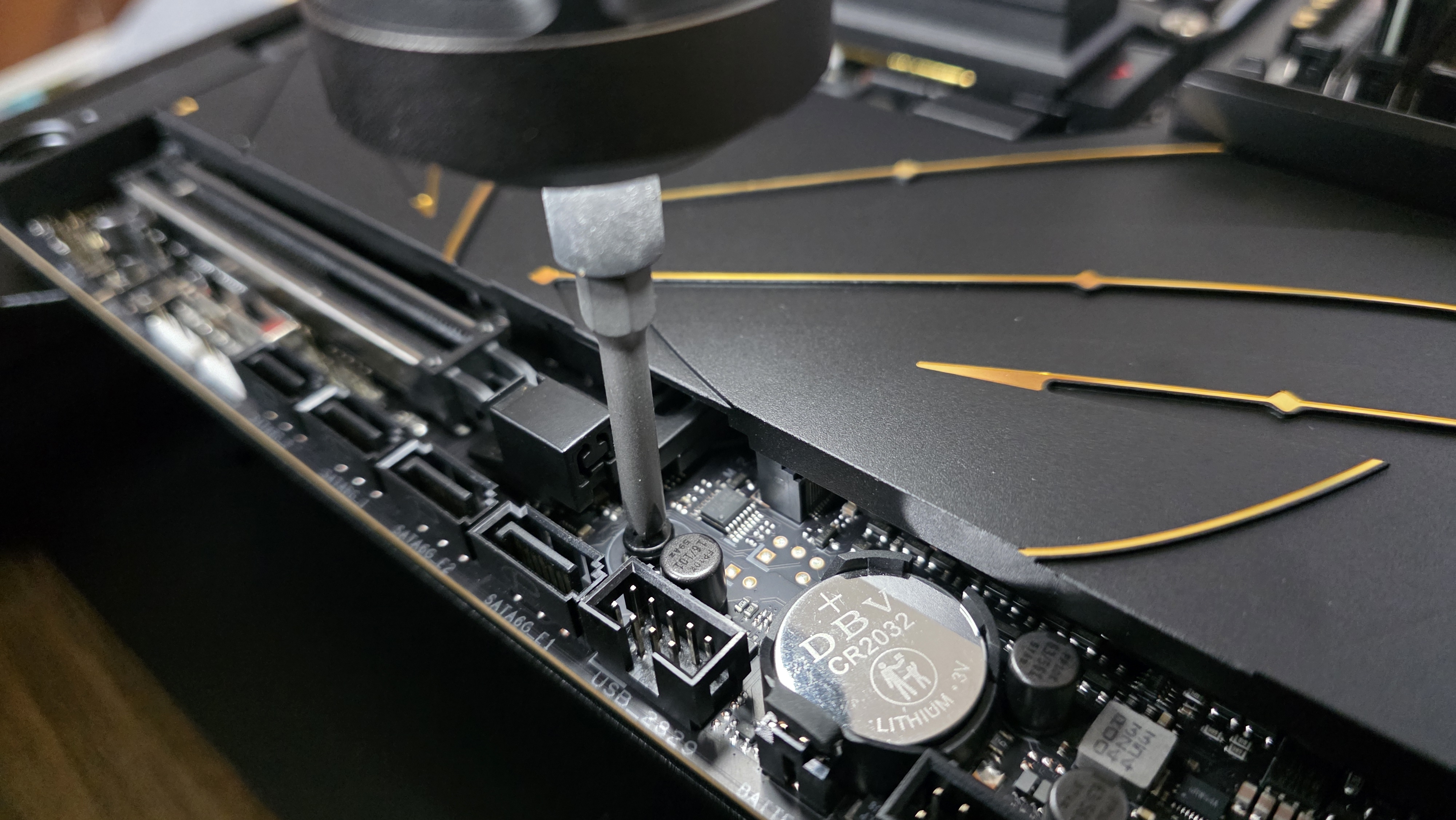
For the most part, the two key things I needed for installation were lots of space (the build process alternated between my workbench and my coffee table) and my trusty Hoto screwdriver. But as we’ll see later on, there was one instance where I needed a long screwdriver to get screws into some recessed holes inside the case.
(Image credit: Tom's Hardware)
I haven’t followed instructions much when building a PC for decades now, but I did here, in part because I was pretty pressed for time, but also because some of these components, like the case, motherboard, and cooler, have pretty specific features and assembly steps. And I also didn’t want to be sorting through five or more different manuals every time I ran into a roadblock.
To Asus’ credit, the video is pretty thorough and clear. Only a couple of times (as I’ll detail below) did I have to jump back several seconds to catch something I missed or, on one occasion, something Asus missed in its assembly guide.
(Image credit: Tom's Hardware)
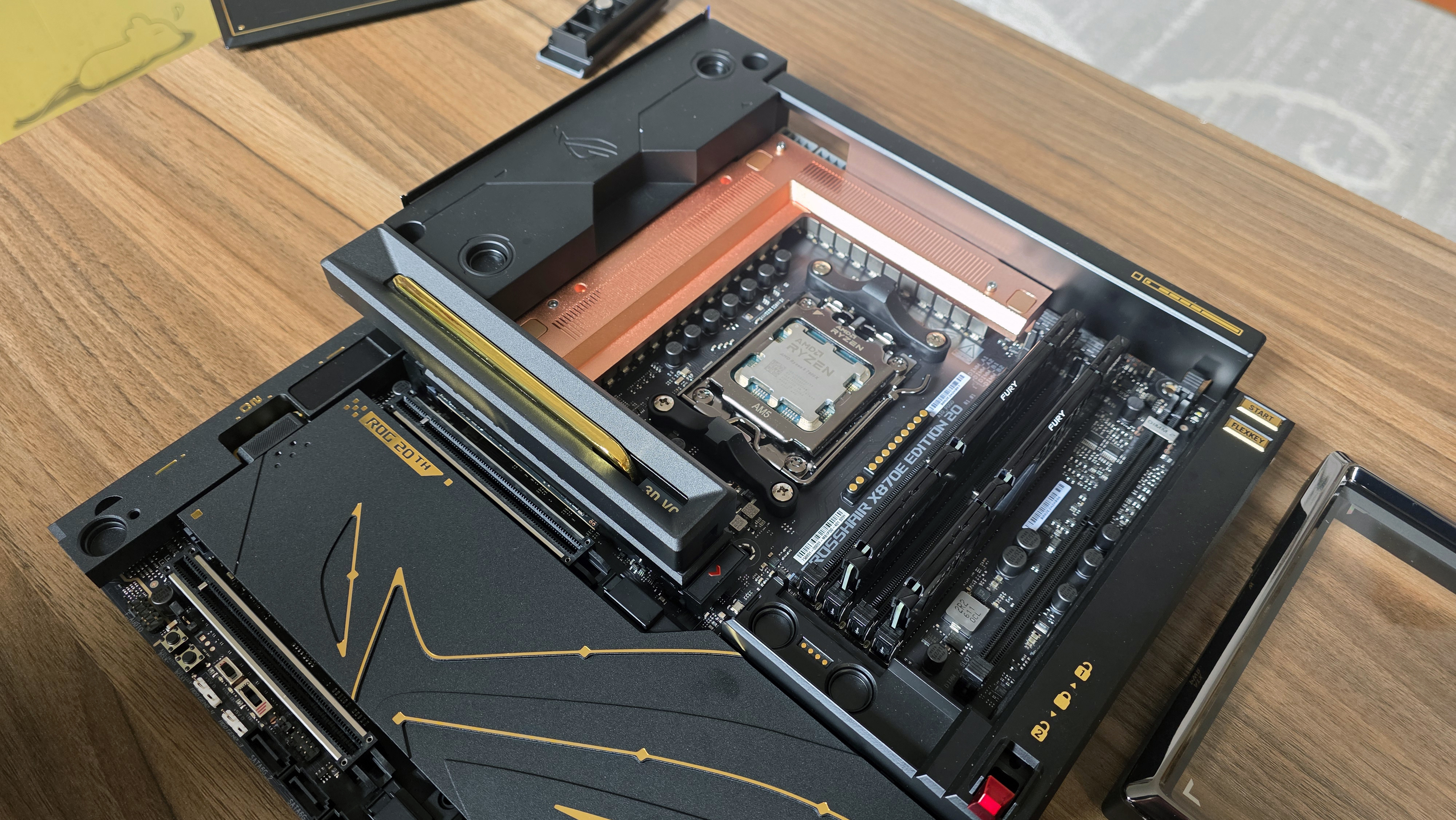
Starting with the motherboard, you’ll first need to remove several covers, the two largest of which (on the right in the image above) are magnetically attached, and basically there in case you want to display the board as “art” on its own at some point. The large windowed frame over the socket and RAM area, and the layered section covering the PCIe slots can’t be in place if you’re actually using the board – at least presuming you are using this board with a GPU or anything else in the slots.
There are also two M.2 heatsinks covering the five drive slots native to the board. Both have latches and come away easily.
Tom's HardwareTom's Hardware
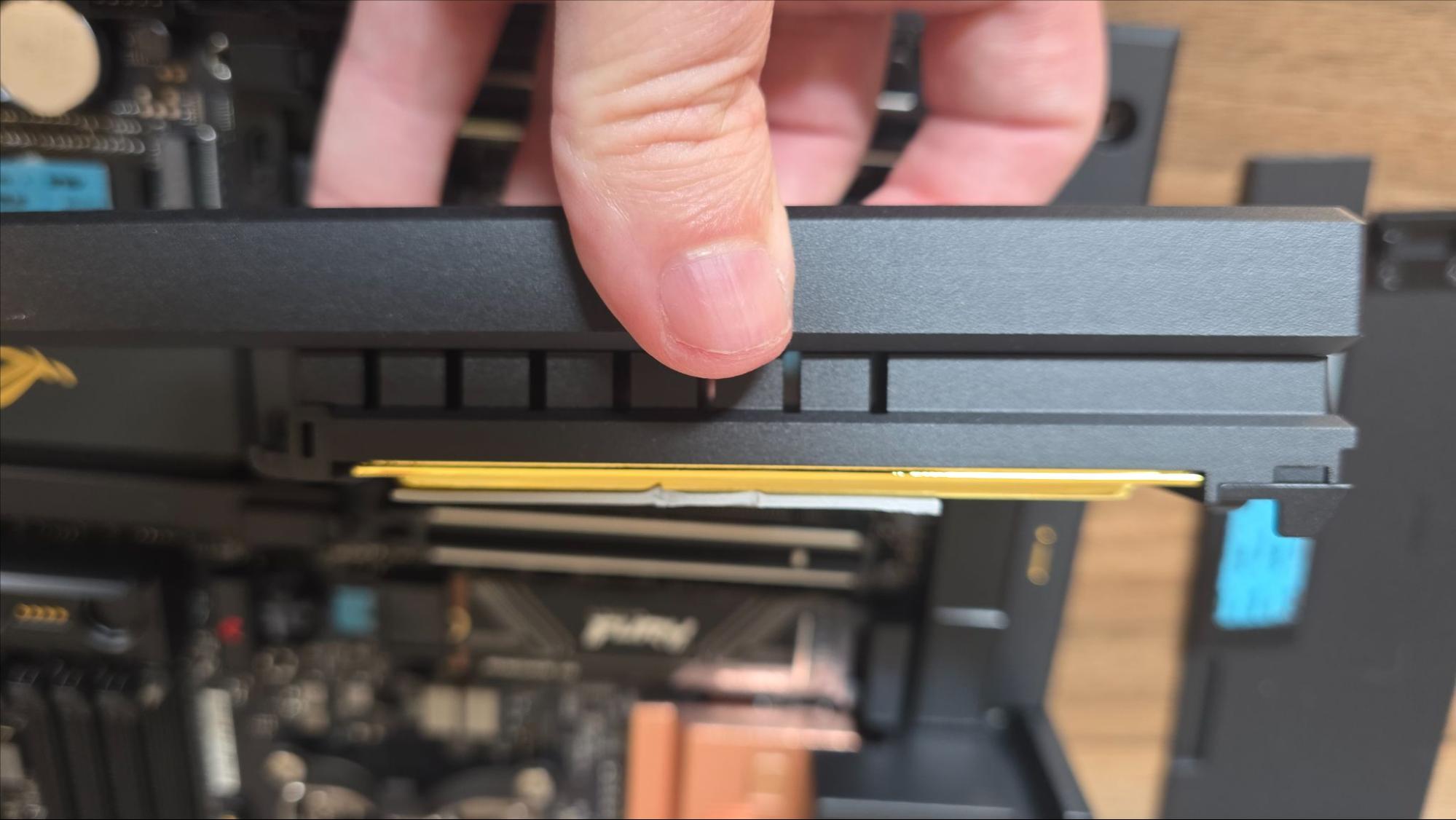
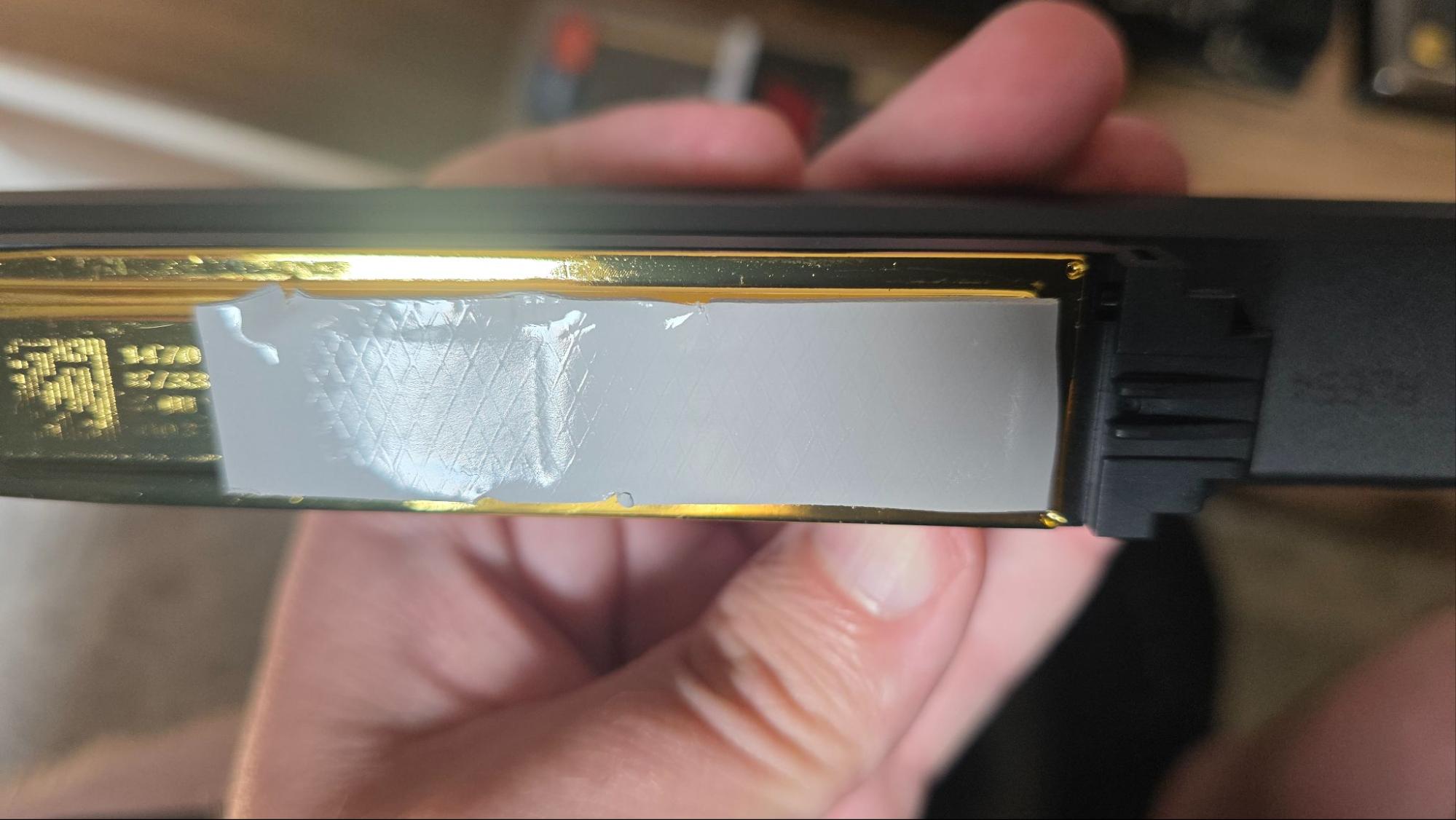
The primary heatsink is quite large, with a gold-metal base and heatpipe that is visible from the top, around the black aluminum of the rest of the sink. There are thermal pads on the top and bottom of all the drive areas, and Asus includes small rubber stoppers for single-sided drives, which go in between the bottom heatinks, to prevent PCB flexing. I naturally checked after installing the sink to make sure the thermal pad made contact with the Kingston drive. Like we saw in previous motherboard testing of a few other Asus boards, the pad definitely makes contact with the SSD, but the compression looks a little light. Still, as long as the drive is connected to the pad, the cooler should be able to do its job. I’m only installing one M.2 drive, so next were the fairly typical steps of installing the CPU and RAM.
(Image credit: Tom's Hardware)
Note that I initially installed a Ryzen 5 7600X here, because it’s the chip I had on hand while taking photos. But I eventually grabbed a Ryzen 9 9950X from the office to install in the system, as it’s a much more appropriate CPU for this otherwise top-end build.
Asus’ guide actually doesn’t tell you to install the RAM until much later, but I installed it after the CPU, because PC building muscle memory told me it was the right time to do it. I didn’t run into any issues, so you could install the RAM here or later on. Just, of course, make sure you put the RAM into the correct slots if, like me, you’re only installing two sticks.
Case, cooler, and power supply
With the SSD, RAM, and CPU in place, I snapped the plate cooler back on, and it was time to start dealing with the GR20 chassis. This is when I really started to realize just how heavy most of these parts are, although I did have to haul all the boxes up two flights of stairs a few days before this. The case weighs just over 20 pounds on its own, and when you start adding the board (10.8 pounds) and the GPU (7.4 pounds), the system gets very heavy, very fast.
Tom's HardwareTom's Hardware
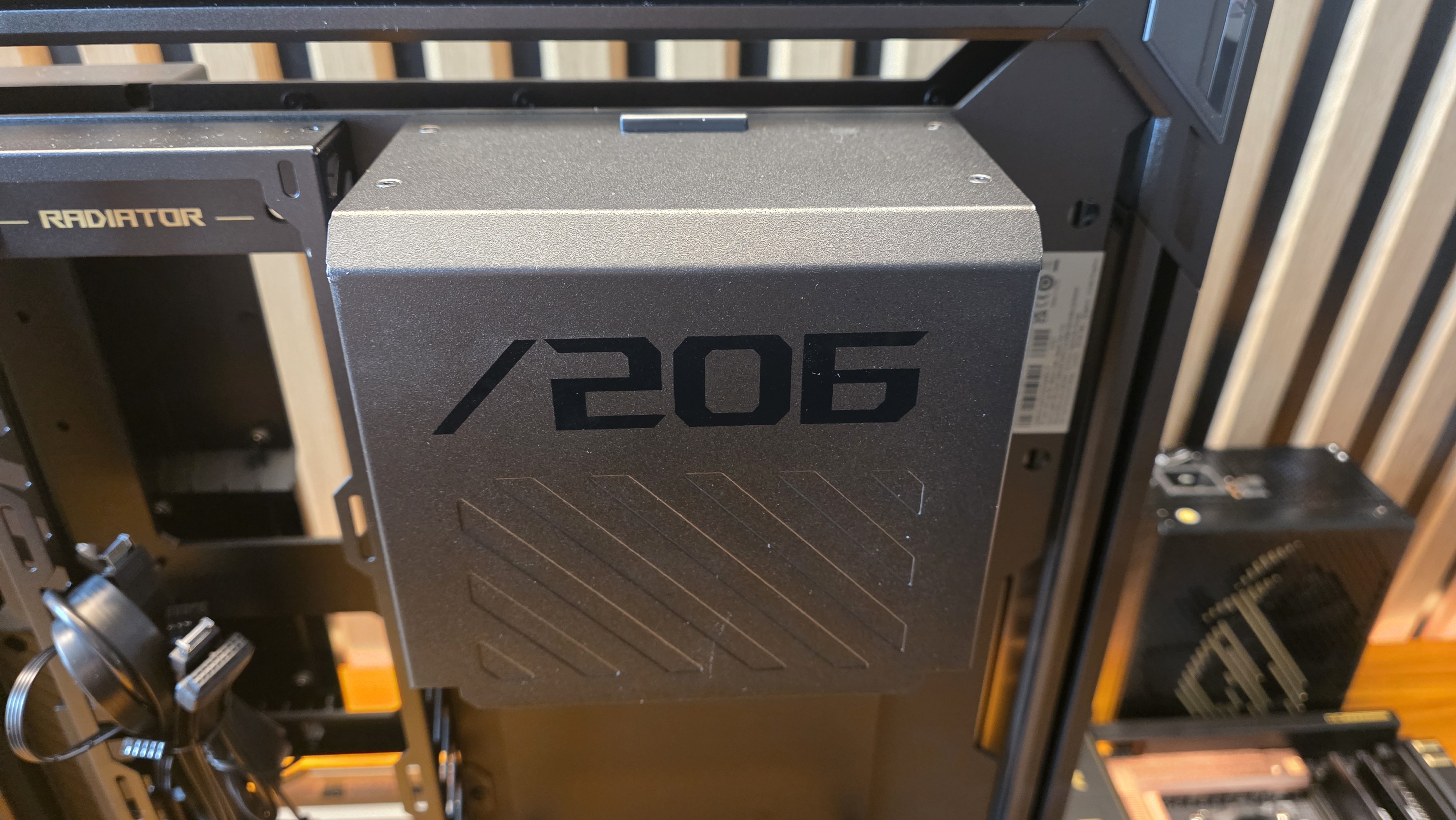
You have to lay the case down in order to install the motherboard, which, since the case is an open frame, I needed to remove some parts from the rear first. A large cable cover pops off with a switch, then I needed to remove a few screws to take off the PSU and radiator brackets. With those parts off, I could put the case on its side (with the base hanging off the edge of my coffee table). I moved the case to the table because it’s lower and therefore a lot easier to install the motherboard.
(Image credit: Tom's Hardware)
Once aligned to the standoffs, the motherboard drops onto the case (rather dramatically, thanks to its weight) and it’s time to screw it down.
(Image credit: Tom's Hardware)
I often skip a few motherboard screws when building PCs. But with the weight of this board and the expensive, heavy GPU that was going to hang off of it, I made sure to install and carefully tighten all nine screws here. Asus’ guide also points out the importance of this, but I didn’t need the warning. In all, motherboard installation was pretty simple, in part because the case is open, so I wasn’t reaching inside a big box to install several screws.
(Image credit: Tom's Hardware)
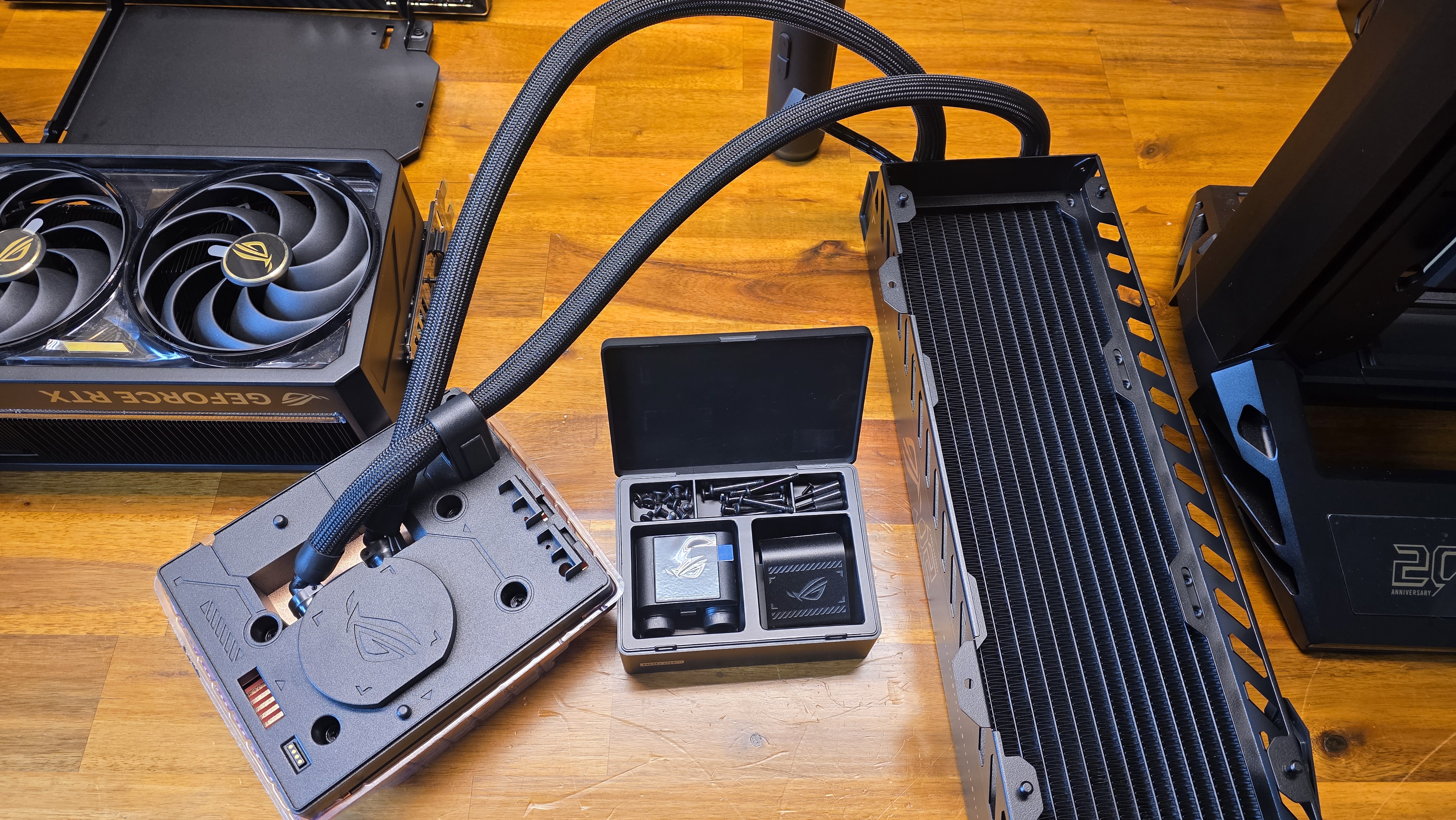
Next, it’s time to stand the case back up and break out the AIO. The cooling block is so heavy with copper that the process feels substantial in a way that most AIO installations don’t. Of course, the sheer cost of the board and cooler probably has something to do with that feeling as well. At least Asus includes the nicest cooling accessory box I’ve ever seen. It has the ROG 20 logo on the top, so you can always remember this very expensive important moment.
First, you need to attach the radiator bracket to the radiator, and Asus’ guide nicely points out that you need to do so with the mounting tabs facing left. This saved me from doing it wrong and having to fix it later. Then, I mounted the bracket and the radiator to the back of the case via four slide-in tabs and two screws, put the case back down on its side, and took the protective plastic covering off the very large and heavy water block.
(Image credit: Tom's Hardware)
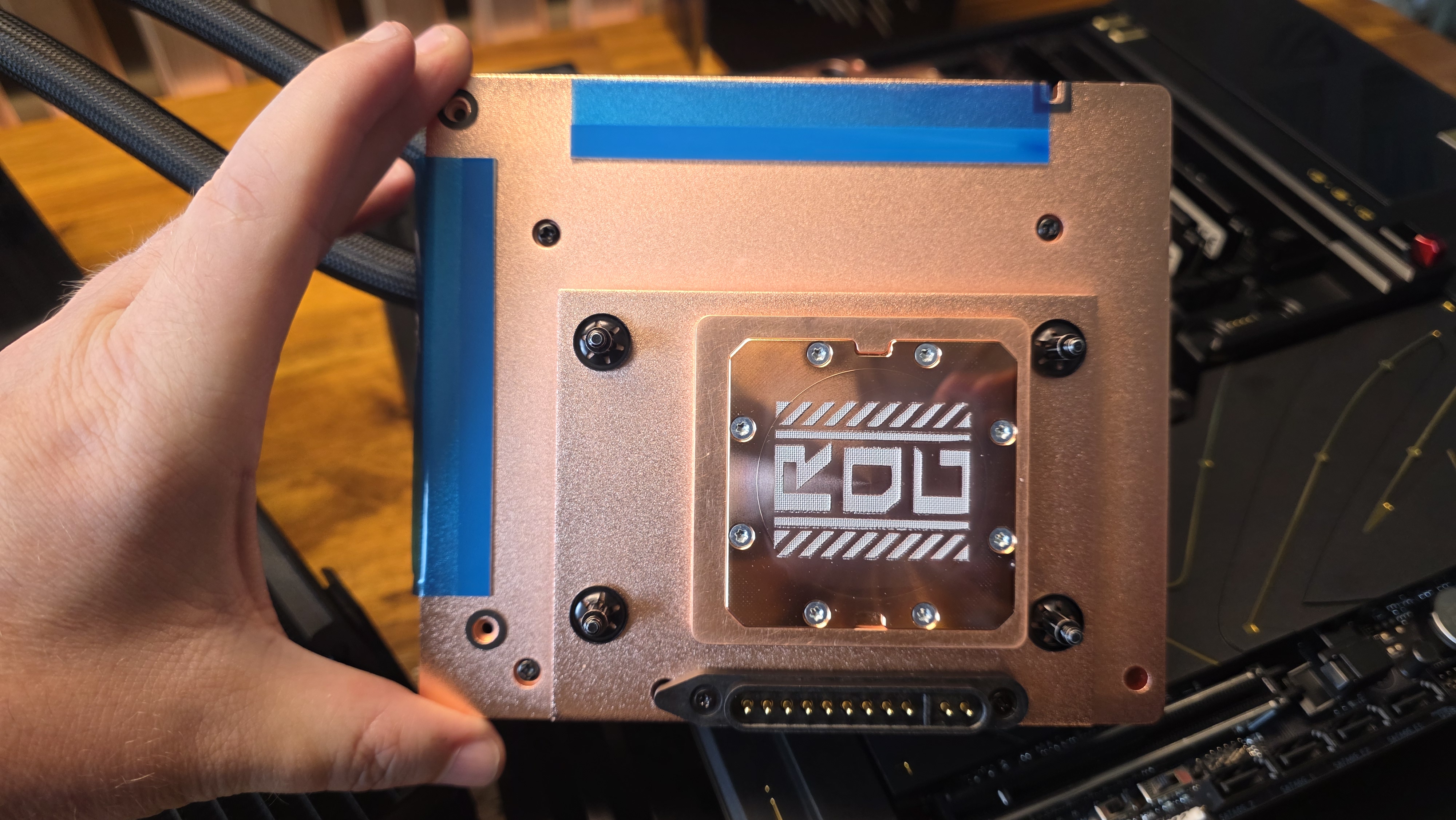
There are a few things to note there. First, there’s Asus’ ROG branding in its paste application. I am not sure this quite qualifies as one of our preferred methods of how to install thermal paste, but it is at least fairly evenly arranged. The blue strips are pre-installed thermal pads that help ensure good thermal transfer from the VRM sinks on the board.
(Image credit: Tom's Hardware)
Also note the pogo pins at the bottom of this photo. That is the power and data connection that, corresponding to pads on the board, means you don’t have to plug in any cables for the pump or the screen (the latter of which comes in a separate box and will go on later).
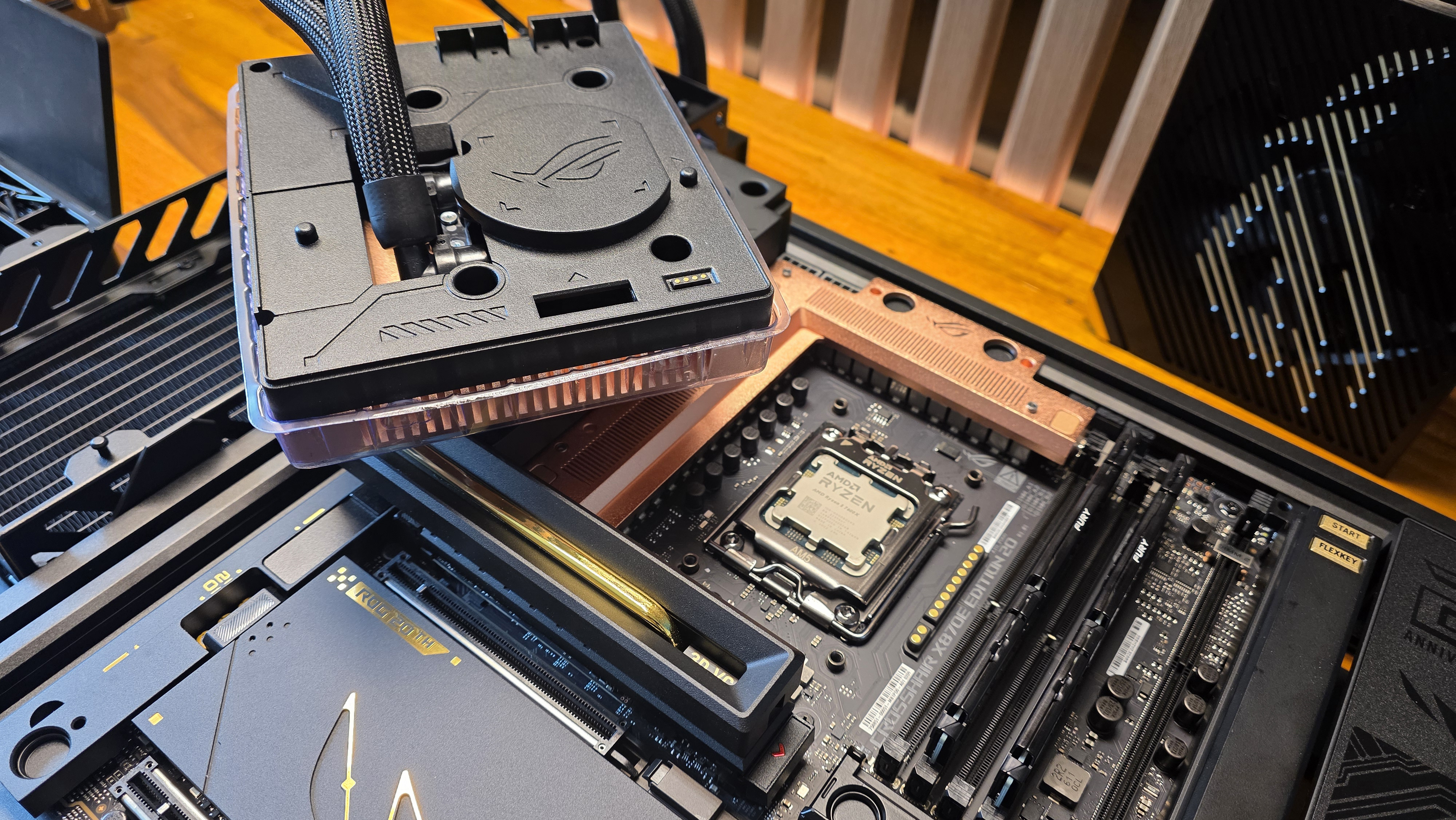
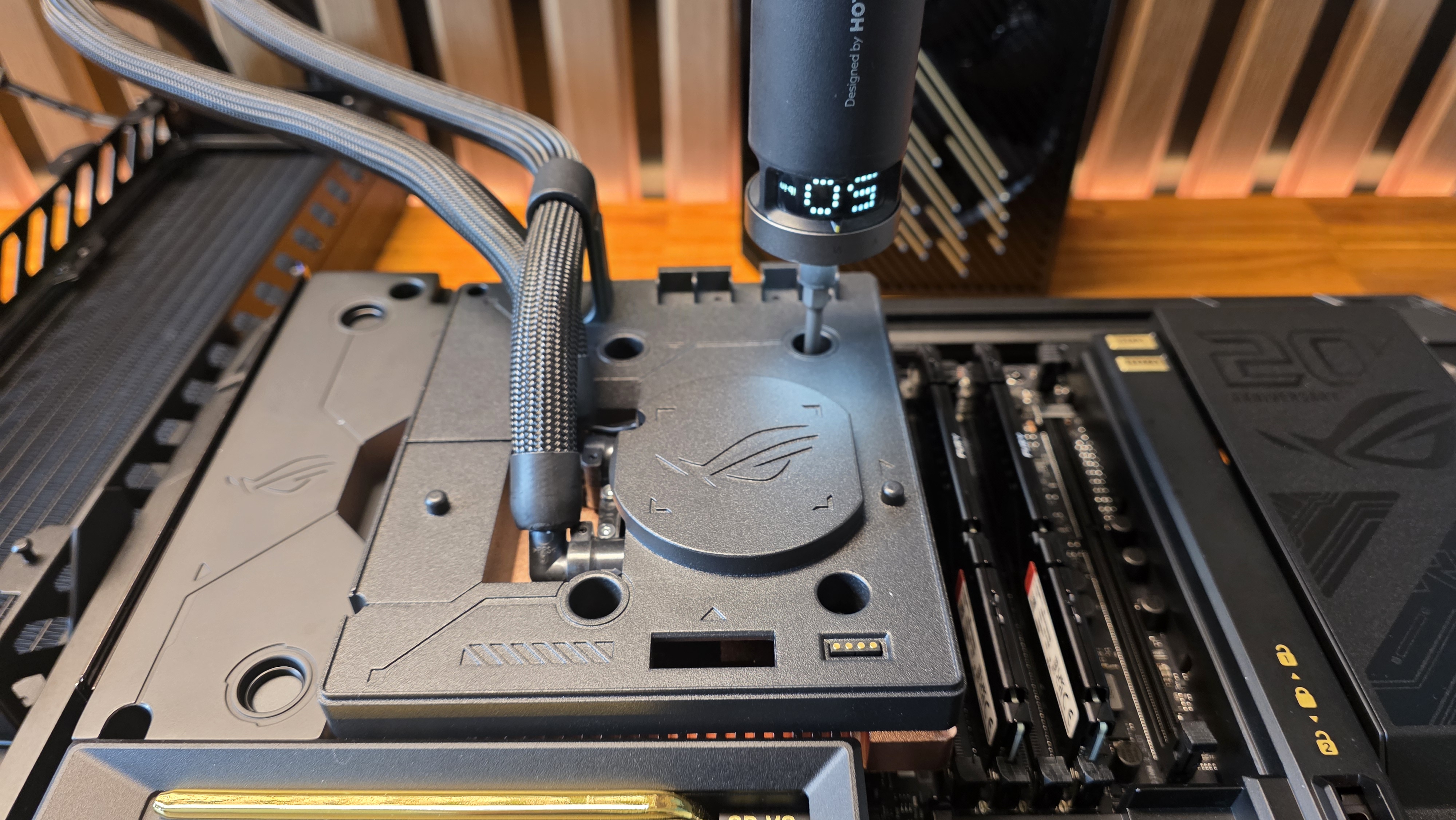
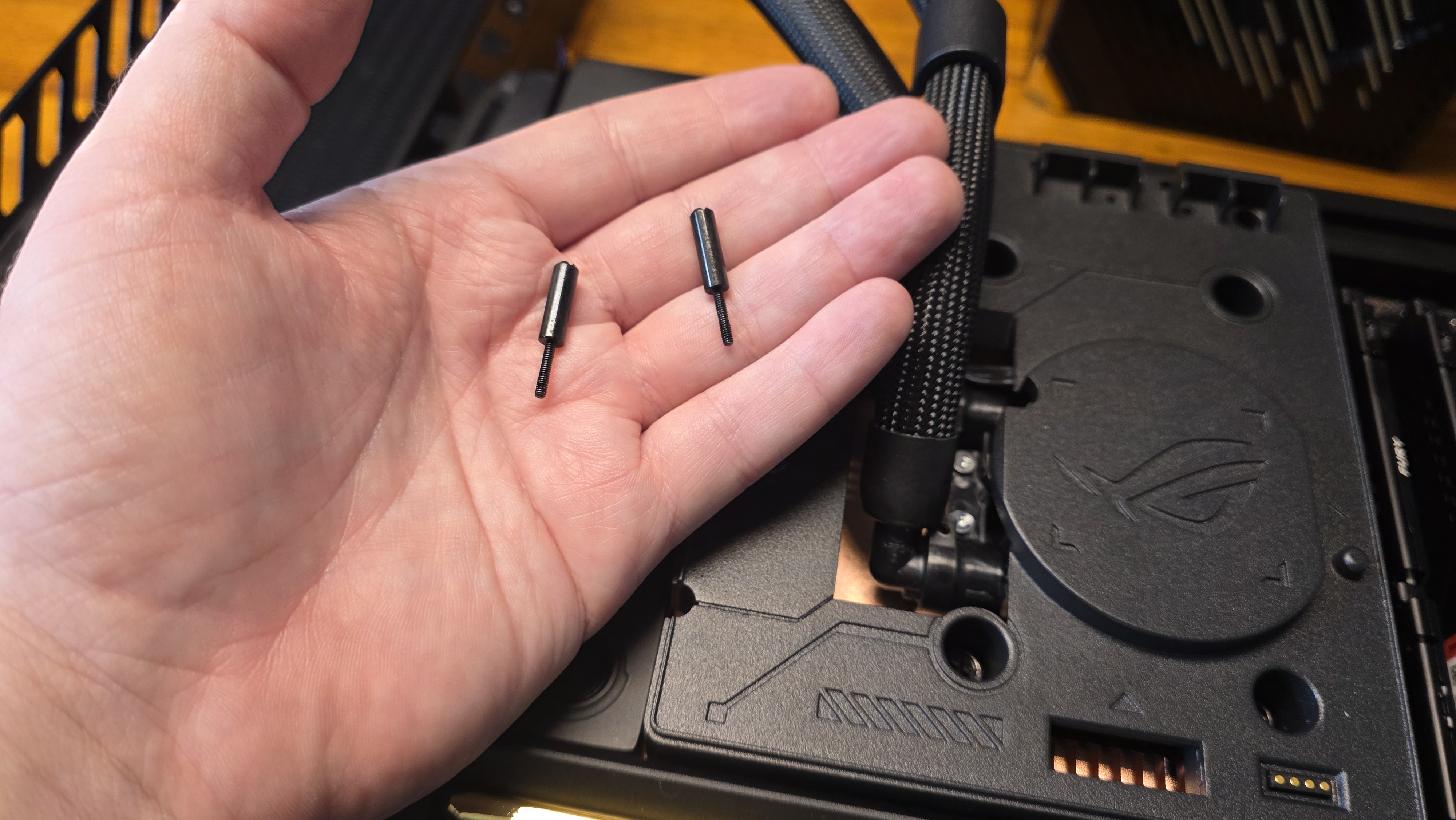
Next, you need to remove the motherboard’s mounting brackets, and the cooler’s pre-installed posts will drop right into the screw holes (carefully, mind you; this thing is hefty). You then need to install four regular screws to install the cooler, and three more proprietary screws around two of the sides to make sure the VRM cooling mates well with the large copper of the cooling plate.
Tom's HardwareTom's Hardware
This is, by far, the most secure connection I’ve seen on a consumer cooler. But with all the metal and money involved, that’s a good thing.
(Image credit: Tom's Hardware)
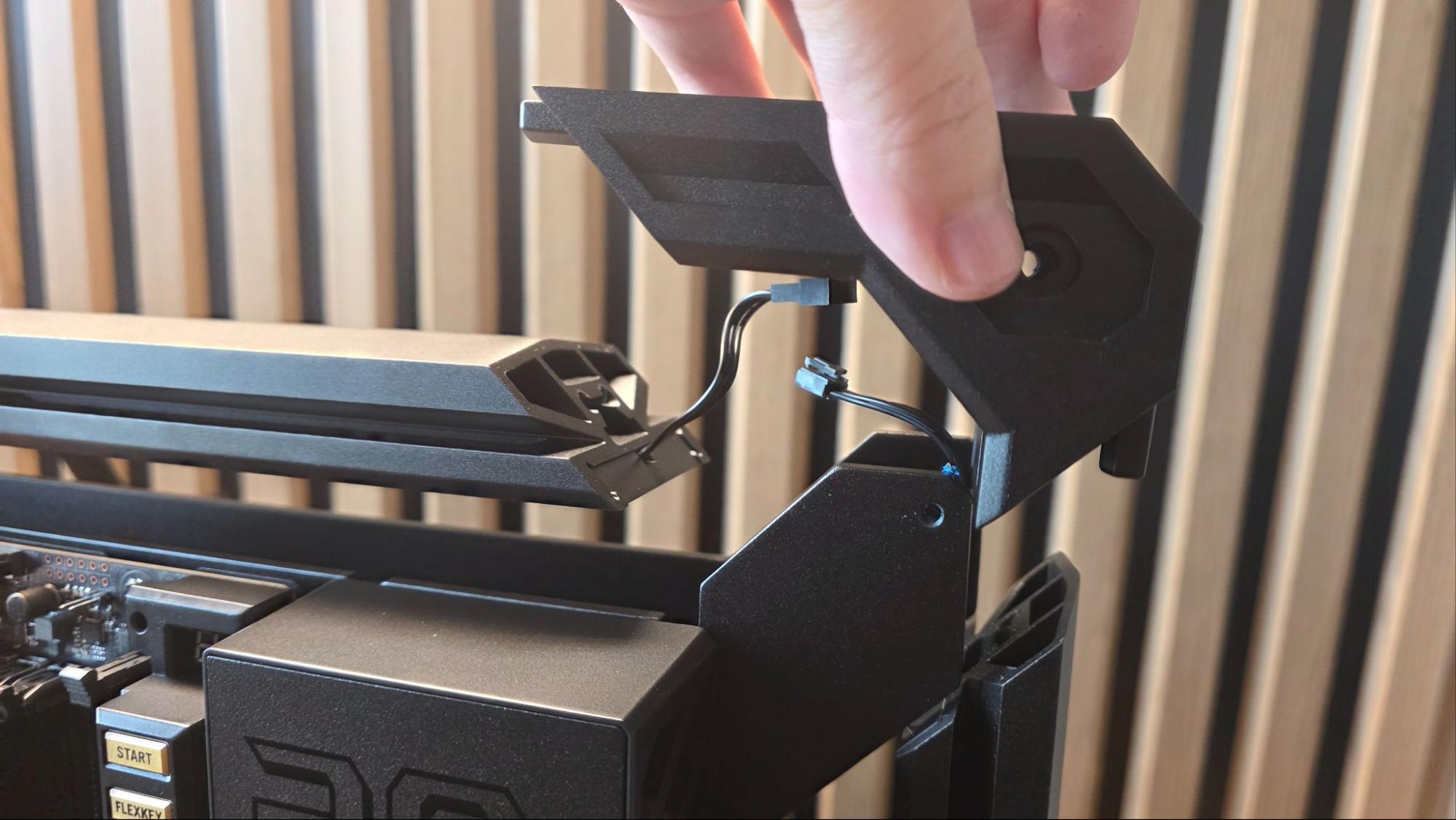
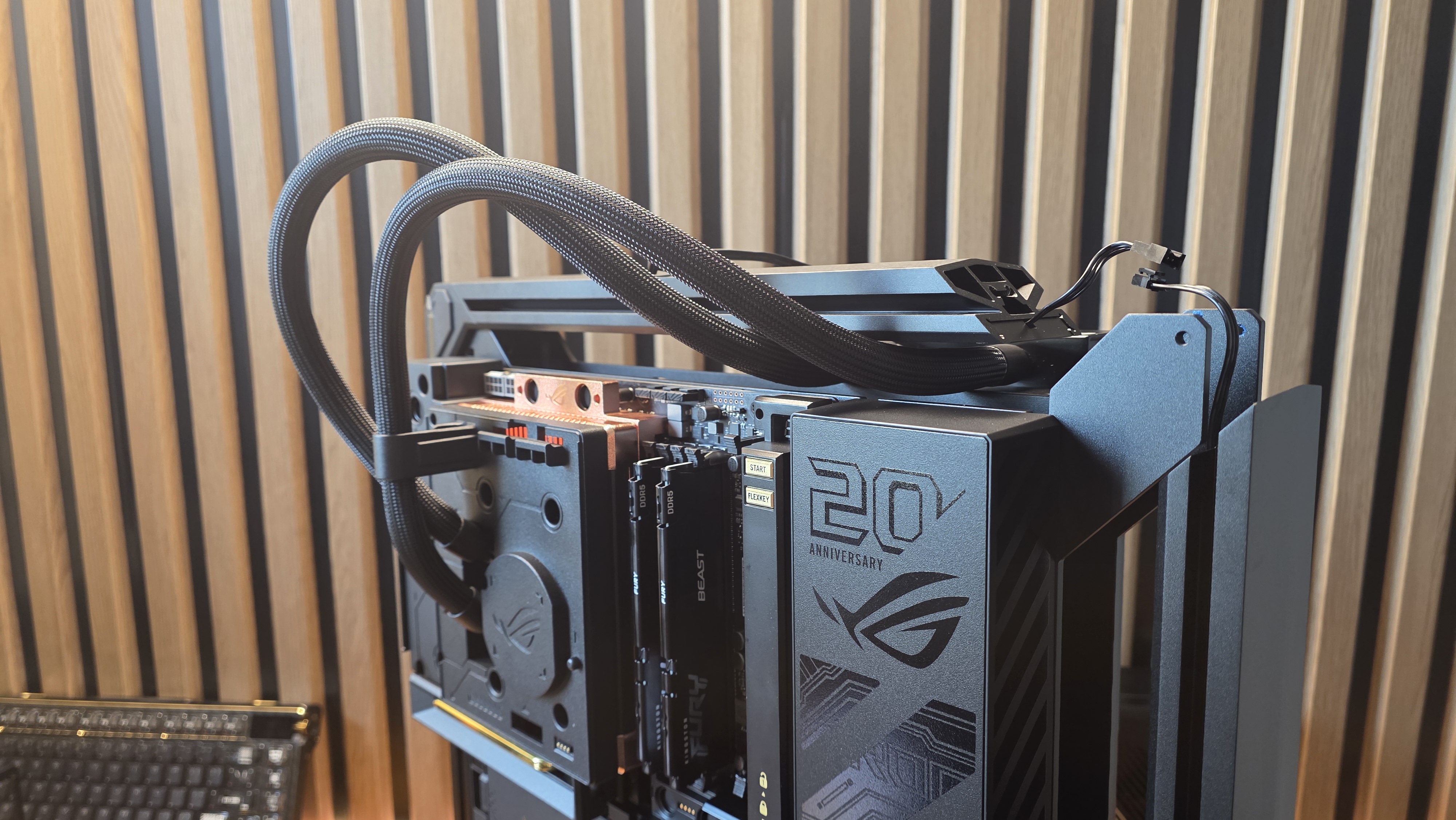
Next, surprisingly, the guide told me I needed to disassemble the upper-right corner of the case, so I stood the system back up. This step is a little involved, as you need to remove a couple of plastic covers that hide access to four screws that need to be removed. Then you need to unplug an RGB cable for the lights embedded in the frame. This lets you pass the AIO tubes through from the back, where the radiator is, to the front motherboard area. Later on, you can tuck the tubes nicely into the space above the motherboard, so they’re a little less visible, although the space does feel a bit cramped.
(Image credit: Tom's Hardware)
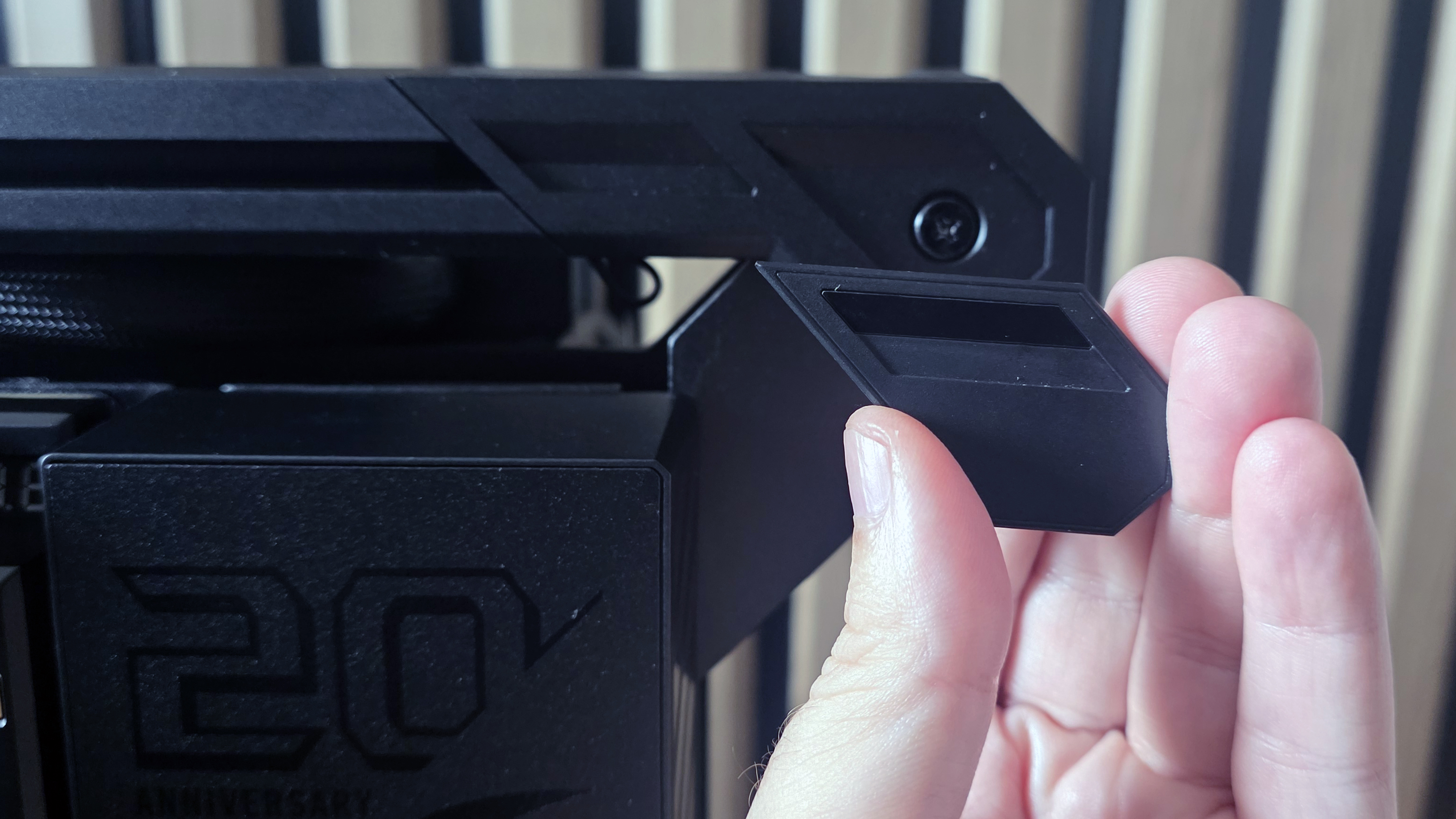
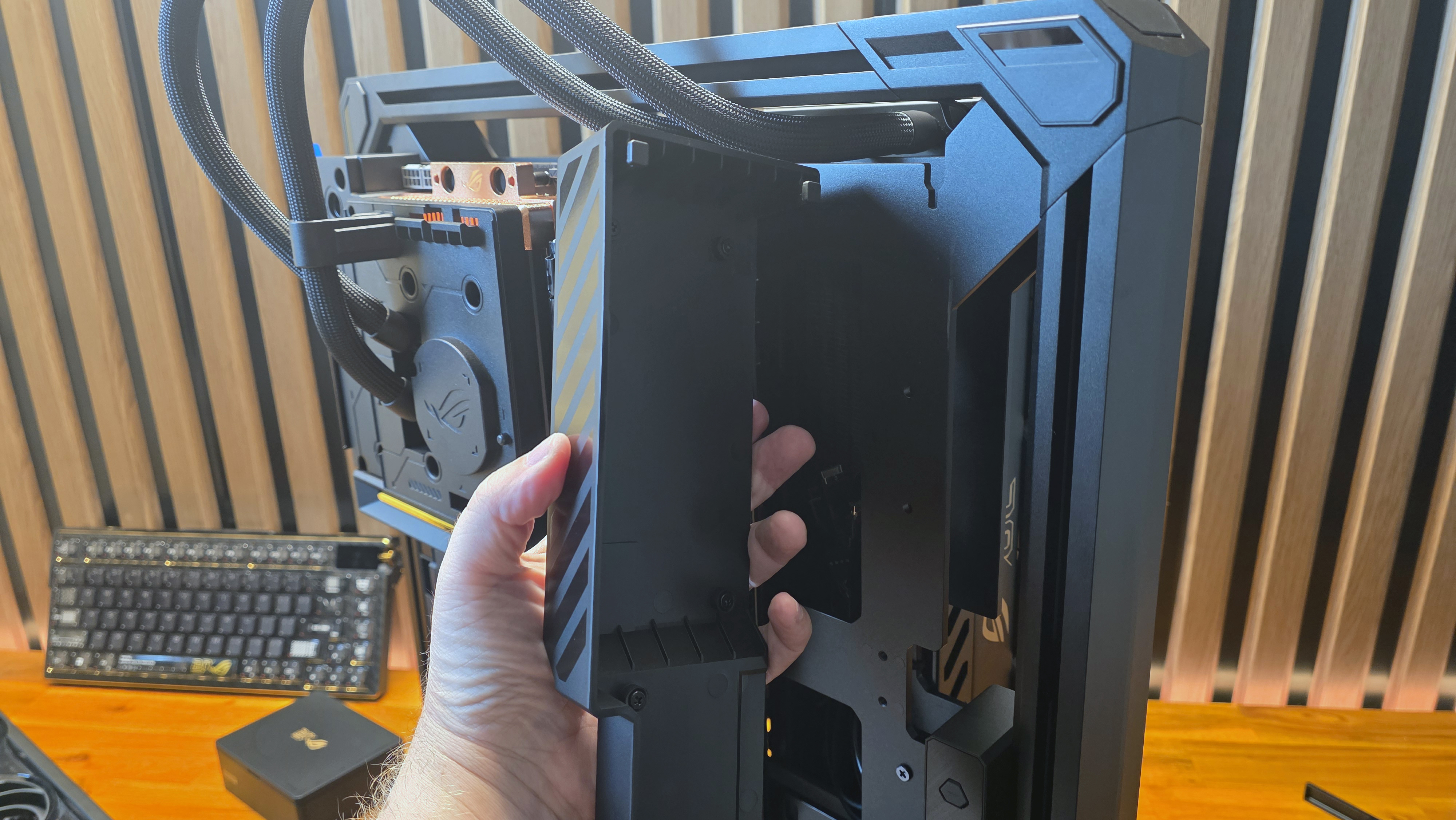
A note on these corners, as it’s one area where the design doesn’t feel or look as premium as I would like (especially given the price). There are pretty large plastic screw cap covers, which magnetically attach just by snapping onto the corner screws. They’re designed to blend into the design of the aluminum frame.
But since these covers are only held on by a small magnet, they have a tendency to move around, and often don’t line up correctly on their own. In fact, when I first took the GR20 case out of its box, one of these covers was stuck to another part of the case, several inches from where it belonged. It’s not entirely clear if this happened during shipping or just in the act of removing the case from its carton.
(Image credit: Tom's Hardware)
But I often found myself having to nudge them back in place, in part because their corner placement puts them exactly where you instinctively want to grab the case/system to slide it around. And speaking of sliding: the bottom of the chassis has small rubber feet that had a tendency to come off during the build process. They pop into holes in the metal, so reinstalling them wasn’t a problem. But they feel like a bit of an afterthought. Again, given the cost, I would like to see far more substantial rubber feet that don’t easily come off. Because the case and system weigh so much, if the feet come off it’s pretty easy to accidentally gouge your desk or table during the build process as you’re moving things around.
These are both fairly minor quality complaints, but given this is the most expensive system I’ve assembled or tested, at least since the days of quad-SLI, it doesn’t feel great to see parts that clearly cost pennies marring what is otherwise a premium system experience.
Swinging the system around on the bench – which I learned to do by walking it on its corners due to the rubber feet and the system’s heft – it’s time to install the power supply and radiator fans. First, the Thor PSU screws into the cage that was previously removed with four screws on the power plug end of the supply.
(Image credit: Tom's Hardware)
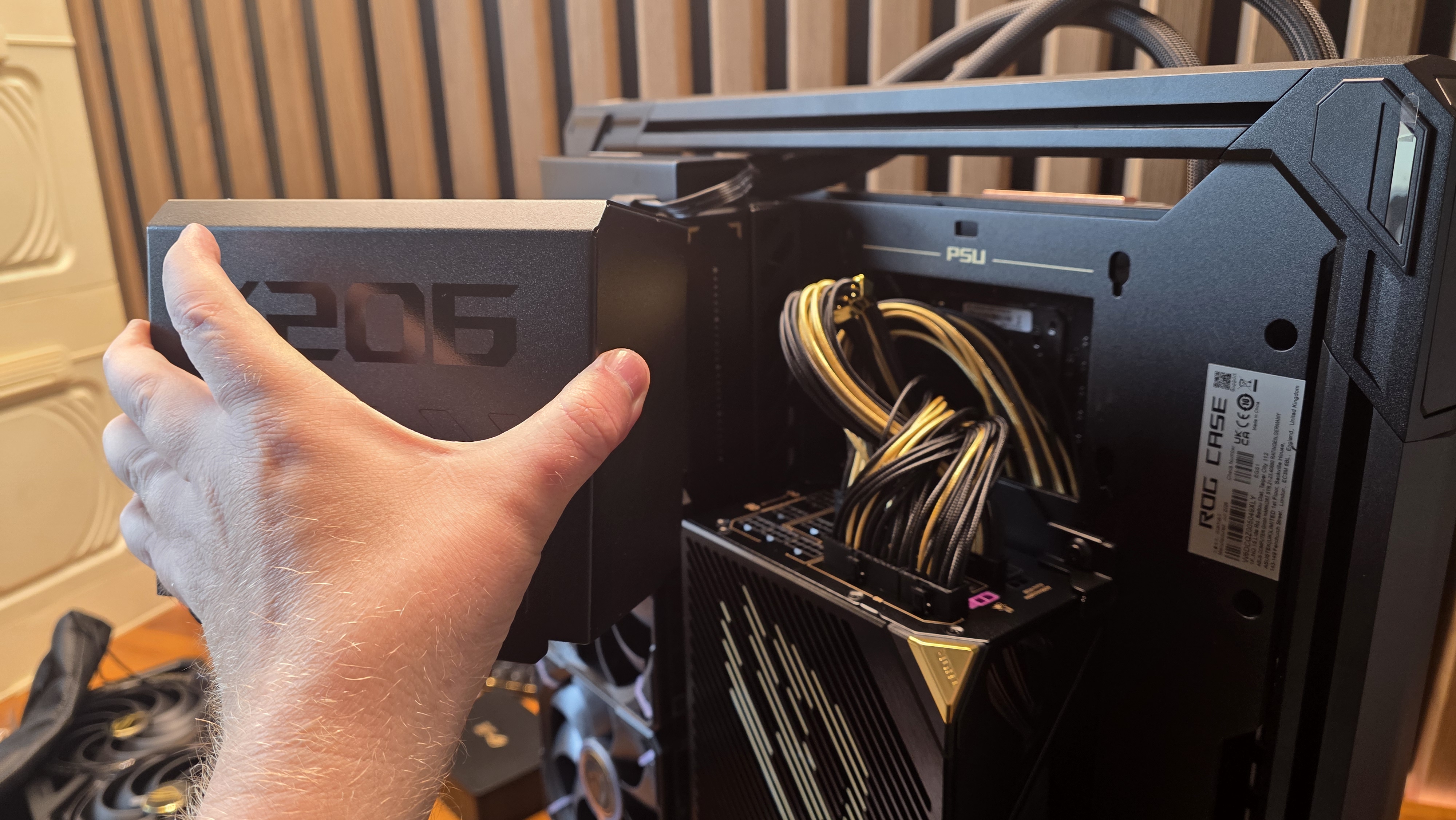
Then the cage and PSU slot back into tabs on the side of the case and attach via a screw. Don’t forget, as I did here, to move the PSU screen to the side of the PSU facing out. Otherwise, you’ll need to remove the PSU or radiator cage again later. Because the opposite side of the PSU and the radiator cage sit close enough together that you can’t remove the screen after installation.
(Image credit: Tom's Hardware)
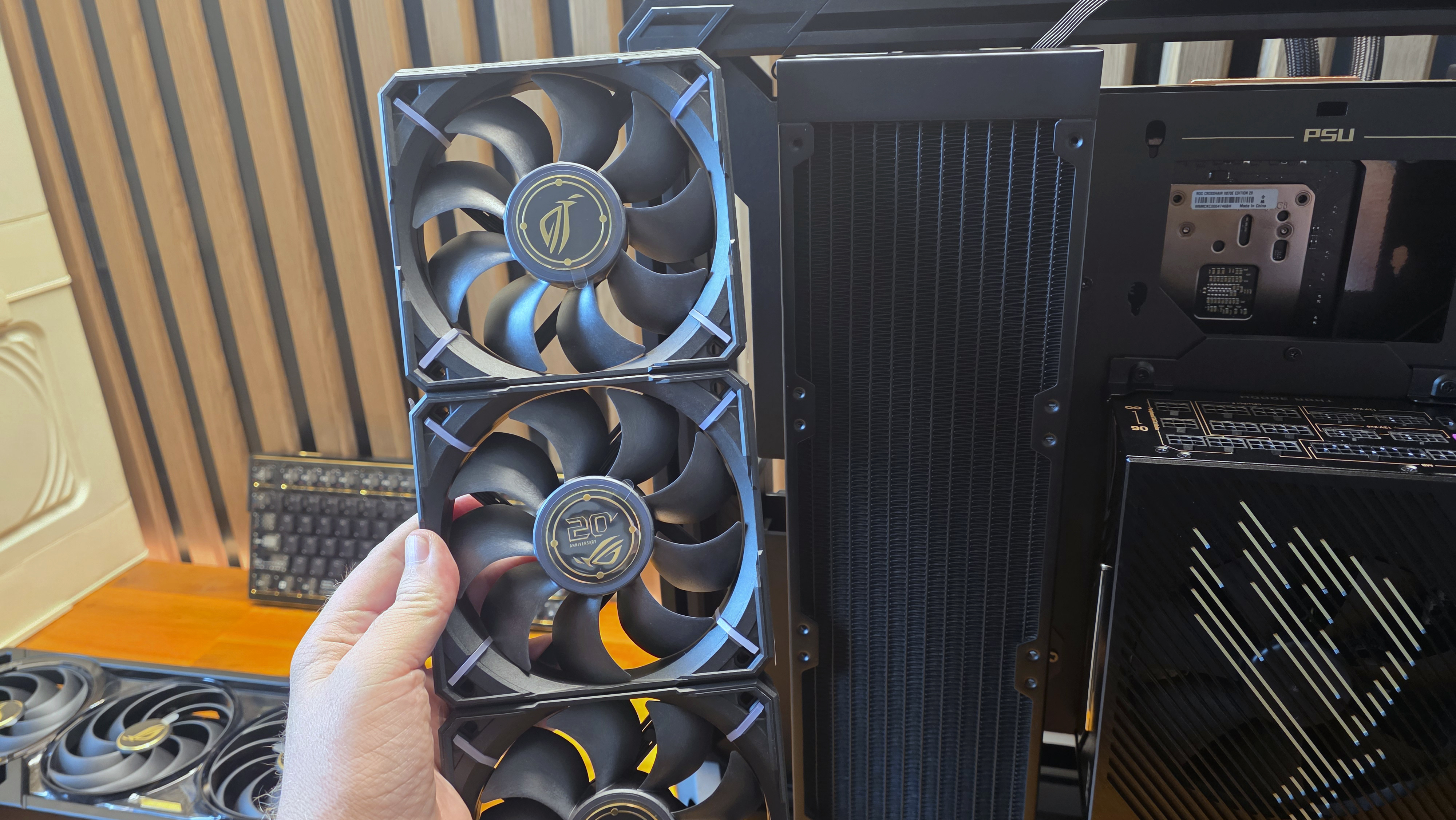
With the PSU in place, it’s time to install the radiator fans. This is made quite easy by the fact that the three spinners come as a single fused unit and, if you follow along via the installation video, Asus points out that the Asus logos on the fan hubs should be facing out.
(Image credit: Tom's Hardware)
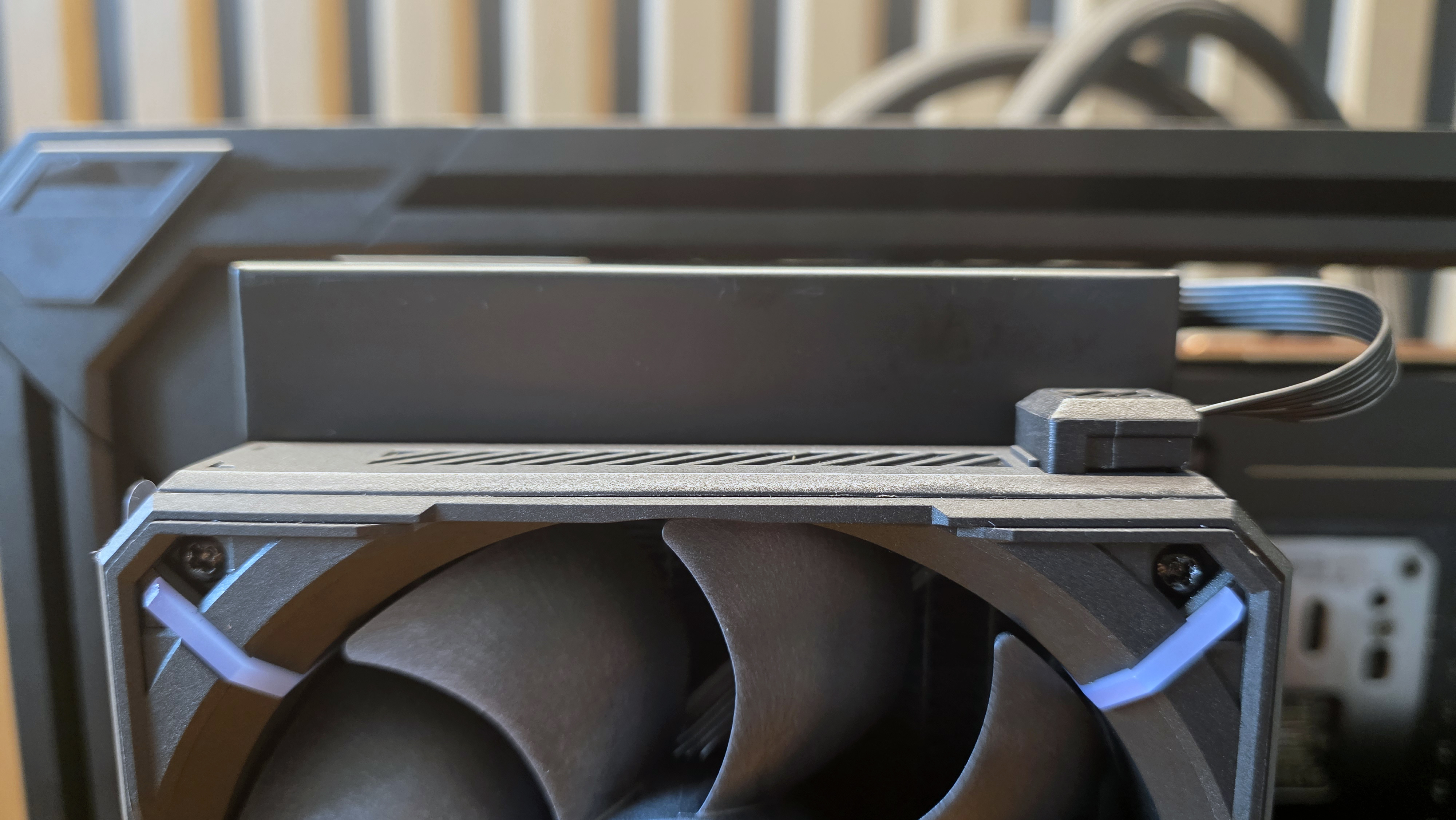
Screw them in via the long screws in the pretty cooling accessory box, and connect them via the single proprietary cable and right-angle connector that extends a few inches out from the top of the radiator.
(Image credit: Tom's Hardware)
If the plug doesn’t insert easily, turn it around so it angles out. I spent a half minute or so attempting to plug the cable in backward before I figured this out.
Now it’s time to install all the modular PSU cables, and the video guide here just kind of vaguely tells you to thread them all from the hole near the top of the PSU side to the bottom. I did this, somewhat against my better judgement, knowing full well that the supplemental PSU cables were going to need to plug in up top, and I had to fish them out and re-thread them to the top later.
Tom's HardwareTom's Hardware
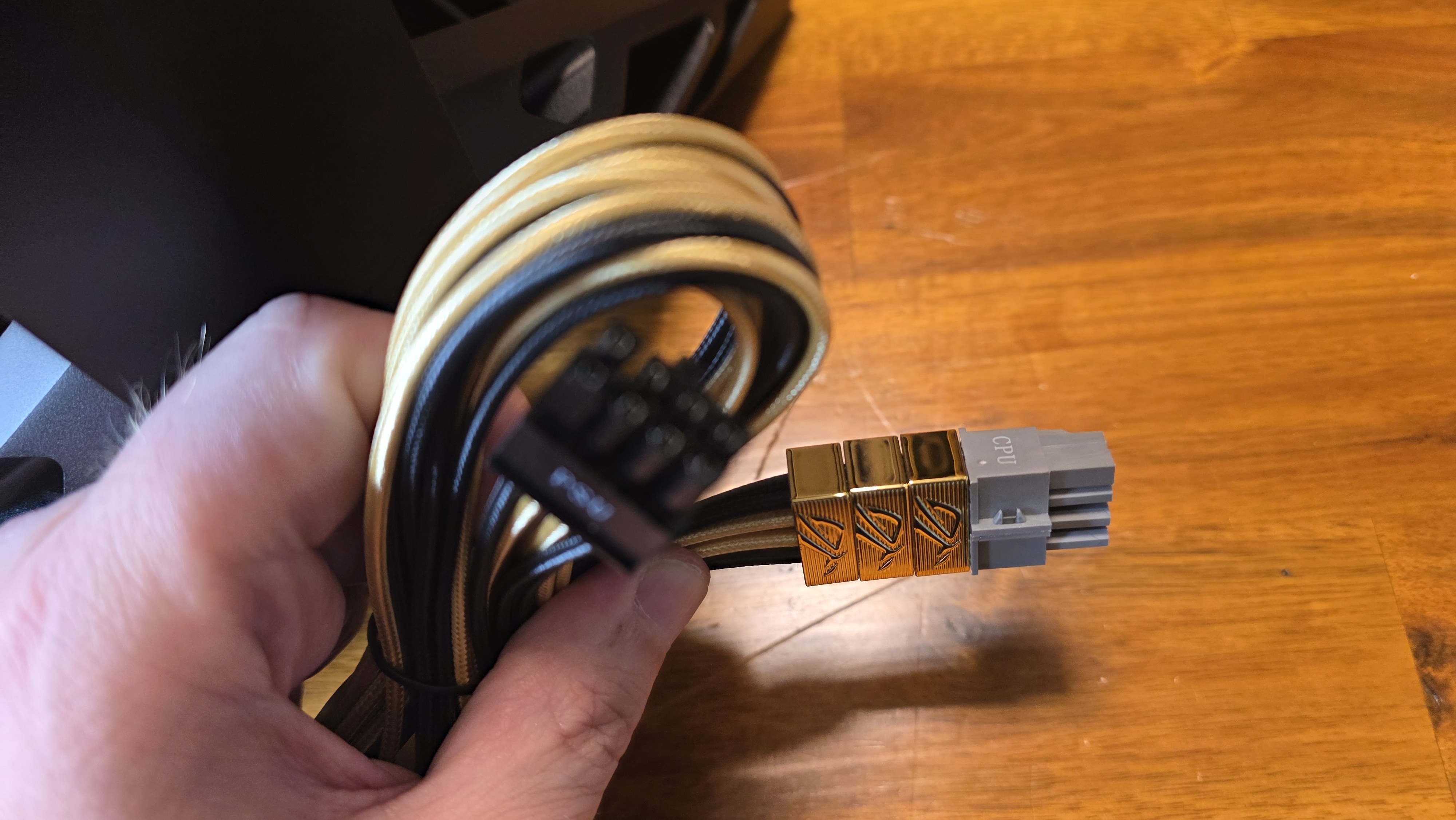
I was a bit confused at first at these plastic, somewhat chintzy-looking gold ROG blocks stacked above most of the plugs. Turns out, they’re pre-installed cable combs, and spacing them out along the cables can make things look a lot better. Don’t waste them near the PSU side of your cable runs, though, because now it’s time to reinstall the cable shroud that covers up this mess.
Tom's HardwareTom's Hardware
With the PSU, radiator and fans, and cable cover installed, this is one of the cleanest-looking ‘backsides’ of a system I’ve seen in a while. Considering this is also an open-frame case, that’s pretty impressive. Again, as long as you don’t think about price.
(Image credit: Tom's Hardware)
Walking the system back around on my bench, it was time to remove the cable shroud here as well. There’s a single screw on the bottom, and then you need to push the shroud up to release its top tabs. This was surprisingly difficult, and I was worried about pushing too hard, because this is one of the other pieces of the case that’s plastic. But it eventually popped off.
At this point, it’s a good time to remove a couple of screws and move the front panel ports up to the top section if you want. Since I can’t imagine anyone putting this system on the floor, I left it in its default orientation, with the ports near the bottom.
Now it’s time to connect all (or nearly all) of the PSU and other cables. This is fairly straightforward if you’ve built a PC more than a couple times before. The one snag that I ran into was that the video didn’t make it very clear where to plug in the fused front-panel connector, and where I thought it should go, in the lower-right corner of the motherboard, looked to be in the way of putting the plastic cable shroud back on.
I eventually downloaded the manual, saw that I was right, and just had to be extra careful when reinstalling the shroud, running the bottom connection over it rather than down past where the connector lives. The black-and-gold cables look pretty nice, with their cable combs positioned. But most will be hidden when you reinstall the cable shroud on the right side.
(Image credit: Tom's Hardware)
Blower fan and GPU
It’s almost time to install the GPU, but first we need to feed it some active airflow. The GR20 ships with a blower fan, again in its own box, that slots into a large horizontal hole near the bottom. Installation is pretty straightforward. You stick the fan in the hole on the bottom of the case, and insert two screws on each side.
(Image credit: Tom's Hardware)
There are also thumb screws that you can loosen to move the fan forward and back a bit, but mostly the fan is just going to blow up across the bottom of the board and onto the ROG Astral 5090 – once it’s installed. First, though, you need to plug in the blower fan, which you can do on any number of fan headers around the board. But since the cable is long enough, I ran it behind the motherboard area and up to the CPU fan header.
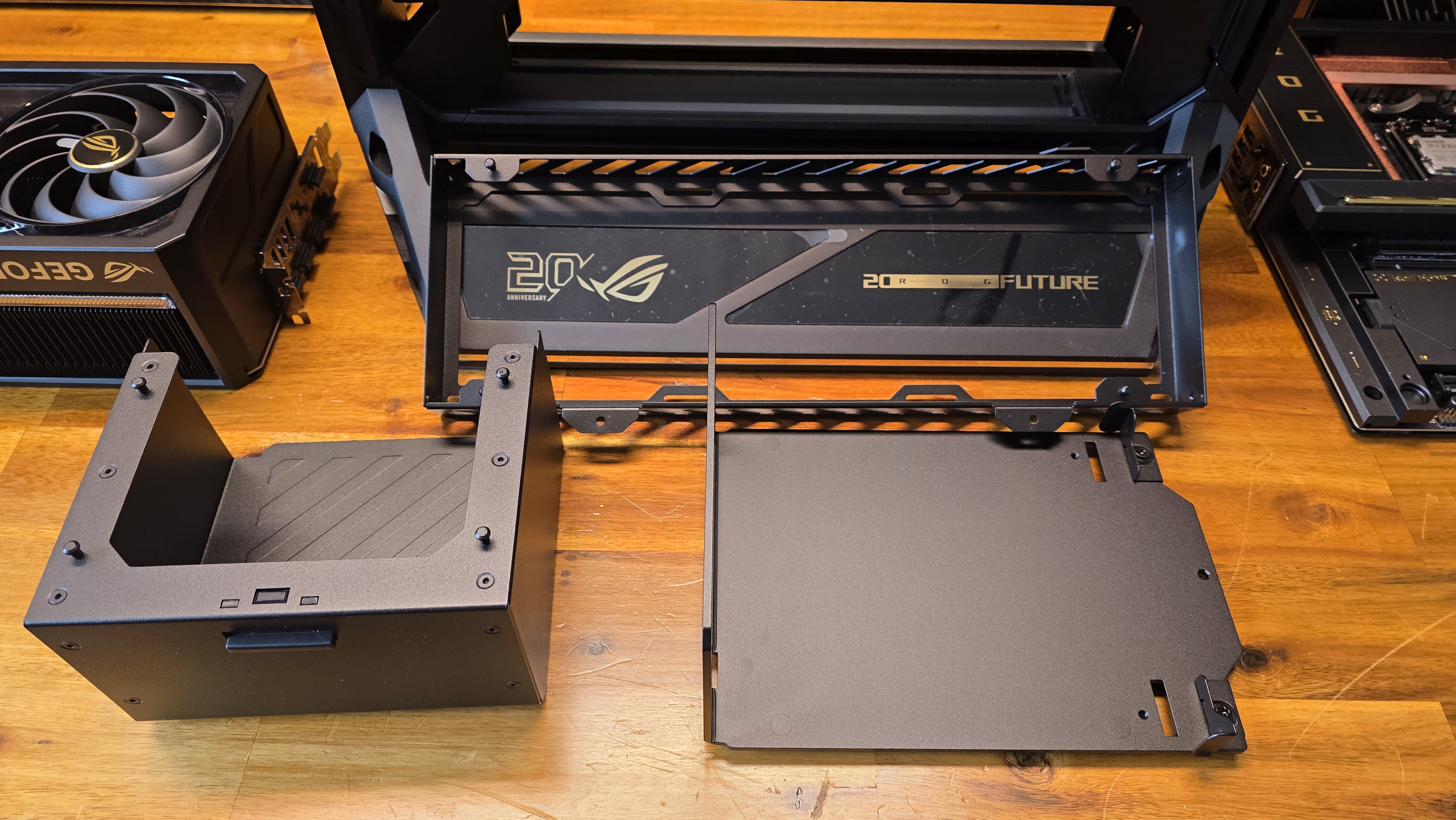
Another wrinkle before we get to the GPU: You also have to install brackets for the motherboard’s port area and the GPU port area. The former feels like a decoration. Since the board is secured by several screws, it’s effectively a decorative frame for connectivity. But the GPU port bracket supports half of the very heavy GPU.
(Image credit: Tom's Hardware)
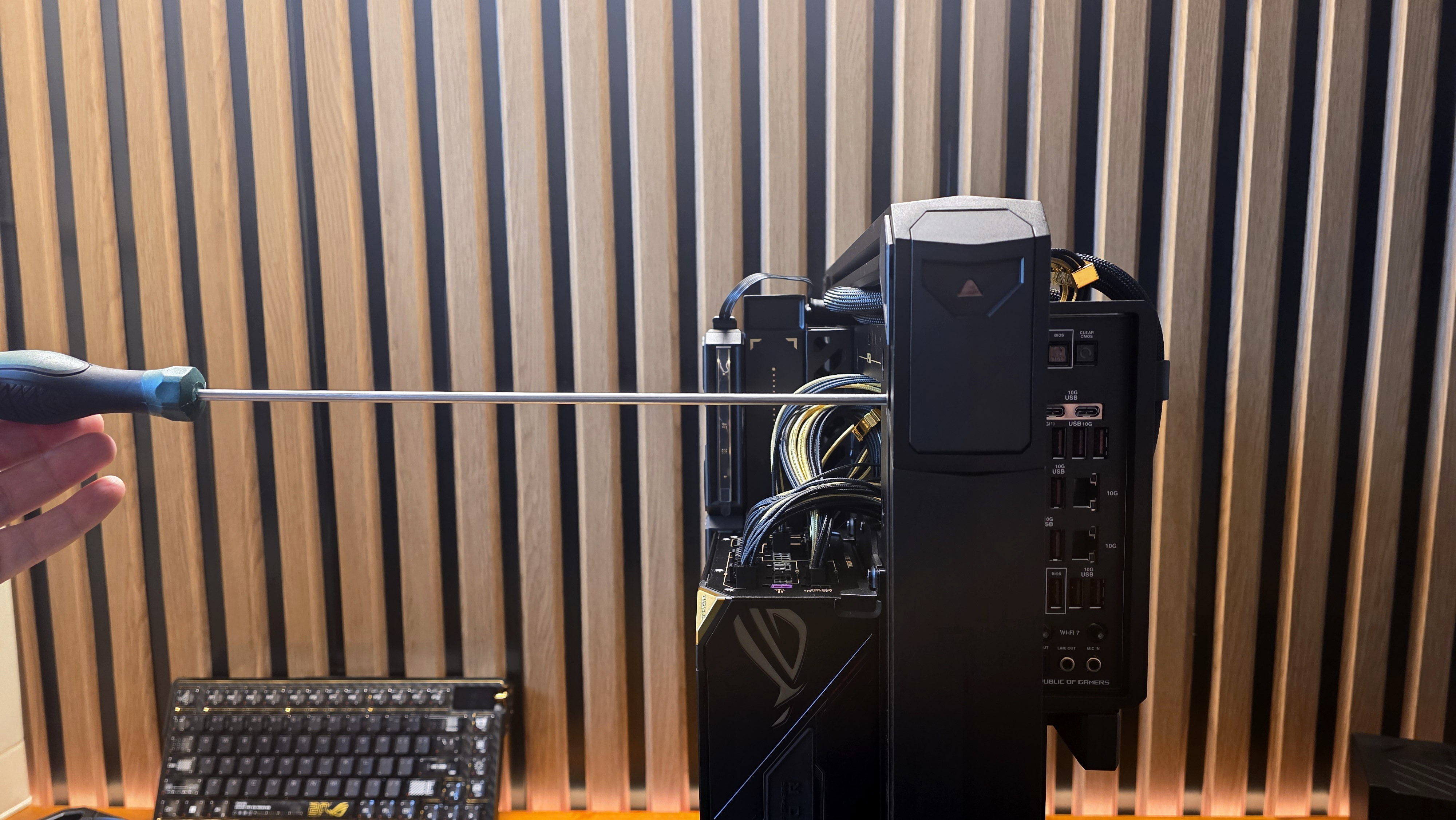
These aluminum brackets poke into small holes on the frame of the case, and this is the one area where I feel like the video installation guide seriously misses the mark. It tells you to attach these brackets from the back with a screwdriver, but it doesn’t say which screws to use, or even show screws being inserted. And because the screw holes are recessed, they are very hard to see, and were deep enough that I had to break out the long screwdriver that I usually use for installing large air coolers.
(Image credit: Tom's Hardware)
Once I did that and used the same screws from the bag in the previous step (installing the blower fan), getting both of the brackets installed was fairly easy again, easy after I wasted 5-10 minutes figuring out what I was supposed to do here. Again, since the GPU bracket is going to support the port side of your GPU, make sure that the bracket's two screws are tightly torqued.
On the opposite edge of the case (shown on the right side of the image above), you’ll also need to attach a GPU support bracket. This one you’ll want to leave somewhat loose at first, since you’ll have to adjust it once the GPU is installed.
And now, finally, it’s time to install the ROG Astral RTX 5090 Edition 20 GPU. You’ll probably want to (again, gently) lay the system down for this. It, as should be obvious, goes into the x16 slot just below the topmost M.2 heatsink. But because the sink is large and the GPU itself is very large, getting it slotted in requires some extra finesse.
But once the card is fully seated in its slot, you secure it first with the typical bracket screws on the port end, and then with three additional screws on the GPU support bracket side, with holes that you’ll need to adjust so they line up with the holes on the card. If you happen to be using a different card, hopefully this bracket adjusts enough so that it can be placed under the card to support it. Once it’s in place where you need it and the card is secured from both sides, you’ll want to tighten the screw that holds the bracket at the back, so it securely supports your graphics card.
Now, of course, you can attach the 12-pin power connector that was previously threaded out the bottom center of the case into the graphics card. As always, make damn sure it’s fully inserted. But hey, at least with this build, you can see the connector when the system is running, in case it starts smoking or melting.
(Image credit: Tom's Hardware)
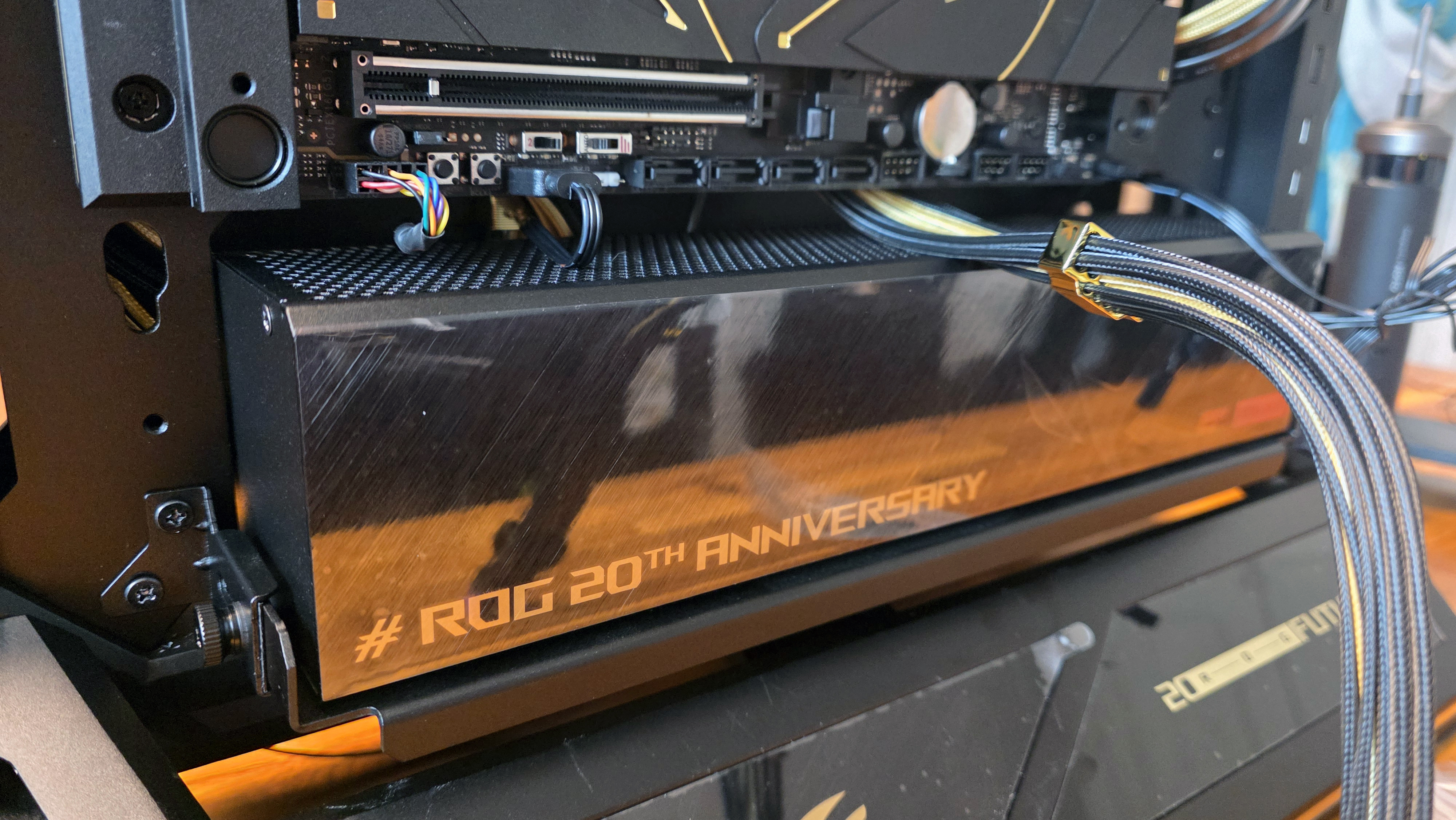
At this point, you can also attach the glass backplate cover if you so choose. It effectively just sits on a hole in the backside of the GPU, held in place by some magnets. It looks nice, but I wish it would drop down slightly to be more flush with the top edge of the card.
Time to deploy the AMOLED
(Image credit: Tom's Hardware)
With the primary components in place, it’s time to install the curved screens, in the penultimate addition to this build. Both effectively just snap in place. The larger cooler screen requires that you line up a U-shaped groove under the liquid cooling tubes, insert the screen mechanism into a couple of tabs, and then press down gently until the pogo pins make contact with the pads on the cooler.
Note that Asus markets this screen as swiveling, but it really only moves two or three degrees forward or back. That might be enough to reduce some glare, but you’ll generally want to have the screen angled toward you if you want to easily see what’s on it. It’s also not really a single screen, but clearly a pair of curved screens stacked on top of each other.
(Image credit: Tom's Hardware)
The GPU screen is far easier to install, snapping right into the end of the card in the area where you can see the metal connection pads. But it has its own wrinkle. For this screen to work at all, you need to connect an included USB cable from the Type-C port on the card to a Type-A port on your motherboard. This is easy enough to do, and the motherboard has 8 Type-A ports, along with two more on the front of the case, so I doubt you’ll miss one port. But for a GPU with a screen that costs $6,000, it feels kinda lame to have to run a USB cable to get the screen to work.
(Image credit: Tom's Hardware)
Lastly, and I would argue most optionally, Asus also includes a large magnetic ROG logo that you can attach to the steel front of the otherwise plastic cable shroud on the front. It is pretty detailed and matches the gold accents of the rest of the system. But personally, I think it looks tacky here in a way that (somehow) the rest of the design doesn’t. If you really want to show off your devotion to the Republic of Gamers, this big magnet might look better on your refrigerator or somewhere else than on a $15,000 gaming PC that’s already adorned with screens that, by default, display the ROG logo on the regular.
Personally, I’m going to stick this large ROG magnet on the side of the beer fridge that lives under my test bench, next to my magnetic Corsair external SSD and my Orkney Skull Splitter ale sticker. If any of my non-gamer friends ask what it means, I’ll tell them it represents the Republic of Guzzlers. Really though, I just like a nice lunch beer – I swear.
I didn’t have as much time as I would have liked to benchmark this monster PC or get a long-term sense of what it’s like to use it as a gaming and productivity rig. I may add to this section in the coming days as I spend more time with the system, but after about a day of using it after it was built, installing an OS, drivers, and playing a few PC games, I did get some strong initial impressions.
First off, for a high-end rig in an open case, with the beefiest GPU I’ve ever personally used, this machine is surprisingly quiet. I didn’t do anything more strenuous than play Borderlands 4, and admittedly my air conditioner was droning away from a nearby window. But the cooler and blower fans remained quiet. And the four fans on the GPU were noticeable when I was standing in front of the PC, but remained at both a level and a pitch that I would expect from a mainstream gaming rig inside a traditional case, not a top-end monster rig with all its cooling inches from my ears. At some point, I’ll have to listen to the system again when it’s cool enough to live without my air conditioner.
On the topic of heat, though: this 5090 sure kicks out a lot of it when gaming. And to some degree that’s no surprise. My personal system with a 4090 sits below my desk, and when I’m gaming at high settings on my 4K OLED TV, the PC feels like a small space heater blowing on my legs. However, things were on another level when using the Asus PC on my bench. The blower fan was pushing air up from the bottom, and the GPU fans were busy dispersing the heat from rendering the menu screen of Borderlands 4. The taller-than-desk-height of my bench was also probably a factor. But all that heat was literally blowing in my face, while my air conditioner worked to cool me from one side, a few feet away.
After about 10 minutes, I needed a break from the hot air blowing on me. And while my setup isn’t typical unless maybe you tend to game at a standing desk, I think even in a typical gaming setup, you may want to put this machine a little further away from you than a typical gaming PC. It’s not that it generates more heat than other high-end rigs, but its open-frame nature and the bottom blower fan distribute that heat much differently than a more traditional case, where most of the heat is exhausted out the back or the top, away from you.
Here, most of the heat seems to come forward, directly off the motherboard. And if your desk is cramped, I don’t think that would lend itself to a comfortable gaming experience – at least during the warmer months. I’d suggest planning to position the system 3-4 feet from your monitor and your face. If that means you have to upgrade your desk, you should. The system also weighs nearly 60 pounds, so you might want to anyway – and if you spent this many thousands of dollars on a gaming rig, you can almost certainly also afford a new slab of furniture for it to sit on.
Also, I find it curious that Asus’ ROG 20th anniversary GPU supports two power connectors (a typical 12VHPWR and a back-connector power option, and yet the motherboard the company expressly pairs it with isn’t a back-connector board that lets you take advantage of the extra wattage the GPU can take and that the 3000W PSU can dish out.
Perhaps a couple of factors were involved in the pairing. U.S. households aren’t typically wired for the voltage required to pull significantly more than 1600W. And maybe the average well-off PC builder willing to spend over $10,000 on a GPU, motherboard, cooler, and power supply might not always be astute enough to play around with a GPU capable of drawing up to 800W all on its own. I could see the whole ROG 20th Anniversary line becoming a financial burden pretty fast if the company had to deal with a significant number of RMAs and customer complaints on what must be low-volume hardware that costs several thousand dollars. Those who really want to experiment with shoving 800W into an RTX 5090 can buy the GPU separately, along with one of Asus’ compatible BTF motherboards.
A cost-no-object, screen-packed powerhouse
(Image credit: Tom's Hardware)
Circling back to cost, there’s just no getting around the fact that this system is ridiculously expensive. Putting aside the peripherals, the RAM, the SSD, and the CPU, the core ROG 20 components here costOver $10,000. Even at today’s inflated prices, you can get a more typical RTX 5090, a capable 1300W power supply, a premium X870E motherboard, a good 360mm AIO cooler, and one of the best PC cases for well less than $6,000. Cut a couple of corners and wait for a deal here and there and you could get nearly the same level of performance for not much more than $5,000 – half the price of Asus’ ROG Edition 20 parts.
Of course, those components won’t have multiple curved AMOLED screens, several pounds of copper to cool your CPU and VRMs, or a unique open-frame case like the GS20. And Asus’ ROG line has always put performance, materials, and premium design over affordability. It’s not like anyone who has been paying attention to the brand for two decades was expecting it to celebrate its anniversary by putting out cheap parts. High-end ROG components have always demanded a premium, and now that nearly everything in this space costs more, the premium has increased as well – at least for this iteration of its product line.
Also, as much as I’m not typically the type to build a PC with parts from mostly the same company, it was refreshing to actually be able to control every bit of RGB lighting with a single piece of software. I just wish Armory Crate didn’t need to download and update what seemed like 12 different modules and require multiple reboots before it could recognize and adjust the lighting on all the components in this build.
 登录
登录