普通视图

发现新文章,点击刷新页面。
昨天以前Tomshardware

Hands On: Sharge's Disk Pro 2 Ultra is a compact, magnetic DIY SSD dock with active cooling, 80W passthrough charging, and HDMI 2.1, supporting up to 8TB drives

作者 Matt Safford
2026年9月11日 19:05

With its built-in USB / HDMI hub and a small fan to keep temperatures in check, Sharge's Disk Pro SSD is one of the more interesting (and generally useful) external storage drives in recent memory, easily earning a spot on our Best External SSD list. And the company is following that success up with a more DIY-focused Disk Pro 2, which lets you install your own M.2 drive (supporting 2230, 2242, and 2280 sizes and capacities up to 8TB), while adding greater fan flexibility, media card slots, and an HDMI port that's capable of more bandwidth – depending on the model you choose.

Sharge is offering the Disk Pro 2 in two varieties. There's the Lite model, with HDMI 2.0 (4K@60 Hz) and a 5W minimum operating power, and the Disk Pro Ultra (which we have in for testing) with HDMI 2.1 (4K@144 Hz or 8K@30 Hz), a lower 1.5W minimum power draw, and a faster card reader. Below is the full list of differences, according to the product page. The company even lists the internal chips, some of which you can see through its transparent top.

Disk Pro Ultra

Disk Pro Lite

HDMI

HDMI 2.1, 4K@144 Hz, 8K@30 Hz

HDMI 2.0, 4K@60 Hz

Minimum Operating power

1.5W

5W

Chips

VL822, VL605, RTL9210, SM2705

GVS2201S, VL822, GL3231, RTL9201

SD speed

Read 180 MB/s, Write 120 MB/s

Read 100 MB/s, Write 90 MB/s

Sharge Disk Pro 2 Ultra

(Image credit: Tom's Hardware)

The Ultra model is likely to appeal more to professionals and gamers, offering faster card transfers and higher monitor refresh rates. But the main limitation here is the overall bandwidth, as both models are capped at a 10 Gbps interface, just like the original Disk Pro. That makes either model better as kind of a travel-friendly Swiss Army hub than something you'd want to use as your primary hub / dock all the time. Because any modern M.2 drive can saturate all available throughput by itself, before you connect any video or USB devices. But there's no denying the utility of carrying around a pocket-friendly SSD that also lets you connect to a monitor or TV, plug in a couple extra peripherals, and empty your SD cards without an extra hub, adapters, or cables.

Sharge Disk Pro 2 Ultra

(Image credit: Tom's Hardware)

At 3.65 x 2.33 x 0.531 inches (92.6 × 59.2 × 13.5 mm) without the cable, the Disk Pro 2 is slightly thicker and longer than the original Disk Pro, but still smaller than some standalone drives. Again, with its size and transparent top, it reminds me of an old-school cassette tape.

Sharge Disk Pro 2 Ultra

(Image credit: Tom's Hardware)

One thing that has definitely improved over the original Disk Pro is that Sharge has made the USB-C cable removable. This is good in part because you don't have to worry about the cable breaking over years of use. But also, particularly if you're going to use the drive's hub capabilities, you might want something longer than the included cable's sub-nine-inch length. And when necessary, you might want to plug the drive into a USB-A port. So having the option of using different cables is a big plus.

The cable is also designed to function as a lanyard, which can be handy. But it's held in place solely by the USB-C connection, so I wouldn't trust it for much more than hanging the hub up somewhere at home, so you know where it is when you need it.

Sharge Disk Pro 2 Ultra

(Image credit: Tom's Hardware)

In terms of ports, starting from the bottom edge, you get the main USB-C port, capable of passing through up to 80W of power, a full-size HDMI port (2.1 on the Ultra model we're testing or 2.0 on the lite model), a USB 3.0 Type-A port, and a 10 Gbps USB-C port that can handle up to 100W of power input (and pass through up to 80W for charging a laptop or other device). The previous Disk Pro included a second USB-A 2.0 port here as well, but it's been ditched in favor of the removable USB-C cable, which I think is well worth the sacrifice.

Sharge Disk Pro 2 Ultra

(Image credit: Tom's Hardware)

On the opposite (top) edge, Sharge has added an SD card slot and a microSD card slot. These are capabilities the original Disk Pro didn't have, which make the newer model a lot more versatile for content creators. Just remember the Ultra model offers up faster read and write speeds for the card slots.

Sharge Disk Pro 2 Ultra

(Image credit: Tom's Hardware)

Around back, there's not a lot to see save for the fan intake, but the back is also magnetic, letting you snap the drive onto smartphones that support MagSafe devices or Qi2 magnetic peripherals — it's just a physical mount, though, not receiving power. I've also found this feature handy for sticking the drive to a refrigerator or other iron surface so I always know where it is when I need it.

Sharge Disk Pro 2 Ultra

(Image credit: Tom's Hardware)

It's also worth pointing out that the fan in the Disk Pro 2 is smaller than on the Disk Pro. But there are larger cutouts for air intake on the sides for when the hub is lying on a table or desk, and the Pro offers a three-mode switch (off, on, and turbo), whereas the original's switch had two settings (auto and on). I appreciate the active cooling, and it will certainly be helpful if you're using most of the hub's ports and the SSD at the same time. But if you're mostly using the Disk Pro 2 solely for basic, bursty storage tasks, the 10 Gbps interface and an efficient SSD aren't likely to get warm enough to require active cooling. Of course, that will heavily depend on which drive you install in the enclosure, as well.

Testing with Lexar's 710 SSD

Sharge sent along its Disk Pro 2 Ultra with a Lexar 710 M.2 SSD (a PCIe 4.0 drive that's capable of about 5x the bandwidth of the hub itself), and installing it is about as straightforward as you'd expect. Use the small included screwdriver to remove a tiny screw on the side, and the SSD cover lifts off. Loosen the drive anchor post, install the SSD, tighten the post, put the cover back on, and reinstall the cover anchor screw on the side.

You can, of course, install your SSD of choice, and below the 10 Gbps interface cap, your performance will vary by drive. Still, since the company sent along the Lexar drive, we ran a couple of our external storage benchmarks, and the Disk Pro 2 Ultra performed well for an SSD in this class, just like the original Disk Pro.

Trace Testing - PCMark 10 Storage Benchmark

PCMark 10 is a trace-based benchmark that uses a wide-ranging set of real-world traces from popular applications and everyday tasks to measure the performance of storage devices.

Sharge Disk Pro 2 Ultra

(Image credit: Tom's Hardware)

The Sharge Disk Pro 2 Ultra does exceptionally well here, beating everything save for Corsair's USB4-based EX400U. Impressively, the 10 Gbps drive even beat the 10 Gbps X10 Pro on this test, proving available bandwidth isn't everything when it comes to drive responsiveness.

Sharge Disk Pro 2 Ultra

(Image credit: Tom's Hardware)

In this real-world bulk transfer test, Sharge's Disk Pro 2 Ultra lands in a comfortable fourth place, behind 40 Gbps and 20 Gbps drives, and one spot behind the 10 Gbps Crucial X9 Pro drive on reads. But on writes, Sharge's enclosure, running the Lexar SSD, again beats everything in this chart save for Corsair's USB4 drive.

Synthetic Testing CrystalDiskMark

CrystalDiskMark (CDM) is a free and easy-to-run storage benchmarking tool that SSD companies commonly use to assign product performance specifications. It gives us insight into how each device handles different file sizes. We run this test at its default settings

Sharge Disk Pro 2 Ultra

(Image credit: Tom's Hardware)

Lastly, in this best-case-scenario synthetic test, the Disk Pro 2 lands in fifth place when it comes to reads, but fourth place on writes.

Again, the Disk Pro 2's performance on benchmarks will depend largely on what drive you put inside it. But it's clear that the SSD enclosure is capable of performing well, despite its 10 Gbps bandwidth limitations.

Pricing and Bottom Line

Sharge Disk Pro 2 Ultra

(Image credit: Tom's Hardware)

If all you really care about is dropping in a drive and moving some files around, there are plenty of cheap 10 Gbps enclosures, often on sale for $20 or less. But if you travel a lot with tech and like the idea of a drive enclosure that includes a data and video hub with PD power passthrough, the Disk Pro 2 offers a lot to like, with the Ultra version we tested capable of handling video output bandwidth as high as 8K at 30 Hz (or 4K at 144 Hz). And the inclusion of card reader slots makes the enclosure even more useful for creators on the go.

It's far from cheap, at $109 for the Ultra version we tested or $79 for the Lite version, which is still capable of 4K video at 60 Hz, but won't play as well with phones, due to a higher minimum power draw. But Sharge's devices often go on sale, and when this was written, the Late model was selling for $66.51 and $80.91, directly from the company. This is technically a pre-order price, as the enclosures are expected to start shipping on October 15th.

There are also enclosure / hub combos on Amazon and Newegg that promise similar functionality for less. But the ones I saw have generally poor reviews, are larger than the Disk Pro 2, and none of them look as pleasing or are as feature-packed as Sharge's design, with its transparent cover, active cooling, and MagSafe-compatible back. For those looking for portable connectivity and up to 8TB of storage in one device on the go, the Sharge Disk Pro 2 is in a class of its own, and easily earns a spot on our best SSD and hard drive enclosure list.

Lexar announces ‘world’s thinnest portable SSD’ in celebration of the brand’s 30th anniversary – Lexar Muse drive achieves 0.15-inch thickness with proprietary pogo-pin cable, magnetic sleeve for phone mounting

作者 Matt Safford
2026年9月4日 15:00

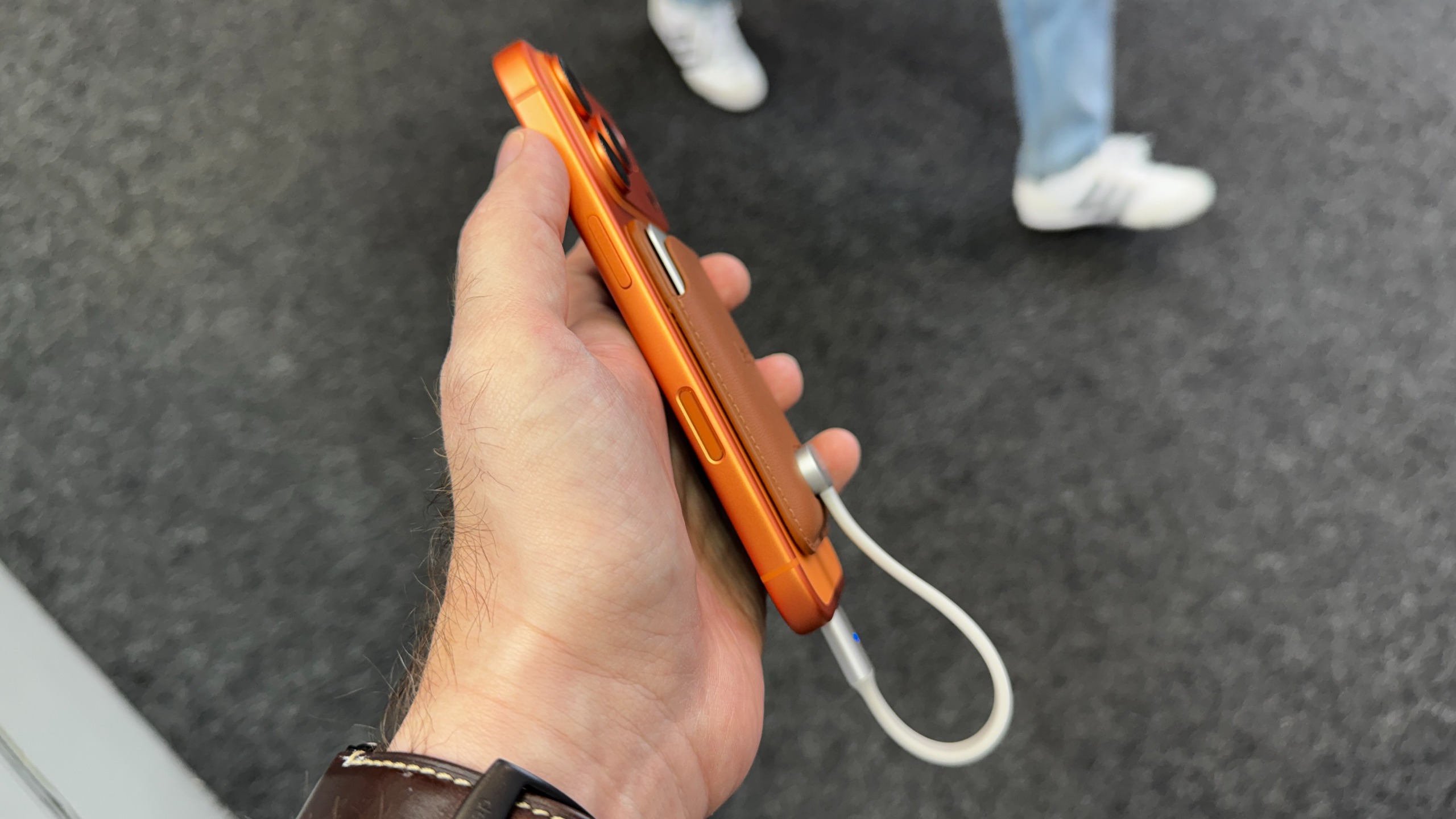
If you’ve ever snapped a 10,000 mAh magnetic battery or other bulky accessory to the back of your compatible Android or iPhone, you know how cumbersome it can be, especially while you’re trying to use your phone rather than just letting it charge. For those who are shooting video or backing up their files on the go, Lexar wants to make that problem go away with its latest external SSD, the Muse.

Tom's Hardware

(Image credit: Future)

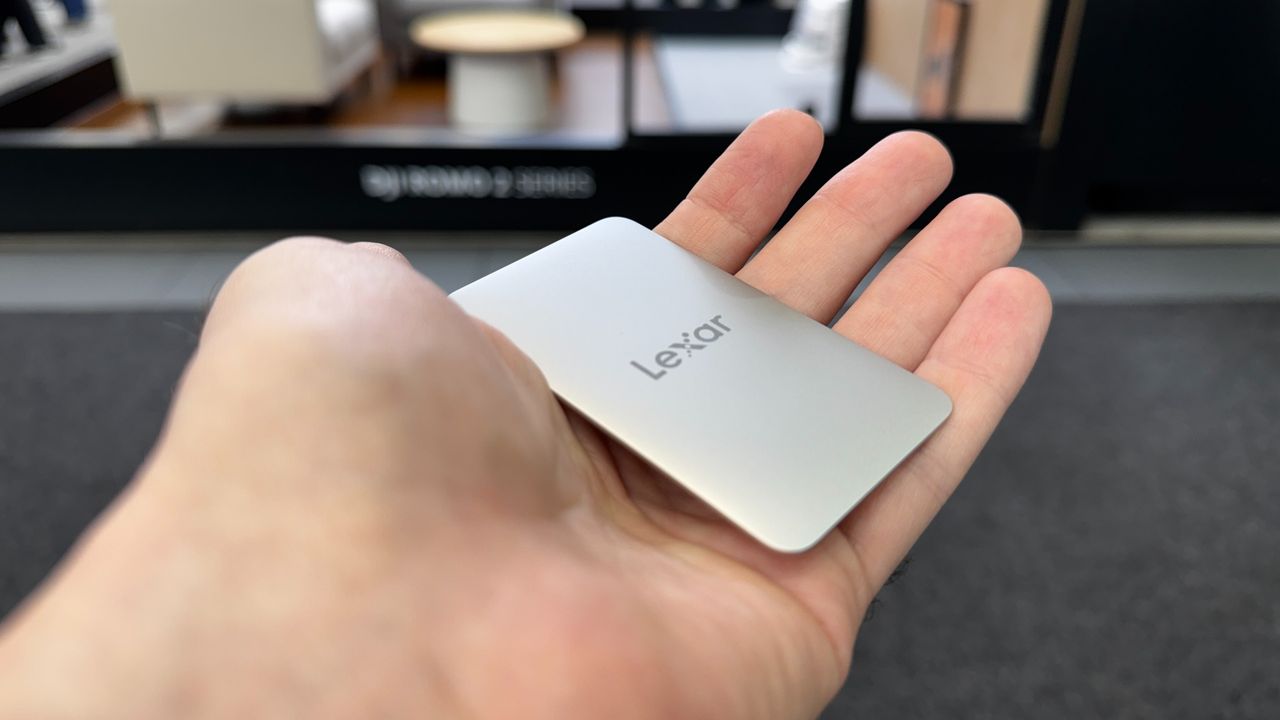
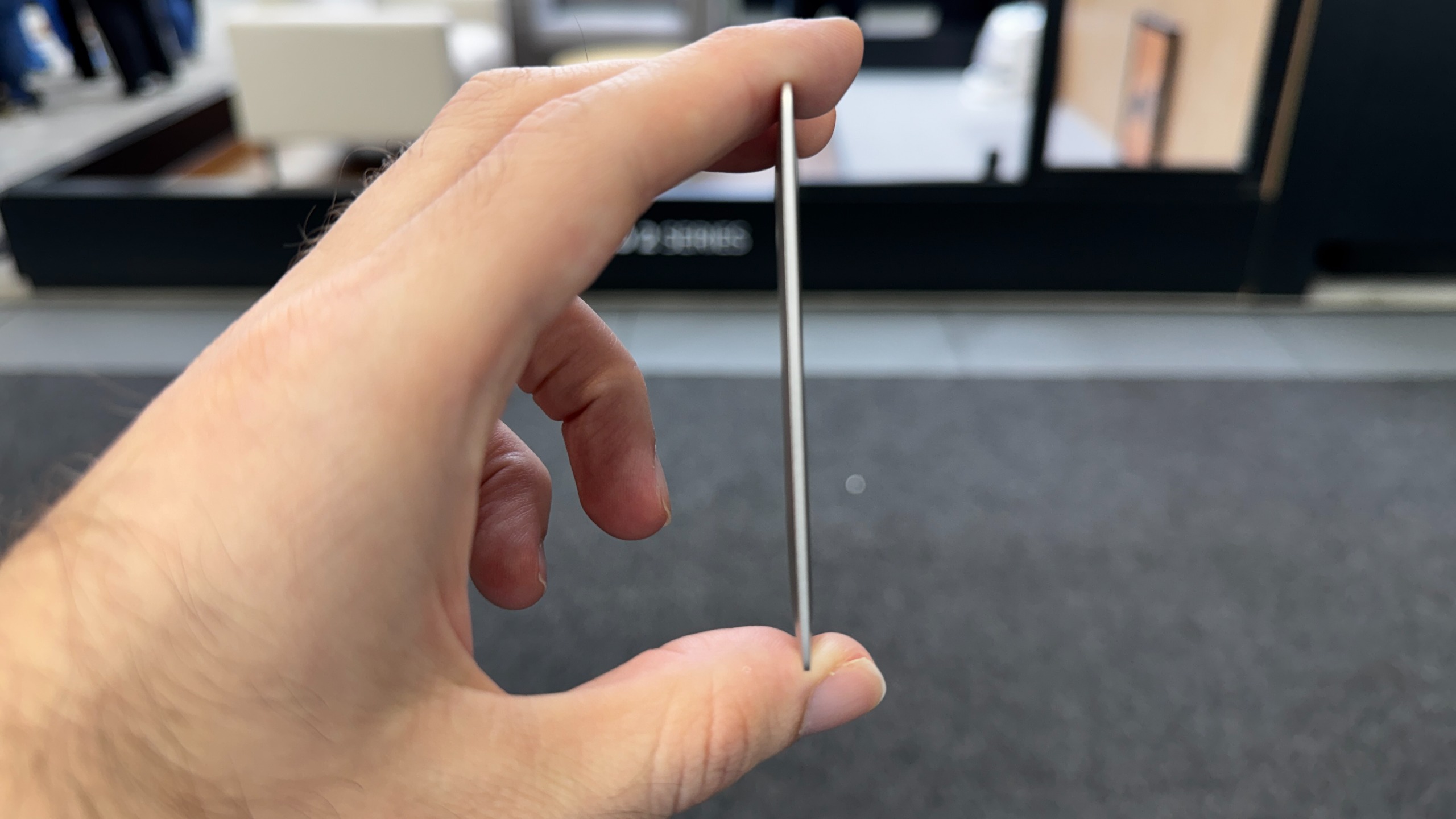
At just 80×48×3.8 mm (3.15x1.89x0.15 inches), with tapered edges that make it feel even slimmer, the company calls it the world’s thinnest portable SSD. And compared to the best external SSDs we’ve tested, it certainly stands out for its tiny size.

Lexar Muse drive on an iPhone, in hand

(Image credit: Tom's Hardware)

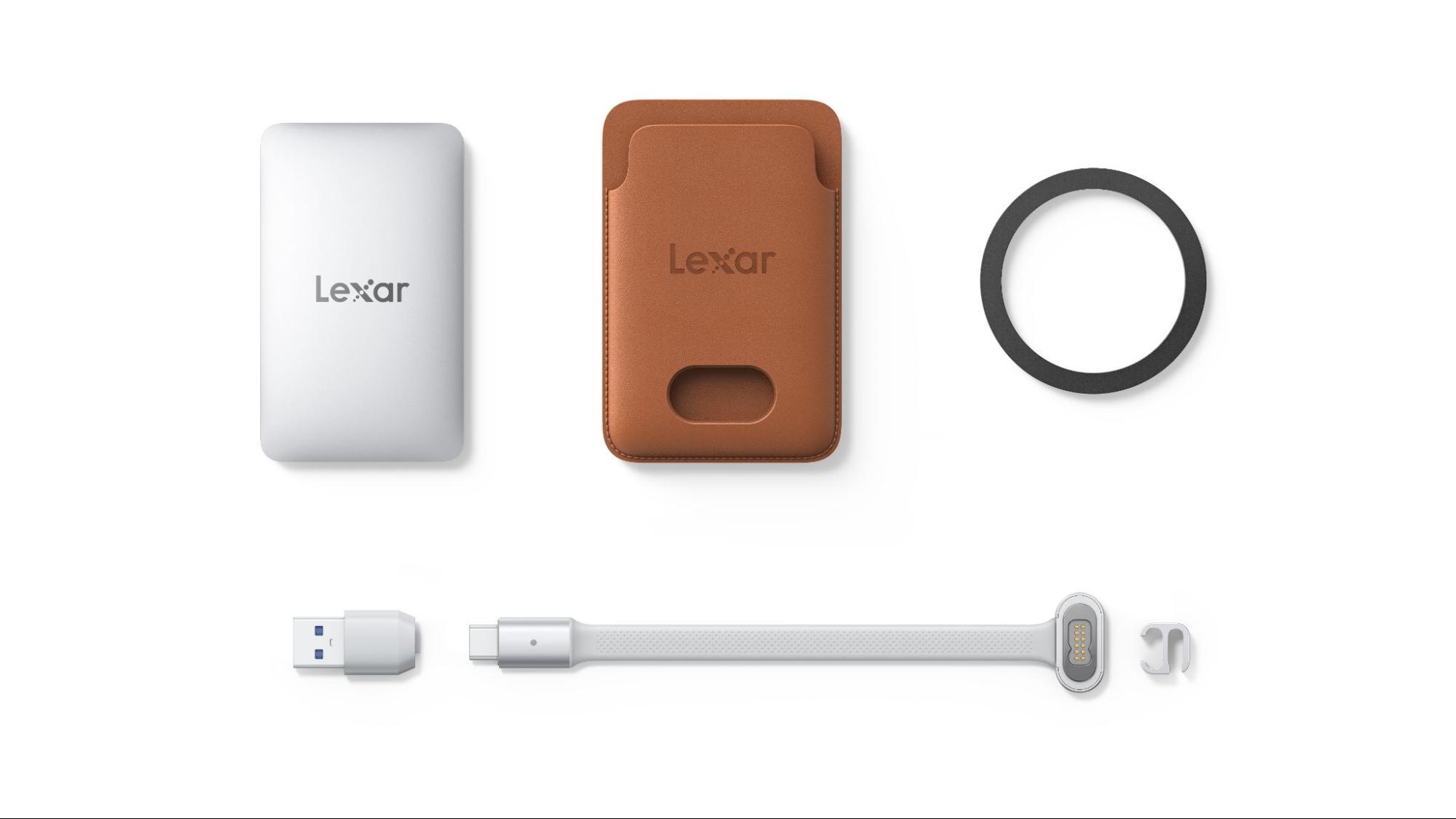
But to get that slim and small, the company is using a proprietary snap-on cable (Lexar calls it SnapLink) that connects to the back of the drive magnetically, via pogo pins. And the pogo pin side looks kind of bulky compared to the drive itself. If you want the drive to magnetically attach to your phone, you’ll need to slide the drive into its sleeve first, which also looks like it could do double duty as a card wallet.

Lexar Muse

(Image credit: Lexar)

In other words, Lexar made serious functional design sacrifices to achieve its slim storage superlative. Still, there’s no denying that the Muse will take up a lot less space on the back of your phone than alternatives like Orico’s BookDrive P10Plus.

Aside from its unique slimness and requisite accessories, the Muse looks to be a fairly typical 10 Gbps drive, with Lexar promising read speeds up to 1,050 MB/s, and write speeds up to 1,000 MB/s. It’ll be interesting to see what kind of sustained write performance is possible in such a thin shell.

As a USB-C storage device, the drive will of course also work with Macs, Android devices, and PCs (although you may need to format the drive first to support other operating systems). Lexar also notes there is app support for automatically backing up footage from iPhones, specifically.

Lexar says the Muse portable SSD will be available in 512 and 1TB capacities, sometime in the last quarter of 2026. Official pricing is up in the air, but representatives at IFA told us the company was aiming for roughly $230 for the 512GB model and $380 for 1TB. As always, devices that claim things like “world’s thinnest” tend to carry a price premium.

Lenovo’s IdeaPad Vibe laptops stand out with seven colors and swappable keycaps – 14,15-inch models with Snapdragon X and AMD AI 400 CPUs to start at $699

作者 Matt Safford
2026年9月4日 00:00

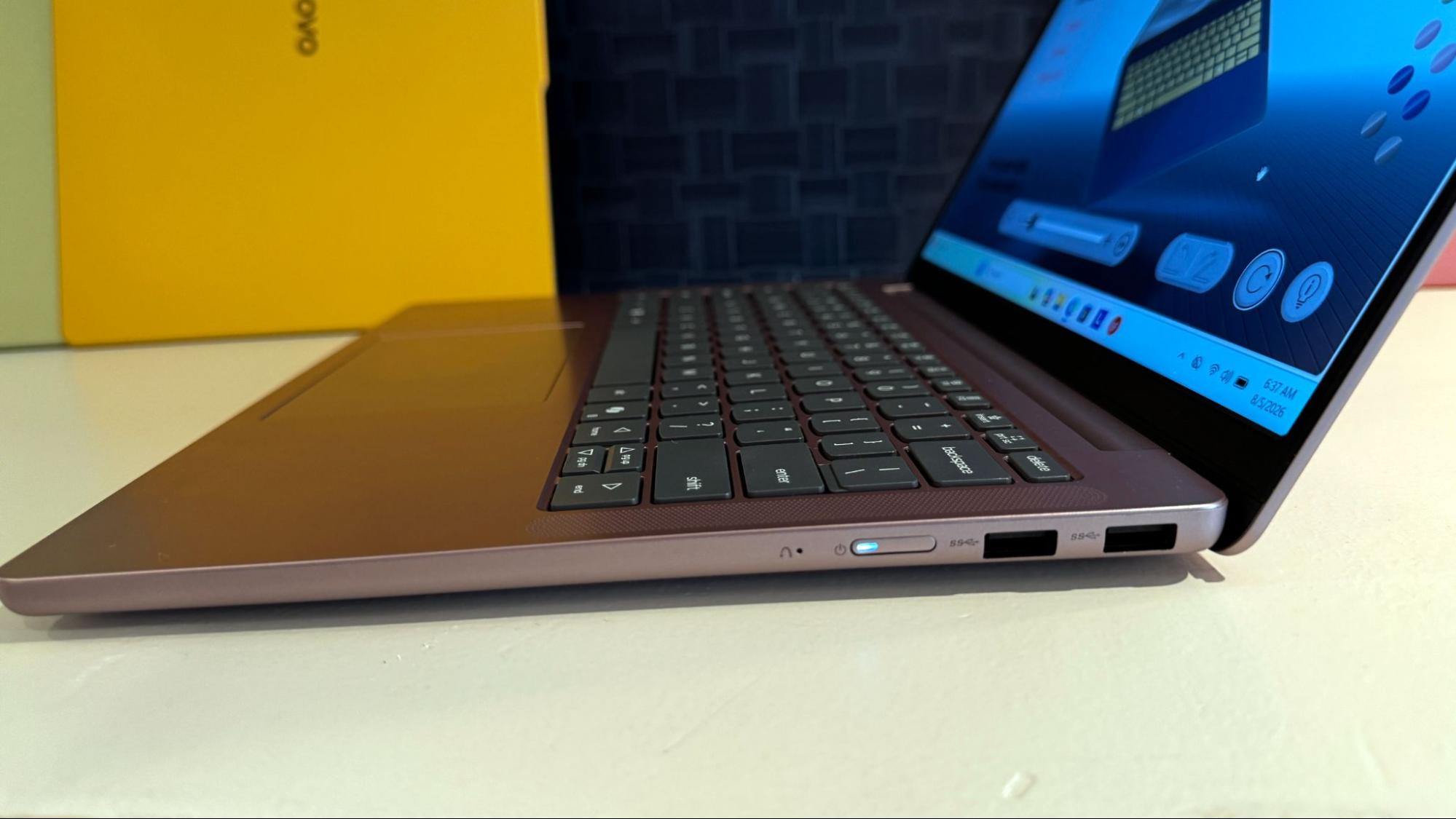
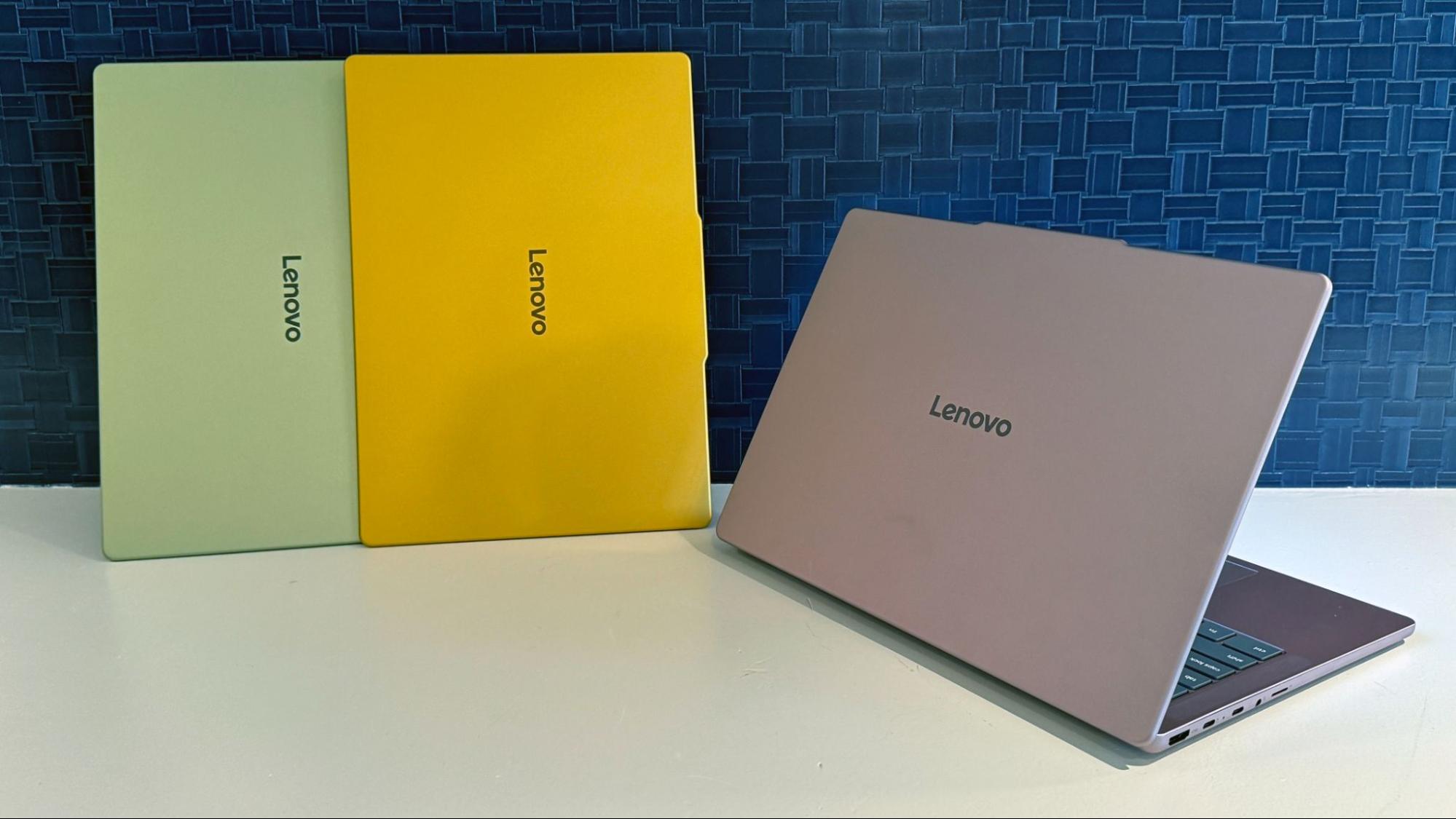
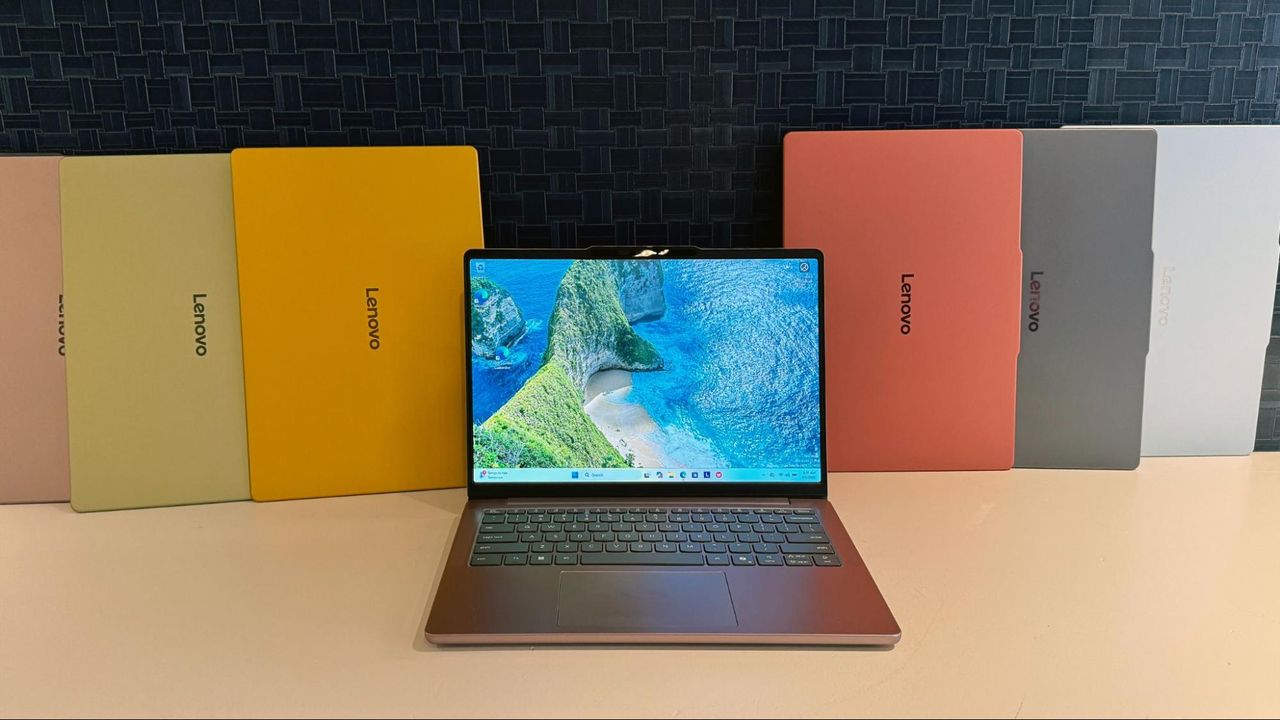
The arrival of the MacBook Neo seems to have reminded other PC makers that people like color (and relative affordability), and the IdeaPad Vibe line appears to be Lenovo’s answer to both. Starting at $699 when they arrive later this year and offered in 14- or 15-inch screen sizes, the laptops will feature seven color options and either an all-metal chassis or a metal lid and keyboard deck, with a plastic bottom. In a twist, the company will also offer swappable keycaps (pretty uncommon in the laptop space) that can either match your laptop’s color or veer away from it for some striking contrast.

Lenovo says the laptops will start at 1.3kg (2.87 pounds), offer up to 24GB or 32GB of RAM (more with the AMD-based models, where you can also opt for a larger 65 WHr battery), and feature either 120 Hz IPS or OLED screens. Oddly, the OLED options will only be offered in the most subdued hues – lowkey gray and moody blue.

Lenovo IdeaPad Vibe
Tom's Hardware
Lenovo IdeaPad Vibe
Tom's Hardware

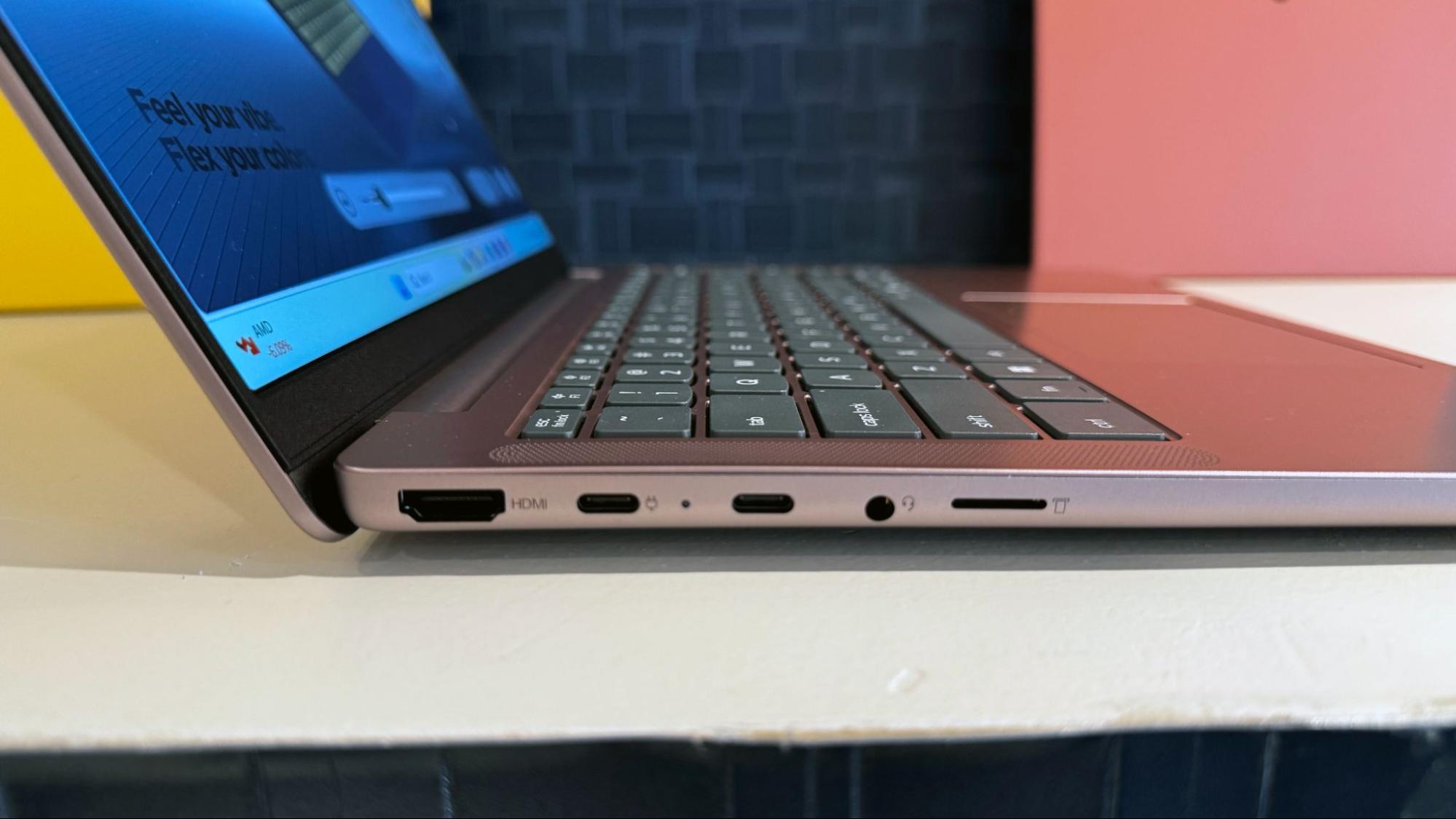
Internally, the Vibes feature two M.2 SSD slots and will be offered with either Qualcomm’s Snapdragon X or AMD’s Ryzen AI 400, and a 50 WHr battery as standard. Lenovo easily beats the MacBook Neo and Dell’s XPS 13 on ports, offering two USB Type-A and two Type-C ports (though they are all capped at 5 GB/s), along with HDMI, a headphone jack, and a microSD card slot.

Of course, given that both the AMD and Qualcomm chips feature prominent NPUs, Lenovo is also pushing its cross-platform Qira AI (also offered in Motorola phones), which the company says “features Workato-powered connections such as email, calendar, and collaboration services, helping users find relevant information and move from intent to action through natural-language requests with less app switching.”

Lenovo IdeaPad Vibe

(Image credit: Tom's Hardware)

Lenovo notes that Qira will only be offered “on select configurations,” and RAM is listed across the lineup simply as “up to 24GB.” Given the high price of memory these days, the $699 starting configs will almost certainly ship with just 8GB of RAM. So don’t expect the lower-end configurations to be particularly friendly when it comes to local AI tasks.

Lenovo says the AMD-based IdeaPad Vibe laptops will arrive first, starting in October, while Snapdragon models will land in November. And the company promises Intel options as well, arriving at an as-yet undisclosed date.

Lenovo IdeaPad Vibe

(Image credit: Tom's Hardware)

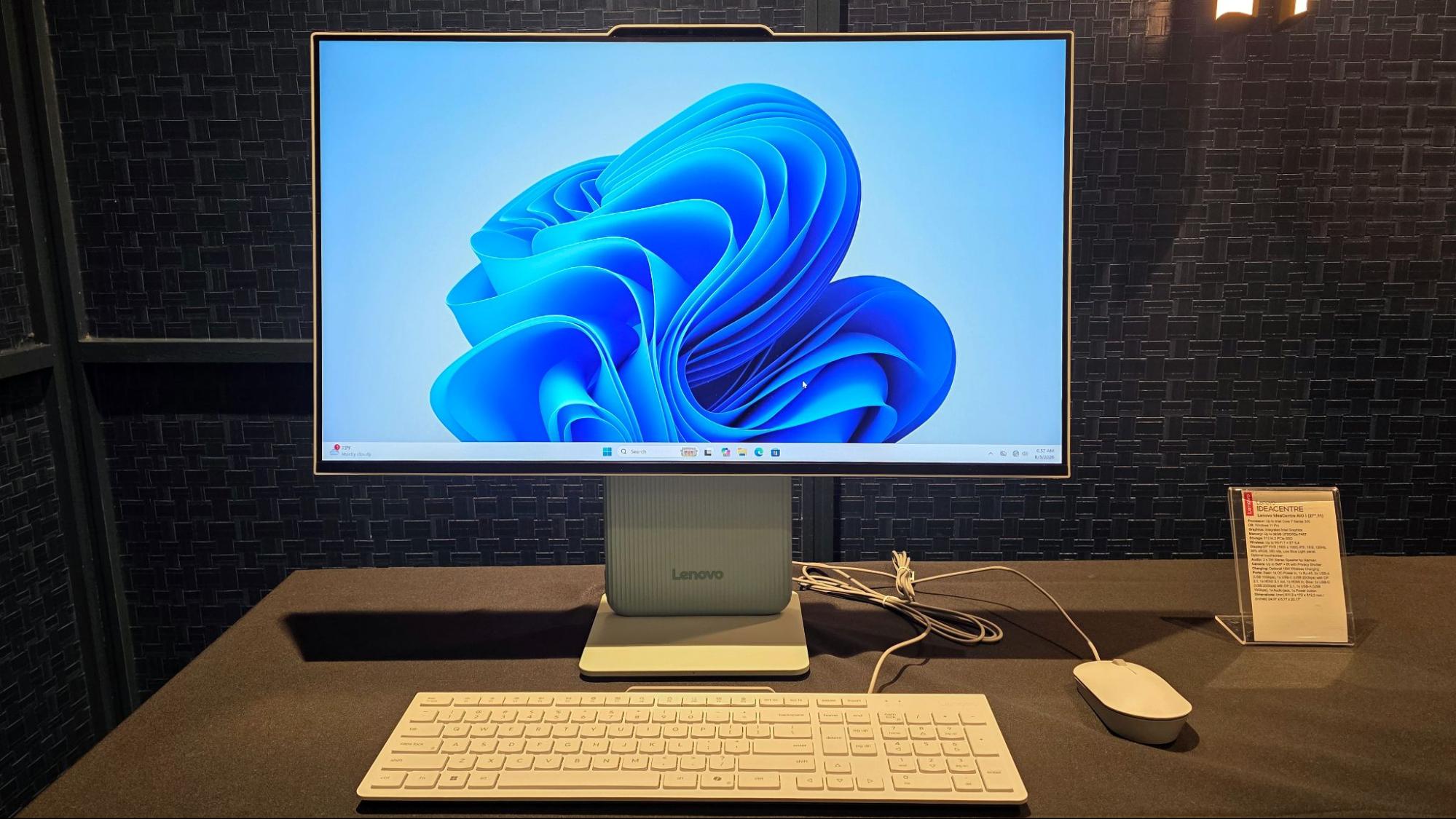
If you like the colors offered on the Vibe line, but don’t need portability, Lenovo will also be offering its IdeaCentre AIO i with Intel Core Series 3 CPUs and a 27-inch screen in similar colors. It will ship with a matching keyboard and mouse, starting at $939 in November.

Lenovo ditches fans in favor of solid-state AirJet tech in super-slim, 1.8-pound AeroBlade laptop concept – company also lands at IFA with a 14-inch rollable screen notebook that expands to 17 inches

作者 Matt Safford
2026年9月4日 00:00

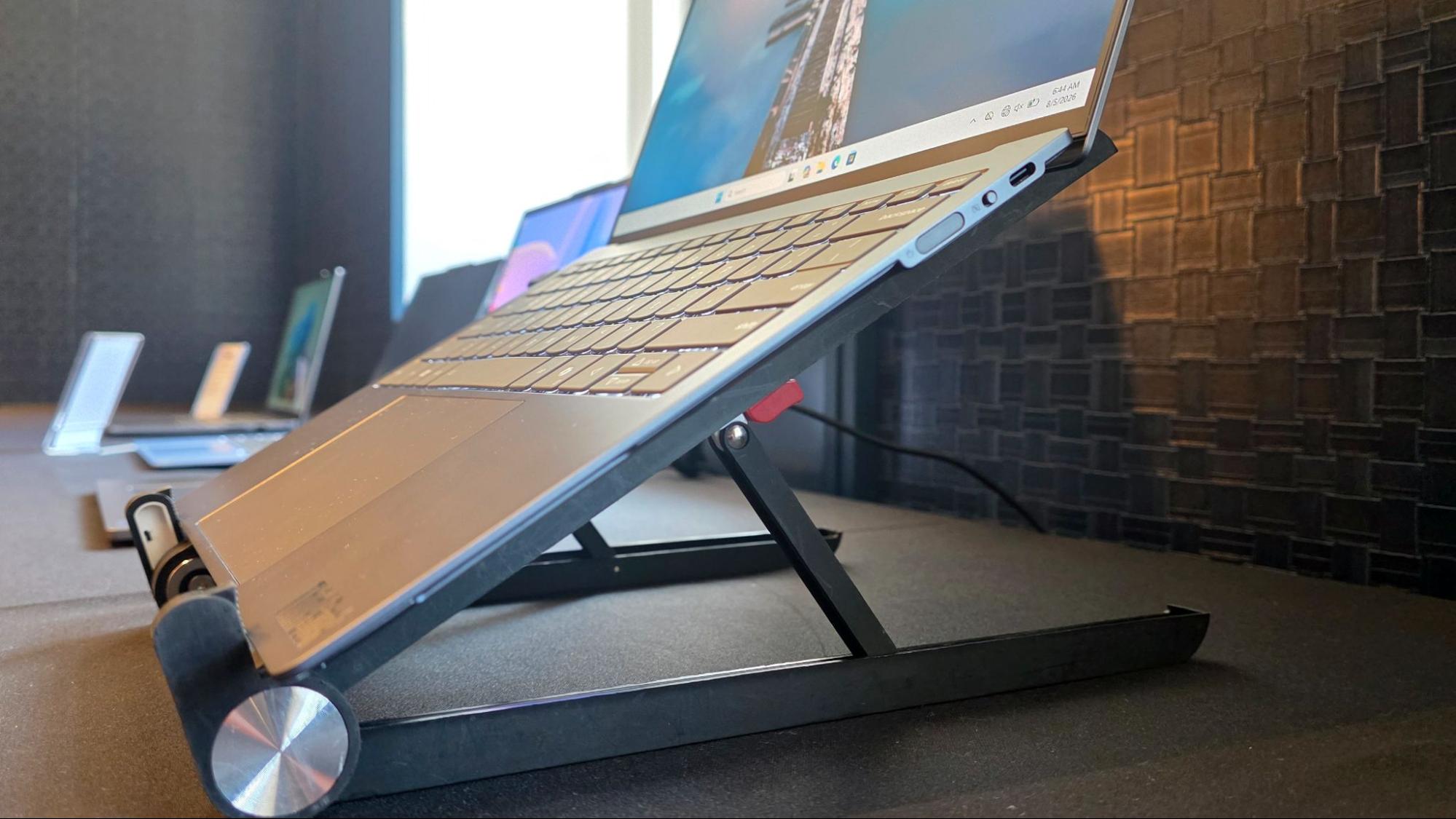
Lenovo has a history of bringing concept laptops to the IFA trade show in Berlin, and this year’s pair are all about improving productivity and portability. They also feel closer to something you might actually buy than some concepts we’ve seen in the past.

Lenovo Laptop Concepts

(Image credit: Tom's Hardware)

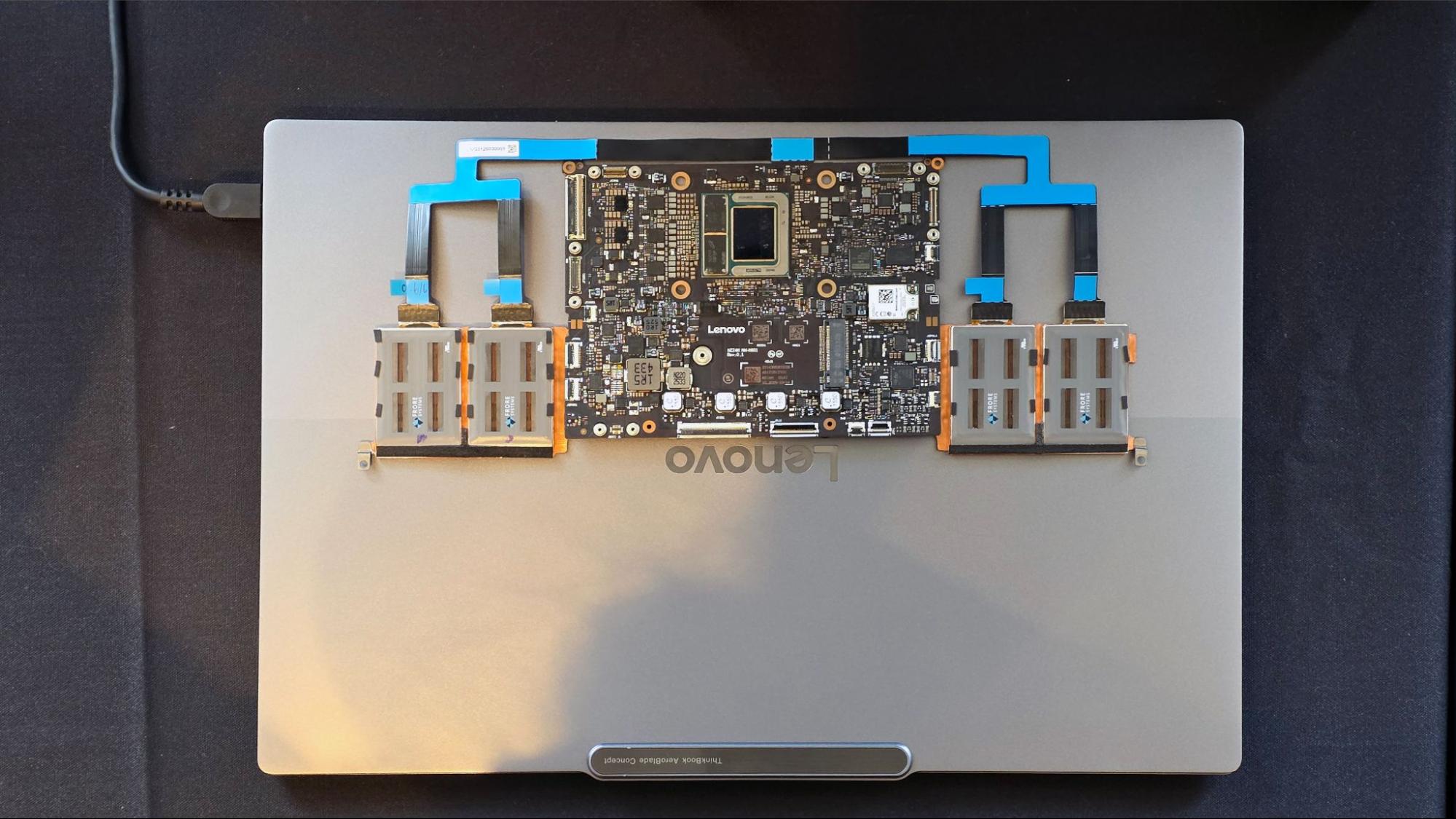
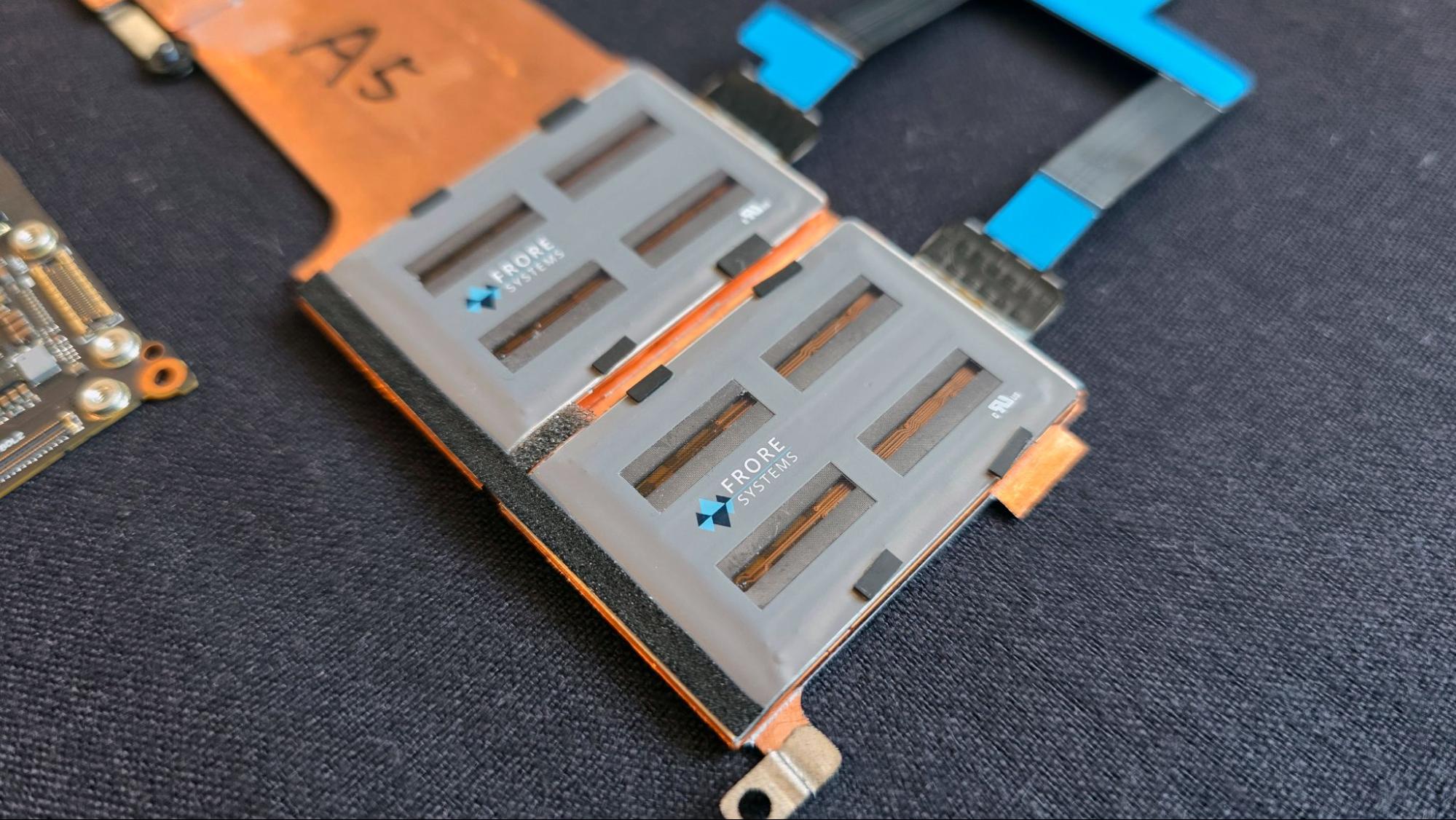
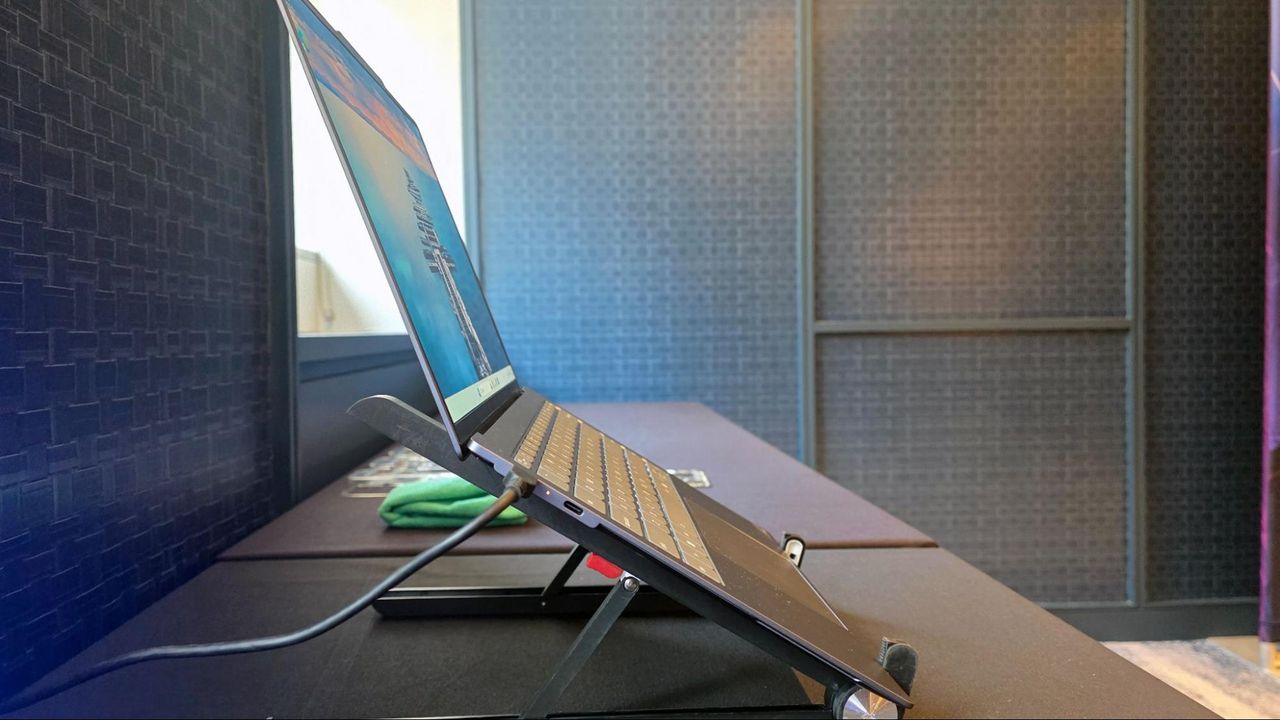
First up, Project AeroBlade is a 14-inch laptop where, as the company’s press release puts it, “every component is re-engineered around mobility.” For starters, the laptop foregoes fans in favor of Frore Systems’ AirJet solid-state cooling tech, which uses piezoelectric membranes that vibrate ultrasonically, beyond the range of human hearing. There are four AirJet Mini modules here, which is three more than the single AirJet Mini we saw in Intel’s Wildcat Lake reference design back at Computex earlier this year. That should mean much better sustained performance than we’ve seen from passively cooled PCs in the past.

Frore System’s latest AirJet Mini modules are rated to dissipate 7.5 watts of heat, giving the AeroBlade laptop 30 watts of active heat dissipation. This pairs well with the 17-30W-TDP Intel Lunar Lake silicon Lenovo is using in this concept. The more recent Wildcat Lake chips are rated from 15-35W, so should also fare reasonably well with a similar solid-state cooling setup.

Lenovo Laptop Concepts

(Image credit: Tom's Hardware)

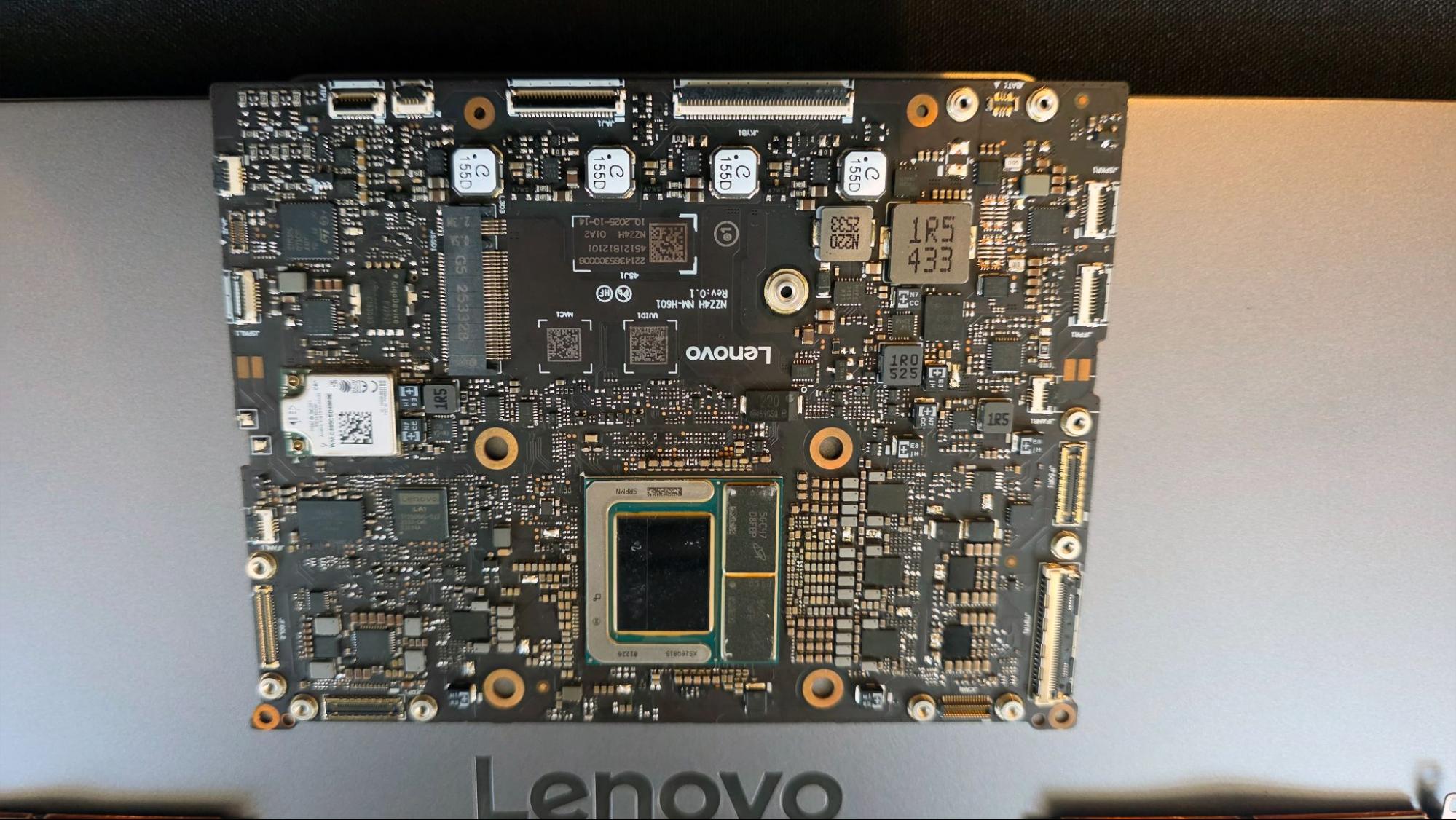
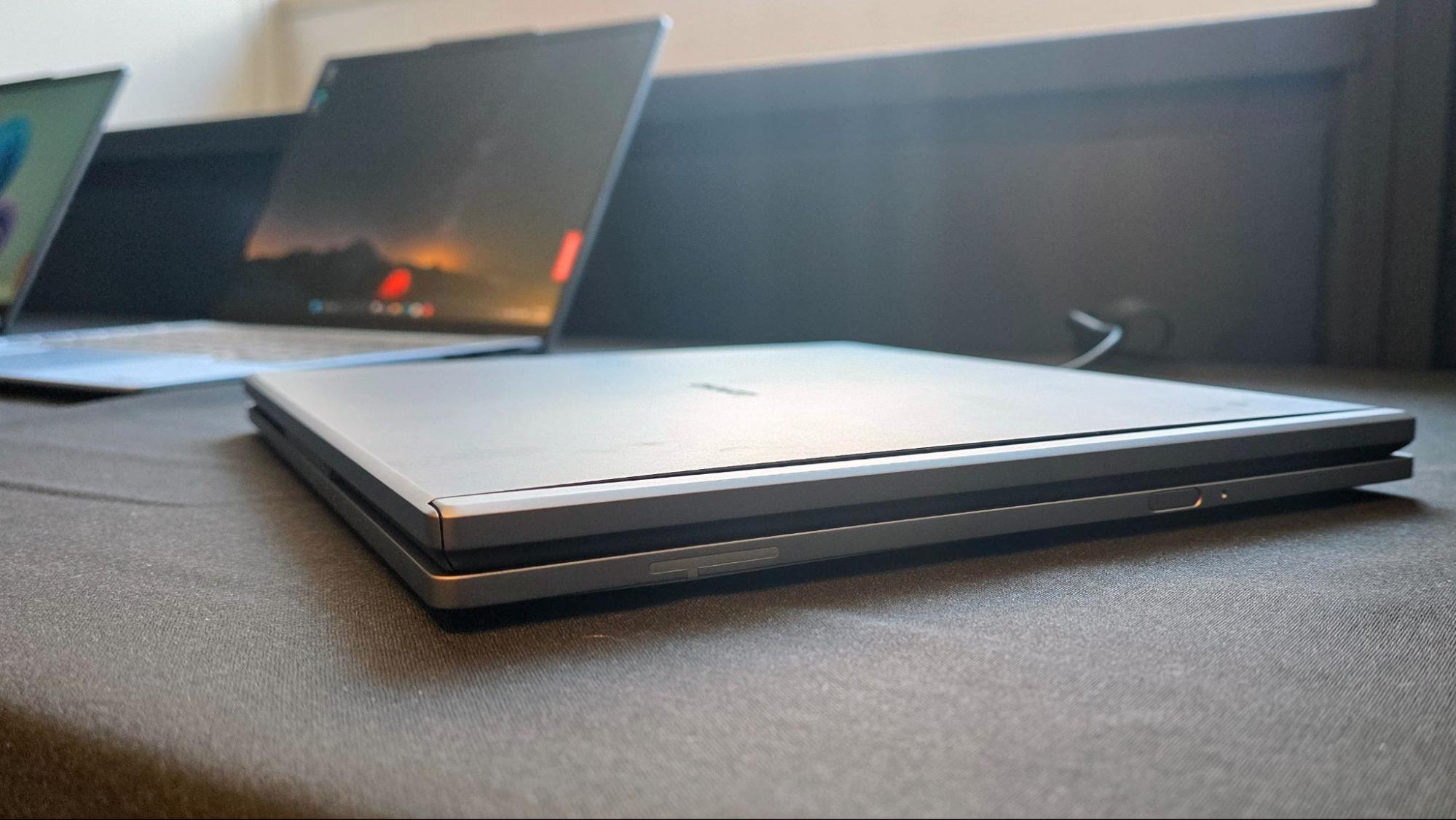
Project AeroBlade also uses a tiny motherboard, which, along with a magnesium-aluminum frame, results in a laptop that is just 0.39 inches (10 mm) thick and weighs less than 1.83 pounds (830 grams). The slimness means you’ll have to live on USB-C /Thunderbolt 4 ports alone, but the laptop includes three of them, along with an OLED screen and Wi-Fi 7.

Lenovo Laptop Concepts

(Image credit: Tom's Hardware)

The company is using Intel’s Lunar Lake here, but of course, if the concepts behind this design eventually become a laptop you can buy, it will ship with a more modern CPU. I’d love to see what kind of performance and battery life Wildcat or Panther Lake could deliver in this svelte laptop form factor.

Lenovo Laptop Concepts
Tom's Hardware
Lenovo Laptop Concepts
Tom's Hardware

The company is using Intel’s Lunar Lake here, but of course, if the concepts behind this design eventually become a laptop you can buy, it will ship with a more modern CPU. I’d love to see what kind of performance and battery life Wildcat or Panther Lake could deliver in this svelte laptop form factor.

A 17-inch screen in a 14-inch laptop

Lenovo Laptop Concepts
Tom's Hardware
Lenovo Laptop Concepts
Tom's Hardware

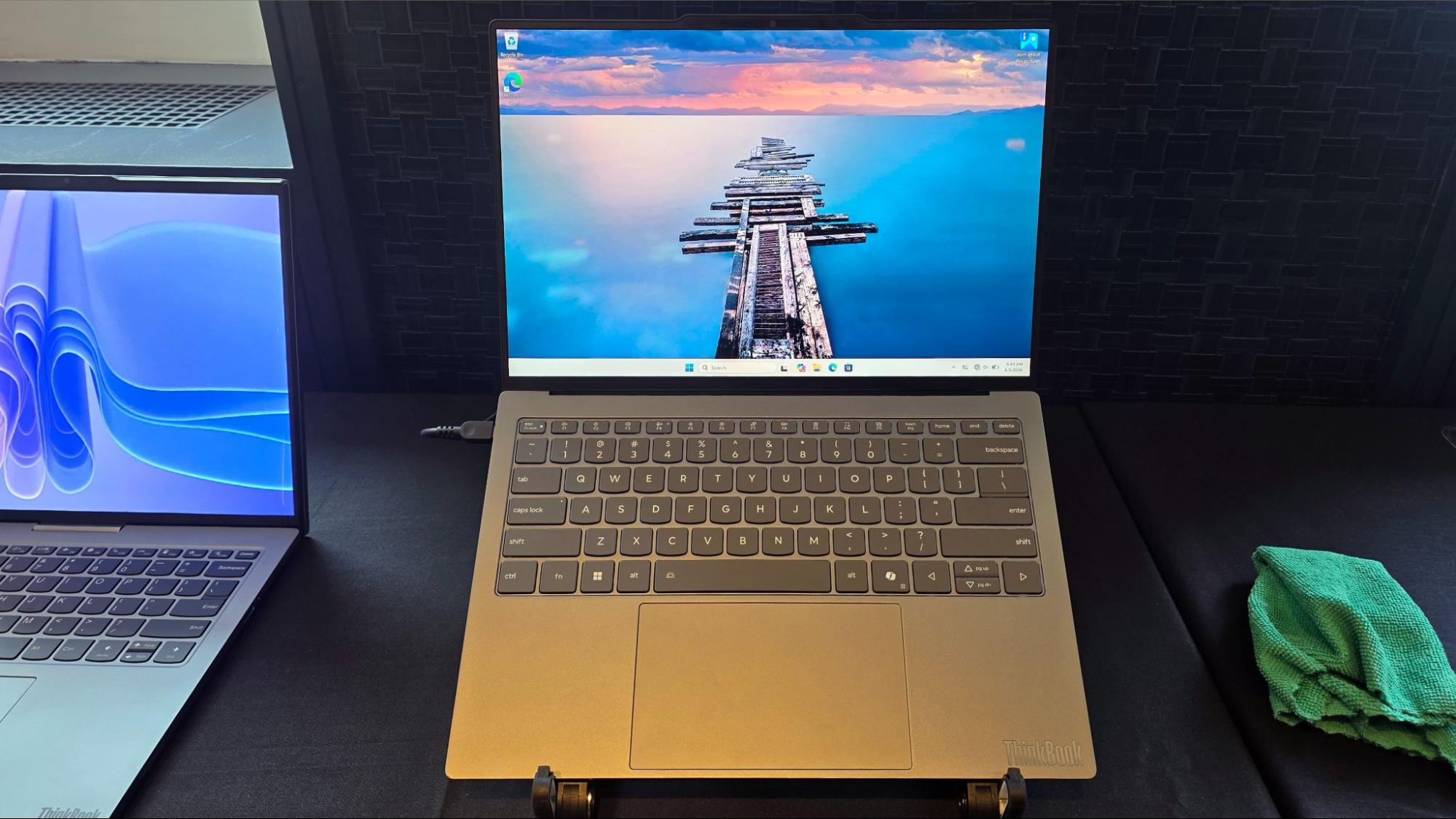
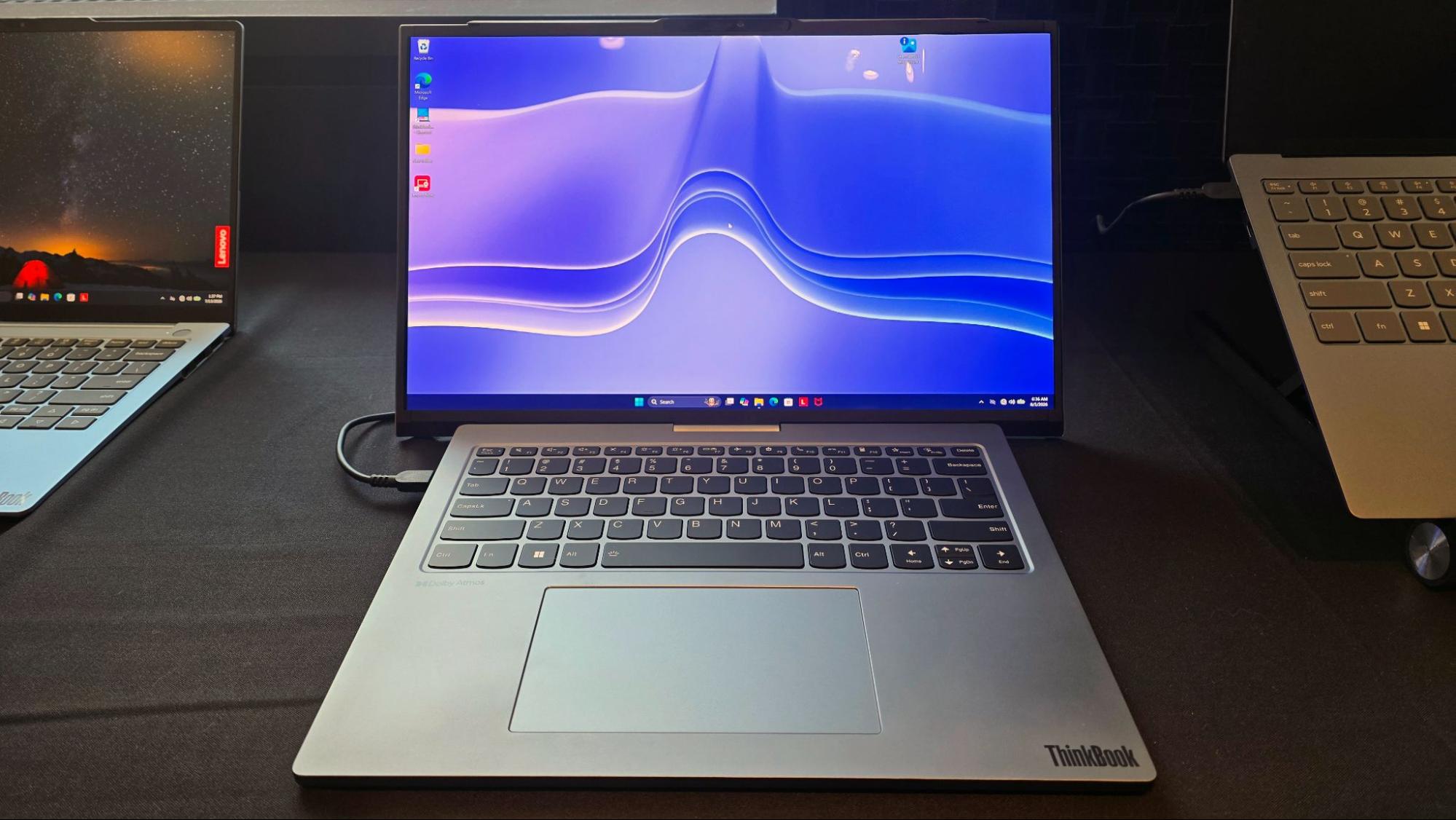
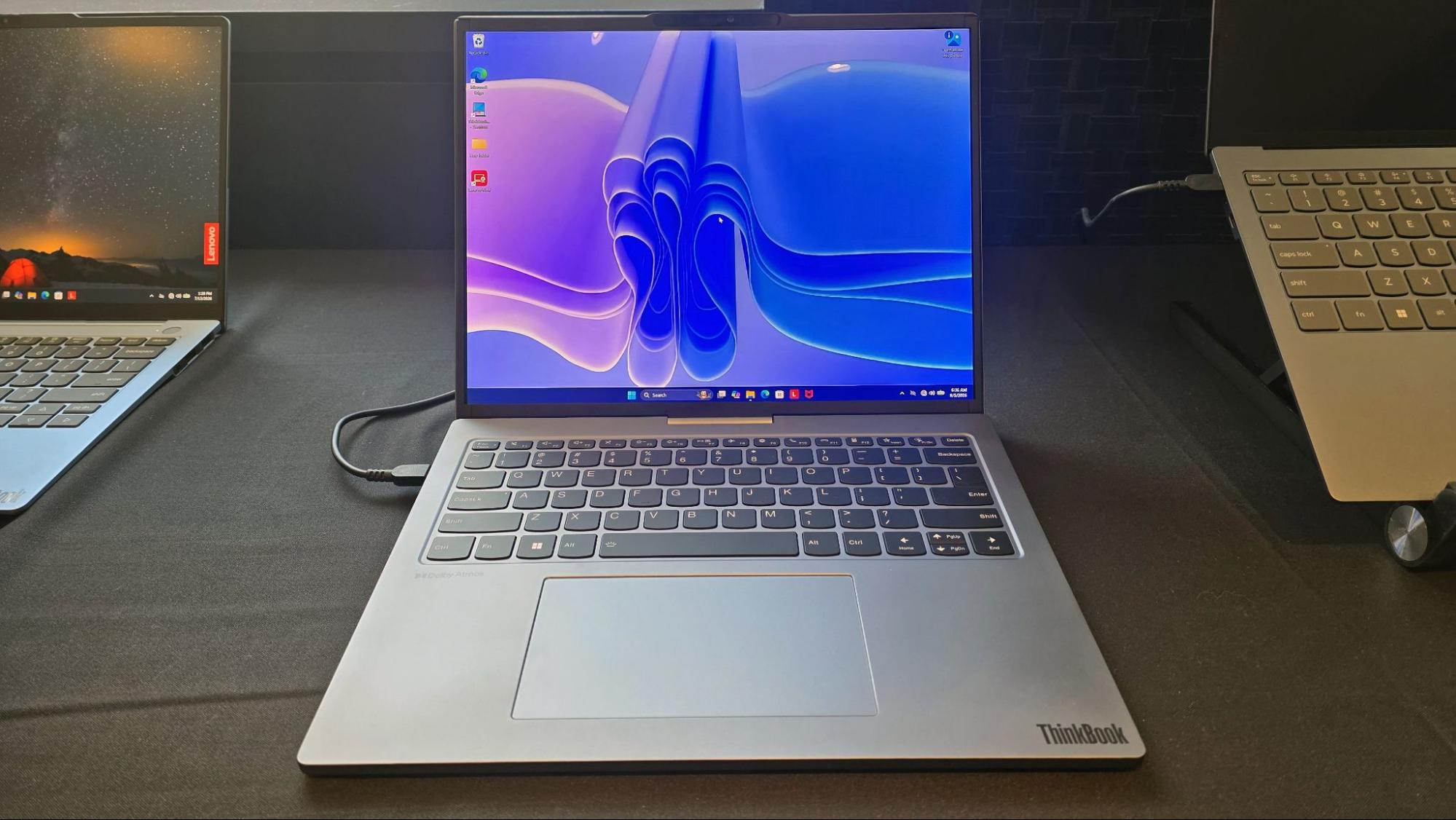
Project Swan sees Lenovo return to its rollable-screen ambitions, this time with a concept that at once feels more modest, mainstream, and achievable than previous attempts. Housed in a mostly standard-looking 14-inch ThinkBook chassis, the screen expands at the press of a button into a 17-inch, 16:9 display with a 2850 x 1672 resolution. That’s not quite 16:9, but there’s likely some small amount of the rollable OLED display that remains off the visible screen in this concept design.

Lenovo Laptop Concepts

(Image credit: Tom's Hardware)

As you would expect, this isn’t the thinnest or lightest 14-inch laptop, weighing in at 3.53 pounds (1.6kg) and measuring 0.7 inches (17.9 mm) thick. The extra bulk lives in the lid, which needs to house the rollable display mechanism, as well as bezels that expand out the sides. As is usually the case with these devices, the motor mechanism is louder than would likely be acceptable in a finished product, but at least it worked flawlessly during several open and close cycles – which is not always the case with concepts like this.

Hopefully Lenovo can shrink the required screen hardware slightly if a version of this design gets incorporated into a laptop you can actually buy. Because while I don’t love the extra bulk, the idea of a compact 14-inch laptop that can give me a 17-inch screen on the go is very appealing.

❌
❌