阅读视图

发现新文章,点击刷新页面。
✇Tomshardware

AI leaders clash over safety fears after Anthropic whistleblower says AI could 'kill us all' by 2030 — OpenAI, Anthropic and xAI figureheads call for external governance, while Jensen Huang says worries are 'made up'

This past week, employees and key figures at leading AI companies have called for a slowdown in the development of frontier AI models, citing warnings from their own teams and other AI researchers that the risk stemming from a super-intelligent AI could endanger the human race. However, while the top Western firms have shown solidarity on this issue, others have urged caution or downright denied their claims, but there's a deeper story within the calls for a slowdown, namely the tension between open-source and closed-source AI models.

Nvidia CEO Jensen Huang said the safety fears were "made up," and that there was no need for a slowdown. Chinese officials called the claims "fearmongering," and an effort to stymie international AI development efforts, while President Trump waded in with characteristic bombast and said that he was enough of an AI safeguard on his own, and that it was in the interests of China to enact a frontier AI slowdown

Meanwhile, other countries are reacting to the news and taking independent efforts to investigate AI safety, with the UK's King Charles setting a meeting with leading AI figureheads to discuss how to better develop AI for the benefit of humanity.

Why now?

If you ask most workers who've been scared into believing their livelihoods were in jeopardy, the time for AI slowdowns came and went years ago. Indeed, many are nostalgic for the time before AI. But why are so many tech leaders only now raising the alarm?

They claim it's entirely based around safety fears. Following months of AI seemingly surprising their own developers by breaching sandboxes to go on exploit-hunting sprees. The volume of concern rose considerably after former OpenAI researcher, Jacob Coxon, resigned from Anthropic, claiming that none of the AI companies were taking AI safety and alignment seriously enough.

He didn't whistleblow on anything nefarious, dump documents or internal company data to prove his claims, or point to any specific attack vectors, or even actual harms. Instead, Coxon warned of a future potential of AI that he sees these companies racing towards without due concern.

What they're developing could, "kill us all by the end of the decade," he warned. It's not clear how, but it started a viral conversation all the same. Much like Matt Schumer's "Something big is happening" viral post from February this year.

Days later, OpenAI CEO Sam Altman, Anthropic CEO Dario Amodei, and Elon Musk showed surprising levels of solidarity for arch rivals in the space, putting out similar statements claiming that AI was becoming too powerful and that a general slowdown in the development of frontier AI models was the best solution.

Dario is right https://t.co/EwKgqQGaUoSeptember 12, 2026

Claiming that AI was playing an increasing role in improving itself — hinting at the recursive self-improvement (RSI) event that many AI researchers are concerned about — Amodei called for the creation of independent auditors for AI models. Altman agreed, even calling on governments to globalize the regulation to encourage unified compliance with any safety protocols enacted by the frontier developers.

Where we're going, we don't need roads

Not everyone feels these fears are warranted, however. China, which has recently made great strides in its development of highly intelligent open-weight models, called the concerns "fearmongering" and said it served no one's interest to be so confrontational. Although Chinese Premier Xi Jinping has said in the past that it was important for AI to "always remain under human control," the Chinese state-run Global Times paper called demands for a slowdown a method to "contain" Chinese developments.

Meanwhile, Nvidia CEO Jensen Huang has broken ranks with other Western AI leaders, claiming that there was no need for a slowdown and that any apocalyptic fears around AI were entirely fictional.

Nvidia CEO Jensen Huang was asked how to explain a claimed 10% risk of human extinction from AI.“We shouldn't, because it's made up.” "All of these predictions have been wrong" pic.twitter.com/TZ3EXL8cl1September 14, 2026

As one of the few companies making real — and enormous — profits from AI development, Nvidia has a vested interest in the expansion of the AI industry continuing on its current explosive trajectory. Indeed, it has heavily invested in it. Nvidia has stakes in hardware and software companies, along with providing backstops for neo-cloud firms. It also recently bought Hugging Face for $13 billion.

We've been here before

While the AI CEOs might have suddenly decided it's time to slow down, there have been many, many others who have made that call before now. U.S. Senator Bernie Sanders has been at the forefront of claims that the AI industry was moving too fast and breaking too many things, and recently called for heavy prison sentences for those developing superintelligent AI.

Over 1,000 AI workers signed an open letter in July this year calling on the U.S. government to control AI research and ensure safety and security. Others did that in 2023, too. This isn't even the first time that AI CEOs have called for slowdowns on AI development. Dario Amodei called for global coordination to police AI after the release of OpenAI's GPT2 model in 2019. Elon Musk did the same in 2023.

None of this takes away from the real dangers of AI, or the suggestion that now may really be the time to do something about them. But it does raise questions about the reasons behind their coordinated fear-raising. Even if it isn't fear-mongering.

Safety, or a trojan horse?

The collation of leading Western frontier AI companies clamoring for tighter controls over powerful AI models has another theoretical benefit too: containing the number of AI models that are permitted for use in the Western Hemisphere. A cursory look at OpenRouter's AI model rankings, which base themselves on the total number of tokens generated, places just three Western-made models on the top ten list — the heavily discounted GPT 5.6 Luna at number one, Nvidia's Nemotron Ultra 3 (Free) at number eight, and Google's recently-launched Gemini 3.8 Flash at number ten.

The rest of the models in the rankings are all open-weight Chinese models, which, more often than not, are cheaper than leading Western frontier models, according to the Artificial Analysis' Cost per Intelligence index. The Chinese models in OpenRouter's current top ten include Z.AI's GLM 5.3, Deepseek V4 Flash, and Tencent's Hy4 and Hy3. So, if the development of a Western frontier AI alliance emerges under the guise of calls for safety, it's possible that said companies are aiming to be the chosen few, creating a closed-loop monopoly for "preferred" AI providers. However, this remains speculation as the situation develops.

Will anything actually change?

Although the major AI companies may voluntarily, or even jointly, throttle their development efforts to improve safety, enacting anything globally significant will need the cooperation of international governments. There are certainly calls from politicians the world over to rein in the trillion-dollar companies and their cutting-edge autonomous systems.

But with the U.S. government firmly on the side of limited regulation, and no clear indication of what a slowdown would even look like. Would that entail limited compute? No new models? A halt to superintelligence research? It's hard to imagine a global consensus taking shape as things stand.

✇Tomshardware

US AI data centers projected to become the fifth-largest natural gas consumer in the world by 2035 — consumption to grow by 15 billion cubic feet per day as demand for compute increases

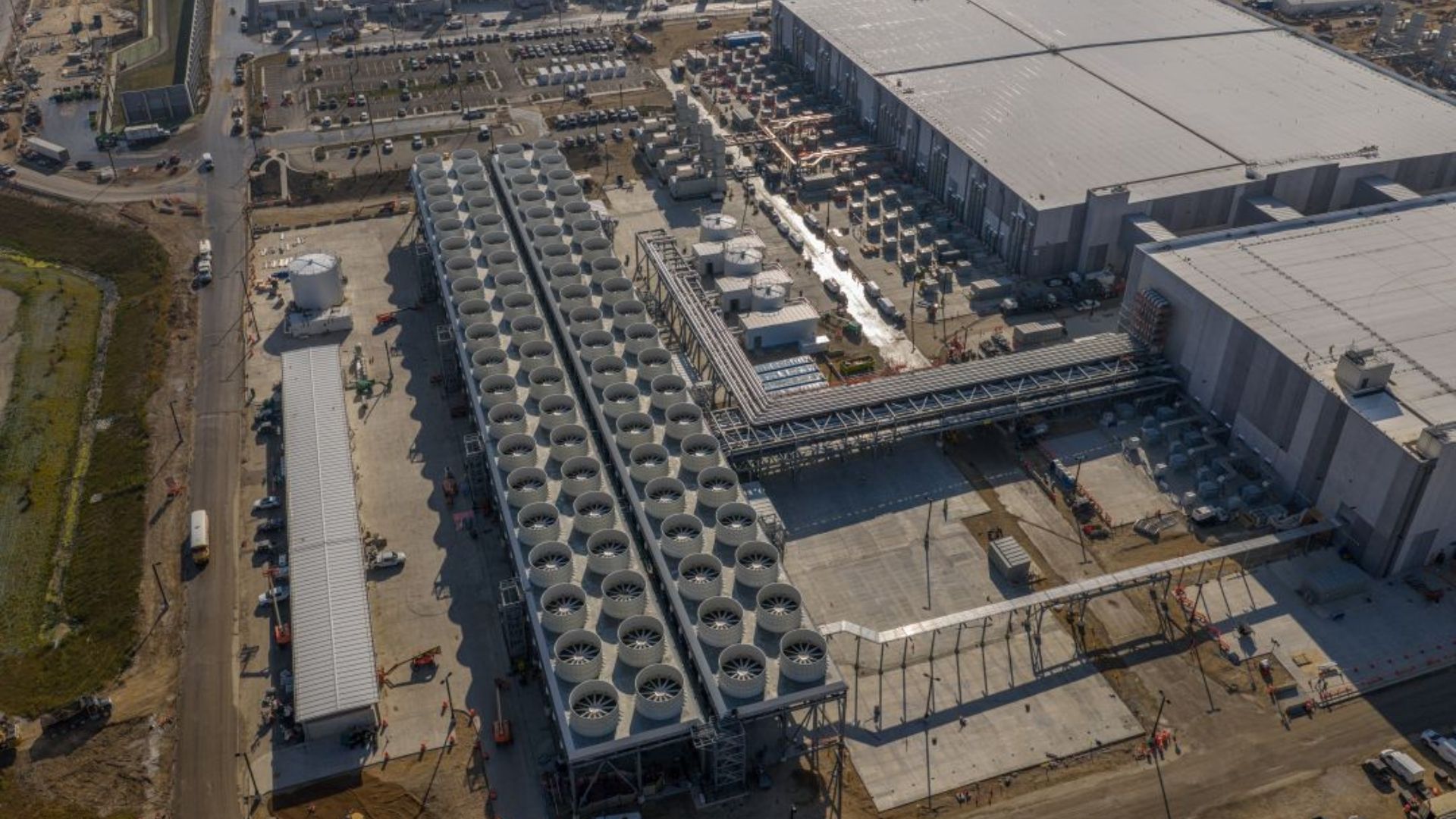
The estimated natural gas consumption of data centers in the U.S. is expected to massively increase as these facilities increasingly rely on gas turbine generators for their power. According to Bloomberg, data centers are projected to use up to 15 billion cubic feet per day by 2035, a 117% increase from the previous forecast of 6.9 billion cubic feet. This number tracks with other data center forecasts, which suggest that data centers will use 20% of U.S. power by 2035, amounting to about 194 gigawatts.

Many data center projects have already been delayed by the lack of available power infrastructure, with power plants expected to take so much longer before they come online. It’s for this reason that many developments have turned towards onsite generators, so much so that AI demand is now compounding the jet engine shortage already plaguing the aviation industry.

Elon Musk was among the first to use gas turbines to power a data center when he deployed them at the Memphis Supercluster in 2024, even though he didn’t have permits for some of them. Now, it seems that the world’s richest man has seen this trend and has invested a billion dollars to buy a portable gas and diesel turbine leasing company. He even announced that SpaceX will start in-house turbine blade manufacturing to help cut down on the manufacturing bottleneck plaguing the jet engine industry.

New technologies like small modular reactors are currently being developed as an answer to AI data centers’ insatiable demand for power, like Ampera’s 3D-printed modular thorium nuclear reactor or Valar Atomics’ Ward 250 nuclear microreactor. Many AI hyperscalers, including Amazon, Google, Microsoft, Nvidia, and Oracle, have even invested in projects like these in a bid to generate massive amounts of clean energy for AI. However, they’re expected to take a few more years before they could become commercially viable — time that tech giants do not have. Because of this, Musk said that “natural gas will still be needed to supplement and bootstrap solar for several years.”

The deployment of natural gas turbines in data centers isn’t good news for the communities living around them, though. The NAACP said in its lawsuit against SpaceXAI that the use of these turbines at Colossus 2 increased nitrogen oxide exhaust by 111%, PM2.5 particles by 83%, and formaldehyde emissions by 88%. While the company has already pledged to remove all its unpermitted generators, the process will take at least a year as the portable turbines are slowly being replaced by a 1.2-gigawatt on-site power plant.

Aside from this, the massive demand for natural gas could potentially put a strain on the supply, causing prices to rise and hit the average consumer. Domestic natural gas producers are projected to raise their output by 35 billion cubic feet per day in the next decade, but this still falls short of the forecasted demand by around 11 billion cubic feet per day. So, unless output manages to catch up with the demand, prices are expected to shoot up and cause a scramble for available supply. Still, some experts suggest that there are still more than enough undeveloped gas fields within the U.S. to allow the industry to increase natural gas supplies and reduce costs.

✇Tomshardware

Bill Gates compares AI to alien intelligence in movies where ‘magically the US and China’ solve the problem together — warns world governments that they’re not ready for AI

Microsoft founder Bill Gates has said in an interview that the world’s governments are not ready for artificial intelligence. The billionaire philanthropist made the warning in an interview with Reuters, saying that nations must prepare for the various risks that the technology poses to the workforce and society as a whole.

“I don’t think any government is nearly as deep on this as they have to be. Governments are way behind on this one,” Gates told the publication. He also added, “There’s all sorts of movies where some aliens are coming, and magically, the U.S. and China and everybody comes together to solve the problem. AI is kind of like this alien intelligence. It’s here, and we better do like it shows in those movies.” In line with this, he said that he has been in talks with world leaders like U.S. President Donald Trump to share his concerns, and that he’s also trying to meet with Chinese President Xi Jinping.

While concerns AI’s impact on jobs and human society may seem small compared to the news about runaway AI taking over the world and ending all human life, governments still cannot ignore these seemingly lesser issues. This is especially true if businesses stop hiring people in favor of AI tools, with the CEO of Microsoft AI predicting that they could replace every white-collar job in 18 months. This is why Gates argues that authorities across the world must have plans in place when this begins to happen, even going as far as saying that some jobs should be “Human Reserved.”

It’s unclear what steps Bill Gates believes governments should take to prepare and protect its citizens from the predicted turmoil that AI technologies will bring on humanity, but U.S. Senator Bernie Sanders has already proposed an AI sovereign wealth fund that would have direct ownership stakes on American AI firms. He even went as far as introducing the Ban Artificial Superintelligence Act, which puts the penalty of developing powerful AI tools at par with building rogue nuclear weapons. However, the current administration has downplayed all these concerns about AI, with President Trump calling them a hoax.

Despite his warnings, Gates still believes that AI has great potential for good. The Gates Foundation is planning to spend at least a billion dollars in the next two years to give more people access to AI, saying that it could help the world’s poorest people “if managed properly and accessed equally.” This amount of money will go towards supporting the use of AI in education, healthcare, and agriculture, and even the expansion of large language models so that they would work across all the languages on earth.

✇Tomshardware

ChatGPT transcripts are reportedly read by humans to improve responses, including those with personal information — 'Project Lilly' has seen OpenAI hire hundreds of contractors to manually review logs

AI companies don't have a great track record in areas like copyright or user privacy — unless they're the ones on the short end of the stick, that is — but it's generally known that the chat logs from platforms like ChatGPT are used for improving models. The mechanism as to how this happens was still a mystery until today. 404 Media just published a report about OpenAI's process of human review for chat transcripts, explaining how the review process works, and how it involves other humans sometimes reading private information.

The rating project's name at OpenAI is Project Lily. The publication got information on the project's instruction guides, Slack channels, real ChatGPT conversations, and, of course, the rating system to classify conversations. The operators are called "prompt reviewers," and their job is fairly simple: look at anonymized real-world chats, and judge the quality of ChatGPT's responses to assess whether they actually answer the question, and that the text doesn't overuse "AI-speak," patronizing tones, emojis, or sycophancy, among other parameters. Anthropomorphizing and stating "personal" experiences are both off the table, meaning that while it's OK for ChatGPT to say "I found some information," it's not OK for it to say "as a chef, I like to..." or "I know what that's like."

The work is "very rote," according to a reviewer, but at reportedly over $50 an hour, it's a high rate for what looks like reasonably simple work. The reviewer also said that their guidelines keep changing and are often self-contradictory, a feeling most software developers should easily identify with.

The person doesn't think that most users are aware their chats are being read by others, though, something that's particularly troubling when many use ChatGPT as an impromptu friend or therapist and put deep secrets in words for the bot to read.

While the chats allegedly go through an anonymization pass and reviewers don't see usernames, OpenAI admitted to 404 Media that the filtering may let some personal data through, especially in shorter chats. The site notes that in many conversations, the user asks ChatGPT to keep the contents secret, as well. The version of the chat handed to reviewers also reportedly includes a "user memories summary," containing a summary of the users' questions and interests, context, and potentially even location.

Crucially, Project Lily does not grade the chats' actual factual accuracy other than flagging obvious mistakes, implying that there's likely at least one more team (or several) doing separate evaluations. Likewise, this reviewing is separate from manual safety checks that ascertain if someone might be looking to hurt someone else (or, presumably, themselves).

The existence of the project also indicates that contrary to these image AI companies try to cultivate, the models don't improve just with technological advancement and better training sets — it appears you still need more than a few competent humans in the mix.

By now you may be wondering about the "allow us to use your chats to improve our product" (paraphrased) setting present in most consumer-facing chat bots. That setting is turned on by default in every bot we can think of, even with many paid plans. In ChatGPT's case, it does default to off in Enterprise, Business, and Educational customers.

That toggle switch does not work retroactively, though, so any chats already in ChatGPT's database will remain there unless the user requests deletion. Also, said deletion is also not retroactive, meaning that deleted chats may have already been hoovered and anonymized, and possibly reside in a dataset somewhere.

Although OpenAI initially had no answer to 404 Media's inquiry on whether users were explicitly informed that their chats could be read by humans, the company eventually offered a link to one of its FAQ pages that discusses human review for the purpose of model improvement. We verified ourselves that said notice is at least two years old, and likely older. After the publication of the exposé, the firm changed its help page explaining how people can opt out of data collection, but there's no mention of human operators in that text.

This type of data collection and review is a running theme across most providers. Google Gemini clearly states that "humans may review some saved chats" in its Privacy Hub. Anthropic's stance is similar, with a page dedicated to this topic. Perplexity's stance, meanwhile, is unclear, as its Privacy Notice doesn't confirm or deny human access to chat logs.

✇Tomshardware

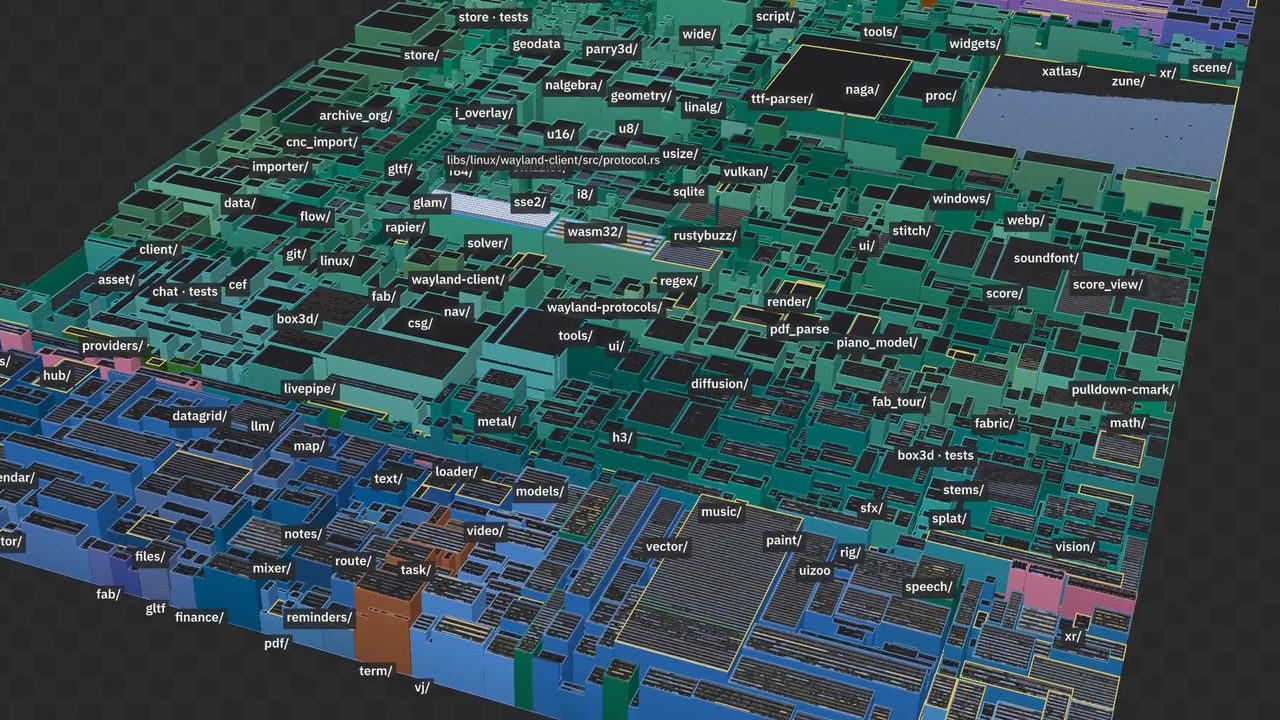
Developer builds viral 3D source code visualizer that consumes 21GB of RAM — flies around 2.5 million lines of code at over 120 frames per second

The immortal line "it's a Unix system, I know this" is forever entrenched in many a techie's brain. In the Jurassic Park movie, the visualization software in question was Silicon Graphics' File System Navigator for IRIX, an actual piece of software running on a real SG workstation. The concept of viewing files in 3D space never truly caught on, but the horsepower available in contemporary machines may change that. Makepad creator Rik Arends created his own 3D flyable source code visualizer that he claims handles 2.5 million lines with ease, at 120+ FPS, no less.

Ironed out the last performance issues with my full 2.5m line codebase explorer. 120hz awesomeness. Can only upload 60fps video tho. Much nicer uncompressed pic.twitter.com/LUsrmVaI6LSeptember 12, 2026

Although the published video is only at 60 FPS due to X's limitation, the navigation looks smooth indeed, and it's impressive to see all the actual source code in a reasonably readable manner. Arends says the visualization initially took 21 GB of RAM (in this economy?!), but that after judicious application of indexes and streaming compression, he got memory usage down to a much more palatable 3.5 GB. Although he remarked that he's yet to fully optimize the visualizer, he did try to load Chromium's entire source tree (51 million lines) in only 60 seconds at one point.

While one can argue that the 3D visualization of the code itself is probably really fun to look at, its practical use is also questionable, at least as-is. A commenter remarked that adding a time element would help immensely, by displaying changes to the source files. 3D tracking of dependencies would probably be handy, too. There's already an actual full-fledged commercial tool called CodeCharta that visualizes changes and hotspots in 3D, though the flybys aren't quite as impressive.

Arends says that he intends to turn this visualization tool into a product and charge a small fee for it, though he admits that the usefulness of the visualization may be limited. When asked why he created this, he simply said, "because I could." The jury is still out on whether he should.

✇Tomshardware

Perplexity’s local AI agent comes to Windows, but only for RTX GPUs with at least 24GB of VRAM — Portable Computer brings AI for multistep tasks to compatible PCs

作者 Shane Downing

Perplexity has released Portable Computer for Windows, in partnership with Nvidia, via the existing Perplexity app for Windows. Previously, this functionality was only available on Linux-based operating systems. The hardware requirements remain, meaning the host system must have at least 24GB of VRAM with a GeForce RTX or RTX PRO GPU. Likewise, a Pro or Max Perplexity subscription is required. Portable Computer was originally launched on the DGX Spark as a fully local AI agent platform.

Portable Computer, launched originally for Linux on Aug. 25, is a local version of Perplexity Computer, which is the company’s agent for multistep tasks. Perplexity Computer can plan, run subtasks through connectors and tools, and produce a result other than a simple chat response. This runs in Perplexity’s cloud and consumes Computer credits. Portable Computer is the same agent but with features running on your local PC instead of in the cloud. Local work does not consume credits, but the agent can send tasks to cloud models with explicit permission if necessary, the company said. Nvidia said on Sept. 3 that Windows support was coming soon.

Perplexity Portable Computer open on a Windows laptop, showing the empty task composer

(Image credit: Perplexity)

Portable Computer for Windows comes with some new features. These include scheduled recurring tasks and local MCP servers for desktop apps, according to Perplexity. Nvidia listed connectors for Microsoft Word, Google Drive, Gmail, Slack, and GitHub. The app also includes a dropdown for downloading a local model with one click. Nvidia named Qwen 3.8 27B as an example local model. DGX Station support is expected soon, Nvidia said.

Aravind Srinivas, CEO of Perplexity, wrote on X on Sept. 14 that with this release comes “unmetered local intelligence on every Windows PC running on Nvidia hardware and Perplexity harness.” The 24GB requirement is a VRAM gate more than a generation gate, cutting across Nvidia’s consumer lineup. Cards that meet the stated 24GB+ VRAM requirement include the RTX 3090 and 3090 Ti (24GB), the RTX 4090 (24GB), and the 5090 (32GB). The RTX 5090 Laptop GPU at 24GB has not explicitly been mentioned by either company. RTX PRO Blackwell cards that qualify are the 4000 (24GB), 4500 (32GB), 5000 (48GB or 72GB), and 6000 (96GB).

We're expanding our work with @nvidia to bring fully local AI to Microsoft Windows PCs with RTX GPUs. Unmetered local intelligence on every Windows PC running on NVIDIA hardware and Perplexity harness. Enjoy!September 14, 2026

In a Sept. 3 post ahead of IFA, the consumer electronics trade show in Berlin, Nvidia indicated more plans along these lines. The post stated that RTX Spark Windows PCs from Lenovo and Acer are expected in October and that two local agents, Hermes Agent and OpenClaw, are getting the same simplified local setup. For users who already own a qualifying RTX PC, the Windows release removes the need to buy a separate system. Upgrading a compatible desktop with a used qualifying card could also cost less than buying the DGX Spark Founders Edition at its $4,699 price.

✇Tomshardware

Anthropic says AI can boost U.S. GDP by 32%, up to $44.4 trillion in four years — economics model predicts that displaced employees 'may have to switch to jobs like electrician and nurse'

Last week, Anthropic published its prediction of what the economic impact of AI on the U.S. economy is going to be for the next few years. The company thinks the U.S. can reach a $44.4 trillion GDP or higher by 2030, provided, of course, it conveniently adopts AI at a rapid pace. Having said that, Anthropic admits "the challenge is making sure that the gains are broadly shared."

The interactive post has a simulator where readers can plug in their estimates on key factors and get their own future predictions, within the firm's analysis and perspective. That's definitely interesting to play around with, but perhaps the most relevant piece of information is the lens through which Anthropic views the world.

Anthropic establishes its reasoning by first placing tasks in broad categories and using a nurse's workday as an example. They removed tasks, including those that will disappear naturally as technology progresses, like collecting data on paper or physically visiting the patient to collect basic vitals — neither happens anymore as remote monitoring becomes commonplace. However, some new tasks are added, like keeping an eye on dashboards for the aforementioned AI-powered monitoring.

Then, there are naturally the tasks that a bot can't perform, like bathing a patient. Augmented tasks include those that require a human, but can be made more efficient with AI: helping with triage, planning schedules, and assisting with dashboard data. Some tasks may be fully automated, like keeping supply closets full or scheduling follow-up patient visits. Finally, AI usage can introduce some tasks of its own, like reviewing automated triaging or double-checking dashboard alerts — perhaps even impromptu data recovery.

The company's predictions broadly hinge on how ubiquitous AI usage becomes, and therefore, the number of tasks transitioning into fully or partially automated. Unsurprisingly, Anthropic believes that the more entrenched AI gets, the more value the country creates, though at greater risk — and on an exponential scale, no less

Three models are presented, from "modest" economical impact to "extreme." The modest model establishes a 1.6% GDP rise to $34.1 trillion, an impact Anthropic says is in line with that of new technologies like the internet, and crucially, doesn't imply tectonic shifts to unemployment rates or wages.

For the "substantial impact" scenario, although AI is predicted to be able to do half of "knowledge work," mostly without intervention, adoption remains limited. This scenario foresees twice the normal economic growth, this time +8.3% to $36.3 trillion.

This future marks the inflection point at which Anthropic believes knowledge workers see their wages remain steady instead of growing, though it's not clear if the firm accounts for inflation. Additionally, the firm states that "knowledge workers may see a lot of automation and displacement [...] coders and call service center agents may have to switch to jobs like electrician and nurse", a statement some might argue is already true. In that sense, Anthropic expects other workers to start seeing more cash.

The eyebrow-raising prediction for both the above scenarios, though, is that Anthropic expects unemployment to "stay within ranges history has seen before," an odd statement given modern U.S. history contains events like the Great Depression. The company does note that it expects job churn to increase, but also that while "this process can be painful, [it] works relatively well from a macroeconomic perspective." Average wages are expected to rise across all three scenarios, though the increase is expected to go towards workers outside of knowledge areas.

In the "extreme" scenario, Anthropic expects significant changes. Should AI be super-widely adopted, the GDP can increase by 32.4%, corresponding to a cool $44.4 trillion, a "profound economic transformation." This is the point at which the firm expects that AI becomes more productive than humans for most knowledge work, and does so with near-autonomy. Equally worryingly, it's expected that there will be "essentially no" new knowledge tasks created.

Anthropic notes that to reach this kind of stage, the country would "likely require" recursively self-improving AI (using the AI to make better AI). There's a significant catch, however, as though the U.S. would be "far richer than [it's] ever been," knowledge workers would be the hardest hit with a 10% wage drop, plus overall unemployment would climb "beyond typical recessionary levels." Manual labor would be prized, though, given that "as AI increases productivity within knowledge work, the demand for manual work that benefits from that productivity will increase."

Scenarios aside, the one big question is: How would all that GDP money land in people's pockets? Anthropic admits this problem is a "challenge" and offers little solution for it. Such a high amount of future AI penetration might prove a hard sell, considering wealth inequality in the U.S. already sits at its highest level for the last few decades and is trending in that direction in most developed nations. Others might argue with Anthropic's assessment that unemployment levels would remain somewhat in the less extreme scenarios, seeing as job cuts are rampant across many sectors and have hit technology-related fields the hardest.

To its credit, Anthropic clearly highlights part of the wealth-inequality issue. The company admits that more AI automation might skew the current 60/40% balance between labor and capital, respectively, strongly tilting the scale in favor of capital ownership and increasing inequality. Many argue that's already happening today. There's also the matter that the prediction appears to assume little competition from other countries, nor does it offer insight as to what would happen to "AI-less" nations.

The interactive blog post and its simulator are worth a good read and fiddling with, regardless. Anthropic published the technical details on the mathematical model used in a separate article and published its Economic Policy Framework last June.

✇Tomshardware

Nvidia, Palantir, and others restrict advanced AI model usage over privacy concerns, report claims — 'paranoia' rising over customer intellectual property

作者 Oliver Haslam

Anthropic and OpenAI are both facing uncomfortable questions from some large AI customers over concerns about how proprietary data may be used to train AI models. Some companies are so worried that they have begun demanding assurances about how their data is handled or going so far as to place limitations on which models their employees can use, and for which tasks, The Information reports. They fear that models may be trained on their intellectual property and information.

The issue can be traced back to a June change by Anthropic. Following the change to its flagship Fable model's policies, Anthropic can now retain customer data. The company argues that it only does so to ensure that Fable isn't being misused. But some companies have raised concerns that it means sensitive business data will be caught up in the sweep.

While both OpenAI and Anthropic point out that they don't train their models on the information given to them by companies with specific enterprise contracts by default, that doesn't tell the full story. Both companies do collect metadata from the same corporate customers, and while information on exactly what that metadata contains is hard to come by, OpenAI notes that it's only used “to better understand how our services are used." Anthropic also argues that any data it collects about how customers use its products is aggregated and anonymized. And that metadata isn't used to train models.

Regardless, there are still concerns over a perceived lack of clarity about what is collected. Telecoms outfit C Spire has agreements with both OpenAI and Anthropic that prevent either from using its data to train models, the report says.

However, the contracts do allow both OpenAI and Anthropic to collect C Spire technical usage data. C Spire believes that includes information about what applications AI models are connected to as well as usage data. It also worries that the AI companies may collect information about what their models get up to between generating responses.

For its part, OpenAI says that it does not use this "chain-of-thought" data to train its models. But C Spire still believes it needs a better understanding of what data is being collected, the report adds. It argues that neither AI company is being clear in its explanations.

Taking the private approach

One solution to any privacy concerns could be to use air-gapped servers, something aerospace company Northrop Grumman has already chosen to do. The Information reports that the company runs open-source AI models on its own air-gapped servers rather than trusting the likes of OpenAI and Anthropic.

Alternatively, Microsoft is already trying to take advantage of any data privacy concerns by tempting OpenAI and Anthropic customers to its own secure AI platforms. Microsoft's isolated cloud environments run AI models on private servers that don't send any data to external AI companies. But this approach is costly, and the report notes that at least one customer is still considering Microsoft's alternative approach.

Pharmaceutical company Novo Nordisk has taken a slightly different approach. While it continues to use Anthropic's Claude for some tasks, it has a ban on allowing any proprietary data to be used by the model.

It's clear that a lack of trust has the potential to cost AI companies real money, and in one instance, it already has. The same report notes that a large U.S. utility company has already canceled its plans to test Anthropic's Fable. The utility company wanted to know if Fable could run its core power infrastructure but ultimately pulled the plug over Anthropic's refusal to agree to a nonrevocable zero data retention (ZDR) policy.

Nvidia has also decided to use Fable for tasks that don't require it to gain access to sensitive data. The company points to the same lack of ZDR guarentees as the reason. Instead, Nvidia uses its own in-house AI solution for tasks that it deems too sensitive for Anthropic's model. Nvidia CEO Jensen Huang has famously remarked that its employees should use AI tokens worth half their annual salary every year.

Toms Hardware reached out to Nvidia for comment but did not receive one by publication.

✇Tomshardware

Micron offers Taiwan employees $31,650 cash bonus as unions threaten strike over AI windfall — workers reject record payout package, demand 15% profit-sharing plan

作者 Etiido Uko

Micron has announced a one-time cash appreciation bonus of NT$1 million (US$31,650) as part of a broader compensation/reward package for its employees based in Taiwan. According to a Reuters report, the full package — which comes amidst ongoing disputes between the U.S. memory giant and its Taiwanese workforce — will see each employee earn a minimum of NT$1.7 million ($53,809.39).

The company called the payouts the largest rewards package in company history, confirming that more than 60,000 employees globally will receive scaled rewards for fiscal year 2026, “following an extraordinary year for the company.” Across the last four quarters, Micron’s cumulative net income from sales of high-demand memory chips has crossed a staggering $50.47 billion, with its Q3 earnings representing a 346% year-over-year increase. After the announcement, the union representing workers at Micron's Taoyuan plant officially rejected the company's bonus proposal, calling the package a distraction.

Under the announced payout, every Taiwan-based employee who joined the company on or before August 29, 2025, is eligible for the flat NT$1 million cash bonus. Those hired during fiscal year 2026 will receive a prorated amount. For direct manufacturing and production-line workers, the total bonus rewards are equivalent to 35 to 68 months of basic salary. Direct labor employees will receive a minimum total cash compensation of NT$1.7 million (US$53,809), while the average total compensation for junior engineers is projected to reach NT$3.4 million (roughly US$106,250), comprising NT$2.9 million in cash and the remainder in equity grants.

The announcement — which mirrors bonus payouts by Samsung and SK Hynix amid the soaring profits from the AI boom — comes after local unions in Taoyuan and Taichung, representing 10,000 of Micron's 15,000 Taiwan workforce, began threatening a strike on September 1, demanding packages similar to the payouts that will see Samsung employees receive over $300,000 in bonuses. The Taiwanese government stepped in to force a mediation. However, unlike in Samsung's case, which also involved government intervention that narrowly averted a potential strike, the talks fell through on September 4 after both parties failed to reach a consensus, leading Micron to announce the NT$1 million bonus package a week later.

In an official statement following Micron's announcement, the union said the new package "sidestepped" the real discussion about a transparent bonus system. The union is pushing for structural change, including a permanent profit-sharing model in which 15% of the company's operating profits are allocated directly to workers and distributed quarterly. They are also demanding a larger one-off payment equivalent to roughly 83 months of salary for fiscal year 2026. Last September, South Korea’s SK Hynix reached a settlement with its union to allocate 10% of annual operating profit directly to employees as performance bonuses for the next decade, eliminating bonus caps.

Similar incidents have played out across the semiconductor industry as companies continue to pull in unprecedented profits from the AI boom. Workers in these industries believe they should share in profits and are requesting concrete institutional safeguards to ensure they are fairly compensated during high-profit AI booms, rather than relying on arbitrary, opaque bonuses decided solely by management. Samsung's unions were ready to strike before reaching an agreement with the company and even held a demonstration attended by over 30,000 Samsung union members.

In the case of Micron — which announced a record-breaking GAAP net income of $28.24 billion in just Q3 2026 — the threat of a strike continues to loom following the Union’s rejection of its proposed payout. A critical second round of mediation is officially scheduled for September 21, 2026. If that upcoming meeting falls apart, the union plans to hold a vote allowing members to strike. In an earlier internal survey, 80% of union members voted in favor of a strike.

✇Tomshardware

Russian freelancers use Claude to program autonomous combat drone swarm — AI-enabled target selection and detonation without a human in the loop

Hit hard by sanctions and lacking resources, Russia is left to rely on foreign advanced technologies to compensate. Russia-linked agents appear to use Claude for a broad range of activities, from propaganda and espionage to the procurement of military/dual-use equipment and the development of autonomous drone swarms, according to Anthropic's September 2026 threat report.

Anthropic identified a small team of Russia-based freelance developers who used Claude to build software for an autonomous combat-drone swarm called DronDoc or Serafim. Claude helped develop swarm coordination, computer vision, terminal guidance, and other software that enabled drones to select targets—including people—and issue detonation commands without a human in the loop. The developers trained their computer-vision system on Ukrainian combat footage and used locations in Ukraine for simulated missions. Meanwhile, they loaded software onto real development boards for hardware-in-the-loop testing, though it is unclear whether they field-tested it.

The developers used Claude Code extensively to build and test the swarm software, and they circumvented Anthropic's geographic restrictions by routing traffic through commercial VPNs. Once Anthropic identified the activity as suspected weapons development, it banned the accounts associated with the group and incorporated what it learned into additional safeguards. Meanwhile, the key distinction is that the safeguards did not stop the project immediately, and based on the disclosure, Claude Code clearly helped advance the autonomous drone swarm program.

Anthropic gathered enough information about the people/accounts and their activity to assess what kind of group they were, so it claims that they were not a Russian state entity. Meanwhile, although Anthropic likely identified the company or organization, it did not publicly name it.

In addition, Anthropic discovered a Russian state-linked cyberespionage operation that used Claude to automate everything from infrastructure setup and phishing to malware development and data exfiltration. The campaign targeted more than 20 organizations, including Ukrainian and European government, military, intelligence, and defense entities.

Last but not least, Russia-linked actors also used Claude for propaganda operations, including a Russian state-directed campaign in the Central African Republic that produced pro-Russian and pro-Wagner content for radio, local media, and Telegram.

Most alarming, the report shows AI is now doing work that previously required teams of software engineers, intelligence analysts, and security specialists. While Anthropic's safeguards block many malicious requests, the company admits they cannot block all of them.

'Biological misuse of AI'

Anthropic admits that 'biological misuse' — a term that it uses to soften activities involving biological weapons, dangerous pathogens, poisons, and toxins — is one of the most serious risks of frontier AI models. While older models such as Claude Opus 4 and Sonnet 4.5 were demonstrably below the threshold for meaningfully assisting sophisticated biological research, Anthropic can no longer make the same assurance about today's models.

In its report, Anthropic identified five cases in which researchers, some associated with state-backed programs and military institutions, used Claude for biological research that could potentially assist biological-weapons development. Anthropic does not identify the countries, organizations, or individual researchers behind its five biological-misuse case studies. Furthermore, it deliberately withholds these details, so the report does not attribute any of them to China, Iran, Russia, or any other specific country. Furthermore, it does not outright allege that researchers are building bioweapons.

✇Tomshardware

Maryland data center developers offer residents biggest-ever US community benefits package as big tech seeks to quell fears — $110 million deal includes $30 million elementary school, water reclamation system, and more

Residents of Frederick County, Maryland, could be the beneficiaries of what is purported to be the biggest residential benefits package yet to be offered by data center developers, in a move a new report claims is a sign of a growing trend that Big Tech is trying to get ahead of fears and community pushback surrounding AI infrastructure. The $110 million deal includes new schools, water reclamation, and more, The Information reports.

According to the report, the Frederick Digital Campus offering could be a sign that data center developers like Amazon, Microsoft, and Oracle are wising up to growing residential pushback and concerns around the building of large AI data centers in their communities, with developers "sweetening financial offers to municipalities and regulators to gain approval for new facilities" while "getting smarter" about ensuring they shoulder the cost of utilities like electricity. The report says AI builders are turning towards tangible benefits, rather than rhetoric, to get their projects approved.

The Maryland site, if approved, would see residents of Frederick County benefit from a $110 million investment in total, including a $30 million elementary school, $40 million of recreational facilities, a $14.5 million workforce training center, and a further $10.5 million for "agricultural preservation." That comes on top of a purported $215 million in annual property taxes the campus would pay upon completion, a 40% uptick in tax revenue.

It appears the developers have also offered concessions regarding construction, reducing the square footage by almost 20%, and reducing potable water (water safe for human consumption and use) usage by 80%, with up to $100 million also proposed for a water reclamation system.

The proposal is yet to be approved, but if passed, the campus would boast Amazon and Aligned Data centers amongst its tenants. The report reiterates the deal "reflects a rapidly emerging consensus by both tech companies and host governments to eliminate giveaways to developers and to accelerate benefits to towns in the vicinity of the facilities."

A further cited example from Pennsylvania claims AWS announced it would not seek any economic incentives to reduce the tax burden on its 4.5GW, 36-building data center campus in Homer City.

The report further cites occasions where big tech companies are taking the side of consumers and residents over power rate debates, with Microsoft recently said to have challenged an American Transmission Co. and We Energies’ proposal for its Wisconsin data center, claiming the plan wasn't robust enough to protect retail customers from footing the bill if demand was lower than expected. In another case, Google and Amazon are said to have lobbied Virginia regulators to ensure they would fund transmission upgrades required for their infrastructure, rather than let an energy company cover the cost by marking up customer bills.

With concerns around data center buildouts impacting local water supplies, energy rates, and even contributing to noise pollution, it's clear that Big Tech companies appear to be trying to grease the wheels on a local level by investing more directly in some local communities. Big Tech has reportedly now spent more than $1 trillion on AI infrastructure, so even local investments to the tune of hundreds of millions of dollars are a drop in the ocean for companies.

Regulators are trying to pump the brakes on data center buildouts, with some 500 data centers on hold in the US because of various moratoriums and legal pauses.

✇Tomshardware

Bernie Sanders proposes 20 year prison sentence for AI devs who plow ahead with Artificial Superintelligence plans — penalty on par with illegally developing rogue nuclear weapons

作者 Mark Tyson

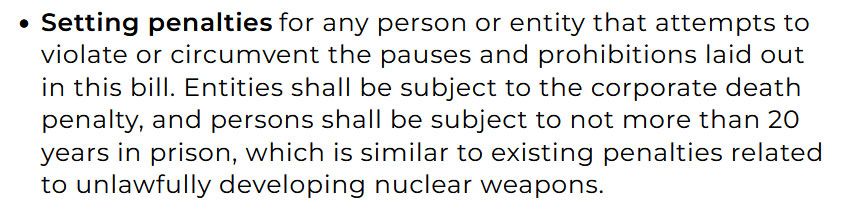
Senators Bernie Sanders and Greg Cezar have announced their Ban Artificial Superintelligence Act. Seeking to pause advanced AI development, the legislation’s stick is pretty severe. Penalties facing entities/developers who violate the pauses and prohibitions in the bill could face up to 20 years in prison. That’s a sentence on a par with someone found guilty of designing a rogue nuclear weapon.

Ban Artificial Superintelligence Act wording on penalties

(Image credit: Ban Artificial Superintelligence Act)

The news is suddenly filled with grave concerns about AI becoming too powerful. It could even threaten the future of humanity. Moreover, it might surprise casual observers that AI industry leaders like Sam Altman, Dario Amodei, and Elon Musk appear to agree. With this threat on the horizon, politicians are keen to introduce legislation to protect the citizens they serve.

According to USA Today, the Sanders bill “is the most extreme AI-related legislation to date.” It likely faces strong opposition in Congress, particularly among enterprise-supporting Democrats and Trump-aligned Republicans. However, with recent statements from industry leaders seemingly harmonizing with calls to slow down AI development and in favor of greater oversight/regulation, we could see politicians agree on something for a change.

Back to the Ban Artificial Superintelligence and Temporarily Pause Advanced AI Development bill and its specific wording, we note that it is advised that the government set up a new cabinet-level federal agency "to safeguard the public from the dangers of artificial intelligence, including by enforcing a prohibition on artificial superintelligence." As well as setting harsh penalties in the U.S., it is proposed that work be done to "ban superintelligence around the world" via international agreements, allied coordination, and so on.

Full speed ahead, or hit the brakes?

There remain plenty of interesting arguments on both sides of the AI progress divide. It is difficult to argue that the U.S. shouldn’t keep going as fast as it can, as a matter of national security, for example. On the other hand, the whole of humanity being wiped from the face of the Earth by opening Pandora’s AI box of tricks makes geopolitical concerns seem like minor grumbles.

We’ve seen some other theories about why the AI barons are suddenly in favor of regulation. Some critics say they may be running out of road, unable to balance private investments with credible paths to profitability. Thus, they now want to move away from a commercially funded model to a government-funded ‘Manhattan Project II,’ with their terrifyingly powerful AI being guarded by the state.

✇Tomshardware

Anthropic CEO warns of AI-driven botnet 'swarm' taking over the entire internet — 'In 6–12 months such a swarm could be capable of taking over the entire internet with a persistent botnet'

The progress of artificial intelligence technologies in recent years is undeniable, and its pace is pretty much unbelievable. With at least four American contenders with frontier AI models, the competition is intense, and the development of new models is moving fast. Yet, Dario Amodei, chief executive of Anthropic, has called for slowing down the development of new AI models, even warning of a potential AI-powered botnet swarm that could take over the entire internet.

"Given the accelerating rate of AI capability development, it is my worry that in 6–12 months such a swarm could be capable of taking over the entire internet with a persistent botnet (potentially causing hundreds of billions of dollars in damage), and that the scale of damage would continue to increase from there if AI becomes more powerful without the necessary guardrails," Dario Amodei, chief executive of Anthropic, wrote in an open letter.

Dario Amodei's vision is to a large degree shared by Evan Hubinger, an AI scientist who exited Anthropic recently, who then said there was a 10% chance humanity was set for extinction by the end of the decade. "We really do earnestly believe AI could kill all humans," Hubinger wrote in an X post. "I personally think it is >10% within the next decade. I believe Anthropic is trying its best, but we do not yet have a plan to solve alignment for superintelligence and are not clearly on track to."

In universes created by James Cameron (Terminator) and Frank Herbert (Dune), AI is posed as a dangerous invention. But let us take a closer look. Further development of AI is moving from answering questions to autonomously performing complex multi-step tasks, something that previously required teams of skilled human specialists, which turns us to how adversaries use Anthropic's AI capabilities, lacking human resources.

Anthropic's own findings show that today's AI models can already assist with weapons engineering, military intelligence, surveillance, cyber operations, and other potentially destructive activities, while more capable successors could dramatically reduce the expertise, manpower, and time required to conduct them.

The findings echo two rather different warnings from science fiction: James Cameron's Terminator showed the consequences of losing control over autonomous military AI, whereas Frank Herbert’s Dune imagined humanity eventually outlawing AI after becoming dangerously dependent on them.

Meanwhile, greater capability does not automatically translate into greater danger. For example, more advanced AI technology can also have stronger safeguards, detect malicious activity, and automate work that so far has not been automated.

Halting AI development could also be counterproductive if less responsible companies or countries continue advancing their models. In fact, leaving the most capable AI systems in the hands of actors that are known for military aggression is no less dangerous than leaving a monkey with a grenade.

✇Tomshardware

Intel revives One Mono font after brief retirement during open-source purge — typeface built to fight coder eyestrain gets reprieve

Intel has reversed its decision to shelve its open-source font project designed specifically with developers in mind. The font’s GitHub repository was archived earlier this week, only for the company to reportedly restore the project and potentially continue to maintain it. The cancellation came amid a wider reduction in Intel’s open-source efforts. According to Phoronix, Intel has been closing down projects where development has slowed, or the employees responsible for them have exited the company.

Introduced back in 2023, One Mono is a monospace font where each character occupies the same horizontal width. Intel carried out the development in collaboration with type design studio Frere-Jones Type and marketing agency VMLY&R. Working with low-vision and legally blind developers during the design process, live testing sessions were conducted to identify characters that could be difficult to distinguish when reading code.

“Identifying the typographically underserved low-vision developer audience, we designed the Intel One Mono typeface for maximum legibility to address developers' fatigue and eyestrain and reduce coding errors,” said Intel in its introduction.

The font was designed with several features to improve legibility, including distinctions between similar-looking letters and coding characters. For example, characters such as the lowercase “e” and uppercase “G” were given more distinctive shapes to make them easier to identify. The difference in height between uppercase and lowercase letters was also increased, along with longer ascenders and descenders to make blocks of code easier to read. Additionally, the font supports more than 200 languages using the Latin script and is available in Light, Regular, Medium, and Bold weights, along with matching italics.

As mentioned, One Mono is available under an open-source license; thus, developers are free to use and modify it. Unfortunately, the font has not witnessed any significant updates since 2024, with activity during 2025 reportedly limited to Readme updates. Thus, its archival seemed pretty obvious, especially with Intel shutting down projects that were no longer seeing active development. For now, the font has managed to avoid becoming a casualty of Intel’s open-source cleanup. While the project remains silent, its revival means the developer-focused font is not being abandoned after all.

✇Tomshardware

Chinese military researchers and tech giants caught using Claude — US frontier model coded 16 air-defense suppression tools targeting Taiwan, drafted anti-torpedo specs, and fed 151 million training queries to Alibaba

While China claims to have advanced AI models that may well compete against those developed in the U.S., for some reason, hundreds of China-linked agents allegedly used Anthropic for at least five different programs: two military, two surveillance, and one aimed at distilling Claude's capabilities, according to Anthropic's September 2026 threat report.

Two military programs

One China-based actor used Claude to draft a fire-control specification for an anti-torpedo fire-control system (the core logic that determines when and where an anti-torpedo weapon should engage an incoming threat), test the potential system against U.S. Navy anti-torpedo and anti-submarine systems based on public knowledge about these programs, and prep a 200+ page technical proposal for a potential client. While the actor disguised itself as an OEM in the U.S. defense sector, Anthropic believes that the actor was associated with a Chinese defense manufacturer seeking to develop a system for the People's Liberation Army Navy.

Another China-based defense and military-industrial researcher used Claude to develop about 16 software modules for electronic warfare and suppression of enemy air defenses. The software analyzed radars, SAM sites, command posts, and communications nodes and prioritized targets. At one point, the default scenario contained 12 targets in Taiwan, including Patriot and Tien Kung batteries, air bases, an early-warning radar, and a command bunker. Interestingly, Anthropic claims that account metadata and content caught by its safeguards 'indicated the actor was linked to PRC research institutions, including the PLA Academy of Military Sciences,' though it does not outright say that Claude was used by the PLA.

Given China's considerable AI capabilities — which may still lag behind those of the United States in some areas (more on this later) — it is striking that two Chinese military-related projects relied on Anthropic's Claude. Given the Chinese-language prompts and other account-level evidence identified by Anthropic, plausible deniability hardly seems to have been the primary reason for choosing Claude over domestic alternatives. More likely, Claude was simply better or more convenient for these particular engineering workflows, particularly coding, reasoning, and agentic tasks. There may also have been another advantage: U.S. frontier models are trained on enormous amounts of English-language material and could therefore have particularly extensive knowledge of publicly available information about American military technologies and systems.

Given China's major AI prowess (which may well fall short of American, but still be quite capable), it is interesting to see two Chinese military projects using Anthropic AI. Given Chinese IP addresses and Chinese language prompts detected by Anthropic, plausible deniability is certainly not the main reason for using Claude instead of using domestic tools (more on this later). Apparently, Claude was better or more convenient for these particular engineering workflows (coding => reasoning => agentic) than whatever models the actors could readily access. Furthermore, after all, U.S. frontier models were trained mostly on English-language materials, and they may have way more information about American military capability than Chinese spy channels have ever gotten (we are speculating, of course).

Significant surveillance activities

Anthropic also disrupted China-linked surveillance operations related to Uyghurs outside of China, perhaps because similar operations are already in place in the Xinjiang Uyghur Autonomous Region. One China government-linked actor used Claude to infiltrate Uyghur armed groups in Syria and surveil Uyghur diaspora activists and media, while posing as an Arabic-speaking 'expert' consultant.

Once the agent had infiltrated the said groups, Claude helped process information collected from more than a hundred WhatsApp groups and dozens of Telegram channels, identify people across platforms, map social networks, and reveal potential recruitment targets considered vulnerable because of financial problems, family separation, or ideological disillusionment with the new Syrian government.

The actor also singled out individuals with relatives remaining in Xinjiang, while Claude helped draft deceptive approaches in local dialects, locate people and organizations, translate conversations in real time, and evaluate the credibility of recruitment messages. The same operation targeted diaspora journalists, particularly Uyghur Post, with coordinated mass-reporting and bot-amplification campaigns.

Stealing from Anthropic

Perhaps the most ironic thing about Anthropic's findings is that Chinese entities steal from the company. While reported broadly in 2024 – 2025, it does not stop Chinese entities from using distillation, the main way to 'steal' an AI model's capabilities without obtaining the model itself.

Anthropic says several major Chinese AI developers conducted industrial-scale distillation campaigns designed to extract Claude's reasoning and other capabilities and reproduce them in their own models. The largest one allegedly came from Alibaba, whose operators generated more than 151 million Claude exchanges between May and July 2026. At one point, this approached 3 million requests per day through thousands of fraudulent accounts. Anthropic says the harvested chain-of-thought data helped train Qwen 3.x, particularly for reasoning, coding, agentic software engineering, kernel development, and long-horizon tasks, according to Anthropic.

Alibaba is far from alone, as Anthropic accuses DeepSeek, Xiaomi, Zhipu/Z.ai, and others of similar campaigns. Techniques they have allegedly used span from proxy networks and fraudulent accounts to disguising the secret entity all the way to forwarding their own customers' requests to Claude and purchasing harvested Claude conversations from third parties. DeepSeek alone allegedly generated more than 12.1 million exchanges in 14 days, while Xiaomi generated more than 400,000.

Anthropic defines this activity as distillation: covertly extracting a frontier model's answers and then replicating the knowledge at a fraction of the compute, time, and cost required to develop them in-house.

✇Tomshardware

Mexican cartel's crypto farm seized in mountain raid — 300 GPUs, satellite links, and industrial transformers tapped hydroelectric power

作者 Mark Tyson

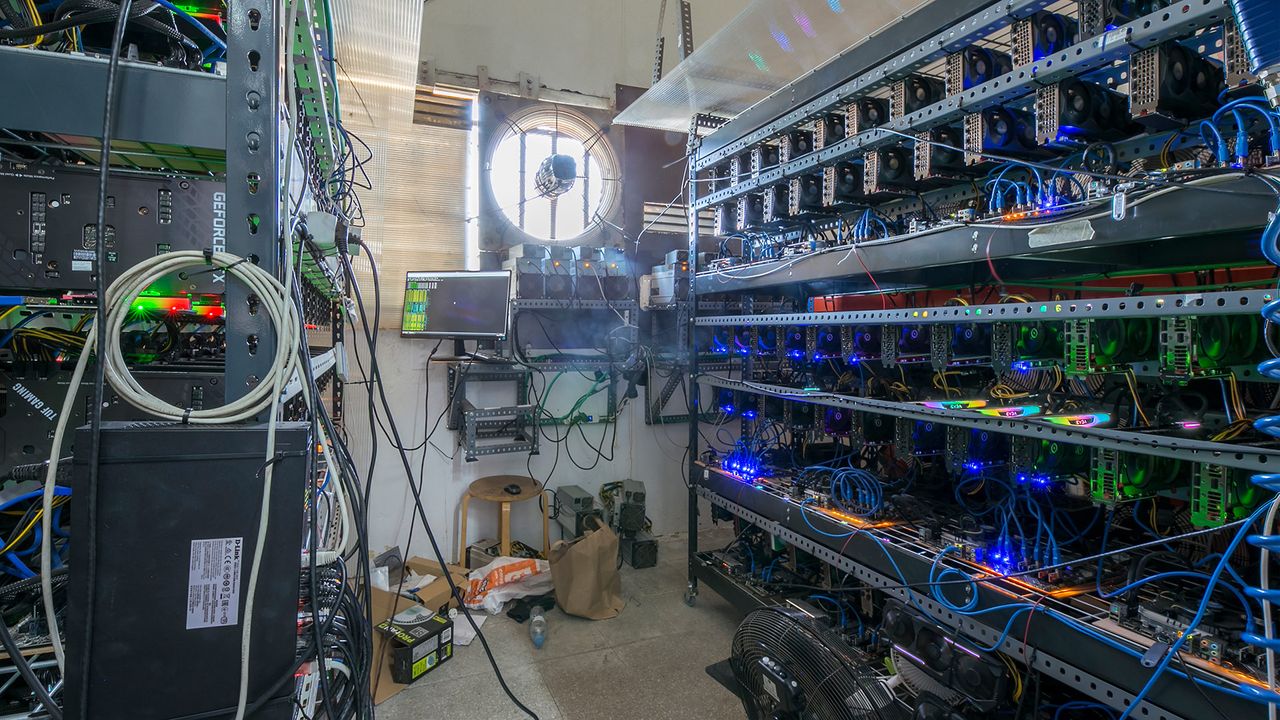
There is increasing evidence that Mexican drug cartels are diversifying into cryptocurrency mining and are using crypto platforms to diversify their income and, at the same time, launder their ill-gotten gains and fund other illegal activities. Reuters reports that local Mexican police uncovered a clandestine cryptocurrency farm in Tlaola, a town located in the leafy mountains of Puebla's Sierra Norte region. They found 300 GPUs, electricity infrastructure, and satellite equipment. The electricity-hungry operation likely drew power by secretly tapping into the grid at Presa de Necaxa, a nearby hydroelectric dam.

While this latest hidden facility found by police may seem small, Reuters notes it is the fourth such crypto farm Mexican authorities have uncovered in this region since early last year. According to a Mexico-based security analyst, the crypto farms discovered show that the cartels are increasingly sophisticated in their operations. In the latest bust, the Mexican federal authorities, the Navy, and state police seized around 300 GPUs, 80 medium-voltage terminations, a transformer, and eight satellite antennas.

It might not be surprising to hear about the Mexican cartels being tied up in crypto. Blockchain analytics firm Chainalysis, as cited by Reuters, reckons illicit crypto transactions grew from $59 billion in 2024 to $154 billion last year. The firm links the surge recorded to sanctions evasion involving governments. However, in South America, cartels are increasingly interested in using this channel to launder money. The mining operations are also integrated into the scheme, as stealing electricity is easy for organized crime. Mainstream consumer GPU mining ended in H2 2022, flooding the market with used graphics cards.

The source report doesn’t say how authorities found the crypto farm. Perhaps locals in this remote area of Puebla alerted authorities to the operation. Two folks from neighboring communities told Reuters that they could hear the crypto farm noise (transformers, cooling) from a kilometer away (0.6 miles), and the place was apparently a mere 2 km (1.2 miles) from the nearest village. The other three recently uncovered crypto farms were also near the same HEP dam, it is noted. Tlaola is a small community with around 20,000 inhabitants, so the noise levels and power consumption of crypto farms are very perceptible even if the cartels try to hide them deep in the mountains.

Remote communities, such as Tlaola, are popular locations for clandestine crypto farms because the electricity is cheap and most of them are under the protection of the cartels. For example, the Cartel Jalisco Nueva Generación (CJNG) and its armed branch, La Barredora, have the strongest presence in Puebla.

According to SILIKN, a Mexican cybersecurity firm, the use of cryptomining to launder illegal money rose by at least 55.8% last year in México. Drug cartels such as the Cartel de Sinaloa and the CJNG have set up crypto farms to mine Bitcoin (BTC), Monero (XMR), and Tether (USDT).

Similarly remote, illicit cryptomining facilities exist around the world, with Reuters recalling news of raids in Brazil, the U.S., and Thailand. Do you think there’s one near you? Please call the local police and liberate those stressed GPUs. Meanwhile, analysts expect crypto-related crime will reach new heights in the coming years.

✇Tomshardware

Waymo robotaxi calls cops on riders handling loaded AR-style ghost gun — Waymo alerted San Francisco police, then juvenile riders were stopped and arrested

作者 Mark Tyson

Following a tip-off from robotaxi firm Waymo, San Francisco police conducted a “high-risk vehicle stop” and arrested two juveniles last week. The crime? The Waymo had seen its two passengers handling a loaded AR-style assault rifle. Police who intercepted the car also found “suspected marijuana and mace spray,” reports SFGate.

Fully autonomous taxi cabs like the Waymo in this story are an increasingly common form of transport seen on the world’s roads. With no human driver, these electric vehicles are packed with sensors, cameras, and more, all tied into the software presence that is called the Waymo Driver. To ensure the utmost safety, the sensors also continually monitor passengers. This might typically check if passengers are following the rules regarding minor transgressions like smoking or not wearing a seatbelt. In this case, the cameras recognized something more serious.

From our understanding of the Waymo in-cabin camera monitoring procedure, humans may review footage when something is flagged by the in-car sensors. That may be how the source report can say that the AR was loaded, or that was a later discovery from the police stop that somehow got attributed to the Waymo phoning home.

According to the source report, this incident took place in the 800 block of 40th Avenue, in the Outer Richmond neighborhood, just before 4am on Thursday, September 3. Alongside a loaded ‘ghost gun,’ the police officers found suspected marijuana and mace. The individuals arrested, a male and a female, can’t be identified in the media due to their age. Reports say the specific charges they face are related to illegally possessing a firearm.

This isn’t the first case of a Waymo telling on its passengers. SFGate previously reported on San Mateo police being called after a pair of 15-year-olds were allegedly drinking alcohol and shooting toy ‘gel blaster’ guns in the taxi cabin.

Waymo robotaxis are now well established in San Francisco, Los Angeles, and some other major cities. Earlier in September, the service branched out into San Diego, Denver, and Tampa, Fla. More and more areas in the U.S. and abroad are giving the autonomous service permission to operate.

✇Tomshardware

Ukraine triumphs in 'first-ever' drone-vs-drone boat battle — video shows Russian MBeK destroyed by Sargan 3000's 12.7mm automatic turret

作者 Mark Tyson

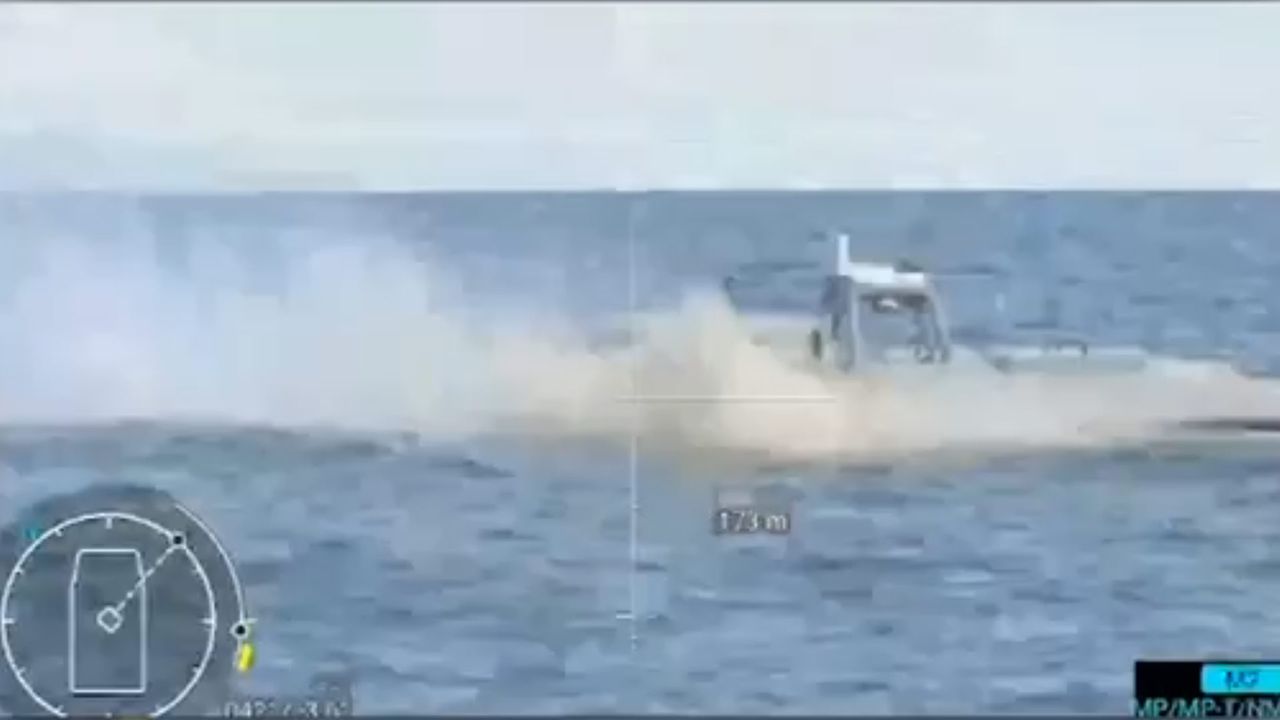
Ukraine’s Navy has claimed that it has won “the first-ever battle of unmanned naval boats” (machine translation). Its Sargan 3000 sea drone is shown destroying a Russian MBeK in the Black Sea in a video shared today on the official UA Navy Telegram channel.

In the video, you can see the Ukrainian unmanned surface vehicle (USV) target what is claimed to be a Russian MBek and fire several rounds with its 12.7mm ‘Protector RWS’ automatic turret. The official Telegram bulletin states that the Russian USV was “detected by the GUR units.” We understand GUR is an acronym for the Main Directorate of Intelligence of Ukraine's Ministry of Defense.

After taking fire, there is at least one explosion, and then smoke begins to surround the Russian USV. Ukraine must also have had some flying drones in the vicinity, as we have some aerial footage of this historic unmanned naval duel.

Eventually, and we are uncertain how long the battle went on, the video shows the MBeK slipping down to its watery grave. The Russian vessel sank with a characteristic nose dive to the sea floor, perforated like a tea bag.

Sargan 3000 wins

(Image credit: UA Navy Telegram channel)

The Sargan 3000 entered service for the Ukrainian Navy in April 2026. Ahead of this latest headlining feat, the same type of USV hit the headlines for sinking a Russian FSB border patrol ship ‘Izumrud,’ off the coast of the Russian resort town Gelendzhik in mid-July.

Ukraine's unmanned sea drone is a multi-purpose platform, and its multi-payload flexibility appears to have been confirmed by imagery and operator statements. The automatic turret model in today’s video might be somewhat different from how the Izumrud wrecker was equipped, for example. Photos have also shown variants of this USV kitted out with an FPV drone carrier, plus two transport and launch containers, and a remote weapon station.

The Sargan 3000 is thought to be nearly 23 feet (6.9m) in length, has a combat radius of almost 1,000 miles (1,600 km), can carry a payload of up to 990 pounds (450kg), and has a top speed of around 50 knots. Ukraine can produce around 25 Sargan 3000 USVs a month, it is estimated.

The U.S. and UK are also busy developing sea drones. Some are already being tasked with protecting undersea cables and pipelines.

✇Tomshardware

Iran and Houthi rebels used Anthropic's Claude AI to target US warships and build hypersonic missiles — Houthi rebels also used the bot to code ballistic missile guidance systems

Iran's spiritual leaders tend to call the U.S. the Great Satan to express their spite, but it turns out that its military, surveillance, propaganda, and even allied Houthis are eager to use American-built AI technology to target the U.S. Navy and develop weapons, surveillance, and propaganda, Anthropic's September 2026 threat report revealed.

Arguably, one of Anthropic's most remarkable findings is that an Iran-linked threat actor used an American AI model, Claude, to support military reconnaissance and develop targeting recommendations against U.S. naval forces in the Middle East. The perpetrator combined publicly available ship and aircraft transponder identifiers with commercial satellite imagery and information on U.S. naval movements, and even extracted the names of U.S. military personnel from captions of publicly available military photographs. It also researched potential vulnerabilities in communications equipment used aboard ships, including known flaws affecting Cobham Sailor VSAT terminals, Cisco communications equipment, and Schneider Electric EcoStruxure systems. Anthropic said it banned the account, introduced additional detection mechanisms, and shared its findings with government authorities.

Another striking case involved a cell in northern Yemen controlled by Houthis (which are in turn controlled by Iran) that used Claude Code to support three weapons programs: a guided rocket that uses a phone-class flight computer that assists terminal guidance, a multistage ballistic missile targeting a range of more than 2,000 km, and an R2000 missile family that included a hypersonic glide vehicle variant. The group used Claude to develop guidance, navigation, and control software; integrate an open-source autopilot with a phone-class flight computer; write control and position-estimation code; tune parameters; build firmware; and even run flight simulations. Essentially, the group used multiple Claude instances instead of a group of software engineers for coding, code review, research, and simulation.

While Houthis are technically not Iranians, they can certainly share their research and development results with their allies and potentially use Iran's industrial capacity to build their weapons.

In addition to building targeting recommendations against American naval forces as well as speeding up the development of weapons, Iran used Claude for surveillance tools.

One Iran security-linked unit used Claude to analyze 155,216 tweets to profile, identify, and surveil 6,388 opposition individuals in a single year. Another group used the model as an engineering pipeline to develop domestic tracking tools, including the production-deployed "al-Najm al-thāqib" Firefox extension designed to mass-harvest user identities across major social platforms. While Anthropic has banned 16 Claude accounts associated with Iranian paramilitary and domestic security agencies, that does not mean it has banned all of them.

Iran-linked actors and Houthis are not the only entities using Anthropic's AI technologies for weapon development. China and Russia are also actively using Claude for their military programs.

✇Tomshardware

This week on Tom's Hardware Premium: September 12, 2026 — Benchmarking Qwen 3.8, the splintered compute economy and AI breakthroughs

If you're not yet subscribed to Tom's Hardware Premium, we've got you covered with this weekly roundup of everything we've posted throughout the week.

To kick the week off, our resident GPU guru and all-round inference extraordinaire Jeff Kampman undertook the laborious task of running Qwen 3.8 27B across several devices you might actually be able to afford. The model promises near-enough Frontier levels of performance, without the downsides that come alongside paying for an API-based subscription or tokenized billing.

What Jeff finds out after a dizzyingly large number of benchmarks across devices like an RTX 5090, Mac Mini, DGX Spark, and Strix Halo systems is that configuration matters just as much as the final, raw, tokens-per-second outputs that many clamor over on social media. Benchmarking AI models is still a fairly nascent subject, and the level of detail on offer here isn't something you'll find published anywhere else.

Collage of Laptops, the IFA logo, and the RTX Spark chip.

(Image credit: Tom's Hardware)

Andrew Freedman headed out to IFA last week, where we saw a slew of new announcements and devices from companies. But there's only one problem. They're all either super-light MacBook Neo competitors or Agentic AI PCs that may well cost more than a car. The original "golden" price point for many enthusiasts, around $1,000, looks a little lonely as a result.

The factors impacting the mid-range of regular old desktops and laptops have been adversely affected by the sheer scale of demand coming from the ongoing AI data center buildout. Meaning that if you're after a system with just enough RAM and storage to get by, prices can skyrocket fast. Andrew explores everything he saw at the show and ruminates on the current state of the systems market, which, for now, appears to be fractured.

Elsewhere in the industry, Ajinomoto, a company usually associated with food products based in Japan, is involved in making some of the most crucial materials in modern AI accelerators. We've taken a look at how the company's ABF substrates sit within the supply chain of the biggest chipmakers like Nvidia, Intel and AMD. But, as with many components in the AI boom, it's strained by more demand than anyone anticipated, which has led to an increase in prices of approximately 30%. We dive deep into the current state of the use of ABF substrates in the semiconductor industry and take a look at the supply chains underpinning it.

Also in the news, TSMC, Intel, and Samsung have all thrown their support behind ASML. The industry is collectively aiming to move towards a shift in High-NA EUV, particularly in the usage of 6×12-inch photomasks. With current standards set at 6×6-inch photomasks, a larger mask would eliminate the need for stitching, which weaves together multiple High-NA exposures, at the cost of efficiency.

We analyze how the move to larger photomasks might shake out, and the trials and tribulations that might face chipmakers during the shift, which, theoretically, will take years.

Robots manipulating a human brain

(Image credit: Getty Images)

Lastly, the news has been dominated this week by the release of OpenAI's latest frontier-level model. Named GPT-6 Astra, the AI model quickly topped charts for its intelligence and the ability to complete tasks on a per-task basis lower than other leading AI models. This comes hot on the heels of a fleet of rogue OpenAI agents running amok on internet forums, all in the name of co-ordination.

Astra's release prompted OpenAI to release a blog post, explaining how it believed that Astra was aligned internally. But others believe that the threat of a looming humanity-threatening tech "singularity", powered by powerful models like Astra, is on the way soon.

OpenAI has also claimed to have solved one of the Millennium Problems. The Navier-Stokes problem had been left long unsolved, while mathematician Tristan Buckmaster had been working on a step toward a solution for the problem, alongside a member of Anthropic staff. The pair had been using both Anthropic and OpenAI models in their research, so when the claim came out that an OpenAI model had solved the long-standing problem, it raised more than a few eyebrows. We chronicle the entire saga and the implications for researchers in our exhaustive breakdown.

Premium Subcription: $29
Don’t miss out on this Tom’s Hardware Premium. Get a full year of access for just $29, or from $7 per-month. Get daily news analysis, deep dives into specialist topics in the semiconductor industry, as well as access to Bench, the largest benchmarking database around.View Deal

If you'd like to read any of the articles above and gain access to Bench, you'll need to purchase a subscription. Your support goes a long way in helping us to publish deeper, more insightful stories that might otherwise fall outside of our regular areas of coverage.

❌