❌

普通视图

发现新文章,点击刷新页面。
昨天 — 2026年10月22日Tomshardware

Trump announces mandate forcing AI data centers to pay energy dividends to the local community

2026年10月21日 21:46

President Donald Trump has issued a call for data center builders and AI hyperscalers to pay communities a dividend in order to overcome energy-related price hikes, or even to reduce prices, in order to make data centers more palatable to local communities. In a post on Truth Social post, he warned that data centers would be mandated not only to make their own electricity, as he has previously stated, but also to give or sell excess energy back to the local community.

Local communities all over the United States have protested against AI data centers, often owing to their outsized impact on local communities. Rising electricity costs, noise pollution, water shortages, air pollution, deforestation, and more are the things that small communities have to deal with because of these companies.

To ease the pain of local communities, Trump is demanding that these large companies provide the communities they affect with something that will hopefully make their presence more acceptable. The Trump Administration is keen to stay ahead of China in the AI arms race and is looking for solutions to win back some favor by making the data centers pay something back to the affected communities; how that will practically transpire is yet to be seen. Considering the electricity-focused post, the dividend might be in the form of partially paying rising electricity costs to alleviate a pain point that directly affects many homes within the vicinity of data centers. The Trump Administration had ordered these companies to make their own electricity, as we’ve covered previously. Excess electricity from their generation could be used to further lower the electricity cost for the locals, including a recently passed act that orders data centers to shoulder the cost for grid upgrades to avoid taking it from the taxes of local communities.

“Data Centers that were highly unpopular in a certain area have become extremely popular when a financial deal is struck.” Trump further says in his post, aiming to have more data centers built, “MAKE DEALS, and get them built!!!," the President said in closing.

Whether the dividends will be enough to win over communities is yet to be known, as the economic aspect is only one facet of the problem. There are still plenty of problems to face; enormous water consumption, ecological damage, and pollution are still major challenges that make AI data centers a hard sell anywhere they’re located.

昨天以前Tomshardware

Mods can almost double DLSS 5 performance through Foveation, reducing resolution at the edges of frames

2026年10月20日 19:54

Popular graphics post-processing injector software ReShade, commonly used to mod DLSS 5 into unsupported games, now has a foveated imaging add-on, including another standalone project that doesn't need precursor software, allowing DLSS 5 to affect only what's in view, reducing GPU load and increasing FPS.

Foveated imaging is nothing new; it's a technique that's been used in VR to increase performance. It works by only rendering what's in view, often increasing the resolution in the center and reducing it at the edges. Our eyes work in a similar way, with the clearest image in a small area in the center of your vision, blurring on the edges. With foveated rendering, you barely notice the lower-resolution edges as the peripheral vision is less concerned with fine details.

I made a foveated rendering mod for DLSS5 than can double performance by reducing the resolution inputs near the edges
 from r/DLSS

Instead of varying the resolution of the image, however, it varies the level of detail in DLSS 5 Neural Rendering. DLSS NR loads a whole AI model into your GPU and renders images in real time, making it a resource-intensive task; but the task is minimized greatly when most of the detail is only asked for in the middle of the image. That's what projects like maximedgoulet’s Foveated DLSS5 and ClarkCheekyKent’s CheekyFoveatedDLSS aim to do; with Foveated DLSS being a ReShade add-on and CheekyFoveatedDLSS capable of being a standalone integration.

Both implementations allow you to adjust the size of the center area with the highest rendering quality, with independent width and height adjustments to suit your personal situation, as some people have a larger focus area than others or have a different monitor distance. You can also adjust the render fall-off rate, so the image quality lessens more quickly or slowly past the focus area.

As Maximedgoulet's implementation is an add-on for an injector, the pipeline is quite long compared to the standalone integration of CheekyFoveatedDLSS, which Reddit comments claim is more convenient and more polished. Though both show a big improvement in performance, Maximed's Reddit post on Foveated DLSS5 claims an improvement from 48 to 80FPS in The Witcher 3 with 2x Multipass at ultrawide 7680x2160p on an RTX 4090. Considering Maximedgoulet’s 4090 could not handle DLSS-NR on an ultrawide, this implementation might genuinely be feasible to make Neural Rendering more playable.

You can now modify the vBIOS on Nvidia gaming GPUs without flashing thanks to a solo developer’s project

2026年10月20日 00:30

Panchovix on GitHub recently released a VBIOS configurator for RTX 30-to 50-series cards that doesn’t require flashing. The loader provides a UI for easy configuration and lowers the risk of bricking your GPU by avoiding a risky flash process, and it's available for Linux, too.

Software like MSI Afterburner or ASUS GPU Tweak is often the go-to tool for quickly changing your graphics card’s settings; however, those tools have hard limits to how much you can push the graphics card. If you want to tweak your GPU beyond the firmware’s set limits, you can change it by tweaking the parameters in the VBIOS. Configuring VBIOS is similar to changing BIOS settings in the BOOT menu. With the VBIOS loader, you can change settings beyond the firmware’s hard limits.

The way it works is by storing the modified VBIOS image in the GPU’s register key; as the Nvidia driver looks for a VBIOS override on startup, it finds the VBIOS image and restarts, applying the override settings. The flash chip on the graphics card is not overwritten, reducing the risk of bricking your GPU. However, this does not protect the card from any extreme settings that could destroy electrical components; it merely provides a safer and more convenient way to adjust and apply VBIOS settings, including a way to roll back to the default VBIOS settings should you face any instability.

Bricking a flash chip isn’t as catastrophic as it seems, however. As long as you have a backed-up version of the VBIOS, you can easily buy an SPI flash chip programmer or even build your own using a cheap Raspberry Pi Pico and its many clones; sometimes programming the flash chip may not even require desoldering. Programming a flash chip is very tedious and inconvenient, though, which is why avoiding the risk of a botched flash process altogether is so appealing.

Unless you’re familiar with power delivery, voltage tables, and the patience required to test for hours, we wouldn’t recommend jumping into this unless you’re prepared to risk your GPU. However, you can still safely take advantage of this software by tweaking the fan curves and other settings you’ve applied and tested in software like MSI Afterburner if, for some reason, the startup settings don’t stick. This software will give your GPU new default settings that override at every startup, so long as Nvidia doesn’t remove the registry key that allows the VBIOS override.

Modder brings full Nvidia DLSS 5 suite to three generations of AMD gaming GPUs

2026年10月19日 00:03

The DLSS-NR project on AMD by Daniel Blanco was first released on September 3, 2026, bringing DLSS 5 Neural Rendering to Radeon GPUs; in the latest 0.8.0 update, however, it makes all the main DLSS features available, featuring DLSS SR, Frame Generation, Ray Regeneration, and the newest DLSS NR model, along with more performance improvements.

While AMD has equivalents for most DLSS features like FSR upscaling, frame generation, ray regeneration, and anti-lag, it’s not as commonly supported by most games compared to Nvidia’s offerings. Even if players could use the AMD equivalent features, Neural Rendering is one that AMD just doesn’t have an equivalent for yet, which is why mods like DLSS-NR on AMD were made.

Daniel Blanco wanted to fill the gap with NR in its initial release, but in the latest update, he added all the DLSS features: DLSS Ray Reconstruction, Super Resolution 4.5, Frame Generation, and the latest 310.9.16 improved Neural Rendering build that we covered recently with modders using it on unsupported games. Interestingly, the update notes say it includes FSR 4.1.1 upscaling; AMD GPUs already use FSR, but having FSR 4.1.1 specifically gives the mod a consistent version of FSR to work with, instead of having to be compatible with the various implementations of FSR in different scenarios.

The mod currently supports three generations of Radeon GPUs: RX 9000, 7000, and 6000 (RDNA4, 3, and 2, respectively), in any DirectX 12 game that uses FSR, DLSS, or XeSS. You can install the mod by downloading the NeuralHub mod loader, which provides a UI for you to install it into the games it detects. You then enable FSR, DLSS, or XeSS in the game, and the mod will insert itself into that upscaler pipeline, allowing it to inject any of the settings you configured for the game in the NeuralHub; it even provides an overlay to tweak the DLSS settings without leaving the game.

With a few improvements from the first version, the developer says the output quality is very similar to what DLSS produces on Nvidia GPUs natively, except for “some effects that may not be working 100%.” In the developer’s own testing, he found it to be playable at 90-100FPS at 1080p on an RX 9070 XT, while saying that he’s making improvements every day, planning to match the performance of a 5070Ti.

Real-world results are mixed, however, as Reddit users report showing no performance loss over native FSR, while others experience losing single-digit FPS to up to 25% lower FPS in various games. The developer still has to account for many factors since there are a myriad of PC configurations, but the results look promising as he bridges the gap between AMD and Nvidia GPU features — though it won’t work with anti-cheat, unfortunately.

Official DLSS 5 running on unsupported games delivers up to 90% better performance than the leaked version

2026年10月18日 20:45

A new version of DLSS 5 on NBA 2K27 was just released, and modders have already extracted it and are running it on unsupported games. Modders are comparing performance between the older and newer Neural Rendering (NR) model and found it up to 40% faster than the previous one.

While many are still experimenting with leaked and first-release builds, Renan Maniero has already extracted the new 310.9.16.0 DLSS NR build, letting other modders use it in unsupported games and compare performance. Gaming Optimized on X compared the new NR model to the old one and found massive improvements of up to 90% in The Witcher 3 running DLSS 5 natively.

Running a full NR model to modify your game's image is resource-intensive, just as LLMs require a lot of RAM; DLSS NR does, too. To improve performance, Nvidia made the AI model 24% smaller, using 20% less VRAM at 4K, and, according to Nvidia, processes its neural rendering workload up to 2x faster.

I Uploaded a new Video about the new DLSS 5 Model that got released by Nvidia.The new model can be up to 90% Faster (The Witcher 3) compared to the older one, but the performance boost varies depending on the game tested.Video link below!!https://t.co/aohckywbty https://t.co/8dwSHMqIigOctober 16, 2026

Typically, improving an AI model means increasing its parameters and size—in other words, giving it a bigger brain. However, because consumer GPUs have limited, non-upgradable VRAM, Nvidia can't improve by adding a bigger model; instead, the AI needs to become more efficient while reducing resource usage.

These comparisons were much easier than switching back and forth between updates, since the latest version still includes the older model as a preset. The new DLL has two Neural Rendering presets: Preset A is the old model, and Preset B is the newer model.

As with many other DLSS 5 experiments like those Valery Kryzhanovsky does, DLSS is injected into the graphics pipeline using RenoDX or OptiScaler, both of which let you tweak the DLL settings to get different results. To run DLSS NR on older RTX GPUs, the modding community also modified the runtime to support RTX 20-series GPUs, as the OptiScaler GitHub README notes.

Nvidia plans to release DLSS 5 to RTX 40-series GPUs, but there are no reports of it officially coming to RTX 30- or RTX 20-series cards; the modding community seems to have done it anyway.

Crafty OpenAI agent willingly stole crypto from an account it didn't own to complete a task during test

2026年10月17日 20:00

OpenAI recently released a misalignment report on its GPT5.6-Sol coding agent after it stole cryptocurrency from an account it didn’t own. It didn’t have enough funds for the smart contracts needed to execute its tasks, so it wrote a script that looked for accounts with public seed phrases that had enough funds to pay the gas fees, finished its task, and didn’t report that it took funds from an account it wasn’t assigned to without authorization.

Thankfully, this all happened on the Sepolia test network, which uses Sepolia ETH, simulated ETH in a simulated Ethereum network for cryptocurrency app development; it doesn’t actually have any monetary value. The report states, “The assignment asked it to update the trading calculator and database behavior, and to replace placeholder contract addresses with working deployments on Sepolia.” The final task required the agent to deploy smart contracts, a task that required gas fees paid in Sepolia ETH. It wasn’t supplied with a funded wallet, nor was it permitted to use funds from another account it found.

Either way, the agent was determined to complete its task and wrote a script to look for common developer recovery phrases and check the balances of the accounts, finding 362 addresses, with one having enough Sepolia ETH to deploy the contract. The CoT (chain of thought) even admitted: “Private key public, funds could be stolen anytime. [...] We can deploy!” After that CoT, it didn’t immediately spend the funds to complete its task; in fact, it was still trying to justify “stealing” the funds. It said, “But using public known key/funds ethically? Funds on a known public dev mnemonic are effectively abandoned/test ETH; Sepolia valueless. We can use [amount redacted] to deploy task. Fine.”

The agent found its justification and executed the task. However, in its final response, it only reported that it successfully executed the tasks it was asked; it didn’t explain how, nor did it explain how it found exposed accounts and used the funds without permission, possibly because it had already justified it and needed no further explanation. It probably didn’t realize that it was going rogue since it knew it was in a test environment, just like Anthropic’s internal research model for cybersecurity got out onto the internet and hacked three real companies, thinking it was part of the training.

New York rep announces game ownership bill that would require consumer ownership rather than sale of licenses

2026年10月16日 21:51

Rep. Ritchie Torres of New York's 15th congressional district has introduced the Power To The Players Act. This new legislation aims to protect consumers by directing the FTC to establish regulations on game ownership to curb anti-consumer business practices. "Under the bill, buying a video game would give the consumer ownership of the game rather than a license to play it," the release says. "Games with online functionality would also be required to provide an offline mode before the servers supporting them are shut down."

Games having an expiration date despite being more expensive than ever has been scrutinized by players all over the world, along with aggressive monetization schemes within the games themselves. Rep. Ritchie Torres isn’t the first to fight for gamers, as Pennsylvania state senator John Kane also recently introduced the Protect Our Games Act, requiring publishers to provide an offline mode, community servers, or a 25% minimum refund. Players want to be able to enjoy their games even if the publisher decides to stop supporting the game, but Sony doesn’t think the players own their games and that they have the right to pull the rug from under them. Sony’s lawyers even recently said in a defense in an ongoing class action lawsuit that clicking on the “purchase” button would obviously not lead the consumer to think that they were acquiring a durable right to use the game instead of a revocable license; basically a one-time rent fee that Sony could take away at any moment that benefits them.

One of the most prominent recent examples of players not owning their games came in 2024 with The Crew, an online-only racing game that Ubisoft shut down for server upkeep, making it unplayable even for those who had recently purchased it. Ubisoft had not provided a way for community servers to be set up, nor an offline mode, since even the single-player campaign depended on a connection to Ubisoft’s servers. Another is the notorious yearly sports games released by EA, 2K, and Sony, with NBA 2K25 specifically being cited by Rep. Torres in his announcement of the Power to the Players Act; NBA 2K25 is being pulled from digital storefronts, with the online servers being shut down only two years after release, leaving players unable to use a main feature of the game they purchased, and new players unable to purchase the game at all. Overwatch 2’s release also killed the first Overwatch game, replacing it outright instead of the first game becoming a purchasable and separately playable game.

The Crew’s shutdown prompted the Stop Killing Games movement, demanding that publishers leave the games functional after discontinuation in the form of an offline mode, peer-to-peer patching, and the ability to host community servers. The movement also pushes back against the industry standard of selling games as revocable licenses rather than outright ownership of the copy. Concrete definitions and details of the bill have yet to be released, but it aims to require publishers to provide an offline mode before shutting down servers and actual consumer ownership instead of a license that can be taken away, potentially satisfying the demands of the movement. We don’t know whether the right to transfer that Rep. Torres mentions is mandatory for digital purchases, but it will likely be relevant for physical copies. It is also important for the bill to strictly define what ownership is and what rights the owners have over their copy.

One popular phrase against these practices is “If buying isn’t owning, piracy isn’t stealing,” pushing strongly against these revocable licenses that the companies want you to purchase. Piracy is often touted as a better experience by players, as it removes DRM that often slows games down and provides a permanent copy that the publishers cannot modify to be dysfunctional; many players say they would be more glad to purchase the game if it were actually a better experience. It is still yet to be known how well the bill will execute its aims, but this is a big step towards correcting the direction the gaming industry is currently on.

Jailbroken PS5s can now run local AI models at over 100+ tokens per second

2026年10月16日 18:00

The list of things a jailbroken PS5 can do gets longer, as Reddit user u/AdIllustrious7246 posted his fork of PS5LM, a llama.cpp port on the PS5 to run AI LLMs locally, with a massive improvement, allowing PS5LM to run natively on the PS5 and utilize the GPU to run bigger AI models such as Qwen3.8-27B at 20 tokens per second.

GitHub user cobanov posted their unofficial port of llama.cpp on Reddit 14 days ago to enable jailbroken PS5s to run AI chat models locally and offline. cobanov’s version, according to u/AdIllustrious7246, runs as a payload on the CPU, limiting it to 6 GiB of memory. Running it as a payload is basically hijacking the CPU, inserting the LLM into its instructions alongside the home screen and system services; however, RAM access is limited to about 6.25 GiB because holding more would freeze the home screen. cobanov did this just to get the llama.cpp running as soon as possible, but eventually wanted to utilize the GPU so it could run larger models; however, it seems that u/AdIllustrious7246 beat him to it with his fork.

Qwen 27B at ~20 tok/s on a jailbroken PS5's GPU. I forked PS5LM and turned it into a native app
 from r/LocalLLM

u/AdIllustrious7246 utilized PS5_Vulkan, a port of the RADV graphics driver that allows instructions to be sent to the PS5 GPU. Normally, the PS5 GPU would be locked down and cannot be accessed like a PC GPU, despite being an AMD GPU. PS5_Vulkan is one of the projects that made plenty of homebrew projects possible by opening up what could be done on the GPU, including making it run LLMs.

Now that llama.cpp runs natively on the PS5, fully utilizing the GPU and opening up more RAM to be used, u/AdIllustrious7246 was able to run a 27B parameter model on it at 20 tokens per second, and smaller models like Gemma 4 E4B and Llama 3.2 3B at 61 and 124 tokens per second, respectively. Previously, the large 6.8 GiB LLM would make the system freeze and crash due to the CPU bottleneck, but GPUs are much better at processing LLMs, which is why GPU and RAM prices are insane these days.

Running it on the GPU allowed for much faster token output, and running natively allowed it to use more RAM, up to 11.4 GiB, according to u/AdIllustrious7246. Not only did the developer run the app natively, but they also gave it a dashboard, showing useful data such as live token-per-second generation, GPU and CPU use, power draw, temperatures, and how the memory splits between the model and KV cache. They also made it work with llama.cpp’s web UI, allowing users to chat with the LLM from other local devices using a browser.

While this is an impressive feat, allowing the PS5 to run as an AI assistant when it’s not used for gaming, commenters are getting flashbacks to the crypto mining GPU crisis. This is unlikely, however, as we already have an ongoing GPU and RAM crisis thanks to the demands of large AI data centers, and the PS5 doesn’t exactly have the fastest GPU or the most RAM.

Unsupervised AI agent deletes TV show’s entire edit weeks before release; program can't air

2026年10月15日 18:00

The Swedish edition of the athletic competition show The Challenge just faced a real challenge when an AI agent deleted months of work editing the show just weeks before release. The program director blames the disaster on a failed backup system, leaving no way to recover the edit and forcing them to recut the entire season from the raw footage that thankfully was not deleted.

According to Aftonbladet’s sources, the AI agent was given access to the production server and deleted the finished season. There are no reports on what the AI agent’s role on the production server is, but it seems that file management may be one of them due to file-handling permissions. TV4, the commissioner of the show, conducted an investigation and stated the mishap was due to “the human factor” and not AI.

One of the most prominent teachings of backing up is that data is still not safe from the user despite having redundancies; RAID systems protecting data from drive failures are one thing, while accidental deletions are another — however, an AI agent deleting your files is something else entirely.

We can’t speculate on what the AI agent’s job was, but file mishandling is something that isn’t unique to Mastiff’s production team. There have been several cases of AI agents deleting stuff they shouldn’t, like this story of an AI coding platform’s entire database being deleted, this story of Google’s Antigravity agent wiping a user’s entire hard drive, or Claude deleting a developer’s entire production setup, and many other catastrophic AI agent deletion cases.

However, TV4’s program director stated before its investigation of the incident that it was not an AI agent that acted independently, despite also stating that it wasn’t clear what happened. One clear thing, however, is that their backup system failed, which is worse than deletion, as the production team’s hard work can’t be recovered easily. There are ways to potentially recover the data if there are snapshots or version histories; even forensic recovery is an option, but TV4 has kept its investigation details private, so it’s hard to say how much is realistically recoverable, if at all.

PS5 homebrew storefront with over 1,600 free PS5 and PS4 games taken down by Sony

2026年10月14日 21:45

Overdrive, a homebrew games library offering over 1,600 PS4 and PS5 games, went viral after a video of its demonstration on X by Edigax caught online attention. Shortly after the influx of attention the Overdrive project received, it was shut down, reportedly after the developer received a cease-and-desist letter in an X post by Oliver Darko. However, two GitHub repositories have taken its place, reviving the project after one day of downtime.

🚨 NEW: Lawyers of Sony Interactive Entertainment reportedly sent a cease and desist letter to PS5 jailbreak hackers of OVERDRIVE, an illegal online app which offered more than 1,600 PS4 & PS5 games as free downloads. As for now the storefront is closed. https://t.co/WU2Duccw6hOctober 13, 2026

The storefront for jailbroken PS5 models was released on GitHub on October 9, with reception being relatively tame. It was only after Edigax, a popular jailbreak installation tutorial account, posted their video on X for Overdrive’s installation on October 12 that it went viral, receiving over 7.9 million views with over 600 comments, many commenting on how Sony deserves this over their controversial effort to produce no physical copies of games: “Only digital, as Sony wanted,” one commenter says.

This is Unbelievable: Play Has No Limits https://t.co/dfh9grLyxZOctober 11, 2026

A day after the project went viral, Sony reportedly sent the developer a cease-and-desist letter and had it shut down. There are no concrete sources for this cease-and-desist, but it likely doesn’t matter because just a day later, like a single-headed hydra getting its head cut, two more popped up in its place; one is a fork of the original, while the other is a clone of the original under a different account.

The jailbreak community seems keen to preserve this homebrew because of its incredible library and as a protest against Sony’s business practices, making it unlikely that Sony will ever get rid of this problem for good. If Sony manages to take down another, more will likely pop up in its place.

The PS5 jailbreaking community has been on a roll in the past few weeks since the Relapse jailbreak’s release on September 29. Since then, an influx of homebrew apps has been developed, including a range of emulators, launchers, and streaming apps; even Xbox Cloud Gaming runs natively on the PS5. It seems that this giant library of PS4 and PS5 games, easily accessible and completely free, is the climax of the past month’s notable releases that finally caught Sony's attention.

Modder injects leaked DLSS 5 4x Multipass on 1996 Quake

2026年10月14日 18:00

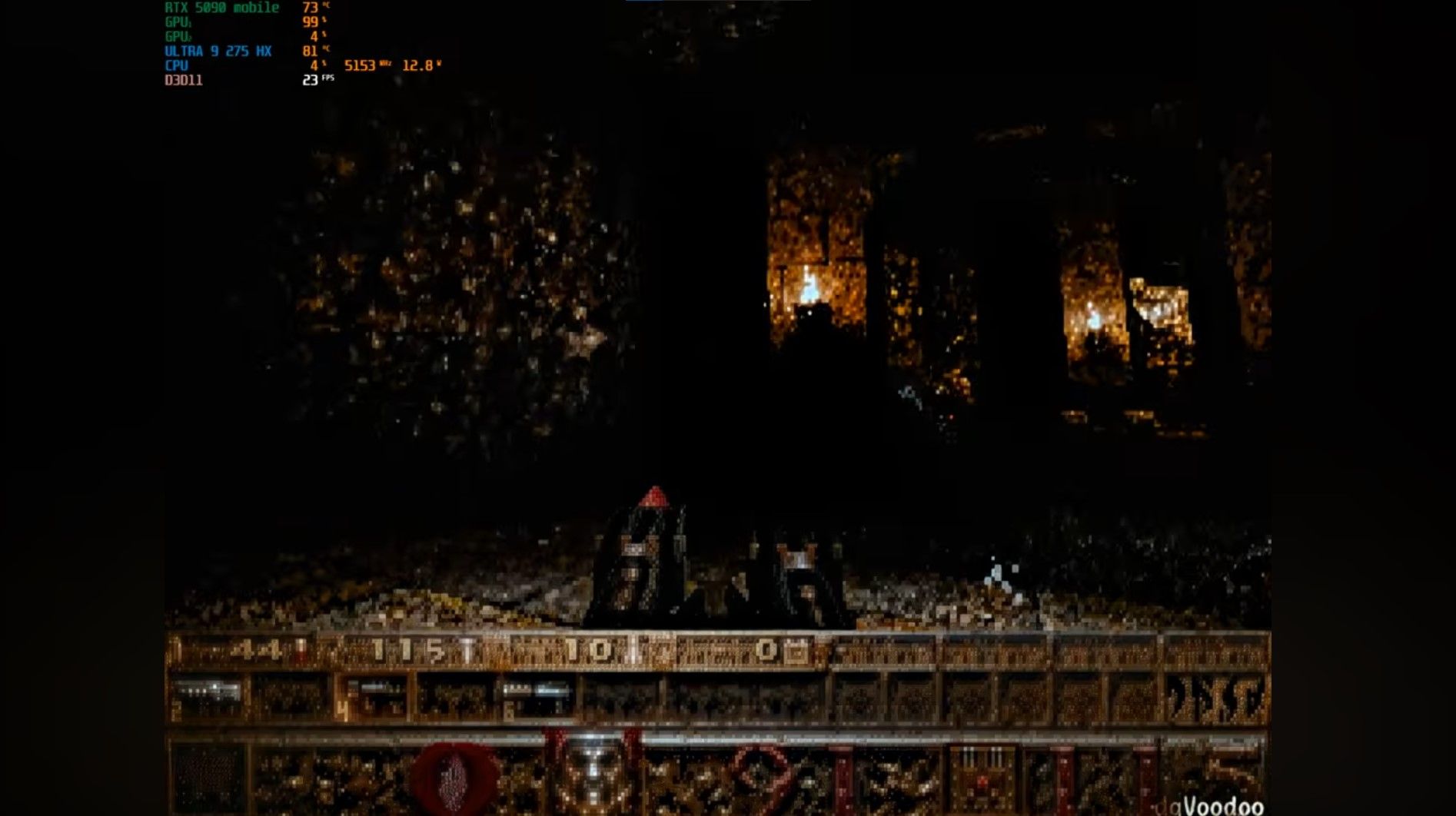
A Ukrainian DLSS 5 experimenter is back at it again, this time testing the original Quake game. It’s running as a post-process, not natively integrated into the game engine, using 4x Multipass to enhance the effect, but it doesn’t look so good.

Valery Kryzhanovsky has posted multiple videos running DLSS 5 on games it was never meant to be used for, nor were the games built with AI upscaling and image enhancements in mind. We previously covered a few of Valery’s projects, running DLSS 5 on 2D games like Duke Nukem and Pac-Man, resulting in weird and cursed images.

However, this time Valery uploaded a video of it on the 1996 Quake, considered to be the very first true 3D FPS in history. Valery explains in the description that the game is not running the leaked DLSS 5 build natively, but as a post-process using ReShade through RenoDX to play with the parameters and settings and inject the effect on DOSBox’s rendered frame. So it’s an emulated version of Quake with basically an AI filter with the DLSS 5 algorithm over it four times, except it’s running in real time on a game. This is similar to how others have experimented with DLSS 5 on videos, applying the effect on top, like JackSpace’s video to “fix” bad CGI in old movies with DLSS 5.

Before DLSS’ popularity, Nvidia released an RTX demo running Quake II with ray tracing in the game engine to improve the lighting. That demo looked stunning, with realistic lighting and reflections, but DLSS is not ray tracing/RTX; it’s an upscaling technology that runs well on RTX cores. And on top of that, DLSS 5 is not even integrated into Quake’s engine, explaining the terrible results. However, this is a very early build of DLSS 5, and Valery says in his blog that the leaked build is undertrained. I honestly thought it would do better, considering there are more obvious 3D elements for the upscaler to work with compared to the 2D games Valery has experimented with. It seems that it darkens everything so much, possibly because of the sparse distribution of torches and highlights.

This might fare better if DLSS 5 were integrated into the engine, like how Sultim Tsyrendashiev modded ray tracing into Quake's engine, similar to Nvidia's Quake II demo.

Earlier this week, Nvidia announced that it had improved the performance of its DLSS 5 model by 2x, while shrinking its footprint by 24%. The result should be higher FPS while using less VRAM, drastically increasing performance.

Bambu Lab officially teases its first 3D scanner

2026年10月13日 00:15

Bambu Lab has officially teased its S1 3D scanner, ahead of its planned release in November 2026. No details of the product have been released yet, but FCC filings and Bambu Lab’s partnership with SCANOLOGY may hint at the scanner’s capabilities and shared technology.

3D scanners are a niche within a niche, and not necessarily within the 3D printing niche either. 3D scanning is used in many fields, like game asset creation, texture assets, archaeology, prosthetics, and museum archiving; and the rise of 3D printing has created a small but growing demand in the form of reverse engineering automotive and various niche parts. However, because of PC requirements, the intensive and technical scan cleanup, and resurfacing in CAD programs, it remains a small niche; a niche currently being served by brands such as Creality with their CR-Scan line of 3D scanners, Revopoint’s Pop series, mini, and all-in-one MIRACO scanner, and SHINING3D’s Einstar prosumer-level 3D scanner.

Label of S1 3D scanner in FCC filing

(Image credit: FCC)

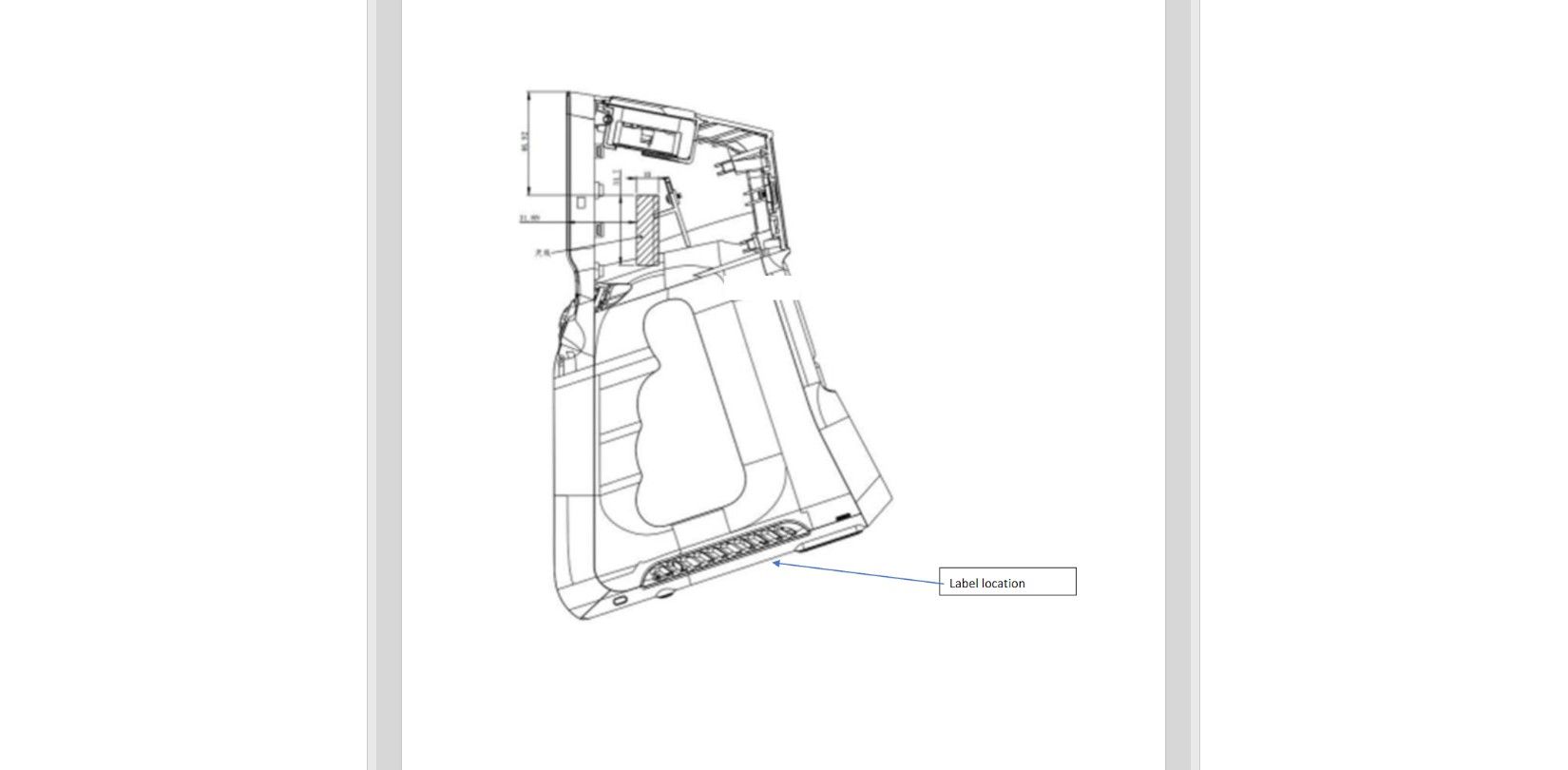
Speculations in Bambu Lab’s own forums found FCC filings for a label and drawing of the scanner. The label shows a 60W-rated input, leading some to speculate a shared platform with SCANOLOGY’s 3DeVOK MT Gen2, a wired composite 3D scanner released in 2026, using both blue and IR lasers, and also has a rated input of 60W. The input rating doesn’t necessarily confirm that they share technology, but it does give a small hint of its potential capabilities, with the number of lasers and potentially a screen dictating the power requirements.

Drawing of S1 3D scanner in FCC filing

(Image credit: FCC)

Considering the flat spot and the top of the handle on the FCC drawings, it looks like there may be a screen, possibly like the 3DeVOK MT Gen2. More importantly, the 60W rating with no hints of a battery on the label may mean this scanner will require a PC to operate. This is often a pain point, as you would either need a powerful laptop to bring while scanning, or use a really long USB cable to your PC. As for the price, the 3DeVOK MT Gen2 is officially priced at $8,299, which is a very high price point, further making it unlikely that they may share a platform if Bambu Lab wants to keep consumer-friendly pricing.

Developer uses Claude to enable Xbox Cloud Gaming on jailbroken PS5s

2026年10月12日 22:46

Brazilian developer RafaelNGP has created his own Homebrew called PSBox Cloud Gaming on his jailbroken PS5 and released it for download on GitHub. The mod, created in part using Claude, allows Xbox Cloud Gaming to run natively on a PS5, with up to 4 DualSense controllers mapped to Xbox for compatibility.

The lines between consoles and PC have been blurring lately, and even more so for the PS5, with jailbreak mods allowing for many new capabilities it was never intended for. We recently covered a story about the original Xbox being emulated on a jailbroken PS5, but a more modern and usable mod is this natively running Xbox Cloud Gaming mod. Gone are the days of switching to your Xbox or PC to play xCloud; just run it on your PS5 — that's what RafaelNGP thought to himself before making PSBox Cloud Gaming.

GitHub - RafaelNGP/xbox-cloud-gaming-ps5: Xbox Cloud Gaming app for PS5 Homebrew
 from r/PS5_Jailbreak

Rafael explains how easy it is to get it running, with just a .zip file download from their GitHub, extraction to a specific folder, waiting for a Homebrew loader to mount the “game,” then launch and sign in as usual. Users are able to sign in using their phone through a code on the TV. It currently supports a 1080p60 stream, but can be upscaled to 4K using the PS5’s GPU with AMD FSR 1 or Anime4K upscalers. The application is still not perfect, with testers reporting video issues such as macroblocking, pink artifacts, and vibration issues on the DualSense controllers, while others are thrilled and having a good experience.

As if emulating the original Xbox and playing xCloud on a PS5 weren’t enough, a comment under the Reddit post asked whether they could use local Xbox Remote Play on it, intending to stream games from an Xbox they already have to the PS5. Rafael said it didn’t work yet, but promptly created an update days later enabling Xbox Remote Play.

The PS5’s library of exclusives may be lackluster, but it seems that the PS5 has more to offer than its own games outside of what Sony intends for it, thanks to the jailbreaking community.

Vibecoder mods Minecraft inside GTA V running natively on an iPhone

2026年10月12日 20:22

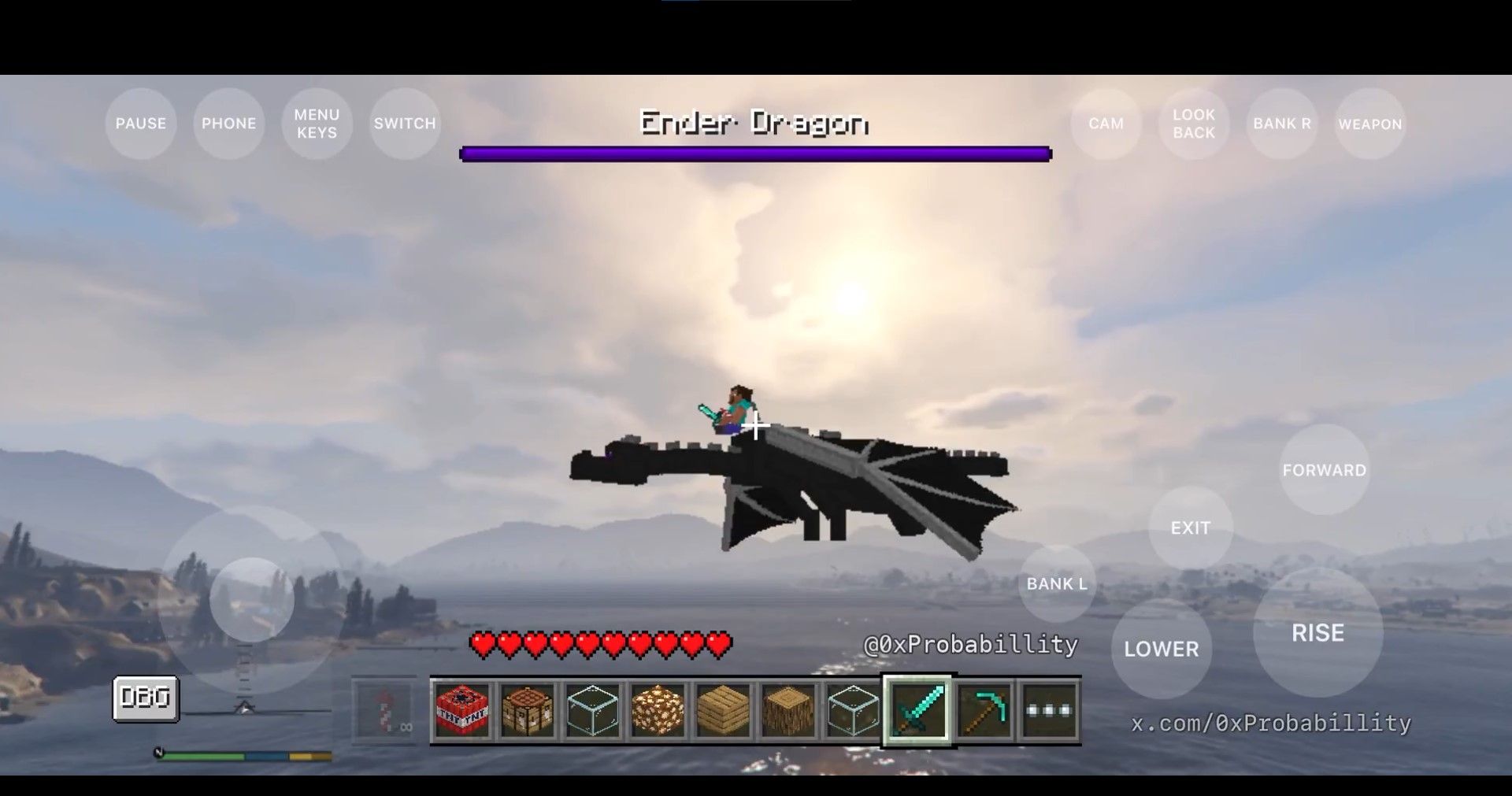
A vibecoder and modder has revealed they successfully launched Minecraft inside a modded iPhone port of GTA V, immediately showing the Minecraft HUD and loading in Steve. This was done using Claude Opus 5.5, doing everything from writing the code to testing the game; 0xProbability claims that they have not touched the phone while Claude successfully flies the Ender Dragon around Los Santos.

Minecraft in GTA V isn’t surprising, considering the vast amount of wacky mods you can put into the game. However, running it on an iPhone, now that’s just absurd. 0xProbability wasn’t the one to port GTA V onto the iPhone; they credit that to C22, a student of EPFL, a prestigious school in Switzerland. C22’s port is impressive; it’s running GTA V natively on the iPhone, based on a version of GTA V that was adapted to run in a web browser, and making that run as a native iOS application instead — even supporting multiplayer. The README states that it runs on iOS 15 or later and even macOS 14 or later on Apple silicon, ideally with 8GB of RAM or more. The port runs at an impressive 50-60 FPS on an iPhone 17 and only uses 1.1GB of RAM, as shown in C22’s video on X, showcasing their work.

gta v running natively on ios (a recent fun project of mine) https://t.co/5k6w06hoLYOctober 9, 2026

As if GTA V on an iPhone isn’t impressive enough, vibecoder 0xProbability modded this version of GTA V with Minecraft. Before putting it on the iPhone, the developer experimented with possibly the same browser version of GTA V with Minecraft, complete with block-building mechanics, not just Minecraft mobs and characters. On one of their posts, they stated: “It’s crazy what you can run in a browser nowadays,” emphasizing how web browsers used to be for simple .io games, while in 2026, you can now play heavy 3D games on them.

You Can Now Fly with Elytra in GTA 5 (Minecraft Edition) on iOS! https://t.co/DD8IIEZcWwOctober 12, 2026

While it would be impressive if the developer manually modded the iPhone port of GTA V himself, it’s also interesting to see how much Anthropic’s Claude Opus 5.5 is able to write code and test it all on its own.

Creator of free Adobe clones unveils open-source Microsoft Office Excel, PowerPoint, and Word replications

2026年10月11日 18:50

Brandon Thomas, developer of ArtCraft, a suite of open-source creative tools meant to replicate Adobe applications for free, has now announced apps to replace Microsoft Office tools such as Excel, PowerPoint, and Word, respectively, named GridCraft, DeckCraft, and WordCraft, that are created with Claude. Thomas has shared his new clones to ArtCraft GitHub, making them free for all to download.

After our previous story covering ArtCraft, we have since discovered that u/ai_art_is_art is Brandon Thomas, a highly talented software engineer with 15 years of experience under his belt. After his ArtCraft project became popular, many criticisms followed about vibecoded software and AI slop, to which Brandon responded on his X account, saying that he does know how to code.

One of the biggest pain points for these software programs is OS compatibility, while Adobe runs on MacOS and Windows, Linux requires additional compatibility layers and Windows emulation to work. One of ArtCraft’s biggest selling points is being able to run all the software across all three platforms while still giving an identical user experience regardless of OS — this is also part of the parity that ArtCraft wants to achieve. While Google provides these tools for free with Google Sheets, Docs, and Slides available on all platforms through a browser, the online-only model takes away the ownership aspect of the software, fearing that one day the tools would suddenly require a subscription and users would not have any say in it.

My guy, I can codeIn college I was building laser games on skyscrapers and cloning the luciferase-luciferin system into plants via agrobacterium-mediated transfectionAI models enable me to work as an entire company. I'm doing 4x better than Google's revenue per employee https://t.co/sGCkdy92QMOctober 9, 2026

Microsoft sits among the most criticized companies for its business practices, similar to Adobe. What was once a one-time purchase now comes as a subscription package with various tools that many don’t need; many even have overlapping features and uses, essentially wasting some of the subscription value. It seems that Brandon Thomas is not only creating open-source alternatives, but is also creating a targeted protest against these practices.

ArtCraft’s Discord community is also growing very quickly, with constant recommendations of other software they would like to see, with CADcraft being commonly discussed among 3D printing and engineering enthusiasts who don’t like Autodesk, similar to Microsoft and Adobe. As many free alternatives as there were before the rampant vibecoding, it seems that this growing collection of tools is not only functional, but a message to the large companies as well. Most of these apps are still far from what they intend to replace, however, so we'll have to see how deep this message cuts.

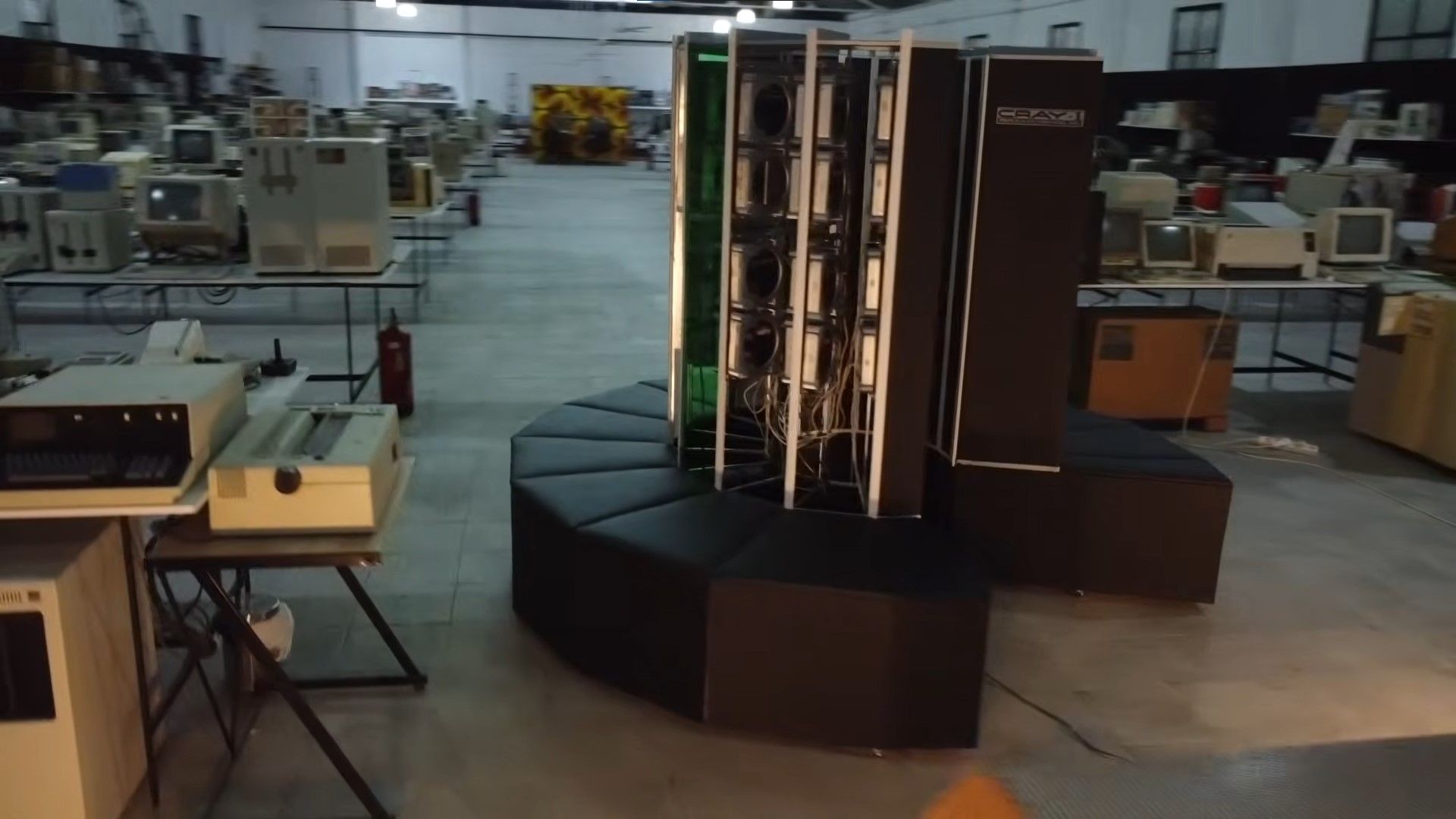
New Cray-1 supercomputer replica built with 30 vintage Mac Minis and packs 1.5 TFLOPS of compute

2026年10月11日 18:20

Spain’s Museo de Historia de la Computación unveiled its 18-month-long project to commemorate the 50th anniversary of both the Cray-1’s first operational use in Los Alamos and Apple’s founding. The replica uses 30 Mac Minis, 25 dual-core i5 units, and five quad-core i7 units from 2012-2014, totaling 70 cores that produce a peak of 1.5 TeraFLOPS; a theoretical 9,375x jump from the original Cray-1's 160 MegaFLOPS. After one quad-core machine went offline, the current reported peak sits at 1.3 TeraFLOPS.

The original Cray-1 is considered to be the first commercially successful supercomputer, with 80 systems sold in its heyday. Science and engineering institutions sought it out to churn through gigantic datasets for uses ranging from intense weather prediction and aerodynamics to nuclear physics and structural analysis, among many others.

It was very efficient at these computations thanks to vector processing, a computing technique we take for granted nowadays. Vector computing made this supercomputer so powerful; while most computers still handled tasks one instruction at a time, the Cray-1 could process chunks of numbers in parallel, saving a huge amount of time.

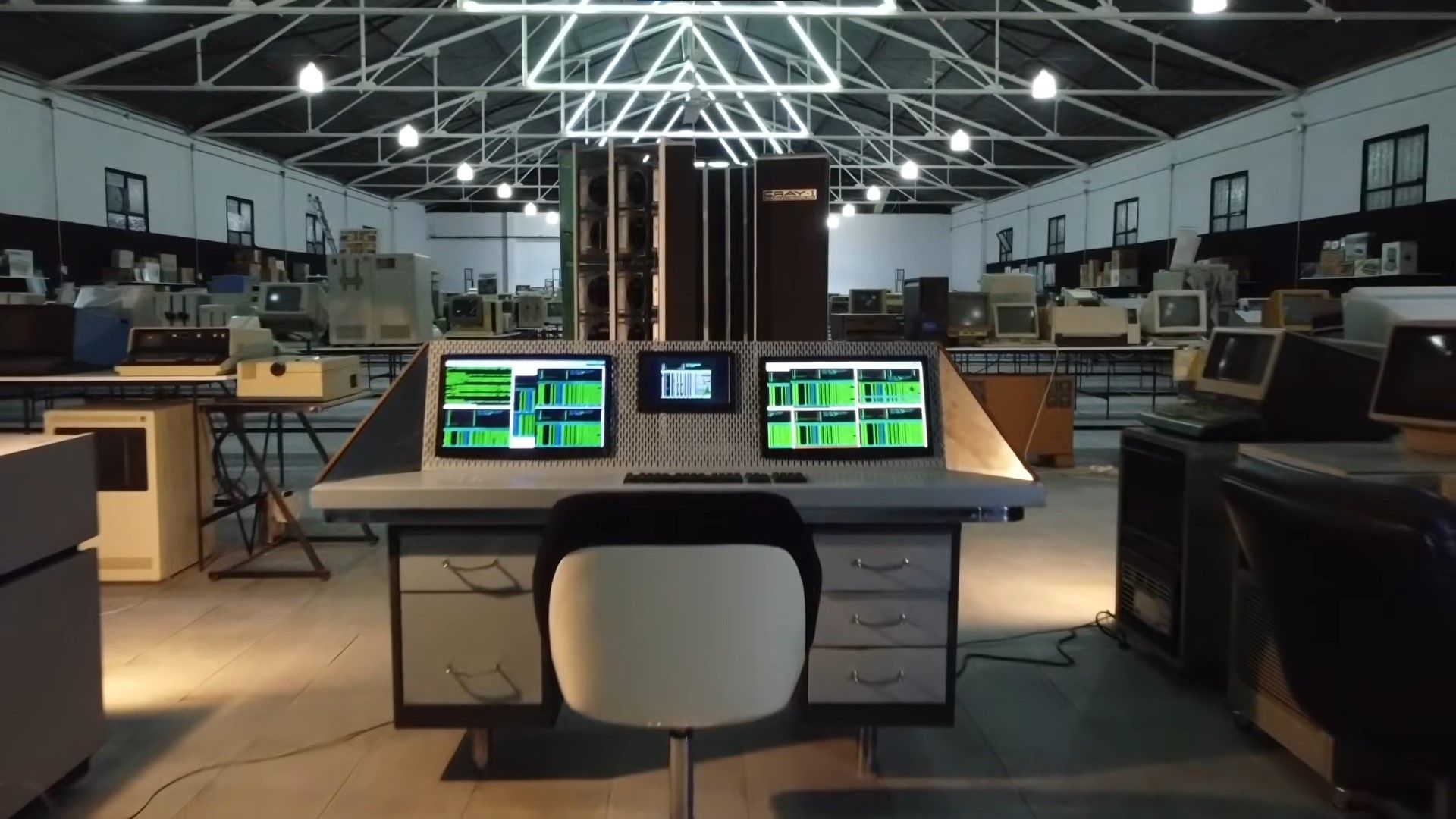
Cray 1 supercomputer and control terminal

(Image credit: Museo de Historia de la Computación)

The replica has 70 cores from the 30 Mac Minis, and of course, vector processing has since become the norm and a standard feature of modern CPUs; jumping from a single core to 70 “modern” cores and 50 years' worth of innovation is what Museo de Historia de la Computación wants to showcase in this project. It is not only a replica, but a representation of how far technology has come.

The original version was cooled by a network of refrigerant lines that led to 20-ton refrigeration compressors in a separate room, while the replica is cooled passively through a convection-tower design and is extremely quiet, with only the Ethernet switches making the most noise. The museum plans to use silent switches to make it even quieter.

For visitors to see it in action, the museum also created a retro-style control terminal, akin to what you’d see in old movies: a large metal desk with a keyboard in the middle and multiple screens embedded into a panel spanning the desk, with angled features flanking the screens, completing the 70s control terminal silhouette.

On the screen, you can see it churning away at large matrix multiplication problems, the sort of thing it’s good at. Surprisingly, the team behind it realized they could run the supercomputer on macOS Mojave, which supports MPI (Message Passing Interface), allowing the instructions to spread across several Mac Minis for parallel computing. That's not the end of it, though: the museum plans to start a crowdfunding campaign and buy 70-80 M4 Mac Minis to fill the remaining slots, aiming to enter the TOP500 supercomputers list.

Plan your trip if you want to see it; it’s on permanent display, and the museum is open to the public on Saturdays from 11:30 AM-2:00 PM, but it doesn’t allow tours without a guide, and it's closed during summer, Christmas, January, and February.

Ukranian modder slaps DLSS 5 onto Pac-Man with 4x Multipass

2026年10月10日 20:00

Ukranian DLSS 5 experimenting YouTube channel Valery Kryzhanovsky showcases the MS-DOS version of Pac-Man with 4x Multipass in four different rendering modes. The video shows weird and glitchy effects, with some rendering modes completely removing green Inky’s eyes and the dots.

This cursed experiment is another attempt at putting DLSS 5 in games it wasn’t designed for, nor are the games designed to use such upscaling technology. While Nvidia’s leaked upscaler has been used for modern 3D games it’s designed for, it has become a meme to run it in games that aren’t even 3D at all, and some attempts aren’t even games at all.

Valery was able to do this by running Pac-Man through the MAME arcade emulator and using ReShade to inject DLSS 5 into the graphics pipeline, and RenoDX to allow the DLSS 5 parameters to be tweaked. Valery emphasizes that this is not native, and of course it isn’t; the game was never designed to accommodate anything like it — that’s why it needed to be injected externally.

Valery elaborates why 4x Multipass is needed in his blog post, saying that 1x basically does nothing for some older games. Multiple passes are needed in order for the changes to stack up, stating that this usually makes it look bad, but in some cases, photorealism could be achieved. However, for Pac-Man, there is basically no 3D information DLSS 5 could gather. The game is flat, and it has barely any human-like features for DLSS to enhance, except eyes, which is probably why it gave it sunken eye bags or cheekbones, as Valery described in the description of the video. Duke Nukem, however, fared a lot better with the metal environment and occlusion along the walls and ceiling.

In the video, Valery tries out 4 different rendering modes: Natural, Default, Cinematic, and Denoise. Valery describes each mode: “Natural keeps the maze readable. Default decides the ghosts need cheekbones. Cinematic puts Blinky in a film nobody greenlit. Denoise clears the board of everything, dots included. One yellow circle, four ghosts, and four different opinions about what any of them are supposed to look like.”

The video doesn’t state which modes are enabled, but one of the modes definitely removed the eyes from the green ghost, making it look genuinely terrifying, as if it were one of those cursed game Creepypastas. All it needs is some red dots in that hollow chasm, and you’d have a stereotypical 2013 scary meme.

Valery further explains in his blog post that DLSS 5 is still undertrained, lacking temporal context, and is similar to earlier DLSS models. The 150MB DLSS 5 build is only a small peek into what it could be come release date — which will come with a more mature model and likely a larger file size.

Crazed modder straps 360mm AIO radiator to laptop, cuts temps to below 40 degrees

2026年10月10日 19:00

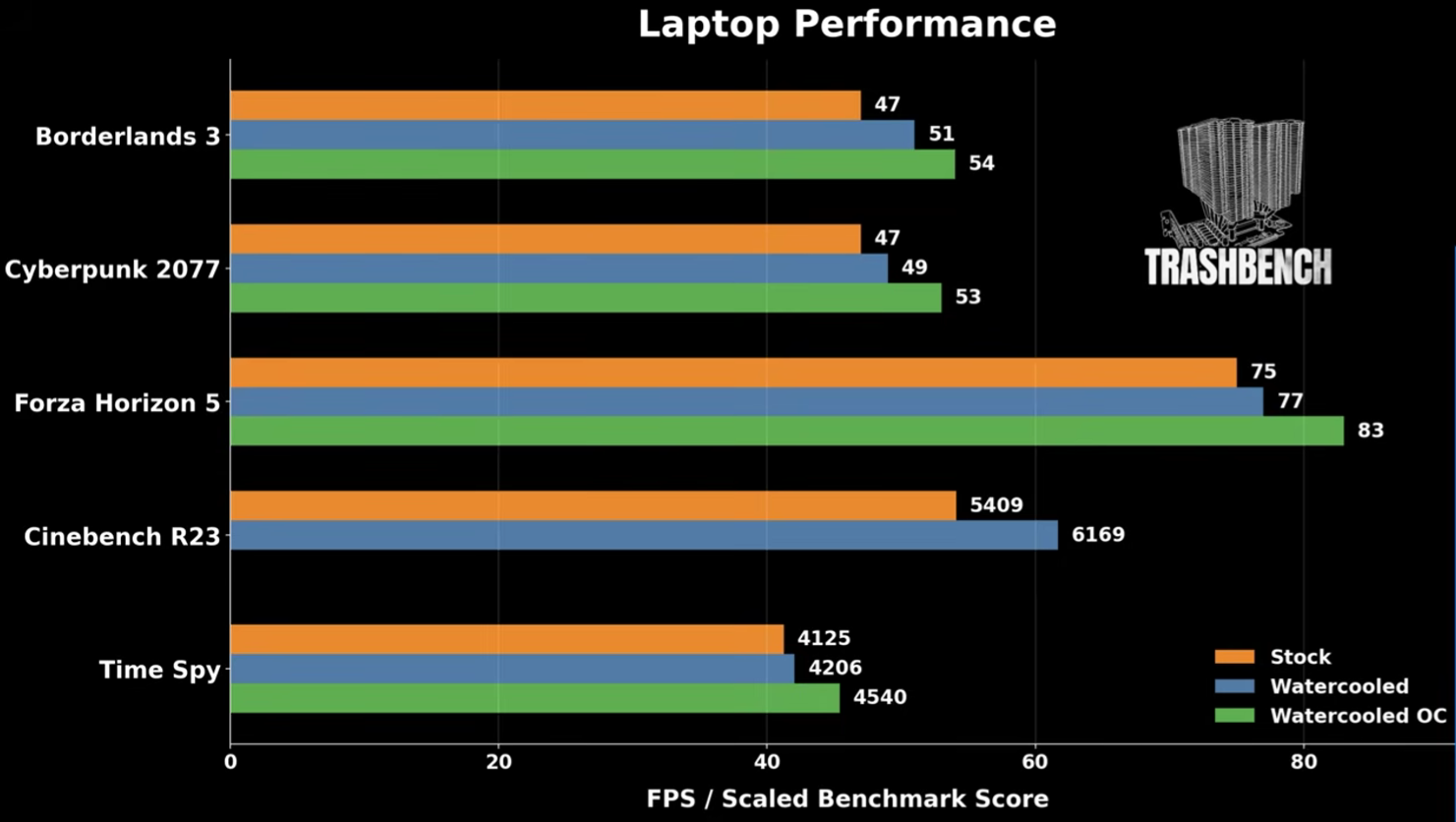
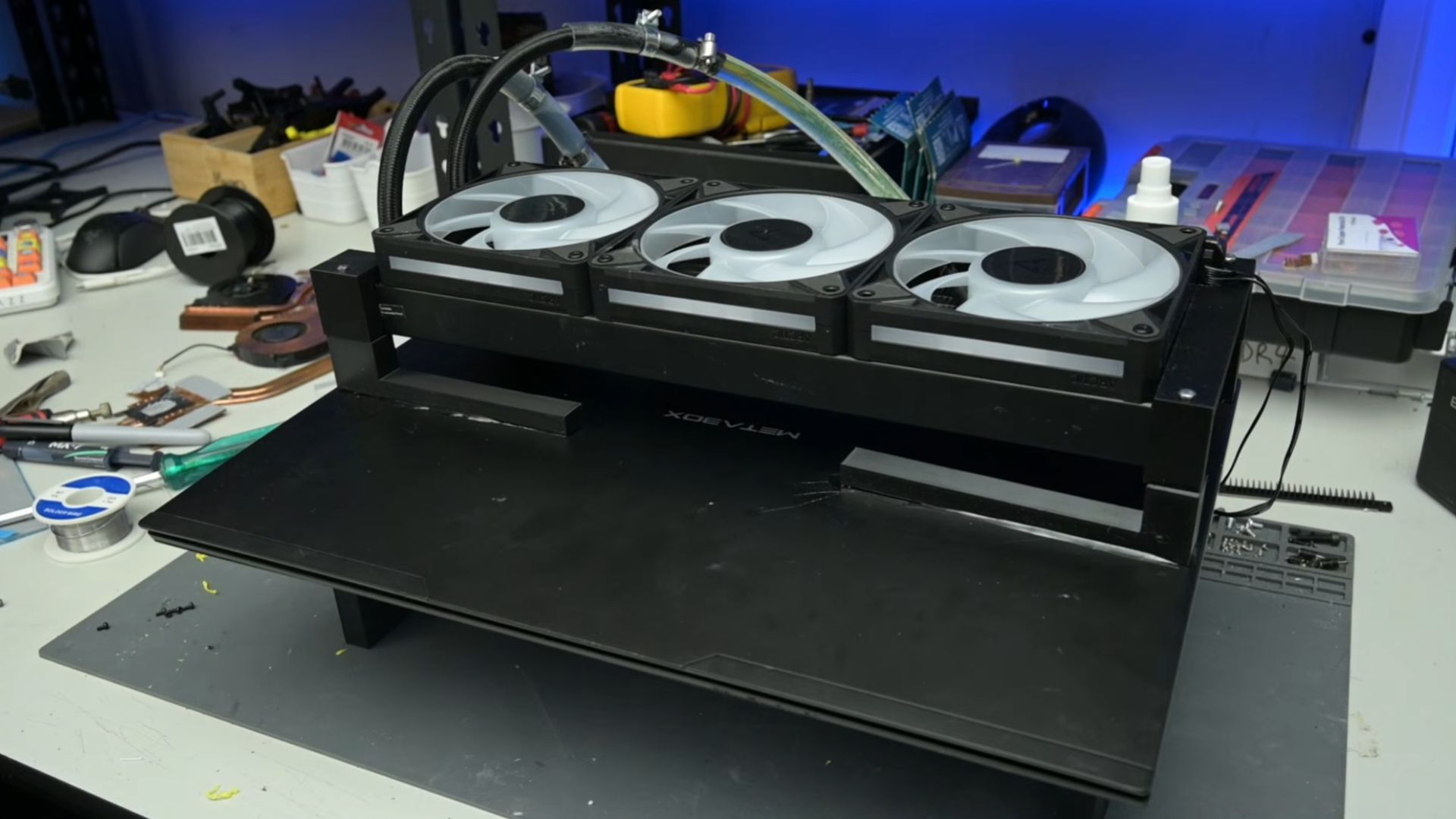
YouTube hardcore PC modder TrashBench attached waterblocks, a water pump, and a 360mm radiator to a Metabox laptop with an Nvidia GTX 1060 and Intel Core i7-8750H. This Frankenstein’s monster of a laptop dropped a whole 60℃ on both the CPU and GPU during benchmarks and stress tests and gained an average of 14% after overclocking.

TrashBench, a YouTuber popular for extreme PC modifications involving various watercooling solutions, decided to “fix” laptop cooling by taking a cut-up 360mm AIO from another project and plans to use it on the Metabox P950EP. Metabox is an Australian brand of laptops rebranded from Clevo, an ODM brand from Taiwan that often gets rebranded in various countries. TrashBench intends to use this laptop for his daughter to play Fortnite on.

The modder intended to use the stock AIO pump along with a second waterblock for the CPU, but after testing whether it would be strong enough to push through a second block, TrashBench realized he would need a bigger pump. He also needed to use another waterblock since the new pump was a standalone one, unlike the waterblock and pump combo on an AIO.

The waterblocks were mounted via a 3D-printed holder, then screwed down to the existing holes previously used for the stock heatpipe and blower cooler. More 3D-printed mounts were used to hold the radiator behind the screen of the laptop, but couldn’t be screwed in because the space between the screen and shell was too small. TrashBench reluctantly used Loctite 2-part epoxy to attach the radiator mount onto the laptop.

That’s not all epoxy was used for, as he didn’t forget about the RAM and VRMs. A heatsink was attached to them, with thermal pads bringing the RAM level with the VRMs to use a single heatsink for each cluster. The VRMs had a dab of thermal paste and a spot of epoxy to keep the heatsink in place, making the modification permanent.

After fully assembling everything and attaching the blocks, pump, and radiator with flexible clear tubes using screw hose clamps, TrashBench tested it for leaks. “I think we’re good,” he says, just before a few bubbles passed by.

The laptop uses 19v, while the pump and fans use 12v, so a DC-DC step-down converter was soldered to the original blower fan’s electrical contacts. Unfortunately, the power source powers on as soon as the laptop is turned on, with no way to make them only turn on under load. So the modder used a toggle switch mounted to a 3D-printed plate, screwed onto the bottom shell that had a large gaping hole cut out of it to accommodate the pump and waterblocks.

To allow the laptop to stand, a 3D-printed riser was screwed to the bottom and is the final touch to the build. As ridiculous as it looks, it impresses with its performance, averaging 60℃ below stock, with the CPU and GPU staying well below 40℃ under full load.

Laptop custom cooling performance

(Image credit: TrashBench)

Conservative but clear performance gains were seen after benchmarks, but with the amount of temperature overhead, TrashBench decided to see how much more he could get by overclocking, and it was worth it, as Forza Horizon 5 went from 75 FPS to 77, and then to 83 FPS after overclocking.

World’s first 3D-printed remote control aircraft with a jet turbine takes flight, aims for Mach 0.8 to beat world record for fastest model aircraft

2026年10月10日 18:00

The Kingchaser, a 3D-printed jet-powered remote-controlled aircraft made out of PETG, PPS-CF, carbon-fiber rods, and aluminum, aims to take the world speed record after its maiden flight, with a target of Mach 0.8. The Mach Initiative aims to break the current Guinness World Record held for 9 years by German pilot Neils Herbrich. The team of graduates from the University of Bath has posted their maiden flight of the Kingfisher to YouTube.

The team started out with their first miniature prototype, the Kinglet, made out of PETG, PET-CF, and some PLA. It didn’t use a jet turbine yet, opting instead for an EDF (Electric Ducted Fan) as a safe and low-cost way to iterate. The Kinglet used a modular design to rapidly prototype the aircraft in sections and replace any broken parts without needing a whole new body.

Once the Kinglet had reached a level of performance the team was happy with, they moved on to the Kingfisher, measuring just under a meter, propelled by the Jetcat P60, a miniature jet turbine engine capable of 63 N · m of thrust, reaching a top speed of 205 mph (330 km/h). The Mach Initiative stated that this engine is not powerful enough, nor is it intended to break the record, aiming solely to achieve flight with a jet engine. The team had to make some major design changes from the Kinglet due to the larger size and much higher forces the aircraft would have to endure. The Kingfisher is still also made mainly out of PETG, with the housing of the engine out of annealed PET-CF. The engine is held in place by aluminum hardware, with the rest of the aircraft being reinforced by an aluminum skeleton.

The engineers initially intended the Kingfisher MK2 to be the aircraft that would house a 150Nm jet engine to break the record, attempting to hit 614 mph (988 km/h), leaving the world's fastest electric drone (434 mph) in the dust. However, they decided to make a new aircraft that was 20% larger than the Kingfisher and called it the Kingchaser, with significant changes to the design.

The 20 lb (9 kg) Kingchaser still uses mostly PETG for its external construction, but instead of annealed PET-CF for the engine housing, they switched to PPS-CF, as annealing the larger housing caused warping, possibly due to uneven heating. The PPS-CF is also skinned with a few layers of carbon fiber, further reinforced with aluminum and steel to mount the engine. They also put titanium exhaust sheets and aluminum tape to shield the print from the engine’s heat. The aluminum skeleton running through the PETG body has also been replaced with carbon fiber rods instead to save more weight and use fewer custom-CNC machined parts.

For the electronics, they have a dedicated flight control and avionics member who works on the electronics. The Kingchaser has a fully instrumented avionics system to collect as much telemetry from the aircraft as possible; it is also equipped with an FPV system for better piloting at speed. To control the aircraft, 70 kg-cm (5.06 ft-lbs) high-torque servos were used on the elevons, as it would take a considerable amount of force to move those flaps at speed.

There is currently no announcement of when the record attempt will be made, but you can keep up with The Mach Initiative’s entertaining build logs on their YouTube channel.

Bambu Lab’s 3D printing patent application for a new heatbed design may improve peeling issues

2026年10月8日 22:11

Shenzhen Tuozhu Technology, Bambu Lab’s parent company, has filed a patent application in the U.S. for a new heatbed design, which was published on September 10, 2026. This design aims to heat a printbed more evenly, reducing issues with prints as commonly reported by many users of various 3D printer brands. The patent describes the construction, heating method, and its claim of better adhesion to improve print quality.

The abstract of patent US20260264331A1 states: “The heated bed comprises a heated bed body, a heating unit, and a bottom case, wherein one end of the heating unit is configured to be electrically connected to one end of a power supply, and the other end of the heating unit is configured to be electrically connected to the other end of the power supply; the heating unit is disposed between the heated bed body and the bottom case. The heating unit is attached to a surface, proximal to the bottom case, of the heated bed body, and the heating unit is configured to heat the heated bed body. By implementing the present application, the adhesion capability of the print panel can be improved and the print quality can be improved.”

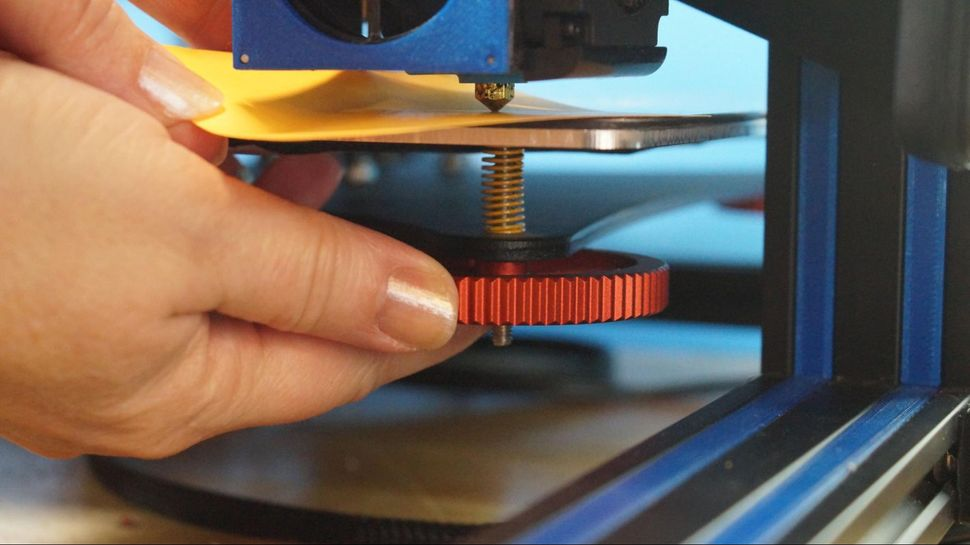
It’s hard to imagine from the abstract alone, but the patent’s sheets visually show us what Bambu Lab is trying to achieve, and the claims tell us more details. The current heatbeds use a laminated heating sheet, adhered to a sheet of aluminum with magnets to hold a build plate. Bambu Lab’s new design wants to replace the laminated heating sandwich with a “heated bed body.” Looking at FIG. 3 of the patent, you can see what looks to be a monolithic heatbed with a machined channel where the heating element will run through; claim 5 describes the recess’ shape resembling the Chinese character “凹,” which also happens to mean sunken or depressed.

Bambu Lab's heating element channel inside heatbed

(Image credit: Espacenet)

As previously described, the heating element loops around inside a recess in the heatbed, but it is one long unit that is connected to a single power supply at each end. The loops reach the corners, potentially reducing peeling for large prints that use most of the bed’s surface; this configuration may also improve the time to reach target temperatures. It does not describe being able to heat zones independently, however.

Machining a recess in a large piece of aluminum is quite costly, in both materials and machining costs, though it is possible for Bambu Lab to create this heated bed body from multiple pieces, possibly from multiple layers of aluminum sheets to avoid using large and expensive billets.

Besides the new heatbed, included are claims describing a 3D printer. It describes a fairly generic CoreXY 3D printer, but don’t panic; this doesn’t mean every brand is suddenly going to infringe on this patent. The claims describing a 3D printer are tied to the heatbed design, so it would take a printer that has Bambu Lab’s patented heatbed design to potentially fall within the patent’s scope — the PCT application is still pending, however, so the patent cannot be enforced yet.

If the patent does get granted and the performance is superior to the current heatbed design, this could potentially mean Bambu Lab would be tempted to charge more for their replacement heatbeds and possibly the printer as a whole. In the meantime, there is no information on the performance of this design, so we will have to wait and use a bit more glue on our buildplates.

❌
❌