阅读视图

发现新文章,点击刷新页面。
✇Tomshardware

Russian Starlink rival flounders after entire batch of satellites fails to reach operational altitude — many of the 16 launched hit less than half their 870km target, and two are already falling back to Earth

The entire second batch of Russian Rassvet satellites have failed to reach their target operational altitudes, reports the U.S.-based Institute for the Study of War (ISW), citing data from live satellite tracker N2YO. They were supposed to reach an operational altitude of 870 kilometers, but “many of these satellites ended up at altitudes between 300 and 400 kilometers, and some are experiencing orbital decay,” notes the source. Moreover, two of the second batch are already on their fiery return journey to Earth.

We’ve been watching the progress of Rassvet, the Russian homebrew alternative to Elon Musk’s Starlink, with some interest in 2026. Russia accelerated its state-funded satellite internet development after access to Elon Musk’s solution was removed, when a new whitelist user-access system was implemented (after some prior ineffective Russia-blocking efforts).

Developed by a private aerospace outfit called Bureau 1440, the Russians aim to expand the Rassvet constellation to 900 satellites by 2035. There’s still a very long way to go to hit that target. In March we reported on the launch of the first 16 Rassvet satellites. In June we followed up with news that one of them, dubbed ‘Object 4,’ had dropped out of orbit already. The ISW now says that only 12 of the first batch actually reached their anticipated altitudes. Running at lower altitudes will mean reduced lifespans as the lower-altitude satellites require more fuel.
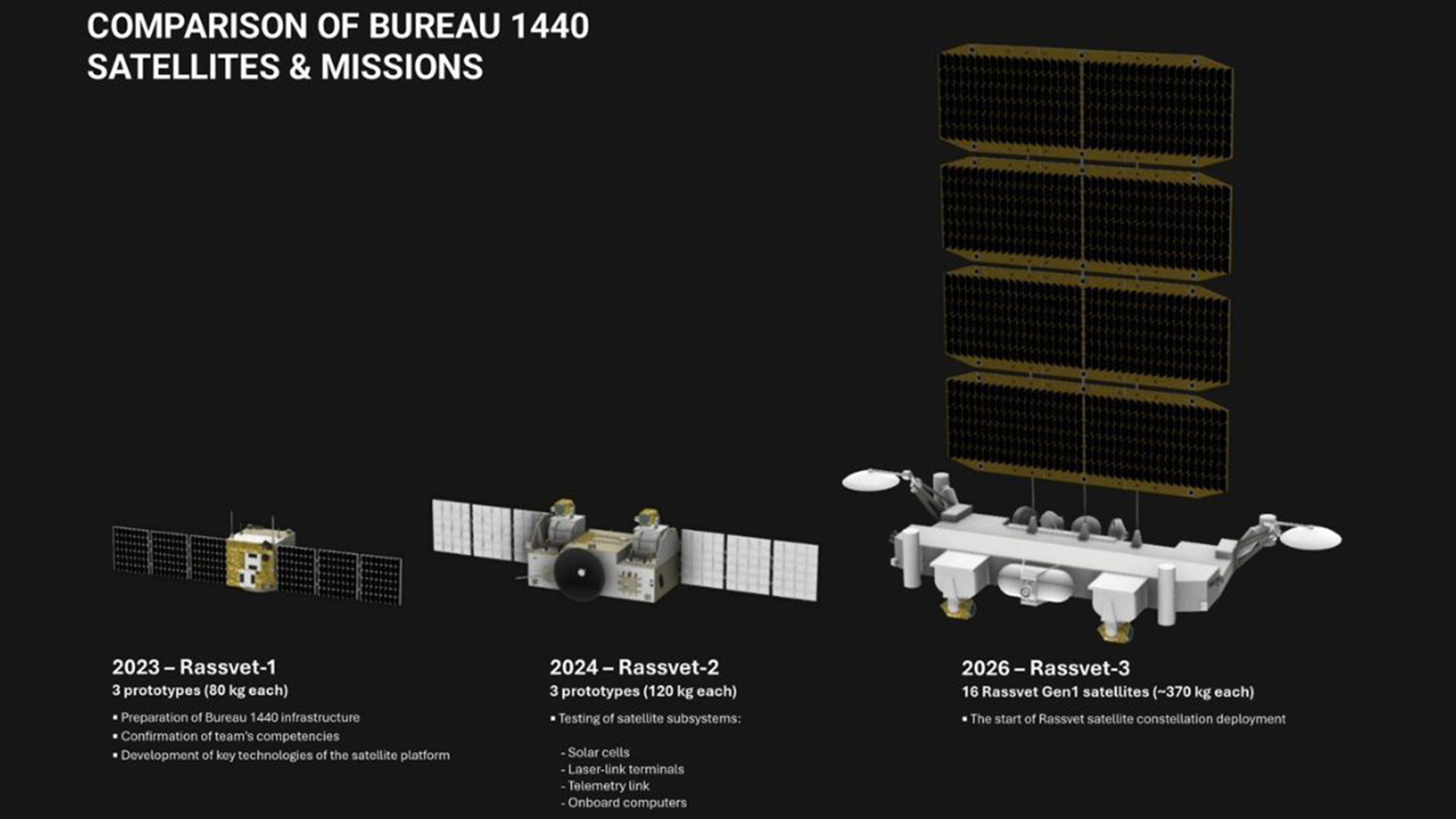
Russian ‘Starlink Rival’ established with 16 satellites launched

A single Rassvet-3 satellite is quite a chunk of metal, weighing in at 370kg (~815 pounds). (Image credit: Bureau 1440 )

The second set of 16 Rassvet satellites was launched in mid-June. Reports indicate that none of the second batch have reached their anticipated altitudes, so things don’t look good for this project. The ISW reckons that Russia will need at least 200 to 300 fully operational Rassvet satellites to achieve stable connectivity over Ukraine 24/7. Rassvet as it stands offers two up-to-90-minute connectivity windows a day over Ukraine. Meanwhile, Ukraine’s strategists surely have Russian satellite production and launch facilities on targeting lists. It looks like Russia’s interim target of 250 operational Rassvet satellites sometime in 2027 will have to be revised.

✇Tomshardware

Europe expands its Starlink rival to 348 satellites as IRIS² moves into implementation — €15.6 billion network will boost EU government capacity by 60%, with launches starting in 2029

The European Commission and the SpaceRISE consortium signed an implementation agreement on Friday, August 7, to roll out Europe’s IRIS² satellite constellation, moving the project from the planning and negotiation stage into full-scale deployment. According to an official press release, the agreement adds 66 satellites to the planned constellation, bringing the total to 348 — 330 satellites in low Earth orbit and 18 in medium Earth orbit — with first launches targeted for 2029.

The expansion is intended to substantially increase the network’s government and defense capacity. According to the Commission, the revised architecture will provide 60% more secure governmental communications capacity within the EU and 54% more globally. The existing satellites in the baseline constellation will also receive additional functionality and stronger security features, while the 66 new spacecraft will operate in higher low Earth orbit.

IRIS² — short for Infrastructure for Resilience, Interconnectivity, and Security by Satellite — is the European Union's flagship secure-connectivity constellation, intended to give European governments an autonomous alternative to foreign networks such as SpaceX's Starlink and Amazon's Leo. The Commission signed a 12-year concession contract for the program in December 2024 with the SpaceRISE consortium — a grouping of European satellite operators SES, Eutelsat, and Hispasat — which is building and operating the system under a public-private partnership alongside manufacturers including Airbus Defense and Space, Thales Alenia Space, OHB, and Aerospacelab.

Once operational, the multi-orbit network will deliver sovereign, encrypted connectivity to authorized governmental users across EU member states and participating non-EU countries, currently Norway and Iceland, for use in emergency response, critical infrastructure protection, and security missions, with capacity also earmarked for citizens in areas with poor coverage.

When the concession contract was signed in December 2024, IRIS² carried a price tag of €10.55 billion ($12.19 billion), funded by the European Union, the European Space Agency, and the SpaceRISE consortium. The accelerated timeline and larger constellation have pushed that figure higher, with the consortium's partners now putting total planned investment above €15.6 billion ($18.03 billion), drawn from the EU budget for 2028–2034, ESA, the consortium partners, and member states. Several countries have already committed, with Poland and Hungary pledging €656 million ($758 million) and €500 million ($578 million), respectively, while Spain has announced between €1.6 and €2 billion ($1.85–2.31 billion).

IRIS² is frequently framed as Europe's answer to Starlink, as they are both satellite constellations aimed at providing connectivity to dead zones. However, the primary purpose of the 348-satellite-strong constellation is more niche. The EU wants an independently controlled communications system — mainly for government and emergency use, but also for civilian applications — that can remain available when terrestrial networks fail, or when access to foreign-operated satellite systems becomes politically or strategically uncertain. On the other hand, Starlink’s growing 10,000-satellite constellation is a mainly commercial, privately owned company selling broadband to consumers worldwide. It is now also running satellite-to-phone internet services through Starlink Mobile.

✇Tomshardware

Intel's proposed orbital data centers would manage thousands of simple LEO satellites —two-tier network puts the brains of satellite constellations in higher orbit

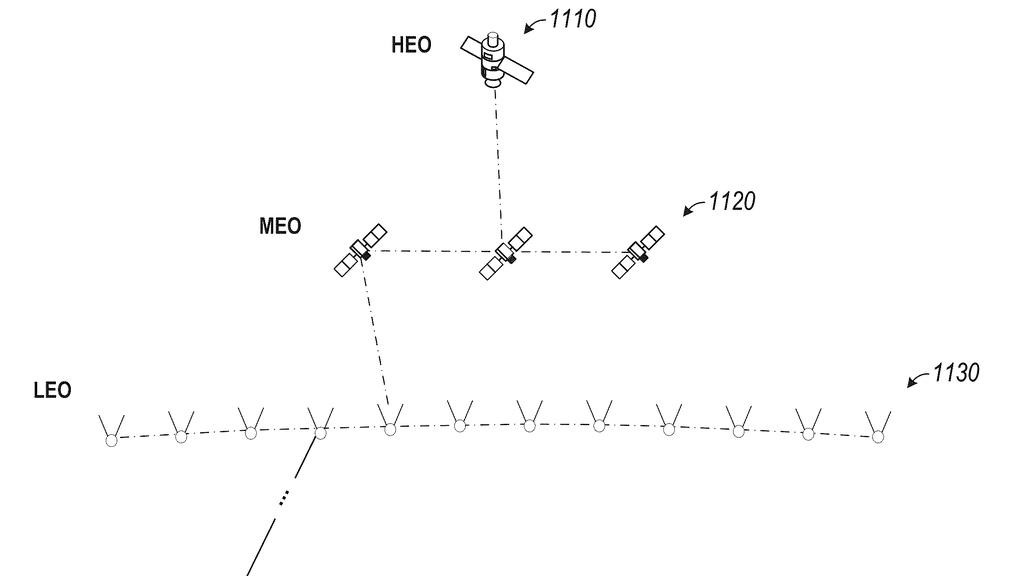
An Intel patent application published on August 6, spotted by Patentlyze, describes an orbital data center architecture that moves some of the computing used to operate massive satellite constellations off the ground and into space. The architecture proposes a two-tier satellite network in which a small number of more powerful satellites in higher orbits manage large constellations of relatively simple satellites in low-Earth orbit, handling much of the computing and constellation coordination normally performed by data centers and network operations centers on the ground.

The application, US 2026/0230175 A1, is a continuation of an earlier Intel filing that was granted as US 12,542,604 B2 in February.

Intel’s proposed architecture is a different proposition from the orbital AI data centers now being pursued by companies such as SpaceX and Google, which aim to move AI compute itself into low-Earth orbit. SpaceX’s planned AI1 satellite and Google’s Project Suncatcher both envision running large-scale computing workloads in space, with the resulting data beamed back to Earth over high-bandwidth optical links. Intel’s orbital data centers, on the other hand, are designed primarily to serve the satellite network itself, acting as higher-orbit compute and control hubs for the much larger constellations operating below them.

In large LEO constellations such as Starlink, Telesat Lightspeed, and Amazon’s Project Kuiper, thousands of satellites are constantly moving relative to one another and the Earth. While the satellites perform their individual tasks, the network itself still has to determine how traffic is routed, which satellites and links should communicate, how spectrum is allocated, and how the constellation responds to failures, interference, weather, and other changing conditions. Much of that network planning and control processing is traditionally handled by computers on the ground, with routing and operational instructions calculated at terrestrial network operations centers and then transmitted back up to the satellites.

intel patent orbital data center

(Image credit: Intel)

Intel says that this constant dependency on terrestrial infrastructure delays time-sensitive decisions, increases reliance on ground stations, and makes management harder as constellations grow into the thousands of satellites. Intel’s solution is to move part of that control and compute layer into orbit. Its architecture places more powerful satellites — which contain much more compute and storage capability than the individual LEO satellites — in Medium Earth Orbit (MEO), Geosynchronous Earth Orbit (GEO), or highly elliptical orbits, where they can maintain a broader and more persistent view of the LEO constellation below and take over tasks such as routing, mission planning, scheduling and network coordination without continually sending those workloads back to Earth.

The proposed setup does not eliminate the need for ground stations. It just keeps satellite network control processing in space. Intel specifically describes moving mission planning and scheduling operations into orbit. The company also argues that offloading heavier network-management tasks to a smaller number of powerful satellites could allow operators to build simpler, cheaper LEO spacecraft. Under current architectures, individual satellites still have to actively participate in network-control functions, requiring additional onboard compute and communications hardware. There’s currently no indication that Intel is actively building the satellites.

✇Tomshardware

NASA modded space station's laptops so everyone could use the same charger — standardizing ISS chargers eliminated useless weight and reduced failure points

NASA ensured that all laptops destined for use in the International Space Station (ISS) had the same power connector. Engineer George Roush, who has a certain fondness for space tech, recalled details of this laptop modification earlier this week. Standardizing on a single ‘cannon plug’ meant that instead of requiring a multitude of different chargers, ISS visitors could plug into the onboard DC power outlets in a standard fashion. Roush took the photos shared below during a visit to the NASA Stennis visitor center.

Since you all care (thank you for that, by the way) here's the answer: That's not an ethernet port at all! It's a modem port! Modem ports are useless on the ISS. So, NASA replaced this useless port with a new power port. Taking 9 different laptop chargers into space sounds… pic.twitter.com/ZLcqcEOHVfAugust 2, 2026

Laptops destined to be used on the ISS would have their modem ports removed and replaced by the cannon plug you can see in the engineer’s photos. Of course, modem ports would be useless on the ISS, so that’s why they would be replaced with this modification. In space, every gram, every connector, and every failure mode matters, which makes this power standardization a smart move.

Sources indicate that Lockheed Martin was contracted to make these modifications to the ThinkPads and other machines that ended up being taken to space. Roush also discusses networking/comms on the ISS, which relied on the MIL-STD-1553 system, rather than Ethernet.

Laptops with built-in telephony modem ports certainly date this story. However, we must remember that the ISS was constructed in the late 1990s when modems were still essential for PCs. The first crews docked in 2000.

Original web sources are vanishing

When refreshing his knowledge about this laptops-in-space mod, the space enthusiast and engineer was struck by another realization, which he found troubling. The NASA Stennis visitor center had barely any information about the laptops or the cannon plug modification that was on display.

Turning to some online resources he remembers referring to previously, Roush noticed a lot of them had disappeared. “The old internet is dying, and with it, we risk losing a lot of useful history,” said the engineer. “I fear that the false belief of the 'eternal' internet will cause otherwise recorded history to be lost when the servers shut down.”

Though some resources may still be able to be unearthed via the Wayback Machine, it seems perilous that so much web history is archived by a charity (The Internet Archive). In May, we reported that the internet is getting harder to archive because the AI boom has caused a storage crisis, with both NAND and mechanical drives facing shortages. This means skyrocketing storage bills to support the activities of the Wayback Machine.

HP replaced all the ISS laptops in April 2026

The astronauts in the ISS aren’t still using old modded laptops like the one showcased in the NASA Stennis visitor center. The latest updates came in April this year, with over 100 HP Z Workstations packing a mix of Core Ultra 9 processors and RTX Pro Blackwell graphics sent into orbit.

HP talks about putting these PCs through two years of rigorous testing ahead of deployment. We don’t get much in the way of technical info from its release, but again, it was recognized that a single power standard was important. The computer maker supplies universal AC/DC power adapters with its latest crop of space laptops that are specially designed to function on both the ISS and Earth.

✇Tomshardware

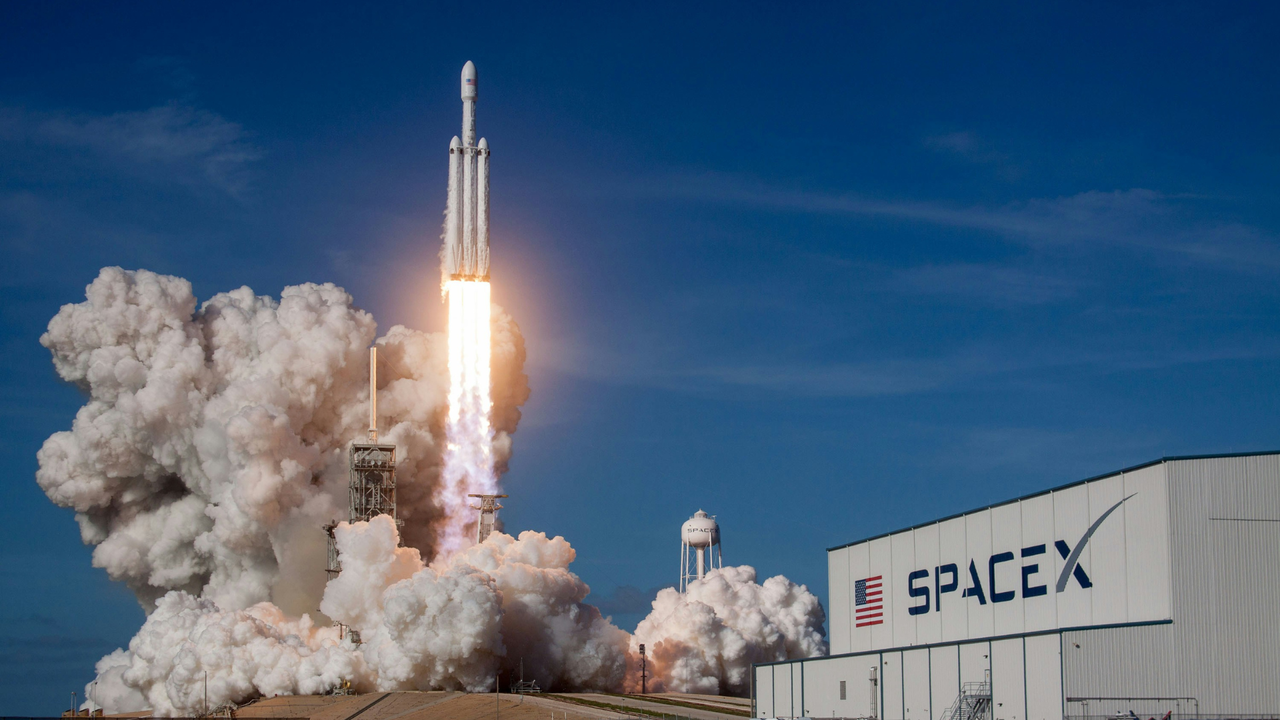
Errant SpaceX rocket stage set to smash into the moon at 5,400 mph, seven times the speed of sound — NASA and South Korean orbiters prepare to track 3-ton TNT impact

The upper stage of a SpaceX rocket that delivered two lunar landers in early 2025 is set to come crashing down on the lunar surface several months after it ended its mission. According to Japan Today, the large piece of rocket debris is expected to hit the moon at an estimated 5,400 mph or 8,690 kph, which is seven times the speed of sound.

While a piece of debris hitting the moon might seem like an inconsequential event for most people, scientists and astronomers are keeping a close eye on it because this will be one of the few times that an object will impact the moon while being observed. NASA’s Lunar Reconnaissance Orbiter and South Korea’s Danuri lunar orbiter will take before-and-after photos of the impact site, while the latter will also fly close to the stricken SpaceX rocket a few minutes before it begins its final descent.

NASA has previously deliberately crashed objects on the moon — it did this with sections of the Saturn V rocket and discarded Lunar Landers to conduct seismic experiments during the Apollo missions in the 70s. It repeated the experiment in 2009 with its LCROSS mission, where it crashed the probe near the south pole of the moon in search of ice.

What interests researchers this time is how the impact will affect the surface of the moon, which is expected to deliver energy that’s equal to about three tons of TNT. Even though this might seem like a huge amount of energy, we likely cannot see the actual crash from Earth. But because the moon does not have wind or an atmosphere, the ejected material could stretch for miles and be visible on telescopes.

“The gravity on the moon is low and there is no wind to blow the dust away,” said Benjamin Fernando of the Los Alamos National Laboratory. “Part of the reason for our interest in this event is to figure out how much of a hazard debris impacts pose to future astronauts.”

Space debris is not a major concern for the moon as it is for our planet at the moment, but this might change in the near future. As the U.S. and China are locked in a space race to see who will be the first one to land on people on the moon again after more than half a century, there will soon come a time when operators cannot just leave their rocket debris in an orbital decay, lest it come crashing down on their settlements and data centers.

✇Tomshardware

Space Force gets first mobile high-powered electromagnetic beam weapon to cripple enemy satellites — plans to deploy 32 ‘Meadowlands’ units to detect, deny, disrupt, and degrade hostile space assets

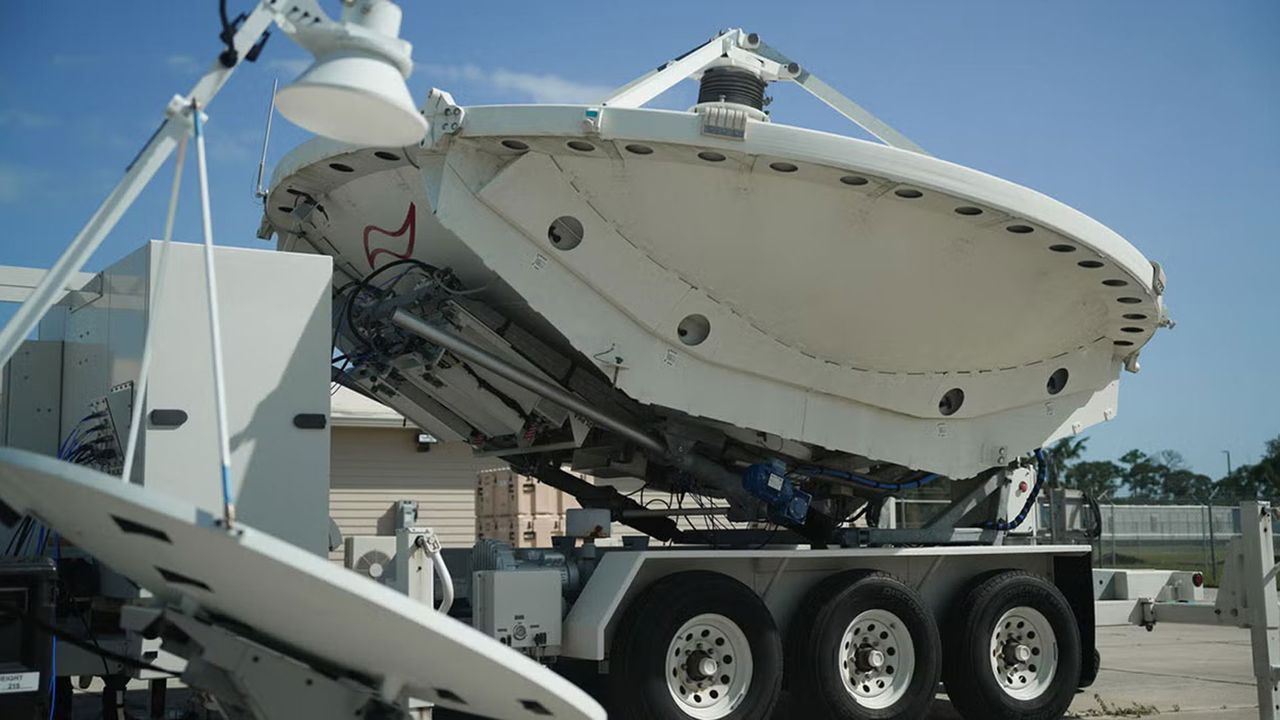
U.S. Space Force Combat Forces Command has announced that the first Meadowlands Counter Communications System (CCS) has been delivered for operational duty. This is a powerful new electromagnetic warfare (EW) device in a wheeled mobile and air-transportable form factor, designed to detect, deny, disrupt, and degrade adversary capabilities around the globe and in space. To be clear, Meadowlands isn’t a laser, microwave, particle, or plasma weapon. Instead, its highly targeted electromagnetic warfare abilities rely on a muscular array of directional antennas and high‑power RF amplifiers.

Our acquisition and operational collaboration wins again – this time for the operational acceptance of Meadowlands. The #USSF electromagnetic warfare platform now better detects, denies, disrupts, & degrades adversary capabilities. More: https://t.co/zRwJrmOd9g pic.twitter.com/WeuUhUitYlJune 30, 2026

“We have exceptionally trained and skilled electromagnetic warfare professionals who are highly motivated and excited about integrating this new Meadowlands capability,” said U.S. Space Force Lt. Col. Ryan Skilling, 4th Electromagnetic Warfare Squadron commander. “This upgraded system enables us to more effectively and efficiently support the joint scheme of maneuver across the continuum of conflict.”

Meadowlands arrives to provide a critical upgrade to the existing Counter Communications System (CCS) 10.2, notes Space Force. The new system’s advances are described as a “huge milestone” in capability, as well as being lighter, more compact, and more easily transportable. Meadowlands is set to be part of a robust toolkit that will help deliver “spectrum dominance” to the U.S. Space Command and Department of War.

The efficacy of systems like Meadowlands has already been demonstrated in joint force applications like Operation Midnight Hammer. In this example, EW systems were used to successfully create a “silence zone” over Iran for hours to ensure secure bomber ingress and egress during that operation. Meadowlands units can operate in both forward austere environments and from secure rear echelons.

In addition to silence zones, typical EW tasks Meadowlands will be used for include interference with enemy satellite functions, and jamming uplink and/or downlink signals. More cunningly it can change or corrupt data packets, initiate feedback loops, and spoof enemy assets.

While it celebrates the arrival of its first operational next-gen CCS, Space Force Combat Forces Command intends to build its Meadowlands fleet to 32 units in due course.

✇Tomshardware

SpaceX vaporizes 260 Starlink satellites in six months using Earth's atmosphere — new environmental concerns emerge over burning 2,700-pound orbital data centers, FCC seeks to exempt satellites from regulations

SpaceX has confirmed in a semi-annual report submitted to the Federal Communications Commission (FCC) earlier this month that it disposed of 260 Starlink satellites between December 2025 and May 2026, intentionally vaporizing them via re-entry into the Earth's atmosphere. According to the report, 176 of these satellites belonged to the first-generation Starlink constellation, with the rest belonging to the second generation. An additional 349 satellites were decommissioned within that 6-month period and will be disposed of in the coming months.

SpaceX’s Starlink operates a huge constellation of over 10,000 satellites as of the time of this report, even as the company plans for Starlink Mobile, which will provide satellite internet directly to mobile phones. However, each of these satellites has a lifespan of about 5 years, a somewhat intentional setup to allow swapping for newer versions, after which their fuel depletes. When this happens, the satellite is programmed to use its remaining fuel to perform a controlled de-orbit. It lowers its altitude and plunges into Earth's atmosphere, where extreme friction completely incinerates 100% of the spacecraft.

The constellation is so large and varied that Starlink reportedly disposes of multiple satellites daily. It removed more than 472 satellite links from orbit between December 2024 and May 2025. Retrieving the deorbited satellites — which weigh roughly 573 to 650 pounds (260 to 295 kg) for first-generation units and 1,764 to 2,756 pounds (800 to 1,250 kg) for second-generation units — is technically impractical and financially unviable, according to the company. Hence, the incineration technique.

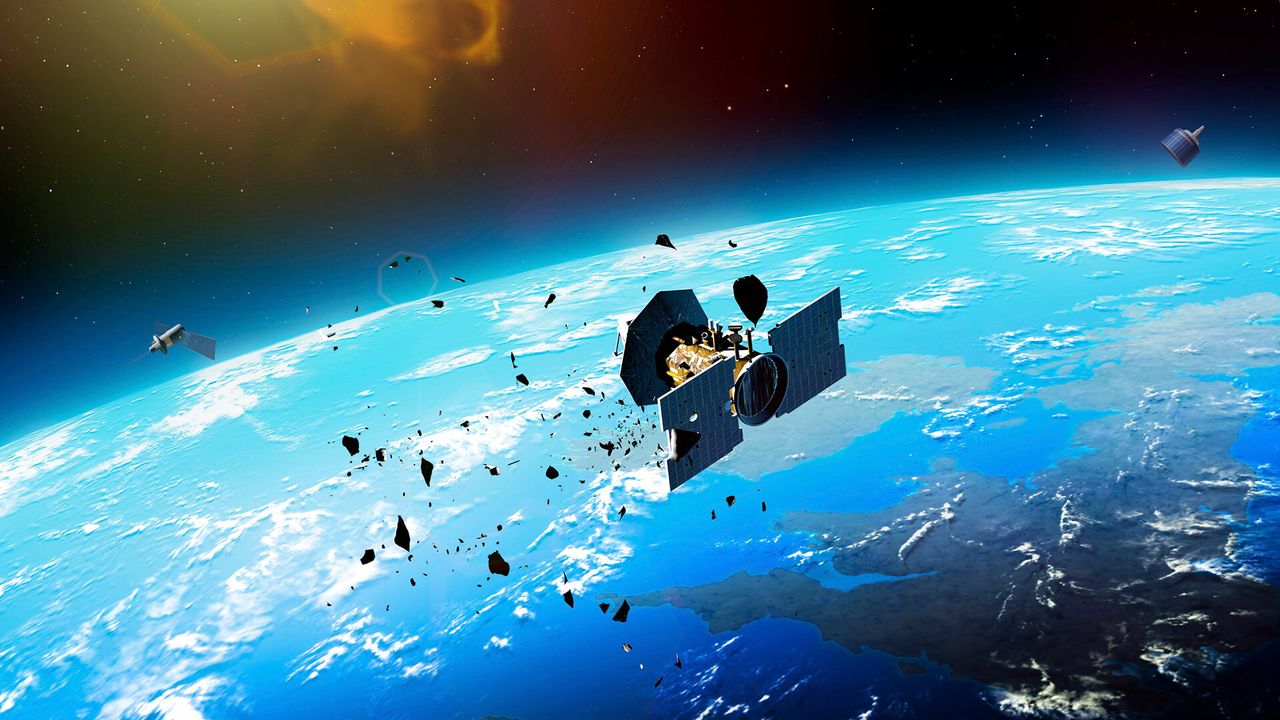
While Starlink’s disposal approach disintegrates 100% of the spacecraft, leaving behind no falling debris, it has raised concerns about its effect on the atmosphere. Researchers have urged further studies and regulations on the environmental impact of satellites. The FCC has long excluded satellites from environmental reviews, reportedly out of concern that regulations might slow the space race. Any regulation would likely be under the National Environmental Protection Act (NEPA). However, the FCC is officially proposing “that space-based operations be excluded from NEPA because they are ‘extraterritorial activities’ with effects located entirely outside of the jurisdiction of the United States.” The proposal is yet to be approved.

SpaceX has a multi-phased goal to eventually deploy up to 42,000 Starlink satellites into low-Earth orbit and obtained FCC approval for 7,500 additional Starlink Gen2 satellites in January. Meanwhile, the company has unveiled plans for its A1 satellite orbital data center, with a 120 kW compute payload. SpaceX is currently building an 11-million-square-foot Gigasat manufacturing facility for these satellites.

✇Tomshardware

Google is allowing users to change their Gmail address, per official Google support doc — experimental @gmail feature rolling out in India first, no official announcement yet

Google is finally adding a much-awaited feature to Gmail, allowing to change your old @gmail addresses without needing to create a new account. After switching to a new Gmail, you'll receive emails on both addresses, and all your existing data will remain intact.

❌