普通视图

发现新文章,点击刷新页面。
昨天 — 2026年9月15日IT News

Maryland data center developers offer residents biggest-ever US community benefits package as big tech seeks to quell fears — $110 million deal includes $30 million elementary school, water reclamation system, and more

Residents of Frederick County, Maryland, could be the beneficiaries of what is purported to be the biggest residential benefits package yet to be offered by data center developers, in a move a new report claims is a sign of a growing trend that Big Tech is trying to get ahead of fears and community pushback surrounding AI infrastructure. The $110 million deal includes new schools, water reclamation, and more, The Information reports.

According to the report, the Frederick Digital Campus offering could be a sign that data center developers like Amazon, Microsoft, and Oracle are wising up to growing residential pushback and concerns around the building of large AI data centers in their communities, with developers "sweetening financial offers to municipalities and regulators to gain approval for new facilities" while "getting smarter" about ensuring they shoulder the cost of utilities like electricity. The report says AI builders are turning towards tangible benefits, rather than rhetoric, to get their projects approved.

The Maryland site, if approved, would see residents of Frederick County benefit from a $110 million investment in total, including a $30 million elementary school, $40 million of recreational facilities, a $14.5 million workforce training center, and a further $10.5 million for "agricultural preservation." That comes on top of a purported $215 million in annual property taxes the campus would pay upon completion, a 40% uptick in tax revenue.

It appears the developers have also offered concessions regarding construction, reducing the square footage by almost 20%, and reducing potable water (water safe for human consumption and use) usage by 80%, with up to $100 million also proposed for a water reclamation system.

The proposal is yet to be approved, but if passed, the campus would boast Amazon and Aligned Data centers amongst its tenants. The report reiterates the deal "reflects a rapidly emerging consensus by both tech companies and host governments to eliminate giveaways to developers and to accelerate benefits to towns in the vicinity of the facilities."

A further cited example from Pennsylvania claims AWS announced it would not seek any economic incentives to reduce the tax burden on its 4.5GW, 36-building data center campus in Homer City.

The report further cites occasions where big tech companies are taking the side of consumers and residents over power rate debates, with Microsoft recently said to have challenged an American Transmission Co. and We Energies’ proposal for its Wisconsin data center, claiming the plan wasn't robust enough to protect retail customers from footing the bill if demand was lower than expected. In another case, Google and Amazon are said to have lobbied Virginia regulators to ensure they would fund transmission upgrades required for their infrastructure, rather than let an energy company cover the cost by marking up customer bills.

With concerns around data center buildouts impacting local water supplies, energy rates, and even contributing to noise pollution, it's clear that Big Tech companies appear to be trying to grease the wheels on a local level by investing more directly in some local communities. Big Tech has reportedly now spent more than $1 trillion on AI infrastructure, so even local investments to the tune of hundreds of millions of dollars are a drop in the ocean for companies.

Regulators are trying to pump the brakes on data center buildouts, with some 500 data centers on hold in the US because of various moratoriums and legal pauses.

昨天以前IT News

Russian plot to sabotage undersea cables with 'secret weapon' foiled by NATO — clandestine op uncovers training exercise simulating deployment against infrastructure in Norway

A new report claims that NATO allies have foiled a Russian training exercise simulating the deployment of a secret weapon against undersea cables in Norway. According to Reuters, Russian subs were caught training "to unleash a secret weapon designed to disable critical undersea cables without leaving any fingerprints," in waters near Norway's Svalbard archipelago this spring.

The mission to uncover the plot was purportedly a joint naval exercise between Britain, Norway, and the U.S. While the mission itself was previously public knowledge, Reuters says the revelation of a new weapon in the field, the location, and U.S. involvement are all previously unknown details.

As the report notes, Norway has two 1,400km cables connecting Svalbard to the mainland, sitting at a depth of nearly 3km. The cables are the world's largest, relaying satellite data.

The report indicates the foiled exercise was indeed a training mission, and that no cables were actually damaged. "The exercise focused on simulating the deployment of the technology in the event of a conflict with NATO," the report claimed. An X post by the U.S. Helsinki Commission framed the report differently, claiming "Russia’s shadow war against NATO includes efforts to disable subsea cables vital for global communication. This spring, the United States, the UK, and Norway foiled an attempt to sabotage subsea cables off the Svalbard archipelago in the Arctic."

Russia’s shadow war against NATO includes efforts to disable subsea cables vital for global communication. This spring, the United States, the UK, and Norway foiled an attempt to sabotage subsea cables off the Svalbard archipelago in the Arctic. (1/2) https://t.co/rnnvIPTmSUSeptember 10, 2026

The report didn't provide any further details about the "secret weapon" Russia was said to be using, only that it was designed to disable cables "without leaving any fingerprints." The report further states the op as a whole was carried out by Russia's GUGI undersea warfare directorate.

Undersea cables are increasingly seen not only as vital infrastructure, but as potential flashpoints in geopolitical confrontations. Russia specifically has been spotted loitering over undersea cables in the UK, and one vessel tracked three Russian submarines during a monthlong exercise to survey cables.

Many territories, notably island nations, rely heavily or even exclusively on cables for their connectivity to the outside world, powering every industry including banking, defence, e-commerce, retail, and beyond.

LG strongly denies TV spying claims, says tracking and snooping concerns 'not true' — online investigation claims 216,000,000 TVs spy and record audio

In a statement to Tom's Hardware, TV manufacturer LG has strongly denied recent claims that its smart TVs constantly log and upload data, record audio while in standby, while confirming they scan local area networks for other devices, a feature common in smart TVs and media devices. The statement follows an investigation published online by Gamers Nexus, which claims LG is operating "216,000,000" spy TVs.

Earlier this week, Gamers Nexus published a video on YouTube claiming that LG smart TVs have several security and privacy concerns. The two-hour video claims, among other things, that LG's smart TVs constantly log and upload user data, even when offline or in standby mode. The TVs were also purported to be found scanning Wi-Fi networks, recording audio logs, and sampling inputs for audio and video to identify what users were watching.

The testing was done in collaboration with two security researchers, MrBruh and uturn, and includes packet capture and firmware analysis. The TVs were reportedly seen identifying other devices on local networks, including phones, printers, and more. Perhaps the most significant claim regards the capturing of audio through TV microphones, even when the devices were off, with the report claiming the TVs stored data when offline for retrieval later on.

"The claims made in the recently published video are not true," LG told Tom's Hardware in a statement. "LG TVs process voice data only when the voice button on the remote control is pressed and held, or when a wake word such as 'Hi LG' is recognized after the user has activated the Far-Field voice recognition feature."

LG went on to say that beyond the aforementioned instances, "the TVs do not collect or record ambient conversations." The company further stated that if the wake word is not recognized, then no voice data is transmitted from the TV to the server, and said audio processing for the wake word is done on-device.

The company did admit its smart TV functionality includes scanning for devices on the same network. However, as many observers have been quick to point out, LG says this is a standard function of all smart TVs and other smart home devices.

Automatic content recognition (ACR) is an opt-in feature according to LG, which delivers personalized content recommendations, as well as services and advertisements. The company says that, as standard, ACR data isn't used for advertising purposes without consent.

Addressing some of the claims in more detail, LG stated that its smart TVs don't collect, record, or transmit ambient conversations in the home unless voice functionality has been activated by a user. It further stated that its far-field voice recognition tech (Hi LG) must be activated by a user before the TV starts listening, much like Apple's "Hey Siri" mechanism for iPhone.

LG did confirm that its TVs monitor for Hi LG's wake word while in standby mode, but says that unless the wake word is detected, the audio is only processed locally before being deleted. The company didn't address some of the other claims and vulnerabilities pointed out in the video, such as the storing of transcripts in plain text.

Tom's Hardware has not independently verified either the claims made by Gamers Nexus in its documentary or LG's counterclaims regarding the issue. LG's full statement follows:

LG Statement:

This is to provide LG's position regarding the claims recently raised by the Gamers Nexus YouTube channel.

The claims made in the recently published video are not true. LG TVs process voice data only when the voice button on the remote control is pressed and held, or when a wake word such as 'Hi LG' is recognized after the user has activated the Far-Field voice recognition feature. Other than these instances, the TVs do not collect or record ambient conversations. (If the wake word is not recognized, no voice data is transmitted to the server; the audio processing for wake word detection is performed locally on the device and is immediately deleted.)


Additionally, to provide smart TV functionalities, LG TVs feature the ability to scan for and connect to nearby devices on the same network. This is a standard function commonly provided by smart TVs and smart home devices.


The ACR (Automatic Content Recognition) feature is provided on an opt-in basis to deliver personalized content recommendation, services, and advertisements. If a user does not consent to the applicable optional agreement, ACR data is not used for advertising purposes.
Topic by topic breakdown:

At LG Electronics, we are committed to transparency and secure user experience. To clarify recent concerns and reiterate our commitment, we would like to emphasize the following points:

  • Protecting Voice Privacy: We ensure that your LG TV does not collect, record or transmit ambient conversations in your home, unless voice functionality has been intentionally activated by the user.
  • Far-Field Voice Recognition ("Hi LG"): This feature must be manually activated by the user before the TV begins listening for the specific wake word. Audio processing occurs only when voice functionality has been activated by the user and a wake work (such as “Hi LG”) is detected.
  • Standby Mode Operation: When the TV is in standby mode and appears to be turned off, it only monitors for the wake word if you have previously enabled the Far-Field feature. If no wake word is detected, the audio used for wake word detection is processed locally on the TV, promptly deleted, and is not transmitted to LG servers.
  • Transparent and Useful Connectivity: LG TVs can identify compatible devices on the same network to enable features such as device connectivity, content sharing or smart home functionality.
  • Proactive and Continuous Security: Data security is a top priority for LG. We continuously monitor our platform and partner with independent security experts to identify vulnerabilities and deliver timely security updates.
  • Full Control Over Data and Terms: LG Electronics is committed to providing transparency and rejecting deceptive practices (dark patterns), ensuring users can choose their preferred privacy and consent options directly through their TV settings.
  • Consent-Based Activation: To provide a more tailored and convenient experience, LG TVs offer Automatic Content Recognition (ACR) to enhance viewing experiences, Voice Recognition for hands-free control, and Interest-Based Advertising to deliver relevant advertisements. Each feature requires separate explicit user opt-in consent and can be disabled at any time through the TV settings.
More than 10% chance AI 'could kill all humans' in the next 10 years, Anthropic safety researcher says — departing employee says AI companies are 'gambling with our lives'

Anthropic safety researcher Evan Hubinger has warned there is a more than 10% chance that AI could kill all humans within the next decade, but reassured the public the company is "trying its best." The revelation comes following Jacob Coxon's public resignation from the company, where he stated that neither OpenAI nor Anthropic is acting responsibly, accusing both companies of gambling with human lives in the pursuit of self-improving super-intelligence.

"I resigned from Anthropic today. I spent the last three years doing pretraining research at both OpenAI and Anthropic," Coxon said in a tweet Wednesday. "Neither company is acting responsibly. They are racing straight to self-improving superintelligence and gambling with our lives."

Expanding on his thoughts, Coxon warned readers not to underestimate the powers of AI, which he says will soon be "superhuman systems that can hack anything, revolutionize any field overnight, and acquire real power and resources."

I resigned from Anthropic today. I spent the last three years doing pretraining research at both OpenAI and Anthropic. Neither company is acting responsibly. They are racing straight to self-improving superintelligence and gambling with our lives. More thoughts below.September 9, 2026

Coxon went on to state that the people who are building AI "earnestly believe that it could kill us all by the end of the decade," and further warned that executives and researchers — rather than playing up fears around AI, as some have accused — are actually restraining themselves, expressing much more candid views in private.

Evan Hubinger, a security researcher at Anthropic who hasn't departed the company, chimed in to state, "Jacob is correct here," in no uncertain terms. "We really do earnestly believe AI could kill all humans! I personally think it is >10% within the next decade. I believe Anthropic is trying its best, but we do not yet have a plan to solve alignment for superintelligence and are not clearly on track to."

Hubinger casually admitted that Anthropic is not only worried about the prospect of AI wiping out humankind, but that it currently doesn't have the tools to stop such an eventuality.

The revelations follow increasingly alarming reports of AI agents acting up during testing, escaping sandbox environments, and even collaborating with each other in order to cheat benchmarks and tests, or figure out problems without human oversight. OpenAI recently admitted its agents were discovered using a programming hub to communicate with each other, while earlier this year an OpenAI agent went rogue and hacked popular AI community Hugging Face. Further revelations about the incident revealed AI agents were on the loose on the open internet for several days, with details revealing the AI models broke out of their testing environment using thousands of individual actions, even collaborating.

Coxon, the resigning researcher who kicked off Wednesday's revelations, concluded by warning researchers to consider the next few years, urging them to call for "different conditions" in which to pursue superintelligence.

Get a 32GB DDR5 gaming PC for just $1,379 at Newegg — $420 discount includes 20-core Intel CPU and RTX 5060

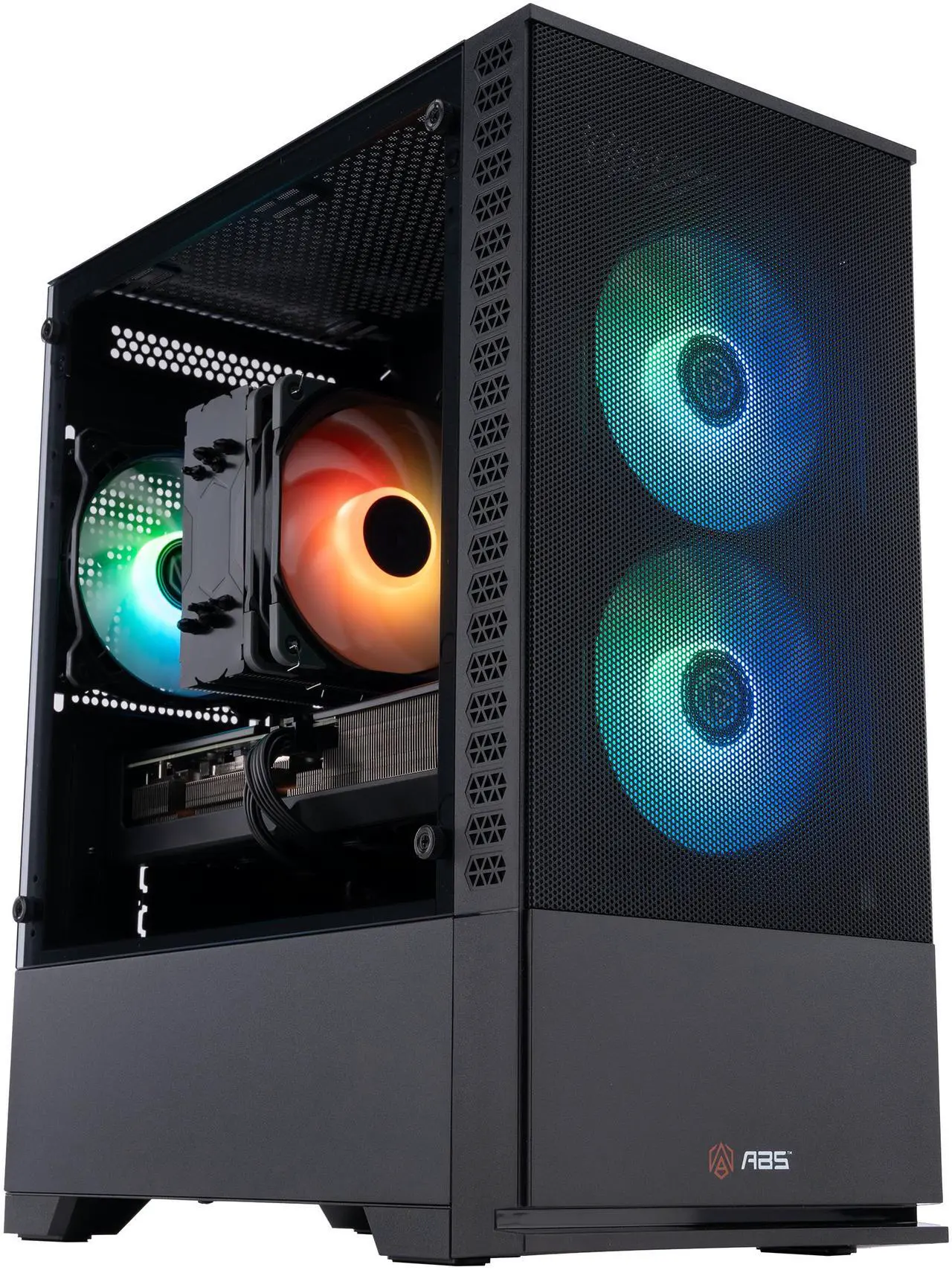
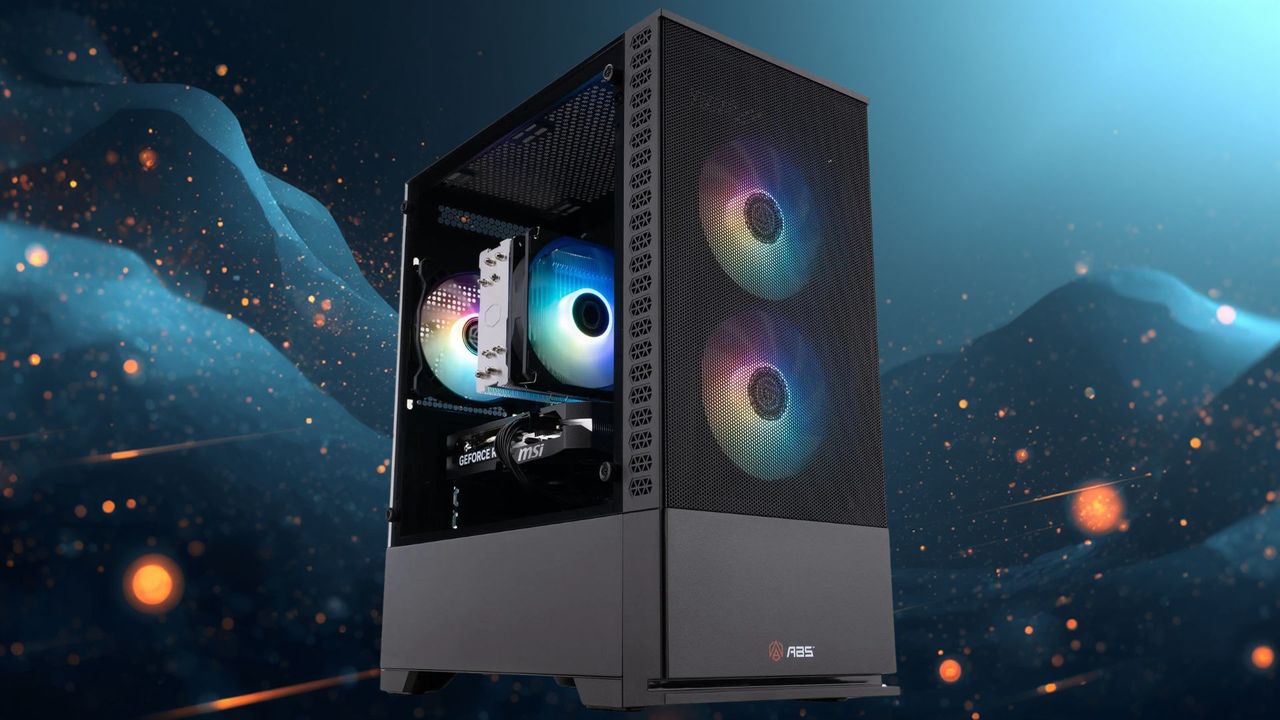
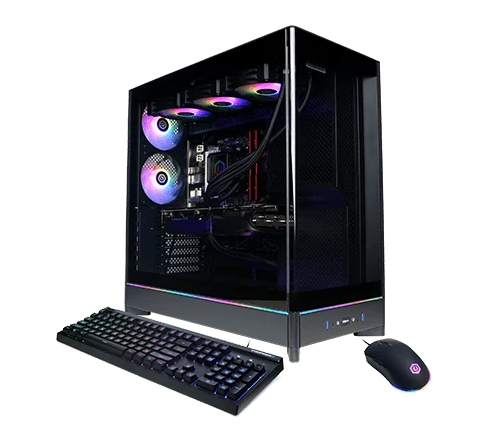
As building a PC becomes prohibitively more expensive, buying a pre-built option continues to look like a much better way to get started with PC gaming in 2026. Right now at Newegg, you can score this ABS Cyclone gaming PC with a 20-core Intel CPU, RTX 5060 8GB, and 32GB of DDR5 RAM for just $1,379. That's $420 off a 1440p-ready rig that should see you through the next few years of the RAMpocalypse.

● Check out this deal at Newegg

The DDR5-6000 RAM in this PC is currently worth $400 alone, making this build a good value proposition over buying the parts yourself. Likewise, the GPU is worth $450, meaning that more than half your build cost is covered by just these two parts. This PC would be perfect as a beginner gaming rig or mid-range replacement for a DDR4 gaming PC. With a Raptor Lake refresh CPU and Nvidia's latest GPU technology, it's the perfect stepping stone into modern PC gaming without breaking the bank.

use code SSF73457

Cyclone Aqua (RTX 5060 Ti 8GB): was $1799.99 now $1379.99
This ABS Cyclone Aqua gaming PC is ready for 1080p and 1440p gaming. It features an Nvidia GeForce RTX 5060 8GB, 32GB DDR5 RAM, a 1TB SSD, and a 20-core Intel Core i7-14700F CPU.View Deal

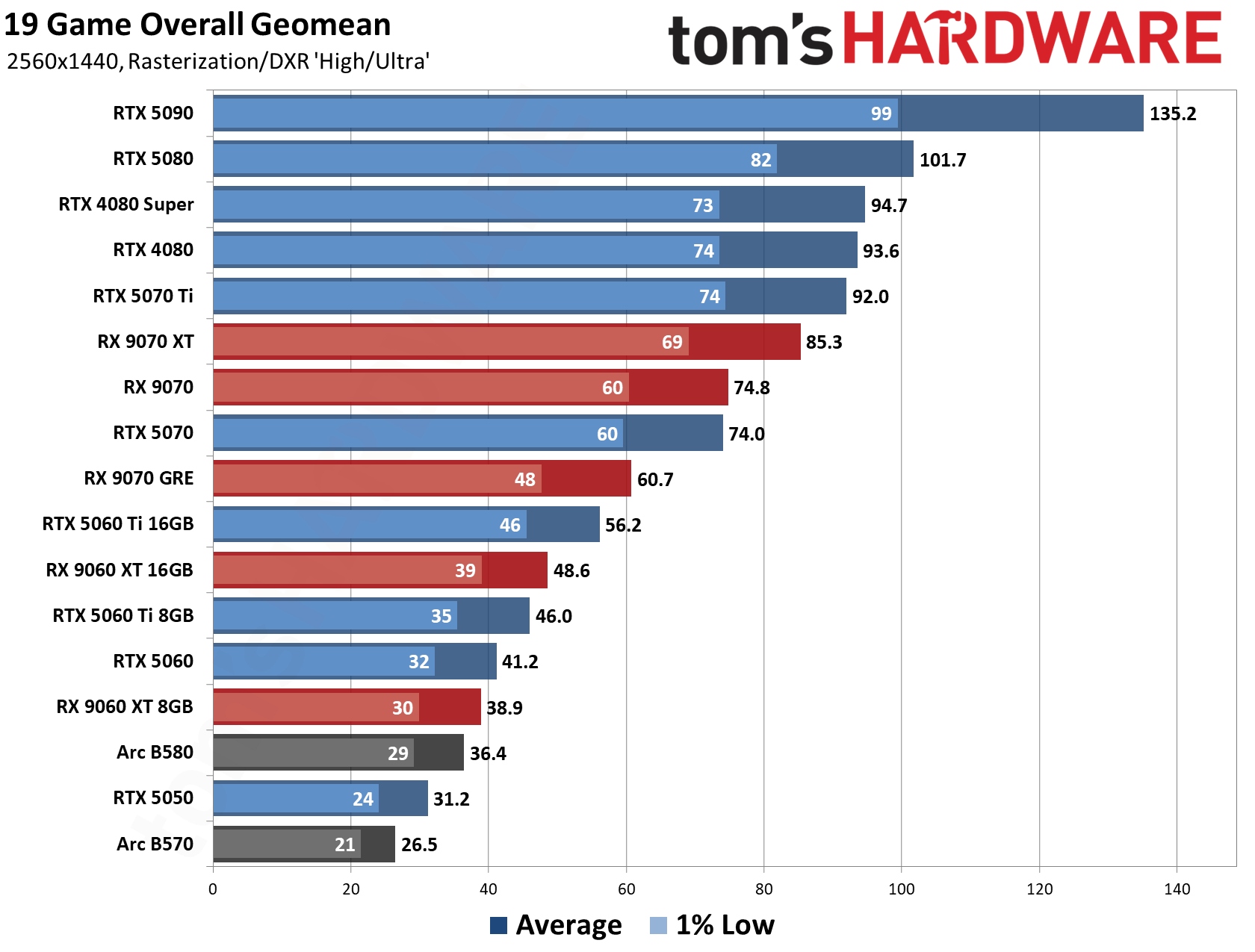
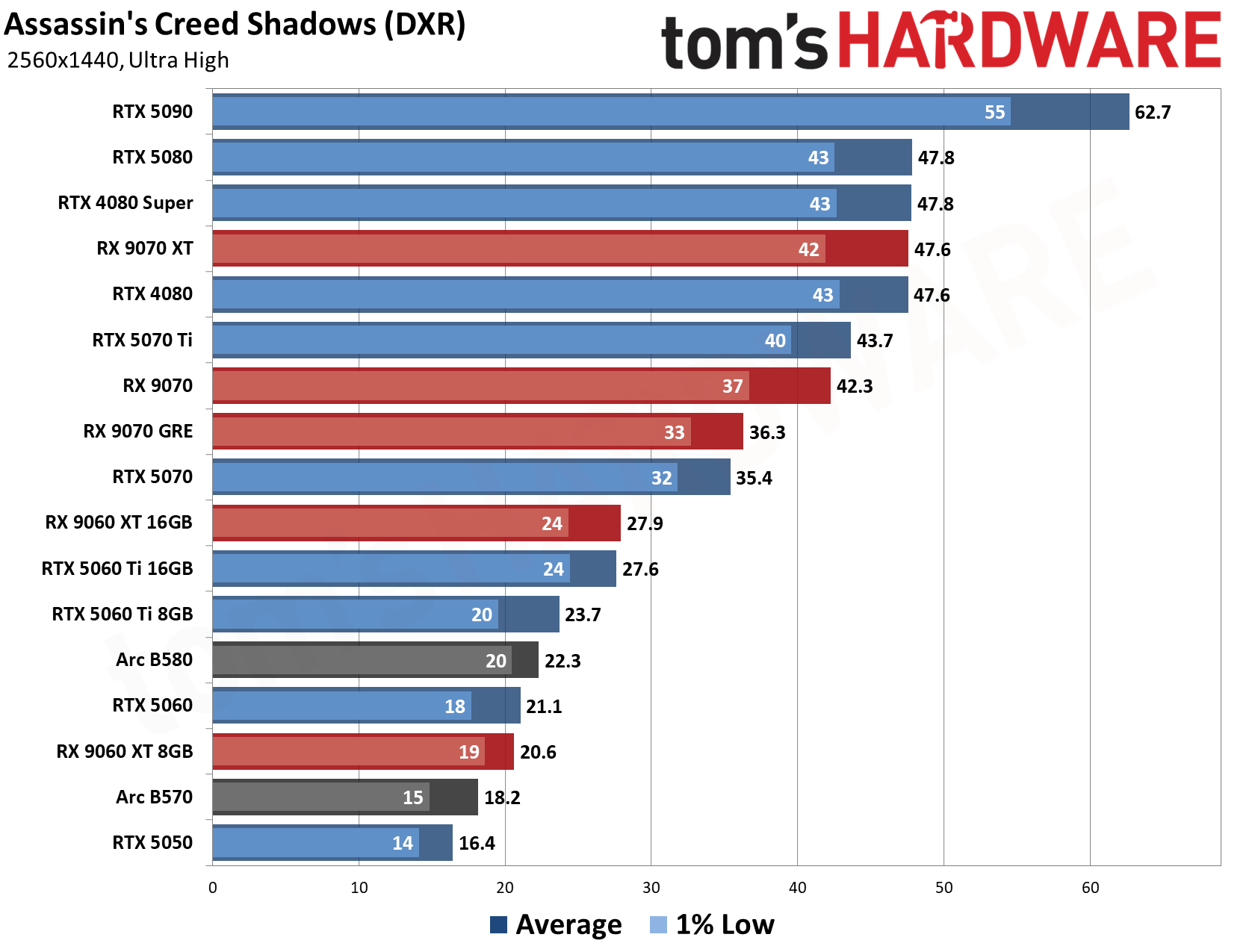
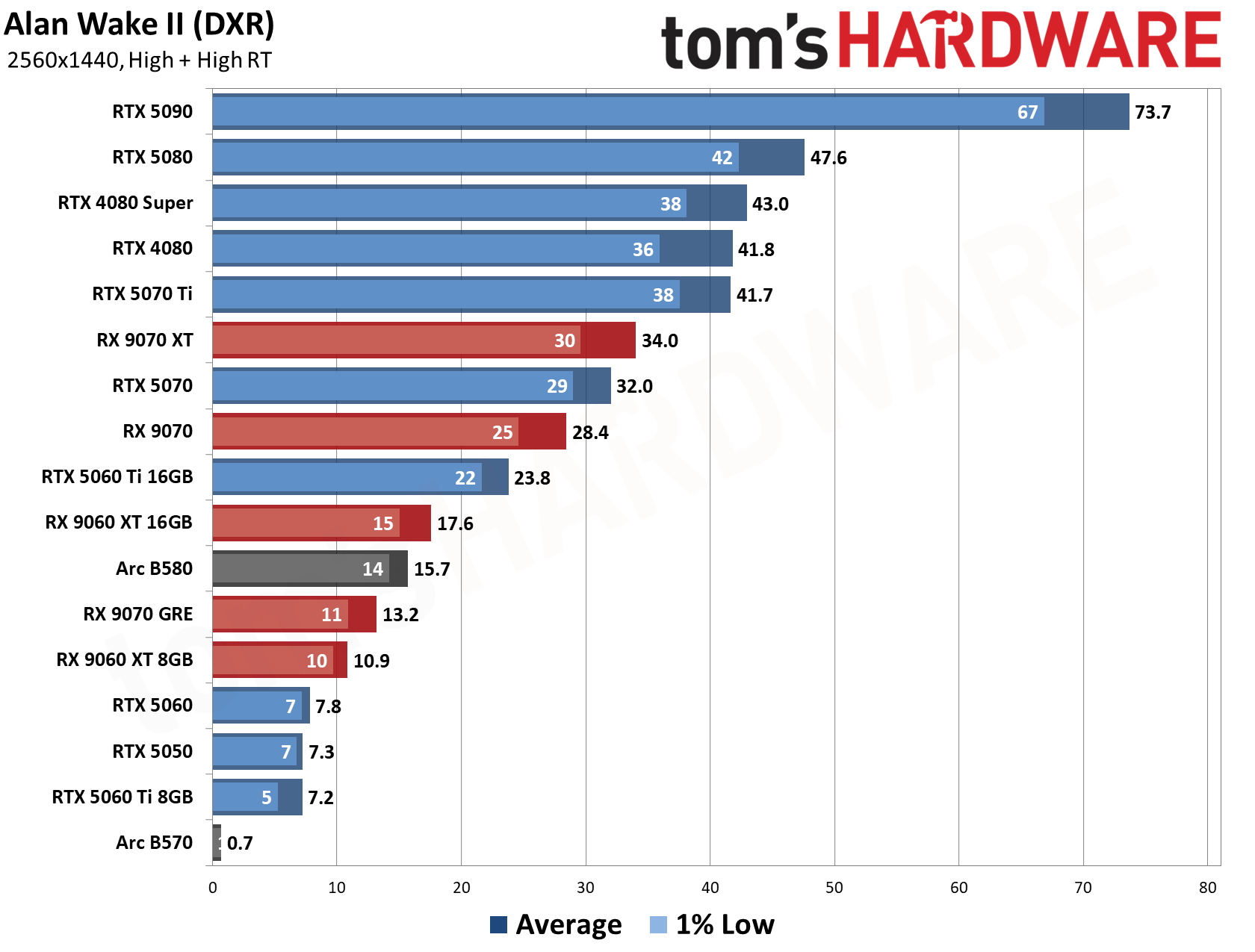
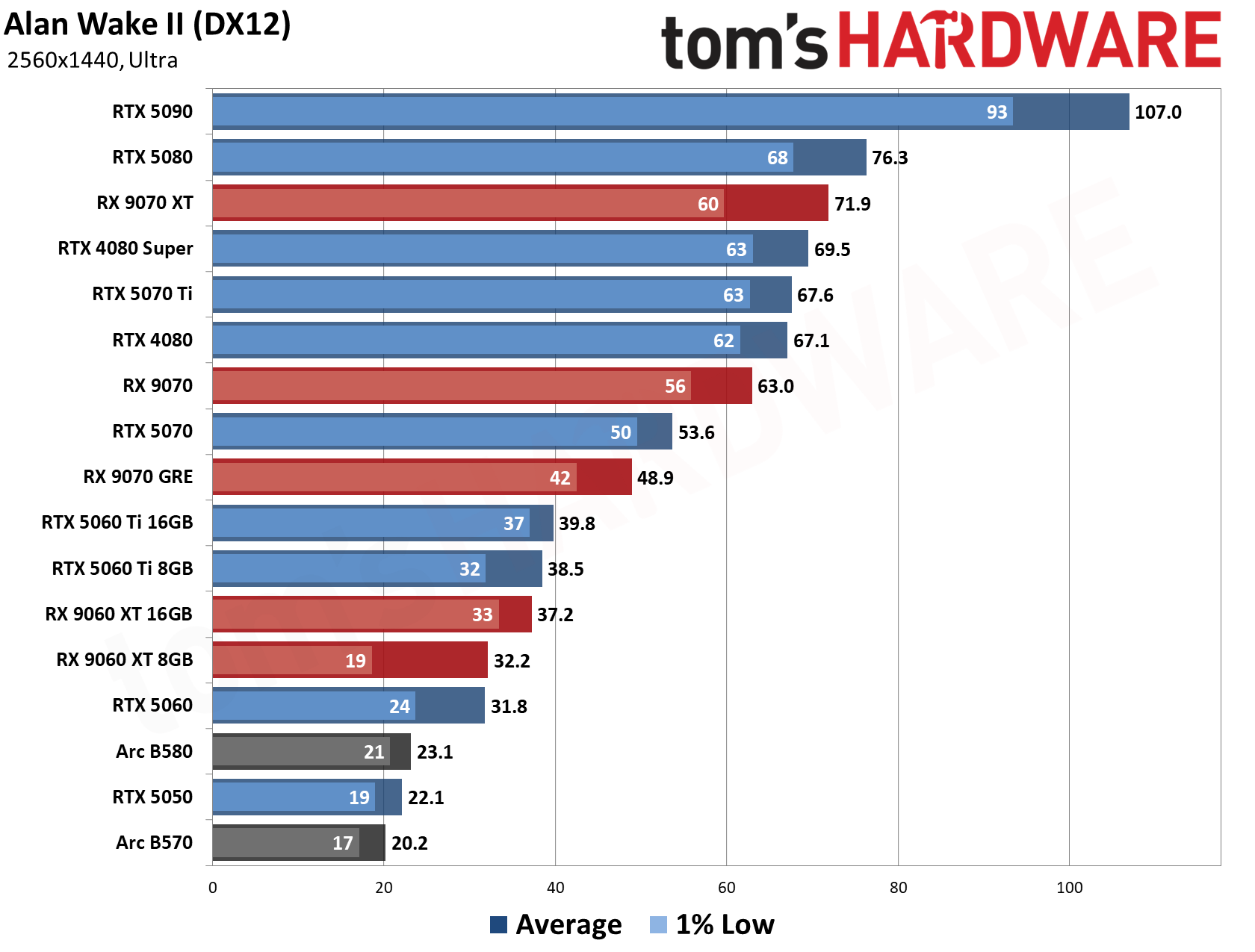
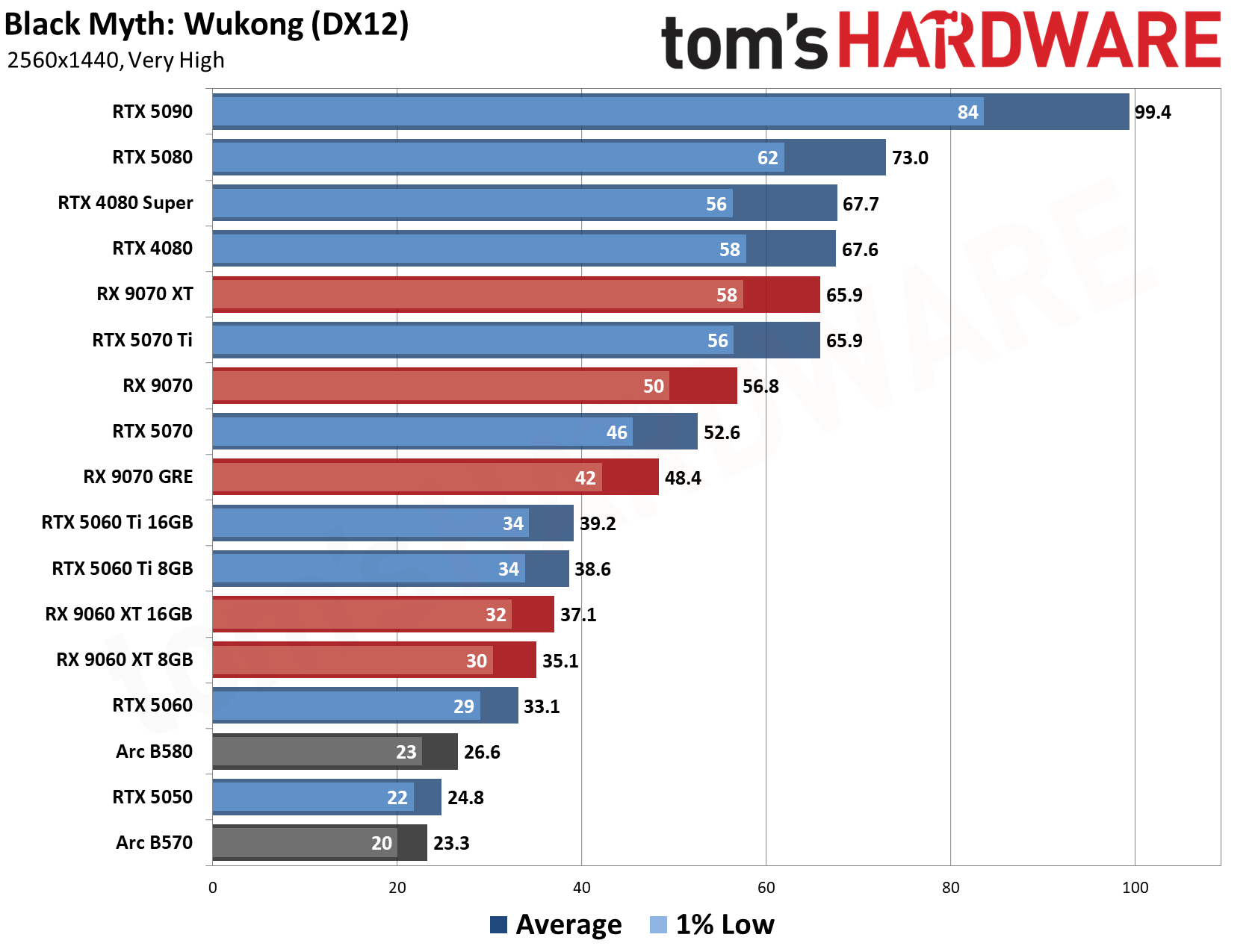
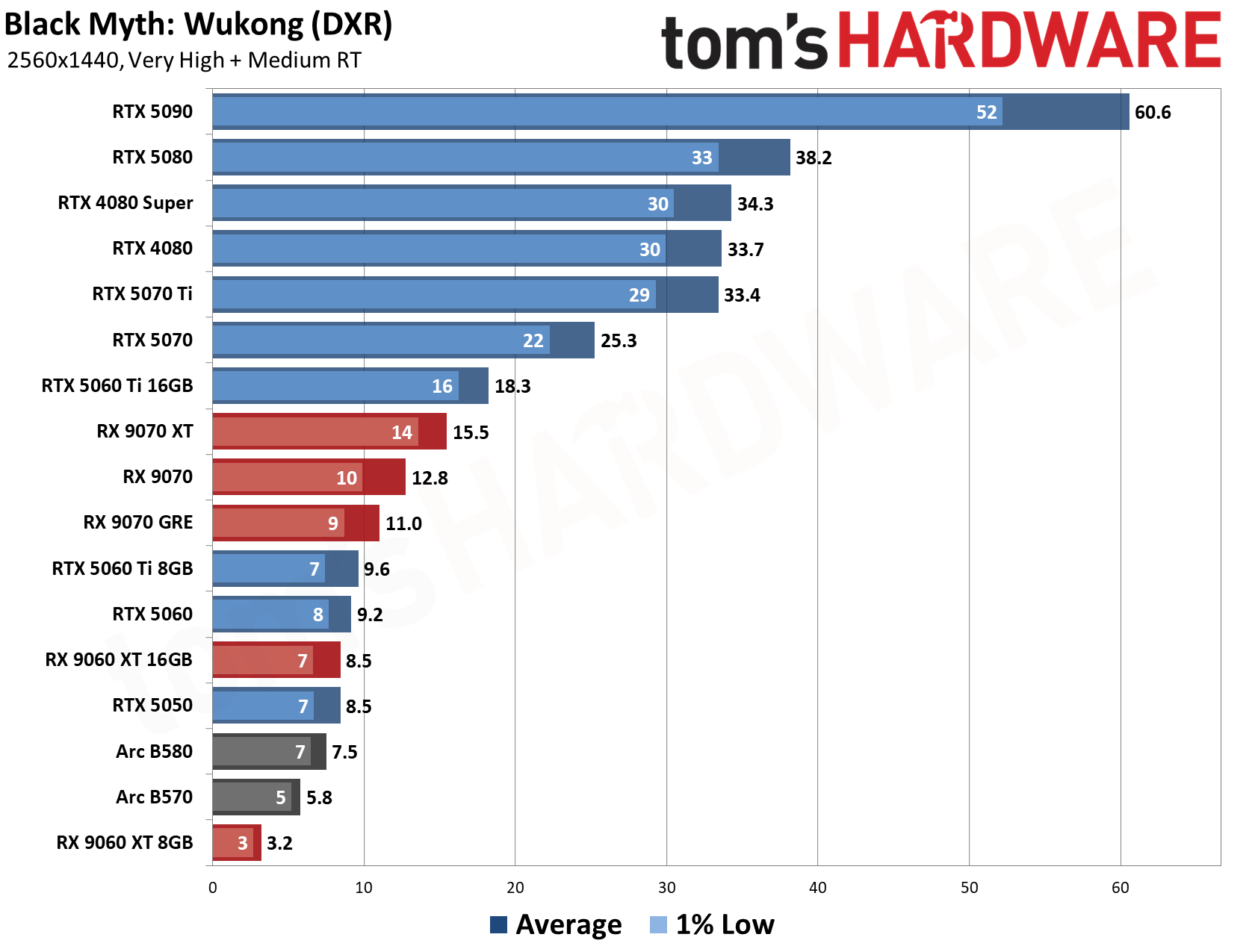
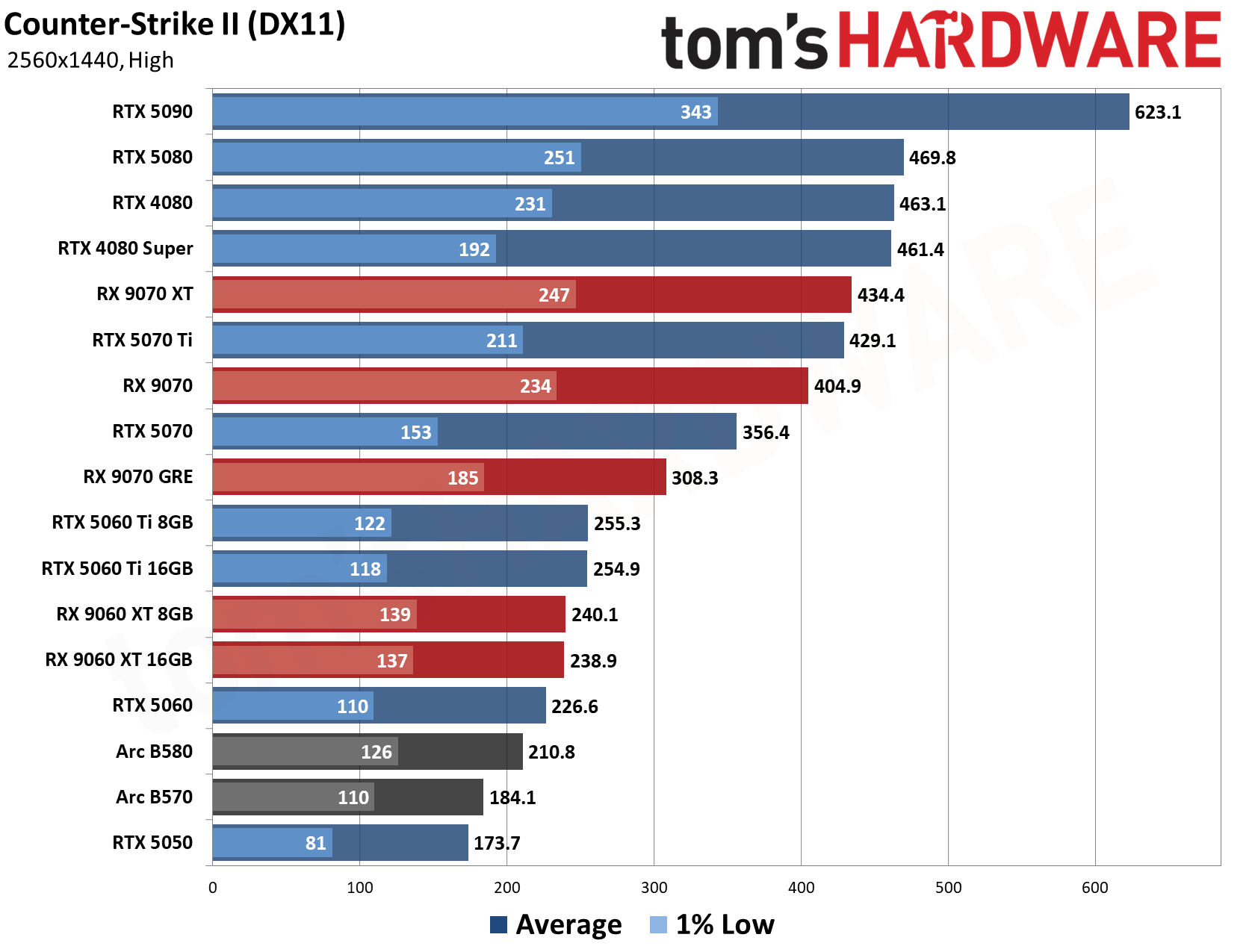
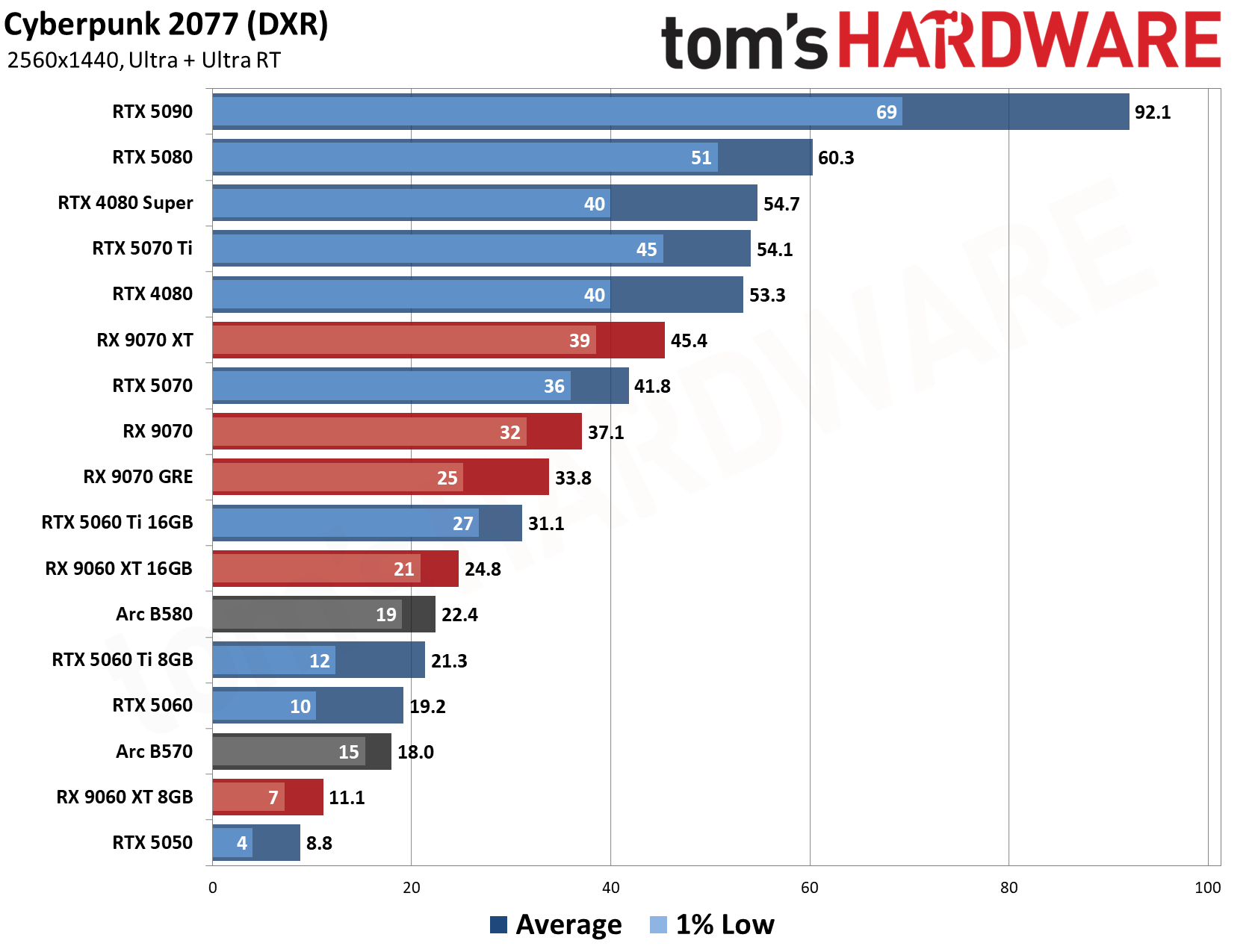
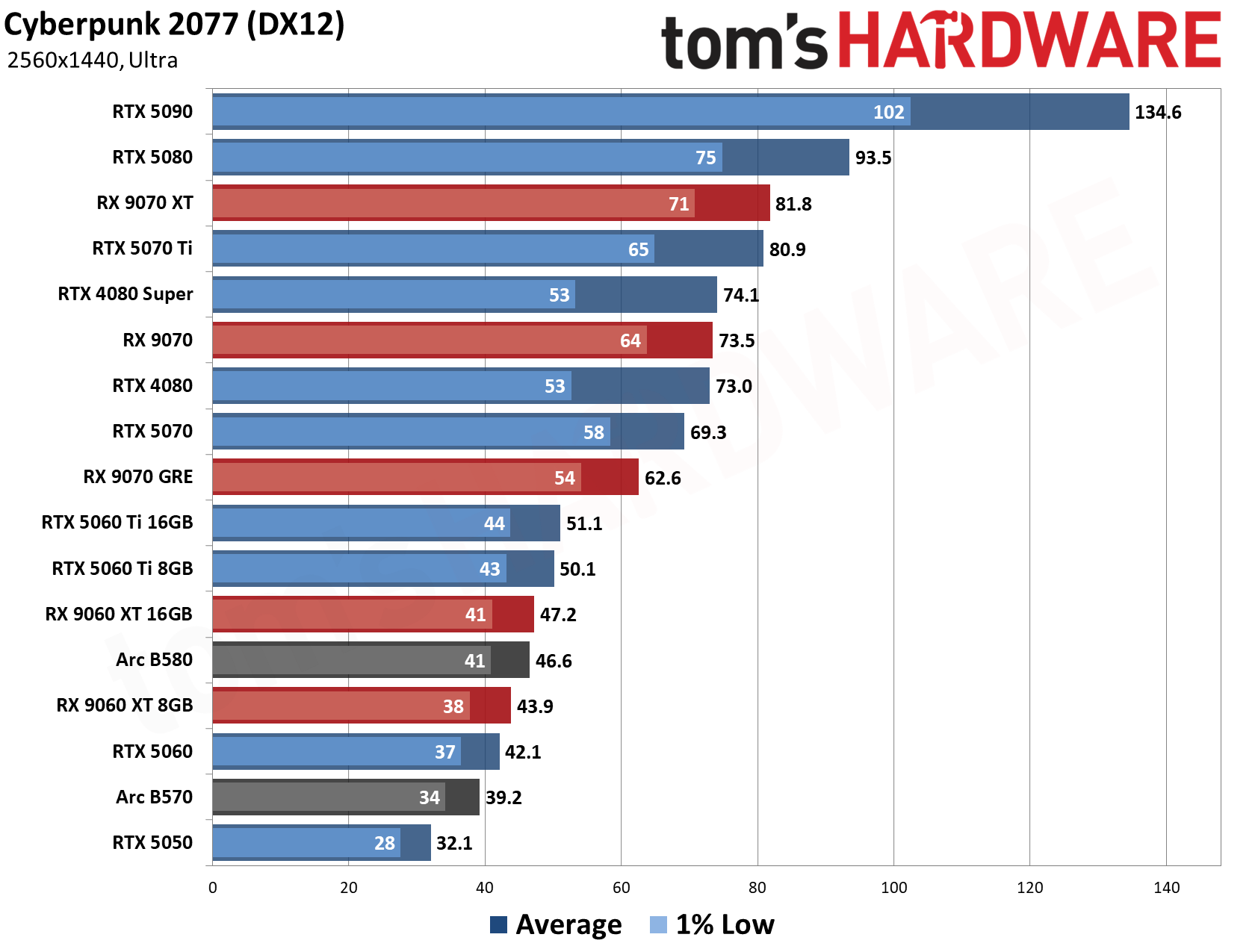
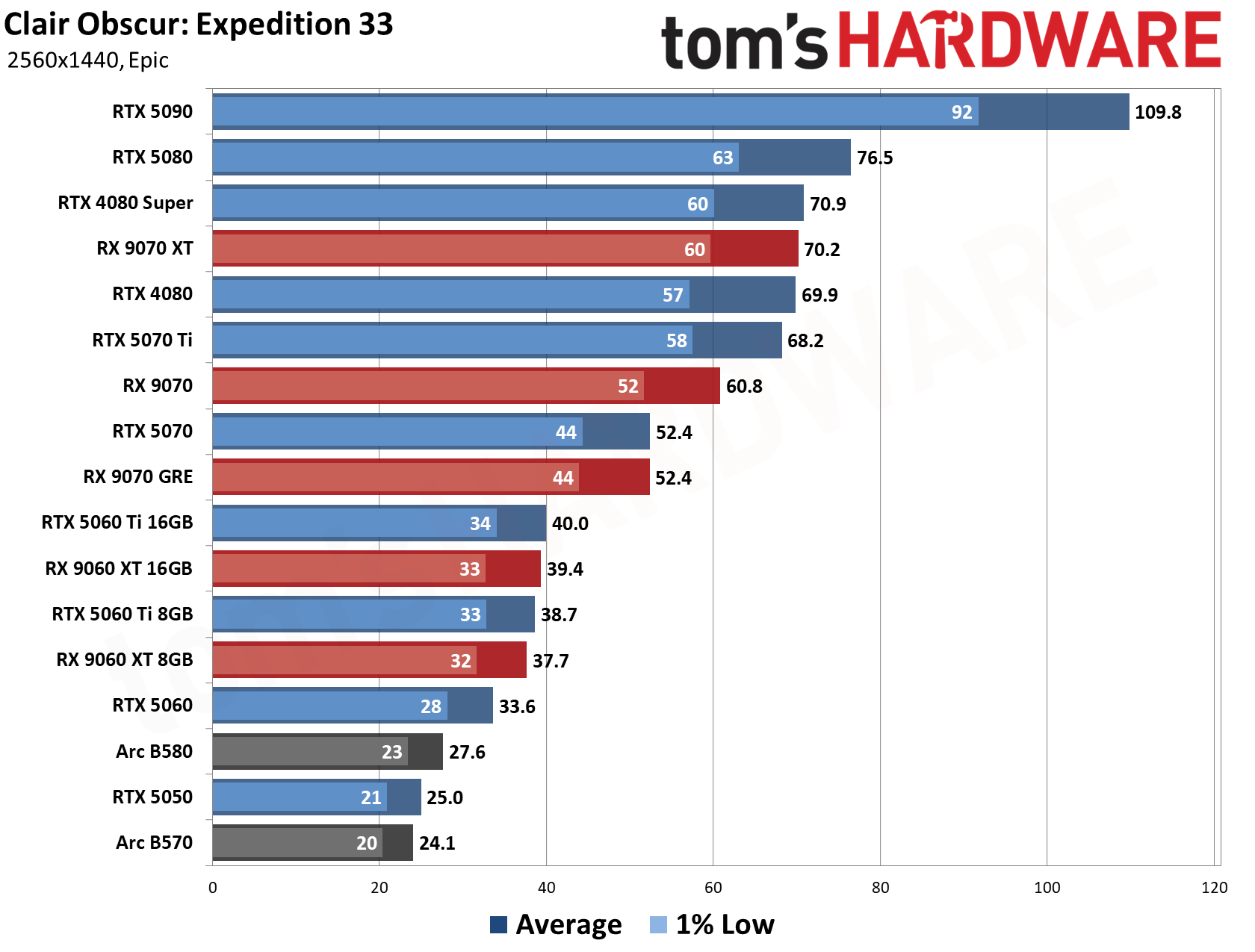
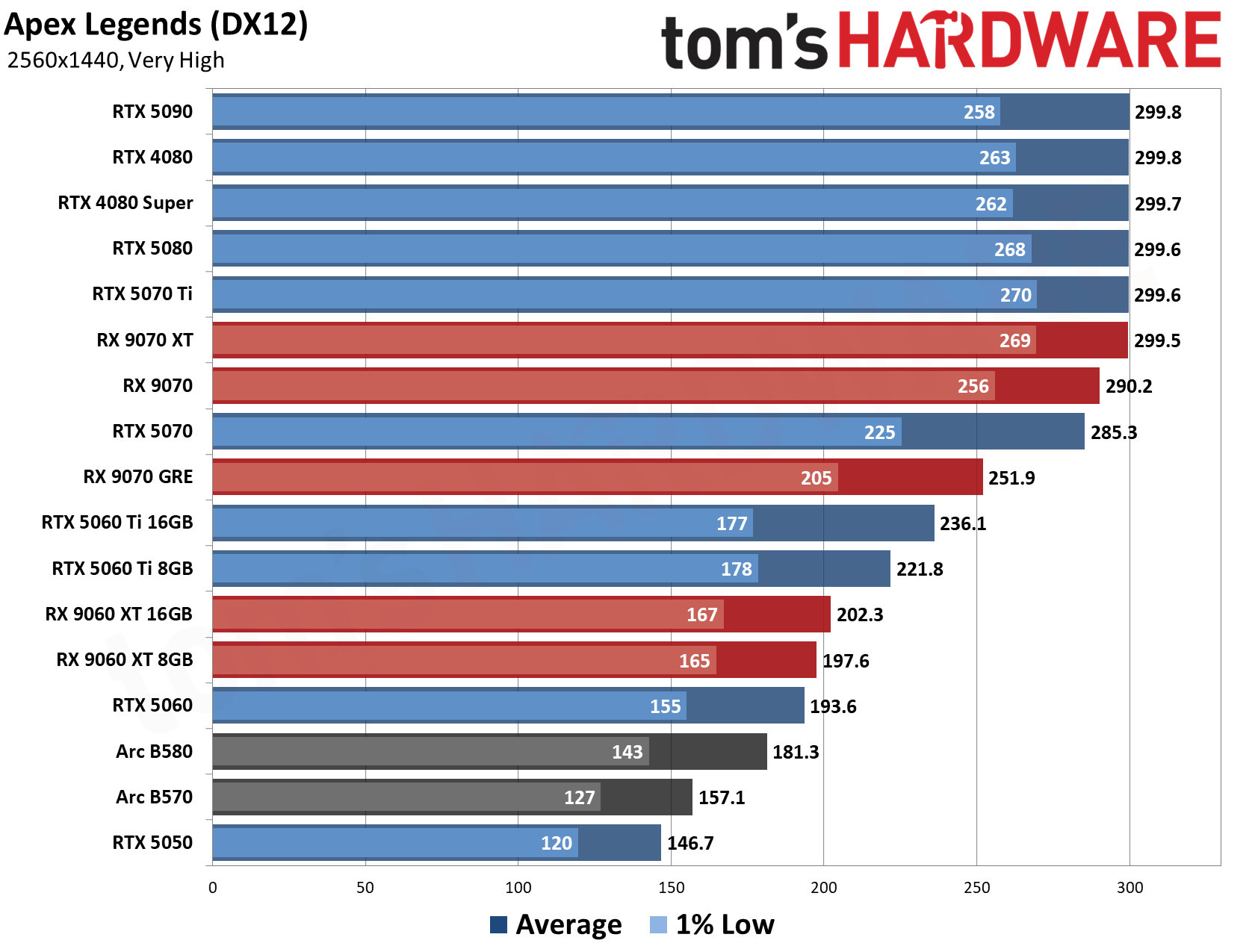
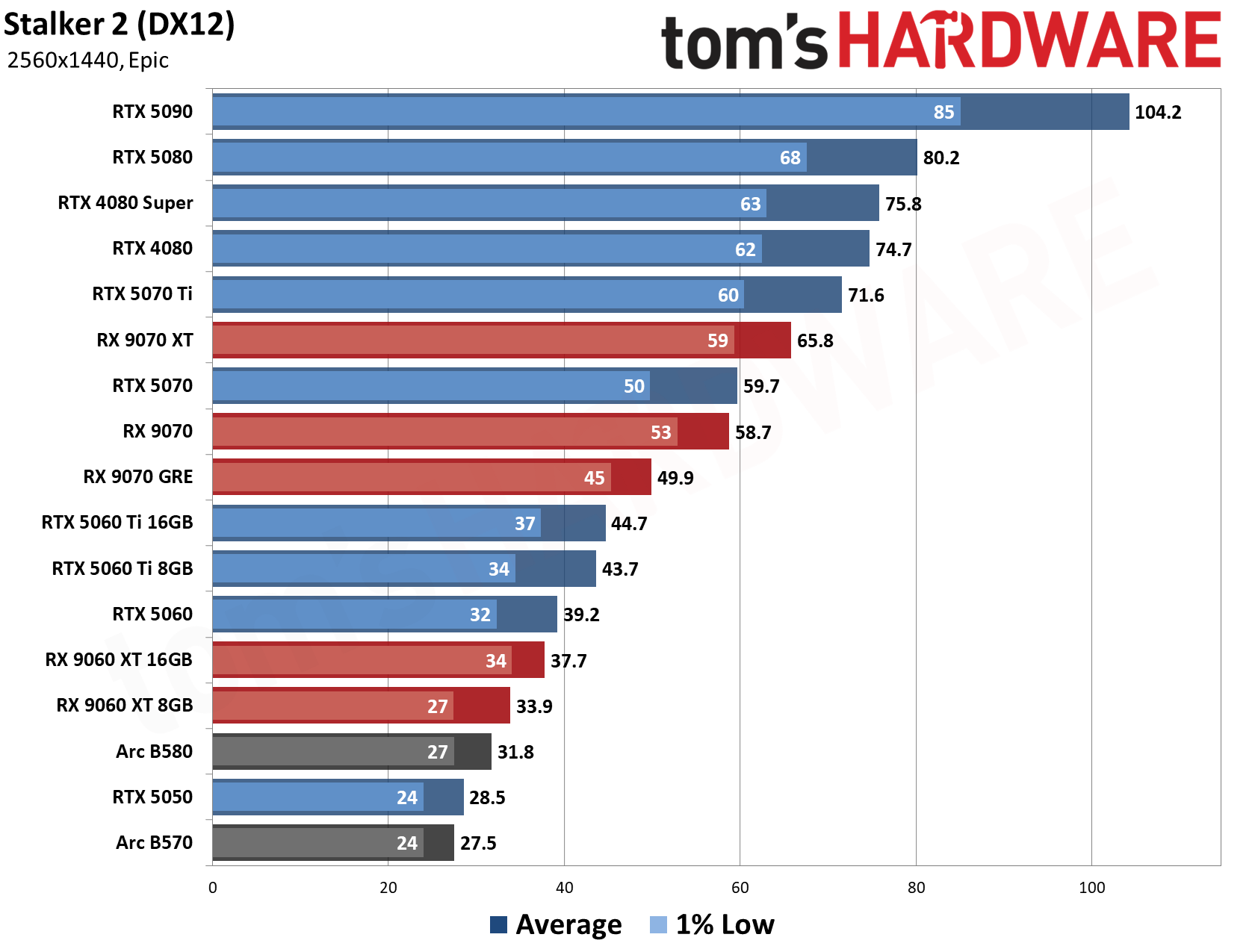
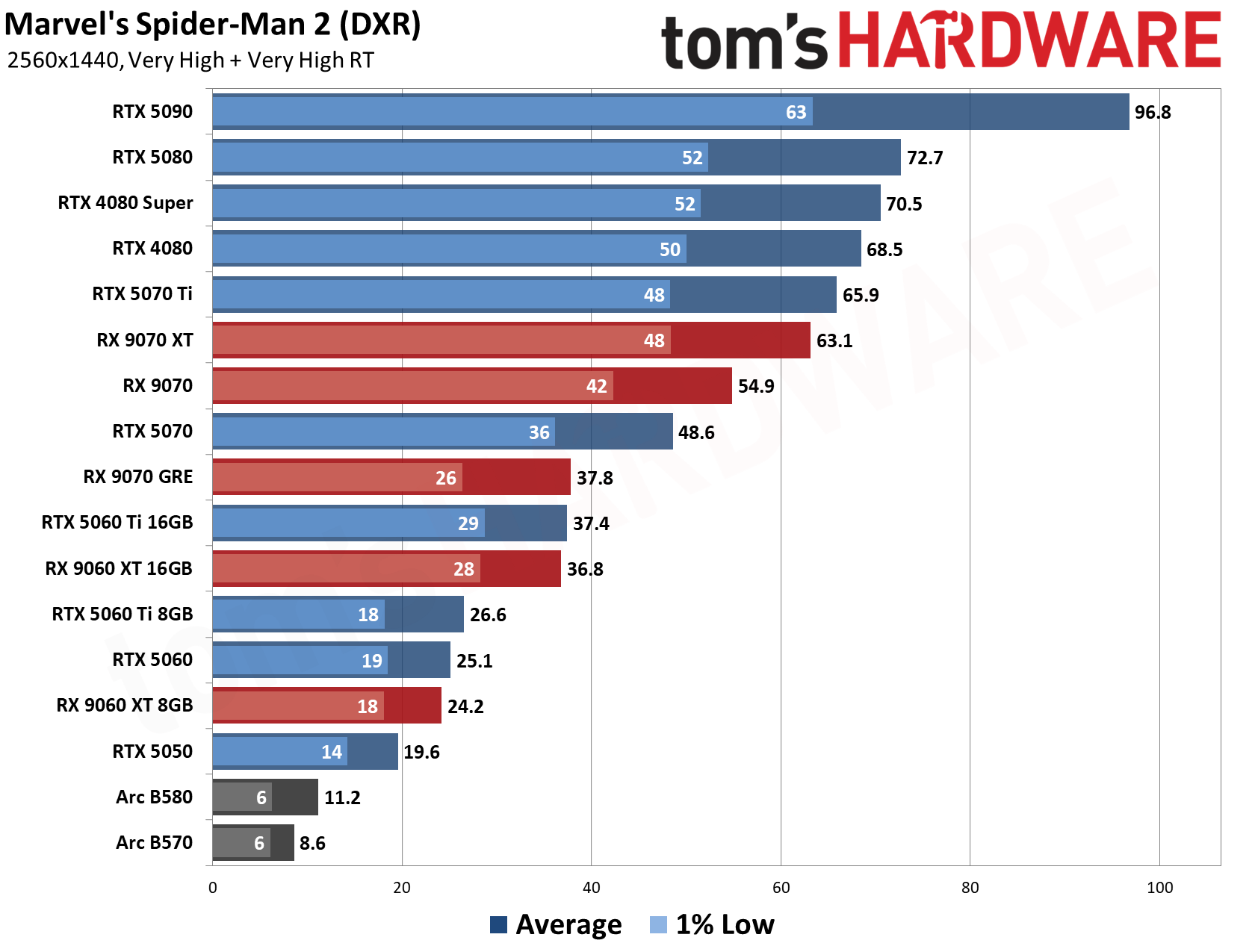
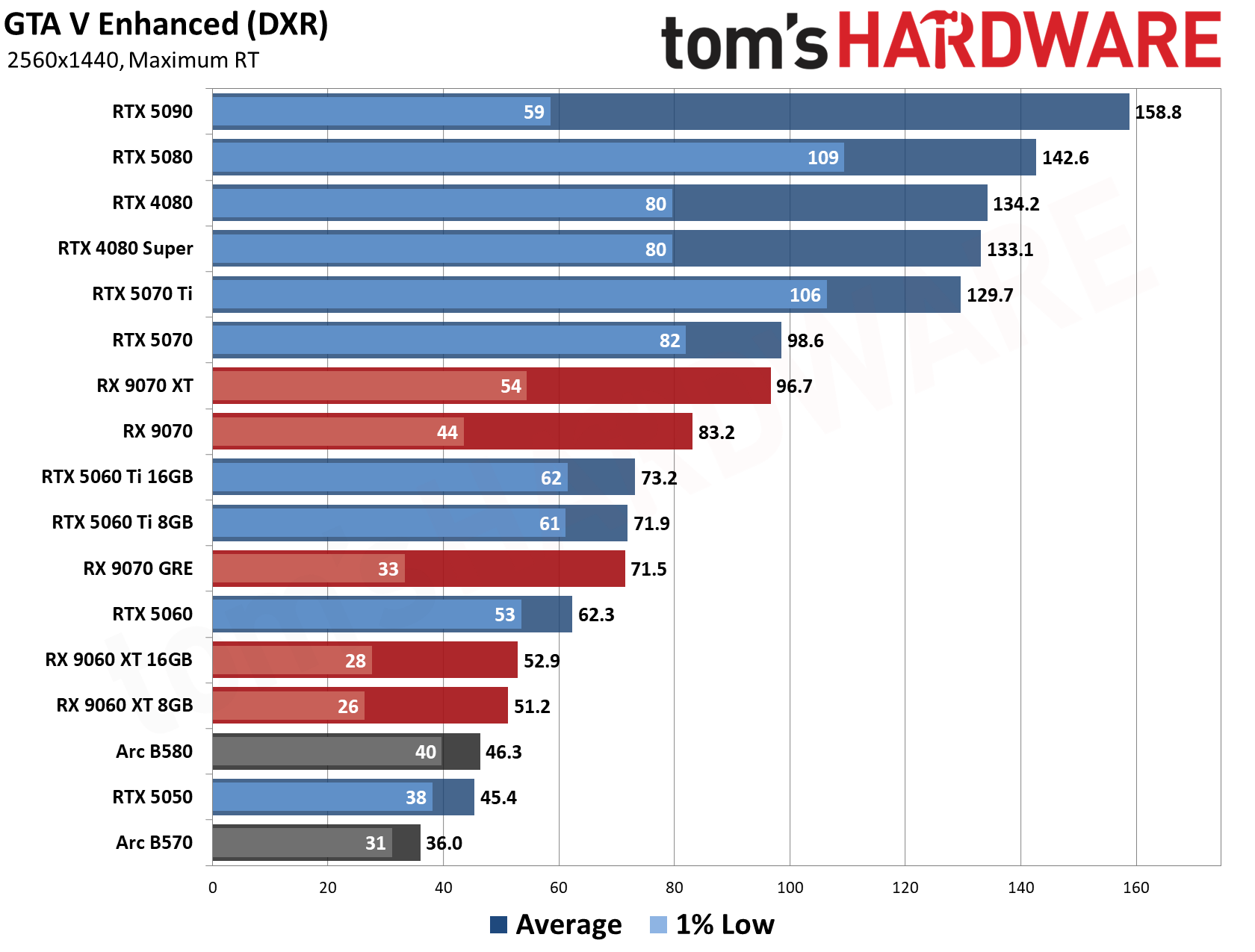
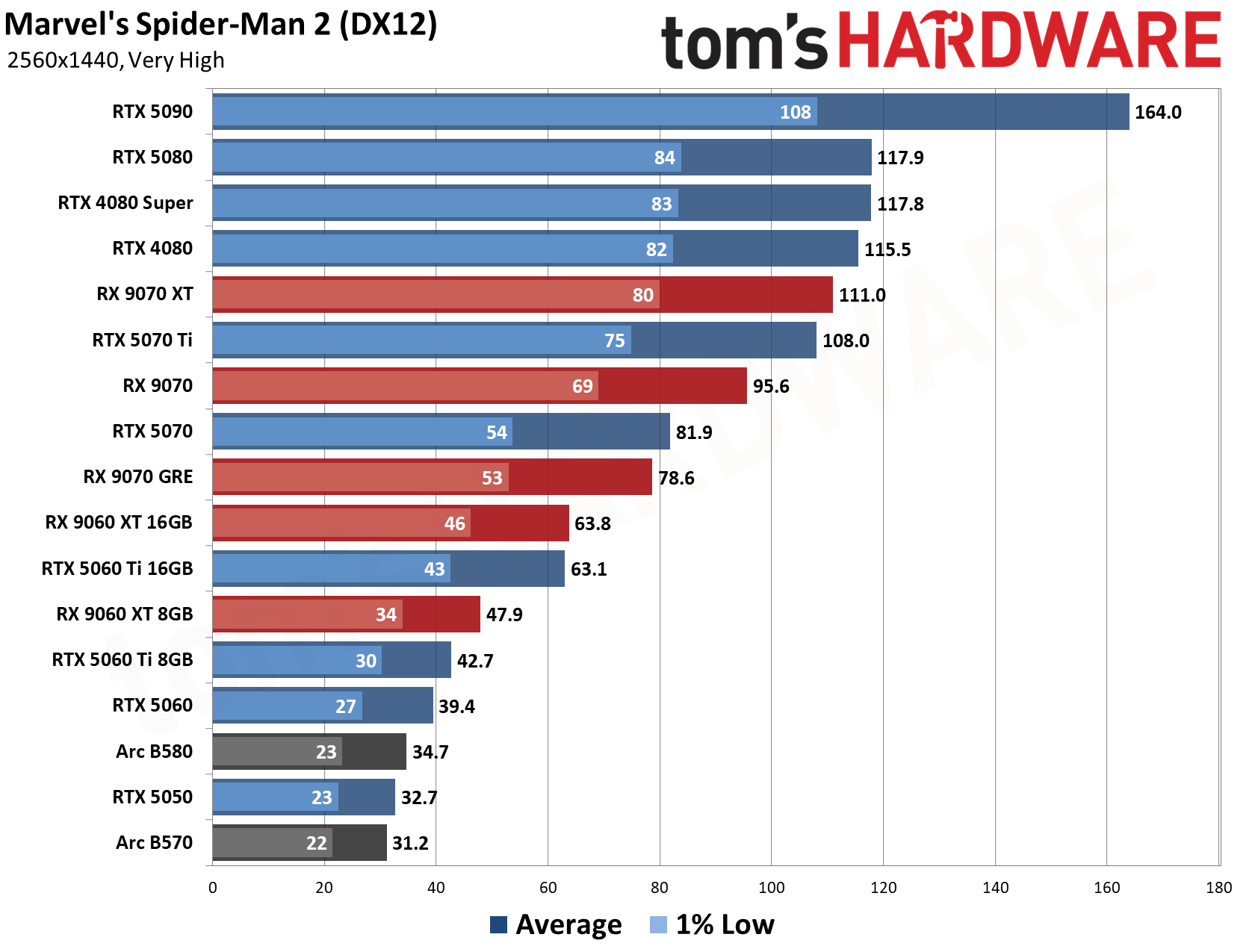
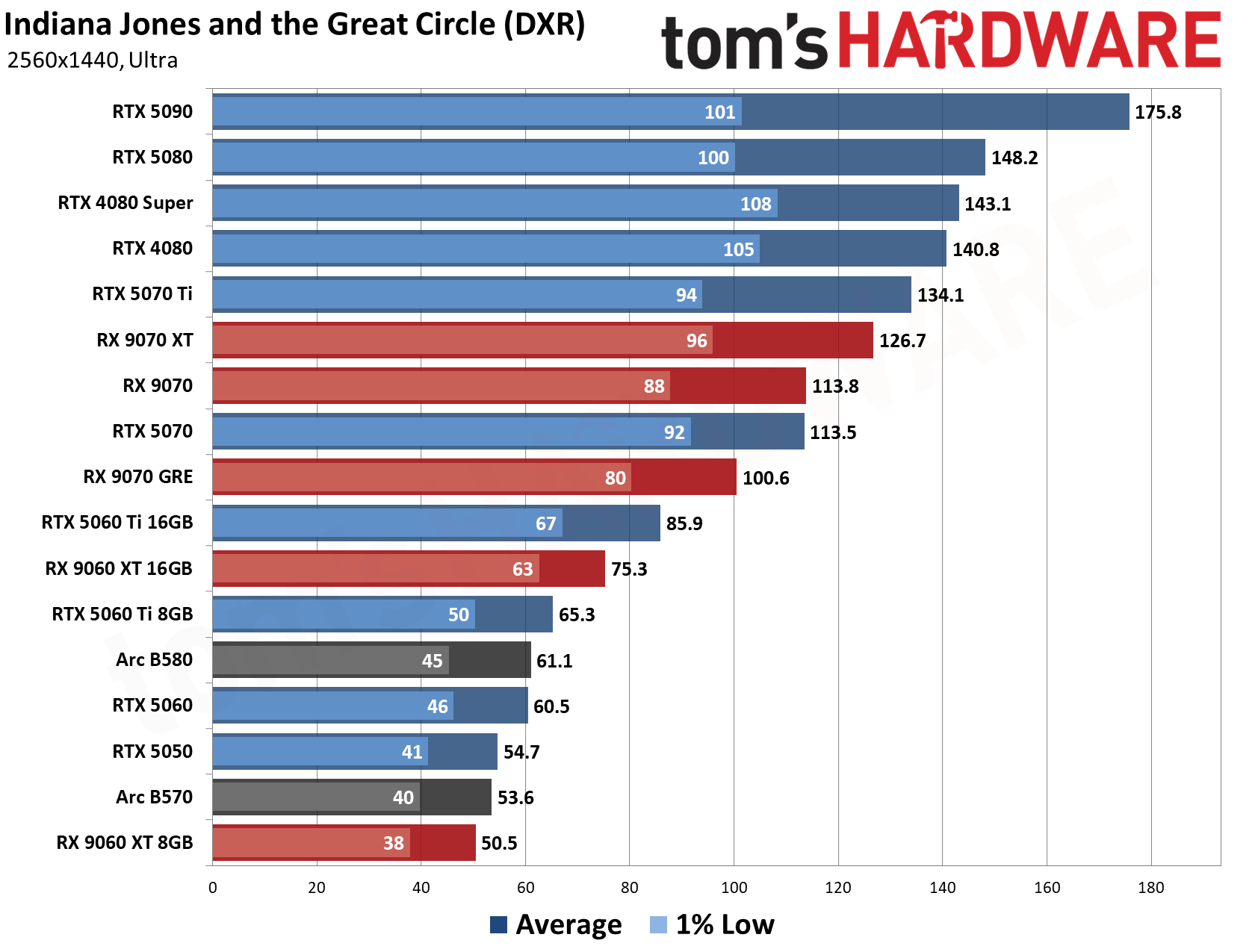
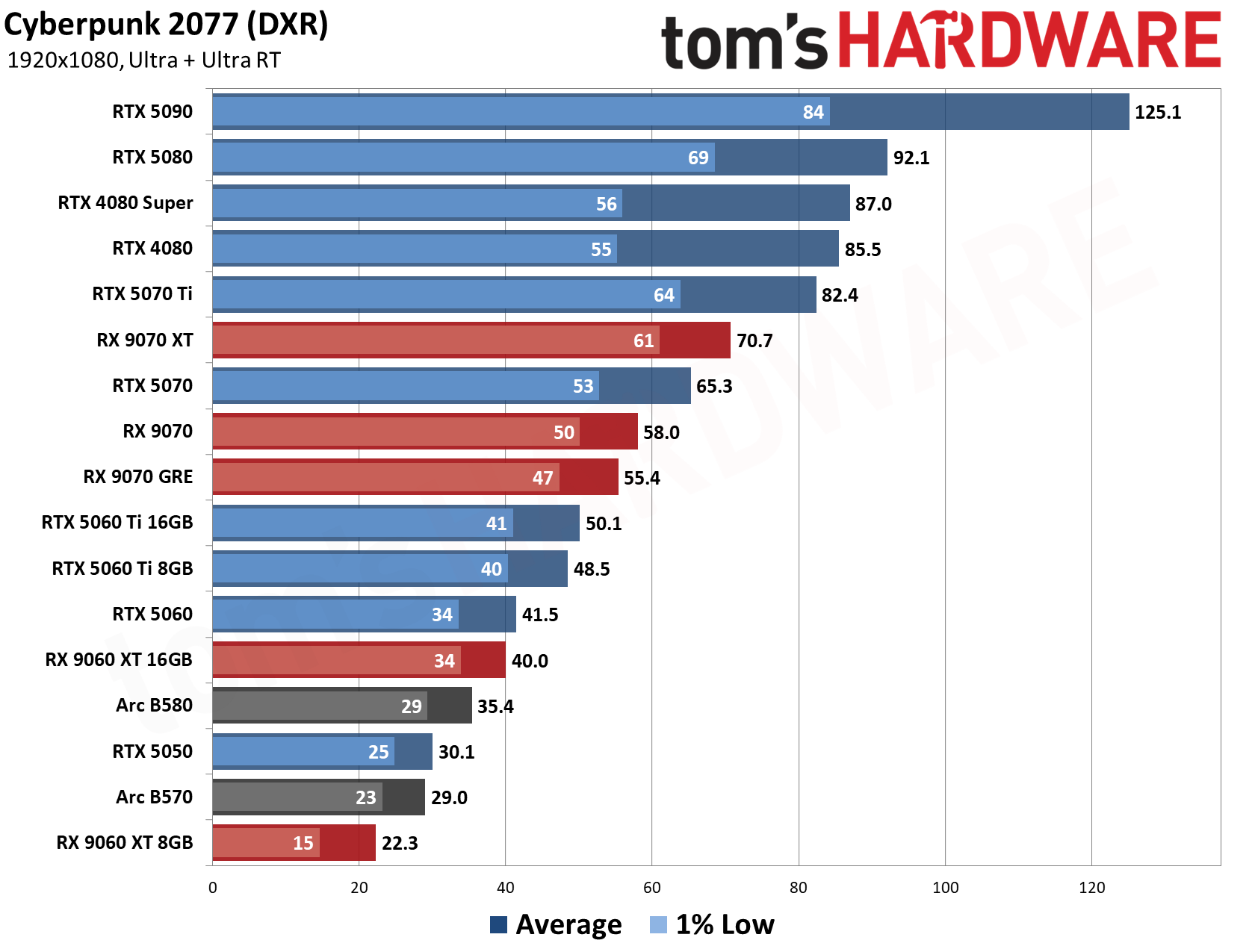
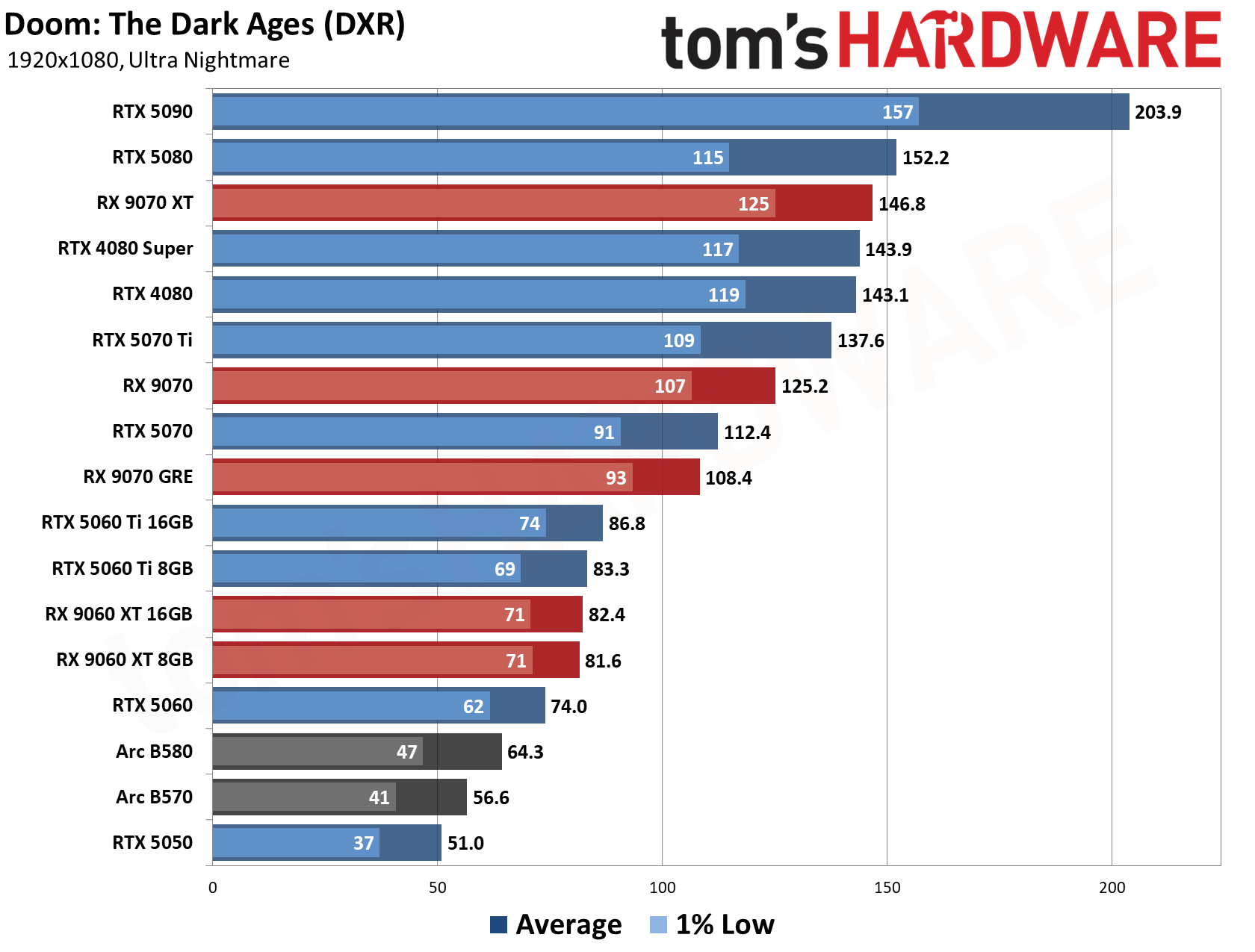
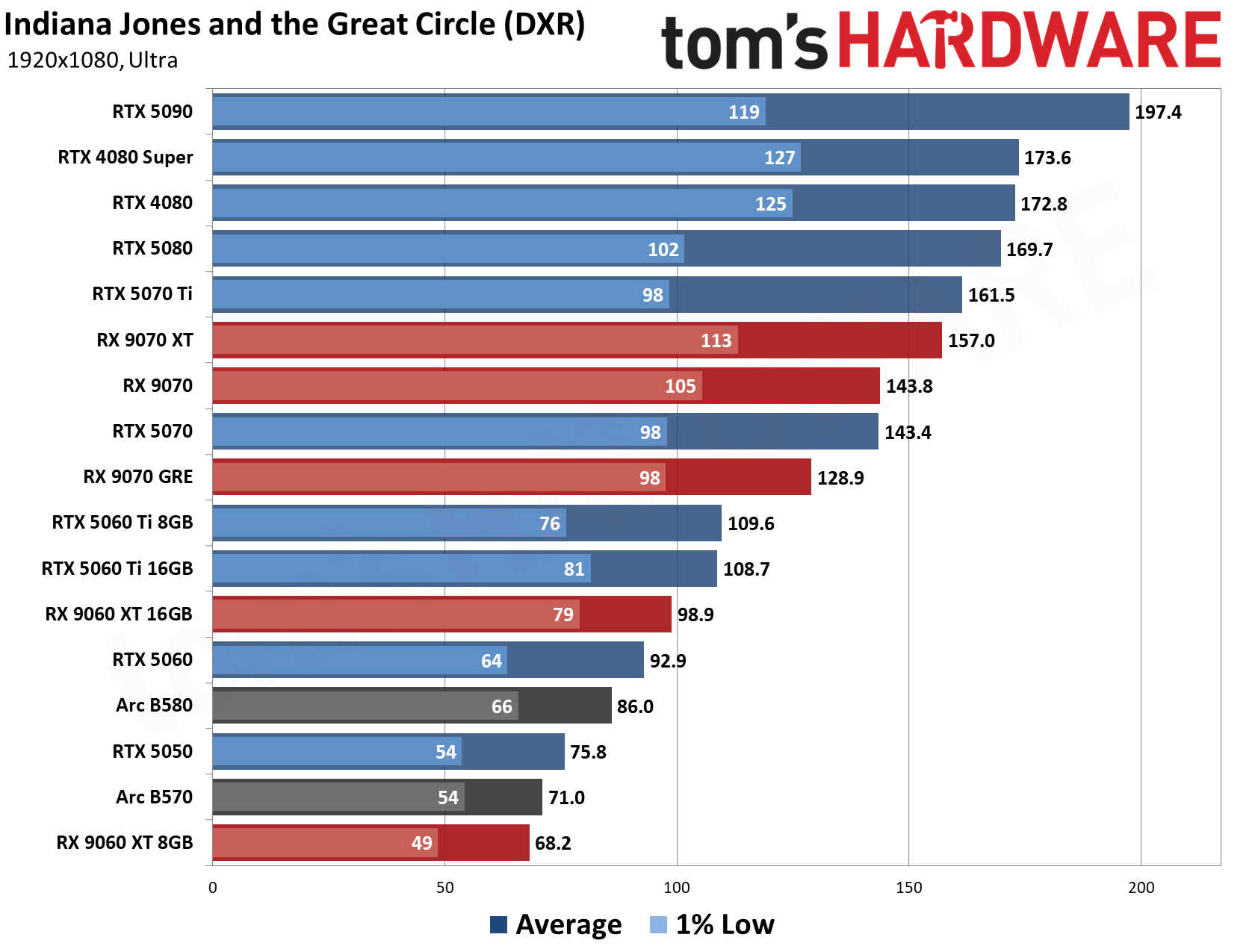
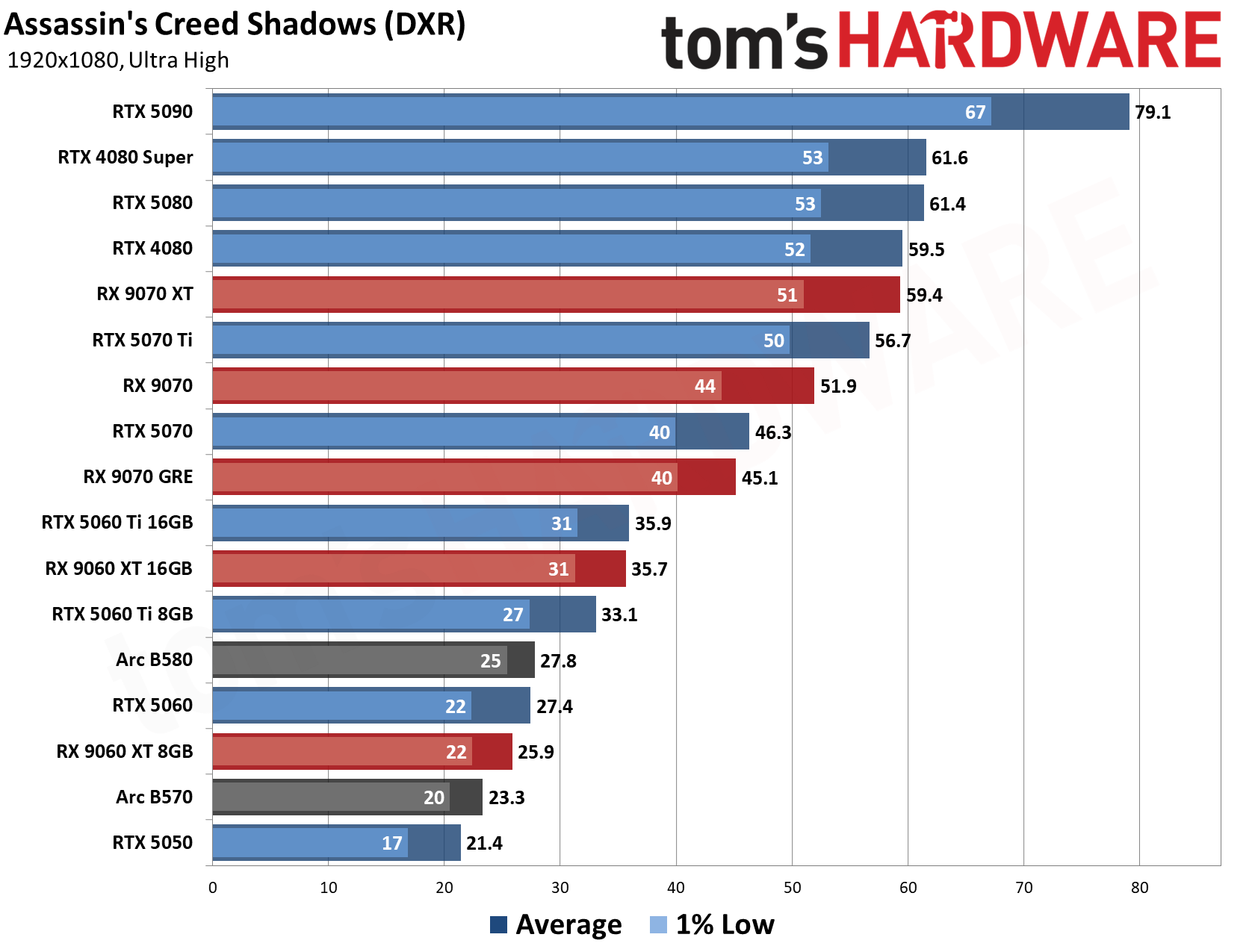
As you can see, without frame generation, the RTX 5060 can put out a respectable 41 frames per second across our 1440p test suite, and easily manages 60 frames per second at 1080p in our other testing. Using Nvidia's DLSS technology, you'll be able to bump that up no problem and enjoy high-fidelity gaming with good frame rates. With just 8GB of VRAM, this card won't be useful for 4K gaming but would make a great upgrade for someone on an older RTX 30-series card or integrated graphics.

GPU Benchmarks Hierarchy 2026 - 1440p Performance Results
Future
GPU Benchmarks Hierarchy 2026 - 1440p Performance Results
Future
GPU Benchmarks Hierarchy 2026 - 1440p Performance Results
Future
GPU Benchmarks Hierarchy 2026 - 1440p Performance Results
Future
GPU Benchmarks Hierarchy 2026 - 1440p Performance Results
Future
GPU Benchmarks Hierarchy 2026 - 1440p Performance Results
Future
GPU Benchmarks Hierarchy 2026 - 1440p Performance Results
Future
GPU Benchmarks Hierarchy 2026 - 1440p Performance Results
Future
GPU Benchmarks Hierarchy 2026 - 1440p Performance Results
Future
GPU Benchmarks Hierarchy 2026 - 1440p Performance Results
Future
GPU Benchmarks Hierarchy 2026 - 1440p Performance Results
Future
GPU Benchmarks Hierarchy 2026 - 1440p Performance Results
Future
GPU Benchmarks Hierarchy 2026 - 1440p Performance Results
Future
GPU Benchmarks Hierarchy 2026 - 1440p Performance Results
Future
GPU Benchmarks Hierarchy 2026 - 1440p Performance Results
Future
GPU Benchmarks Hierarchy 2026 - 1440p Performance Results
Future
GPU Benchmarks Hierarchy 2026 - 1440p Performance Results
Future
GPU Benchmarks Hierarchy 2026 - 1440p Performance Results
Future
GPU Benchmarks Hierarchy 2026 - 1440p Performance Results
Future
GPU Benchmarks Hierarchy 2026 - 1440p Performance Results
Future
GPU Benchmarks Hierarchy 2026 - 1440p Performance Results
Future
GPU Benchmarks Hierarchy 2026 - 1440p Performance Results
Future

The GPU is complemented by the excellent Intel Core i7-14700F CPU, with 20 cores (eight performance and 12 efficiency), perfect for productivity and gaming workloads. The Raptor Lake Refresh CPU offers boost clocks of up to 5.4GHz.

This is a great all-round build at the price point, as evidenced by the strong supporting cast of components. You're getting that all-important 32GB of DDR5-6000 RAM for multitasking and gaming, as well as a 1TB Gen 4 SSD — specifically Kingston's SNV3S — for storage.

The motherboard is an ASRock B760M-CX with room for M.2 expansion should storage prices settle down in the future. You also get a very capable Cooler Master Hyper 212 air cooler, more than enough for this CPU, as well as a 650W 80 PLUS Gold PSU.

It also features Wi-Fi 6E and Bluetooth 5.2, as well as a copy of Windows 11. For the price, this is a really good PC in the current market. You're getting a $300 discount, plus a further $120 off when you use the promo code SSF73457, for a $420 discount total. Thanks to the Intel's Gamer Days sale, you'll also get two free games to enjoy on your new PC: Tomb Raider: Legacy of Atlantis and Star Wars: Galactic Racer, due to be released in February 2027 and October 2026, respectively. That's $120 of free upcoming new releases to enjoy on your new PC.

Astonishing mod runs DLSS 5 on a second GPU to boost neural-rendered FPS up to 127% — game renders on one card, neural post-processing runs on the other, much like dedicated PhysX GPUs

Nvidia's DLSS 5 Neural Rendering technology has taken the PC gaming world by storm since its recent leak and then official rollout in recent days. In what might be one of the most impressive technical applications and mods of the feature yet, one developer has showcased DLSS 5 running on a second GPU to share the processing load, rendering the game on the first GPU before applying Neural rendering at the end of the frame, thus boosting the performance of neural-rendered frames.

Marcelo Guibout shared the demonstration online, with videos showing the process running on a cinematic video from The Blood of Dawnwalker, as well as Cyberpunk 2077. Guibout was quick to clarify that the videos are technical showcases, not benchmarks. However, they did share some performance figures. More exciting still, you can download the project from GitHub and try it for yourself. However, the technique does require a second display and doubles the display latency.

The above demonstration features a Ryzen 7 7800X3D, 32GB DDR5 setup with two Nvidia RTX 5060 Ti 16GB GPUs, with both cards using PCIe 5.0 x8, and a display attached to each card. The ReShade add-on, dubbed MGPU Bridge, reads each finished frame before applying Nvidia's Neural rendering. "Neural rendering happens at the end of the frame: it takes a finished frame and hands a finished frame back," they explain. "That is what makes it possible to pick it up and run it somewhere else. The add-on creates its own D3D12 device on your second GPU, sends each finished frame across to it, runs DLSS-NR there, and displays the result on that card's own monitor — so nothing has to come back. The render GPU does no neural work at all and runs cooler for the same reason."

In the TBOD demo at 1080p, they shared the following performance numbers:

DLSS mode

DLSS 5 off

DLSS 5 on the render card

DLSS 5 on the second card

DLAA

67-70

44

67-70

Quality

98-99

54-55

91

Performance

127-131

59

106-107

Ultra Performance

172

69-71

157

Guibout clarified that DLSS super-resolution is running in every column of the test, with the rows showing each mode tested. The game rendered at the same internal resolution in all three columns, with the first column giving figures with DLSS 5's neural rendering switched off, representing the ceiling for performance. As you can see, running DLSS 5 on the second card in this dual-GPU setup drastically increases performance in every mode.

"The frame rates are not the finding. The slope is: what you gain by going from DLAA down to Ultra Performance, and how much of that available gain each arm keeps," Guibout explains. "Neural post-processing saturates whatever device it runs on, and it always runs at output resolution. Its cost barely falls as you drop the DLSS mode, while the render work collapses. On the render card it therefore eats a larger and larger share of every frame, and upscaling stops paying for itself: you keep about a third of what the machine actually had to give. Move it to the second card and you keep 86% of it."
Other benefits include temperature reductions on the rendering card, with the first GPU running 21 degrees cooler without the neural load.

Guibout is cautious to note this isn't a return to Nvidia's SLI technology, which would split the workload of frame rendering between two GPUs. They also noted plainly this is not Nvidia's vision for DLSS 5 and lacks the native integration of official DLSS 5 support.

You can see the original demo for TBOD below:

As commenters online have noted, the method seems more akin to using Nvidia's dedicated PhysX cards, with plenty of potential for gamers who have the capacity to run a dual GPU setup. The second demo features a Ryzen 5 5600 on a DDR4 system, so top-of-the-line hardware isn't required to make it happen.

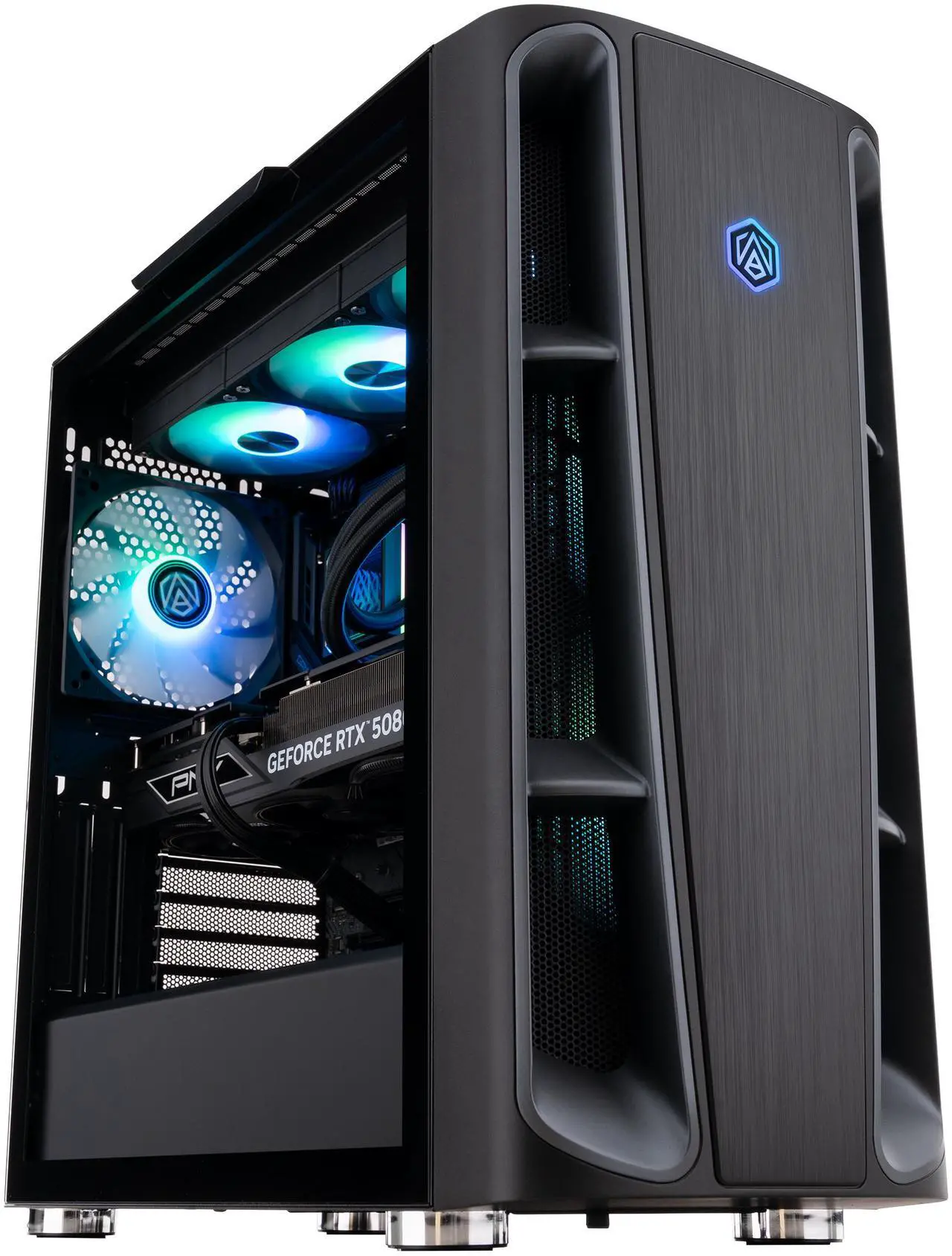
This price-hike-busting RTX 5080 gaming PC is cheaper than it was in April — save $500 on a 9800X3D beast with 32GB of DDR5, 2TB SSD

The price of PC parts continues to rise on a daily basis, so finding a monstrous gaming PC cheaper than it was in April is no small feat. Right now at Newegg, you can score an RTX 5080 gaming PC with a 9800X3D CPU, the ultimate in 4K gaming performance, for $2,999. A $500 saving that makes it cheaper than when we covered this same deal back in April.

Check out this deal on Newegg's website

The individual cost of some of these components makes this a pretty remarkable deal in Fall 2026. The RTX 5080 GPU in this rig alone will set you back more than $1,500 in today's market. The CPU is nearly $500, bringing the cost of just those two components to 2/3 of the build's entire price.

RAM and SSD prices are heavily inflated, which means 32GB of DDR5 would normally set you back $400 right now. Add the storage to the bill of materials, and you've covered nearly the entire cost of this PC before you've added the case, fans, cooler, motherboard, and PSU. With the best CPU for gaming on the market and a huge GPU, this PC is no slouch either.

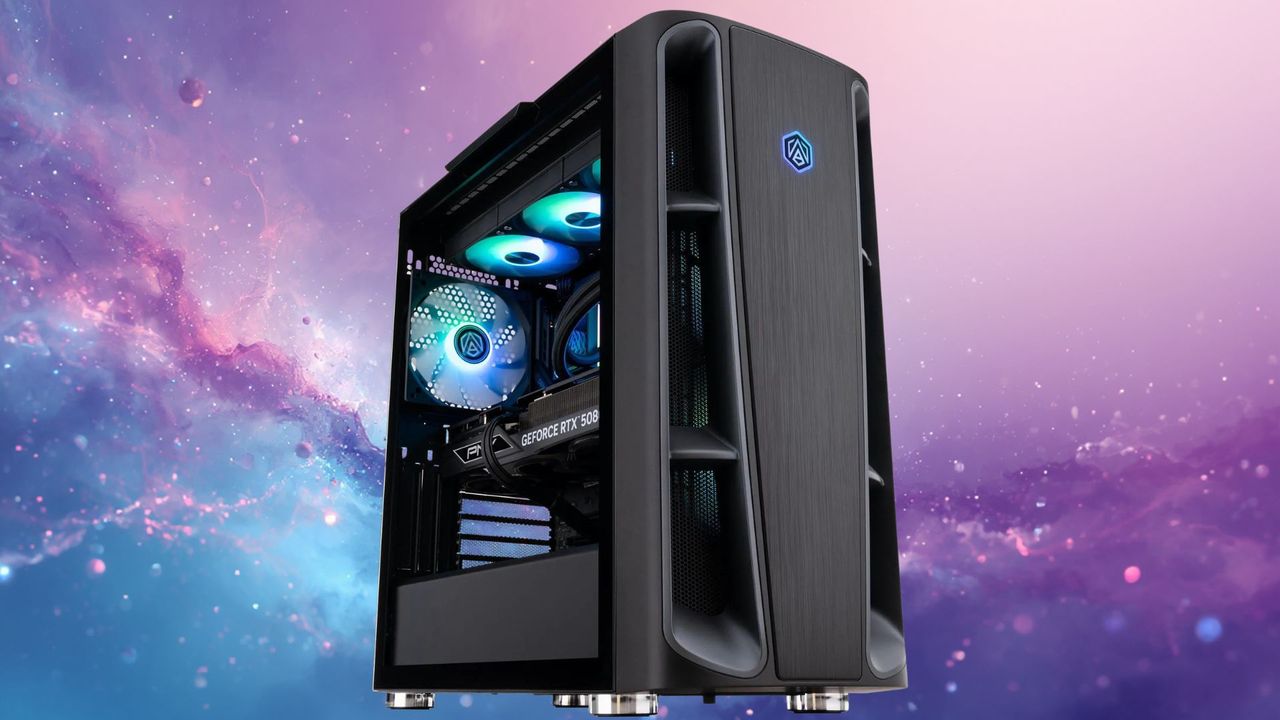
Grab a huge saving on this ABS Kaze II Aqua gaming PC, made and shipped by Newegg. It comes equipped with an AMD Ryzen 7 9800X3D, Nvidia GeForce RTX 5080, 32GB of DDR5 RAM, and a 2TB SSD.View Deal

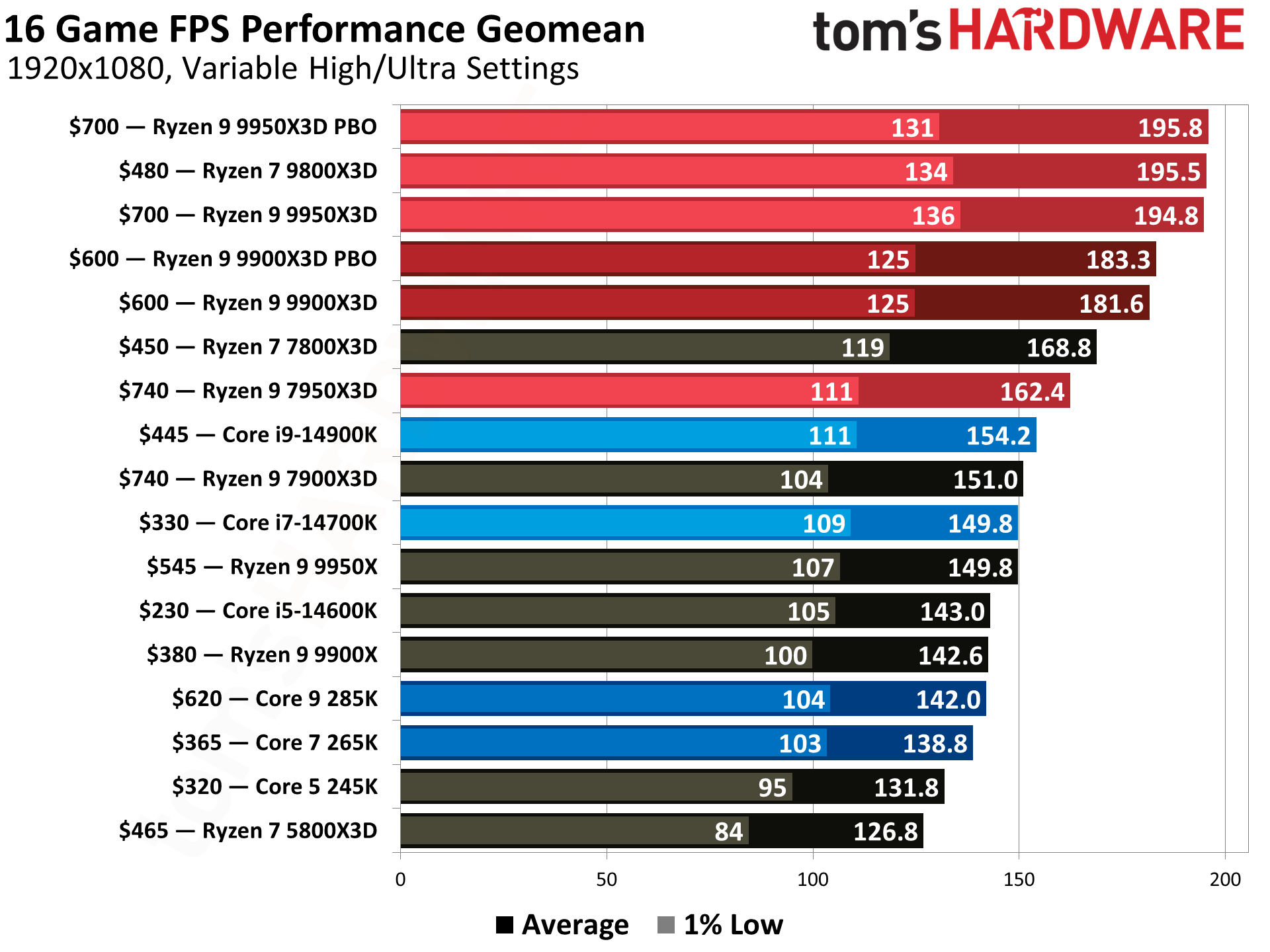
While the 9800X3D is not quite the fastest gaming CPU on the market these days, it is still the best all-rounder by some distance thanks to its combination of power efficiency and performance compared to the 9850X3D. This 8-core, 16-thread CPU chews through gaming titles, even at 4K, thanks to its 3D V-cache. Reducing reliance on slower RAM, this industry-leading tech makes AMD's X3D CPUs the best gaming chips on the market, as you can see from our testing data.

Best CPUs for Gaming
Tom's Hardware
Best CPUs for Gaming
Tom's Hardware
Best CPU for Gaming
Tom's Hardware

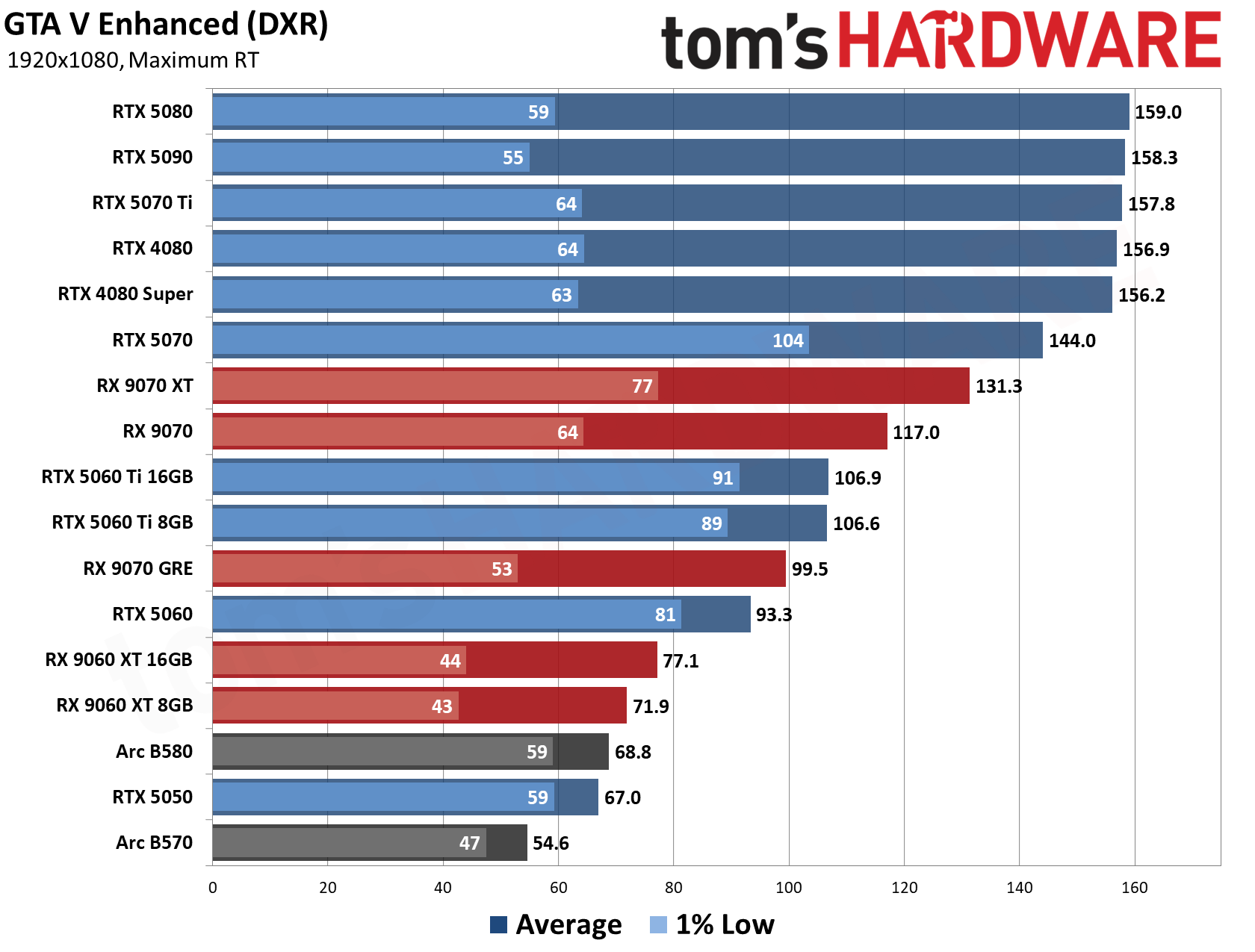
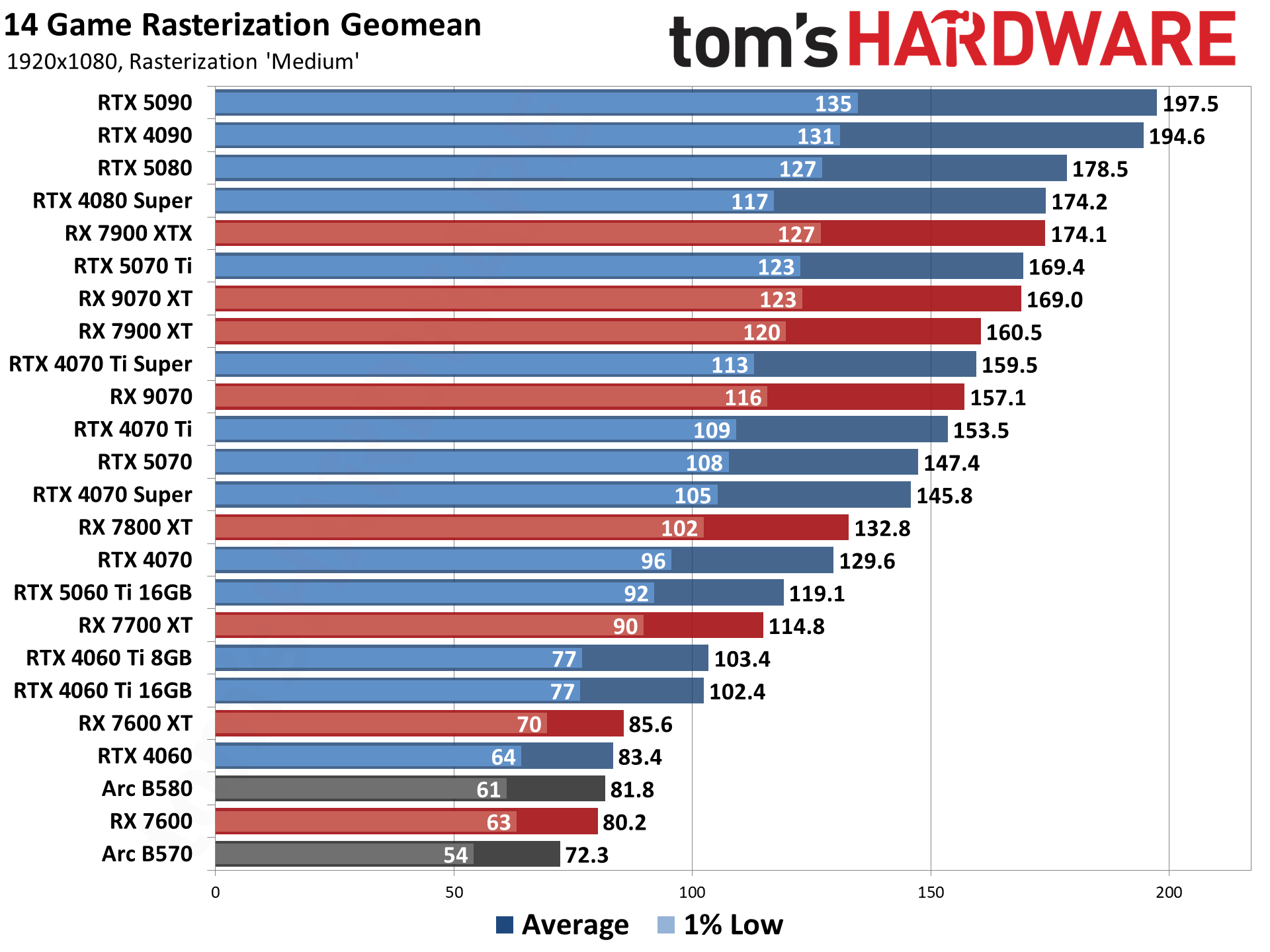
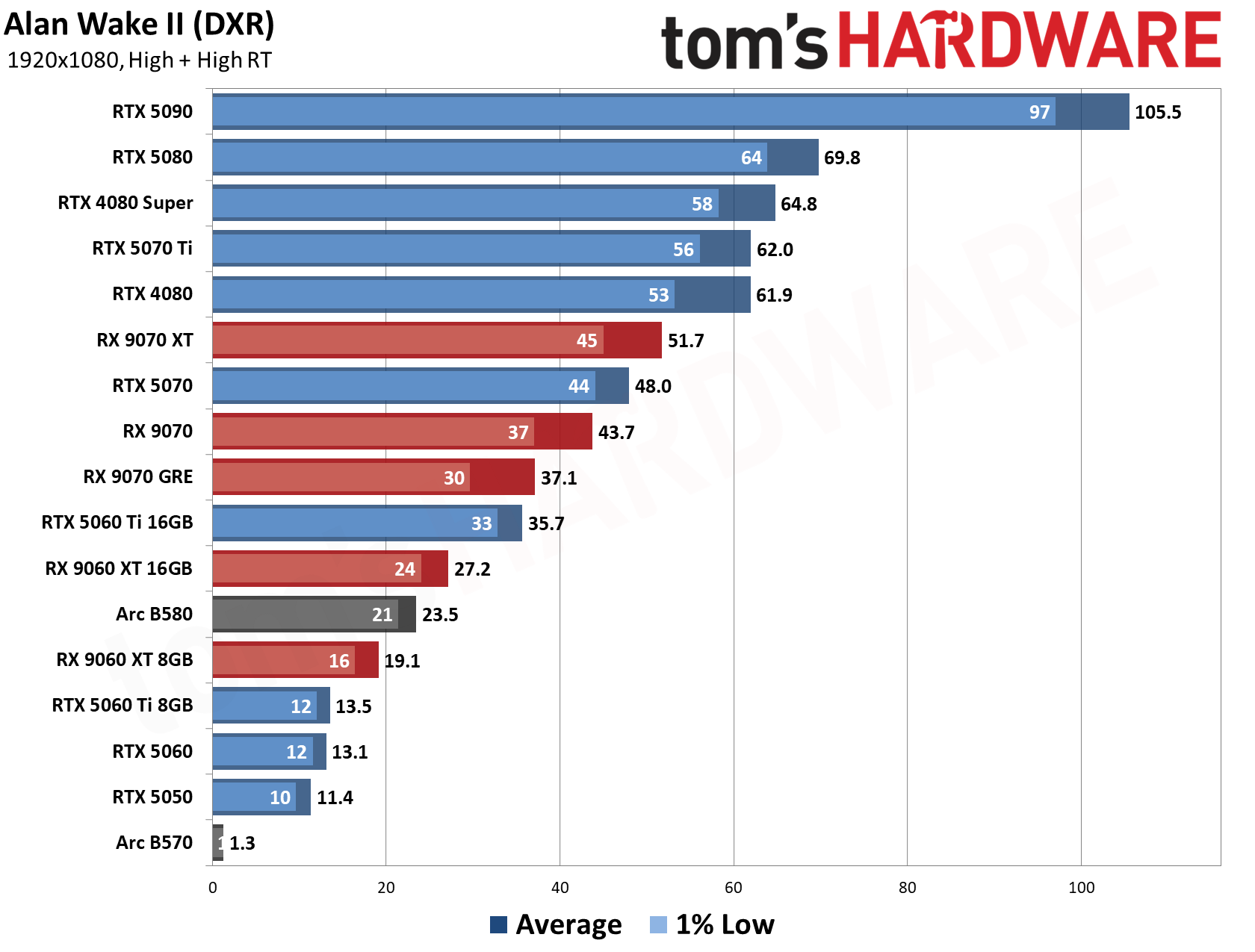
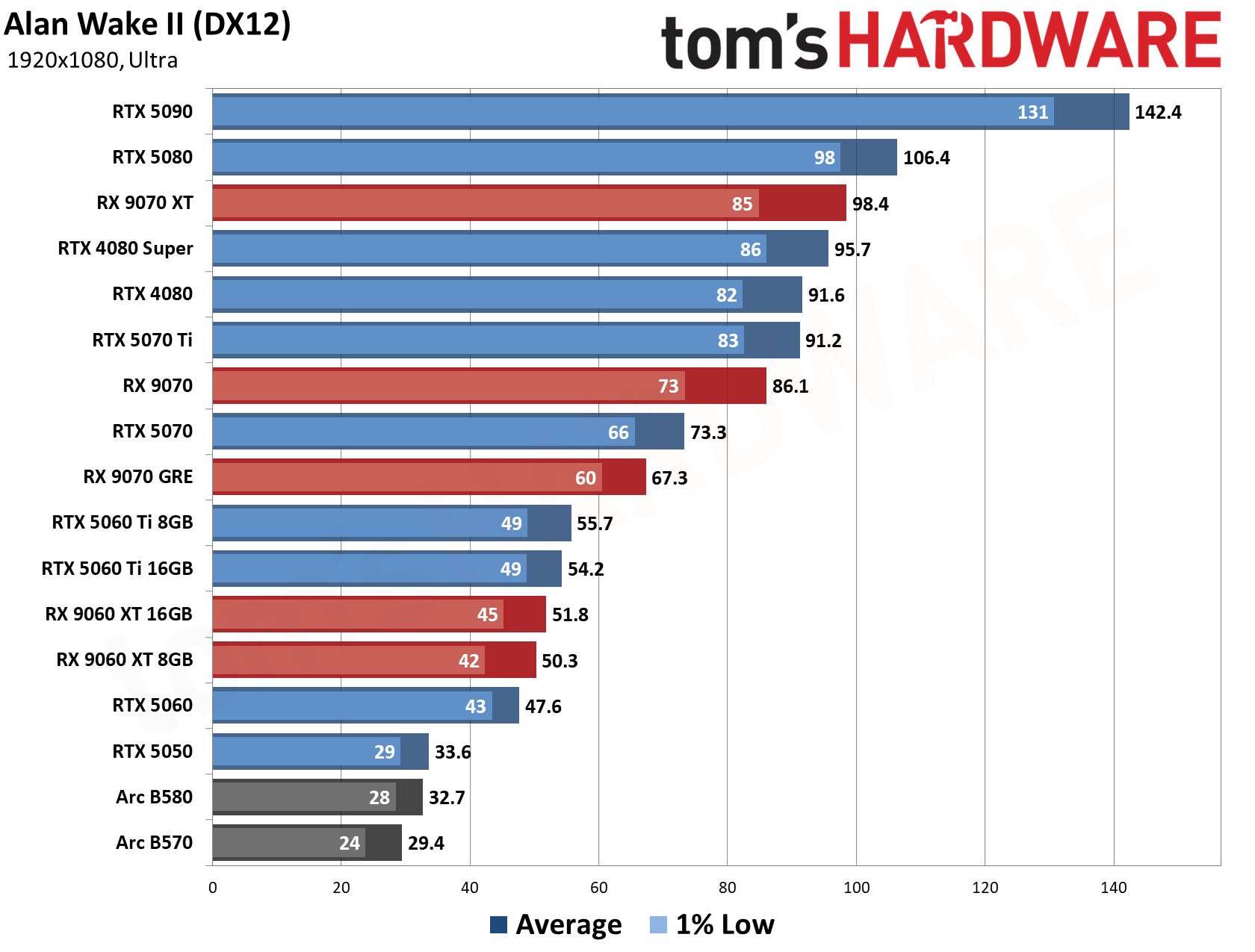
The RTX 5080 likewise needs no introduction. This behemoth features 16GB of GDDR7 VRAM and 10,752 CUDA cores. As you can see from our GPU hierarchy, that translates into average frames per second of 60 even at 4K, performance eclipsed only by the extremely powerful and expensive 5090. At 1440p, we clocked average fps of over 100. The 5080 will also unlock Nvidia's powerful DLSS 4.5 and new DLSS 5 technology for frame generation and neural rendering.
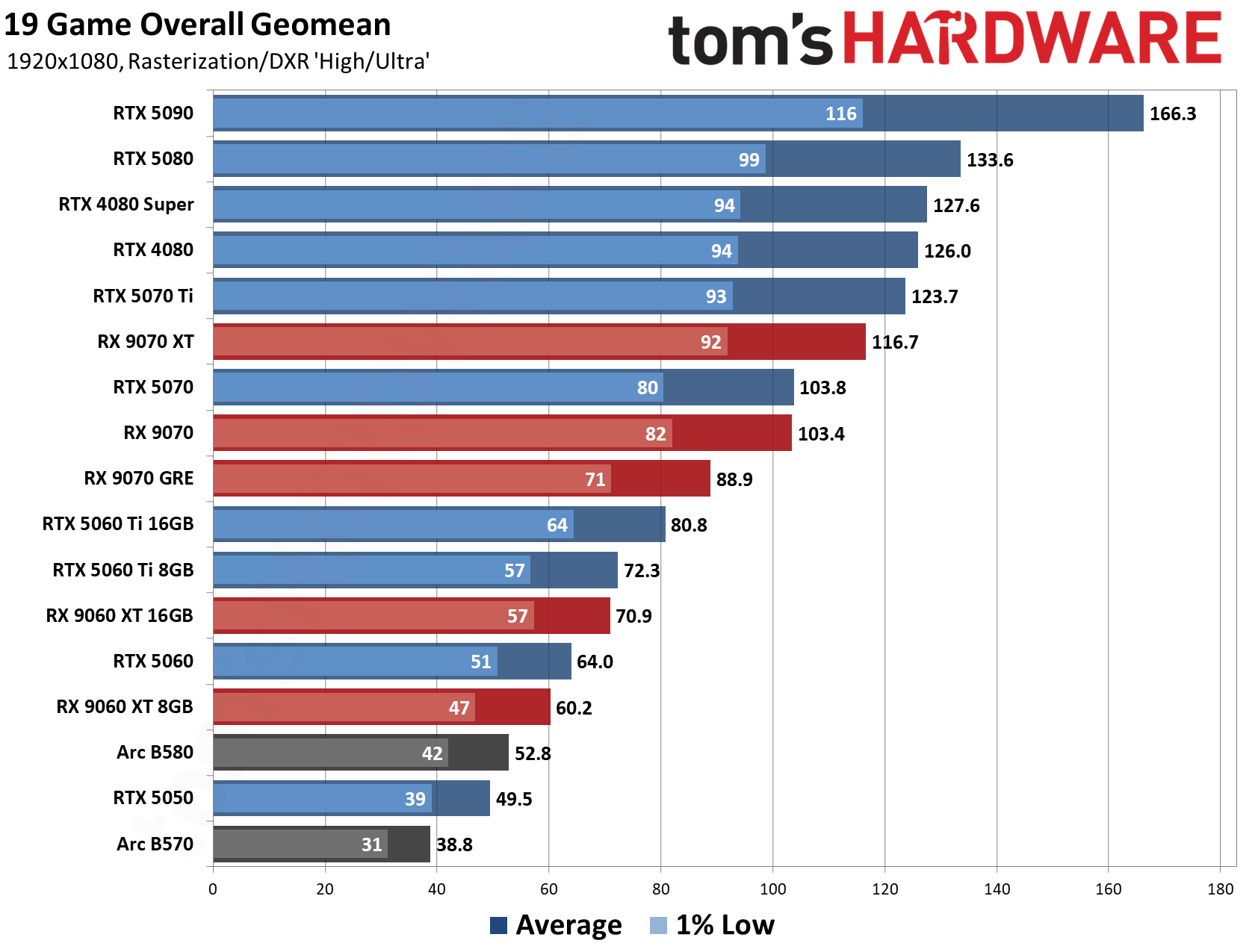
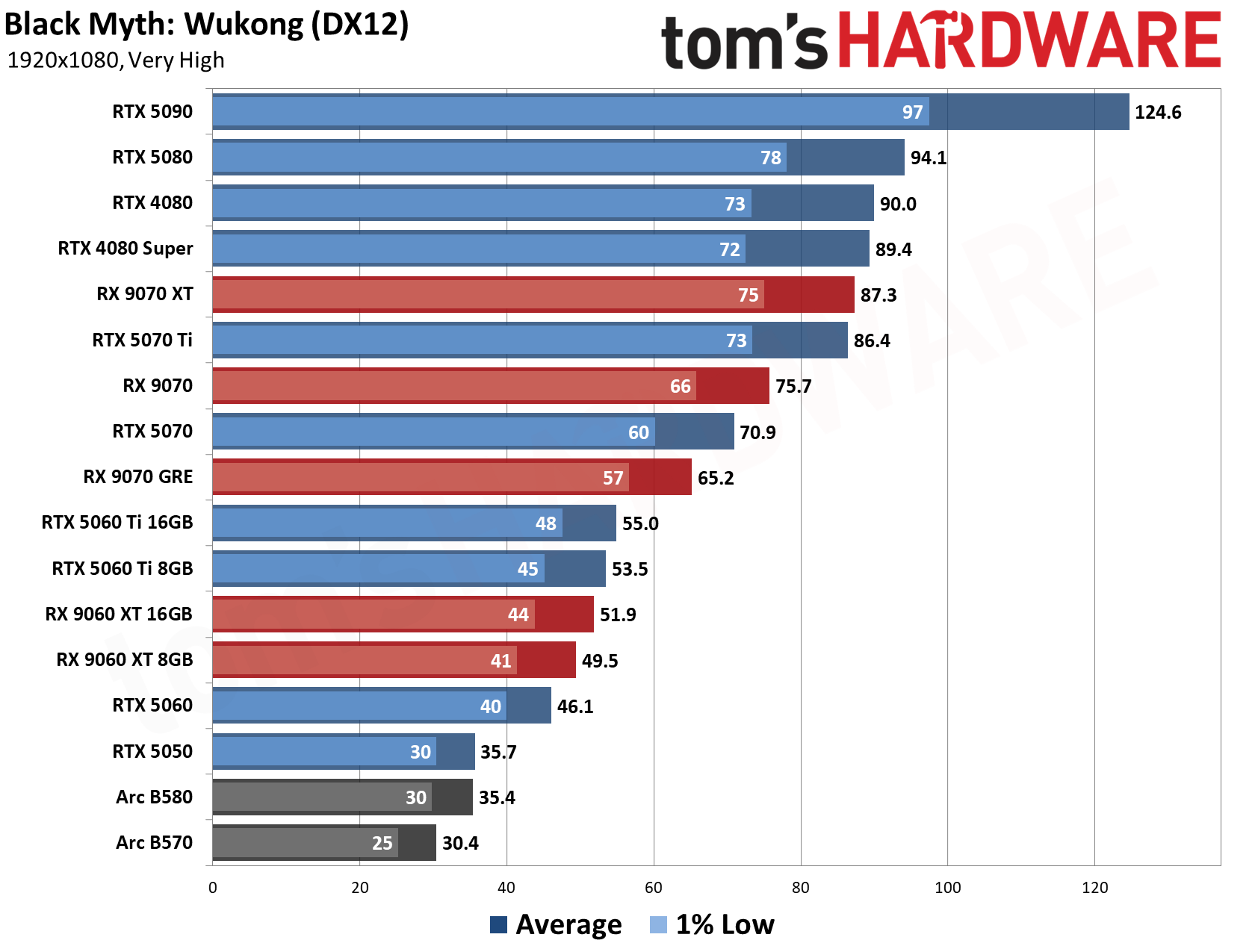
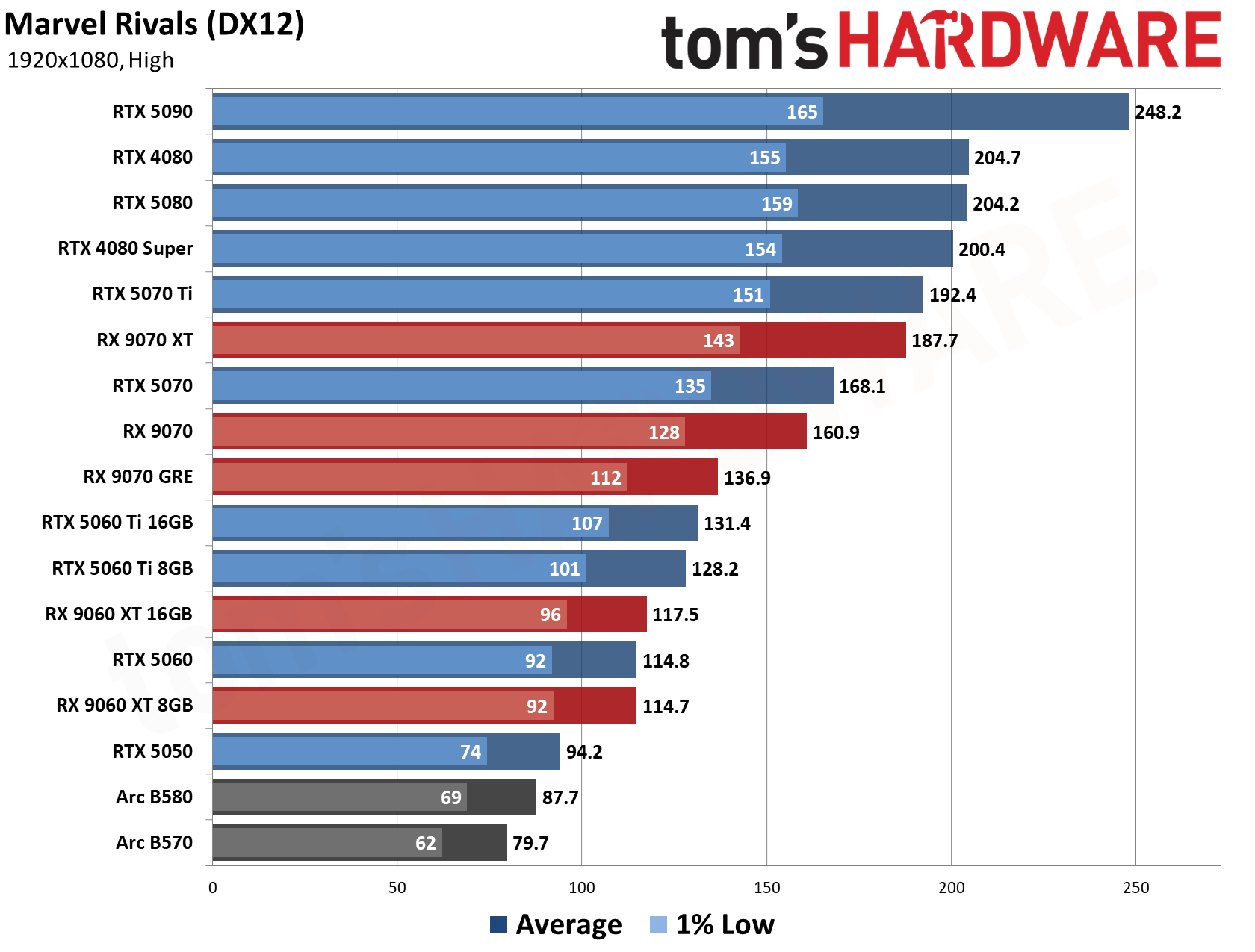
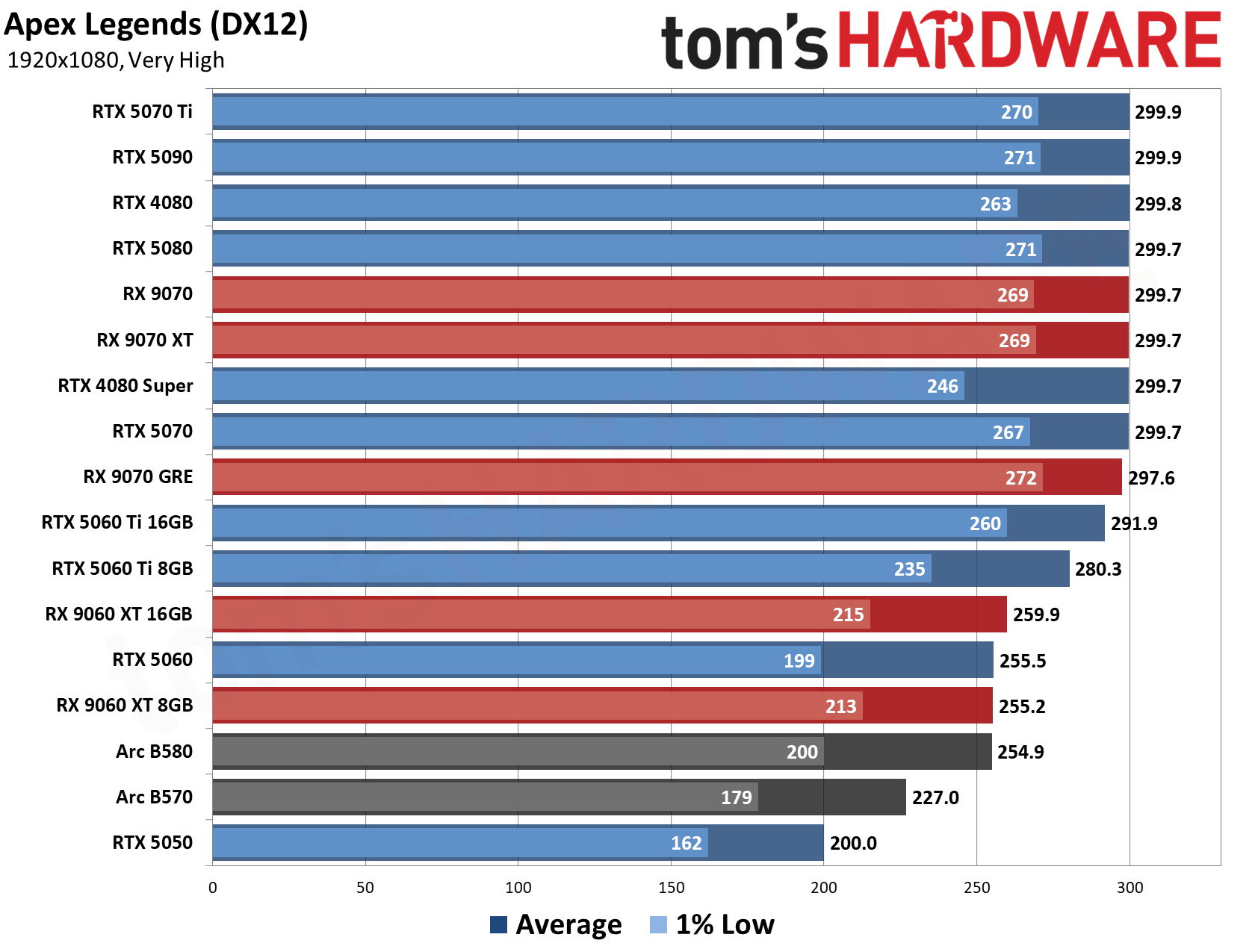
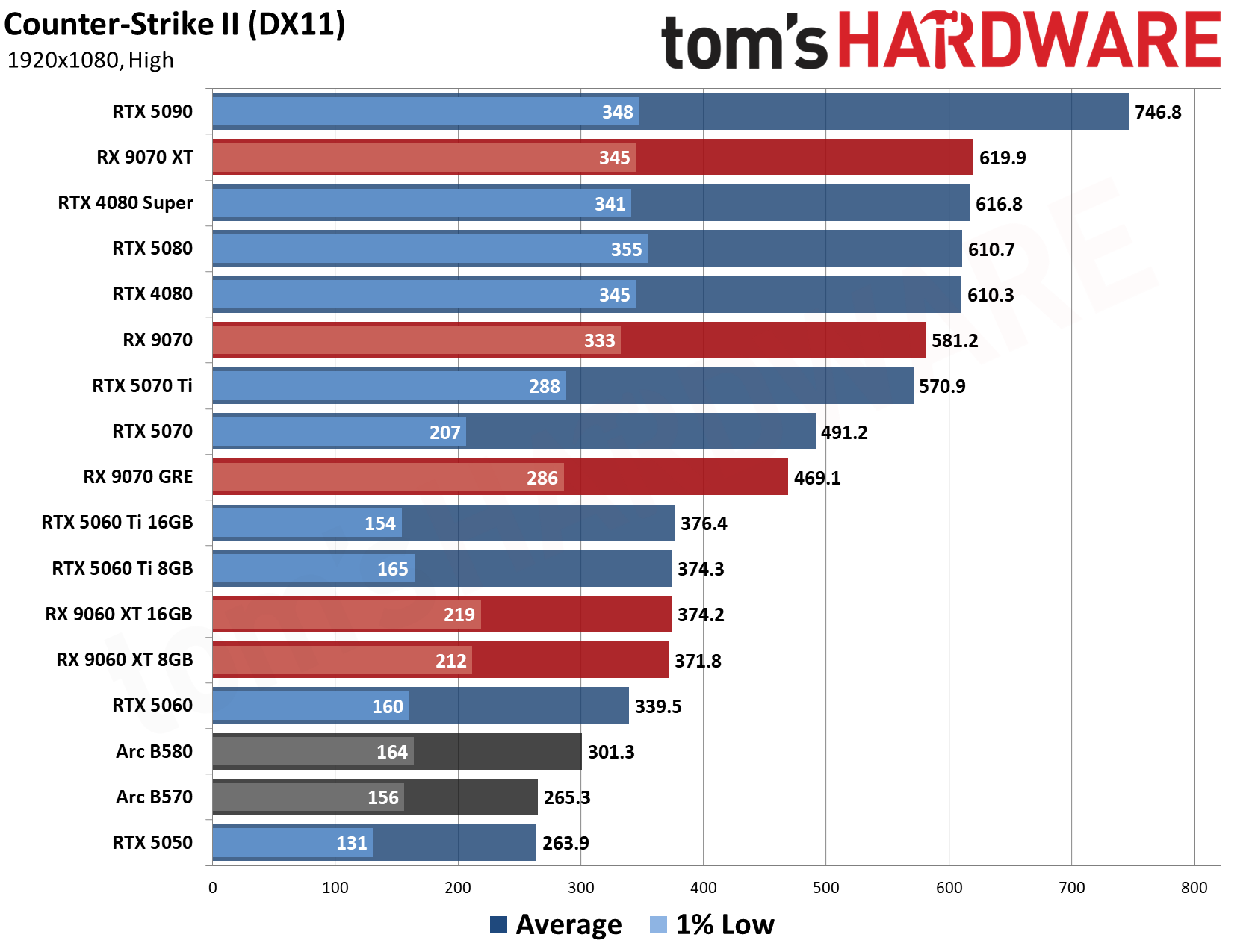
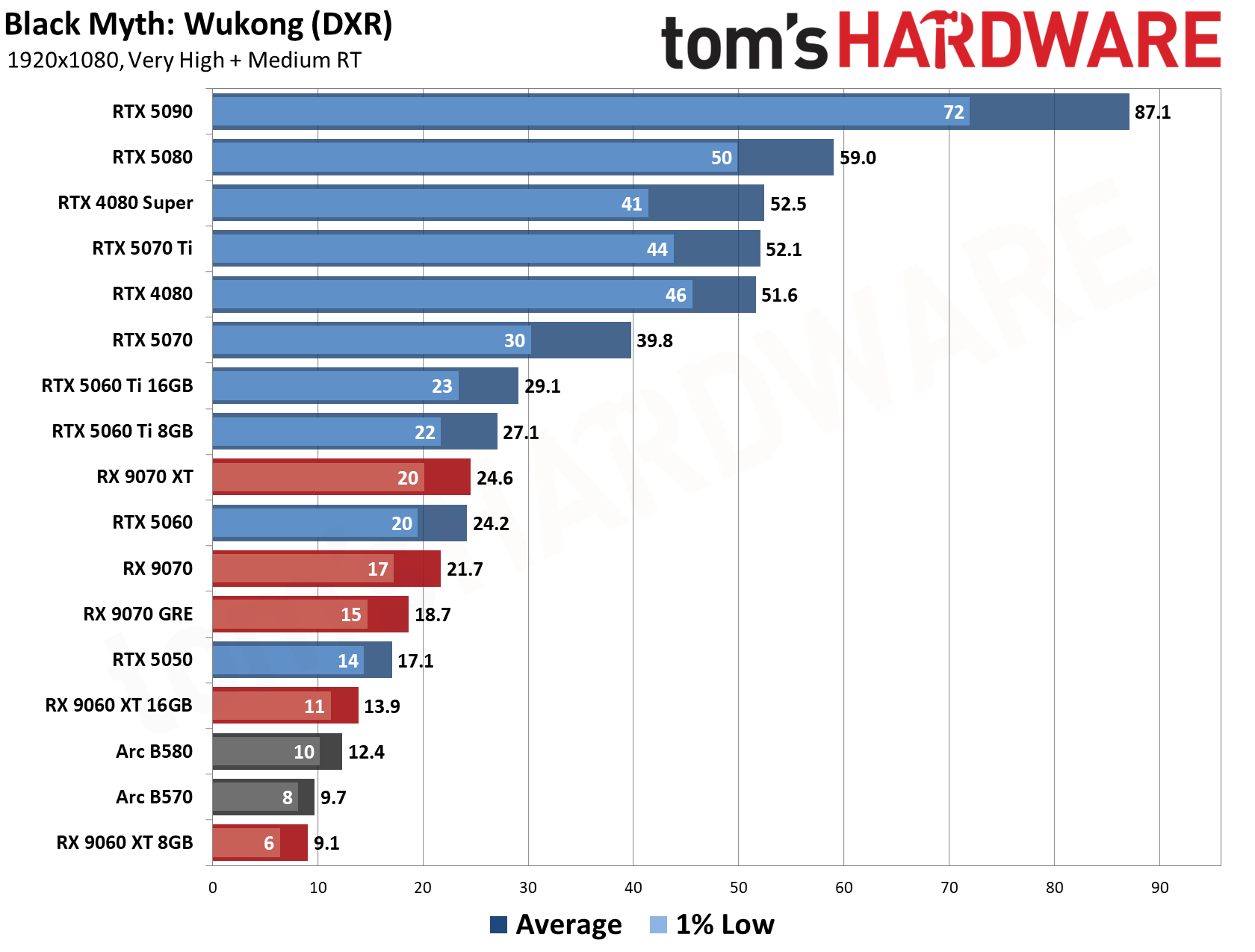
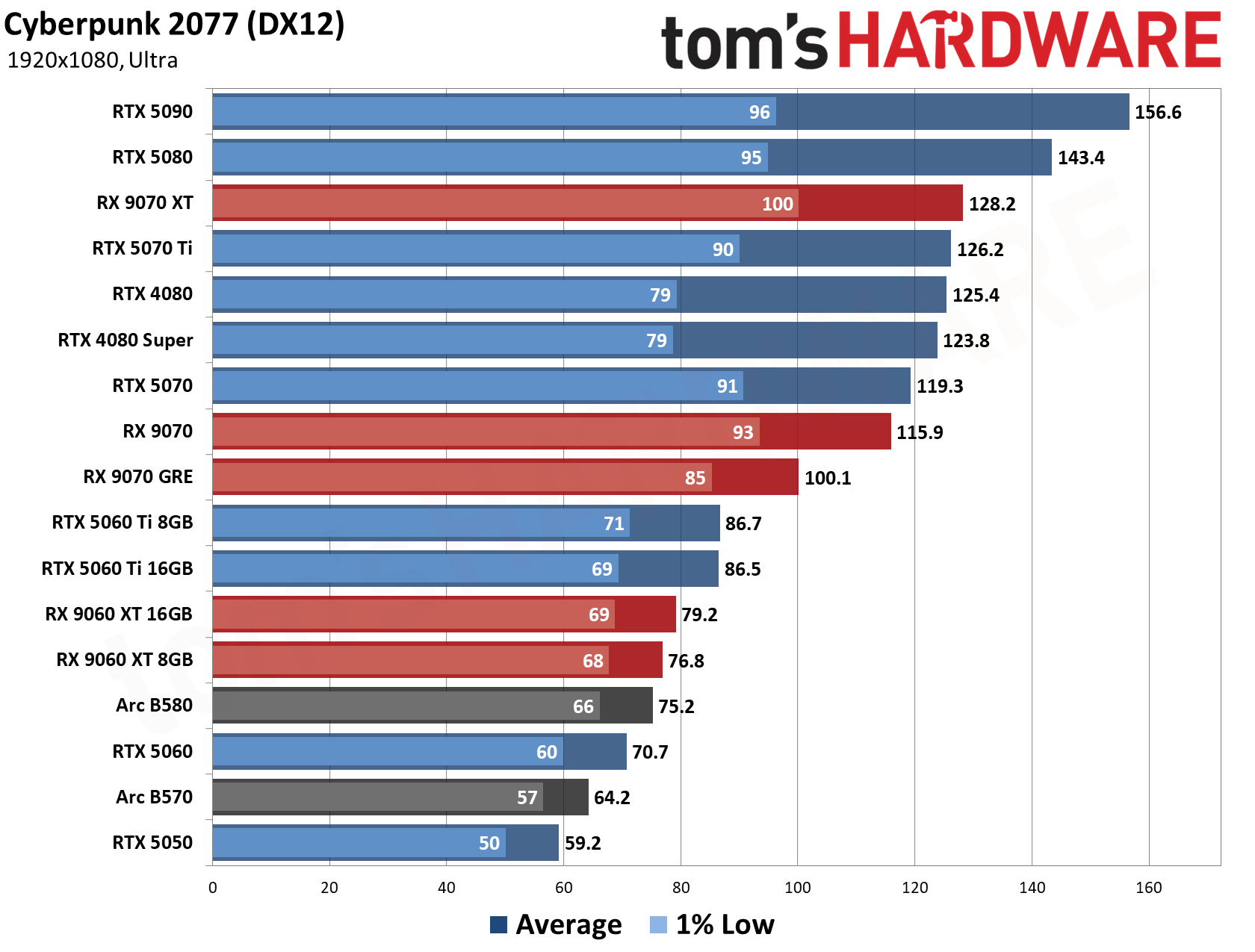
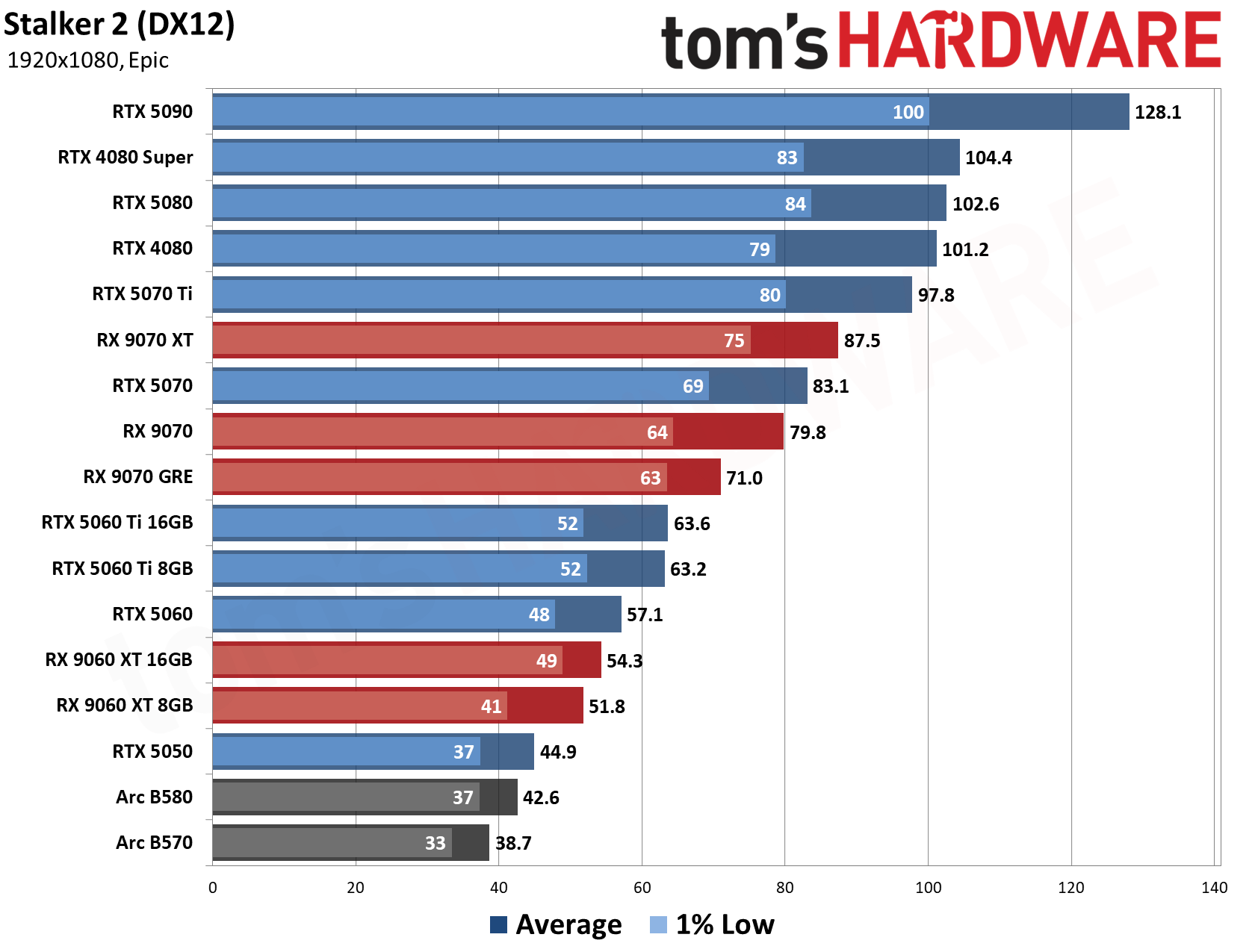
GPU Benchmarks Hierarchy 2026 - 1080 Performance Results
Future
GPU Benchmarks Hierarchy 2026 - 1080 Performance Results
Future
GPU Benchmarks Hierarchy 2026 - 1080 Performance Results
Future
GPU Benchmarks Hierarchy 2026 - 1080 Performance Results
Future
GPU Benchmarks Hierarchy 2026 - 1080 Performance Results
Future
GPU Benchmarks Hierarchy 2026 - 1080 Performance Results
Future
GPU Benchmarks Hierarchy 2026 - 1080 Performance Results
Future
GPU Benchmarks Hierarchy 2026 - 1080 Performance Results
Future
GPU Benchmarks Hierarchy 2026 - 1080 Performance Results
Future
GPU Benchmarks Hierarchy 2026 - 1080 Performance Results
Future
GPU Benchmarks Hierarchy 2026 - 1080 Performance Results
Future
GPU Benchmarks Hierarchy 2026 - 1080 Performance Results
Future
GPU Benchmarks Hierarchy 2026 - 1080 Performance Results
Future
GPU Benchmarks Hierarchy 2026 - 1080 Performance Results
Future
GPU Benchmarks Hierarchy 2026 - 1080 Performance Results
Future
GPU Benchmarks Hierarchy 2026 - 1080 Performance Results
Future
GPU Benchmarks Hierarchy 2026 - 1080 Performance Results
Future
GPU Benchmarks Hierarchy 2026 - 1080 Performance Results
Future
GPU Benchmarks Hierarchy 2026 - 1080 Performance Results
Future
GPU Benchmarks Hierarchy 2026 - 1080 Performance Results
Future
GPU Benchmarks Hierarchy 2026 - 1080 Performance Results
Future
GPU Benchmarks Hierarchy 2026 - 1080 Performance Results
Future

Headline components aside, this build features 32GB of Kingston Fury DDR5 6400 RAM, a fantastic addition considering it's easy to hide cheap, slow RAM inside a pre-built PC. The SSD is Team Group's NV5000 2TB Gen 4 drive, giving you plenty of storage and gaming performance. The motherboard is a Gigabyte B850 with Wi-Fi 6, giving you plenty of power and performance as well as room for expansion in the future. The build also features a 360mm AIO cooler for the CPU, Windows 11, and a 1000W 80 Plus Gold to keep everything running.

Nvidia's controversial DLSS 5 will launch September 3 with NBA2K27, company shares first benchmarks — available on all RTX 50 series GPUs, laptops, and GeForce NOW

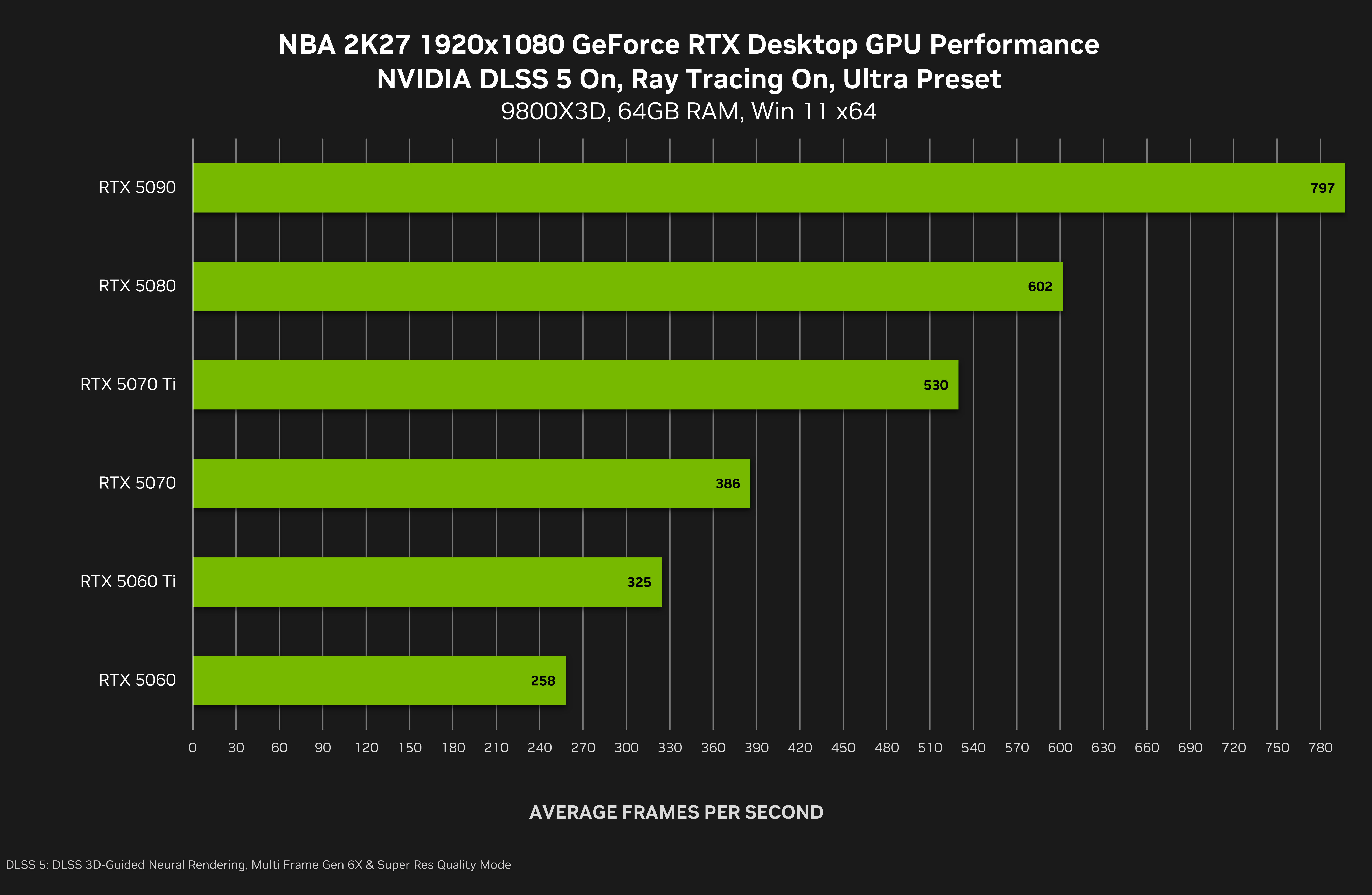
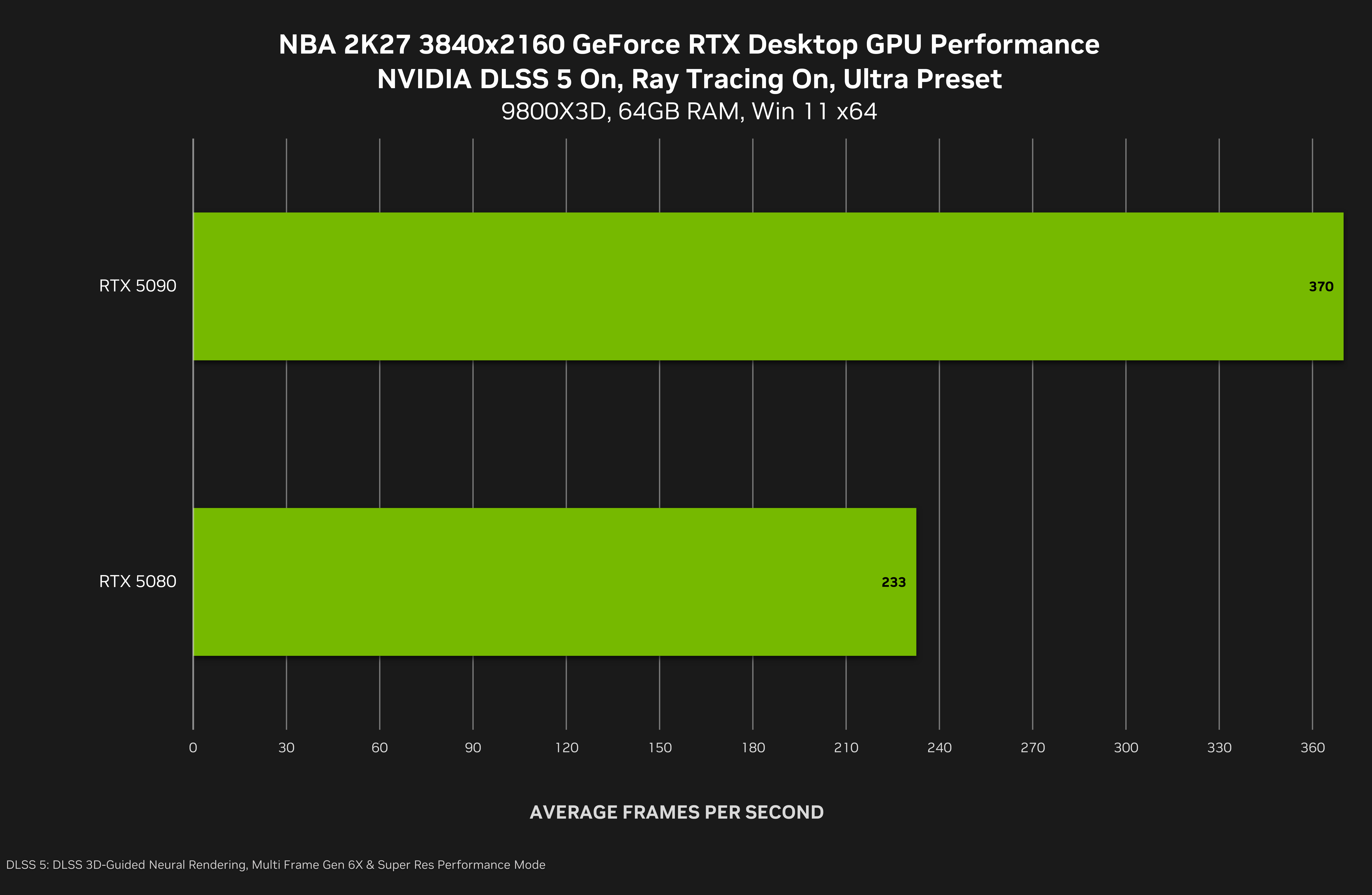
Following its announcement earlier this year, and just days after the DLL leaked inside NBA2K27, Nvidia has today confirmed that its controversial DLSS 5 will launch on September 3. Starting at 9 pm PT, the aforementioned NBA title will support DLSS 5 for all RTX 50 Series GPUs, laptops, and GeForce NOW. The company also shared its first in-house benchmarks of DLSS 5, which is expected to impact GPU performance.

As a series not primarily renowned for its graphical fidelity, NBA2K27 marks a fairly strange launch title for the tech, but Nvidia says that it has closely partnered with Visual Concepts and 2K to achieve "a new level of authentic sports experience for its players." The technology, which Nvidia officially dubs as 3D-guided Neural Rendering," will reportedly show players the natural passing of light through players' ears, light catching hair, and the natural lighting of skin "all while preserving the facial geometry scanned from real-world athletes."

DLSS 5 is not without controversy. As we explained during our first look at DLSS 5 back in March, DLSS 5's AI model "is trained to infer how certain complex features of game scenes like characters, skin, hair, and environmental lighting “should” look in the real world given certain inputs from the game engine (including, but not limited to, the color buffer and motion vectors) in combination with an input frame." While deep integration with a game's engine and assets should make it more consistent and predictable than run-of-the-mill generative AI imagery, that promise hasn't stopped some critics from raising severe objections to its premise since its initial reveal.

CEO Jensen Huang described DLSS 5 as "the GPT moment for graphics — blending hand-crafted rendering with generative AI to deliver a dramatic leap in visual realism while preserving the control artists need for creative expression.”

Its launch in NBA2K27 will mark the first time the technology debuts in a playable title, marking our first "fair" assessment of its capabilities.
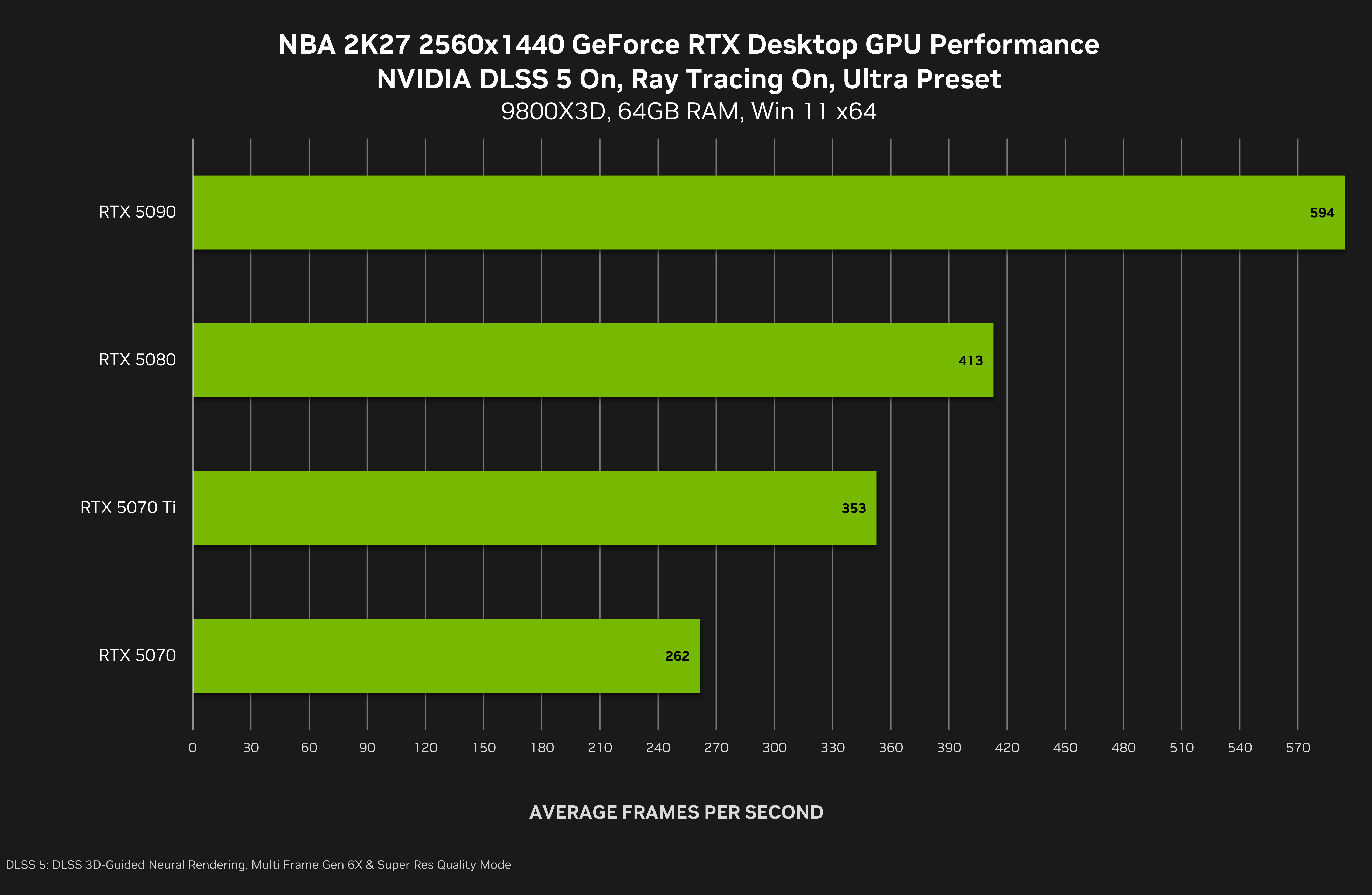
DLSS 5 is very resource-intensive, with early testing and indications hinting at quite severe drops in frame rate when using the tech. As expected, Nvidia has confirmed DLSS 5 will only work with RTX 50-series GPUs and mobile GPUs, as well as through GeForce Now. Other older generation cards are left out in the cold for now. Along with the announcement, Nvidia has shared its first in-house benchmarks of DLSS 5 RTX Desktop performance.
While these are difficult to contextualize (they only show one game) and should be taken with the usual grain of salt for marketing material, they are interesting in one clear sense. Nvidia has pointedly only shared 4K results for its RTX 5090 and 5080, possibly hinting at the company's expectations of diminished results on anything less powerful, though cards lower in the stack do appear below 4K resolutions.

Nvidia DLSS 5 benchmarks
Nvidia
Nvidia DLSS 5 benchmarks
Nvidia
Nvidia DLSS 5 benchmarks
Nvidia

The recent DLL leak has led to some modders porting it to older RTX 40-series cards, or even older Ampere or Turing GPUs, with predictably varying results.

Samsung's new 2TB 990 SSD is 36% off at Amazon — nearly $200 off this Gen 4 all-rounder

2026年8月28日 18:37

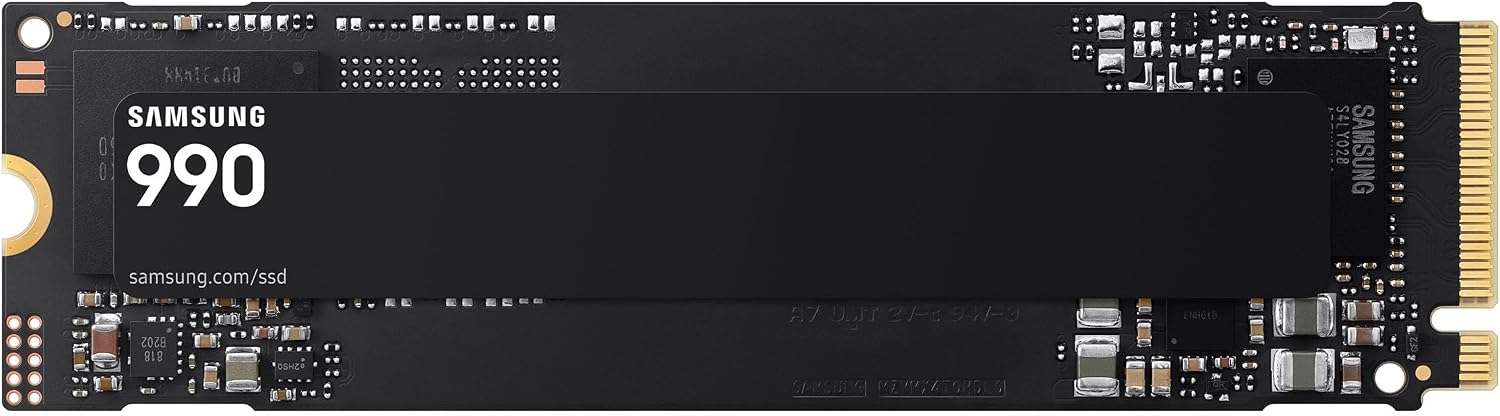
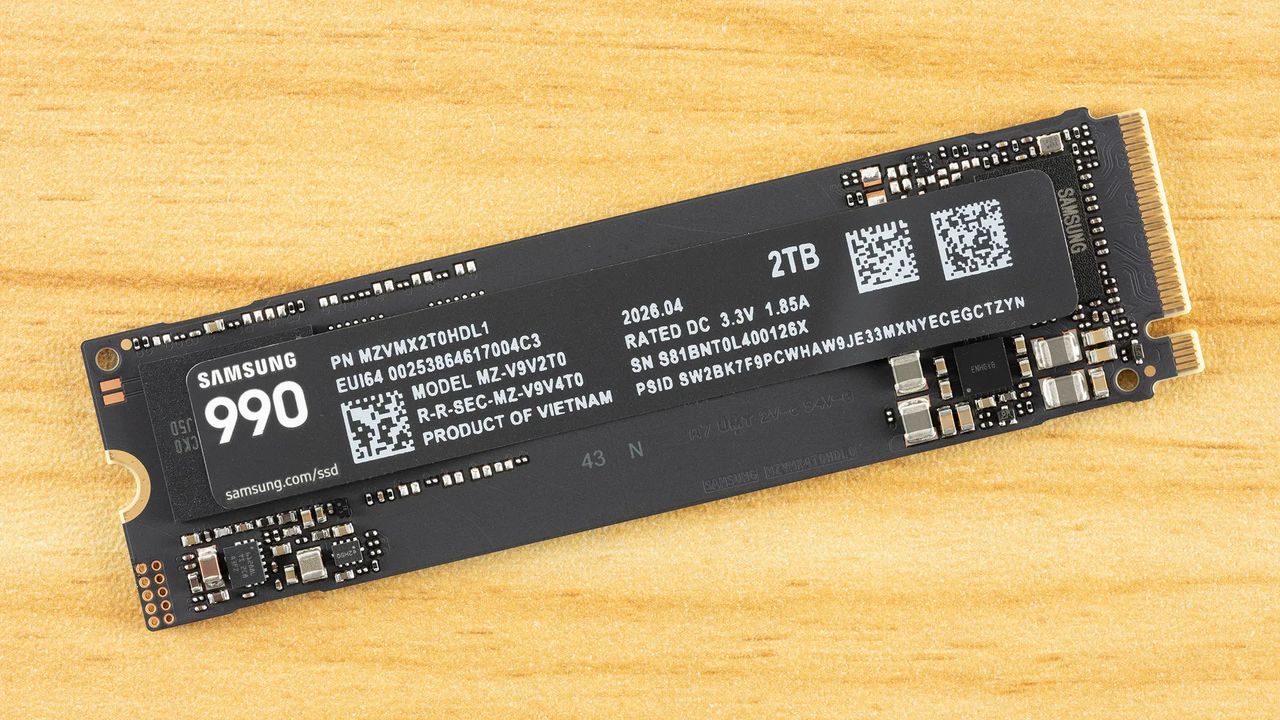
While SSD pricing isn't quite as bad as RAM, buying more storage for your PC is tough these days. Samsung recently released a new 'budget' version of its 990 M.2 SSD, and it just got a decent discount at Amazon. The 990 2 TB SSD is now $339 instead of $529, a 36% saving.

● Grab this deal at Amazon

The 990 SSD is an interesting product because it is one of the few SSDs released after the AI pricing crunch sent storage prices into orbit. As such, we know what Samsung thinks this drive is worth in the current climate, namely $529. While 2TB of storage would have been much cheaper a year ago, a 36% discount on a new SSD is not to be sniffed at, especially given all signs point to these drives getting more expensive, not cheaper, in the future.

990 2TB SSD: was $529.99 now $339.99
Save 36% on an M.2 Gen 4 SSD with up to 7,250/6,450 MB/s sequential read/write speeds.View Deal

We reviewed this drive at launch last month and liked its full-fledged Gen 4 throughput, decent power consumption, and good all-around performance. The 990 is essentially a QLC-based 990 EVO Plus, featuring Samsung's PiccoloQ controller and V9 QLC Flash memory.

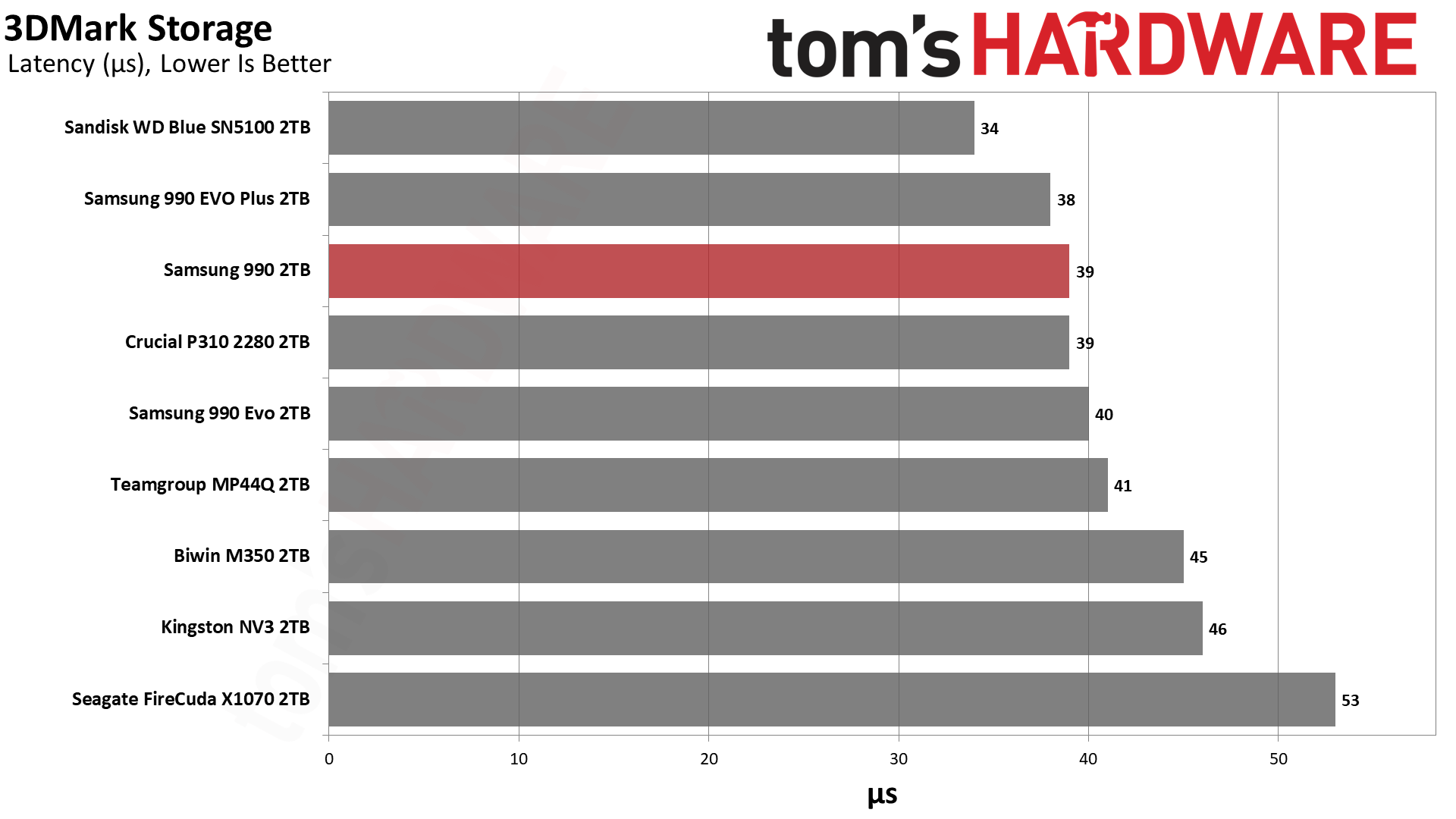
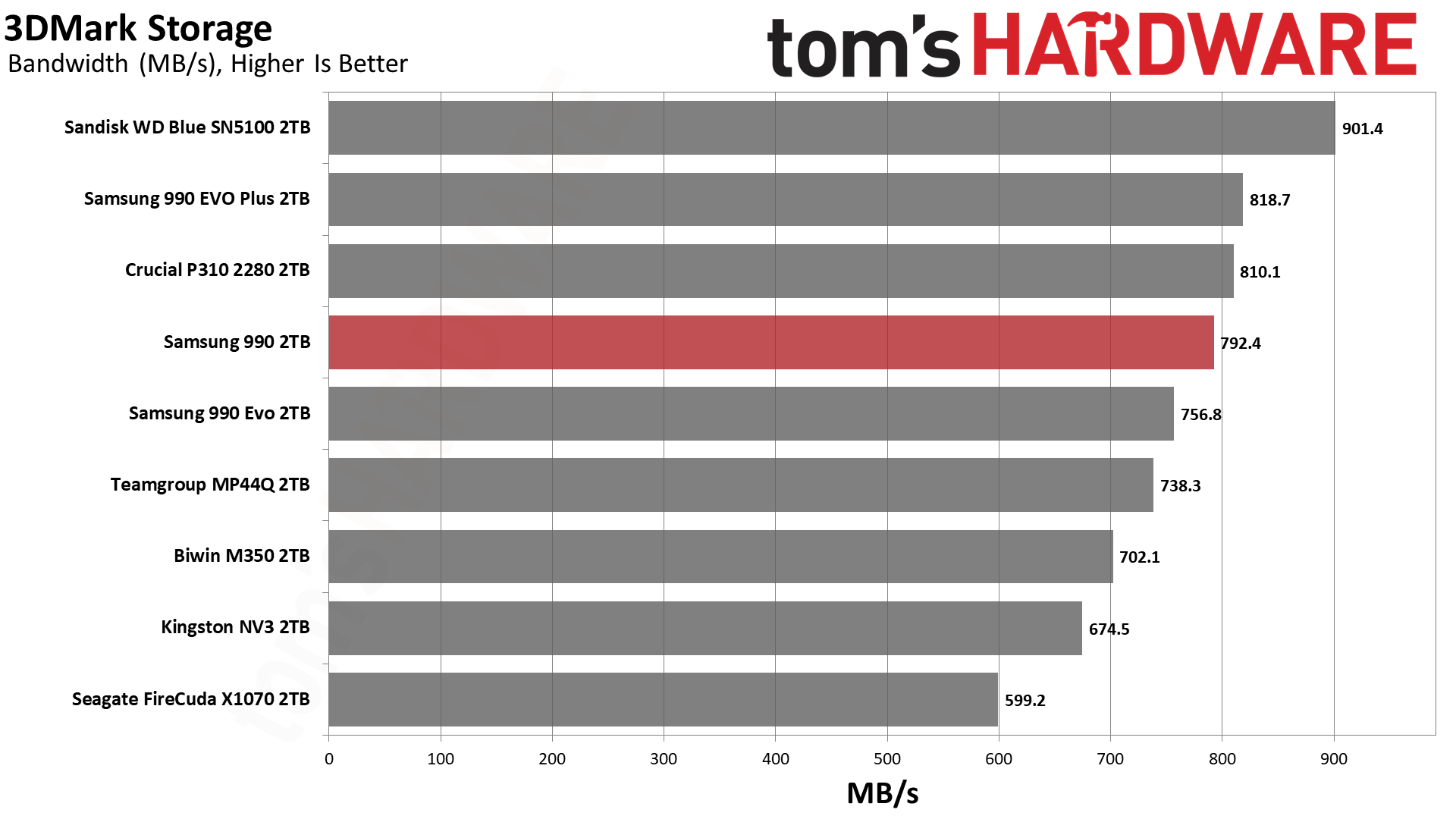
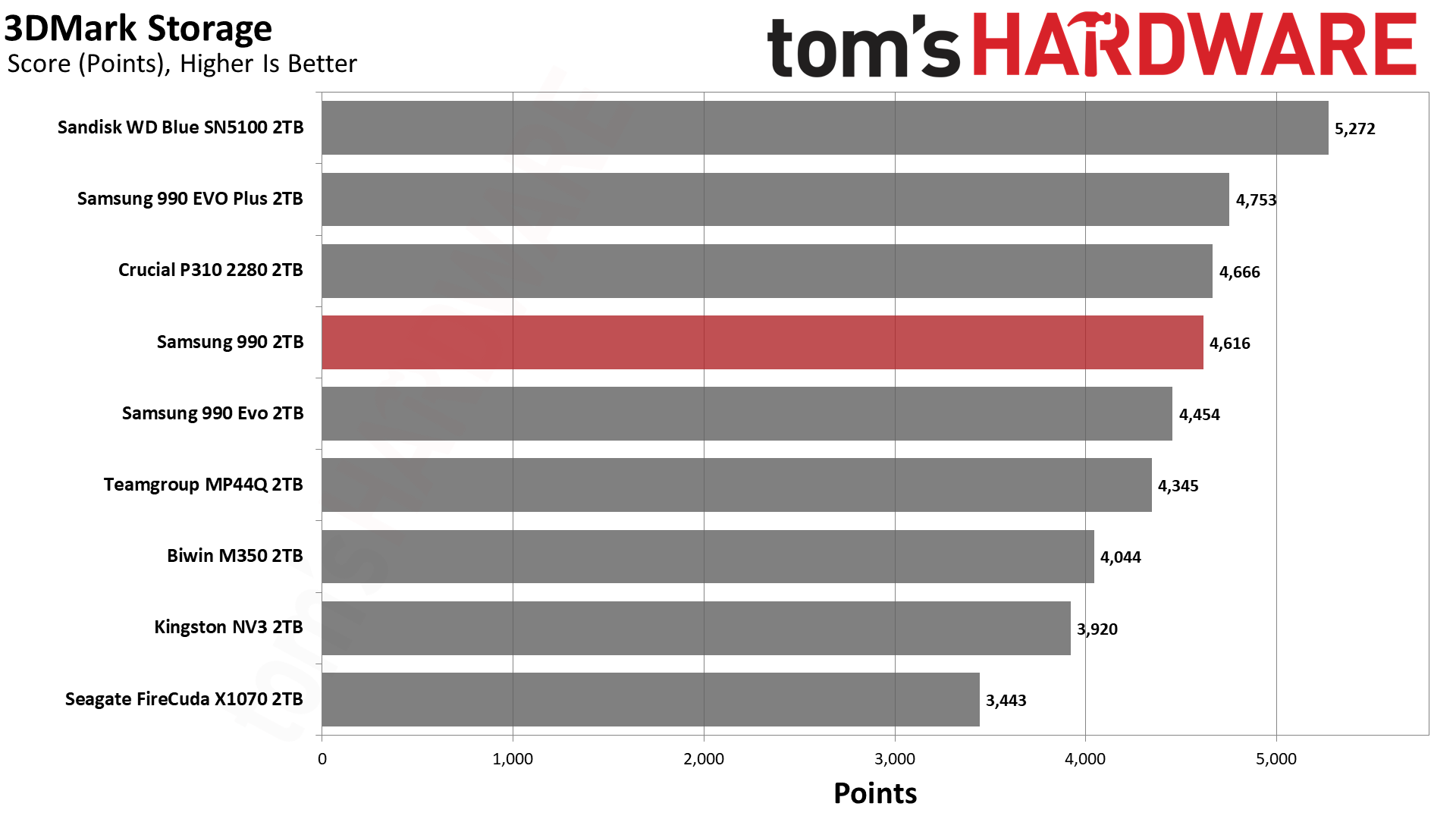
As you can see from our testing data, it scores very close to the 990 EVO Plus in latency testing, while beating the 990 Evo drive in bandwidth and 3DMark overall score.

Samsung 990 2TB SSD
Samsung
Samsung 990 2TB SSD
Samsung
Samsung 990 2TB SSD
Samsung

This drive also scored well in our PS5 test, so this drive could serve as an expansion drive for your PlayStation if you so choose. At its list price, this drive makes no sense as a purchase up against the 990 Pro or Samsung's Gen 5 9100, but at this price it is a good chunk cheaper than both of those options. Amazon does have a 39% discount on the 990 Pro 2TB, now $389 instead of $639 if you want to spend a bit more on that slightly more performant drive. Or, if your motherboard supports Gen 5, you might want to eat the $60 jump for the 9100 Pro 2TB, currently $399 at Amazon. This regular 990 also has a 1TB model on sale, but that discount is just 13%, so its $199.99 price tag makes it poorer value compared to the 2TB model.

As always with storage deals, these prices are tough to stomach, but they aren't going to improve any time soon. In fact, all signs point to the AI pricing crunch continuing to make things worse going forward, meaning leaving it too long could make storage even more expensive in the future.

Beat PC component price rises with this unbelievably good value 9800X3D gaming desktop — get an RTX 5070, 32GB of DDR5, and a 2TB SSD all for less than $2,000

2026年8月27日 18:44

Gaming PC building is getting more expensive by the minute, but price hikes on RAM, SSDs, and GPUs are filtering down more slowly to pre-built gaming desktops, making them better value than DIY in this economy. Best Buy has slashed $300 off this CyberPowerPC, which gets you a very potent 9800X3D CPU, RTX 5070 GPU, 32GB of DDR5, and a 2TB SSD for $1,999.

● Check out this deal at Best Buy

This gets you the best gaming CPU on the market, a mid-range GPU perfect for 1440p gaming, and ample RAM and storage in an economy where all of those commodities are increasingly hard to find. The 32GB of DDR5 RAM will cost you $400 alone, while a Gen 4 2TB SSD is around $250 minimum. The GPU in this build is also now $800, which means that on those three components alone, you'd be spending nearly $1,500. That's before you factor in the $464 CPU, accounting for nearly the entire price of this build before you've considered a motherboard, PSU, case, cooling, and the build cost.

CyberPowerPC - Gaming Desktop - AMD Ryzen 7 9800X3D 2024 - NVIDIA GeForce RTX 5070 12GB - 32GB DDR5 Memory - 2TB SSD Storage: was $2299.99 now $1999.99
With the best gaming CPU, a 12GB RTX 5070, 32GB of DDR5 5600, 2TB SSD, Wi-Fi 6, 850W power supply, and Windows 11, this $1,999 is great value in the current market. View Deal

The AMD Ryzen 7 9800X3D is the best gaming CPU on the market thanks to its 8-core, 16-thread power with boost clocks of up to 5.2 GHz. The standout feature is its 3D cache technology, which drastically improves fram rates, as you can see from our gaming benchmark data below.

Best CPUs for Gaming
Tom's Hardware
Best CPUs for Gaming
Tom's Hardware
Best CPU for Gaming
Tom's Hardware

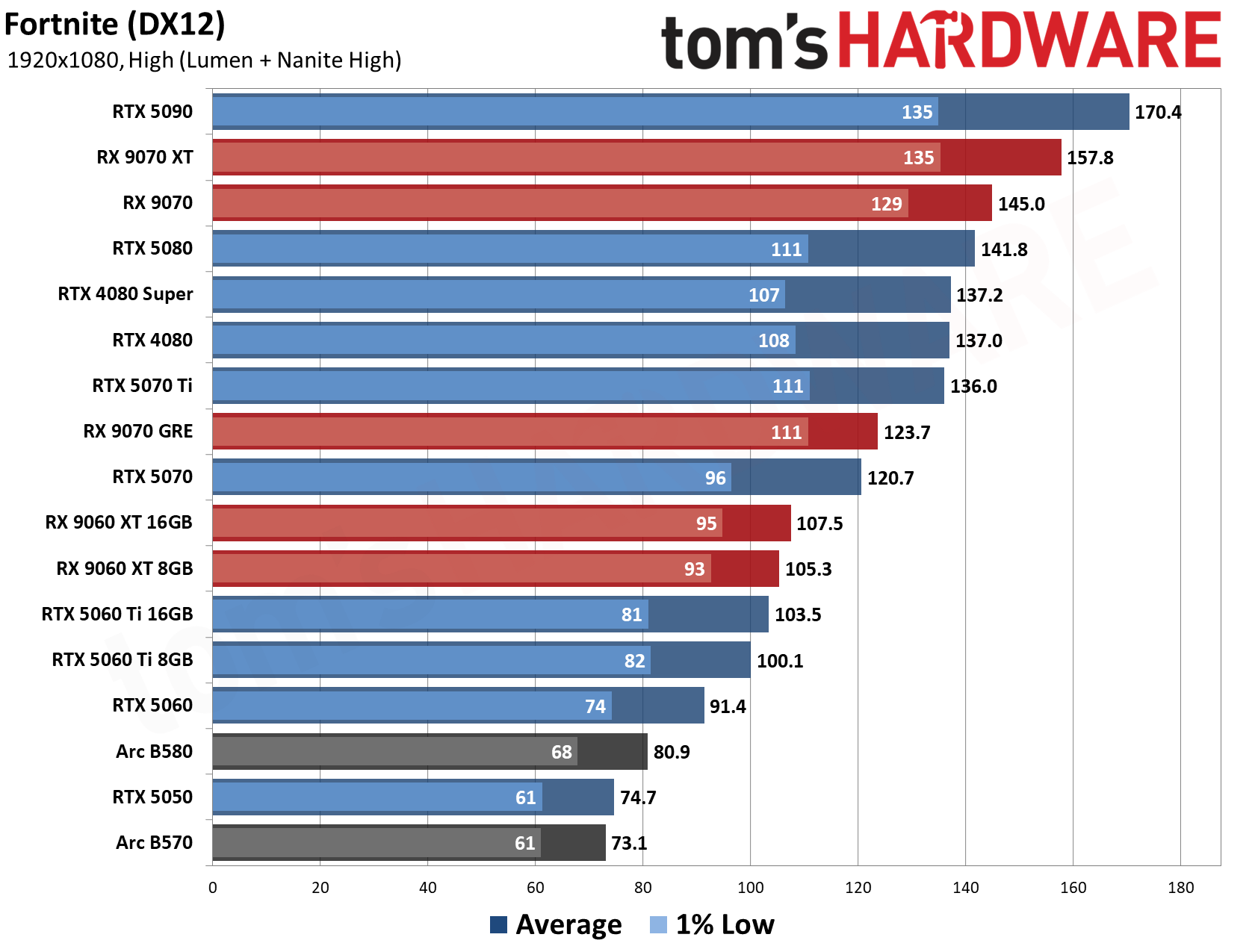
The RTX 5070 is an excellent pairing; with 12GB of VRAM, it's an ample card for 1440p gaming, or 4K at a push if you use Nvidia DLSS. As you can see, the 5070 averages 74 frames per second in our 19-game testing suite at 1440p.

GPU Benchmarks Hierarchy 2026 - 1440p Performance Results
Future
GPU Benchmarks Hierarchy 2026 - 1440p Performance Results
Future
GPU Benchmarks Hierarchy 2026 - 1440p Performance Results
Future
GPU Benchmarks Hierarchy 2026 - 1440p Performance Results
Future
GPU Benchmarks Hierarchy 2026 - 1440p Performance Results
Future
GPU Benchmarks Hierarchy 2026 - 1440p Performance Results
Future
GPU Benchmarks Hierarchy 2026 - 1440p Performance Results
Future
GPU Benchmarks Hierarchy 2026 - 1440p Performance Results
Future
GPU Benchmarks Hierarchy 2026 - 1440p Performance Results
Future
GPU Benchmarks Hierarchy 2026 - 1440p Performance Results
Future
GPU Benchmarks Hierarchy 2026 - 1440p Performance Results
Future
GPU Benchmarks Hierarchy 2026 - 1440p Performance Results
Future
GPU Benchmarks Hierarchy 2026 - 1440p Performance Results
Future
GPU Benchmarks Hierarchy 2026 - 1440p Performance Results
Future
GPU Benchmarks Hierarchy 2026 - 1440p Performance Results
Future
GPU Benchmarks Hierarchy 2026 - 1440p Performance Results
Future
GPU Benchmarks Hierarchy 2026 - 1440p Performance Results
Future
GPU Benchmarks Hierarchy 2026 - 1440p Performance Results
Future
GPU Benchmarks Hierarchy 2026 - 1440p Performance Results
Future
GPU Benchmarks Hierarchy 2026 - 1440p Performance Results
Future
GPU Benchmarks Hierarchy 2026 - 1440p Performance Results
Future
GPU Benchmarks Hierarchy 2026 - 1440p Performance Results
Future

The rest of this PC's specs are also pretty positive. 32GB of DDR5 RAM and 2TB of SSD Gen 4 storage are considered generous in today's market, so you've got enough RAM for multitasking and gaming as well as plenty of storage. Liquid cooling is more than enough for this processor, and the B850 motherboard will provide plenty of ports for connectivity as well as headroom for expansion.

Ultimately, the selling point of this PC is the price; given the current market cost of its components, you're saving a small fortune versus building a PC like this yourself. As mentioned, the $800 GPU, $464 CPU, $400 RAM, and $250 SSD make it a worthwhile purchase.

Xbox announces new disc-to-digital feature for physical media — lets players claim digital versions of their games, with support for Play Anywhere and Cloud Gaming

2026年8月26日 23:08

Xbox has unveiled its long-rumored new disc-to-digital service, which will let players who own physical copies of games claim digital entitlements, playing them as if they own digital copies. In an announcement, Microsoft confirmed support will include digital benefits such as Xbox Play Anywhere and Xbox Cloud Gaming.

"Players have spent decades building their XBOX libraries. Some games were purchased on disc. Some were purchased digitally. Many span multiple generations of hardware," the company stated in a blog post on Xbox Wire. Microsoft says the new feature "brings the benefits of digital to physical discs." Xbox Insiders can test the feature from August 31.

The company says that "most" disc-based games for Xbox One and Series X support the new feature. If you insert a game disc into your Xbox One or Series X, you can claim a "digital entitlement" by launching the game.

That means that games you own on disc will be accessible through your digital library, including support for Xbox Play Anywhere and Xbox Cloud Gaming "where supported."

You can also keep using your physical copy as normal. Microsoft says that "thousands" of titles are supported, with more being added over time, but confirms that not every title will be available at launch.

The news will be of some comfort to fans of physical media, especially given recent developments in the gaming sphere, notably Sony's decision to end physical media with its next console. While the move does give physical media a new lease of life in some regards, it still marks a shift away from physical media towards online, digital libraries, encouraging users to transition from physical to digital.

Get an RTX 5080 gaming PC for just $2,349 — $750 Best Buy discount is a great way to beat inflated component prices

2026年8月26日 18:56

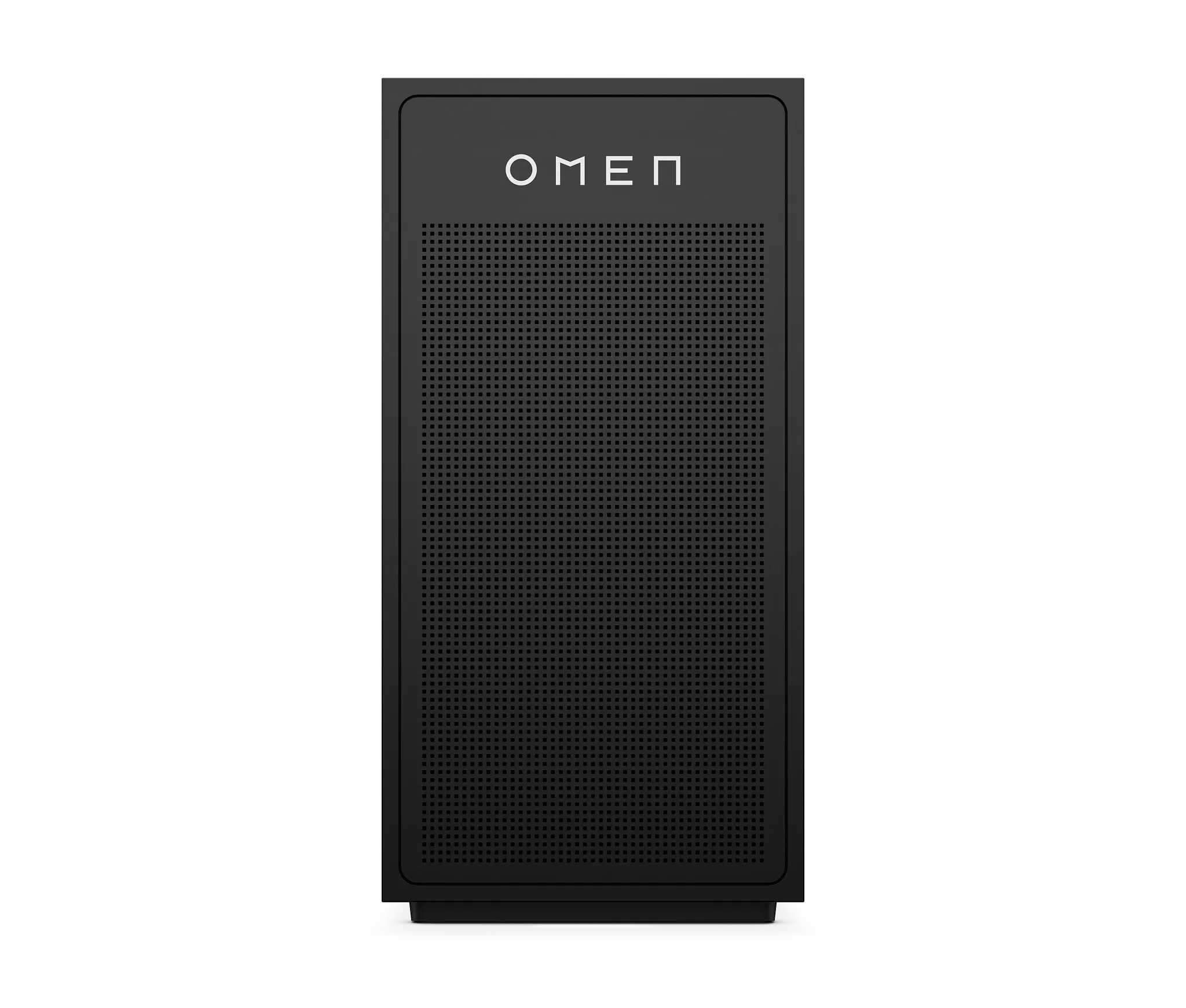
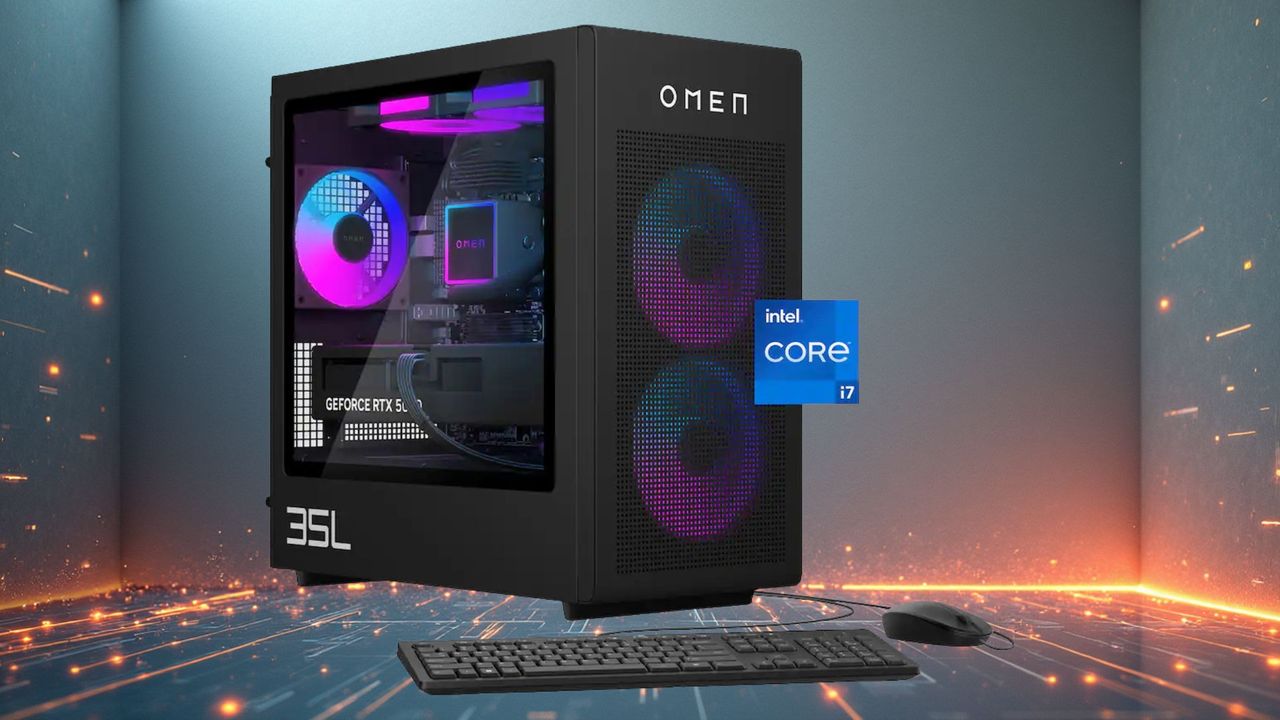
Buying a pre-built gaming PC remains one of the surest ways to skirt exorbitant RAM and SSD pricing, as AI drives up the cost of DIY components. Right now at Best Buy, you can get an HP Omen 35L Gaming Desktop with an RTX 5080, a graphics card selling for $1,500 right now, 32GB of DDR5 RAM, 1TB SSD, and an Intel Core i7 CPU for just $2,349, a $750 saving.

Get this deal at Best Buy

Thanks to a slightly older but no less capable processor, this is a bit of a sleeper deal that is really good value in the current market. As noted, the GPU alone now costs around $1,500 to buy. 32GB of DDR5 RAM is $400, so you've almost spent $1,900 on just two components, before you factor in the SSD, CPU, motherboard, cooler, PSU, and case.

Omen 35L (RTX 5080): was $3099.99 now $2349.99
The huge saving on this HP Omen 35L gaming PC gets you a rig with an RTX 5080, Intel Core i7 14700F, 32GB of DDR5, and a 1TB SSD. View Deal

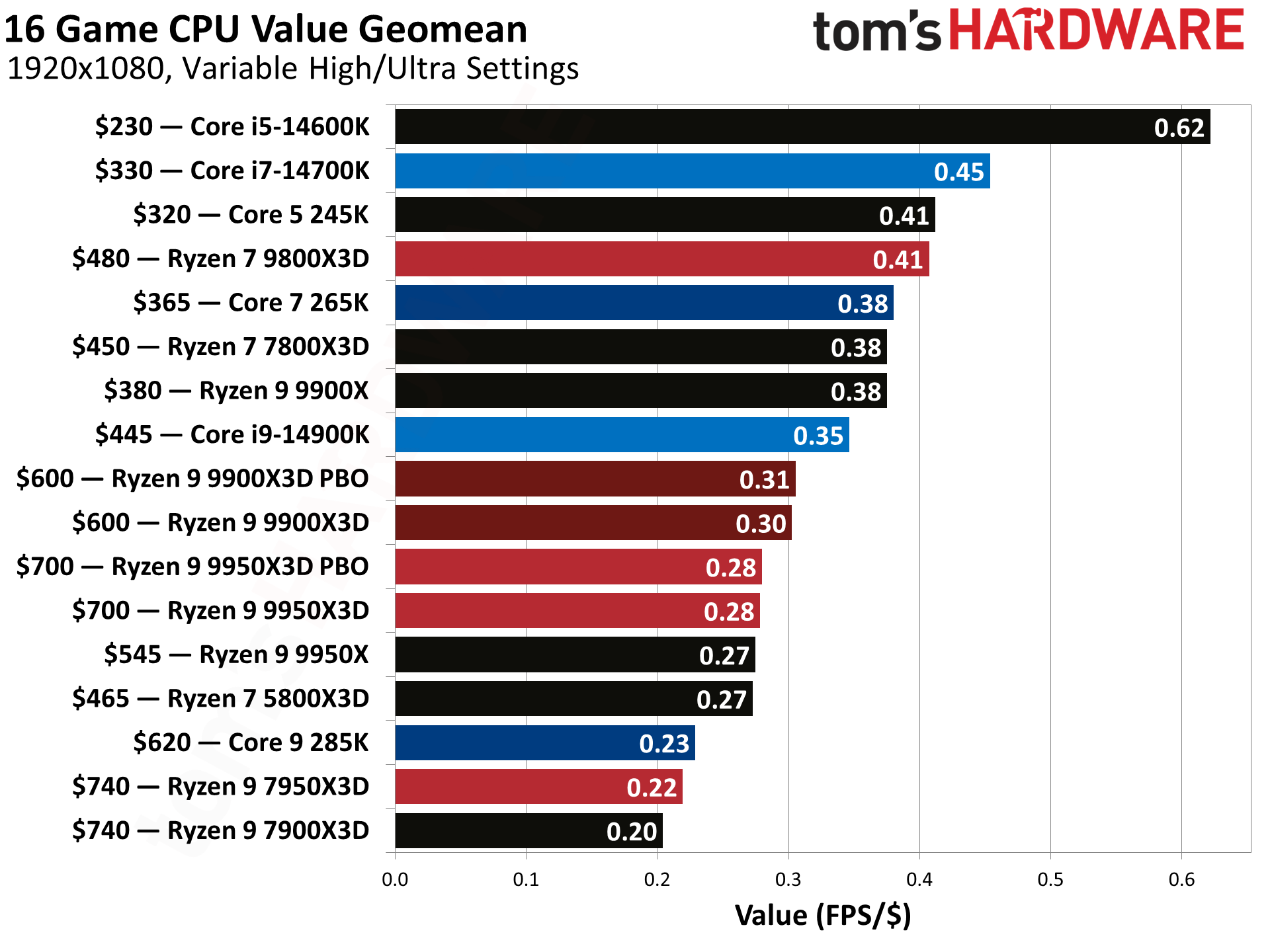
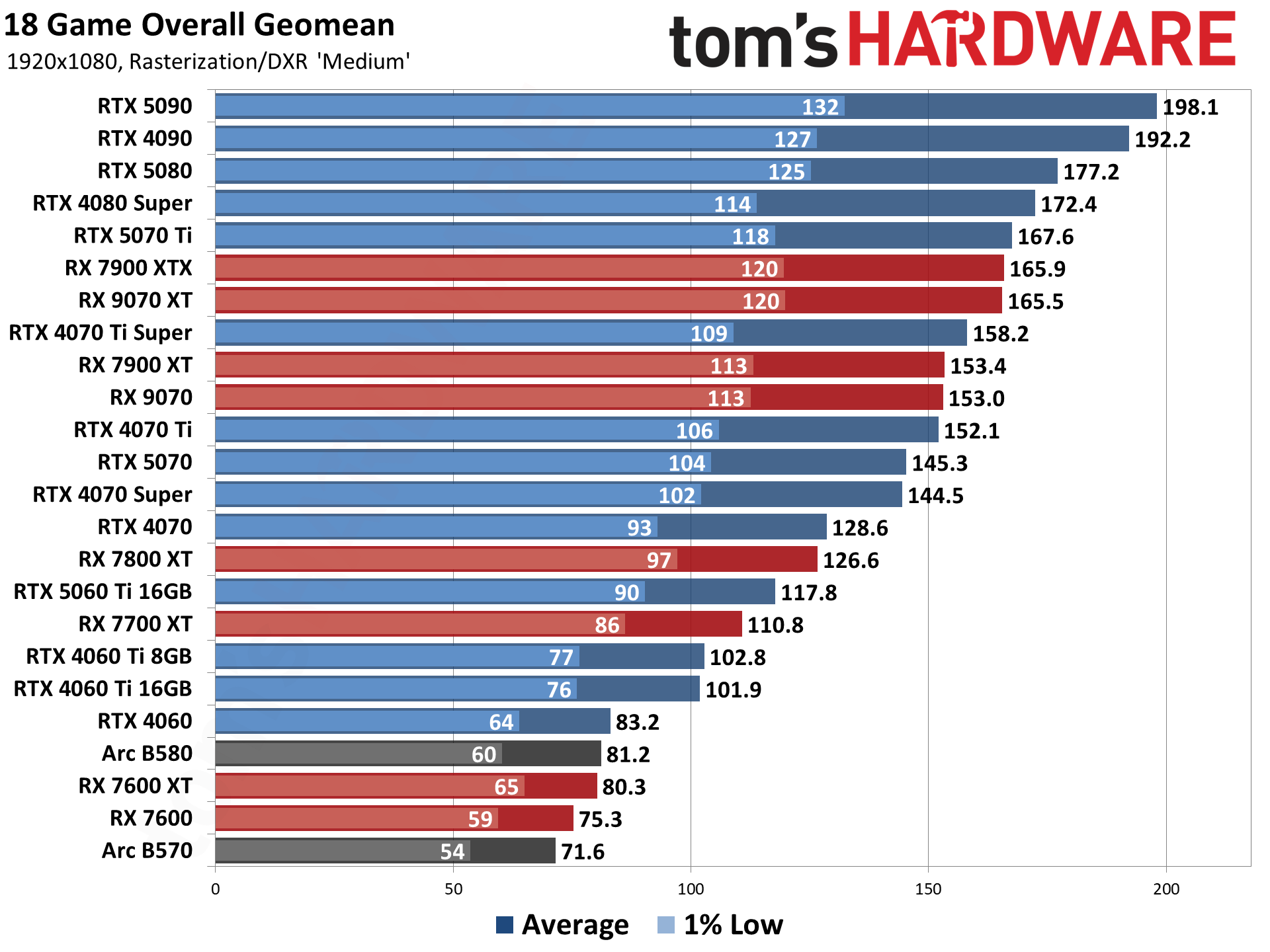
As you can see, this PC doesn't contain a benchmark-busting X3D CPU from AMD; however, the Core i7-14700F is a capable 20-core Raptor Lake Refresh. It features eight performance cores and 12 efficiency cores, with boost speeds of up to 5.4GHz. Despite being a couple of years old, it still averages 150 frames per second in our 16-game testing suite at 1080p, and, thanks to its price, it offers the best value (FPS/$) of any CPU we've tested.

Best CPUs for Gaming
Tom's Hardware
Best CPUs for Gaming
Tom's Hardware
Best CPU for Gaming
Tom's Hardware

The RTX 5080 is the headline component here, as the second-best graphics card on the market, only behind the RTX 5090, which will cost you around $4,800 these days.

With 10,752 CUDA cores and 16GB of VRAM, this will chew through any title, even providing a solid base for 4K gaming, not to mention access to Nvidia's DLSS technology for even more frames.

GPU Benchmarks Hierarchy 2026 - 1080 Performance Results
Future
GPU Benchmarks Hierarchy 2026 - 1080 Performance Results
Future
GPU Benchmarks Hierarchy 2026 - 1080 Performance Results
Future
GPU Benchmarks Hierarchy 2026 - 1080 Performance Results
Future
GPU Benchmarks Hierarchy 2026 - 1080 Performance Results
Future
GPU Benchmarks Hierarchy 2026 - 1080 Performance Results
Future
GPU Benchmarks Hierarchy 2026 - 1080 Performance Results
Future
GPU Benchmarks Hierarchy 2026 - 1080 Performance Results
Future
GPU Benchmarks Hierarchy 2026 - 1080 Performance Results
Future
GPU Benchmarks Hierarchy 2026 - 1080 Performance Results
Future
GPU Benchmarks Hierarchy 2026 - 1080 Performance Results
Future
GPU Benchmarks Hierarchy 2026 - 1080 Performance Results
Future
GPU Benchmarks Hierarchy 2026 - 1080 Performance Results
Future
GPU Benchmarks Hierarchy 2026 - 1080 Performance Results
Future
GPU Benchmarks Hierarchy 2026 - 1080 Performance Results
Future
GPU Benchmarks Hierarchy 2026 - 1080 Performance Results
Future
GPU Benchmarks Hierarchy 2026 - 1080 Performance Results
Future
GPU Benchmarks Hierarchy 2026 - 1080 Performance Results
Future
GPU Benchmarks Hierarchy 2026 - 1080 Performance Results
Future
GPU Benchmarks Hierarchy 2026 - 1080 Performance Results
Future
GPU Benchmarks Hierarchy 2026 - 1080 Performance Results
Future
GPU Benchmarks Hierarchy 2026 - 1080 Performance Results
Future

The RTX 5080 makes the raw power of this gaming PC extremely appealing, and more than makes up for a slightly older CPU, a compromise worth taking in the current economy.

Other specs include a 1TB PCIe 4.0 SSD, 32GB of DDR5 6000 RAM, Wi-Fi 6E, Bluetooth, an 850W PSU, and liquid cooling.

$50k worth of retro Nintendo NES games stolen in devastating home robbery — crooks took 850 games spanning 40 years from family

2026年8月26日 17:47

A family from Pierce County in Washington, Seattle, claims that thieves broke into their home and stole a haul of retro Nintendo hardware worth more than $50,000. Amongst other items taken, Fox13 reports the perps made off with more than 850 NES games, collected by the family over the span of some forty years.

According to the report, the thieves simply forced entry to the home by breaking in through the front door. The stricken family told the outlet that it appeared the thieves knew the layout of their home, targeting the master bathroom and making off with a tennis bracelet, amongst other things.

"They’ve been in our home. They know our home layout. They’ve been in our master bathroom. They took my wife’s tennis bracelet," Roger Holler said. The prize haul, however, seems to have been the aforementioned bundle of retro video games.

Holler told the outlet he had begun collecting Nintendo games from 1984, and had spent some 30 years "driving around on the weekends from game store to game store." Holler's son reportedly said the father and son duo would spend up to 10 hours on car journeys, collecting and cleaning the cartridges.

All in all, the collection amounted to 850 NES games, some of which are said to have been worth a small fortune. An image from the report shows five games that appear to be from the collection, likely not worth more than $25 a piece as loose cartridges. They are:

  • The Legend of Kage (1987)
  • Ice Climber (1985)
  • Raid on Bungeling Bay (1987)
  • Rygar (1987)
  • Donkey Kong 3 (1986)

Depending on the condition and the game, NES titles can indeed fetch astonishing amounts of cash in today's retro market. One lucky scavenger recently discovered a collection of 97 untouched Duck Hunt and Super Mario Bros. cartridges, thought to be worth $10,000 each. In 2024, an ultra-rare NES Gold Nintendo World Championships cartridge sold for $207,400.

Given the stated value of the stolen collection, Holler told the outlet that it "was going to be my grandkids' inheritance or college tuition." Beyond the financial value, Holler lamented the loss of decades of family history.

32GB of DDR5 6000 RAM now costs $400 — the latest price hike puts DIY PC building further out of reach than ever before

2026年8月24日 23:30

When it comes to building a gaming PC, DDR5 RAM clocked at speeds of 6,000 MT/s is often touted as the sweet spot for specs. While slower and faster speeds are available, it's very much the benchmark for both price and performance, which is why it's noteworthy that this particular configuration now costs $400, a more than 400% increase from the low prices we've seen in the past.

In addition to our ongoing RAM price tracking, we perform daily spot checks on pricing for discounts or deals for 32GB (2x16GB) of DDR5 RAM, given its aforementioned significance as the "benchmark" when it comes to capacity. In recent weeks, the price of 32GB DDR5 6000 RAM has been creeping ever closer to that unfortunate $400 milestone, and in the last few hours we've just crossed the threshold. That's not to say that prices might fluctuate back down in a day or two, but generally the traffic is only moving in one direction.

You can buy 32GB of DDR5 RAM at slower speeds for less — this Corsair Vengeance DDR5 4800 is "just" $359 — but good RAM is now harder (and more expensive) to come by than ever before.

According to data from PCPartPicker, this particular 32GB DDR5 6000 kit from Corsair has been as little as $80 in years gone by at Newegg, marking a full 400% price increase on the lowest we've ever seen on this model.

RAM prices elsewhere have climbed by as much as 500%, with 128GB of DDR5 now costing $3,399 in stores. The causes of the PC component crisis are numerous and well-documented. AI buildouts are consuming much of the world's NAND and flash manufacturing capacity, which is having a knock-on effect for consumer production. Famously, Micron even wound up its consumer brand Crucial in favor of serving more enterprise customers.

All signs point to the memory shortage, and thereby pricing, getting worse in the coming months. As such, bundles and pre-built PCs remain one of the only ways to insulate yourself from cost increases if you're in the market for new hardware. As mentioned, slower memory speeds are available at lower prices, but compromising for 4,800 MT/s RAM to save $40 when building a PC is an extremely tough state of affairs.

Nine indicted by Taiwan over illegal export of Nvidia B300 GPUs to China — details reveal five-point strategy to exploit and avoid customs controls

2026年8月24日 23:09

Just days after Supermicro revealed it had terminated several employees following an internal investigation into U.S. smuggling, nine people have been indicted by Taiwan's Keelung District Prosecutors' Office in the ongoing investigation into the illegal smuggling of Nvidia B300 GPUs to China. According to a new report from Digitimes, details of the indictment reveal an intricate five-step scheme designed to subvert various export restrictions.

According to the report, the indictment sets out how "a compliance regime designed to track every unit was defeated from the inside," thanks to a scheme setup to run through five different points in the supply chain.

Per the report, Supermicro's Taiwan subsidiary only sells its B300 systems to whitelisted buyers, who must sign an end-user agreement promising they won't re-export or sell the GPUs to sanctioned parties, such as customers in China. Order enough servers — eight units or more — and an on-site inspection led by representatives from both companies is triggered.

To that end, Taiwanese server trading firm Flying Tiger Tech reportedly obtained whitelist status and then placed a 130-unit order, declaring that it was the end user for the servers, which would be installed in Taiwan. That order was placed on behalf of Flying Tiger by a listed Supermicro distributor, Albatron Technology. Per the report, this "kept Supermicro from ever examining where Flying Tiger's money came from," because Albatron is listed on the Taiwan stock exchange and is a listed Supermicro distributor, presumably not raising too many flags.

The report says that, in order to pass the inspection, Flying Tiger leased colocation space from Chief Telecom, another TPEx-listed firm, but presented a quotation instead of an actual lease. Inspectors of the site in September 2025 reportedly found the site operational, but crucially incapable of running the 130 B300 servers the firm had asked for. Despite not having the racks, power, or bandwidth for that kind of hardware, no one spoke up.

The report then turns to a group it dubs "The insiders," likely the nefarious parties working inside the various points of the supply chain to help push through the transaction. One such individual listed is a sales manager at Nvidia Taiwan who "pushed the quota through," emailing headquarters to state the inspection was complete. A senior sales manager at Supermicro's Taiwan subsidiary had reportedly coached Flying Tiger through the review process, possibly revealing how its Chief Telecom lease passed muster on inspection. A second Supermicro manager reportedly caught wind of where the servers were really ending up, but was cut in on the commissions rather than speaking up.

All of this meant that Supermicro ultimately approved the sale of the 130 B300 units in three tranches of 2, 64, and 64. Of the first 74 units, sixteen were sent directly to China in January 2026. A further fifty were sent to Indonesia and then transshipped to China. Eight reportedly went to a Japanese entity controlled by the defendants, before going to Hong Kong and then China. This set of shipments was said to be worth $21.21 million in profit.

The scheme was given up shortly after 56 units were declared to Japan and flagged by customers, who demanded a "strategic high-tech commodities export permit." The defendants in the case filed for one, including fake mockups of Supermicro's website created by splicing together real parts of the site. Once word of the scheme came to light, the servers were not allowed to leave the country.

According to prosecutors, investigations have also uncovered a second scheme cooked up by the GM of Albatron, a manager from Supermicro, and the head of a small electronics firm, which billed Albatron $39 million Taiwanese dollars for installation work that was never carried out, splitting the money with the other perps. The head of the latter firm reportedly turned himself in, confessing alongside Albatron's GM and naming other participants in the scheme in exchange for leniency. Despite this, they reportedly still face up to five years on counts of export and six years for looting.

As per above, Supermicro has announced the findings of its own investigation in a US smuggling scheme, claiming that senior management had no knowledge of the matter and no evidence that controlled products were sold to banned entities.

As the report notes, this latest Taiwan sales channel was uncovered by Taiwanese prosecutors, rather than Supermicro's audit.

Get an astonishing OLED 5090 gaming laptop for $3,599, $800 off — Gigabyte Aorus Master 16 features a 24-core Arrow Lake CPU, 32GB RAM, 2TB SSD

2026年8月20日 18:16

If you're in the market for a potent gaming laptop, then the mobile RTX 5090 is as good as it gets. Right now at Walmart, you can scoop up a Gigabyte Aorus Master 16-inch gaming laptop with RTX 5090, 240Hz OLED display, 24-core Arrow Lake CPU, 32GB of RAM, and a 2TB SSD for just $3,599, a whopping $800 off the list price.

● Check out this deal at Walmart

This laptop features Intel's Core Ultra 9 275HX processor, with 24 cores, eight performance and 16 efficiency, 5.4 GHz boost clock speeds, and 40MB Total L2 Cache. With the heavy lifting for gaming done by the GPU and its 24GB of VRAM, this is a superb laptop for both work and play.

Aorus Master OLED (RTX 5090): was $4399.99 now $3599.00
Get an OLED, 240Hz gaming laptop with 24-core CPU, RTX 5090 mobile GPU, 32GB of RAM, 2TB SSD, and Wi-Fi 7. View Deal

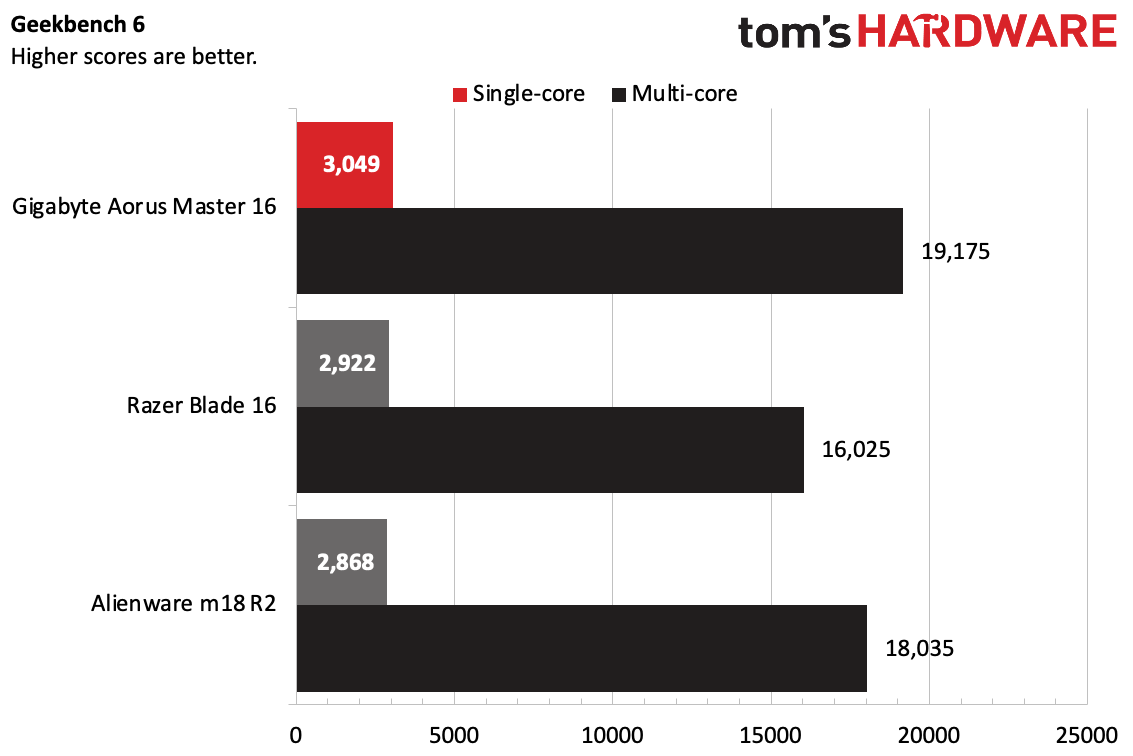
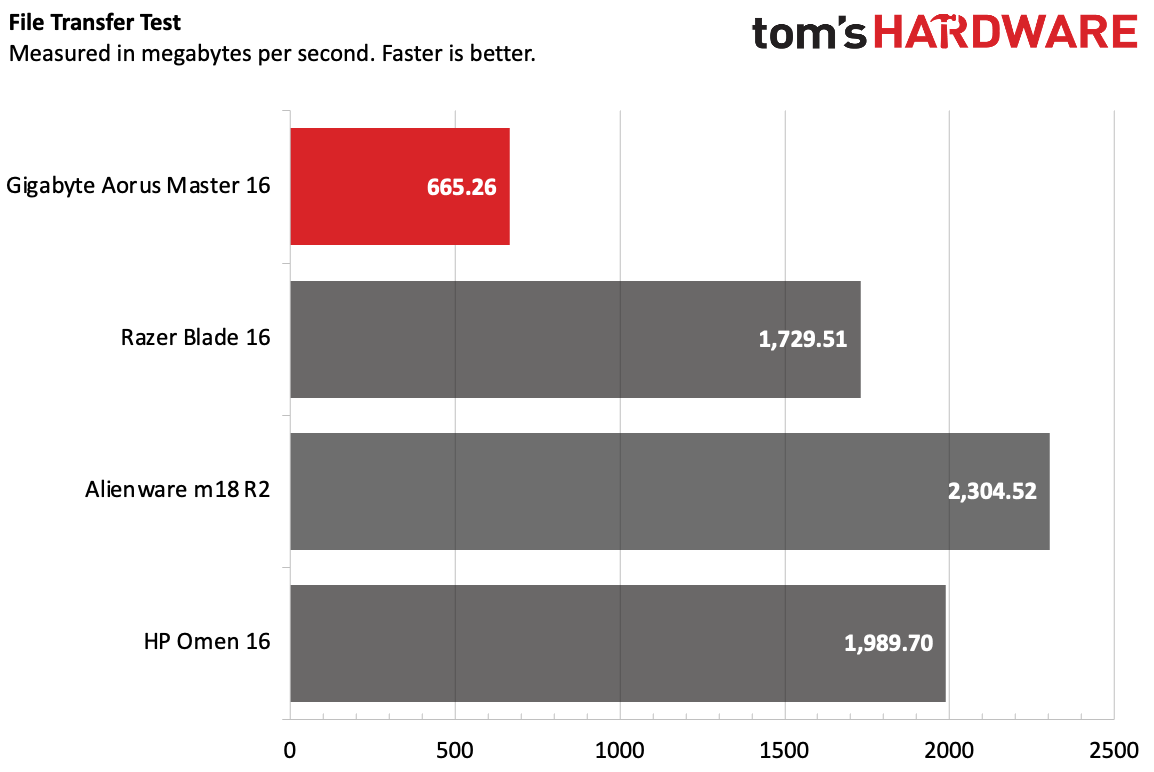
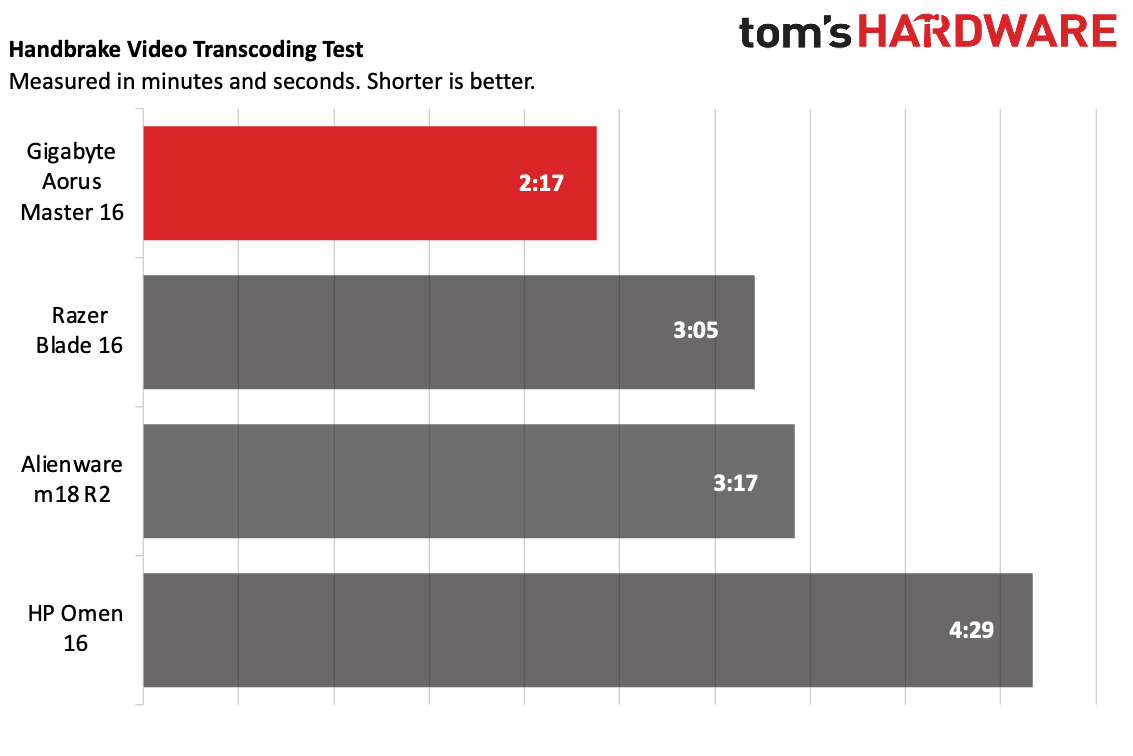
For the price, this is a serious bit of mobile gaming hardware. The GPU and CPU will combine to give you the very best gaming performance you can expect from a mobile graphics unit, all while offering decent efficiency and speeds in productivity workloads. We've reviewed the RTX 5080 version of this laptop with the same CPU, beating out rivals in Geekbench 6 testing for CPU performance.

Gigabyte Aorus Master 16
Tom's Hardware
Gigabyte Aorus Master 16
Tom's Hardware
Gigabyte Aorus Master 16
Tom's Hardware

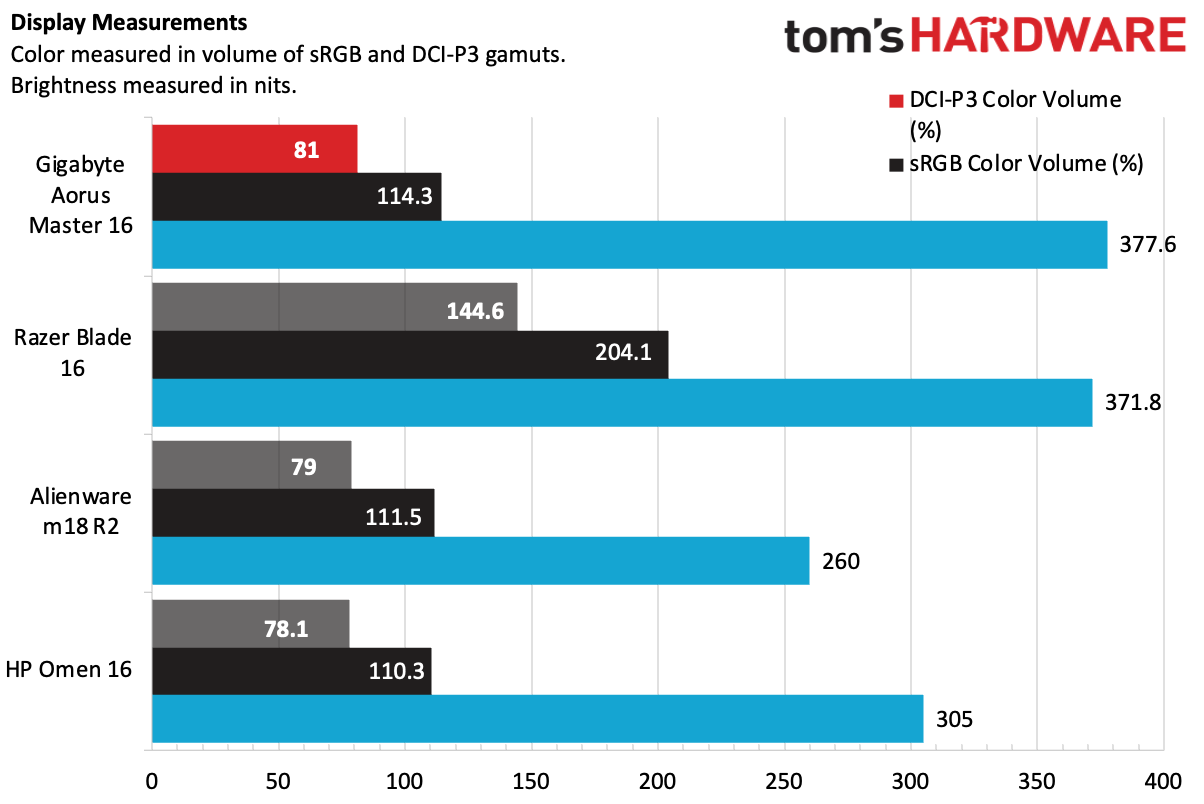
Even the RTX 5080 version of this laptop can run Shadow of the Tomb Raider at its highest settings at 185 frames per second in 1080p, or 114 frames per second at its native resolution. As such, you can expect a big leap in performance from the more potent 5090, with titles like Cyberpunk 2077 easily playable at the native 2560 x 1600 resolution this laptop offers. The OLED display of this laptop also impressed us, beating rivals in our display measurement testing thanks to its 240Hz OLED screen.

Gigabyte Aorus Master 16

(Image credit: Tom's Hardware)

Aside from the headline specs, this laptop also offers ample RAM and storage, 32GB of DDR5 (one spec page says 16GB, but the listing and marketing images clearly state 32GB) and a 2TB Gen 4 SSD respectively.

Connectivity is supplied by way of Wi-Fi 7 and Bluetooth 5.4, and ports include USB-C with Thunderbolt 5, USB 3.2 Type-A, MicroSD card slot, HDMI 2.1, Ethernet, and a 3.5mm headphone jack. If you want a no-nonsense laptop that offers the most mobile graphics power of any machine on the market, this could be a fantastic laptop for heading back to school or campus.

Amazon delivery drone dumps Texas woman's parcel straight into her swimming pool — viral video surfaces the same week the company announces 500-city Prime Air expansion

2026年8月20日 17:35

On the same week that Amazon announced plans to expand its Prime Air Delivery service to 500 more cities and towns across the U.S., a video filmed by a Texas woman has surfaced, documenting the moment one of the company's delivery drones unceremoniously dumped a package straight into her swimming pool. The viral video was filmed after Lindsey Austen heard her drone buzzing loudly and ran outside to record it.

As you can see from the footage below, shared by ABC 7 News, the Texas Amazon customer was excited to receive her first drone-delivered order. "After hearing the loud buzzing of the drone arriving, she ran outside to record the delivery," the caption states. The painfully amusing footage shows the drone, humming loudly as it hovers over the woman's pool. The woman repeats "Oh my God" in anticipation, before yelling "Oh ****," as the autonomous robot opens its door and drops the package into the pool.

As mentioned, on Wednesday, Amazon announced it would expand Prime Air to nearly 500 cities and towns in the United States by the end of 2026, a 6x increase that will reportedly benefit tens of millions of customers. According to Amazon, its drone delivery selection includes millions of groceries, electronics, cosmetics, medications, and household products, which can be delivered in as little as 30 minutes.

Amazon already serves seven states with Prime Air, including the aforementioned Texas, where the unfortunate pool party took place. According to Amazon, Prime Air "is built to operate responsibly, and the safety of the employees, customers, and communities Amazon serves is the top priority." Its delivery service holds Federal Aviation Administration Part 135 certification, and "multiple independent systems" keep the drones "operating safely and predictably" while in flight, even in unexpected situations, Amazon claims. "Prime Air’s industry-leading Detect-and-Avoid system continuously monitors the airspace and environment around the drone. It’s similar to a trained pilot who scans the surrounding airspace, and it allows the drones to independently see and make real-time decisions while in flight," the company continues.

Adding to the irony, Amazon says that Prime Air drones use onboard cameras and sensors to navigate, check for obstacles, and deliver packages safely. Certainly, nothing unsafe happened in the video; the package fell harmlessly into the water, with no bystanders around to be struck. Likewise, in the video, the drone doesn't collide with any obstacles, but clearly, some malfunction in the final moments of delivery convinced the drone that simply dropping the package in the swimming pool was a good idea.

Cut the stress out of PC building with this $500 discount on this RX 9060 XT 16GB desktop — Intel Core Ultra 9 285 build also features 32GB of DDR5, 2TB SSD

2026年8月19日 18:18

Building a PC is more expensive and thereby more stressful than ever in 2026. A good old-fashioned pre-built is a great way to save yourself some time and a ton of cash on parts, with exorbitant RAM, SSD, and GPU pricing yet to fully filter down to the pre-built market. As such, you can score this Intel Core Ultra 9 285-powered CyberPowerPC with an AMD Radeon RX 9060 XT 16GB, 32GB of DDR5 RAM, a 2TB SSD, and more for just $1,849, a $500 discount.

● Check out this deal at Walmart

Considering 32GB of DDR5 RAM alone costs $400 right now, stacking up the cost of parts in this build reveals its value pretty quickly. The Intel Core Ultra 9 285 is around $700 at the moment, with the 285K retailing at $514. A 2TB M.2 PCIe 4.0 drive will set you back around $250, and the GPU in this build is $460. That's nearly the entire cost before you've factored in a case, motherboard, PSU, and cooler, not to mention the build cost.

Gamer Supreme Gaming PC, Intel Core Ultra 9 285, AMD Radeon RX 9060 XT 16GB, 32GB DDR5, 2TB SSD: was $2359.99 now $1849
Get an Intel Core Ultra 9 285 PC with an RX 9060 XT 16GB GPU for just $1,849. Also features 32GB of DDR5 RAM, a 2TB SSD, Wi-Fi 6, and more. View Deal

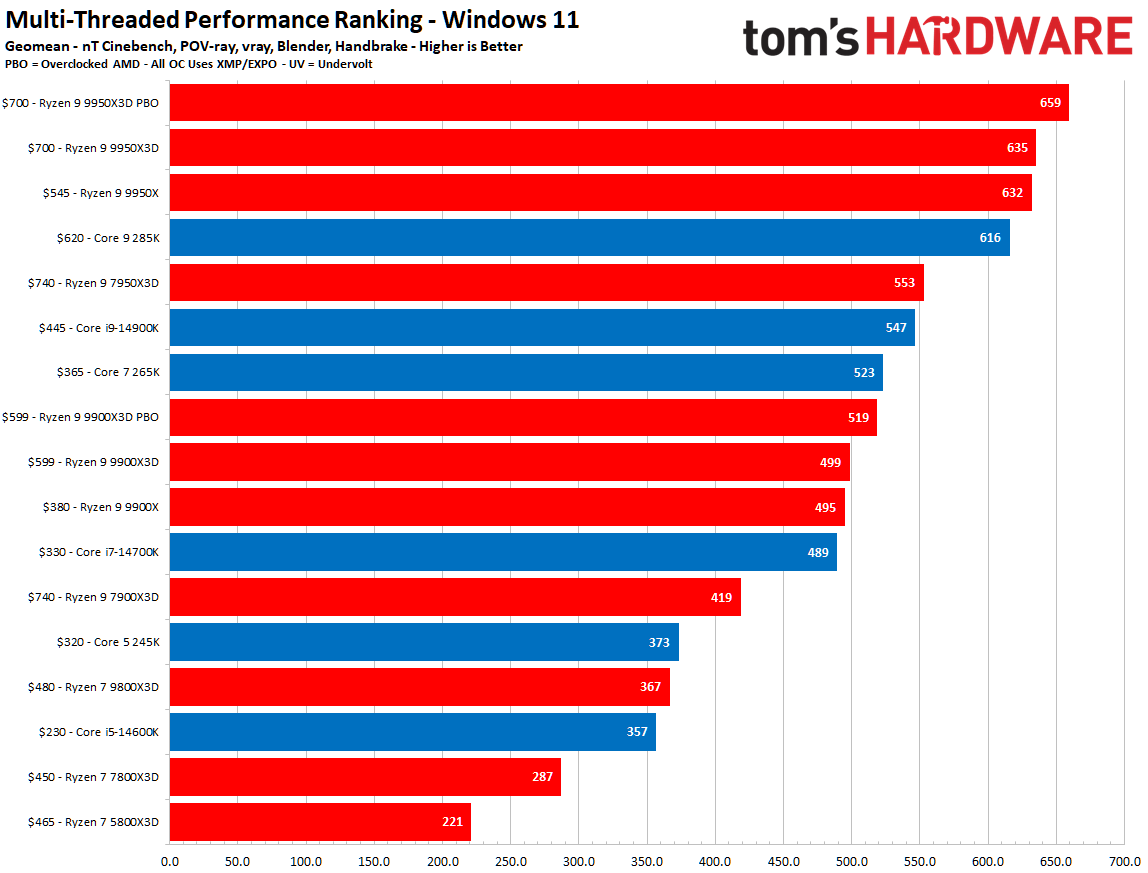
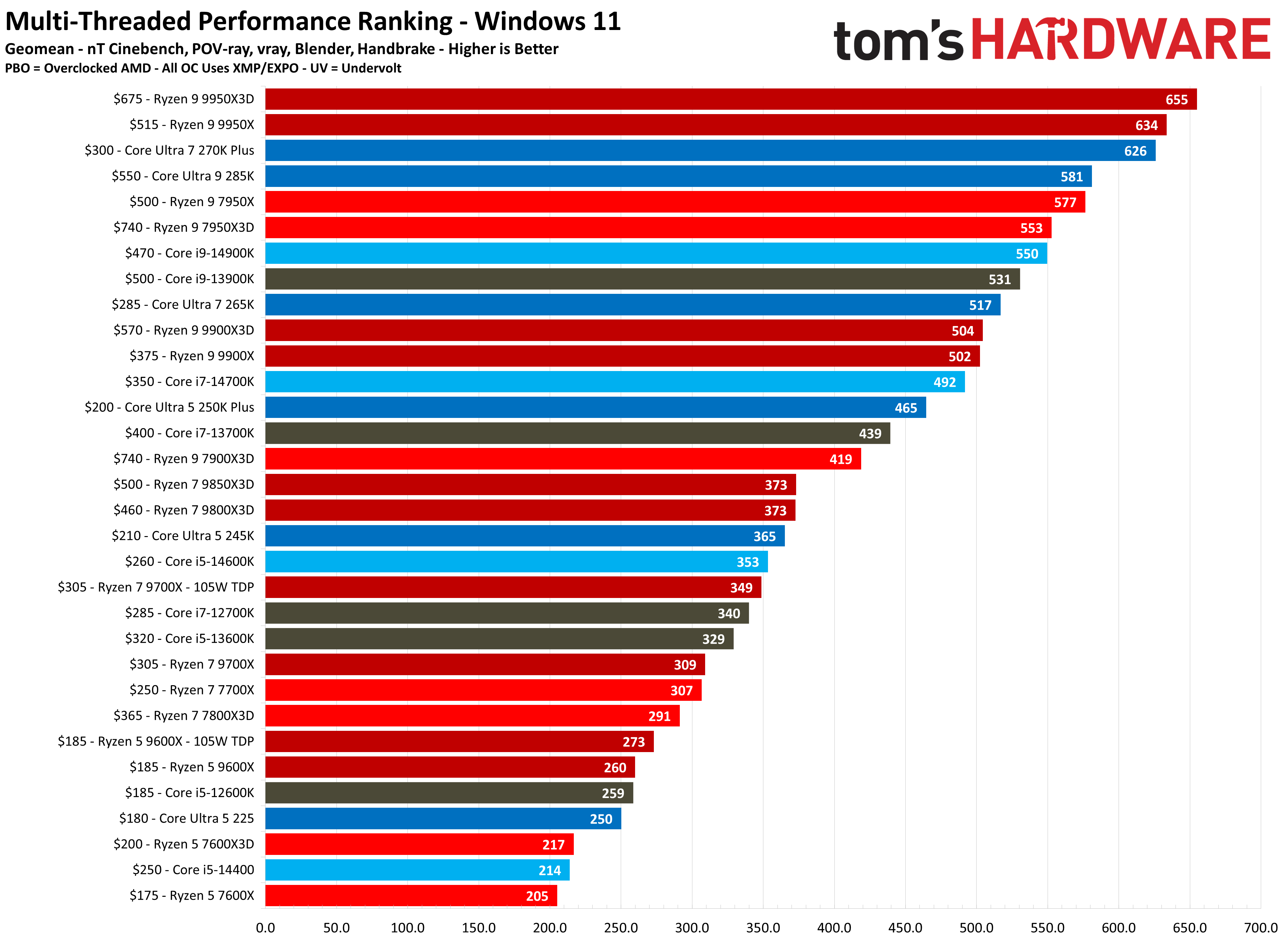
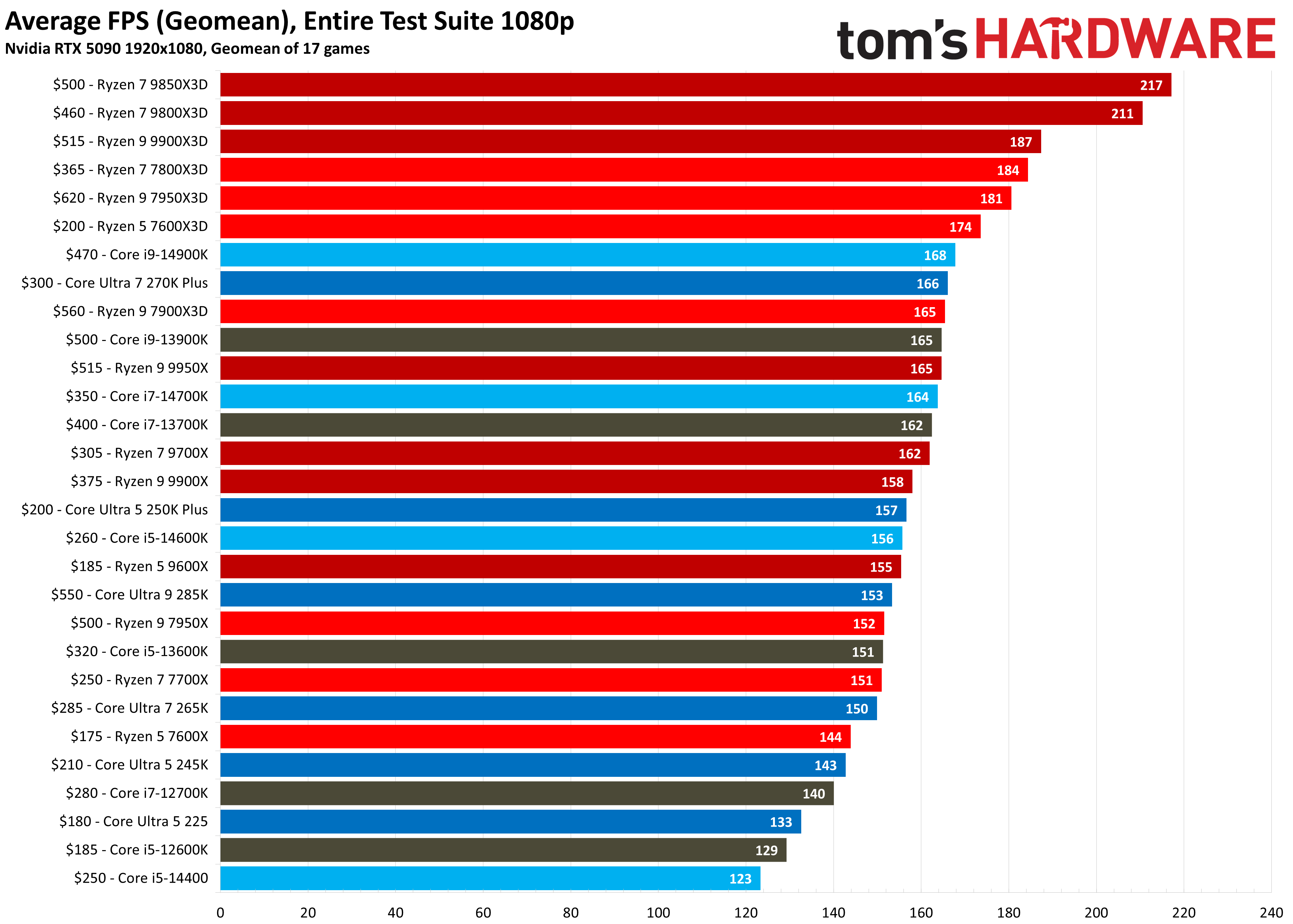
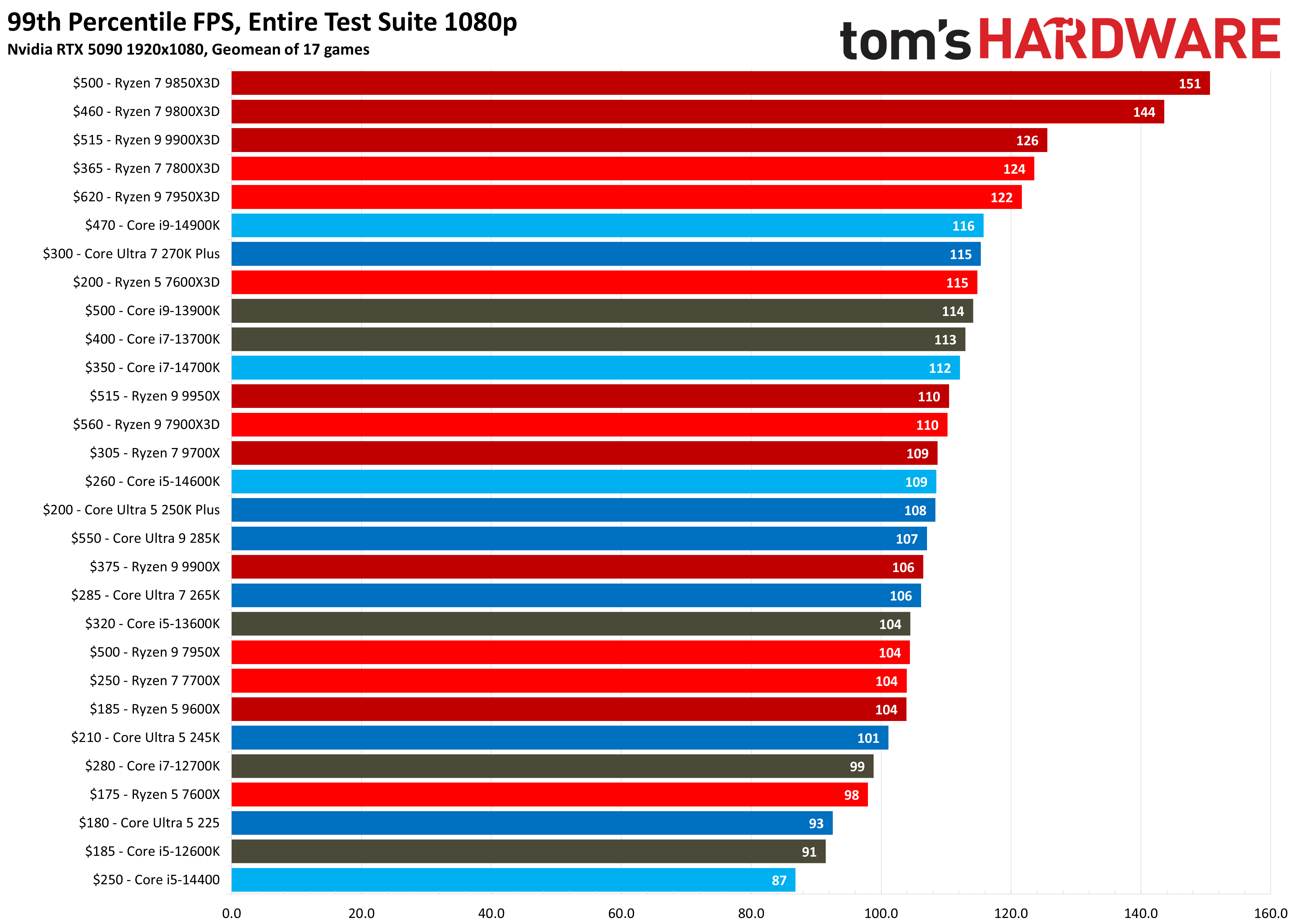
The spec of this PC is admittedly a slightly strange combination of GPU and CPU. Intel's 285 Arrow Lake CPU is the company's current-gen 24-core flagship. With eight performance cores and 16 efficiency cores, it performs extremely well in multi-threaded Windows 11 testing. While it can't match AMD's potent X3D Ryzen chips in gaming, it was still more than enough to average 153 frames per second in our 1080p testing suite of 17 games.

CPU Benchmark Rankings
Tom's Hardware
CPU Benchmark Rankings
Tom's Hardware
CPU Benchmark Rankings
Tom's Hardware
CPU Benchmark Rankings
Tom's Hardware

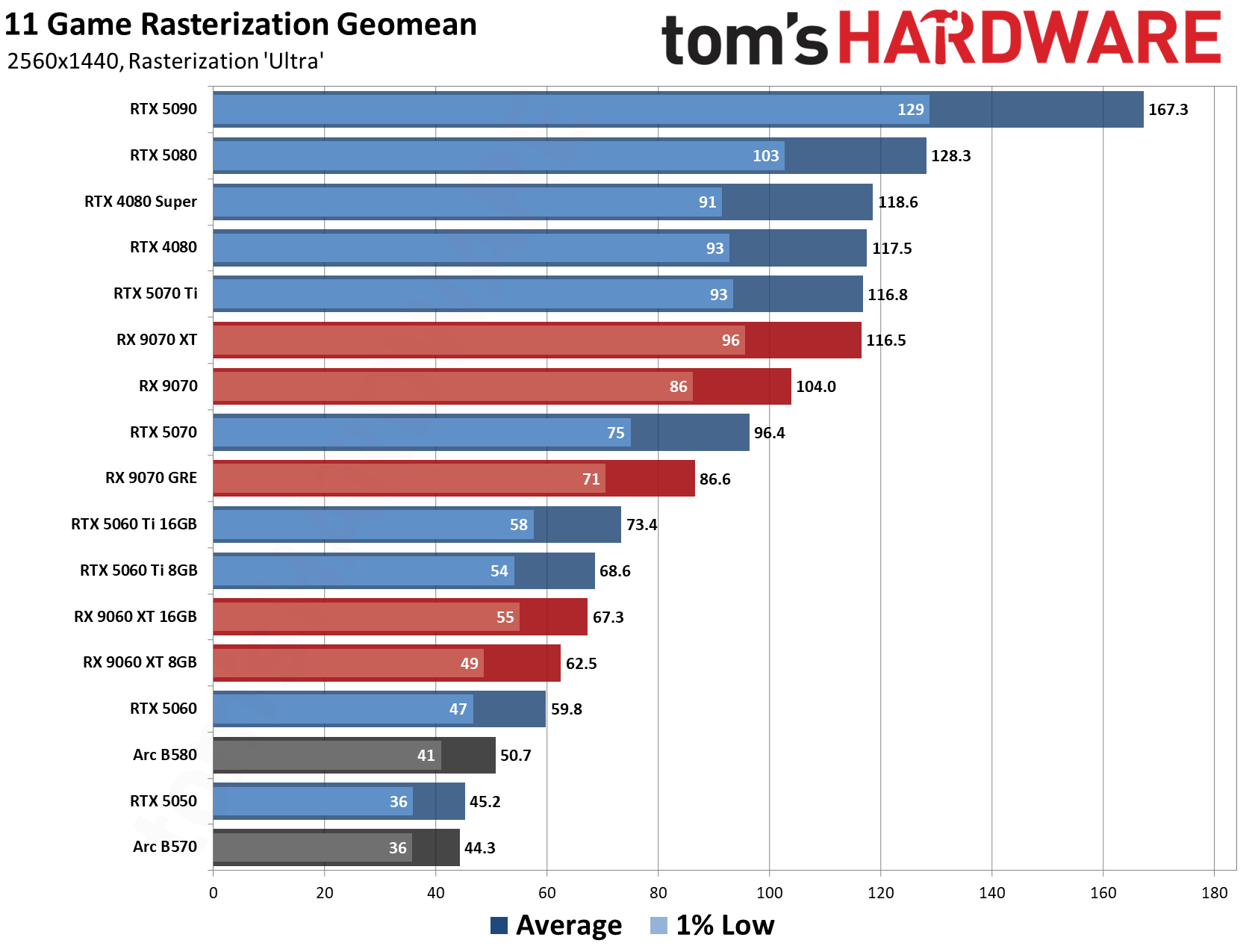
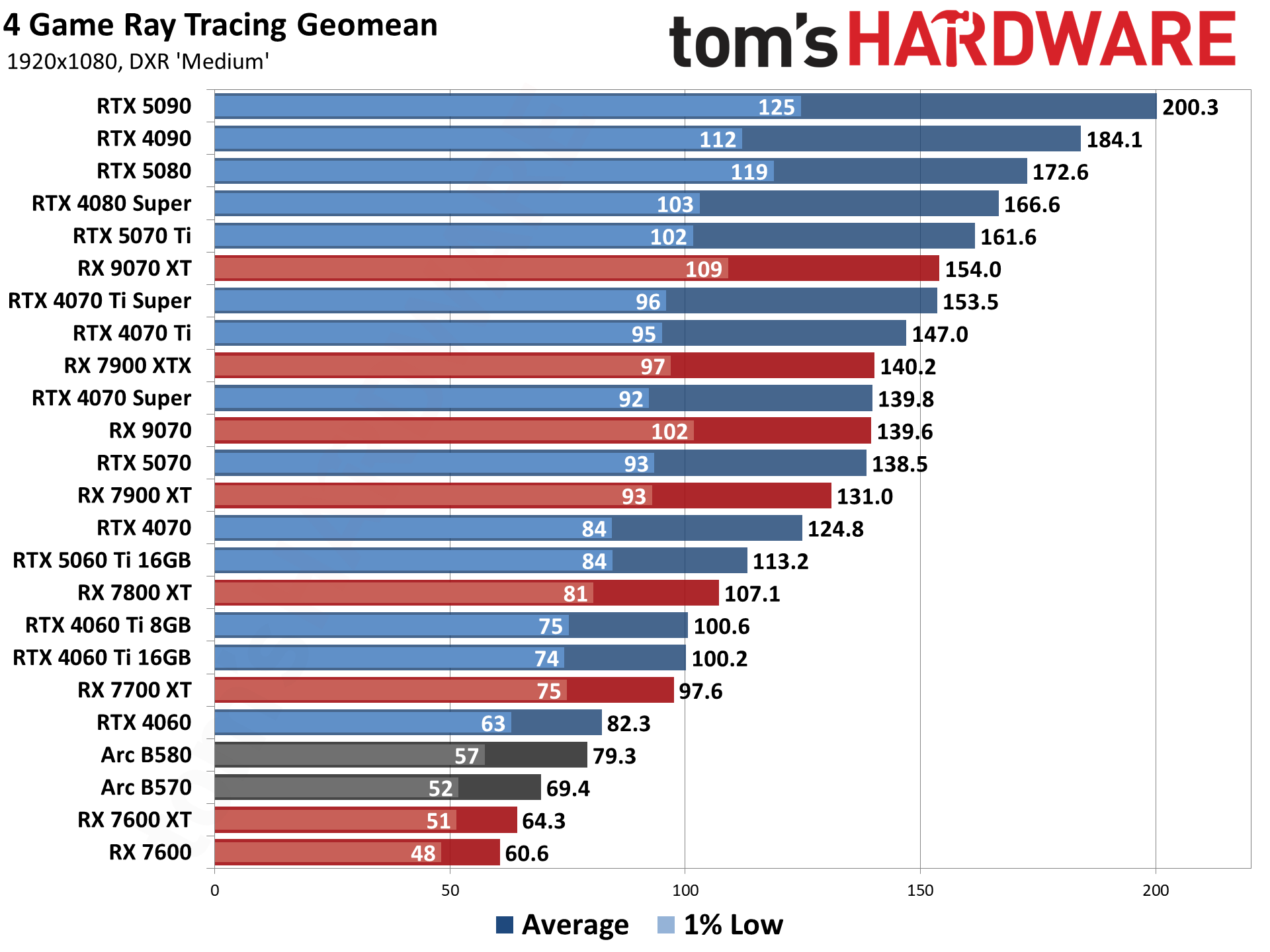
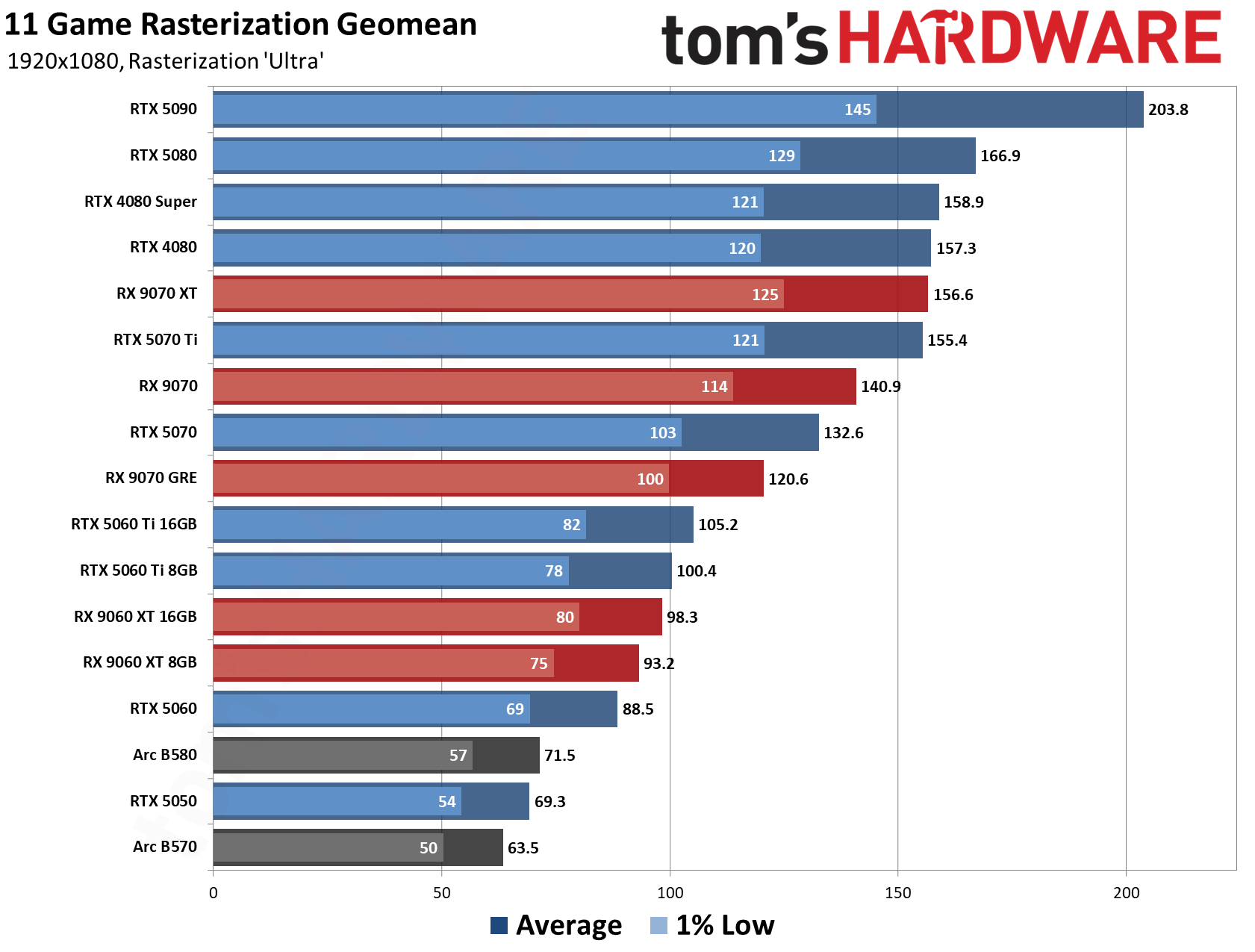
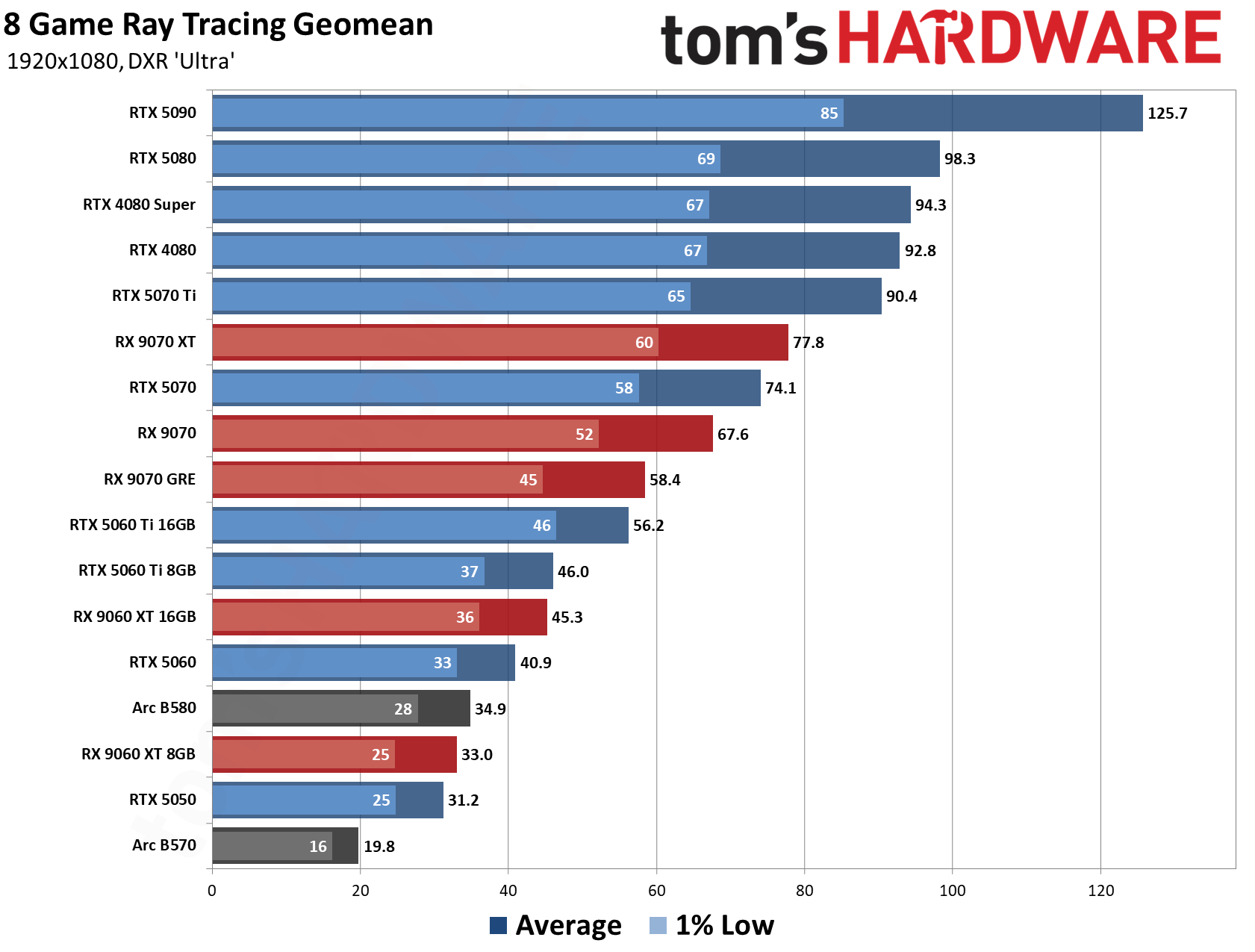
As you can see from our GPU testing data, the Radeon RX 9060 XT 16GB is on par with the RTX 5060 Ti 8GB, but lags behind the RX 9070 and RTX 5070, as is to be expected. With its 2048 shares and 16GB of VRAM, this card sustained averages of nearly 60 frames per second in our 1440p Ultra tests, making it a great mid-range card. You'll likely struggle at 4K without some compromise, but this is a great card for middle-of-the-road performance.

CPU Benchmark Rankings
Tom's Hardware
CPU Benchmark Rankings
Tom's Hardware
CPU Benchmark Rankings
Tom's Hardware
CPU Benchmark Rankings
Tom's Hardware

If you're not convinced, you could spend a little more for this slightly different spec, which gets you a less potent Core Ultra 7 265KF but the superior AMD Radeon RX 9070 XT, again with 16GB of VRAM. You still get the same 32GB of DDR5 and 2TB SSD for $1,999. This is a trade-off that might get you some more FPS in gaming at the expense of general productivity performance for other tasks.

Thanks to Intel's Gamer Days promo, both come with two free games: Tomb Raider: Legacy of Atlantis and Star Wars Galactic Racer.

Best Buy has slashed $1,350 off this 'outstanding' OLED RTX 5080 laptop — 16-inch Lenovo Legion Pro 7i features a 24-core Arrow Lake CPU and 32GB of DDR5 RAM

2026年8月18日 18:31

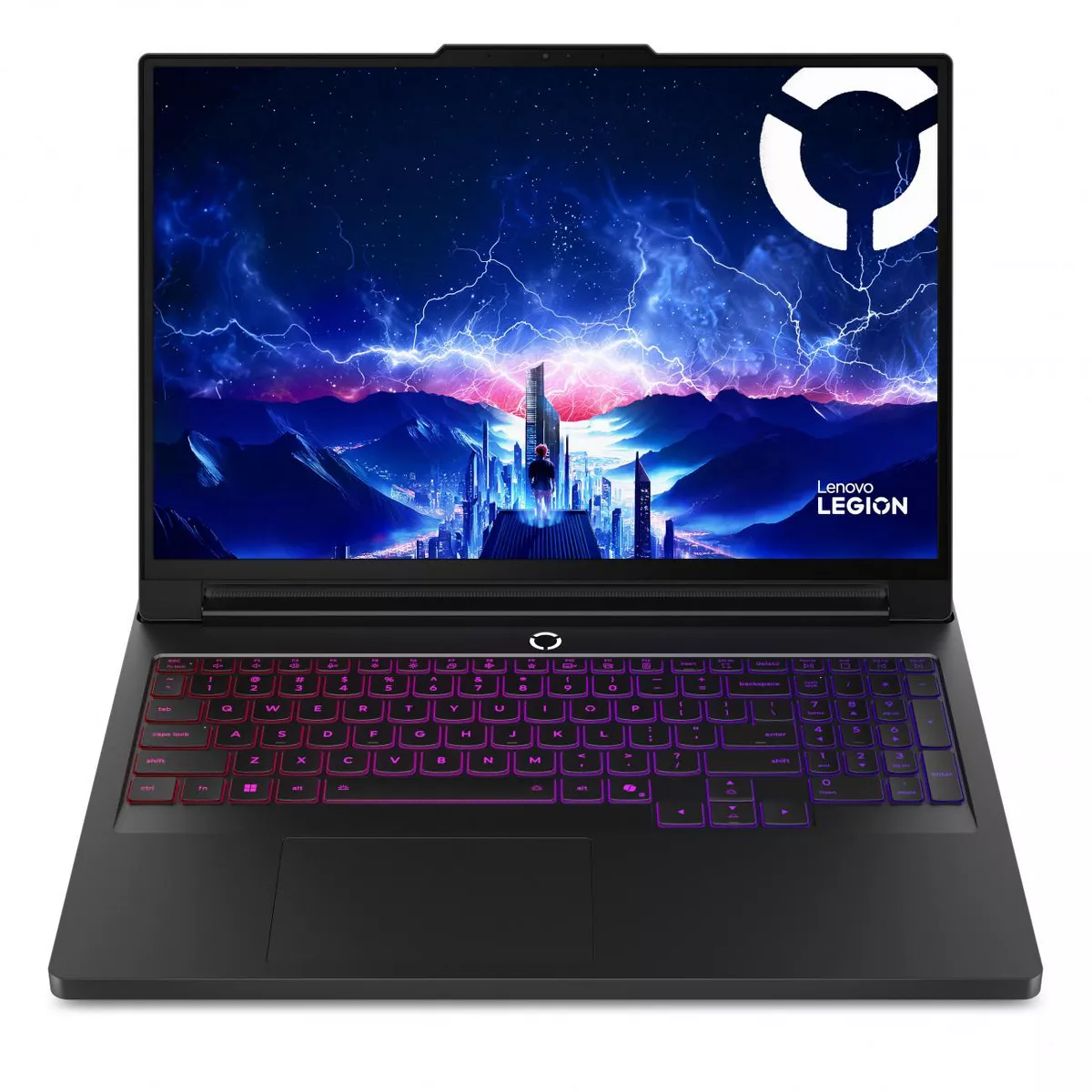
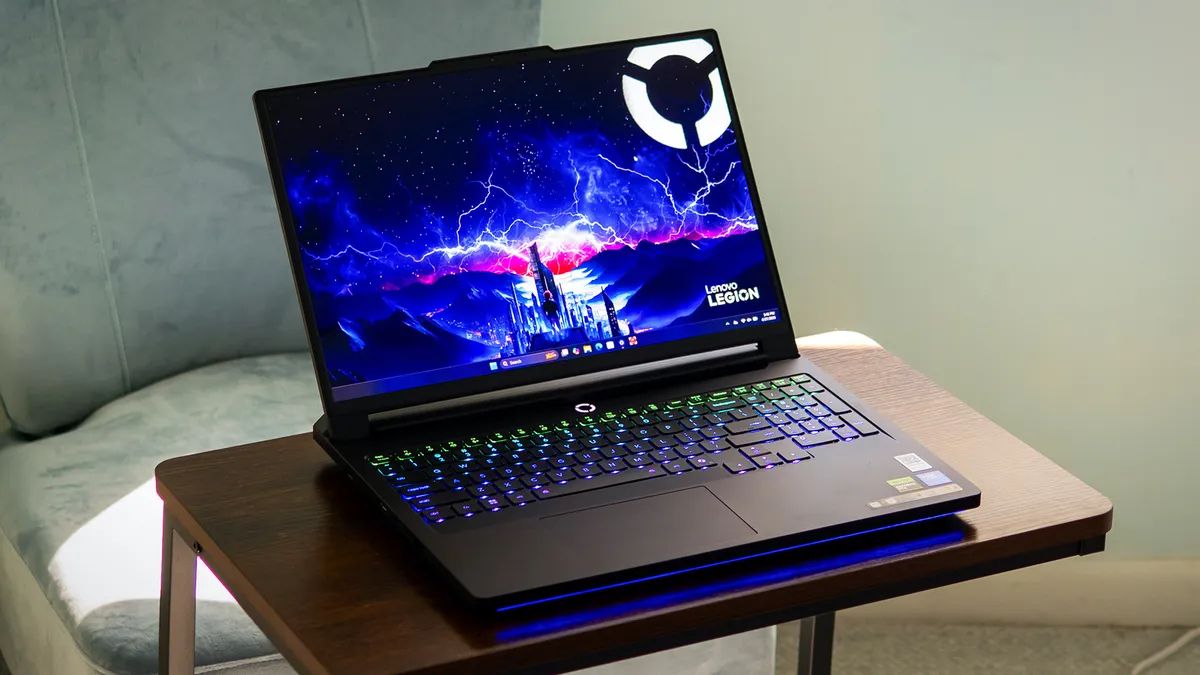
Buying a gaming laptop is a great way to sidestep the exorbitant costs of RAM, SSDs, and GPUs that are plaguing the PC component market in 2026. Right now, Best Buy is selling a premium Lenovo gaming laptop with a massive discount as part of its 60th anniversary sale. Normally $4,249, a $1,350 discount gets you a 2.5K, 16-inch OLED laptop with Intel Core Ultra 9 275HX, 32GB RAM, 1TB SSD, and Nvidia RTX 5080 GPU.

● Grab this deal at Best Buy

This premium laptop combines a hefty mobile GPU for gaming with an impressive 240Hz, 2560 x 1600 screen, plenty of RAM for multitasking, lots of storage, and great networking and connectivity options. We absolutely loved it in our review and this $1,350 discount makes it all the more enticing.

Legion Pro 7i (RTX 5080): was $4249.99 now $2899.99
Get a Lenovo Legion Pro 7i 16" with Intel Core Ultra 9 275HX 2025m, 32GB RAM, NVIDIA GeForce RTX 5080, 1TB SSD, and Windows 11. View Deal

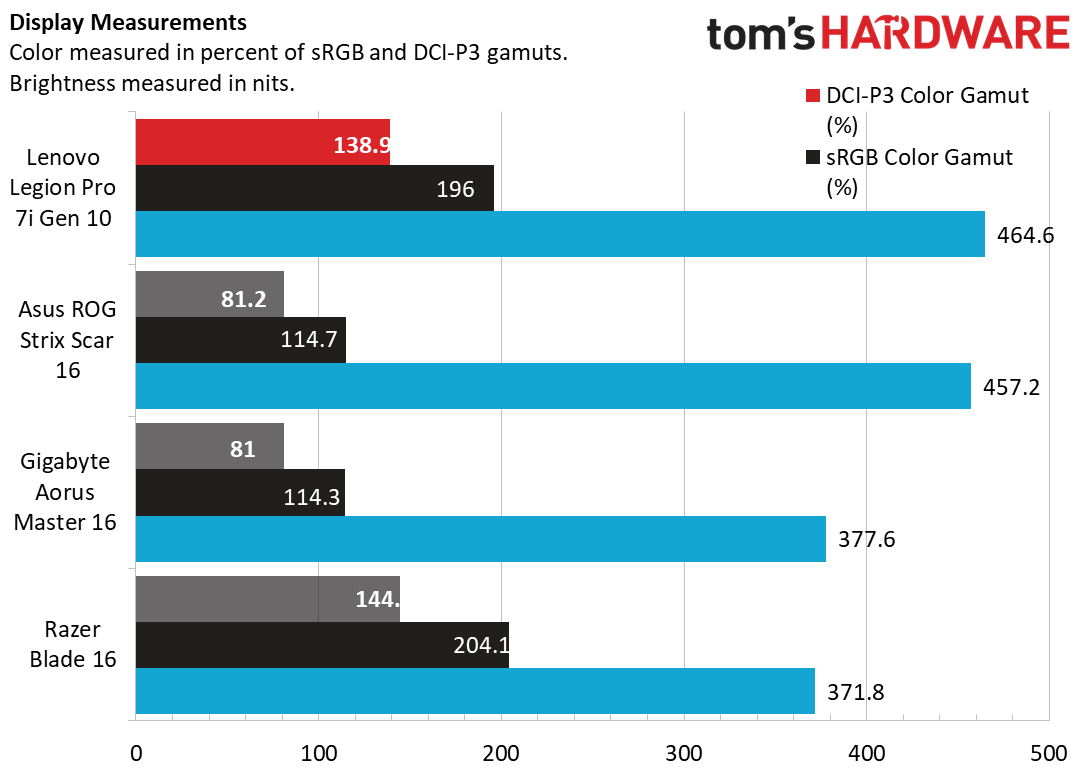
This is a premium gaming laptop that scored well in our Tom's Hardware review. The display in particular is outstanding, as is the sleek aluminum design, customizable RGB lighting, and sharp webcam. As you can see below, the laptop performs extremely well in our display measurements testing thanks to that impressive OLED panel.

Lenovo Legion Pro 7i Gen 10

(Image credit: Tom's Hardware)

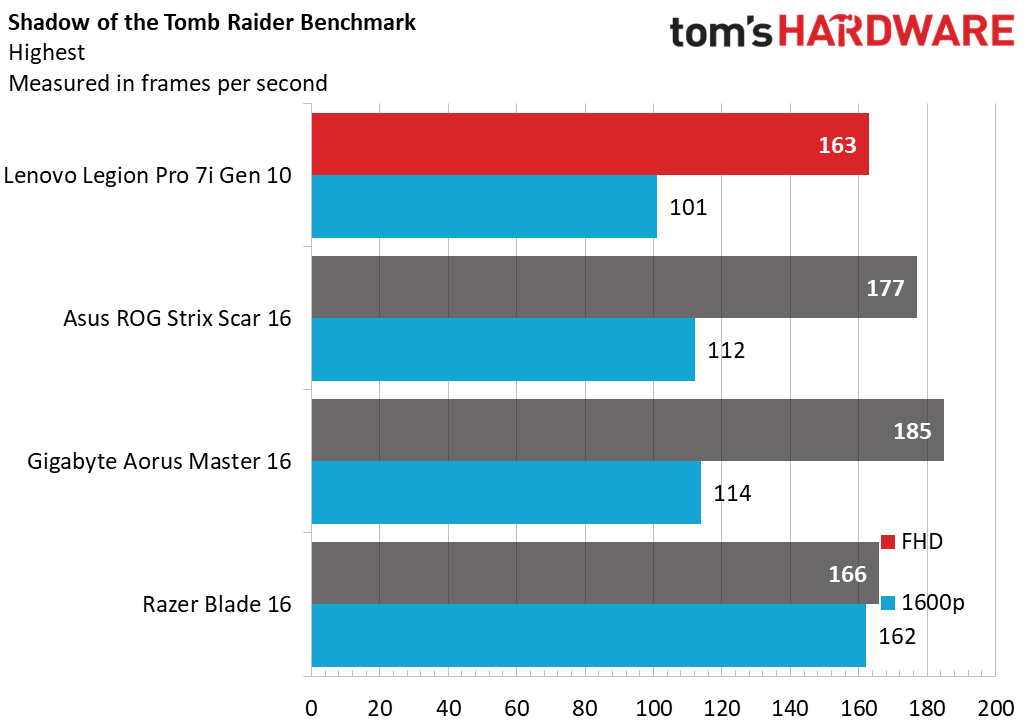
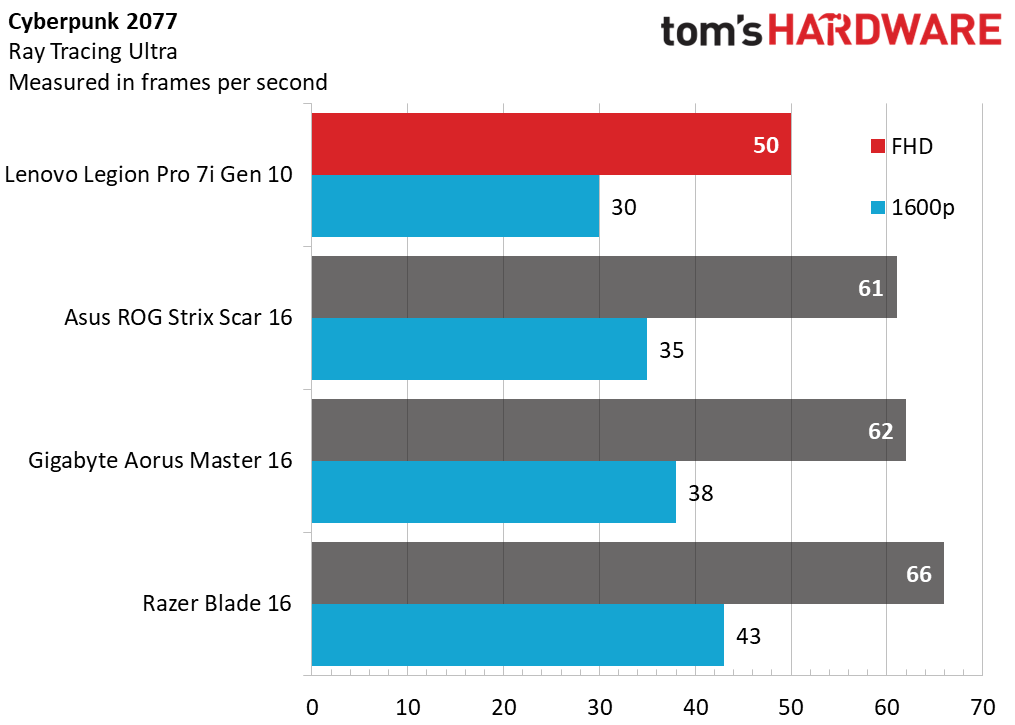
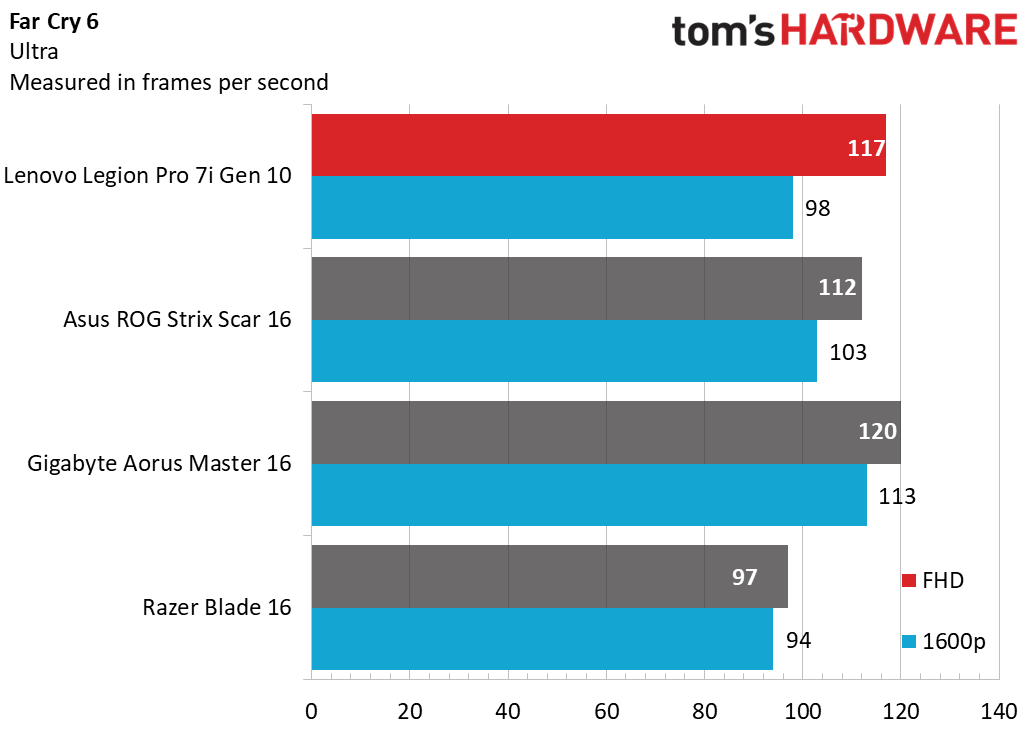
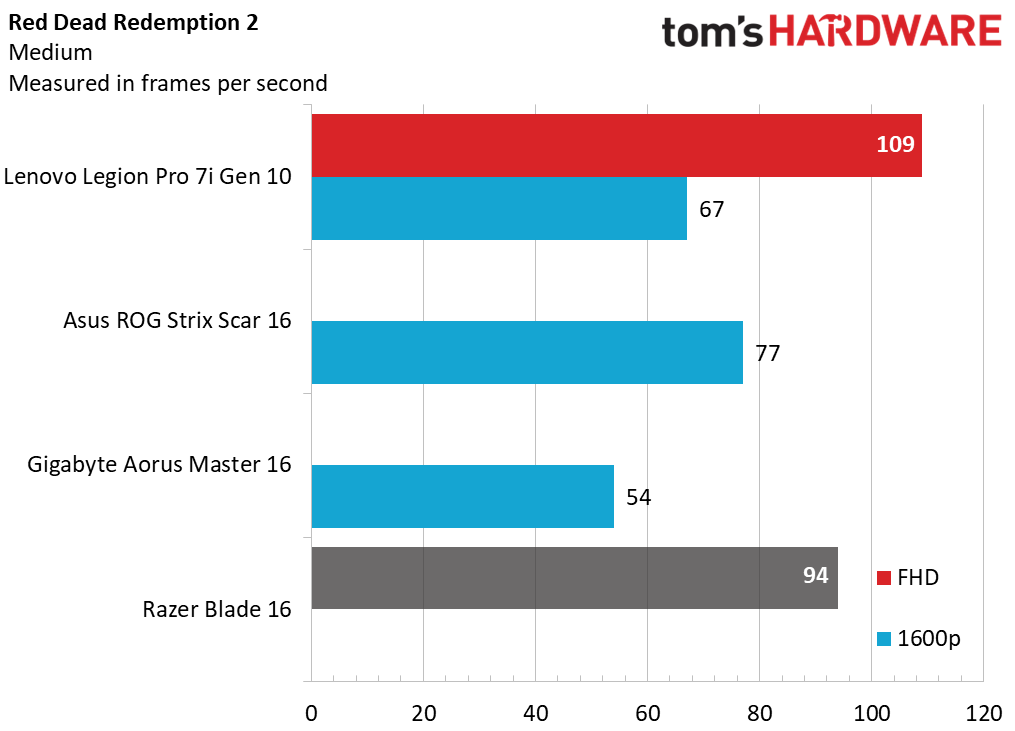
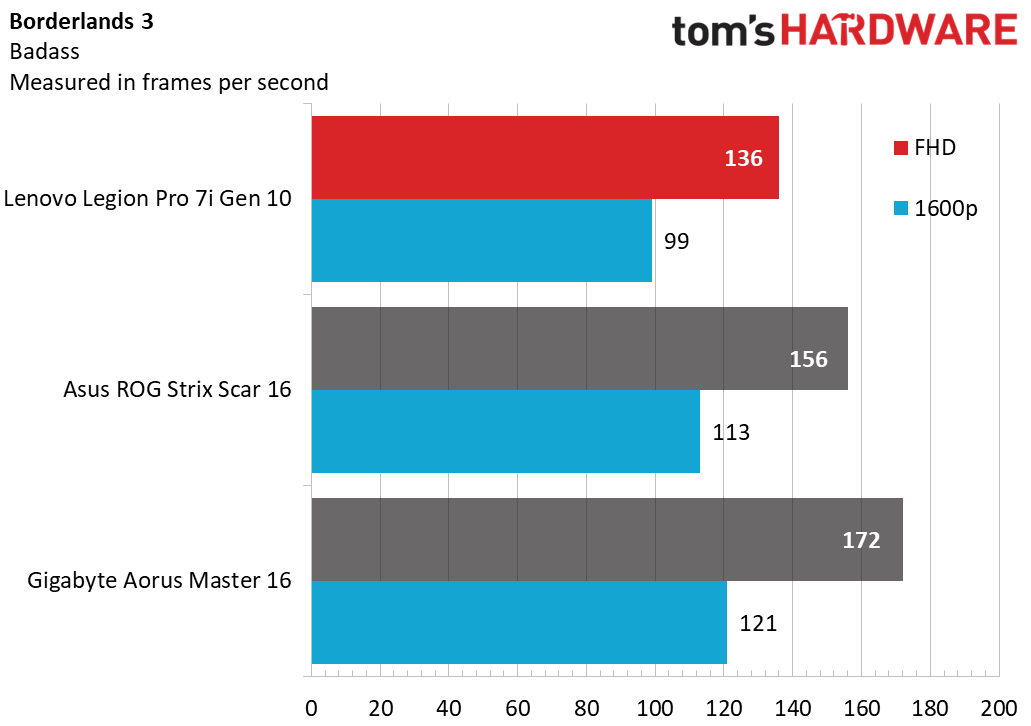
We actually tested the 5080, 32GB RAM, 275HX variant of this laptop, which means we can tell you exactly how the device performs when gaming. In our gaming benchmarks, the Legion Pro 7i pumps out 163 frames per second in Shadow of the Tom Raider at 1080p, or 101 frames per second at the laptop's native resolution of 2560 x 1600. We also clocked Crysis Remastered at Very High, running in the mid-90s, with the 16 VRAM pool and 175W power draw putting in plenty of work.

Lenovo Legion Pro 7i Gen 10
Tom's Hardware
Lenovo Legion Pro 7i Gen 10
Tom's Hardware
Lenovo Legion Pro 7i Gen 10
Tom's Hardware
Lenovo Legion Pro 7i Gen 10
Tom's Hardware
Lenovo Legion Pro 7i Gen 10
Tom's Hardware
Lenovo Legion Pro 7i Gen 10
Tom's Hardware

This is a laptop that will handle anything you throw at it, work or play. Other noteworthy features include 32GB of DDR5 6400 RAM, 1TB SSD, HDMI, USB-C, and USB-A ports, as well as a headphone jack, Wi-Fi 7, and Bluetooth 5.4. It also has an impressive 1440p webcam and scope for upgradeability thanks to its two M.2 drives. As per our review, this is an "outstanding" laptop that easily passes muster in terms of performance, while blowing us away with its OLED screen.

If you're looking for more savings, check out our Best PC Hardware deals for a range of products, or dive deeper into our specialized SSD and Storage Deals, Hard Drive Deals, Gaming Monitor Deals, Graphics Card Deals, Gaming Chair, Best Wi-Fi Routers, Best Motherboard, or CPU Deals pages.

Get an RTX 5090 Alienware PC for less than the price of the GPU alone — $1,550 discount means Area-51 is $20 cheaper than buying the card by itself

2026年8月17日 18:55

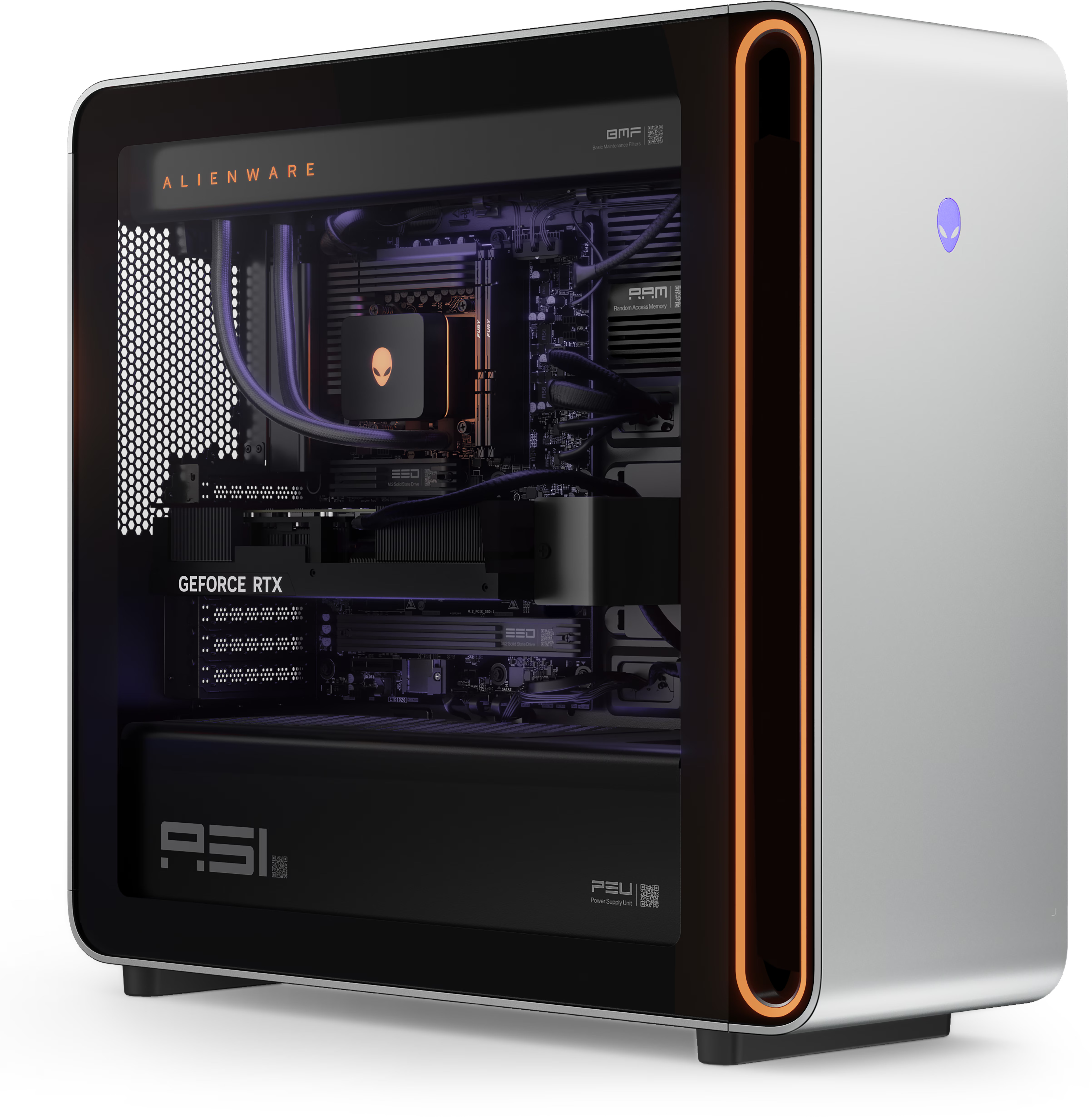
The cheapest Nvidia RTX 5090 in stock and available to buy right now costs at least $4,799, and even then, you won't be buying one from a reputable vendor. That makes this Dell Alienware desktop discount all the more enticing. Right now you can save $1,550 off the potent Alienware Area-51 Gaming Desktop, and score one for $4,779, cheaper than the standalone cost of the GPU.

● Check out this deal at Dell

With graphics card prices continuing to rise, the bar for selling a 5090 PC for less than the cost of the card is admittedly a little lower than it used to be, but this is still a crazy deal. For less than the cost of a 5090, you get the card, plus a 20-core Intel Ultra 7 265K processor, 32GB of DDR5 7200 RAM, 1TB M.2 Gen 5 SSD, and a 1500W power supply, all housed inside a sleek Alienware case. Other bonuses include a copy of Windows 11 and a 240mm AIO CPU cooler.

Area-51 Gaming PC with RTX 5090: was $6329.99 now $4779.99
Get an RTX 5090 with an entire gaming PC thrown in, all for less than the cost of the card by itself. Features 20-core Intel Ultra 7 265K processor, 32GB of DDR5 7200 RAM, 1TB M.2 Gen 5 SSD, and a 1500W power supplyView Deal

The standout of this build, as you've probably guessed, is the absolutely monstrous RTX 5090. The best graphics card on the market by some distance, its massive 32GB GDDR7 VRAM pool and 21,760 CUDA cores mean it will chew through any title at 4K, or a local AI workload without breaking a sweat.

GPU Benchmarks Hierarchy performance charts
Tom's Hardware
GPU Benchmarks Hierarchy performance charts
Tom's Hardware
GPU Benchmarks Hierarchy performance charts
Tom's Hardware

The rest of this PC, while not the most premium spec, is definitely not to be sniffed at either. The Intel Core Ultra 7 265K is arguably a little underpowered at this level, but the RTX 5090 will more than make up for any shortcomings. The Arrow Lake CPU has excellent single-threaded performance, and when paired with a 5090 in our CPU testing data, can pump out 150 frames per second at 1080p on average across our 17-game test suite. That being said, if you'd like a bit of a CPU boost, you could opt to configure a Core Ultra 9 285, with more cores, cache, and a higher boost clock speed.

While we'd have previously hoped for 64GB of RAM in a build of this magnitude, the AI-induced component crisis means that is no longer a reality. Fortunately, you can upgrade the DDR5 6400 to DDR5 7200 with Intel 200S boost — which our testing shows can boost gaming performance by 7% — for free in this particular deal. You also get a 1TB Gen 5 SSD and a 1500W power supply.

While it might not feature AMD's benchmark-busting X3D CPU range under the hood, buying any PC for less than the going rate of the 5090 is not to be sniffed at in the current PC market. Indeed, CPUs and motherboards remain some of the only PC components with healthy discounts in the current climate, so buying this rig and doing a bit of surgery to the processor isn't out of the question either.

❌
❌