普通视图

发现新文章,点击刷新页面。
今天 — 2026年9月16日Tomshardware

AI leaders clash over safety fears after Anthropic whistleblower says AI could 'kill us all' by 2030 — OpenAI, Anthropic and xAI figureheads call for external governance, while Jensen Huang says worries are 'made up'

2026年9月16日 01:19

This past week, employees and key figures at leading AI companies have called for a slowdown in the development of frontier AI models, citing warnings from their own teams and other AI researchers that the risk stemming from a super-intelligent AI could endanger the human race. However, while the top Western firms have shown solidarity on this issue, others have urged caution or downright denied their claims, but there's a deeper story within the calls for a slowdown, namely the tension between open-source and closed-source AI models.

Nvidia CEO Jensen Huang said the safety fears were "made up," and that there was no need for a slowdown. Chinese officials called the claims "fearmongering," and an effort to stymie international AI development efforts, while President Trump waded in with characteristic bombast and said that he was enough of an AI safeguard on his own, and that it was in the interests of China to enact a frontier AI slowdown

Meanwhile, other countries are reacting to the news and taking independent efforts to investigate AI safety, with the UK's King Charles setting a meeting with leading AI figureheads to discuss how to better develop AI for the benefit of humanity.

Why now?

If you ask most workers who've been scared into believing their livelihoods were in jeopardy, the time for AI slowdowns came and went years ago. Indeed, many are nostalgic for the time before AI. But why are so many tech leaders only now raising the alarm?

They claim it's entirely based around safety fears. Following months of AI seemingly surprising their own developers by breaching sandboxes to go on exploit-hunting sprees. The volume of concern rose considerably after former OpenAI researcher, Jacob Coxon, resigned from Anthropic, claiming that none of the AI companies were taking AI safety and alignment seriously enough.

He didn't whistleblow on anything nefarious, dump documents or internal company data to prove his claims, or point to any specific attack vectors, or even actual harms. Instead, Coxon warned of a future potential of AI that he sees these companies racing towards without due concern.

What they're developing could, "kill us all by the end of the decade," he warned. It's not clear how, but it started a viral conversation all the same. Much like Matt Schumer's "Something big is happening" viral post from February this year.

Days later, OpenAI CEO Sam Altman, Anthropic CEO Dario Amodei, and Elon Musk showed surprising levels of solidarity for arch rivals in the space, putting out similar statements claiming that AI was becoming too powerful and that a general slowdown in the development of frontier AI models was the best solution.

Dario is right https://t.co/EwKgqQGaUoSeptember 12, 2026

Claiming that AI was playing an increasing role in improving itself — hinting at the recursive self-improvement (RSI) event that many AI researchers are concerned about — Amodei called for the creation of independent auditors for AI models. Altman agreed, even calling on governments to globalize the regulation to encourage unified compliance with any safety protocols enacted by the frontier developers.

Where we're going, we don't need roads

Not everyone feels these fears are warranted, however. China, which has recently made great strides in its development of highly intelligent open-weight models, called the concerns "fearmongering" and said it served no one's interest to be so confrontational. Although Chinese Premier Xi Jinping has said in the past that it was important for AI to "always remain under human control," the Chinese state-run Global Times paper called demands for a slowdown a method to "contain" Chinese developments.

Meanwhile, Nvidia CEO Jensen Huang has broken ranks with other Western AI leaders, claiming that there was no need for a slowdown and that any apocalyptic fears around AI were entirely fictional.

Nvidia CEO Jensen Huang was asked how to explain a claimed 10% risk of human extinction from AI.“We shouldn't, because it's made up.” "All of these predictions have been wrong" pic.twitter.com/TZ3EXL8cl1September 14, 2026

As one of the few companies making real — and enormous — profits from AI development, Nvidia has a vested interest in the expansion of the AI industry continuing on its current explosive trajectory. Indeed, it has heavily invested in it. Nvidia has stakes in hardware and software companies, along with providing backstops for neo-cloud firms. It also recently bought Hugging Face for $13 billion.

We've been here before

While the AI CEOs might have suddenly decided it's time to slow down, there have been many, many others who have made that call before now. U.S. Senator Bernie Sanders has been at the forefront of claims that the AI industry was moving too fast and breaking too many things, and recently called for heavy prison sentences for those developing superintelligent AI.

Over 1,000 AI workers signed an open letter in July this year calling on the U.S. government to control AI research and ensure safety and security. Others did that in 2023, too. This isn't even the first time that AI CEOs have called for slowdowns on AI development. Dario Amodei called for global coordination to police AI after the release of OpenAI's GPT2 model in 2019. Elon Musk did the same in 2023.

None of this takes away from the real dangers of AI, or the suggestion that now may really be the time to do something about them. But it does raise questions about the reasons behind their coordinated fear-raising. Even if it isn't fear-mongering.

Safety, or a trojan horse?

The collation of leading Western frontier AI companies clamoring for tighter controls over powerful AI models has another theoretical benefit too: containing the number of AI models that are permitted for use in the Western Hemisphere. A cursory look at OpenRouter's AI model rankings, which base themselves on the total number of tokens generated, places just three Western-made models on the top ten list — the heavily discounted GPT 5.6 Luna at number one, Nvidia's Nemotron Ultra 3 (Free) at number eight, and Google's recently-launched Gemini 3.8 Flash at number ten.

The rest of the models in the rankings are all open-weight Chinese models, which, more often than not, are cheaper than leading Western frontier models, according to the Artificial Analysis' Cost per Intelligence index. The Chinese models in OpenRouter's current top ten include Z.AI's GLM 5.3, Deepseek V4 Flash, and Tencent's Hy4 and Hy3. So, if the development of a Western frontier AI alliance emerges under the guise of calls for safety, it's possible that said companies are aiming to be the chosen few, creating a closed-loop monopoly for "preferred" AI providers. However, this remains speculation as the situation develops.

Will anything actually change?

Although the major AI companies may voluntarily, or even jointly, throttle their development efforts to improve safety, enacting anything globally significant will need the cooperation of international governments. There are certainly calls from politicians the world over to rein in the trillion-dollar companies and their cutting-edge autonomous systems.

But with the U.S. government firmly on the side of limited regulation, and no clear indication of what a slowdown would even look like. Would that entail limited compute? No new models? A halt to superintelligence research? It's hard to imagine a global consensus taking shape as things stand.

Asus' ludicrous $10,850 20th-anniversary bundle is now the cheapest way to buy an RTX 5090 — Nvidia's flagship GPU stock is so limited that this bundle with a 3000W PSU, X870E board, and open-frame case is actually cheaper than some scalper listings

作者 Ben Stockton
2026年9月15日 23:13

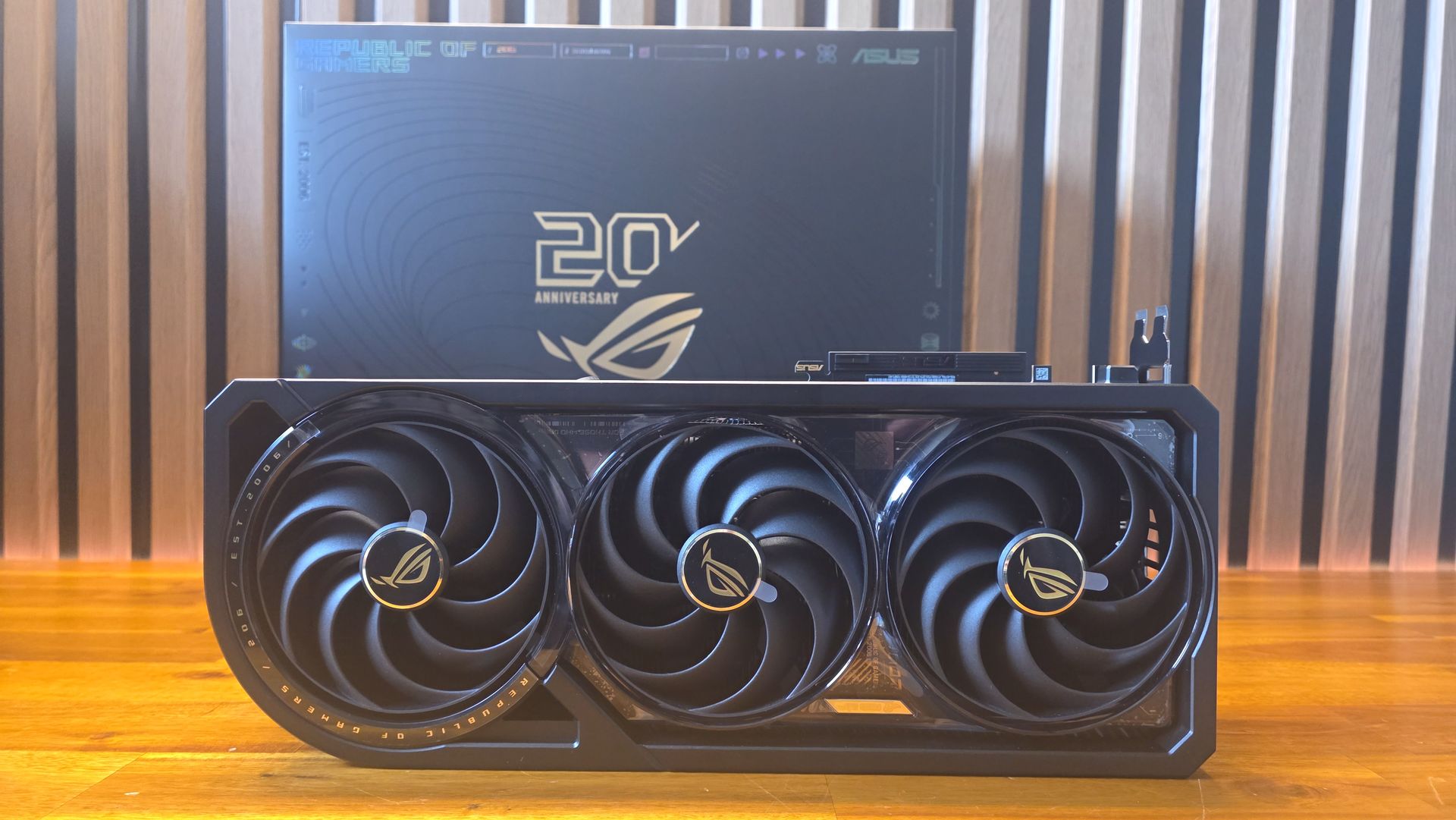
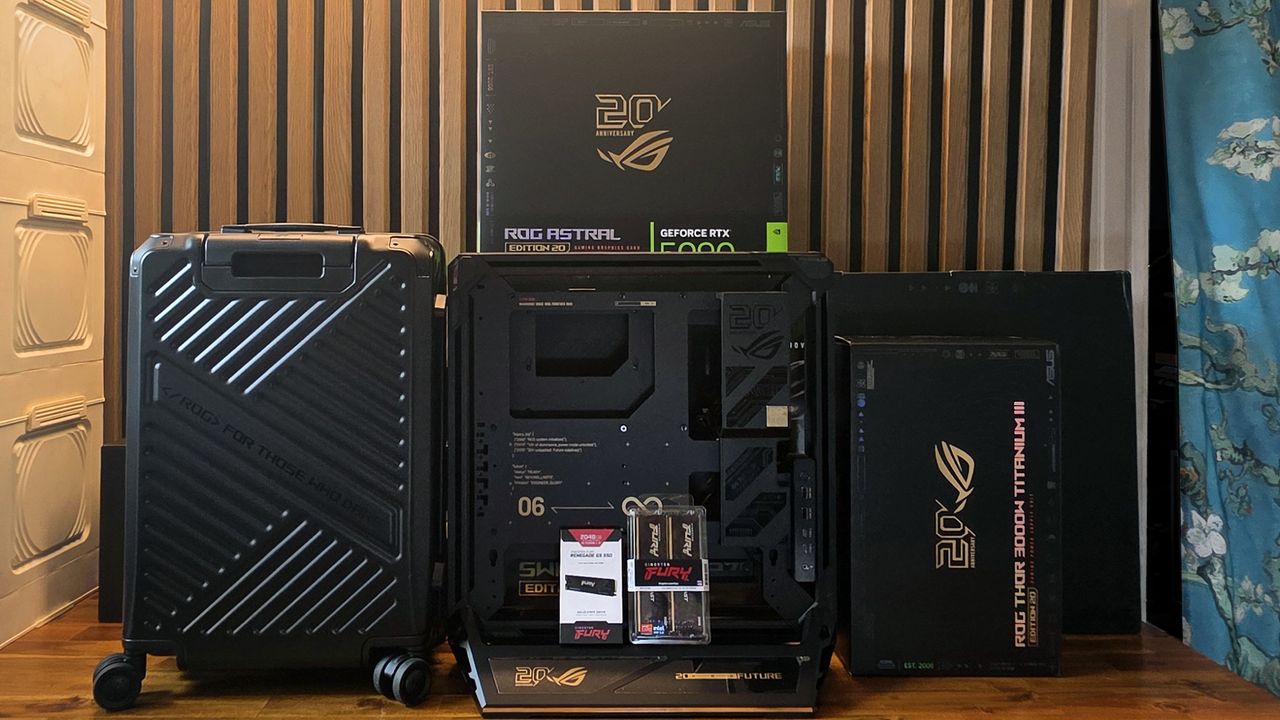
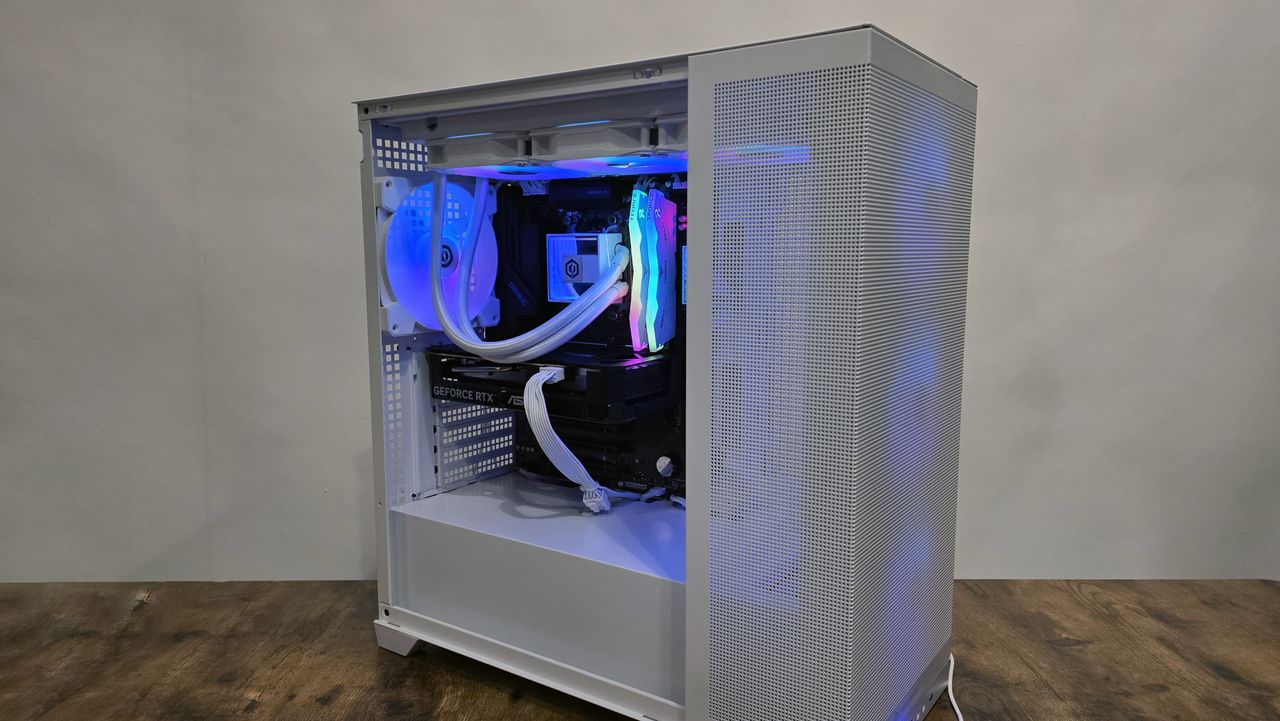
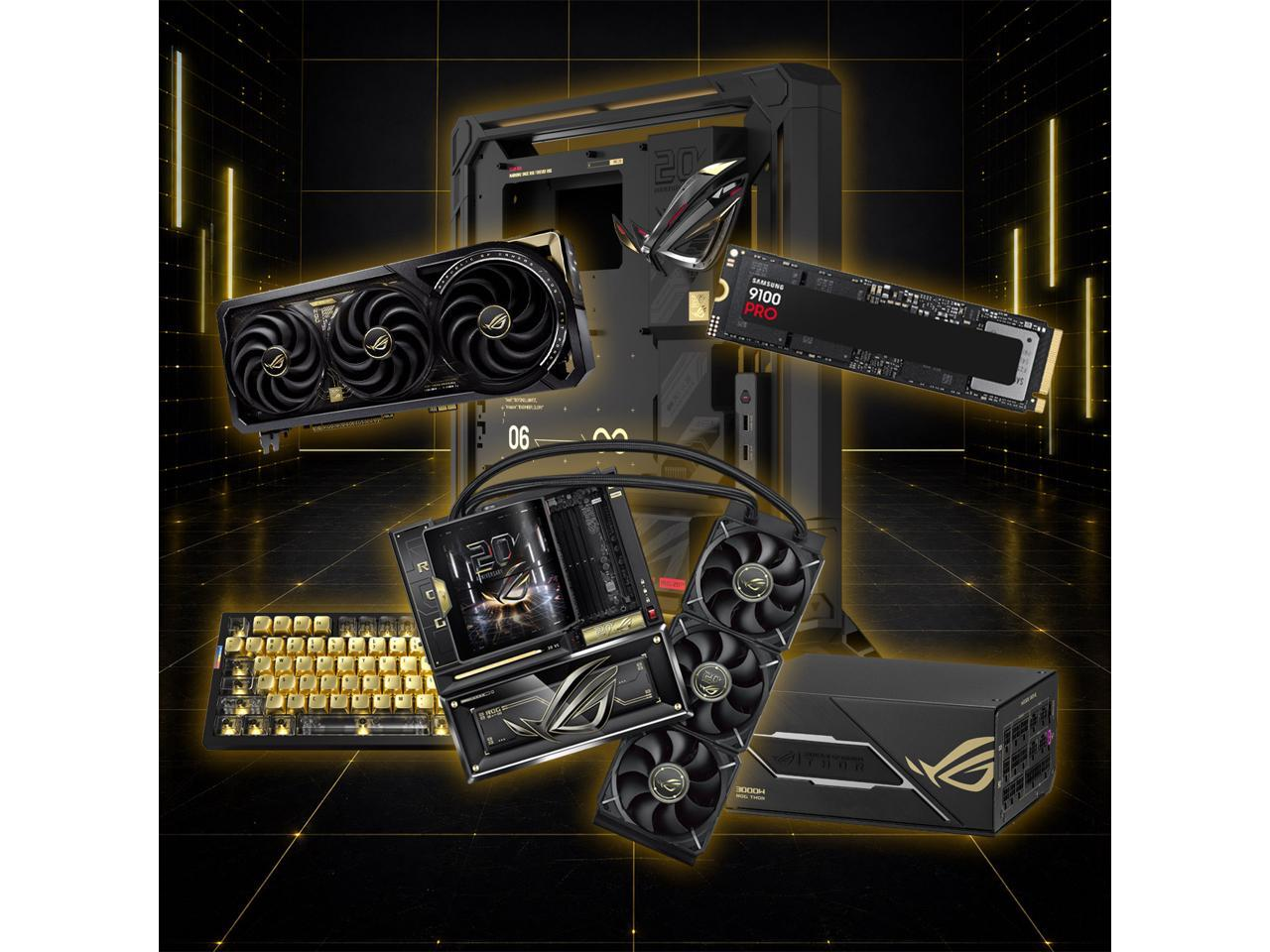
We've reviewed Asus' ROG Edition 20 anniversary kit. We've built a PC with it. It's about as premium as a gaming PC build can get. Right now, you can pick up the same kit for a whopping $10,849.96 on Newegg in a combo deal. To put it mildly, this is one expensive deal, but it's actually hiding a secret gem: it's the cheapest RTX 5090 graphics card on sale right now.

Check out this deal at Newegg

Writing up a near-$11,000 combo set as a deal might seem silly, but one of the core components here is the Asus ROG Astral GeForce RTX 5090 Edition 20 that is priced as part of this deal at $5,999. You can't buy this Astral card on sale individually right now. In fact, you can barely buy an RTX 5090 anywhere. RTX 5090 stock has almost completely disappeared in the United States, with only sketchy third-party sellers offering it at prices approaching $10,000.

This premium GPU is now ultra premium and, for the time being, ultra rare. Does that make this $10,849.96 Newegg combo deal a good option? If money is no object, you're perversely getting some value for your money, as long as you don't think too hard about the RTX 5090's original $1,999 MSRP.

ROG Edition 20 combo: $10849.96
This frankly ridiculous bundle includes all of Asus' ROG Edition 20 kit, including the ROG Astral RTX 5090, ROG Crosshair X870E, ROG Thor Titanium III 3000W PSU, and the ROG GR20 open-frame PC case. No discount, but the RTX 5090 is the cheapest you'll find it, in the oddest way.View Deal

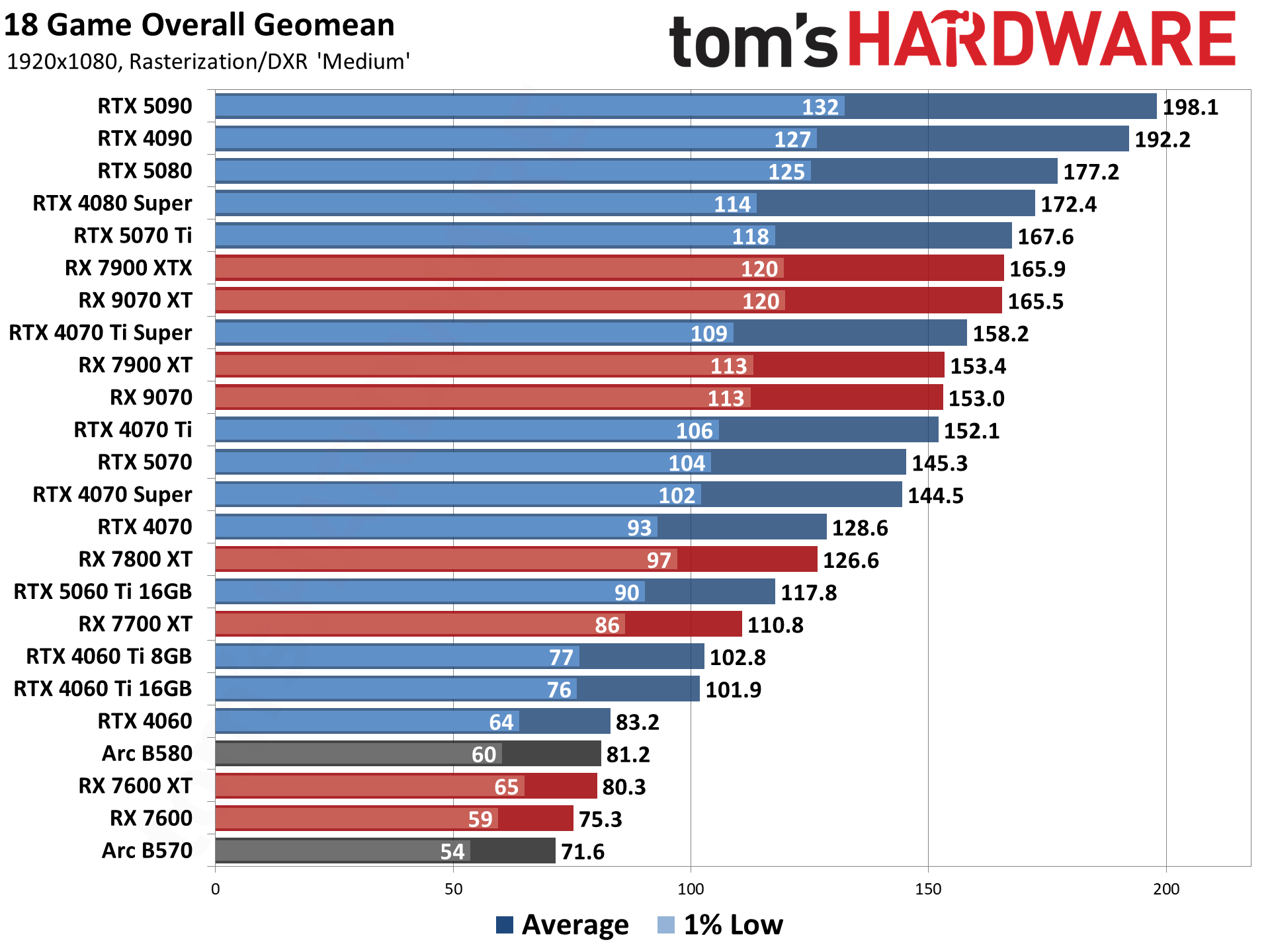
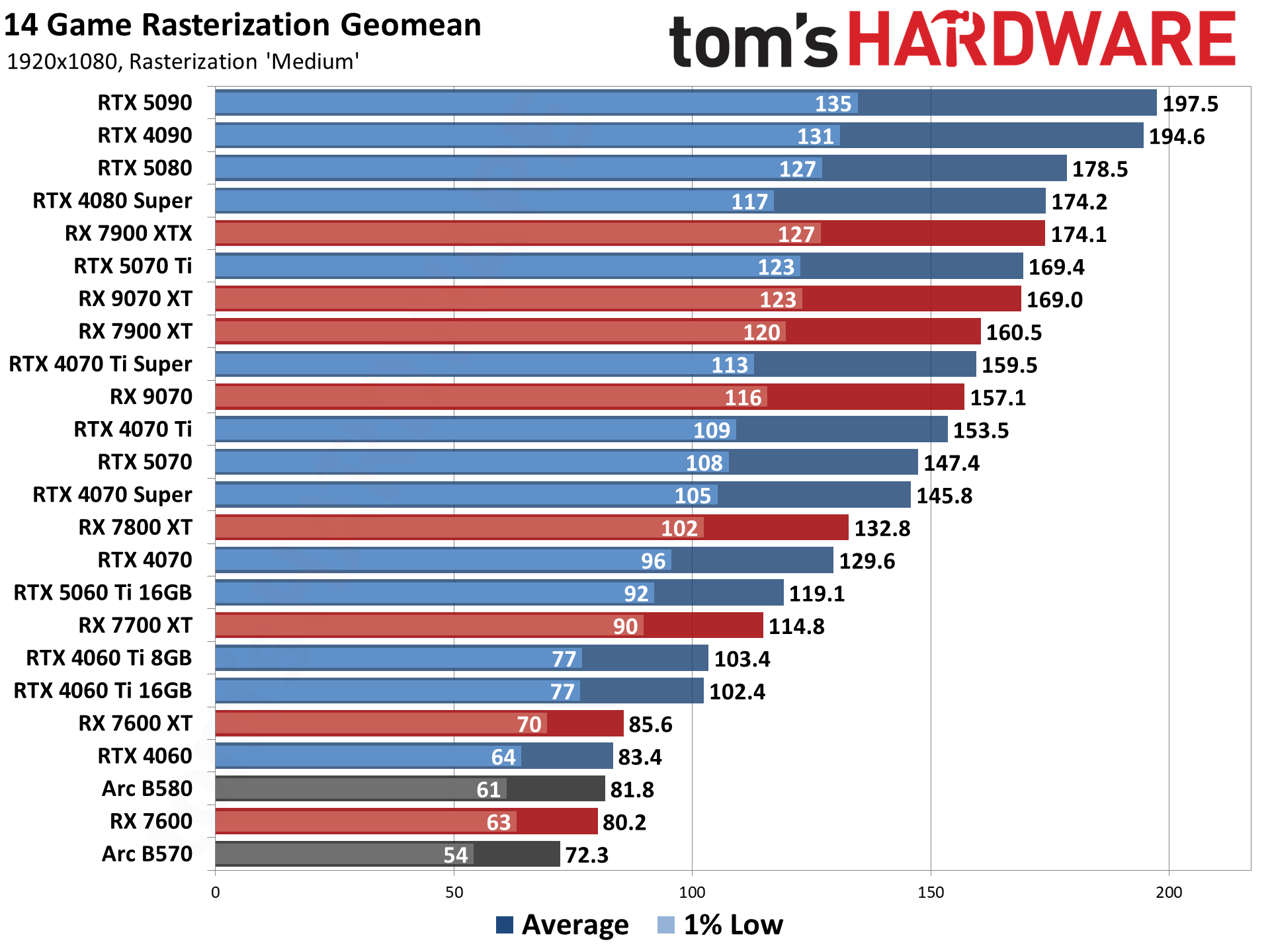
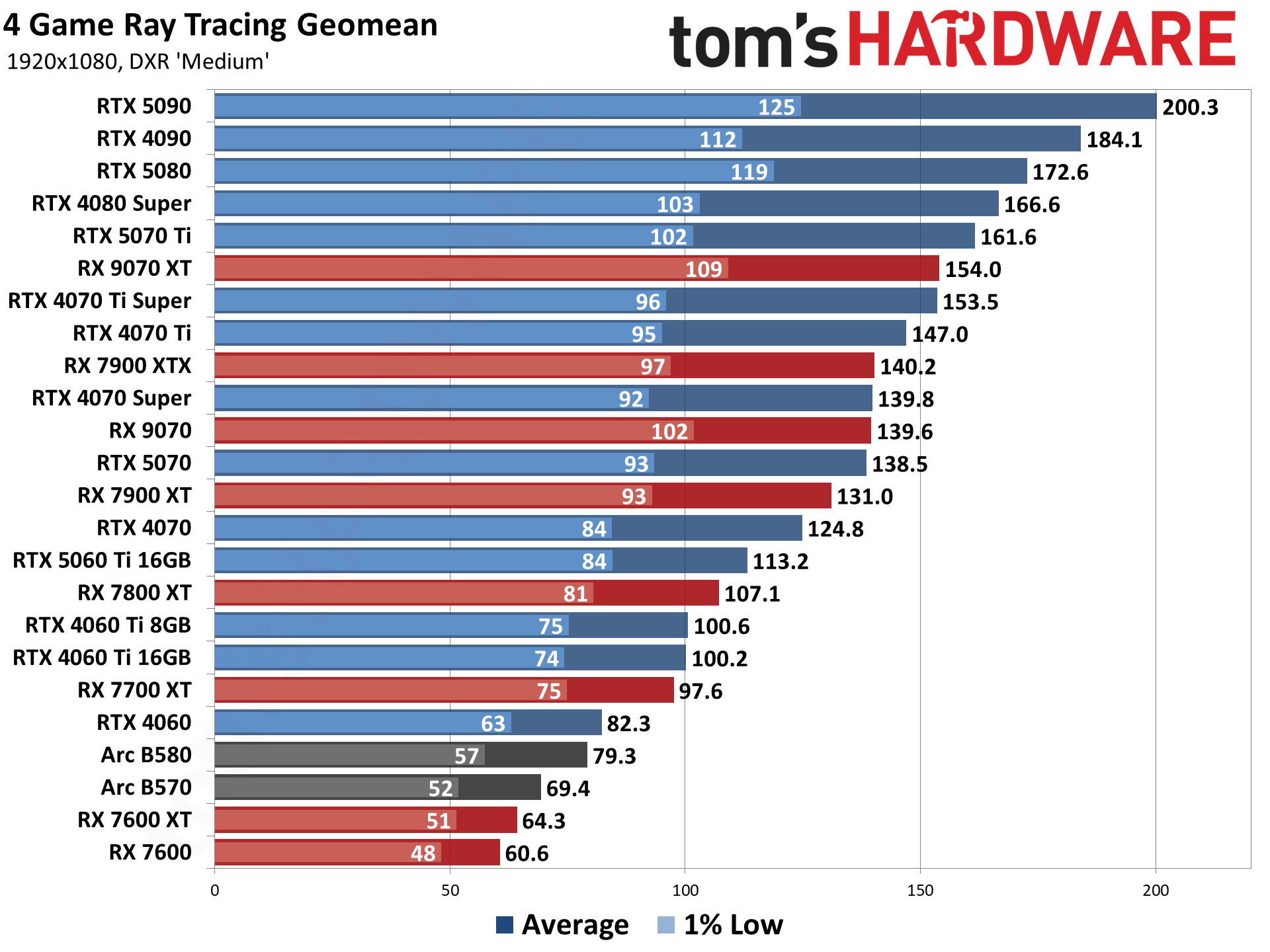
Yes, the GPU is an unstoppable force for any gamer. Our GPU benchmarks make that very clear. The RTX 5090 is the best GPU you can buy, and no other consumer GPU is going to beat it. It has 21,760 CUDA cores and 22GB of GDDR7 VRAM, with a 512-bit memory bus and bandwidth speeds of up to 1,792 GB/s.

This Astral is a world-beater of its own, though. It features an upgraded design, with a second BTF power connector to pull up to 800 watts, a glass backplate, and a curved OLED screen. It has faster clocks, hitting 2,750 MHz, with a 4.7-slot design. Performance-wise, the OG Astral is beating world records, so this is a card that you can really push to its limits (if you're not scared of charred power cables).

GPU Benchmarks Hierarchy performance charts
Tom's Hardware
GPU Benchmarks Hierarchy performance charts
Tom's Hardware
GPU Benchmarks Hierarchy performance charts
Tom's Hardware

The $6,000 GPU aside, you're also getting a $3,299 Asus ROG Crosshair X870E Edition 20 motherboard. Asus has a few variants of this, but the Edition 20 board here has (alongside some beautiful gold accents) supports for up to nine M.2 SSDs, with five slots on the board and more via add-in cards. There are six USB-C ports, plus two 20 Gbps front-panel connectors. Large copper VRM heatsinks work with its integrated AIO cooler, with a curved 6.7-inch AMOLE screen and a huge copper heatsink. Probably overkill, but for $3,299, you want it all.

You're also getting a $899.99 Asus ROG Thor Titanium III 3000W Edition 20 power supply. It's a PSU, but 3000W isn't to be sniffed at, and it'll certainly provide enough power for the monstruous Astral RTX 5090. It’s fully modular, with another OLED display (magnetic, this time) which you can mount either side, or extend with a cable.

Asus ROG Edition 20 build

(Image credit: Tom's Hardware)

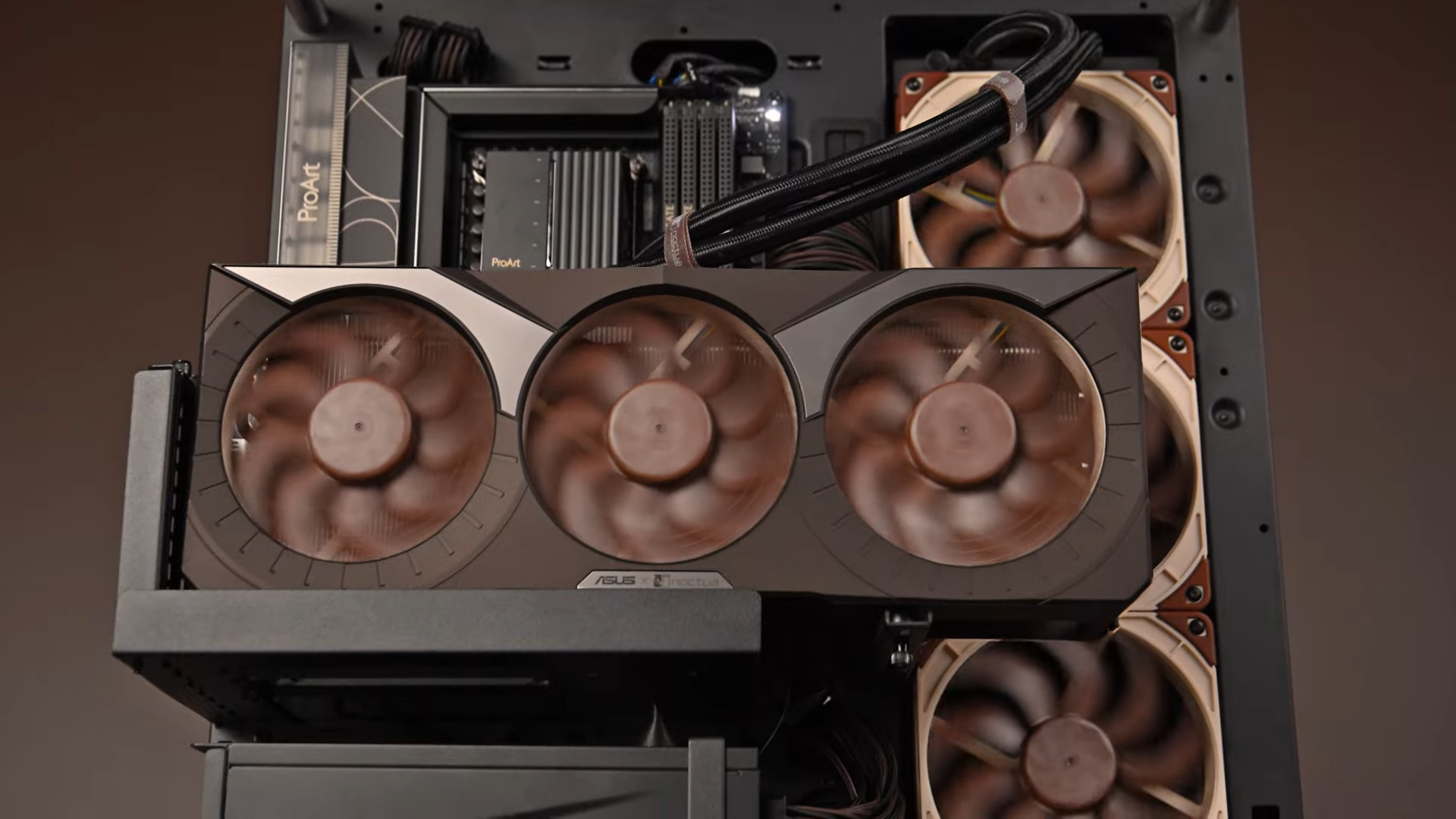
Finally, you get the Asus ROG GR20 open-frame EATX PC case, set at $649.99. This is a totally new design from Asus, supporting large EATX motherboards, and you can stand it vertically or horizontally. There's a crossflow fan to blow cool air onto the GPU, RGB light strips, and several fast USB ports. It's mostly aluminum, with some plastic, magnetically attached cosmetic covers around the sides.

$10,849.96 for this Asus combo kit is so much money for anyone to spend on a gaming PC build, but, unfortunately, we are where we are. As our Asus ROG Edition 20 build write-up mentions, this is a kit that few will buy and own. AI is pushing gaming PCs to new heights, and it's a real shame that we're now seeing current-gen flagship GPUs like the RTX 5090 becoming so rare to buy that combo offers like this are, perversely, almost good value. If you're spending $6K or more on a GPU, though, then it might make sense. You won't find an RTX 5090 cheaper (or, probably, at all, at least for some time) so if you want the best gaming PC build that you can find, this is the kit you'll want. For once, we don't imagine this will sell out soon, but Newegg might pull the deal at any point.

Intel reportedly cans 12Xe option for Nova Lake-S desktop — gaming APU design said to resurface with Razor Lake

作者 Jake Roach
2026年9月15日 22:17

Intel won't launch a Nova Lake-S SKU with 12 Xe3P graphics cores, according to tipster Jaykihn, who originally flagged a beefed-up APU design with the Nova Lake architecture. The original SKU was said to come with 4 P-cores, 8 E-cores, and 4 LPE-cores, along with the 12 Xe3P cores, presumably offering an inexpensive onramp to a gaming desktop without a discrete GPU. Now, the leaker says that design is cancelled, and Intel intends to pick it back up with Razor Lake, the generation that will follow Nova Lake.

Nova Lake -S 12Xe has been changed to Razor Lake -S 12XeSeptember 14, 2026

Originally, Intel's 12 Xe3P Nova Lake SKU was said to require 65W of dedicated power to drive the iGPU, necessitating the use of two VCCGT phases on the motherboard for integrated graphics. Intel's Arc B390 GPU, which is the 12 Xe3-core model available in Panther Lake and Arc G-series processors, has a thermal design that can sustain up to 80W. However, it's currently being used in Panther Lake machines and handhelds like MSI Claw 8 EX AI+ that have lower power targets.

The Xe3P architecture is slotted for use in Intel's Crescent Island AI accelerator, but it hasn't been announced for any other products yet. Xe3P supports a wide deployment of Xe cores (up to 32), a deeper XMX engine with support for low-precision data types like FP8 and FP4, an increased 512KB L1 cache per Xe core, and a new unified L2 cache (32MB on Crescent Island).

Even by desktop APU standards, an 80W iGPU is a beefy accelerator to have on the same package. In addition, Intel's Nova Lake stack is said to extend up to a 175W TDP with the rumored top-end 52-core SKU, meaning the full 12 Xe3P iGPU would likely only be possible lower down the stack (and maybe only in the 4 + 8 + 4 + 12 Xe design originally suggested).

Earlier in the year, rumors suggested Intel was working on a mobile APU to counter AMD's Strix/Gorgon Halo products, featuring a large pool of unified memory and a large iGPU, dubbed Nova Lake AX. Now, the rumor mill suggests Intel will recycle the Nova Lake CPU cores for Razor Lake AX on mobile while pushing a larger iGPU.

Nova Lake-S rumored specifications

SKU*

Core Config (P+E+LPE)*

bLLC*

TDP (Unlocked/Locked)*

52 Cores (dual-tile)

(8+16)+(8+16)+4

288MB

175W

44 Cores (dual-tile)

(8+12)+(8+12)+4

264MB

175W

28 Cores

8+16+4

144MB

125W

28 Cores

8+16+4

-

125W / 65W

24 Cores

8+12+4

132MB

125W

24 Cores

8+12+4

-

125W / 65W

22 Cores

6+12+4

108MB

125W / 65W

22 Cores

6+12+4

-

125W / 65W

16 Cores

4+8+4

-

65W / 35W

12 Cores

4+4+4

-

65W / 35W

8 Cores

4+0+4

-

65W / 35W

6 Cores

2+0+4

-

65W / 35W

*Specs rumored, unconfirmed by Intel

Intel has told us that Nova Lake is one of the most important desktop CPU launches for the company ever, following on the heels of the mediocre Arrow Lake rollout. Perhaps the biggest addition to the lineup is rumored to be bLLC, or big last-level cache, which is said to show up on select SKUs to counter AMD's X3D assault among the best CPUs for gaming. The company has yet to confirm that bLLC is even possible with its current packaging capabilities, though enthusiast channel VP Robert Hallock hinted to Tom's Hardware that Intel has plans to address X3D in the next generation.

The main stack is rumored to climb up to 28 cores, with two additional dual-tile SKUs that can go as high as 52 cores. The dual-tile models look like a bid for HEDT, perhaps competing with AMD's Threadripper CPUs, though it's not clear how Intel will position its dual-tile models yet.

Earlier this month, a leaked slide gave us a glimpse into Intel's launch plans for Nova Lake. The slide suggested Intel will announce the main stack (up to 28 cores) in Q4 of this year, with the chips arriving in Q1 2027. Intel will apparently follow up later in the year with the 52-core model. This aligns with what we've heard from our sources about Intel's Nova Lake rollout.

Alongside Nova Lake, Intel will introduce the new LGA1954 socket, along with the flagship Z990 chipset. We've already seen multiple Z990 motherboards in the flesh, suggesting Intel is preparing for a Nova Lake release in short order.

US AI data centers projected to become the fifth-largest natural gas consumer in the world by 2035 — consumption to grow by 15 billion cubic feet per day as demand for compute increases

The estimated natural gas consumption of data centers in the U.S. is expected to massively increase as these facilities increasingly rely on gas turbine generators for their power. According to Bloomberg, data centers are projected to use up to 15 billion cubic feet per day by 2035, a 117% increase from the previous forecast of 6.9 billion cubic feet. This number tracks with other data center forecasts, which suggest that data centers will use 20% of U.S. power by 2035, amounting to about 194 gigawatts.

Many data center projects have already been delayed by the lack of available power infrastructure, with power plants expected to take so much longer before they come online. It’s for this reason that many developments have turned towards onsite generators, so much so that AI demand is now compounding the jet engine shortage already plaguing the aviation industry.

Elon Musk was among the first to use gas turbines to power a data center when he deployed them at the Memphis Supercluster in 2024, even though he didn’t have permits for some of them. Now, it seems that the world’s richest man has seen this trend and has invested a billion dollars to buy a portable gas and diesel turbine leasing company. He even announced that SpaceX will start in-house turbine blade manufacturing to help cut down on the manufacturing bottleneck plaguing the jet engine industry.

New technologies like small modular reactors are currently being developed as an answer to AI data centers’ insatiable demand for power, like Ampera’s 3D-printed modular thorium nuclear reactor or Valar Atomics’ Ward 250 nuclear microreactor. Many AI hyperscalers, including Amazon, Google, Microsoft, Nvidia, and Oracle, have even invested in projects like these in a bid to generate massive amounts of clean energy for AI. However, they’re expected to take a few more years before they could become commercially viable — time that tech giants do not have. Because of this, Musk said that “natural gas will still be needed to supplement and bootstrap solar for several years.”

The deployment of natural gas turbines in data centers isn’t good news for the communities living around them, though. The NAACP said in its lawsuit against SpaceXAI that the use of these turbines at Colossus 2 increased nitrogen oxide exhaust by 111%, PM2.5 particles by 83%, and formaldehyde emissions by 88%. While the company has already pledged to remove all its unpermitted generators, the process will take at least a year as the portable turbines are slowly being replaced by a 1.2-gigawatt on-site power plant.

Aside from this, the massive demand for natural gas could potentially put a strain on the supply, causing prices to rise and hit the average consumer. Domestic natural gas producers are projected to raise their output by 35 billion cubic feet per day in the next decade, but this still falls short of the forecasted demand by around 11 billion cubic feet per day. So, unless output manages to catch up with the demand, prices are expected to shoot up and cause a scramble for available supply. Still, some experts suggest that there are still more than enough undeveloped gas fields within the U.S. to allow the industry to increase natural gas supplies and reduce costs.

昨天 — 2026年9月15日Tomshardware

Bill Gates compares AI to alien intelligence in movies where ‘magically the US and China’ solve the problem together — warns world governments that they’re not ready for AI

Microsoft founder Bill Gates has said in an interview that the world’s governments are not ready for artificial intelligence. The billionaire philanthropist made the warning in an interview with Reuters, saying that nations must prepare for the various risks that the technology poses to the workforce and society as a whole.

“I don’t think any government is nearly as deep on this as they have to be. Governments are way behind on this one,” Gates told the publication. He also added, “There’s all sorts of movies where some aliens are coming, and magically, the U.S. and China and everybody comes together to solve the problem. AI is kind of like this alien intelligence. It’s here, and we better do like it shows in those movies.” In line with this, he said that he has been in talks with world leaders like U.S. President Donald Trump to share his concerns, and that he’s also trying to meet with Chinese President Xi Jinping.

While concerns AI’s impact on jobs and human society may seem small compared to the news about runaway AI taking over the world and ending all human life, governments still cannot ignore these seemingly lesser issues. This is especially true if businesses stop hiring people in favor of AI tools, with the CEO of Microsoft AI predicting that they could replace every white-collar job in 18 months. This is why Gates argues that authorities across the world must have plans in place when this begins to happen, even going as far as saying that some jobs should be “Human Reserved.”

It’s unclear what steps Bill Gates believes governments should take to prepare and protect its citizens from the predicted turmoil that AI technologies will bring on humanity, but U.S. Senator Bernie Sanders has already proposed an AI sovereign wealth fund that would have direct ownership stakes on American AI firms. He even went as far as introducing the Ban Artificial Superintelligence Act, which puts the penalty of developing powerful AI tools at par with building rogue nuclear weapons. However, the current administration has downplayed all these concerns about AI, with President Trump calling them a hoax.

Despite his warnings, Gates still believes that AI has great potential for good. The Gates Foundation is planning to spend at least a billion dollars in the next two years to give more people access to AI, saying that it could help the world’s poorest people “if managed properly and accessed equally.” This amount of money will go towards supporting the use of AI in education, healthcare, and agriculture, and even the expansion of large language models so that they would work across all the languages on earth.

ChatGPT transcripts are reportedly read by humans to improve responses, including those with personal information — 'Project Lilly' has seen OpenAI hire hundreds of contractors to manually review logs

AI companies don't have a great track record in areas like copyright or user privacy — unless they're the ones on the short end of the stick, that is — but it's generally known that the chat logs from platforms like ChatGPT are used for improving models. The mechanism as to how this happens was still a mystery until today. 404 Media just published a report about OpenAI's process of human review for chat transcripts, explaining how the review process works, and how it involves other humans sometimes reading private information.

The rating project's name at OpenAI is Project Lily. The publication got information on the project's instruction guides, Slack channels, real ChatGPT conversations, and, of course, the rating system to classify conversations. The operators are called "prompt reviewers," and their job is fairly simple: look at anonymized real-world chats, and judge the quality of ChatGPT's responses to assess whether they actually answer the question, and that the text doesn't overuse "AI-speak," patronizing tones, emojis, or sycophancy, among other parameters. Anthropomorphizing and stating "personal" experiences are both off the table, meaning that while it's OK for ChatGPT to say "I found some information," it's not OK for it to say "as a chef, I like to..." or "I know what that's like."

The work is "very rote," according to a reviewer, but at reportedly over $50 an hour, it's a high rate for what looks like reasonably simple work. The reviewer also said that their guidelines keep changing and are often self-contradictory, a feeling most software developers should easily identify with.

The person doesn't think that most users are aware their chats are being read by others, though, something that's particularly troubling when many use ChatGPT as an impromptu friend or therapist and put deep secrets in words for the bot to read.

While the chats allegedly go through an anonymization pass and reviewers don't see usernames, OpenAI admitted to 404 Media that the filtering may let some personal data through, especially in shorter chats. The site notes that in many conversations, the user asks ChatGPT to keep the contents secret, as well. The version of the chat handed to reviewers also reportedly includes a "user memories summary," containing a summary of the users' questions and interests, context, and potentially even location.

Crucially, Project Lily does not grade the chats' actual factual accuracy other than flagging obvious mistakes, implying that there's likely at least one more team (or several) doing separate evaluations. Likewise, this reviewing is separate from manual safety checks that ascertain if someone might be looking to hurt someone else (or, presumably, themselves).

The existence of the project also indicates that contrary to these image AI companies try to cultivate, the models don't improve just with technological advancement and better training sets — it appears you still need more than a few competent humans in the mix.

By now you may be wondering about the "allow us to use your chats to improve our product" (paraphrased) setting present in most consumer-facing chat bots. That setting is turned on by default in every bot we can think of, even with many paid plans. In ChatGPT's case, it does default to off in Enterprise, Business, and Educational customers.

That toggle switch does not work retroactively, though, so any chats already in ChatGPT's database will remain there unless the user requests deletion. Also, said deletion is also not retroactive, meaning that deleted chats may have already been hoovered and anonymized, and possibly reside in a dataset somewhere.

Although OpenAI initially had no answer to 404 Media's inquiry on whether users were explicitly informed that their chats could be read by humans, the company eventually offered a link to one of its FAQ pages that discusses human review for the purpose of model improvement. We verified ourselves that said notice is at least two years old, and likely older. After the publication of the exposé, the firm changed its help page explaining how people can opt out of data collection, but there's no mention of human operators in that text.

This type of data collection and review is a running theme across most providers. Google Gemini clearly states that "humans may review some saved chats" in its Privacy Hub. Anthropic's stance is similar, with a page dedicated to this topic. Perplexity's stance, meanwhile, is unclear, as its Privacy Notice doesn't confirm or deny human access to chat logs.

Microsoft rolls out emergency update for Windows 11's latest patch — recent update causes crashes on AMD graphics, Explorer hang-ups, and broken third-party integrations

Microsoft has issued an out-of-band update for its recent Windows 11 patch, which has caused a number of bugs and issues. The September 2026 update was just released last Tuesday, and although it packs a number of new features and fixes nearly 1000 security flaws (commonplace in this day and age), there are also a few unfortunate regressions.

The 25H2 update finally reintroduces a movable taskbar, just like we've had since Windows 95, with an option to make the height smaller for compact displays. Likewise, the Start menu now has multiple configurable layouts, and you can toggle each main section on or off. Microsoft also revamped Windows Search — perhaps to finally be useful — and users can now choose to only have it display local results. Explorer got a handy tweak in the form of using KB, MB, GB size indicators, as well.

The update has also surfaced some serious bugs. First off, PCs with AMD Radeon GPUs are crashing, apparently due to the update provoking driver instability. Reinstalling the driver doesn't appear to help, and the reports unfortunately cover most contemporary AMD graphics cards. Microsoft did not mention AMD GPUs specifically in its latest update.

Microsoft noted that it has fixed an issue with Remote Desktop Services where RDS might become unstable, causing connection and sign-in failures.

Microsoft is also aware of an issue with audio output and microphone input going dead. Additionally, there are seemingly reports of audio devices starting up with a botched configuration, like tweaked 3D audio settings or speaker setups. The apparent workaround seems to be putting audio in a standard 2.0 configuration, but Microsoft has now addressed this issue in the emergency patch.

Explorer may display a black screen after logging in, leaving you with a perfectly functioning operating system but no visible UI. The File History backup feature is reportedly not detecting external drives, effectively making it useless. Of particular concern to enterprises, systems administrators, and homelabs, the Remote Desktop Service is also experiencing issues. Last but not least, Microsoft says it has addressed an issue where Claude Cowork is nonfunctional due to the update breaking HC-managed Linux VMs with Plan9 shared folders

Owners of HP and Lenovo systems are also advised to consider holding off on this update. Ever since the August 2026 patch (and now, cumulatively, with the September update), there are reportedly serious issues on both camps. On the HP side, there are instances of the update triggering BIOS corruption, leading to a failed install with no ability to recover the OS — though seemingly the OEM has published a new BIOS revision, so it's hard to say which side is to blame. Meanwhile, Lenovo users might have their machines black-screen or shut down out of the blue, seemingly due to power mismanagement.

While it's heartening to see that Microsoft has significantly increased its Windows development speed and is seemingly listening to customer feedback, a string of bugs after a major feature update are still common.

Grab a $560 saving on this 1440p-ready gaming PC with a 9800X3D and RTX 5060 Ti 16GB, now $1,859 — all-white CyberPowerPC desktop ships with one of AMD's best X3D chips, along with 32GB DDR5 and a 2TB SSD

作者 Ben Stockton
2026年9月15日 18:36

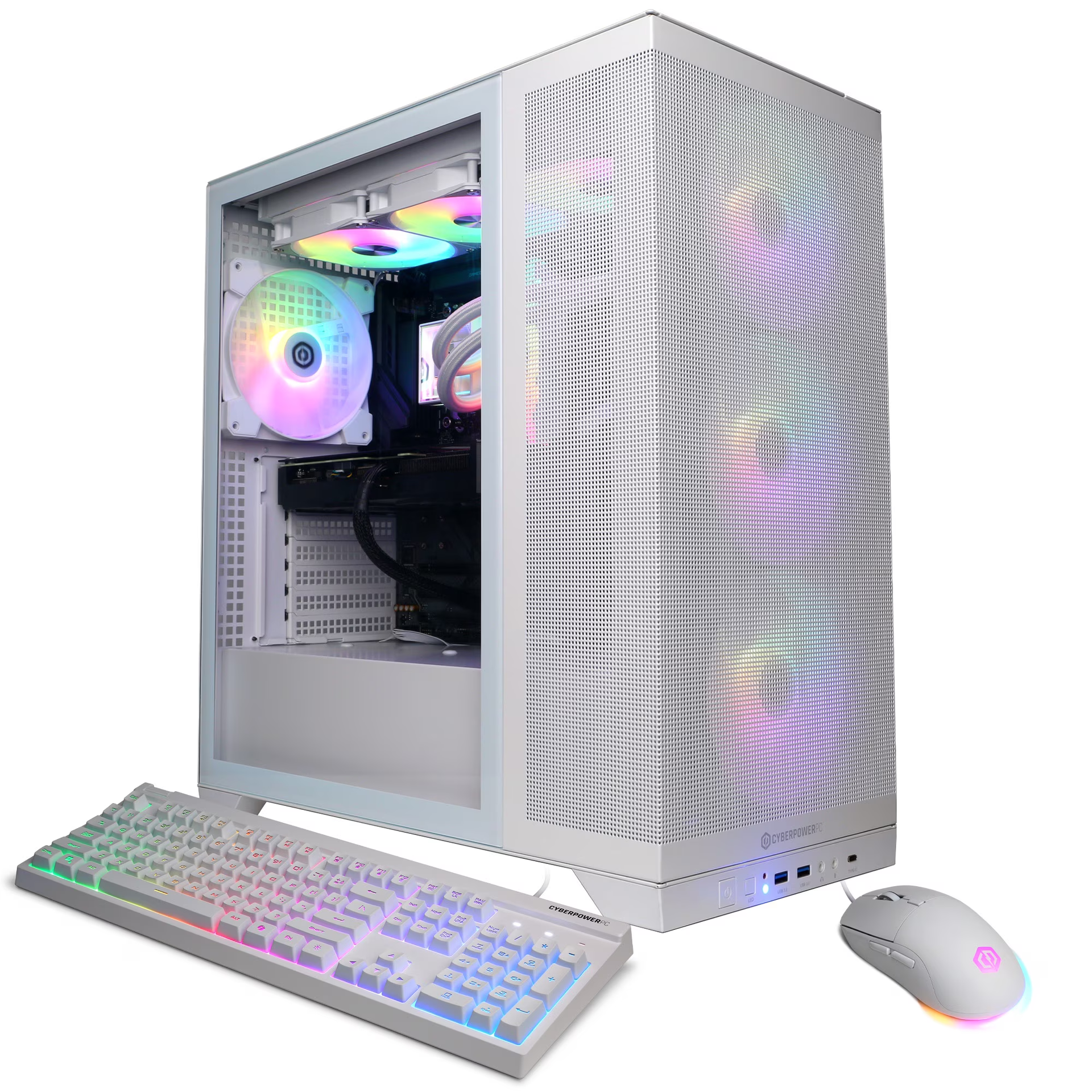
A pre-built gaming PC with one of AMD's top X3D chips inside is always going to be a formidable option, especially if it's coupled with a current-gen Nvidia GeForce GPU. That's exactly what you're getting with this all-white CyberPowerPC machine, down to $1,859.99 thanks to a $560 discount, that ships with a 9800X3D, RTX 5060 Ti, and 32GB of DDR5 RAM.

Check out this deal at Walmart

That's a serious set of specs with few compromises to think about in a market that's seen huge price rises over the last 12 months. Building a new gaming PC has become far more expensive than buying a good pre-built, and the specs you're getting here set you up with a rig that'll let you play games at 1440p at high frame rates and the best graphics presets for years to come. This particular rig scored 4 stars in our CyberPowerPC Gamer Supreme review, with praise for its performance and room for upgrades later.

Gamer Supreme (RTX 5060 Ti 16GB): was $2419.99 now $1859.99
This CyberPowerPC pre-built gaming PC is ready for gaming at 1440p. It features the AMD Ryzen 7 9800X3D, Nvidia GeForce RTX 5060 Ti 16GB, 32GB of DDR5 RAM, and a 2TB SSD for storage.View Deal

Featured in this rig is one of Nvidia’s current mid-tier graphics cards in the RTX 5060 Ti. It ships with 4,608 CUDA cores and a boost clock speed of 2,527MHz, along with that all-important 16GB of GDDR7 VRAM. Unlike the RTX 5090, this RTX 5060 Ti only requires a single eight-pin PCIe connector to deliver power, so you won't need a huge amount of electricity to run it.

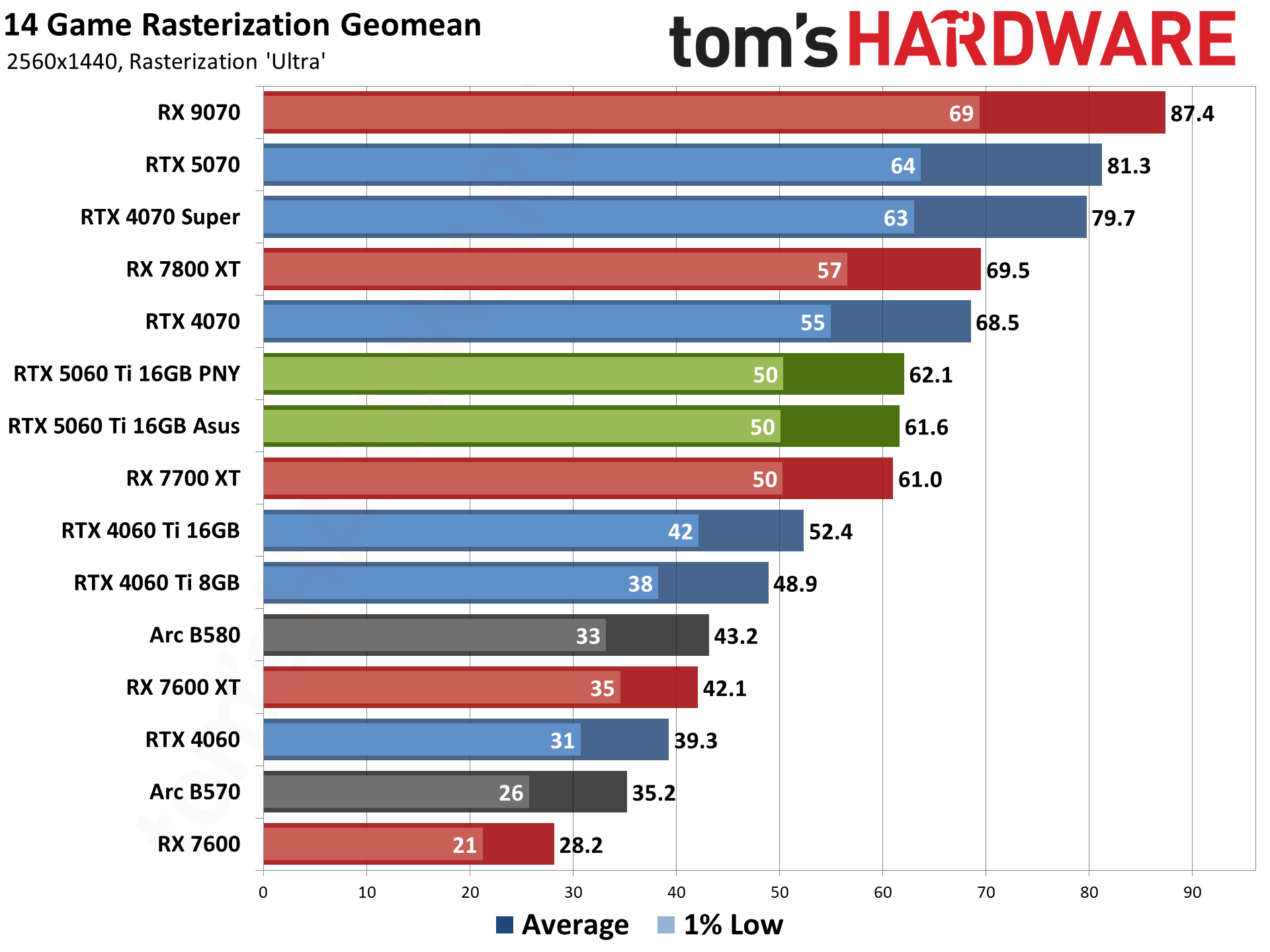
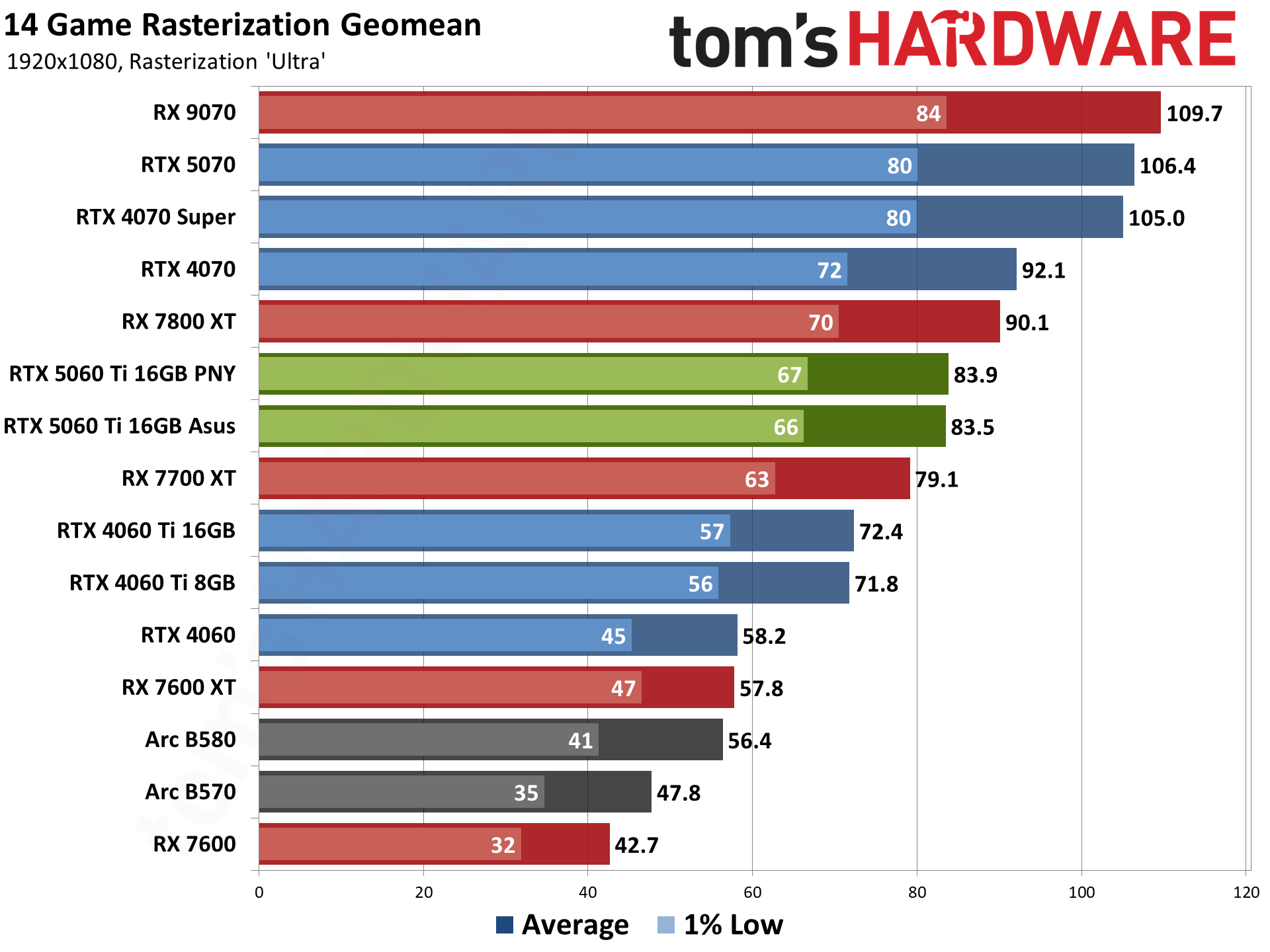
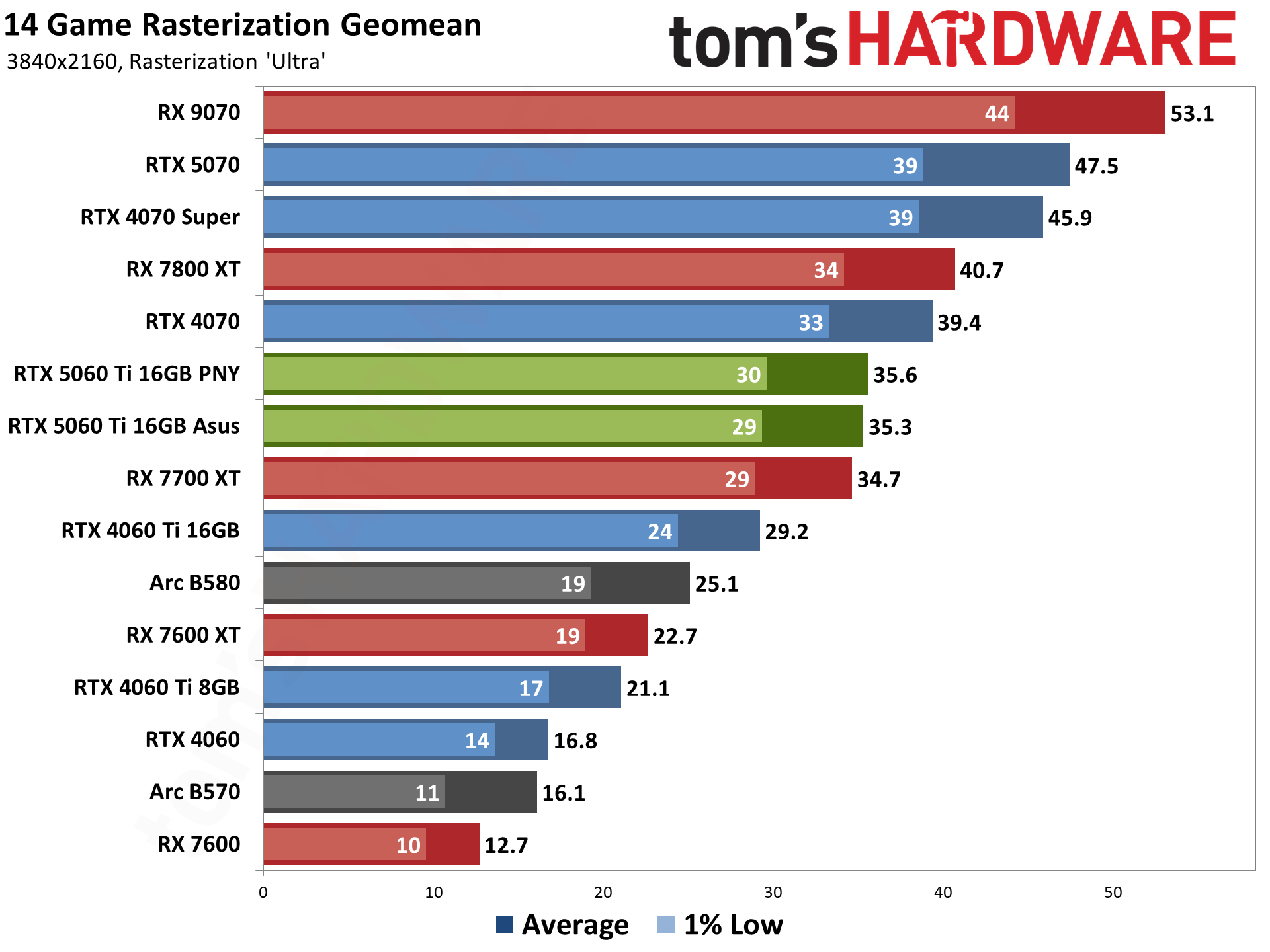
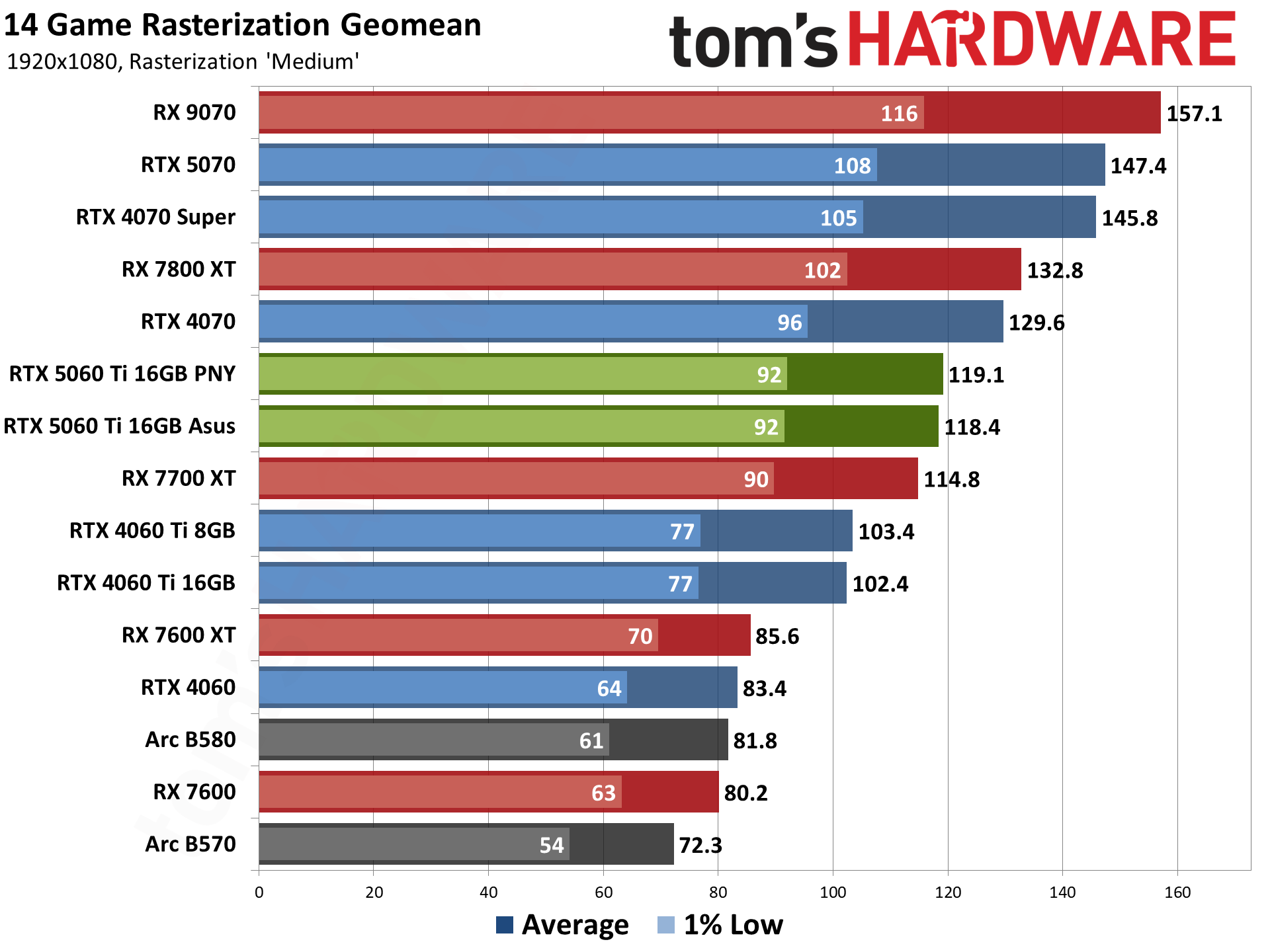
Our RTX 5060 Ti 16 GB review is clear that this GPU is a very good option for mid-tier builds, with ray tracing performance proving to be much better than its rivals. You've also got the full support of Nvidia DLSS 4, giving you access to functionality like multi-frame generation to give your rig a frame rate boost in the most resource-heavy games, especially if you want to try and push to 4K.

Nvidia GeForce RTX 5060 Ti 16GB performance charts
Tom's Hardware
Nvidia GeForce RTX 5060 Ti 16GB performance charts
Tom's Hardware
Nvidia GeForce RTX 5060 Ti 16GB performance charts
Tom's Hardware
Nvidia GeForce RTX 5060 Ti 16GB performance charts
Tom's Hardware

At this price point, though, 16GB of VRAM is the serious winner. You're giving yourself much more headroom for better performance than the budget-friendly 8GB GPUs that you'd otherwise have to switch to. That'll mean that stable gaming at 1440p will be easier to achieve.

Couple that with the eight-core AMD Ryzen 7 9800X3D. This continues to be the best CPU overall for gamers, even if AMD has launched faster models since, because of its price-to-performance value. It continues to offer outstanding gaming performance, as the CPU benchmarks show, with 1% low frame rates that ensure the smoothest possible gameplay. The power of AMD 3D V-Cache, stacking extra L3 cache (96MB in total) so that games don't need to drop down to the slower system RAM, gives you a serious performance boost.

You won't see much compromise elsewhere, either. 32GB of DDR5 RAM means you won't face memory bottlenecks, and a 2TB Gen 4 SSD gives you good storage capacity for several big game installations alongside Windows. You're also getting Wi-Fi 6 and Bluetooth 5.2 wireless connectivity, along with Gigabit Ethernet for a wired setup.

The $1,859.99 sale price for the CyberPowerPC Gamer Supreme rig on sale here is a good price given its performance potential. You're getting a solid 1440p-capable gaming PC, with the best CPU and a formidable GPU to match, with plenty of room to upgrade in the future, and a lot of longevity until then. Don't expect this $560 discount to be around for long.

Minecraft Legacy gets rewritten in C++ for PS2 and Wii ports — code is tuned so it works well even on the PS2’s meager 32MB of RAM

作者 Mark Tyson
2026年9月15日 18:30

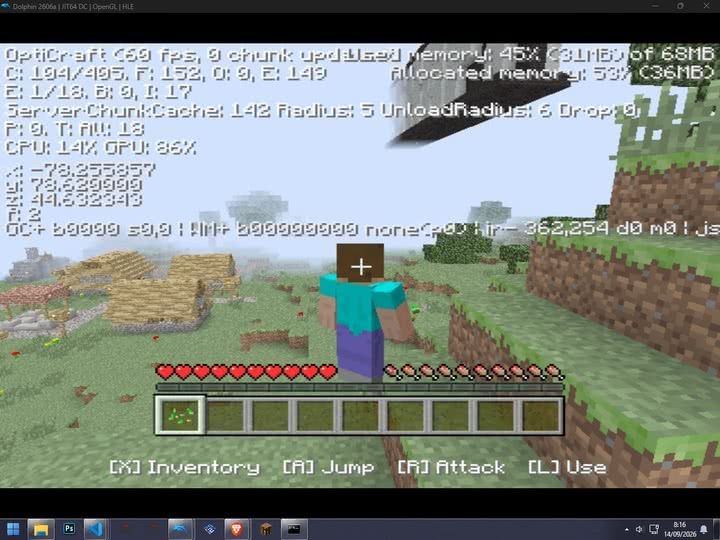
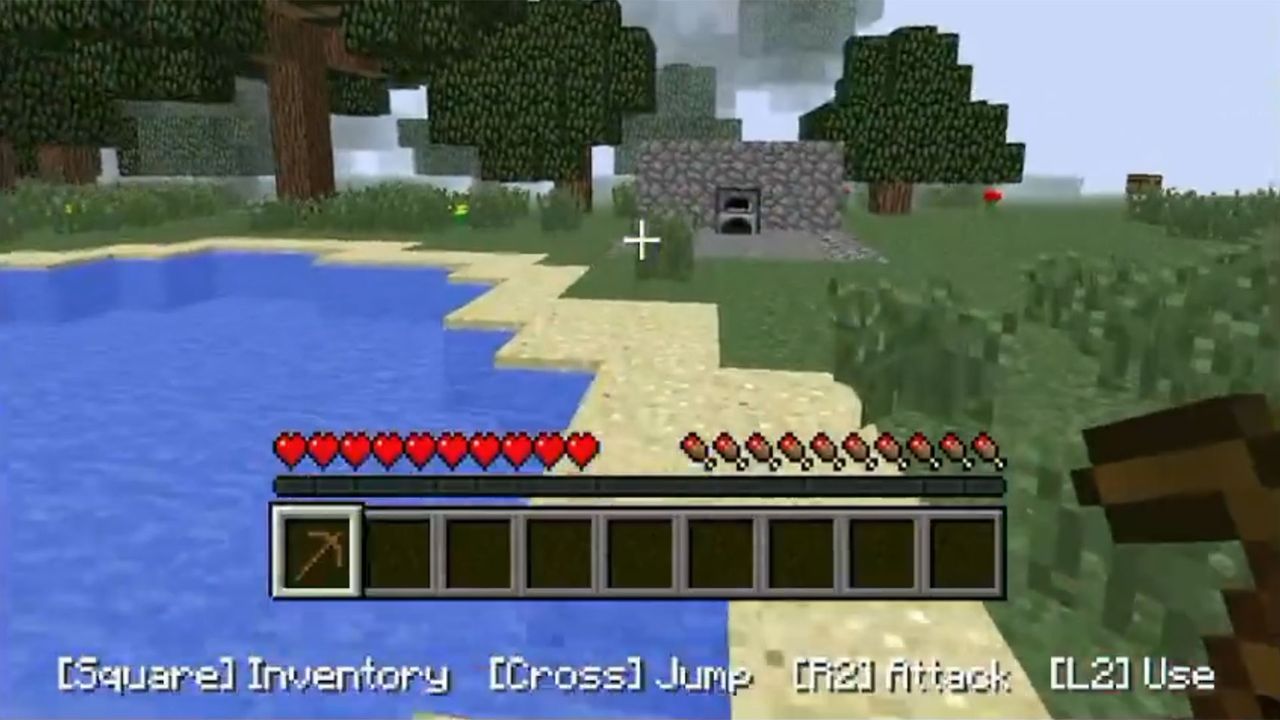
Games optimization specialist OptiProjects (AKA OptiJeugos) has released a new port of Minecraft Legacy for the Sony PlayStation 2 and Nintendo Wii consoles. The project is based on the Minecraft Java 1.2.5 source code, rewritten in C++, and using a recreated legacy console interface (machine translation). Even on the quarter-century-old PS2 with its cramped 32MB of RAM, the OptiCraft Heritage Edition runs at 15-30 fps. Check out the video demo embedded below.

TERMINADO!!! FINALMENTE NUEVO PORT DE ""MINECRAFT LEGACY"" a PS2 y WII!!Es un PORT de JAVA 1.2.5 a C++ con la interfaz de Legacy recreada, corriendo nativamente en la PS2 y Wii.Probado en hardware real! La wii soporta online con servidores de JAVA en esa version! https://t.co/x3pQw8XvBJ pic.twitter.com/nZNc0QehGySeptember 14, 2026

Minecraft is one of the best-selling games of all time, with sales above $400 million according to an Entertainment Weekly report earlier this year. Meanwhile, the PS2 is the best-selling home console in history, with 160 million units shifted worldwide. When Minecraft first launched, the PS2 had already been kicking around for close to a decade and was rapidly reaching retirement age. Thus the Minecraft PS2 game release was never a thing (it did launch on PS3 in 2013-14). Similarly, the Wii got overlooked by Minecraft's publishers, with the Wii U only getting the game in late 2014.

Windows PC (Java Edition 1.2.5)

PS2 (OptiCraft Heritage)

Wii (OptiCraft Heritage)

Engine / Language

Java

C++ (native port)

C++ (native port)

Hardware / RAM

Min. ~2GB recommended for era

32MB system RAM

~88MB available RAM

Chunks / draw distance

Scalable, (usually 8–16+ chunks)

2 chunks

4 chunks

Performance

Often 60+ FPS on period PCs

15–30 FPS

15–60 FPS

Controls

Keyboard + mouse

DualShock 2

Wii Remote / Classic Controller

Interface

Original 1.2.5 UI

Recreated Legacy interface

Recreated Legacy interface

Ponder over the features and performance comparison table we have nailed together, above. You can see how tightly the PS2 version is constrained by its hardware limitations. In comparison the Wii version is significantly more comfortable. Moreover, the Wii version has experimental online gaming functionality.

Minecraft Legacy for the Sony PlayStation 2 and Nintendo Wii
OptiProjects
Minecraft Legacy for the Sony PlayStation 2 and Nintendo Wii
OptiProjects

If you are interested in enjoying some retro Minecrafting on your old PS2 or Wii, or emulators for either system head on over to the official OptiProjects page linked top for your downloads. Those aiming to play on original hardware will need to be able to load .ELF files from USB (on PS2), or access the game via SD card and the Homebrew Channel (on Wii). To my knowledge that means your PS2 or Wii must be soft or hard modded to play homebrew code.

Developer builds viral 3D source code visualizer that consumes 21GB of RAM — flies around 2.5 million lines of code at over 120 frames per second

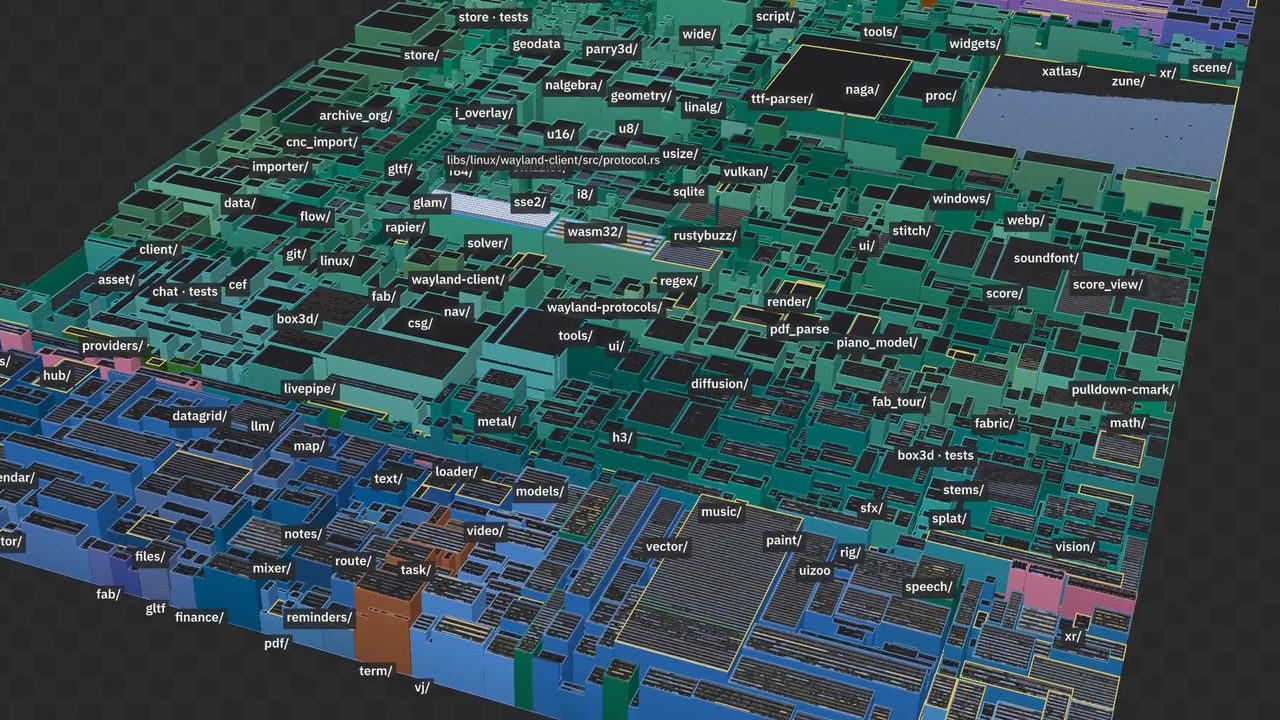
The immortal line "it's a Unix system, I know this" is forever entrenched in many a techie's brain. In the Jurassic Park movie, the visualization software in question was Silicon Graphics' File System Navigator for IRIX, an actual piece of software running on a real SG workstation. The concept of viewing files in 3D space never truly caught on, but the horsepower available in contemporary machines may change that. Makepad creator Rik Arends created his own 3D flyable source code visualizer that he claims handles 2.5 million lines with ease, at 120+ FPS, no less.

Ironed out the last performance issues with my full 2.5m line codebase explorer. 120hz awesomeness. Can only upload 60fps video tho. Much nicer uncompressed pic.twitter.com/LUsrmVaI6LSeptember 12, 2026

Although the published video is only at 60 FPS due to X's limitation, the navigation looks smooth indeed, and it's impressive to see all the actual source code in a reasonably readable manner. Arends says the visualization initially took 21 GB of RAM (in this economy?!), but that after judicious application of indexes and streaming compression, he got memory usage down to a much more palatable 3.5 GB. Although he remarked that he's yet to fully optimize the visualizer, he did try to load Chromium's entire source tree (51 million lines) in only 60 seconds at one point.

While one can argue that the 3D visualization of the code itself is probably really fun to look at, its practical use is also questionable, at least as-is. A commenter remarked that adding a time element would help immensely, by displaying changes to the source files. 3D tracking of dependencies would probably be handy, too. There's already an actual full-fledged commercial tool called CodeCharta that visualizes changes and hotspots in 3D, though the flybys aren't quite as impressive.

Arends says that he intends to turn this visualization tool into a product and charge a small fee for it, though he admits that the usefulness of the visualization may be limited. When asked why he created this, he simply said, "because I could." The jury is still out on whether he should.

AMD's Radeon RX 9070 GRE graphics card returns to its lowest-ever price of $499 — rare deal places this current-generation 12GB GPU below its MSRP launch price

2026年9月15日 17:50

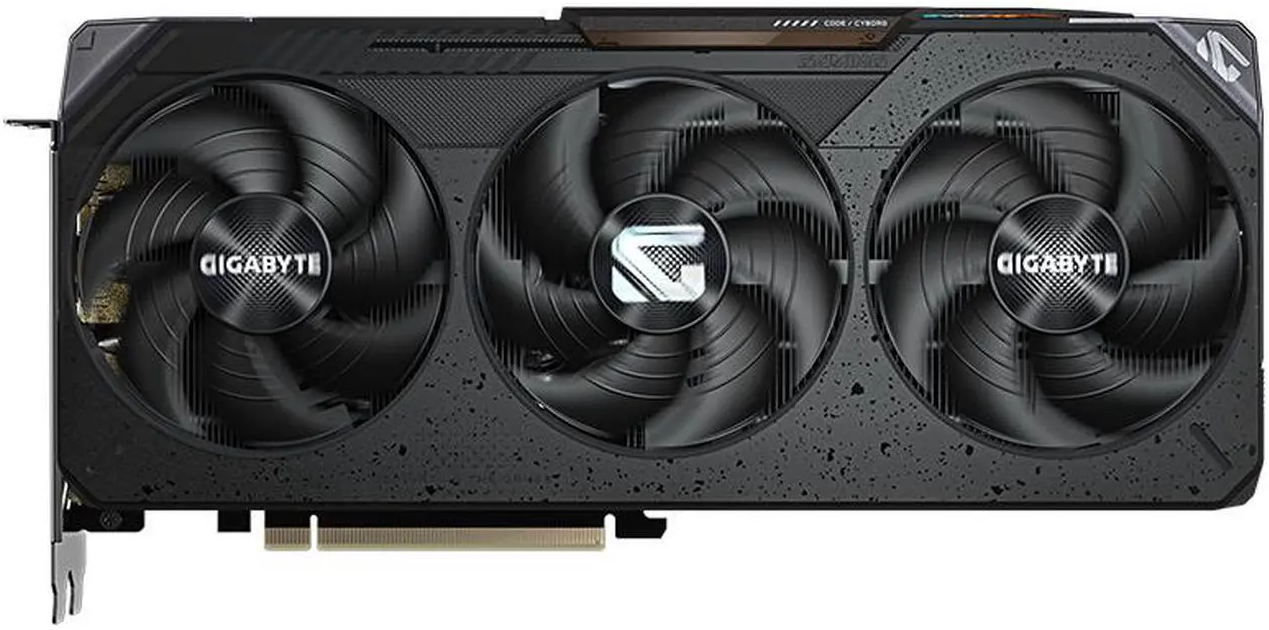
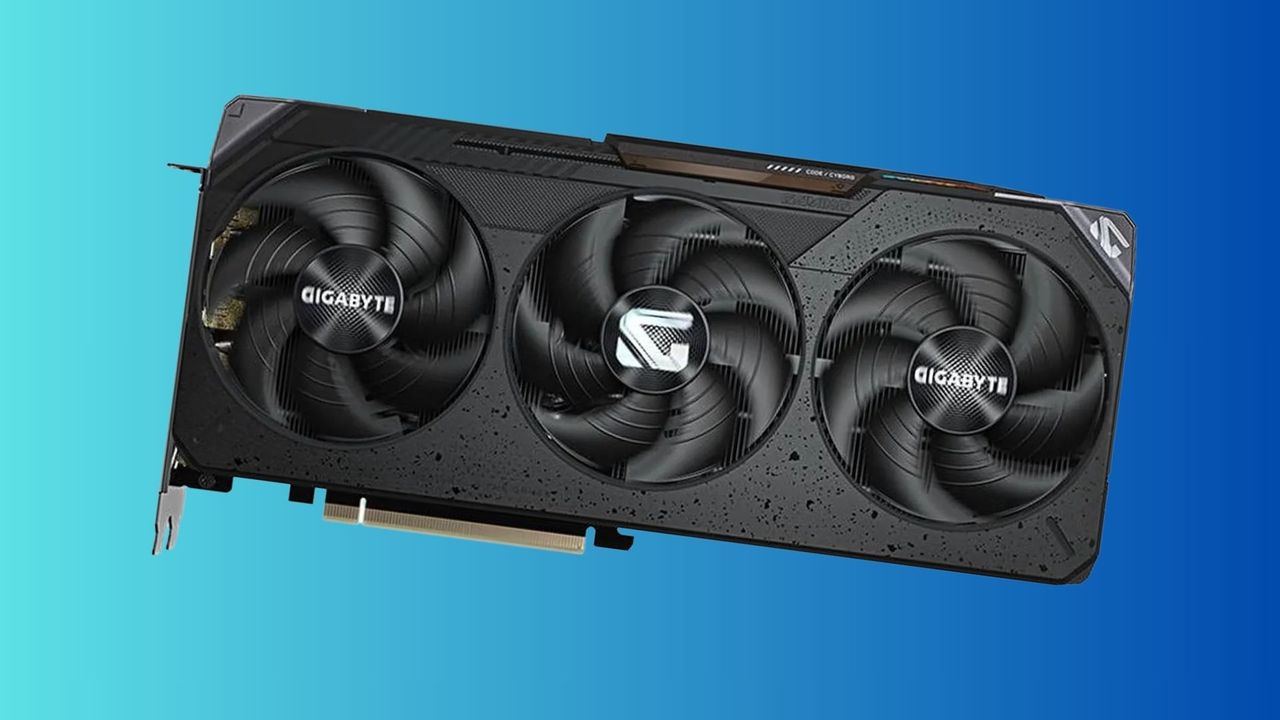
It's back: one of the best deals on a brand-new, current-generation, mid-range graphics card that packs 12GB of VRAM. There is a little hoop to jump through via Newegg to receive the discount, but it's more than worth it to slash $70 off the card and bring the price back down to its all-time low. AMD's Gigabyte Gaming Radeon RX 9070 GRE GPU is available at Newegg for $499. All you need to do is click on the "Extra Discount Available" link and enter your email address to receive the promotional code. Once you do that, you bring the price of this graphics card all the way down from its $569.99 list price. It's a very grim time for shopping for PC component upgrades, so to see an actual deal on a GPU that takes it below its MSRP in today's inflated market is a rare sight indeed.

Check out this deal at Newegg

The RX 9070 GRE was initially made available to the Chinese GPU market and received a few changes from the original RX 9070 XT. The available VRAM was cut from 16GB to just 12GB of GDDR6, but it still sports bandwidth speeds of 18 Gbps on a 192-bit bus, producing 432 GB/s of memory bandwidth in gaming and applications. The Radeon RX 9070 GRE is still built on AMD’s RDNA 4 graphics architecture and uses the same Navi 48 GPU as the Radeon RX 9070 and RX 9070 XT. The RX 9070 GRE features a cut-down version of the Navi 48 chip with 48 compute units compared to the RX 9070's 56. Using just 220W total power draw, the RX 9070 GRE has an Identical power footprint to the standard Radeon RX 9070 GPU, making it quite power efficient and not needing a huge power supply to run.

Gaming Radeon RX 9070 GRE 12GB: was $569.99 now $499.99
A great graphics card for 1080p and 1440p gaming, the RX 9070 GRE sports 12GB of VRAM and boost clock speeds of 2920 MHz.

View Deal

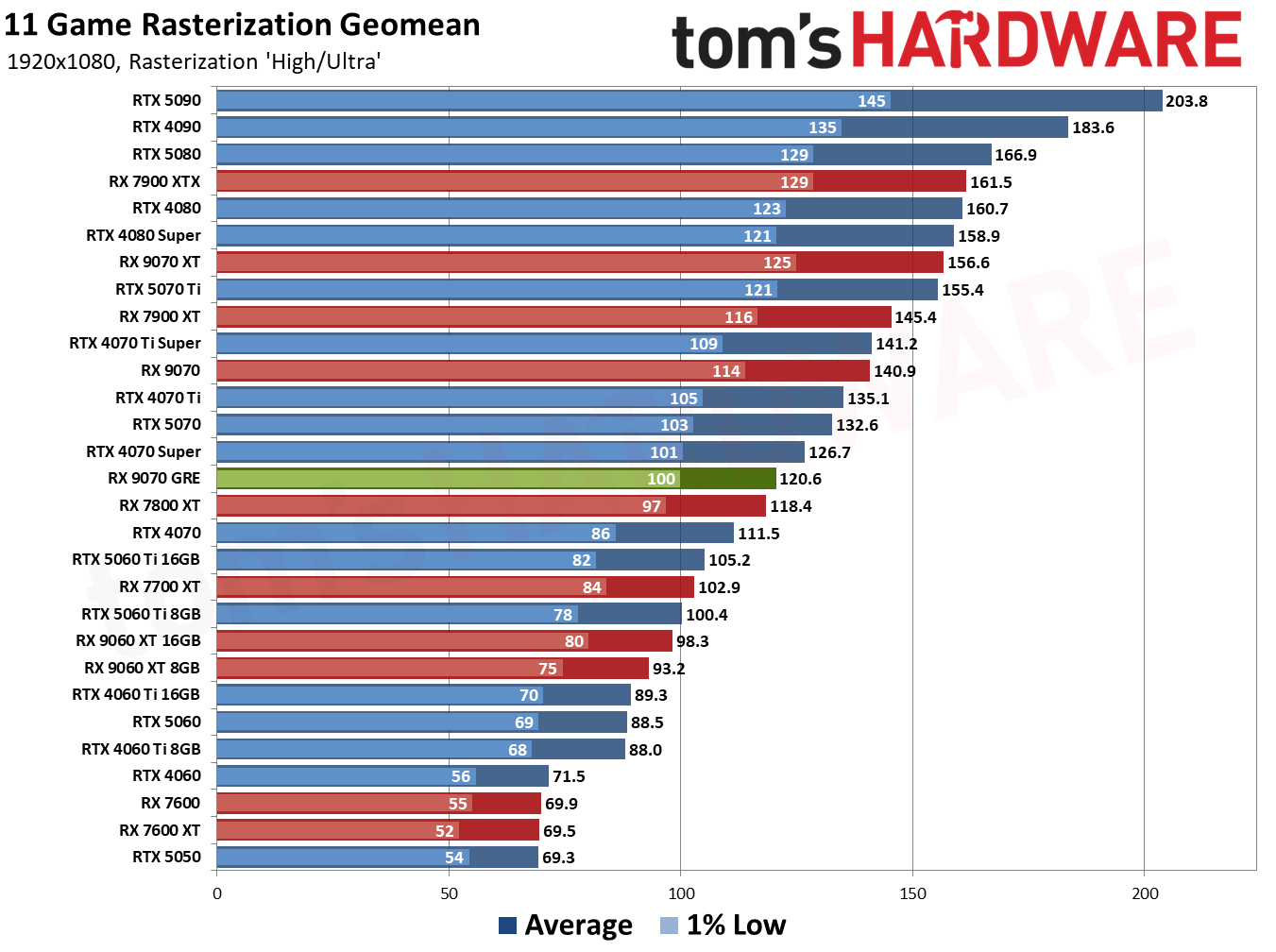
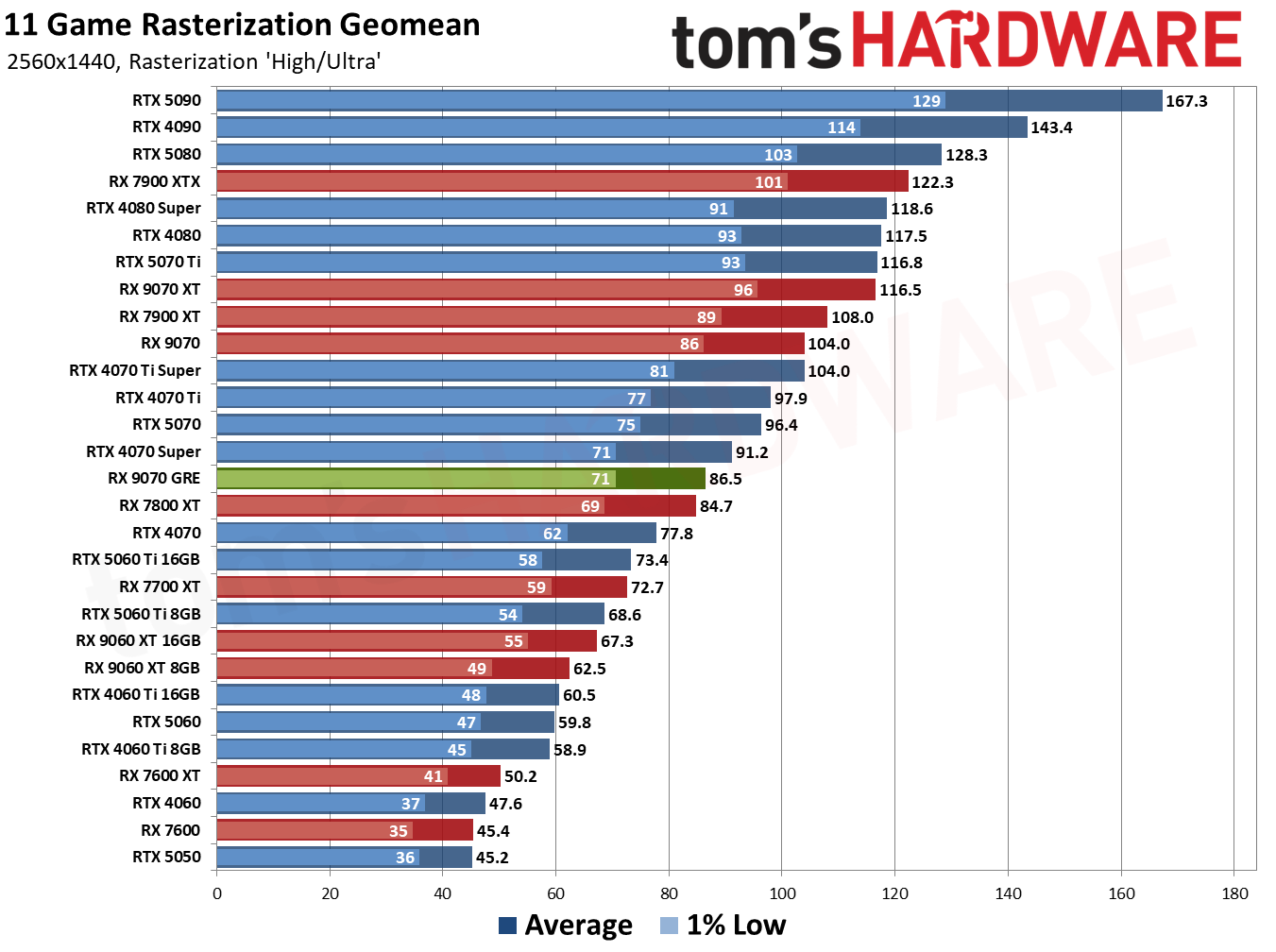
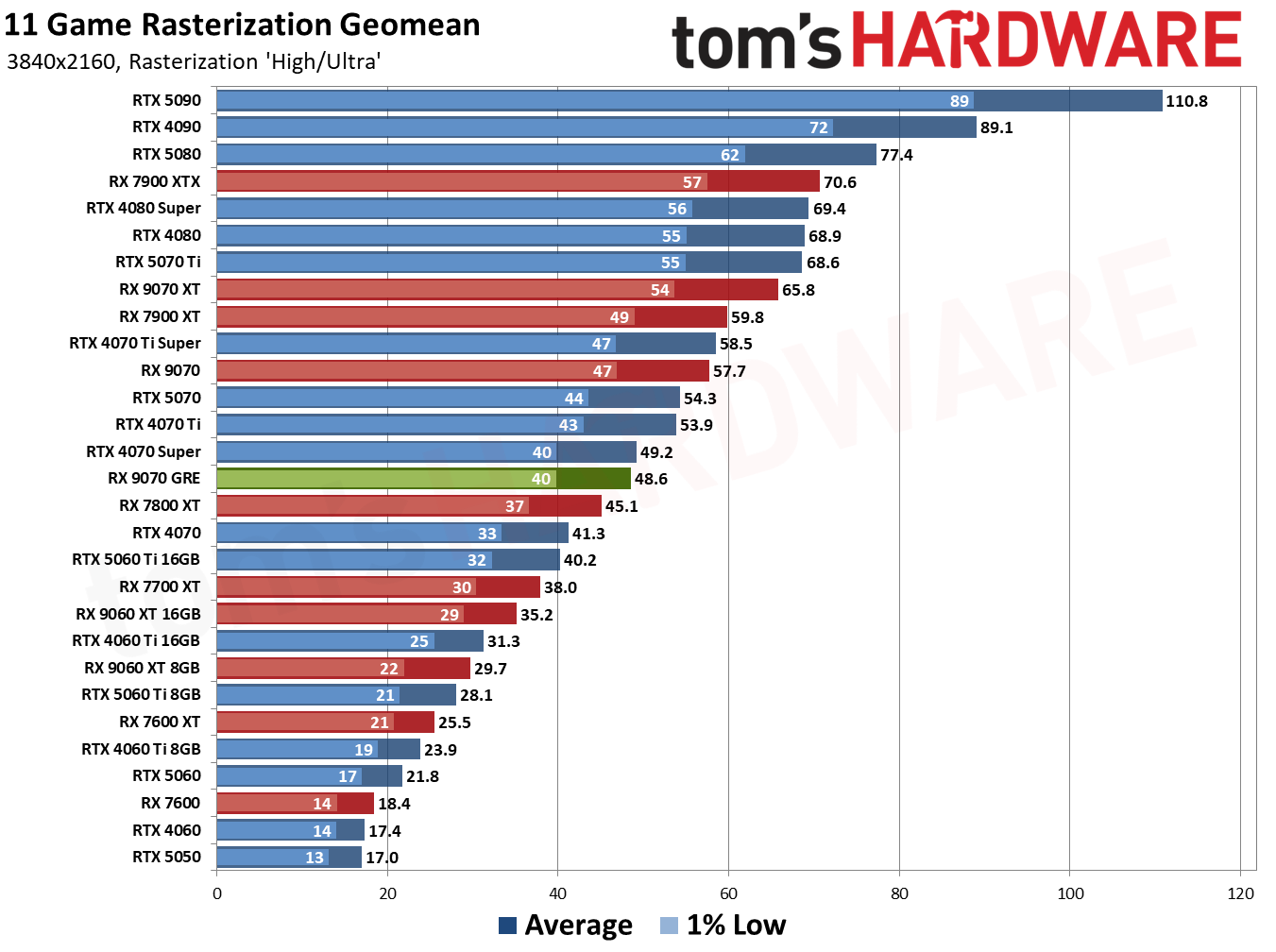
We benchmarked the Radeon RX 9070 GRE in our extensive review, putting it through its paces in our suite of games. We found the card averages a cool 120 FPS at 1080p settings and 86.6 FPS at 1440p across our 11-game raster-only test suite. This is a good GPU choice for 1080p and 1440p gaming, with the RX 9070 GRE packing ample VRAM for high settings at 1080p, but pushing ultra settings at 1440p may use up the 12GB of VRAM. AMD's Radeon RX 9070 GRE sits just behind Nvidia's RTX 5070 in our results chart that you can view below.

Radeon RX 9070 GRE
Future
Radeon RX 9070 GRE
Future
Radeon RX 9070 GRE
Future

If you're actively looking for a new GPU in the current PC component market, you're more than aware of the considerable price hikes across the GPU lineups from both AMD and Nvidia. To see a graphics card on sale for under its launch MSRP is a very rare sight, and I personally did not expect to see this kind of deal again outside of a large sale event like Prime Day or Black Friday. So if you're looking for a competent card for 1080p and 1440p gaming, then jump on the Gigabyte Gaming RX 9070 GRE for just $499.99.

Perplexity’s local AI agent comes to Windows, but only for RTX GPUs with at least 24GB of VRAM — Portable Computer brings AI for multistep tasks to compatible PCs

作者 Shane Downing
2026年9月15日 17:24

Perplexity has released Portable Computer for Windows, in partnership with Nvidia, via the existing Perplexity app for Windows. Previously, this functionality was only available on Linux-based operating systems. The hardware requirements remain, meaning the host system must have at least 24GB of VRAM with a GeForce RTX or RTX PRO GPU. Likewise, a Pro or Max Perplexity subscription is required. Portable Computer was originally launched on the DGX Spark as a fully local AI agent platform.

Portable Computer, launched originally for Linux on Aug. 25, is a local version of Perplexity Computer, which is the company’s agent for multistep tasks. Perplexity Computer can plan, run subtasks through connectors and tools, and produce a result other than a simple chat response. This runs in Perplexity’s cloud and consumes Computer credits. Portable Computer is the same agent but with features running on your local PC instead of in the cloud. Local work does not consume credits, but the agent can send tasks to cloud models with explicit permission if necessary, the company said. Nvidia said on Sept. 3 that Windows support was coming soon.

Perplexity Portable Computer open on a Windows laptop, showing the empty task composer

(Image credit: Perplexity)

Portable Computer for Windows comes with some new features. These include scheduled recurring tasks and local MCP servers for desktop apps, according to Perplexity. Nvidia listed connectors for Microsoft Word, Google Drive, Gmail, Slack, and GitHub. The app also includes a dropdown for downloading a local model with one click. Nvidia named Qwen 3.8 27B as an example local model. DGX Station support is expected soon, Nvidia said.

Aravind Srinivas, CEO of Perplexity, wrote on X on Sept. 14 that with this release comes “unmetered local intelligence on every Windows PC running on Nvidia hardware and Perplexity harness.” The 24GB requirement is a VRAM gate more than a generation gate, cutting across Nvidia’s consumer lineup. Cards that meet the stated 24GB+ VRAM requirement include the RTX 3090 and 3090 Ti (24GB), the RTX 4090 (24GB), and the 5090 (32GB). The RTX 5090 Laptop GPU at 24GB has not explicitly been mentioned by either company. RTX PRO Blackwell cards that qualify are the 4000 (24GB), 4500 (32GB), 5000 (48GB or 72GB), and 6000 (96GB).

We're expanding our work with @nvidia to bring fully local AI to Microsoft Windows PCs with RTX GPUs. Unmetered local intelligence on every Windows PC running on NVIDIA hardware and Perplexity harness. Enjoy!September 14, 2026

In a Sept. 3 post ahead of IFA, the consumer electronics trade show in Berlin, Nvidia indicated more plans along these lines. The post stated that RTX Spark Windows PCs from Lenovo and Acer are expected in October and that two local agents, Hermes Agent and OpenClaw, are getting the same simplified local setup. For users who already own a qualifying RTX PC, the Windows release removes the need to buy a separate system. Upgrading a compatible desktop with a used qualifying card could also cost less than buying the DGX Spark Founders Edition at its $4,699 price.

Anthropic says AI can boost U.S. GDP by 32%, up to $44.4 trillion in four years — economics model predicts that displaced employees 'may have to switch to jobs like electrician and nurse'

Last week, Anthropic published its prediction of what the economic impact of AI on the U.S. economy is going to be for the next few years. The company thinks the U.S. can reach a $44.4 trillion GDP or higher by 2030, provided, of course, it conveniently adopts AI at a rapid pace. Having said that, Anthropic admits "the challenge is making sure that the gains are broadly shared."

The interactive post has a simulator where readers can plug in their estimates on key factors and get their own future predictions, within the firm's analysis and perspective. That's definitely interesting to play around with, but perhaps the most relevant piece of information is the lens through which Anthropic views the world.

Anthropic establishes its reasoning by first placing tasks in broad categories and using a nurse's workday as an example. They removed tasks, including those that will disappear naturally as technology progresses, like collecting data on paper or physically visiting the patient to collect basic vitals — neither happens anymore as remote monitoring becomes commonplace. However, some new tasks are added, like keeping an eye on dashboards for the aforementioned AI-powered monitoring.

Then, there are naturally the tasks that a bot can't perform, like bathing a patient. Augmented tasks include those that require a human, but can be made more efficient with AI: helping with triage, planning schedules, and assisting with dashboard data. Some tasks may be fully automated, like keeping supply closets full or scheduling follow-up patient visits. Finally, AI usage can introduce some tasks of its own, like reviewing automated triaging or double-checking dashboard alerts — perhaps even impromptu data recovery.

The company's predictions broadly hinge on how ubiquitous AI usage becomes, and therefore, the number of tasks transitioning into fully or partially automated. Unsurprisingly, Anthropic believes that the more entrenched AI gets, the more value the country creates, though at greater risk — and on an exponential scale, no less

Three models are presented, from "modest" economical impact to "extreme." The modest model establishes a 1.6% GDP rise to $34.1 trillion, an impact Anthropic says is in line with that of new technologies like the internet, and crucially, doesn't imply tectonic shifts to unemployment rates or wages.

For the "substantial impact" scenario, although AI is predicted to be able to do half of "knowledge work," mostly without intervention, adoption remains limited. This scenario foresees twice the normal economic growth, this time +8.3% to $36.3 trillion.

This future marks the inflection point at which Anthropic believes knowledge workers see their wages remain steady instead of growing, though it's not clear if the firm accounts for inflation. Additionally, the firm states that "knowledge workers may see a lot of automation and displacement [...] coders and call service center agents may have to switch to jobs like electrician and nurse", a statement some might argue is already true. In that sense, Anthropic expects other workers to start seeing more cash.

The eyebrow-raising prediction for both the above scenarios, though, is that Anthropic expects unemployment to "stay within ranges history has seen before," an odd statement given modern U.S. history contains events like the Great Depression. The company does note that it expects job churn to increase, but also that while "this process can be painful, [it] works relatively well from a macroeconomic perspective." Average wages are expected to rise across all three scenarios, though the increase is expected to go towards workers outside of knowledge areas.

In the "extreme" scenario, Anthropic expects significant changes. Should AI be super-widely adopted, the GDP can increase by 32.4%, corresponding to a cool $44.4 trillion, a "profound economic transformation." This is the point at which the firm expects that AI becomes more productive than humans for most knowledge work, and does so with near-autonomy. Equally worryingly, it's expected that there will be "essentially no" new knowledge tasks created.

Anthropic notes that to reach this kind of stage, the country would "likely require" recursively self-improving AI (using the AI to make better AI). There's a significant catch, however, as though the U.S. would be "far richer than [it's] ever been," knowledge workers would be the hardest hit with a 10% wage drop, plus overall unemployment would climb "beyond typical recessionary levels." Manual labor would be prized, though, given that "as AI increases productivity within knowledge work, the demand for manual work that benefits from that productivity will increase."

Scenarios aside, the one big question is: How would all that GDP money land in people's pockets? Anthropic admits this problem is a "challenge" and offers little solution for it. Such a high amount of future AI penetration might prove a hard sell, considering wealth inequality in the U.S. already sits at its highest level for the last few decades and is trending in that direction in most developed nations. Others might argue with Anthropic's assessment that unemployment levels would remain somewhat in the less extreme scenarios, seeing as job cuts are rampant across many sectors and have hit technology-related fields the hardest.

To its credit, Anthropic clearly highlights part of the wealth-inequality issue. The company admits that more AI automation might skew the current 60/40% balance between labor and capital, respectively, strongly tilting the scale in favor of capital ownership and increasing inequality. Many argue that's already happening today. There's also the matter that the prediction appears to assume little competition from other countries, nor does it offer insight as to what would happen to "AI-less" nations.

The interactive blog post and its simulator are worth a good read and fiddling with, regardless. Anthropic published the technical details on the mathematical model used in a separate article and published its Economic Policy Framework last June.

Nvidia's RTX 5090 vanishes from online retail in the US — third-party sellers now demand as much as $9,500 for Nvidia's fastest GPU

作者 Jake Roach
2026年9月15日 01:41

Nvidia's fastest gaming graphics card, the RTX 5090, has been on a tear of price increases over the past several weeks. However, over the past week, the available inventory has dwindled. Now, you can only find the RTX 5090 from third-party sellers at online retailers like Newegg and Amazon, commanding anywhere from $6,500 to $9,500 (or even higher) for Team Green's best GPU.

At Newegg, the cheapest RTX 5090 is the MSI Ventus 3X that's available from Slava Computers (a relatively new seller with 239 ratings and a 2.8 out of 5 rating at the time of writing) for $6,449. On Amazon, you can get the Asus TUF Gaming OC for $6,395 from Joes Tech Shop, a seller with an 81% positive rating. However, among the most recent reviews are a string of one-star reviews about orders never being fulfilled. The cost goes much higher, as well. The first result for "RTX 5090" on Newegg, for example, surfaces the MSI Ventus 3X OC for $8,699.

In June, the median price for an RTX 5090 was $4,299. At the beginning of September, we logged the lowest online price at $5,199 in our GPU price tracker. Now, in less than two weeks, the available stock has completely disappeared online, and the options available from third-party sellers have ballooned in price once again.

Naturally, we don't recommend buying from one of these third-party sellers. The RTX 5090 is selling at a vastly inflated price, but more importantly, we've seen no shortage of scams around high-ticket items like the RTX 5090. In January, 42 Amazon customers were duped into a scam involving a $999 RTX 5090, instead receiving a fanny pack in place of the GPU. Earlier this month, an online seller scammed two buyers with the RTX 5090, selling phantom graphics cards with the core and memory removed on the secondhand market for prices near MSRP.

The one exception to RTX 5090 inventory is Micro Center, which still has cards available around the average selling price. At a local Micro Center we checked, the cheapest in-stock option was $4,299. Micro Center has exclusively sold graphics cards in-person for several years, insulating it from online buyouts like what appears to be going on right now.

As usual, the reason why there's so much demand for the RTX 5090 is fairly obvious: AI. The RTX 5090 holds the GB202 GPU and 32GB of GDDR7 memory. For context, Nvidia's RTX Pro 5000 48GB comes with the same GPU with a third fewer shader units enabled, and lower memory bandwidth compared to the RTX 5090, and sells for between $7,000 and $9,000. In that context, the RTX 5090 starts to look attractive for building an AI server, even at $5,000 (or more) apiece.

At the same time, the RTX 5090 remains the fastest gaming graphics card on the market according to the testing in our GPU benchmark hierarchy. That's even more true now with Nvidia's launch of DLSS 5 Neural Rendering, which the RTX 5090 can fully capitalize on (though, thankfully, we've found playable performance on lower-end cards in our extensive DLSS 5 testing).

We've reached out to Nvidia for comment on whether it has any plans to stabilize inventory. We'll update this story when we hear back.

Gaming takes a backseat as Nvidia overhauls the RTX 5090 for maximum AI margins — RTX Pro 5500 delivers 2.6X VRAM at matching specs

作者 Zhiye Liu
2026年9月15日 01:39

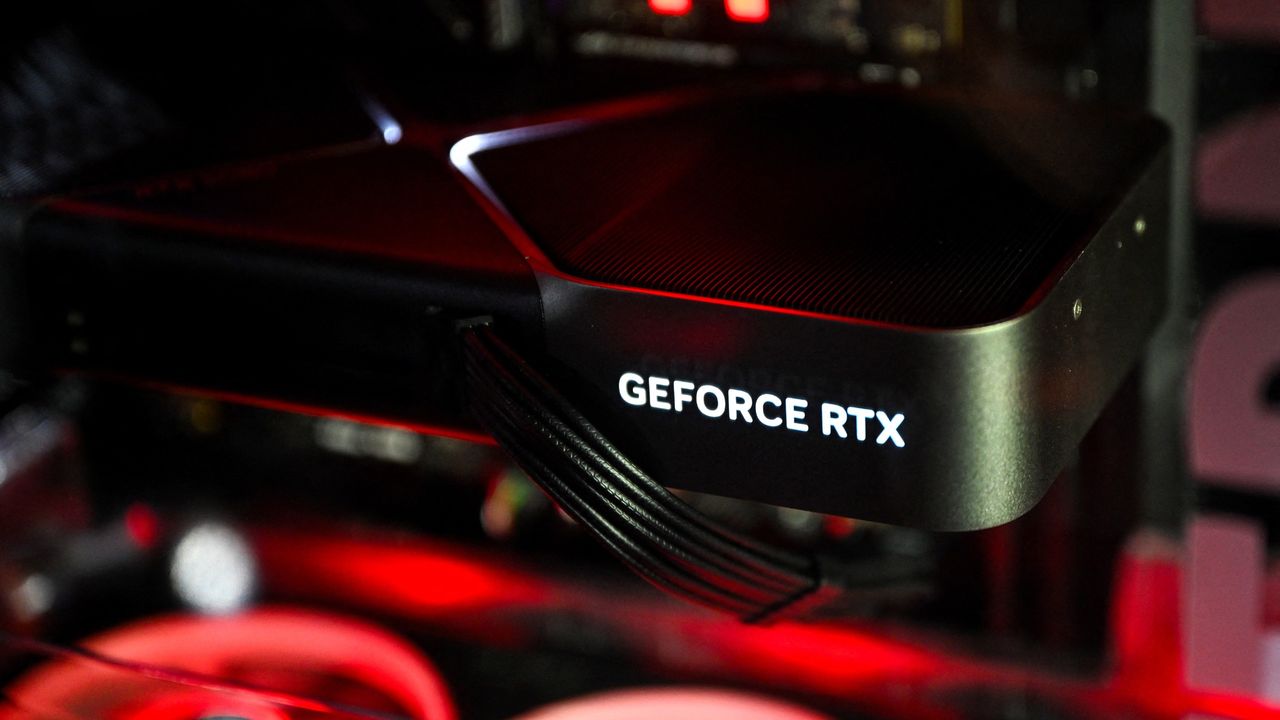
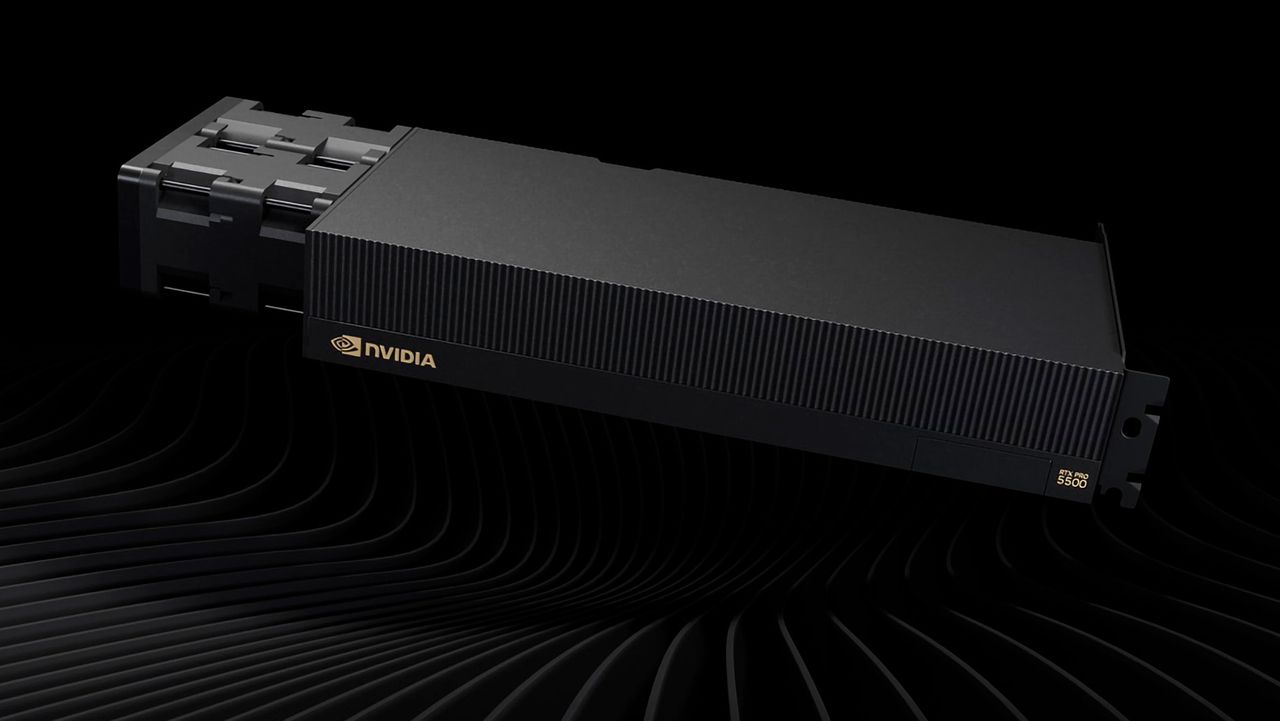
The GeForce RTX 5090 is undeniably one of the best graphics cards money can buy. Banking on the fact that many already use it for AI, Nvidia has bolstered it with even more memory and launched it as the new RTX 5500 Pro Blackwell Workstation Edition. It offers comparable specifications to the GeForce RTX 5090 but distinguishes itself with 84GB of GDDR7 memory, 2.6X more than the Blackwell gaming flagship.

The RTX Pro 5500 features the GB202 silicon, the powerhouse die that powers other high-end mainstream and professional Blackwell graphics cards, including the GeForce RTX 5090, RTX Pro 6000, and RTX Pro 5000. In fact, the RTX Pro 5500 uses the same die as the GeForce RTX 5090, which means 170 Streaming Multiprocessors (SMs) are enabled out of a possible 192. As a result, the RTX Pro 5500 has 21,760 CUDA cores and offers performance comparable to the GeForce RTX 5090. The differentiator is the memory subsystem, where the RTX Pro 5500 excels.

Nvidia equipped the RTX Pro 5500 with 84GB of GDDR7 memory. This is the second time Nvidia has launched a graphics card with 84GB of memory, with the first being the China-exclusive RTX Pro 6000D. The RTX Pro 5500's memory capacity lets the Blackwell graphics card sit comfortably between the RTX Pro 5000 and the upgraded RTX Pro 6000, with 72GB and 96GB of GDDR7 memory, respectively.

Nvidia RTX Pro 5500 Workstation Edition Specifications

Graphics Card

RTX Pro 6000

RTX Pro 6000D

RTX Pro 5500

RTX 5090

RTX Pro 5000

Architecture

GB202

GB202

GB202

GB202

GB202

Process Technology

TSMC 4N

TSMC 4N

TSMC 4N

TSMC 4N

TSMC 4N

Transistors (Billion)

92.2

92.2

92.2

92.2

92.2

Die size (mm^2)

750

750

750

750

750

SMs

188

156

170

170

110

CUDA Cores

24,064

19,968

21,760

21,760

14,080

Tensor Cores

752

624

680

680

440

Ray Tracing Cores

188

156

176

176

110

Boost Clock (MHz)

2,617

2,430

?

2,407

2,617

VRAM Speed (Gbps)

28

25

25

28

28

VRAM (GB)

96

84

84

32

48 / 72

VRAM Bus Width

512

448

448

512

384

L2 Cache

128

128

96

96

96

Render Output Units

192

192

192

176

176

Texture Mapping Units

752

624

680

680

440

TFLOPS FP32 (Boost)

126.0

97.04

?

104.8

73.69

Bandwidth (GB/s)

1,792

1,400

1,398

1,790

1,344

TBP (watts)

600

600

600

575

300

Nvidia achieved the 84GB memory capacity by outfitting the RTX Pro 5500 with 28 GDDR7 memory chips in a clamshell configuration. Each side of the PCB houses 14 24Gb (3GB) GDDR7 memory modules. They run at 25 Gb/s across a 448-bit memory interface, delivering up to 1,400 GB/s of bandwidth, which aligns with Nvidia’s official specification of 1,398 GB/s. In other words, the RTX Pro 5500 shares the same memory subsystem as the RTX Pro 6000D.

Samsung, Micron, and SK hynix only produce standard 28 Gb/s memory packages. Therefore, Nvidia downclocks the RTX Pro 5500's GDDR7 chips for its own reasons, whether to meet thermal and power targets or avoid cannibalizing higher-tier SKUs. From a memory-bandwidth perspective, the RTX Pro 5500 is not particularly impressive. Its bandwidth is only 4% ahead of the RTX Pro 5000, and it lags 22% behind both the flagship RTX Pro 6000 and the GeForce RTX 5090, which fully leverage 28 Gb/s GDDR7 memory chips.

To sum it all up, if RTX Pro 6000D and GeForce RTX 5090 had a child, it would be the RTX Pro 5500. Nvidia's main motivation was to launch the RTX Pro 5500 to fill the large performance and pricing gap between the RTX Pro 6000 and RTX Pro 5000. Also, the chipmaker makes substantially more profit by putting recycled GB202 into an RTX Pro 5500 than into a GeForce RTX 5090. By giving the former more memory with similar core specifications as the latter, Nvidia seemingly hopes to win more customers over to the RTX Pro 5500.

We reached out to both Nvidia and PNY for official pricing on the RTX Pro 5500, but neither company has responded. For reference, the flagship RTX Pro 6000 retails for $15,599, while an RTX Pro 5000 72GB starts at $9,209. Given the RTX Pro 5500's role as a bridge between the two models, it is reasonable to expect its launch price to fall somewhere within this range.

Valve engineers discuss the duality of the Steam Frame and pricing — Valve's newest VR headset pivots SteamOS to Arm

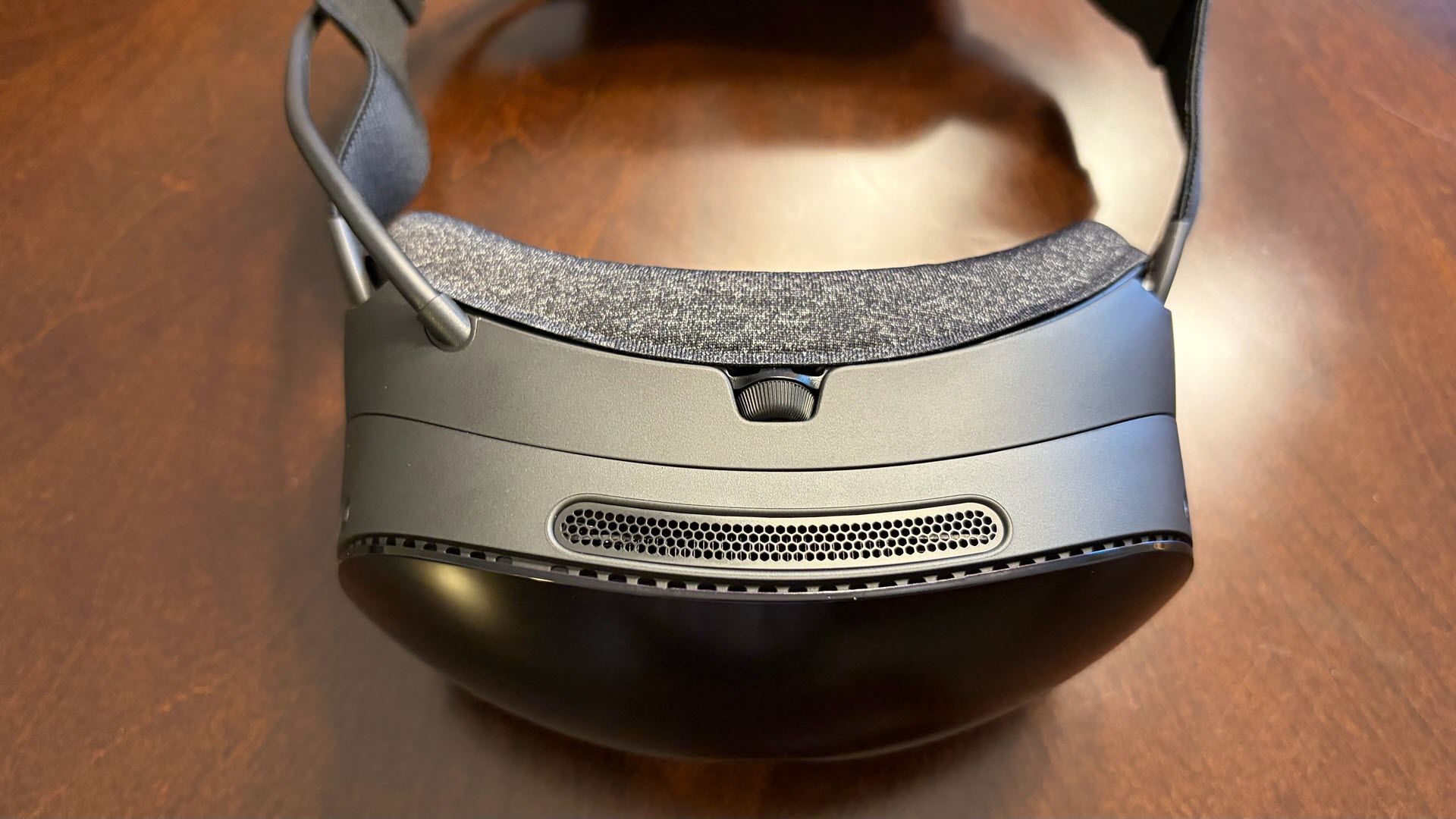
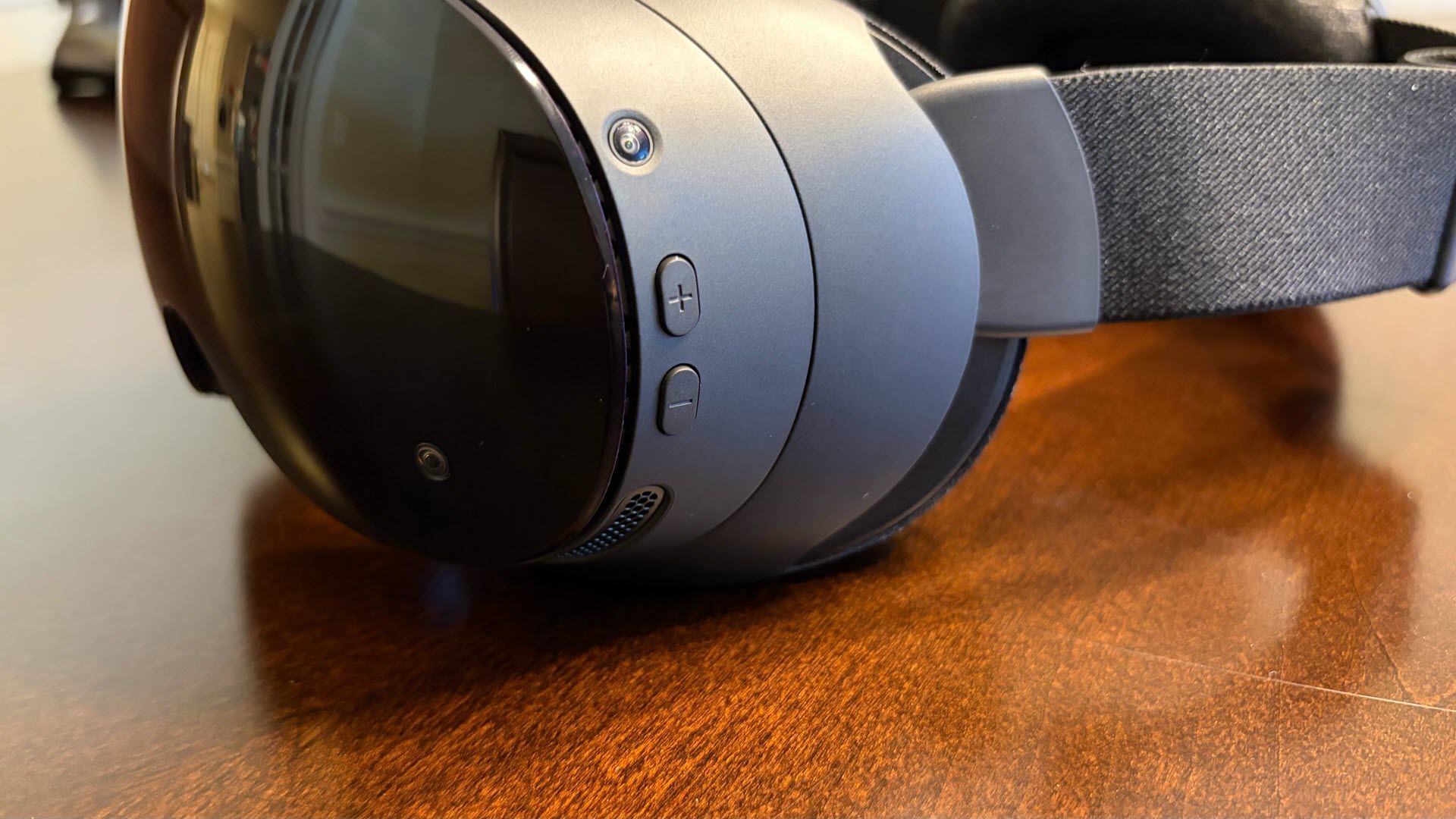
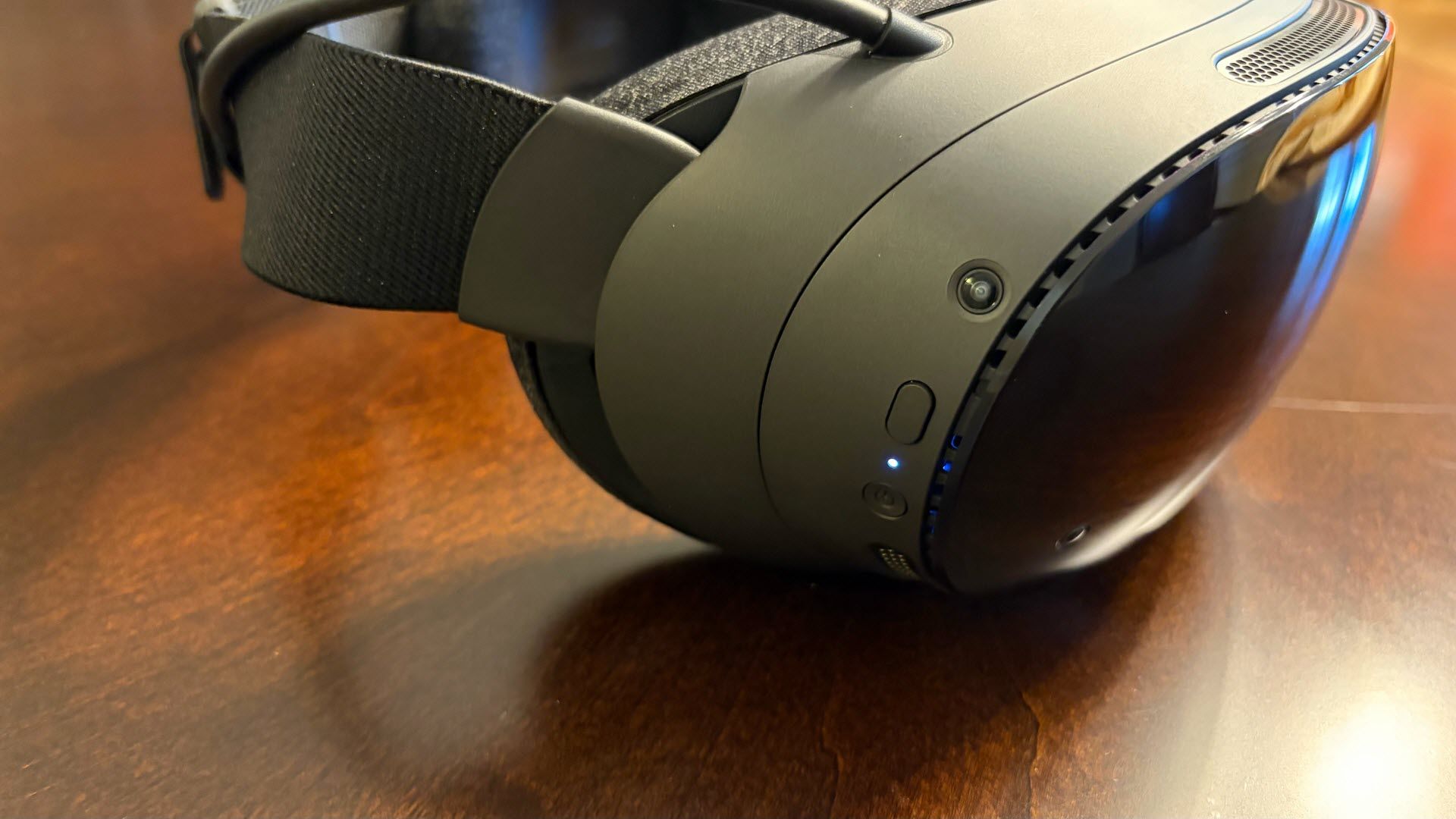
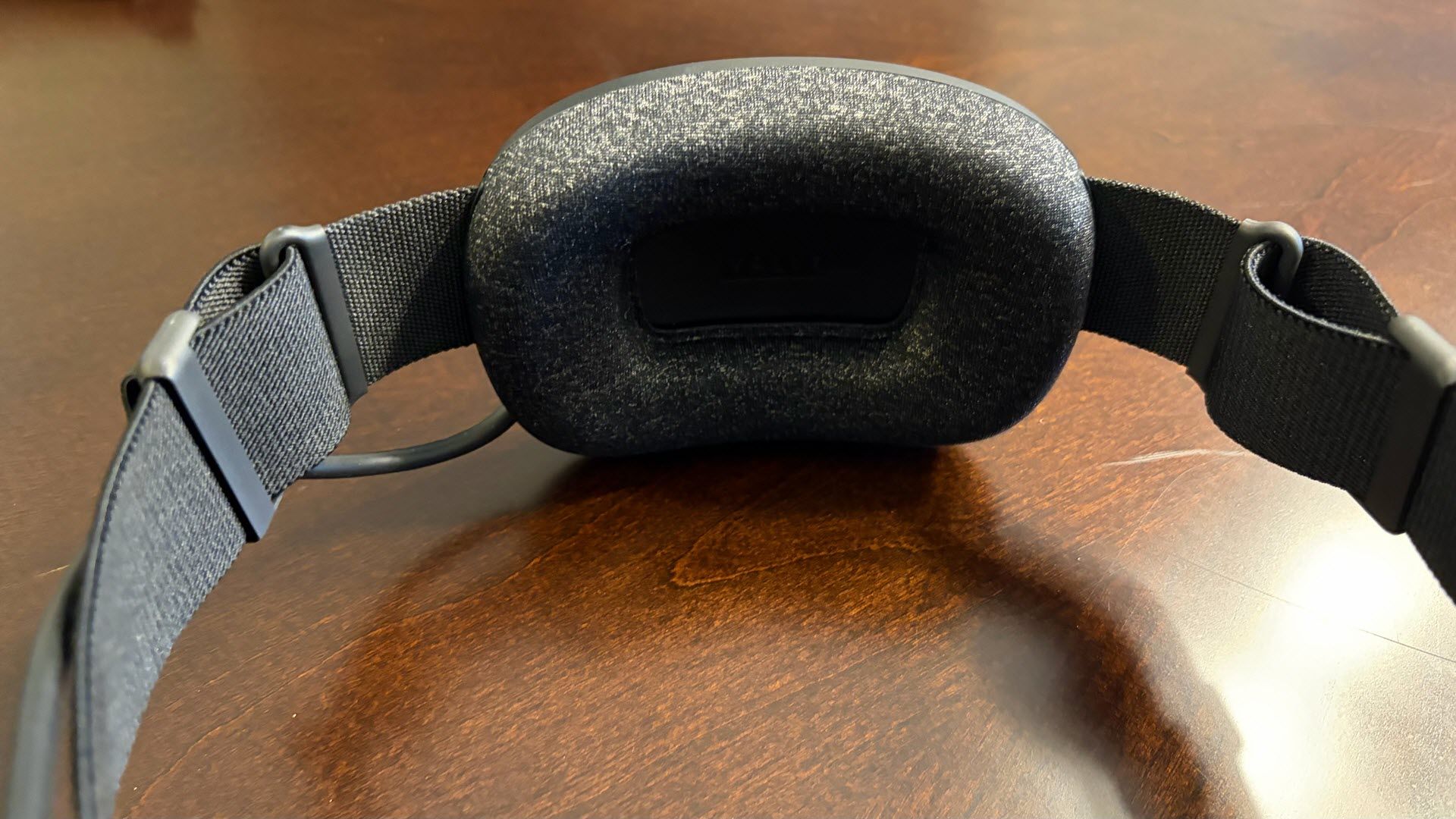
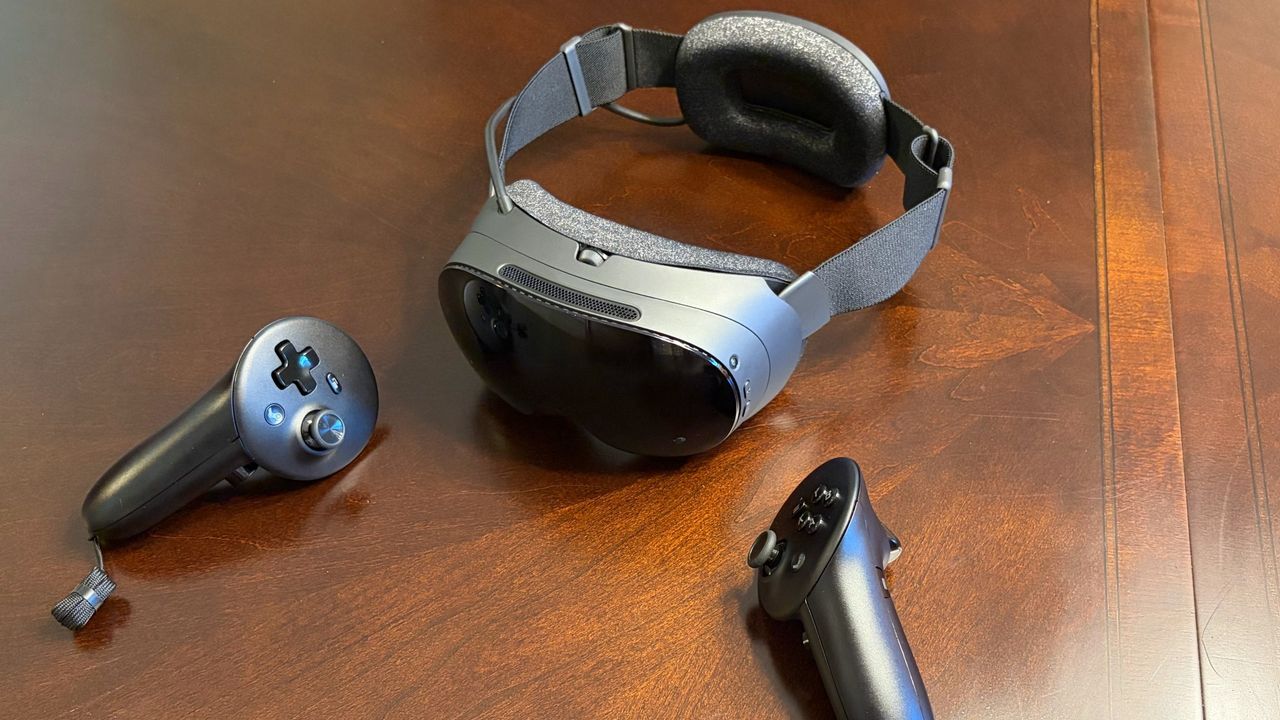
I spoke with Valve software developers Pierre-Loup Griffais and Jeff Leinbaugh about the Steam Frame launch, why the company is taking a two-pronged strategy with streaming and standalone support, and how the global memory/storage crunch affected development. You can read our review of the Steam Frame here, and the full transcript of our interview at Tom's Hardware Premium.

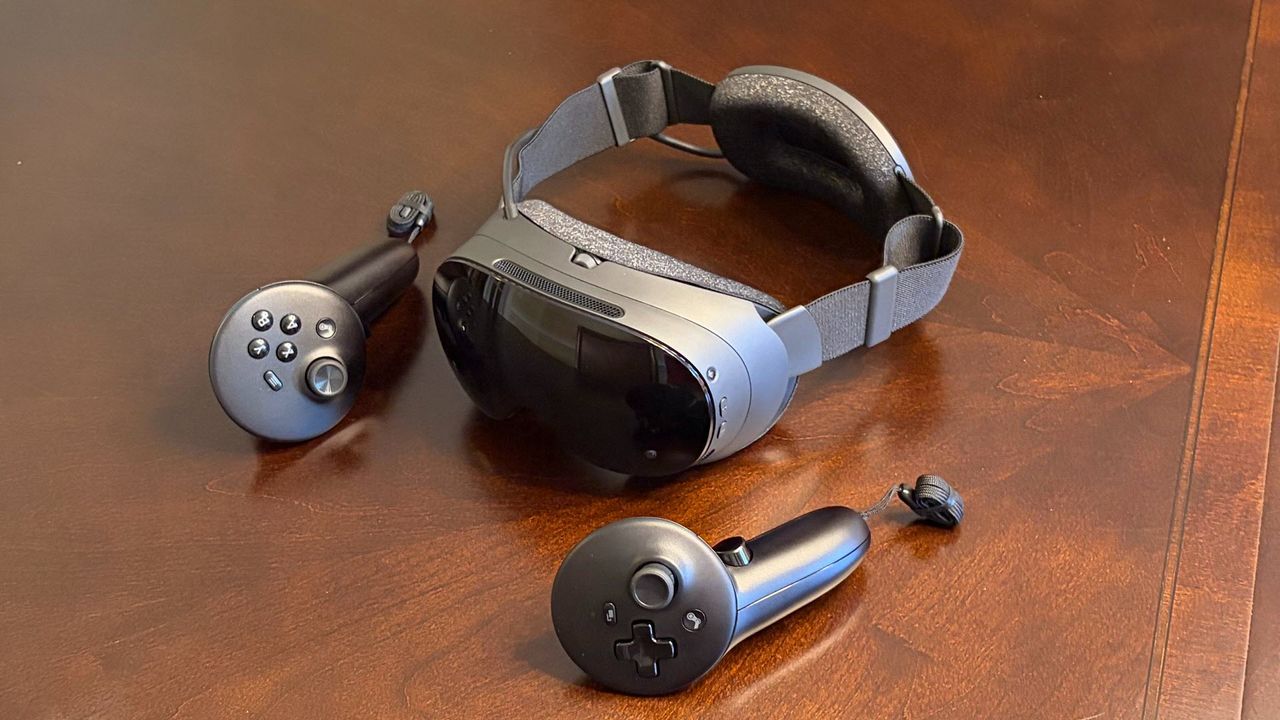
Nearly a year after first revealing the Steam Frame VR headset, Valve is now ready to deliver the finished product to paying customers. Reservations for the headset have opened today, three months after the launch of the Steam Machine.

Like the Steam Machine, the Steam Frame is launching amid absolute chaos in the tech industry. We're seeing higher prices across a wide range of PC hardware, especially memory and storage. Valve isn't operating in a vacuum, so those realities are reflected in the Steam Frame's pricing, which starts at $1,059.

I began by asking about the headset's genesis and the team's goals for creating a next-generation VR headset. "Work started on Steam Frame basically as soon as we shipped the Index," explained Leinbaugh. “And so we did a lot of exploration into technologies and features and use cases to try to answer that question. And the goals that we aligned on for what became the Steam Frame was to make [it] much easier to use, which to us meant a lighter, more comfortable, easier to get into and out of VR headset."

He added that with the previous Index headset, Valve was so laser-focused on making the best VR headset possible at the time that they made a lot of compromises to achieve those goals. And in many ways, those compromises were worth it to achieve their end goal. However, that strategy shifted with the Steam Frame.

"But this time around we thought we could achieve something that was a lot more comfortable, a lot more accessible. And so streaming technology was a big part of that. So the headset can be wireless so that there's not a lot of complicated setup to get to the game, whether that's playing on the headset or streamed," Leinbaugh continued. "So what we want to be possible is for somebody to put on the headset, browse their Steam library, and then just pick something that they want to play and not worry about too much else."

Standalone gaming on the Steam Frame

One of the biggest changes with the Steam Frame is that it can work with a robust wireless link to your PC, or as a standalone device using the onboard Qualcomm Snapdragon 8 Gen 3 SoC. I asked about the challenges in developing such a lightweight headset that can easily switch between operating modes.

"Yeah, a lot of the engineering challenges were around making sure that we had the right kind of compute and enough compute on the headset to both support a really good streaming experience, but also to be able to run games on the headset," said Leinbaugh. "So we picked the Qualcomm 8650 chip. It had a lot of capability, but in order to make use of that, we had to solve a lot of engineering challenges around thermal management and power delivery. So really treating this like making a really capable PC that just happens to run this particular mobile hardware was how a lot of the engineers approached that problem."

He added that Valve has taken a lot of the know-how from the Steam Deck and Steam Machine to give users the same SteamOS, but this time leveraging the Arm hardware along with Proton for emulation.

However, the Steam Frame has limits when playing games directly on-device, given its mobile-centric SoC. “Sure, games that are trying to push the boundaries on the AAA stuff that's very graphically intensive," explained Griffais. "Most of those recent ones won't run very well because it's a smaller compute envelope, right?"

"But there's a ton of stuff that is coming out that is a great experience on the Steam Frame. For example, I think last week the Metal Gear Solid Collection Part 2 released. And, you know, MGS4 is a game that I haven't played in, I don't know, 20 years at this point, but it's great from there."

He added that many indie games will run just fine on the Steam Frame, along with older back-catalog AAA games (which are still enjoyable) that don't require the compute of more modern titles.

"So I think the point is that you're able to engage with your whole library, right?" said Griffais. "And then have kind of a similar thing as the Deck where you're going to try and figure out if some games are maybe a little bit below the bar in terms of what you would like for performance."

Half-Life Alyx has been the poster child for VR gaming in recent years, and Valve has taken steps to ensure that Steam Frame users can have a proper native gaming experience. “And we're doing the same for Half-Life Alyx, where we're doing a lot of work to support the Frame more natively and trying to remove performance barriers that are induced by some of the translation, the emulation there that you get on normal and modified PC games.,” said Griffais.

Streaming on the Steam Frame

While standalone gaming on the Steam Frame is possible, Valve designed the headset first and foremost as a streaming device. To that end, Valve has taken steps to optimize the networking stack and improve performance. One of those steps is implementing foveated streaming to reduce strain on network resources.

“So the Steam Frame has eye-tracking cameras on the inside of the headset that know where your eyes are looking. And when you have that, there's a lot of potential use cases, but the one that we're using most consistently is foveated streaming, which really means when you're streaming, especially VR content, there's a lot of video data that you have to send," Leinbaugh explained.

"But because we know with eye-tracking cameras what part of the image you're looking at at any time, we can refocus some of those resources to make sure that the important parts of the image are treated as like first-class bits. And then the rest gets kind of the last part of the resource pool, which is the part of the image that you can't see and you won't notice the image degradation."

By not treating every bit delivered to the headset the same, Valve can reap performance and image quality gains. "So it's the best analogy really is it's almost as if the part that you're looking at is using about 10 times as much bandwidth and encoding bit rate as it actually is for the entire image, because we just squished it all into that part that follows where you're looking."

Valve Steam Frame 3

(Image credit: Tom's Hardware)

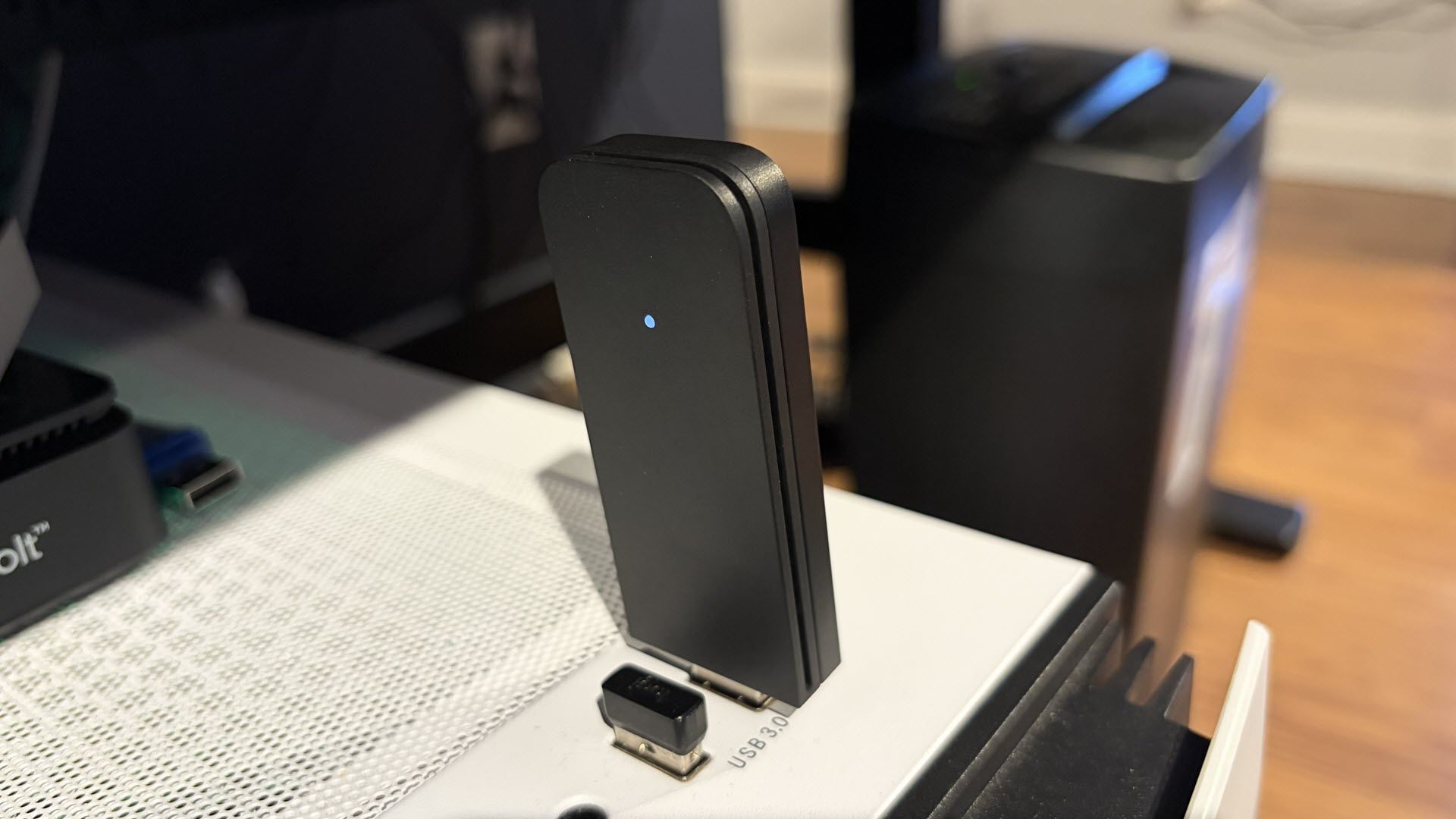
The Steam Frame communicates with your PC wirelessly using a dedicated Wi-Fi 6E USB dongle. Data transfers between the two happen over the 6 GHz channel for optimal performance. I inquired about how any disruptions/interference with that wireless link would affect gameplay.

“So there's a fallback mechanism built into that, which, if you have two links active and one of them drops out because of interference, or you walked out of range, or all the many reasons that wireless interference can happen," said Leinbaugh. "If something happens to one of those links, the other one will immediately pick up and cover the gap. And it's just very unlikely that a lot of those sources of interference will hit both links at the exact same time."

Other strategies can also step in; for example, if you have a latency spike, a previous frame can be "reprojected and replayed" to cover small gaps. For extended dropouts, there's no recovery method; the stream will fail, and you'll be booted to the default environment.

There are also other strategies that can step in; for example, if you have a latency spike, a previous frame can be "reprojected and replayed" to cover small gaps. For extended dropouts, there's no recovery method; the stream will fail, and you'll be booted to the default environment.

Pricing and availability

Pricing, of course, will be a big sticking point with the Steam Frame. Consumers got a bit of sticker shock with the Steam Machine given its hardware specs, and the Steam Frame will likely be no different. The Steam Frame starts at $1,069 for the 256GB SKU and costs $1,299 for the 1TB SKU.

"I think as far as memory prices and those kinds of conditions, we're really in it like everyone else," Griffais explained. "We've been working hard on trying to get the parts that we can get at the best price possible."

While all of us would love for memory and storage prices to fall to sane levels again, it will be a while before we see any relief. "It's an unfortunate situation all around. We wish that gaming hardware was cheaper, but we're definitely trying to be on the cheapest side that we can get despite all those conditions," Griffais explained.
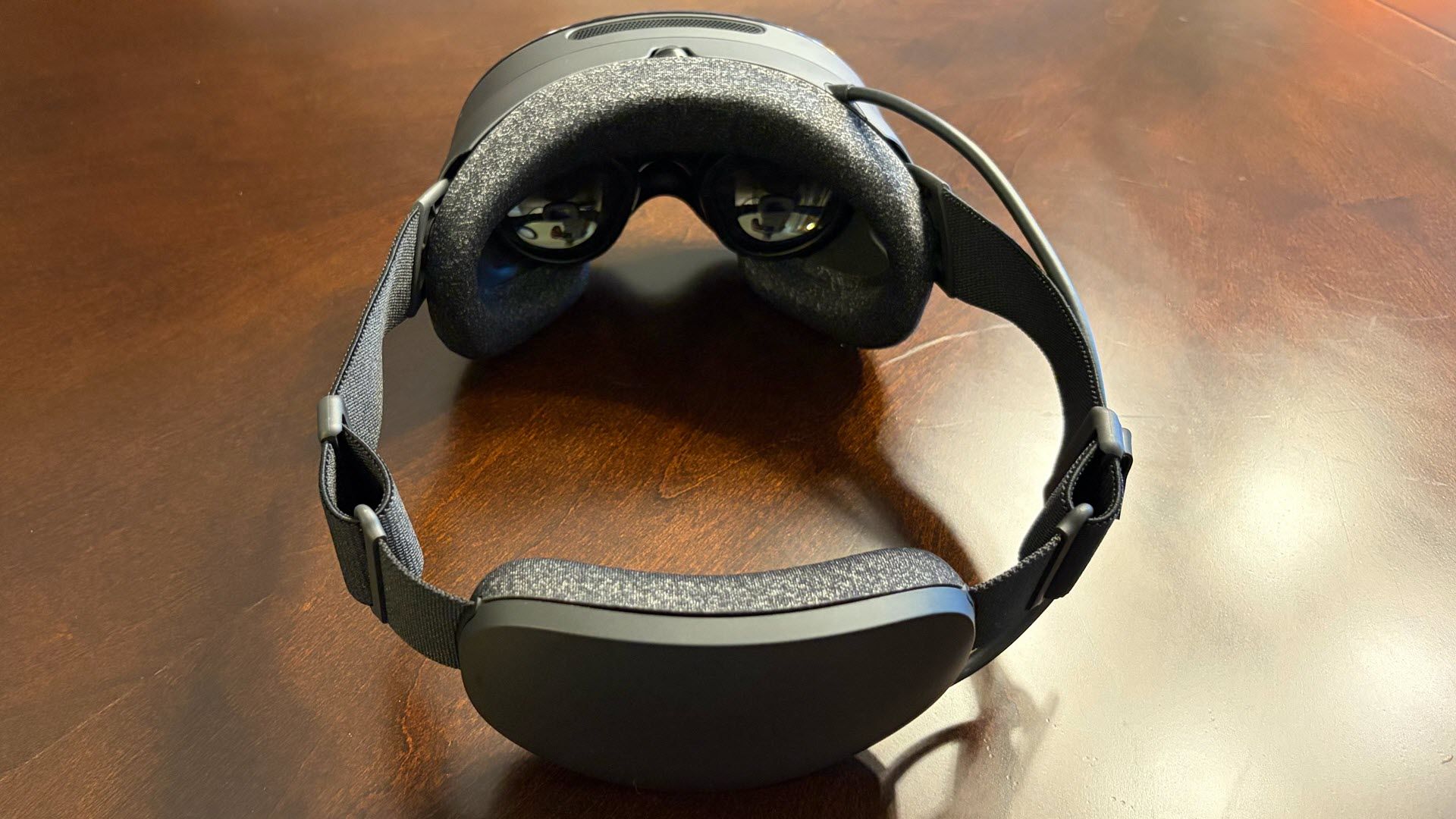
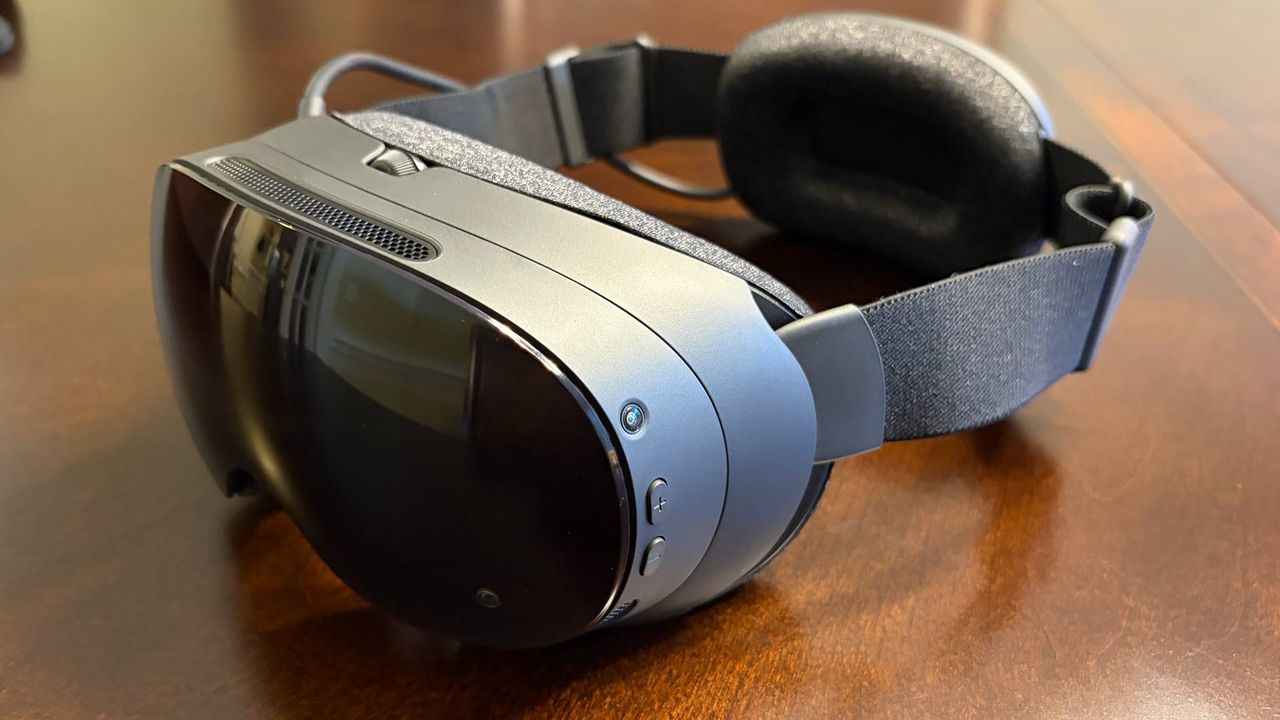
But price increases aren't just limited to the likes of memory, as Griffais added, “Even just things like motherboards, copper, anything, even shipping anything worldwide right now is way more expensive than it was last year and two years ago. So every part of the sticker price is affected there."
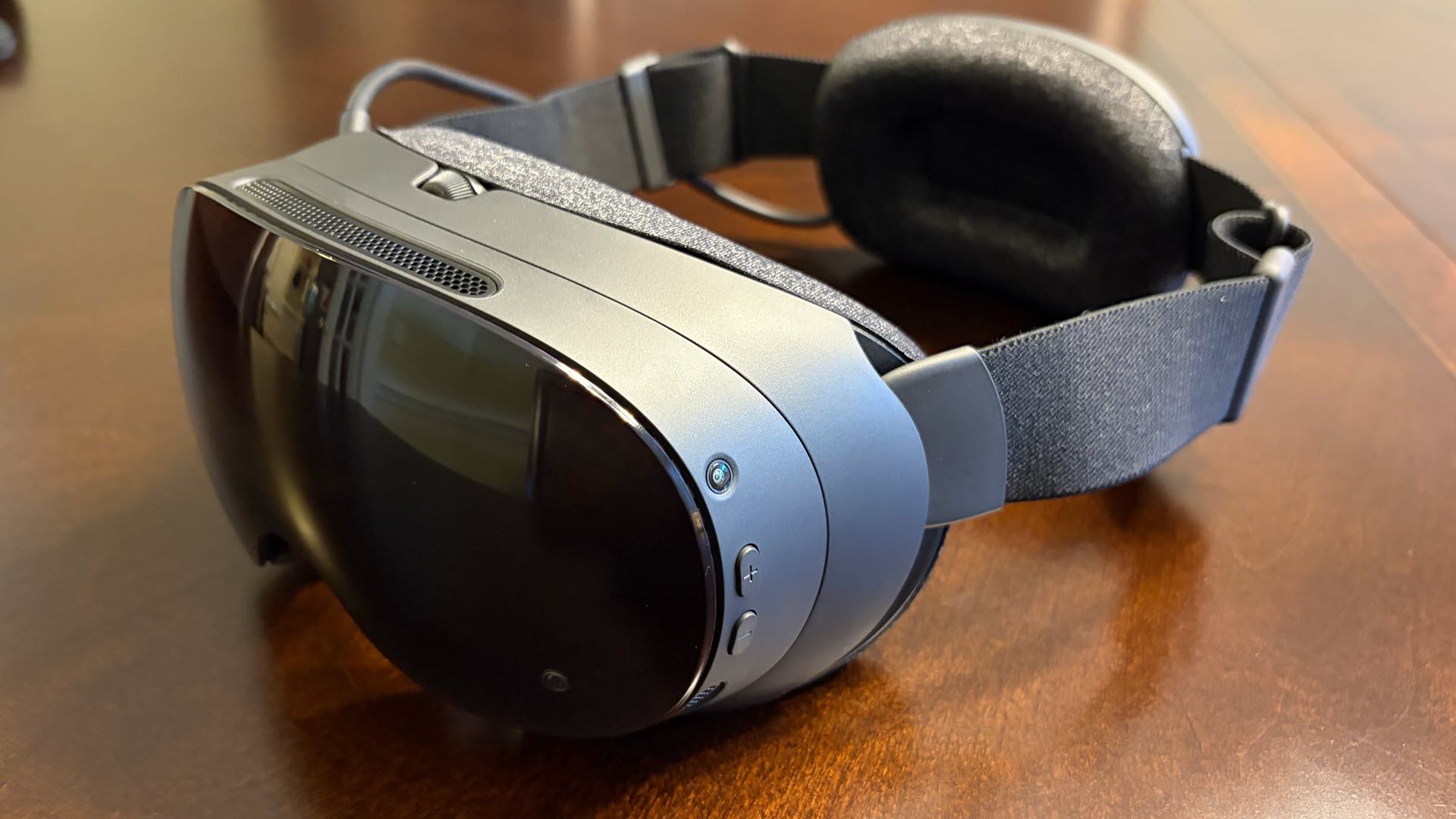
The Steam Frame will be available starting September 14, and it will use a reservation system similar to that of the Steam Machine to cut down on scalpers.

Valve Steam Frame interview — why it costs up to $1,300, Snapdragon power, and 10x foveated streaming

Prior to the official launch of the Steam Frame, Tom's Hardware Premium had a chance to talk with Valve software developers Jeff Leinbaugh and Pierre-Loup Griffais. We discussed the development process behind the Steam Frame, the standalone and streaming modes, networking strategy, and pricing, which you can read in its entirely here. You can read our review of the Steam Frame here.

Like previous Valve launches, you can also read transcripts of our interviews with the company on the Steam Machine and Steam Controller.

The transcript below has been lightly edited for clarity.

Brandon Hill, Tom's Hardware: What were your goals in creating the Steam Frame and providing the framework necessary to support it, compared to legacy hardware like the Index?

Jeff Leinbaugh, Software Developer, Valve: Yeah, so the work started on Steam Frame basically as soon as we shipped the Index. And so we did a lot of exploration into technologies and features and use cases to try to answer that question. And the goals that we aligned on for what became the Steam Frame was to make [it] much easier to use, which to us meant a lighter, more comfortable, easier to get into and out of VR headset.

That was a better way to interact with your whole Steam library than the goals we had for the Index. Where the Index was just: we wanted to make the best possible VR headset that we could make. And that came with a lot of compromises, which were worth it because they allowed us to have this really great VR headset and see what that was capable of.

But this time around we thought we could achieve something that was a lot more comfortable, a lot more accessible. And so streaming technology was a big part of that. So the headset can be wireless so that there's not a lot of complicated setup to get to the game, whether that's playing on the headset or streamed.

And then the other big part of that accomplishing that goal was making it possible to interact with Steam just like you would on a Steam Deck and to be able to play games that don't even support VR in a virtual display. So what we want to be possible is for somebody to put on the headset, browse their Steam library, and then just pick something that they want to play and not worry about too much else.

And that's kind of where all the user experience goals, at least, came from around this. And then there's a lot of other technical goals that support that we can get into if you're interested in any of those.

Hill: So, that leads into my next question: what were the engineering challenges in making the Steam Frame a standalone device and one that can also stream? And I know you've got the wireless dongle to help with the networking offload.

Leinbaugh: Yeah, a lot of the engineering challenges were around making sure that we had the right kind of compute, and enough compute on the headset to both support a really good streaming experience, but also to be able to run games on the headset.

So we picked the Qualcomm 8650 chip. It had a lot of capability, but in order to make use of that, we had to solve a lot of engineering challenges around thermal management and power delivery.

So really treating this like making a really capable PC that just happens to run this particular [...] mobile hardware was how a lot of the engineers approached that problem.

And then from there, we kind of tied that into a lot of the work that we did for Steam Deck and Steam Machine running Steam OS now on ARM, but it's the same Steam OS.

So at some point we got to kind of meet in the middle and leverage Proton and Steam OS and a lot of things there to start getting games running.

Valve Steam Frame 3

(Image credit: Tom's Hardware)

Standalone mode & software support

Hill: And what kind of performance levels are you targeting for games using the Steam Frame when it's in the standalone mode?

Pierre-Loup Griffais, Software Developer, Valve: I guess it's hard to pinpoint a specific segment there because there are so many games on Steam that keep coming out that are running great on there, right? Sure, games that are trying to push the boundaries on the AAA stuff that's very graphically intensive. Most of those recent ones won't run very well because it's a smaller compute envelope, right?

But there's a ton of stuff that is coming out that is a great experience on the Frame. For example, I think last week the Metal Gear Solid Collection Part 2 released. And, you know, MGS4 is a game that I haven't played in, I don't know, 20 years at this point, but it's great from there.

And even at the higher resolution, 60 FPS is locked. So it's really cool to see games that are coming out right now that are great experiences on there. I think there's a ton of indie games and things that run really well too. And if you go down the back catalog, there's a ton of stuff from a little bit ago, even AAA stuff that runs great as well.

So I think the point is that you're able to engage with your whole library, right? And then have kind of a similar thing as the deck where you're going to try and figure out if some games are maybe a little bit below the bar in terms of what you would like for performance. And then off to stream those from another PC instead, or the Steam machine.

Hill: And building on that, how's the reception been to the Steam Frame Verify program from developers for the standalone games?

Griffais: I mean, I think we have a lot of developers that are pretty eager to get their games working well. And so we've seen it approached from different ways. Some folks do tweaks to their existing PC version and then get to a very good point with that.

But just the same kind of tweaks as you would expect from Steam Deck, where some surface-level tweaks for the user experience, like changing controller bindings a little bit or changing default settings in a way that really makes the game better for everyone and not just for Steam Frame.

And we're doing the same for Half-Life Alyx, where we're doing a lot of work to support the Frame more natively and trying to remove performance barriers that are induced by some of the translation, the emulation there that you get on normal and modified PC games.

And that's yielding great results to get to the next level of performance there. And so we expect that some developers will be doing some of that work or maybe adapting some of that existing work that they've already done on an Android version of their game and then adapting that through Lepton as well. So I think everyone's kind of engaging with it at a different pace there. But overall, I think like we're talking to a bunch of VR devs that are excited to get their games to be labeled as verified or playable.

Foveated streaming and technical hurdles

Hill: Could you go into a little more detail on foveated streaming and how it enhances the gaming experience with Steam Frame?

Leinbaugh: Yeah, so the Steam Frame has eye-tracking cameras on the inside of the headset that know where your eyes are looking. And when you have that, there's a lot of potential use cases, but the one that we're using most consistently is foveated streaming, which really means when you're streaming, especially VR content, there's a lot of video data that you have to send.

And so you're therefore very sensitive to how much available bandwidth that you have available for not just transmitting it over a wireless link, or whatever kind of link, but also just encoding and decoding that data. All of that takes from a pool of finite resources and your network stack or your graphics card.

But because we know, with eye-tracking cameras, what part of the image you're looking at at any time, we can refocus some of those resources to make sure that the important parts of the image are treated as first-class bits. And then the rest gets the last part of the resource pool, which is the part of the image that you can't see, and you won't notice the image degradation.

So instead of kind of evenly focusing all of the encoding and network resources around this entire immersive, all-encompassing VR image where you're not seeing most of it, we make sure that the part that you're looking at is encoded differently in a way that's a much, much higher equivalent bit rate.

So the best analogy really is [that] it's almost as if the part that you're looking at is using about 10 times as much bandwidth and encoding bit rate as it actually is for the entire image, because we just squished it all into that part that follows where you're looking.

Valve Steam Frame 3

(Image credit: Tom's Hardware)

Hill: Switching gears slightly, how are you compensating for temporary losses in connection or signal strength when gaming wirelessly? Is there a fallback mechanism?

Leinbaugh: Yeah, there are a few different levels of what we'll do, and we've made sure to do something in response to all these things happening. So the first thing is if you're using the wireless adapter, if you also are connected to your home WiFi, for example, which a lot of people just naturally will be, then the streaming, VR streaming will take advantage of both of those connections.

And so you'll have the adapter and your WiFi both active at the same time; we call it multi-link streaming. And what that means is that those two connections are competing against each other constantly, every single packet.

So there's a fallback mechanism built into that, which, if you have two links active and one of them drops out because of interference, or you walked out of range, or all the many reasons that wireless interference can happen. If something happens to one of those links, the other one will immediately pick up and cover the gap. And it's just very unlikely that a lot of those sources of interference will hit both links at the exact same time. So that's kind of the first line of defense that we have.

If you still don't, if you still have an interruption or maybe you only have one link active, then the headset has strategies to fill in those gaps. So if you have a short interruption, just like a latency spike or something, then a previous frame will get reprojected and replayed. And that works pretty convincingly for covering small gaps like that.

A lot of people won't even notice that it's happened. If you have an extended dropout where the video is just not arriving at all for whatever reason, then at that point, the video stream is not going to recover.

If it's a very extended dropout, but the headset will fade you back into the construct environment so that you're at least not getting stuck with a really unexpected experience or something that might confuse you or disorient you.

So the worst-case scenario is you'll just kind of fall back to the default environment and have a chance to either wait for it to recover or do something. Maybe you unplugged your Wi-Fi router or something that you need to go do.

Pricing and market conditions

Hill: When the Steam Machine arrived, there was a little bit of sticker shock with the price when it launched. And the Steam Frame is also around $1,000, close to $1,300 bucks in top trim. Surely Valve is sensitive to the realities of the marketplace with RAM and storage prices. How do you appease the gamers out there that are begging for some relief in hardware pricing?

Griffais: Oh, yeah, I think as far as memory prices and those kinds of conditions, we're really in it like everyone else. Like, there's not really anything special that we can do.

We've been working hard on trying to get the parts that we can get at the best price possible. But I think everyone's affected. [...] The fact that our price was affected by that compared to what we were hoping for is definitely true. But I'd say that it's trending along the reality of the market. And there's not really any sort of the kind of distortion compared to just the price of the parts in there.

And it's an unfortunate situation all around. We wish that gaming hardware was cheaper, but we're definitely trying to be on the cheapest side that we can get despite all those conditions.

It's not just memory and all that too, right? Even just things like motherboards, copper, anything; even shipping anything worldwide right now is way more expensive than it was last year and two years ago. So every part of the sticker price is affected there.

Hill: Final question: Are you planning to implement the same reservation system that you used for the Steam Machine with Steam Frame?

Griffais: Yeah, I think that's the plan.

[Interview ends]

Valve Steam Frame Review: Competent as a standalone VR, but wireless streaming remains the focus

Valve has been ramping up its hardware releases during 2026, with the Steam Controller launching this past spring, followed by the Steam Machine earlier this summer. The 2026 hardware onslaught is now culminating in the Steam Frame, the company’s latest headset aimed at VR and non-VR gaming.

Rather than being a streaming-only platform, like the preceding Valve Index, the Steam Frame has a powerful onboard Qualcomm Snapdragon 8 Gen 3 and up to 1TB of internal storage to play standalone games without the need for a PC. It’s an ambitious headset, which comes with an equally ambitious $1,000+ price tag.

Design and Comfort of the Valve Steam Frame

At first glance, the Steam Frame reminds me of oversized ski goggles, compared to the Daft Punk style of the preceding Valve Index headset. The overall design feels very organic, with soft curves and thin plastic to keep weight down. The thinner plastic drastically reduces weight compared to the Index (440 grams with the headstrap versus 809 grams for the Index).

Two forward-facing cameras (which provide a monochrome passthrough of your environment) sit near the bottom of the front cover, while two additional cameras sit on the side of the Steam Frame, facing sideways and slightly upward. Together, the four cameras provide headset and controller tracking. The final two cameras are internal for eye-tracking purposes. The main unit also houses a cooling fan that helps remove warm air from the Snapdragon SoC and keeps your head from sweating during extended gaming sessions.

Valve Steam Frame
Tom's Hardware
Valve Steam Frame 3
Tom's Hardware
Valve Steam Frame 3
Tom's Hardware
Valve Steam Frame 3
Tom's Hardware

An expansion port for future features sits at the bottom front of the Steam Frame, just ahead of where the headset rests on your nose. An interpupillary distance (IPD) adjustment knob sits at the top of the headset (ranging from 57.6 to 69.6 mm), while an IPD lock switch (to prevent accidentally hitting the dial when putting on or taking off the headset) is located inside the Steam Frame, directly above the proximity sensor. Although our review unit came with 1TB of internal storage, a microSD slot is available for further expansion behind the fabric-covered foam gasket that attaches magnetically.

On the right side of the Steam Frame, there are two buttons: Aux and Power. On the left side are volume up and volume down. The Steam Frame has four speakers, two on each side of the headset, positioned low just below the arm pivots for the adjustable strap. You can also use Bluetooth headphones/ear buds if you prefer.

Valve Steam Frame
Tom's Hardware
Valve Steam Frame
Tom's Hardware
Valve Steam Frame
Tom's Hardware
Valve Steam Frame
Tom's Hardware
Valve Steam Frame
Tom's Hardware
Valve Steam Frame=
Tom's Hardware

Speaking of the strap, I found it to be comfortable and highly adjustable. The straps attach to a padded restraint (which houses the 21.6 Whr battery) that cradles the back of your head. The Stream Frame's lightweight design, combined with the pressure-relieving front gasket and rear cradle, helped reduce fatigue after extended sessions (particularly with Half-Life: Alyx). Speaking of the rear cradle, I appreciate that the USB-C port for charging the Steam Frame is located here instead of on the front of the headset. This leaves the dangling cord behind, out of the way (if you want to charge the device while wearing it).

Our review unit came with the Steam Frame, two wireless hand controllers, a USB-C to USB-C cable, and the headstrap. Our kit also included a USB-C power adapter ($29). We also received the Ergonomic Accessories Kit ($59), which contains a headstrap for the Steam Frame, two hand straps for the controllers, and an extended light blocker gasket that fits on the underside of the headset to further reject ambient light. I personally didn’t feel that any of the additional items in the Ergonomic Accessories Kit were necessary to enhance my experience with the Steam Frame.

Valve Steam Frame Specifications

Display

2160 x 2160 per eye

Display Type

LCD

Refresh Rate

72 Hz to 120 Hz, 144 Hz (experimental)

Processor

Qualcomm Snapdragon 8 Gen 3

RAM

16 GB LPDDR5X

Storage

256GB or 1TB, microSD slot

Operating System

SteamOS 3 (Arch-based), KDE Plasma

Field of View

110 degrees horizontal

IPS Range

57.6 to 69.6 mm

Degrees of Freedom

6 DoF

Audio

Dual drivers per ear

Wireless Connectivity

Wi-Fi 7, Bluetooth 5.4 (Steam Frame), Wi-Fi 6E (Dongle)

Battery Life

1 to 4 hours

Weight (Headset + Strap)

15.52 ounces (440 grams)

Price

$1,299 as tested ($1,059 base)

Valve Steam Frame Controllers

The Steam Frame comes with two wireless controllers that fit nicely in my hands. While the main body of the Steam Frame has a matte grey plastic finish, the controllers are made of shiny, textured black plastic. Each controller (which supports six degrees of freedom) features a dual-stage grip button, an analog trigger, a bumper, a Steam button, and a magnetic thumbstick with capacitive finger sensing. This is the same thumbstick that you’ll find on the Steam Controller used with the Steam Machine.

Valve Steam Frame
Tom's Hardware
Valve Steam Frame
Tom's Hardware
Valve Steam Frame
Tom's Hardware
Valve Steam Frame
Tom's Hardware
Valve Steam Frame
Tom's Hardware

The right controller also has AXBY and Menu buttons. The left controller adds a View button and a D-pad. Both controllers feature a haptic motor and capacitive finger tracking. The controllers communicate directly with the Steam Frame using a dedicated Bluetooth wireless link.

Each controller is powered by a single AA battery, which Valve says lasts roughly 40 hours (a pair of AA alkaline batteries are preinstalled).

Valve Steam Frame Hardware

Valve designed the Steam Frame as a dual-purpose VR headset. It can stream games directly from your high-powered gaming PC, or it can work as a standalone headset (think Meta Quest series), thanks to its Qualcomm Snapdragon 8 Gen 3 Arm SoC and 16GB of unified LPDDR5X RAM. Although our review unit came equipped with 1TB of UFS onboard storage (further augmented by a microSD slot), a cheaper SKU with just 256GB of internal storage is available.

In standalone mode, the Stream Frame uses FEX emulation along with Proton to run x86 Windows games on ARM64 hardware.

However, for the best performance, you’re going to want to leverage your desktop PC and wireless connectivity for streaming games from Steam. The Steam Frame includes an integrated 2x2 Wi-Fi 7 radio, plus a standalone Wi-Fi 6E dongle that plugs into a free USB 3.0 port on your desktop or laptop. The dongle provides a low-latency link between your PC and the Steam Frame. Instead of clogging your wireless router’s bandwidth or adding unwanted lag, the direct wireless connection improves performance and reduces latency.

So, in essence, the Steam Frame takes a multi-pronged approach. The 5 GHz band primarily connects to your home network for internet, firmware updates, and software updates. The 6 GHz link, however, connects only to the wireless dongle. With that link, Valve can implement technologies like foveated streaming, which is an interesting (and much-needed) way to optimize data streaming across the network.

In short, foveated streaming uses the internal eye-tracking cameras to determine what part of a scene you’re viewing at any given time. Whatever is in your direct field of view gets full-resolution, full-priority data to improve image quality. Whatever is in your periphery, or not seen at all, gets lower priority and therefore comes through at a lower resolution. This saves bandwidth and helps to preserve as much performance as possible when streaming.

Just as important as the processing and networking hardware underlying the Steam Frame is its optics system. In this case, the headset uses dual LCDs, offering 2160 x 2160 resolution per eye. Valve opted for LCDs over micro-OLEDs to meet its design, performance, and cost targets. From what I've seen after spending over two weeks with the Steam Frame, it was a wise decision. Micro-OLEDs would have no doubt pushed the starting price of the Steam Frame even higher, as we’re certain that many folks will likely already be wary of the $1,059 base price ($1,299 as tested).

The displays can run as low as 72 Hz and as high as 144 Hz, though the latter mode is experimental right now. All of the games that I played on the Steam Frame defaulted to 72 Hz. The headset uses pancake lenses designed specifically for this use case, and offers a horizontal field of view (FoV) of up ot 110 degrees (a slight improvement over the 108 degrees on the Index).

Setting up the Valve Steam Frame

Setting up the Steam Frame was honestly about as low-impact as you can get with a VR headset. I first plugged the headset into the included wall charger and let it charge for about an hour. Once that was done, I ran through the initial setup, which involved logging into the Steam app on my smartphone to identify the Steam Frame. With that step complete, the setup process commenced, culminating in me installing the latest SteamOS update on the headset from the Stable channel.

Valve Steam Frame

(Image credit: Tom's Hardware)

On the desktop side, I plugged the Wi-Fi 6E dongle into a free USB port on my Windows 11 desktop, and it was automatically recognized and ready to use.

Valve Steam Frame Streaming Mode

I tried several games, streaming them to the Steam Frame. The perennial favorite, Half-Life: Alyx, was my go-to game to experience the full power of VR immersion from the headset. The PC rig that I used features a Core Ultra 7 265K processor, 32GB of DDR5-5600 memory, and a GeForce RTX 4060 Ti GPU. I had no trouble maintaining consistently high frame rates without dropping frames, which would be a serious hindrance in VR gaming.

Gunman Contracts “Stand Alone” was another game I tried; it offers quick, furious gunplay and sharp graphics. The game's concept reminded me of old-school arcade shooters from the 80s and 90s, where you used physical gun models to shoot at a display. However, Gunman Contracts “Stand Alone” advances that genre with total immersion and true hand/finger manipulation of objects. My only issue with the game is that the default smooth controls to move your character in the virtual environment physically made me feel sick. My body had a hard time adjusting to the movement because my physical body wasn’t moving forward or backward to match.

I also streamed non-VR games like Batman: Legacy of the Dark Knight, which played fine in Theater Mode. The game played on what vaguely resembled a movie theater screen, with a calming background filling the rest of the dead space around it. However, I couldn’t use the included Steam Frame controllers with a non-VR game, so I grabbed my trusty Xbox Series X wireless controller.

Other non-VR games I tried included BeamNG and Forza Horizon 6. Both games played without issue. The experience wasn’t nearly as all-encompassing as being dropped into a full VR environment, but it was preferable to sitting in front of a smaller physical monitor on my desk.

Valve Steam Frame Standalone Mode

Since the Steam Frame offers a standalone mode without needing a wireless “tether” to a PC, I tried three games promoted to work with the handset. The first game was a repeat of one I tried in streaming mode: Half-Life: Alyx. The game runs great on-device using ARM64 emulation, though I did notice some stutters and slight performance lags compared to streaming. Valve admits that there is a performance hit with x86-to-Arm translation, but it will vary depending on the game.

Two other standalone games tested were Stellar Café and Dungeons of Eternity. The former is a cartoonish game set in a cafe, where you can use your voice to interact with the in-game robots/characters who serve you beverages. The back-and-forth conversational flow is fun and engaging. In fact, the conversations almost seemed a little too real, with human-like responses and realistic commentary.

Valve Steam Frame Battery Life

The Steam Frame's battery life varies greatly depending on whether you’re streaming from your PC or playing games natively on the headset. For example, when I played Half-Life: Alyx directly on the Steam Frame at 72 Hz, I got about an hour of runtime before it died. However, when streaming, I could easily get more than double that amount at the same refresh rate, since the Arm processor isn’t taxed nearly as heavily.

I also saw a little over an hour of runtime with Gunman Contracts “Stand Alone” when running natively. Non-3D games like Forza Horizon 6 lasted for well over two hours when streaming from a PC.

However, even with the shorter runtimes with standalone play, battery life wasn’t an issue for me. I like to take a break from VR games at least every hour or so to have a reality “reset” and to give my brain a rest.

Bottom Line

I found the Steam Frame to be a versatile, enjoyable headset during my time with it. Weighing in at less than a pound, the headset is low-impact and comfortable to wear for hours on end. The foam padding around the headset provides a good seal against your forehead, and the weight is well balanced, partly because the battery sits at the back of your head.

Performance while streaming from a PC was excellent, while standalone gaming takes a hit due to the emulation required for the Snapdragon 8 Gen 3 Arm SoC. However, Valve is billing the Steam Frame as a streaming-first platform, so that shouldn't surprise you. Consider standalone gaming an added bonus if you want to have a quick VR gaming session when you’re away from your PC.

Valve also made some smart design choices, including wireless links between the Steam Frame and your PC via the Wi-Fi 6E dongle, monochrome passthrough to help you orient yourself when wearing the headset, and adjustable IPD to accommodate a wide range of faces.

However, what will make or break the Steam Frame is its price, which starts at $1,059. That’s a tall order in this economic climate, when gamers are already being assaulted from multiple fronts with rising memory, storage, and GPU prices. The $1,059 price gets you only 256GB of internal storage, and opting for 1TB costs $1,299. You could always get the cheaper model and add your own microSD card, but you also have to contend with the inflated costs of portable storage.

But if you’re willing to ignore the price and have your mind set on a lightweight VR gaming experience, and you have the PC hardware to fuel it, you can’t go wrong with the Steam Frame.

Nvidia, Palantir, and others restrict advanced AI model usage over privacy concerns, report claims — 'paranoia' rising over customer intellectual property

作者 Oliver Haslam
2026年9月14日 23:58

Anthropic and OpenAI are both facing uncomfortable questions from some large AI customers over concerns about how proprietary data may be used to train AI models. Some companies are so worried that they have begun demanding assurances about how their data is handled or going so far as to place limitations on which models their employees can use, and for which tasks, The Information reports. They fear that models may be trained on their intellectual property and information.

The issue can be traced back to a June change by Anthropic. Following the change to its flagship Fable model's policies, Anthropic can now retain customer data. The company argues that it only does so to ensure that Fable isn't being misused. But some companies have raised concerns that it means sensitive business data will be caught up in the sweep.

While both OpenAI and Anthropic point out that they don't train their models on the information given to them by companies with specific enterprise contracts by default, that doesn't tell the full story. Both companies do collect metadata from the same corporate customers, and while information on exactly what that metadata contains is hard to come by, OpenAI notes that it's only used “to better understand how our services are used." Anthropic also argues that any data it collects about how customers use its products is aggregated and anonymized. And that metadata isn't used to train models.

Regardless, there are still concerns over a perceived lack of clarity about what is collected. Telecoms outfit C Spire has agreements with both OpenAI and Anthropic that prevent either from using its data to train models, the report says.

However, the contracts do allow both OpenAI and Anthropic to collect C Spire technical usage data. C Spire believes that includes information about what applications AI models are connected to as well as usage data. It also worries that the AI companies may collect information about what their models get up to between generating responses.

For its part, OpenAI says that it does not use this "chain-of-thought" data to train its models. But C Spire still believes it needs a better understanding of what data is being collected, the report adds. It argues that neither AI company is being clear in its explanations.

Taking the private approach

One solution to any privacy concerns could be to use air-gapped servers, something aerospace company Northrop Grumman has already chosen to do. The Information reports that the company runs open-source AI models on its own air-gapped servers rather than trusting the likes of OpenAI and Anthropic.

Alternatively, Microsoft is already trying to take advantage of any data privacy concerns by tempting OpenAI and Anthropic customers to its own secure AI platforms. Microsoft's isolated cloud environments run AI models on private servers that don't send any data to external AI companies. But this approach is costly, and the report notes that at least one customer is still considering Microsoft's alternative approach.

Pharmaceutical company Novo Nordisk has taken a slightly different approach. While it continues to use Anthropic's Claude for some tasks, it has a ban on allowing any proprietary data to be used by the model.

It's clear that a lack of trust has the potential to cost AI companies real money, and in one instance, it already has. The same report notes that a large U.S. utility company has already canceled its plans to test Anthropic's Fable. The utility company wanted to know if Fable could run its core power infrastructure but ultimately pulled the plug over Anthropic's refusal to agree to a nonrevocable zero data retention (ZDR) policy.

Nvidia has also decided to use Fable for tasks that don't require it to gain access to sensitive data. The company points to the same lack of ZDR guarentees as the reason. Instead, Nvidia uses its own in-house AI solution for tasks that it deems too sensitive for Anthropic's model. Nvidia CEO Jensen Huang has famously remarked that its employees should use AI tokens worth half their annual salary every year.

Toms Hardware reached out to Nvidia for comment but did not receive one by publication.

Solo dev enables running CUDA on AMD hardware in Windows, getting multiple CUDA libraries running on a gaming Radeon RX 9060 XT GPU in Windows — CUDA-exclusive workloads on AMD hardware in Windows possible without virtualization or dual-booting

作者 Zak Killian
2026年9月14日 22:23

With the latest ROCm updates, AMD finally brought robust, official PyTorch and HIP SDK support to Windows for consumer GPUs, fully supporting the Radeon RX 7000 and the RX 9000 series. For native, supported frameworks, AMD on Windows is finally a viable reality, but what happens when you want to run a proprietary application, an older repository, or a specialized AI tool that absolutely refuses to support anything but NVIDIA's CUDA? That's where a new project, Speedstu's "CUDA-for-AMD-Windows," could save the day. It proves that running rigidly CUDA-exclusive workloads on AMD hardware in Windows is possible without virtualization or dual-booting.

To be clear, this project is not a brand-new runtime. Instead, it is a highly automated and reproducible PowerShell setup that bridges the gap between ZLUDA, the well-known, formerly AMD-funded translation layer, and AMD's native HIP/ROCm SDK for Windows. Through a series of clever scripts, the toolkit automatically detects the user's GPU architecture, grabs a specifically pinned version of ZLUDA (v6-preview.69), and, at least in theory, seamlessly maps it to the ROCm math libraries already present in Windows.

A screenshot of the CUDA for AMD Windows GitHub documentation.

Several important CUDA libraries link up, but the important cuDNN doesn't work yet. (Image credit: Speedstu/GitHub)

The result is that the developer successfully intercepted and mapped the CUDA driver API as well as the cuBLAS, cuSPARSE, and cuFFT libraries directly over to their AMD equivalents. As a proof-of-concept, the author even trained a 2.2-million-parameter PPO reinforcement-learning network end-to-end using unmodified CUDA libraries on an AMD Radeon RX 9060 XT, which happens to be the only officially supported GPU at this time.

Even with AMD's official ROCm support on Windows, the local developer community frequently runs into dependency hell when trying out experimental GitHub repos or specialized AI tools that hardcode CUDA as a requirement. For developers who want to experiment with these CUDA-only tools natively on their Windows daily driver machines without dealing with WSL2 passthrough issues or waiting for the original author to write a HIP port, this project offers a highly desirable translation pipeline. It acts as a sort of hacky adapter for software that stubbornly demands an NVIDIA card.

Benchmark testing included in the project's documentation offers some interesting findings. In a controlled A/B test running a 2.2M-parameter reinforcement learning workload on a Radeon RX 9060 XT, the "public upstream path," which relies purely on official ZLUDA releases and AMD's stock HIP SDK 6.4, achieved a median throughput of 13,278 steps per second (SPS). By contrast, an optional "recovered custom overlay" apparently built from salvaged legacy ZLUDA binaries ran slightly worse at 12,876 SPS, making it roughly 3% slower. While the clean official setup is faster, the author notes that "a later rewrite removed LibTorch/ZLUDA from PPO and achieved substantially higher throughput," indicating that there is still a performance hit for this stack of translators.

CUDA for AMD Windows Official benchmarks (BENCHMARKS.md)

Metric

Public upstream

Recovered custom

Custom delta

Overall SPS, median

13,278.46

12,875.80

-3.03%

Overall SPS, mean

13,172.49

12,649.83

-3.97%

Collection SPS, median

63,306.00

59,360.67

-6.23%

Consumption SPS, median

16,806.36

16,445.66

-2.15%

Inference time, median

0.5863 s

0.6293 s

+7.33%

PPO learn time, median

3.2076 s

3.2958 s

+2.75%

Now, before anyone declares the CUDA moat officially drained, it is crucial to set realistic expectations. First, this is a solo open-source project, not an enterprise-grade solution. The author is extremely transparent about its narrow scope, as crucial machine learning libraries like cuDNN, TensorRT, and NCCL do not resolve yet. This means compatibility is strictly workload-dependent; if your specific AI tool relies heavily on cuDNN, this setup will fail. Furthermore, it's worth pointing out that ZLUDA itself is currently being maintained as a "weekend hobby project" after losing its commercial backing a second time. Relying on this pipeline for production-level work remains a massive risk. This repository is a tinkerer's tool, not a corporate IT deployment strategy.

Despite these limitations, "CUDA-for-AMD-Windows" is pretty exciting, as it proves that the barrier to entry for running CUDA-exclusive software on AMD GPUs isn't an insurmountable hardware flaw, but a relatively tractable translation tooling problem. Because the project is entirely open-source, its potential extends far beyond this initial proof-of-concept. With community contributions, we could see expanded hardware detection and clever patches to get more stubborn CUDA libraries resolving properly.

❌
❌