阅读视图

发现新文章,点击刷新页面。
✇Tomshardware

Proven 8-pin PCIe plugs aren't immune to melting — Thermal Grizzly WireView adapter burns out on Radeon RX 7900 XTX

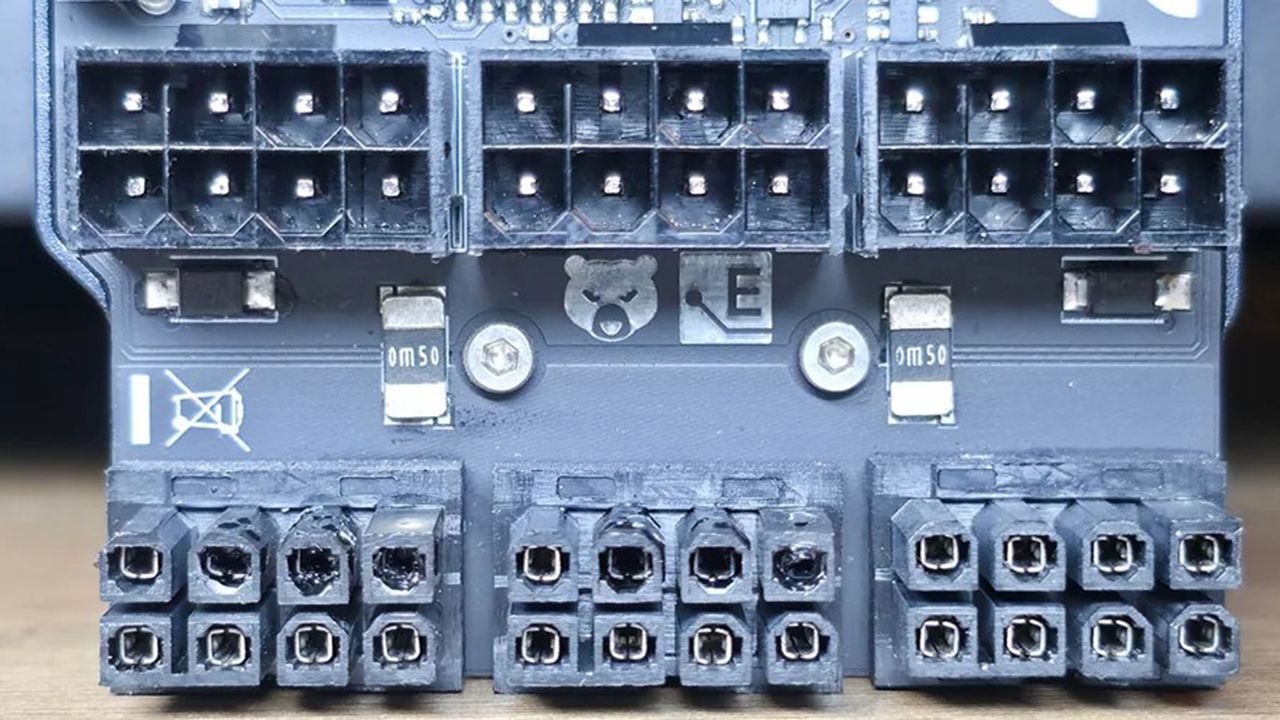
If you believe that the 8-pin PCIe power connector is entirely immune to the problems that have plagued the newer 16-pin connector, think again. A recent incident suggests that even the humble 8-pin is not entirely immune to failure. According to a Radeon RX 7900 XTX owner on Reddit, the 8-pin connectors on a Thermal Grizzly WireView monitoring device suffered overheating damage while connected to the graphics card.

The user said that they experienced frequent freezes and black screens before discovering the damage. The affected connectors were the 8-pin connectors on the GPU side of the monitoring device, with visible signs of burning and melted plastic. The user also confirmed that the connectors were fully inserted, although the exact cause of the failure is still unknown.

WireView is essentially an adapter that sits between a graphics card and the power cables, allowing users to monitor various values like power consumption, voltages, current in amperes, minimum and maximum power consumption, and more. Rather than connecting the PSU cables directly to the GPU, the power passes through the monitoring device, thus adding another set of connectors and electrical contacts to the power delivery path. A poor electrical connection, increased contact resistance, a damaged connector, or an issue with the adapter itself could have caused the overheating damage.

Thermal Grizzly previously pointed to improper seating, backplate interference, or incorrectly aligned or soldered contacts as possible causes of connector damage, although the company is yet to identify the cause of this particular incident. The company has reportedly contacted the affected user and asked them to get in touch with its support team so the company can investigate the damaged WireView adapter. The investigation could potentially help determine whether the failure originated from the adapter, the connectors, the GPU, or a combination of factors.

While we are on the subject of 8-pin power connectors, just days ago we saw a heavily modified RTX 5090 successfully running on traditional 8-pin connectors. The modders replaced the card's original 16-pin connectors with three 8-pin connectors soldered directly to the PCB, using heavy-gauge cables and modified sense pins. The card reportedly pulled as much as 900W and reached 3,400 MHz, demonstrating how capable 8-pin connectors can be when properly implemented. However, this was an extreme hardware modification, not a stock configuration.
✇Tomshardware

AMD’s best gaming CPU drops below launch price and includes free 240mm AIO cooler and Onimusha: Way of the Sword — grab the Ryzen 7 9850X3D for $484

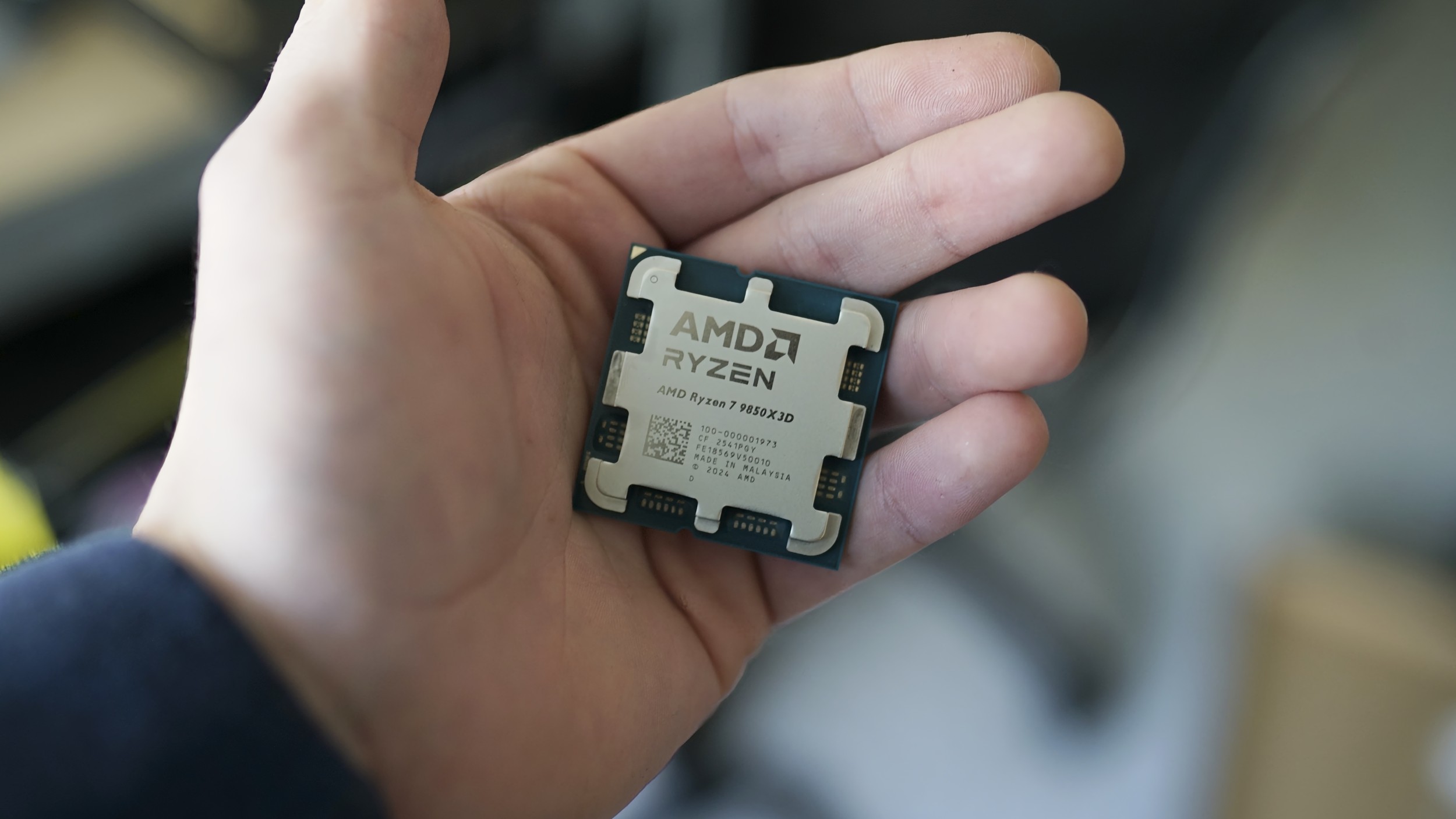
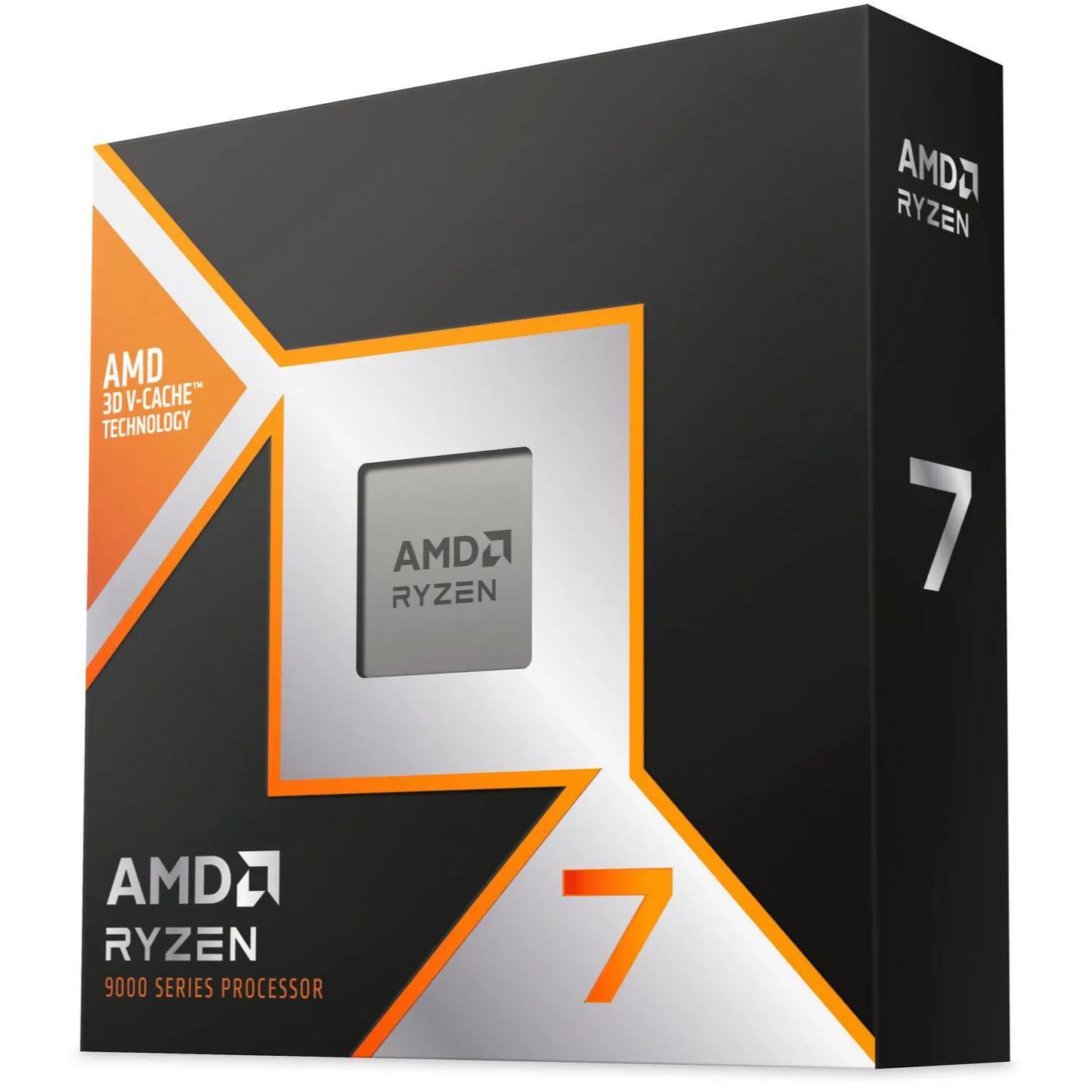
For those seeking the highest performance for gaming, AMD’s Ryzen 7 9850X3D is currently the best CPU money can buy. If you’re planning to upgrade or build a new PC, now might be a good time to pick one up, as Newegg is selling the 9850X3D for $484, around $15 less than its launch price. The deal also includes a 240mm Cooler Master AIO liquid cooler, valued at $79.99, along with a copy of Onimusha: Way of the Sword worth $69.99, both included as free gifts.

Announced at CES 2026, the Ryzen 7 9850X3D is essentially a higher-binned version of the Ryzen 7 9800X3D. It retains the same 8-core, 16-thread configuration and 4.2 GHz base clock as its predecessor, but gets a higher 5.6 GHz boost clock. The chip comes with the same 104MB of total cache, including 96MB of 3D V-Cache, which is the key ingredient behind its strong gaming performance. It also shares the same 120W default TDP and uses the AM5 platform with DDR5 memory support, making it compatible with a wide range of existing 800- and 600-series AMD motherboards.

Built on AMD’s Zen 5 architecture, the Ryzen 7 9850X3D combines 8 cores and 16 threads with a 5.6GHz boost clock and 96MB of 3D V-Cache.View Deal

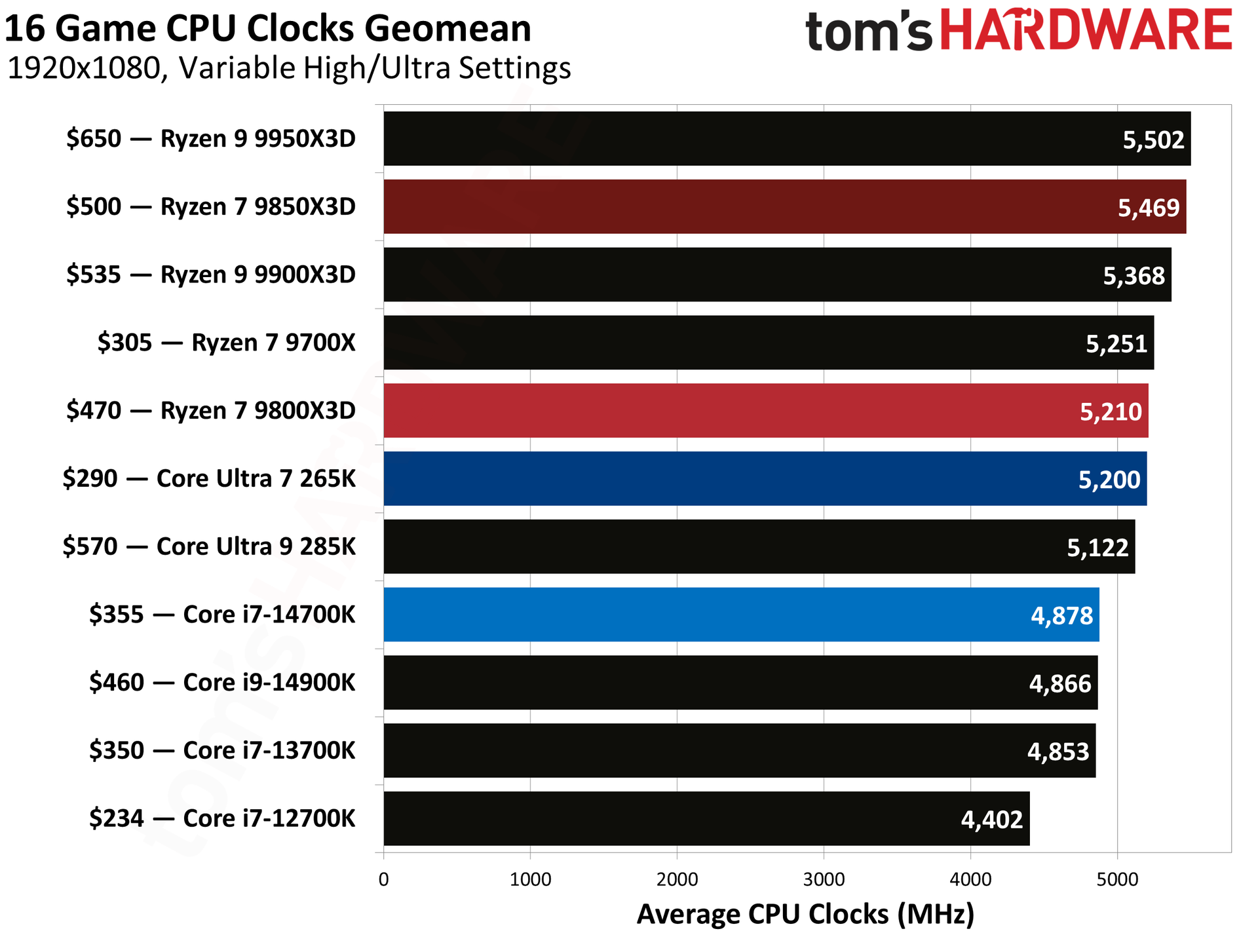
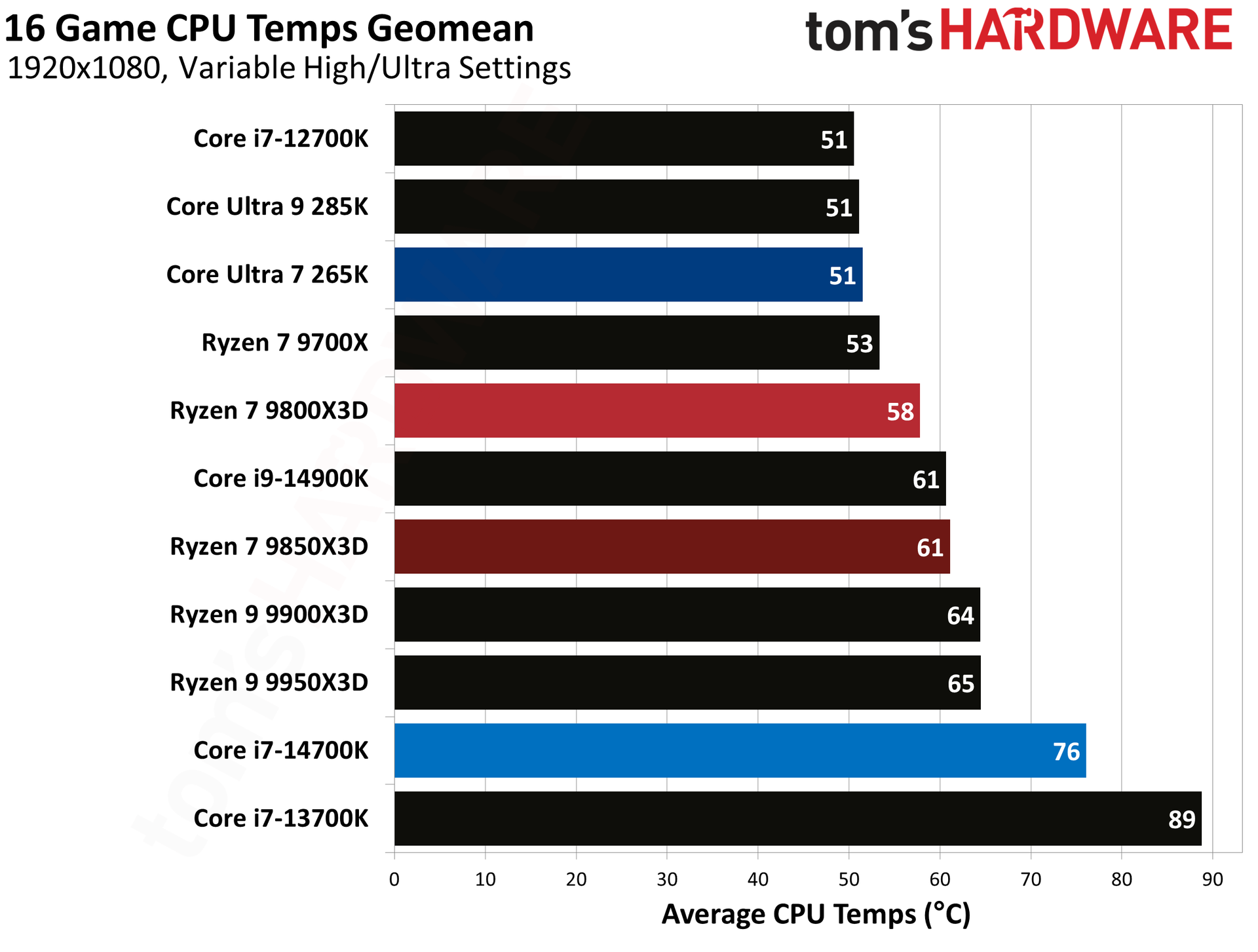
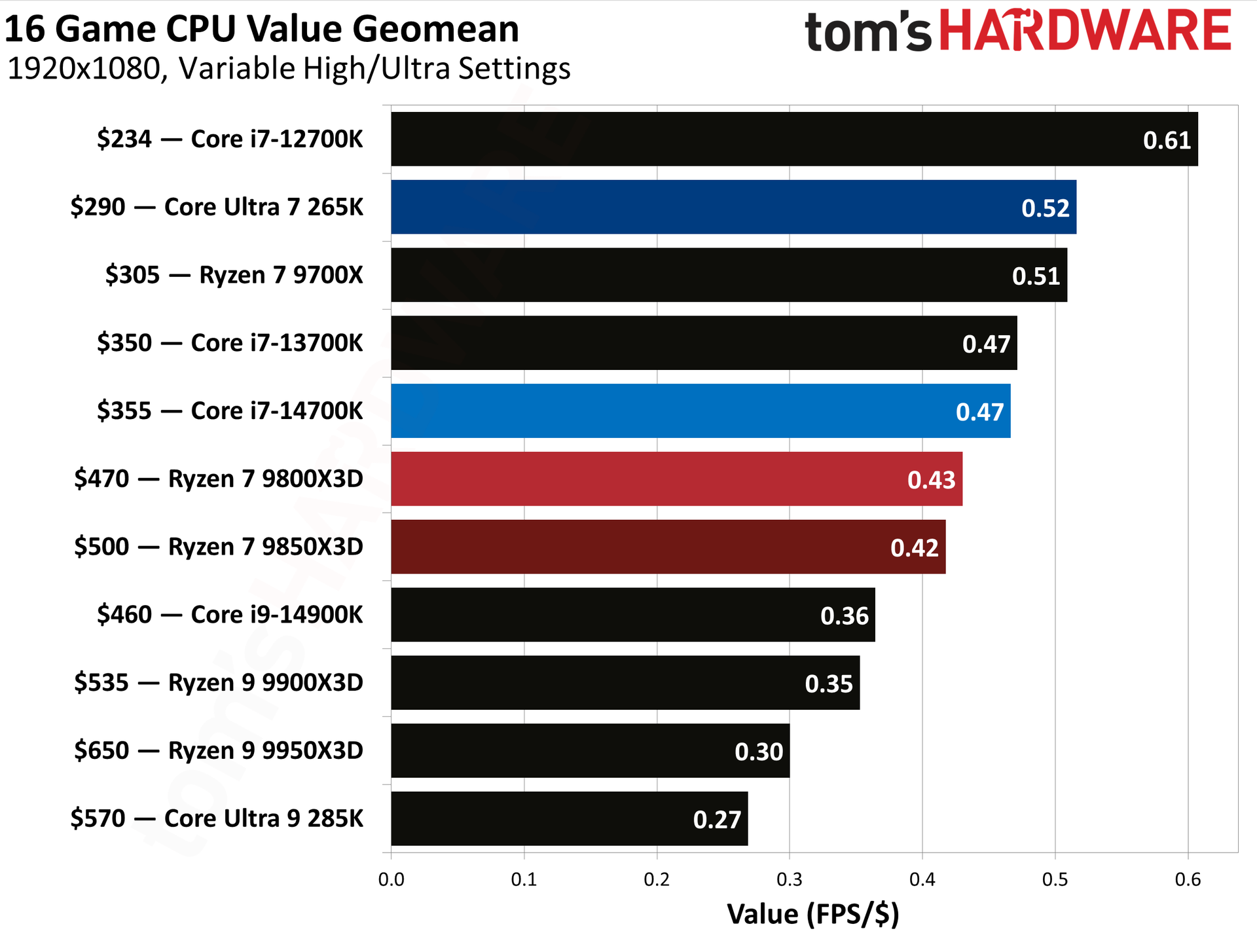
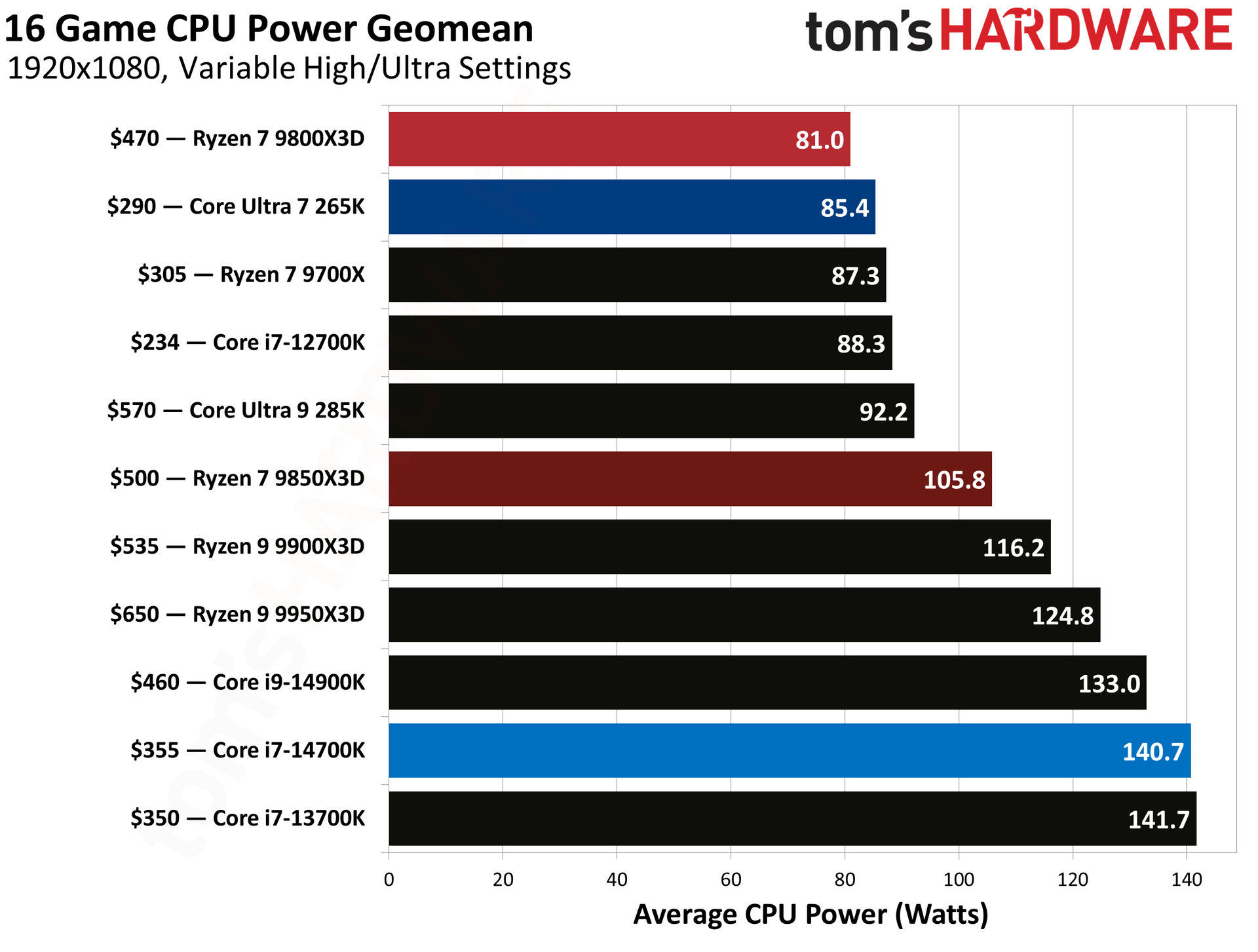
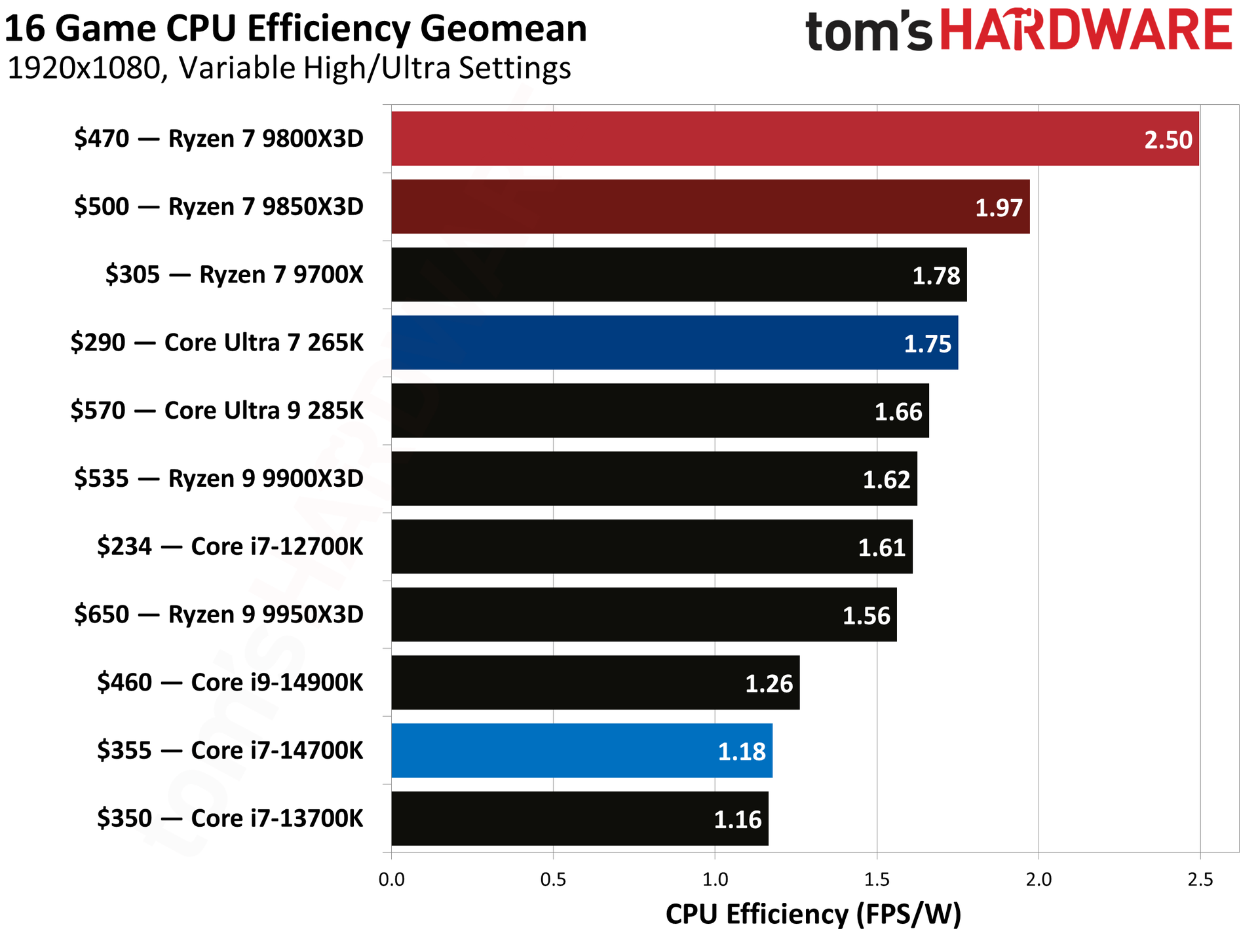
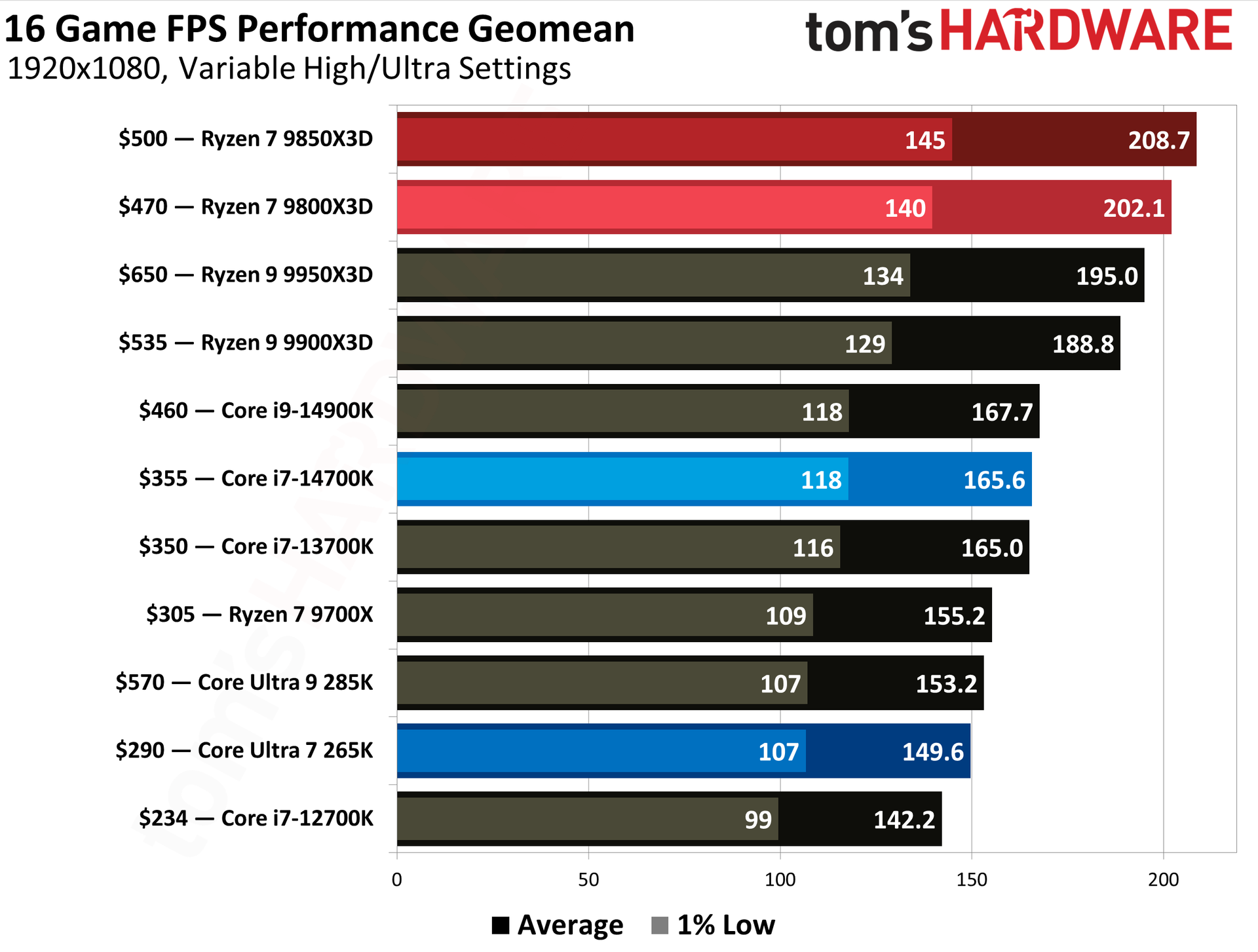
In our in-depth testing of the Ryzen 7 9850X3D, we found that it was only 3.3% faster than the Ryzen 7 9800X3D. But a win is a win, and that performance edge puts the CPU at the top of our 16-game 1080p FPS performance geomean, beating the more expensive Ryzen 9 9900X3D and 9950X3D. Although it loses out to Intel in some productivity workloads, the less complex 8-core configuration packed into a single CCD results in lower power draw. As you can see from our results, the peak power consumption is around 170W, making it much easier to cool.

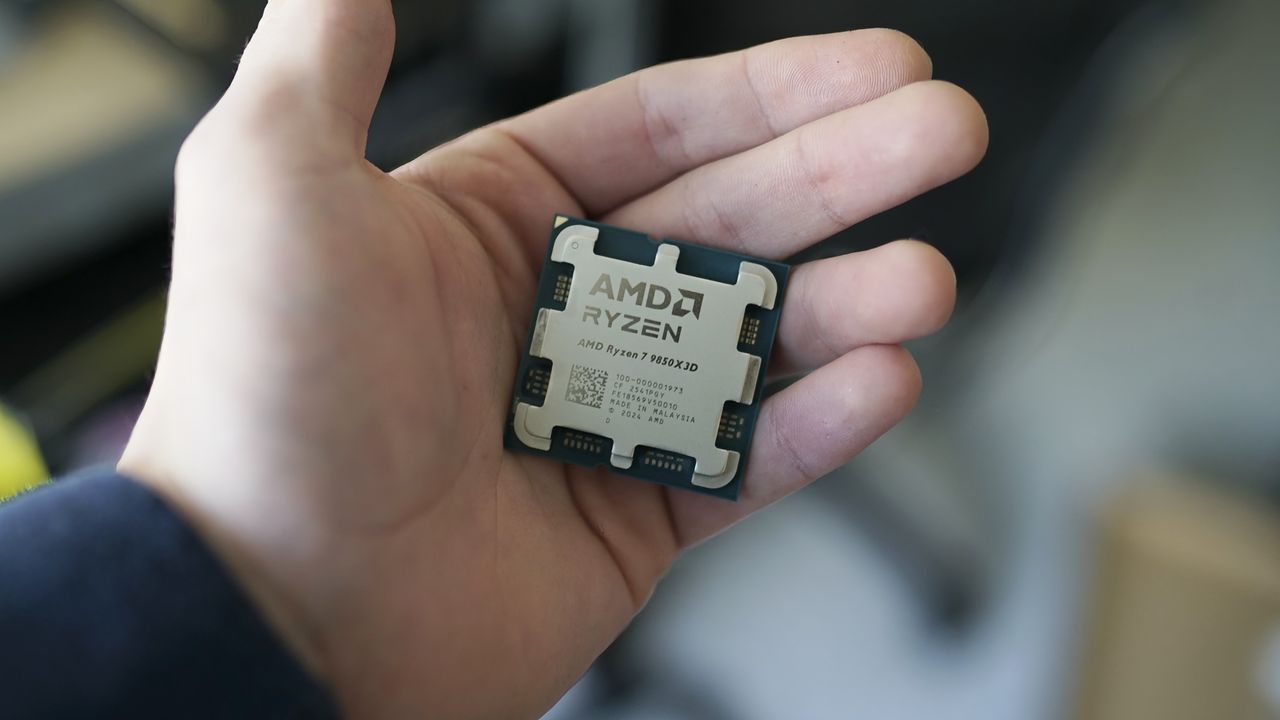
AMD Ryzen 7 9850X3D
Tom's Hardware
AMD Ryzen 7 9850X3D
Tom's Hardware
AMD Ryzen 7 9850X3D
Tom's Hardware
AMD Ryzen 7 9850X3D
Tom's Hardware
AMD Ryzen 7 9850X3D
Tom's Hardware
AMD Ryzen 7 9850X3D
Tom's Hardware

With the included 240mm AIO liquid cooler, you should be able to keep the Ryzen 7 9850X3D well under control during gaming and moderate workloads, although it may run warmer under heavy multi-core workloads. At its sale price of $484, you’re paying less than its actual launch price while getting two useful extras at no additional cost. That makes this a worthwhile deal for anyone looking to build a high-end gaming PC around AMD’s gaming-focused platform.

✇Tomshardware

Intel revives One Mono font after brief retirement during open-source purge — typeface built to fight coder eyestrain gets reprieve

Intel has reversed its decision to shelve its open-source font project designed specifically with developers in mind. The font’s GitHub repository was archived earlier this week, only for the company to reportedly restore the project and potentially continue to maintain it. The cancellation came amid a wider reduction in Intel’s open-source efforts. According to Phoronix, Intel has been closing down projects where development has slowed, or the employees responsible for them have exited the company.

Introduced back in 2023, One Mono is a monospace font where each character occupies the same horizontal width. Intel carried out the development in collaboration with type design studio Frere-Jones Type and marketing agency VMLY&R. Working with low-vision and legally blind developers during the design process, live testing sessions were conducted to identify characters that could be difficult to distinguish when reading code.

“Identifying the typographically underserved low-vision developer audience, we designed the Intel One Mono typeface for maximum legibility to address developers' fatigue and eyestrain and reduce coding errors,” said Intel in its introduction.

The font was designed with several features to improve legibility, including distinctions between similar-looking letters and coding characters. For example, characters such as the lowercase “e” and uppercase “G” were given more distinctive shapes to make them easier to identify. The difference in height between uppercase and lowercase letters was also increased, along with longer ascenders and descenders to make blocks of code easier to read. Additionally, the font supports more than 200 languages using the Latin script and is available in Light, Regular, Medium, and Bold weights, along with matching italics.

As mentioned, One Mono is available under an open-source license; thus, developers are free to use and modify it. Unfortunately, the font has not witnessed any significant updates since 2024, with activity during 2025 reportedly limited to Readme updates. Thus, its archival seemed pretty obvious, especially with Intel shutting down projects that were no longer seeing active development. For now, the font has managed to avoid becoming a casualty of Intel’s open-source cleanup. While the project remains silent, its revival means the developer-focused font is not being abandoned after all.

✇Tomshardware

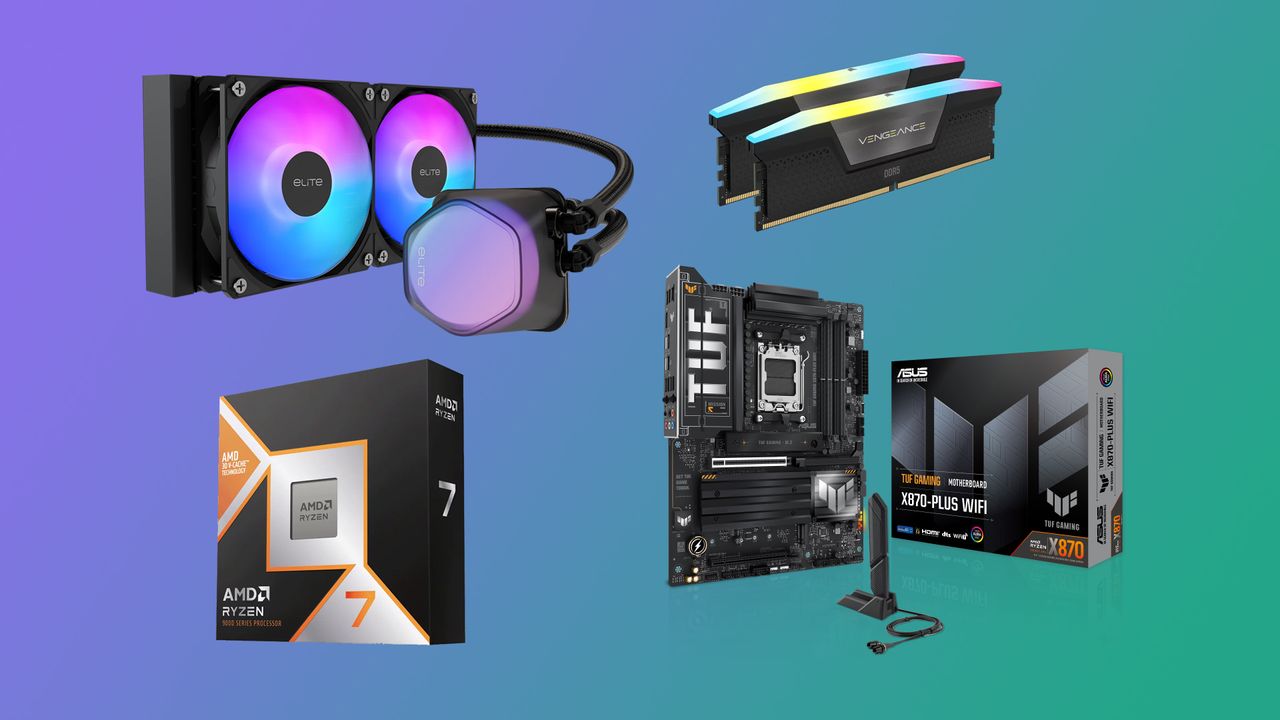
Build a high-end AMD gaming PC for less — Ryzen 7 9800X3D bundle includes an X870E motherboard, 32GB DDR5, AIO cooler and a game for $1,109.99

With the ongoing memory crisis driving up the price of RAM and other components, it is arguably one of the worst times to build a new gaming PC. However, bundle deals can be a good way to offset some of those inflated prices. Speaking of which, we’ve spotted an incredible AMD bundle over at Newegg that includes the AMD Ryzen 7 9800X3D, an Asus TUF X870E motherboard, and 32GB of Corsair Vengeance RGB DDR5-6000 RAM for $1,109.99, offering savings of around $150. The bundle also includes a 240mm Cooler Master AIO liquid cooler and a copy of Onimusha: Way of the Sword as free gifts.

The Ryzen 7 9800X3D is an 8-core, 16-thread processor based on AMD’s Zen 5 architecture. With a 4.7 GHz base clock and up to 5.2 GHz boost clock, the highlight feature of the chip is its 3D V-Cache technology that helps in lowering latency and giving a boost in overall gaming performance. If you’re looking for the best gaming CPU for a high-end build, the Ryzen 7 9800X3D should be at the top of your list.

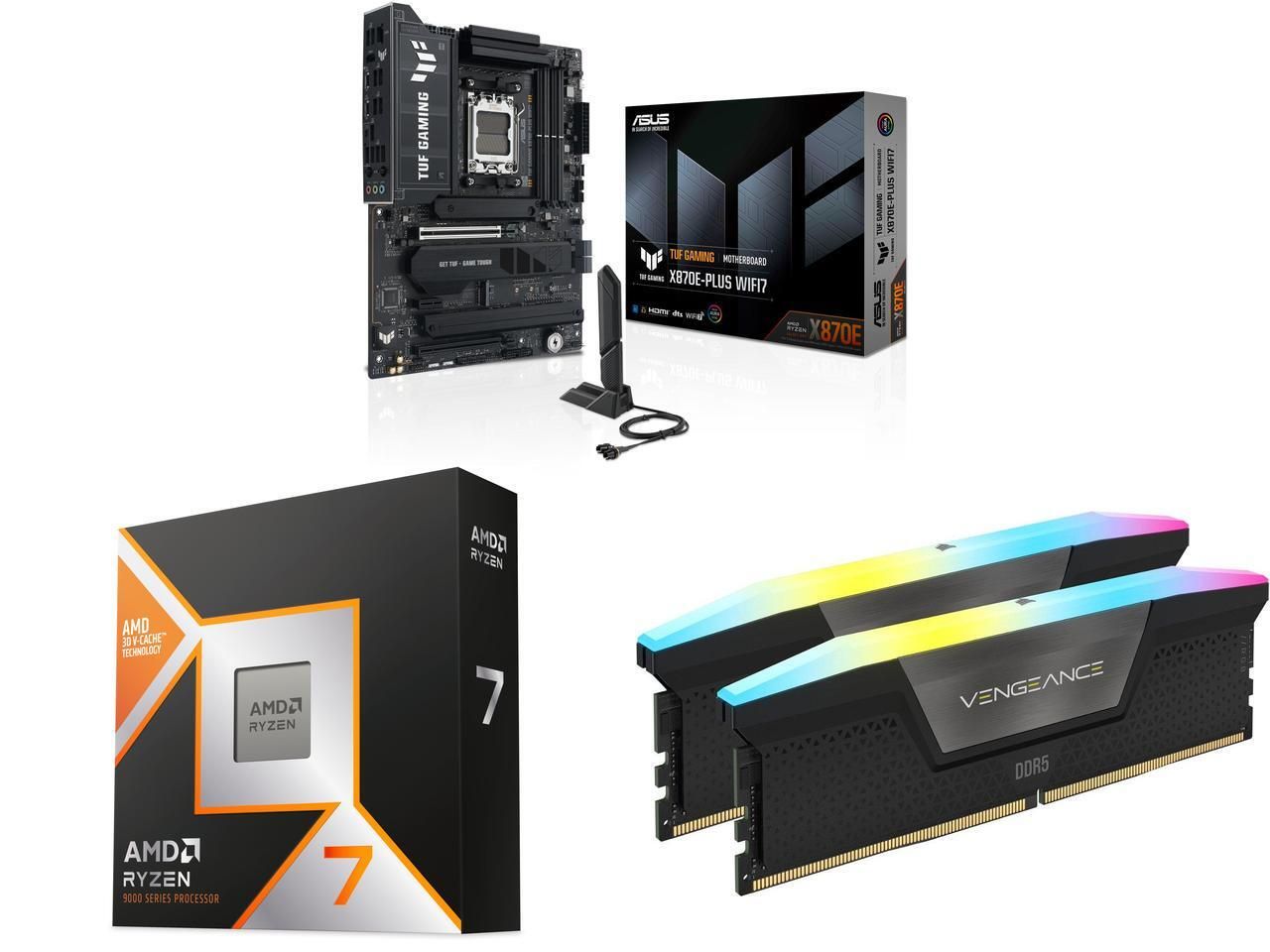
TUF GAMING X870E-PLUS WIFI7 ATX Motherboard, 16+2+1 80A Power Stages, DDR5, PCIe 5.0, Four M.2 Slots, WiFi 7, AMD Ryzen 7 9800X3D 8-Core 5.2 GHz, CORSAIR Vengeance RGB 32GB DDR5 6000 RAM: was $1258.98 now $1109.99
Newegg’s bundle brings together AMD’s Ryzen 7 9800X3D, an Asus X870E motherboard, 32GB of DDR5 memory and a free 240mm AIO cooler, making it a compelling option for a high-end gaming build.View Deal

The Asus TUF Gaming X870E-Plus motherboard should be a suitable pairing for the 9800X3D as it offers premium features including a robust power delivery system, dual PCIe 5.0 M.2 SSD storage slots, and solid connectivity. The motherboard supports Wi-Fi 7, 2.5Gb Ethernet, dual USB4 (40Gbps) Type-C ports, and front USB 20Gbps Type-C connector with up to 30W PD Fast-charge. It also offers enlarged heatsinks for the VRM, M.2 storage and PCH, as well as tools to overclock and fine tune various features.

Last but not least, the bundle includes a Corsair Vengeance RGB kit with two 16GB DDR5 modules running at 6000 MT/s, with a CAS latency of CL36 and timings of 44-44-96. The memory features black aluminum heat spreaders with a patterned finish, along with RGB lighting across the top of each module. It also supports both Intel XMP and AMD EXPO profiles, making it easy to apply pre-configured memory overclocking settings.

If we look at individual pricing, Ryzen 7 9800X3D is currently $469, while the Corsair RAM kit and Asus motherboard are listed at $499.99 and $289.99, respectively. You also get a CPU liquid cooler worth $79.99 and a copy of Onimusha: Way of the Sword worth $69.99. That puts the combined value at around $1,408.96, making the $1,109.99 bundle price a saving of nearly $300. If you're planning a high-end AMD gaming PC, this bundle is definitely worth exploring.

✇Tomshardware

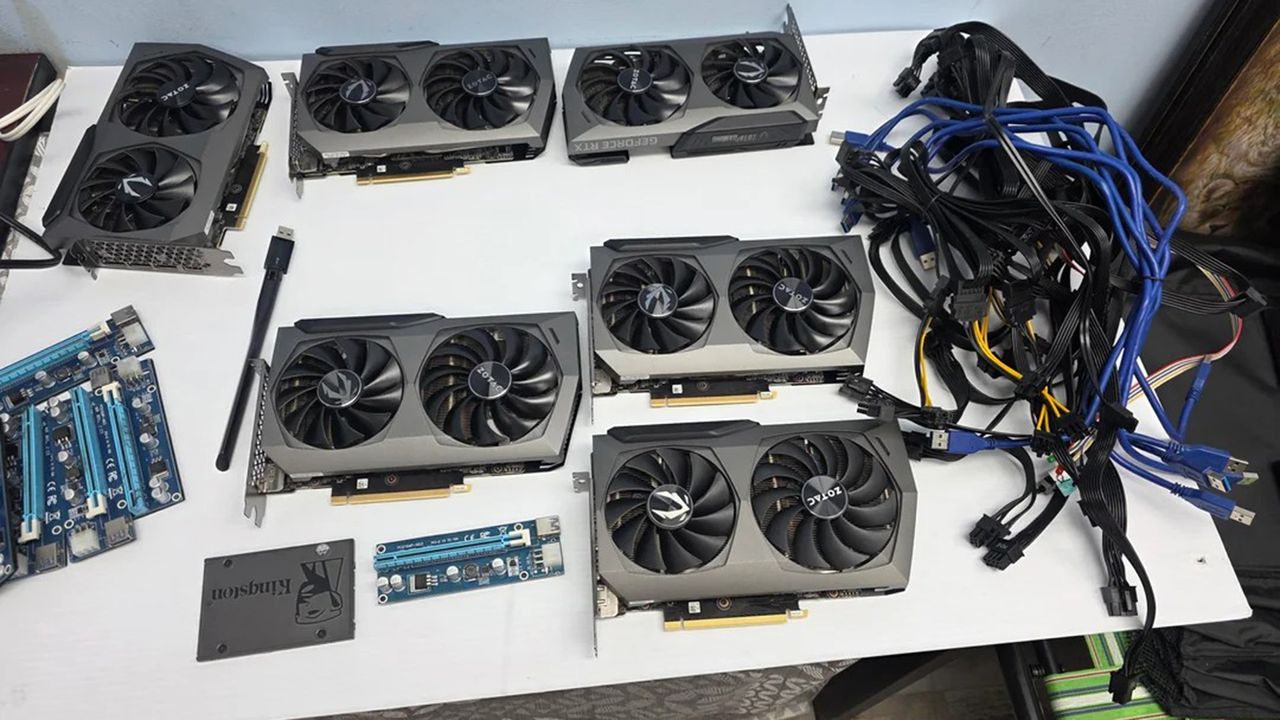
Lucky PC scavenger discovers 12 RTX 3070 GPUs from the crypto mining era — cards survived years of basement storage with only minor signs of wear

A Reddit user has stumbled upon a GPU jackpot by claiming two old cryptocurrency mining rigs with 12 Zotac-branded Nvidia RTX 3070 graphics cards. The machines were reportedly used during the COVID-era mining boom and had been sitting unused in a basement, probably since the day Ethereum mining became unprofitable. The discovery was shared on the r/PCMasterRace subreddit, and judging by the photos, all of the parts look surprisingly undamaged despite the long period in a basement.

Apart from the graphics cards, the setup also features an MSI MPG Z390 Gaming Plus motherboard, a 1000W Gold-rated Rosewill power supply, two 4GB sticks of DDR4 RAM, and a pair of 120GB solid-state drives. Upon closer inspection of the GPUs, the Reddit user noticed minor silicone bleeding across most of the cards, which is a common occurrence caused by thermal pads breaking down and releasing oil over time. Commenters pointed out that while the cards might require a clean-up with isopropyl alcohol, as well as new thermal pads and thermal paste, the hardware is very likely salvageable.

Found used mining rigs with 12 x RTX 3070
 from r/pcmasterrace

Launched in 2020 as an upper mid-range graphics card, the RTX 3070 is based on Nvidia’s Ampere architecture with 5,888 CUDA cores and 8GB of GDDR6 memory. It was designed to deliver strong 1440p gaming performance and became one of the more popular GPUs of its generation. The card also arrived during the cryptocurrency mining boom, where its combination of performance and power efficiency made it attractive to miners.
GPUs used for mining aren't necessarily a bad proposition for gaming. Mining rigs were often configured to run GPUs at reduced core voltages and power levels to lower temperatures as well as electricity costs. This also helped in reducing stress on the silicon itself when compared to standard gaming.

For now, the Reddit user does not plan to keep all 12 graphics cards for themselves. Their first step is to test the RTX 3070s individually to find out how many are still in working condition. If most of the cards pass testing without issues, the user says they plan to sell 10 or 11 of the GPUs and keep at least one for themselves. With each RTX 3070 carrying 8GB of VRAM, the haul represents 96GB of VRAM in total, which in today's economy is a valuable amount of graphics memory, particularly due to the soaring prices of newer GPUs.

✇Tomshardware

GameStop is reopening recently closed stores despite massive retail cuts — select locations return nationwide starting September 11

GameStop is bringing some of its recently closed stores back to life. The company announced on social media that “select closed stores” are reopening nationwide starting September 11, although it has not revealed exactly how many locations will return. When asked about the number of stores involved, a GameStop spokesperson reportedly told IGN that the count was “at least one” as of September 11, suggesting that we can expect more details to follow.

The move comes after GameStop reportedly had one of its biggest rounds of store closures listed for January 2026. According to a blog tracking the closures, around 470 locations across the U.S. were listed as either confirmed to close or already closed, as the retailer continued efforts to cut costs and improve profitability. GameStop had already closed hundreds of stores during the previous fiscal year, making the latest shutdowns part of a much larger reduction in its physical retail footprint.

Your local GameStop is back.Select closed stores are now reopening nationwide starting September 11. pic.twitter.com/OKbS0WAmy4September 10, 2026

GameStop's decision to reopen select physical stores is notably interesting given the wider shift away from physical game media. Digital downloads have replaced physical discs, while console manufacturers are increasingly offering hardware without disc drives. Recently, Sony took the shift even further after sharing its plans to stop producing new physical PlayStation game discs by January 2028. While that has resulted in a considerable backlash from the gaming community as a whole, Sony did clarify that existing titles can continue to be reordered and disc production will not simply disappear overnight.

It is worth mentioning that GameStop's business has moved beyond physical games. CEO Ryan Cohen said in July that software accounted for less than 12% of the company's business, although GameStop's fiscal 2025 filings put software, including physical games and digital download codes, at 20.1% of sales. Collectibles have become increasingly important, accounting for 29.2% of fiscal 2025 revenue and growing 47.7% year over year. This could explain why GameStop is potentially comfortable reopening selected stores despite the decline of physical games. That being said, it is safe to consider the announcement as a limited reopening rather than a complete reversal of GameStop's broader strategy.

✇Tomshardware

Windows 11 can now reinstall itself from the cloud — Cloud Rebuild revives dead systems without secondary boot media, wipes broken installation and downloads a fresh copy of the OS

Microsoft has finally solved one of the biggest pain points of Windows with the rollout of Cloud Rebuild. The new recovery feature can reinstall Windows 11 even when an existing Windows installation is corrupt or refuses to boot. Available as a beta through the newly released Windows 11 Insider Beta Preview Build 26220.9343, the feature is essentially a hassle-free alternative to creating a Windows installation USB drive when a PC needs to be recovered.

According to Microsoft, Cloud Rebuild is designed to restore a Windows 11 PC to a “clean, known-good state” by downloading a fresh image of Windows along with the required drivers directly through Windows Update. Unlike the existing Reset this PC functionality, it does not depend on the health of your existing Windows installation, nor does it require users to have a USB drive or custom recovery image available.

The Cloud rebuild feature available in Windows Recovery

(Image credit: Microsoft)

Available via the Windows Recovery Environment (WinRE), users can access it by selecting Troubleshoot > Recovery and uninstall > Cloud rebuild from WinRE. Speaking of which, Microsoft has also improved networking support in WinRE. The recovery environment can now reuse eligible Wi-Fi profiles saved within an existing Windows installation, allowing a PC to connect during recovery without requiring administrators to separately configure Wi-Fi credentials in WinRE. Once the PC is connected, Cloud Rebuild checks Windows Update for the target Windows build and downloads the required files. Users can then confirm the Windows edition, language, and build before starting the reinstall.

The only catch here is that Cloud Rebuild completely wipes the system drive, meaning that the process removes all data stored in your main installation or C: drive, including locally stored files, accounts, applications, and settings, before reinstalling Windows. Thus, it is recommended to back up all your important files either locally or using a cloud-based service before starting the process. Once the installation is complete, the PC boots into the Windows out-of-box experience, similar to a fresh installation of Windows. For admin-managed PCs using Windows Autopilot and Microsoft Intune, the system can automatically reconnect to the organization's management infrastructure and restore assigned applications, policies, and backed-up settings.

Cloud Rebuild could particularly be useful when Windows becomes too corrupted to boot normally. Instead of finding another PC, creating installation media, and manually reinstalling Windows, users can potentially perform the entire recovery process directly from WinRE. The feature is still in preview; however, we can expect a wider release later this year.

✇Tomshardware

Modded RTX 5090 ditches 16-pin power for triple 8-pin connectors — draws up to 900W and hits 3,400 MHz

Modders at the YouTube channel TecLab have created what is being called the world’s first RTX 5090 powered by traditional 8-pin PCIe connectors. Not only were the modders able to successfully power up the graphics card, but they also proved that the older connector is still quite capable of handling the extreme power demands of a modern high-end GPU.

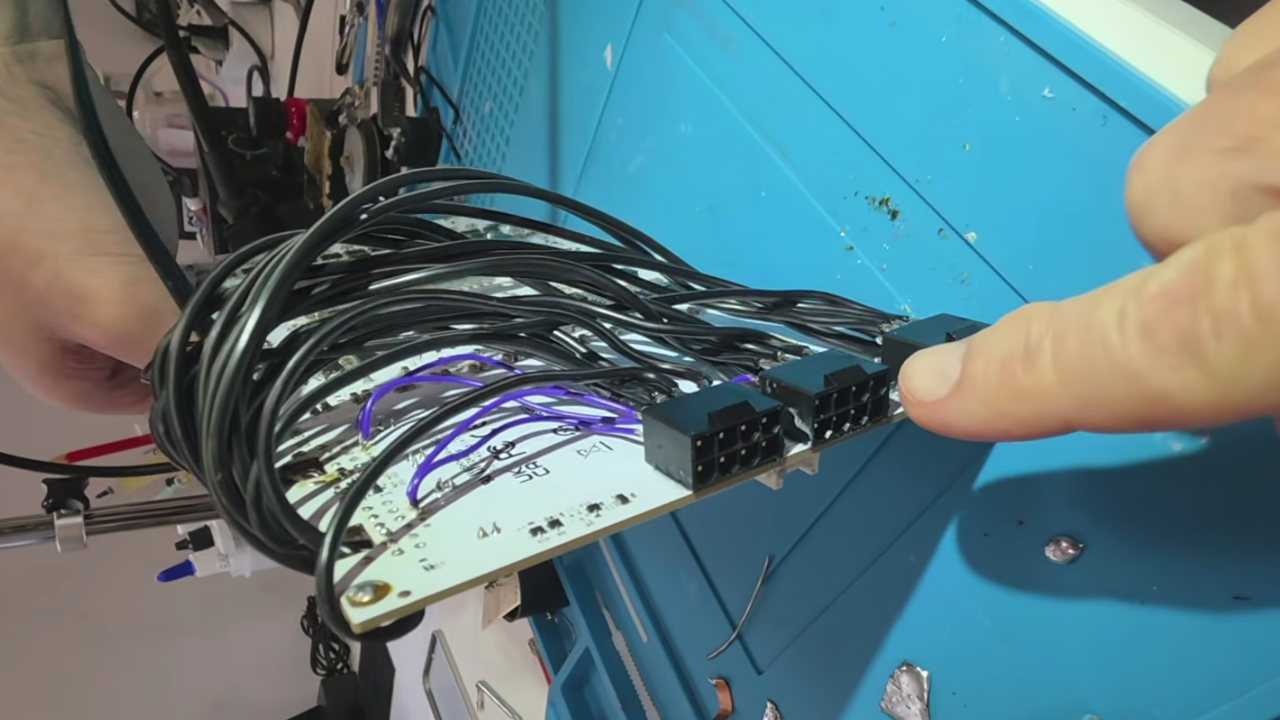
The card chosen for the experiment was a Galax GeForce RTX 5090D HOF OC LAB XOC, which is a top-of-the-line model that features a beefy cooler as well as dual 16-pin power connectors. The modders essentially dismantled the entire graphics card along with the dual 16-pin power connectors, stripping it down to just the bare PCB. Next, three 8-pin power connectors were installed at the rear, with each connector soldered directly to the power regulators on the PCB using heavy-gauge cables. Additionally, the sense pins had to be rewired to ensure that the card could reach its maximum power load without any restrictions. To keep the temperatures in check, they used a liquid cooling system with a GPU block.

An 8-pin PCIe power connector is officially rated for 150W, although its actual maximum capacity is much higher. During the one-hour livestream, the modders tested the GPU by gradually increasing the power draw, starting at 400W and going all the way up to 900W using three 8-pin power cables. At its peak, the modified RTX 5090 pulled more than 120A, with clock speeds reaching as high as 3,400 MHz. Notably, the mod was limited to only the hardware level, with no software or BIOS tweaks performed.

To further test the capability of the 8-pin connectors, the modders tested the modified RTX 5090 with just two cables. The overall power draw dropped to 66A, while clock speeds remained at a respectable 3,200 MHz. Going a step further, the card was tested with just one cable, which surprisingly only dropped the figures down to 65A and 3,100 MHz.

Despite the PCI-SIG (PCI Special Interest Group) revising the 16-pin power connector (12V-2x6) to improve reliability, reports of melting GPU connectors continue to haunt gamers. The issue is particularly more common among high-performance models, though not limited to Nvidia RTX 50 and RTX 40 series, as certain AMD Radeon graphics with the 16-pin connector are also at risk. TecLab's experiment shows that GPU manufacturers may want to reconsider the tried-and-tested 8-pin connector and explore whether it could still be a viable option in high-end graphics cards.

✇Tomshardware

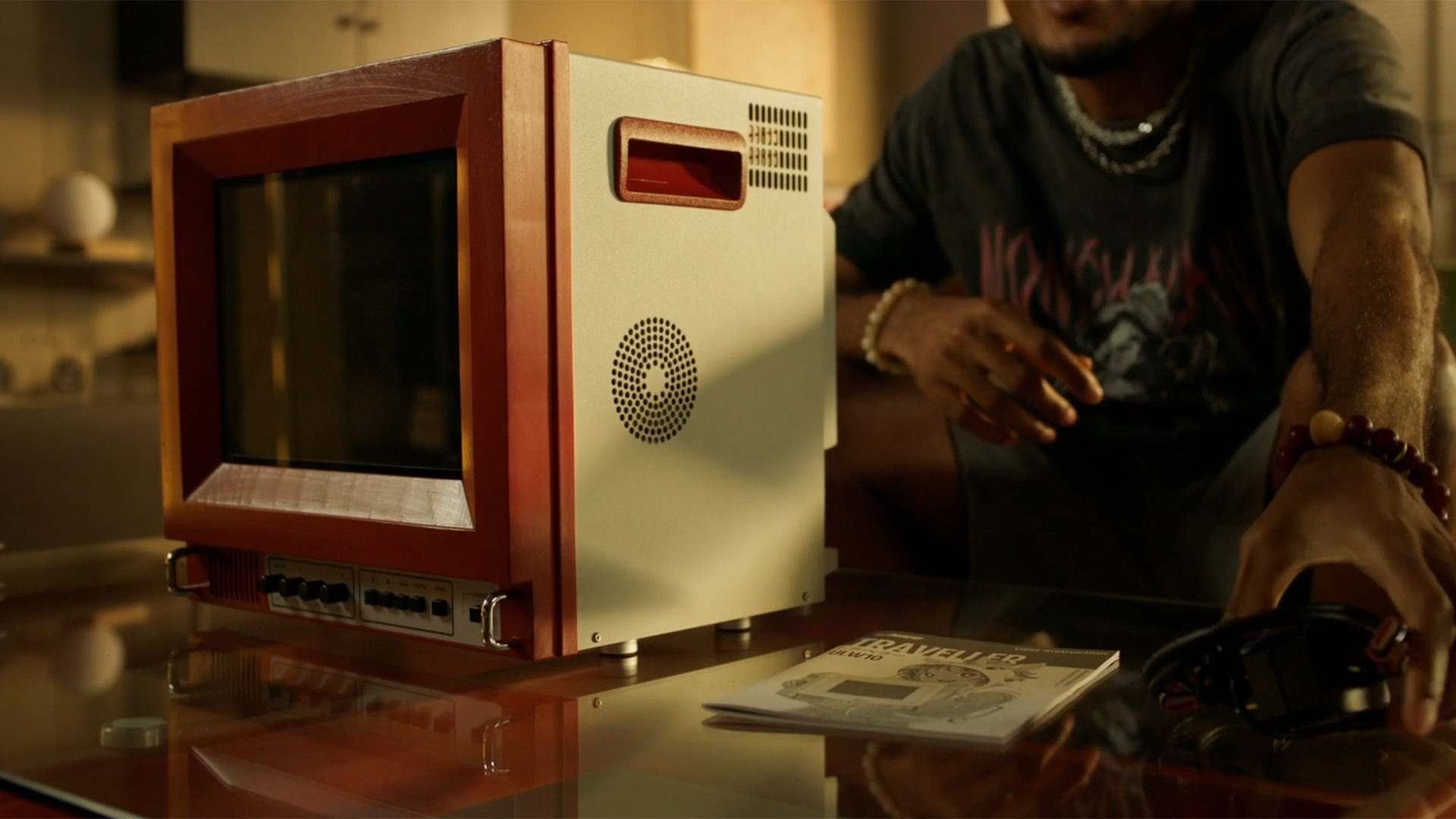
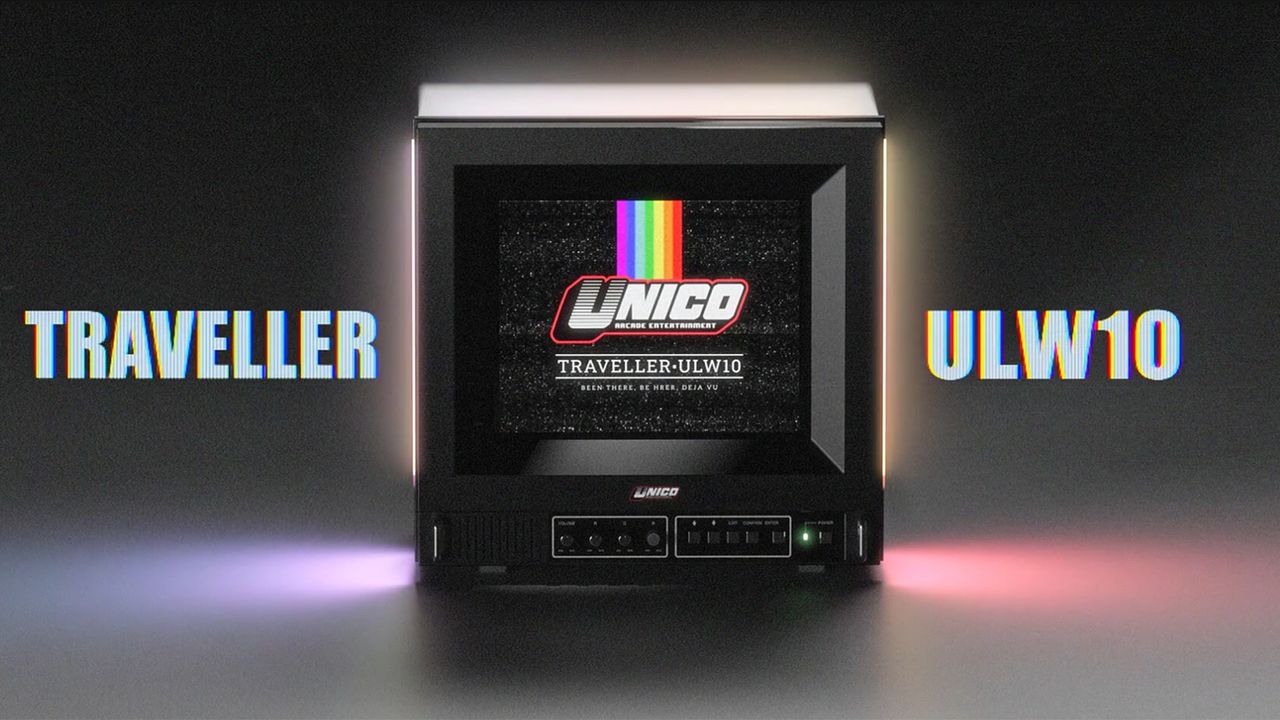
This 10-inch 4:3 television hides your retro consoles in a secret rear compartment — Unico's Traveller ULW10 trades composite video for RGB SCART and HDMI

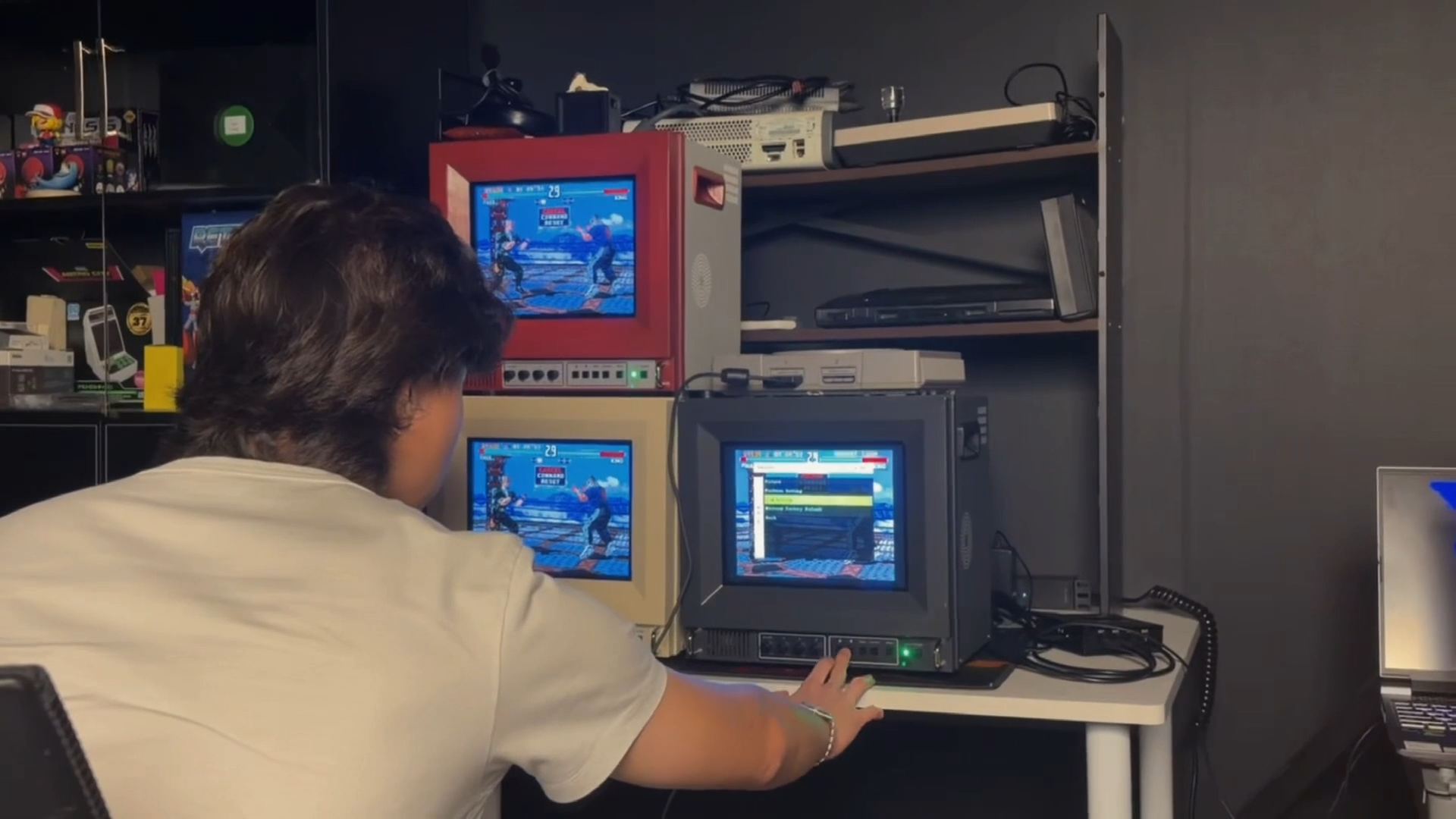
Getting a retro game console to look right on a modern TV can be a challenge, as legacy video signals need to be scaled or de-interlaced, while latency and aspect-ratio issues can further make retro games look or feel different from the original experience. In an attempt to recreate the nostalgic experience, retro gaming hardware manufacturer Unico has introduced the Traveller ULW10, a CRT-inspired 10-inch TV.

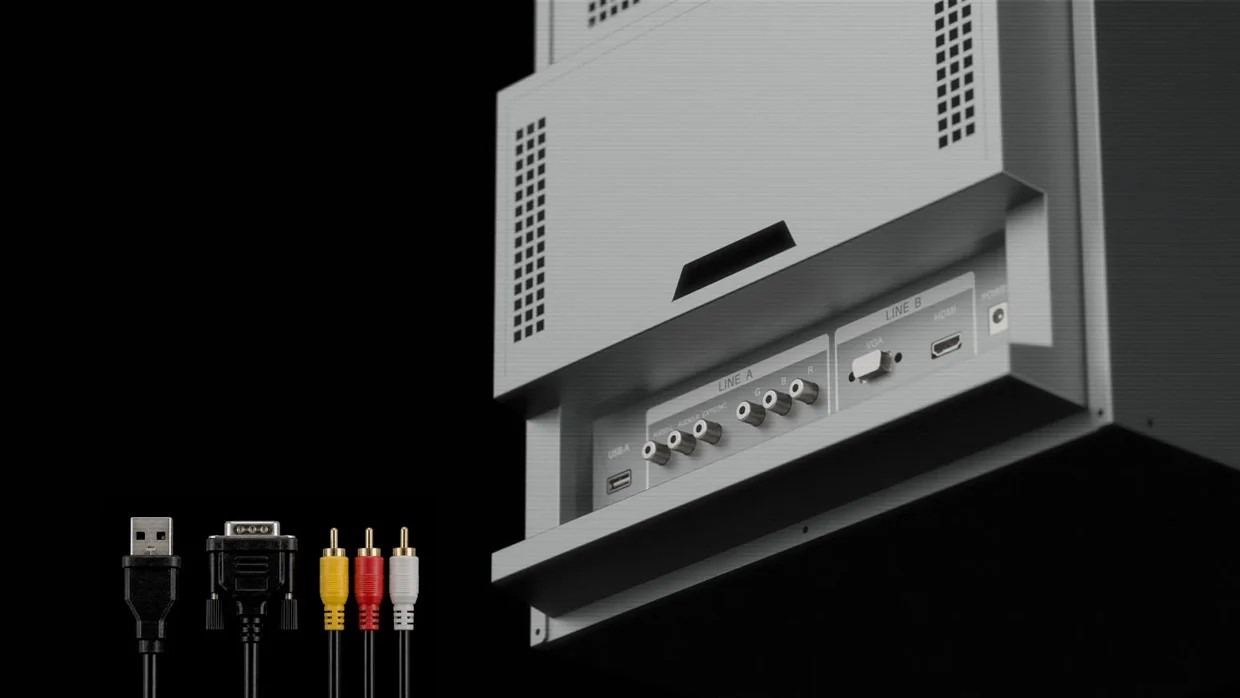
According to the company, the ULW10 is a PVM (Professional Video Monitor) with a vibrant 4:3 panel that “combines the character of a classic display format with the reliability of modern technology.” In terms of connectivity, the monitor comes with RGB, VGA, and HDMI video inputs, offering support for a wide variety of consoles. There is also a USB Type-A port, while the rear compartment provides storage for compatible consoles that can be tucked behind the display. It also includes knobs and physical buttons for various settings, similar to those found on old-school televisions.

The Unico Traveller ULW10 retro gaming monitor
Unico
The Unico Traveller ULW10 retro gaming monitor
Unico
The Unico Traveller ULW10 retro gaming monitor
Unico

Unfortunately, the ULW10 does not include a composite video input, and Unico says the decision ultimately came down to the limited space inside its compact chassis. With room needed for the signal board and other components, the company had to choose which video inputs to include. HDMI and VGA were retained for modern devices, PCs, and video converters, while RGB SCART was selected as the analog option because it offered the best balance between compatibility and image quality. It is also worth mentioning that the ULW10 is not a CRT monitor, but it can simulate the CRT or pixel-art style of old games.

The monitor will be offered in three color options: red and white, cream white, and studio gray. The casing includes built-in carrying handles as well as speaker vents, although the monitor itself does not include any speakers. The Traveller ULW10 will be available via Kickstarter, and while pricing information has not yet been confirmed, you can reserve a ‘Founder Spot’ for $5 and receive $30 back when you back the monitor on Kickstarter.

✇Tomshardware

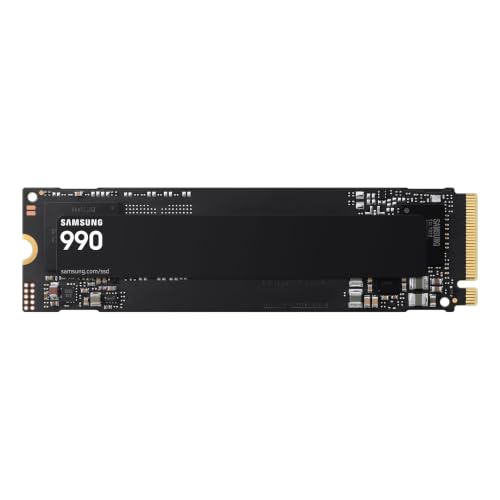
Samsung 990 2TB PCIe 4.0 SSD falls to $339.99 on Amazon — $190 discount makes high-capacity storage more affordable

When it comes to high-speed storage, SSD prices have been at an all-time high due to the ongoing turbulence in the memory market. However, if you are looking for a speedy drive with plenty of capacity, Samsung’s freshly launched 990 PCIe Gen 4 SSD with 2TB capacity is already selling at a discount. You can grab the drive at $339.99 at Amazon, down from its usual price of $529.99.

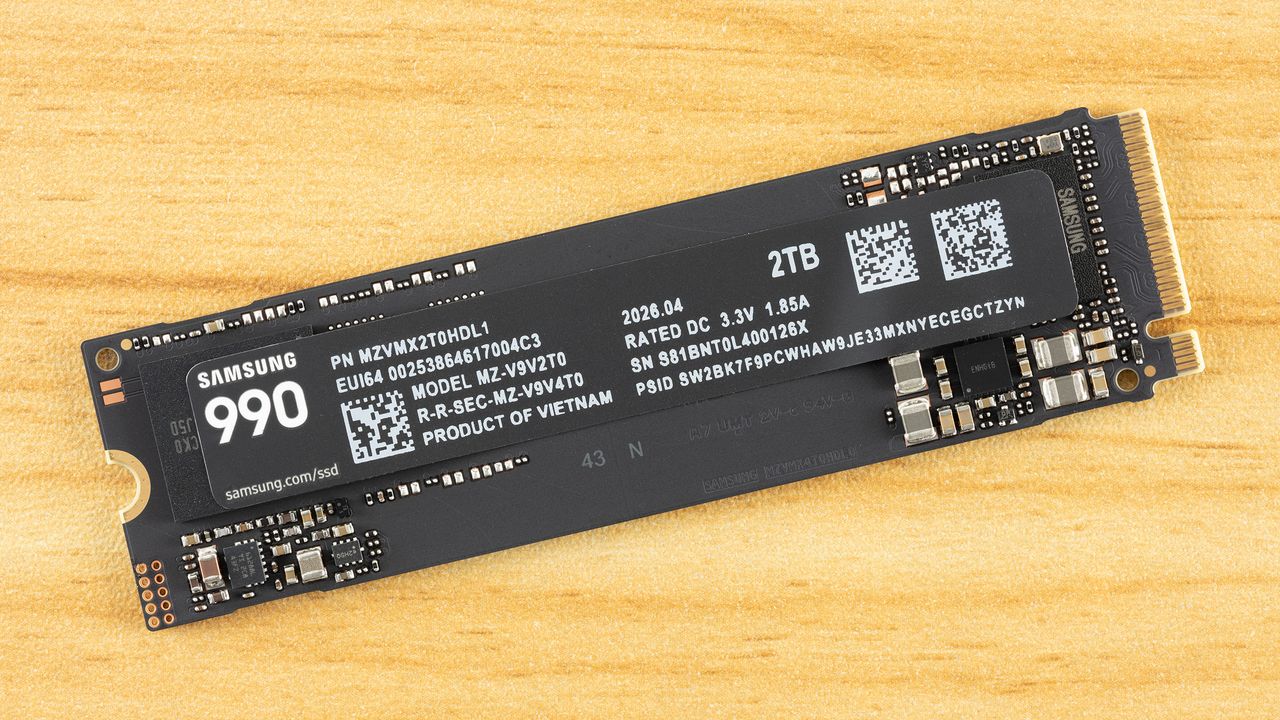
The Samsung 990 series was launched earlier this year, right in the midst of the RAMpocalypse. The SSD is essentially a QLC-based version of the 990 EVO Plus. QLC SSDs can be a good choice for gaming, as it mostly involves reading data rather than writing it. QLC drives are slower than TLC, but frequently used data can stay in the faster pSLC cache if the drive has enough free space. The Samsung 990 also features the company’s PiccoloQ controller with V9 QLC Flash memory and is capable of full PCIe Gen 4 throughput.

SSD 990 2TB: was $529.99 now $339.99
The Samsung 990 is an M.2 Gen 4 SSD offering up to 7,250/6,450 MB/s sequential read/write speeds.View Deal

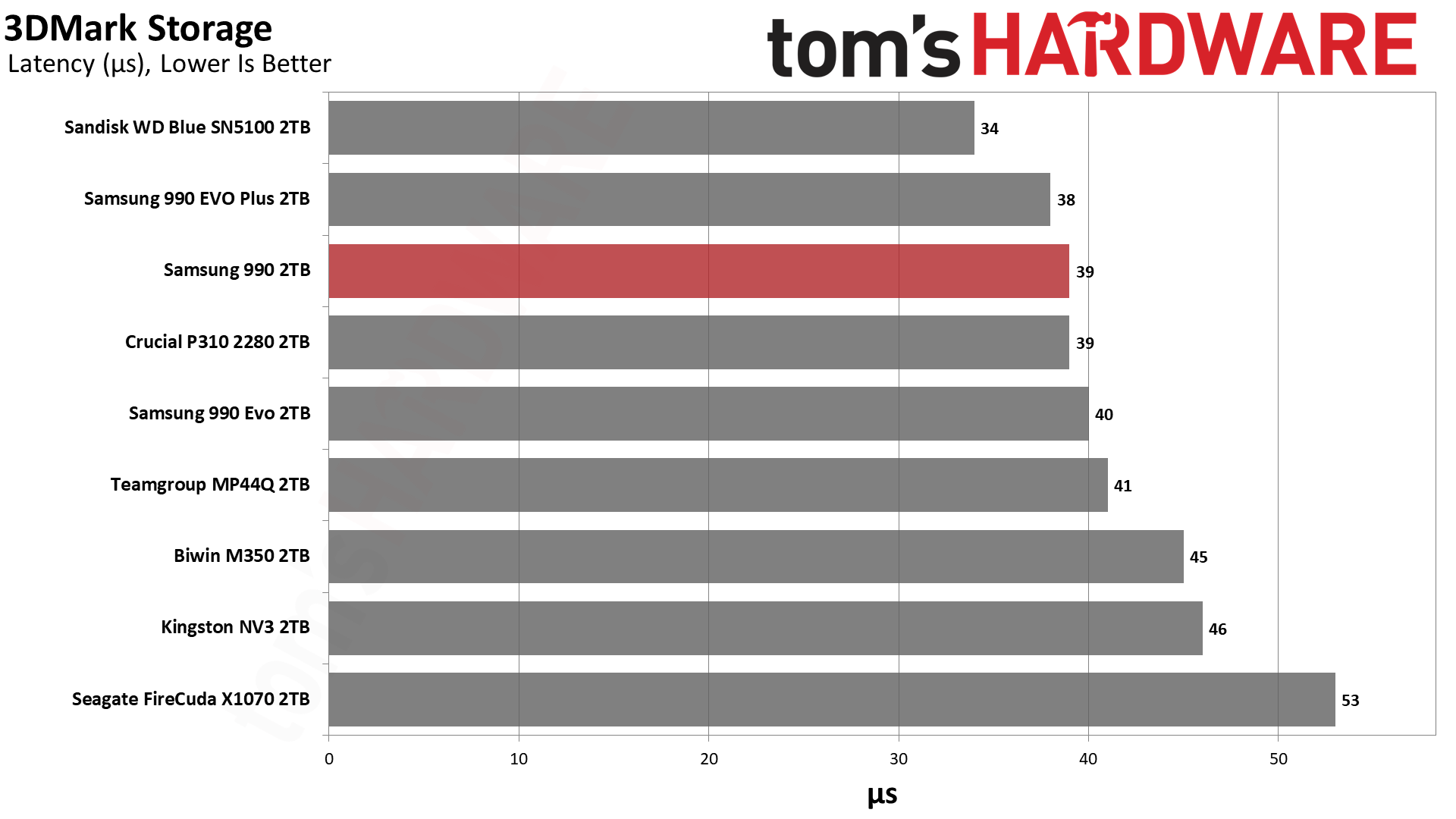
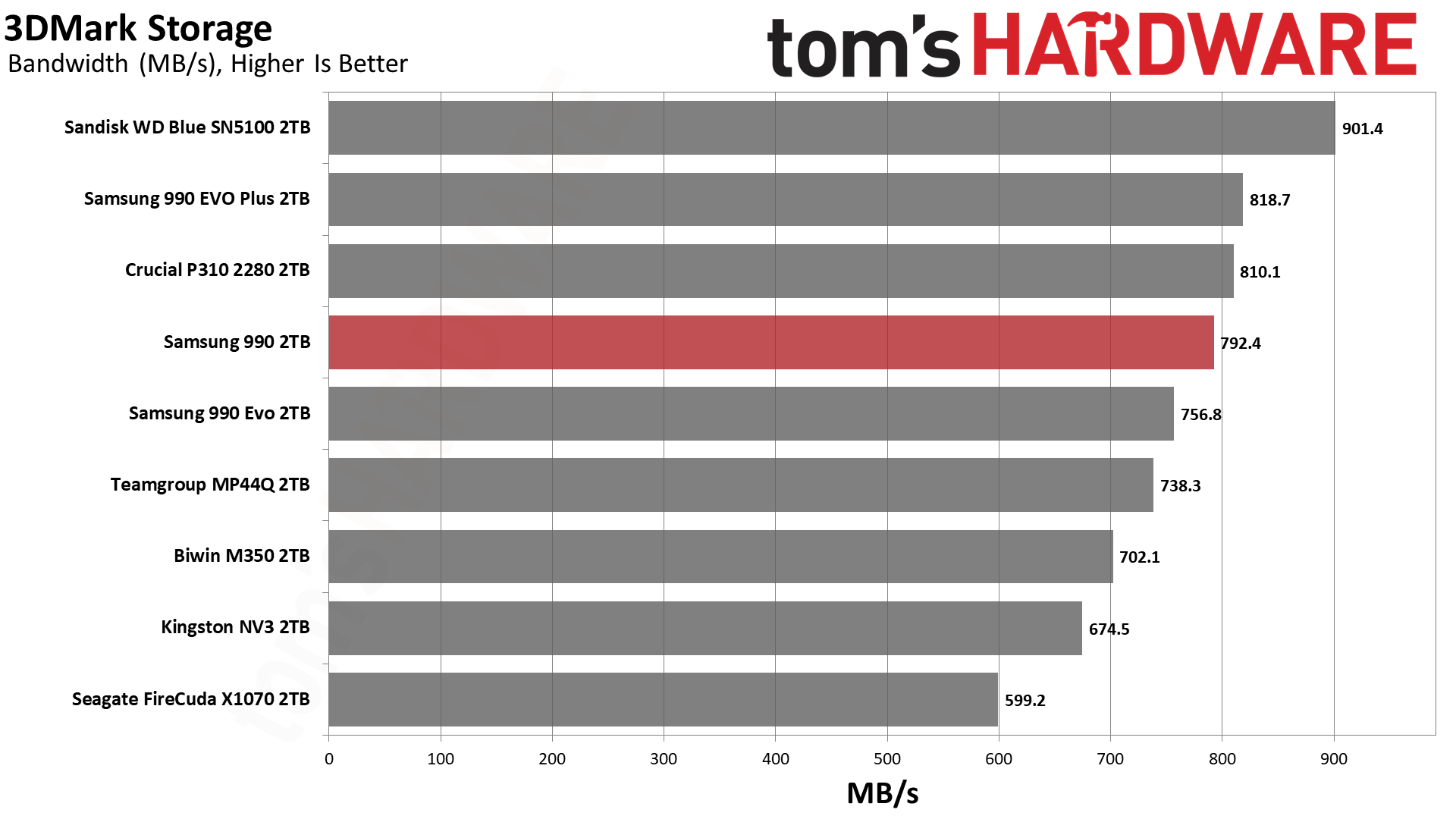
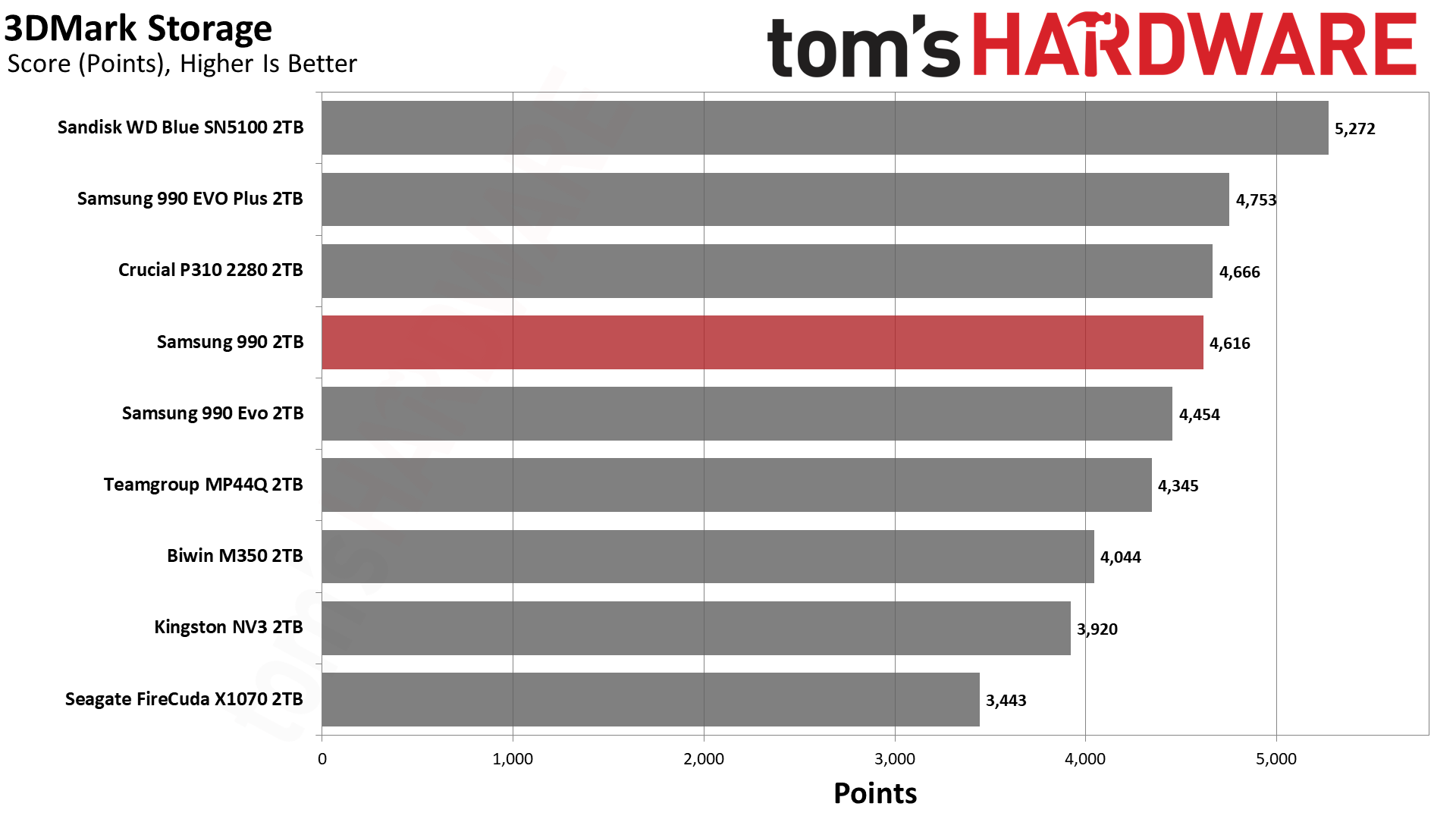
In our testing, we found the drive to offer similar results to Samsung’s 990 Evo Plus and the 990 Evo in latency testing, while beating the 990 Evo drive in bandwidth and 3DMark overall score. It also managed to stay competitive with the Crucial P310, which is one of the best QLC-based drives on the market. The Samsung 990 is also a solid option for consoles, delivering bandwidth that puts it ahead of the 990 Evo and on par with or better than most budget PCIe 4.0 drives.

Samsung 990 2TB SSD
Samsung
Samsung 990 2TB SSD
Samsung
Samsung 990 2TB SSD
Samsung

The Samsung 990 at $339.99 is a compelling option for those who are looking for plenty of fast storage without paying more during the current SSD price surge. The 1TB model is also selling at a discount if you do not require this much storage. Do keep in mind that this sale price is available for a very limited time. If you need a high-capacity PCIe 4.0 SSD, it may be worth grabbing before the discount disappears.

✇Tomshardware

RPCS3 emulator devs slam Nvidia DLSS 5 as 'AI-slop generator' — says industry pushing 'more upscalers and frame generation to hallucinate games and hide their lack of optimisation'

Developers at RPCS3, the open-source PlayStation 3 emulator, have criticized Nvidia’s DLSS 5 technology, calling it an “AI-slop generator.” A number of modders managed to port DLSS 5 to various games last week after the latest neural-rendering tech leaked before the official launch. A few people also went ahead and apparently tested the leaked DLSS 5 DLL on the RPCS3 renderer. According to a post by the official RPCS3 account on X, “Whilst the gaming industry pushes more upscalers and frame generation to hallucinate games and hide their lack of optimisation, we do not ship any of that slop.”

The post has drawn criticism from certain users, with one calling RPCS3’s response “possibly the dumbest” they could have expected. They argued that DLSS and FSR frame generation can complement game-engine optimizations rather than simply mask poor performance, while Nvidia’s Reflex can help mitigate the latency penalty associated with frame generation.
DLSS 5 on RPCS3?A few people are testing a leaked DLSS 5 DLL on our renderer. We have seen the slop it generates.Whilst the gaming industry pushes more upscalers and frame generation to hallucinate games and hide their lack of optimisation, we do not ship any of that slop. pic.twitter.com/S2GciNbCTKSeptember 1, 2026

In its response, RPCS3 said that emulators have never-ending goals, and they do not simply target high-end hardware to achieve playable status. The developers also added that modern temporal upscalers are difficult to implement because PS3-era games do not expose the motion-vector data they require. At the same time, RPCS3’s low-level RSX emulation makes reconstructing that data impractical. As a result, the emulator currently relies on spatial upscalers such as FSR 1, bilinear, and nearest-neighbor scaling.

DLSS 5 is expected to officially roll out starting today, with NBA2K27 being the first game to support the latest tech. Focusing on 3D-guided neural rendering, DLSS 5 aims to deliver movie-grade visual realism and photorealistic lighting in games. The AI model is trained to deduce how complex features of game scenes like characters, skin, hair, and environmental lighting should look in the real world given certain inputs from the game engine, like color buffer and motion vectors, in combination with an input frame.

According to Nvidia, DLSS 5 will also provide different AI models and controls, allowing artists to decide what gets enhanced, where the effect appears, and how strongly it is applied. For players, however, Nvidia wants to keep things simple as DLSS 5 essentially becomes an on/off graphics option, while the detailed decisions about how the AI-generated visual effects are used are handled by the game developer.

Since DLSS 5 is resource-intensive, gamers should expect a noticeable drop in frame rates, especially with the initial release. Nvidia has also confirmed that DLSS 5 will only be compatible with RTX 50-series desktop and mobile GPUs, as well as GeForce Now. Notably, the recently leaked DLL has allowed some modders to successfully port DLSS 5 to older RTX 40-series cards.

✇Tomshardware

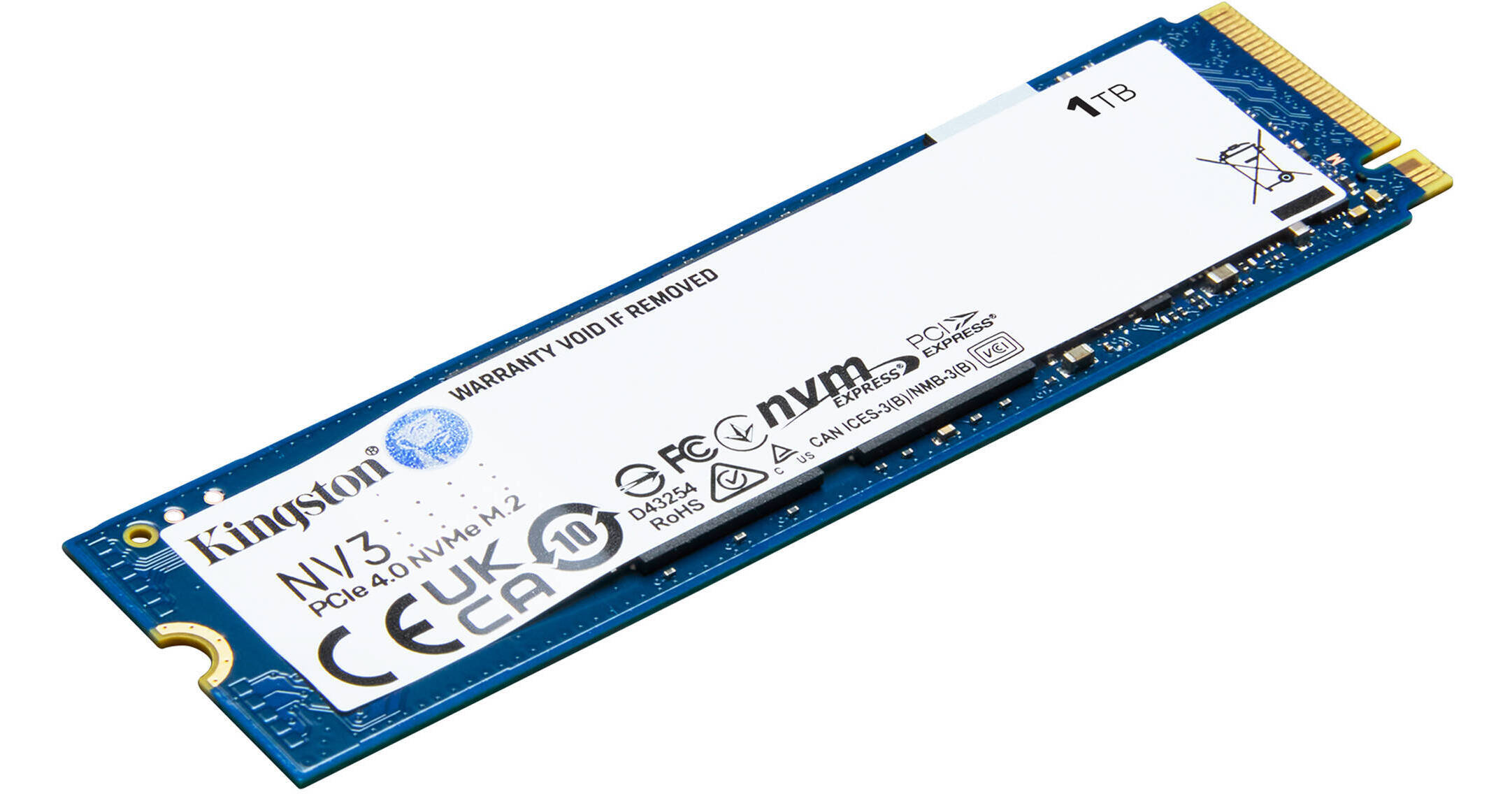
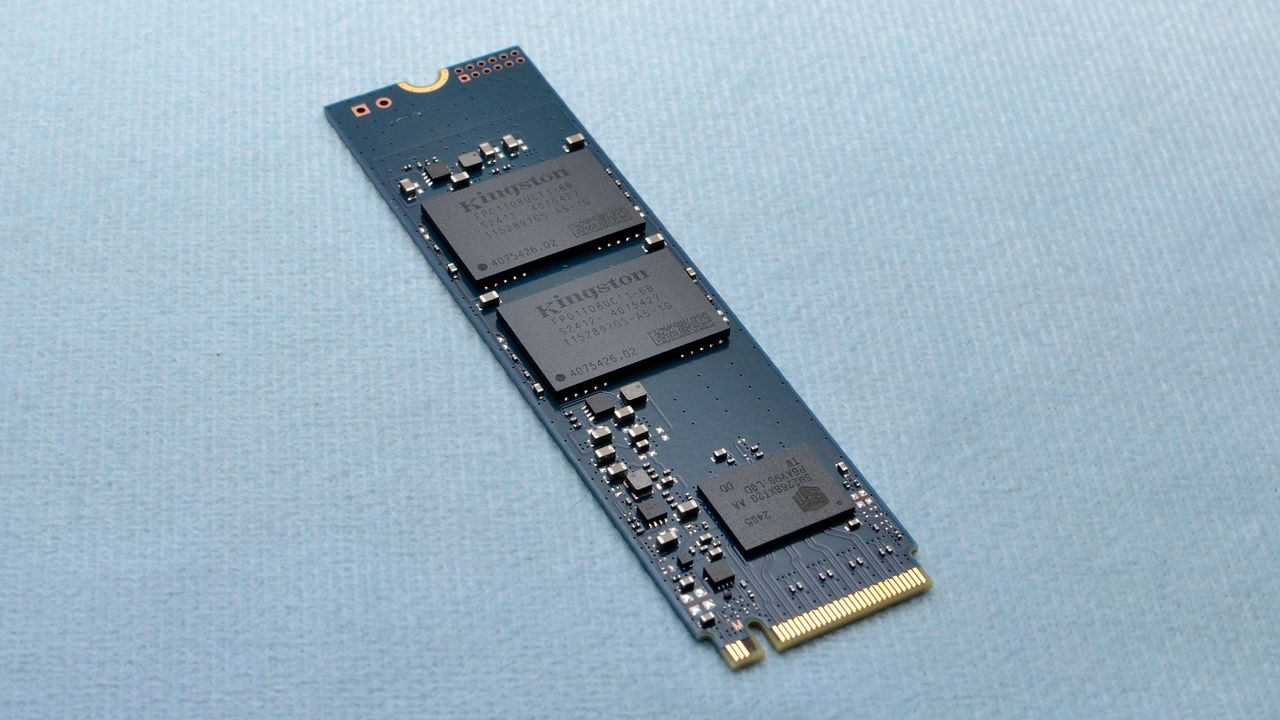
Kingston's NV3 1TB PCIe 4.0 SSD drops to $156.99 at Newegg — 27% off brings it down to just 15.7 cents per GB

With the ongoing AI boom triggering worldwide memory shortages, getting a good deal on RAM or storage has become increasingly difficult. If you are on the lookout for a snappy SSD, however, we have spotted a solid deal on Newegg that could help you save some money on your next storage upgrade. The Kingston NV3 1TB PCIe Gen 4 SSD is currently selling for $156.99, down from its usual price of $215.99, which is also the lowest price the SSD has seen in the past 30 days.

The Kingston NV3 was introduced back in late 2024 as a budget PCIe 4.0 NVMe SSD, with the 1TB model rated for sequential read speeds of up to 6,000 MB/s and sequential write speeds of up to 4,000 MB/s. That makes it more than capable of handling everyday office workloads, gaming, and even demanding file transfers. It is notably a DRAM-less SSD as it uses Host Memory Buffer (HMB) technology instead, meaning that the performance may vary depending on the workload. It also has a slightly lower than recommended rated endurance of 320TBW along with a five-year limited warranty.

NV3 1TB PCIe 4.0 M.2 SSD: was $215.99 now $156.99
The Kingston NV3 is a PCIe Gen 4.0 SSD offering sequential read and write speeds of up to 6,000 MBps and 4,000 MBps, respectively. View Deal

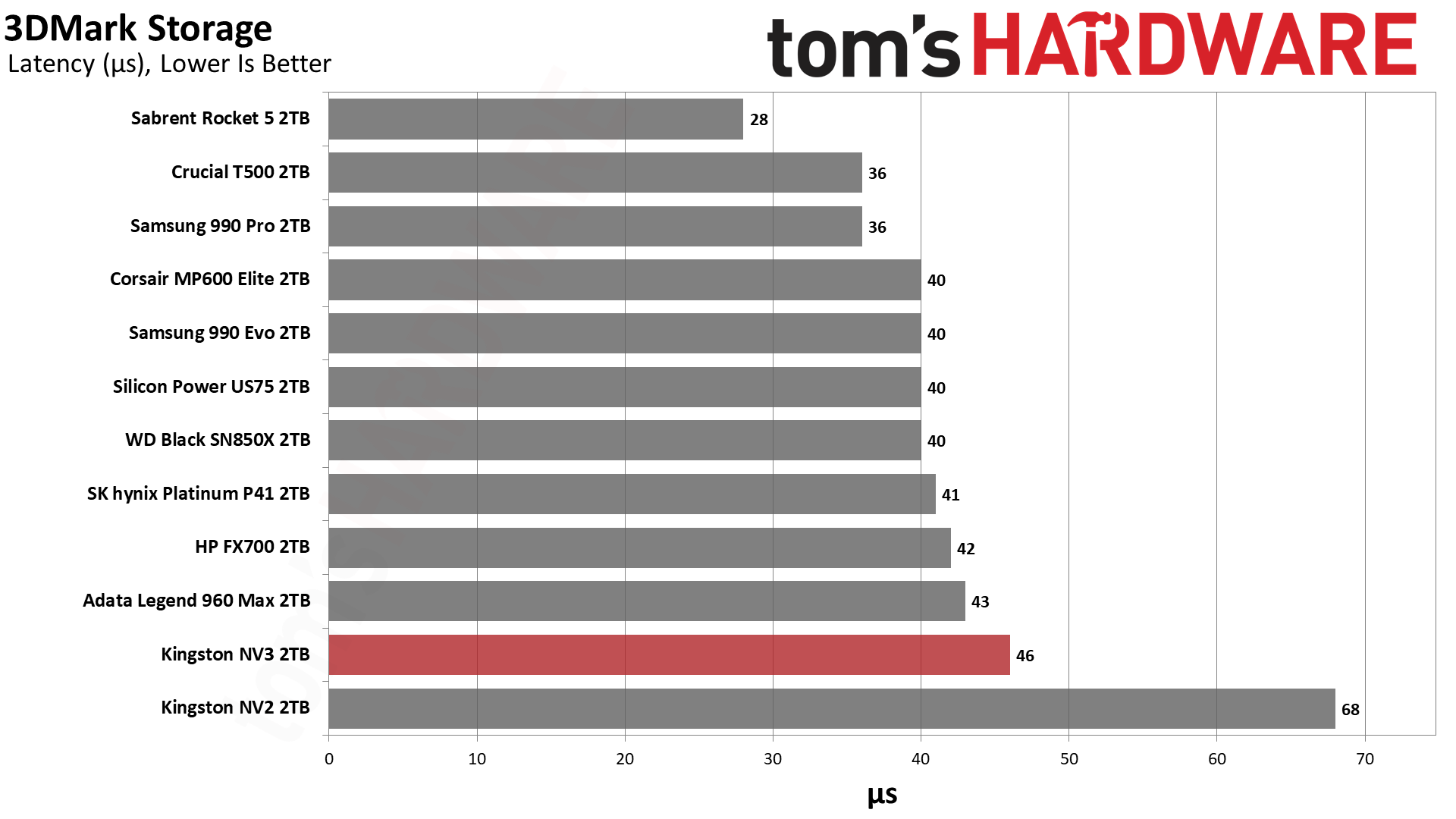
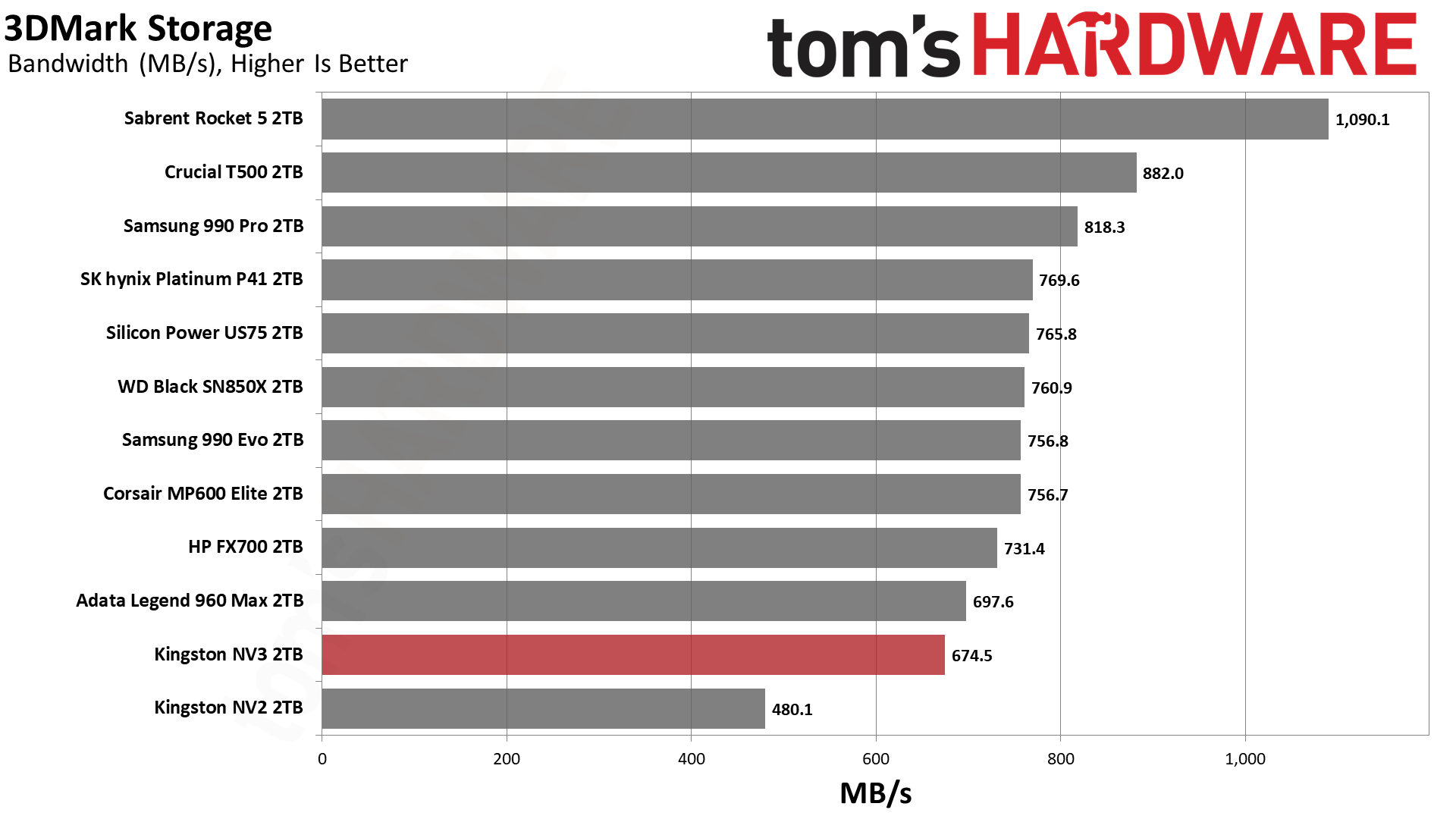
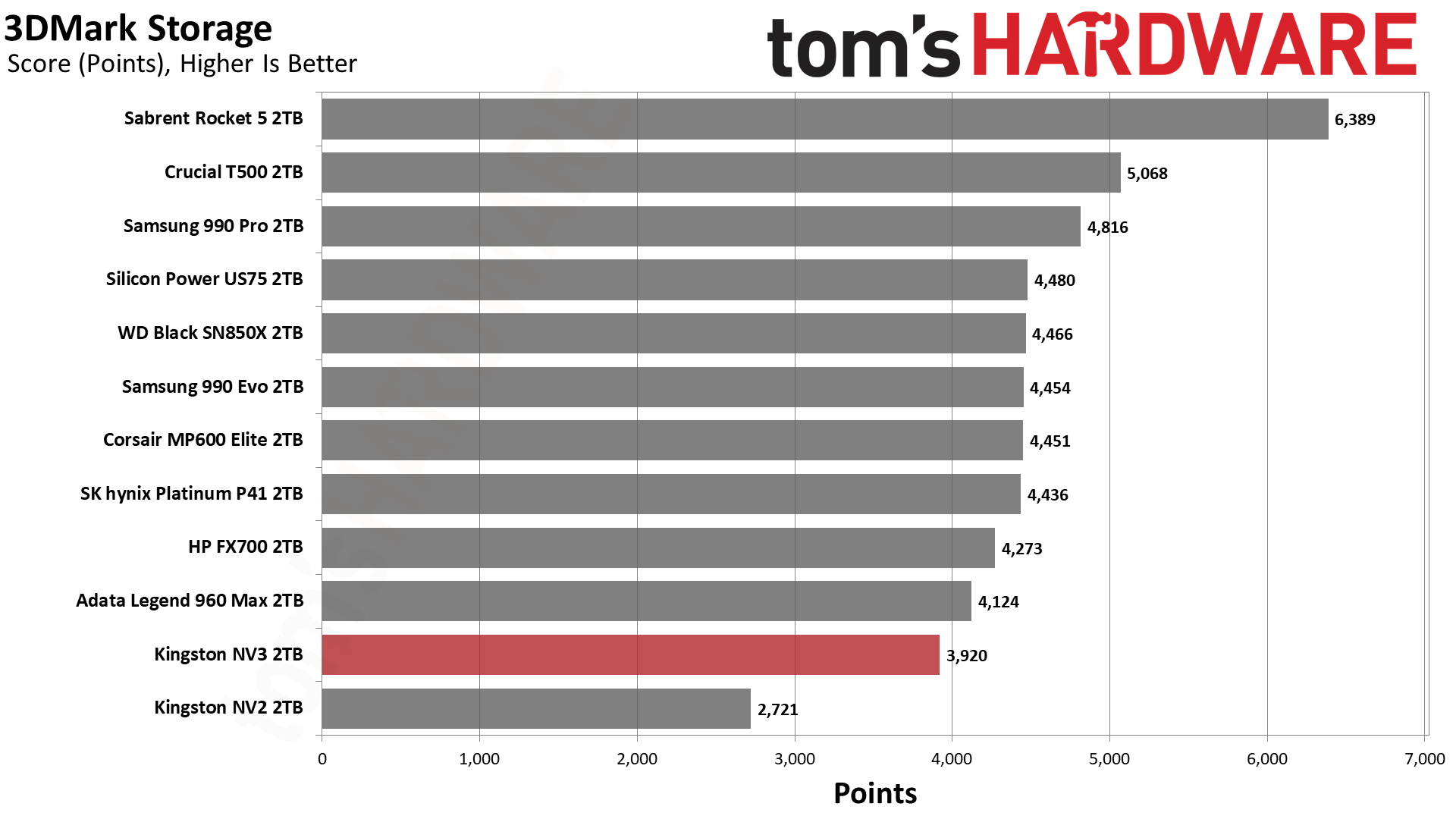
The SSD may not be suitable for heavy workloads or as a primary SSD in a high-end workstation, but in our testing we found that it can still be a sensible choice for secondary storage. In 3DMark's Storage Benchmark, the NV3 delivered respectable results, and it performed well in PCMark 10, where it beat the Corsair MP600 Elite and came reasonably close to several more expensive SSDs. If you're primarily looking for a drive to store games, photos, videos or any other important data, it should be perfectly adequate. It also consumes very little power and runs fairly cool during operations, just 48°C, the maximum recorded temperature on one of its sensors during testing.

Kingston NV3 2TB SSD
Tom's Hardware
Kingston NV3 2TB SSD
Tom's Hardware
Kingston NV3 2TB SSD
Tom's Hardware

The 1TB Kingston NV3 at its discounted price of $156.99 is a solid option if you're looking for an affordable way to expand your PC's storage. It might not be the fastest or the most capable SSD on the market, but at that price we can't really complain.

If you're looking for more savings, check out our Best PC Hardware deals for a range of products, or dive deeper into our specialized SSD and Storage Deals, Hard Drive Deals, Gaming Monitor Deals, Graphics Card Deals, gaming chair, or CPU Deals pages.

✇Tomshardware

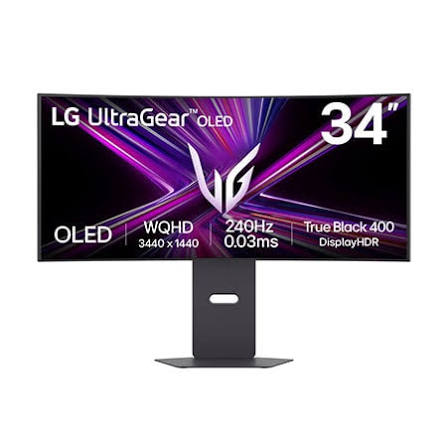
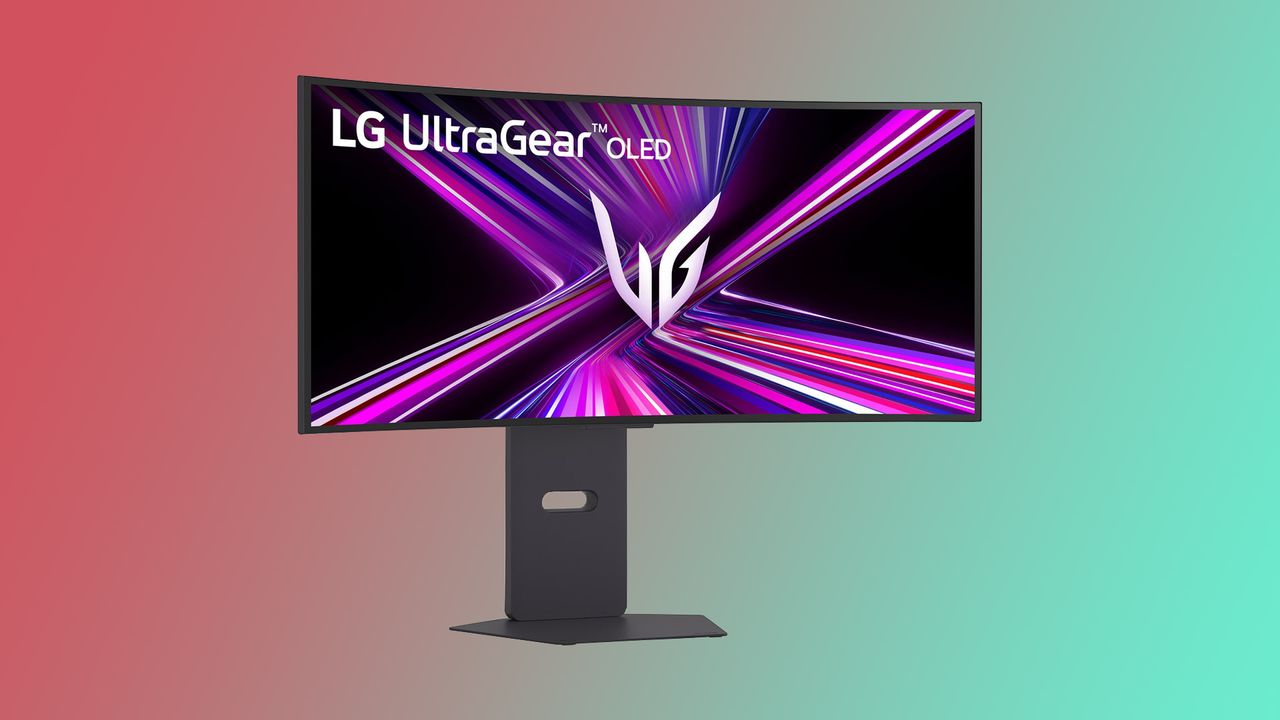
Speedy 34-inch 240 Hz ultrawide OLED monitor now $600 off — LG UltraGear 34GX900A-B only $599.99

OLED gaming monitors have become increasingly affordable in recent years, as the technology has matured in addition to the growing competition among major brands. If you’ve been saving up to make the jump to an ultrawide OLED monitor, Amazon currently has LG’s 34-inch UltraGear 34GX900A-B at a particularly attractive price. With an original listed price of $1,200, it is currently on sale and can be purchased for $599.99, resulting in a substantial discount of 50%.

The LG Ultragear 34GX900A-B is a premium curved OLED gaming monitor offering a WQHD or 3440 x 1440 resolution with a 21:9 aspect ratio. According to LG, the steep 800R curve and impressive screen brightness of up to 1300 nits ensure an immersive experience during your gaming sessions. It also comes with up to a 240 Hz refresh rate and 0.03ms response time that keeps the gameplay fast, smooth, and responsive. Additionally, the monitor supports FreeSync Premium Pro and Nvidia G-Sync compatible for clear and tear-free visuals.

UltraGear 34GX900A-B curved OLED gaming monitor: was $1199.99 now $599.99
The LG UltraGear 34GX900A-B is a premium curved OLED gaming monitor that offers a WQHD resolution with up to 240 Hz refresh rate, 0.03ms response time and support for DisplayHDR True Black 400 for fast, sharp and vivid visuals.View Deal

The monitor is listed to support 98.5% of the DCI-P3 color gamut, a 1.5M:1 contrast ratio, and DisplayHDR True Black 400. Essentially, one can expect deep blacks, excellent highlights, and cinematic color. The monitor is also UL-verified for flicker reduction, glare reduction, and hardware-based low-blue-light output, all aimed at making the display more comfortable to use for long periods. In terms of connectivity, the LG Ultragear 34GX900A-B comes with two HDMI 2.1 ports, a DisplayPort 1.4, USB Type-C with power delivery, two USB Type-A, and a 3.5mm audio jack. Other notable features include an inbuilt app to split the screen into 6 sections for multitasking, an adjustable stand with height, tilt, and swivel control, and some RGB lighting at the back, adding to the gamer aesthetics.

The LG UltraGear 34GX900A-B at $599.99 is highly recommended for anyone looking to move to an ultrawide gaming monitor. You’re getting a 240 Hz OLED panel, 3440 x 1440 resolution, 0.03ms response time, up to 1300 nits of brightness, and support for both FreeSync Premium Pro and G-Sync, all for $600 less than its original $1,200 price.

✇Tomshardware

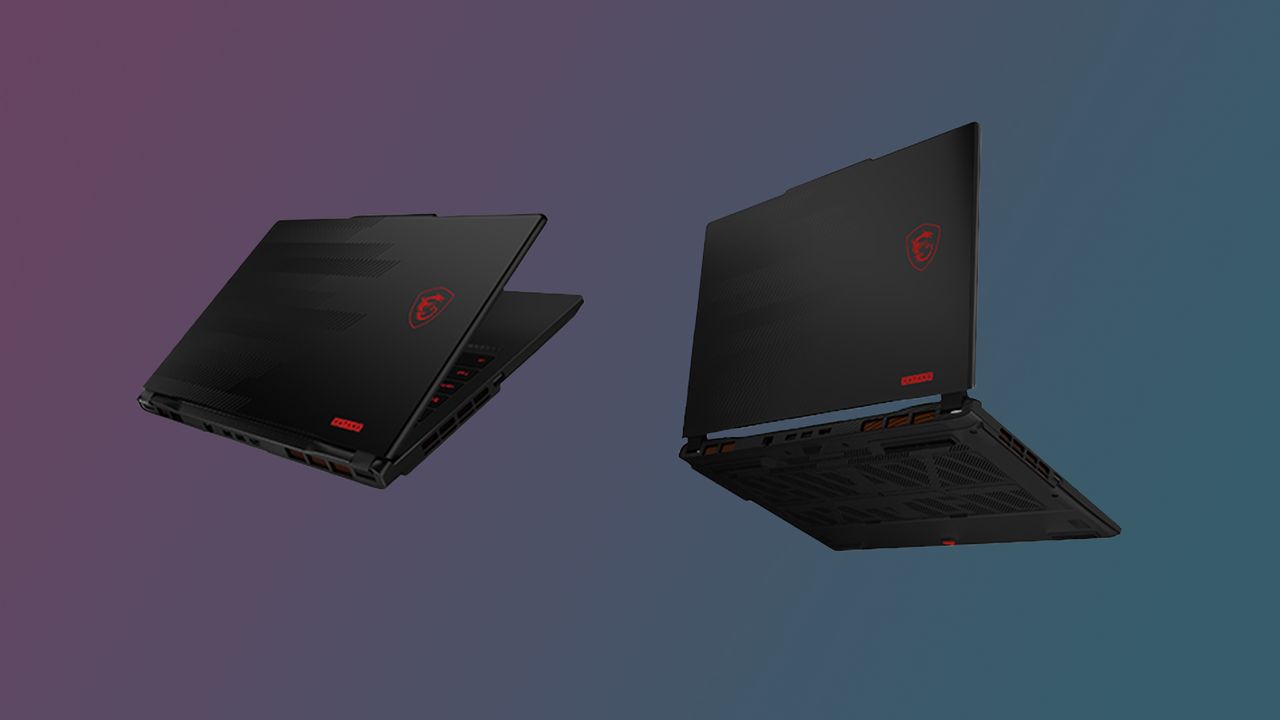
MSI brings DDR4 back to gaming laptops amidst DRAM crisis — Katana 15 HX C14 available with up to Core i9-14900HX and RTX 5070

The ongoing DRAM crisis has led to a sharp increase in laptop prices, with manufacturers facing exponentially high component costs, particularly memory and SSDs. The situation has created a growing gap in the affordable gaming laptop segment, with most entry-level models becoming increasingly expensive. In its response, MSI has introduced the new Katana 15 HX C14 that features Intel’s 14th-gen Raptor Lake Refresh processors along with support for both DDR5 and DDR4-3200 memory.

Depending on the region, MSI will be offering the value-focused gaming laptop in two variants, featuring dual SO-DIMM slots with either DDR4 or DDR5 compatibility. For context, a 32GB (2x16GB) DDR4-3200 SO-DIMM memory kit can be purchased for around $200, while a DDR5-6000 kit goes for over $400. MSI did not specify the DDR4 capacity as standard, only that the laptop supports up to 96GB, which seems unlikely given no 48GB DDR4 SO-DIMMs exist.

Configurable with up to a 24-core Intel Core i9-14900HX processor, the laptop should offer plenty of CPU performance for demanding tasks besides gaming. It will be available with up to an Nvidia RTX 5070 laptop GPU offering support for the latest AI features, GDDR7 memory, DLSS 4.5, and real-time ray tracing. MSI claims that the Katana 15 HX C14 is tuned for up to 170W of combined CPU and GPU power, while the cooling system with dual fans, three heat pipes, and four exhaust outlets helps in sustained performance. There are also dual-PCIe Gen 4x4 M.2 slots, allowing gamers to add a separate SSD dedicated to their gaming library.

Display options include a 15.6-inch IPS panel available with either QHD (2560x1440) resolution that supports up to a 165 Hz refresh rate or FHD (1920x1080) resolution with up to a 144 Hz refresh rate. In terms of design, the laptop comes in a stealthy black finish with textured slash patterns inspired by traditional Japanese blades along with bright red logos. The chassis measures 22.9mm in terms of thickness and weighs 4.62 pounds, making it fairly compact for a 15-inch gaming notebook.

Other notable features include support for Wi-Fi 6E and Bluetooth 5.4, a 4-Zone RGB gaming keyboard with 1.7mm key travel, a 240W power adapter, USB Type-C with Power Delivery 3.0, a 60Whr battery, and DTS-enhanced dual 2W speakers. According to MSI, the new Katana 15 HX C14 will be available globally, although there's no pricing information at the moment.

✇Tomshardware

Crucial SSD owner offered $200 refund for 4TB drive now selling for over $500 — company finally caves to warranty demands after protracted back-and-forth

Memory and data storage manufacturer Micron announced its exit from the consumer market earlier this year and pledged to honor warranties for existing products. However, according to a recent RMA case on Reddit, the company seems to be struggling to stick to that promise. Instead of replacing a faulty portable SSD, the company offered the customer a refund that was significantly lower than the product’s current retail price.

Explaining their frustrating RMA experience, u/CarefulMeasurement99 said that their Crucial X9 4TB portable SSD stopped working, after which they contacted support, followed the troubleshooting process, and had their RMA approved. Unfortunately, they were later informed that the company did not have any units available for the particular product because the replacement inventory was exhausted. Therefore, instead of providing a 1:1 replacement SSD, the company would issue a refund of $199.99, the same as the original invoice price from last year.

Crucial is forcing a $200 refund for my dead 4TB SSD instead of replacing it because "they have no stock." (4TB SSDs are now $800+). Am I getting scammed?
 from r/pcmasterrace

Due to the ongoing NAND and DRAM crisis, almost every memory and storage product has significantly gone up in price. The Crucial X9 4TB is currently priced at over $500 on Amazon, which basically left the customer facing a loss of nearly $300. The customer explicitly refused to accept the offer and told Micron support that they did not want a refund and requested a 1:1 replacement under warranty. They also offered to accept an alternative 4TB SSD model or wait indefinitely until the RMA inventory was restocked.

After a long ordeal, pushing back eventually paid off for the customer. They sent Micron a firm final email rejecting the refund and demanding a 4TB equivalent replacement or alternative. The customer also mentioned that the case was gaining traction on Reddit and pointed out potential action under the FTC and Magnuson-Moss Warranty Act. Within a few hours, the case was escalated to a different representative, who informed them that a “recent inventory update” had revealed limited replacement stock and approved a direct 1:1 replacement.

While the case raises questions about Micron’s initial claim of no replacement units being available, there is no way to independently verify that. That said, this does not appear to be an isolated case. Earlier this month, we reported a similar RMA horror story in which Micron offered a customer a refund instead of replacing their product due to a lack of inventory. Only after further communication did Micron provide an acceptable solution.
✇Tomshardware

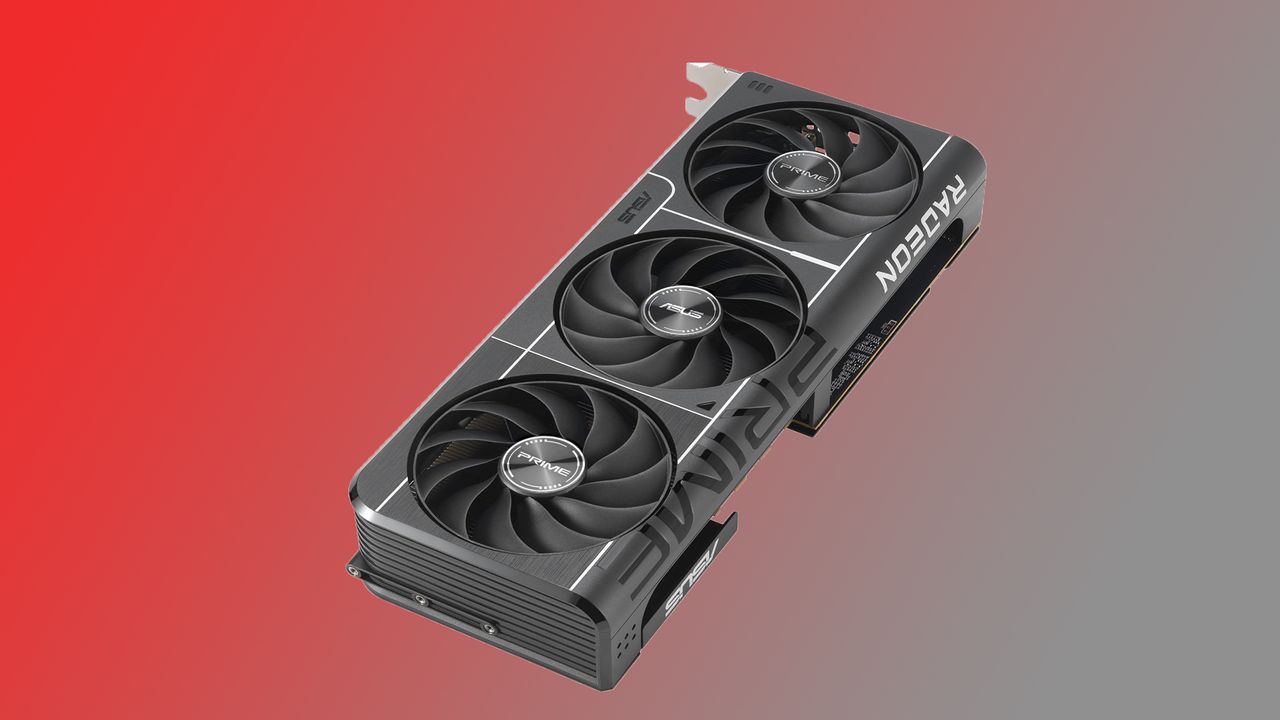
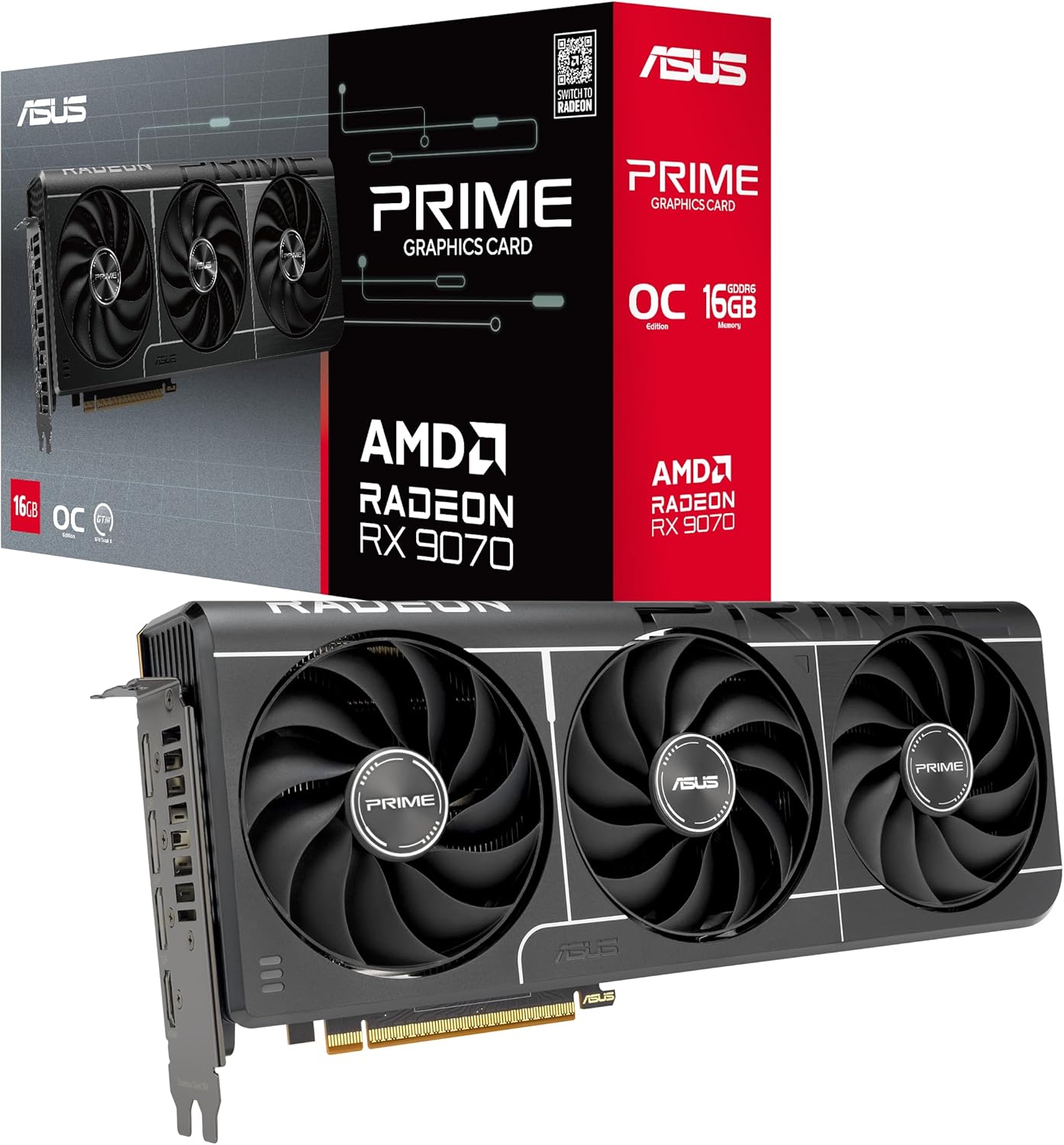
Grab the Asus Prime Radeon RX 9070 OC for $629.99 — save $120 on this 16GB gaming GPU for reliable 1440p and 4K gaming

Finding a good deal on a graphics card is currently near impossible, especially with the ongoing surge in DRAM and NAND prices. We constantly keep an eye out for sales and discounts on the best graphics cards and we recently spotted the Asus Prime AMD Radeon RX 9070 OC edition selling for a discounted price of $629.99 on Amazon. That’s a discount of 16% when compared to its regular listed price of $750.

The AMD Radeon RX 9070 is a solid mid-tier GPU based on AMD’s RDNA 4 architecture. It is capable of delivering reliable 1440p and 4K gaming performance and features 56 Compute Units, 16GB of GDDR6 memory on a 256-bit bus, and a 220W board power rating. The card also features AMD’s latest generation of ray-tracing accelerators and AI accelerators.

Prime AMD Radeon RX 9070 16GB GDDR6 OC Edition: was $750 now $629.99
The Asus Prime AMD Radeon RX 9070 OC Edition packs 16GB of GDDR6 memory and is built around AMD’s RDNA 4 architecture, making it a strong option for high-refresh 1440p gaming and capable 4K performance. Its factory overclock and triple-fan cooling design also give it some extra headroom for demanding workloads. View Deal

This particular Asus Prime model features a 2.5 slot design and a length of 312mm. It comes with dual-BIOS allowing users to choose between Performance and Quiet modes. According to Asus, the triple Axial-Tech fans feature longer blades for improved airflow, while the phase change GPU thermal pad helps in optimal heat dissipation. The GPU is also factory overclocked with up to 2,610 MHz Boost clock and 2,140 MHz Game clock speeds.

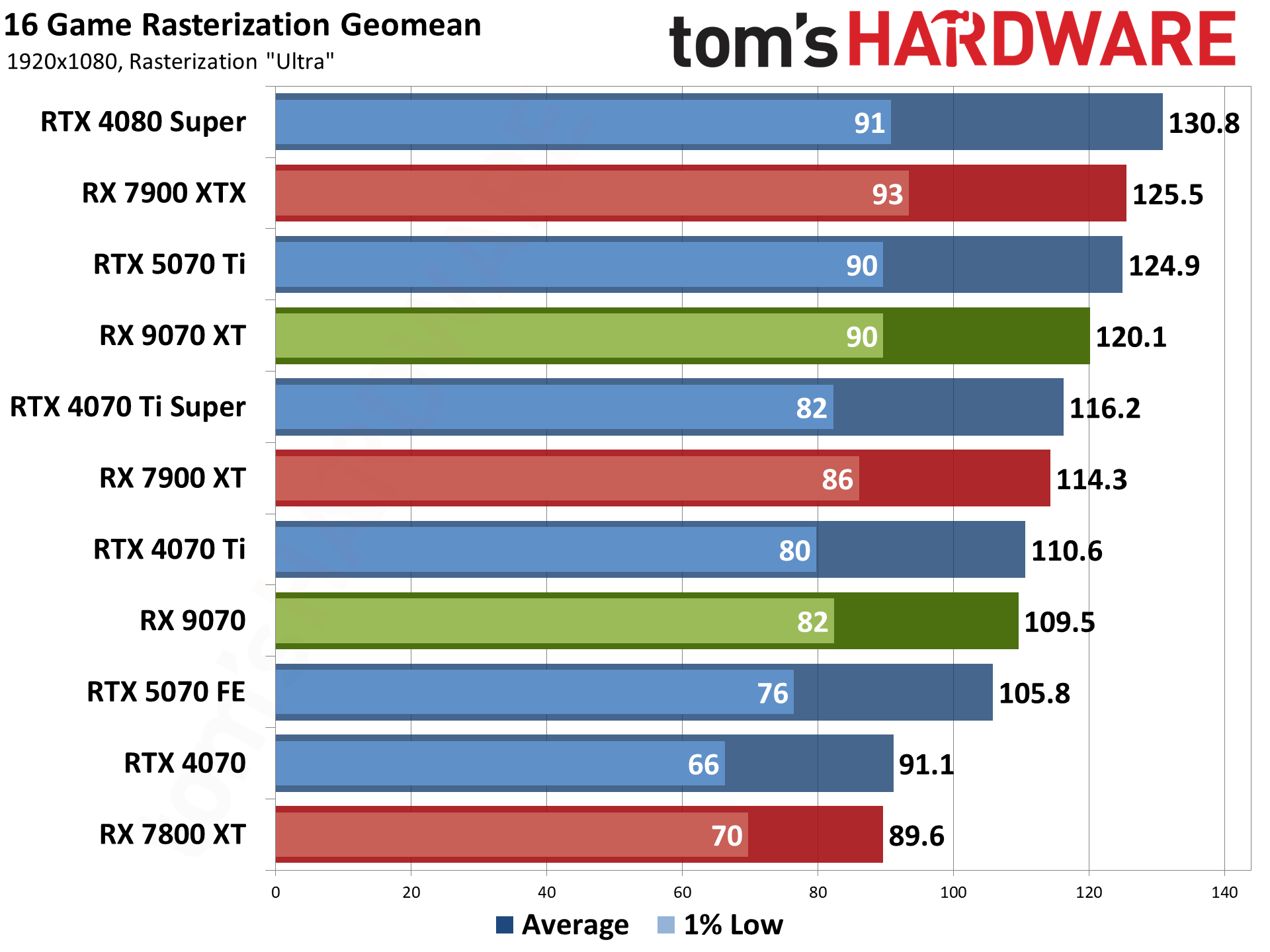
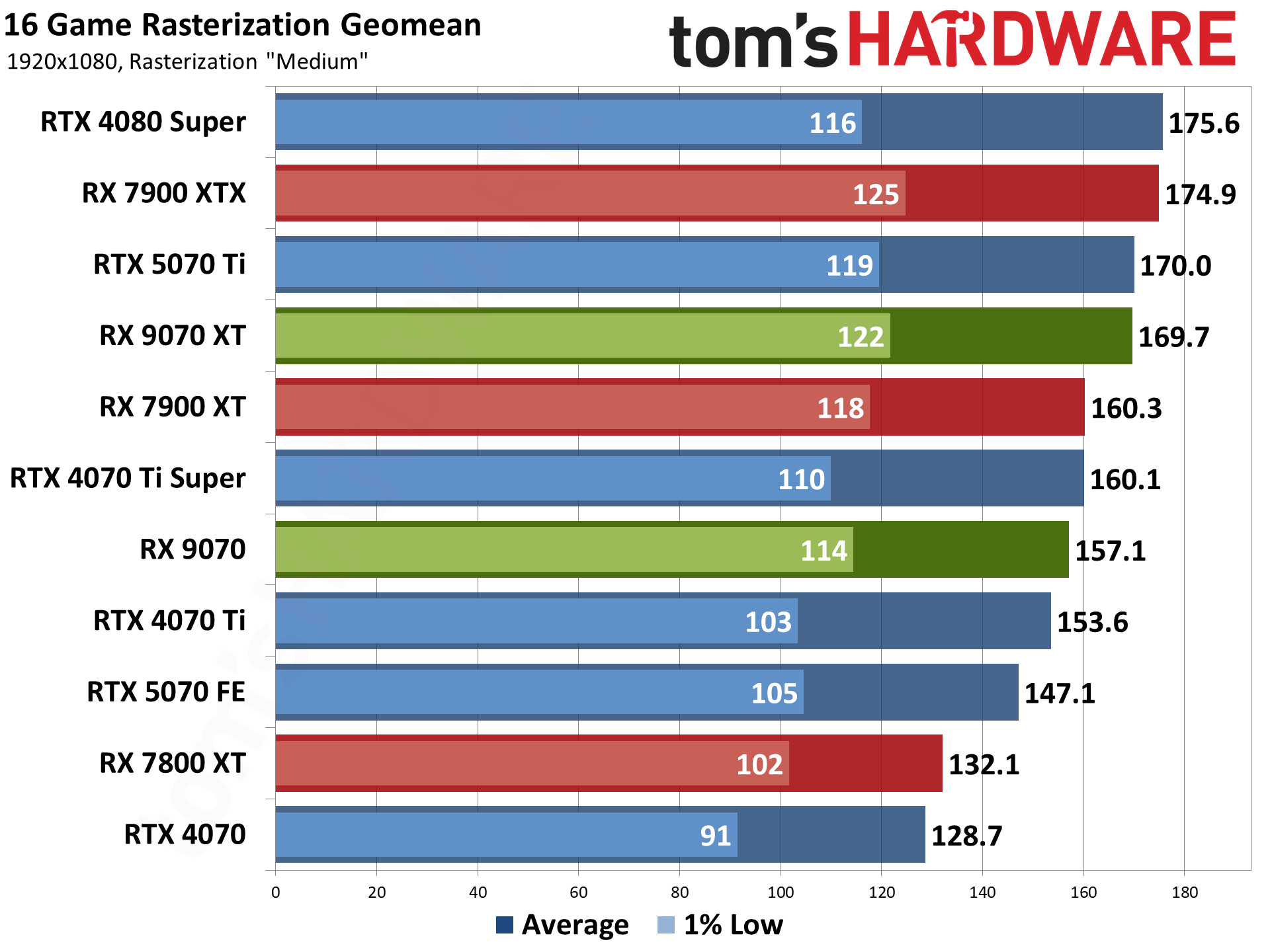
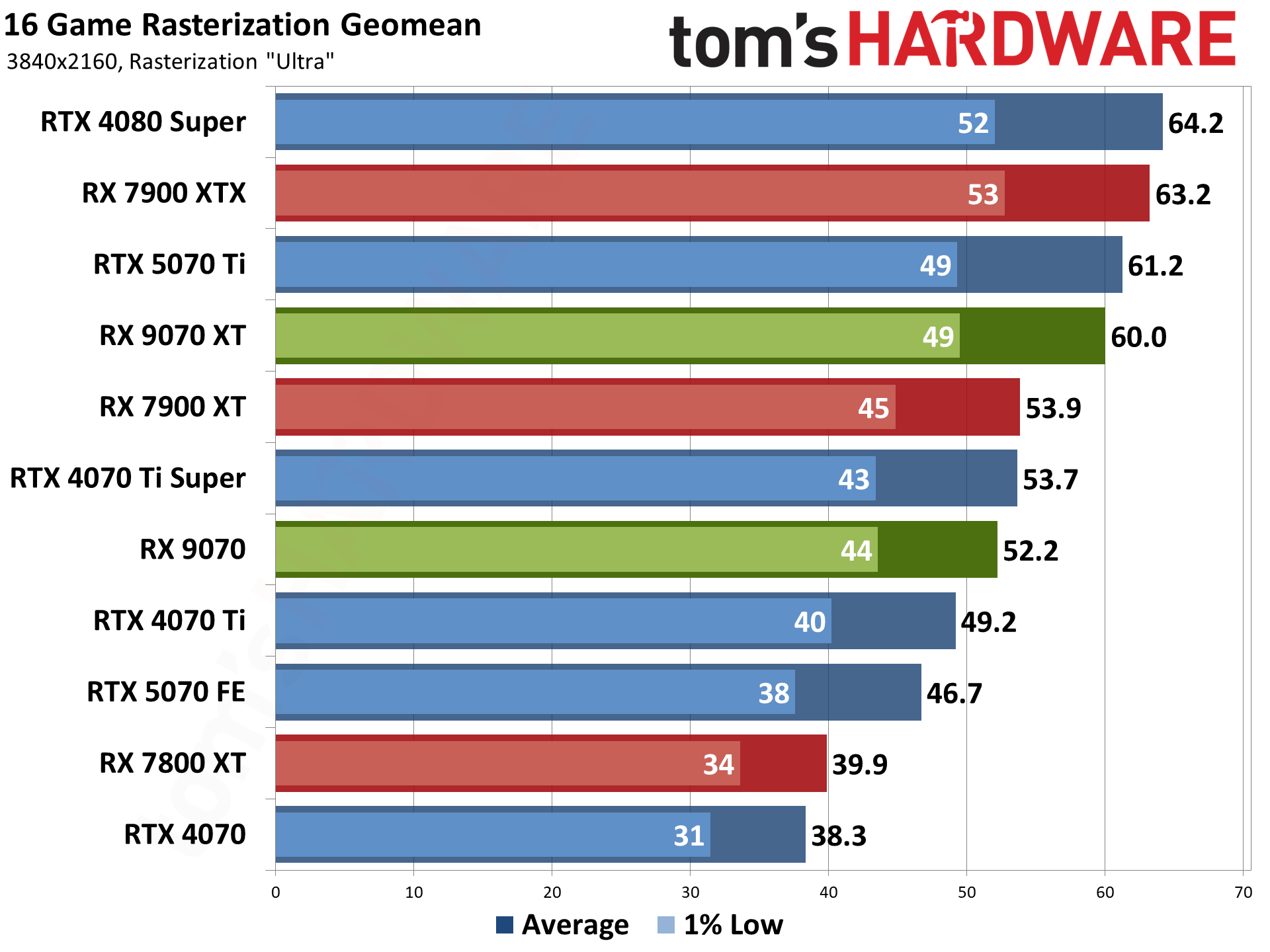
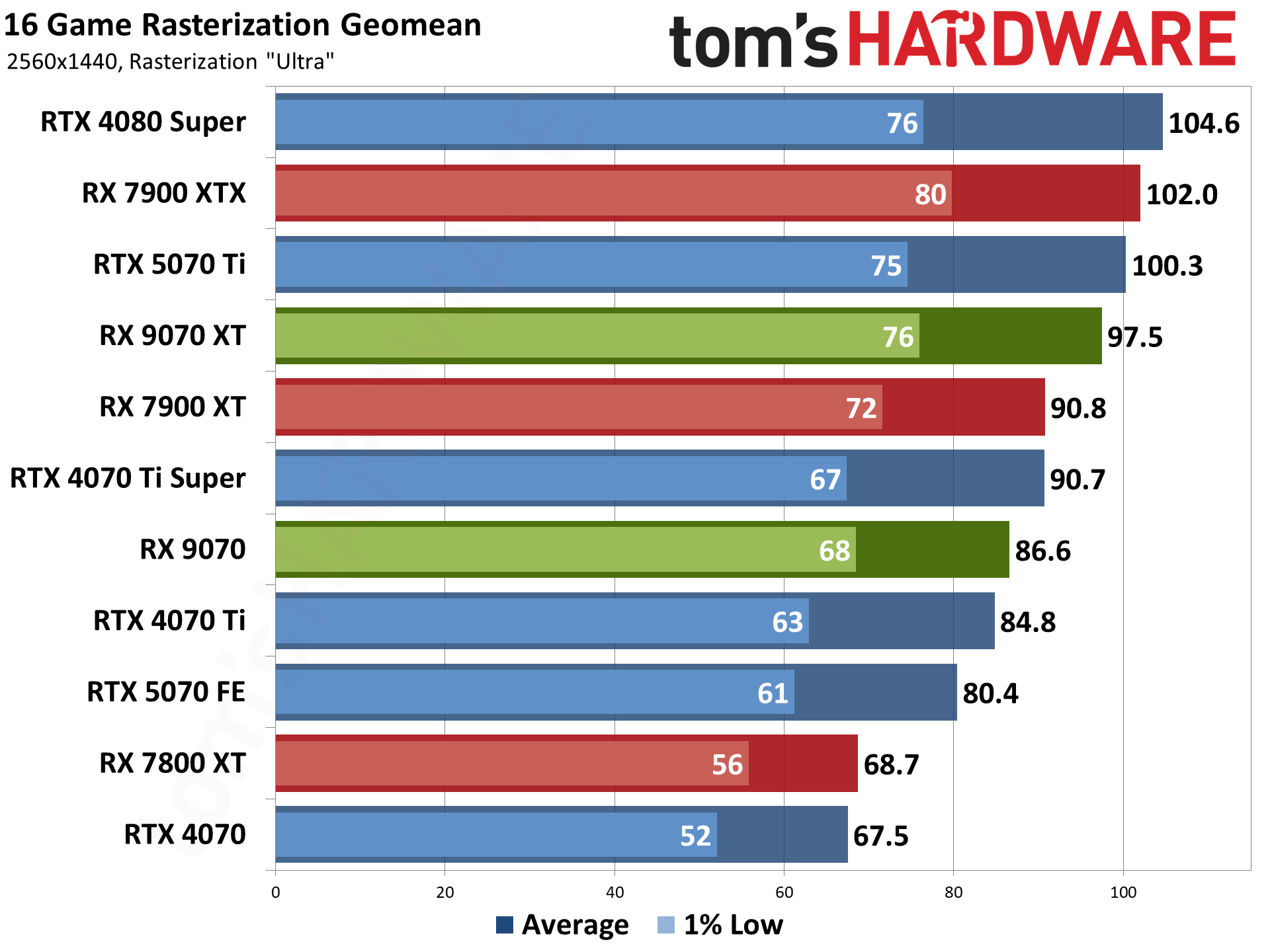
If we look at the numbers from our testing, the RX 9070 offers performance similar to Nvidia’s RTX 4070 Ti Super. As per our 16-game rasterization geomean, the GPU averages at 86.6 FPS at 1440p Ultra settings, and 52.2 FPS at 4K Ultra settings.

AMD Radeon RX 9070 XT and RX 9070 review photos
Tom's Hardware
AMD Radeon RX 9070 XT and RX 9070 review photos
Tom's Hardware
AMD Radeon RX 9070 XT and RX 9070 review photos
Tom's Hardware
AMD Radeon RX 9070 XT and RX 9070 review photos
Tom's Hardware

For those looking to upgrade their PC for 1440p gaming, the Asus Prime AMD Radeon RX 9070 OC edition is a great choice, especially at its discounted price of $629.99. Remember, this is a limited-time deal and the discounted price may not last for long. Interested buyers should act quickly before the offer expires or stock runs out.

✇Tomshardware

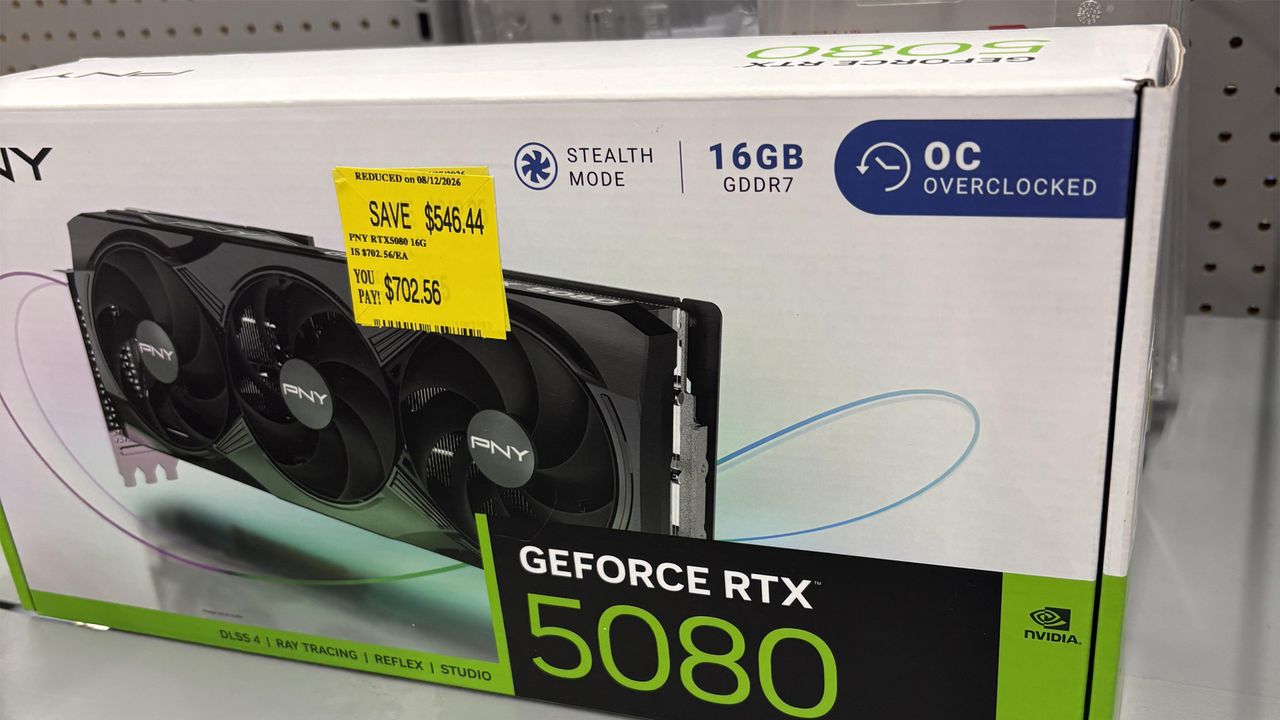
Lucky shopper finds RTX 5080 for just $702 at Walmart — saves almost $800 compared to current retail prices

Shopping for PC parts continues to be a nightmare, with skyrocketing RAM, SSD, and GPU prices paired with unpredictable availability. However, a lucky shopper managed to score a flagship GPU for far less than its original launch price. According to Reddit user u/sparkyscotty55, their local Walmart store was selling a PNY-branded Nvidia RTX 5080 for just $702.56, down from its listed selling price of $1,249. Not only does this deal result in a discount of $546.44, but its final price is also much lower than Nvidia’s suggested $999 retail price for the RTX 5080.

A quick price check reveals that this particular PNY RTX 5080 OC graphics card is currently listed at over $1,500 on Amazon, Newegg, and Best Buy. This makes the Walmart clearance price even more impressive, with the shopper essentially paying less than half of what the GPU currently costs at major retailers. The shopper also confirmed that they inspected the box to verify that the GPU inside was indeed the correct model and appeared to be in good condition.
Walmart deal how did I do
 from r/pcmasterrace

The PNY GeForce RTX 5080 OC is a factory-overclocked version of Nvidia's reference RTX 5080 that targets 4K gaming and content-creation workloads. The RTX 5080 packs 10,752 CUDA cores, 16GB of GDDR7 memory on a 256-bit bus, and up to 960 GB/s of memory bandwidth. Its fifth-generation Tensor cores and fourth-generation RT cores enable features such as AI acceleration, hardware-accelerated ray tracing, and Nvidia's DLSS 4 technology, including Multi Frame Generation. The GPU is listed to push the boost clock to 2.73 GHz, up from Nvidia's reference 2.62 GHz, while retaining the 360W power rating. It also uses a substantial cooling system with three 100mm silent fans and a dense heatsink, along with a triple-slot design.
Walmart's clearance aisles have produced rare but similar GPU bargains in the past. For instance, back in February another shopper managed to grab the same RTX 5080 model at just $562.49. During that period, it was one of the few RTX 5080 models sold at Nvidia’s suggested MSRP of $999, thus resulting in an impressive discount of $430 for the lucky customer. Another Walmart clearance find involved an RTX 5060 Ti, with a customer picking up an MSI RTX 5060 Ti Ventus 2X 8GB at just $80. Since the card had launched with an MSRP of $379, the shopper managed to end up saving nearly $300. The deal was particularly interesting as the buyer was reportedly upgrading from a much older GTX 1060, resulting in a massive generational leap at a negligible price.

While such deals occasionally result in an incredible bargain, there is always an element of risk, especially when it involves expensive PC hardware. Such items could be customer returns with opened boxes, or items that have been marked down because of damaged packaging or missing accessories. There are also some cases where heavily discounted PC components are returned units that are either damaged, swapped, or do not include the hardware originally sold with it, which makes checking the contents before completing the purchase particularly important.

✇Tomshardware

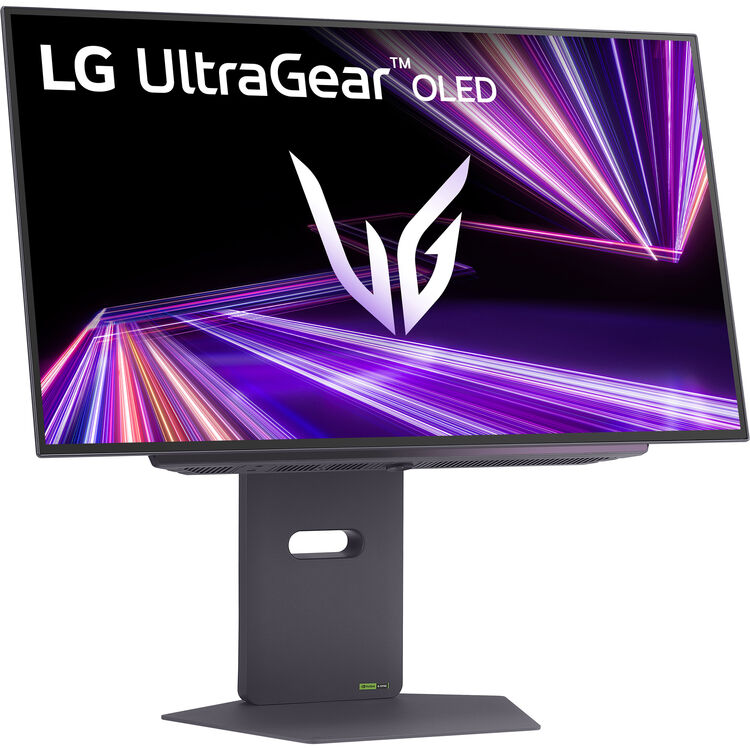
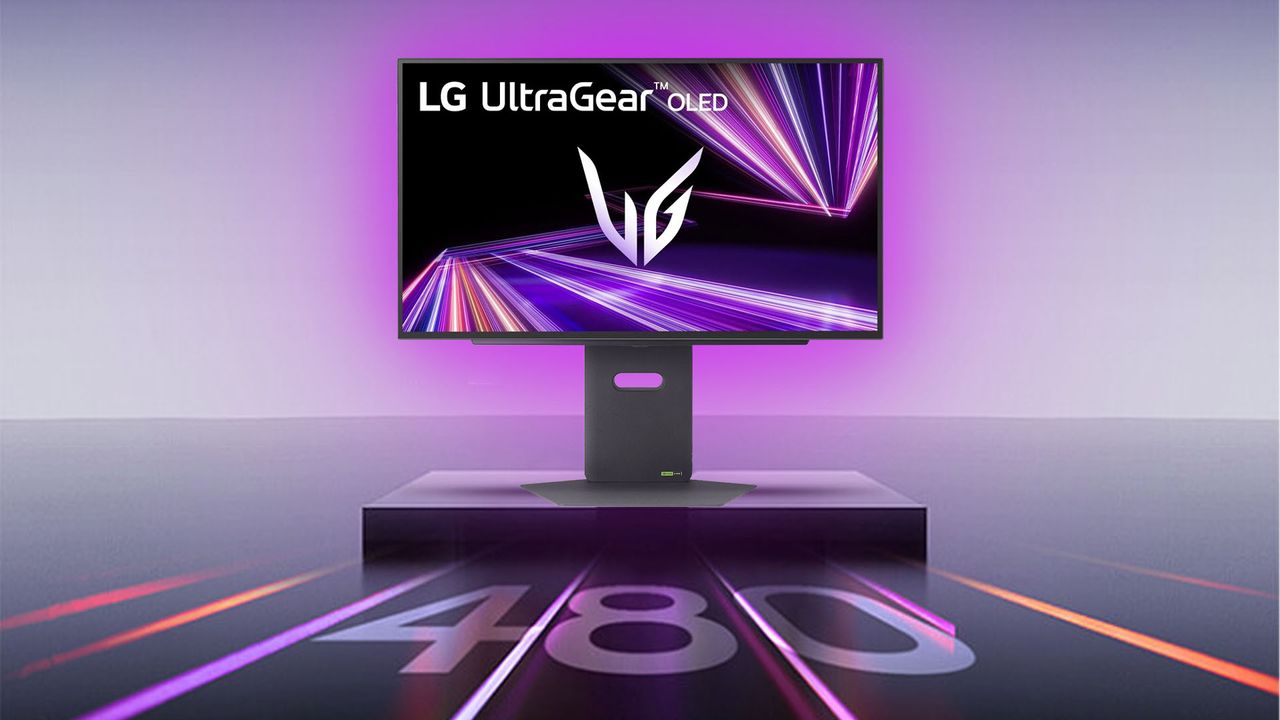
Save $532 on a 480 Hz OLED gaming monitor — Amazon drops a massive 53% discount on the LG UltraGear 27GX790A-B

If you have been planning to upgrade your monitor, now might be a great time to invest in an OLED display. Prices have been pretty decent compared to last year, and one great option is the LG UltraGear 27GX790A-B, which has dropped to $467.97 on Amazon from its original price of $999. The sale price saves you about $532, a 53% discount.

The LG UltraGear 27GX790A-B features a 27-inch WOLED panel with 1440p resolution, widely considered the sweet spot for gaming monitors. It also offers an impressive 480 Hz refresh rate and a 0.03 ms response time, plus support for Nvidia G-Sync and AMD FreeSync Premium Pro, making it suitable for both cinematic and esports titles. Additionally, the monitor is ClearMR 21000 certified, VESA’s highest motion-clarity tier, which helps eliminate the faint blur that lingers around fast-moving objects.

The LG UltraGear 27GX790A-B is a 27-inch 1440p OLED gaming monitor with an impressive 480 Hz refresh rate. It also supports Nvidia G-Sync and AMD FreeSync Premium Pro, along with ClearMR 21000 certification that helps eliminate the faint blur that lingers around fast-moving objects.View Deal

LG claims that the panel covers up to 98.5% of the DCI-P3 color gamut, along with a 1.5M:1 contrast ratio and DisplayHDR True Black 400 certification. This ensures that visuals pop with deep blacks, brilliant highlights, and vibrant cinematic colors. For connectivity, the monitor offers two HDMI 2.1 ports, a DisplayPort 2.1 port, a USB Type-B upstream port, two USB Type-A downstream ports, and a 3.5mm headphone and microphone jack with support for 3D audio via DTS Headphone: X. The monitor has a slim profile and supports height, tilt, swivel, and pivot adjustments. The back of the monitor also features customizable RGB hexagonal backlighting, adding to its gaming aesthetic.

At its discounted price of $467.97, the LG UltraGear 27GX790A-B is a compelling option for gamers looking to make the jump to OLED without spending close to $1,000. The combination of a 1440p WOLED panel, 480 Hz refresh rate, and strong HDR capabilities makes it particularly appealing for both competitive and visually demanding games.

✇Tomshardware

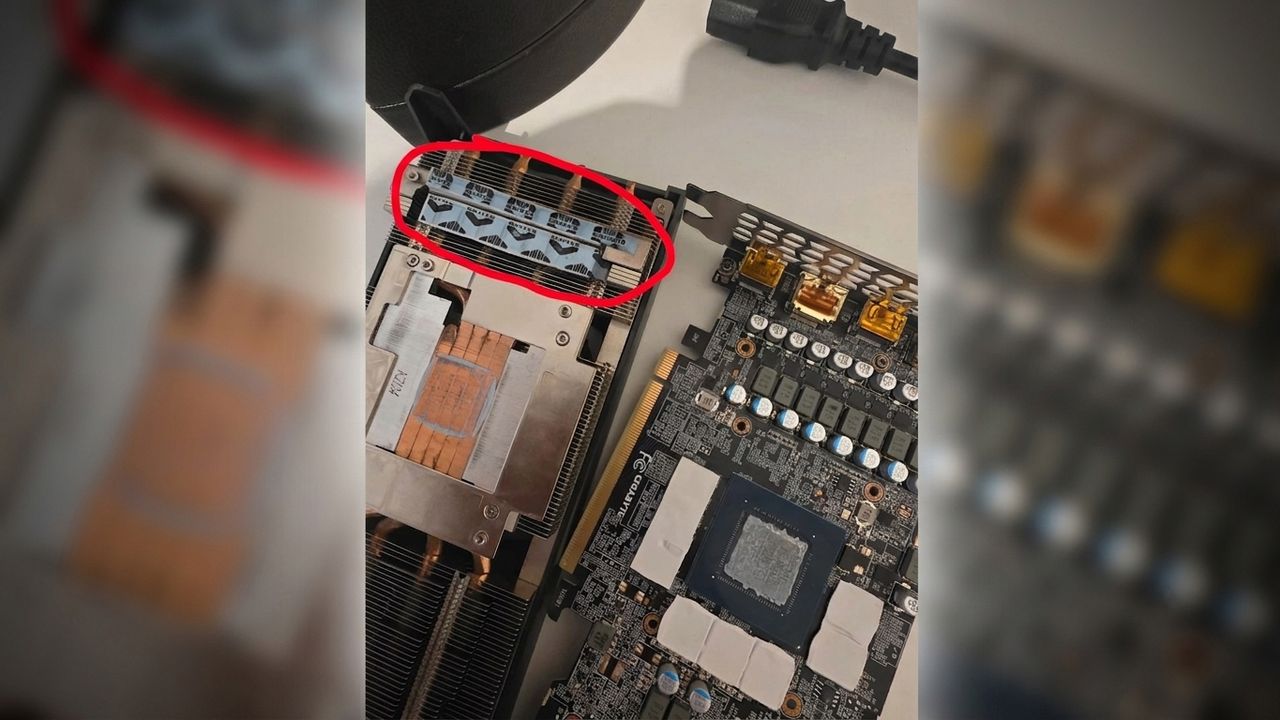
Gamer uncovers factory plastic left on RTX 3070 VRM pads after five years, causing overheating — claims removal and repasting dropped GPU hotspot temperatures by 30°C

In a bizarre quality control issue, a gamer discovered protective film on the VRM thermal pads of their Gigabyte RTX 3070 Gaming OC graphics card. As per a Reddit post by u/buczi94, the GPU was purchased brand new and had never been disassembled or sent for any sort of repairs. After using the GPU for almost five years, the owner of the GPU started noticing high temperatures on the VRMs. They also faced frequent black screens during higher loads, waking the PC from sleep, and cold boots.

The Redditor claims that they upgraded their motherboard BIOS and GPU firmware and drivers, alongside disabling several settings including custom PBO curve, XMP, and Resizable Bar. Unfortunately, none of these measures helped alleviate the problems. They further performed some benchmark tests using Furmark and OCCT, where the GPU temperatures would reach as high as 80°C with the GPU hotspot at 105°C. While these numbers were not alarming, they also found that the cooling fans would randomly ramp up to their highest speed, despite setting a custom fan curve in MSI Afterburner and limiting the fans to 90%.

Factory protective film on thermal pads on my Gigabyte RTX 3070 Gaming OC rev 2.0
 from r/pcmasterrace

Fed up with the situation, the owner of the graphics card eventually took the decision to disassemble the GPU for cleaning and repasting, upon which they found protective films on the VRM thermal pads. They claim that peeling off the protective film and repasting the core resulted in a sizable reduction of 15°C on the GPU and 30°C on the GPU hotspot. Additionally, after three hours of stability tests on Furmark and OCCT, no errors were recorded.

The GPU owner also provided an update on the black-screen issues following the fix. While the problem initially occurred once every month or two, it became an everyday concern just a few days before the thermal pad films were discovered, specifically after waking the PC from sleep, during cold boots, or under heavy loads. After the fix, the owner claims that they experienced just one black screen during a cold boot, although they acknowledged that it was too early to determine whether the problem had been fully resolved.

Removing the protective film from the VRM thermal pads fixed the overheating problem. However, the damage caused by years of excessive heat cannot be undone. The owner alleged that since the VRMs were running much hotter for a long period, they have potentially affected several components on the graphics card, including the MOSFETs, as well as the capacitors around the VRM. The owner believes the excessive heat may have also caused the PCB to repeatedly expand and contract over the years, which can put stress on the board and potentially contribute to tiny cracks in solder joints. While they suspect this could be the reason behind the black screen issue, it is just a theory and can only be confirmed through proper testing.

As the flaw occurred at the production and assembly level, the GPU owner contacted Gigabyte’s support team to report the issue and asked for a replacement. However, instead of addressing the alleged manufacturing defect, Gigabyte’s support staff advised the owner to test their GPU in another system. They also informed the GPU owner that since the card was out of warranty, they should contact the retailer or pay a local repair shop to fix the issue.

It is unclear whether the protective film caused any damage to the VRMs, which ultimately resulted in the GPU's black-screen problems as claimed by the owner. However, the case raises questions about how a factory assembly error could go unnoticed for years and whether manufacturers should address such defects even after the standard warranty has expired.

✇Tomshardware

Back-to-back Amazon CPU scam delivers empty Ryzen 5 9600X boxes in 72 hours — $ 10,000-a-month business customer captures fraud on camera

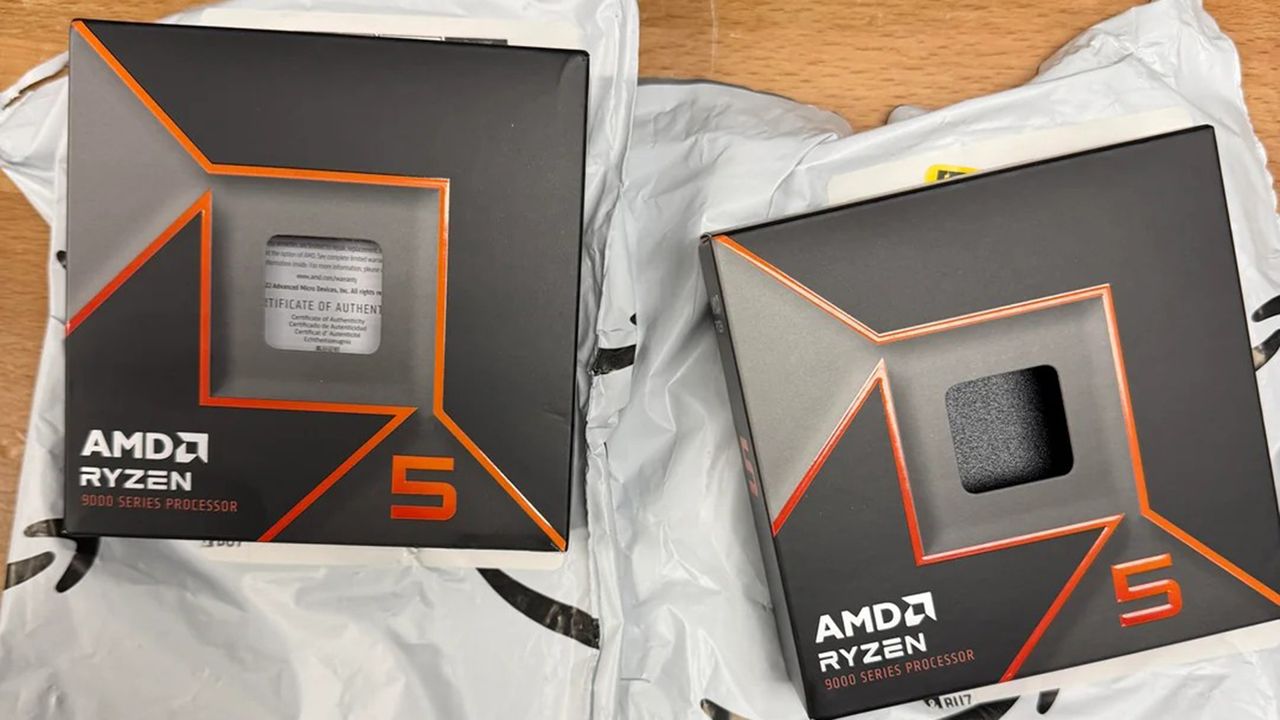
A New York-based computer repair and custom gaming PC retail store is the latest victim of an alleged Amazon delivery scam. Sharing their experience in a Reddit post, one of the co-owners of PC Plug wrote that they ordered an AMD Ryzen 5 9600X a few days ago but received only the box, with the CPU missing. After immediately requesting a refund, they went on to purchase another CPU with next-day delivery. However, they once again received only the retail box, with no CPU inside.

The post also mentions that they record every product unboxing and maintain proper documentation specifically for such cases. Instead of ordering directly from Amazon or the manufacturer, one of the inventory managers accidentally purchased the CPU from “The Tech Group,” a third-party seller with decent ratings whose orders were fulfilled by Amazon. However, they claim those ratings could be fake.

The co-owner told Tom's Hardware that they order 90% of their hardware inventory through Amazon, which amounts to roughly $10,000 a month. “This is the first time we’ve received a product with no hardware in it, and it happened twice in the matter of three days.” They also shared that this may have happened around 10 times over the last five years, with packages arriving damaged or missing a few components.

There’s no way… Amazon sent another 9600X without the processor AGAIN 🤨
 from r/PcBuild

They also claim to have security camera footage showing both Amazon packages being opened and found to contain only the CPU boxes. While they are not familiar with The Tech Group, they did notice a Reddit user claiming to have previously purchased from the seller without any issues. The store usually orders directly from Amazon or manufacturers on the platform, but the two Ryzen 5 9600X from the seller “slipped through the cracks.” Despite having a good track record with Amazon, the co-owner is now concerned that the attention surrounding the incident could potentially put their Amazon account at risk, as much of the business relies on Amazon Business Prime to purchase hardware inventory.

Such scams are quite common on Amazon, where buyers sometimes receive completely different, or in this case, no product at all. In a recent case, a Reddit user ordered a lightly used Ryzen 9 9900X3D from Amazon Warehouse but discovered that the box contained a much older Ryzen 9 3900X, a 2019 AM4 processor worth substantially less than the 2025 flagship originally ordered.

It is highly recommended to always purchase from reputable sellers and verify the seller’s ratings and reviews before placing an order, especially if you are planning to buy expensive computer hardware. Make sure you also record the unboxing, as video evidence can be useful if the package arrives damaged, tampered with, or missing an item.

❌